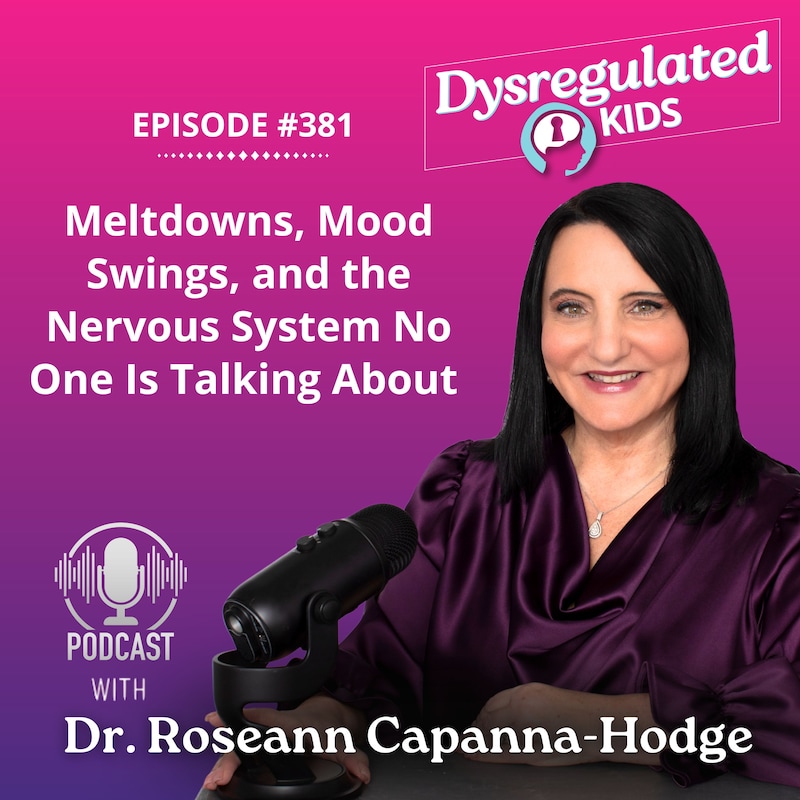
Meltdowns and mood swings can leave parents feeling stuck and overwhelmed. This episode unpacks meltdowns, mood swings, and the nervous system no one is talking about, showing why behavior escalates. Dr. Roseann Capanna-Hodge, Regulation First Parenting™ expert, explains how calming the brain creates real change.
If you’re exhausted by constant meltdowns, mood swings, and reactions that make no sense, you’re not failing—your child’s nervous system is overwhelmed.
This episode unpacks meltdowns, mood swings, and the nervous system no one is talking about and shows where real change begins.
Why does my child melt down even when nothing “big” happened?
Many parents are shocked by emotional outbursts that seem to come out of nowhere—especially after school or during simple transitions. What’s often happening isn’t defiance, but nervous system dysregulation.
When a child’s nervous system is stuck in survival mode—also called fight or flight or sympathetic overdrive—their brain can’t process logic, rules, or consequences.
Key takeaways:
- Behavior is communication, not manipulation
- A dysregulated brain repeats patterns—healthy or unhealthy
- Calm isn’t the goal—flexibility is
Example: Your child explodes over homework. Their prefrontal cortex is offline, not their motivation.
Why doesn’t traditional discipline work during emotional dysregulation?
Most parenting advice starts after the nervous system is already on fire. Charts, rewards, and consequences fail because a dysregulated autonomic nervous system can’t learn.
Discipline without regulation feels like a threat, while discipline after regulation becomes guidance.
Remember:
- A stressed brain can’t self-regulate
- Discipline before regulation escalates power struggles
- Regulation first restores access to impulse control
It’s not bad parenting—it’s a dysregulated brain.
Want to stay calm when your child pushes every button?
Become a Dysregulation Insider VIP and get the FREE Regulation Rescue Kit—your step-by-step guide to stop oppositional behaviors without yelling or giving in.
Go to www.drroseann.com/newsletter and grab your kit today.
What’s actually happening in my child’s brain during mood swings?
When stress hormones flood the brain and nervous system, the amygdala hijacks behavior and shuts down executive function. This affects emotional regulation, mood swings, sleep, immune function, and learning.
Over time, chronic stress leads to:
- Shorter fuses and bigger reactions
- Trouble with impulse control
- Increased anxiety and mood disorders
🗣️ “You can’t change behavior while the nervous system is stuck in survival mode.” — Dr. Roseann
How does regulating my nervous system help my child?
Your child borrows your regulation. Stress transfers faster than words, which means maternal stress, muscle tension, tone, and body language all affect your child’s nervous system health.
When parents regulate first:
- Emotional contagion stops
- Reactions soften
- Children recover faster
Your calm becomes their safety. Tools like Quick CALM help reset the parasympathetic nervous system, bringing the body out of high alert and restoring balance.
Can regulation first help kids with autism or severe symptoms?
Yes. Many children—including those on the autism spectrum disorder—experience autistic meltdowns due to sensory overload, bright lights, noise, or a dysregulated nervous system.
Regulation-first strategies support:
- Sensory input needs (weighted blankets, noise cancelling headphones)
- Nervous system care and balance
- Fewer meltdowns and improved emotional responses
This isn’t permissive—it’s biological support.
Takeaway
You’re not alone. When we calm the brain first, behavior changes naturally—not through force, but through safety.
Regulation first isn’t working harder. It’s working smarter. It’s gonna be OK.
FAQs
Why is my child always in stress mode?
A dysregulated nervous system keeps the body on high alert, making calm impossible without regulation support.
Can a dysregulated nervous system affect sleep?
Yes. Chronic stress disrupts sleep, mood, and emotional regulation.
Is emotional dysregulation a diagnosis?
No. It’s a nervous system state—not a character flaw.
Do tantrums mean my child lacks discipline?
No. Tantrums signal nervous system overload, not poor parenting.
How long does nervous system regulation take?
Small, consistent steps create lasting change over time.
Every child’s journey is different. That’s why cookie-cutter solutions don’t work.
Take the free Solution Matcher Quiz and get a customized path to support your child’s emotional and behavioral needs—no guessing, no fluff.
Start today at www.drroseann.com/help