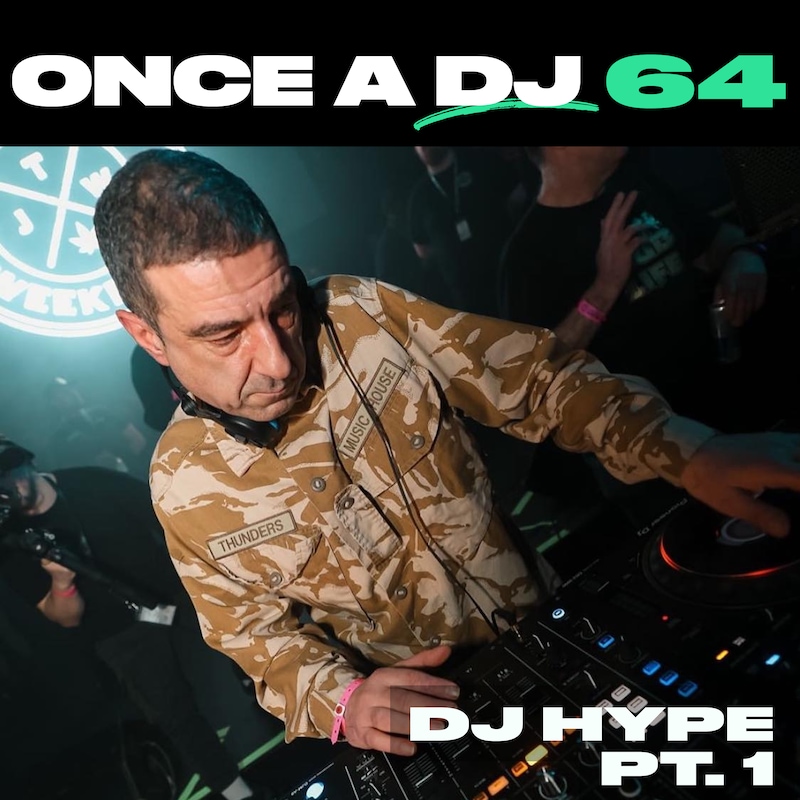
Shownotes
Paths of Rhythm is brought to you with support from vinylunderground.co.uk - take 10% off your next order with the code POR10 and free UK shipping on orders over £100
Paths of Rhythm is a Remote-CTRL production. If you're looking for audio or video production, then check out https://remote-ctrl.co.uk to see how they can help.
Other ways to support the show
- Follow the show on Spotify or Apple Podcasts
- Any feedback or questions? Hit up https://www.instagram.com/pathsofrhythmpodcast/
DJ Hype's Links:
DJ Hype shares his journey from the early days of sound system culture in Hackney to becoming a prominent figure in the jungle and drum and bass scenes. He discusses his recent scooter accident and recovery, his early musical influences, and the evolution of his DJing style. DJ Hype reflects on the challenges of competing in DMC competitions, the importance of creativity in music production, and the changing demographics of the music scene over the years. His story is one of resilience, passion, and a deep connection to the roots of his musical journey.
Transcripts
So, ladies and gentlemen, welcome back to the Once A DJ podcast. I'm delighted to have with me an absolute legend of jungle drum and bass.
Those in the know might know him also as Dr. K. It's the one and only DJ Hype.
Speaker B:Hello.
Speaker A:How are you doing today, sir?
Speaker B:Good, good. Apart from a broken leg.
Speaker A:Yeah. So how did that happen again?
Speaker B:On a scooter. I've had a scooter for four years in lockdown. I got it and I use it quite a bit locally and I do. My mom is very old and has Parkinson's.
She won't like me saying that, but I do a lot of that. I have to go there, do a shopping and stuff. And it was just the handlebars fold down if you want to put it in a car. And it wasn't done.
I've never had this happen, but it wasn't done up properly.
So when I was going along and I wasn't going fast at all, probably about six, seven mile an hour, just crossing a junction and the handlebars just went down like that towards me and I went down with it. And initially I didn't know I'd broke my leg. I actually thought, you know, I felt all the impact on my back more.
And then, you know, you're trying to. I use the analogy of only fools and horses. When he falls into the bar, you know, you get up and you're like trying to act like everything's fine.
But as I went to get up, you know, there's your two legs. This one was like that and when I moved it, it just went like that. And basically that's my shin that had snapped completely. My tibia.
Amphibia, I think that's what it's called. So I'm lying in the road and it was painful, but not as painful as you'd think. I think your adrenaline kicks in.
And my leg was like that, like there was kind of bent. And I laid down and managed to straighten it in the line in the road. And I've had to have an operation. I've now got a metal rod in my leg for ever.
And I was in hospital on one day, operated the next day. They made me walk on it on the third day and discharged me on the fourth day. And I've got crutches and I've even got. I'm using it now.
Like I have like a zimmer thing for putting food and moving stuff around the house. But in the last. Last weekend I done my first DJ show since in June, it. I did a Festival and I'm out this weekend, kind of get back to normal.
But I think I've got four to eight weeks before I'm allowed to fly anywhere because of the risk of blood clotting. And I was supposed to be going to Barley, which I've been looking forward to. I met the. The promoter last year. I said, you never get me on it.
Oh, we're going to get you next year. I can't go.
Speaker A:Oh, you're joking.
Speaker B:Well, you know, it's like 40 now. I see. I can walk, but my knee joint is. Doesn't bend properly yet.
I don't know if it will ever bend bloody properly because that's where they did the operation. They go above the knee and insert a metal rod down in through the bone, I think.
Speaker A:So is. It's. So apart from Lockdown, then, Is this the thing that's kind of giving you the biggest break from DJing?
Speaker B:Oh, you mean. Sorry, yeah, yeah, yeah, yeah, yeah. But it weren't that long. I mean, I'm back within four weeks, so it's only one month.
Speaker A:Oh, not too bad.
Speaker B:I had the accident May the seventh and I can't remember what the date was. Saturday, just gone. But I was dj and in between, I've been doing studio stuff on Zoom. I work with different producers.
A guy called Extra, another guy called Heist, who I've been doing a lot with in the last sort of six to eight months. Another guy Japa, another guy Tyke. And whether I can get to their studios or we do it on Zoom. Oh, and Jamie Rudigan, David Rudigan's son. I forgot.
Oh, wow. I've been in the last few years, done quite a lot of music. Well, more than I have for about 25 years, so, yeah.
Speaker A:Oh, amazing.
Speaker B: me I was producing was around:But in Lockdown, made a decision that I want to start doing, sort of going back to the roots of what I do. Because when you DJ every week in a drum and bass fast lane, going to different countries and wherever you kind of. You're.
Maybe I'm wrong, but I felt like in Lockdown, sitting there and playing music for me, I realized I kind of what I was playing out was going in a direction that was paying the bills and I was enjoying it and it was very busy. But a lot of the music started. It's not me. I'm like. I don't really like what I'M playing here.
So in lockdown, I made a conscious decision to think, you know, what. How did I get popular in the first place? It was just doing what I wanted to do.
Speaker A:Yeah.
Speaker B:Not, you know, when you're young, you're, you know, when you're, you know, in your teens and early twenties, you're a very rebellious young men. I think so anyway, I was. And everyone around me would. So it was like creating your own thing.
Don't give a about radio, don't give a about pop stations. Don't give a about you or anybody. If I like it, that's good enough.
So it's like a vibes thing and the small circle of people around me and that kind of what elevate, you know, my success kind of came from there.
Speaker A:And so can we just go back to the start then? And can we just kind of. Can you tell us sort of about where you grew up and what your early exposure to music was?
Speaker B:Growing up in Hackney, Stockton, Newton. The beginning, musically, I've always liked music. You know, I always tinkered at school with silly instruments, you know, guitar, trumpet, trombone.
Never, never committed. Ended up nicking, like, even at primary school. I nick the glockenspiel, I nick the xylophone. I was a petty thief as a kid.
We had nothing, you know, being a thief was the norm where I grew up. Everybody was within reason. So music I like. My grandfather had a. An organ, you know, electric organ.
And again, he wasn't a professional, he just did a little bit. But I was always, admit my mum very much into reggae music. Not just reggae, but all different. So I was exposed to reggae music as an early age.
My friends at school, all my best friends were Caribbean, Jamaica. We're not Jamaican, you know, Jamaican parents, British born.
Speaker A:Yeah.
Speaker B:So I grew up very much in that reggae atmosphere. But originally the. The first sort of fate, first sort of trend.
Myself, Shut up and dance Daddy Earl, when we were 11 at school was the whole two tone, you know, the Scar Madness specials. Can't remember all the group selector. What's the last one? Mirror in the bathroom. Oh, blaming Mirror in the bathroom. You sung that? No, but.
Oh, you're too young, mate. But Scar was a big, you know. And I went basically from Scar where we used to wear.
We used to go to Carnaby street and still the Two Tone tires and badges and used to have the trilberry hats and Two Tone trousers.
nsition, I think around about:And we just said, why don't we do a sound system? And we ended up building our first one when we were like 13.
Speaker A:You built it?
Speaker B:Yeah, built. Built everything there. No, where I came from, we had nothing. So nothing was presented or given.
You know, that's why I'm very kind of strong minded in. Or I'm known for it. Because initially just it was. It wasn't a very good Sound system at 13, but it was good enough. You know, it was like.
Speaker A:Yes.
Speaker B:Bits of wood. Build. The speaker cones were coming from big boring steel. You know, like your mum's got a hi Fi. Take the speaker out of that.
Your dad's got an amp you don't use. Take the amplifier. And I think the first name we came up with was Transistor Warrior or Sticks man hi Fi.
And we didn't actually play anywhere at that point, but we've built one. And then that progressed within about a year. We built better speakers.
We changed our name to Selena, which was our first name of like a sound system that we're actually playing out them days. It's one because people say, oh, how did you start? And I'm like one deck and a sponge.
Yeah, because people talk about, you know, nowadays with CDJS and you know, all the different controllers and they kind of, you know, they class turn two turntables, you know. Yeah, hype.
Speaker A:That's it.
Speaker B:You're the real, you know, two decks. And I'm like, mate, I was one dick. There weren't no two dick mixing when I started. There weren't no. It was reggae. You stood on a chair or I did.
And you had amplifiers. A sponge and then the, the. The turntable. Cuz the sponge is to stop feedback from the base.
Speaker A:Yeah.
Speaker B:And we had a amp tower that we used to put everything on. And our friend Drew, I think we stole the idea from one of the Aswad albums. Like A Line of Judah. And it had a flag and it said Selena.
And we used to basically, we didn't even have a van, we would carry that.
Because someone wrote on Facebook about 10 years ago about how they remembered us from school and said while everyone else was buying, you know, Chris trainers and clothes, us a lot were carrying speaker boxes. Dad, Stoke Newton. I rode to go and play at someone's house.
o two deck mixing round about: , I think. I'm sure it was: xact time frame, but by N. By:There wasn't shut up and dance then smiling PJ rap. I cut. The speakers are self built. I would ride around Stoke Newton and Hackney on a BMX looking for empty houses.
So if a house looked a bit derelict, but not too bad, we might hold a party there. They were called Blues Dances or they're in Hackney. There'll be a few houses that were like.
I mean, they look, they were old to me and they probably weren't, but you know, like men that were probably my age then, in their 50s or 60s, where they got a house and reggae parties, they're basically hiring their house, like a venue. And you turn up, knock on the door and go, yeah, we want to do a dance here. And we'd put speakers in every room.
We'd create our own flyers, go around Hackney, posting them up everywhere and then on the night go and do what we do. And we were very, very good at it.
e I've never seen it where in:We play rare groove, early house music every. Every form of black music. And we had. I was very good at scratching and cutting. Smiley and PJ were good rappers. Daddy Earl was a great mc.
We built our own speakers, we promoted our own dance at.
When we were doing that in Hackney, there were other sound systems that were probably bigger in stature at the time, but they were all older than us, you know, like we were kids on the block. And all the older sounds respected us also. Most of them were either a reggae sound or a soul sound. There wasn't that extreme mix that we had.
And the only criticism we used to get is, oh, only kids go to their reef. But we were kids and we did lay that foundation. And I truly believe that, and I'm very proud of that.
And in lockdown, having the sound system up again, you know, looking at it, it's a working museum. And it brought back so many. Some great memories. I mean, the chipboard is actually rotting in places, but it all still works. And in.
You know, before the Queen passed away, they had a jubilee, their last jubilee. We had it all on the street, you know, and we were playing out in Hoxton. It was amazing. So that whole era.
And I remember Dillinger because, you know, I'm good friends with Dillinger. And I didn't know because our amps were made. We used to get our amps made in Leyton Stone by a guy called. Bloody hell. I just forgot his name.
Barracuda. Sorry. He was a little white guy that was in a basement of a shop. And because JA Tubbies used to build amps and he was more known.
But if you knew anything properly about amp, you knew Barracuda was the one. And he was just a little white guy in a basement in Hackney. Little old guy that would build these amps. He'd have piles of coffee everywhere.
And then to test the amp, you'd go in this room. I never forget it because it. I've never seen it anywhere else. It's just a big empty room in a basement.
And it looked like a fireplace, you know, like an extractor fan. Yeah, but like it kind of metal coming out of the corner of the wall. That's it. But somewhere in there, there's a speaker. I don't know.
And you test the amp, you get all the bottom end blasting out. And those amps. We had a. We still got everything there. It's a. That whole era was great.
to about:You know, someone got killed at one event. And I don't know if that was what caused it. Part of it dying out. Also, pirate stations were starting to come in fashion.
Speaker A:Yeah.
Speaker B:And then you're getting rather than sound system crews, you're getting The DJ from the radio station.
So all of a sudden you're seeing events that rather than this sound and that sound and that sound on a flyer, it's DJ Blah blah and DJ Thingy from fmfm, you know, you know, lwr, Solar Radio. I can't remember all the stage kiss when it was a pirate. There's probably a few more.
Speaker A:Yeah.
So just going back to what you were saying about the sound systems and the one turntable, because I remember the first time I went and DJed on a sound system, but I took two turntables and the guys were like, you got two turntables? I was like, yeah, because I just didn't know it was a thing.
But who, who was it or what was it you saw that made you think we should get two turntables? And who sort of inspired you in terms of scratching and cutting it up?
Speaker B:Well, in my early career, yeah the first time I ever tried to scratch was I was still living at my mum's and I used to be a bit of a burglar when I was in my early teens that in.
I'm glad I did it because it, you know, that's another story because I got caught a few times and that actually I was one step away from going prison or juvenile at the time and every. And I didn't want to go so I stopped. And music and it sounds corny but music did save me. My.
I channeled all my energy and everyone I know that did things that I did went on to do worse and ended up, you know, long term prison, dead, drug addiction. So my mom always tells me off when, when I used to be interviewed, what would you do if he wasn't a dj?
And I'm like, I'd be mad dead or in prison and my mom would be like, why you say that? And I'm going have a look. Mom, how many friends have I grown up with that are mad, dead or in prison?
You know, and there's a few of us that are still up, you know, I've got some, my original friends, you know, me and Daddy Earl been friends who was seven, went to the same primary school, you know, we've been best friends and we were 57 this year. He was April 24th. On May 24th we just had a track out on the 25th of April we had bond is Unbreakable. So I've got some great friends.
But I, I also knew some loonies. So being a burglar is not saying I'm proud of.
It's just a Fact of what I grew up, but me getting caught was that, you know, like, you can either take that path, carry on. You know, you get people that are like, jail ain't nothing. It's like, I'm like, that's you. I want freedom.
So, yeah, I didn't take that part, but I had an amplifier in my bedroom and one turntable. It wasn't a. It had no pitch or anything. And I just used to play my, you know, reggae and whatever music.
And I think the first time I tried to scratch, I was watching, you know, Herbie Hancock, Rocket.
Speaker A:Yes.
Speaker B:Well, there used to be a TV program on a Friday called the Tube, which was Paula Yates. And I can't remember the other guy.
Speaker A:He's Jules Holland.
Speaker B:Yeah, yeah, he's still on telly. And they interviewed somebody to do they.
And they were like talking about scratching and they're showing, you know, like, why don't you, you know, if you want to try this, go and try it on your mum's high. And I just went in my bedroom and it was a trap by Light of the World, which is like a British soul, Sir. It was 7 inch called.
No, hang on, is it Beggar's Banquet? I can't remember.
Speaker A:The London Banquet's the label, isn't it?
Speaker B:Yeah, okay. Beggars Banquet, like the World. London Town, the tune was called. And I literally was just doing, you know, the tunes turning. And I'm just.
I mean, I wasn't doing it properly, but I was doing it a little bit. And then from that second, I want to do that, then Smiley, who's Daddy, El's twin brother. This is before Shut Up Dance.
When we had our sound system, I was showing him and he was like, you get good at that. We can put that into the sound system as part of what we're doing. So then I had to get a second turntable. So I had two turntables, both had no pitch.
Like, they got no pitch, they just belt drive. And I had a mixer, a realistic. Can't remember the model that only had it, didn't have a CrossFit. So I learned to scratch before I could mix.
And I've somewhere I've got a cassette that I found in lockdown that is like me recording a mix, you know, on that equipment. So the tunes don't actually mix or they mix for a few seconds, but. And I'm scratching. Then that went.
We beg, borrowed and stealed and saved up and got one turntable. Technics.
So then we started playing out a few times Where I got one Technics and I can't remember if we had a, a belt drive still but it wasn't a Technics and then progressed to a. There used to be a hi Fi shop. Tandy had a realistic mixer that now had a crossfade. So that was my early stages of it.
And from we were performing live, I was always good at it.
Speaker A:So did you just kind of work out how to mix yourself?
Speaker B:You mean actually mixing two tunes together? Yeah, yeah, yeah, yeah, yeah, yeah that, that Rocket science. But scratching. I taught myself.
But I also there used to be a guy called DJ Streets Ahead, A UK battle DJ that I was very influenced by at the time. DJ Cheese out of America was probably my first proper. You know like where he was doing.
Also I used to have, I didn't have turntable, mixer, turntable. I used to have the mixer and the two turntables in front and go like that. And DJ Cheese was a bit like that.
So I related to that Grandmaster Flash a little bit Jazzy Jeff later down the line, British guy called CJ McIntosh that went on to be like a house DJ. I remember meeting him in the 90s, a few others but mainly self taught. I, I because I came from sound Clash kind of sound system mentality.
Everyone's an enemy to me, so I want to be better than you.
But probably my I know three biggest influence technically, you know, like not just they can scratch basic was probably DJ Cheese, DJ Cash Money and Jazzy Jiff. You know like with the transforming and technicalities of that era, they were kind of game changers for me.
And then the, you know someone like Streets Ahead is where I kind of got influenced to do the basics. And then I used to listen to Tim Westwood before he talked stupid and became stupid.
He used to be a very well spoken, you know, nothing like the cartoon character that he became later down the line which I still don't understand why he did that. But he was, he's but knowledgeable. Nah, nah, nah. A money that's not money. I think he just believed his own. In the end I could sit here and real.
There's people like me that come from the street. Yeah. And how we talk is how we talk.
You know when I was young, I don't do it now but when I was like in my teens I spoke patois, you know that you know like now there's like a street London talk back then.
Speaker A:Yeah.
Speaker B:You know if you, if you, if you're in the hood, you're speaking like a Yardie or if you're hanging about with who I hang with. So, yeah, I used to get white guys telling me, oh, he thinks he's black. And I'm like, nah. But if I grew up in Scotland, I'd speak Scottish.
You're a product of your environment. A lot of these other people that come in these, they're not, you know, Westwood was. He's.
Again, I don't want to slag him off because I rate him musically. He's brilliant.
Speaker A:Yeah. Yeah.
Speaker B:But what I found is I used to listen to Monelwr. I think we done him jingles back then in probably about 87, 88, that era. And I really respected. He used to get tapes from New York playing.
You know, like now everything. You just Google it. You. You know, back then, you've really got a hunt even just to hear one original breakbeat.
So, you know, you can't just go to the record shop and buy it. You. You know, they're collectible, rare stuff. So we'd listen to him for big inspiration on the hip hop site. You know, I really rated him then,.
Speaker A:I think as a note on Jazzy Jeff as well. Comparing him to what you do when Jazzy Jeff cuts is very in the pocket of the tune.
Speaker B:Yeah.
Speaker A:I mean, it plays with the song.
Speaker B: I when about:I grew up in all the reggae dances, all the. The local estates where all the gangs are and all the different groups, like we didn't have. When we're at a dance, everybody's one.
They're the ones that would come and hear me. It was a very. Was it like an apprenticeship where it's, you know, they're literally standing over the decks in your face like that. Impress me.
And if you're not impressing, they're not gonna go, oh, he's not all that. And walk off. There you'll be, you know, it can turn. But I never had that. I used to have them slapping the walls, beating the walls. I. I loved it.
It gave me my. You know, I'm like, especially if you what I look like, you know, I don't fit in quite. It's like, who's this guy?
You know, Even in the jungle era, I turn up to a jungle rave and they don't want to let me in because I don't look. Hold on, sorry. Let Me just. I forgot where we was now.
Speaker A:You were just talking about not fitting in and. And doing the like the Rock the Bells routine and stuff like that.
Speaker B:Yeah, well, I. Yeah, it was. I used to cut up everything but the sort of what they called. What's it. Pump, Pump, Pump, Pump. Pump me up. I can't remember. Cut up that. Cut up.
Rock the Bells cut up. This is only in one. I can't remember the year.
Speaker A:Yeah, that was a good. It's a go go one, isn't it?
Speaker B:No, no, yeah, yeah, Go Go. But Trouble Funk. That's what they. Yeah, that's Trouble Funk and it's a cut. Other stuff as well, but they'd be like my party piece, you know.
Speaker A:Yeah.
Speaker B:And I was so very competitive at the time as well that.
Speaker A:Yeah, I was going to come on to that. So was it just the one year that you did the DMCs?
Speaker B: No, I did it:They were called YTS Youth Training Scheme and it was run by a thing called nacro, which was a national association for the rehabilitation of young offenders. And I'd go there and do photography, which I think I'm quite good at.
But I hated the dark room, you know, like, it's like a bit claustrophobic for me developing, you know, like now you just does it automatically.
And we did screen printing where I used to make T shirts for the sound system and make do designs for the flyers and then one day a week they'd give us studio time. So that. That gave me my first step into actually using equipment. I'm trying to think what else at that time. Sorry, my brain's a bit dead today.
Speaker A:That's all right, mate. So, yeah. So with the DMCs.
Speaker B:Well, DMC. Yeah. Sorry, go now. Get where we. It's going back to. The DMC was 87. The first one I did was in Bournemouth. And the relevance of the. Oh, God. The.
Speaker A:The.
Speaker B:The scheme I was on, the YTS was they hired a minibus and they were supportive of me. They back. They had a great big video camera. I remember it's.
It's like, you know, bigger than discreet, you know, like now you do it on the phone and we all went down there and it was in the nightclub and they didn't have a. They just had the club mixer this big up fading. The decks were about 15 foot. My heart was. But I couldn't do anything. I come nowhere.
Speaker A:Yeah.
Speaker B:Then the following year, I think it was 87. Not 87 is the one I just said, right, I think 88.
I then entered in Stream because there's a, there's a photo online where it's like me, DJ Pogo, Carl Cox, Mark Ryder and I think Norman Cook is in the background of the picture. Fat Boy Slim. I don't think he was in the competition.
Speaker A:I think he might have been judging from something.
Speaker B:But I didn't, I. I had no remember of him and I wouldn't have known he was then anyway because he was. What's, what's the group, the pop group. They were.
Speaker A:It was their house Martins. Yeah.
Speaker B:Which I would have had no interest in. If I'd see him there on the day. I'd probably would have been not nice because everything popped to me back then was rubbish.
But yeah, so Streatham was the first one and I can't remember the name of the pub. It was like a pub club and I didn't come anywhere in the first one. Pogo won it.
The first time I met Carl Cox when he had hair and he was just remember DMC is disco mix club. So he was just doing long running mixes.
Which for me at the time, not being a rave DJ was like, I don't mean nothing to me, you're just mixing two tunes and they'd be like, oh my God, he mixed that with that.
And whereas I'm looking at the technical side, then Pogo, who I really was like, you know, when you said he was my early inspirations not to get into it. But when once I became this battle dj, I found him very in, you know, had like an arrogance about him and he, he choose good, good things to cut up.
Very skillful, very good at the time. So in that heat I came nowhere. Then I re entered another heat and won it. Then I got to the South England finals and what's the guy, Steve?
Because what I was watching is there used to be a guy, Chad Jackson, who I wasn't a fan of at all. I thought it was awful. Really did like there's a classic battle he does with Jazzy Jeff in New York and it's like, you know, like the levels are.
Jazzy Jeff is there, my man is, you know, he's trying to do what they do. But one thing he did, I think it was him, was like he scratched with a rugby ball, like a gimmick.
So I think I took a snooker cue, if I remember rightly, and I was scratching with a snooker queue. And I think I, I don't know because it's not a fish, but I Think that's what got me through. Then we entered a heat in a club where I went up there.
I think this is 88 still, or it might have been 89. I can't remember where. No, it was 88. I think 88 is the last time I entered DMC because I was in the South England final. And before I.
On the day, someone come up to me and said, doesn't matter what you do, this guy's gonna win and this guy's gonna win, you know, like. Because there's usually two go through, right? And on that day, he was right. And one of them. I accept he was no, Pogo was one of those people.
And I accept on the day he was better. You know, I'm one. I'm not. If someone's better than me, I'm the first to acknowledge it. Then there was another guy that no way was he better than me.
And also he even up his set and had to start again. So, you know, they let him do all that. But I wasn't that bothered. Then I entered another one where.
Speaker A:This.
Speaker B:Was the last time I entered, actually, when I again got to the South England final. So I. I might be muddling up years, but it's 88. 89. I'm pretty sure it was 88. I don't think I ended in 89. I won something else in 89.
I entered a different company, but we would. I went there with about 20acme, man. Yeah, we got the bus and I done my. Again.
I don't think I done enough to win that night, but I really believed I deserved second place. And they said, the competition's so good, they're going to put three people through.
So I'm in my head, he's like, I must be through, you know, And I wasn't. And then I was feeling all deflated.
And all sudden I just felt Saint go past my head because I'm near the stage, basically all my lot, they're at the back, just started throwing bottles at night. Not night bottles and glasses and crap at the stage.
Speaker A:God.
Speaker B:And nobody done nothing. Security didn't. And we just all walked out and it. I felt better, you know, like. Then they had a. A mic competition, freestyle.
I can't remember what it was called. Uk, you know, like. And Daddy l went at that.
And we had to go to Chippenham to a nightclub, and the people that run DMC pulled me to the side and said, you know, there's not going to be a repeat performance of what happened when you last in. You know no trouble. And I said, if it ain't fixed, they're going to be no trouble.
And I remember I was playing the music for Daddy Earl to MC over and I can't remember if he won. He either won or come second place in that deservedly.
And I remember when they were announcing it, looking into the crowd, and there was like a lion of about 15 of my friends all just standing there with glasses or bottles in their head, waiting that if we didn't get through to throw. And none of my friends are biased because if they thought I was wrapped like, I won, you know, I said the one with the short.
It was the one snooker cube where I won a heat and they slagged me off all the way home. I always bring up the stories I won. Yeah, but you were. I'm like, I won. Yeah, but you only won because they were like. There was.
I get it, you know, like I. They know what I'm capable of doing. And to them, you know, you won, but you didn't do a good performance.
You just won because, you know the rest of them weren't as good as you, but they know you're capable of better. And I've always said that from the sound system days, you know, that. Quite brutal criticisms we all give each other. And in this way.
Well, yeah, no, no. But you don't like it. Nobody does, but it toughens you up and makes you work harder.
And me running record labels for how many years and having people sit with me and ask me what I think of their music, there's a lot of people that can't handle that at all. You know, they get upset or start defending themselves and I'm like, why have you come to me? You know, if I say to you, what do you think of my song?
And you say you don't like it, and I throw me toys at the prem, then what's that to me? If you value my opinion, you want constructive crit, I'll give you constructive criticism.
You know, I'm not someone who goes, yeah, off, you know, I'll be like, your drums ain't right or your things ain't right or this. Or maybe if you change that or do that, you know?
Speaker A:Yeah. Did you. Did you A, enjoy the battle in. And B, did you find it was like, not. Not too kind of nerve?
Like, when I've done battles, I myself, for me, it's just getting out my comfort zone so that I can. I can be like, right. I've experienced.
Speaker B:No. In the words of gq, I'm a Hackney man. You don't get. I'm not going to get scared in a competition when I.
My whole life I'm brought up around gang culture that is right in my face when I'm DJing or. No, I'm not. I'm not, you know.
Speaker A:Did you. Did you see the nerves with other people?
Speaker B:Say that again.
Speaker A:Did you see the nerves in some of the other people you were battling?
Speaker B:I won't. I don't know. I see it more in my DJ career, like, later, down. I wasn't noticing it then. If anything, it was the opposite.
In those competitions, there'd be people that.
Especially in the early rounds where I'd be talking to people that aren't that good, but I don't know that, and they're talking like they're the best DJ ever, and then they go on and they're awful. You get that. You get that in it, you know, like, where the ego is bigger than the talent.
Speaker A:And.
Speaker B:And I suppose, you know, I said I don't get nervous, but there must be a slight.
You know, obviously there's a slight nervousness in the sense of, like, not nervous because I got to perform in front of people, but nervous that I'm gonna lose. There must be a subconscious, you know, I said, I'm from acne. Give it the tough guy. But you're always a. There is a.
It's not a. I wouldn't call it nerves, though. It's more through.
Sometimes you go, you practice at home and you've got your own setup, which you've got everything set perfect, you know, nothing jumps. Sometimes you turn up to these competitions and the mix is different to the one you use, or the needles are crap, or it's just on a stage where it.
Oh, shouldn't have done that. It's my bad lick. I just stomped the floor forgetting, you know, like, the setup is just not your setup.
And that can be a bit deflating if it's something. Also, like I said to you, my original style was two decks in the front and the mixer behind.
I used to only do that style, you know, mixer in the middle in competitions back then. But it's still a very good, good part of my apprenticeship, I call it, you know, like being a battle dj. I mean, some people reference that.
That's where I started, especially in the early days of my career. Be like, oh, yeah, you used to be in my. No, no, I'll go back another. You know, I'm not one dick and a sponge, mate.
DMC was a small Part of my career but an important part as well.
Speaker A:Yeah. So at what time did you. It was the Shut up and Dance stuff was the first stuff you put out on record, is that right?
Speaker B:No.
Speaker A:What was. What was the first stuff then?
Speaker B:The first thing I ever did was a. It was actually a remix called tda. What was the tune? It was like some Latin house. I can't remember the. The. You know I said I started off on a.
In a music workshop.
Speaker A:Yeah.
Speaker B:And actually it might have been the Shut up and Dance though. Anyway, me and Smiley did a little demo. Them rapping and. Well just Smiley rapping and me doing a hip hop beat on a drum machine at IMW and then that.
They thought we were amazing. I. I had no clue. They told us to enter a competition where you could win a thousand pound worth of studio time. I won it.
We met the mayor of Isleton because the. The. This little music work self explanatory. IMW was in near. Near where terminals used to be on Old street.
And my YTS thing, the Nacro thing was upstairs, a bank around the corner. Anyway, we met the mayor. We'd done a few things in there, you know I had no equipment at home I don't think at the time. And we used to have a.
An engineer called Gwyn Mathias. I think he was some famous rock engineer because he had no understanding of what music.
Everything we wanted to do he'd be like oh no, you don't want to do that. You know I'd be playing in records from Def jam. Like that 808 bass. Yeah, I want that kind of bass. Oh no you don't. That's terrible.
I'm like what are you talking about? You know I would actually to get a break beat rolling for two minutes in a 24 because we had a 24 track studio, you know, a reel to reel, you know.
But I had with him. But my knowledge is very basic and I'm sort of doing what I'd wanted.
Like I remember I used to get a break and mix it for like one or two bars and then leave it like one or two and then on the other channel so you'd fill the gaps. So one channel's got one bar on, one bar off, one bar on one and then the other channels got it.
So you'd get this continuous beat through two channels, you know. And then we started getting. I think the was it emu sampler thing but it was all trial and error. And yeah, we.
We did a few silly tracks because working with Shut up and dance. They're my best friends, but they weren't shut up. And dancing. And it was a battle of ideas.
You know, me and Smiley, we're best friends, but we're both big gobs and we clash. So I might come up with an idea. He would go, I don't like that idea. You know, I'd be like, okay.
And then two days later he'd be like, I got this idea. And then PJ be like, that's a good idea. And I'm like, I'm the said that two days ago we had a massive rap.
So it was battle of egos, I think, with me and him.
So we ended up, we're still friends to this day and I love both of them, but working together became more and more difficult because we're just clashing with ideas. And especially when you'd. If I say it and you're not having it, fine. But then two days later your brain wave is, I think we should do that.
And I'm like, what? The thing that I said two days ago? And we had a big roundabout, I couldn't work like that anymore. So.
But then he started being his own producer and was a game changer, you know, he's, I, I, I always credit him as like the, he, he, he done that to the whole industry and I love him for it.
Speaker A:So you're at this point then. So this is like late 80s, so the sound system culture is kind of falling away. You've done the DMCs, you're starting putting things out.
Where's your DJing going at this point?
Speaker B:I wasn't.
This was the frustration is that in Hackney I was known as one of the best, you know, he's the best scratcher there used to be, me and a guy called DJ Rudd, DJ who's still about and we're still friends. DJ Ron used to be in a sound called Heat. Wait, tnt. And we had our sound system and it was always, who's the best?
Rono, Ronald, Dr. K. Ronald, Dr. K. I actually got him onto the NACRO scheme I was on and he used to make, you know, so I did screen print in T shirt and he used to do one for tnt. We'd have little bat, but we were friendly rivals, not bitter enemies in any way. And I still love and respect him.
A huge influence on my early career. Cuz he was another dj. His style was different to mine, so we didn't even have.
And I very much credit him as one of my, I forgot I should have mentioned him, you know. And you were saying he was one of your early influences. I should have mentioned him, I just wasn't.
Speaker A:Is that the same DJ Ron that does the podcasts? Yeah, yeah, yeah.
Speaker B:And he's one of the pioneers of jungle music. Yeah.
Speaker A:So, yeah. So in terms of your DJing then, at that point you weren't DJing? Where. Where did that pick back up? Well, how.
Speaker B:I was. I'd stopped doing the sound system. I was now, like I said, started the. Is little music workshop stuff at the time. My aunt got me a job.
Burberries, the clothing people. They've got a massive warehouse in Hackney. It is still there.
I don't know how much of the building, but it was a massive building and it had like designers on the top floor, manufacturers on one floor, warehouses with the clothes. And I got a job there. I think it was 87. And at that point I'm not. Unless we would.
I was entering a DMC or we had like maybe a christening or a house party, you know, we'd pretty much come to the end of that sound system era. Not consciously, but just when I reflect. And by then pirate radio is happening. So I'd be sitting at work with the radio on.
And I used to listen to Sunrise Radio at the time, which was like all the Acid House and the. You know. And I used to go to a shop in Hackney called the Funky Shoe Shop. Big Up John, the Funky Shoe Shop and the local record shops.
Because I knew all these. All these dj, we all knew each other.
And they'd be sitting there talking about how much money they were, not talking to me, but I'd hear them talking to each other. Yeah, I'm getting this to play there, this, to play that. And I'm thinking I'm supposed to be the best in the manner and I'm not playing nowhere.
So, yeah, I kind of forced myself into that acid house kind of. I went with my friend Ludlow, who's a big dread. We went to an acid house party just to see what it was about.
And the first time I went, I just couldn't relate. It was when it was full on acids, you know, and everybody's on drugs and me and my mate are just standing there, you know, we're not.
I'm used to sound system culture and yeah, it just seems strange.
And then what happened is in 89, there's a pub across the road from where I live and there's a radio station called Fantasy Radio, which I knew was there. I'm listening to that and I'm Thinking, I want to get into this.
And I'd already started a pirate, doing a pirate station in Bruce Grove, Tottenham, called wibs, where I was playing hip hop and me and Daddy would play reggae, I'd play hip hop. So we're doing that here in this pirate station across the road from me fantasy. I had a friend called Ricky, who's still my friend, Big Up Ricky.
And he used to do security for him a bit. And I spoke to him and said, you know them, man, can you get me on there? So then he come back to me, they want a mixtape, you know, demo.
And I had none of that music.
So I've got a friend called Vincent who borrowed me a load of his stuff and I'd done it and then I was put on Fantasy Radio, I think, sort of July 89. Anyone got any recordings out there, please? Because I've got nothing. And I fell in love with that the second I went on it.
I was Dr. K before and like I said, I was doing WIBS radio with Earl and I thought, how am I going to get away with going on this station at the same time? So I had a couple of T shirts that I'd bought. Not I had a Batman one, you know, the Batman logo, but instead of saying Batman, it said Hype.
And I had one with a Nike logo that instead of saying Nike, said Hype. That I bought in Carnaby Street, I think. And I was like, you know what? I'll call myself DJ Hype. And I got two T shirts with the name on it.
That was it. And started doing fantasy FM89, Foxy Mystery man who run it, let one of the coolest guys I've ever met, One Man Army. I love that guy.
I don't see him so much now, but such good memories of being on that station. As soon as I went on there, I think I started doing like Saturday nights, midnight, I have attended midnight, or midnight till two, I can't remember.
But having a pager, you know, like having the whole of London really listening in, you know, getting that interaction with the audio, you know, like your audience hitting you up. I'd never had that before, so to me, I was loving it. Still not getting much DJ work to play out, but really enjoying that vibe.
Best thing I ever did, that switch. And then I'd be playing, you know, like Rave Newport, that. That era of 89 into 90. And I would take hip hop stuff, speed it up.
I mean, there was already break beats in tunes, but, you know, like, I would take ones that didn't take classic kind of hip hop tunes, speed them up, scratch acapellas.
Do you know, like what I was doing in DMC, but into the sort of housey Ravi 89 and stood out like a sofa, I think, you know, like more than I realized at the time.
Speaker A:So were you just relating to something you said earlier?
Were you playing things that you weren't necessarily in love with, but finding ways to make it your own and to kind of turn it into something you love?
Speaker B:What, back then? No, no, no, no. It was just. Even now when I play it, I can't just play a song and mixing to the next song and then mix back to whatever the next.
I mean, I do some of that, but I like to be creative.
Speaker A:Yeah.
Speaker B:Like when I DJ now, especially with them, you know, like since they brought out all these stems things where you can take tunes, you know, and take parts you want to use as a dj, you know, I like fusing styles and I think that comes from when I used to be in the sound system mixing, you know, like you do your straightforward stuff, but then you do things that against the grain. So what? It wasn't out of not liking four to the Floor.
Speaker A:Yeah.
Speaker B:I like adding. It's my mix, you know, so. And yeah, not liking the music. What I was talking about earlier, that's a totally.
You know, we could talk about that, but that's a separate. I could explain why.
Speaker A:Yeah, yeah.
Speaker B:But at that time, no, I was enjoying it. I like the music. It wasn't like. Only when I first heard all that. I just heard Acid House and really couldn't relate to it.
Going straight from sound system. It was too much.
And then a year later when they started mixing it up more, you know, like they'll be like hip house, you know, the Acid House there'd be. It was more of a fusion and I think that's what made me like it more and get involved.
Speaker A:Yeah, yeah.
Speaker B:Because I think what.
Speaker A:What you were saying there.
So I had Nikki and Mills on a little while ago and Nikki was saying that at Black Market they'd be like playing like Kenny Dope break beats on 45 and mixing that into things.
Speaker B: I've done that. I did. That's:Everyone used to mix that. But I'm talking earlier, right, Go.
Speaker A:Yeah.
Speaker B:And they weren't. And that tune there that he's talking about, because I'm doing an old school set on Saturday from that kind of era and I, I want to play that song.
But the record, the file of it's not very good. But there wasn't a lot of tunes like that, you know, like that you could do. What, what's the bloody song called?
It's Masters at Work made it in it, I think. But I was just taking old like hip hop.
Speaker A:Yeah.
Speaker B:What I was doing, not that they wouldn't do it in a studio, but they're not doing that live. No, I, I didn't see anybody.
Speaker A:And so, yeah, that doesn't mean that.
Speaker B:I've got a stress. That doesn't mean they weren't. Because sometimes you say stuff and you, you. But they weren't known for it, put it that way. And.
But they played their part, made an impact like the rest of us.
Speaker A:Yeah. So how did this sort of point start to merge into jungle and was the people doing similar things in different pockets of London?
Speaker B:Yeah, of course it wasn't a one person sat down. But, you know, there's a gap between where I'm at right now and jungle.
You know, you've got the whole hardcore, you know, going in an 89, it was more four to the floor, you know, house tempo probably 125 to 1:30. When I, I made a song called the Exorcist that I think was 1:32 bpm. And that was only done that way accidentally because of the way I did the beat.
icking records. This would be:And you know, the transition from that kind of 89 to probably, I'd say end of 92, mid 93. There's quite an express, you know, like there's the sort of.
You could sit there and go for a range of music that is quite formulated, you know, like any, any genre. But at the same time there was all this experimental stuff, tempos all over the place.
You know, someone's making, saying at 140, someone's making 150, 160, you know, there wasn't a set, you know, beats getting a lot of things made wrong and. Yeah, and that's because not most of us were not educated on music.
And I do believe if we'd all been music school, the music, this would never have happened. Same with hip hop.
Speaker A:Yeah.
Speaker B:You know, like anything that comes from the ground level, from poor urban background, is because we had nothing. So we're creating stuff wrong, but we're not following no rules.
Musical anarchists, really, you know, like if you look at that era, because I get interviewed a lot about what was the best era. And usually I'm like, I don't know, they're all good, depending on your age.
But if I'm truly honest, especially in the last sort of year where I've been doing a lot of these older sets and I'm not talking about early junk, I'm not talking about sort of 94 onwards. I'm talking about that kind of 90, 91 to 93, you know, if you can really go through that mute.
There's so much experimental stuff that, you know, there might be a mad bit in that tune that's awful. But there'll be some creative stuff, you know, that even now if I go and listen to. I'm like. And we weren't following no rules.
We, you know, the rule was there's no rule, you know, and it was laughed at by older people, you know, so there was like that whole, you know, smiley, shut up and dance, you know, making reggae.
Owes me money with the Reggae Twigs, that album at that time, there's no reggae artists in the world that's got an album with like acid house music, break beat, you know, some like, you know, the production is awful, you know, like technically. But it was made in a bedroom by my best friend with no top on.
I used to call him the Black Hulk because he used to have this mud here and he'd be there. I mean, if you go and listen to. What's the tune? £10 To get in. Yeah, very iconic. Massive tuner.
I think:And on that one I think it's a. I can't remember.
It's an eight bar loop that when it's going, they start going out of time, you know, they're clanging, you know, like when a DJ and I said to him, it's not your time, you know, I don't give a. Everything, I don't give a. I'm just doing what I'm doing. And at first I thought he was crazy.
But like I said, he done that to me and the whole world. He showed me. He said, I'm going to do a label. I said, how are you going to do a label?
Because my Preconception of owning a label then was you could have offices, you know, like a traditional. You've got a big studio. He's like, no, I'm doing it in his bedroom in 53 Belgrade Road. And I was like, what the.
And he had a sampler that wasn't even a sampler, it was a keyboard that had a 1 1/2 second sample button that you can't edit or anything. And if you wanted to record anything longer than that, he would just put the tune on 45 rather than 33.
I mean, the most basic of basics, stuff you could use.
But the creativity that come out of his head inspired me because we're from the same cloth and I was just behind him, you know, I wasn't getting into production yet. I was more wanting to be a dj. And he kept saying, you're supposed to be doing this, Kev, you're supposed to be doing this.
And I'm like, I'm cool with where I'm at. But he definite game changer. I don't care what nobody says, you know, like people reference different people.
But the big, if you go to that sort of first wave of jungle producers and the 9 out of 10 will reference them as an influence and they weren't making what they call jungle, but they're like that, you know, blueprint of anything goes. The, the, the, the creativity. I love it. Even now I can listen to it and it touches me here.
But the production, you know, they did it so amateurishly and you'd get a lot of. Back then, certain producer DJs would talk to me, I don't like this stuff. But I knew why, because of the production technique.
But yeah, and I'd speak to Smiley about it and he'd be like, I don't give a. You know, he was just, he, he's a, it's a double edged sword with him. Like him being so stubborn is why he came with the magic.
But why he's so stubborn is why he hasn't gone on to keep that success the way he should have into simple things like production. But one thing I say about him, he's very content in himself. He never complains. He's not. But to me that's, you know, he didn't start it.
You know, like I said, there's different elements you can reference. You know, Congo, Natty, Rebel, Run.
I'm talking about the musical side in that earlier potential bad boy, the E. You know, like E labels and Paul Ibiza reinforced records, you know, someone else will probably give you Maybe different people. There is a lot, you know, and. But these people really inspired another guy weren't even Jungle Js Kane, who used to make that.
I don't know if it was trip hop, you know, he done one thing around kung Fu. I just found all these break beat kind of vibes influential. And then even in America, Looney Tunes was it.
Musto and Bones, you know, they'd put break beats into the sort of 89 house stuff, but not in a jungle way.
Speaker A:Yeah, I think it's. It's nice.
Like, I. I don't know loads of stuff around that era, but when I've listened back to older tapes from say around 92, 93, they're still so funky.
Speaker B:Yeah. Because the music was influenced by funk, you know, like in the modern era also. It was not. Not. It was.
No, I'm trying to word it right and I can't think of the right words, but your influence, you know, like every young lot of people are influenced by the last lot.
Speaker A:Yeah.
Speaker B:I think, you know, and like, for. For my generation growing up, what we would call old school or rare, we never use.
I don't think we use the term old school, you know, you'd say rare groove, you know.
Speaker A:Yeah.
Speaker B:And it will be all the classic, you know, Roy A, James Brown, the list goes on. And then you got the reggae side, you know, and moving into the rave scene. Those influences are what we're pulling in our own music. Yeah.
Whereas if you fast forward to today, there's a lot more extreme sounds put into the music. And it has been like that for at least 20 years. You know, even back then, there's mad sections.
It became more formulated like anything, and the audience changed. You know, today when I go out there and play an upfront young crowd, it's usually 90, 95, 98.
Just white kids, you know, not a lot of black people at these raves.
Speaker A:Yeah, yeah.
Speaker B:You know. Yeah. Because, you know, growing up, I said most of my friends are Caribbean or, you know, that they don't like the noise side.
You know, they want to feel the base. That's why when jungle got big, it was the, you know, their elements. The beeline. I think the beeline's coming back again.
y, it's changed. In the early:You know, the street side had moved on to garage, UK garage. And what was left in jungle drum and bass became a slightly different audience.
And, yeah, I went through quite a few Periods where I'm like, you've stripped back everything and took away all the elements that we created. And in hindsight, I can't have a guy, anyone, because everyone does what they're going to do.
Because over the years I've had people throw me up and go. I call it dms, Dem man syndrome. You know, they're mad at this and they're mad and I'm like, they're not at home watching you.
You know, if you're not having success, obviously you're not doing same. Right.
Speaker A:Yeah.
Speaker B:You know, and you got to be honest with yourself. And styles changed. The music became more commercial. Business side became more, you know, P. If something's good, successful people want a bit of it.
You know, when you're at street level, like most of the people like me, who's part of the foundation, I'm not educated on business. I left with nothing, you know, so we're. We not good at exploiting our stuff to its full potential.
Also, you know, I remember, you know, I used to earn no money at all. I was. So when I was earning a bit, to me, that's. I had low aspirations. Is that. That's the.
Speaker A:Yeah, yeah.
Speaker B:So sorry. I keep moving me Zimmer frame thing, the low aspirations and I'm still a bit like that.
I mean, money doesn't, you know, I want money to pay the bills, don't get me wrong. But if I was just money motivated, there's a lot of things I could do, would be a lot more formulated.
Speaker A:Amazing. And I'm sure we'll get into it, but that's probably a big factor in you having such a long and successful career.
I'm mindful that we've both got places to be and we've only got up to 89 in the start of DJ Hype. Are you okay if I put this out as a part one and we can get together again to pick up from here?
Speaker B:Yeah, that's fine.
Speaker A:Brilliant. I really enjoyed that. Got loads of loads of sort of insights and stuff. And I think the amount of.
Of stuff around, because scratching and battling was my kind of love, because I was the same. I learned to scratch before I learned to mix. So I was just. I was making my own beats and I was like, right, I want to start scratching on them.
So I got a turntable and a How to scratch DVD and started doing that. And then I was like getting more interested in mixes and be like, I kind of want another one. So I went from there.
So it's interesting to hear Hear that sort of parallel.
Speaker B:But yeah, so I actually used to do a cassette. Like, I, I, I. The only reason I can't remember, I think that, you know. Evening champagne king. Love Come Down. You know that song Love Come?
So I would, I'd have a double cassette recorder where you can record from one to the other. Yeah, yeah. So I play Love Come down in a love record pause. Love record.
So you go, love come down oh, you made my love love, love, love, love, love and I'd walk around the flats with this little tape recorder like I'm the man. I think that was my first kind of thing into it. Yeah.
Speaker A:Bit of remixing. Yeah.
Speaker B:Well, so poorly attempted, but enjoyed. Enjoyable also. That's the thing. I'm not musically trained in any way. And I do believe that I saw an interesting thing online yesterday.
Someone talking about Apex twit saying that he made some quote. I don't know when he made it about literally what I just said about why jungle is such a important.
But I think more hardcore to jungle was the, like, once jungle come, it became, you know, like everyone. It was still creative, but there was formulas to it, you know.
Whereas the hardcore to jungle's transition, there was so much mad, you know, like all different.
Everybody trying to find their way and everybody he recognized, you know, like uneducated poor, urban backgrounds living in, you know, concrete jungles, just making their own, you know, we made it out of mistakes, you know.
Speaker A:Yeah.
Speaker B:You know, if you played that music, especially then to anybody musically trained, they'd be like, what the is this? I remember I made a song called the B, which is quite well made track for its era, with a guy called the Scientist.
as gonna go, I think this was:And we had Top of the Pops phoning us when it was midweek, like, anyway, it was on one of those, you know, like a Radio one round table where they have like a group of artists and they review tunes. You know, listen to a chick like that judging what they call it. But they hated it.
And it was a soul single, woman, I can't remember her name again, that like, basically the people who made this song need to be sat down in a proper musical place and taught about music, you know, real music. But she was probably right if you want to make normal music. But we would. We were, yeah, definitely anarchists.
Just doing our own and that's what I liked. I loved it. They don't sound like what. I'm glad you don't like it. You know, where is it later in your career? You're.
You're making stuff and hoping everybody else likes it. And that's what. In the lockdown, I decided to go back to my roots and just. Just. What's he say? Be. I had a few friends say you need to be you.
Just be you. For better or worse, just be you. You're happier when you do that. Anyway.
Speaker A:That's amazing. I'm mindful that we've both got a few bits to do today.
Speaker B:Yeah, yeah, yeah.
Speaker A:So much to uncover, so much to get into. We'll kind of get what we've done edited down as an episode one and. And we'll come back for an episode two. So that's been amazing today, mate.
Appreciate all that that you've shared and we'll get back into it soon.
