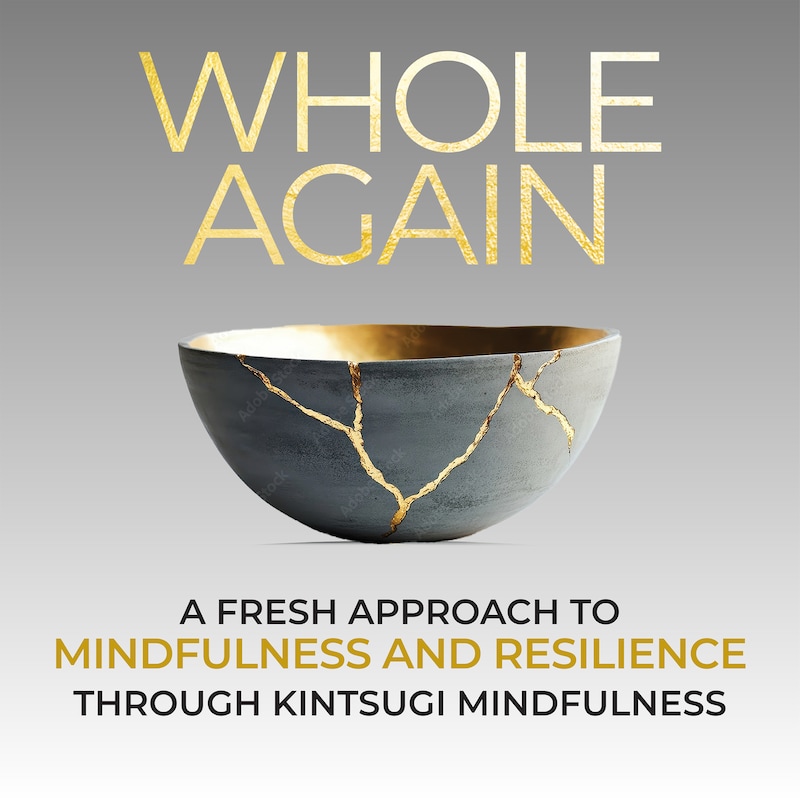
Shownotes
The Whole Again Podcast: Mindfulness and Resilience through Kinstugi Wisdom airs every Monday, Wednesday and Friday with Pause Breathe Reflect Microdose Meditations, Growth Mindset and Mindfulness Tips, Transformation our scars into healing and resilience, and a new series from May to August called A Perfectly Imperfect Union.
------
Today is Tax Day in America. How much are you paying in Scroll Taxes???
In a world where our phones are always within reach, it’s easy to believe our constant connection is harmless—or even necessary. But what if the real issue isn’t willpower… it’s design? This episode explores how our digital habits are shaping our mental, emotional, and physical well-being—and why so many of us feel distracted, overwhelmed, and stuck in patterns we can’t seem to break.
- Understand the hidden “scroll tax” and how it’s impacting your time, attention, and overall health
- Learn why reducing screen time—even slightly—can improve focus, mood, and cognitive performance
- Discover simple, realistic ways to reset your relationship with your phone without giving it up completely
Press play to learn how small shifts in your digital habits can help you reclaim your focus, energy, and sense of control in a constantly connected world.
Link to Washington Post Article:
You can now download my Pause Breathe Reflect App with Microdose EQ for FREE in Apple’s App Store or Google Play. Discover how spend less time on your phone and more time on things that bring you joy. Also, find the support you need to navigate today’s uncertainty with more calm and grace.
Receive a FREE copy of my book: “My Last Bad Day Shift.”
Join me on Substack https://substack.com/@milkshakeswithmichael for more ways to stay resilient and navigate today’s uncertainty with more grace.
We can also connect on LinkedIn.
Subscribe to be sure you don’t miss any of the micro-meditations, wellness tips, and guidance that I publish every Monday, Wednesday, and Friday at 7:11 am.
With Whole Again: Mindfulness and Resilience through Kintsugi Wisdom, listeners explore mindfulness and resilience through personal stories of trauma, scars, and injury while learning to overcome, imposter syndrome, self-doubt, and perfectionism with self-compassion, self-love, and self-worth. Through insightful discussions on building resilience, fitness, and stress management, as well as mindfulness practices and digital wellness, the show offers practical tools such as breathwork, micro-dose meditation, grounding techniques, visualization, and daily affirmations for anxiety relief and stress reduction. Inspired by the art of kintsugi, the podcast embodies healing as a transformative process, encouraging a shift in perspective from worry and overwhelm to gratitude and personal growth. By exploring the mind-body connection, micro-dosing strategies for emotional well-being, and
Transcripts
Hey there, it's Michael. Welcome to Whole again, the show that's here in support of you creating a meaningful life and the person you're becoming. And today I wanna share some new research I came across around our digital health because although we spend a lot of time on our physical wellbeing and our emotional and mental wellbeing, we also talk about relationship health.
Our digital health nowadays is so critical and it impacts, it creates a ripple effect, but not necessarily in the best way on our overall health. So before we drop in, let's take a nice, healthy breath in. Deep breathe deep into your lungs, deep into the belly. Allow that. Pause to exist and then release the breath out.
Allow yourself to let go of the other moments that came before this one. Relax your shoulders. Let's talk about how you can step into the person you're becoming. A few weeks ago, you may have seen the news coverage on those two. Seminal court cases that involved social media, very specifically Instagram and Meta.
And during one of those trials, the 20-year-old woman who was the plaintiff stood in the court and described something that we all, I think, have felt, but we don't say it out loud, certainly not enough. She said her relationship with social media started very young. Many of our social media relationships start really young and slowly expanded until it filled almost every available hour of her life.
Her sleep faded. She grew more anxious, and her thoughts became consumed with, uh, what I would say comparisonitis or comparison. Now, this isn't new. We've heard this in the news coverage and in studies actually coming out of Meta Zone research, its own data, how harmful Instagram can be to teenage girls.
But I will say this, a lot of times we focus in just on the kids as it relates to their phone health and social media. But I have news for you. It also impacts us as adults. Our kids are the only ones who have succumbeded to comparisonitis. We also feel it. We also have had moments where we want to scroll for a bit, but we end up scrolling for a few hours.
That's what I call the scroll tax. It's that tax we pay when we mindlessly scroll on our phones. Well, the plaintiff went on and said she got to the point where she wanted to be on her phone all the time, not because it nourished her, but because she felt stuck in a loop that she couldn't break. There's also the sense of fomo, fear of missing out.
What's the next thing in our scroll? And the jury ultimately found in her favor, but. Her story. Her story, and this story that I think impacts so many people isn't about the lawsuit. Although the lawsuit, I think will be a seminal case. It might expose other social media companies to future litigation.
It's about her pattern and it's a pattern I think many of us feel currently. So let's start here. Let's take the pressure off. This is not a willpower problem. The research is increasingly clear. Our phones, especially social media apps are engineered. They're designed to capture and hold our attention.
The constant pull can quietly drain our mental and emotional reserves, our physical health. It's hard to feel whole again when we're always being pulled back to what's on our phones and how do we stack up against the whole world because our whole world is on our phones. The research, my team and I did.
Our development of the Pause, breathe, reflect app showed through survey data that most people spend about four to five hours a day on their phone. Now, some people use their phone a lot for work, and sometimes we have particular apps like Audible, like you're listening to a book or you might be listening to music, and that might skew the data as far as how much time the phone is in session, but even on the low end.
It's like two to three hours and that adds up over time. As I mentioned, there's a big scroll tax when we're on our phones too much, and that scroll tax is a tax on our time and our time that we could better spend on things that bring us more, more joy, if you will, or more happiness and all that time definitely impacts the brain now.
It doesn't impact our mind or our brain in the same way for everyone. Some people can spend hours on the phone every day and be okay, but on average, and like it or not, we all sort of fall within the average. Studies now link a lot of smartphone use to the potential of increased anxiety or depression.
Certainly reduced attention spans. Even impaired memory or focus. That's why I created those shirts, put the phone down so people could focus better, especially when they're driving and with some, it can actually lead to accelerated aging. So breathe that in because there's so much talk about longevity and how to live a long life, but our phone use could actually be shortening our lives, at least from.
Some studies I've heard of, so this is the key. Our phone, when I first got my iPhone, one of our friends said, it's like having a computer in the palm of your hand, but it is different. It's sort of like that, but not really. Our phone use is much more disruptive than our computer use. And why is that? Well, because it's right here.
In the palm of our hands or right in our back pocket. It's constant, it's portable, and often it's mindless. It interrupts our lives in real time while we're eating and talking and walking and even resting. And when your attention is split like that, it's really hard to keep focused. So we lose our focus, but we also lose the depth of the experience.
We've all been there. I have, so I'm raising my hand on this one. We've all gone to a concert and instead of going into the concert fully and just experiencing the music and the crowd and the energy, we're recording it, and that does take away from the full experience. So we end up being less connected, less satisfied, and less present.
As I record this, I'm down in Greenville, South Carolina. Actually, I'm in Traveler's rest, South Carolina and in between my bike rides. This is a training camp for me as a way to capstone my recovery and rehab from my horrible crash from last summer. I've been able to catch up on some things, catch up on some research actually around our digital health, and I came across this one study.
It's actually hit the news. I saw it also in the Washington Post, and this one study looked at 400 adults for two weeks, and the participants used an app. They used the Freedom App, although I would've preferred they would use the Pause, breathe, reflect app more on that to come in essence. App blocked internet access on their phone, so it made it a dumb phone, no longer a smartphone.
They could still use it to make phone calls and do text messages, but all the scrolling, all the web browsing, all that was dismantled. So their phones became simpler devices, almost like going back to the day of the Blackberry. Remember when we thought that was so cool? Well, here's what happened in the study.
Their daily screen time dropped from 314 minutes to 161 minutes, and they also reported that their attention improved significantly, and they also shared that their mental health and overall wellbeing also improved. Pretty cool, but. Here's the really interesting twist to the study. The improvements in attention was comparable to reversing 10 years of age-related cognitive decline.
Let that sink in. They didn't take high doses of creatine, nor did they have a major life overhaul. Simply, they just had less digital stress and consumption. And additionally, the participants in the study also reported. A reduction in depressive symptoms. And here's another cool part of the study. In addition to that, in addition to the 10 year cognitive decline reversal, those that didn't really stick fully to the detox, those that cheated in the study, quote unquote, and still check their phone.
More occasionally than the people that really adhere to the parameters of the study. They also experience benefits, which tells us something important. This is not a all or nothing matter, even partial micro changes. Have an impact on our overall digital health and our overall physical and mental health.
There was actually another study, and I'll put the link to this second study also in the show notes that that after one week, it was a one week reduction in smartphone use, participants reported. A 16% drop in anxiety as well as improved sleep quality. Now, as I've shared in the past here on whole, again, when we have studies like this that come out about really anything, the researchers will point to these percentages and they'll say they're statistically significant, which is great 'cause that really does talk about the rigor of a particular study.
It's also important to keep in mind if there were actually clinical significance to these findings, meaning how does this actually impact one's life Now with these particular studies, I don't have that research to share with you, but I think we all know when we're off our phones or not on our phones as much.
We do seem qualitatively better. It actually enhances our lives. No one has told me in all the research I've done for Pause, breathe, reflect that they wanna spend more time on their phones. Everyone out there that I've spoken to and I've spoken to close to 5,000 people, either directly or through survey data, have told me.
That they wanna spend less time on their phones every day and more time doing things that bring them more joy, like spending time out in nature or with friends and family or on their own health. For some they've shared they wanna spend hours less on their phone. For others it's, well, 30 minutes again, micro steps.
Matter, and that's the whole thinking behind Microdose eq. So with Microdose eq, which is a feature on my pause, breathe, reflect app, which by the way, unlike the other apps out there, it's totally free to you through it. It's like a speed bump. It slows us down, creates just enough friction to reset our habitual pattern of grabbing our phones every time we happen to be bored and going right to certain apps or certain websites that seem to grab our attention most frequently.
I. The reality is, is that micro steps matter because we all have full lives. We have careers, we have families, we have hobbies, we might have healing to do. We do need our phone. So being without a phone current day and just going to analog phones is probably not the solution for most people. So we do need our phones.
So instead of removing our phones from our lives through Microdose eq, we're retraining how we relate to it or how we use it. So it becomes a tool that can benefit us as opposed to a tool that seems to be running our lives. And the people who have it also claim much like that study did that they reduced their screen time by an hour or more a day.
And they report back that they're also experiencing some of the same benefits those studies actually showed in the research, which is I think pretty cool and, and validating to microdose eq. Again, small steps consistently over time, just disrupting our habitual pattern, just enough so we can develop a new habit, a new pattern.
That allows us to use our phones as tools to benefit our lives as opposed to our phones driving our lives.
Again, pause, breathe, reflect with Microdose. EQ is free. You can find it in the App Store or Google Play. As always, thanks for being here. Thanks for listening. If this episode resonated with you, especially around the fact that small steps. Do matter in improving our digital health and that has a cascading or a ripple effect into our relationship, physical and mental and emotional health.
And you think someone you know might benefit from listening to this as well, I hope you'll share it with them. On Friday, I have another one of my growth mindset tips that I'm sharing in celebration of the 25th anniversary of my last bad day. It's all about something critical. Essential and creating connection.
So I hope you'll check it out until then. Let's celebrate our scars as golden symbols of our strength and resilience. And don't forget to have fun storm in the castle,
and if you wish to learn more about creating beautiful ripples and how to prevent. A bad moment from turning into a bad day. Please visit my website, Michael O'Brien schiff.com and sign up for my newsletter called The Ripple Effect. And join us each Monday, Wednesday, and Friday here at Whole Again, and discover how you can heal, grow, and become more resilient.
And celebrate our scars as golden symbols of strength and resilience. Until then, remember, you can always come back to your breath. You've got this and we've got you.