Shownotes
Episode Summary
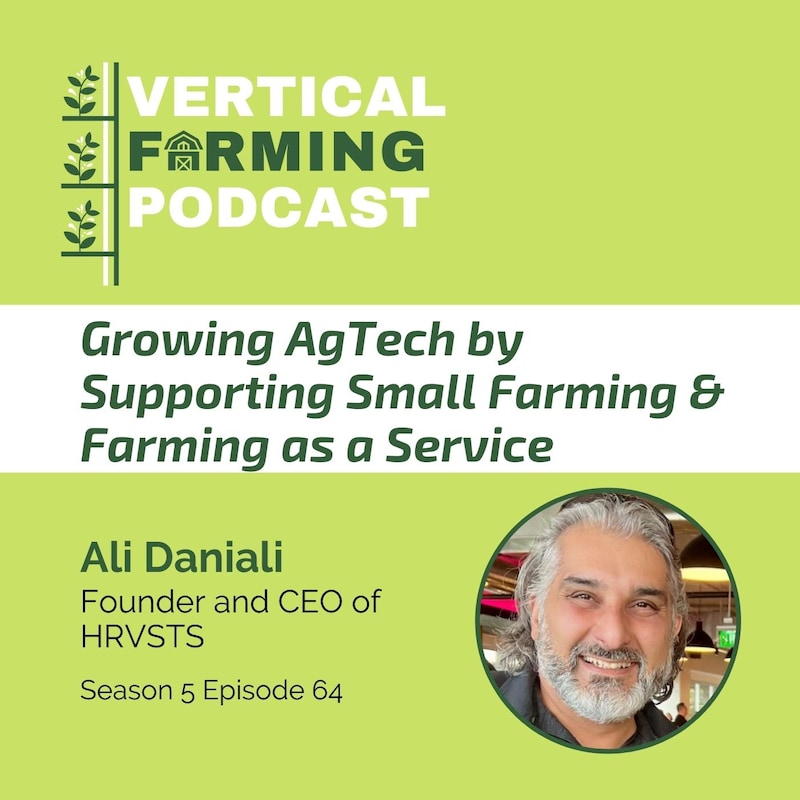
Founder and CEO of HRVSTS, Ali Daniali joins the show today to share his engineering background, the origin story of HRVSTS and the importance of supporting and promoting small farming both domestically and abroad. Today, Harry and Ali discuss decentralizing the food distribution network, some big wins HRVSTS was able to achieve recently and advice Ali would give to first-time farmers.
Thanks to Our Sponsors
CEA Summit East - https://indoor.ag/cea-summit-east-2025/
Indoor AgCon - https://indoor.ag/
Key Takeaways
07:13 – Harry welcomes back Founder and CEO of HRVSTS, Ali Daniali, to discuss what he got out of the latest Indoor AgTech Conference in NYC
12:27 – Ali’s background prior to HRVSTS and taking an engineering approach to AgTech
21:37 – The idea behind the ‘Sold Before You Sell It’ mantra
23:02 – Decentralizing food distribution and challenges Ali faced
29:46 – Indoor farming as a service and the variety of services available
35:21 – Ali recalls latest wins from HRVSTS
40:30 – Advice Ali would give to first-time farmers
43:26 – A tough question Ali has had to ask himself recently
46:19 – Harry thanks Ali for joining the show and let’s listeners know where they can follow HRVSTS
47:02 – An ask Ali has for the audience
Tweetable Quotes
“Scale becomes this thing where everybody needs to scale up. And, because of that, we leave behind a lot of conversations about small and medium-sized growers. We leave behind conversations about food service and other ways of distribution of food.” (10:40) (Ali)
“What I had learned from those interviews was that the grower who had a relationship with a buyer and could pre-sell their crop - two crops ahead of time, all their crops ahead of time - they were the ones who were being successful in their process.” (16:31) (Ali)
“That model is very susceptible to breaking and it’s not very resilient. We have created these very efficient distribution models that can even come over to the next one when there’s a problem. You have to bury food because you can’t move it from one distribution network to the other. And, with crypto and all these other types of technologies and the conversation about decentralization, the question was,’Can we decentralize our food distribution as well?’” (23:02) (Ali)
“I think this is the time right now to bring small farming back to the U.S. and across the world. We lost them because of WWII. Big Ag became this monster to be able to feed and commoditize agriculture. I think we need to fix that. And the way you do that is with indoor growing.” (38:02) (Ali)
“There’s so much produce being eaten in the U.S. and abroad that the pie is huge. We just gotta get in the door with these buyers and tell them, ‘You can have a bespoked order, exactly to your specifications using this indoor farm as a service and have the highest quality, locally grown, with no pesticides.” (42:36) (Ali)
Resources Mentioned
HRVSTS – https://hrvsts.com/
HRVSTS Twitter – https://twitter.com/hrvsts
Ali’s Email – [email protected]
Ali’s Linkedin – https://www.linkedin.com/in/alidaniali/
Sponsor Info
Cultivatd’s Website – https://cultivatd.com/
Cultivatd’s Instagram – https://www.instagram.com/cultivatdco/
Cultivatd’s Twitter – https://twitter.com/cultivatd
Cultivatd’s Facebook – https://www.facebook.com/cultivatd/
🎙️🎙️🎙️
Podcast Production and Marketing by FullCast
Discover the best podcast services in the world at The Podosphere: https://www.thepodosphere.com/
Mentioned in this episode:
2025 Precision Ag Report by iGrowNews
2025 Precision Ag Report by iGrowNews
Transcripts
$680 million poured into precision ag last year.
Speaker:Autonomous weeding robots dominated, and John Deere made 2 acquisitions in 3
Speaker:months. A food company, not an equipment maker, bought a
Speaker:robotics startup to protect its own supply chain. The deals are
Speaker:accelerating, the money is moving, and the winners are already separating from the
Speaker:pack. If you're investing, building, or buying in this space,
Speaker:you need the full picture before your competitors get it. The 2025
Speaker:Precision Agriculture Intelligence Report From iGrow News is now
Speaker:available. Get your copy today at
Speaker:igrownews.com/precision. If you are starting a vertical
Speaker:farm and don't know where to begin or which technology would suit your needs,
Speaker:then reach out to the experts at Cultivated. As indoor farm brokers, they
Speaker:help connect you to the right technology and ensure your project is successful.
Speaker:Best of all, their service is free because they work on behalf of their
Speaker:partners. Visit cultivated.com to learn more. And that's
Speaker:spelled C-U-L-T-I-V-A-T-D dot
Speaker:com, or click the link in the show notes. That model,
Speaker:it is very susceptible to breaking and not very
Speaker:resilient. We have created these very efficient
Speaker:distribution models that can't even come over to the
Speaker:next one when there's a problem, right? You have to bury food
Speaker:because you can't move it from one distribution network to the other.
Speaker:So this was really top of mind for me as well. It's like the question
Speaker:was, can we decentralize our food
Speaker:Welcome to the Vertical Farming Podcast, weekly conversations
Speaker:with fascinating CEOs, founders, and agtech
Speaker:visionaries. Join us every week as we dive deep into the
Speaker:world of vertical farming with your host, Harry Duran.
Speaker:Vertical Farming Podcast, Season 5. Welcome back. If you are a
Speaker:first-time listener, you're in the right place. This is the show where we interview fascinating
Speaker:CEOs and founders of the leading vertical farming companies from around the world.
Speaker:I'm your host, Harry Doran. In case you missed the last episode, we
Speaker:spoke to returned guest Nicola Kerslakey, and she joined the show to
Speaker:discuss several exciting and innovative areas of agtech that she and the team at
Speaker:Cateen are working on. She talked about her new microlearning platform,
Speaker:the importance of diversifying revenue streams, and the trends she's noticing
Speaker:overall in agtech. It was a pleasure having her return back to the
Speaker:show, so make sure you check that out if you haven't already. This week, a
Speaker:new conversation with a friend that I met at the Indoor
Speaker:AgTech NYC conference, Ali Daniyali. He's the
Speaker:founder and CEO of Harvests, and he joins the show today to
Speaker:share his engineering background, the origin story of Harvests, and the
Speaker:importance of supporting and promoting small farming both domestically and abroad.
Speaker:We touch on the topic of decentralizing the food distribution network, some big wins
Speaker:Harvests has been able to achieve recently, and advice Ali would give to
Speaker:first-time farmers. You'll really enjoy this conversation because it's
Speaker:near and dear to my heart, this idea of supporting small farmers and
Speaker:also this farming as a service model which
Speaker:Ali is championing, which I really, really enjoy. If you haven't already,
Speaker:make sure you subscribe to our newsletter at verticalfarmingweekly.com.
Speaker:Each week, our team member Noah brings you the latest and greatest in the world
Speaker:of vertical farming. Sign up today at verticalfarmingweekly.com.
Speaker:If you haven't already, please leave us a rating and a review at
Speaker:ratethispodcast.com/vfp. I'd love to read those out
Speaker:on future episodes. Thank you. As a reminder, we have sponsorship opportunities
Speaker:available for season 6 of the show. So if you're interested in learning how
Speaker:you can leverage the reach of this show as we connect with
Speaker:all of the movers and shakers in the world of vertical farming, reach out to
Speaker:me directly, [email protected]. Stay tuned to the end
Speaker:of the episode where I share some exciting updates for
Speaker:this podcast. But before then, let's get into this conversation with Ali.
Speaker:So Ali Danyali, founder and CEO of Harvests.
Speaker:Thanks for finding some time to join me on the Vertical Farming Podcast.
Speaker:Thank you for the invitation. And for the benefit of the listener, we
Speaker:got to meet in person actually, which was nice. And sometimes I don't have
Speaker:that ability given how the podcast is set up, but we were both
Speaker:recently at Indoor AgTech NYC and I
Speaker:ended up— I'm not going to blame the conference or the— probably the travel,
Speaker:but I did get sick. I caught Probably it's, let's say, a
Speaker:non-COVID flu. I got tested and it wasn't COVID, but it certainly felt
Speaker:COVID-ish. So I'm just coming out of the tail end of that. So if I
Speaker:sound a little congested, that might be why. Well, I'm glad
Speaker:you're feeling better. Thank you. How was the rest of the conference and the trip
Speaker:back for you? The trip back was great. I was
Speaker:sitting in the middle of 2 ladies that self-identified as
Speaker:Trouble and Havoc. That was funny. And we
Speaker:laughed, we made jokes the whole time back, so the 6-hour flight
Speaker:went very quickly. Yeah. And
Speaker:what was— obviously when you're on a plane, there's something about the
Speaker:calm and serenity and the clear-headedness I find sometimes.
Speaker:And I had some nice ahas from the conference. Reflecting back, I think I
Speaker:came back with 20+ interviews or outreach
Speaker:opportunities. I'm really excited. And then obviously this was one of them. And so
Speaker:When it comes to the conference, when you think about your intentions about why you
Speaker:went and your experiences there, how would you recap that?
Speaker:I approached the conference as a place to
Speaker:connect with small and medium-sized growers,
Speaker:indoor growers, indoor farmers, indoor growers, and
Speaker:also a variety of vendors
Speaker:who felt that they were innovating in this space. One of our
Speaker:models for Harvest is to partner
Speaker:with these types of OEMs and manufacturers, and
Speaker:because their customers are our customers and we fit in
Speaker:a really complementary
Speaker:section of their customers and helping them out.
Speaker:So it was really nice to be able to have really in-depth
Speaker:conversations, meet new people, The sessions were great.
Speaker:It allowed me to see where the industry is talking
Speaker:and where the gap is. And I think there's something to be
Speaker:said about what kind of conversations these conferences
Speaker:have and what are they missing. I think that was really
Speaker:evident for me is what was missing and we still need to talk about.
Speaker:What were some of the things that are top of mind for you in terms
Speaker:of what could have made it better or which conversations could have been added?
Speaker:There's a lot of conversations about the big indoor
Speaker:ag operators, and that's great. I think
Speaker:that's— they are the beachhead of this industry in
Speaker:getting people to, one, change their
Speaker:appetite for indoor grown. They have the money, they
Speaker:raise the money to be able to get the
Speaker:vernacular brought into the conversation in a
Speaker:marketing sense. Yeah. That's great. I'm very supportive of
Speaker:the large operators. And because the conversation is about
Speaker:them, then it becomes, oh, who are they selling to?
Speaker:So we inherit the conversation about
Speaker:grocery and produce in scale.
Speaker:And scale becomes then like this, everybody's got
Speaker:to scale up. And because of that, we leave
Speaker:behind a lot of conversations about small and
Speaker:medium-sized growers. We leave behind
Speaker:conversations about food service and other ways of
Speaker:distribution of food. But I think it's this curve,
Speaker:right? We'll start having those conversations as well. But we got to
Speaker:be very cognizant that there is a missing
Speaker:component right now in those conferences. And
Speaker:we got to right now dig for it. Yeah, that's interesting. And I think
Speaker:there might be opportunities to have follow-ups. I think Rethink
Speaker:Events, folks who ran the conference we were both at, they
Speaker:seem to be pretty on the ball. Because now that you mentioned it, I think
Speaker:I remember a follow-up email. So that could be a good opportunity to talk about
Speaker:those topics because I'm sure they're already planning. They've probably got the dates ready for
Speaker:next year. Exactly. And as it goes with the conference scene, you have to be
Speaker:almost a year or 2 ahead with these venues. And it was
Speaker:extremely professionally run. Everything, all the sessions were
Speaker:on time. You can tell that it wasn't their first rodeo and they knew exactly
Speaker:what they were doing. So that's a— that's always nice. I love single-track
Speaker:conferences. So you're not, you don't forget, you don't get the sense that you're running
Speaker:around from room to room. Right, right. And you get to spend more time,
Speaker:connected time, because we know we had a couple conversations and then we kept running
Speaker:into each other. And I think that's the nature of a setup like that. I
Speaker:do like the ability to have one stage and then
Speaker:being able to come in and go and set aside time. And
Speaker:I'm looking forward to getting the recordings because of the conversations
Speaker:that I was having outside. I really want to catch
Speaker:up on some of those topics. So we
Speaker:normally get into the origin story stuff in the beginning, but since we,
Speaker:you know, it's such— we were just catching up and we just saw each other,
Speaker:we sort of just wanted to start from there. But talk a little bit about
Speaker:where you were before Harvests and what business you
Speaker:were in. And then we'll make our way on the timeline towards where the
Speaker:idea for Harvest came. I'd love to. About 2 years ago,
Speaker:I was a full-time employee at T-Mobile. I was
Speaker:there for over 12 years and working
Speaker:on some amazing technologies from 5G
Speaker:to AR and VR, virtual reality, augmented
Speaker:reality, and being able to enable
Speaker:our customers at that point to really get the best
Speaker:out of the network for those kinds of use cases.
Speaker:And one of the projects that I had was to work with a
Speaker:fairly known OEM that creates these
Speaker:vertical indoor farms to help with
Speaker:connectivity inside. And in that
Speaker:project, I started doing a lot of research on
Speaker:container farming and was very
Speaker:interested in being able to have something like that
Speaker:on campus for the company I was working for.
Speaker:And also, if I was able to do something like this on my own,
Speaker:what would it take? So I reached out to almost 20
Speaker:different growers that were doing this type of
Speaker:farming, and I wanted to get a sense of what was the
Speaker:level of effort Weekly? What was the cost?
Speaker:Do you make money? How do you plan for the future?
Speaker:Can it be done as a side hustle? I think a lot of
Speaker:tech-centric folks are interested in
Speaker:going into this because there's so many Internet of Things, IoT
Speaker:sensors. There's a tremendous amount of
Speaker:data that comes out of the farm system that you can,
Speaker:you know, tweak and and play around with. So a lot
Speaker:of people drink the Kool-Aid of this is an easy thing to do.
Speaker:But what came out— I'm curious, just as a little aside, and this is the
Speaker:productivity tech nerd in me, how did you compile this information? Was it
Speaker:just like a simple Google Sheet, Google Doc, Airtable? No, I actually
Speaker:made a single sheet, an interview sheet for
Speaker:every single interview I did. I didn't distribute this. It was
Speaker:actually, I used Apple Pages. Okay. And I used the template. I
Speaker:took pictures. I created it like it was this one sheet for
Speaker:myself, and I talked about where they
Speaker:came from, what challenges they were trying to
Speaker:overcome, what were some of the problems that they faced. I actually put
Speaker:everything into this kind of high-quality, you know, one
Speaker:sheet just for myself. So I took all
Speaker:that information and what boiled down to after
Speaker:it was that there's 2 questions that these growers are
Speaker:having to answer weekly, which is, what am I going
Speaker:to grow next? And who am I going to sell it to?
Speaker:Really critical questions and— Very
Speaker:important questions. Very important questions. But they were guessing on
Speaker:these. It was not data-driven. And as an
Speaker:engineer, data in my work was very
Speaker:important to be able to guide and plan and
Speaker:execute. And I encountered
Speaker:that a lot of the growers were guessing.
Speaker:Because they were guessing, they were using this fantastic, the most
Speaker:efficient growing system, these shipping container
Speaker:farming systems, and they were matching
Speaker:it up with the most inefficient way of selling and distribution.
Speaker:Right? And it was kind of for naught. So I'm like, well,
Speaker:if I'm going to get into this, I got to solve it for myself.
Speaker:And that's where Harvest platform came
Speaker:to life, where what I had learned from those interviews were that
Speaker:the grower who had a relationship with a
Speaker:buyer and could pre-sell their
Speaker:crop 2 crops ahead of time, all their crop
Speaker:ahead of time, they were the ones that were being
Speaker:successful in their process, right? And
Speaker:things were figured out for them. So I'm like, I got to figure that out.
Speaker:How do I bring at a scale, at a kind of a software as a
Speaker:service model, how can I bring about
Speaker:this pre-selling, the ability to lock in
Speaker:capacity? Because right now, I think for the first time
Speaker:In modern agriculture, we have a
Speaker:growing system that is a measurable unit.
Speaker:You know that 320 square feet has a
Speaker:certain amount of planting and seeding that you can do,
Speaker:and you can then harvest a certain yield because it's
Speaker:being run with machines and a recipe. And
Speaker:because of that, you can treat it like A
Speaker:system and a unit and manage it so you can fractionalize it.
Speaker:And when you fractionalize it, you can use pieces of it or you can
Speaker:aggregate it, right? You can put 1, 2, 3, 4,
Speaker:5 of these growing capacities together. So
Speaker:I took this really engineering approach. I approached Amazon
Speaker:Web Services and I needed some sort of compute. I
Speaker:didn't leave all my machines running all the time. I turned them on when I
Speaker:needed it. And there was no waste there. It was— Yeah, on demand.
Speaker:On demand, matching demand exactly to supply became
Speaker:really what I was trying to create. So we
Speaker:built a platform where through integration
Speaker:with crop management software, we understand
Speaker:when there's capacity available to grow in the
Speaker:future. And because we have that information, I can
Speaker:bring in demand from food service and
Speaker:match it up directly with what's available to
Speaker:grow. So we manage the food service
Speaker:side, get the order that's typically a bulk order,
Speaker:and are able to then bring along small and
Speaker:medium-sized growers to grow at that scale.
Speaker:Right now they don't have that, not capability, but the deal
Speaker:flow to get it in there. Yeah. Most food servers go to
Speaker:the big distributors. And you're seeing that, the
Speaker:Syscos and US Foods, they transport majority
Speaker:of their fresh produce because it's at
Speaker:scale. So when a Sodexo says, I need
Speaker:25,000 pounds of lettuce, Sysco Foods can,
Speaker:or whoever they buy from, can go and say, yes, I can bring you
Speaker:25,000 pounds of lettuce for this delivery time.
Speaker:Small growers, at most, if they're at 100%, they're about
Speaker:1,000 heads of lettuce. Yeah. But because
Speaker:we use technology, kind of this modern farming approach is
Speaker:to use the capacity and aggregate
Speaker:from very local production, then we
Speaker:distribute once it's harvested. So there's
Speaker:gonna be more, I'm sure, we'll talk about there. So as I'm thinking about that
Speaker:process, When did you really feel like the
Speaker:gears were turning and you started having these conversations
Speaker:and you knew that with your past experience that this is something
Speaker:that I'm assuming, A, at the time you didn't see anywhere in the industry that
Speaker:this was, this issue or this challenge was being addressed, or if it
Speaker:was, not at this scale. And is that something,
Speaker:an engineering background, is that problem-solving background? I'm curious just a little,
Speaker:get a peek into like how you think. Yeah. And how you problem solve when
Speaker:it comes to issues like this and how those first iterations look. And
Speaker:maybe were there things you tried that didn't work and to finally arrive where you're
Speaker:at now? Because this was a personal problem of
Speaker:solving this entrepreneurial endeavor, I think I
Speaker:had a very intimate understanding of the issue. And
Speaker:being able to understand the growing side
Speaker:and the engineering of how—
Speaker:and the technical part of how an indoor
Speaker:farm uses software, so crop
Speaker:management software, and it has that capability of understanding and
Speaker:bubbling up that information so you can take
Speaker:actions, right? Pieces started falling into place. And
Speaker:I'm a 5-time founder, so I knew that I
Speaker:could take the lessons from Even though I was coming out
Speaker:of a corporate world, I used my time really efficiently
Speaker:for first year, kind of building this in the background.
Speaker:And then 4 months ago, I went full-time. I left T-Mobile
Speaker:and said, this is the time to really go after this. And
Speaker:here we are. I'm curious, Ali, also because I'm an
Speaker:entrepreneur and there are people that have been reaching out who have an
Speaker:interest in starting their very first farm. This has been something that's top of mind
Speaker:for me. And some other ideas are brewing that we'll probably get to talk
Speaker:about after this conversation in more depth. But I
Speaker:think this idea of not knowing where to start, not
Speaker:thinking through this full cycle, because you could have the investment
Speaker:to buy the container farm, but if you don't have anywhere to sell it— Exactly.
Speaker:The issue— yeah, this is the issue you're actually addressing. One of our
Speaker:mantras is sold before you sow it. That's
Speaker:great. And by pre-selling and having an offtake agreement, we bring some
Speaker:safety in, in that, those decision points for a grower.
Speaker:Yeah. And they get to then focus
Speaker:on what they do really good, well, and that is growing
Speaker:and letting us be the distribution and sales and
Speaker:logistics. Because what's interesting about this hub and spoke
Speaker:model that large distributors have created They
Speaker:pick up from growers very long
Speaker:distance or ship it. It goes 1,800 miles and then it goes
Speaker:to a hub where then it gets divvied up to
Speaker:trucks and then it gets out and it gets distributed.
Speaker:Well, it's not very sustainable. It's— we have seen during
Speaker:this past 2 years during the pandemic where
Speaker:that model is very susceptible. it is very
Speaker:susceptible to breaking and not very resilient.
Speaker:We have created these very efficient distribution
Speaker:models that can't even like come over to the next one
Speaker:when there's a problem, right? Yeah. You have to bury food because
Speaker:you can't move it from one distribution network to the other. So
Speaker:this was really top of mind for me as well. It's like, how do you—
Speaker:and with crypto and all these other types of
Speaker:technologies and the conversation about decentralization,
Speaker:the question was, can we decentralize our food distribution
Speaker:as well? Yeah. And you can when you use third-party
Speaker:logistics. You take the food that's grown and you
Speaker:deliver it directly, especially if it's very close to where it's going
Speaker:to be consumed. You use distribution
Speaker:similar to Instacart or these third-party
Speaker:logistics that only do delivery, and you move it very
Speaker:quickly after it's harvested, less than 24 hours directly
Speaker:from where it's being grown to where it's being consumed. Yeah.
Speaker:So you create a decentralized way of
Speaker:distribution so that when— if one of these
Speaker:growing systems goes out, you're not taking
Speaker:everybody down. So this is another point I think we talked
Speaker:about on the during the conference that was missing. Yeah. It's
Speaker:great that we're building these large facilities. Again,
Speaker:the reason we're building large facilities to grow is because we want to
Speaker:sell the grocery, and grocery needs scale, and the
Speaker:profit margins are driven by scale. But when
Speaker:you do the same model as big ag with soil-based
Speaker:big ag, and you do it closer, that's nice.
Speaker:But you're moving the problem. You're just moving the problem from
Speaker:1,800 miles to 50 miles.
Speaker:And if you have— if that particular system
Speaker:goes out, and we've had problems where I think
Speaker:salmonella, or you've had indoor growers have to
Speaker:shut down, you've just at that point in the same boat.
Speaker:Yeah. So I think we need to get back to
Speaker:small farms, but being very smart. You can
Speaker:have a distributed network of
Speaker:small farms using indoor growing
Speaker:around an urban area and have
Speaker:win-win. You can have bespoke type of produce
Speaker:grown for that specific region that may
Speaker:want— they might want more wasabi arugula. Right.
Speaker:So you can have a chef that wants that
Speaker:at a larger scale and still be able to
Speaker:have your bib lettuce and all your other leafy
Speaker:greens and herbs and strawberries being grown across— around the
Speaker:urban area and make the— where we
Speaker:consume food a lot more resilient to
Speaker:food disruption. And that's what Harvest is really focusing
Speaker:on is bringing fresh food to food service
Speaker:at a very efficient way, at a scale that they
Speaker:need, by working with urban growers, indoor growers.
Speaker:So thanks for that detailed explanation of what it is
Speaker:you're putting together. What were some of the challenges you faced as you were starting
Speaker:to put all the pieces together? I think there's challenges
Speaker:mostly on the food consumption side, the
Speaker:buyer side. Okay. Can you say more about that? Large distributors
Speaker:are very well entrenched and have for hundreds of
Speaker:years have been doing the same thing. And
Speaker:food services, there hasn't been really much innovation in
Speaker:distribution at all. I mean, it's become super efficient,
Speaker:but it's the same model being super efficient.
Speaker:And it's been you know, fed to our food service and
Speaker:restaurants to doing the same way over and over again.
Speaker:And they're dealing with price hikes because
Speaker:price goes up 3 or 4 times a year. They're dealing with
Speaker:out of stock. Hey, I can't get this to you because I
Speaker:can't source it. So, and spoilage. So
Speaker:because a lot of the food is being trucked, they don't get the full
Speaker:amount of use of that food. that they've paid for.
Speaker:So the challenge is to get that message across
Speaker:to food service, and I hope they're listening,
Speaker:that there's a better way. And you can get 50, 60%
Speaker:longer shelf life when it's coming from local.
Speaker:You can get food that's a lot more nutritious and healthier without
Speaker:pesticides when it's indoor grown. We know that. Yeah. And
Speaker:because of those 2 are end price stability and all year.
Speaker:So those are the things I talk about. And what I
Speaker:then, it's like a secondary thing, I talk about the environmental
Speaker:impact because most of these food service buyers
Speaker:more interested about the pocketbook, right? Yeah. What I've built with
Speaker:Harvest is intrinsic
Speaker:sustainability. I don't upcharge for being something that
Speaker:is it helps the planet. And a lot of companies, they're like, oh, this is
Speaker:better for the environment, we'll charge a little bit more for it. And I
Speaker:don't believe that's the right approach if we want to make a difference quickly
Speaker:with our environmental challenges. It has to be intrinsically
Speaker:built inside the product. There's no reason to say
Speaker:that's even indoor grown. It's just lettuce, right? Locally grown.
Speaker:Locally grown. It's coming from a farmer that's
Speaker:Close by to you. And it's then if you really
Speaker:want to dig, yes, this came from indoor grown, but
Speaker:intrinsically it's the same price as
Speaker:non-indoor grown. We can change
Speaker:the behaviors of buyers by making it—
Speaker:don't necessarily put all of our marketing dollars
Speaker:on making those things the important
Speaker:aspects that make differentiation, right? Sure. And I think
Speaker:a lot of this conversation, again, goes back to how we've started. We
Speaker:chased the grocer because it's of scale and you have
Speaker:to package things, you have to market things. It's consumer
Speaker:goods has a model of showing differences
Speaker:and how are you better than the other? And we got trapped in this model
Speaker:that We got to kind of nudge away from it now.
Speaker:What's interesting is the way technologies and
Speaker:services and preconceived notions
Speaker:about where food comes from and how it's delivered, all that is being turned
Speaker:up on its head. A lot of it we were forced into in terms of
Speaker:having those conversations because of COVID because of the fact that the way we
Speaker:thought we could do things, when that's shut definitively
Speaker:for 6 months, Life goes on and people start to get resourceful.
Speaker:And what's interesting is this concept of— you talked about the delivery services
Speaker:like the DoorDashes that now can deliver food, and they're just
Speaker:essentially like independent, locally distributed
Speaker:food distribution systems. They're distribution systems, yeah. Yeah, yeah.
Speaker:And so it's interesting how these things that you're talking about are working. Probably
Speaker:couldn't have happened maybe, you know, 5 years ago or maybe a couple years ago,
Speaker:but it's interesting How now the pieces are in place for you to think about
Speaker:this indoor farming as a service, which you've— Yes. Which is how you've described it,
Speaker:which I think is really great. So can you talk more about how
Speaker:you— when you talk to people about indoor farming as a service and how
Speaker:you explain that to folks, how it functions logistically, and
Speaker:where folks can insert themselves into that process if they're just getting
Speaker:started? Thank you. Indoor farming as a service is being
Speaker:talked about a lot more. Even it was spoke— we talked about it at the
Speaker:conference, it was brought up. And what's important to understand
Speaker:is there's different kinds of services, right? There's the
Speaker:service of being augmentation of labor,
Speaker:right? We have a company that does indoor farming as a service, and
Speaker:their take is, I can bring people to your
Speaker:facility and help you grow. Our take is
Speaker:the order sales side of it, and by
Speaker:capturing the order, and that's for the
Speaker:future need, and understanding when
Speaker:a grower has room to grow, right, that unit of measure that
Speaker:we talked about, I can match that very efficiently
Speaker:through this platform by providing a contract that says,
Speaker:hey grower, I see that you're going to be in 3
Speaker:weeks, you're going to be, or in 6 weeks, you're
Speaker:going to have 500-pound
Speaker:capacity of lettuce to grow, or you have
Speaker:50% of your container farm or your warehouse is
Speaker:available because they're moving from crop to crop.
Speaker:Do you want to grow this particular contract of
Speaker:food? When you're done? And they go, yes. And then
Speaker:we ship them seeds for that specific
Speaker:crop. So because we are shipping the same seed
Speaker:across from Connecticut to Washington, no
Speaker:matter which grower it is, you get a
Speaker:consistency of product. So an
Speaker:airline that might need specialty herbs
Speaker:in New York, in Dallas, and in San
Speaker:Francisco as hubs is able to then get the
Speaker:same starting point in that particular herb
Speaker:that then goes into their catering business. That's great. And
Speaker:because they are getting it locally grown, it's going to be
Speaker:fresher when it gets delivered. It's not— I mean, I think
Speaker:that's really some of the differentiators of modern farming it's
Speaker:important to bring up is that you can actually give a damn
Speaker:about your seeds to Harvest, and we do
Speaker:by knowing what the grower does and managing, even auditing
Speaker:it. That was one of the pieces that while I was at the conference,
Speaker:I was looking at companies that allowed
Speaker:Harvest to do remote auditing and
Speaker:remote testing of what's being grown. So
Speaker:as the grower daily does their checks and they walk through,
Speaker:they can do a test, upload it to our platform, then I have traceability.
Speaker:That's great, right? These are the things that we want to get into, is to
Speaker:be able to have transparency for what people eat.
Speaker:Because I would imagine at some point you would also want to
Speaker:make sure that even with the same seed, you could have
Speaker:2 container farmers Maybe the same process,
Speaker:maybe slightly different processes in terms of the specific steps.
Speaker:And is there a chance or is there a possibility
Speaker:that they could, even with the same seeds, end up with a different product? Well,
Speaker:if they use the right recipe, we can get really close. And
Speaker:the onboarding process for a grower is
Speaker:Harvest understanding which system they're using and what
Speaker:recipes they are. We got beyond just
Speaker:GAP certification of a grower. We also understand what crop
Speaker:management software they use. And because then I
Speaker:can match up, okay, this is using the recipe
Speaker:from Freight Farms or recipe from Lettuce
Speaker:Grow, or it's using Verde Compacto's recipe. And
Speaker:understanding that, I can even give them some adjustments
Speaker:on just to be able to stay very normalized or be able to say, here's
Speaker:the size. that we want to be at. So harvest at 6
Speaker:weeks versus 7 weeks because this is the size that the customer wants.
Speaker:These advanced type of things are definitely on our radar, and as we
Speaker:get more established, and we'll be able to really
Speaker:have those conversations with our customers, both sides, right? Our
Speaker:buyers and our growers. If you could bring us
Speaker:to present day, what are some of the wins that you've had
Speaker:since implementing, since going full-time With harvests?
Speaker:We have— I mean, in the last 4 months, we've had
Speaker:several partnerships with OEMs. So
Speaker:we have a partnership with mushroom growing system
Speaker:Cleantech. So their customers
Speaker:become automatically Harvest customers, and we help
Speaker:distribute mushrooms, 10 different varieties. We're
Speaker:working the same with other types of OEMs. Right now
Speaker:doing the same type of referral and
Speaker:integration with their systems so that we can
Speaker:better match growers and buyers. Since we've
Speaker:launched, we're about 100 growers on our network,
Speaker:and which is a process for every single one. We have
Speaker:to go through this GAP certification, make sure they are,
Speaker:help them if they're not. We're working with Local school
Speaker:district to help them get some actual
Speaker:production inside the school and helping
Speaker:them connect with grant writing and
Speaker:be able to get them help to get USDA grants.
Speaker:That's been one of the exciting pieces and work that I've been
Speaker:doing. And we're raising— we're doing an angel round
Speaker:for our company. Why is this important to you, Ollie?
Speaker:Well, one, it's a problem that if it's not
Speaker:addressed, no one else really is addressing
Speaker:it. So our— and we saw it so intently
Speaker:how it's broken right now. And the big guys
Speaker:are very slowly going down trying to solve it in
Speaker:sustainability with a sustainability mind. I'll give you an
Speaker:example. I looked at the sustainability report
Speaker:of the number one food distributor right now
Speaker:and for 2021, and I wanted to see where
Speaker:they talk about their CO2 usage and
Speaker:emissions. I found it on page 47, the first
Speaker:paragraph, last line. Wow. You had— it's buried. It's
Speaker:not a KPI that they're really interested in addressing.
Speaker:So if there's so many miles being
Speaker:driven to bring our foods to us, it's a problem. We
Speaker:got to fix it. And they are. I mean, you have the Calera and
Speaker:US Foods partnership. That's a really great start. Again,
Speaker:that's the beachhead type of deals that will
Speaker:help small farmers. And I think this is the
Speaker:time right now to bring— again, I've said this— bring small
Speaker:farming back to the US. Yeah. And that's why— and across the world. Sure.
Speaker:We lost them because of World War II. Big Ag
Speaker:became this monster to be able to feed and
Speaker:commoditize agriculture. I think we need to fix
Speaker:that. And the way you do that was indoor growing and
Speaker:smallhold, very efficient, very low water usage.
Speaker:Yes, it has its power issues, but I think we're going to get to a
Speaker:point where power is going to be free. We're going to get to a point
Speaker:where energy— you see that in Japan. It's already—
Speaker:they're using tides and currents and ocean
Speaker:currents to generate immense amount of energy
Speaker:that is going to make the whole country sustainable. I mean, can you
Speaker:imagine free energy in Japan? What they'll do with that,
Speaker:right? Yeah. And you see that on the crypto side with El Salvador using the
Speaker:Thermal, geothermal. Yeah, it's interesting. So there's—
Speaker:yes, we have to solve the energy piece, but at the same time,
Speaker:we have to stop driving our food so far
Speaker:and reduce carbon emissions in every
Speaker:piece of the pie. So the reason I got— I mean, I could do anything
Speaker:that I wanted to in XR. I mean, I had really nice job,
Speaker:great opportunities at T-Mobile. And I chose
Speaker:to switch into this industry. I mean,
Speaker:I knew zip, right? I've been a sponge and talking to people,
Speaker:talking, going to conferences, understanding the problems are
Speaker:similar patterns. So I felt comfortable in solving the
Speaker:problem, but it's the relationships that are really important to
Speaker:establish when you're coming into a new industry. And that's what I've been
Speaker:doing. And so I said, well, if I have
Speaker:to work, I'd rather every single hour that I
Speaker:spend in it to solve a big problem, big
Speaker:hairy problem. And I can use my mental
Speaker:acuity to do this. And so let's give it a try.
Speaker:And so I have. I mean, thankfully, I have a
Speaker:partner that supports me. My wife, she said, you need to
Speaker:do this. She actually pushed me to go
Speaker:full-time into— That's great. On this project, from the
Speaker:project to being a real company. Yeah. Yeah. So
Speaker:when you have conversations with first-time farmers,
Speaker:what's the guidance you're giving them so they have the best chance of success?
Speaker:Several. I talk about where they're going to be
Speaker:establishing their farm and getting on top of the zoning. Quickly.
Speaker:And that seems across the board to be one of the big
Speaker:obstacles for urban growers. And we need to
Speaker:do a better job holistically with all of our local
Speaker:governments to accept indoor farming as something
Speaker:that is not detrimental and is actually
Speaker:very positive for the city. So I tell growers to do
Speaker:that, to really get on top of it. The second piece is
Speaker:diversity. I have growers that say, well, I just want to
Speaker:do mushrooms. I go, well, if you can do leafy
Speaker:greens and mushrooms, or if you're just doing leafy greens, look at
Speaker:doing diversity because your community is going to have ups and downs in what their
Speaker:demand is. So you can actually produce
Speaker:riding that wave, and we can actually see that by matching
Speaker:exactly what those demands are. Diversity of production is
Speaker:important. And I think this is the really
Speaker:differentiators of small hold, medium
Speaker:hold, to the big indoor growers.
Speaker:It's diversity of what they can grow. When you look at what,
Speaker:for example, Calera or AeroFarms, they have
Speaker:very limited number of SKUs. They do very well. And
Speaker:they can just Grow and grow and grow those 4 or 5
Speaker:SKUs as much as you might want. But what happens is
Speaker:there's this vacuum of all these other kinds of
Speaker:varieties that the opportunity for smallhold and
Speaker:medium-sized indoor growers is to take up
Speaker:that by providing diversity in
Speaker:the types of leafy greens or herbs or edible flowers.
Speaker:to the community that even may have large
Speaker:production of indoor growing. There's so much produce being
Speaker:eaten in the US and abroad that the pie is
Speaker:huge. And we just gotta get in the door
Speaker:into these buyers and tell them, you can have a bespoke
Speaker:order exactly to your
Speaker:specifications using this indoor farm as a service.
Speaker:and have highest quality, locally grown
Speaker:with no pesticides. And I think the more I talk about it, I'm
Speaker:actually going to— this month I'm going to the food service conference
Speaker:in Monterey, California. While in New York, we were
Speaker:talking to the growers and the innovation, here I'm going to be
Speaker:talking to the other side, the food service. Smart. And I'm looking
Speaker:forward to really having this conversation with them to Show them that there's
Speaker:a better way. Yeah. What tough question you've
Speaker:had to ask yourself recently? Tough question.
Speaker:I'm always looking at product-market fit, and
Speaker:you can be really early and people can— it's a
Speaker:great idea, but it's early and you have to then struggle. But
Speaker:if you have honed in that product-market fit, the
Speaker:conversations become from heads nodding to check
Speaker:writing. And that's where I need to get into that check writing
Speaker:part of it. We have a platform that works, spent the
Speaker:efforts to build a software as a service,
Speaker:and now we just got to get the gas in there to make it go.
Speaker:And those are orders, right? And so every day, being as
Speaker:an entrepreneur, it's about, am I doing the
Speaker:right Am I spending the right activity this hour?
Speaker:Because it has such exponential impact
Speaker:for things that are happening tomorrow. And that sometimes gets
Speaker:really— gives a lot of anxiety.
Speaker:Well, I mean, I'm sure— I know you have your work cut out for you,
Speaker:Ali, and I really applaud what you're doing. The more we talk
Speaker:about what you're putting together with indoor farming as a service, At
Speaker:harvests. It really is like, it feels like it's a nice piece
Speaker:that fits, that was missing in terms of where we are and where
Speaker:we've come from with vertical farming in terms of the large big box
Speaker:being the primary source. And I think it's just a timing
Speaker:issue in terms of figuring out, can you get it in front of the right
Speaker:people, enough conversations? And I think part of it may be a little bit of
Speaker:marketing challenge, maybe just telling the story, and sometimes visuals
Speaker:will be helpful. with that, but definitely brainstorm some ideas for you after this. Yeah,
Speaker:one of the pieces that I want to mention is we're not trying to take
Speaker:100% of the produce buy of a food
Speaker:service or restaurant. Of course, 10% and use it even as
Speaker:somewhat of an insurance policy to other kinds of
Speaker:disruptions in distribution is there. You can
Speaker:always then get— use up what you've put an order in
Speaker:and have what comes from the big box or big
Speaker:distributors as well. And then hopefully when
Speaker:your customers that you use it for food preparation
Speaker:go, wow, this is an amazing product, what's in it? Then
Speaker:you go, ah, wait a second, you know, this, this indoor grown
Speaker:actually tastes better as well. Sure. So
Speaker:lots of exciting opportunities for Harvest. I can just sense it
Speaker:that the more you educate folks and at these conferences and show them what the
Speaker:possibilities are. It's part of that education that'll eventually open their eyes
Speaker:and then ideally open up their wallets to support you and the
Speaker:team. So I really appreciate you coming on and sharing your
Speaker:story. I'm glad we got a chance to connect in person. This is just the
Speaker:beginning. Yeah, it is just the beginning. I definitely sense it. If folks
Speaker:and listeners— listener wants to get in touch with you or learn more about Harvest,
Speaker:where's the best place for them? I would recommend them
Speaker:Emailing me at [email protected].
Speaker:So the word harvest with all the vowels removed.
Speaker:We shorten it to make it more efficient. It's a
Speaker:throwback to the dot-com days.
Speaker:Well, I really appreciate you again, and I'm excited to share this
Speaker:information with this audience because there's a lot of folks that are
Speaker:getting started and always coming to me for the best advice on what to do,
Speaker:and this is definitely one of those episodes that I point people to. Last
Speaker:thing as it comes to my mind is, given the audience that we speak— that
Speaker:are listening to this show, a lot of the folks that we connected with
Speaker:at the conference, is there an ask that you have of your
Speaker:colleagues in this space that you'd want to make that now? I would
Speaker:like for all of us to start talking about small
Speaker:farmers and how do we can support them
Speaker:using this new indoor farming technology and
Speaker:inviting them into the fold, educating them,
Speaker:bringing more jobs into the mix. I think this is a
Speaker:great place for the new generation of workers to really get
Speaker:themselves involved in their community,
Speaker:in food production, And we get— we have
Speaker:to support small farming again. Very well
Speaker:put, and I'm glad you made that ask. Thanks again, Ali. I really appreciate you
Speaker:sharing your story. Thank you. So thanks again to Ali for
Speaker:sharing an hour of his time on the show. We've been having some great follow-up
Speaker:conversations, and I think you'll be hearing more about some possible ideas
Speaker:that we're brewing and maybe partner on together. So stay tuned for that.
Speaker:Thanks to our Season 5 title sponsor, Cultivated. If you are looking into a vertical
Speaker:farm and don't know where to start or which technology would suit your needs, reach
Speaker:out to them today. And best of all, their service is free because they work
Speaker:on behalf of their partners. Learn more at cultivatd.com, and that's spelled
Speaker:C-U-L-T-I-V-A-T-D.com. Leave out that last D.
Speaker:Podcast production and marketing provided by Fullcast. Learn more at
Speaker:fullcast.co about how a podcast may be helpful for
Speaker:your brand. As a reminder, if you're enjoying the show, please leave us a rating
Speaker:and a review at ratethispodcast.com/vfp. We'll be sure to read
Speaker:those out on future episodes. We're coming into the close of
Speaker:season 5, and we're gonna have a great conversation with
Speaker:Inez Sagrario of Econokey. Again, another contact
Speaker:from the Indoor AgTech NYC conference. She and
Speaker:her partners are doing some really innovative work in the field of
Speaker:hops— indoor hops. Yes, it's the first here for this show,
Speaker:so make sure you check that out if you haven't already. As a reminder, we
Speaker:have sponsorship opportunities available for season 6 of the show, reach
Speaker:out to me directly, [email protected].
Speaker:Until we meet again, here's to your health. Thanks for listening.
Speaker:To read the full show notes for this episode, which includes any links
Speaker:mentioned in the episode, as well as a full show transcription, visit
Speaker:verticalfarmingpodcast.com. There, you can sign
Speaker:up for our email list to be notified when new episodes are published.
Speaker:$680 million poured into precision ag last year.
Speaker:Autonomous weeding robots dominated. And John Deere made 2 acquisitions in 3
Speaker:months. A food company, not an equipment maker, bought a
Speaker:robotics startup to protect its own supply chain. The deals are
Speaker:accelerating, the money is moving, and the winners are already separating from the
Speaker:pack. If you're investing, building, or buying in this space,
Speaker:you need the full picture before your competitors get it. The 2025
Speaker:Precision Agriculture Intelligence Report from iGrow News is
Speaker:now available. Get your copy today at
Speaker:igrownews.com/precision.




