Shownotes
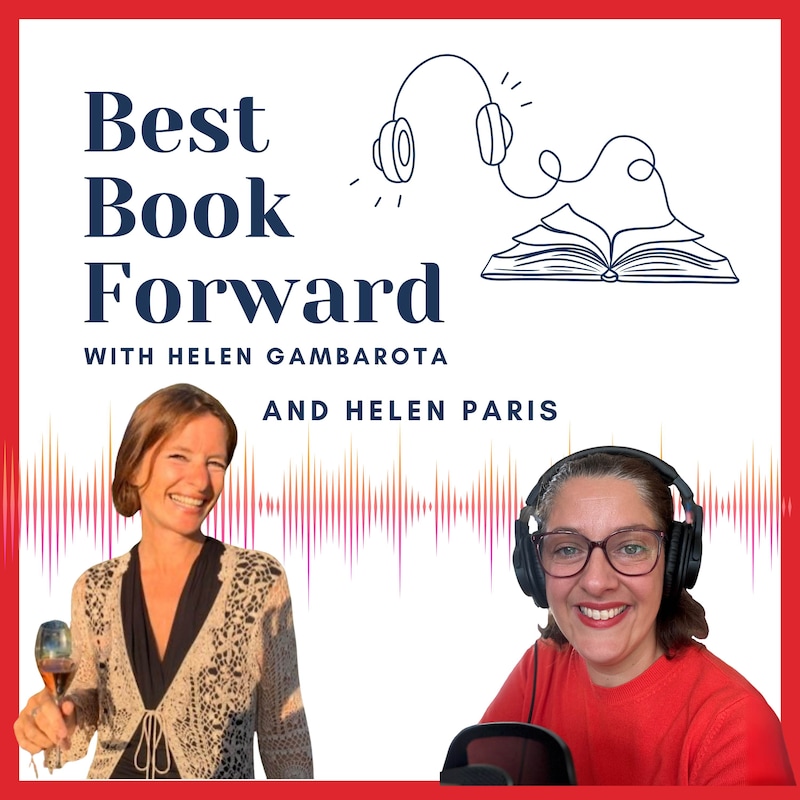
For this final episode of our special bonus season, I’m taking things right back to the beginning by welcoming my very first podcast guest, the wonderful Helen Paris, author of The Invisible Women’s Club.
In this episode Helen chats about the incredible reader response to The Invisible Women’s Club, the importance of female friendship, navigating menopause, and even gives us a little glimpse into her next book. She also shares details of her inspiring new project, The Next Chapter, a bespoke creative course, in the South of France, drawing on her 30 years of experience as a professor and creative facilitator. The course is designed to give women the space and support to nurture their creativity, whether they’re returning to something they once loved or exploring it for the first time.
For dates and details, visit: https://www.creativebody.org/nextchapter.
And of course, no episode of Best Book Forward would be complete without some irresistible book recommendations to add to your festive reading list. Here’s everything we discussed:
📚 Books by Helen Paris
✨ Books Mentioned
- On All Fours by Miranda July
- The Heart is a Lonely Hunter by Carson McCullers
- Heart the Lover by Lily King
- Clear by Carys Davies
- West by Carys Davies
- A Memoir of Sorts by Margaret Atwood
So that’s it for this special Christmas season. I really hope that you have enjoyed it.
I would like to say a huge thank you to my wonderful guests:
Catherine Newman, Matt Cain, Clare Leslie-Hall, Frances Quinn, Alice Winn, Virginia Evans, Lucy Steeds and of course Helen Paris.
I will be back with a brand new season start on 8 January and I really hope you’ll join for that season too. In the meantime, if you’ve enjoyed this episode, please subscribe, rate, and review Best Book Forward, and don’t forget to tell your friends... it really helps new listeners discover the show.
I wish you all a very Merry Christmas and a Happy and Healthy New Year.
Listen & Subscribe Now:
https://best-book-forward.captivate.fm/listen
To stay in touch with Best Book Forward news please follow me on Instagram @bestbookforward or visit my website: https://bestbookforward.org/
Transcripts
Welcome back to Best Book Forward, the Christmas Chapter.
Speaker A:I can't believe it, but this is our final episode in the special bonus season and I really hope that you have enjoyed it as much as I have.
Speaker A:So, for this last episode, I wanted to bring things full circle and invite back my first ever podcast guest, the incredible Helen Paris, author of the Invisible Women's Club and Lost Property.
Speaker A:Helen joins me today for a heartwarming chat about her books, from reader reactions to the power of female friendships to navigating menopause with honesty and humour.
Speaker A:And Helen also treats us to an insight into her incredible new project, the Next Chapter.
Speaker A:So I hope you're all cozy, a cup of tea in hand, maybe some twinkling fairy lights, because it's time to settle in and give Helen Paris a warm welcome back to the show.
Speaker A:Helen, welcome back.
Speaker A:Thank you so much for coming back to chat to me again.
Speaker B:Oh, Helen, it's lovely to be here.
Speaker B:Thanks for having me back.
Speaker A:I'm so excited.
Speaker A:You were my first ever podcast guest and now you're closing the Christmas special, so it feels like a really nice moment to have you here for that.
Speaker B:That's lovely.
Speaker B:I feel like a couple of bookends.
Speaker A:Oh, in the nicest possible way.
Speaker B:Possible way.
Speaker A:I love that.
Speaker A:Well, nicest bookends ever, then.
Speaker A:So we actually got together.
Speaker A: It was October: Speaker B:Blow me.
Speaker A:Yeah, I know, right?
Speaker A:But it doesn't feel like that long ago, I guess.
Speaker A:It doesn't.
Speaker B:It's funny.
Speaker B:It doesn't how I'm, like, chatting to you.
Speaker B:It doesn't at all.
Speaker B:But when I look back, I'm thinking, oh, my goodness, I've had such a bonkers time since then.
Speaker B:Yeah.
Speaker A:I think as we chat every now and again online, it probably feels like that we've been.
Speaker A:I mean, it's not the same as sort of sitting down, having a proper natter.
Speaker A:We've just been chatting before we recorded, so it's lovely.
Speaker A:So, yeah, so in that first episode, we got together to talk about the Invisible Women's Club.
Speaker A:So do you want to start by giving listeners a glimpse of what it was all about, in case they haven't picked it up yet?
Speaker B:Oh, thank you so much, Helen.
Speaker A:Yes.
Speaker B:And it came out in paperback last year, so since I spoke to you, it came out in paperback, which was lovely.
Speaker B:It's really.
Speaker B:For me, it's a book about intergenerational female friendship and I think it's also about finding love later in life.
Speaker B:It's about.
Speaker B:I would like to say it's about the revolutionary power of female laughter.
Speaker B:You know, when you get together as women and you just have one of those great belly laugh moments, that is so beyond bonding.
Speaker B:It's that real sort of connection, I think, that can happen between women.
Speaker B:And for me, it's not about women finding their voices, because women, we have voices, we know where our voices are.
Speaker B:But I feel that so much of the time our voices are not heard.
Speaker B:And I think, particularly in that midlife moment, we talk about invisibility, but I think there's an inaudibility as well.
Speaker B:I think women are not seen and they are also not heard or listened to, or they're talked over or they're interrupted.
Speaker B:So it's about making space and time for that.
Speaker B:And it's also about a little bit of menopausal vigilantism on a South coast allotment.
Speaker A:What a great description.
Speaker A:I love that.
Speaker A:It's so funny doing these specials and sort of looking back, because as I'm listening to you, I mean, you know, I just.
Speaker A:This book won my heart.
Speaker A:I just loved it so much, so much.
Speaker A:And I was like, I could happily.
Speaker A:I've got my cup of tea.
Speaker A:I could have.
Speaker A:I mean, I won't get rid of you, I will stay and chat to you, of course, but I could happily sit down and read it again now.
Speaker B:Thank you.
Speaker A:Helen, tell me, what was the response like from readers when it came out?
Speaker A:Has there been any special moments that stand out to you?
Speaker B:I mean, it's always a lovely thing, Helen, you know, when.
Speaker B:When readers get in touch and it's so interesting for me because, you know, most of my life, I've been a theatre maker and I've been a performer, so.
Speaker B:So when you get feedback from audiences, you get it right in that moment.
Speaker B:You get it after the show, you know, you're still a little bit sort of perspiring and you're in the bar afterwards, if you're lucky, audience members come up to you.
Speaker B:And I always love that, you know, in making theater work.
Speaker B:So I never knew what it was going to be like when you write a book and then there's the time lapse, you know, between you writing it and then the book coming out.
Speaker B:And I didn't have an expectation that I was going to hear from readers, certainly in the same way, but they do get in touch.
Speaker B:They send me Instagrams or they email me and it's.
Speaker B:It's so lovely because the responses are so.
Speaker B:They feel very authentic, they feel very spontaneous, they feel in some ways quite unedited.
Speaker B:That people really, I mean, in the way that I am when I want to write to a writer and say, I really love this book, you know, you really sort of let yourself be felt.
Speaker B:So the responses have been lovely to the Invisible Women's Club.
Speaker B:I think they have come from a lot of.
Speaker B:I mean, the book is for anybody that wants to read it.
Speaker B:But I think, you know, a lot of the people that have really responded, you know, probably most strongly have been women of that 40 plus age group who have really felt reflected, I think, in the book, in the characters, in those themes of invisibility, of looking into the next chapter of their lives, feeling sort of sandwiched between, you know, teenage kids and aging parents and feeling where am I and what happened to me and.
Speaker B:And really feeling in that.
Speaker B:In that perimenopausal and menopausal state, all of those actual changes that are happening to the body alongside everything else that's going on and how do you recalibrate and how do you deal with all of that?
Speaker B:And so I think having some of that talked about and reflected in the book and also with, I hope, quite a lot of humor, because I think humor can be so helpful in that moment too.
Speaker B:So the reader's responses have really reflected that, that they feel heard and they feel seen and they feel reflected.
Speaker B:And there's nothing for me that I would want more as a writer than that, than my characters eliciting that kind of connection.
Speaker B:That's beautiful.
Speaker B:Yeah.
Speaker A:So when I read it, I remember I was sort of just starting to sort of feel like the perimenopause was kicking in.
Speaker A:And I was like, oh, I know.
Speaker A:This is interesting.
Speaker A:That you hear like, Dr. And they're like, oh, every woman's different and things.
Speaker A:Nobody really knows what's, you know, who's going to have what.
Speaker A:But then when you read books like the Invisible Women's Club, it is.
Speaker A:It's so nice to sort of sit and as you say, to find the humor.
Speaker A:Because you could totally go into the depths of despair of like, it's pretty miserable in some ways.
Speaker A:I was saying to you earlier, I feel like.
Speaker A:I don't know if it's just because where I was in my life, I felt like it's one of the first books I read that sort of really talked about women from sort of 40 plus going through perimenopause and menopause where they weren't the butt of the joke.
Speaker A:You know, it was sort of.
Speaker A:There was a lot of kindness.
Speaker A:It was very funny, but it was you know, you obviously loved your characters and it was really, really touching.
Speaker A:Since then, I've seen more books coming out, so the conversation has definitely started.
Speaker A:I wonder how do you feel, Helen?
Speaker A:Do you feel like it is sort of changing now for us?
Speaker A:Is there hope?
Speaker B:I definitely do, Helen.
Speaker B:I definitely do.
Speaker B:And I'm so grateful to all of those women who are writing fiction and non fiction books about this and really, really diverse.
Speaker B:I mean, I look at something like Miranda July's On All Fours as well.
Speaker B:Do you know that is really talking about sort of all the things that can happen in this kind of midlife moment.
Speaker B:And there has been just a lot of sort of.
Speaker B:Health writing on the menopause and on the perimenopause because I know that I'm having conversations with my friends about it and we would, you know that thing about this word that was never mentioned and now it is in common parlance and it's, you know, you look that.
Speaker B:Is it riot women of that TV series at the moment?
Speaker A:Oh, I haven't watched it yet.
Speaker B:Yeah.
Speaker B:I mean, just so this means so much more visibility on TV in books, you know, so which is, which is great because it's just great to make it part of sort of common conversation as opposed to saying that nobody talks about, you know.
Speaker B:So I think that that is all for the good, you know, And I also think it's all for the good for us to know that we are not defined by that.
Speaker B:Do you know that we are all the other myriad things that we are do, you know, sort of midlife and all the next chapters that are there for us.
Speaker B:It isn't just that, but it is good, I think just to take a beat and to say this is happening.
Speaker B:We recognize it.
Speaker B:We recognize it on a governmental level in terms of jobs and what we might need in terms of the support during our doing our jobs at this point, our families and just like one another, you know, in terms of friendship, in terms of talking about it, you know.
Speaker B:So, yeah, I'd like.
Speaker B:I mean, I hadn't, I hadn't read anything about it.
Speaker B:I was in lockdown and I was going through the perimenopause.
Speaker B:I mean, happy days when I was writing the book, you know, and it was, that was why it was like, you know.
Speaker B:The story isn't autobiographical, but it definitely came from a place of, you know, really wanting to, to sort of name it and talk about it, you know.
Speaker B:So Bev, my character, who's in the throes of it, you know, is.
Speaker B:Has a lot of humor, I think, and is in.
Speaker B:Also in the medical profession.
Speaker B:Profession.
Speaker B:So it allowed me to give a little bit of that information in, you know.
Speaker B:But, yeah, I mean, I hadn't.
Speaker B:I hadn't read books about it, but I think you're absolutely right.
Speaker B:There's a.
Speaker B:There's a lot now.
Speaker B:There's a lot of information and there's a lot of art, which is lovely, you know, which is really nice.
Speaker B:And also knowing that it is part of us, but it is not the whole of us.
Speaker A:Totally, totally.
Speaker A:Because I was thinking about my mum.
Speaker A:I mean, she's no longer with us, but I know in her time it was like the change and people didn't really talk about.
Speaker A:And I was like, that must have been actually quite lonely experience when you think there's so much that you can experience.
Speaker A:Like, I mean, there seems like.
Speaker A:I think there must be about a million symptoms that you can have.
Speaker A:And I was like, that's so nice now for us that.
Speaker A:You know, my hairdresser was here the other day and she was chatting.
Speaker A:I was like, oh, I've heard that.
Speaker A:And we were sort of like just.
Speaker A:Yeah, it was just really normal conversation.
Speaker A:There was no sort of hiding it or anything, which is so important.
Speaker B:It's so.
Speaker B:It's so important with everything to do with, you know, female health, to do with women's health, you know, I mean, I think there's been a lot more conversations about puberty and periods and just a lot more openness about what happens to women's bodies, you know, as opposed to this veiled, you know, sort of veiled in secrecy.
Speaker B:And I mean, I remember when my mum was going through her menopause and I remember she would take herself off to her bedroom and she was really unhappy and I had no comprehension of why it was.
Speaker B:And she didn't talk to me about why it was.
Speaker B:And if I could rewind, you know, I would love to have been sympathetic and, you know, sort of a listening ear for her and made a cups of tea and looked after her, you know, but it was absolutely coded in silence, you know, the change, you know, and just left us this mysterious thing that nobody wanted to talk about.
Speaker B:And that fact that when you reach this point, you are kind of redundant, you know, when you are no longer fertile, you are no longer of interest, you know, to society.
Speaker B:And I.
Speaker B:That.
Speaker B:That hasn't gone.
Speaker B:I wouldn't.
Speaker B:That hasn't gone away.
Speaker A:No, no, definitely.
Speaker B:But I think that women.
Speaker B:I think our generation, you know, or my generation of women, the women under.
Speaker B:Under Me.
Speaker B:Are doing, are doing that work, are having those conversations and I'm very grateful.
Speaker A:Yeah.
Speaker A:It's funny you say that about the sort of puberty and teens.
Speaker A:So my twins are going to be 13 next week actually, and it would never have been something that I think would have happened in my day, but my daughter and I went and did a pre period course together, so she learned all about.
Speaker A:And actually I came here, I was like, I didn't know that.
Speaker A:I was like, I didn't even know that.
Speaker A:But it was so brilliant because it was just like it was all matter of fact and it was just completely normal.
Speaker A:And she is very blase about it.
Speaker A:And I was like, that's how it should be.
Speaker A:And I was like, if that continues through her life when she's, you know, my age, this hopefully will just be, you know, the same.
Speaker A:Just people will have like a, you know, a way of sort of introducing you to this stage of your life and it just is normal.
Speaker A:And probably then I wonder if the symptoms will be less because there's that less stress around it, you think if you're sort of.
Speaker B:Yeah, yeah, yeah, yeah, yeah.
Speaker A:So the other thing I was thinking just then, when you're saying about women coming.
Speaker A:So the last week, I don't know if you've heard the news over here about BBC2's Sarah Cox.
Speaker A:So she's 50, she ran five marathons over five days and a TV.
Speaker A:One of the presenters who was trying to said, oh, women of a certain vintage.
Speaker A:And she was like, no, we're not women of a certain vintage.
Speaker A:We.
Speaker A:And all these women came out to support her and I was, I was just.
Speaker A:I mean, I found it really emotional.
Speaker A:I sat in my car and cried listening to her cross the finish line.
Speaker A:But I was like, that we are seeing more women sort of coming out and doing like these amazing things now.
Speaker A:It's.
Speaker A:It's exciting.
Speaker A:I'm sure they were there before, but maybe not getting the platform.
Speaker B:Exactly, exactly.
Speaker B:I mean, there's always, there's all sorts of ways of being invisible, you know, because women are out there and they are doing all of these things, but they are not being heard.
Speaker B:Listen to, seen, you know, and now there is a lot more visibility because women are demanding it, you know, and women like Sarah Cox of Apps, they've done so much, you know, in, in enabling other women's voices.
Speaker B:She's done so much in enabling other women's voices to be heard.
Speaker B:But I also think there's something about language, you know, and of course, as a Writer.
Speaker B:And as a reader, language is so important to me.
Speaker B:But that thing about language, you know, and that she's not.
Speaker B:We're not vintage.
Speaker B:We're not bottles of wine, you know, we're not women of a certain age, you know, we.
Speaker B:We are women.
Speaker A:Yeah.
Speaker A:Yeah.
Speaker A:It's so.
Speaker A:It's so interesting.
Speaker A:But you think it's.
Speaker A:That sort of language around women is used in so many different.
Speaker A:Like, you know.
Speaker A:I don't know, like, you know, they won't sort of use it in headlines.
Speaker A:You know, the new archbishop.
Speaker A:They mentioned the husband and things.
Speaker A:It's like that.
Speaker A:That feels like is our next sort of hurdle, I think to sort of.
Speaker B:Yeah.
Speaker A:Lose labels and just be named would be like the thing for us.
Speaker A:So come on.
Speaker A:So if anyone hasn't read the Invisible Women's Club, it's out now, it's paperback, and it is lovely.
Speaker A:So do pick it up, put it on your Christmas wish lists and enjoy, because it is fabulous.
Speaker A:I might actually read it again this Christmas, too.
Speaker A:You've mentioned, Helen, that you're busy working on your next novel.
Speaker A:I wonder whether you're able to share any news with us on what that's all about.
Speaker B:Well, I just finished it, so that was nice.
Speaker B:When I was thinking, when was the last time I saw Helen?
Speaker B:What have I done since?
Speaker B:And I was thinking, oh, well, I've moved.
Speaker B:I've sold my house, I've.
Speaker B:I've done some beautiful art residences which have enabled me to finish my book.
Speaker B:And the end of September, I sent it to my agent.
Speaker B:So, dot, dot, dot, tbc.
Speaker B:Let's see what happens.
Speaker A:But.
Speaker B:But it was.
Speaker A:It was.
Speaker B:It was very.
Speaker B:It was.
Speaker B:I mean, it was an interesting thing to write a book.
Speaker B:And I don't.
Speaker B:Every experience I've had has been different.
Speaker B:But there was.
Speaker B:There's a real.
Speaker B:There was a real pleasure for me in writing it and.
Speaker B:And, and seeing the.
Speaker B:I mean, I'm always learning.
Speaker B:I think writing is such a practice for me, you know, so that constant sort of learning.
Speaker B:But it was enjoyable and it was.
Speaker B:See what happens.
Speaker B:But it's about two octogenarian queer dancers.
Speaker B:So that's what it is.
Speaker B:It's about dancing and it's about falling and it's about desire.
Speaker B:And again, it's about.
Speaker B:It's again looking at aging, and it's looking at all the possibilities of age, and it's also looking at intergenerationality.
Speaker B:And I realize that's something I am increasingly interested in.
Speaker B:I think it's one of the reasons I love teaching so Much, much is because I love working with students.
Speaker B:I love that reminder of what it is to be 18 again, you know, And I love the conversations that we can have across generations.
Speaker B:And I think they're really important both ways.
Speaker B:So I think I get a real pleasure in, in that.
Speaker B:Also.
Speaker B:I really wanted to write about dancing.
Speaker B:I've been thinking a lot about the importance of the arts, especially in this moment when I think it's.
Speaker B:Life feels very hard at the moment globally.
Speaker B:And I feel that the.
Speaker B:For me, the arts have always been such an important way of us communicating as humans.
Speaker B:How innately, you know, I was thinking about, thinking about things like, you know, how in lockdown in Italy, we saw that footage when Covid really struck in Italy and we saw the people going to their windows and opening their windows and starting to sing and play musical instruments to each other.
Speaker B:Or I was thinking about that moment when Notre Dame burned down.
Speaker B:And I remember watching it on the television and the people in Paris looking at it and spontaneously starting to sing.
Speaker B:And for me there's something really about what it is to be human.
Speaker B:This sort of how we express ourselves in these ways to sing through music.
Speaker B:And so I've been thinking about dance and just like.
Speaker B:Sort of things like Strictly Dancing and how popular that is, but also just, you know, how little children, when they pass the bus, go in the street, how everybody else is standing around and that they really go for it.
Speaker B:What it is to really be uninhibited and to dance on a non professional level, just in amateur dance, and how literally it sort of affects us on a sort of a hormonal level.
Speaker B:It gives us a little bit of a lift.
Speaker B:So I'm all about having a bit of a lift.
Speaker B:So I really wanted to write about, about dancing as well.
Speaker A:So sold?
Speaker A:Absolutely, 100% sold.
Speaker A:I want to sit down and read it now.
Speaker A:You know what?
Speaker A:My brain doesn't work that fast.
Speaker A:I'm going through my head and I'm like, I can't think of a book I've read about dancing and sort of community and that sort of feeling.
Speaker A:So I'm really interested.
Speaker A:You've really got me interested in that.
Speaker A:I can't wait to read it.
Speaker A:It sounds amazing.
Speaker B:Oh, good.
Speaker B:Oh good.
Speaker B:I'm good.
Speaker B:It's funny though, Helen, because I was, I was doing.
Speaker B:I'd taken myself off, I had a little bit of time and a little bit of money and I'd always wanted to go to Costa Rica.
Speaker B:So I thought this would be a place I could go and I could do some writing.
Speaker B:So just a short amount of time.
Speaker B:So I went and I was getting into my writing about writing about falling and writing about dancing.
Speaker B:And then there was a big monsoon and it was so gorgeous because it's warm, rained, you know.
Speaker B:So I was like, oh, this is wonderful.
Speaker B:So I went out I onto the sort of deck of where I was staying and little house in the woods.
Speaker B:I always seem to be in a little house in the woods.
Speaker B:I'm a little house in the woods right now.
Speaker B:And anyway the rain was coming down and I just started dancing for like the joy of life, the privilege to be able to be in Costa Rica and to be able to be writing a book, to have the time to write a book about dancing and falling.
Speaker B:And in the rain when I was dancing I fell and I broke my wrist.
Speaker B:I broke my wrist.
Speaker B:I'm left handed and I broke this bone and this bone.
Speaker B:So then I spent the rest of the time it's like, oh, I'm writing a book on dancing and falling and my embodied research is to dance and fall because I really go there with my writing.
Speaker A:Oh.
Speaker A:It made actually writing the rest.
Speaker B:Of the book really hard because I couldn't write for a long time I couldn't type.
Speaker B:So then I was doing some working with the dictation app on the phone which was a funny little, funny little relationship.
Speaker B:Actually using a dictation app to write is a little bit like dancing with a stranger.
Speaker B:You just have to kind of find a rhythm and a pace and I would say, oh, the timbre of her voice.
Speaker B:And the dictation app would write the tumbler of her voice and I was like, not tumbler, Tombra Tumblr.
Speaker B:Anyway, it was quite, quite the thing.
Speaker B:I'm sorry, that was a total digression.
Speaker A:No, I love it.
Speaker A:It's so interesting, isn't it?
Speaker A:Because I.
Speaker A:When you're writing, do you read out loud as well from your book to sort of.
Speaker B:Oh, so I read out loud at the very end and it's such a good, it's.
Speaker B:For me it's such a good habit because when you read and it's kind of a hideous, you know, because you have to hear the sound of your own voice as infinite.
Speaker B:But it's wonderful because when you read your manuscript out loud you hear things, you hear what's wrong in the sentence, you know.
Speaker B:So it's a really lovely thing to do at the last, it's a really important thing to do at the last sort of part of that process.
Speaker B:But it was so interesting because writing through my voice is so different from typing.
Speaker B:And even though both of them are embodied in different ways.
Speaker B:And in some ways I'm less censored when I speak out loud because when you.
Speaker B:I think maybe it's just so ingrained when we're typing, we're also editing.
Speaker B:We're also cut and pasting.
Speaker B:We're never, we're never just writing or I'm never just writing unless I'm writing longhand and then that's different.
Speaker B:But when you write with, when I write with my voice, I find I'm a little bit more, maybe a little bit more impulsive and spontaneous.
Speaker B:I'm not, not so censoring.
Speaker B:But.
Speaker B:But it's not, it's, it doesn't, it doesn't let me have the exact, the craft that I want when I'm actually typing a sentence.
Speaker B:So for me it was a, it's a lesson instead of ego and humility, really that went on for a really long time because it took a really long time for my wrist to mend.
Speaker A:Oh gosh.
Speaker A:And that's when you realize how many things you actually need, like washing your hair and all that stuff as well.
Speaker B:Totally, totally.
Speaker B:Because I also, because I'd broken my wrist.
Speaker B:Then I ended up having this accident where I got glasses, my hand and I severed the nerve in this hand.
Speaker B:Both hands were out of action.
Speaker B:But I'm telling you, if anybody know wants to know how to get toothpaste out of the toothpaste tube using their knees, I am the woman to show.
Speaker A:You how to do the amounts of times I've wondered that, Helen.
Speaker B:Exactly, exactly.
Speaker B:It's a little known skill that I.
Speaker A:Have refined and my weird brain now wants me to go and try it.
Speaker A:See?
Speaker A:See?
Speaker A:Challeng.
Speaker B:Oh.
Speaker A:So obviously you've been busy working on this new book, which sounds fabulous.
Speaker A:We've been emailing a little bit about something else that you're working on, which I'm so excited to hear more about.
Speaker A:It's called the Next Chapter, I believe.
Speaker A:So do you want to tell us what you're working on?
Speaker B:Oh, Helen, you're so lovely.
Speaker B:I, you know, I really, I did and I really wanted to share this with you.
Speaker B:You were one of the first people I sort of reached out and just said, I've got this idea, you know, I just want to let you know about it.
Speaker B:And I think it really came to me after writing the Invisible Women's Club, really thinking about women midlife, you know, like I said so often, sandwiched between older parents and teenagers.
Speaker B:But even if not with careers, with all of this happening to our bodies and in our lives.
Speaker B:And I was really thinking about that.
Speaker B:And I've also, as well as making theater and writing fiction, I've always taught.
Speaker B:And I love teaching, like I was just saying, you know, I love connecting with 18 year olds, you know, when I'm, when I'm in my mid-50s.
Speaker B:But I love teaching generally.
Speaker B:You know, I love, I love teaching in all forms, any kind of student, in any kind of setup.
Speaker B:It's just, for me, it's just a beautiful relationship.
Speaker B:And I thought, oh, what I'd really love to do is to sort of design a really bespoke course that gives women in this moment, in this next chapter of their lives time for themselves to nurture their creativity to.
Speaker B:So I thought I want to do.
Speaker B:I want to have a residency called the Next Chapter, a week long creative writing retreat for women, 40 plus, 40 to 140, to sort of reignite imagination and replenish energy and reawaken creative confidence, which I think all things that maybe need some attention and care.
Speaker B:And.
Speaker B:Yes.
Speaker B:So I thought that's what I want to do.
Speaker B:I want to set it somewhere beautiful.
Speaker B:So, so I'm starting the first one next April in this beautiful woodland again with the woods, the solace of trees.
Speaker B:I think it's in this woodland retreat.
Speaker B:This is in the south of France in this place called St. Antoine Nobleval.
Speaker B:I probably haven't pronounced that right, but it's beautiful, this little medieval village there.
Speaker B:And then the retreat is surrounded by trees and it's got a yoga shala and it's, you know.
Speaker B:It'S got a swimming pool and it's.
Speaker B:Because that's important for me.
Speaker B:I want it to be a place for women to be able to just get away from their lives and come and be and come and create and, and use, you know, use the nature, use the atmosphere to, to, to write, use smell and touch and movement and place as catalysts for writing.
Speaker B:And this can be people who want to write books, but it can also be people who just.
Speaker B:Women who just want to have time to explore that creative part of themselves which they might never have had up to this point, you know, so it really is about meeting every woman where she is at creatively and to really.
Speaker B:I love working with groups and I love working one on one.
Speaker B:And so the retreat is going to be a mixture of that in a really beautiful place.
Speaker B:Yeah.
Speaker B:So I'm very excited about it.
Speaker B:It's really about, it's really about nourishing both the writer and the woman and her creative body.
Speaker B:It's about all of that sort of.
Speaker B:That's, that's what I like.
Speaker B:So I'm really.
Speaker B:Yeah, I'm excited about it and I'm excited to talk to you about it.
Speaker B:Thank you.
Speaker A:It sounds amazing and I think something that's really sort of special with it as well.
Speaker A:The first thing I thought when I was reading what you sent through, I was like, there's something really special about women coming together as well.
Speaker A:And I think if it's like all like minded women trying to.
Speaker A:I was like, this feels like it's really exciting.
Speaker A:It's a really exciting opportunity for people, as if they're writers or whatever to come together, to be guided by you as well.
Speaker A:And it's like in a beautiful location with like amazing food, all these things.
Speaker A:I was like, can I pretend to be a writer?
Speaker B:You don't have to be a writer.
Speaker B:I mean it really is for women who want to.
Speaker B:Who may never have had that identity but think I want to create.
Speaker B:And I don't know what, and I don't know how, but I know that I want to.
Speaker B:So it's about taking that and making a place for it.
Speaker B:You know, I think that's what's really important because.
Speaker B:And also I think it's that, it's that what a retreat does.
Speaker B:And I've had this in my own experience, like I said, you.
Speaker B:I've had three this last year because.
Speaker B:And that's what's enabled me to finish my book.
Speaker B:Because I think we can always say, I'll just do this hour before breakfast and I'll just do this hour before I get the kids or whatever it is.
Speaker B:And it's, it's really hard to fight for that time.
Speaker B:So this is about an invitation saying I want you to give yourself the gift of this time for yourself.
Speaker B:And you know, you may have a book, you may have a performance, a script, you may have a poem in mind, but you might not.
Speaker B:It might just be that desire to make something and I want you to do that and I want to make the space for you to do that because I think it's really important.
Speaker A:I. I love it.
Speaker A:I think it sounds amazing.
Speaker A:So the first one's happening in April.
Speaker B:Yes.
Speaker A:And I've got all the details, so I'll put them in the show notes.
Speaker A:So the website's there, but if people wanted to get in touch with you, would it be sort of Instagram dms?
Speaker A:That's the best thing that's Lovely, Yes.
Speaker B:Instagram is lovely.
Speaker B:Do just send me a message and I can tell you more about it or we can have a chat, you know, I'm Helen Francis Paris.
Speaker B:Also, there's a link on my website, which is curious performance dot com.
Speaker B:So there's a link there.
Speaker B:Link to my email there.
Speaker A:Yeah, I'll share them all.
Speaker B:Thank you.
Speaker B:Yeah.
Speaker A:And I, I hope it goes brilliant.
Speaker A:I'm sure it will be amazing and I can't wait to hear more about it.
Speaker A: e spoke last, back in October: Speaker A:I've been laughing actually, because I looked down at the first one.
Speaker A:I was like me talking about the words and I was like, the first one, we're gonna have a look at them now and see whether they still stand or if there's any you'd want to swap out.
Speaker A:The first one was Little House on the Prairie.
Speaker A:So it's like not wood so much, but it's sort of felt like there's a little theme there.
Speaker A:The Great Gatsby, Ms. Benson's beetle.
Speaker A:I just love that book so much.
Speaker A:To Kill a Mockingbird and Breathing Lessons by Anne Tyler.
Speaker A:How does that sound?
Speaker A:Yes.
Speaker A:Yeah.
Speaker B:All still very much in my heart.
Speaker B:Yeah.
Speaker A:Perfect.
Speaker A:And if you say no, I love that.
Speaker A:That means you did it perfectly the first time round.
Speaker A:Well done, Hel.
Speaker B:I mean, I have to say if, if I could add one.
Speaker A:Yeah.
Speaker B:I mean, I don't have to take one away.
Speaker A:No, no, it's Christmas.
Speaker B:Thank you.
Speaker B:I thinking a lot about Carson McCullough's actually.
Speaker B:I, you know, I love Emily Dickinson writes about telling it slant, you know, And I think that's a beautiful thing that I'm trying to learn as a writer.
Speaker B:You know, what's the way of telling a story that isn't quite the most obvious way?
Speaker B:And I'm trying to learn that for myself.
Speaker B:And I think about Carson McCullough's and her kind of off center characters and I've been thinking about the Heart is a Lonely Hunter a lot and I love those sort of slightly odd characters and the braveness to write about those kind of characters, but with a lot of love, I think.
Speaker B:Not poking fun at them, but really sort of letting their oddities also be incredibly endearing in some ways.
Speaker B:And also her own queerness, I think Castle McCullough's own queerness at a particularly complicated time.
Speaker B:So.
Speaker B:So I would like to add.
Speaker B:I would like to add her to the mix.
Speaker B:And the other person, I'm sort of like to add to the mix is.
Speaker B:Is really.
Speaker B:So at the moment I'm in this fantastic.
Speaker B:I'm in the woods, as I said to you, in this McDowell residency.
Speaker B:And there's a library here which is the James Baldwin Library.
Speaker B:And again, I think there's that thing of turning to art in times of.
Speaker B:In times of.
Speaker B:In times of chaos.
Speaker B:And I find James Baldwin as.
Speaker B:As a writer, as a thinker, so extraordinary and some of his words so helpful in this moment as like, sort of things to hold on to.
Speaker B:So I might.
Speaker B:I might just want to pop some in.
Speaker A:Listen, it's Christmas.
Speaker A:How could I say no?
Speaker A:I haven't read either of their books.
Speaker A:I am.
Speaker A:I said to you last time, and I've only just started to.
Speaker A:I hadn't read the Great Gatsby.
Speaker A:I'm listening to at the moment on audiobook, and I'm really enjoying it.
Speaker A:But it's really funny.
Speaker A:Quite often when I listen to an audiobook, I want to really blitz it and sort of just sort of listen.
Speaker A:I'm listening to it in really sort of short little segments.
Speaker B:Like.
Speaker A:It's like I'm sort of.
Speaker A:I guess because it's quite short itself, but I feel like I'm sort of trying to sort of make it last.
Speaker B:Make it last.
Speaker B:Yes, yes.
Speaker A:Yeah.
Speaker B:Funny.
Speaker B:My, my.
Speaker B:I have this wonderful goddaughter and like, she listens to audiobooks, but apparently she listens to them like a 1.1.5 or something like on, like a fast.
Speaker B:I'm thinking, oh, bloody hell, I didn't even know that was a thing.
Speaker B:Do you know, we have.
Speaker B:We're so multitasking now, we have to listen to books first.
Speaker B:But I like my book on just normal speed.
Speaker A:See, I do have to put mine up a little bit because otherwise I just.
Speaker A:I don't concentrate.
Speaker B:Right.
Speaker A:If it's like.
Speaker A:If they're speaking slowly, then I've.
Speaker A:My brain's obviously got time to be like.
Speaker A:But not that.
Speaker A:I mean, I know somebody who listens on 1.8 and it just sounds like chipmunks to me.
Speaker A:I was like, I couldn't.
Speaker A:I don't think my brain could take that in.
Speaker A:Which is.
Speaker A:Yeah, but good for you.
Speaker A:You can.
Speaker A:But I do love audiobooks, actually.
Speaker A:I've really, this year have really sort of fall in love with.
Speaker A:I think a good audiobook.
Speaker B:Yeah.
Speaker A:Is amazing.
Speaker A:Okay, so what about.
Speaker A:I mean, obviously you've been really busy working and planning your retreats and everything.
Speaker A:Have you been doing lots of reading?
Speaker A:Have you read any amazing books this year?
Speaker A:You'd like to share with us?
Speaker B:No, I have.
Speaker B:I mean, when I'm.
Speaker B:When I'm writing, I try.
Speaker B:I mean, I read a little bit less just to have it just, just to have a different sort of thought, thought process.
Speaker B:But I have literally just.
Speaker B:I've actually got it with me because that shows you how just it is.
Speaker B:And now this is a warning for people who don't bend their books and things like that.
Speaker B:Don't look at the screen now.
Speaker A:Okay, look away, look away.
Speaker B:Now.
Speaker B:The one that I've just finished is Carys Davis.
Speaker B:It's a little bit.
Speaker B:So it's very dog eared.
Speaker A:That's okay.
Speaker A:Yeah.
Speaker B:And.
Speaker B:Oh, it's so good.
Speaker B:Have you read it, Helen?
Speaker A:No, I haven't seen.
Speaker A:Looks really small as well.
Speaker B:It's so tiny.
Speaker B:Yeah.
Speaker B:And it's so beautiful.
Speaker B:It's so good that as soon as I finished it I just started reading it again because I couldn't get my head around how she got us to where she got us.
Speaker B:I was thinking, how did you do that, you brilliant, brilliant woman.
Speaker B:So then I had to go back and read it again.
Speaker B:It's incredible.
Speaker B:And I've started West, which is another one of hers.
Speaker B:So I'm totally addicted.
Speaker A:So what sort of genre is that?
Speaker A:Is it so.
Speaker B:I mean, her prose is really taught.
Speaker B:I could, I mean I could, I could never write a sentence like that.
Speaker B:I mean, she's so beautiful.
Speaker B:There's no waste.
Speaker B:It's absolutely beautiful.
Speaker B:So it's almost to me like reading poetry.
Speaker B:And the characters are so.
Speaker B:They'Re so beautifully drawn.
Speaker B:So it's.
Speaker B:I don't know what genre it is except that it's really beautiful.
Speaker B:It's just really, really beautiful writing.
Speaker B:This one is set in a remote Scottish island and I really felt that I was on that island with her characters.
Speaker B:I mean, that's how good she is, you know, it was just totally absorbing, incredibly atmospheric and just really, really finely honed.
Speaker B:Beautiful prose.
Speaker A:I love that.
Speaker A:I love your recommendations.
Speaker A:So I'm going to definitely have a look at that.
Speaker A:Yeah.
Speaker A:Okay.
Speaker A:When you talk about.
Speaker A:I remember that came up actually on our last chat that you, you like to dog ear books and really, really read them.
Speaker A:I was just saying to you before we came on last Friday, I went to see, see Margaret Atwood and Elisheva and somebody asked them what they thought about dog earring books and they both said they absolutely love a well read book.
Speaker A:Notes in the margin.
Speaker A:Elishafax said somebody came to her once and they had a red wine stain on the Book.
Speaker A:And she was just delighted because she was like.
Speaker A:But she also said, in Turkey, it's when you have a book.
Speaker A:So like here, we tend to obviously read them, put them in our shelves and just sort of love them, but they get passed around more.
Speaker A:So, like, a book would be read maybe 10 times by, like, your brother, neighbor, whatever, actually.
Speaker A:And she said, you know, sometimes there'll be different pen colors with different underlining.
Speaker A:So I was like, that's actually really lovely, isn't it?
Speaker A:When you think.
Speaker B:Yeah, but it is lovely.
Speaker B:Yeah.
Speaker B:I mean, for me, it's.
Speaker B:I'm really interested generally in objects, just how objects can become sort of portals that take us back to people and places in different times, you know, like whether it's your mum's handbag or whatever it is.
Speaker B:So the book is an object, you know.
Speaker B:And I was.
Speaker B:Because I was talking to somebody else here on this residency who would also was reading this.
Speaker B:He was reading it on her, on her reader.
Speaker B:And she said she had a bit of a shock because, you know, when you're reading something digitally, you don't.
Speaker B:You're never prepared for it to finish, not quite, depending, depending on how the story is written in part.
Speaker B:So she had that shock.
Speaker B:And of course, that's that relationship that we have with the book where its physical body is also telling us something about where we are in the story and when it's about to end and all of that.
Speaker B:And I know that doesn't necessarily mean you have to dog ear your books, but I love that.
Speaker B:I love all the marginalia, because it's a sense of a book for me.
Speaker B:It's a sense of, like, a book's life and other people's connections with it, but which I. I love.
Speaker B:So that is my excuse.
Speaker B:And now I have two really good, extraordinary writers.
Speaker A:And I'm just thinking Lucy Steeds, who wrote the Artist, when she came on the podcast, she said.
Speaker A:When she looks back, she said, oh, I can't remember the exact words she used, but it was so lovely.
Speaker A:She's like, you meet your former self, you meet your past self in the pages.
Speaker A:And I was like, that's so lovely.
Speaker A:I mean, I don't write in my books.
Speaker A:I do.
Speaker A:I crack my spine.
Speaker A:My writing is so terrible.
Speaker A:There's no point me writing it because I'll be like, what on earth does that say?
Speaker A:Like, if I go back, but I do the spine.
Speaker B:Yeah, yeah, yeah.
Speaker B:I think that's really beautiful, that thing of meeting your former self.
Speaker B:I mean, because when I think about the great Gatsby.
Speaker B:I don't just think about that book.
Speaker B:I think about my copy of that book that I read when I was 17, you know, and I know what that looks like and I know what I've written in the margins.
Speaker B:And I know every time I've gone back to it and it is going back to the story, but it is going back to all the iterations of myself reading that story as well.
Speaker A:Yeah, my daughter, I mean, she's become a huge reader, but she's so funny.
Speaker A:She can't bear a cracked spine.
Speaker A:So when you see her reading, she's like this.
Speaker A:I'm like, oh, darling, it's to be enjoyed.
Speaker A:Like.
Speaker A:Like, I couldn't sit and sort of try to, you know, it's like, oh, crack.
Speaker A:It's watching me lose loads and loads of followers.
Speaker A:They're like, book abuser.
Speaker A:Bye.
Speaker A:Bye.
Speaker A:Okay, so we're going to move on to some little festive questions before we finish.
Speaker A:So, thinking about your creative retreats, if I were to send you on a winter retreat with some women who inspire you, be lovely, wouldn't it?
Speaker A:Where would you go?
Speaker A:Would it be summer, hot and sunny, probably, in the words, I'm guessing.
Speaker A:And who would you like there?
Speaker A:Who would be a group of women you'd find really inspiring to spend some time with?
Speaker B:Oh, that's such a lovely question.
Speaker B:Oh, I can't believe I'm going to get away.
Speaker A:I know.
Speaker A:I'm, like, trying to make it happen now.
Speaker B:Well, you know what?
Speaker A:I actually.
Speaker B:I really, really have been wanting to go to Norway because I know that people are seeing the aurora borealis, you know, all over the place at the moment.
Speaker B:But I have always.
Speaker B:And part of the book that I've just written, it has a.
Speaker B:It has a strong.
Speaker B:It has a connection with a north Norwegian island, a remote north Norwegian island.
Speaker B:And so I kind of wanted to go there for the research, but I couldn't.
Speaker B:But so I think there, I would like to.
Speaker B:I would love you if you could let me go there.
Speaker B:It's an island called Sommuroy, so I'd like to go there.
Speaker B:And anybody that wants to brave the cold to go with me, I would.
Speaker B:I mean, actually, it's funny that we're talking about Margaret Atwood, because I really would love to take her with me, partly because she is basically clairvoyant, you know, which, I mean, you know, there could be a real downer Christmas downer here and what's to come, because she's already really got it very much on point.
Speaker B:But you Know, it's also, I never have gone away from listening or watching a program or reading one of the books without feeling again, this sense of somebody, you know, providing you with an infrastructure by which to get you make your way through life.
Speaker B:I mean, really just extraordinary, an extraordinary woman.
Speaker B:Actually, I wouldn't mind if, if Carys could come too, because I would love to talk to her about her book, just in that way.
Speaker B:I just want to be the reader that just says, this is so gorgeous.
Speaker B:Thank you for writing it.
Speaker B:Reminding me what it is to write a good story, what it is, you know, what makes a beautiful story.
Speaker B:And I mean, I actually would quite like some of my 40 plus women to come with me, you know, whoever you are.
Speaker B:I would like to pour you a glass of wine as we look out onto the northern lights.
Speaker B:And I would like you to, I would like to tell you that.
Speaker B: Looking forward into: Speaker B:I want to tell you that I believe in you and that I am right behind you all the way in your creative endeavor.
Speaker B: you know, to realize that in: Speaker B:So I'd like anyone who wants to come get their woolly jumper on and come and join it.
Speaker A:Yeah.
Speaker B:Me, you, Margaret and Carys.
Speaker B:Come on.
Speaker A:That made me feel really emotional.
Speaker A:Like, how lovely.
Speaker A:But there is something, I mean, we've just had in our family.
Speaker A:My sister's just realized her lifelong dream of opening her own shop.
Speaker A:So she just opened it a few weeks ago.
Speaker A:And it's so lovely, like when you see somebody, like, because it's, it's brave, isn't it?
Speaker A:It's particularly like creative endeavors and things.
Speaker A:It's scary for women to put themselves out there.
Speaker A:And I just, as I said, I think like women coming together and like, and actually imagine Margaret Atwood, she would just be just, she'd just be amazing, wouldn't she, to hang out with him to just, as you say, though, you think, oh, actually, would it be a bit of a downer?
Speaker A:She's sort of like telling you how bad it really is.
Speaker A:No, Margaret, no No, no.
Speaker B:But I think she's got a really good sense of humor as well.
Speaker B:She would have to get the jokes going.
Speaker B:So I think.
Speaker B:I think.
Speaker B:I think we'd be okay.
Speaker B:I think we'd be all right.
Speaker B:And I just think it's also about.
Speaker B:When I talk about intergenerationality, I mean, we can look at it like 50 year olds with 20 year olds and, you know, having conversations with 30 year olds, but also the conversations that we at 50 and 40 can have with 70 year olds and 80 year olds and 90 year olds, that kind of intergenerationality.
Speaker B:But, you know, I think.
Speaker B:And it's also.
Speaker B:It's all of our next chapters.
Speaker B:It's the next one and the next one and the next one.
Speaker B:You know, it's really looking up and out and forward.
Speaker B:Yeah.
Speaker B:And it is bold, like your sister.
Speaker B:It is bold and brave to start a new venture, midlife and.
Speaker B:And.
Speaker B:But we can do it.
Speaker B:We can do it and we can support each other to do it.
Speaker A:Oh, I feel I'm all, like, all gears up now.
Speaker A:Actually, just to say I am listening to Margaret Atwood's her biography memoir that she's done at the moment, and she reads it herself.
Speaker A:Oh, it's amazing.
Speaker A:So, yeah, definitely add that one to your list.
Speaker A:Okay, so one last question for you, Helen, then.
Speaker A:When you think about Christmas, is there something, a movie, a song or food or tradition that you need to sort of feel.
Speaker A:To make you feel all Christmassy?
Speaker A:Oh.
Speaker B:Well.
Speaker B:I had this really.
Speaker B:I had this really lovely man in my life called Paul Rester, who was the stepfather of my partner.
Speaker B:And he and myself would watch.
Speaker B:Oh, God, Alastair Sims do Scrooge.
Speaker B:Nobody else.
Speaker B:Nobody.
Speaker B:Everybody else would watch.
Speaker B:Leave the room, you know, just be the eye roll and out.
Speaker B:But there was something for me and.
Speaker B:And Paul died too.
Speaker B:So this would be the second Christmas.
Speaker B:We used to watch it on Christmas Eve.
Speaker B:And he died on Christmas Eve two years ago.
Speaker B:And I. I woke up this morning missing him, actually.
Speaker B:And I'm sort of living in France a little bit at the moment.
Speaker B:And he was a.
Speaker B:He was a French man.
Speaker B:He lived.
Speaker B:He's an American, but he was born in France and is French.
Speaker B:And so sometimes I think I see him because he was quite short and quite slight and very sort of debonair.
Speaker B:So sometimes I think I see him.
Speaker B:Maybe I do, you know, but anyway, me and him would watch Alastair Sims doing A Christmas Carol, and so that.
Speaker B:So I don't have Paul to watch it with, but in spirit, I do yeah, yeah.
Speaker A:The feeling of him there.
Speaker A:Oh, that's lovely.
Speaker A:I'm sorry that you've ever been through that.
Speaker A:That's really tough.
Speaker A:Helen, it has been so lovely.
Speaker A:I. I just love chat.
Speaker A:I think I need you on monthly.
Speaker A:It's just such a joyful chat to.
Speaker A:I love it.
Speaker A:Thank you so much.
Speaker B:Thank you, Helen.
Speaker B:Thank you for all the work you do.
Speaker B:I mean, really, it's just fantastic, the support that you give books and writers and readers.
Speaker B:So, you know, I think you've got two.
Speaker B:Your girls are very lucky.
Speaker A:Oh, thank you.
Speaker A:Thank you, Helen.
Speaker B:And we all are.
Speaker B:Thanks for having me.
Speaker A:Thank you.
Speaker A:Wasn't she amazing?
Speaker A:I just knew that Helen would be the perfect person to end this season with.
Speaker A:I really hope that you've enjoyed the special Christmas season as much as I've enjoyed making it.
Speaker A:As always, all of the books we've talked about today are listed in the show notes.
Speaker A:So why not treat yourself to a pre Christmas book haul?
Speaker A:I think you deserve it.
Speaker A:You'll also find in the show notes details of Helen's retreat, the next chapter, so do check it out.
Speaker A:A huge thank you to all of my guests this season.
Speaker A:Katherine Newman, Matt Kane, Claire Leslie Hall, Frances Quinn, Alice Wynn, Virginia Evans, Gillian McAllister, Lucy Steeds, and of course, Helen in Paris.
Speaker A:I'll be back with a brand new series starting on the 8th of January, and I really hope that you'll join me for that series too.
Speaker A:But in the meantime, I'd like to wish you all a very merry Christmas and a happy and healthy new year.
Speaker A:And I look forward to more book chat with you soon.
Speaker A:Take care.



