Shownotes
Why This Children's Book Author Is Having the Conversations Parents Don't Know How to Start
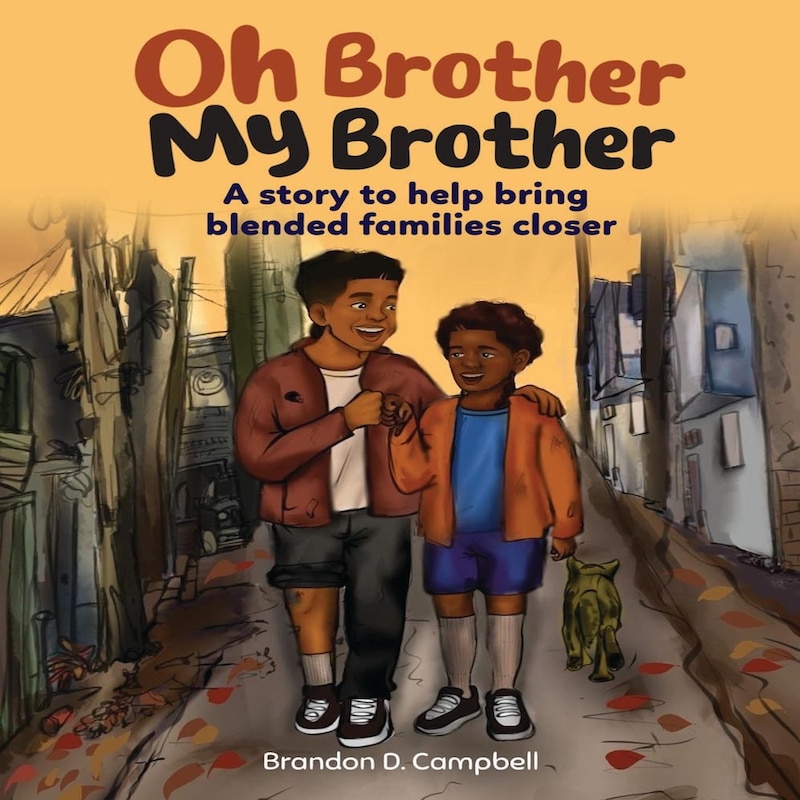
What happens when a child can't find themselves in the books they're handed? For Brandon D. Campbell, that question wasn't hypothetical — it was personal. Growing up in a blended family, navigating the emotional complexity of childhood, and searching for representation in literature shaped him into the author of Oh Brother, My Brother. And in a recent episode of the Adventures in the Heart of Children's Book Authors podcast, he shared why that mission matters more than ever.
"Being a children's book author transcends mere writing — it's a commitment to shaping young minds and providing representation for children from diverse backgrounds."
— Brandon D. Campbell
Writing from the inside out
Campbell's creative process begins where most writers are taught not to go: directly into their own pain. His upbringing in a blended family didn't just inspire Oh Brother, My Brother — it became the emotional foundation for every character, chapter, and question within it. He wanted young readers to open a book and finally see their own story reflected back at them.
That kind of authentic representation, he argues, isn't a nice-to-have. It's a necessity for children processing feelings of neglect, abandonment, or confusion about family structures that don't fit the traditional mold.
A book designed for dialogue
One of the most distinctive features of Oh Brother, My Brother is its structure. Across ten chapters, Campbell doesn't just tell a story — he opens a door. Each chapter closes with reflective questions specifically designed to spark conversations between children and their parents or caregivers. The goal is to create what Campbell calls psychological safety: a space where hard feelings can finally be named and discussed without shame.
In a world where parents often struggle to know how to begin those conversations, the book essentially does the heavy lifting — giving both child and adult a shared starting point.
Rejection, resilience, and taking ownership
Campbell's path to publication wasn't easy. Despite choosing the traditional publishing route, he faced numerous rejections — a reality familiar to countless authors but rarely discussed openly. Rather than letting the industry's gatekeeping silence his story, Campbell leaned into persistence and ownership of his narrative.
His publishing journey serves as a powerful parallel to the book's own message: that your story is worth telling, even when the world initially says otherwise.
Building community through storytelling
What sets Campbell apart isn't just the book — it's how he's built an entire ecosystem around it. By integrating a podcast into his platform, he connects with readers, parents, educators, and fellow authors in a way that static bookselling never could. For Campbell, literature is not a monologue. It's a conversation — and he's committed to keeping it going across every platform available to him.
His relationship with his illustrator reflects this same collaborative spirit. Campbell emphasizes the creative partnership as essential to the book's emotional authenticity, understanding that the visual language children experience is just as powerful as the written one.
Takeaways:
- Brandon D. Campbell emphasizes the importance of ownership as a children's book author, highlighting the responsibility to shape children's narratives and inspire them positively.
- The inspiration for Brandon's book, 'Oh Brother, My Brother,' derives from his experiences growing up in a blended family, aiming to provide relatable characters for children facing similar situations.
- Brandon discusses the significance of establishing a strong relationship with his illustrator, emphasizing the collaborative nature of creating a children's book.
- His approach to writing includes reflective questions at the end of each chapter, aimed at fostering deeper conversations between children and parents, enhancing emotional connections.
- The podcast highlights the entrepreneurial journey of becoming a children's book author, detailing the challenges of securing a publisher and promoting one's work effectively.
- Brandon's ultimate goal is to alleviate childhood trauma through storytelling, fostering understanding and emotional growth in children from blended families.
Links referenced in this episode:
Companies mentioned in this episode:
- Amazon
- Ingram Sparks
- Home Press
- Substack
Transcripts
Brandon D. Campbell, author of the book oh Brother, My Brother.
Speaker B:Thanks, Brandon, for appearing on the Adventures in the Heart of Children's Book Authors podcast.
Speaker B:Brandon has written a children's book with just a little different twist to it than normal.
Speaker B:I loved it because it was 10 chapters and we'll jump more into that because it was very engaging.
Speaker B:Brandon, before we get into the details of your book, can you tell us what being a children's book author means to you?
Speaker A:Being a children's book author means ownership, ownership of the story, representation and inspiration to children in ways that not only shapes their mind, but could also shape the outcome of who they become as adults.
Speaker A:And so I am very blessed to be a children's book author.
Speaker A:It's something that I don't take lightly or for granted, and I'm just honored with the response that I've been receiving from children, but most importantly, parents and educators.
Speaker B:Fantastic.
Speaker B:Tell us about the inspiration behind your book.
Speaker A:The inspiration comes from my own childhood growing up in a blended family, being raised by a single mother with four of the siblings.
Speaker A:We had three different dads in between, so my mom had previous relationships and for whatever reason they didn't work out.
Speaker A:I am the fourth of five.
Speaker A:I have a younger brother.
Speaker A:We all grew up in the same house.
Speaker A:And growing up, you weren't half brothers or half sister, you were just brothers and sisters.
Speaker A:I just remember growing up in a household.
Speaker A:What I was seeing around me from the outside world was completely different.
Speaker A:And so when I would go to school, I felt different because of what I experienced inside of the home looked different for me.
Speaker A:And so I wanted to create a story that I wish that I had growing up where I can see characters that I could identify with that had same family structure that I had growing up.
Speaker A:But then also I wanted to shape an avenue or a platform that is psychologically safe for children and parents where they could enjoy an experience but also communicate about the experience about the book, which then can lead to more deeper conversations, deepen their relationships.
Speaker A:And so overarching goal or inspiration of this book is to alleviate some of the effects of childhood trauma.
Speaker A:One of the most significant one that I experienced growing up was neglect and abandonment, which then can lead to many different challenges that more people can have.
Speaker A:When we talk about mental health illnesses, it's an emotional illness that most likely will come from a detachment or a defect in the intimacy area that it is developed between caregiver and the child in that relationship.
Speaker B:So my inspiration and I can identify with that in some ways because even though I don't come from a blended family.
Speaker B:I'm the older brother and I have a younger brother.
Speaker B:So you can see how I can identify with your story right away.
Speaker B:And then the other thing is that even though I was fortunate that my parents were together for 62 years, when my children got married, they went through a couple of different relationships and therefore my grandchildren are coming from a blended family in today's society, I think it almost starts to be normal.
Speaker B:I know you talked when you went to school, it maybe wasn't that normal, but I, I would say today I'm noticing it's more and more normal that kids can relate to each other because they're coming from blended families.
Speaker B:Anyone coming from a blended family can definitely, when they're reading your book.
Speaker B:There's lots of great stuff in here and we'll get more into that.
Speaker A:And what I found out that was interesting to your point is that although it's being more normalized in the sense, but it's still a subculture.
Speaker A:So there's still far and few books out there about blended families or what the blended family may look like to me and so many others who grew up the way I did, that's becoming more normal.
Speaker A:And so that's why I wanted to provide.
Speaker B:I love what you've done because, you know, when I was thinking about my oldest granddaughter and her mother remarried and so she has a sister or a half sister, but she thinks of her as her sister, but there's a, there's a 10 year gap between them.
Speaker B:And then my oldest granddaughter's father went into another relationship and they just had a daughter.
Speaker B:And so now there's 20 years difference between my granddaughter and her sister.
Speaker B:That's a whole generation.
Speaker B:It's incredible.
Speaker B:Like you said, Brandon, blended families, there's all kinds of stories.
Speaker B:When you look at it from that aspect, as you rolled out your book and what were you thinking about in terms of building a children's book business plan or a book business around your children's book?
Speaker B:Tell us about that process.
Speaker A:Yes, I thought it was very important to have a vision, overarching vision for what this could become.
Speaker A:And so one thing that I really decided very early on was to go, to try to go the more traditional route, a book publishing, because as someone who has business experience, as an entrepreneur, but what I've learned over time is the importance of relationships.
Speaker A:It's the saying goes, you can go fast by yourself or you can go very far through the help of others.
Speaker A:And so I was thinking more big picture and So I went the traditional route, receive over a hundred rejections from agents.
Speaker A:And as Tyler Perry said, it's good when you get rejected or you doubt it because you can create ownership.
Speaker A:And so by me going that route and getting all the notes, I said, this is my story.
Speaker A:I know at the end of the day I can do self publishing route, but I really wanted to be able to get this out to the masses and utilize the support of a publisher as well.
Speaker A:So I ended up going to independent publisher route and got picked up by independent publisher, which then understanding how the hybrid model works.
Speaker B:Okay.
Speaker B:You're more of a self hybrid published children's book author, is that correct?
Speaker A:Yes, I would say that, yes.
Speaker B:And your books are available with different formats on Amazon.
Speaker B:You have an ebook, you have a soft cover.
Speaker B:Are you distributed through Ingram Sparks or any other online retailers?
Speaker A:Yes, I am.
Speaker A:And that was very important for me as a new author to be able to establish that type of relationship with the ingramspark because I wanted to be able to get my books in libraries.
Speaker A:And so through my research I was discovering how much of a challenge it is for libraries to pick up your book or to add you to the collection as a self published author.
Speaker A:Not saying you can't do it, but I didn't want to have that barrier.
Speaker B:Okay, we'll get more into your book and because I want to just discuss a couple of different techniques that I've seen when it came to the publishing end of it.
Speaker B:You use a publisher called Home Press.
Speaker B:Yeah.
Speaker B:Talk to us a little bit about that journey to find Home Press.
Speaker A:Yes.
Speaker A:After receiving well over, I still have the spreadsheet.
Speaker A:All those no's from agents or they just ghost you.
Speaker A:And so after receiving all those no's, my next step was to go to independent press route to query them, submit like a couple chapters of my book.
Speaker A:And I started getting some traction there and I landed on Home Press.
Speaker A:I looked up Home Press and I saw the website and saw some of the books and I noticed that they did a lot in the areas of parenting, also spiritual and self help.
Speaker A:And to me it's like, wow, that is the perfect type of publishing company to align this book with.
Speaker A:Because they get right.
Speaker B:Yes.
Speaker A:And so I queried them and then they got back to me.
Speaker A:And this is what I learned about this.
Speaker A:I learned about Independent Press that they are more likely going to provide the publishing aspects of it and coaching.
Speaker A:As far as the marketing, that's still on you.
Speaker B:Absolutely.
Speaker B:And it's interesting, I love your insights because I was talking to a children's book author.
Speaker B:And she.
Speaker B:It took her a while to bring her children's book to market.
Speaker B:And I said, what was your biggest challenge?
Speaker B:And I'm going to talk to you about that in a second.
Speaker B:And she said, you know what, Rick, my problem in the beginning is I didn't recognize that each publisher specialized in in different genres.
Speaker B:And if I would have noticed that then I would have drilled it down more and I wouldn't have gotten as many rejections because she said I was sending my books to companies that weren't even in the children's books genre.
Speaker B:So what you did was fantastic.
Speaker B:What was your biggest publishing challenge or frustration?
Speaker A:I think for me it was just life.
Speaker A:Life had happened leading up to really me even completing the book.
Speaker A:I was in transition far as my career go and at one point got laid off from my job.
Speaker A:And after really doing a lot of self discovery, that's what led me to say I'm going to write this book and finish this book that's been on my heart so long.
Speaker A:You going through, you're hearing all the no's.
Speaker A:I heard like I've heard more no's over the last couple of years than I've ever heard in my entire life.
Speaker A:And you're getting the no's from some employers to work with you full time as a leader, economic development and business.
Speaker A:Then I'm getting the no's from.
Speaker A:Then I'm getting the nos from agents as well too.
Speaker A:And it was just so many different adjustments that I was going through.
Speaker A:And just from a perspective of just true transparency, I was going through some adjustment, depression and anxieties as well too.
Speaker A:Got to a point where I ended up starting my own company.
Speaker A:Got a good contract with my four Eye Solutions company.
Speaker A:Then on top of that, my family and I, we were relocating.
Speaker A:And so it was just a lot of work and a lot of things that were happening at the time.
Speaker A:So many ups and downs emotionally, spiritually.
Speaker A:And then when you finally get the publishing deal and negotiate it and I made sure to include my imprint, gosh G O S H getting our Stories Heard imprint so that possibly it could become something more and bigger later on.
Speaker A:But there was still more work to do.
Speaker A:So it wasn't like, okay, you got a publisher, you got a deal, now you have to get an illustrator, then you have to get a marketing plan execute on that marketing plan.
Speaker A:What I didn't know, I'm more of a, I have that guerrilla marketing background which I can make things happen in a month or two months.
Speaker A:But in the publishing world, I needed to get Runway of about four to six months.
Speaker A:And this is specifically focused on the book outside of just the Brandon D. Campbell, which I really started to really focus and build a year prior to getting the publishing deal.
Speaker A:So that's what it is.
Speaker A:And you realize that you're always working and you.
Speaker A:It's like it's something you have to be all in all the time.
Speaker A:He is like a baby, a newborn baby.
Speaker A:And I know because I have three kids and they're all.
Speaker A:They're all pretty young.
Speaker A:And so this is actually has been our fifth child after our dog.
Speaker B:I'm glad you said that, Brandon, because it's like you're talking about when you bring a child, you have this baby and you bring this child into the world.
Speaker B:But at the end of the day, it's not like you can say, oh, I've had this baby for a week, I don't want it anymore.
Speaker B:Okay, it doesn't work that way.
Speaker B:It's like your book.
Speaker B:It's a lifetime commitment.
Speaker B:And I'm glad you talked about your struggles because any of us, including myself, I've published two independent books with my grandchildren.
Speaker B:And you know what?
Speaker B:You're constantly having to promote it and find ways to.
Speaker B:To build the business.
Speaker B:Like you said, it comes back onto your shoulders.
Speaker B:It's your responsibility.
Speaker B:When you talked earlier, just a couple moments ago, you talked about finding an illustrator.
Speaker B:Talk to us about how you went about finding your illustrator.
Speaker A:The first step.
Speaker A:Did a post in one of those groups on Facebook, say, hey, children's author, looking for an illustrator.
Speaker A:And I braced myself first because I knew I was probably going to be inundated with a bunch of illustrators, wannabe illustrators, AI bots as well, to salespeople.
Speaker A:That's where I started.
Speaker A:Then I reached back into my network at the universities Ole Miss, also University of Iowa, reach out, see if they have any illustrators and local people as well.
Speaker A:And so then I just started vetting them, started doing interviews.
Speaker A:After interviews, I learned of some programs or organization that could produce, produce for you, very probably cheaply or cost effectively.
Speaker A:But what was important to me was that I wanted to have a relationship with my illustrator.
Speaker A:This was my bait.
Speaker A:This is my baby.
Speaker A:Really, outside of the publisher, this is my baby who I am now about to send to a daycare, right?
Speaker B:Absolutely.
Speaker A:This daycare.
Speaker A:This person who's about to experience my baby for the first time, this infant.
Speaker A:And so I wanted to make sure this was the one who was aligned with my vision, my.
Speaker A:My Passion for the work and didn't just see this as a check.
Speaker A:And like I was getting exorbitant amount of prices even to my.
Speaker A:You go from $99 to $10,000.
Speaker A:And I'm like, all I want is 10 illustrations.
Speaker A:10 illustrations and.
Speaker A:And I'm not complaining, but the calls that I was getting repeatedly, the sales call, the emails.
Speaker A:But I landed on Sanjay Sickup who is based in the Middle east and she is someone who actually was the first person who reached out to me and sent me samples because I was very specific.
Speaker A:I wanted more realistic type of illustrations.
Speaker A:Yes, she was consistent and she stayed in touch while I was interviewing so many other people.
Speaker A:I wouldn't do my due diligence, but I knew she was the right person to go with.
Speaker A:She was hungry, she was very professional and she believed in the project and she knew that this was not just a gig, it was a 90 day process of actually finishing.
Speaker B:If you listen to our podcast show how people find the realistrators, the dynamics are always so different and so how you describe it.
Speaker B:But the important message here too is that even in most cases, whether you go the hybrid publishing route, which you've done, or even as an independent publisher where you are all in on your own, you still have to find the illustrator.
Speaker B:And how you find the illustrator definitely takes you down different roads.
Speaker B:I know, even for us, I tried to find a local illustrator who knew our area and I couldn't find one.
Speaker B:I ended up going on the Internet and I found somebody's style I liked and I sent them a message and they're England and we ended up with an illustrator in England.
Speaker B:So I talked to so many children's book authors whose illustrators are in a different country.
Speaker B:It's pretty neat though, in today's world that we have this technology that allows us to do that and you went on this journey and at the end of the day you came up with the illustrator that felt right for you.
Speaker A:Yes, and I went through Re See Fiverr as well too and found illustrators to interview them.
Speaker A:But in business I learned a very valuable lesson, and one is you don't do business with someone that seems desperate.
Speaker A:Whether it may be money or they seem anxious about the project or.
Speaker A:But in also you watch what you.
Speaker A:What they show you, you believe who they are.
Speaker A:Right.
Speaker A:So if I say provide me with a sample and you say, yes, and they say, I'm going to provide you with a sample on this day, you've set the deadline.
Speaker A:But then when it comes the day you don't deliver and I'm asking you questions and you're not communicating or you're not as communicative as you were in the beginning.
Speaker A:That's a sign for me not to do business with you.
Speaker B:Good point.
Speaker A:So that, that's where my entrepreneurship and my business background and acumen really helped me in the process getting illustrator.
Speaker B:And to Brandon's point, there are so many illustrators out there that as Brandon saying, if you do the proper interviews and set deadlines, you should be able to end up with an illustrator that works for you.
Speaker B:So thank you for sharing that.
Speaker B:And I want to talk to you about your website because you're coming at your website a little bit different than most children's book authors that I've talked to.
Speaker B:When I visited your website, I noticed that your podcast show and Brandon has a video podcast show, which is fantastic.
Speaker B:So tell us about why you took that approach where the video podcast show takes on the predominant role.
Speaker B:When you go to your website, you've got a video podcast show and then give us some insight how you are using your podcast show to build your children's book business.
Speaker A: the way back to beginning of: Speaker A:I knew that I needed to start rebranding myself from someone who is just seen as an entrepreneur, economic developer and also in the fashion world.
Speaker A:Cause I was in that lane for so many years and be seen as an offer.
Speaker A:So I started doing little micro videos around mental health, emotional health, spirituality, providing tips.
Speaker A:I started doing it a lot early but really short form to really help with the branding and kind of reintroducing everyone to Brandon D. Campbell.
Speaker A:So I did that well over a year and then as we got closer to book where we got like four or five months out, then that's when I launched it officially, Brennan D. Campbell Podcast.
Speaker A:And I made a commitment to do it once a week.
Speaker A:And the tie in the book, but not always make it about the book.
Speaker A:I wanted to add value as much value on the front end using my insight and my experiences as an entrepreneur, as a writer, but most importantly as a father, someone who actually experienced life growing up in a blended family, having a single mom.
Speaker A:I wanted people to just to really understand who I am, introduce who I am.
Speaker A:And then far as my website, Brandon D. Campbell.com I wanted to have it be a centralized place for all those activity videos, things you need to know about me, my events, even some of my background on some of my Successes and my wins and things like that.
Speaker A:Because I wanted people to see me and know that they can connect with me.
Speaker A:I'm not just some author or someone above their head, but they can connect and relate and they can communicate with me directly.
Speaker A:And it's not owned by the publisher or some other company.
Speaker A:No, you're talking to me.
Speaker A:So that was important for me then as I launched my clothing line Publist, as you see here, Pub less when I relaunch, when I launch it, then I have a following already engaged and this would be another revenue stream or outlet that they can take ownership and connect with me by through Publist.
Speaker B:Okay, when you started your journey and you said you're about four or five months out, you had a specific strategy for a pre launch of your book.
Speaker B:And now that you've launched your book, what's changed for you?
Speaker B:What are you doing differently through your website from the pre launch to the launch?
Speaker A:You know what, the only thing different about the website is that there's a lot more events and I'm sharing those events out with my followers.
Speaker A:I have well over 13,000 subscribers to my sub stack and my website.
Speaker A:That's the one thing.
Speaker A:I converged the two so I brought them together.
Speaker A:So it's not a standalone website.
Speaker A:So my website is a substack.
Speaker B:I do us and to the audience.
Speaker B:What is a substack?
Speaker B:What do you mean by that?
Speaker A:Yeah, Substack is a platform that allows creators such as myself to develop newsletters as well as where you can get subscribers, people who follow you.
Speaker A:And it's a very cost effective way of doing it versus getting a website developer and producing having to promote it.
Speaker A:Substack kind of rolls everything all into one where it's a newsletter and it's a website with information.
Speaker A:Also my podcast is integrated as well.
Speaker A:And when you're a one person shop.
Speaker A:Yes Runner, you gotta find ways to be efficient, cost effective.
Speaker A:And so Substack allows that it even also have kind of like a social media update type of platform.
Speaker B:Is Substack actually your platform that you actually pay a subscription for?
Speaker B:Is it a company or how does that work?
Speaker A:Substack is a platform.
Speaker A:It's a separate company, separate entity and it's really good for creators.
Speaker A:Beehive is another one as we go to where you can get subscribers free or paid.
Speaker A:I want the free route because I don't want to create that barrier early on for them to connect with me.
Speaker A:But then I was able to integrate all my network over the years into one place and I have to send multiple different emails and newsletters out.
Speaker A:And so it's been very beneficial for me.
Speaker A:And it has streamlined my communication and the selling of my book as well too, because I've connected to the publisher's page, but also pages where you can sign up and register for events and also purchase autograph signed copies of my book directly from me.
Speaker B:When you say events, take us through that for a moment.
Speaker B:What type of events are you predominantly doing?
Speaker A:Events that I am predominantly doing are events where I am speaking.
Speaker A:Almost like a hybrid where speaking events in alarm work, education, literacy, but then also bug signings that I've been doing some of those as well, working with libraries, working with bookstores as well.
Speaker A:But I'd probably say the most fruitful so far have really been in the education space, speaking at local elementary schools and partnership with school districts as well too, and libraries.
Speaker A:Those have worked out very well for me so far.
Speaker B:Excellent, excellent.
Speaker B:You mentioned earlier, I think you call it Gosh.
Speaker A:Yeah, Gosh.
Speaker A:Yeah.
Speaker B:What's the G stand for again?
Speaker A:Getting our stories Heard.
Speaker B:Getting our story heard.
Speaker B:Okay, so take us a little deeper into that because it sounds very fascinating because we all want to get our stories heard.
Speaker A:Yes.
Speaker A:Anyone knows me, one of my skill sets and talents is developing businesses, but developing programs and ideas.
Speaker A:And I'm really good with acronyms.
Speaker A:It's just something that naturally comes to me.
Speaker A:But God is something that came to me when I was probably 20 years ago working in the entertainment industry in LA.
Speaker A:And I said that I'm going to create a media company called Gosh, Getting Our Stories Heard.
Speaker A:That's going to be the umbrella company for all my creative projects.
Speaker A:As you see, I put a lot of those creative art and publishing projects on hold until now.
Speaker A:And Gosh is a platform that's going to be utilized for me and my project.
Speaker A:But also I have children who are creative.
Speaker A:They've already written books, they have ideas, but also for other individuals from historically underserved communities to get their stories heard, whether it's through book publishing, whether it's through podcasting, or even films and tv.
Speaker A:The word is can go is endless.
Speaker A:And it's open ended right now.
Speaker A:But that's where Gosh originated.
Speaker B:I always think about people saying, oh my gosh.
Speaker B:Yeah, it's a. Yeah, it's a lot of fun.
Speaker B:It's a fun word.
Speaker B:Good for you.
Speaker B:Motivation.
Speaker B:Tell us a bit about the motivation behind your book to write it.
Speaker A:The motivation behind the book is it was nothing out there like this.
Speaker A:I felt like there was a hole in the marketplace and a group that is being underserved again.
Speaker A:Right.
Speaker A:Historically or even data shows that for the most part, those who who are coming from blended families or single family household are going to be challenged from a financial and societal standpoint, social, economic standpoint.
Speaker A:To me, this is a way for me to help them, have them see themselves in stories and to inspire and motivate them through storytelling.
Speaker A:Because unfortunately for me, there were no books like this for me growing up, which then made me less inspired and lacked the motivation to want to read some of the stories.
Speaker A:I'm sorry, I cannot relate to Shakespeare.
Speaker A:Why?
Speaker A:Because where I come from, nothing Shakespearean, nothing was out.
Speaker A:Life was real.
Speaker A:Life was serious.
Speaker A:You dream when you close your eyes, you know, and if you do that, you better keep one of them a little halfway open because you never know what may happen to you.
Speaker A:So that was my upbringing.
Speaker A:And so I wanted to provide something that was real and authentic.
Speaker A:That's what motivated me.
Speaker A:But even more so, I want to bond families and keep them bonded positively and alleviate some of this mental health crisis that we have in this world.
Speaker A:That I believe is more likely it's going to continue if we don't provide the tools and the resources such as a book like Old Brother, My Brother that can really tap into some of this early on in a person's life versus trying to save them when they become a fully grown woman or man.
Speaker B:I couldn't agree with you more.
Speaker B:Let's talk a little bit about the character development in your book because you have two main characters.
Speaker B:Talk to us about your characters and talk about their unique relationship.
Speaker A:Yes.
Speaker A:And so the characters are Omar and Michael.
Speaker A:The name of the book O Brother My Brother comes stems from their nicknames.
Speaker A:Omar.
Speaker A:His nickname is Michael, the younger brother, who in the story, it's his birthday, so he just turned seven.
Speaker A:His nickname is mine own is 10 years old.
Speaker A:And how I develop the characters and their personalities really just come from my own experience.
Speaker A:I see a lot of myself in Omar, the older brother.
Speaker A:Yes, the younger brother.
Speaker A:My is inspired from my relationship with my own brother Chris growing up and what our relationship was like as we grew and we developed Omar someone just like I was.
Speaker A:When I got to a certain age, it was all about sports.
Speaker A:It was about finding those heroes that were out there, such as the Michael Jordan and Bo Jackson and the Barry Sanders that I can relate to, that I can look up to.
Speaker A:Because unfortunately, I didn't have as many role models growing up that can identify relate to.
Speaker A:And so that's Omar and he's a little bit more self reflective.
Speaker A:And I was a very thoughtful person growing up as a young age, had questions and ideas and my mind was always racing on something.
Speaker A:But I would keep things in because there was no avenue for me to express myself or my mom.
Speaker A:Her work schedule was one in which there was not a lot of connecting.
Speaker A:That took place between Monday and Friday.
Speaker A:Okay, then my brother mine, he's more outgoing.
Speaker A:He's the cute one.
Speaker A:His dad is a dad that's more present in their lives.
Speaker A:It's more likely when you have, when you're in a blended family, the dad that shows up the most and who can provide extra value or benefit to the family, unfortunately, that child gets elevated more so as a child that is more likable, or at least that's what the perception is to the other siblings in this blended family structure.
Speaker A:And so he's the cute one, right?
Speaker A:He has the dimples, he's the youngest.
Speaker A:Right.
Speaker A:He's all the things that you're not.
Speaker A:And so we're very different in our personal life.
Speaker A:He's a little bit more outgoing.
Speaker A:He doesn't take himself as seriously as Omar does of the story, even at that young age.
Speaker A:But throughout the story, he takes them from this place where Omar really can't stand the younger brother because he's just a younger brother.
Speaker A:And he gets all the attention and the affection, something that Omar really craves but doesn't know how to get it, to the mischievousness of my.
Speaker A:And how they're so different where Omar is a little bit more cautious.
Speaker A:But in the end, through conflict with the neighborhood dog, bully dog named Nebo, they come together and they just really understand that they're different.
Speaker A:But at the end of the day, they love each other and they're going to take care of each other and look out for each other and that's how they understand their brother.
Speaker B:I want to get into your central teaching because I love what you've done in Brandon's book.
Speaker B:There's 10 chapters.
Speaker B:And the beautiful thing about what Brandon's done is there's some reflective questions.
Speaker B:I'm going to say reflective at the end of each chapter.
Speaker B:I'm curious why you use that technique.
Speaker B:And then how did you develop the central lessons when you started writing the book?
Speaker B:And did you come up with those central questions first and then write the chapters or did you write the chapters and then figure out how to support it?
Speaker A:That's an interesting question because part of it came from the questions that I had growing up.
Speaker A:So these Questions have stuck with me.
Speaker B:So these were questions you had as a young child.
Speaker A:As a young child.
Speaker A:As far as the process, I wrote the story first, then I included the questions after each chapter.
Speaker A:But I wanted to be sure that I was being empathetic to what the relationship dynamic may or may not be like for a child and a parent.
Speaker A:Using my journalism ability.
Speaker A:I have a journalism background and I've done that type of work.
Speaker A:You want to start off with something a little bit lighter in the beginning.
Speaker A:And so I wanted to just start creating the basic dialogue between parent and child and as it relates to the story, what they're seeing in the book.
Speaker A:But gradually, as the story gets a little bit more riveting and you get to the climax of the story, then there's a little bit more heavier question.
Speaker A:But now by that time, they've already connected the child and the mother.
Speaker A:But also they're also invested into the story now.
Speaker A:So can't just get up and walk away.
Speaker A:I don't want to answer that question right now.
Speaker A:But the goal of it all is to bond parent and child and also start the healing process not only with the child, but with the parent as well, too.
Speaker A:Because oftentimes our children are mirror reflections of ourselves.
Speaker A:And oftentimes these are generational behaviors or challenges that just didn't start with the parent or with the child.
Speaker A:I believe they'll start seeing how their upbringings are very similar.
Speaker A:The questions that are in the book that the child may be asking the parent or the parent asking the child are questions they would have loved to ask their pick.
Speaker B:Have you taken your questions and are you looking at.
Speaker B:Because you talked about going to educational institutions, are you developing your questions into a curriculum?
Speaker A:Yes, I am.
Speaker A:Thank you for bringing that up.
Speaker A:And so curriculum workshops as well, too.
Speaker B:What about a supporting workbook?
Speaker A:That's something that's in the works as well, too.
Speaker A:That's something that's in the work.
Speaker A:What I want to do is allow for the demand and to tell me that's really what they want.
Speaker A:But right now, it's been developing that curriculum from a standpoint.
Speaker A:When I'm doing in person events, it's my events.
Speaker A:It's not just a regular.
Speaker A:I'm just going to read the story to you.
Speaker A:And we sing Kumbaya at the end of the day.
Speaker A:But for us, I had an event at the public children's library and was unbelievable for me, but it was just a great experience where we're reading the story.
Speaker A:Then at the end of each chapter, I'm Asking questions.
Speaker A:Mom, dad, and their kids asking questions, but having these conversations that they had never had before about the structure of their blended family.
Speaker A:Asking questions about, how do you show love?
Speaker A:How would you like to receive love?
Speaker A:What does this mean when certain things happen to you, mom or dad?
Speaker A:What was your dreams growing up?
Speaker A:What did you dream about the most?
Speaker A:What was your aspiration?
Speaker A:My old daughter asked me that one time while we were doing a nature walk, and it stopped me in my tracks.
Speaker A:I didn't know how to respond at first because here I am, a grown man, and no one has asked me that question since I was a child.
Speaker A:What did I want to be when I grew up?
Speaker B:I love how you have approached it from a child's mind and developed the questions.
Speaker B:And that really lays the foundation for children to get engaged because you put yourself back in that childhood experience and developed your questions.
Speaker B:So that's fantastic.
Speaker B:Now, your writing process, and you talked about.
Speaker B:You also do a newsletter and share some insights into your own writing development.
Speaker B:Your writing process.
Speaker B:I'm not sure if you're going to write another children's book, but just your overall writing process.
Speaker B:Talk to us about that.
Speaker A:The first step for me is to just get all my ideas out.
Speaker A:When this idea came to me, this was right at the height of the COVID 19 pandemic.
Speaker A:First thing I needed to do was just get a piece of paper.
Speaker A:I journal often as well, and just get the story idea out.
Speaker A:And it came to me organically.
Speaker A:It wasn't something I was thinking about doing.
Speaker A:So I get the story out after getting the story out.
Speaker A:Okay, now what I need to do in this case, because it was something that.
Speaker A:It was centered on family and a relationship between the brothers.
Speaker A:I went to the source.
Speaker A:I had a conversation with my own brother.
Speaker B:Good for you.
Speaker A:Talk to him and learn about his perspective.
Speaker A:And it was a healing process for me because I learned his perspective on what life was like growing up.
Speaker A:And I learned that we had a lot of the same perspectives.
Speaker A:But then I learned.
Speaker B:But you never had those conversations.
Speaker A:Conversations before.
Speaker B:Wow.
Speaker B:Wow.
Speaker A:And these were.
Speaker A:And it's interesting, you can have five people, in our case, siblings, living in a house, sharing the same exact experience, but filtering it completely different.
Speaker A:And so that was very helpful for me from a consulting standpoint, to get his ideals on some things that took place.
Speaker B:And what a nice touch, because I'm not sure if I would have thought about that.
Speaker B:And like you said, it didn't happen through your childhood.
Speaker B:You had to become adults.
Speaker B:And then all of a sudden, you have this spark of an idea in terms of writing a children's book and it creates this dialogue and it also proves that it's never too late in life to have the dialogue.
Speaker A:That's true and that's a good point.
Speaker A:And what I've learned about being in a blended family is this is one of the tips that I give people in a blended family, especially if you're planning something, be inclusive.
Speaker A:Just be inclusive as much as possible so there's no surprises.
Speaker A:And so in this way, part of my process, being inclusive by talking to my brother and letting him know this is what my idea is and leaving it open ended, how if he wanted to participate in any kind of way, he provided me with some his insight and his perspective, which really helped me with developing the voice of Michael, the younger brother.
Speaker A:Getting the idea, doing the research as well.
Speaker A:Then from there, when you say research,
Speaker B:were you going to external sources to get more research or how were you doing your research?
Speaker A:Yeah, so I was doing my research one by figuring out if this was something that already exists.
Speaker A:And I found out that there were not stories that focus on blended families from this type of perspective of brotherhood, but also being raised by a single parent household as well.
Speaker A:But then also too doing some self reflection, visiting some events in my own childhood as well too, and having some heavy conversations with my own parents we had never had growing up.
Speaker A:And so that was the type of research that I was doing.
Speaker A:And then from there just getting the story out, doing the research, talking to my brother, now developing an outline.
Speaker A:So then I develop, I wrote out an outline on what the story are, what the ending's going to be.
Speaker A:And then unfortunately, but fortunately I ended up losing my job, getting terminated due to downsizing.
Speaker A:Now I had time and I told myself, I'm going to write this story.
Speaker A:So I then devoted time to every day, every morning for about a month, writing the story, using my outline, changing things up as well.
Speaker A:Then going to my trusted advisors, my wife and my daughters, my oldest more specifically, who is an avid reader and she reads books such as Diary of a Wimpy Kid.
Speaker A:I had her read it and she was giggling and laughing the whole time.
Speaker A:And then she wrote me out a note and she said that great book, dad, you're going to be a published author.
Speaker A:She was 8, 9 years old at the time, misspelled published.
Speaker A:I don't know if.
Speaker A:But she's so creative she might have did it on purpose.
Speaker A:And she spelled it published.
Speaker A:And so that's how I came up with the line Publix.
Speaker B:I love it.
Speaker B:I love it.
Speaker B:I want you to think about success in a couple of ways.
Speaker B:So I'd like you to think about how did you envision your children's book writing success prior to publishing your book and then once you published your book, what was the biggest difference in what success turned out to be or is turning out to be?
Speaker A:Yes, this is interesting because I tend to underestimate what I'm doing and how I'm going to do it.
Speaker A:So initially it was success was, hey, I put out a book.
Speaker A:Yeah, I wrote it.
Speaker A:I didn't know how I was going to put it out, but I'll just make it available on Amazon or something.
Speaker A:That's part.
Speaker A:That was part of my research process as well, too.
Speaker A:Understanding those different.
Speaker A:The different journeys.
Speaker A:But put it out there whether I sell one or two.
Speaker A:Oh, I'm a published author.
Speaker A:But then throughout the process, understanding that the vehicle really meant to be larger than I anticipated, than just writing the book.
Speaker B:Right.
Speaker A:Because of who it serves, the mission, and the purpose behind the book, I have to be open to doing more with it.
Speaker A:And so now it's been really driving itself from a standpoint, from a business perspective, being paid to do speaking engagements, readings and workshops, and just showing up as someone who authentically cares about blended family.
Speaker B:I'm glad you're sharing that, Brandon, because the biggest thing is you're my 85th children's book author that I've interviewed.
Speaker B:And the thing that I'm finding is your book cannot be a standalone on its own.
Speaker B:You need to support it through ideas like you're sharing with us.
Speaker B:And that's what I'm hoping aspiring children's book authors understand, like Brandon said.
Speaker B:And listen, we went through the same thing.
Speaker B:You get on Amazon, you say, I'm a published children's book authority, and then you go, okay, but now what?
Speaker A:No.
Speaker B:So, yeah, and I'm glad you're sharing that with us and how you're building out your children's book business from the one book that can grow into speaking events and curriculum and all the stuff that you're talking about, it's just fantastic.
Speaker B:So thank you for sharing that advice for aspiring authors.
Speaker B:What would you say to someone who's got this nugget of an idea, but they just don't know how to go about getting their book published?
Speaker A:My slogan, do.
Speaker A:If you're going to write, you want to be an author, what do you have to do to be an author?
Speaker A:You have to write.
Speaker A:And so that's the first Process, whether you're jotting down your creative idea and just getting it out of you, then I would say be consistent, give yourself a schedule, promise yourself and commit to it.
Speaker A:And say, like I did, I'm going to be a published author.
Speaker A:I'm going to finish this book.
Speaker A:And Brandon, how are you going to finish this book?
Speaker A:You know, by setting specific goals, by creating smart goals.
Speaker A:I have a project management background too.
Speaker A:Smart dogs behavior, being specific, being measurable, is it attainable?
Speaker A:How relevant is it putting the time step as to when this is going to happen?
Speaker A:Of course, it didn't happen when I had as far as being published, didn't happen when I wanted it to happen.
Speaker A:Right.
Speaker A:But I set a goal and I stayed consistent with it and kept feeding that goal.
Speaker A:And as you go along the way, the hunger, the homework continues to grow in you.
Speaker A:But now you're finding and you're learning about different things.
Speaker A:It goes from I just want to publish a book to now, oh, I can actually become maybe a traditional published author and maybe I can create a merchandising brand out of.
Speaker A:Oh, I can really speak and do these other things as well too because of consistency and continue.
Speaker B:And to your point, your book definitely fills a void that more and more people are looking for someone to come in and speak to them.
Speaker B:What keeps you going, Brandon, as a children's book author?
Speaker A:What keeps me going as a children's book author is the purpose and the mission of the book.
Speaker A:Also being self aware of who I am and what brings me joy and that is creating that is family.
Speaker A:And at the end of the day, I believe that time is of the essence.
Speaker A:We're all on borrowing time and having the vision to be what you want to be is one thing, but actually doing something about it is another.
Speaker A:So that's what keeps me going.
Speaker A:Also knowing that I have children who look up at me as a leader and they may have similar aspirations, but knowing that they can go through this journey with me when I'm doing a book signing, they're right there.
Speaker B:Terrific.
Speaker B:I know you talked about your brother Chris being part of your inspiration, but I forgot to ask you.
Speaker B:So when you gave him a copy of the book, what was his reaction?
Speaker A:You know what?
Speaker A:He actually gave me some good feedback early on about the book.
Speaker A:He wanted to make sure that I'm thinking about the impact of the book and who is going to serve.
Speaker A:I think he probably wanted it to be a little bit more older, skewed, but I told him more so about the vision.
Speaker A:But afterwards he liked it he liked the illustration and that's the thing too my role that he's an artist.
Speaker A:He knows how to draw and he been one of the best artists that I've ever experienced or known.
Speaker A:But he's not an illustrator.
Speaker A:But he gave me some positive feedback and also some great pointers as well too along the journey.
Speaker B:That's terrific encouragement for readers.
Speaker B:Why should children's book readers purchase your book?
Speaker A:Children book readers should purchase my book because it's a story that has characters that I believe resonates with them.
Speaker A:It's a story that is essential to their own childhood development.
Speaker A:Understanding what love looks like, the different forms.
Speaker A:Also understanding of healing and connection and emotional attachment and the benefits of that.
Speaker A:You buy my book for what the child could become, for what you want him or her to become.
Speaker A:It's more than just a story to entertain.
Speaker A:It's a story to grow our boys and our girls to healthy leaders tomorrow, which equates to healthy families.
Speaker A:We was Danny qua to better communities.
Speaker B:Final Thoughts Brandon, is there anything that you say?
Speaker B:Geez, I wish Rick would have asked me that.
Speaker A:Final Thoughts I wish that you would have asked me about the psychology of the writing process, the roller coaster that you can go throughout the journey.
Speaker A:From a mental standpoint, writing is something that is very scary to some people because it reveals a lot of your internal rather it's some brokenness.
Speaker B:Would you say it helped your mental health?
Speaker A:Most definitely it did.
Speaker B:Yeah.
Speaker A:I was healing in the process during really going through all those adjustments in life.
Speaker B:I had author on who wrote a book on a Chickadee and amber Mitchell episode 32.
Speaker B:Said writing that children's book helped her mental health immensely.
Speaker B:Thank you for sharing that.
Speaker B:Brandon.
Speaker B:Thank you for being a guest on the Adventures in the Heart of Children's Book Authors podcast.
Speaker B:Your generosity of time and your insights.
Speaker B:You certainly gave us a lot of insights into the whole children's book writing process and publishing and it'll significantly benefit not only aspiring authors, but readers.
Speaker B:And we promise to provide our audience with links to Brandon's social media, his website and his book.
Speaker B:And if you've enjoyed this episode, please hit the subscribe button to listen to our future episodes and and feel free to share this episode with anyone inspired by or who enjoys hearing about Brandon and his children's book.
Speaker B:Oh brother.
Speaker B:My brother.
Speaker B:Thank you, Brandon.
Speaker A:Thank you for having me.
Speaker A:I appreciate it.


