Shownotes
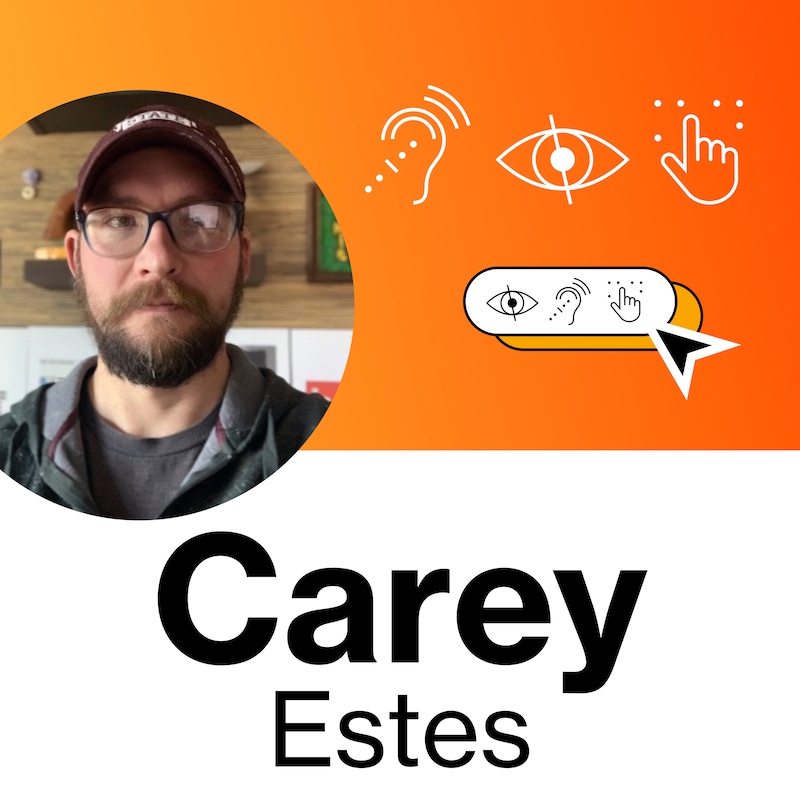
Carey Estes, Accessibility Lead at OneMain Financial, shares how he built a scalable accessibility program grounded in action, automation, and advocacy. From a life-changing experience of temporary blindness to leading DevOps integration and enterprise-wide enablement, Carey explains how accessibility becomes sustainable when embedded into systems and culture. His ultimate aim: accessibility so well integrated it creates “radio silence.”
Transcripts
Hi, this is Joe Walensky,
Speaker:and this is another episode of Digital Accessibility: The People Behind the Progress,
Speaker:and I have the opportunity to
Speaker:speak with another accessibility colleague.
Speaker:Today I am visiting with Kari Estes. Hello, Kari, how are you today?
Speaker:I'm good, how are you?
Speaker:Well, it's yet another atmospheric
Speaker:river happening in Bellingham, Washington, where I reside.
Speaker:Where are you talking to us from?
Speaker:I'm speaking from very far away in Shaw,
Speaker:Mississippi.
Speaker:Allright, well, I
Speaker:think the only places I've been to are Jackson and Biloxi,
Speaker:but I'm always interested in
Speaker:exploring a little bit more.
Speaker:So I'm in the Mississippi Delta,
Speaker:so not far from the Great Mississippi River.
Speaker:Well, it's good to have you
Speaker:on this program.
Speaker:I'm really interested to hear about your
Speaker:background and your work.
Speaker:So actually, the best place to start is if you could just
Speaker:tell us a little bit about what you're up to now. Absolutely.
Speaker:So I'm the accessibility lead at OneMain Financial.
Speaker:I sit at the intersection of design, engineering, and operations.
Speaker:I have a background started in design
Speaker:and UX,
Speaker:but I always had kind of a knack for writing code and anything technical,
Speaker:so I ended up gravitating towards
Speaker:parts of the product work
Speaker:where the craft kind of meets those real-world constraints and requirements.
Speaker:Accessibility itself kind of pulled me in because it's one of those few areas where
Speaker:design quality
Speaker:and the engineering quality, the code quality,
Speaker:and human impact all kind of meet in a very measurable way,
Speaker:in a way where you can see the outcome and you can tell that you're making a positive
Speaker:difference with people.
Speaker:So that's what I'm doing these days.
Speaker:The main part of my role is trying to scale an accessibility program at OneMain,
Speaker:which involves turning
Speaker:singular instances like audits into a fully
Speaker:scalable system.
Speaker:So that involves automated audits,
Speaker:getting everyone familiar with what accessibility is and how it works within their
Speaker:kind of workflow, building developer playbooks,
Speaker:figuring out Jira workflows,
Speaker:working with DevOps for CI/CD pipelines to figure out the best place to inject some of
Speaker:those accessibility QHX there,
Speaker:aligning with the design system,
Speaker:making sure that what we're creating
Speaker:from the component level is accessible,
Speaker:and then enabling
Speaker:everyone to not only understand what accessibility is but feel like they have the toolkit
Speaker:and the knowledge set to
Speaker:make sure that the products and the experiences that we're
Speaker:delivering to our customers and our internal TMs
Speaker:are accessible for everyone.
Speaker:And could you explain a little bit about OneMain
Speaker:for people that may not be familiar with your organization?
Speaker:Yeah, sure.
Speaker:So OneMain provides
Speaker:different products.
Speaker:We have three main ones.
Speaker:We have loans, cards,
Speaker:and insurance.
Speaker:And we provide those
Speaker:products to consumers
Speaker:who might need either a personal loan or auto loan, or,
Speaker:like I said,
Speaker:we also have cards where someone can take a credit card.
Speaker:Well, you already alluded a little bit to your
Speaker:interests in the technical side of things,
Speaker:but it'd be
Speaker:great if you could tell us a little bit more about your background,
Speaker:kind of what your work-life path was,
Speaker:and then what the touchpoints were that
Speaker:first got you involved in accessibility. Yeah.
Speaker:So I have a background in graphic design. I got my undergrad in graphic design.
Speaker:But like I said,
Speaker:I really originally
Speaker:majored in computer science
Speaker:but learned early on that computer science is
Speaker:steeped much more in
Speaker:non-visual code writing,
Speaker:and I still wanted to kind of have visual control over it.
Speaker:So switched over to graphic design.
Speaker:But then where web design
Speaker:was coming up,
Speaker:I just kind of immediately found a great spot there because it was visual design mixing
Speaker:with writing code.
Speaker:And then that love of just building things, I've always had that.
Speaker:So I knew early on that I wanted that skill set to
Speaker:help others, to mean something.
Speaker:I didn't really know exactly how I would do that.
Speaker:I remember watching The Fugitive,
Speaker:and there's a part where Harrison Ford's character, he's on the run,
Speaker:but he helps a kid in a hospital while he's running from the cops.
Speaker:And I remember thinking, "I want to be able to do that.
Speaker:I want to be able to not be on the run from the cops, but I want to be able to help
Speaker:people as much as I can
Speaker:and be able to see that kind of change realistically,
Speaker:not from far away."
Speaker:And so that's where accessibility came in.
Speaker:I found that was the gap between
Speaker:good design intent and usability,
Speaker:and it really scratched that itch for the developer side of things too.
Speaker:Learning those code enrichments,
Speaker:the ARIA roles and attributes for screen readers and rotors and the semantics,
Speaker:HTML semantics,
Speaker:how they played such a critical role in
Speaker:what was happening in the background of that browser and how it interprets that page,
Speaker:I found that really exciting.
Speaker:And so now I lead that at OneMain in both strategy and execution.
Speaker:So I'm bringing designers together with engineers,
Speaker:together with product managers,
Speaker:and trying to build those
Speaker:repeatable operations around accessibility.
Speaker:Well, yeah, just taking a step back,
Speaker:was there a certain project or
Speaker:certain work activity
Speaker:or job that you were involved in where accessibility first became
Speaker:something that you were
Speaker:aware of and started working with? Absolutely.
Speaker:So probably where it really clicked,
Speaker:where I decided I wanted to put
Speaker:this I wanted to make accessibility my main focus was at
Speaker:University of Tennessee when I worked there.
Speaker:But if we go back even further,
Speaker:I talk about this in a presentation that
Speaker:I give sometimes.
Speaker:I think it really started when
Speaker:I was in college. I was an undergrad.
Speaker:It was my last year as a senior.
Speaker:And I ended up getting a
Speaker:bacterial infection in my eye, and I went blind for two weeks.
Speaker:And the way that I had to experience that new world
Speaker:was very enlightening.
Speaker:And I think that's where I really got the
Speaker:empathy for what it means to
Speaker:move throughout the world with a different experience.
Speaker:I learned so much in those two weeks about how you perceive the world differently.
Speaker:And that just kind of changed my mindset for
Speaker:how other people kind of engage with
Speaker:objects and other people and all that.
Speaker:So then fast forward toright after I got out of college, I was teaching at Mississippi State,
Speaker:and then we had an art co-op at the Creative Warehouse,
Speaker:which was kind of a project that
Speaker:me and a couple of friends came up with there where we rented out a building,
Speaker:and then we gave art space to different artists in the area.
Speaker:And one of the people
Speaker:who was renting space,
Speaker:they were renting it was a mom who was renting space for their son and friends
Speaker:to make work in.
Speaker:And her son and his friends were nonverbal.
Speaker:And they would come in,
Speaker:and we would talk about projects,
Speaker:art projects, and what we wanted to do.
Speaker:And I learned so much about communication,
Speaker:both visual and nonvisual.
Speaker:That was another kind of incredible experience that, again, it just
Speaker:continued to kind of galvanize my
Speaker:love for accessibility.
Speaker:And then everything just kind of lined up after that.
Speaker:I worked in New York for a medical equipment company,
Speaker:and so we were making brochures and websites and pamphlets,
Speaker:and all of that required certain compliance
Speaker:and accessibility features.
Speaker:And then I got the job at
Speaker:utk.edu at University of Tennessee as the interactive art director.
Speaker:And we were rebuilding the main website,
Speaker:and we had executive sponsorship from the chancellors there.
Speaker:And we were able to set up
Speaker:testing labs with accessibility specialists and with users,
Speaker:non-sighted users,
Speaker:and a lot of different
Speaker:types of users.
Speaker:And that was really that was kind of the project that
Speaker:really kind of stuck.
Speaker:And so after that, it's just been everything that I did had some type of accessibility
Speaker:focus to it in some way or another,
Speaker:whether it be a side project or where I was working.
Speaker:So all of that kind of built that foundation that I needed to really get to where I am
Speaker:today at OneMain,
Speaker:which is confidently building that accessibility program at scale.
Speaker:Well, thanks for sharing your live life experiences.
Speaker:And it sounds like, yeah, it definitely was
Speaker:a regular step-by-step
Speaker:introduction to accessibility.
Speaker:And as that was happening,
Speaker:were there any things that you had to do to
Speaker:further educate yourself about accessibility?
Speaker:Were there any kinds of resources or
Speaker:networking that was part of you
Speaker:getting to what you know today? Absolutely.
Speaker:I came into it being just completely ignorant of
Speaker:nearly every aspect of it.
Speaker:And you make a lot of false assumptions and
Speaker:claims at the beginning.
Speaker:But as you continue to grow,
Speaker:learn from other people,
Speaker:it certainly kind of helps.
Speaker:But yeah,
Speaker:there were multiple people at University of Tennessee
Speaker:that certainly helped.
Speaker:I worked with two people,
Speaker:and both were well-versed
Speaker:in kind of accessibility
Speaker:best practices and things like that.
Speaker:I remember building stuff early on that was not accessible.
Speaker:At one point, with a WordPress template,
Speaker:I took out a lot of accessibility features because I had no idea what they were.
Speaker:And so in code,
Speaker:I just removed them and had someone say, "No, no, no.
Speaker:You need to put those back," and educated me on why.
Speaker:I learned a lot from people who knew how to use
Speaker:the accessibility tools like
Speaker:VoiceOver or JAWS or NVDA.
Speaker:So watching people use that
Speaker:was really beneficial.
Speaker:So I've tried to surround myself with people who know a lot more than me when it comes
Speaker:to accessibility and just try to continue to
Speaker:learn from that.
Speaker:Well, it'd be
Speaker:helpful to get a little bit deeper understanding of
Speaker:what your work is like now.
Speaker:It certainly sounds like you're
Speaker:at the center of a lot of
Speaker:different disciplines at your organization.
Speaker:But maybe you could talk
Speaker:a little bit about a week in the life
Speaker:of your activity and/or possibly
Speaker:some of the interesting
Speaker:initiatives happening
Speaker:with the work that you're involved in. Absolutely.
Speaker:So I started at OneMain back in 2022,
Speaker:and I wanted to
Speaker:establish some large goals, some kind of well,
Speaker:I call them pillars of accessibility that we could build upon.
Speaker:And so that's still ongoing. We're still working towards those,
Speaker:but I wanted to establish those early on because I wanted to make sure that every
Speaker:objective we had aligned with one of these pillars.
Speaker:And so those pillars that I set up back then that are still
Speaker:active today were action, automation, and advocacy.
Speaker:And so everything we try to do,
Speaker:we try to build on one of those three pillars.
Speaker:So if I'm often trying to
Speaker:maybe crash a product
Speaker:team and say, "Hey, have you made sure you think about accessibility from
Speaker:this new objective or this new product
Speaker:or A/B test," then
Speaker:I might be working with a design team to review flows
Speaker:and the UI, trying to catch any issues there.
Speaker:And then a lot of it is discussing how this new flow works with our accessibility personas
Speaker:that we're working on
Speaker:for different product objectives.
Speaker:Then it might be pivoting over to looking at
Speaker:CI/CD pipeline or DevOps,
Speaker:where we're looking at running automated audits and helping teams kind of remediate there.
Speaker:And then just oversight and operational changes,
Speaker:making sure that you're
Speaker:building guardrails and
Speaker:processes that make sure we're checking things in a proactive manner rather than a reactive manner.
Speaker:So it's JIRA and
Speaker:tooling and do we need to buy these different
Speaker:tool sets or this type of software and design guidance.
Speaker:That's another one too.
Speaker:So it's a lot of
Speaker:spinning plates with
Speaker:hurting cats on top of them.
Speaker:And a lot of times, it's setting something up, and it works great,
Speaker:and then you pivot to something else. And then when you look back, it's not working anymore.
Speaker:It's totally broken down.
Speaker:Or the person who was working on it no longer works there,
Speaker:and you have to figure out what you need to do there.
Speaker:So it's just a lot of multifaceted focus
Speaker:at work these days.
Speaker:And I guess overall,
Speaker:what I shoot for is radio silence, which I know sounds kind of weird,
Speaker:but I think that's my goal,
Speaker:is I feel like I'm always being pulled in these different directions.
Speaker:But if everything's silent,
Speaker:then I know I've done my job really well because all of those machinations are working
Speaker:without me interjecting.
Speaker:So I know I've either done my job really well or really poorly.
Speaker:And that hasn't happened yet.
Speaker:I'm somewhere in betweenright now because it never seems to be quiet.
Speaker:But we're working towards
Speaker:getting there. It's an ongoing process,
Speaker:and we're so much further along today than we were
Speaker:when I started in 2022.
Speaker:So it's good to see that progress, but we still have a ways to go.
Speaker:Well, the last thing I wanted to ask about is just sort of a continuation of what you've
Speaker:been talking about.
Speaker:And I was curious as to
Speaker:the organizational structure for accessibility where you're at.
Speaker:In some organizations,
Speaker:there's an overarching accessibility
Speaker:group that then
Speaker:manages things across the enterprise.
Speaker:And in other cases,
Speaker:there's individual champions
Speaker:in divisions and product groups.
Speaker:And other times,
Speaker:everybody is expected to embrace accessibility that's part of the
Speaker:development process.
Speaker:There's a lot of range there.
Speaker:Maybe you could talk a little bit about how things are organized where you're at. Sure.
Speaker:So when I started in 2022,
Speaker:I think I was the first kind of accessibility subject matter expert to come on
Speaker:with the idea that I would be
Speaker:figuring out how we wanted to kind of build that system and build that
Speaker:oversight and group.
Speaker:The way we're doing itright now is
Speaker:I put together an accessibility action team.
Speaker:So I've got individuals from
Speaker:all of the pockets of the organization that
Speaker:can help with accessibility and have
Speaker:some either customer or TM-facing
Speaker:kind of job. And I bring them together.
Speaker:So we come together we've only had one meeting so far,
Speaker:but the idea is you bring that group together once a quarter.
Speaker:You talk about gaps. You talk about opportunities.
Speaker:You figure out areas where we can kind of
Speaker:impact and improve accessibility in those areas
Speaker:and then try to make action items from that.
Speaker:So as it standsright now, we're kind of working with
Speaker:kind of a singular point, which is me,
Speaker:and then everyone in the organization trying to advocate and
Speaker:educate on how they can improve their lane.
Speaker:I prefer that because
Speaker:if you have a team of educated
Speaker:or of accessibility professionals who are
Speaker:trying to kind of
Speaker:govern and oversee all of that
Speaker:shared platform and
Speaker:deep into those kind of verticals,
Speaker:it's just difficult to catch things
Speaker:because you have to always be watching.
Speaker:Whereas if you influence
Speaker:and educate those individuals who are holding those keys, who are pushing out those products,
Speaker:then it's easier for them to kind of catch those things and say, "Hey, wait a minute.
Speaker:Have we considered accessibility from this perspective?
Speaker:Have we looked at the code here?
Speaker:Or have we considered putting in a GitHub linter here?" And that's worked really well.
Speaker:We've seen a great impact,
Speaker:and email has been a big one
Speaker:where there were a lot of emails that needed to be reviewed that
Speaker:weren't until we had someone who was able to
Speaker:who was in that space and then realized, "Hey,
Speaker:we need to check for
Speaker:accessibility in these emails." And so we were able to catch those and fix those.
Speaker:So that's kind of the system that we're working with now.
Speaker:I would love to continue to scale that even more
Speaker:and have more people dedicated to kind of an accessibility team.
Speaker:And then you don't have to have one person who's focusing on all three pillars.
Speaker:You can have other you can have someone who really just is
Speaker:diving into the advocacy of it and how we get more of those things out.
Speaker:And then someone who's really just focused on auditing and the ways to
Speaker:make that operationally cheaper but more effective,
Speaker:that would be a great future state that I could see us in.
Speaker:Well, thanks for
Speaker:providing such a detailed tour of your operations.
Speaker:I'm sure that'll be really helpful for
Speaker:people listening and watching to
Speaker:see how it matches up with the things that
Speaker:they're working on. But it's been great to have this chance to chat with you for a few minutes.
Speaker:So thanks so much
Speaker:for this. And hopefully, we can meet up in the real world at some point.
Speaker:Yeah, that sounds great. Thanks for the time. Allright.
Speaker:Thanks a lot. Bye-bye, Kerry. Bye.





