Shownotes
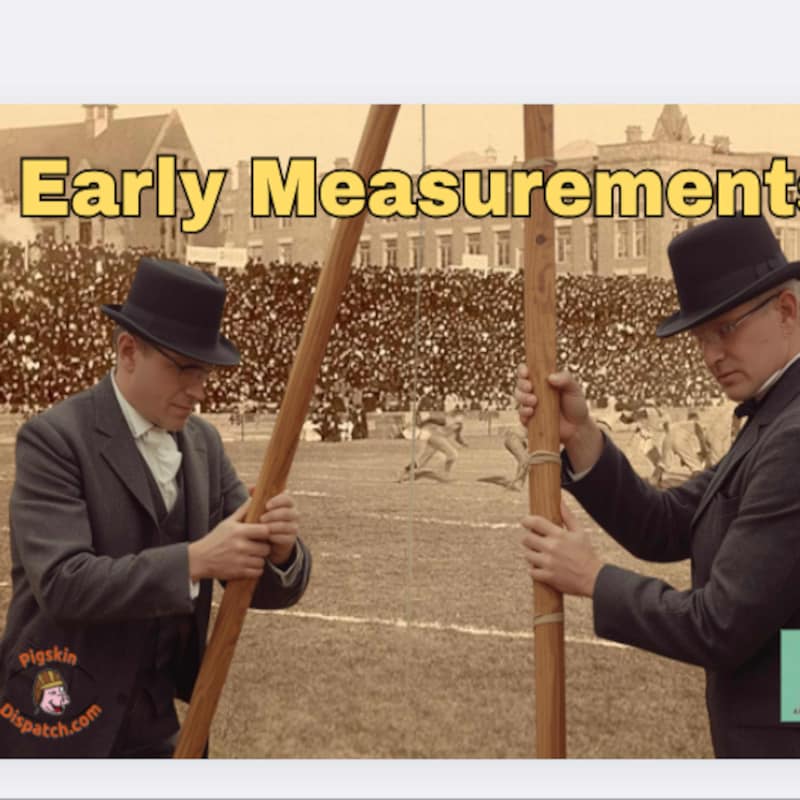
The podcast delves into a significant yet often overlooked aspect of American football history: the introduction of chains as a means of measuring distance on the field. The discussion centers around the Crescent Athletic Club, a pioneering team in the late 19th century that is credited with utilizing chains for the first time to mark the progress of the ball during gameplay. This innovation not only transformed the officiating of the game but also reflected a broader evolution in how football was played and understood. The conversation highlights the role of key figures, such as George Woodruff, who contributed to this advancement, and how the integration of chains streamlined the officiating process, ultimately enhancing the spectator's experience. As the hosts analyze the implications of this tool, they provide listeners with a rich narrative that intertwines historical anecdotes with the evolution of football officiating practices.
Of course, this conversation originates from Tim's recent Tidbit titled: Football’s First Chains Revisited
Join us at the Pigskin Dispatch website to see even more Positive football news!
Don't forget to check out and subscribe to the Pigskin Dispatch YouTube channel for additional content and the regular Football History Minute Shorts.
Miss our football by the day of the year podcasts, well don't, because they can still be found at the Pigskin Dispatch website.
Do you want more football history? Grab a copy of our latest book, "Marooned" on the 1925 Pottsville Maroons NFL franchise saga
Transcripts
You're just in time to talk about the first of something in football history.
Speaker B:Timothy B.
Speaker A:Brown of Football Archaeology helps us dig for that great treasure of football history, as we always do here on Pigskin Dispatch, and he does on footballarchaeology.com today, we're talking about the first chains used in measuring.
Speaker A:Tim's got all the scoop coming up.
Speaker B:In just a moment.
Speaker A:This is the Pigskin Daily History Dispatch, a podcast that covers the anniversaries of American football events throughout history.
Speaker A:Your host, Darren Hayes is podcasting from America's North Shore shore to bring you the memories of the gridiron one day at a time.
Speaker A:Before we get into our episode today, let's take the time to drill that football right into the like and subscribe button on your console so you know exactly when the notifications come up of the latest releases of Pigskin Dispatch podcast for some more great football history.
Speaker A:Now onto our episode.
Speaker A:Hello, my football friends.
Speaker B:This is Darren.
Speaker A:He's a pigskindispatch.com welcome once again to the Pig Pen, your portal to puzzle football history.
Speaker A:And welcome to another Tuesday where we get to visit with Tim Brown of FootballArchaeology.com Tim, welcome back to the Pig Pen, Darren.
Speaker B:Good to talk to you.
Speaker B:And do you know what my favorite Glenn Campbell song is?
Speaker A:Rhinestone Cowboy.
Speaker B:I am a headlinesman for the county.
Speaker B:Oh, boy, that one's really bad.
Speaker A:Yeah, yeah, that was.
Speaker A:That was a stretch there.
Speaker B:It would have been worse.
Speaker B:Would have been worse if I had sung that.
Speaker A:Yeah, I probably would.
Speaker A:We appreciate you not doing that.
Speaker A:Podcasts are turning off all over the world right now, so, so sorry.
Speaker B:Well, half the people who listen have no idea who Glenn Campbell is, so.
Speaker A:I. I can remember.
Speaker A:I'm old enough to remember his variety show and his songs on radio because my.
Speaker A:My dad was quite enjoyed listening to him.
Speaker A:So.
Speaker A:And a show.
Speaker A:But of course, we're doing our poor dad jokes of.
Speaker A:And almost taking it to song on a segue into a recent tidbit that Tim has written on footballarchaeology.com titled Football's First Chains Revisited.
Speaker A:And Tim, what can you tell us about this story?
Speaker B:Yeah, so this is one that I stumbled upon a second time.
Speaker B:So.
Speaker B: rominent team, you know, late: Speaker B: Into the: Speaker B:It was a team based in Brooklyn and it was mostly composed of former.
Speaker B:Originally it was former Yale players.
Speaker B:And you know, but other, you know, people who played college football, so they had played Northeastern college football.
Speaker B:And so they had fancy schmancy jobs.
Speaker B:A lot of them came from some form of money.
Speaker B:And so they joined this athletic club both to socialize, business connections and for sports.
Speaker B:And so they formed a football team.
Speaker B:And.
Speaker B:They, they were in an early.
Speaker B:An early football league of mostly athletic club teams, but they always played the college.
Speaker B:They play Yale and Princeton and Penn and those kinds of people, Columbia, you know, pretty much every year they.
Speaker B:They play some combination of those guys.
Speaker B:And so anyways, I mean, they were very talented, know, quality team, but a little bit older than college players.
Speaker B:So.
Speaker B:So in looking into them again, I kind of came across, or I was reminded and came across some information about Crescent.
Speaker B:AC was, was the first team I came across where they were mentioned as using chains on the football field.
Speaker B:So that the down marker, you know, kind of not the down marker, but the chains.
Speaker B:And.
Speaker B:So I had, you know, one of the.
Speaker B:When I was first writing tidbits, I was just writing these kind of.
Speaker B:They were intended to be almost like, you know, a tweet or something like that, real short, boom, boom, boom.
Speaker B:And so I wrote a quick little one about Crescent being the first ones to.
Speaker B:That I had identified as, as using chains.
Speaker B:And but this article that I, that I came across took it back another week or two and it mentioned that they had played pen twice that year.
Speaker B:And as they were saying, well, you know, Crescent Athletic Club is going to use these.
Speaker B:Use this tool to help.
Speaker B:Determine whether the A team earned a first down.
Speaker B:They mentioned that it.
Speaker B:They had kind of gotten the idea or had seen.
Speaker B:Seen it used by the folks at Penn and specifically George Woodruff, who was the coach at Penn at the time.
Speaker B:So, so that's a, that's the first time I had come across that.
Speaker B:And.
Speaker B:And I, you know, I went and looked at some pen articles trying to find any kind of reference to Woodruff and chains or down markers or, you know, any kind of terminology like that.
Speaker B:And I, I didn't find anything.
Speaker B:Now if somebody else out there is aware of some, you know, let us know.
Speaker B: or: Speaker B:That was the year that the linesman was added to the officiant officiating crew.
Speaker B: rly stuff, but then from like: Speaker B:And an umpire.
Speaker B:And so the referee was responsible for keeping track of whether or not the team, you know, gained five yards.
Speaker B:And best as I can tell, what they used to do is they drop a handkerchief on the ground wherever the first down was.
Speaker B:And then if they got five yards past that, then you'd give them a first down.
Speaker B:Well, you know, you put a handkerchief out there on the field, sometimes it gets kicked or moved either by accident or deliberately, and especially five yards in.
Speaker A:Advance of the line of scrimmage.
Speaker B:Yeah, yeah.
Speaker A:A lot of traffic going in there.
Speaker B:So.
Speaker B:So anyways, then when they added this linesman, one of his, he had two duties.
Speaker B:One was to take care of the tracking the distance, and then he was also supposed to help the umpire rule on fouls or, you know, penalties.
Speaker B:And so the, the suggestion at the beginning was that you basically have a flag for each down.
Speaker B:So first down, you'd put a flag in the ground over on the sideline.
Speaker B:Second down, you put the second down flag in the ground, wherever that was.
Speaker B:And then.
Speaker B:You know, you, you do the same thing on third down, just in case there was some kind of a penalty.
Speaker B:But, you know, you only had three downs, you know, at that time, so typically you're going to punt.
Speaker B:But.
Speaker B:So anyways, you know, it's just one of those things that you just.
Speaker B:That makes sense to do that.
Speaker B:You know, I mean, if.
Speaker B:First idea on how to, you know, to use a tool to track the yardage, a flag free down makes pretty good sense to me.
Speaker B:But then apparently, you know, Woodruff's idea was to do have two stout, you know, or two poles and a stout cord or ribbon between those two that was five yards long.
Speaker B:And, you know, then even, even that year, one of the newspaper reporters suggested, well, you know, probably a chain would be better.
Speaker B:And so they converted over to chains.
Speaker B:And, you know, exactly when that happened, I don't know.
Speaker B:But.
Speaker B: And then in: Speaker A:1898, you mean?
Speaker B:Yeah, I'm sorry.
Speaker B: Yeah,: Speaker A:Okay.
Speaker B:So.
Speaker B:So anyways, I mean, it's just one of those things that you.
Speaker B:We don't think about much.
Speaker B:I mean, you know, obviously with some of the changes the NFL is going through, I mean, we, we've thought about how to make that process better.
Speaker B:But, you know, the chains have been around since, you know, well, for whatever, 130 years, 125 years or something.
Speaker A:Yeah.
Speaker B:And.
Speaker B:And yet, you know, you just don't think about, oh, when did they first show up, you know, where who came up with the first set of chains.
Speaker B:I mean, because that had to be invented by somebody.
Speaker B:So, you know, who came up with it?
Speaker B:I mean, it apparently George Woodruff.
Speaker B:I haven't found any corroboration for that, but for the first mention that I find in the newspapers anyways is it's all about Crescent Athletic Club.
Speaker B:So.
Speaker A:Yeah, you know, isn't that sort of an interesting facet, you know, whether it was Woodruff or not?
Speaker A:But we know, like, you know, Crescent, you know, was adopting it, but that the teams were initiating the changes to officiating equipment and not the officials or the rules makers making those changes.
Speaker A:So that's kind of a different facet that we wouldn't think of today.
Speaker B:Okay, but, you know, that was like the.
Speaker B:I mean, at the time, there were no officials, you know, I mean, no one was trained.
Speaker B:There was no official training programs or anything.
Speaker B:Officials were coaches who, you know, had an off day.
Speaker B:You know, they had a buy or, you know, or they were just, you know, former players who understood the rules and were considered, you know, honorable people.
Speaker B:And, you know, it really isn't until the 20s when people, you know, when they start organizing real training processes and books and, you know, I've got a book on the shelf over here.
Speaker B:You know, to my knowledge, it's the first book on officiating, you know, by a guy Lambert, who was an Ohio State guy.
Speaker B:But yeah, I mean.
Speaker B:It was just, you know, I mean, it wasn't somebody like, okay, I'm an official.
Speaker B:How am I going to make this process better?
Speaker B:You know, they just were.
Speaker A:I'm talking like, you know, if you do a job, you know, no matter what you do, if you can find an easier way to do it or something that would help you and assist you in your job and making you better at it, you know, that's sort of a logical path.
Speaker A:You know, that's.
Speaker A:I guess that's sort of the angle I'm coming at.
Speaker B:Yeah.
Speaker B:Yeah.
Speaker B:Well.
Speaker B:And okay, but having said that, so in the first year that they had linesmen, they had chains.
Speaker B:So I mean, now before that, they didn't have.
Speaker B:But, you know, they didn't have anybody who could do it.
Speaker B:I mean, the referee would add had had to have been standing out there in the field.
Speaker B:And that's why, like, for a long time, the.
Speaker B:The linesman would be holding these little posts.
Speaker B:I mean, I've got pictures of those guys running up and down the field with those little posts all the time and a little box, you know, 1, 2, 3, 4, on top you know, the down box.
Speaker B:So, yeah, I don't know.
Speaker B:It's just, it is.
Speaker B:It's one of those crazy things.
Speaker B:And so, yeah, why didn't they figure that out earlier?
Speaker B:But it, you know, just takes a little bit of time.
Speaker A:No other sport has anything like it.
Speaker A:So, you know, it had to start somewhere.
Speaker A:And it is one of the innovations that football made unique to itself.
Speaker A:So, yeah, kind of.
Speaker A:Kind of fascinating.
Speaker A:Yeah, good, good stuff, you know.
Speaker A:You know, you delve into these ancient aspects of the game and how it was played and how it was officiated, how, you know, why things are the way they are, why they're called things that they are today in your tidbits and in your books.
Speaker A:And maybe you could share with listeners where they can partake of some of your work.
Speaker B:Yep.
Speaker B:So, you know, for the.
Speaker B:The blog newsletter is Football Archaeology.
Speaker B:It's a substack site.
Speaker B:So go there.
Speaker B:You can subscribe or just bookmark it or visit whenever you feel like it.
Speaker B:You know, all my books are available online.
Speaker B:You know, Amazon, Barnes Noble, Walmart, you know what, all the normal online, you know, bookstores.
Speaker B:So, yeah, it's all out there if you, if you're looking for it.
Speaker A:All right.
Speaker A:Well, we sure enjoy having you here.
Speaker A:Each Tuesday is having one of the avenues of people to take in some of your stuff, and we'd love to talk to you again next Tuesday.
Speaker B:Very good.
Speaker B:Look forward to it.
Speaker A:That's all the football history we have today, folks.
Speaker A:Join us back tomorrow for more of your football history.
Speaker A:We invite you to check out our website, pigskindispatch.com not only to see the daily football history, but to experience positive football.
Speaker A:With our many articles on the good people of the game, as well as our own football comic strip, kleet marks comics, pigskindispatch.com is also on social media outlets, Facebook, Twitter, Instagram, and don't forget the Big Skin Dispatch YouTube channel to get all of your positive football news and history.
Speaker A:Special thanks to the talents of Mike and Gene Monroe, as well as Jason Neff for letting us use their music during our podcast.
Speaker A:This podcast is part of the Sports.
Speaker B:History Network, your headquarters for the yesteryear.
Speaker A:Of your favorite sport.
Speaker B:You can learn [email protected].




