Shownotes
📺 Watch on YouTube and Spotify
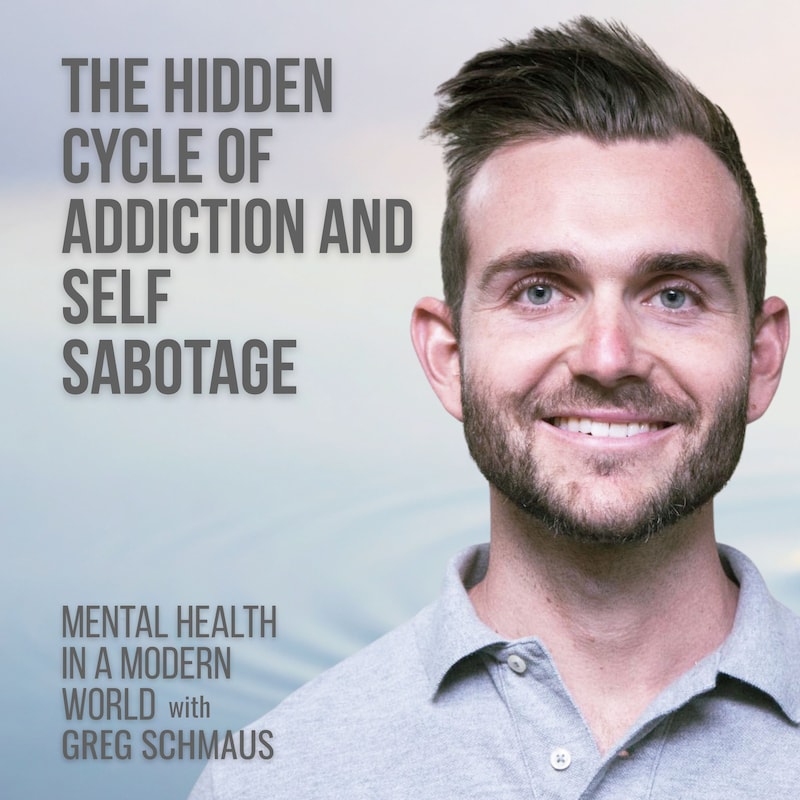
"Addictions are when wants become needs—and wants become needs as a result of unmet needs," says Speaker A, holistic health practitioner and host of Mental Health in a Modern World. Drawing from a decade of experience helping clients navigate anxiety and OCD, Speaker A dives deep into the epidemic of “socially approved” addictions, from scrolling social media to processed food and caffeine, and unravels why most of us are unconsciously trapped in cycles of self-sabotage.
In this episode, Speaker A explains how socially normalized patterns of addiction are rooted in invisible wounds: attachment injuries, unmet essential needs, and the internal wars between our desires and our deeper needs. He breaks down frameworks for understanding the psychology behind addiction—including Gabor Maté’s cost-benefit ratio, the alignment of "head and heart," and the role of internal "protector parts" that uphold destructive habits.
If you want to uncover the hidden contracts that keep you trapped, decode what unmet needs are fueling your habits, and hear actionable steps for healing addictive patterns at the deepest level, tune in to Mental Health in a Modern World for this insightful solo episode with Speaker A.
5 Key Takeaways
Transform your relationship with addiction by putting these steps into practice now:
- Take a Needs vs. Wants Inventory: Write two columns for your essential needs and non-essential wants; identify which wants have turned into needs and which needs consistently go unmet.
- Reflect on Attachment Injuries: Look back at your childhood to uncover breaks or injuries in your attachments to caregivers and where you may have sacrificed authenticity to secure attachment.
- Identify Your Story Gap: Recognize any discrepancy between your internal feelings and the story you project outwardly to others—closing this gap removes a major driver of addiction.
- Check Your Head-Heart Alignment: Explore where your head and heart (or mind and body) are out of alignment, and commit to making choices that unite your intellect and intuition.
- Write Out Your Unconscious Contracts: Clearly state your unconscious agreements driving self-sabotage—identify the behavior, its perceived benefit, and its cost, and start the process of renegotiating these contracts.
Start now—empower yourself by taking one concrete step from this list today!
Memorable Quotes
"Addictions are when wants become needs, and wants become needs as a result of unmet needs."
"You can't escape the prison that you don't know you're in."
"Addiction is when a want becomes a need."
Resources Mentioned
In the Realm of Hungry Ghosts: Close Encounters with Addiction by Gabor Maté - https://amzn.to/4tz76fu
Introduction to Internal Family Systems by Richard C. Schwartz - https://amzn.to/4uQgAnP
Connect with Greg
Website - https://www.healing4d.com/
Instagram - https://www.instagram.com/4d_healing/
YouTube - https://www.youtube.com/@gregschmaus
LinkedIn - https://www.linkedin.com/in/greg-schmaus-22929589/
🎙️🎙️🎙️
Podcast Production & Marketing by FullCast: https://fullcast.co
Discover the best podcast services in the world at The Podosphere: https://www.thepodosphere.com/
Mentioned in this episode:
Embark on The HTM Journey
Embark on The HTM Journey
Transcripts
Addictions are when wants become needs
Speaker:and wants become needs as a result of unmet
Speaker:needs. So that's a very simple but powerful
Speaker:framework to begin to take inventory of
Speaker:your needs and your wants where your wants sometimes become
Speaker:needs, classifying that as an addiction. And then what are the
Speaker:unmet needs that have a tendency to go
Speaker:overlooked that opens the door for an addiction.
Speaker:In a world moving faster than our minds were designed to handle, mental
Speaker:health is becoming one of the defining challenges of our time. Welcome to Mental
Speaker:Health in a Modern World with holistic health practitioner Greg
Speaker:Schmauss. After overcoming severe anxiety and OCD in
Speaker:his own life, Greg dedicated the past decade to helping others heal
Speaker:through a fully integrated approach to mental health, combining lifestyle
Speaker:coaching, psycho emotional healing, mindfulness, and
Speaker:archetypal work. Over the years, he's facilitated thousands of
Speaker:sessions guiding people back to peace, clarity and a deeper
Speaker:connection with themselves. Each week, Greg shares powerful solo
Speaker:insights, conversations with leading voices in holistic healing, and
Speaker:immersive live coaching sessions that take you inside the healing process
Speaker:itself. New episodes every Friday follow the show and start
Speaker:reclaiming sovereignty over your mind in a modern world. Here's
Speaker:Greg. Welcome back to Mental Health
Speaker:in a Modern World. Today we are diving into healing the
Speaker:roots of addiction. And this is such an important topic right
Speaker:now. There's, from my perspective, an epidemic of
Speaker:addiction due to various reasons, one of which being
Speaker:social media and technology, another in which being
Speaker:the processed food industry. Most people's
Speaker:neurochemistry and dopamine systems is quite hijacked.
Speaker:And most people are living with what we would call socially
Speaker:approved addictions, whether it's to social media, sugar,
Speaker:processed food, television and entertainment. So it's
Speaker:really essential that we dive into this topic, especially right now
Speaker:in the world with the rates of addiction really reaching an all
Speaker:time high and are even misrepresented because
Speaker:unfortunately, patterns of addiction have almost become
Speaker:normalized with a lot of, like I said, the socially
Speaker:approved addictions like social media, sugar,
Speaker:caffeine, nicotine, a lot of the norms
Speaker:that most people are living day in and day out, addicted to
Speaker:and might not even know it. You know, there's an old saying, you can't escape
Speaker:the prison that you don't know you're in. And so a lot of people are
Speaker:swimming in addiction and don't even know it. Like the fish that doesn't know that
Speaker:it's in water. So diving into this topic of healing the
Speaker:roots of addiction today, I felt was really timely and really essential.
Speaker:So just to start out, we're going to explore what is an addiction? And I
Speaker:took a simple definition from Gabor Mate, who's one of
Speaker:the leading world experts in the field of trauma and addiction.
Speaker:And very simply, an addiction is any repeated behavior that
Speaker:offers temporary pleasure and relief, but also
Speaker:brings long term negative consequences, right? So
Speaker:anytime we have an addiction, there's an addiction to a person,
Speaker:place or thing, whatever it is, and we'll get into the various forms of
Speaker:addiction that offers a temporary feeling of
Speaker:pleasure or relief from something, but also
Speaker:comes with long term negative consequences.
Speaker:But due to the benefit of it that we're perceiving as
Speaker:outweighing the cost, we continue to repeat the behavior.
Speaker:So whenever there's an addiction or a pattern of self sabotage,
Speaker:there's always a cost benefit ratio that we're
Speaker:unconsciously calculating. And we continue
Speaker:to play out or carry out these addictive tendencies
Speaker:or patterns of self sabotage when we see more
Speaker:benefit than we do cost. And we usually overcome the
Speaker:patterns of addiction or heal the patterns of self sabotage
Speaker:when the cost outweighs the benefit. And this is a lot of our
Speaker:perception, but unconsciously, we're always working with an
Speaker:unconscious contract of the cost benefit ratio of
Speaker:any addiction or pattern of self sabotage. So the
Speaker:different kinds of addiction that we might see nowadays would be alcohol,
Speaker:recreational drugs, prescription drugs, food,
Speaker:entertainment, pornography, social media,
Speaker:exercise, codependent or unhealthy relationships,
Speaker:sex, information consumption, et cetera. Really
Speaker:anything that you're in relationship can become an addiction
Speaker:depending on how you're in relationship with it. So we could be in
Speaker:a relationship with all of these things. Alcohol, recreational drugs,
Speaker:prescription drugs, food, sex, social media. We can be in
Speaker:a relationship with all of these things in a healthy way. But it's
Speaker:really a matter of where our power is placed. Is our power placed
Speaker:outside of us that creates dependency, that creates addiction,
Speaker:or does our power remain contained within us as we're
Speaker:in healthy relationship with all of these various things?
Speaker:And so we have the definition of an addiction. Any
Speaker:repeated behavior that offers temporary pleasure or relief, but
Speaker:brings long term negative consequences. The
Speaker:unconscious cost benefit ratio and the different kinds of
Speaker:addiction that we might find ourselves in relationship with, all
Speaker:of which relating to our relationship with power and whether
Speaker:that power is placed outside of us or is contained within us
Speaker:in relationship to whatever that thing is.
Speaker:Now, the first thing we're going to explore when it comes to healing the
Speaker:roots of addiction is exploring needs versus
Speaker:wants, right? So we all have needs that are
Speaker:essential for our survival and then essential
Speaker:for us to be healthy, happy and whole,
Speaker:right? So these needs would be Sleep,
Speaker:movement, organic or nutritious food,
Speaker:time spent in nature, clean water,
Speaker:healthy relationships, creativity, a
Speaker:sense of purpose, community, right? So these are
Speaker:all essential needs that are like the building blocks or foundation
Speaker:that allow us to be healthy, happy and whole as human beings.
Speaker:Now, wants, on the other hand, wants are
Speaker:non essential, but they add color and they add
Speaker:flavor to life, right? Once in a while, I like having
Speaker:some ice cream. Once in a while I like watching a movie.
Speaker:Once in a while I like going out to a restaurant. Once in a while
Speaker:I like smoking some cannabis or some
Speaker:organic clean tobacco, whatever it might be, right? So
Speaker:whatever it is for you, the wants add color and richness and
Speaker:flavor to life, where the needs are essential
Speaker:to be healthy, happy and whole. Right? Exercise,
Speaker:sleep, connection, relationships, time in nature, sense
Speaker:of purpose, things like that. So we have needs which are
Speaker:essential and wants which are non essential, but add
Speaker:color and add flavor and add more life
Speaker:to life. Now what is an addiction? An addiction is when a want
Speaker:becomes a need, right? So instead of saying I want a cup
Speaker:of coffee, you say, I need a cup of coffee. Instead of saying
Speaker:I want a drink, you say I need a drink. And instead of saying
Speaker:I want some ice cream or, or a snack, you
Speaker:say, I need ice cream or a snack. Instead of saying
Speaker:I want to watch television, you say, I need to
Speaker:watch television, right? So anytime a want
Speaker:becomes a need, we can classify that as an
Speaker:addiction. And now addictions happen
Speaker:as a result of unmet needs. So for
Speaker:example, if you say I need a cup
Speaker:of coffee rather than I want a cup of coffee,
Speaker:that want becoming a need is a result of an
Speaker:unmet need, which is probably quality sleep.
Speaker:Or if you say I need a drink rather than I want
Speaker:a drink, you want to look at what is the unmet need, whether
Speaker:it is healthy relationships, a sense of purpose in life.
Speaker:For example, if you're working a job that you really hate
Speaker:and you have no sense of purpose in life and you don't find value and
Speaker:meaning in your work, you come home each day and you say, gosh, I need
Speaker:a drink. So the unmet need is a sense
Speaker:of purpose, mission or value in life. And as a
Speaker:result of that, the wanting a drink becomes a needing a
Speaker:drink at the end of the day. So you can see how needs are essential
Speaker:to be healthy, happy and whole. Wants are not
Speaker:essential, but add color and flavor to life.
Speaker:Addictions are when wants become needs
Speaker:and wants become needs as a result of unmet
Speaker:needs. So that's a very simple but powerful
Speaker:framework to begin to Take inventory of
Speaker:your needs and your wants, where your wants sometimes become
Speaker:needs, Classifying that as an addiction. And then what are the
Speaker:unmet needs that have a tendency to go
Speaker:overlooked that opens the door for an addiction,
Speaker:right? So one thing that I would invite you to do, maybe at the end
Speaker:of the episode, you can even pause it right now, but maybe listen through the
Speaker:episode, and then at the end, I'm going to share some action items for you.
Speaker:Taking a needs versus wants inventory, Right? So you can draw
Speaker:two columns. Needs on one side, wants on the other side. Write out
Speaker:all your essential needs. Write out all of your non essential
Speaker:wants. Ask yourself which of these wants have a tendency to become
Speaker:needs. And then ask yourself what are the most common needs that go
Speaker:unmet in my life, which is opening the door for addiction?
Speaker:Right? So that's the needs versus wants inventory that
Speaker:is absolutely essential for healing addiction.
Speaker:Now, if we go a little deeper,
Speaker:Almost all addictions, possibly all addictions,
Speaker:are rooted in what we call attachment injuries.
Speaker:Now, a little background on what an attachment is.
Speaker:As children, we are always looking to secure
Speaker:attachments with our mother, our father, or
Speaker:our primary caregivers. Now, in attachments
Speaker:is a safe and secure connection, right? So when we
Speaker:secure an attachment, we secure a safe
Speaker:connection to mom, dad, or caregiver. And that
Speaker:allows us to feel safe, it allows us to feel
Speaker:loved, it allows us to feel cared for, and it allows
Speaker:us to feel a sense of connection. Now, attachment
Speaker:injuries are when there's a break in that safe
Speaker:and secure connection between child and parents, or
Speaker:child and primary caregiver. And so when we have these
Speaker:attachment injuries, whether it's because
Speaker:mom or dad left, or for some reason as young
Speaker:children, we had a break and had to spend an extended period
Speaker:of time without one of our parents. Or maybe our parents
Speaker:carry trauma and. Or maybe our parents carried
Speaker:addiction or whatever it might be. And there's parts of our parents
Speaker:that feel inaccessible. And there's times in which we feel like our
Speaker:parent is very distant or they're emotionally unavailable,
Speaker:where we have a hard time actually connecting with them for various
Speaker:reasons. And so our attachment injuries
Speaker:over time cause us to have to seek
Speaker:secure attachments through other means. And a
Speaker:lot of times, addictions become the replacements
Speaker:for those attachment injuries, right? So an addiction, you
Speaker:could say, is a secure attachment or an attempt
Speaker:at securing an attachment due to or as
Speaker:a result of attachment injuries in our
Speaker:formative years as children, right? So let's say
Speaker:mom carried a lot of trauma, and a lot of
Speaker:aspects of mom were emotionally Unavailable. Or let's
Speaker:say we had to, on some level, Attune to our
Speaker:parents Emotional needs. And almost caretake
Speaker:our parents on certain levels. Rather than our parents simply
Speaker:attuning to us. That's a very common source of addiction as well.
Speaker:So anytime we have these breaks and attachments,
Speaker:Attachment injuries. We always look for other means
Speaker:to secure attachments. To create safe connection, to find
Speaker:comfort, to find love, to find relief. And
Speaker:addictions are always reliable sources of comfort.
Speaker:Reliable sources of connection. Reliable sources
Speaker:of relief. Reliable sources of feeling held by something
Speaker:that's not going to judge you. That's not going to reject you.
Speaker:That's not going to abandon you. And that's not going to ask anything
Speaker:of you, right? So addictions are always a replacement
Speaker:for secure attachment. As a result of our attachment injuries. And
Speaker:we're gonna dive a little deeper into this. One of the most common
Speaker:sources of addiction. Are these attachment injuries. And so
Speaker:another thing I'd invite you to do. Is go back to your childhood and ask
Speaker:yourself. Were there times in my life. In which I
Speaker:experienced. What we might call an attachment injury.
Speaker:Whether it's with my mother, with my father, or any
Speaker:primary caregiver. And this could be a time where we may have felt
Speaker:abandoned, rejected, judged or
Speaker:criticized. Or our parent felt
Speaker:unavailable. Whether physically, mentally, or emotionally.
Speaker:Or if we had to be the caretaker to one of our parents.
Speaker:Or if we had to attune to our parents. Sometimes even more than they were
Speaker:attuned to our needs. We had to be attuned to their needs. So
Speaker:what was the potential attachment injury.
Speaker:That set the stage. Or the perfect environment.
Speaker:For an addiction. To come in. As a replacement
Speaker:for that secure attachment. That was injured once upon a time?
Speaker:As we have these attachment injuries. One of the
Speaker:great dilemmas that starts to unfold
Speaker:inside of us. Is this dilemma between
Speaker:authenticity and attachment. So, as
Speaker:children, because we are totally dependent on
Speaker:our mother. On our father, or on
Speaker:our caregivers for our survival. We
Speaker:start to learn this sense of who do I have to become
Speaker:As a means of securing attachment? Who do I have to
Speaker:be to secure my basic needs. Of food,
Speaker:water, shelter, warmth, love
Speaker:and connection? Who do I have to be to secure
Speaker:my needs to secure my attachments? And a lot
Speaker:of times we forego authenticity.
Speaker:As a means of securing attachment. So we learn that
Speaker:being our authentic self is not okay. It's not
Speaker:safe. And we must secure attachments. By
Speaker:becoming a different version of ourselves. So we
Speaker:sabotage authenticity As a means of
Speaker:securing attachment. And this creates our
Speaker:protective system. This creates patterns of adaptation.
Speaker:And this also creates a lot of shadow material.
Speaker:And so we often medicate the pain of not
Speaker:being our authentic self As a result of trying to
Speaker:secure attachments through addictive patterning.
Speaker:So we medicate the pain of disconnecting from our
Speaker:authenticity in order to secure attachments
Speaker:with patterns of addiction. So taking a look
Speaker:at your life, where do I have a tendency to sabotage
Speaker:my authenticity? Whether it's through my voice,
Speaker:through my self expression, through who I am, what I
Speaker:love to do, my yeses and no's in my
Speaker:relationships, where do I forego authenticity
Speaker:to secure attachment? And how is my addiction
Speaker:a side effect? Or the collateral damage or the self
Speaker:medicating of where I forego authenticity
Speaker:to secure attachment? Right. So we have the
Speaker:attachment injuries, we have authenticity versus
Speaker:attachment. And a little bit prior, we had the needs
Speaker:versus wants inventory. Now we're going to
Speaker:dive into what's called the story gap. And this is along the
Speaker:lines of authenticity versus attachment. Now, the
Speaker:story gap is the difference between your
Speaker:internal story and your external story,
Speaker:right? So the difference between the story you're telling inside
Speaker:that you're telling yourself and the story you're telling outside.
Speaker:So a very simple example would be
Speaker:you're, let's say as a child or as an adult, you're feeling sad
Speaker:one day and your mother or father comes up to you,
Speaker:Or a friend comes up to you and says, hey, Greg, how are you doing?
Speaker:And you say, I'm fine. Yeah, I'm feeling good,
Speaker:I'm good, thanks. That's a story gap, right? Because internally
Speaker:we're feeling sad. So the internal story is I'm sad
Speaker:and I'm upset about something. The external story
Speaker:is I'm good or I'm fine. Right? So you see the gap
Speaker:or the difference between the internal story and external story.
Speaker:Now, two things happen. Number one is we usually create
Speaker:fatigue because when we're living a story
Speaker:gap, we're holding two stories and we
Speaker:have to divide our energy in half, right? So we
Speaker:split ourselves in half, we Invest Energy into
Speaker:two stories, and our Life Force
Speaker:capacity drops by 50%. So the story
Speaker:gap opens the door for not just
Speaker:fatigue, but it also opens the door for addiction.
Speaker:Right? The greater the story gap, the greater chance there
Speaker:is for addiction. You know, most people that struggle with
Speaker:addictions Are usually people who are hiding things,
Speaker:who are not being truthful about things, who are creating
Speaker:a story gap in their internal and external,
Speaker:internal and external life. And we self medicate the
Speaker:pain of our story gap Using patterns of addiction,
Speaker:right? So taking A look at where you have a tendency to create
Speaker:a story gap between your internal story and
Speaker:your external story. Now, the next piece we're going to dive into
Speaker:is the alignment of the head and the heart,
Speaker:right? So the head represents our intellect.
Speaker:The heart represents our intuition.
Speaker:And we could say our gut represents our instincts, right?
Speaker:So we have intellect, mind, intuition,
Speaker:heart, instinct, gut. So these are
Speaker:kind of like the three brains, so to speak, right? You actually
Speaker:have neurons in your heart that are exactly the same as your brain,
Speaker:and you actually have more neurons in your gut than your brain and
Speaker:spinal cord combined, right? So your gut is actually the
Speaker:largest brain in the body. And the heart also
Speaker:has neurons that are similar to the brain inside of it.
Speaker:So you actually have three brains, and each one of them plays
Speaker:different roles, right? This is the rational
Speaker:intellect. This is the intuition in the heart. And then
Speaker:the gut is the instinctual nature, right? So today we're going
Speaker:to talk about the. The head and heart alignment,
Speaker:right? So addiction is an expression of
Speaker:choice. When the head and the heart are out of
Speaker:alignment. So whenever we struggle with addiction,
Speaker:the head usually says one thing, and the heart
Speaker:says another thing, and it creates confusion or
Speaker:conflict or polarization within ourselves.
Speaker:When we create this internal polarization, we create
Speaker:confusion or division, right? So the head says, turn
Speaker:left, the heart says, turn right. And your
Speaker:capacity to make an aligned choice is compromised.
Speaker:Okay? So what we want to do is we want to take a look at
Speaker:where is my head and heart out of alignment? For example,
Speaker:if your head says, I should work as an
Speaker:accountant because I'm getting a steady paycheck and it's
Speaker:reliable, and I have bills to pay, even though it's not what I love
Speaker:to do. But your heart says, I have such a
Speaker:deep passion for being an artist or being a musician or being
Speaker:a healer or being an architect.
Speaker:A lot of times, that division between head and heart will
Speaker:open the door for addiction. So let's say
Speaker:you're overriding the wisdom, intuition,
Speaker:or passion of the heart all day. And you're overriding
Speaker:it by living out the ideas that your head is telling you to
Speaker:do, like being an accountant. Even though it's something that you
Speaker:despise doing, you will come home and have
Speaker:patterns of addiction to medicate the pain of that. So a lot
Speaker:of what opens the door for addiction is when the head
Speaker:and the heart are out of alignment. Whenever there's a
Speaker:misalignment between head and heart, Addiction is one of
Speaker:the first and most common side effects. The heart
Speaker:desires one thing. The head Says to do another.
Speaker:The more you override the heart and listen to the head
Speaker:over time, addictions are going to be the way
Speaker:that you medicate the pain of that. So another thing you want to take
Speaker:a look at is where is my head and heart out of alignment?
Speaker:And a lot of the choices that we make are when our head
Speaker:and our heart are out of alignment, even our mind and body
Speaker:out of alignment. For example, if you're eating food
Speaker:and you reach a point of physical satiation,
Speaker:your body knows it's full, like you're not hungry anymore, but for some reason,
Speaker:you keep eating and you keep eating and you keep eating and you keep eating.
Speaker:That's a lot of the mind driven desires that are really
Speaker:hungry for something else. It could be, I'm hungry for
Speaker:more love. I'm hungry for greater purpose. I'm hungry for
Speaker:more connection. I'm hungry for emotional
Speaker:expression, I'm hungry for creativity. But
Speaker:instead of expressing those deep desires, we
Speaker:actually fill ourselves with patterns of
Speaker:addiction as a means of medicating those
Speaker:unexpressed needs as a result of, once again,
Speaker:the head and the heart, or the mind and the body out of
Speaker:alignment. So we start feeding ourselves based on our mind,
Speaker:even though our body is saying, I've had enough, right? So you see,
Speaker:in many ways, the alignment of the head and the heart
Speaker:and the alignment of the mind and the body are so
Speaker:essential. And when the mind and body are out of alignment,
Speaker:or the head and heart are out of congruence, or
Speaker:in a state of conflict or polarization, we
Speaker:open the door for addiction. So taking a look, where is
Speaker:my head and heart or my mind and body out of alignment?
Speaker:Another example would be a lot of people have exercise addiction. So they wake
Speaker:up and let's say they are feeling really
Speaker:tired or fatigued or burnt out one day
Speaker:and they still go to the gym and do a really
Speaker:hard workout. Well, if you ask the body what are you really
Speaker:wanting? It might say, I'm wanting a nap, I'm wanting a
Speaker:massage, I'm wanting a sauna, I'm wanting to just go take a
Speaker:walk in nature because I'm depleted. But because of our
Speaker:addiction, we override what the body is saying. And our mind
Speaker:is craving a workout to fulfill other needs. And
Speaker:so we actually end up sabotaging the body to fulfill the
Speaker:mind's desire. Do you see how so much of
Speaker:addiction is the imbalance of the mind and the body or
Speaker:misalignment of the head and the heart? Now we're going to dive into
Speaker:parts Work. Now, I've introduced parts
Speaker:work in the past on previous episodes in which
Speaker:our mind is not just this
Speaker:one mind, but it's actually a
Speaker:multiplicity of parts within one mind,
Speaker:right? So there's not one self within the mind.
Speaker:There's a multiplicity of parts within the psyche,
Speaker:right? So this is the multiplicity theory. Now, in the past, this was
Speaker:often pathologized as, say, multiple
Speaker:personality disorder. But the truth is, if we
Speaker:explore our language, we always see
Speaker:a multiplicity of parts within it. For example,
Speaker:there's been times where we say, part of me wants to do this,
Speaker:but another part of me wants to do that, or a part of me
Speaker:feels this way about that situation, and a part of me
Speaker:feels that way about this situation, right? So we all
Speaker:have this experience of different and often
Speaker:conflicting parts within ourselves. And so
Speaker:based on the framework of parts,
Speaker:an addiction is always an expression of what we would call
Speaker:protector parts. And this is based on the teachings of
Speaker:Richard Schwartz in ifs, or internal family
Speaker:systems. So in ifs, we have
Speaker:what's called protector parts and protector parts
Speaker:job is to protect the wounded or
Speaker:exiled parts that experience trauma. Now,
Speaker:I'm of the belief that almost all addiction is rooted in trauma.
Speaker:Gabor Mate talks about this. All addiction is rooted in trauma.
Speaker:So whenever we have trauma, we have
Speaker:exiled parts that get frozen in time. They
Speaker:get stuck in traumatic experiences. And what
Speaker:happens is we recruit protector parts as a
Speaker:means or as a way of protecting these exiles.
Speaker:Now, we have different kinds of protectors. We have what's
Speaker:what we would call managers and what we would call
Speaker:firefighters. Now, managers are
Speaker:proactive addictive patterns.
Speaker:If we're looking at through the lens of addiction, that are
Speaker:there to keep the exiles locked away
Speaker:and keep the old wounds, traumas, or unprocessed emotions from
Speaker:getting triggered. So the manager's job is to
Speaker:manage the system through patterns of addiction or other means
Speaker:as a way of keeping the exiles from getting
Speaker:activated. Now, firefighters, on the other
Speaker:hand, are reactive protectors
Speaker:whose job is to put out the fire once the exiles get
Speaker:triggered. So, for example, a firefighter might be
Speaker:someone who binges on food once a core wound is
Speaker:activated. So let's say someone gets judged or criticized and they
Speaker:feel deep shame. The firefighter is there to eat
Speaker:the shame away, right? To put out the fire to make sure that the shame
Speaker:is buried through large amounts of bingeing or food
Speaker:consumption. Now, a manager might be
Speaker:someone who uses caffeine as
Speaker:a way of giving you enough energy to keep
Speaker:doing the things you need. To do to secure your self worth.
Speaker:Right. So if someone's addicted to work and they only
Speaker:find self worth through their work or even
Speaker:exercise, a lot of times we will use stimulants
Speaker:or even exercise addiction as a way of
Speaker:securing our worth to make sure that our shame or
Speaker:our insecurities don't get activated. Or a lot of times
Speaker:we will use prescription or recreational
Speaker:drugs to sedate the unprocessed emotions. It could
Speaker:be prescription drugs like antidepressants or
Speaker:pain meds, or recreational drugs like
Speaker:cannabis or alcohol. A lot of managers we
Speaker:might use proactively, some of these
Speaker:sedative compounds as a way of keeping
Speaker:our core emotions, our core wounds, from getting
Speaker:activated or for being brought up to the surface. Right?
Speaker:So we might have manager addictions that are proactive,
Speaker:keeping wounds tucked away, or firefighter
Speaker:addictions, which are reactive, which are there to put out
Speaker:the fire once a core wound, core emotion,
Speaker:or trauma does get triggered. And a lot of times
Speaker:we create what's called an addiction cycle, which is
Speaker:a negative feedback loop of parts that
Speaker:constantly inflame each other. A lot of times with patterns
Speaker:of addiction, we have what's called polarized protectors,
Speaker:which are protectors that are playing opposing roles
Speaker:and constantly inflaming or triggering each other.
Speaker:And this creates a negative feedback loop or
Speaker:a closed cycle. And we'll dive into that in one sec.
Speaker:If we take an example, such as a perfectionist and a
Speaker:critic, those would be polarized parts. So a
Speaker:perfectionist is doing everything it can to make you
Speaker:perfect, Usually to protect you from shame,
Speaker:from insecurity, from judgment, et cetera. But
Speaker:obviously, perfectionism is inevitably going to fail
Speaker:because we can never uphold perfection. And so a
Speaker:lot of times, once we fail to meet those high
Speaker:expectations, we notice an inner critic.
Speaker:And that inner critic judges and criticize,
Speaker:criticizes the way that we may have failed to meet certain
Speaker:expectations. And that creates a pattern of shame.
Speaker:Now, when we have that feeling of shame, a lot of times we might reach
Speaker:for an addiction to self, soothe that shame.
Speaker:And now what happens after we reach for that addiction is it
Speaker:inflames that perfectionist. And now we try and be perfect,
Speaker:we abstain, we try and control, we try and clean
Speaker:everything up, you know, starting on Monday, no sugar, no alcohol,
Speaker:no this, no that. And we create these control patterns of
Speaker:perfectionism, which once again inevitably fail
Speaker:and inflames the critic. And the critic has more things
Speaker:to judge and criticize, which creates more shame.
Speaker:The shame creates another pattern of self soothing. And then the pattern
Speaker:of Self soothing once again inflames the perfectionist. And we
Speaker:are on this revolving circle, this loop
Speaker:that constantly feeds on itself. So a lot of
Speaker:addiction is actually a negative feedback loop of protector parts that
Speaker:are constantly inflaming each other. And some of the most
Speaker:common are perfectionists, critics, and self
Speaker:soothing parts. And so you can see how those
Speaker:patterns keep going around and around and around and around,
Speaker:sometimes on a, even a weekly basis. Right. We see this
Speaker:a lot with, with food,
Speaker:for example. People say, okay, I'm going to cut out all sugar starting
Speaker:on Monday. And they try and be this like perfect
Speaker:specimen of dietary expression. And then all of a
Speaker:sudden, something happens and they eat something
Speaker:and the critic gets activated and they feel shame around
Speaker:it. So by Friday, they end up self soothing and eating a whole
Speaker:pizza and drinking some beer. And then by Monday
Speaker:morning, that perfectionist gets triggered again, once again, this
Speaker:negative feedback loop. And so you can see how this addiction
Speaker:cycle just feeds on itself. Now within all of that,
Speaker:we have what's called unconscious contracts.
Speaker:And this is based on the work of Family Constellation, of
Speaker:Sarah Payton, and of Bert Hellinger, who is the founder of Family
Speaker:Constellation. And these unconscious contracts are
Speaker:essentially the unconscious agreements that we make with
Speaker:ourselves and with others as a way of securing
Speaker:attachments, creating safety, and avoiding conflict,
Speaker:pain or trauma. And so these unconscious contracts are written
Speaker:out in a specific way. An unconscious contract would be written
Speaker:out like this. I, Greg, solemnly swear to my essential
Speaker:self. Right? So it's an agreement. I, Greg, solemnly swear
Speaker:to my essential self, I'm making an agreement with myself that
Speaker:I will blank. And that blank is the self
Speaker:destructive behavior. I will binge on food,
Speaker:I will consume too much alcohol, I will
Speaker:scroll on Instagram, sit around just checking out on
Speaker:social media in order to blank whatever the
Speaker:benefit of that is, in order to avoid feeling my emotions, in
Speaker:order to avoid confronting aspects of my life, in
Speaker:order to dissociate from the anxiety or shame inside
Speaker:of me, in order to medicate the lack of purpose, purpose that I felt
Speaker:during my or didn't feel during my day, no matter the cost
Speaker:to myself, right? So I fill in your
Speaker:name, solemnly swear to my essential self. That's the
Speaker:agreement that I will blank whatever the addictive,
Speaker:sabotaging or self destructive behavior is, in order
Speaker:to blank whatever the benefit is, no matter the cost to
Speaker:myself. So you see, the ingredients of that contract is you have the agreement,
Speaker:the self destructive behavior, the benefit of the
Speaker:behavior, and then the cost of it. And so
Speaker:the truth is, we will always continue to
Speaker:Sabotage through addictive patterning. If we see
Speaker:more benefit than cost, and as soon as there's more cost than
Speaker:benefit, like I said earlier, we will move beyond that
Speaker:contract or move beyond that pattern of addiction. And so
Speaker:whenever, wherever in your life you have a pattern of sabotage or. Or
Speaker:pattern of addiction, I would invite you to write out an
Speaker:unconscious contract saying, I, then your name,
Speaker:solemnly swear to my essential self that I will
Speaker:fill in the blank with whatever the addictive pattern or
Speaker:sabotaging behavior is. I will blank in
Speaker:order to blank whatever the benefit of it is.
Speaker:You know, soothe my emotions, avoid my shame,
Speaker:avoid confronting something in my life, whether it's my work or
Speaker:relationship, whatever it might be, no matter the cost to
Speaker:myself. And as soon as you write out that contract,
Speaker:you make it what was unconscious, you make it now
Speaker:conscious, and it shifts your relationship with that pattern
Speaker:just by bringing light, shining light on this
Speaker:unconscious contract that is now made conscious.
Speaker:And by making conscious the agreement, the
Speaker:pattern, the benefit, and the cost,
Speaker:it actually starts to open the door for we could
Speaker:say potentially changing, revoking,
Speaker:releasing, or renegotiating that contract.
Speaker:Because the truth is, if there wasn't benefit in sabotaging
Speaker:ourselves, we wouldn't do it. We always sabotage ourselves
Speaker:when we see more benefit in doing it, then we see cost
Speaker:in doing it. And the moment there's more cost than benefit,
Speaker:we no longer sabotage ourselves. So I want to
Speaker:take a moment and really reflect because I shared a lot with you
Speaker:in this episode thus far and really break it
Speaker:down into. Into some very simple action items that you can even work
Speaker:with on your own as a result of going on this journey
Speaker:today with me in this episode. So the first
Speaker:thing is taking that needs versus Wants inventory,
Speaker:Writing down your needs, writing down your wants. What
Speaker:wants have a tendency to become needs, and what needs have a
Speaker:tendency to go unmet? That shows you where your addictions are
Speaker:and potentially what is the root cause of them. So needs
Speaker:versus wants inventory number two,
Speaker:exploring your attachment injuries. Where as a
Speaker:child, there were breaks in safe and secure connection
Speaker:and where we have foregone authenticity to secure
Speaker:attachment. Right? So where did I experience attachment
Speaker:injuries as a child? And where did I learn to
Speaker:forego authenticity to secure my
Speaker:attachments? Next is the story gap.
Speaker:Where do I have a tendency to create a story gap between my
Speaker:internal story and my external story? So the
Speaker:greater the gap or difference between our inner and outer story,
Speaker:the more we open the door for fatigue, illness, and addiction.
Speaker:Next is the alignment of the head and the hearts, Right? Where
Speaker:do my head and heart or mind and body have a tendency to step
Speaker:out of alignment where my head says one thing, my heart says another,
Speaker:my body says one thing and my mind says another, and our capacity
Speaker:to make aligned choices is compromised. So exploring
Speaker:the head and the heart and then exploring the addictions
Speaker:as expressions of protector parts where do I have
Speaker:managerial addictions which are proactive and preventative?
Speaker:Where do I have firefighter addictions which are reactive
Speaker:to try and put out the fire as a result of inflamed
Speaker:exiles? And where do I get caught in an
Speaker:addictive cycle as a result of polarized
Speaker:protectors such as the perfectionist and the critic,
Speaker:creating a negative feedback loop that keeps feeding
Speaker:upon itself? And where can I write out my
Speaker:unconscious contracts as a result of some of the
Speaker:sabotaging or addictive behaviors that I find myself
Speaker:expressing? Where I write out the agreement, the behavior,
Speaker:the benefit, and then the cost. And so this
Speaker:gives you actually quite a bit to work with on your own. And if you
Speaker:would like to take a deeper dive, you can reach out to me for
Speaker:some one on one coaching, you can go to
Speaker:healing40.com, which is my website, my home
Speaker:base where all of my coaching and program offerings are. You
Speaker:can set up a free 30 minute discovery call with me if you just want
Speaker:to ask some questions questions, get some insights, or if you're interested
Speaker:in doing some deeper coaching work. My online
Speaker:program, Healing the Mind A Journey to Wholeness is my flagship
Speaker:21 day program that takes a holistic approach to mental health.
Speaker:And then I also have my Healing your Core Archetypes, a Journey of
Speaker:Empowerment online course which dives into the seven core
Speaker:archetypes that are at the root of the healing journey which I'm going to
Speaker:be doing some follow up episodes on going into some of those core
Speaker:archetypes which also tie in to our patterns of
Speaker:addiction. So a lot of opportunities for deeper healing
Speaker:and follow up. If you'd like to take a deeper dive with me, whether
Speaker:it's through one on one coaching or any of my coaching or program
Speaker:offerings. So healing40.com is the best place where you can
Speaker:find all of that. And for my online programs, Healing the Mind, A
Speaker:Journey to Wholeness or Healing youg Core Archetypes A Journey of
Speaker:Empowerment, you can use the code podcast at checkout to save
Speaker:20% off. And thank you for going on this journey with me
Speaker:today. Healing the Roots of Addiction and Exploring the Roots of
Speaker:Addiction. I look forward to sharing more with you in next
Speaker:week's episode. Have a beautiful week and I will talk to you soon. Bye.
Speaker:Bye.




