Shownotes
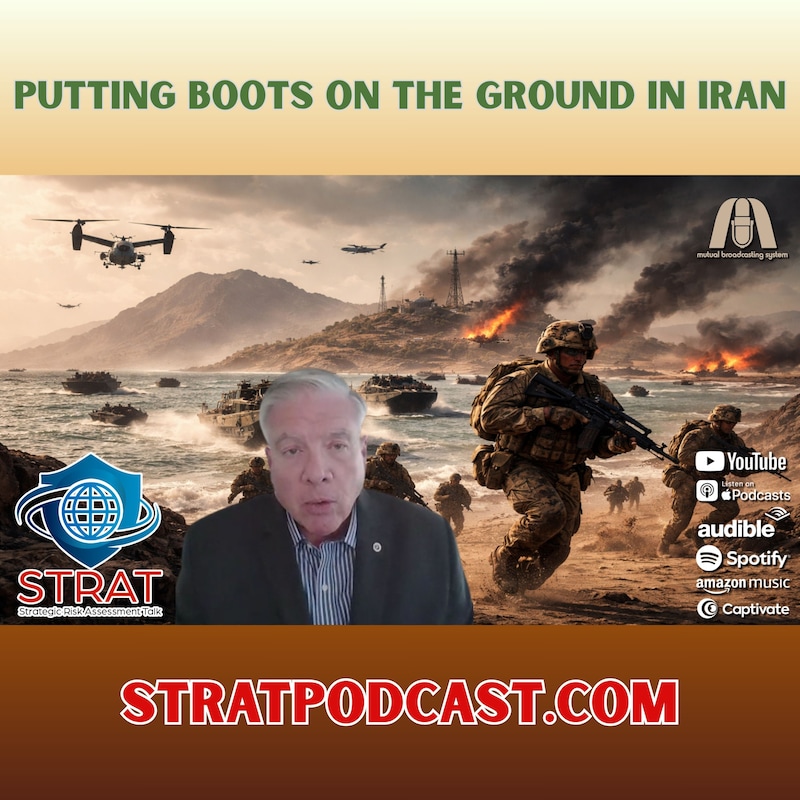
This episode of STRAT explores the growing possibility of U.S. ground operations in Iran and what those forces could be tasked to accomplish. With Marine Expeditionary Units and elements of the 82nd Airborne deploying into U.S. Central Command, military leaders now have expanded options beyond air and naval strikes. Retired Marine Intelligence Officer Hal Kempfer focuses on the strategic importance of key islands controlling the Strait of Hormuz and how seizing or neutralizing them could disrupt Iran’s military capabilities and economic lifelines. Particular attention is given to Kharg Island and the broader “defensive arc” that enables Iran to influence global shipping routes. The episode also examines operational challenges, including underground tunnel systems, missile threats, and the need for sustained occupation forces. With potential support from Gulf allies, this analysis highlights how modern warfare strategy could reshape regional power dynamics.
Takeaways:
- U.S. forces are positioning for potential ground operations in Iran
- Marine Expeditionary Units and airborne troops expand tactical options
- Ground forces are critical for targeting underground facilities
- Seven key islands control access to the Strait of Hormuz
- Kharg Island is vital to Iran’s oil export economy
- Securing islands could shift control of global shipping routes
- Operations would require sustained multinational occupation forces
- Iran’s terrain, tunnels, and defenses present major challenges
#STRATPodcast #HalKempfer #MutualBroadcastingSystem #StrategicRiskAnalysis #IranConflict #USMilitaryStrategy #StraitOfHormuz #MiddleEastSecurity #Geopolitics #MilitaryOperations #MarineExpeditionaryUnit #AirborneForces #DefenseAnalysis #GlobalSecurity #NavalStrategy #GroundForces #IranMilitary #StrategicPlanning #MilitaryIntelligence #RegionalStability