Shownotes
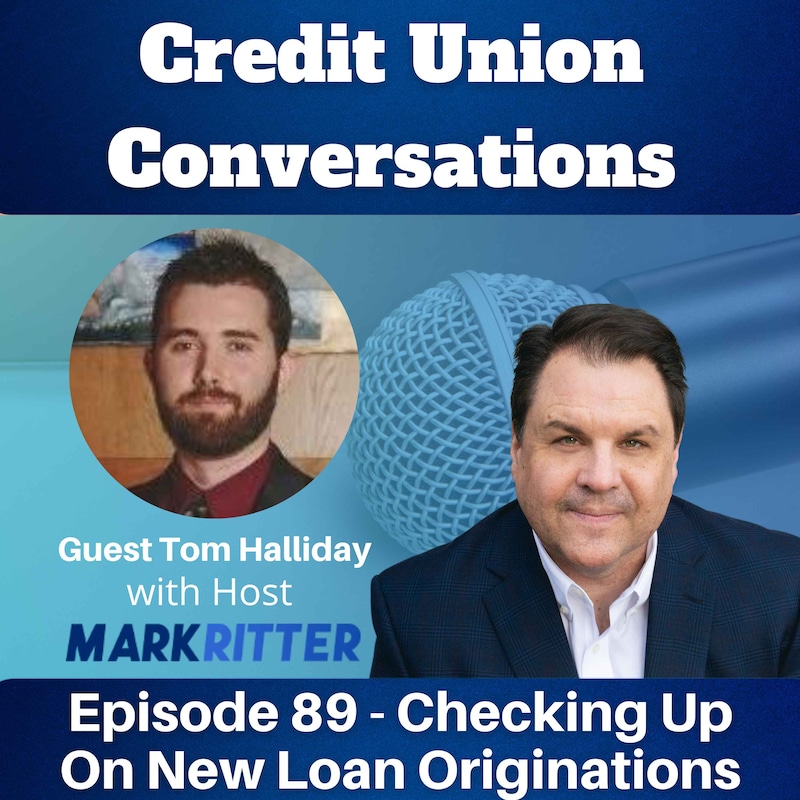
Are you interested in the latest trends in the participation marketplace? Want to learn how credit unions are changing the lending landscape? In this episode of Credit Union Conversations, host Mark Ritter chats with Tom Halliday, Vice President of Lending Sales at MBFS, to discuss the state of consumer lending in mid-2025. From the surprising member-focused approach of credit unions to the importance of clear communication in simplifying the loan process, this episode explores what drives success in lending today. Tune in for insights on overcoming business lending challenges and succeeding in a competitive market!
IN THIS EPISODE:
- (00:00) Intro: Meet Tom Halliday
- (02:24) Tom Halliday’s origin story, detailing his transition from consumer lending to joining MBFS as Vice President of Lending Sales
- (03:18) Discussion of the member-focused approach of credit unions, contrasting it with the profit-driven mindset of commercial banks
- (07:23) Discussion shifts to the state of the lending market in 2025
- (13:15) Communication is key to a smooth loan process; clear expectations and complete borrower information will avoid delay
- (19:15) Key factors for successful credit union lending programs are outlined
- (21:11) The participation marketplace is described as highly competitive, with more credit unions looking to buy
KEY TAKEAWAYS:
- Credit unions prioritize member relationships, focusing on understanding borrowers' stories and goals, unlike commercial banks, which often treat borrowers as numbers.
- Effective communication is crucial for seamless loan processes, ensuring clear expectations and prompt responses between borrowers, relationship managers, and credit unions.
- The participation marketplace is highly competitive in 2025, with more credit unions seeking to buy loan participations than available opportunities, requiring quick responses to secure deals.
RESOURCE LINKS
Tom Halladay 302-545-3424
Transcripts
[00:00:27] Because sometimes I, uh, end up talking more to my credit unions and I don't get to talk to my people as much. So heck, let me catch up with them and we'll post it on the internet for, uh, the world to see. So joining me today is Tom Halladay. Tom, how are you doing? Good, mark. How you doing today? Pretty good.
[:[00:00:49] Tom Halliday: That's in process. It's next week, next Friday is the big move. Well, Thursday into Friday of next week.
[:[00:01:04] Tom Halliday: can't wait.
[:[00:01:12] Mark Ritter - Host: Yes, yes, yes. Are you boxing up everything or yourself or do you have some movers with you
[:[00:01:21] Mark Ritter - Host: Oh boy. You are a better, better man than me. I. I just wanted to put everything in the middle of my yard and burn it. It got so frustrating. I
[:[00:01:38] So
[:[00:01:55] Tom Halliday: I ended up taking a lot of stuff to Goodwill already and uh, yeah, I'm sure there's probably in the [00:02:00] next week there may be some more to come.
[:[00:02:24] Tom Halliday: Sure, and I'll try to keep it pretty brief, but started my career working in consumer lending. Then I transitioned into managing a bank branch for a community bank. Found I had some talent building business relationships. I moved over to the small business lending side, was a relationship manager for there was with the banking world for about 10 years.
[:[00:03:00] Mark Ritter - Host: Yeah, and it's changed quite a bit for you, you came from the commercial banking world.
[:[00:03:18] Tom Halliday: You know it, it might sound a little corny, but I'd have to say that the credit unions actually care about their members and their borrowers. Just my personal feeling coming outta that commercial banking world, it felt to me like the borrowers were looked at as a number, get as much out of 'em as possible, move on to the next, which never really sat well for me.
[:[00:03:52] So it was something that was a really refreshing surprise for me. But to be honest, I can still see it with the credit unions today. It's not something that's really changed [00:04:00] since I started here. So it's, it's, it's been a really nice it and happy surprise.
[:[00:04:12] I, I, I would
[:[00:04:22] Mark Ritter - Host: Yeah. It's, it's such just a different culture where you can sit down. And do what's right for people and have a conversation.
[:[00:04:31] Tom Halliday: Exactly. That's, that's, that's exactly it right there, is that building relationships and not just, again, squeezing everybody as hard as you can, get as much out of 'em as you can and then throw 'em away and move on to somebody else. A a lot of the, even the borrowers, I mean, moving those borrowers over, they see that and it's like, why didn't I come over here sooner?
[:[00:05:11] And for the most part, those are gone. Yeah. Uh, there, there's still some out there, but, but they're really gone and I think credit unions have filled that void of the community bank from 20 to 30 years ago.
[:[00:05:30] I mean, it's still kind of a unfortunate but well-kept secret once, once people do get, get wind of what, what else there is out there. Again, it's the same thing of never wanting to go back. But you know, I'm, I'm still telling the story and still seeing people with some of my old clients, even that they had no idea that it was, that there was this gra gra greener grass on the other side.
[:[00:06:25] So yeah, that was my best marketing efforts ever, is just a old crotchety bank guy who didn't think, you know, it was, he, he was like a, a Mr. Burns, Mr. Potter type of character, you know, with the, with the arched fingers, you know, talking about the old days. At thought he should just dominate the world and nobody else.
[:[00:07:05] Speaking of business, so as we sit here in mid 2025. I give people a profile of what the world is like today compared to maybe 20 23, 20 24.
[:[00:07:32] It was really a down year in 2024 when we compared to things, I mean, 2023 was better. I mean, obviously we saw a slide going, going from, you know, pretty much since 2022, between credit union, liquidity challenges, things like regulatory pressures, different loans being sought by credit unions. The rate increases.
[:[00:08:10] I mean, everything is just kind of hitting on all cylinders. Borrowers are back. I mean, even with the higher rates, we're not really seeing the slowdowns. We're really seeing a time where we have, you know, and even the credit unions have, you know, more loans to choose from than, than really dollars available.
[:[00:09:03] The other side that I see is. Credit unions, the other segments and lines of business are softening. Definitely. And people are realizing that commercial lending, business lending, small business lending, whatever you want to call it, is a consistent flow of business.
[:[00:09:32] I mean, in terms of rates, I still feel like they might be a little bit higher. I mean, when I, again, when I started back in 2017, they were probably three quarters of a point, maybe a point higher now than they were then. But like you said, I mean, looking at the, the different. Cycles that we see in business.
[:[00:10:21] Mark Ritter - Host: well.
[:[00:10:31] Tom Halliday: Absolutely.
[:[00:10:50] You know, it, I, and I think most of that is outside the credit union space. If, if you are in. I always say, if you're in the largest deals, in the largest metro [00:11:00] areas, you have the largest problems. A,
[:[00:11:12] I mean, there, there's a place for those too, and there's ways that we can, you know, mitigate some of those risks. But you're absolutely right that, that taking on the giant pieces is, is not the way to go.
[:[00:11:37] You know, if you got into somebody who's a little bit tighter leverage Yeah. The, you, you could have some problems, but for, for the most part we're, it's, you know, delinquency. Delinquency is higher. I told everybody delinquency was gonna be higher. Yeah. But also I consider delinquency to be normal as an industry overall.
[:[00:12:00] Tom Halliday: e exactly, and, and, and you, you, I think we hit it earlier of, of the whole thing with cheap money. I mean, when, when delinquency is essentially zero, you get used to that too. So even when there's an the slightest uptick, it's, you know, it. Pa time to panic and, and, and like you said, it's, it's really getting back to normal and, and when it happens to you, it stinks and there's, there's ways we can help people with that.
[:[00:12:41] Mark Ritter - Host: Exactly. So now that things are back s uh, I hate to say they're smooth, but the volumes, volumes are back.
[:[00:13:16] Tom Halliday: So honestly, I mean, it's, it's, it's pretty simple. I think it all boils down to communication. Communication is, is really the, the, the key to make that process go smoothly. And, and I mean by that is communication between the borrowers and the relationship managers when we're setting expectations, letting them know about the process, the timeframe, what's needed for each step of the loan process, as well as communication between the RMS and the credit unions to make sure we're checking the boxes for the priorities of the credit union, what they want, the types of loans, et cetera.
[:[00:14:18] You know, if we have all the information, if we're able to kind of communicate that between the borrowers, communicate that with the credit unions. It's a pretty smooth process and that that includes even once, you know, not just from the sales perspective of it, but when we're working with the other MBFS departments in underwriting, in documentation and servicing, if we know the story, we can work with them and we can really assist everybody in in the best possible way.
[:[00:15:07] Tom Halliday: Yeah,
[:[00:15:09] I, if you ask a very narrow question, they give you a very narrow response, and eventually we come across the hiccup on the deal. That we have to address, but sometimes you just wanna look at 'em and say, I wish you would've just told me this to begin with.
[:[00:15:32] I hold student loan. I mean, tell me the story so I can work with it and, and find a way around it as opposed to, or again, through it as opposed to then finding out about it. And then it's almost like, okay, well what else didn't you tell me? We still run into those people that are, are the, the old time, you know, that want to wanna do things on a handshake that want to, I don't wanna say hide their income, but, you know, essentially, you know, they, they want to use every tax loophole that they can to not pay taxes.[00:16:00]
[:[00:16:16] We've got the full story. It's easy. Or in some cases, you end up having to tell that borrower and counsel them. You're gonna have to self fund until you show it. Until it's there.
[:[00:16:57] And now credit unions and, and, [00:17:00] and rightfully so, back to what I'll call more traditional lending. Okay. We have to order the appraisal. Now we have to order the environmental, now we have to dig into your corporate docs to make sure they're nice and, and, and, and, and sometimes people want to lend like it's five years ago and where everything was getting weighed and everything was moving a hundred miles an hour.
[:[00:17:25] Tom Halliday: Yeah, that's a hundred percent true. I mean, and it never should have been that way in the first place, to be honest. I mean, it's essentially going back to what we should have been doing all along and it's, it's almost like a surprise to some people.
[:[00:17:52] Or repricing at much higher rates. So the rubber is going to hit the road [00:18:00] of do you have the cash flow to make this new loan structure or adjusted loan structure work.
[:[00:18:15] There are some cases where there are borrowers that are selling properties. I mean, refocusing their business. So I mean, there, there's. Yeah, there's the ones that it's going to come as a surprise to, and I'm sure we're going to, to to deal with those. But if they're paying attention to their business and working in their business, they, they do know it's coming and they're addressing it accordingly.
[:[00:18:45] Mark Ritter - Host: Yeah. And shifting gears a little bit. Talking about credit unions, because you work with credit unions every day. I work with credit unions every day.
[:[00:19:15] Tom Halliday: I think again, it's gonna start with communication and by that I mean, you know, telling us the types of loans that they want.
[:[00:19:39] You know, how do you want those loans priced? You know, what's your minimum, minimum rate? What's your, your minimum margin? Do you use treasuries or, or, or prime as your, as your, as your index? And another aspect of that, that communication, I think with to make the those successful credit unions successful is responsiveness.
[:[00:20:15] What do you think credit union, is this a deal that fits your, your credit box? A timely response to that. Means we're gonna win more deals, we're gonna get the borrowers that they want, and, and we're gonna be able to move that whole process forward. When we have a credit union that doesn't reply to our initial pitch, takes weeks to deliberate on something, chances are that borrower's already gone elsewhere.
[:[00:20:52] Mark Ritter - Host: So many of our loans involve multiple credit unions in the participation area. [00:21:00] What is the marketplace like today for buying and selling loans and getting, you know, collaborating with other credit unions on those loans?
[:[00:21:30] So to the same, the same thing I just mentioned as far as responsiveness. You need to be able to review those and, and give us, you know, an answer quickly or else somebody else is gonna come in and, and take those dollars. Because, you know, I've, I've, I've had several credit unions say, Hey, I want, you know, a few more million dollars by the end of this month that.
[:[00:21:57] Mark Ritter - Host: Yeah. It, it is, it, you know, it wasn't a [00:22:00] year ago, a year and a half ago, I was telling people, if you can't fully fund this, deal yourself. Don't do it.
[:[00:22:12] We were, we were chasing to be able to find the, the participants for it. A lot of people were, were on, on the sidelines in intentionally, some with liquidity, some with other reasons, but that, that market has turned. And I mean, you know, the, the, we, we saw this, uh, I wanna say it was 20 20, 21, 22. The, the deals were just flying off the shelves that faster than we could even put 'em out there.
[:[00:22:55] Tom Halliday: You know, we haven't really seen a lot of bumps in the participation process, at least recently.[00:23:00]
[:[00:23:16] So okay, the loan is settled, the lead credit union funds the loan, those participants need to send their portion of that loan over to the lead. So sometimes it, you know, it takes a day or so having to chase, chase people to, to be able to get those things funded. The o only real bump, I would say would be when we have a loan that's that's outside the box.
[:[00:23:56] So kind of working around getting this, those approval or, or, or [00:24:00] participation agreement signatures, getting those things funded so that it isn't a surprise to anybody, I'd say. We work together pretty well internally to keep everybody in the loop and make that process pretty smooth.
[:[00:24:24] 'cause at the end of the road, there is a member at the who wants this loan and wants a smooth process.
[:[00:24:44] Mark Ritter - Host: so.
[:[00:24:58] Tom Halliday: and, and thanks again for the opportunity to talk [00:25:00] with you today, mark.
[:[00:25:18] Mark Ritter - Host: y@mbfs.org. So joining to me today was Tom Halladay, who heads up our sales. Please subscribe to Credit Union Conversations in our new weekly format on your favorite audio network.
[:[00:25:52] So I'm Mark Ritter, your host of Credit Union Conversations. Thank you for joining me and I hope to talk to you very [00:26:00] soon.