Shownotes
The Coach Who Vanished: A Bizarre Christmas Football Mystery from 1917
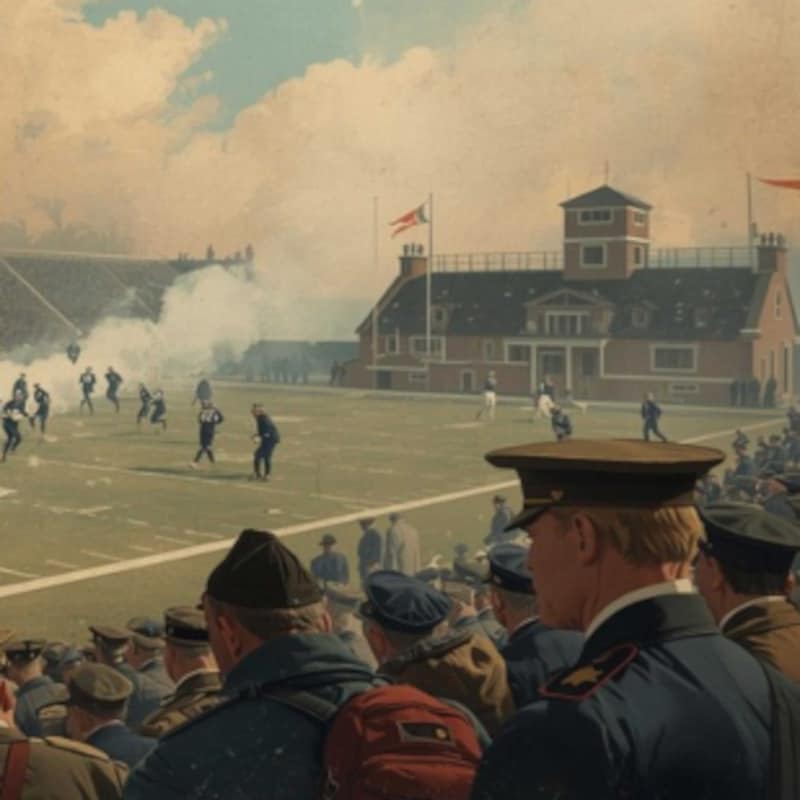
Before the era of 12-team playoffs and million-dollar bowl games, the 1917 football season was pure chaos, defined by World War I restrictions and a lack of organized post-season play. Amidst this turmoil, an impromptu Christmas Day tiebreaker game was scheduled in San Diego, pitting the Utah Artillerymen (Camp Kearney) against the Balboa Park team. But the biggest drama wasn't on the field; it was off it, where the Utah squad's coach vanished just two days before kickoff. This is the astonishing, forgotten story of Coach Richard F. King, a true football history rogue whose disappearance forced a team to play its biggest game coachless.
The story from our guest Timothy Brown's archives in a post he put out titled: The 1917 Postseason and the AWOL Football Coach.
The Chaotic Post-Season of 1917
In the early days of football, postseason games were rare, and World War I further complicated travel and scheduling. The prestigious Rose Bowl, for instance, had only just returned in 1916. Sensing an opportunity for local excitement, San Diego decided to host its own holiday spectacle in Balboa Park.
The contest materialized after a December 9th match between the local Balboa Park team and the championship winners of Camp Kearney—a field artillery unit largely composed of men from the Utah National Guard—ended in a tie. A Christmas Day rematch was quickly arranged, but the military team's leader, Coach Richard F. King, was quickly becoming the center of attention for all the wrong reasons.
The Disappearing Coach and the Web of Lies
Coach King, who had served along the Mexican border in 1916 and was coaching the artillery unit’s football team, was a man shrouded in a spectacular fog of deceit. He routinely told elaborate lies, claiming he attended prestigious institutions like West Point and Lehigh and was even the brother of famous Princeton All-American, Phil King. More troubling than his tall tales was his habit of borrowing significant sums of money from fellow officers without repaying his debts.
As the Christmas Day game approached, King’s superior officer finally confronted him about his conduct and finances. Rather than facing the music, Richard F. King simply disappeared. He went officially AWOL from the Army just 48 hours before his team's crucial post-season game, leaving the Utah Artillerymen scrambling and coachless for their biggest match of the season.
The Rogue’s Continuing Saga
King’s bizarre story didn't end there. He was reportedly spotted partying in Los Angeles before beginning a cross-country odyssey, mailing letters from El Paso and Chicago that falsely claimed he was already serving in France. A world without national IDs or digital records allowed him to thrive.
In Chicago, King re-enlisted under a completely different name, successfully deploying to France where he was eventually spotted by a man who had previously served under him in California. Arrested and shipped back to the U.S., King promptly escaped custody. Undeterred, he reenlisted a third time under a new alias. His final capture occurred in Hawaii after he accrued too many debts while scheduled to sail to Siberia after the war.
Despite the coach's ongoing personal chaos, the Utah Artillerymen were forced to play the Christmas Day tiebreaker. Without their leader, they ultimately fell to the Balboa Park squad with a final score of 24–13, suffering a defeat made even sadder by their coach’s spectacular abandonment. King and his wife disappeared shortly thereafter, never to be heard from again.
Conclusion
The story of the Utah Artillerymen and their disappearing coach on December 25, 1917, highlights the wild, unregulated nature of early football history. It’s a remarkable pre-Super Bowl tale that proves the drama surrounding the gridiron—from recruiting scandals to financial fraud—is hardly new. While the Chicago Bears and Bronko Nagurski were still years away from defining the professional game, this single, strange Christmas match in San Diego remains a compelling anecdote about the characters and chaos that built American football.
Join us at the Pigskin Dispatch website to see even more Positive football news!
Don't forget to check out and subscribe to the Pigskin Dispatch YouTube channel for additional content and the regular Football History Minute Shorts.
Miss our football by the day of the year podcasts, well don't, because they can still be found at the Pigskin Dispatch website.
Transcripts
We have a on field story of the Utah Artillery men's coach vanished.
Speaker A:Timothy P. Brown joins us to tell us all about this amazing story from over 100 years ago.
Speaker A:And it's coming up in just a moment.
Speaker B:This is the Pigskin Daily History Dispatch, a podcast that covers the anniversaries of American football events throughout history.
Speaker B:Your host, Darren Hayes is podcasting from America's North Shore to bring you the memories of the gridiron one day at a time.
Speaker A:Before we get into our episode today, let's take the time to drill that football right into the like and subscribe button on your console so you know exactly when the notifications come up of the latest releases of Pigskin Dispatch podcast for some more great football history.
Speaker A:Now on to our episode.
Speaker A:Hello, my football friends.
Speaker A:This is Darren Hayes of pigskindispatch.com welcome once again to the Pig Pen, your portal to positive football history.
Speaker A:And welcome to another evening and get to be entertained and and educated by Timothy p. Brown of footballarchaeology.com.
Speaker A:tim, welcome back to the Pig Pen.
Speaker C:Darren.
Speaker C:Darren.
Speaker C:Darren.
Speaker C:Good to be here.
Speaker C:Look forward to chatting.
Speaker C:And I do want to point out that this is a story where you realize you can never really trust anyone, including somebody you've worked with for some time.
Speaker D:Really?
Speaker C:Yeah.
Speaker D:Now, this is a Christmas special here, Tim, so you can't, you can't put these negative thoughts into the Christmas special.
Speaker A:We'll never get on Hallmark with this.
Speaker C:Well, this is.
Speaker C:There's negative thoughts on this one.
Speaker D:Oh, okay.
Speaker A:So we'll just count that as drama.
Speaker D:To build up the suspense here.
Speaker C:Yes.
Speaker A:All right, well, this is of course.
Speaker D:Based on a tidbit that Tim has.
Speaker A: Written called the: Speaker D:What can you tell us about this, this great story, Tim?
Speaker C: y to tell the story about the: Speaker A:Oh, my gosh, you are absolutely right.
Speaker A:This is the postseason camp.
Speaker A:Let me start over again.
Speaker D:Oh, God, would I blow that one up.
Speaker A:Okay.
Speaker D:Just go ahead, just tell the story.
Speaker C:I'll.
Speaker C:I'll figure it.
Speaker C:Okay.
Speaker C:Okay.
Speaker C:So, you know, before the 30s, there, there was really no post football postseason for the most part.
Speaker C:You know, There was.
Speaker C: The Rose bowl had occurred in: Speaker C:And then they played.
Speaker C:They've played every year since then.
Speaker C:And then there were also some just here and there.
Speaker C:One city or another would try to schedule some kind of all, All Star game.
Speaker C:A lot of them were all star games, or they.
Speaker C:Teams would just match up.
Speaker C:You know, they'd agree, we're going to play in Christmas in San Francisco or whatever it might have been.
Speaker C:But in 19.
Speaker C: Rose bowl had been played in: Speaker C: And then in: Speaker C:And Camp Lewis up near Spokane, you know, because of World war.
Speaker C:World War I was going on, travel restrictions, things like that.
Speaker C:And so, you know, San Diego sitting there going, you know, it might be a good thing for us to host a game and, you know, have some excitement during the holidays instead of those guys up in Pasadena.
Speaker C:So as things happened in, in, in San Diego, there's a big park there called Balboa park.
Speaker C:And During World War I, there was a big naval hospital or naval base there.
Speaker C:And so over the course of the season, Camp Kearney, which was somewhere Southern California, the team that won their regimental championship was a group basically called the Utah Artillerymen.
Speaker C:So they were a, you know, National Guard unit from Utah that, you know, dealt with artillery.
Speaker C:They're a field artillery unit.
Speaker C:So anyways, Balboa park and Utah Artillery play on December 9th, and it's a tie game.
Speaker C:So everybody's like, you know what?
Speaker C:We should play again.
Speaker C:We should play another game, you know, play a tiebreaker and, and do it on Christmas Day.
Speaker C:So everybody agrees we're all set to, to have the game.
Speaker C:And.
Speaker C:But then some crazy things kind of transpired.
Speaker C: t along the Mexican border in: Speaker C:And then when they got called up, you know, started World War I, he's with them and, you know, training troops and everything.
Speaker C:And he was also then the regiment football coach.
Speaker C:But it turned out he was kind of a sketchy character.
Speaker C:You know, he, he told people that he had.
Speaker C:That he attended West Point for two years or that he attended Lehigh for a couple years and that he was Phil King's brother.
Speaker C:Phil King was, you know, not, not, not by then, but previously had been a, an all American at Princeton and it coach, Wisconsin.
Speaker C:So he just told a bunch of.
Speaker C:He was just always telling lies and he ended up borrowing money from other officers and not paying them back.
Speaker C:So people kind of got suspicious of this guy.
Speaker C:And so not too long before Christmas, the king's superior officer confronts him and says, hey, you know, you got to clean this stuff up.
Speaker C:You got to pay your debts.
Speaker C:And so the guy disappears.
Speaker C:So, you know, he's the coach of this team before this big game, and he just disappears.
Speaker C:So he goes awol, you know, from the army.
Speaker C:And they.
Speaker C:So there's word that he, you know, they.
Speaker C:They saw him partying in Los Angeles or something.
Speaker C:They eventually catch up.
Speaker C:Or then he.
Speaker C:He mails letters from, like, El Paso and Chicago claiming that he was in France.
Speaker C: Well, in: Speaker C:You know, there weren't planes crossing the Atlantic to get you to France.
Speaker C:So, you know, clearly he was.
Speaker C:He was lying.
Speaker C:But while he was in Chicago, he re enlisted with AS under a different name and ends up over in France, where he's spotted by a guy who had previously been under him out in California.
Speaker C:So they report him, he gets, you know, taken into custody, blah, blah, he shipped back to the States and.
Speaker C:And he escapes.
Speaker C:Then he reenlists a third time under a different name, and just all this stuff goes on.
Speaker C:He ends up he's scheduled to.
Speaker C:To sail to Siberia because the U.S. sent some troops there right after World War I.
Speaker C:And.
Speaker C:But he incurred a bunch of debts and so they arrested him when the ship got to Hawaii and they sent them back.
Speaker C:So I was great.
Speaker C:I mean, just the story of this guy is just insane.
Speaker C:And, and, you know, this is at a time when, you know, we didn't have national IDs, and, you know, there weren't computers to check out all kinds of things.
Speaker C:So if you said your name was Bill Schwartz or Bill King or whatever, then, you know, you kind of got away with it.
Speaker C:So anyways, this team, unfortunately has to play the game without their head coach.
Speaker C:You know, they just learn about this.
Speaker C:The guy just disappears like two days before the game.
Speaker C:And so they ended up losing 24 to 13.
Speaker C:So.
Speaker C:So that was, you know, sad day for the Utah Artillerymen, but they were probably glad to be rid of their coach and that guy eventually, you know, after the third time that he was.
Speaker C:That they caught him, he.
Speaker C:He and his wife, supposedly his wife, disappear and never to be heard from again.
Speaker C:So no one knows if the guy, you know, just took and took a fourth name or what happened to him.
Speaker C:But there's.
Speaker C:There's been no sign of the guy ever, ever since.
Speaker C:So he could have met with foul play.
Speaker C:You know, who knows what happened.
Speaker D:But he really wanted to be in the military, huh?
Speaker D:He, I mean, couldn't take a job at like a grocery store or something instead of going to service or why not join like the merchant marine or something, you know?
Speaker C:Yeah, well, Canada.
Speaker C:So this is kind of a goofy story.
Speaker C:It's, you know, tangentially related to football, but, you know, it's more of just this crazy, crazy, crazy story.
Speaker D:Yeah, it definitely is.
Speaker D:It's, you know, football is a big game and very widespread and you get, get all kinds coming in.
Speaker D:So you get some, some real characters like, like this fella that has a few issues with them, I guess.
Speaker C:Yeah, well, I remember I stumbled on the story because, you know, I collect RPPCs and I, I ended up acquiring two of them.
Speaker C:Rel.
Speaker C:It's game photos, you know, from that, from that game and a crowd shot.
Speaker C:That's pretty cool.
Speaker C:So anyways, just in looking, trying to tell the story of those photos, it's like the coach disappears, you know, just.
Speaker C:I mean, can you imagine that in a, you know, big game today, a bowl game, and the coach disappears.
Speaker C:So.
Speaker C:Yeah.
Speaker D:Hey, where's Nick Saban at?
Speaker D:We can't find him.
Speaker C:Yeah.
Speaker C:Wow.
Speaker D:Great, great stuff.
Speaker D:You know, that's amazing how you come up with some of these stories that have been long forgotten or people that are long forgotten just by you digging in, doing the archaeology, you know, very befitting for your site of, you know, some, some relic of yesteryear of football.
Speaker D:And you do this a lot in your, your research, in your, your projects.
Speaker D:Maybe you could tell people how they can take in some of these projects.
Speaker C:Yeah, just go to footballarchaeology.com you can subscribe and if you do, you'll get an email every time that I post a new story.
Speaker C:I'm also starting a YouTube channel called Football Archaeology.
Speaker C:And, you know, so kind of whatever floats your boat, whatever.
Speaker C:You know, if you're interested in football stuff, you know, try to check it out and we'll, we'll go from there and then obviously, you know, keep coming on here and Tuesday nights.
Speaker D:We certainly appreciate you doing that and we appreciate you going to some other media and telling the story of football in every way that you can.
Speaker D:And make sure we'll share links so people can enjoy that too, through Pixie and Dispatch.
Speaker D:And in the meantime, we appreciate you being on here and love to talk to you again next week.
Speaker C:Look forward to it.
Speaker C:Thanks.
Speaker A:That's all the football history we have today, folks.
Speaker A:Join us back tomorrow for more of your football history.
Speaker A:We invite you to check out our website, pigskindispatch.com not only to see the daily football history, but to experience positive football with our many articles on the good people of the game as well as our own football comic strip cleat marks comics, pigskindispatch.com is also on social media outlets, Facebook, Twitter, Instagram, and don't forget the Pigskin Dispatch YouTube channel to get all of your popcorn football news and history.
Speaker A:Special thanks to the talents of Mike and Gene Monroe, as well as Jason Neff for letting us use their music during our podcast.
Speaker A:This podcast is part of the Sports.
Speaker C:History Network, your headquarters for the yesteryear.
Speaker A:Of your favorite sport.
Speaker C:You can learn [email protected].




