Shownotes
Season 25, Episode 92 - Shaun Boyce, Bobby Schindler
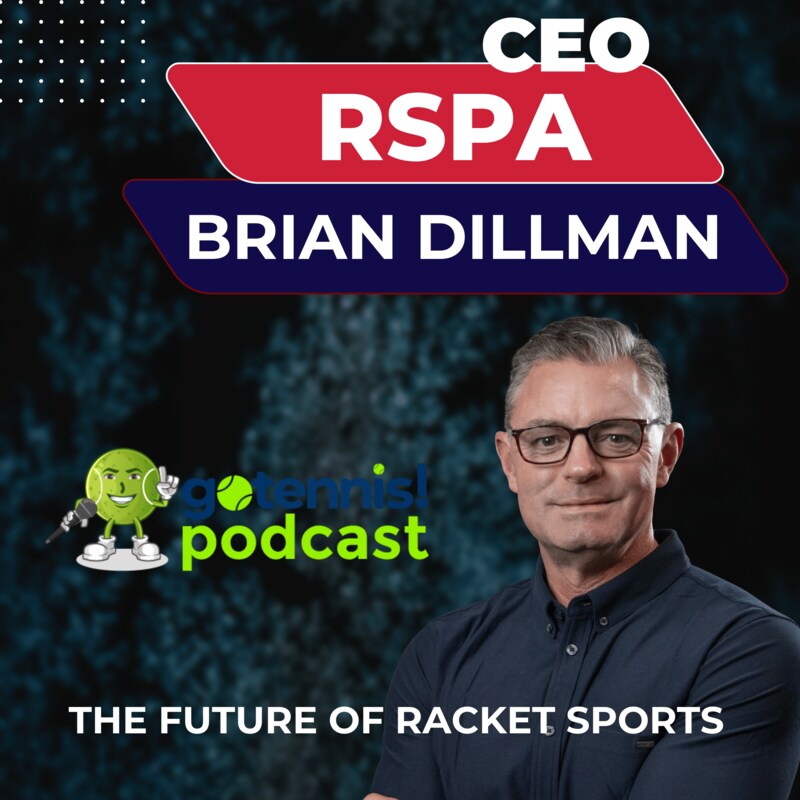
In this episode of the GoTennis! Podcast, Shaun and Bobby talk to RSPA CEO, Brian Dillman.
Full YouTube Video: https://youtu.be/iw5cWyH6r_4
King of Tennis Answer: https://youtu.be/Fhv2XKrF9Ys
Contact Our Hosts
- Shaun Boyce, RSPA: shaun@americanracketsportsassociation.com | https://americanracketsportsassociation.com/
- Bobby Schindler, RSPA: schindlerb@comcast.net | https://letsgotennis.com/windermere
- Geovanna Boyce: geovy@regeovinate.com | https://regeovinate.com/
- GoTennis Website: https://letsgotennis.com/
RSPA World Racquets Conference
September 21-25, 2025, at the Outrigger Kona Resort & Spa in beautiful Kona, Hawaii
https://rspa.net/rspa-world-racquets-conference-2025/
Connect with Brian
https://www.linkedin.com/in/briandillman/
Join Our Community
Check out the GoTennis! Atlanta Facebook page for deals, updates, events, podcasts, news, stories, coach profiles, club information, and more.
Support the Show
- Donate Directly: https://gotennispodcast.captivate.fm/support
- Crypto Donations: Get into crypto with https://coinbase.com/join/PEWRLWK?src=referral-link
Start Your Own Podcast
Considering your own podcast? We recommend Captivate: This podcast is hosted by Captivate, try it yourself for free.
Transcripts
(upbeat music)
Speaker:Welcome to the GoTennis! Podcast.
Speaker:Our conversations are uniquely engaging
Speaker:and our tips will help you to win more matches.
Speaker:Our mission is to keep you well informed,
Speaker:give you what you need to improve your game
Speaker:and help you save money.
Speaker:We invite you to become a GoTennis! Premium member
Speaker:and join our community today.
Speaker:(upbeat music)
Speaker:- Hey, hey, this is Shaun with the GoTennis! Podcast,
Speaker:powered by Signature Tennis.
Speaker:Check out our calendar of tennis events
Speaker:at LetsGoTennis.com.
Speaker:And as you're listening to this,
Speaker:please look in your podcast app
Speaker:where to leave a review and do that for us.
Speaker:We would love to earn your five star reviews.
Speaker:And now let's get into our recent conversation
Speaker:with Brian Dillman.
Speaker:Brian is the CEO of the RSPA.
Speaker:We talk about the rebrand from USPTA to RSPA,
Speaker:the industry evolution and opportunities available.
Speaker:And of course, the upcoming World Rackets Conference
Speaker:in Hawaii.
Speaker:Have a listen and let us know what you think.
Speaker:(upbeat music)
Speaker:- Who are you and why do we care?
Speaker:- Well, my name's Brian Dillman.
Speaker:I am, let's see, who am I?
Speaker:I'm a husband, I'm a father, I'm a core,
Speaker:I'm a passionate tennis player first and foremost.
Speaker:I've been in the tennis industry for a long, long time
Speaker:and I absolutely love it.
Speaker:The evolution into racket sports for all of us
Speaker:and what we do, I've had a long history
Speaker:in playing multiple racket sports,
Speaker:which led me to the opportunity
Speaker:and who I am commercially or from a professional side,
Speaker:is the CEO of the Rackets Sports Professionals Association.
Speaker:And we're the largest certifying continuing education
Speaker:and professional development,
Speaker:trade association for Rackets Sports Professionals.
Speaker:Been around for about 100 years and I just,
Speaker:I love this industry, but I start my first job
Speaker:right out of college, like many, many of us,
Speaker:was teaching tennis and I had a great mentor
Speaker:and she showed me the way and the way was
Speaker:to get certified with the USPTA at the time.
Speaker:All the peers around me, all the pros that I looked up to
Speaker:were all certified, they were all super professional,
Speaker:they had great jobs, they had great careers,
Speaker:they were so interesting and curious.
Speaker:And that was the only thing that was the requirement was
Speaker:to be like them, you had to be part of the USPTA.
Speaker:So I had an opportunity to join this association
Speaker:about 19, 20 months ago.
Speaker:So the other reason you might care is because, you know,
Speaker:are me personally, my mission is to make this
Speaker:one of the greatest jobs and careers you could ever have.
Speaker:And for those of us in the industry,
Speaker:who've been in the industry for years,
Speaker:it is an amazingly rewarding career.
Speaker:It is much bigger than teaching tennis,
Speaker:it's much bigger than running a facility,
Speaker:it's really changing people's lives
Speaker:and the impact that coaches and professionals have on people.
Speaker:Is pretty monumental and I don't think we can ever
Speaker:talk enough about that.
Speaker:- So Bobby, you want to go first as to why you chose USPTA
Speaker:'cause I know I've got my story and I've told it a few times.
Speaker:- I mean, I tell it all the time, it's funny
Speaker:'cause I was not thinking it was ever going to be a career.
Speaker:I just got out of grad school,
Speaker:I was still kicking around some things.
Speaker:I was living with somebody we've had on the podcast
Speaker:before who's now the head tennis coach at Princeton,
Speaker:Billy Payne, and he got me playing tennis again.
Speaker:- Just so I'm last week at the ITA conference.
Speaker:He just got one big award.
Speaker:Oh, that's really cool.
Speaker:- And Ty, well, he is the reason I'm in this business.
Speaker:So Billy, like I said, you can hear a point very often
Speaker:and say, he is the reason.
Speaker:If I don't meet Billy Payne, my career probably goes
Speaker:at completely different paths.
Speaker:But he got me playing again, got me my first job
Speaker:and it was Atlanta in the 90s and it had a very good time.
Speaker:And he encouraged me to get certified
Speaker:and showed me the ropes, made the introductions,
Speaker:which made it easier 'cause I'd been out of the game for a while.
Speaker:So I did ride on his coach else through Billy Payne.
Speaker:I met Dennis Ford who Billy was working for
Speaker:at a club down here who had been brought down here
Speaker:through Ralston and Gorman to run onto their academies
Speaker:back in the day in the early 90s.
Speaker:So by just meeting two people,
Speaker:I was very well positioned into the industry right away.
Speaker:So I considered myself very fortunate.
Speaker:And like he said, they were USPTA.
Speaker:The old John Hannah story where John ran an ad
Speaker:saying why are you in the GPTA
Speaker:and put all the GPTA members names on it?
Speaker:And my name was an audit.
Speaker:My members, the country club I was working
Speaker:and I came back and said why?
Speaker:I said why not certified yet.
Speaker:And within a month, I think I was getting certified
Speaker:and that was the big joke.
Speaker:Of course, now I was certified.
Speaker:So it's so much more knowledgeable.
Speaker:But it was just, it was the next step.
Speaker:And back then it was a big deal about,
Speaker:hey, get into the industry.
Speaker:See whether or not you feel like you're gonna stay in it
Speaker:and then take the next step and that's my path.
Speaker:- I love it.
Speaker:And Brian, it's not like you know Billy Payne.
Speaker:- I just got to say hello to him while we were in New York
Speaker:this past weekend at the ITA banquet.
Speaker:And yeah, he was honored as a coach of the year
Speaker:and just what an impressive record and history
Speaker:and commitment to the industry.
Speaker:I mean, it's very, very impressive.
Speaker:- Yeah, Billy's great.
Speaker:- I always felt that he was together
Speaker:and I started, I think back then, Georgia State
Speaker:was a quarter system.
Speaker:So I started a quarter before him
Speaker:and we were in a class together and all of a sudden
Speaker:I see this big guy coming closer to me
Speaker:like he wanted to get to know me a little bit more.
Speaker:And that was it.
Speaker:I always felt like as soon as I met him,
Speaker:I said this is somebody I'm gonna know for the rest of my life.
Speaker:- That's really cool.
Speaker:- And we bonded over the Dallas Cowboys
Speaker:and you know went from there.
Speaker:- Yep.
Speaker:But we talked Brian about seminal moments often
Speaker:where we talk about how did you get into something?
Speaker:Why do you care?
Speaker:Like I like Andy Roddick told his story on his podcast
Speaker:about how he got you in at a professional event.
Speaker:It's like I wanna be that, that's really cool.
Speaker:And in the business of tennis and racquet sports,
Speaker:we often have that moment,
Speaker:but we also have more of where I was,
Speaker:which was I don't really wanna do this,
Speaker:but I can until I find something else.
Speaker:And I still haven't found anything else that I love
Speaker:as much as being part of this type of industry.
Speaker:But Bobby and I were certified on the same day
Speaker:in the same class.
Speaker:Who was the instructor?
Speaker:- Tom Douglas.
Speaker:- Douglas, right?
Speaker:- Oh, Tom Douglas.
Speaker:- Oh my gosh, a legend.
Speaker:The legend Tom Douglas.
Speaker:At Atlanta Country Club, where Cam Nandriano is now.
Speaker:So yeah, Bobby and I have literally exactly
Speaker:the same number of days coming up on 25 years,
Speaker:both of us in the RSPA.
Speaker:But it was an interesting conversation
Speaker:because we talk about coaching a lot in the industry.
Speaker:We talk about certifications.
Speaker:And obviously the big $400 million elephant in the room
Speaker:as USDA gets into it now.
Speaker:Where then it was, okay, well where do you wanna go?
Speaker:There's always a career path of,
Speaker:okay, would you like to go with this group
Speaker:or with this other group?
Speaker:You have these options.
Speaker:Now there's a third option in there.
Speaker:And Brian, as far as I can tell,
Speaker:you've done a really good job with the RSPA recently
Speaker:of saying, okay, we're pretty sure this is coming.
Speaker:And what are we gonna do?
Speaker:What are we gonna be?
Speaker:You completely helped rebrand the whole organization
Speaker:with some response that was good and bad here and there.
Speaker:We got a few phone calls.
Speaker:I had a few people.
Speaker:Y'all let that make it think it was a terrible idea.
Speaker:But how is that been?
Speaker:It's been a while to be able to say,
Speaker:we're now RSPA and we're now more than we were before,
Speaker:but we're not losing what we had before.
Speaker:You know, I think the way we positioned it
Speaker:and this started, the process started,
Speaker:easily two years before I got here,
Speaker:is the board and the national and executive committee.
Speaker:We're already having discussions about this.
Speaker:But the irony is, I made a presentation
Speaker:when I went to get the job and in that presentation
Speaker:was also the suggestion of a rebrand.
Speaker:I just think and it was looking really
Speaker:from the facility standpoint and where the market is going.
Speaker:I mean, you had, you know, Wilson was not Wilson tennis.
Speaker:It was Wilson Racket Sports, head racket sports.
Speaker:It was racket sports centers.
Speaker:It was, so the entire industry, not that 100% is there,
Speaker:but many, many people are now directors of rackets
Speaker:and head rackets professionals and things like that.
Speaker:But it ultimately came down to what does the future look like?
Speaker:And we positioned this as tennis plus more.
Speaker:And, you know, when you start, you know,
Speaker:98 years as an association where tennis was
Speaker:and still is the main part of what we do,
Speaker:and it's where most of us came from,
Speaker:but it would be silly for us to put our heads in the sand
Speaker:and say, you know, the industry's evolving around us,
Speaker:but let's just stay, you know, let's just stay right here.
Speaker:And it doesn't make any sense commercially,
Speaker:but it also, from a career standpoint,
Speaker:it doesn't make any sense for you to just stay in that one lane.
Speaker:Here's what's going to happen in the very short future
Speaker:if it's not happening already.
Speaker:People who entered racket sports through pickleball
Speaker:or Padel or platform or squash or something else
Speaker:other than tennis are going to become directors of racket sports.
Speaker:And it's, that is reality.
Speaker:The reality is there are new paths into these jobs
Speaker:and these careers.
Speaker:So you can, you can, as a tennis purist,
Speaker:you can be a purist.
Speaker:Awesome.
Speaker:I love it.
Speaker:Is that my preference to play on a regular basis?
Speaker:Yeah, I play four times a week.
Speaker:But I also understand that the industry
Speaker:and the commercial opportunities are now in more racket sports.
Speaker:There's over 70, 75% of facilities have more than one racket sport.
Speaker:So our position on this is tennis plus.
Speaker:It's tennis plus pickle, tennis plus Padel.
Speaker:It's also a bigger investment into professional development.
Speaker:And I think that's really honestly,
Speaker:what people care about are jobs,
Speaker:either keeping theirs, getting a new one,
Speaker:getting a better one or hiring somebody.
Speaker:At the end of the day, that's the personal part, right?
Speaker:That's what I truly care about.
Speaker:My mission personally and even in our associations
Speaker:is to make sure that you have every tool you need
Speaker:to be successful in either of those four areas.
Speaker:Can we help you get a better job?
Speaker:Can we help you do great at the job you have?
Speaker:Can you get promoted?
Speaker:Can you find great people through your network?
Speaker:And once you, the minute you're looking for something new,
Speaker:who do I reach out to in our network that is,
Speaker:that is somebody that's going to help me?
Speaker:You know, we had Dave Porter on a couple weeks ago
Speaker:on a webinar and when he got into the industry,
Speaker:he said, I used to just call Jack Roppel, Jim Lair,
Speaker:Vic Brayden, and they'd pick up the phone and talk to me.
Speaker:Anytime I called, he said, I knew because I was a member,
Speaker:they would respect me and I was really lucky
Speaker:and I appreciated it.
Speaker:But that's the nature of our association.
Speaker:It's that network.
Speaker:And I say often that your network is your net worth.
Speaker:And I don't think that can go understated as well
Speaker:in this industry too.
Speaker:So that's really our position on it.
Speaker:And yeah, there's going to be competitors.
Speaker:And I think you also have to position yourself.
Speaker:Where are you in this ecosystem?
Speaker:You know, I think when you're a $400 million gorilla,
Speaker:you're probably more of a volume entity like a McDonald's
Speaker:and we're more like a fine dining restaurant in that regard.
Speaker:We talked about that recently and I was on a conversation.
Speaker:I was on maybe Marcus Ratchie, we were talking to,
Speaker:and it was the conversation based on, okay,
Speaker:everybody as you say now has what, 75% ish,
Speaker:more than just tennis.
Speaker:And I looked at Marcus and said,
Speaker:you don't have your job right now if you were just tennis.
Speaker:So there still is the requirement that you need to be more
Speaker:and the new players in this world are just tennis
Speaker:and kind of stuck with it.
Speaker:And let's look at it, do it a really big rebrand.
Speaker:So to be able to come in and say, I am certified,
Speaker:like I am certified personally, also pickleball.
Speaker:I wanted it next to my name.
Speaker:I don't teach any pickleball right now.
Speaker:It's just, but I am capable.
Speaker:I understand it.
Speaker:I understand the sport.
Speaker:I have the, I have the certificate to prove it.
Speaker:Where some people aren't going to care.
Speaker:And that's fine.
Speaker:But that's one of the reasons I think Bobby,
Speaker:you'd agree that we chose RSPA for this concept
Speaker:that it is, it's more than just tennis and coaching
Speaker:and helping us be better coaches.
Speaker:It's helping us be better employees
Speaker:as well as employers.
Speaker:Bobby, you agree with that?
Speaker:Well, I mean, that was part of the process
Speaker:when, you know, 30 years ago, when I started on this path.
Speaker:And that's one of the things I love to tell you know,
Speaker:I hope you delve into more is how do we get people
Speaker:to understand that and you made it a great point, Brian.
Speaker:No matter how big the organization I always left
Speaker:and I'm laughing just listening, you know,
Speaker:your farm were animated, the John Embry, you know,
Speaker:and but John was a great guy.
Speaker:And whenever I called John, he picked up the phone.
Speaker:And I was always amazed.
Speaker:I was like, great, what John, he's picking up the phone
Speaker:and talking to me, you know, and like,
Speaker:oh, hey Bobby, you know what you're doing today.
Speaker:So, you know, that's a great fit.
Speaker:Especially when you're talking about 15,000 to 20,000 members
Speaker:and the CEO of your company, when you call, picks up the phone.
Speaker:And yeah, I got two minutes, what do you need?
Speaker:What can I talk to?
Speaker:And you know, how do we instill that?
Speaker:Because I know everybody talks about the younger people
Speaker:to get them in the door to realize what they're,
Speaker:what the commitment they're making
Speaker:and why they want to make that commitment
Speaker:because it's going to take care of them
Speaker:for the rest of their life.
Speaker:And you're probably going to enjoy your life in doing so.
Speaker:What's interesting I think is, you know,
Speaker:we're all sales people at some level.
Speaker:And you've got to think about who the sales process involves
Speaker:when you talk about the younger people
Speaker:and it involves the parents.
Speaker:And so one of the thing about having multiple ragged sports,
Speaker:it truly doubles the market size
Speaker:and the market potential of our industry
Speaker:goes from like three billion to six billion
Speaker:when you add pickle and paddle and squash
Speaker:and platform on top of tennis.
Speaker:From a merchandising standpoint, from a retail standpoint,
Speaker:from a job, I mean, so all of that stuff doubles.
Speaker:And you also now are forcing employers
Speaker:to be more professional as well.
Speaker:There's benefits, there's PTO, there's sick leave.
Speaker:There's things like that.
Speaker:I mean, I didn't get that when I first started teaching tennis.
Speaker:I got a salary and I got a thank you, which is fine.
Speaker:And you know, a little commission along the way.
Speaker:But that's how we communicate to the younger generation
Speaker:that not only is this a legit career
Speaker:with huge upside and aspirations,
Speaker:but it also is a legit career
Speaker:from a employer-based standpoint, how they treat you.
Speaker:And what you should expect from an employer as well.
Speaker:And that's not just the private clubs,
Speaker:the commercial clubs are like that.
Speaker:The park districts are now like, they have to be.
Speaker:So, you know, the laws and the regulations
Speaker:have actually helped our industry.
Speaker:And I think the next big thing that's gonna help our industry
Speaker:is AI.
Speaker:And I'm just throwing this out there is that, you know,
Speaker:when people are thinking about their job,
Speaker:losing jobs because of AI, you know,
Speaker:what AI can't do is coach and teach.
Speaker:So, on the court, in person, and that kind of stuff.
Speaker:So, I think there's great stories to tell.
Speaker:And we've got such great members who tell those stories,
Speaker:you two included, but if you go to the history
Speaker:of who are great members are,
Speaker:they're the best recruiting tool.
Speaker:And they are still the best examples
Speaker:of why this industry is viable
Speaker:and how we really do change people's lives.
Speaker:And that's a scenario where we do affect a lot of people.
Speaker:We're not going into our cubicle sending emails
Speaker:that we've heard plenty of people say,
Speaker:"Oh, I'll teach tennis till I get a real job."
Speaker:And I just, thankfully, I don't hear it that much anymore.
Speaker:- Correct.
Speaker:- Because I think we've realized there's more to this.
Speaker:We all have our computer at home
Speaker:that we have to go back and figure out
Speaker:the math of all the business that we've done
Speaker:over the last time frame.
Speaker:But now we actually go out and get to help people
Speaker:and we get to be there for people.
Speaker:We're more than just tennis coaches.
Speaker:We're often sounding boards.
Speaker:We are psychiatrists at some point on the court.
Speaker:But it's more than just the tennis coach now.
Speaker:And I think that's one of the things
Speaker:where you and I, Brian, personally connected
Speaker:when we spoke in May in South Carolina,
Speaker:we were talking about the industry
Speaker:is more than just a tennis coach now.
Speaker:Where it used to be the tennis coach
Speaker:and maybe a pro-shop person.
Speaker:And that was pretty much it.
Speaker:It's so much more now.
Speaker:It's not just even the pickleball coaches.
Speaker:It's everybody in the industry,
Speaker:when I say anybody ancillary to the industry
Speaker:and beyond even the reps.
Speaker:We're on a call with a babelat rep
Speaker:and say, okay, well, that guy's in this industry
Speaker:more than we would think
Speaker:'cause we used to think of it as just tennis coaches.
Speaker:But now it's so much more.
Speaker:So the question becomes,
Speaker:it's kind of our second question where we say,
Speaker:what makes you unique?
Speaker:But did I just kind of explain one of the reasons
Speaker:why the RSBA is unique in this fashion?
Speaker:- Kind of.
Speaker:I think what happened is, and I'll get back to your question,
Speaker:but I think we've elevated this to hospitality.
Speaker:And there are degrees and courses
Speaker:and a full industry of hospitality,
Speaker:including hotels and restaurants
Speaker:and then private clubs
Speaker:and all the things that surround around that.
Speaker:And when you see successful people in our industry
Speaker:on quarter off court, they ooze hospitality.
Speaker:It's not service, it's actually bigger than that.
Speaker:They ooze hospitality.
Speaker:And so, again, whether you enter, however you enter this industry,
Speaker:I mean, you meet people at, you know,
Speaker:pro shop managers who manage unbelievable pro shops,
Speaker:whether it's a golf or a tennis or whatever they are.
Speaker:It's a full retail store with unbelievable hospitality.
Speaker:They think of the details, they think of the consumer experience.
Speaker:That is so important right now into who
Speaker:and how people are gonna be successful in this.
Speaker:And so I think that is kind of our mission is,
Speaker:we've got to elevate this entire industry
Speaker:with professional development and experiences
Speaker:and education that can help everybody up their game.
Speaker:I mean, there's a nice little shameless plug,
Speaker:which I know we get to later,
Speaker:but our whole theme of our conference in Hawaii
Speaker:is about rebranding you, the member.
Speaker:You know, we rebranded the association last year
Speaker:for the because of the market and the need
Speaker:and the future for the next 100 years.
Speaker:But now we have to look at ourselves in the mirror
Speaker:and say, am I the right person for this?
Speaker:Have I gone through the process of making sure
Speaker:that I've done everything I can to be the best for my career?
Speaker:Am I present on social media?
Speaker:Do I have tangible goals?
Speaker:Do I have a network of people I can call?
Speaker:Who can be like, who's, who am I responsible to?
Speaker:I know I'm responsible to anybody in my family,
Speaker:but morally I'm irresponsible to who, to you guys
Speaker:and I'm gonna, you're gonna hold me accountable
Speaker:to making sure I'm doing my continuing education
Speaker:that I'm learning on a constant basis
Speaker:that I'm really, you know, dialed into what I wanna do
Speaker:for a career.
Speaker:To me, that's the evolution of where we take
Speaker:our professionals to actually really make
Speaker:that word professional meaningful.
Speaker:And how do you take that and I'll ask Bobby
Speaker:'cause we've got a couple of friends in this area
Speaker:where they're kinda USPTA forever
Speaker:'cause they don't buy into the rebrand
Speaker:and how do we encourage them?
Speaker:'Cause they're also of an age that they don't think
Speaker:they have a brand, right?
Speaker:That's a millennial and younger kind of concept
Speaker:is to have that personal brand.
Speaker:Bobby, you and I have LLCs and we might have a logo
Speaker:but is the personal brand really the thing for the,
Speaker:I'll say, we'll just speak for the Atlanta market
Speaker:of the local coaches that they're really willing
Speaker:to potentially rebrand themselves.
Speaker:- Well, we're trying, right?
Speaker:We're trying to change that perception
Speaker:and I think that's what it looks like.
Speaker:When we started with GoTennis
Speaker:and we started with the podcast,
Speaker:that was, our goal was to elevate.
Speaker:Our tagline was, you know, make tennis cool again.
Speaker:We wanted to, and Billy Pate had this poster,
Speaker:the John McEnter on the, on the floor.
Speaker:- Absolutely.
Speaker:Oh yeah, we all had that.
Speaker:- We had that in our apartment.
Speaker:So, you know, that was the,
Speaker:when we started this thing,
Speaker:that's what I envisioned is like,
Speaker:all right, let's get back on the corner again.
Speaker:And as you said, the good part, the fun part,
Speaker:'cause, you know, I came out of a marketing background,
Speaker:I was gonna go to grad school,
Speaker:I was gonna run the Yankees, you know.
Speaker:But there's so much, as I said,
Speaker:I have my job, which is on the court,
Speaker:and I have my hobby, which is the professional side
Speaker:that I've been involved with, you know, the Atlanta event.
Speaker:Courts.com, netcord.com, through Met Trevor Short.
Speaker:So, I've access to the Neckert Cup
Speaker:and the different things he does
Speaker:and the yacht in New York City this week.
Speaker:You know, so there's so many different people
Speaker:involved that you can literally take it
Speaker:where you want to go.
Speaker:And to me, that's the exciting and really fun part of it.
Speaker:I put 25 hours a week on the court,
Speaker:and I put 25 hours a week on what, you know,
Speaker:just the computer, and that makes for a very happy life.
Speaker:You know, that's the break up I need.
Speaker:But there are guys who can, and should,
Speaker:if 40 hours or 50 hours a week, on court is their thing.
Speaker:You have, we love the workers, you know,
Speaker:heck, you always want a guy who's ready to go out there
Speaker:and pound tennis balls for you for 40, 50 hours.
Speaker:So I think there's so many different hats that are available.
Speaker:And again, I'm a big, from the marketing background,
Speaker:you know, the tech guy, the more people involved,
Speaker:the more things we can come up with,
Speaker:the more creative we can get, use Padel,
Speaker:use Pickaball to buy things that tennis might not otherwise buy.
Speaker:And I think this is the fascinating part,
Speaker:because I spoke to Jared, and I'm going to put Cherico,
Speaker:the DCI, you know, they just created that.
Speaker:And what was exciting to me is what he told me
Speaker:that half of their membership are now general managers of clubs.
Speaker:And I tell everybody, my first experience at a country club
Speaker:was the guy who was my boss telling me,
Speaker:look, my idea of a successful tennis program
Speaker:is I don't hear about it.
Speaker:As long as you don't get any complaints,
Speaker:you're doing a good job.
Speaker:So, you know, we're today, now we have people in those positions,
Speaker:and it might not be half,
Speaker:but far more than we ever did,
Speaker:or now in understanding the importance of understanding the tennis,
Speaker:not that it's just an amenity to golf.
Speaker:And, you know, we're, as we keep away to keep the lives happy.
Speaker:If you look at the touch points that a professional,
Speaker:a racquet's professional has at a country club,
Speaker:versus a golf professional, it's probably X-10X,
Speaker:because of the frequency.
Speaker:The frequency may not be teaching lessons,
Speaker:but I mean, you're on court playing league,
Speaker:you see them on a weekend playing mixed doubles,
Speaker:you see the husbands on a Thursday night,
Speaker:you see the kids on Friday afternoon.
Speaker:So, and I think, and frankly,
Speaker:we should all thank Pickleball for this, by the way.
Speaker:We should thank Pickleball for entering the market
Speaker:to create the community that is bringing golfers across,
Speaker:you know, across the fairways, into the racquet's areas,
Speaker:to play with their families.
Speaker:Same thing with Padell.
Speaker:Padell is a great, you know, a great communicate community sport as well.
Speaker:And so, that's why GM's are starting to pay attention,
Speaker:is because their members are saying,
Speaker:wait a second, this is kind of fun.
Speaker:Now, now these are amenities are becoming requirements,
Speaker:which means, again, you up that hospitality game,
Speaker:and you make sure that those experiences for those facility,
Speaker:whether the public private, whatever they are commercial,
Speaker:they've got to be great,
Speaker:because the competition for membership in these facilities
Speaker:is even higher and higher and higher too.
Speaker:So, all of these, like the whole conglomerate of this,
Speaker:these things together have changed the dynamic of what we do,
Speaker:which is put an amazing focus on racquet's sports right now.
Speaker:You know, tennis is still growing, which is amazing,
Speaker:but Pickleball fastest growing sport in America,
Speaker:Padell is growing crazy worldwide.
Speaker:I mean, so you've got, and then if you live in the Midwest Northeast,
Speaker:and you're not teaching platform,
Speaker:you're losing hundreds of thousands of dollars a year
Speaker:in revenue and income for professionals as well.
Speaker:So, that, to me, is the reason why, at the end of the day,
Speaker:but I'll get back to your, what makes you unique.
Speaker:You know, one of the things I think,
Speaker:my perspective on this whole industry is a little different.
Speaker:I started teaching, but then I went to work on the manufacturer's side
Speaker:and worked for Wilson's Sporting Goats for 15 years.
Speaker:And then I got out of the industry,
Speaker:and then I volunteered for the USDA Chicago for four or five years.
Speaker:And so, you know, but I've always been a player.
Speaker:My family has played.
Speaker:We've always been connected to the sport,
Speaker:and so I think that gives a little, a more unique perspective
Speaker:as a career go.
Speaker:Your career can take many different forms,
Speaker:and I've rebranded myself probably six or seven times,
Speaker:you know, depending on where you are,
Speaker:who you're with, what your current role is.
Speaker:And it's not easy.
Speaker:And I think goes back to your earlier comment is,
Speaker:why won't these diehards think about rebranding?
Speaker:'Cause it's hard, and it's scary.
Speaker:And there's risk there.
Speaker:And the risk is, well, what if it doesn't work?
Speaker:What if they don't like me?
Speaker:What if I don't have any more income?
Speaker:And that's a fear in anything we do that forces change.
Speaker:- Change is hard, right?
Speaker:And I'm trying to convince these guys and some girls,
Speaker:but mostly guys, that change is easy.
Speaker:You want to rebrand.
Speaker:I will print you a shirt with a different logo on it.
Speaker:Take off the shirt you have now, put this shirt on.
Speaker:"Ero-Allah, you're ready to go.
Speaker:You got to rebrand."
Speaker:But I think a little bit is also, as we talk about rebranding,
Speaker:there are some changes of how we speak,
Speaker:or who we're dealing with, and what we're trying to do
Speaker:is putting ourselves in the next situation
Speaker:to be a better version of ourselves.
Speaker:And that's where the hard part comes.
Speaker:Putting on a, you know, taking off last year's hat
Speaker:and putting on this year's hat is pretty easy.
Speaker:The literal rebrand is easy.
Speaker:But to be able to say, I'm gonna be a better version
Speaker:of myself next year is hard when you've been doing
Speaker:the same thing for thousands of years.
Speaker:And you say, well, this has worked to this point.
Speaker:Why should I bother, right?
Speaker:Now, Brian, can I assume you're the genius
Speaker:behind the higher standard H-I-R-E?
Speaker:Is that your idea to change the--
Speaker:- Not even close. - No?
Speaker:- No, wait.
Speaker:- No, that's why we have a crack marketing department.
Speaker:- You got a whole department of business.
Speaker:- Those brilliant people came up with that idea.
Speaker:No, but it resonates, isn't it?
Speaker:I mean, it makes so much sense that,
Speaker:no, our team here is absolutely terrific
Speaker:and they have their finger on the pulse.
Speaker:And so they've, but I think that is one
Speaker:of the strongest headlines of any industry
Speaker:of anything that is so meaningful.
Speaker:So that has a lot of legs and I'm really excited about that.
Speaker:But no, there's no genius here.
Speaker:It came from the team, which is great.
Speaker:- I was gonna continue to credit you for that one.
Speaker:- No, no, no, please don't.
Speaker:- It's so leading to question three of four,
Speaker:which is our shameless self promotion.
Speaker:We know what you're working on,
Speaker:but talk about what you're doing as Brian Dillman,
Speaker:what RSBA is doing.
Speaker:We've got the higher standard H-I-R-E
Speaker:and we've got rebrand U, I think is what you're using
Speaker:for the upcoming world rackets conference in Hawaii,
Speaker:which I say upcoming, it's in a few weeks
Speaker:from when we'll probably publish this.
Speaker:Tell us about what's coming up.
Speaker:So that's a big exciting.
Speaker:I mean, having a conference in Hawaii
Speaker:is really special anyway.
Speaker:So we wanted to try some different things.
Speaker:It's a different size facility.
Speaker:So we're really making this,
Speaker:we're trying to make this a personal journey.
Speaker:And what better place to do that and have some reflection
Speaker:and some find some peace than the beautiful island of Kona,
Speaker:or the beautiful area of Kona.
Speaker:So that is really important to us.
Speaker:The other thing we're doing is we're dividing our,
Speaker:let me take a quick step back.
Speaker:I think another big differentiating factor
Speaker:that you get when you meet people in our association,
Speaker:not even versus what you meet when you get,
Speaker:when you meet our people,
Speaker:is their commitment to learning and continuous learning.
Speaker:And I just did a video last week talking about the commitment
Speaker:that our members have to continuing education.
Speaker:And although we have mandatory in over three years,
Speaker:you gotta have 15 credits,
Speaker:we had one individual do 498 hours
Speaker:of continuing education this past year.
Speaker:- I thought I was killing it.
Speaker:I had like 29 credits this year.
Speaker:Oh, sorry.
Speaker:- No, 29 times a month.
Speaker:- I got my certificate too.
Speaker:I only got 50.
Speaker:- 50.
Speaker:- Yeah, I was like, I was doing great,
Speaker:but there's somebody else in the area.
Speaker:- Yeah, like 172.
Speaker:- Yeah, well, what is going on?
Speaker:- But that's a great measurement stick to show the commitment.
Speaker:And I think that is an untold story
Speaker:that differentiates somebody that's doing this as a career
Speaker:and as a career professional versus somebody that's a coach.
Speaker:And as you think about that in terms of our commitment,
Speaker:we're making a deeper commitment to that.
Speaker:And so we're actually dividing our professional development
Speaker:into three segments.
Speaker:One is a leadership track,
Speaker:one is a coaching track,
Speaker:and then one is a business operations track.
Speaker:And so going forward,
Speaker:we've kind of been at everything to everybody.
Speaker:You know, come in, get certified.
Speaker:There's one track for that.
Speaker:Get certified, move up to professional,
Speaker:move up to elite, et cetera.
Speaker:Well, not everybody's created the same.
Speaker:And you, as you said, just second ago, Bobby,
Speaker:you want to coach for 25 hours a week
Speaker:and then do your business stuff.
Speaker:Well, so you might choose some coaching
Speaker:and some business operations,
Speaker:and Sean, you may want to go down the leadership track.
Speaker:And so going forward, starting at this conference,
Speaker:and then into our next round of education
Speaker:through other conferences and other webinars
Speaker:and presentations, et cetera.
Speaker:You're going to see those tracks really well defined.
Speaker:So if you're more interested in one versus the other,
Speaker:or all three, those options are going to be
Speaker:made available for you.
Speaker:We're also having some new topics
Speaker:that the conference won,
Speaker:is injury prevention with Dr. Greg Rose,
Speaker:who's from Titleist Performance Institute and Racket Fit.
Speaker:We're looking at a whole new introduction to wellness.
Speaker:You know, the pros, a lot of the facilities.
Speaker:What happens when you're a great director?
Speaker:Like Matt Grayson's a great example at Ansela.
Speaker:They just keep piling on.
Speaker:Okay, now you're in charge of aquatics.
Speaker:Okay, now you're in charge of fitness.
Speaker:Now you're in charge of croquet and things like that.
Speaker:So, but that one other connective tissue piece
Speaker:is the wellness area.
Speaker:And I think, and I think,
Speaker:Bobbi, I can't remember, was you were Sean said earlier.
Speaker:You know, we're meant to be experts in everything.
Speaker:What do I wear?
Speaker:What do I drink?
Speaker:What do I eat?
Speaker:What shoes do I wear?
Speaker:What string tension do I have, et cetera?
Speaker:So we're actually having Frank Gingrich come
Speaker:do a really deep dive on the introduction to wellness.
Speaker:And then we want to blow that out into a specialty course later
Speaker:because I think there's a lot of opportunities in this space
Speaker:to learn more about, again, more diversity, more learning.
Speaker:And how does that apply to your next role?
Speaker:Or the next time you interview for a job with a general manager
Speaker:or getting a promotion or things like that.
Speaker:So there's a lot of great stuff coming up with that.
Speaker:And then, you know, we are just consistently trying
Speaker:to innovate everything we do.
Speaker:And again, we put ourselves in the member shoes
Speaker:as much as we possibly can and think, what's in it for me?
Speaker:And so when we think about new indoor sees and new partners
Speaker:and new relationships and new coursework,
Speaker:it really is all with a member in mind.
Speaker:And Bobbi, you're gonna ask the question,
Speaker:why, why, and why September?
Speaker:'Cause I'm sure that that's a problem weren't you?
Speaker:I did do a big drill this morning with several other RSPA pros
Speaker:and that was what I said, do you have a question?
Speaker:I'm gonna do a Bobbi podcast with Brian.
Speaker:And they all said, why, why?
Speaker:'Cause it's costly and be from a standpoint of where we are.
Speaker:This is our busiest time of the year.
Speaker:So getting away in September is extraordinarily so
Speaker:as much as we'd all like to be in a way,
Speaker:it ends up who can go with the Mad Grayson.
Speaker:And this is the difference and I've enjoyed this,
Speaker:the conversation I would say, I judge it by,
Speaker:how many more conversations could come out of it?
Speaker:And I think that's another huge change in my 30 years
Speaker:is the fact that we now have teams,
Speaker:that it used to be how much could you do
Speaker:and could you find somebody else to help you?
Speaker:And now we are developing teams,
Speaker:which is great because now you can put people
Speaker:where their strengths and weaknesses are.
Speaker:Again, fun listening to say, you know,
Speaker:just our familiarity with clients.
Speaker:But I was at the country club, I know I've told this,
Speaker:they would come to me and say, could you put out
Speaker:our newsletter through your database
Speaker:because they're used to speaking with you
Speaker:on a more personal level.
Speaker:So we get a far better response when you send out
Speaker:the newsletter.
Speaker:Did the CEO of the company I used to work for,
Speaker:you know, I met him and everybody called him Mr.
Speaker:and his last name, well, he came up to me and said,
Speaker:you know, call me John.
Speaker:And my boss would look at me cross-eyed.
Speaker:I'm like, the CEO asked me to call him by his first name.
Speaker:I'm calling him by his first name.
Speaker:I would put him Mr. John, but it is.
Speaker:It's just that familiarity of the tennis springs
Speaker:and that could be pressure because we probably
Speaker:know more about the people than the golf pro knows.
Speaker:But that's, you know, if you're inclined
Speaker:to be, want to be in the profession,
Speaker:that's a blast on top of it leads to the business side.
Speaker:That's how I met John Hannah.
Speaker:That's how I met Trevor.
Speaker:That's how I met Sam Holmesy,
Speaker:who's the southeastern Cadillac marketing rep.
Speaker:So we've put him in different positions.
Speaker:It's how we almost landed the title sponsor back
Speaker:for the senior tour back in the day.
Speaker:It was one of our clients who we just started talking to
Speaker:the different things we had going on.
Speaker:And he said, wait a minute, I'm interested in this.
Speaker:So, you know, if you're inclined to want to do it
Speaker:just by sharing a little bit of yourself,
Speaker:you can really learn a lot.
Speaker:And that's the fun part about what we're talking about
Speaker:is the team.
Speaker:But yes, I guess my gripe is, I'd like it to be in my backyard
Speaker:so I can go.
Speaker:So the decisions are made by the executive committee.
Speaker:This one was made about four years ago.
Speaker:And at the time, it was in a--
Speaker:it's still going to be an amazing conference.
Speaker:We knew it was going to be a little smaller.
Speaker:The good news is, next year, Dallas, so easy and now
Speaker:quick, and it's going to be amazing.
Speaker:And then the following year, which will be our 100th
Speaker:anniversary, will be here in Orlando, Florida.
Speaker:So book your flights and your tickets now, Disney, Universal,
Speaker:and the RSPA 100 anniversary.
Speaker:Brian told me, Bobby, recently, and it was something that just
Speaker:kind of clicked as soon as he said it.
Speaker:He said, a majority of our members are busy
Speaker:from Memorial Data Labor Day.
Speaker:Like, that's the busy season for the majority of the members.
Speaker:We don't picture it that way here in Atlanta.
Speaker:Is here in Atlanta, where all that matters,
Speaker:the rest of the world doesn't matter.
Speaker:Atlanta is king, and the rest of you are all wrong.
Speaker:That's what you need to understand.
Speaker:But we keep thinking, seriously, late September,
Speaker:like that's--
Speaker:It's been consistently those that week for the last 99 years.
Speaker:100 years, exactly.
Speaker:Exactly, as a matter of fact.
Speaker:And yeah, there is no perfect--
Speaker:we've thought about moving it.
Speaker:I've seen documents that they've talked about moving it
Speaker:for literally for the last 20 years.
Speaker:And at the end of the day, you're never going to be perfect.
Speaker:We do have a virtual conference that is available.
Speaker:And actually, one of the things we're doing
Speaker:is we're making it--
Speaker:I mean, it's really inexpensive for first-year members,
Speaker:which we do as well.
Speaker:Like, if you're a first-year member,
Speaker:you get to go to your divisional conference for free.
Speaker:You have a really low price on that.
Speaker:But there is a virtual conference package available
Speaker:that we're actually going to get communication out
Speaker:on that next week.
Speaker:So you'll get to see the entire run of show, all the sessions,
Speaker:and you'll get all the access to that, too.
Speaker:So yeah, we understand.
Speaker:And we love-- trust me, we'd love to have thousands and thousands.
Speaker:And we're hoping for a really big number in Dallas.
Speaker:We made it really convenient, really easy to get to in 26.
Speaker:Yeah, and Dallas seems to be a place to be right now.
Speaker:I know Bobby and I looked at each other and said,
Speaker:wait a minute, three directors of tennis
Speaker:from fancy country clubs in Dallas got together,
Speaker:started a little thing called the DCA.
Speaker:And those guys seem to be killing it.
Speaker:And but Dallas is such a cool place
Speaker:from a tennis perspective right now.
Speaker:I mean, it's no Atlanta, don't get me wrong.
Speaker:But--
Speaker:Well, you didn't ask me where I grew up.
Speaker:Really?
Speaker:Dallas, Texas.
Speaker:Oh, yeah.
Speaker:Ripets, yeah.
Speaker:So I remember that.
Speaker:That's right.
Speaker:My first job was at Canyon Creek Country Club,
Speaker:which was in Richardson, Texas, which
Speaker:was at the time a club court, but now invited.
Speaker:So that's where I grew up playing.
Speaker:And then that was my first job as well.
Speaker:And then I worked at it, actually, ironically.
Speaker:I worked at Benchery as well before I started at Wilson.
Speaker:See, Benchery seems to be a place to go through,
Speaker:because I keep here in that one.
Speaker:Everybody I mean, he's like, well, is it Benchery for a while?
Speaker:Really?
Speaker:OK.
Speaker:It's a heck of a place.
Speaker:And Craig Bell obviously did a lot.
Speaker:Yeah.
Speaker:Yeah.
Speaker:Yeah, I remember--
Speaker:Open it to my school, Brian.
Speaker:What year?
Speaker:Yeah, this I find out how old you are to go that age.
Speaker:Oh, 86.
Speaker:86.
Speaker:86.
Speaker:OK.
Speaker:So you--
Speaker:I'm high in 50s.
Speaker:Because I'm a TCU.
Speaker:Oh, you broke up.
Speaker:What are you?
Speaker:There was probably a lot of the richest
Speaker:and boys in my school.
Speaker:TCU, Brian.
Speaker:Hi, I'm John Dwayne.
Speaker:I went to-- that's where I went my freshman year.
Speaker:And then I transferred to Illinois.
Speaker:Oh, well, so you were-- I was still there when you were a freshman.
Speaker:Why did you help me that?
Speaker:87?
Speaker:I graduated 87 from TCU.
Speaker:From TCU?
Speaker:Oh, OK.
Speaker:So you're a senior.
Speaker:I was a freshman.
Speaker:OK.
Speaker:It's possible.
Speaker:Very possible.
Speaker:And that's where I met Fred.
Speaker:He was for the first time, too, by the way.
Speaker:Well, there's another ex one of us that--
Speaker:it would be nice if he picked up our calls, which is Greg Hill,
Speaker:the CEO of Nike now that was a TCU guy right when I was there.
Speaker:And I'm like, come on.
Speaker:How about a--
Speaker:How about a guy in the town of Lundbrok?
Speaker:Come on, brother.
Speaker:Yeah, exactly.
Speaker:Brian's like tall-cred right now.
Speaker:Well, the good news--
Speaker:well, the good news is our former Alinai coach Craig Tiley
Speaker:and I got together at the US Open a couple of days
Speaker:before yesterday and had a great chat
Speaker:and talk about going on and do great things.
Speaker:I mean, he started-- he started at Tyler Junior College.
Speaker:You guys know that?
Speaker:And then I like to say, because we were so bad at Illinois,
Speaker:our coach got fired.
Speaker:And then they replaced our coach and then Craig came in
Speaker:and took it all over the place.
Speaker:And so he's then obviously gone on to do great stuff
Speaker:with tennis Australia.
Speaker:Yeah, that's great.
Speaker:Oh, Bobby hit with--
Speaker:I want to know what other questions they wanted
Speaker:to know today.
Speaker:That's what I was going to say.
Speaker:Let's let Bobby have one last.
Speaker:The big one was they all looked at me and said,
Speaker:Hawaii, OK, I understand.
Speaker:And again, and as you said, here's the big difference.
Speaker:We don't play tennis.
Speaker:We play Alta.
Speaker:So we try to change that perception every day a little bit.
Speaker:It's much of a John.
Speaker:I want to take care of John Hannah.
Speaker:It's like John.
Speaker:It's tennis first.
Speaker:It's not Alta.
Speaker:By the way, did you hear John's great news?
Speaker:What's that?
Speaker:John bought RSI.
Speaker:He announced it on Monday.
Speaker:He's buying it from the tennis channel
Speaker:or bought it from the tennis channel.
Speaker:And he's going to continue to run it,
Speaker:and which I think is amazing news for the industry.
Speaker:Obviously, great news for John, who's
Speaker:been just an absolute rock star in our industry
Speaker:for over 30 years, too.
Speaker:And he and I met when I was at Wilson the very first time.
Speaker:Here's the funny story.
Speaker:Oh, this is actually quite good.
Speaker:And yes, Emory, if you're listening, this is about you.
Speaker:So John and I would go to all the USPTA conferences,
Speaker:when I was at Wilson.
Speaker:And we would always play early morning doubles.
Speaker:And it was always John and I against Emory and insert player
Speaker:here.
Speaker:And we not only did we never lose.
Speaker:I think the last time we played, we'd
Speaker:be the one and one or something in such short order
Speaker:that it was a lot of droopy faces.
Speaker:And I think John and I might have had a late night
Speaker:the night before, too.
Speaker:But we've got a long history as well,
Speaker:and had some great times with John.
Speaker:And he's a great guy, again, another mentor where he's a Bobby.
Speaker:We get paid to play tennis.
Speaker:He's his nickname, I'm sure you know, Johnny Pro Am.
Speaker:Because he's guys doing what he does.
Speaker:He goes to all the pro-am, he's not working.
Speaker:He's literally Johnny Pro Am.
Speaker:And he's like, Bobby, we get paid to play tennis.
Speaker:How bad can our life be?
Speaker:All right, Bobby, no more for Brian.
Speaker:Or should you keep grilling him?
Speaker:No, I'm loving this.
Speaker:He's probably got something to do today.
Speaker:Probably business.
Speaker:Our hard-earned-- Actually, I'm glad to have--
Speaker:--planted tennis with my wife at 5.30, so that I'm good.
Speaker:Good for you.
Speaker:I like it.
Speaker:Well, I want to make sure we get in our King of Tennis
Speaker:question before we let you go, because these are always fun.
Speaker:And I've had a great time over the years
Speaker:asking this question.
Speaker:And my favorite thing to try to do is to make it happen.
Speaker:Say, somebody has this pie in the sky, crazy idea.
Speaker:And they don't think it's possible.
Speaker:Or if it's something in my control,
Speaker:I love to be able to say, you know what?
Speaker:Call you back in a few weeks.
Speaker:I think we figured this out, because people
Speaker:are willing to say, if I was King of Tennis,
Speaker:I would make these changes.
Speaker:Or I would do these things.
Speaker:And Brian, whether it's the whole world,
Speaker:professional tennis, whether it's the industry,
Speaker:the coaching industry, kids, anything
Speaker:you can think of, if you were King of Tennis,
Speaker:is there anything you would do or change?
Speaker:Absolutely.
Speaker:No, in the truth of it, we've talked about this a lot
Speaker:in this conversation.
Speaker:Our industry is completely unregulated.
Speaker:So half of people who call themselves coaches or professionals,
Speaker:who knows who they are.
Speaker:They don't have background checks.
Speaker:They never been checked out.
Speaker:And then the half that are certified
Speaker:have to consider themselves or are seen equally
Speaker:as the people that are unregulated.
Speaker:So if I was King for a day, I would mandate
Speaker:that this industry be regulated like any other trade,
Speaker:like the legal profession, like the medical profession,
Speaker:like the hairdressing profession, like anybody
Speaker:where you have to be licensed, you have to be regulated,
Speaker:you have to have continuing education.
Speaker:There are, you know, this becomes potentially,
Speaker:not a union, but this career then
Speaker:has legitimacy for the long term.
Speaker:So that would be number one.
Speaker:And I would do that across the entire globe,
Speaker:because in every country, there are different methods,
Speaker:different means.
Speaker:And I'm not saying we need to learn how to teach one way,
Speaker:but having some standards, minimum standards,
Speaker:is a way to regulate this industry that is not currently
Speaker:being done right now.
Speaker:We consider ourselves the chamber of commerce.
Speaker:Because we are the only people as a nonprofit.
Speaker:We are the only people that truly care about the growth
Speaker:of the sport because the growth of the sport requires people
Speaker:and people are what we do.
Speaker:We do people.
Speaker:And so as the chamber of commerce,
Speaker:I would, if I was king for a day,
Speaker:I would have had every one of our members help identify
Speaker:the next member that replaces them, or two, or three, or four.
Speaker:As our industry ages, we need to think about replacing.
Speaker:And it doesn't have to be the younger generation.
Speaker:We've met more people recently that are now
Speaker:second, third career people who have had a 20-year career
Speaker:in the global travel business who are now teaching
Speaker:and coaching full-time and now directors of rackets.
Speaker:One of our next incoming board members
Speaker:was an engineer for 25 years.
Speaker:Is now the director of rackets at one of the most premium
Speaker:hoody snooty clubs in LA and is absolutely
Speaker:infatuated in this industry.
Speaker:So that's the second thing is we've all got to see our job
Speaker:and our obligation to the industry is to replace ourselves
Speaker:or double or triple or quadruple ourselves.
Speaker:So that makes this a viable career.
Speaker:And then the last thing is king.
Speaker:I would absolutely do everything we can to support
Speaker:and I would endow all college tennis for life.
Speaker:How's that is king for the--
Speaker:because 80% of college tennis players become our professionals.
Speaker:Or say that a different way.
Speaker:80% of professionals have played some sort of college tennis.
Speaker:So if we don't have a pipeline of college tennis players
Speaker:in college athletes, we don't have an industry going forward.
Speaker:Well, there you have it.
Speaker:We want to thank rejGeovinate.com for use of the studio
Speaker:and signature tennis for their support.
Speaker:And be sure to hit that follow button.
Speaker:For more racketsports content, you can go to letsgotennis.com.
Speaker:And while you're there, check out our calendar of events,
Speaker:great deals on racketsports products, apparel, and more.
Speaker:If you're a coach, director of any racketsports,
Speaker:or just someone who wants to utilize our online shop,
Speaker:contact us about setting up your own shop collection
Speaker:to offer your branded merchandise to the racketsports world.
Speaker:And with that, we're out.
Speaker:See you next time.
Speaker:[MUSIC PLAYING]
Speaker:[MUSIC PLAYING]
Speaker:(bell dings)






