Shownotes
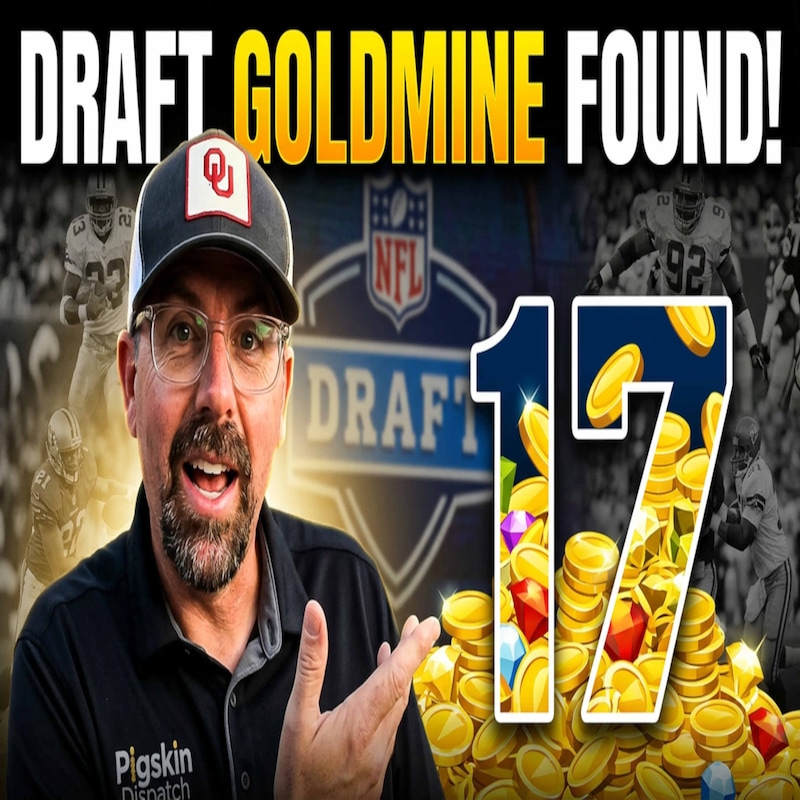
The 17th overall pick in the NFL Draft has historically proven to be a veritable treasure trove of talent, yielding exceptional players such as Emmett Smith, the all-time leading rusher in NFL history. In this discourse, we delve into the illustrious legacy of this particular draft position, examining the remarkable careers of both first-ballot Hall of Famers and notable specialists. Furthermore, we engage in an analytical exploration of the recent resurgence of high-caliber selections at this slot, contrasting them with previous decades that yielded fewer impactful athletes. Our esteemed guest, Ed Cleese, joins us to provide keen insights into the evolution of the 17th pick and its implications for teams in pursuit of greatness. Through our discussion, we aim to illuminate the significance of this pick in shaping the trajectories of NFL franchises.
Do you want more football history? Test your Gridiron Knowledge, we feed you Daily with our new FREE activity, The Pigskin Trivia Drive.
Grab a copy of our latest book, "Marooned," on the 1925 Pottsville Maroons NFL franchise saga.
*OR* Grab a copy of our book on Western Pennsylvania football history, "World's Greatest Gridiron Team" on the 1903 Franklin All-Stars
Drop us a line at PigskinDispatch@gmail .com and check out and subscribe to the Pigskin Dispatch YouTube channel.
Contact us directly at [email protected]
Miss our football by the day of the year podcasts, well, don't because they can still be found at the Pigskin Dispatch website.
Transcripts
Sixteen teams did exactly that until the Cowboys turned pick 17 into a dynasty.
Speaker A:But it's not just Emmett.
Speaker A:Slot 17 is a rare gold mine for first ballot hall of Famers and one of the most famous specialists to ever play.
Speaker A:From the trench warfare of Gene Upshaw and Steve Hutchinson to the legendary leg of Seabass himself, we're breaking down the lure of the 17th overall pick with our guest, Ed Cleese.
Speaker A:You're in the Pig Pen.
Speaker A:Pigskin Dispatch podcast is up next for the football fix.
Speaker B:Ed, welcome back to the Pig Pen.
Speaker C:Hello, Darren, how are you today?
Speaker B:I am doing super.
Speaker B:I'm fired up for the draft coming up.
Speaker B:I mean, the NFL blood is boiling and can't wait to see who my team picks and who, who goes in the top five.
Speaker B:But today we're going to focus on the, the history of the 17th pick in the NFL draft.
Speaker B:Great.
Speaker C:Let's do it.
Speaker B:All right, well, what's your perspective on this draft?
Speaker C:So it's a little bit of a reverse of a lot of the trends that we've seen.
Speaker C:You know, I feel like on a lot of these, I start by saying it's been kind of weak recently, but in the past there's been some good ones.
Speaker C:This one is reversed.
Speaker C: ry of this pick going back to: Speaker C:But recently we've had some really heavy hitters and they hit heavy enough to probably, you might be surprised of where I have them.
Speaker C:And one of my last cuts, by the way, was Dexter Lawrence, who's a current player.
Speaker C:So he almost made it.
Speaker C:So that's another guy from recent times.
Speaker C: that would be Josh Freeman in: Speaker C:He started, okay, look kind of promising and fizzled quickly, so nothing really there when it comes to busts.
Speaker C:I really had a hard time finding anybody that stuck out in any kind of super egregious way, but I did.
Speaker C:You know, I'm, I go down a lot of rabbit holes, Darren and I stumbled across.
Speaker C: Clyde Duncan was taken in: Speaker C:He didn't play at all in his rookie year, maybe due to an injury.
Speaker C: I saw that he only played in: Speaker C:That was it.
Speaker C:He caught four career passes in his career.
Speaker C:And then I found almost no information on him other than that, that he passed away fairly young at the age of 54.
Speaker C:But what's interesting to me and on these like deep dives and this is the amazing thing about the Internet, there's so many lousy things about it, but there's some really cool things.
Speaker C:And believe it or not, his of his four catches, he caught one touchdown.
Speaker C:And his one touchdown was his fourth catch, so his last catch of the NFL and his only touchdown catch in the NFL.
Speaker C: And it came in: Speaker C:And it came late in the fourth quarter in the game that the Redskins had won.
Speaker C:It was a meaningless touchdown for the Cardinals.
Speaker C:But you can find it on YouTube.
Speaker C:You've got, you can.
Speaker C:It's right there.
Speaker C:Like that play is on YouTube.
Speaker C:And I was kind of like watching it and thinking, man, it just shows you how like fleeting things can be.
Speaker C:Like in that moment, that guy right there, you know, just kind of touchdown in the NFL, he was a first round pick and then he's gone.
Speaker C:He never steps foot on a football field again and it's over.
Speaker C:And I'd say you get this one little moment on a meaningless play on a cold, dreary day.
Speaker C:And you know Clyde Duncan, you know that.
Speaker C:That a name I never heard of and did some research on.
Speaker C:I thought it was kind of interesting because I think there's, there's probably a number of Clyde Duncan's out there.
Speaker B:Yeah, that's a kind of a unique name, but also unique.
Speaker B:You know, it goes down history of.
Speaker B:25 Of his NFL catches were for touchdowns.
Speaker C:So there you go.
Speaker C:Good for him.
Speaker C:Yes.
Speaker C:And it's kind of.
Speaker C:If you go back and watch the play, it was a heck of a play by Neil Lomax, the quarterback.
Speaker C:He was under a ton of pressure.
Speaker C:Makes a really nice play to old Clyde there, but we get some honorable mentions, people that had really nice careers.
Speaker C:A couple of Patriots linemen, both Nate Solder and Damian Woody were taken in this, at this.
Speaker C:At the 17th pick.
Speaker C:Neither of them were, you know, like big time Pro bowl guys or anything like that, but had long good careers.
Speaker C:Woody played for a number of other teams as well and has been on television since.
Speaker C:Also a Patriot.
Speaker C: In: Speaker C:So that's a pretty big award.
Speaker C:And then not much.
Speaker C:I don't know if it was injuries or what happened after that.
Speaker C:Those were really bad teams in the late 80s, despite their awesome uniforms.
Speaker C:And I remember I had John Stevens football cards and.
Speaker C:And stuff like that.
Speaker C:So I remember him kind of being a big deal for a year and then being gone.
Speaker C: onard Smith, who was taken in: Speaker C:He made a Pro bowl for the Cardinals, and then he started all 16 games for the first two Bills Super bowl teams at safety.
Speaker C:And I remember him.
Speaker C:I believe he's number 46.
Speaker C:I can picture in my head just a guy that was kind of always there on those teams, kind of ended his career on a good note with the Bills.
Speaker C: r his post career would be in: Speaker C:I remember much more for his postcript because he was.
Speaker C:For many years, he was an analyst on Fox.
Speaker C:He kind of like their C or D team, you know, like the fourth.
Speaker C:You know, he's.
Speaker C:He's going to do that.
Speaker C:You know, you know, that.
Speaker C:That regional game.
Speaker C:He did that for a number of years.
Speaker C:He was also an author.
Speaker C:He's written over 40 books.
Speaker C:He's also an attorney.
Speaker C:And, you know, unfortunately he's, you know, battling ALS and has been for many years now, but he actually has a podcast where they use AI voice enhancement that sounds just like his real voice for him to kind of sound off and do it, do a podcast still.
Speaker B:So that's awesome.
Speaker B:They can still communicate and get his word out there.
Speaker C:Yeah, just a really interesting guy, kind of a renaissance man.
Speaker C:I remember when he played that he was kind of like that.
Speaker C:You can maybe tell that he was, you know, had some other things in mind, but.
Speaker C:Yeah, published over 40 books and had a.
Speaker C:Has had a very successful post career, despite the unfortunate diagnosis of battling that awful, awful illness that has unfortunately hampered a lot of former NFL players.
Speaker B:Yeah, boy, that's.
Speaker B:That's a sad story.
Speaker B:But we wish him the best and hopefully his family get through that.
Speaker B:Yep.
Speaker B:For sure.
Speaker B:All right, so are you ready to give U.S. our top five?
Speaker C:Yes.
Speaker C:The top five was tough because, like, I had a hard time on the.
Speaker C:The top two are easy.
Speaker C:Very easy.
Speaker C:But the back end was difficult.
Speaker C:The back end was difficult, and I just decided to do something a little different with it.
Speaker B:Okay, I'm anxious to hear.
Speaker C:Well, so number five, I've got Mike Iupati.
Speaker C: ers in: Speaker C:Made four Pro Bowls, two All Pros, one for one first team.
Speaker C:So he played for the 49ers, the Cardinals and the Seahawks.
Speaker C:So we kind of made the rounds for the NFC west teams there.
Speaker C:Played on a lot of good teams other than his years with the Cardinals where they think they're actually okay when he was there too.
Speaker C:So just, you know, again I was having a little bit of a hard time, so I simply took a good player that played for some good teams and I thought he was a little bit above some of those other honorable mention guys.
Speaker B:No, I remember him.
Speaker B:Very, very good player.
Speaker B:I think that's worthy of the number five slot.
Speaker B:But I'm anxious to hear who you have at number four.
Speaker C: t is Derwin James, drafted in: Speaker C:He's a safety that we both know plays a lot more like a linebacker.
Speaker C:He's a thumper.
Speaker C:So he's seven years in and he's already made four all pro appearances and he missed almost two full years because if you remember, he had a really bad injury that knocked him out kind of early in the season.
Speaker C:Missed the whole next year.
Speaker C:So he's missed, he missed a lot of time.
Speaker C:He started.
Speaker C:He's been super healthy since then.
Speaker C:So he's really only played five years and he started every game the last three years.
Speaker C:He's a major impact player that plays a little bit more of that linebacker hybrid role and if he keeps this up, he's on a big time track.
Speaker B:Yeah, that's tough for safety when they're rolling them down in the box with the big boys.
Speaker B:You know, that's, that's a tough assignment.
Speaker C:Real thumper.
Speaker C:Real thumper.
Speaker C:Number three.
Speaker C: ut that's CD Lamb, drafted in: Speaker C:Man, these numbers are eye popping, Darren.
Speaker C: ard seasons, he had an insane: Speaker C:He's had 100 plus catches three years in a row and he's actually battled a few injuries.
Speaker C:So he's missed some games and he's still super productive.
Speaker C:And you know, mixed in there was a couple of Dak injuries that really kind of stunted their offense.
Speaker C:He's a super producer.
Speaker C:He plays, you know, inside and out.
Speaker C:He's deep, he's short, he's a fourth down, you know, he's, he does it all.
Speaker C:So he's played six years right now, Darren, if you double his numbers to a Dozen years in the league.
Speaker C:He's going to the hall of Fame if he can.
Speaker B:If he, if he does this, if.
Speaker C:He does this for six more years, he's a gold jacket guy.
Speaker B:I mean, think about the, the first five years.
Speaker B:He didn't really have a running mate that, you know, the draw, cover drop until this past year.
Speaker C:Yeah, he's, he's just a stud.
Speaker C:He's a thorn in your side, as I can attest, but also a sooner, so that's good.
Speaker B:Okay, we'll give him that.
Speaker B:Give him a little bit of credit there.
Speaker B:I think he's a, he's an awesome player.
Speaker B:I'd take him on my team any day.
Speaker B:Yes, sir.
Speaker C: d Steve Hutchison, drafted in: Speaker C: team, all decade, team of the: Speaker C:And you know, I couldn't quite remember and I did a little research.
Speaker C:I was like, why did he switch to the bike?
Speaker C:Like, how did the Seahawks let him go to Minnesota?
Speaker C:I don't, I didn't really remember that.
Speaker C:And what it was, Darren, it was a poison pill provision.
Speaker C:And now he wound up in Minnesota.
Speaker C:So I won't bore you with all the details on it, but basically the Vikings were, were able to put, he was like transition tagged by the Seattle and the Vikings were able to work his contract in a way that essentially made it impossible for the Seahawks to match the contract, which they were probably going to do.
Speaker C:And then the Seahawks turned around and did this.
Speaker C:Nate Burleson was a free agent that year and they put a poison pill to do it right back to the Vikings, same thing.
Speaker C:So the league has changed the rules on that now.
Speaker C:You cannot put poison pill provisions into contracts of guys that are like transitioned or like franchise tagged or I guess if you're franchise tagged, you can't leave it all.
Speaker C:But if you're transition tag, you can't do it.
Speaker C:So they've eliminated that seven years in a row.
Speaker C:Didn't miss a game, got a little banged up at the end and kind of, I think finished out in Tennessee, but pretty easy.
Speaker C:I don't think I'd rank him up there with Randall McDaniel who we talked about recently, who was number one on our list, but certainly a worthy hall of Fame guy who had a dominant decade.
Speaker B:Yeah, he very good blocker and protector.
Speaker B:So that's part of the Seahawk success.
Speaker B:And we talked about Sean Alexander not too many episodes ago and big Time blocker for him and some of the Seahawks success.
Speaker B:Yes, sir.
Speaker B:All right, well, I, I think there's no doubt who you have a number one.
Speaker B:And this will probably break your heart a little bit too, talking about, you.
Speaker C:Know what, it's funny when it comes to this guy.
Speaker C:I can't believe this, Darren, but I have found myself over the years defending him actually, because even though it's a guy that we're all going to agree is number one here and is an all time great, I actually think that somehow he's still a little underrated historically.
Speaker C: t is Emmett Smith, drafted in: Speaker C:I think there is a narrative out there about Emmett from a lot of people, both fans and media.
Speaker C:Yes, Emmett was great, should have been in the hall of Fame, obviously his numbers, but he played behind a dominant offensive line.
Speaker C:He played with Irvin and Aikman.
Speaker C:That team was unbelievable.
Speaker C:Anybody could have run the whole behind that line.
Speaker C:And while there is some truth to that, Darren, I don't get too heavy into punishing player great players for playing with other great players.
Speaker C:I don't look at Jerry Rice and say, yeah, well, if you didn't have Joe Montana or vice versa.
Speaker C:And Emmett.
Speaker C:There's so much about Emmett that I love and I think a lot of people will say Jim Brown, Barry Sanders, Walter Payton.
Speaker C:Those are usually the names that come to mind when people say who's the best running back of all time.
Speaker C:You almost never hear anybody say Emmett Smith when it comes to like those rankings.
Speaker B:But don't you think part of that maybe because he played in the same era as Barry Sanders and part of Walter Payton's career.
Speaker B:So, so maybe that was.
Speaker B:He was overshadowed a little bit and you know.
Speaker B:But Pan America's team puts a target on you too.
Speaker B:A little.
Speaker C:A little bit.
Speaker C:But we're talking about 11 straight 1,000 yard plus seasons.
Speaker C:11 In a row.
Speaker C:And that was starting in his second year.
Speaker C:Okay, so his rookie year he had 937 yards.
Speaker C:Then he went 11 straight years with a thousand.
Speaker C:And then at age 33, in his 13th year, he rushed for 975 yards.
Speaker C:Okay.
Speaker C:And then at age 35, he went for 937 yards and nine touchdowns with the Cardinals when you know, he kind of unceremoniously ended his career with a lousy team, but he was still really good.
Speaker C:And of course he's the all time leading rusher in the history of the NFL.
Speaker C:I think that's a number that we can fairly safely say now is not going to be broken.
Speaker C:Not with the way the game is played these days and how running backs are used.
Speaker C:I think that's very safe.
Speaker C:But he's also the all time postseason rushing yards and postseason touchdown leader.
Speaker C:And he was, Darren, he was such a beast.
Speaker C:He was an undersized guy that you would have thought was like a burner and wasn't.
Speaker C:He was an undersized guy that was a bruiser.
Speaker C:And there's so many anecdotes.
Speaker C:I think the final game of the 93 season when he separated his shoulder against the Giants in the de facto NFC east championship game, last game of the year, and just kept going with them.
Speaker C:And I remember Madden's talking of course, about it and he's holding his shoulder.
Speaker C:You can tell he's in pain.
Speaker C:It's literally separated.
Speaker C:The guy is taking the ball play after play, smashing himself into the line.
Speaker C:There was a game that, the first game in the 99 season, which I hate to bring up because it was a big comeback by the Cowboys.
Speaker C:Emmett kind of straps him on the back and he's grinding out yards.
Speaker C:He's pumping his fists.
Speaker C:He was just a beast.
Speaker C:He was a monster.
Speaker C:He was a winner.
Speaker C:He was a guy that could get you the tough yards, he would get you the big yards.
Speaker C:He was consistent.
Speaker C:He caught the ball fairly well.
Speaker C:Emmett Smith is, if you want to.
Speaker C:I mean, I think actually he's better than those guys and most people will disagree with me on that.
Speaker C:But he's without question undeniably the best number 17 pick of all time.
Speaker C:And I think we can at least agree on that.
Speaker B:Yeah, definitely the best 17 pick of all time.
Speaker B:I think it's debatable that he's, I don't, I don't know that he's better than Brown or, or Peyton or even Sanders, but that's a debate that makes football fun and you know, but definitely he's a, he's a top five back of all time and leading rusher.
Speaker B:You know, like you said, he's.
Speaker B:When you have that, that accolade on your, your resume, that's pretty strong contention for, for being a top one.
Speaker C:It's pretty much a mic drop.
Speaker B:Right, Right.
Speaker B:That's for sure.
Speaker B:Well, we had, and you know, he was our, one of our hall of Famers.
Speaker B:We said there was four, some, some pretty good names on this, this list here.
Speaker B: e Raiders all the way back in: Speaker B:You know, that was an NFL draft to.
Speaker B:The Raiders were in the NFL at that point in Time and so played under John Madden, ended up being the head of the NFLPA for a while.
Speaker B:Did some, some good things there, got the players some good rights and I think that's part of what know made this free agency so, so fervent is a lot of the hard work that Gene Upshaw did prominently.
Speaker B:Yeah, right.
Speaker B:Sadly he, he passed a few probably over a decade now.
Speaker B:But that was kind of a sad day when he passed away.
Speaker B: Renfro, drafted by Dallas in: Speaker B:And I, I wanted to talk about.
Speaker B:I'm sorry, that was our.
Speaker B:You talked about the first three, Emma Smith and Steve Hutchinson.
Speaker B:Those are four.
Speaker B: , was drafted by Tampa Bay in: Speaker B:Their first year of course ended up being a Super bowl mvp, which with your Washington Redskins.
Speaker B:So good solid player there for Doug Williams.
Speaker C:Five career wins with the Redskins.
Speaker C:That's it.
Speaker B:Five.
Speaker B:Really?
Speaker C:One was a Super Bowl.
Speaker C:Well, regular season and then playoffs.
Speaker B:No kidding.
Speaker C:Eight career wins total.
Speaker B:Yeah, yeah.
Speaker B:Talk about amazing.
Speaker C:Making them count.
Speaker B:Yeah, that's for sure.
Speaker B:That's for sure.
Speaker B:But you know, I can remember what a horrific way to start your career and have the, what they lose 29 straight games under Drama K. No, I.
Speaker C:Think he was after.
Speaker C:Because if he was after that.
Speaker C:Yeah, because he was drafted in 78, they would have been the 76 and 77 would have been their bad years.
Speaker B:Oh yeah, yeah, yeah.
Speaker C:Seventeen.
Speaker B:Yeah.
Speaker C:And in 79 he played in the NFC championship game against the Rams.
Speaker B:Okay, so he wasn't on the original year.
Speaker C:You guys played the Rams the Super Bowl.
Speaker B:Okay, okay, so that's, that's okay.
Speaker B:That, that makes more sense why he's drafted 17th.
Speaker B:I was trying to figure out if they created or something for him.
Speaker C:Yep.
Speaker B: big time players from before: Speaker B:So.
Speaker B:But you know, overall, you know, when you have Emmett Smith and you know Hutchinson and you know Renfro and guys like that, you, you know, you have some good players in the slot drafts.
Speaker C:I've talked, I've talked enough about the Cowboys now.
Speaker B:Okay, all right, well, our most popular draft drafted position at 17 and it's been done 17 times in the 90 years as defensive linemen, both defensive ends, defensive tackles have been taken there to go along with our four hall of Famers and our draft stat of the day.
Speaker B:This talks a little bit about historical consistency, and while active streaks are impressive, the overall consistent is just notable.
Speaker B:Notre Dame and Ohio State share the remarkable feat of having a player selected in 82 out of 83 NFL drafts.
Speaker B: Dame's only miss occurred in: Speaker B: Ohio State's only miss was in: Speaker B:So that's kind of remarkable things.
Speaker B:And I think since then they've also had some added on to those streaks of probably haven't missed a year since.
Speaker C:No, especially Ohio State.
Speaker C:Goodness.
Speaker B:Right.
Speaker B:Yeah.
Speaker B:So, yeah, some, some good programs going there with them.
Speaker B:You know, we've talked a lot about Oklahoma, usc, Ohio State, Notre Dame, and it's all because, you know, they're good programs and have been producing for decades, so.
Speaker B:Well, that wraps up our show for number 17 slots history, and we'll be back tomorrow with number 16.
Speaker B:Glad you could join us, Ed, and we'll talk to you again tomorrow.
Speaker C:See you tomorrow, Darren.
Speaker A:That's all the football history we have today, folks.
Speaker A:Join us back tomorrow for more of your football history.
Speaker A:We invite you to check out our website, pigskindispatch.com not only to see the daily football history, but to experience positive football with our many articles on the.
Speaker B:Good people of the game as well.
Speaker A:As our own football comic strip cleat marks comics pigskindispatch.com he's also on social media outlets, Facebook, Twitter, Instagram and don't forget the Big Skin Dispatch YouTube channel to get all of your positive football news and history.
Speaker B:Special thanks to the talents of Mike.
Speaker A:And Gene Monroe, as well as Jason Neff for letting us use their music during our podcast.
Speaker C:This podcast is part of the Sports History Network, your headquarters for the yesteryear of your favorite sport.
Speaker C:You can learn more at Sports History Network.
Speaker B:Work.




