Shownotes
“I know what to do…I just can’t seem to do it.”
If that feels uncomfortably familiar, this episode is for you.
In this episode of The Weight Loss Podcast, Matt and Courtney break down what no one tells you about motivation: it’s moody, unreliable, and absolutely not the thing that keeps you going for months and years.
You’ll hear:
- Why waiting to “feel motivated” is quietly killing your progress
- The real difference between motivation vs commitment (and why you’re not broken if you don’t feel fired up every day)
- What to do when you hit a plateau and your brain screams, “What’s the point?”
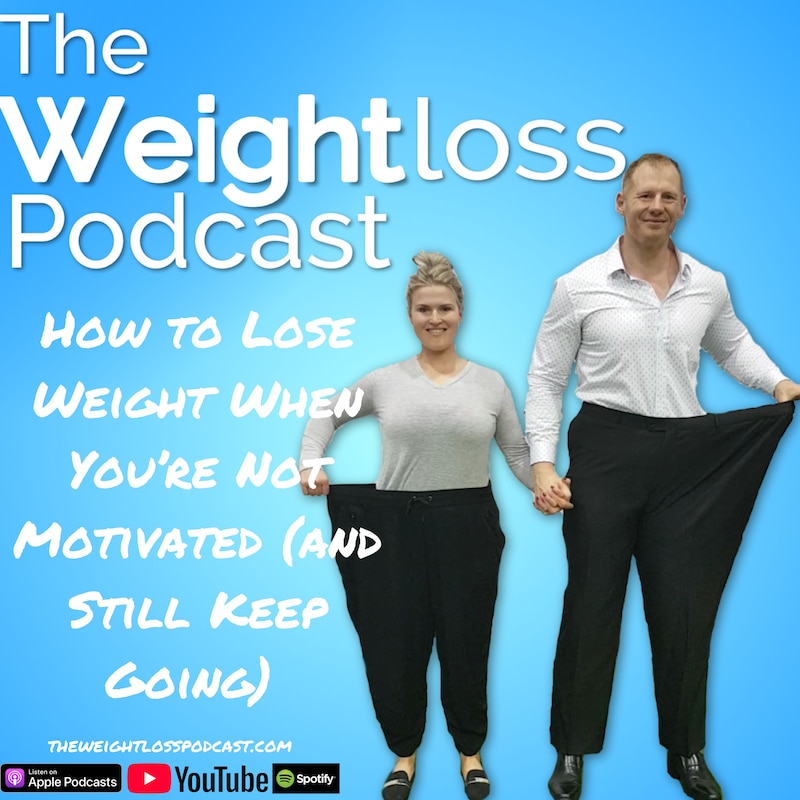
- How Matt and Courtney lost a combined 100kg without being “on” all the time
- How to build a simple, boring, powerful level of consistency that survives bad days, long weeks and zero mojo
If you’ve ever looked at your plan and thought, “I just don’t have it in me today,” this episode will show you exactly what to do next—without needing hype, willpower or a perfectly motivated version of you.
🎧 Hit play to learn how to keep moving forward…especially on the days you really don’t feel like it.
Been listening for a while and want the full picture?
We made a 50-minute training that walks through the four biggest reasons people stay stuck in the weight loss cycle, what to do instead, and what working with us inside The Weight Loss Podcast Academy actually looks like.
Watch it HERE ON YOUTUBE.
Transcripts
Welcome to the Weight Loss podcast where we offer solutions to the obstacles you face when it comes to achieving your health and fitness goals.
Speaker B:As a married couple who has lost
Speaker A:a combined weight of 100kg and 11 clothes sizes, our raw, real and relatable stories will show you the path you must walk to achieve and more importantly,
Speaker B:maintain the results you know you can reach.
Speaker A:Because we know it works.
Speaker A:So get ready to share the success and show the results with your hosts, Matt and Courtney and Welco.
Speaker A:Welcome to the podcast where we over promise and under deliver on a weekly basis.
Speaker A:It's the Weight Loss podcast.
Speaker A:My name today, yesterday and every day from here on out is Matt and
Speaker B:my name is Courtney.
Speaker A:And this week we are here to discuss the topic of motivation and in particular how to lose weight when you are not motivated.
Speaker B:Yes.
Speaker B:A topic that I know Matt has been itching to do.
Speaker B:I think that Matt and I both feel the same way about this topic.
Speaker B:It's one that we deal with quite a lot in our gym with our own clients, with people that come to us saying, you know, things like, I'm not motivated.
Speaker B:I just don't, don't feel it.
Speaker A:Today, how do I find the motivation to do this?
Speaker A:How do I find the motivation to do that?
Speaker A:Today we're going to tell you how to do that.
Speaker B:Yes.
Speaker B:Yes.
Speaker B:So we're really excited.
Speaker B:Matt and I are really excited about this episode.
Speaker B:So I'm going to let Matt start us off in terms of the topics on this one because I know he's really pumped to get into it.
Speaker A:Yeah, I am.
Speaker A:Okay, so let's look at this.
Speaker A:Motivation is defined as per dictionary.com the go to place to learn what words mean.
Speaker A:Motivation is defined as the act or an instance of doing something or provided providing an act in a certain way.
Speaker B:Right.
Speaker A:Basically, motivation is defined as the reason for doing something.
Speaker A:As per Dictionary.com Dictionary.com you owe us for the plug.
Speaker B:But Matt, what would you define motivation as?
Speaker A:A fucking gigantic waste of time.
Speaker A:An unreliable piece of shit.
Speaker A:The one thing where if you focus on that, you are not going to get what you want.
Speaker A:Am I being specific?
Speaker B:That's pretty specific.
Speaker B:That is pretty specific.
Speaker B:My definition wasn't going to be quite that blunt, but my definition of what I would consider motivation to be is.
Speaker B:Is much like the unreliable cousin to dedication.
Speaker A:Oh, very well said.
Speaker A:I happen to agree with what Courtney says on that one.
Speaker A:So we, Courtney And I, as PTs, both as, you know, working online with clients and working face to face in the gym.
Speaker A:As Courtney touched on earlier, we do come across this term a lot and it's because there is a gigantic emphasis placed on the need or the requirement to be motivated to achieve something significant.
Speaker A:So obviously in this case we're going to talk about weight loss and transformation in particular, life changing transformation and life changing weight loss.
Speaker A:That changes the way you think, the way you act, the way your entire life is.
Speaker A:It's the common assumption that to achieve anything like that, one must be motivated on a daily basis.
Speaker A:That's false.
Speaker A:That's the nice way of putting it.
Speaker A:That is false.
Speaker A:So there's a gigantic emphasis placed on this.
Speaker A:Yet people then wonder why am I not motivated enough to achieve my goals?
Speaker B:Yeah, I totally agree with what Matt just said.
Speaker B:And I also think that not only is there too much of an emphasis placed on motivation, there's not enough emphasis placed on commitment and dedication.
Speaker A:I'm sorry, what?
Speaker B:Yes, I know.
Speaker B:It's amazing that these two words are not used nearly as often as they should be.
Speaker B:So commitment and dedication.
Speaker B:So when I, when I say commitment, dedication, to me those words are representing much more of a deep rooted
Speaker A:foundation.
Speaker B:Foundation.
Speaker B:Thank you.
Speaker B:Desire to achieve something.
Speaker B:Whereas motivation is very half hearted.
Speaker B:It comes and it goes.
Speaker B:It's very light.
Speaker A:Should we say it's like a dance partner with two left feet?
Speaker B:That's right.
Speaker B:So I think as well as not only what Matt said in terms of there's been an over emphasis on motivation, there 100% is definitely an under emphasis on commitment and dedication, which are the
Speaker A:two things that get you what you want long term and they help you overcome a lack of motivation.
Speaker B:Correct.
Speaker B:They really are the cornerstone.
Speaker B:They're the heavy, they're the gritty components.
Speaker B:They're the foundations that are going to get you through.
Speaker B:Whereas motivation, that is the very half heart.
Speaker B:It's very light.
Speaker B:It's a very light feeling that will come and it will go.
Speaker B:It's not the foundation that's going to get you there.
Speaker A:Yeah, I agree with Courtney 100,000% because as Courtney has alluded to and as she will tell you, I have been waging a personal war against motivation now for quite a few years simply because I know for myself speaking here, I have been unmotivated at least 50% of the time the entire way along.
Speaker A:Whether it's personal, business, whatever.
Speaker A:Half the time I couldn't be fucked, but I still do it.
Speaker A:Why is that?
Speaker B:Because you're committed to your goals.
Speaker A:And not just that, but the goals are obviously strong enough.
Speaker A:So let's turn this into where the problem can really stem from giving.
Speaker A:I'll start with a professional example as a trainer myself, working with people.
Speaker A:So when Courtney first started with me, when I was her trainer, before she fell madly in love with me.
Speaker A:Yeah, her first 12 weeks were really, really good.
Speaker B:Yes.
Speaker A:The second 12 weeks, it did seem like she hit a plateau.
Speaker B:Yeah.
Speaker A:And there was a lot of frustration, if I recall correctly.
Speaker A:In fact, I think there were some tears.
Speaker B:Oh, lots of tears.
Speaker B:I'm a crier, for sure.
Speaker A:There were some tears.
Speaker A:It seemed like Courtney was getting very frustrated with what was, or should that be, was not happening.
Speaker A:So we had to.
Speaker A:We had to refine a few things.
Speaker A:And I can give a personal example myself.
Speaker A:Very recently, in fact, we're talking the last month to month and a half where it has felt like the progress I was making had slowed down in terms of the clothes weren't fitting any differently.
Speaker A:I couldn't see any more changes in the mirror.
Speaker A:So, as Courtney and I mentioned last week, we went and signed up at a big gym in the nearby area to get out of our own gym and, you know, change the location.
Speaker A:But also, really, the biggest difference, I think, has been upping the training intensity, and we certainly have done that.
Speaker A:And I can feel the difference in two weeks.
Speaker A:Oh, yeah, you can feel and see the difference in two weeks.
Speaker A:So that was a.
Speaker A:A very recent example of a plateau that I hit, and I addressed it by training or getting more out of.
Speaker A:Out of myself.
Speaker B:Yeah.
Speaker B:So I think along both of our.
Speaker B:Our journeys, Matt, we can.
Speaker B:We can talk a lot about personal experiences that we've felt.
Speaker B:Want to go back a little bit to hitting plateaus, which are easy to do, I feel.
Speaker B:Would you agree that they're easy to do?
Speaker A:Well, everyone hits a plateau.
Speaker A:The word plateau gets thrown around a lot in.
Speaker A:Well, in the weight loss circles and the health and fitness circles.
Speaker A:And it's understandable because everyone hits plateaus at some time.
Speaker A:I think we can agree on that.
Speaker A:Courtney.
Speaker B:Yes.
Speaker A:What do we mean by plateau?
Speaker B:Plateau is where you will stop making change.
Speaker B:You seem to hit a bit of a limit and then you just stay at that same limit for quite a while.
Speaker A:And what do you mean by limit?
Speaker B:Well, you sort of.
Speaker B:You sort of hit a benchmark and then that's.
Speaker B:That's just where you.
Speaker B:You stay.
Speaker B:You don't stop making improvements, you stop making gains in the gym, you stop getting through your.
Speaker B:Your workouts easier, you.
Speaker B:You stop making physical change.
Speaker B:You sort of just stop all round, really.
Speaker A:All right, that's fair.
Speaker A:So someone wants to lose a bit of weight.
Speaker A:Someone wants to get in fantastic shape.
Speaker A:Okay, great.
Speaker A:Awesome.
Speaker A:Well done.
Speaker A:High five.
Speaker A:Is that going to be important enough to get you to turn up, to do what you know you need to do, even when you don't feel like doing it?
Speaker A:If the answer is no, that's not your goal, or the goal simply is not strong enough.
Speaker A:Courtney, in your view, what is the right goal?
Speaker B:I mean, it is really like.
Speaker B:I mean, it sounds simple, but it really is that simple.
Speaker B:When you're talking about goal setting, it is simply having.
Speaker B:Having the right goal means having a goal that means more to you than anything else.
Speaker B:And the sacrifices that come with body transformation, with changing habits, changing your lifestyle, all those sacrifices are worthwhile because the end goal is so important to you.
Speaker A:Okay, so I'll also ask the question then.
Speaker A:What is the wrong goal?
Speaker B:A wrong goal would be something where you.
Speaker A:I would.
Speaker B:I would sort of describe it better.
Speaker B:Something like, I kind of really would love to do that, or I wouldn't mind.
Speaker B:I wouldn't mind looking better.
Speaker B:Or something that has a hesitation when you say it, which I think is a massive alarm bell to begin with, which says, is it really that important to you?
Speaker B:I think a wrong goal also can be based around the fact that it might just not be specific enough or it might have the wrong time frame attached to it.
Speaker B:Those sort of things that I think can really bring down someone's goals.
Speaker A:Well said.
Speaker A:I do happen to agree with that.
Speaker A:I also think the wrong goal is something.
Speaker A:Can be something that isn't addressing a pain point.
Speaker A:So you look at anyone that goes to the gym, anyone that does a weight loss program, a diet, anything that's out there.
Speaker A:We're all trying to address some sort of pain point, whether we have, you know, admitted to it or not.
Speaker A:There's.
Speaker A:There's something or some things there that bother us.
Speaker A:So if.
Speaker A:If what we're trying to do isn't addressing those particular pain points, well, is the goal really realistic?
Speaker A:So say, for example, if someone were to say, my goal is to run, to run 5km without having to stop, but what makes them really, really upset is that they don't like what they see in the mirror, and they try to avoid social situations because they fear they're being looked at and being judged because they're overweight, but what they say publicly is, I want to run five kilometres without taking a break, that's the wrong goal.
Speaker A:Because that's not the painful part, is it?
Speaker B:No.
Speaker A:And that's a big part of goal setting.
Speaker A:And that's what can make it hard is being able to sort of suck it up and be able to say what really actually does bother you.
Speaker B:Yeah.
Speaker B:And I think that comes back to finding your why and the trigger points that are related to that as well.
Speaker A:Well, I suppose that's part of what this episode's out, because when you think about it, it's.
Speaker A:Well, how easy is it to go to the gym or to undertake any sort of program, but you've got no clear destination, no clear timeline, no clear powerful reason why you're doing what you're doing?
Speaker A:So it's very easy to sort of go through the motions.
Speaker A:I'm going to the gym today, but I actually don't know why.
Speaker B:Yeah, yeah.
Speaker B:Just because you feel like you have to or you need to.
Speaker B:Well, actually, as opposed to you want to because you want to achieve something.
Speaker A:Courtney just touched on something that I think is worth.
Speaker A:Worth bringing up in terms of still talking right now about quote, unquote, right, wrong goals.
Speaker A:Definitely the wrong goal is doing something you need to do or you think you need to do, where the right goal is doing what you want to do.
Speaker A:So whenever someone were to say to me something like, oh, I need to lose weight.
Speaker A:Well, I don't care what you need to do.
Speaker A:What do you want to do?
Speaker A:I mean, think about it.
Speaker A:The human body, Everyone needs to exercise.
Speaker A:Everyone needs to look after themselves and, you know, eat good quality food, et cetera, et cetera, get more sleep, whatever.
Speaker A:What do you actually want to do?
Speaker A:So whenever I hear the word need when talking to someone about goal setting, that's a red flag, because, honestly, what you need is kind of irrelevant because what you want will keep you on track.
Speaker B:Yeah, I think that's a really great point you made, Matt.
Speaker B:And I think while we're on that topic, we should also go into other examples that we've heard before of goals that are the wrong goals as opposed to the right goals.
Speaker A:All right, so can we call this segment the your goals are shit segment?
Speaker B:Well, we just did.
Speaker B:You just did call it that, so can we.
Speaker B:Yes, we are calling it that.
Speaker A:So, okay, so just to frame this up, so whenever Courtney and I meet with someone at our gym, whenever we speak with someone online about working with them online remotely, etcetera, it pretty much goes through the same process.
Speaker A:So step one is we need to ascertain why, what do you want to do, and why do you want to do it.
Speaker A:Okay?
Speaker A:So now if we get any of the following said back to us, we know that is bullshit.
Speaker A:Okay?
Speaker A:Number one, I just want to get fit and tone up.
Speaker A:Piss off.
Speaker A:No, you don't.
Speaker A:You want to get fit and tone up.
Speaker A:Go for a run.
Speaker A:So that's number one.
Speaker A:Number two, I just want to get healthy.
Speaker A:Okay, how specific is that?
Speaker A:I mean, if you walk every day, your health's going to improve.
Speaker A:So what does healthy actually mean?
Speaker A:Am I right or am I right?
Speaker A:Right, right.
Speaker A:The next one.
Speaker A:I just want to feel better.
Speaker A:Great.
Speaker A:Feel better about what?
Speaker A:About the shoes you wear, about the clothes you wear, or about what you see in the mirror.
Speaker A:Again, specificity is missing here, isn't it?
Speaker B:Oh, big word.
Speaker A:Okay, we're not being specific.
Speaker A:So those three things there are the.
Speaker A:The real red flags to me personally.
Speaker A:Courtney, do you have any outside of that that stick out to you that you've heard before?
Speaker A:Because they're.
Speaker A:They're the three big ones for me.
Speaker B:I think they're the three big ones and usually any other main goals that are the wrong goals, if not those exact words are something around those three.
Speaker A:Okay, something similar.
Speaker A:Can we.
Speaker A:Can we agree that I want to get fit and tone up is the biggest bullshit goal ever?
Speaker B:Yeah, it's a pretty bullshit goal, because
Speaker A:a pretty bullshit goal or a complete, absolute, unquestionable bullshit goal?
Speaker B:It is a bullshit goal, basically.
Speaker B:I think the other one here that you'd see when I'm talking about other things that you've heard and.
Speaker B:But they all come back to these sort of three main ones is get fit and tone up.
Speaker B:Other things that you might hear are things like, I just want to work on my fitness.
Speaker B:Yeah, things like this.
Speaker A:Can I just say, though, I just want to work on my fitness could be a good goal if you are actually getting ready for an event.
Speaker B:Well, that's the thing.
Speaker B:So obviously being goal specific here, where we're talking about people that are looking to transform their body and lose weight.
Speaker A:Well, I mean, this is the weight loss podcast, isn't it?
Speaker A:Hence last night, last we checked, hence.
Speaker A:Okay, so let's.
Speaker A:Let's look at this.
Speaker A:Let's look at why.
Speaker A:So let's pick on get fit and tone up.
Speaker A:Why, Courtney, I'll throw this to you first.
Speaker A:Why is I just want to get fit and tone up a bullshit horseshit dog shit goal?
Speaker A:Well, in your mind.
Speaker B:Well, A, it's not specific.
Speaker B:That's a big, obvious thing that sticks out.
Speaker B:B, no one who is looking to change their body shape really gives a shit whether they're fit or not.
Speaker B:Like, that comes later on.
Speaker B:But your first inclination is not if you want to really.
Speaker B:If you're really unhappy with the way that you look.
Speaker B:Your first thing that you think about is not, I just want to get fit.
Speaker B:No, you don't.
Speaker B:Really.
Speaker A:Well, isn't fitness really a nebulous term?
Speaker A:Because, I mean, you look at like, I'll use Courtney and I as an example here.
Speaker A:We are both very, very fit and we are both very, very unfit.
Speaker A:Allow me to elaborate.
Speaker A:So if you were to say, matt, I want you to do repeated sprints up a hill.
Speaker A:Okay, I can do that.
Speaker A:I'm very good at that.
Speaker A:I'm fit at that.
Speaker A:If you say, courtney, I want you to go into the gym and lift heavy weights repeatedly.
Speaker A:She can do that.
Speaker A:She's fit at that.
Speaker A:Where if you say, matt and Courtney, please jump in a pool and do endless laps for half an hour,
Speaker B:dead after one lap.
Speaker A:I'm not going to last 45 seconds.
Speaker A:I'm unfit at that.
Speaker A:So the problem here really with fit is that it's such a generalized term that as Courtney said before, it's not specific.
Speaker A:It is the direct opposite of specific.
Speaker B:Yeah.
Speaker B:And as you mentioned before, Matt, I mean, if your goal is to be a marathon runner.
Speaker B:Yes.
Speaker B:Being fit at marathon, long distance running, Marathon running is essential to your goal.
Speaker A:And if you are listening to this podcast and your goal is run a marathon, could I please suggest looking up the marathon podcast?
Speaker B:But I think you're starting to get the gist of what we're saying here.
Speaker B:Getting fit is not specific and it's not giving you a real tangible goal
Speaker A:to strive for more than that, though, if you say, I just want to get fit and tone up.
Speaker A:Let's.
Speaker A:Let's break this down and be honest.
Speaker A:Is that really what bothers you?
Speaker A:Is that what makes you second guess what you do?
Speaker A:Is it what makes you lose sleep at night?
Speaker A:Is it what makes you avoid social situations for fear of being judged or not wanting to be, you know, the fat person in the group of friends?
Speaker A:Because I've been there.
Speaker B:I think also the term tone up is bullshit because what the fuck does that even mean?
Speaker A:Technically, tone up actually means to lose weight because it means to drop body fat.
Speaker A:So it's just a pretty weak way of saying it, but whenever someone says get fit and tone up, I immediately translate that in my head to, they want to lose weight.
Speaker A:They just need to know how to say it.
Speaker B:I think that's one of the big things as well about setting the right goal is to be honest with yourself about what you really want.
Speaker A:Well, that's step one, isn't it?
Speaker B:I Think that that comes back to things like we've spoken about, Matt and I have spoken about in previous episodes about the fear of being.
Speaker B:Feeling like you're being vain, the fear of coming across as only looking at the vanity in a goal, you know, stupid shit like this.
Speaker B:So our brains automatically go to, well, if I just say that I want to get fit and tone up.
Speaker A:Oh, it's more noble, then it's not
Speaker B:going to make me seem like an asshole, and it's going to be okay.
Speaker A:But.
Speaker B:But that's really not doing yourself any favors because it's really not what you want.
Speaker B:And if you don't set a goal to be really what you want, then you're not going to achieve it because it doesn't mean anything to you.
Speaker B:So I think our brains often tend to play tricks on us as well and try to tell us, well, if we just say this, then we'll look good.
Speaker B:Or if we just say this, the other trick that it plays on us is if we just say we want to get fit and tone up.
Speaker B:If we don't reach our goal of losing weight, then I don't look bad, because no one knew that that's really what my goal was.
Speaker B:So there's no accountability there.
Speaker A:Can I.
Speaker A:Can I just digress for a moment?
Speaker A:Nothing that happens for the rest of this show will top you then.
Speaker A:Just saying I don't want to set a goal that makes me look like an asshole.
Speaker A:That.
Speaker A:Okay, you win.
Speaker A:Highlight of the show.
Speaker B:Well, that's what we do.
Speaker B:That's what we tell ourselves.
Speaker B:You know, the brain is a funny thing, and it tries to play tricks on us in many ways.
Speaker B:So, you know, no one wants to look silly.
Speaker B:No one wants to put themselves out there with the chance of not succeeding and looking silly.
Speaker B:You know, no one wants to come across like you're being vain or.
Speaker B:Or you care that much about the way you look.
Speaker B:Cause apparently it's not okay to care about the way you look.
Speaker A:But we have established that, actually.
Speaker A:Yes, it is.
Speaker B:Yeah.
Speaker B:So these are all things that lead to us discounting our goals, not being honest with ourselves about what we really want, in which case it leads to setting wrong goals, and then that leads to not achieving anything because you're not even gonna achieve a goal.
Speaker B:That's wrong.
Speaker B:Because it doesn't mean enough to you, so you won't stay the course and do it.
Speaker A:And that's where we talk about priorities.
Speaker B:Yeah.
Speaker A:Don't we?
Speaker A:Because we know Courtney and I will.
Speaker A:Will say this till we go blue in the face.
Speaker A:There are things about the whole weight loss process that we don't like, that you don't like, that no one is going to like.
Speaker A:So that is an individual thing.
Speaker A:Where Courtney detests the exercise part, I detest things like food shopping and cooking.
Speaker A:So a big part of goal setting here is having a goal that is so important.
Speaker A:You are going to do the things you know you need to do.
Speaker B:Yeah.
Speaker A:Even if you don't like them.
Speaker B:Very good point.
Speaker A:When the goal that you've got is strong enough and powerful enough and is deep, deeply personal enough, you'll turn up to do whatever you need to do on whatever day it is, no matter what the hell is going on.
Speaker B:And you're not going to be happy about it all the time.
Speaker B:I mean, some days you just aren't going to feel it.
Speaker B:Some days you just don't want to go to the gym or you don't want to go shopping and do your
Speaker A:meal prep, like, every day.
Speaker B:And that's.
Speaker B:There's nothing wrong with that.
Speaker B:It's just that the problem becomes when you rely on the motivation to get you through.
Speaker B:So when you're relying on something that's already flimsy to be your foundation and to pull you through the bad times, you really.
Speaker B:You're setting yourself up for disaster.
Speaker A:Yeah.
Speaker A:On the.
Speaker A:On the topic of disaster, I think Courtney's onto it there.
Speaker A:I think there is an issue where I know I've met people in the past where they said, you know, I've had gym memberships in the past, and I just.
Speaker A:I just haven't had the motivation to turn up.
Speaker A:I just haven't gone there.
Speaker A:And the membership's gone to waste.
Speaker A:Often after a bit of probing in terms of finding out what the goal actually is, a lot of people have.
Speaker A:Don't have powerful, personal enough reasons, for example, to go to the gym to begin with.
Speaker A:So I don't look at.
Speaker A:I don't look down or judge an unmotivated person when it comes to exercise because often people aren't chasing what they actually want.
Speaker A:So someone might say to themselves, oh, you know, my goal is to get fit.
Speaker A:My goal is to get healthy.
Speaker A:My goal is to tone up, which isn't very specific.
Speaker B:No.
Speaker A:So if someone's goal is to get healthy, well, that's okay.
Speaker A:Four to six weeks of eating less shit is going to get you along the right path to that.
Speaker A:But the goal isn't specific or powerful enough.
Speaker A:Where a lot of the people that I've worked with or we have worked with come From a place a lot like where we've come from, where deep down we don't like who we are, we don't like what we see in the mirror, we don't like how we look in our clothes, we don't like the way the clothes fit.
Speaker A:That's the, that's the emotional stuff.
Speaker A:That's the important stuff.
Speaker A:That for me at least gets me out of bed every single day.
Speaker A:Even on days where, you know what, I'm just not feeling it.
Speaker A:Which is more often than people think.
Speaker B:Yeah.
Speaker B:And I think, I think that there's a misguided relationship placed between people just not feeling their best or not feeling like they want to do something.
Speaker B:And a lack of motivation.
Speaker B:It doesn't necessarily mean that it's got anything to do with motivation.
Speaker B:Feeling like you don't really want to go to the gym or you're feeling the struggle at that particular time, that's just normal.
Speaker B:That's just a normal part of how this goes.
Speaker A:Yes, it is.
Speaker B:And I think a lot of people, what we try to do is we try to say, oh, that must be.
Speaker B:That has to be blamed on something.
Speaker B:It can't just be that I just don't want to do this or it can't just be that this is friggin hard.
Speaker B:It's hard work.
Speaker B:So, okay, it just, it must mean that I'm.
Speaker B:I'm lacking motivation.
Speaker B:Well, no, it doesn't mean that you're lacking motivation necessarily.
Speaker B:It means that it's just bloody hard work.
Speaker A:You don't have to like it.
Speaker B:You don't have to like it.
Speaker B:You're never always going to like it.
Speaker B:Some life happens and sometimes in life things pile up and so suddenly you've got.
Speaker B:Instead of just going to the gym and doing your healthy eating and doing your food prep and working and you got family life, then suddenly out of nowhere something else will pop up.
Speaker B:Something goes wrong, Something goes wrong, something comes up and then it increases your life load in that, in that time frame.
Speaker B:Well, yes, shit happens.
Speaker B:That doesn't mean that suddenly you're, you're lacking motivation.
Speaker B:It just means that an already difficult task has been made more difficult.
Speaker B:But you then need to go back to my original two words, which are commitment and dedication.
Speaker B:So this is where they are your cornerstone.
Speaker B:This is where they are your foundation.
Speaker B:So when it does get hard and when things in life do come up, instead of blaming something on motivation, you need to be looking at your original cornerstone.
Speaker B:Commitment, dedication to your original goals.
Speaker B:And as Matt said, if your.
Speaker B:Why your reasoning for doing what you're doing is strong enough.
Speaker B:It will still be hard and it will still suck, but it will get you through what you're doing.
Speaker B:Just because you've got a strong enough reason why doesn't necessarily mean that when hurdles come up along the way, it's going to suddenly, magically make them easier.
Speaker B:It's just going to mean that you're prioritizing yourself because you're committed and you're dedicated.
Speaker B:So I think that is often too much emphasis as well placed on, oh, this is hard.
Speaker B:I must be lacking motivation.
Speaker B:Well, it's not motivation's fault that it's hard.
Speaker B:It's just hard.
Speaker A:Wow.
Speaker A:Wow.
Speaker A:Courtney has.
Speaker A:Has nailed it.
Speaker A:Though I will say that it is, it is indeed normal to find yourself lacking motivation.
Speaker A:I will give some personal examples.
Speaker A:Now, I know for me, for quite a long time, I found it very difficult to exercise.
Speaker A:I would find reasons to get out of it, including just not, you know, I'm not feeling it today.
Speaker A:I haven't got my mojo.
Speaker A:It's raining, it's raining.
Speaker A:It's cold, it's cold, it's hot.
Speaker A:Oh, the sun's out.
Speaker A:Oh, no, I can't exercise.
Speaker A:I get sunburnt.
Speaker B:I left work late.
Speaker A:Oh, I'm stuck at work.
Speaker B:Yeah.
Speaker A:Oh, I just had a bad day.
Speaker A:Insert weakers piss excuse here.
Speaker A:But quite often I did not have the motivation or the drive to do it.
Speaker A:And to be fair, even today, years down the track, I still don't have the drive that other people that I know in our industry have to exercise each day.
Speaker A:Yet I do.
Speaker A:I know for me, I detest grocery shopping.
Speaker A:Hate it.
Speaker A:Courtney will will back me up on this.
Speaker A:I'm never in a good mood when it comes time for shopping.
Speaker A:Same with the preparation and cooking of food.
Speaker A:I hate it with a passion.
Speaker A:And never, ever, ever, ever, ever have never do I feel motivated to do shopping or food prep ever.
Speaker A:All it does is annoy me because there's other things I'd rather be doing, like, I don't know, playing video games, watching sport or playing sport.
Speaker A:Video games.
Speaker B:Yeah.
Speaker B:And going from what Matt just said, I think I'm very similar in terms of exercise.
Speaker B:I.
Speaker B:And I think a lot of you listening and a lot of people that know me, I've said it all the time.
Speaker B:I despise working out with a passion.
Speaker A:Really.
Speaker B:I know, it's unbelievable.
Speaker B:I've never said it before, so.
Speaker B:And that goes for cardio training, that goes for weight training, that just even goes for going for a walk.
Speaker B:I Despise it all in saying that I do it.
Speaker B:I don't like to do it, but I do it.
Speaker A:Why do you do it?
Speaker B:Because I do it.
Speaker B:Well, good question, Matt.
Speaker B:I do it because I am committed and dedicated to the end result.
Speaker B:So I set myself goals that I want to hit, and I'm committed and dedicated to achieving those goals no matter how long it takes me.
Speaker A:And those goals are obviously very important.
Speaker B:Very important.
Speaker B:That's why I don't.
Speaker B:I tell myself, I don't care how long it's going to take me, I'm going to achieve them.
Speaker A:Yep.
Speaker A:I think, well, I'm going to be a parrot here.
Speaker A:But Courtney has nailed that one as well because that's what got me off my butt a few years ago when I was extremely lazy, extremely unmotivated, quote, unquote, shall we say.
Speaker A:I anchored the reason I was doing things to an outcome that meant more to me than anything else, which was not to be the same way anymore.
Speaker A:So I didn't have to.
Speaker A:I knew within myself I didn't have to enjoy what I was doing, but I still knew what had to be done.
Speaker A:No matter what day it was, no matter how hot, cold, raining, dry, whatever.
Speaker A:The goal meant more to me than anything in the world.
Speaker A:And I had.
Speaker A:Well, I was going to do what it would take to get there.
Speaker A:And I still find that these days, if there's something I truly want to achieve, I'm going to achieve it and I'll do whatever it takes.
Speaker A:Even on the days where I just don't feel it.
Speaker B:Yeah, absolutely.
Speaker B:And I think as well, I want to just clarify as well, I. I want to make sure that I'm being clear in saying that I do believe there is such thing as motivation, but I think there's a too much emphasis placed on it.
Speaker B:And I think that there is too much relation made between things being hard, things getting hard, and maybe not going your way, and then it being put down to blamed on a lack of motivation.
Speaker B:But I have a similar previous story to Matt where I was a member of a gym for a long time before I did anything and would make every excuse underneath the sun not to go, or I would go and I'd walk on the treadmill for 20 minutes
Speaker A:and take it easy.
Speaker B:Take it easy.
Speaker B:Oh, yeah, I'm done.
Speaker B:You know, that's.
Speaker B:That's enough.
Speaker B:And I would leave.
Speaker B:And so it never.
Speaker B:It never came to anything.
Speaker B:It never came to anything until I sort of hit that point where I said, you know what?
Speaker B:I need to make a change now.
Speaker B:And I need to take this seriously, and I need to do something different.
Speaker B:And that didn't necessarily come from motivation.
Speaker B:It came from me making a decision that I was ready to make a change and that I needed to commit to something bigger.
Speaker A:Well, I suppose as well.
Speaker A:And you wanted to make the change more than you needed to.
Speaker B:Well, yes.
Speaker B:I think, again, Matt's hit the nail on the head.
Speaker B:It was a need and a want to do something different.
Speaker B:I was sick of doing the same thing day in and day out, and I needed and I wanted to make a change.
Speaker B:And then so I committed myself to make that change.
Speaker A:Can I also just say as well, just picking up where Courtney left off earlier?
Speaker A:Yes, motivation absolutely is a thing.
Speaker A:I mean, it's in dictionary.com so it must exist.
Speaker A:Yes, but.
Speaker A:But motivation is absolutely a thing.
Speaker A:But one point I want to really emphasize here is that don't beat yourself up if you are a largely unmotivated person and you don't necessarily take enjoyment from doing the things that need to be done to change the way you look and feel, because that makes you just like most other people, including the two people you're listening to right now.
Speaker A:Yes, we are unmotivated.
Speaker A:Well, I know for me, I'm unmotivated at least half the time, Courtney.
Speaker A:Possibly a little bit more than that, but that's okay.
Speaker A:That doesn't make us bad people.
Speaker A:That doesn't make us underachievers or anything.
Speaker A:It just makes us like, you probably, like your friends, like your buddies at the gym, like everyone else.
Speaker A:Everyone is unmotivated at sometimes just some of us a bit more than others.
Speaker A:And that's okay?
Speaker B:Absolutely.
Speaker A:As long as you know what it takes to work around that.
Speaker B:Correct.
Speaker B:As long as you don't use it as a crutch to say, oh, well, I'm gonna stop now.
Speaker A:I'll tell you what.
Speaker A:Anyone that any of my clients would say to me, I'm just not motivated.
Speaker A:I won't do it, are gonna get a very rude response.
Speaker B:Well, that's it.
Speaker B:And that's really where the frustration comes from when you've got.
Speaker B:You've set your goal, you committed to your goal, and the first hurdle that comes up and it gets hard, and you say, no, I'm just not motivated anymore.
Speaker A:I quit.
Speaker B:What.
Speaker B:What has motivation got to do with anything?
Speaker B:So that is the main reason behind this.
Speaker B:This.
Speaker B:This week's podcast was.
Speaker B:Is just to highlight the fact that you're never always going to feel motivated, and that's fine.
Speaker B:And that is completely normal.
Speaker B:So do not lose your shit.
Speaker B:If you wake up one day and say, I just don't feel motivated anymore.
Speaker A:Do not lose your shit.
Speaker B:I like that because that is normal.
Speaker B:What you then have to look at and ask yourself the question is, are you still committed to your goals, but you're just breaking down whatever your end goal is into progress, smaller goals to get there?
Speaker B:Because you can see it, you can visualize it, you can taste it, you can measure it, you can measure it.
Speaker B:You're not going to have the motivation all the time.
Speaker B:So it's going to keep you determined in reaching that long term goal.
Speaker B:Then I think, Matt, you want to talk about the other side of breaking down the long term goal.
Speaker A:Yeah, the boring stuff.
Speaker A:I'll take the boring stuff.
Speaker A:Thanks for that.
Speaker A:So Courtney just sort of touched on then taking a large long term goal, breaking it down into a midterm goal.
Speaker A:So smaller steps.
Speaker A:The way I like to work with people is that you break it down even further again because it's one thing to have these fantastic goals, you know, six dress sizes, one dress size down, the next three months.
Speaker A:Okay, what are you actually going to do to make this happen?
Speaker A:This is where I like to set with my clients, what I call procedural goals.
Speaker A:Yes, they are boring as hell, but they are the things you need to do on a day to day and week to week basis to actually make these goals come to Life.
Speaker A:So with 99.9% of people, I set for them the first goal, which is, buddy, get off your butt and start exercising.
Speaker A:Because that's the first and easiest goal to set.
Speaker A:That's a very small short term goal.
Speaker A:Just get to the gym.
Speaker A:Just get moving, get your ass off the couch, start lifting some weights, start doing some cardio stuff.
Speaker A:Great, no worries.
Speaker A:Just get moving.
Speaker A:Okay, the next procedural short term goal might be.
Speaker A:Okay, you've now developed this habit of exercise.
Speaker A:Well done.
Speaker A:High five.
Speaker A:Your confidence is up.
Speaker A:You're making some steps in the right direction.
Speaker A:The next little small procedural goal, well, how about you start now eating more of your own food and eating less of other people's or takeout food.
Speaker A:So a bit more food prep, a bit more food shopping, just a little bit more time in the kitchen.
Speaker A:And you can then break that down even further and go, okay, you've done that.
Speaker A:Your next goal might be get half an hour extra sleep each night.
Speaker A:It might be start taking notes, start recording what you're doing.
Speaker A:So these small little procedural, step by step goals, they're going to add up to the midterm goal.
Speaker A:Of one dress size, for example, and then they are going to add up over a longer period of time to in this case, six dress sizes.
Speaker A:Does that make sense?
Speaker B:I hope that makes sense because it's really the easiest way to explain it.
Speaker B:And I think when you're sitting down to write out your goals, to work through this, it's a really good exercise to maybe even draw yourself a bit of a pyramid.
Speaker B:Split it up into three sections and at the top put your ultimate goal.
Speaker B:Then put your midterm goals in the centre, your progress goal, like we're mentioning about the one dress size.
Speaker B:Then at the bottom put your.
Speaker B:As Matt just explained, the procedural goals and the quote unquote boring stuff that it's going to take to get there, the habits that need to start being formed, the things that you need to do, the doing part of this goal setting.
Speaker B:There always needs to be a doing part.
Speaker B:That's where, you know, people often say to me, oh, I'm going to do, I'm going to put up on my fridge pictures of what I want to look like, things like that, which is great, but there always has to be a doing part.
Speaker B:See, without the doing part, your goals just say as dreams and they don't actually happen.
Speaker B:So I think that's a really good exercise when you're planning out your goals because I think, I don't know if you'll agree with me, Matt, but I think goals and goal setting within this fitness industry is completely underrated and it really needs to be utilized and put more emphasis on it.
Speaker A:Yes, I would say it is both underrated and complete bullshit.
Speaker A:Underrated in terms of actual realistic.
Speaker A:Helping people set realistic time based goals is indeed underrated and underused.
Speaker B:Yeah.
Speaker A:On the other hand it is because the industry that Courtney and I works in likes to put in people's minds that they can do these amazing things in these short period of times, which quite frankly is false because if you could, well, we'd do it.
Speaker A:And that's what we do with our clients because hey, that's the way it works.
Speaker A:We do it.
Speaker A:Simple as that.
Speaker A:So it is, it is bullshit in, in that mind or in that frame of mind.
Speaker A:I'm just not a fan of the expectations that our industry sets for people.
Speaker A:But realistic, smart, you know the old cliche he smart goal setting is indeed underrated and underused.
Speaker A:But when it comes to a transformation and a weight loss goal that sticks and someone that actually gets to their goal and is ready to keep it and maintain it.
Speaker A:Underrated, Absolutely.
Speaker A:It doesn't get enough play.
Speaker A:Yeah.
Speaker A:And I also think that an issue present is that not enough trainers, PTs, coaches, et cetera, are really willing to probe their clients or their potential clients as to what their goals are.
Speaker B:That's a great point.
Speaker B:That's a great point because, I mean, Matt, you work with a lot of trainers in mentoring them, so you see this quite often.
Speaker B:And why do you think that is?
Speaker B:Why do you think that trainers are afraid to probe their clients on this topic?
Speaker A:Not confident enough.
Speaker A:You have to be able to say to someone, in essence, I don't believe what you're telling me.
Speaker A:I need to help you get this out and give me the actual facts here.
Speaker A:I know I've done this long enough now and I'm confident enough to the point where if I hear the term get fit and turn up, I'm going to immediately say, your goal is shit, give me a better one.
Speaker A:Because I know it is.
Speaker A:And I think having been there and done that does help.
Speaker A:But I think it is a confidence and an experience thing where it from a trainer's perspective, I suppose if we think we've got someone sitting in front of us that's going to give us money, then to hell with it, let's just take them on.
Speaker A:But the problem there is, and this is also extends to goal setting.
Speaker A:You're not playing the long game.
Speaker B:Yeah.
Speaker A:You've got to think, okay, well if I'm working with someone, what's the outcome here from a trainer's perspective, is the outcome to get paid.
Speaker A:If you're good, you're going to get paid, money will find you.
Speaker A:So let's just get that out of the way right now.
Speaker A:When I think long term with people, I think, okay, are we setting ourselves up and putting ourselves in the best possible position to get a really fantastic transformation?
Speaker B:Yeah.
Speaker A:If the answer is no, then why are we doing this?
Speaker A:Why are we wasting our time?
Speaker A:Why are we wasting our money?
Speaker A:If the answer is yes, then okay, let's give this a real crack.
Speaker A:But the goal setting part is so critical because that's what someone has to anchor all their efforts to.
Speaker A:And I think us as trainers and coaches, the onus does fall on us to be able to help people identify and put it out there what the actual problem is and how willing are you to solve it.
Speaker B:Yeah.
Speaker A:And I put it this way, anyone.
Speaker A:I'm yet to see someone have a goal of get fit and tone up, they've got it.
Speaker B:Yeah.
Speaker A:Yeah.
Speaker A:I've seen people, especially ones where the people I've worked with and I've called them out on this and said, like, hey, no, that's not going to cut it.
Speaker A:Let's get more specific here.
Speaker A:The success rate is dramatically higher because we have a clearly defined outcome and a clearly defined time frame.
Speaker A:Let's go at it.
Speaker A:And I've been guilty of it myself.
Speaker B:Oh, so have I. Yep.
Speaker B:So have I. I think.
Speaker A:I think most people have to be fair.
Speaker A:I think it's human nature to either chase goals that we really don't want or to have time frames that are unrealistic.
Speaker B:Absolutely.
Speaker B:So that is setting the right goals.
Speaker B:I hope that helps.
Speaker A:We hope that helps.
Speaker B:We hope that helps.
Speaker A:So we will move on to.
Speaker A:Well, is the outcome important enough to me to stick with it even when I couldn't be stuffed?
Speaker B:And if the answer is no, then your original goals are the wrong goals.
Speaker B:And that's as simple as that.
Speaker B:You need to then redefine what your goals actually are.
Speaker A:Have a real think or look in the mirror and decide what is it about yourself that you actually want to change?
Speaker A:And is the thing you want to change annoying and frustrating you enough to actually do it?
Speaker A:If it's not, that's okay.
Speaker A:Save your money, save your time, stop going to the gym.
Speaker B:That's it.
Speaker A:If there's something in your life or something about you that really keeps you up at night that in some cases gives you the tearies and gets you very, very frustrated, then that might be the thing you need to anchor this whole process to.
Speaker A:So we've spoken now about, you know, the overall picture.
Speaker A:What is motivation or what isn't it?
Speaker B:Yes.
Speaker A:How does it tend to affect people?
Speaker A:Let's now push this forward in terms of actual hints, tips, advice that we can give on how to actually make this work for you.
Speaker A:Because in the end, the topic of the show is how to lose weight when you're not motivated.
Speaker A:Let's actually talk about that now.
Speaker A:So I think for me, the first tip that I'm going to give in terms of how to lose weight when you're not motivated is forget being motivated.
Speaker B:Yes.
Speaker A:Forget that.
Speaker A:Don't anchor your actions to having to be motivated that day, because if that's the case, you're going to turn up maybe half the time, and that's okay if you're okay with half the results.
Speaker B:Correct that.
Speaker B:Very well said, Matt.
Speaker B:And I think then leading in from that, I would also give the tip of.
Speaker B:We spoke about finding your.
Speaker B:Why you're finding the reason that you want to do something, and you have to find that and make that.
Speaker B:Make sure that it's strong.
Speaker B:Make sure that it's strong enough that when hard times come up along the way, you're still going to have commitment to that goal.
Speaker B:And that's what it comes down to.
Speaker B:It really doesn't matter what your reason for doing it is.
Speaker B:It really does not matter as long as it's important enough to you.
Speaker B:There's no right or wrong in terms of the reason why you do something, as long as it's strong.
Speaker A:Touching on that, in terms of finding a why that's strong, I think that that reason why you do what you do needs to be something that you want so bad you can taste it, you can almost reach out and grab it.
Speaker A:I know for me, when I've wanted things in the past so much, I've been prepared to.
Speaker A:And I'm sorry, Mum, if you're listening to this, I've been prepared to run my mum over in my car to get it if I want.
Speaker B:Figure of speech, obviously.
Speaker A:Figure of speech.
Speaker A:But still, I've wanted.
Speaker A:I've wanted certain things in my life so bad, I didn't care what it took.
Speaker A:I'll just keep pushing forward until I got it.
Speaker A:That's the sort of feeling that you're looking for when you.
Speaker A:When you're looking at, why am I doing this?
Speaker A:Because we, Courtney and I will always, when we first meet people that want to work with us, we always will ask them what their goals are.
Speaker A:Now, quite often we will get things.
Speaker A:As I've said before, I want to get healthy, I want to get fit, I want to get toned up.
Speaker A:Not good enough.
Speaker A:Why is it not good enough?
Speaker A:It's not specific enough.
Speaker A:So when we're talking about anchoring our entire reason for doing something to a reason why, it needs to be a specific why.
Speaker A:So for some people that we've worked with in the past, the why has been.
Speaker A:Well, in Courtney's case, I want to look good in a bikini.
Speaker A:A size 12 bikini, to be precise.
Speaker A:We've had other people where they've wanted to be able to, you know, take their shirt off at the beach.
Speaker A:Very specific.
Speaker A:Or there's a certain item of clothing I'm desperate to get into.
Speaker A:I want to wear this pair of jeans that might be a size 8 if you're a female.
Speaker A:So I'm not wearing a size 8.
Speaker A:I want to wear this pair of jeans as a size 8.
Speaker A:That will make my butt look really good.
Speaker A:But to be able to wear this pair of jeans, I have to lose the muffin top.
Speaker A:That's Very specific.
Speaker B:Very specific.
Speaker A:Or it can be as simple as I want to have abs, also.
Speaker A:Very specific.
Speaker B:Functional strength has also been.
Speaker B:We've had clients in the past who have come to us and said that they're getting older and they're realizing they're losing their functional strength and that to them is functional far more important than looking a certain way.
Speaker A:Absolutely.
Speaker A:And that's fine.
Speaker B:And that's totally fine.
Speaker B:As I said, it doesn't matter what your goal is.
Speaker B:It doesn't matter your reason for wanting to achieve that goal.
Speaker B:What matters is what Matt just said, that it's specific and that it's strong enough that it's going to get you through without having to rely on motivation day in, day out to drag your ass into the gym because it will let you down.
Speaker B:Or to the grocery store because it will let you down.
Speaker B:Absolutely.
Speaker A:Yep.
Speaker A:Absolutely.
Speaker A:So the next sort of point that I want to give here is that deep down, if the reason why you're doing what you're doing is not strong enough, you are going to find this type of thing.
Speaker A:Coming up.
Speaker A:Oh, I haven't got it today.
Speaker A:I've just.
Speaker A:I've lost my mojo.
Speaker A:By the way, I hate that saying.
Speaker B:Mojo, hate.
Speaker A:No, no, that note.
Speaker A:I've lost my mojo.
Speaker A:Shut up.
Speaker A:You haven't lost it.
Speaker A:You've let it go.
Speaker A:Well, the reason you're doing it in the first place didn't mean enough to you.
Speaker A:So to me, someone saying I've lost my mojo is just as bad as I'm just not motivated.
Speaker A:Shut up.
Speaker A:Shut up.
Speaker A:Go home and think about why you're doing this.
Speaker B:Yes.
Speaker A:If you're not turning up, if you're struggling with consistency, the reason you're struggling with consistency is because what you're doing it for doesn't mean enough.
Speaker A:So it's time to think about what actually might mean enough to get it done.
Speaker B:Absolutely.
Speaker B:I think.
Speaker B:Yeah, I think we've sort of covered the bases there.
Speaker B:Now, Matt, is there anything you wanted to add before we move on to the email?
Speaker A:As a matter of fact, yes, there is.
Speaker A:When it comes to this discussion, in terms of, you know, working around a lack of motivation, understand that when we're talking about, as well, goal setting and finding the reason why we do what we do, remember this, whatever your reason why, it has to be something you want to achieve, not something that you feel you need to achieve or that you have to achieve or that you feel the pressure from other people to do it, it has to come from within.
Speaker A:I'll give another personal Example here.
Speaker A:When I was younger and very overweight, very unhealthy, an unnamed member of my family would very regularly take shots at me about being overweight and I should do something about it constantly.
Speaker A:But I never did.
Speaker A:People would give me.
Speaker A:I used to get called Fat Matt, but I did nothing about it.
Speaker A:Why?
Speaker A:Because I didn't want to.
Speaker A:I didn't do anything about it until it meant enough to me to do something about it.
Speaker A:So it didn't matter what other people wanted for me or how other people looked at me.
Speaker A:I didn't like being judged, but I didn't dislike it enough to get off my ass and do something.
Speaker A:But until I did, once, once I had that snap point, things started to change because I wanted to change them.
Speaker A:And I've also seen this with other people that will set goals for themselves and even set goals where they will blackmail themselves where if I don't get this outcome, it's going to cost me X, you know, financial.
Speaker A:It might cost me money, it might cost me a personal object.
Speaker A:That means a lot to me.
Speaker A:Understand this.
Speaker A:If you don't want it, nothing is going to force you to do it.
Speaker A:Nothing.
Speaker B:No, absolutely.
Speaker B:I completely 100% agree with what Matt just said, especially the blackmail thing as well.
Speaker B:I've seen it so many times as well.
Speaker B:People will put up money, they'll say, I'm putting $3,000 on the line.
Speaker B:I'm going to achieve my goal by this time or I'm going to lose that money.
Speaker B:That might seem like a great idea, but when it comes down to it, if that goal isn't strong enough to make you do it or that you want to do it, should I say
Speaker A:you're not going to do it, it
Speaker B:doesn't matter if $3,000 are on the line realistically.
Speaker A:And let's flip this on the head.
Speaker A:If you want to do something, you don't need any extra incentive.
Speaker A:Take it from me, when you want to change something about yourself so much, you don't need anything to blackmail yourself with or anything to push you along, you are going to do it.
Speaker A:Because for me, it was emotional and powerful enough where I hated the way I was so much.
Speaker A:That was enough incentive to actually do something to fix it.
Speaker B:Absolutely.
Speaker B:And I think that those sort of blackmail type of type of situations are really coming down to more into the motivation category.
Speaker B:Like, oh, I need to make sure I'm motivated to do this because money's on the line.
Speaker B:Well, as Matt said, if your commitment and dedication to your goal, because your goal is so strong are strong enough.
Speaker B:That is worth way more than $3,000.
Speaker B:So I think that they're really good points to finish on.
Speaker A:Yeah, I mean, in the end, Courtney and I, we've lost, like, 100 kilos between us as lazy, unmotivated slobs, but we still got it done.
Speaker A:Well, okay, well, I. I am a lazy, unmotivated slob.
Speaker B:No, definitely, but still got it done.
Speaker B:We're not lying about the fact that we're not very motivated people, but we are committed.
Speaker B:It's the same thing when you.
Speaker B:When you apply to different things in your life, like to go to work.
Speaker B:Well, no one's really motivated to go to work generally.
Speaker B:You know, even if you love your job, you're not going to be motivated to go to work.
Speaker A:Not every day.
Speaker B:Every single day.
Speaker A:And definitely not Mondays.
Speaker B:So there are definitely certain days or even mornings where you're going to wake up and think, oh, I can't be bothered going today.
Speaker B:But you go every day because you.
Speaker B:Because that's what you need to do.
Speaker B:Because that's what you need to do to be able to live and to be able to travel and to be able to provide for your children.
Speaker B:And this is what you do.
Speaker B:Well, it's the same sort of thing when it comes to weight loss.
Speaker B:I know Matt uses the term a lot of the time where you need to look at this as a job.
Speaker B:When you're committed and you're dedicated to something, it becomes like your job.
Speaker B:You just do it.
Speaker B:Some mornings you're going to wake up and you're going to think, oh, I can't be bothered today.
Speaker B:But you go and do it.
Speaker A:So in closing, I would like.
Speaker A:We would like to hear from you.
Speaker A:Send us an email@podcastheweightlosspodcast.com Tell us what your why is.
Speaker B:Mm, that's a good one.
Speaker A:Because obviously you are listening to us prattle on, and in today's case, get on our soapbox and really get stuck into it.
Speaker A:There must be a reason why.
Speaker A:So chances are, as you're listening to this, you might be on the way to the gym, you might be coming home from the gym, you might be at the gym, you might be out doing shopping.
Speaker A:That's when I listen to all my podcasts, when I'm doing the things I don't want to do.
Speaker A:So the podcasts are what keeps me going.
Speaker A:We'd like to hear from you.
Speaker A:What is it that gets you out of bed in the morning and gets you doing the things you don't really feel like Doing.
Speaker A:But you're going to do them anyway.
Speaker B:Yep.
Speaker A:That'd be great for us to learn that, you know, learn a bit more about yourself.
Speaker A:Now, on the topic of emails, it is time for emails.
Speaker A:Courtney, I've pulled an email today.
Speaker A:Would you like to take this one?
Speaker B:Yes.
Speaker B:Yes.
Speaker B:Now, our email today is from Megan.
Speaker B:Thanks for sending in your email, Megan.
Speaker B:Now we.
Speaker B:We.
Speaker B:Yes.
Speaker A:Sorry, Courtney.
Speaker A:Yes.
Speaker A:Where's the email music?
Speaker B:Oh, it's email time.
Speaker A:Yeah, a bit slow on that one, but we'll take it.
Speaker B:I've got a bit of a husky voice thing going on today as well,
Speaker A:so can I tell you something?
Speaker B:I hope it hasn't been too distracting during this pro.
Speaker B:This podcast.
Speaker A:You have a sexy, husky voice every day, and that's okay.
Speaker B:It's a bit more husky today, so I hope it hasn't been too distracting.
Speaker B:But our email of the week, as I said, is from Megan.
Speaker B:Thanks for sending this in, Megan.
Speaker A:Hello, Megan.
Speaker B:We did keep this one.
Speaker B:We got this one a week or so ago, but we kept it specifically for this episode because that's actually perfect to go with our motivation episode.
Speaker B:And talking about your reasons why the email goes.
Speaker B:Hi, Matt and Courtney.
Speaker B:Love the show.
Speaker B:Thanks for what you do each week.
Speaker A:Well, you're welcome.
Speaker B:How important is goal setting?
Speaker A:Hmm?
Speaker B:Is it.
Speaker B:Oh, sorry.
Speaker B:Is just wanting to get fit enough or do something.
Speaker A:Okay, so the email this week comes from Megan.
Speaker A:Hello, Megan.
Speaker A:Thank you for emailing us.
Speaker B:Apparently my husky voice is also affecting my brain.
Speaker A:Hello, Courtney and Matt.
Speaker A:You're killing it today.
Speaker B:I don't know.
Speaker B:What is it today?
Speaker A:You are all over it.
Speaker A:Love the show.
Speaker A:Thanks for what you do each week.
Speaker A:How important is goal setting?
Speaker A:Is just wanting to get fit enough or do I need to aim for something specific?
Speaker A:Thanks so much, Megan.
Speaker A:Courtney, do you feel that you're in a position right now to answer this or do you need some time to yourself?
Speaker B:You go first.
Speaker A:Okay.
Speaker A:That's a.
Speaker A:That's a yes.
Speaker A:Okay.
Speaker A:You are on fire today.
Speaker B:I was doing so well.
Speaker A:Someone get the fire extinguisher and put her out.
Speaker A:She's just.
Speaker A:She's just burning it up.
Speaker A:Righto.
Speaker A:Megan, how important is goal setting?
Speaker A:Well, it's critical because it's everything you do in the gym, everything you do in the kitchen.
Speaker A:The consistency that you develop all needs to be anchored around the goal or goals that mean as much to you as anything in your life in terms of.
Speaker A:Is just wanting to get fit enough.
Speaker A:Well, it depends.
Speaker A:Do you mean fit as in you would like to run a marathon or do you?
Speaker A:In which case, yes, that is pretty, Pretty good.
Speaker B:Yeah.
Speaker A:But you need to be more specific anyway.
Speaker A:Or do you mean I want to get fit as in I want to look my best?
Speaker A:Because, no, that's not enough because it's not specific.
Speaker A:Whichever way you go, it does need to be specific.
Speaker B:And I think the important thing with what Matt's saying as well is goal setting.
Speaker B:And being specific in your goal setting is not only important for you to be able to find the reason why you're doing it, make sure it's strong enough.
Speaker B:It's also important because that sometimes will alter the style of training that you need to be doing.
Speaker B:So if you're training for fitness and you're training for a marathon, that's very different to someone who is changing their body shape or wanting to lose a lot of body fat.
Speaker B:So not only specific, really important to make sure that your reasons why you're doing it are strong enough.
Speaker B:It's also really important because it does often change the style of training that you need to do.
Speaker A:Yeah.
Speaker A:Courtney's all over it.
Speaker A:Good to see.
Speaker A:Good to see you back.
Speaker A:Welcome back.
Speaker A:Welcome to the episode.
Speaker A:So, yeah, as Courtney said, Megan, the goal will dictate the process.
Speaker B:Yes.
Speaker A:So the goal, detect the training, the type of training, often the amount of training, the way a program is structured in terms of the progression and periodization of a program, how it will ramp up over the course of 8, 10, 12 weeks is dictated by what the end result is.
Speaker A:And it's the same thing with what we eat and the food that we put into our body.
Speaker A:And in some cases, the supplements that we take on top of the food that we eat is dictated by the desired outcome.
Speaker B:Yes.
Speaker A:So if someone's desired outcome is to get into the best shape of their life and have, you know, a nice pair of girl guns, some ab action happening, a bit of.
Speaker A:A bit of booty.
Speaker A:Booty gains at the back.
Speaker A:Well, if a girl's goal is that we're not going to get her running 10, 20, 30, 40 kilometers each week, are we?
Speaker A:No, no.
Speaker A:She's going to get in the gym, get under the bar and start pumping iron and then we're going to make sure that the food she's eating is going to fuel those workouts as well as fuel the recovery from those workouts that will over time lead to the body changing the way that someone wants to change.
Speaker A:Was that a specific answer?
Speaker B:I think that was quite specific.
Speaker B:So I hope that answers your question, Megan, and we would love for, if you have any other questions related to your goal setting or if you would like to again send us through your reason why or your goals, please, please feel free to.
Speaker B:We would love to hear from you.
Speaker A:Yep, you're just you.
Speaker A:Dead set.
Speaker A:You are killing it.
Speaker A:Under normal circumstances, I would edit all this out to make a blooper reel, but I'm keeping this in because it is hilarious where someone has stolen my wife and replaced her with someone that looks like my wife.
Speaker B:This is shocking to you, though, and I don't think this is shocking.
Speaker A:I'm not surprised in the slightest.
Speaker B:This is not abnormal.
Speaker A:This is the real Courtney.
Speaker A:Finally, she exposes herself.
Speaker B:She's doing so well for like 30 minutes and then, damn the ending.
Speaker B:I just.
Speaker A:Yeah.
Speaker A:So we're going to leave Courtney alone now.
Speaker A:I'm going to wrap the show up.
Speaker A:So Courtney, just.
Speaker A:Just take it easy there, champ.
Speaker A:We got this one.
Speaker B:You can email us@podcasthewightlosspodcast.com Boom.
Speaker B:Nailed it.
Speaker B:Or you can also message us through our Facebook page.
Speaker B:See back on again.
Speaker A:Wow.
Speaker A:Wow.
Speaker A:So hopefully this has helped.
Speaker A:Hopefully this is entertained because Courtney's now got the giggles and this will go on for most of the day now.
Speaker A:So on that note, I'm gonna wrap the show up and go and help my wife take a deep breath.
Speaker A:Hope this has helped.
Speaker A:You will hear from us soon.
Speaker A:Have a good one.
Speaker B:Bye.
Speaker B:Are you ready to share your success?
Speaker A:Head over to our website for full access to our show notes, resources based on today's topic and links to our
Speaker B:Facebook group so you can share your
Speaker A:story with our hosts and many others out there who are looking to achieve and maintain their health and fitness goals.
Speaker A:You can find all that and more exclusively@theweightlosspodcast.com.
Speaker A:Sam.


