Shownotes
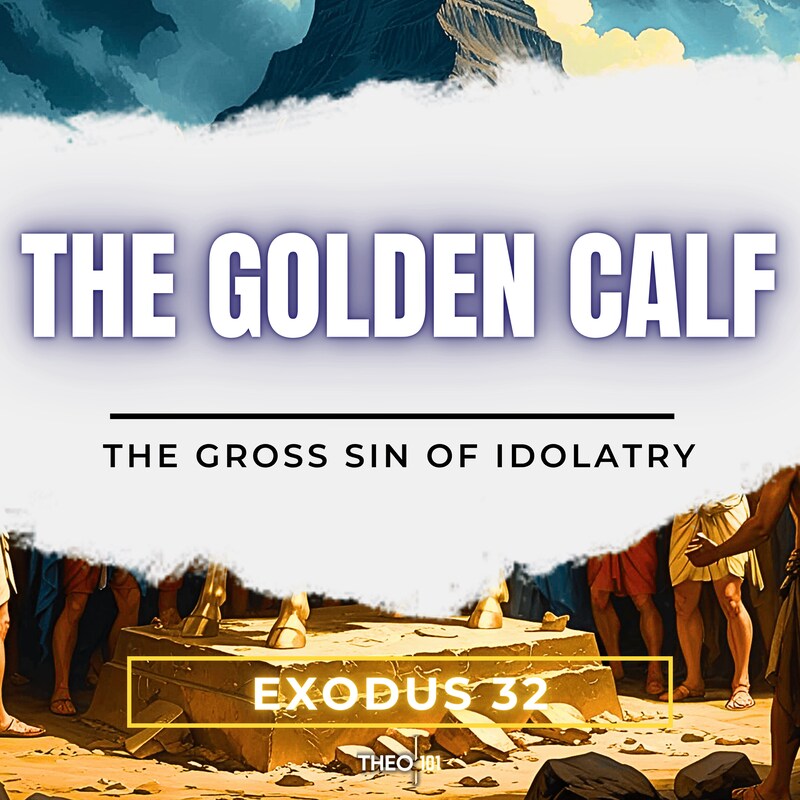
Why do people make idols? In Exodus 32, while Moses is on the mountain with God, the people below melt their gold into a calf and worship it. Dr. Toby Holt examines the human heart's pull toward idols. Impatient for Moses, the people pressure Aaron to "make us gods," and he fashions a golden calf, even calling it a feast to the Lord. An idol's appeal: a god you make yourself, who demands no obedience and never judges. God's anger burns, but Moses intercedes — a picture of Christ the Mediator — and God relents, though judgment still falls.
Questions this study answers:
1. What were the people thinking, and why did Aaron help? Impatient and afraid, they wanted a god they could see, and Aaron gave in to the pressure of the crowd.
2. Were they trying to replace God? In part they blended true worship with idolatry, even calling the calf a feast to the Lord. It was corruption, not just replacement.
3. How does Moses point to Christ? Moses stood between the people and God's wrath, pleading for them. He pictures Jesus, the true Mediator who saves His people.
"This is your god, O Israel, that brought you out of the land of Egypt!" — Exodus 32:4 (NKJV)
Dr. Toby Holt is President of New Geneva Theological Seminary, and his sermons have been downloaded more than 1.9 million times on SermonAudio. Find more verse-by-verse Bible teaching at newgeneva.org; support this ministry at newgeneva.org/give.
Transcripts
In Exodus 32, Moses has gone up Mount Sinai to meet with God.
2
:While he was up there, the Israelites began to worship a golden calf at the foot of the mountain below.
3
:What were they doing? Didn't these people know better?
4
:And what was Moses' reaction when he returned and saw their idolatry?
5
:In Exodus 19, which I referred to just a few moments ago,
6
:The people were gathered at the foot of the mountain, at the foot of Mount Sinai.
7
:And at that time, they saw the fire come down and char the top of the mountain.
8
:They saw the lightning, they heard the trumpets, and then they heard the voice of God.
9
:Now, what did God say?
10
:Well, again, we mentioned this a few moments ago.
11
:When God spoke, he delivered to them audibly from his own voice the Ten Commandments.
12
:in other words the law was given to the people not by intermediary initially but by the lawgiver
13
:himself he said this is the law that you are to follow this is what i have called you to do now
14
:what was the people's reaction well we saw that the first thing they did after hearing this and
15
:their knees knocking and they're trembling their jaws to the ground the first thing they did was
16
:they went up to Moses and they said, Moses, dear heavens, don't let that happen again. Moses, you,
17
:you, you go talk to this God. If God shows up the way he just did, we're not going to survive the
18
:encounter. We will die. So they desired that Moses would be an intermediary, an intercessor,
19
:an advocate. You go meet with God. You go and do your thing, Moses, on our behalf. And that way,
20
:We won't have to have that sort of close encounter that we might not survive.
21
:With that said, in Exodus 32, this is exactly what Moses is doing.
22
:He went up the mountain.
23
:They said, you go intercede, and so he goes and intercedes.
24
:He goes up the mountain, but he's gone a little too long for their tastes.
25
:He's gone for this 40 days.
26
:Now, 40 days honestly doesn't seem like that long a time,
27
:but I guess to these individuals, it was.
28
:he was gone so long they thought he must have been dead and we don't know what became of that guy
29
:they were so quick to dismiss this guy this is the human instrumentation by which god i don't know
30
:delivered them part of the red sea brought water from rock manna from heaven god had clearly used
31
:this guy the minute he's like off their radar just a little bit they're like well well i guess we'll
32
:just have to struggle along here we don't know what's happened to him what do we need i know
33
:aaron come here come here come here aaron we don't know what happened to moses and his god
34
:they're in our rearview mirror. So what do we need now? Well, we need the same thing
35
:that they had in Egypt. We need gods. Clearly, one god and one intermediary is not enough. Let's have
36
:priests to a bunch of different gods and start making them up. Let's get going with the gods
37
:there. And so the first one, which was created, is this golden calf, this golden cow. You want to
38
:know what bad life choice university is? It starts with having the idea that I will make a cow and
39
:bow down to it. That's what these individuals did. Now, why is this bad life choice university?
40
:What had God just told them from his own lips like a few weeks before? He'd given them those
41
:Ten Commandments. What was the very first one? No other gods. Let's stop here for a minute.
42
:Thunder, lightning comes down. The same God who's delivering you the manna that you ate that very
43
:morning, the morning that they woke up to make a gold cow, they ate the manna that God had provided
44
:for them, right? They ate the manna. They were being protected and delivered. They'd seen the
45
:Red Sea. There were still pillars of fire and clouds leading them. And yet, and yet, even though
46
:this God who delivered them, even though this God had literally shaken the earth itself in his voice,
47
:even though this God had said, number one, with a bullet, number one, thou shalt have no other gods
48
:before me, the first thing they go and do when Moses has gone a little too long is what? They
49
:create another God. Now, since we're on a roll here, what's the second commandment? Anyone know?
50
:All right, that was a little more subdued, but we have no graven images. What's a graven image?
51
:Well, I'll give you a hint. If you throw gold into the fire and out of it comes a cow and you bow
52
:down to it, you've broken the second commandment. You could argue that they broke all of them in
53
:the course of what they were doing, but the very least, the top two, the first two that came out
54
:of the chute from God. That's what they broke initially, obviously. You know, God, when He spoke
55
:this, He didn't stutter. He didn't mumble. He gave it to them with greater clarity than they had ever
56
:heard anything in their entire life. And yet, and yet, here we are. Here we are. They begin to make
57
:this gold cow with the idea that they're going to bow down to what their hands made just like moments
58
:earlier. Bad life choice university. All right, I'm going to reread verses 1 through 6, as we
59
:usually do. It's wise when you're going to Scripture or preaching from Scripture to let
60
:Scripture drive us. So what I'm going to do is I'm going to read verses 1 through 6, and then we'll
61
:work our way through as we explain what these verses say. So verses 1 through 6. Now, when the
62
:people saw that Moses delayed coming down from the mountain, the people gathered together to Aaron
63
:and said to him, Come, make us gods that shall go before us.
64
:For as for this Moses, the man who brought us up out of the land of Egypt,
65
:we don't know what has become of him.
66
:And Aaron said to them, Break off the golden earrings that are in the ears of your wives,
67
:sons, daughters, bring them to me.
68
:So the people broke off the golden earrings that were in their ears.
69
:They brought them to Aaron, and he received the gold from their hand,
70
:and then he fashioned it.
71
:Aaron fashioned it with an engraving tool and made a golden molded calf.
72
:Then they said, this is your God, O Israel.
73
:This, this thing.
74
:This is your God, O Israel, that brought you out of the land of Egypt.
75
:So when Aaron saw it, he built an altar before it.
76
:And Aaron made a proclamation and said, tomorrow is a feast to Jehovah.
77
:Tomorrow is a feast to Yahweh.
78
:Now that's interesting.
79
:What's going on here?
80
:Tomorrow is a feast to the Lord.
81
:Then they rose up early the next day.
82
:They offered burnt offerings.
83
:They brought peace offerings.
84
:Then the people sat down to eat and drink and rose up to play.
85
:If there's ever an indictment of our own age and stage and generation, it's this.
86
:The people sat down to eat and drink and rose up to play.
87
:In order to appreciate just the horrific nature of this apostasy,
88
:you have to remember that these people, these people,
89
:had been given more manifestations of God's glory and power
90
:than any generation before or since, you could argue.
91
:The things they saw, they saw not one, not two, not three, not four.
92
:They saw ten plagues.
93
:They saw plagues that were so fearsome and supernatural
94
:as to only possibly come from the hand of God himself.
95
:They saw the Red Sea inexplicably part.
96
:They were led across it, and then they saw that same Red Sea swamp their enemies.
97
:They woke up every day.
98
:and found bread from heaven, a bread they'd never seen before in their lives.
99
:They saw water come from rock.
100
:They heard the presence of God on Mount Sinai.
101
:They had all manner of advantages in terms of what they had observed, what they had seen.
102
:If anyone ever tells you, God just has to give me a sign and then I'll believe, nonsense, nonsense.
103
:God gave these people more signs than you could shake a stick at,
104
:and it did nothing seemingly for it.
105
:Everyone wants a sign, and in the moment, they go, oh, there's God.
106
:And then a week goes by, and it's like, well, what became of him?
107
:What became of Moses?
108
:I don't understand what's going on in my life today.
109
:Therefore, God must not be there.
110
:I don't know what's going on in my life this week.
111
:Ergo, God doesn't exist.
112
:In effect, that's what they're doing.
113
:Moses has been gone too long.
114
:Too long.
115
:Too long for our tastes.
116
:If God was doing his thing, if Moses was doing his thing, he'd be back.
117
:But he's not back, so I guess we've got to figure life out on our own,
118
:which is some of the default presupposition we can fall into all the time.
119
:I guess God didn't do what I expected him to do in the time frame I expected him to do it,
120
:so I guess I'll just figure life out on my own.
121
:Well, that's what they're doing.
122
:They say to Aaron, they go, Aaron, come here, come here, come here, come here.
123
:Aaron, come make us some gods.
124
:Again, the plural.
125
:Now, where did they get the idea?
126
:Let's stop there.
127
:Where did they get the idea there was more than one God?
128
:I mean, God has told them there's not more, so where did they get the idea?
129
:Egypt, right.
130
:is they looked around. Remember Pharaoh? He'd go down and rub-a-dub, scrub there in the Nile and
131
:worship the hippopotamus gods and the crocodile gods and all that, and then go back and worship
132
:different gods over here. They had the thought that there must be a bunch of gods. Well, where
133
:had these people grown up? They'd grown up in Egypt, and so their sense was there must be a lot
134
:of gods. Perhaps, you know, somehow we're outside of God of Abraham. We're outside his jurisdiction
135
:here at the foot of Sinai, all evidence to the contrary. You know, let's whip up some other gods
136
:here to worship. So they had this idea. And again, we said this a couple weeks ago, it was going to
137
:be a lot easier for God and Moses to bring Israel out of Egypt than it was going to bring Egypt out
138
:of the Israelite heart. It was going to be a lot easier to bring Israel out of the nation of Egypt
139
:than to bring the Egyptian influence out of the hearts of the Israelites. It would take them
140
:generations to accomplish this. So with that said, the people say, let's have some gods. Let's get
141
:with the gods. Now, had they turned against Yahweh? Had they turned against Jehovah? Well, no,
142
:not necessarily. I mean, they had, but that's not necessarily how they would have interpreted.
143
:They would have thought, well, we're augmenting. You know, we're putting together a religious
144
:worldview. Their motivation might have varied from person to person. There might have been some
145
:who just hated God and wanted totally different gods, but there was probably many, many who thought,
146
:look, we need to have the same worldview that the Egyptians had, where there's a lot of different
147
:gods. There's a pantheon of gods. You know, God of Abraham could be one of those, but there's
148
:probably some others, and we sure need them, because we're lost in the wilderness, and we need
149
:some help. So it said, come make us gods. Again, I'll stop right there. What does the first verse
150
:in the Bible say? In the beginning, God created the heavens and the earth. In the beginning,
151
:God made everything that is. If it is, it is because he made it. But these people say what?
152
:Come, let us make gods. You understand that? This is theology upside down. This is theology in the
153
:bizarro world. This is theology that doesn't say, I know I was made from someone bigger than me.
154
:Maybe I should look for his word and will and transcendent plan. Maybe I should turn to him.
155
:this is theology of the upside down this is theology that says i will make god rather than
156
:god making me and then telling me how to live i will make a god and then i will assign to the god
157
:i've made with my own hands the attributes i want him to have that's idolatry that's what we see
158
:throughout throughout scripture so in verses three and four we see that aaron who should have known
159
:better Aaron obliged Aaron obliged they wanted a visible God a visible God that they could see
160
:and in fairness to them that's what they were used to God you could see so that's what they
161
:wanted and so Aaron went ahead and did it however notice in verse 5 that afterwards he builds an
162
:altar and says tomorrow's a feast to the Lord to Jehovah to Yahweh and again what's his thought
163
:process Aaron should have known better so what was his thought process well we don't entirely
164
:know. We know it was sin. We know it was wrong. And sin itself is irrational. So trying to get
165
:in the head of an irrational process is hard to do. But at the very least, it looks like he was
166
:trying to have this bifurcated approach to the God he knew to be the God of their fathers. But
167
:he was trying to do what's called syncretism, mixing different practices and then hoping
168
:and trusting that that'll work, that God's cool with it, that you can take what God has said and
169
:then kind of blend in some other thoughts and philosophies, religious ideas, maybe a gold cow
170
:and the like, and that somehow it'll all fuse together into this acceptable composite and that
171
:God's pleased with it. Anyone who tells you that all roads lead to heaven is doing the same thing
172
:through philosophy, if not through gold and metal. The idea that all roads lead to heaven is really
173
:the same deal. It's syncretism. It's the idea that you can take truth from all these different
174
:sources, blend it together, and get something holy at the end. Well, that's what Aaron did at
175
:a minimum, and he was dead wrong for doing so. Let's look at verses 7 through 14.
176
:Then the Lord said to Moses, remember, they're on top of the mountain. You have two different
177
:scenes going on. So the Lord says to Moses, go, get down, get down there, for your people,
178
:who you brought out of the land of Egypt, have corrupted themselves. They have turned aside
179
:quickly, not after a while, quickly, out of the way that I commanded them. They've made themselves
180
:a molded calf, worshiped it, sacrificed to it, and said, this, this is your God, O Israel, that brought
181
:you out of the land of Egypt. Just imagine Moses' heart sinking at hearing this. Verse 9, and the
182
:Lord said to Moses, I've seen this people, and indeed it is a stiff-necked people. That's not a
183
:compliment. Now, therefore, let me alone, that my wrath may burn hot against them, I may consume them.
184
:I will make of you, you Moses, a great nation. But then Moses, and this is his intercession,
185
:he's a type of Christ who is an intercessor for God's people, and so Moses intercedes. God gives
186
:him the perfect chance, and Moses comes through. Verse 11, Moses pleads with the Lord his God and
187
:says, Lord, why does your wrath burn hot against your people that you brought out of the land of
188
:Egypt with great power and with a mighty hand? Why should the Egyptians speak and say he brought
189
:them out to harm them, to kill them in the mountains, to consume them from the face of the
190
:earth. Lord God, turn from your fierce wrath. Relent from this harm to your people. Remember
191
:Abraham, Isaac, and Israel's servants, to whom you swore by your own self and said, I will multiply
192
:your descendants as the stars of heaven and all the land that I've spoken of. I will give to your
193
:descendants. They'll inherit forever. And so the Lord relented from the harm which he said he would
194
:do to his people. He put it up on a tee for Moses. He said, you know what these people deserve.
195
:You know what they deserve, Moses.
196
:And in my wrath, I'm inclined to give it to them.
197
:What did Moses do?
198
:Moses did the same thing Jesus did.
199
:He was a mediator, an intercessor.
200
:He pled on behalf of the people.
201
:This was a test of Moses.
202
:Because the people had rejected Moses just as they had rejected God.
203
:And Moses says, let's not kill them today.
204
:Now, in fairness, some of them would die.
205
:3,000 would die this day.
206
:And yet we see this is intercession.
207
:Now, verse 8, God explained what the people had done wrong.
208
:They had made a gold calf, and then they had blended their faith in Jehovah with this gold calf.
209
:This is the syncretism that we mentioned before.
210
:Now, we know that's wrong. We know that's stupid, sinful evil.
211
:What was the appeal, though?
212
:If you were like average Joe Schmo, the Israelite there, what was the advantage to you?
213
:What was the appeal to this?
214
:I mean, it couldn't have seemed like a brilliant idea, but why would you do it then?
215
:Why would you do it?
216
:What spiritual or psychological or tangible benefits did bowing down to this cow yield?
217
:Because you have to think about it.
218
:People do what they're inclined to do.
219
:They do what they want to do.
220
:In counseling, I recognize this all the time.
221
:Why did you do X, Y, Z?
222
:Oh, it's because you wanted to do X, Y, Z.
223
:The same is true here.
224
:They wanted to bow down to this cow, but why?
225
:Why?
226
:Let's try briefly to think it through from their eyes.
227
:You see, if you think about this gold cow, Bessie, whatever the name of this thing was,
228
:you think about this gold cow, it offered them certain advantages that the God of heaven didn't.
229
:You see, this guy here, this gold cow, its voice never spoke and startled you.
230
:This gold cow, it never told you how to live, right?
231
:There was no Ten Commandments coming from this cow.
232
:This side thing didn't try to restrict you, didn't tell you how to live your life.
233
:It never judged them.
234
:The cow never judged me.
235
:Never talked about wrath for breaking his laws.
236
:You start to see some of the advantages of worshiping something as stone
237
:rather than a God who tells you, thus saith the Lord.
238
:This is how you're supposed to live.
239
:Why do you think people turn to crazy stuff like this?
240
:They turn to idols of stone because they have the ability to fashion it
241
:with their own hands and to assign to what they've fashioned
242
:the attributes they want that God to have.
243
:And chief among those attributes is that that God does not judge me.
244
:That that God, if anything, he validates me and the way I want to live my life.
245
:This is the benefit, air quotes, benefit, of these idols of stone, which seems stupid to us.
246
:But these idols of stone help them avoid the thing that they want to avoid most,
247
:which was the judgmentalism from a source that transcended them.
248
:It had the ability to tell them how to live and what to do.
249
:Now, the theologian R.C. Sproul, he explained why this cow was so appealing in this way.
250
:He said this.
251
:He said the cow gave no law, and it demanded no obedience.
252
:It had no wrath.
253
:It had no justice.
254
:It had no holiness to be feared.
255
:It was deaf.
256
:It was dumb.
257
:It was impotent.
258
:But at least it could not intrude on their fun.
259
:It could not intrude on their fun.
260
:It could not call them to judgment.
261
:This was a religion designed by men, practiced by men, and ultimately useless for men.
262
:You see, the people didn't want to eliminate Jehovah entirely, right?
263
:He was the one who, you know, they woke up and ate the manna the same day they made the gold calf.
264
:They liked the manna.
265
:They liked protection.
266
:They liked the Red Sea swamping their enemies.
267
:They liked that stuff.
268
:They wanted to keep that guy around, but they wanted to mute him, right?
269
:The gold calf is mute. This thing will never speak to us, and that's the way we want it. We
270
:want the protection, the divine privileges, the miracles. Keep the miracles coming, but dear
271
:heavens, don't speak to us. Remember, that's what they told Moses. Don't let him speak to us. Part
272
:of that's the fear of hearing a voice that sounds like a thousand angels and a trumpet shouting down
273
:to you. Part of it's that fear, but also it's because maybe this God will tell me something
274
:that will redirect how I live my life, and dear heavens, I don't want that. I don't want that.
275
:why do people avoid going to church? Same principle. They don't want to encounter a voice
276
:from a position of authority that has a transcendent right and ability and inclination
277
:to tell you how to live your life. People don't want that. They prefer the cow, because the cow
278
:won't do that. That's the appeal. That's why they kept creating things in every pagan generation.
279
:By nature, we are inherently religious. Can't change it. We're wired that way. But our
280
:inclination is to form a religion that puts us at the center. Secular humanism is just a different
281
:version of the gold cow. It's still religious in its own way and equally perverse. Whatever the
282
:case, that's what the people were doing. And now, notice God's reaction in verse 10. He says,
283
:get out of my way, Moses. I'm going to kill them. Was he really going to smite them? Again,
284
:in a sense, yes. 3,000 died that day. However, God was giving Moses the opportunity to intercede,
285
:which is what he did in verses 11 through 14. All right, let's look at verses 15 through 20 now.
286
:Verse 15, and Moses turned and went down from the mountain, and the two tablets of testimony
287
:were in his hand. The tablets were written on both sides. On the one side and the other,
288
:they were written. Now, the tablets were the work of God, and the writing was the writing of God
289
:engraved on the tablets. Now, when Joshua, who evidently met him halfway, when Joshua heard the
290
:noise of the people as they shouted, he said to Moses, he said, there is a noise of war in the camp.
291
:But he said, it's not the noise of the shout of victory, nor is it the noise of defeat,
292
:but it's the sound of singing that I hear.
293
:And so it was, as soon as he came near the camp, that Moses saw the calf and the dancing.
294
:And so Moses' anger became hot, and he cast the towels out of his hands
295
:and broke them at the foot of the mountain.
296
:Then he took the calf, which the people had made, and he burned it in the fire.
297
:He ground it into a powder, and then he scattered it on the water.
298
:And then, then he made the children of Israel drink it.
299
:All right.
300
:You know, there are some sounds that make no sense.
301
:Some sounds, you hear it and you're like, what in the world is that?
302
:I live, some of you have been in our house.
303
:We live in near a swamp.
304
:There's all sorts of noises that come out of the swamp.
305
:I have no idea.
306
:I'm like, what is that?
307
:Dear heavens, I'm not going to walk out at night with whatever that is.
308
:There's some sounds.
309
:We don't know what they are.
310
:The context doesn't help us.
311
:There's some sounds that make no sense depending on the circumstances in which you hear them.
312
:I don't expect my dog to sing opera.
313
:If it did, the sound would not fit the context.
314
:In the same way, you've got Moses and Joshua.
315
:They're coming down the mountain.
316
:They do not expect to hear the sounds of war,
317
:because as far as they know, there's no enemies around.
318
:But at the same time, they don't expect to hear the sounds of drunken revelry either and singing.
319
:This is befuddling.
320
:You think you're Moses, and you think, I've been up with God.
321
:I met with God.
322
:The people just met with God a few weeks ago.
323
:Surely it can't be that bad.
324
:Surely whatever I'm going to find, it can't be that bad.
325
:I mean, God said that they'd turn into this stuff, but it can't be that bad.
326
:But then they get closer and closer, and it sounds worse.
327
:It's like warfare is what they're hearing.
328
:I don't know what kind of singing you've heard before,
329
:but for singing to sound like warfare, this is some singing.
330
:Now, whatever he heard was agitating enough to Moses,
331
:but it's what he saw in these verses that breaks his heart.
332
:It's not just that the people are singing.
333
:It's that they're dancing in various stages of undress
334
:in front of a golden cow, the golden calf.
335
:Now, picture this.
336
:You're Moses, right?
337
:Moses, Moses, you just met with God on Mount Sinai,
338
:And as you're coming down the mountain, you're carrying the Ten Commandments.
339
:The sign and seal, the Old Covenant, you're carrying the sign and seal of God's promise and protection,
340
:His covenant community.
341
:You've got it in your hands to deliver to the covenant community.
342
:And as you approach the covenant community of God, saved by God from Egypt,
343
:as you approach them, what are they doing?
344
:They're bowing down, worshiping, dancing.
345
:Some are naked or in various stages of undress.
346
:Before, of all things, the golden cow, the golden calf.
347
:In his hands, Moses carried God's law to God's people.
348
:But in his eyes, he saw the greatest law-breaking he'd ever witnessed.
349
:And so, out of what would seem to us to be emotion or anger,
350
:he just takes the tablets and just casts them down,
351
:casts them to the ground.
352
:Now, was this emotional? Yes, he was furious.
353
:God was furious. Moses was furious.
354
:There's a lot of furiousness going on here.
355
:So it was probably emotional, but I want you to notice
356
:it's also symbolic.
357
:Why?
358
:Why is him throwing down the tablets?
359
:Why is this symbolic?
360
:Well, here's the thing.
361
:When Moses threw down and broke
362
:visibly before them in stone,
363
:what he broke in stone,
364
:they had just broken
365
:in their deeds.
366
:Understand this? He breaks the law
367
:before them. He wasn't the first one to break
368
:the law that day. They had. They had broken the laws through all their actions, what he demonstrates
369
:when he throws it down before him. They had shattered. They had broken every law that was
370
:here. So he's upset. He's angry. He throws these things down. And then while he's still thinking
371
:of it, he does one other thing. In verse 20, it says he looks at this golden calf and he thinks,
372
:How can I deal with this calf in the most furious, resounding, authoritative way I possibly can?
373
:They start by melting the thing and then they destroy it into powder and into dust and the like.
374
:But he's not done.
375
:He then takes what he has.
376
:He stirs it in the drinking water of the people.
377
:And he tells them, you drink it.
378
:You drink it.
379
:You drink up.
380
:What was that all about?
381
:What's going on here?
382
:Well, we have to speculate to a degree.
383
:I mean, it didn't just spell it out there,
384
:these verses, exactly what Moses was thinking.
385
:Augustine said this.
386
:He said that what was going on
387
:was that Moses wanted the people
388
:to swallow their own ungodliness.
389
:Okay, I don't disagree.
390
:I think that probably is a reasonable conclusion.
391
:But, but, here's the thing.
392
:In that context, when you could profane something,
393
:it would leave it with no doubt
394
:that it was a worthless thing. When people would conquer various other nations and take their
395
:golden idols and such, what did they do? They would take them to their own temple, their own
396
:place, and put them in a position of fealty or bowing down or a subverting position to their
397
:own gods. They wanted to embarrass these idols by putting them in a position that showed them
398
:to be worthless and weak. Well, here's the thing. Burning, melting, smashing the powder wasn't
399
:enough profanity that Moses wanted to do to this golden cow, this golden idol. And so in order to
400
:demonstrate the weakness and silliness of the idol himself, he says, you drink this thing down.
401
:One day the people were worshiping it. The next day, defecation. There's no action that could
402
:have profaned this idol of gold more than having to cycle through the digestive systems of the
403
:people that had been worshiping it. All right, let's look at verses 21 through 24, as we look
404
:to wrap up. Verse 21, and Moses said to Aaron, what did this people do to you that you have brought
405
:so great a sin upon them? So he's done melting, he's done pouring, they're done drinking. Then he
406
:goes and finds his number two. He says, I put you in charge. Dear heavens, what did the people do?
407
:Tell me. Did they have, you know, a knife to your throat? Did they have your loved ones locked in
408
:the root cellar. What did they do? Verse 21, Moses said to Aaron, what did these people do to you
409
:that you have brought so great a sin upon them? And Aaron said, Moses, do not let the anger of my
410
:Lord become so hot. Calm down. You'll understand. Let me explain. And he tells them this in verse
411
:22. He says, you know the people. Moses, come on. You know these people. They are set on evil,
412
:it says verse 22 and then he expands on that verse 23 he says they said to me moses they said to me
413
:make us gods that shall go before us because as for this moses the one who brought us out of the
414
:land of egypt we don't know what happened to him moses you were gone a while what did you expect
415
:these goofs to do and so verse 24 i said to them whoever has any gold let them break it off and so
416
:they gave it to me and i cast it into the fire and then this calf came out do you see what he does
417
:there in that last little verse he says so i i you know they had they wanted to worship something
418
:and so i said all right all right all right you know give me your gold and i cast it in the fire
419
:and then what does he say happens he says like the calf just came out boing you know this this calf
420
:just emerged from it meanwhile we know that's not what happened you rewind earlier in the chapter
421
:this guy formed it and fashioned it and molded it to become the calf that it was
422
:aaron oh aaron what are you doing my my friend what are you what are you doing you know it is
423
:one of the greatest testimonies to the patience and love of god that god didn't you'll sin from
424
:the highest peak of mount sinai the largest boulder that he had there to come rolling and
425
:tumbling down the hill and squash aaron squash aaron in front of the whole camp it is a testament
426
:to the patience and forbearance of God
427
:that the dude who led them into all this,
428
:the guy who made with his own hands the gold calf,
429
:was allowed to breathe another breath,
430
:to live another day.
431
:You can make the case that Aaron deserved death
432
:more than anyone else in the campsite here.
433
:This guy had been left in charge.
434
:And he had not only failed,
435
:he had not only failed to provide oversight and instruction.
436
:There's no sign that he really did that here.
437
:He not only failed to do that,
438
:be actively aided and abetted in the grossest of gross sins of his people.
439
:And then, if that wasn't bad enough, which it is,
440
:if that wasn't bad enough, then he had the gall to try to blame everyone else
441
:for what he'd just done.
442
:He says, Moses, don't get angry with me.
443
:Don't let your fury get so hot.
444
:You know these people.
445
:You know they're just set on this.
446
:They're set on this, which is true.
447
:They were kind of a rotten people here.
448
:They were set on doing evil.
449
:It's not my fault, it's theirs, Moses.
450
:You should blame them.
451
:He only offers a spoiler alert to any would-be pastors or priests or religious leaders, elders.
452
:There are times when people want to indulge their sinful dispositions.
453
:And if they can get you to validate those sins for them,
454
:they will sense a great relief and they will dive wholeheartedly into the very sins they desire.
455
:Your job in leadership is to prohibit these sort of activities,
456
:to safeguard people with the word and laws of God,
457
:not to help them do the very things that God hates.
458
:And that's what Aaron did.
459
:Aaron was a terrible watchman.
460
:He was no watchman at all.
461
:And not only was he a terrible watchman in this setting,
462
:but then he proceeded to roll up his sleeves
463
:and help contribute to the evil that they were intent on doing.
464
:Again, as I said before, if God had set the largest boulder
465
:tumbling down upon Aaron, it would be understandable.
466
:But let me close with this observation.
467
:Even though Aaron had sinned egregiously,
468
:even though Aaron had led others to sin egregiously,
469
:even though Aaron deserved death, he received something else.
470
:He received grace.
471
:You know, does anyone know how many chapters are in the book of Exodus?
472
:I can wait.
473
:40, I love it.
474
:40 chapters in the book of Exodus.
475
:Do you know what you find in the 40th chapter?
476
:Do you know what you find there?
477
:If you ever want hope that you can find forgiveness,
478
:if you ever want hope that there's forgiveness for someone in your family or down the street,
479
:if you ever want hope that God absolutely is willing to forgive even the most egregious of sins,
480
:even the nastiest thing you've ever done or will ever do,
481
:If you ever want proof of that, Exodus 40 has it.
482
:Because in Exodus 40, we read this about Aaron.
483
:About this, about the one who had done these things.
484
:In Exodus 40, we read this.
485
:Moses, you shall bring Aaron and his sons to the doorway of the tent and meeting,
486
:and you shall wash them with water.
487
:You shall put the holy garments on Aaron and anoint him
488
:and consecrate him to me that he may minister before me as my priest.
489
:Did you hear that?
490
:The same guy that had created this gold calf.
491
:God says, I'm not done with you, and you have a better future.
492
:You are going to be wearing holy garments.
493
:The same guy that sinned and tried to blame other people is depicted in Exodus 40,
494
:by the end of the story, as spotless and blameless before God.
495
:This is a guy who sinned as egregiously as any man can.
496
:He broke the laws of God that he'd heard with his own ears only a few weeks earlier,
497
:And yet, in Exodus 40, the end of his story,
498
:he stands forgiven as a priest before God.
499
:Aaron represents you and me.
500
:Aaron represents you and me.
501
:You and I have sinned.
502
:You and I have broken the laws of a God that's greater than us.
503
:You and I have done any manner of terrible things.
504
:If you were to name aloud right now
505
:the horriblest things you've ever done,
506
:the people sitting near you would move away from you.
507
:Why?
508
:Because we're grossed out by the sins and iniquity of ourselves.
509
:God knows every last bit of that.
510
:He knows everything you've done, everything you've thought,
511
:everything you've said, everything you will yet do.
512
:He knows all of that.
513
:And yet, despite what he knows, and despite the fact he has the ability
514
:to roll the biggest boulder down from heaven upon you,
515
:yet what does he offer us?
516
:This. This table.
517
:He offers us the means to make us clean.
518
:And you can't do that on your own.
519
:You can't offset your temporal deeds with temporal works.
520
:You can't pay down your debt before God.
521
:What has to happen?
522
:God has to pay it for us.
523
:And that's what the table represented.
524
:Moses and Aaron looked ahead,
525
:looked forward to the coming of one,
526
:a Messiah who would come
527
:and who would pay the debts that Moses and Aaron
528
:and all of us have incurred.
529
:They looked ahead to that day.
530
:We look back.
531
:But the same promise applies to both.
532
:Whether you're Moses or Aaron
533
:or you or I here this morning,
534
:all of us who have trusted
535
:and he who these elements represent have been washed clean and have been made priests.
536
:You are a priest.
537
:There is a priesthood of believers we see in Peter,
538
:a priesthood of believers by which God has taken those who were previously his enemies,
539
:he has cleaned us up, he has raised us up, he has dressed us in holy garments,
540
:the white robe of righteousness of his own son,
541
:and he has said, now, now, you are priests unto me.
542
:and what you're doing even just by sitting here
543
:is honoring and fulfilling your priestly responsibility
544
:because you've come here to offer God
545
:your worship, your sacrifice of praise.
546
:Everything we are doing here today corporally
547
:is the exercise of the priestly responsibilities
548
:that we have, not which we deserve,
549
:but which God has given us through grace
550
:centered on the person and work of his son.
551
:Let's pray.
