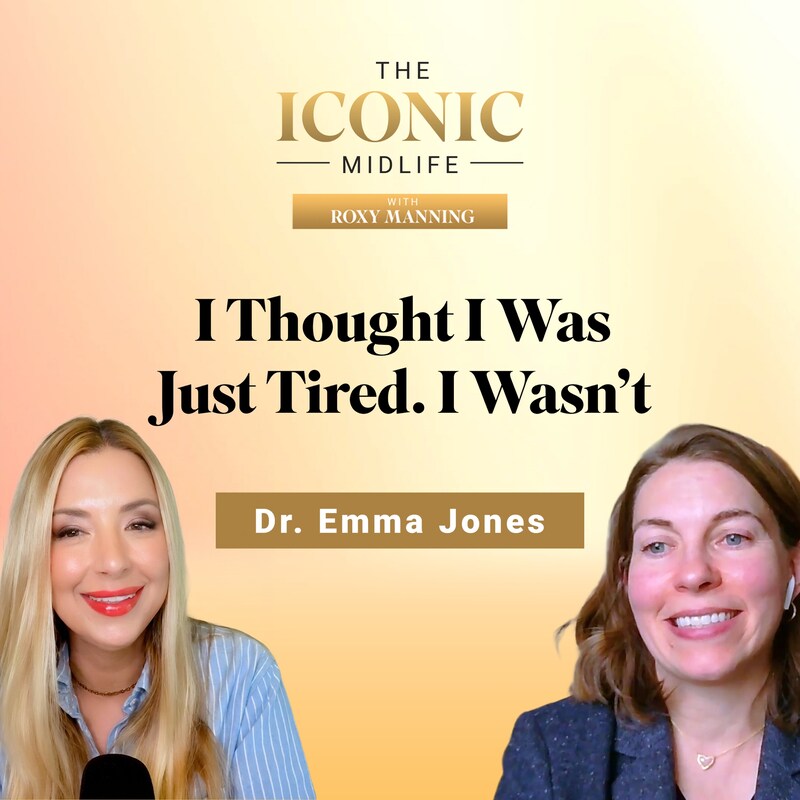
Shownotes
The conversation today dives deep into the pressing issue of self-care, particularly the guilt many women feel about prioritizing their own needs, especially in midlife. Dr. Emma Jones brings a refreshing perspective, challenging the notion that we must sacrifice our well-being for others, highlighting that neglecting self-care can lead to burnout or worse. We explore how societal expectations often set an impossible standard of "having it all," and the necessity of defining what "it all" truly means for ourselves. Emma’s insights encourage us to embrace small, meaningful changes instead of drastic overhauls, fostering a sustainable approach to self-care. Join us as we unravel the complexities of burnout, the importance of self-permission, and how to reclaim our lives without guilt—because, let’s face it, we all deserve a little "me time."
Transcripts
It is not possible to never take care of yourself and continue to live. If you want to be a martyr, it means you're going to die, either literally or like ego death. But one of those two things is going to happen.
Roxy Manning:So what do you think? Can you truly have it all?
Dr. Emma Jones:The it all is defined by internal metrics and standards and not external. You've already seen this. The minute you succeed at something, they just move the goalpost and say, oh, well, now you have to do this other thing.
Roxy Manning:Letting what people think of you hold you back. That's such a. It's like a potential killer.
Dr. Emma Jones:I ask myself that question all the time. Like, whose business am I in right now? And other people's opinions of me is their business. My behavior is my business.
I was obsessed with all of these books where moms run away. Anything where like, a woman was like, running away from her life. I like, was like, wow, this sounds good. And I wasn't reading them as entertainment.
I was reading them as, like instruction manuals. I use personal mission statement as a filtering device very, very frequently.
And I have my clients write their own obituaries and we work backwards from there. Right. So, like, what do you want to say about you when you die and are you living that today?
Roxy Manning:If you've been feeling exhausted but can't quite explain why, if you're doing all the things but feel strangely disconnected from yourself, or if midlife has quietly turned into a season of caring more than you ever expected, this conversation is for you.
Today I'm joined by Dr. Emma Jones, whose work around burnout, identity, subconscious wiring and small, meaningful shifts has helped so many women finally exhale. What I love about Emma's approach is that it's evidence based but deeply human. She doesn't tell women to overhaul their lives or push harder.
She helps them understand why they're depleted, what's actually happening beneath the surface, and how to begin reclaiming themselves without guilt, pressure, or performative healing.
This is a conversation about burnout that doesn't pathologize you, about midlife that doesn't frame you as broken, and about recovery that starts with small shifts, not another impossible standard. So take a breath, you're in the right place. Let's get into it. Welcome to the iconic midlife. Dr. Emma Jones. How are you doing today?
Dr. Emma Jones:I'm doing really well. I'm here in Boston, Massachusetts. It's a little snowy today, but trying to capture the sun as much as possible. That's good.
Roxy Manning:My husband is actually from Weston, Massachusetts, which is, you know, a Suburb of Boston. So I've spent a fair amount of time in Massachusetts myself.
Dr. Emma Jones:I like it. We've been here for quite a while at home now. I'm originally from Louisiana. People always ask, you don't really sound like you're from Boston.
I'm like, no, no. It's a New Orleans accent you're hearing.
Roxy Manning:Well, I'm so glad you're here today. I've been watching, you know, your social media, and really, I watched a lot of it when I was traveling this New Year's.
And when I was away, I was like, you know what? I'm unplugging. I'm not going to think about all the responsibilities that are constantly on my shoulders 24 7.
You know, being a mom, a wife, a friend, a business owner. There's just, you know, nothing. It never stops.
Like, I could always be, you know, working, helping somebody else out, putting somebody else basically, or something else ahead of me. And I said, you know what? I'm making a conscious effort this, this year to truly unplug. And that is what I did.
And, you know, it was interesting because I posted a video about it on my social media and I got messages, you know, from women that, you know, some were like, you know, that's great. You know, it's something that I practice, too, that I'm doing. But there was also a lot of guilt.
Like, there were women, you know, reaching out, saying, oh, I wish I could, you know, feel not guilty if, you know, I take time for myself or I. If I'm doing self care. And I thought, God, we really need to tackle that because I feel like self care is not a bad word.
It's not a bad word to, you know, take time for yourself to unplug and reset. I mean, it's self preservation.
And so from your perspective, I really want to know, you know, about why you think, you know, especially women in midlife, feel that guilt and that, you know, you know, I should be doing this.
I shouldn't be taking time for myself when I think that this is one of the most important times of our lives, that we should be taking time for ourselves.
Dr. Emma Jones:Oh, my gosh, this is such an important problem to name because a lot of, you know, know, we are both in this demographic of women in the middle of their lives. Most of the people I work with are in that demographic as well. And should, right? You just.
In that little intro, you said that word probably 10 times, right? Should just gets us, like, more than anything, I should be doing this. I should be feeling this Way.
I mean, and in all the ways that you can't even escape from it because we beat ourselves up for not doing enough, but then we beat ourselves up for doing too much. It's really hard to escape from one of the frames that I like that I think that kind of helps us break out of that.
Is starting to recognize story, right? So we are carrying stories that we were handed from our youth, from society, perhaps from like, our culture of origin, geographic location of origin.
We just talked about. We were raised in the South. Southerners are gonna carry different stories. Stories.
Whether you're raised in the US or or elsewhere, you're carrying a lot of story. So identifying that is often the first step, right? Just to say this is story. And then the freedom that comes from that sometimes is the first step.
I definitely. The work that I've started doing recently is about, you know, how you can change your mind and the power of being able to change your mind.
And recognizing that doesn't just mean, like, I wanna wear purple instead of pink, but, like, I can really change the way that I think.
And the stories that I carry and the loops that my mind kind of automatically goes into and that when we recognize that that is a power that we can have, we can really start to get out of that. But that the guilt and the shoulding is definitely something that I hear a lot. I'll echo that 100%.
Roxy Manning:Yeah.
You know, I'm so glad you brought up neuroplasticity too, because it is possible to change the way we think, you know, and what I really also love, really caught my attention when I was looking at your social media, is that you're a big proponent of small shifts doing little things. You know, each day it.
Like, we're to where it isn't overwhelming because I feel like, especially women in midlife, you know, we feel the responsibility of the world on our shoulders most of the time. You know, we're caregivers, we're business owners, we're friends. We have so many different roles.
And it's sometimes even the thought of, like, doing something different or shifting, you know, your actions or your perspective can seem so overwhelming that, no, you just. You give up before you've even done it.
So let's talk a little bit about these small shifts, which I think are so important in, you know, in this time of our lives.
Dr. Emma Jones:The background that I bring into this work is one is being a hospice doctor and walking with people until the end of their lives and seeing what. What regrets they have and what they talk about. The other is working in health systems. So why is small incremental change so important?
Whether we look at lots of examples, you know, James Clear's Atomic Habits really details this incredibly well. I will not try to explain this better than he did. Just read that book, if you want to understand this concept.
But that, you know, he gives the example of a airplane changing its heading by one degree and that it ends up, like, thousands of miles off course just by. When it takes off from Los Angeles, instead of landing in Boston, it lands in, like, Antarctica or something crazy like that.
Just by one degree off by one degree. Right. So. And then we also know, like, in the financial world, right, we put in $1 invested. That can turn into compound interest and. And a lot more.
Our own investment in ourselves has the same effect. So whichever metaphor kind of resonates, I think that it's pretty easy to understand or hope it. Is that a small change.
It's not that you just keep doing that one small change. It's that it kind of like dominoes and cycles into something more and more and more that really leads to the big and powerful thing that you want.
Roxy Manning:It's a good point, you know, as it relates to burnout, because I know that a lot of women are feeling this. I know I felt this especially towards the end of the year. You know, you just are like, oh, my God. Like, I've just. I'm tapped out.
You know, like, this is it. But I think it's also important to define what burnout is, because does burnout. I mean, you know, I'm sure people have different. It's subjective.
People are burned out in different ways and have varying degrees of burnout. But for you, like, how would you define burnout? And how is that different from, like, oh, I'm just tired, you know, I just. Just.
I'm, like, kind of over it. Like, how. How is it different than having just, like, kind of a common. Just. I'm tired of something.
Dr. Emma Jones:Yeah, I'm tired of something. Right. Maybe you're just bored and just don't like that anymore. And. And burnout can sort of show up in a lot of different ways.
There is sort of a boredom version of burnout or a disengage version of burnout. It's not necessarily this, like, reactive, aggressive version of burnout that we might think about.
There's lots of different phenotypes, if you will, for the core phenomenon. But it's basically, if we look. I mean, there is a case definition of burnout. It's not a medical Diagnosis.
It is a research definition or occupational hazard in most cases. And it has three things. And I think that those three things really help us.
I don't want to get too researchy here, but if we think about emotional exhaustion, so that's that I'm tired and sleep doesn't seem to help. Right? That is one of the pillars of burnout.
The other one is cynicism or depersonalization, where you kind of quit seeing yourself and others as even human. There's just the, like, I'm just going through the motions. You get mad at people for their humanity, right?
Like, I can't believe that guy can't understand that. Or, why won't my kids do something that's perfectly natural for kids to do? Right? We have all these sort of cynical thoughts.
And then the third is lack of fulfillment and purpose. So we really can't connect with, why are we even here? What's even the point? This just all feels hard for no reason kind of feeling.
So those three, to varying degrees, are what we consider the burnout triad. Now, why does it show up almost universally in women in midlife?
I mean, I would say because, like, the bill is coming due for everything that we learned how to do through our 20s and 30s.
Every behavior that was like how to get ahead or how to be successful, even how to have it all right, Gotta get married, have kids, have a successful job, work out, keep up your health. You know, all the things, whoa. And now we're tired. I mean, we've been doing that stuff for a long time.
And the bill is coming due, and the cost for all of that stuff is coming back around. People who are high achievers, people who have high capacity to succeed, is going to hit them later. Because quite honestly, you can hide it.
I mean, I work with physicians a lot, and most women physicians have to be severely burned out, like, to the brink of being admitted to the hospital for physical collapse before anything will show on the outside. Because we're just so good at running crisis, right? And that most high achievers in other fields are kind of in the same.
Have adapted those same traits.
But again, like, the bill is coming due, and you can either let it get you or you can name it and do what it takes to recover, which is the rest, and the unplugging and the resetting and the boundary setting and kind of naming what you actually want, not kind of the script you've been running or the blueprint you've been living on for all of these, like, your entire life up until the point that this hits you.
Roxy Manning:You know, I think a lot of burnout, too, also stems from the idea that we have been so ingrained with. This idea that, like, you can have it all. You know, all you have to do is, like, work your ass off 24 7.
You know, you get married to the right partner, you have the kids or you don't have the. You know, it's just like there are all ideas that we've been so ingrained with. So what do you think? Can you truly have it all?
Dr. Emma Jones:Well, I think not. The question is, for that, we have to make sure that it all is defined by internal metrics and standards and not external.
I think that if we want to say we want to have it all according to society's metrics, that is a fool's game. We are going to fail nine ways to Sunday, because that is impossible. Right? I mean, we've already seen this.
The minute you succeed at something, they just move the goalpost and say, oh, well, now you have to do this other thing in order for that to count. Right? You're not actually succeeding. Oh, I'm a physician mom, and I have to married a stable marriage, and I have two kids.
Oh, but now you're not taking care of yourself enough, or now you're not involved in the school. You know, you're not a school mom enough. Right. There's always something else that you're not doing.
When I flipped that script and said, nope, I'm not a school mom. I go to work. My husband and I share parenting responsibilities. 50, 50.
And the people who I'm accountable to is, like, my people in my immediate circle, not any of the rest of you clowns. Then all of a sudden, I had it all, right? I had it all. Ooh. I've got, like, my head is on straight. I feel great. I'm energetic. I love my life.
I feel super, super engaged in my work. My family is thriving and my body is healthy. Once, it was my plan. So, yes with the. But no with a maybe is my answer to that question.
Roxy Manning:Yeah, you know, I think it's funny, too, because, like, you're saying, you know, you can have all these things that, you know, on paper or in your mind, you know, were the things you've always wanted.
But then you can still feel this sense of, like, you know, burnout and, you know, really just not being in it, you know, and just really kind of losing yourself. So why do you think that that happens? Like, why can you feel like you have it all?
And especially in midlife, right like, why can we feel like the things, you know, we have this exper, this age experience, this knowledge in our life, you know, it's like we've hit some goals, like it's, it should be good, a good path, but yet we're still unhappy a lot of the time, you know, and we sometimes can't even identify ourselves. So why do you think that happens right now?
Dr. Emma Jones:Yeah, you know, I think this is happening as the world is getting busier, as our attention is being split so many places. I mean, I don't know. I don't know. I mean, I don't know. This is the only time I've ever lived in.
But I can imagine that people who lived 50 years ago in which information was much less available may not have felt as much insecurity because they didn't have as many people telling them that they weren't doing the right thing. Right. Right now we just have an abundant, like infinite source of data coming at us all the time, basically saying, I don't like what you're doing.
hink is definitely present in:The antidote to that is internal resource. Right.
If we can listen to ourselves, then it doesn't matter how much noise there is because we sort of know how to filter it and we know how to sort it. But that also because of kind of the pull of society and culture, we've kind of lost attention to that.
One thing that I think I was missing, or I know I was missing, was kind of like a spiritual core soul, if you will.
And that as people, modern society has kind of moved away from traditional systems that we may have connected with spirit through organized religion or through family systems or through communal organizations. Like lots of things, right, have kind of changed.
I do feel like that fracture, fracturing or kind of like diluting of some rituals and some practices that actually help us connect with ourselves and people around us that tell us that that's a good thing to do is actually not that common in society right now. And why things like this podcast or the coaching spaces that I hold, retreats, you know, why these, these types of things feel so necessary?
Because we don't really have those things that may have been like the more natural gathering places where, where women, the sewing circle or something where women may have come together and been like yeah, my humanity feels like it's being questioned. Here is yours.
Roxy Manning:How about you bring back more of those circles?
Dr. Emma Jones:Yes. I really encourage people to find some reconnection with spirit. And this was brought into really sharp relief for me through my work with patients.
When people are dying, all of the surface stuff is kind of gone, right? Like, what are you? Who are you right now? Your.
Your identity, job, what you did for work does not matter to me whether you wrote books or whether you were famous or like, all of that is gone, right? Like, what is right in front of me and between us is really this sort of deep spiritual level.
I also work with children who have severe neurologic impairment, can't communicate, and have, you know, severe disability.
And so being able to sort of connect and find the way to connect to them, human to human, really, through both of those experiences, was part of what made it very clear to me that this spiritual aspect, not only of connection with others, but with connection to ourselves, was what gets quite diluted and covered up in modern society and why we feel so pulled to look to external validation, right? Like, what am I supposed to be doing? What do you want to be doing? Right? Like connect to yourself. But I.
But I find that that spiritual, like, there's two groups, right? There's people who are like, very into the spiritual wooey stuff and adapt that really readily.
And then there are people that are the more corporate types. A lot of people in medicine are this way that are like, that's fantastical or silly or something that they kind of reject and doesn't feel.
Feel like it's theirs. But that. I do feel like that that's. That's driving the burnout. Because that meaning and purpose, right, is part of it.
If we want to attach to meaning and purpose, we have to attach to something beyond like, what we do for money and whether people know who we are or not, like, that can't be all of us.
Roxy Manning:And you know, at the base of it, like you're saying is connection is so important, you know, whether that be, obviously, you know, you want to have connection with those you love around you, but connection with yourself, self. I mean, that I feel like that is so big. And that is something that just for some reason at this time in life, it just.
We become disconnected with ourselves, you know. So, like, what are some of the small changes that we can do to reconnect with ourselves?
Dr. Emma Jones:There you go. Small changes. That's where that's the great way to start. I often encourage people to make that one small change.
I Use the frame of keystone change, meaning that it's a small change, but it's going to lead to those bigger changes. It's going to have that domino effect. And the small changes that often are really important are physical health.
I will say brain health is body health.
So if we want to make our brains happier, our minds happier, less reactive, calmer, all of that, sometimes starting with attending to our bodies is the easiest place to start. Right. What do I need to do? I need to sleep, I need to hydrate, I need to eat nourishing food. This is not diet culture nonsense.
I'm just talking like get the nutrients that you need. I mean, many of my clients will go for an entire day without eating or drinking anything. It's crazy, right?
I'm like, how did you think, how did you think the machine was running properly if you don't put any fuel in?
Roxy Manning:Right, right, exactly.
Dr. Emma Jones:So those are often like small changes that we can start with. Are we actually taking care of ourselves in the most basic of ways with the body health, movement, sunshine and. Right.
Brain activities, which are the creative activities. So that's what I kind of think of as the drivers of capacity.
When we talk about capacity, that's sort of our ability to hold stress, to do hard things. How much capacity do we have to do anything? Taking good care on those domains helps us build capacity.
So I usually tell people to pick one thing and one of those things is it going to be, and then scope it as small as possible. So if we're working on sleep, that's going to be like set a bedtime. I mean, I don't care if you actually sleep.
Let's just start with, I'm going to get a bed at a certain time. For many people that is a drastic change to their lifestyle.
Um, if that's nutrition, is that gonna be, you know, focus on eating five fruits and vegetables, Forget about the whole rest of everything else that you're eating, Right. Like, like just focus on that one thing. Hydration's a pretty easy one. Lots of people love to start with hydration.
We seem to be a hydration obsessed culture. But if you can do it intentionally, right. Like you can build that story. Like, I'm drinking to nourish myself, which is going to help me.
Then it's not just like I'm compulsively drinking water, I'm hydrating to help myself. As an act of self care, as an act of self nourishment. Right. Brain activities is often the hardest one to access.
So I usually leave that one Till a little bit later. A lot of people, I mean, creative types are like, yeah, great, I want to make art. But corporate people are kind of like, what?
You want me to make art? Movement is easy, right? Go for a walk. Walk outside is double. Because it's both getting sunshine and moving your body.
And then if you drink a glass of water when you get back, wow, you've done three things. So we look for things that are multiple wins. We look for things that are so easy, it's stupid. Work through the resistance of.
That couldn't possibly be a big enough change. Because especially this time of year when we're all like, resolution obsessed. We gotta go big, right? I heard about this thing called.
My kids were telling me about it 75 hard. I'm like, oh, my God, that sounds so stupid. Don't do that. That it's supposed to. What is it?
Roxy Manning:What is that supposed to do?
Dr. Emma Jones:It's like this whole menu. Not a menu, like protocol, of, like, all of these things, exercises and diet plan and all this stuff you're supposed to do for 75 days straight.
No, no, no, no, no. Don't do that.
Roxy Manning:You're like, pass on that.
Dr. Emma Jones:365 medium or easy. Ish is kind of what we're going for, right?
And really thinking about the intentionality, because I think that starting with the small change is important, but we also want to make sure we're still connecting to. Why? Because not. This is another from the improvement science. Not every change is an improvement. Right.
We need to know if we're actually moving in the right direction.
We could be changing things that are actually taking us away from our ultimate goal or digging us further into the hole, which is what I think would happen if anybody tried 75 hard. You'd probably just make yourself more frustrated and exhausted and set off a shame spiral that you. You failed at yet another thing.
Well, of course you did, because everybody's going to, because that's a stupid idea. Don't do that. I'm usually not quite that opinionated, but that one's really. It really upsets me.
Roxy Manning:Absolutely. Well, it does sound upsetting, too. I'm like, ooh, that doesn't sound good.
Yeah, it sounds very stressful, which is something we're trying to not add to our lives. Right.
Dr. Emma Jones: s is ease. That's my word for:One of my favorite meditations that I practice daily is the meta meditation, which is out of the Buddhist tradition, it's very simply four phrases, but one of them is may I live with ease. And this often is very upsetting to high achieving types, right? Like life, the resistance I have is, life is not easy. How dare you wish for easy?
Or is that a privileged position or something? But I think ease and easy are different and that what I think that we need more of is to meet the challenges of life.
The hard, very hard things, the external circumstances that are often objectively very hard that people in midlife are facing. Right? All the things with as much ease as possible. How can we soften into them?
How can we bring gentleness to the party instead of like grit and grasp and hustle? That is what takes us into burnout. Ease and gentleness and acceptance and sort of surrender to what is, is the way.
Roxy Manning:So what is the fine line between that?
Because we are in this like hustle culture, especially in America, where it's like you got to get, you know, move your way up, you got to go do more, more, more, more, more all the time. But. And you want to be goal oriented and you want to hit your goals and your targets and like all the things. But like what?
But you also, like you're saying you want to have ease and like kind of let things also unfold the way that you know they're supposed to and, and to be okay with that sometimes. So what, how do you balance that? You know, how do you balance the two?
Dr. Emma Jones:Yeah, and it can look a lot the same on the outside. You know, I mean I often, people often tell me I'm like very intense and a go getter. Right. These are name.
These are things that people say about me all the time. And I'm like, oh, but on the inside, I'm just like floating in the breeze here.
And so I do think it is about that like internal compass and internal set point. So anchoring to what's really important. Important I know that I have really cultivated within myself this internal filter, right.
Like I can kind of know when I'm feeling that, that burned out reactivity or when I'm feeling that sense of ease, trust, surrender to the process, that kind of thing. So that's kind of like the p filtering question for me if this opportunity that's presented to me or action item that I'm going to assign to myself.
Because when you're self employed, you're often your own boss, I guess always. If you're self employed, always, always all the things you're the boss of, you but making sure that you are actually the boss of you. Right.
Like you're handing yourself a 90 day objective or you're saying, this is my task list for today. Checking to make sure, does this make me feel light? Does this make me feel excited?
Or does this make me feel constricted, anxious and beholden to some external validation and then kind of, you know, using that as a check. I use Personal Mission Statement as a filtering device very, very frequently.
And I have my clients write their own obituaries and we, we work backwards from there. Right. So, like, what do you want to say about you when you die and are you living that today?
Roxy Manning:Wow, that's powerful. So what are.
I mean, I would imagine that people would have to make adjustments based on that, you know, writing their obituary and like really taking note and seeing how they're living. They've got to, right?
Dr. Emma Jones:Yes, yes. It's a very powerful exercise. I've had to sort of back it out. I used to come in hot and write when people met me.
I'm like, can you write me your own obituary? People need to be warmed up. If you don't live in the world of death and dying like I do, that's not. That's hard. It really is. But it's so powerful.
And the power is in two things. One is remembering what's really important. But then two is realizing how much story we are living in.
Because the resistance that people will often have when they start writing is, well, how will I know what I was doing then? And how will I know what was going on in my life to write in the obituary? And when it sinks in like, yep, that doesn't matter.
That's not what the obituary is about. Right.
Whether you were living in Maine or living in LA, or whether you had written things three books or written seven books, or whether you, like, were the mayor of the town, who cares? That's not the point. So you don't have to know those parts of your future. You need to know, how did you show up? How did you affect people?
What is going to be said about you? Because when you read obituaries. Yes, there's something. I also read a lot of obituaries as a personal development practice. A.
It makes me realize I get to take care of a lot of cool people. As I told you, by the time they. They get to me, we. All those surface layers have been stripped away.
So I don't often get to know them except when I read the obituary and I'm like, wow, what a cool person that was. I already knew because I could feel it, but I didn't have the story wrapped around it. The obituary gives me a little bit more of the story.
So that's sort of one reason that I read obituaries is just to get to know the people that I take care of. But I read people who I didn't take care of too.
And when you read an obituary, you recognize that some of it is about some maybe specific, tangible things that that person did.
But a lot it's about the way that their grandkids loved them or the way that they made people feel or the kind of person that they were, you know, almost always positive. And I have, I have personally in my life known people who I was like, what are they going to say in this man's obituary? Because he is not nice.
Like who is going to write a kind word about him? And then you read it and you're like, oh, well, yeah, okay, I can see that was true.
Like he, you know, there's always a little bit of a way that you can find that common humanity.
Now obviously I think those people who come to the end of their lives, and I do have many of them that I take care of that come to the end of their lives bitter with regrets and on outside the kind of people that we would say, like, that's kind of a nasty person. I don't really want to be around them. That has happened somehow along the way. Like they didn't just get like that like five minutes before they died.
What I try to look for is what could we have done? Like how could we have kind of righted the ship?
And often midlife is the inflection point, right, where we can either say, oh my goodness, I'm living some programming that doesn't really agree with me and I'm feeling disconnected from the world. And I'm either going to make a commitment to re course, like get back on course, change course, right? Change course, change my heading even by 1%.
I might end up somewhere completely different or I'm going to double down and like go further in to this negativity trap that society is handed to me. And that's what I see. So sometimes recognizing, okay, I don't want that on my obituary.
I don't want like a two sentence obituary because nobody could say anything nice about me. I want this. I want this, right? Mine, mine talks about you guys.
I have it on my website, my own obituary as well as an exercise that sort of walks you through. It talks about how I show up bright and sunny and I bring bone sunshine and I help people to become the best versions of themselves.
And then of course, I do a little future casting of like, what I want, like, how many people I was able to help through my work and that kind of thing. There's still a little bit of like, ego in there and like, external stuff that I'm connected to. But then I test it, right?
Then we sort of test it and say, okay, if I was using this as the filter to decide what I was going to do today, would that help me make decisions? Right? So then is this helping me to show up bright and shiny and be a lighthouse for others? Yes or no?
Is this helping me to like, help other people elevate and be the best version of themselves? Yes or no.
And mostly when things are getting into like hustle grind culture that's ego driven, that's like all about me now and not about me becoming or me serving.
And so I think the obituary or mission statement can be a really powerful filter for helping us not only make those decisions, but also feel empowered about the decisions that we're making. Because the shouldzing and the guilt. Sometimes it's easy to say, I'm going to take a break today because I need it.
But then you still feel guilty, which, like, it's a much more powerful story to say, I'm gonna binge Stranger Things because that actually charges my battery. I watch it with my teenage kids and I'm connected to them.
And that actually means that when I go back to work next week, I'm like, bright and shiny lighthouse. And that is actually my goal. So this is not a this or that, it's a this. Because of that.
Roxy Manning:It's very true.
And I think too, it's like letting go of the guilt that is associated with that, you know, like where, oh, I could be doing this, I could be doing that. It's like, just let it go, right? So how do we rewire our subconscious and our brain to be okay with that?
Because I feel like the wiring is there that we should feel guilty for doing something for us versus for somebody else or something else.
Dr. Emma Jones:My favorite question about story is does it serve right? So often when I'm teaching people to write new stories, we get stuck in this. Okay, well, my old story was a lie, but now my new story is also a lie.
It's just a different lie. Because all stories are lies, right? Like, it's just brain making up stories. It's an interpretation.
Thought lie may be a little bit strong word, but it's an interpretation. So the question is, does it Serve, right? Does it serve you to believe this story, or does it serve you more to believe this other story?
When we're talking about guilt, then the question is, who is it serving for you to feel guilty?
Roxy Manning:That's a good question.
Dr. Emma Jones:I mean, really good filter, right? Who is being served by this guilt? Who is this helping someone? It's helping someone, but it's not you.
And it's usually not the person you're trying to help. In many cases, right? Society, I mean, over giving is a huge problem. Again, most of my experience is in healthcare and health professionals.
Over serving, over giving, martyrdom.
Feeling guilty for taking a day off, feeling guilty for not picking up the extra shift that serves the hospital complex, the insurance system, the corporate medical system that treats us like widgets in a machine, right? That doesn't serve us or our families, our future selves, or really even. I mean, I don't think it even serves the patients.
That's often the connection that I have to break is that people do think the patient is served by that, but when we can see it, no, it doesn't actually like those guilty feelings. The hours of care is a problem that has to be solved just as it is within our homes, right?
If you have a young child, 24 hours of supervision is required. You have to solve that problem. But you feeling guilty if it's not you, all of the 24 hours doesn't serve your child.
You solving the problem, like hiring a babysitter. Now, maybe, you know, like every. Everything creates another potential problem. And.
But, you know, most of the women I think that we work with are really good problem solvers.
Roxy Manning:Once we.
Dr. Emma Jones:Once we can get this sort of guilt noise out of the way and get it down to like, tactical, strategic problem solving, then all of a sudden we're like, oh, yeah, if I didn't feel guilty for taking a night off, I'd hire a babysitter. And like, where would I come up with the money? And how would I find someone and have to get referrals, right?
There's all these things, but, like, we know how to do things. It's just that one little thing that just has to kind of get out of the way. Like, who said you had to do it all 24 hours, all of the time?
I mean, we know society said it.
Roxy Manning:Like, it's not true 100%. And, you know, this whole notion of martyrdom just drives me crazy because it's like, you know, I was listening. Oh, gosh, was it.
I might have been on social media or podcast, but there Was this young guy.
Oh, he must have been 25, you know, and, you know, he's talking about how he wanted to meet a partner and meet a woman and, you know, the things he was looking for. And he's like, above anything else, I want my future wife to be selfless, meaning put everybody else in front of her but her.
You know, I want her to do for the children, do for me, do for, you know, anyone else before her. And I was like, why is this? This is also something, as women, too, that many of us believe is that you have to be selfless.
If you're a woman, you have to put everybody else in front of you or you are a bad person.
So I would love to try to dispel that notion too, where it's like, why do we have to be martyrs and why do we have to be so, quote, unquote, selfless? You know, how do we start untangling that?
Dr. Emma Jones:Yeah, I mean, I think the trade off, you know, as you were telling that story, my thought that was coming to my mind was like, well, isn't that cute? Like, it's so naive to think that. I mean, forget the misogyny, but it's just naive to think that someone could actually do that. We've seen it, right?
The bill is coming due. I've put everyone in front of myself for all of my life, and now I'm burning down and crashing. I'm quitting my job. I'm running away from my family.
ugh my big burnout episode in:Bernadette was kind of one that was really popular at that time, but there was, like a crop of books or wild, you know, anything where, like, a woman was, like, running away from her life. I was like, wow, this sounds good. And I wasn't reading them as entertainment. I was reading them as, like, instruction manuals.
So that, like, that is the result of that system of living. You put everyone in turn in front of yourself for long enough, there's no self left. That is kind of what the whole martyr thing.
Like, that is what the traditional martyr was about. Like, literally, I will give my life for this cause. And if you think about a metaphor of fire, right?
So if you are a candle, forget burning at both ends. Even if we're just burning the candle, eventually, it's all going to be burned and then what are we going to do?
So this is where we all find ourselves.
I think if we're talking about midlife people and why that paradigm of selflessness is so destructive and impossible to adhere to, because it basically just means then I have to be like, I just have to be gone. Like, you've used me all up, so what am I supposed to do now? But I'm still here. So I prefer a system of sustainability and a value anchor.
Like we value longevity. Can you do? Yes, yes. Like if I'm thinking about how many patients can I take care of, I maybe can take care of 60 patients in a day.
And then I burn out after two months. Right. And then I need like two months off.
If I do that for two months straight and never take a day off, how many patients were served during that time with that strategy versus I take care of 20 patients a day. So a third less.
Some might say, well that's, that's selfish because you could be seeing three times as many patients and you're leaving all those people unserved. But with that system allows me to continue practicing medicine for 10 years.
That's many, many, many more patients served than if I had done the like hot and fast strategy. That's a 75 hard version. Don't do that, do the sustainable strategy.
So how that looks like in our day to day lifestyle as moms and wives and women in the workplace, is that balance right? Like I've done enough for today and that's a decision for you. Enough is a decision, not an amount.
I can leave a few socks unwashed, I can leave a few dishes in the sink because playing with my kids fills me up and replenishes me. Or going to bed, it's my bedtime. I set my bedtime. Emma told me I had to set my bedtime and it is now my bedtime.
So everything that hasn't happened yet is too bad.
That kind of philosophy, the key often that will unlock permission within your brain permission structure is something I work with a lot and a lot of the videos on Instagram are trying to give people that bridge from this is the thought process that I'm locked in now and I need to move over to this other thought process. What's going to give my brain permission to do that is often the total amount of service you're going to deliver is actually higher.
If you take care of yourself then when we frame it that versus if you just use yourself up as fast as possible by being selfless you're gonna wear out, and then you're gonna be in the hospital and other people will have to be taking care of you. And I have countless stories of people who have. Their bodies have said, that's it, I'm done. You know, shut down.
Either debilitating headaches, seizures, in some cases, horrible stomach pain, bad chronic back pain. Any of these ways that the overwork, stress, and just kind of like too much life shows up physically, your body's going to force you to take a break.
So if that's what you want, keep doing it. But it's just the physical reality. It is not possible to never take care of yourself and continue to live.
If you want to be a martyr, it means you're going to die, either literally or like, ego death. But one. One of those two things is going to happen, Right?
Roxy Manning:Right. Well, and I think it's so important, too, is like, we have to take the responsibility to give ourselves permission.
Nobody else can give you permission, you know, it's got to be from within. So how do we even get to that place, like, where we can give ourselves permission?
Dr. Emma Jones:Community is really important, you know, And I think that listening to this, where we're. I love to do. I love to let story work for us. Right.
So the more that I can share stories of other people who went through the same thing and did give themselves permission, not only how hard it is, which is a lot of the storytelling I've been doing so far, but also that, yes, there are a lot of people. There is a counterculture movement out there now.
It's hard because once you kind of get to this place where you have internal resource and you like your life and you're just thrilled to just be normal and boring, you don't really get on social media as much as you used to. You're not out there complaining.
A lot of times the negativity is much more loud than the people who really have kind of crossed over, gone through the looking glass, if you will, and are living in that life where they live by their internal standard. They also know that they have to turn off the noise.
So decreasing the media diet is very important to maintaining that sense of calm and internal guidance. So I think we just don't see it as much, but it's there.
And I think as you're trying to build capacity to rest, build capacity to let yourself have permission to do what you want to do do, build capacity to set boundaries to say no, you know, to really stand up for yourself in the ways that are important, looking for role models is essential. You know, being able to say, I see somebody who has done this. So my brain's going to start to believe that it's possible.
Because if you've never seen it, and most of us never have, right, Our mothers, our sisters are the women who climbed the corporate ladder ahead of us. Everybody did it in the sort of toxic way probably.
There are very few that, that and then some of them had to go through this reckoning that we're going through right now. So when you can find the people who've been through the reckoning, those are the people that will help you.
They will give, I will give you permission right now, permission slip to rest because I know you need it right off the bat. We, we all do. Like we still are hanging on external until we can learn to trust internal.
Everybody needed training wheels to learn how to ride a bike. Everybody needed their mom or their dad's hand on the back of the seat. And then at some point you felt brave enough to coast off by yourself.
So we'll be your training wheels. But give yourself, give yourself a bedtime. That's your first training wheel.
Roxy Manning:I love that. Let's go back to like how we started, right? We had a bedtime.
Like why don't we, you know, use those tools that, you know, got us on the path to begin with? You know, it's like give yourself those, those things.
But you know, I also love that you, you, you do talk about these evidence based tools, but they do feel very human too and very, you know, attainable. So let's say a woman has hit that. Like we were talking about the metaphor of the candle. She has burned that candle to the ground.
There is just not even a wick left. There is nothing.
What would you say to her if to tell her just to even just do one thing that will start her on this, on this new path and you know, for positive change without it feel, feeling overwhelming. But we'll work quickly. Like, what is that one thing that will kind of get her to that place?
Dr. Emma Jones:You know, it, it is a little bit hard to answer because I do think that each of us is going to have our own starting point that's going to make the most sense for us. So it's a little bit hard to say what specific external things. Some version of rest.
Some version of rest, like restoration is the essential step when the candle is burned to the ground. There's no strategy that can get us out of that. Right? We just have to rest. Maybe we have to figure out how to make A new candle.
Maybe we have to make learn how to figure out how to make fire out of something else. Maybe we need to ask for somebody else's candle.
Like I don't know what the strategic solution is, but we have to rest in order to be able to access it. So what does that look like to start? How does that align with the busy lives that we lead?
It often does have to be a little bit more radical than you would like it to be. But I don't mean, you know, get on a boat to Antarctica or go like do the wild hiking through the mountains thing.
I just mean like take a day, like if you can. I love retreats for that reason because there's a little bit of structure around them. It sort of makes sense to the people around us. Like, right.
Like mom's going on a two day meditation retreat or yoga or even skiing or like whatever it is that you like to do do, that you're carving out that time for that's just yours. Going on vacation with your husband and kids doesn't count. You're just momming in a different location.
Roxy Manning:That is work, by the way. That is work.
Dr. Emma Jones:Yes, exactly, exactly. So I think that's a trap, right? That people feel like, well, I just took a vacation, but I don't feel any better. Well, you didn't really restore.
So whatever it is, I mean it's something you can do it at home if you could bound your life. But it is often easier to kind of carve out physical space and physical time to with the intention that this is my time to really restore myself.
I'm not going to be 100% fixed at the end of this, but I'm acknowledging that this is a necessary step for me to kind of just like get those base resources, get eight hours of sleep, be able to eat a nourishing meal that was cooked by somebody other than me, be able to drink some water or some fancy spa or whatever. You don't have to go to a fancy place that costs a lot of money. That's not what I'm saying.
But sometimes just carving out time and space is what we need when we really get to that drastic of a time. Again, a lot cheaper than getting admitted to the hospital for three days. So take the time that you need.
If that's not available, look for what rest is available to you. Maybe that is just getting in bed an hour earlier.
Maybe that is, you know, talking to your husband or your kids or whoever you share your life with that you need to kind of shut down at 8 o' clock and be able to go in your room and have quiet time. And even if it's just for a week. Right.
Not that that's the permanent new state of affairs in our household, but for this week, I need to be able to check out a little bit earlier so that I can restore myself. Rest and restoration is step one.
And then as you feel like you can get your feet back under you and you can start to breathe again, then you can start to look at what boundaries might need to be in place and how you can kind of get to know yourself and listen to some of that inner knowing about what other decisions might need to be made. But I think people often feel frustrated when they start trying to kind of reorganize their lives when they're not rested. Right.
The metaphor I like is that if like you had just worked a 12 hour shift and not had lunch or dinner yet, and then you came home and I showed you like the messiest closet in your entire house and asked you to reorganize it, that's not gonna go well.
Roxy Manning:No, no, no. Sounds like torture.
Dr. Emma Jones:This is what we're trying to do when we're looking at all of the stuff that's online and everybody who's got their five step program for this or their way to do this, or God bless 75 hard. Anything that's really external like that. And we've all tried them because that's society saying, one more thing. You should be exercising.
You should have organized closets. You should have a well organized calendar and know where you're supposed to be at all times and never miss a meeting or a phone call.
And if you only have this app, everything will be sorted. That is all some version of trying to organize that closet. When you are exhausted, you need to rest first.
Roxy Manning:Yeah. I mean, you are 100% right about that. It's like rest is so key.
And, you know, because burnout recovery can be up and down, it's not necessarily like a linear line.
Dr. Emma Jones:Right.
Roxy Manning:It's not like, okay, if we start today by, you know, next week, we will have traveled this straight line and everything's gonna be okay. You know, it often goes up and down and there's like bumps in the road. So how do we handle that as part of the recovery process?
Because it is when things come up, you know, bumps in the road, it's easy to become discouraged and to go back to square one and just be like, this isn't working, you or I can't do this, or whatever that is. Like how do we navigate that when there are the bumps in the road during this sort of recovery?
Dr. Emma Jones:Yeah. You know, I think. And I love the visual of the upward spiral. Right. Cause that it feels like, oh, I'm back to the beginning.
But if you look at it from the top, you know, you kind of can see that yet. No, I wasn't just running in circles. I was actually upward spiraling.
So that visual is often very compelling for people who, who do feel like, oh my gosh, I'm back to square one over and over and over again. The way the antidote to that is normalizing it. Like you just said it, right. It's that way for everyone. That is humanity.
Unless you're ready to opt out of humanity, which we're not. We're not. Right. We're still here. We are students. We are students of Earth School.
And those are the conditions of enrollment is that progress is non linear. Right. It just is for everybody. And I think that I do tend to like a little levity, a little playfulness.
I think that kind of breaks through a lot of that like grippy, shameful self judgment that we can get into.
You know, if we're just like, oh, this is just Earth School or everybody has this problem, then you again, you can get into solution Focus, which for the most part we are really, really good at. Right. Like what would. Okay, well that way didn't work. What else should I try?
I think that that is the tactic that seems to be very successful for most people that I work with. Self compassion. Returning to that like human core. Human. To make mistakes is the. One of the hallmarks of humanity is to make mistakes.
And thinking otherwise is basically saying that you're not human. I think a lot of us hold a non human story.
We're either supposed to be superhuman, like have superpowers so that nothing bad around us ever happens and we never make mistakes, or we're supposed to be robots in which we do not have the needs of human bodies. So we do have these stories that try to deny the fact that we're human, but we are.
And you know, the more you can accept that, the better off you're going.
Roxy Manning:To be, you know.
And I find too that the way I've broken stories before in my experience, because I tend to have like the self isolation thing a bit where I'm like, if I'm going through something, I'm like, oh, okay, I better just, you know, take the, take this all myself and try to figure it out. You know, I am solution oriented. But at the same time I self isolate. I'm like, well, nobody else can be going through something like this right now.
And I find that some of the best times when I really had breakthroughs is when I pick up the phone and I call a friend or call my sister or call, you know, like my mom or you know, talk to my husband or whoever it is and quickly find out that most everybody else is going through something at the same time.
It might not be the same thing, but nobody's life is perfect, you know, so it's like I feel like that human connection so much of the time helps break some of these cycles as well.
Dr. Emma Jones:Absolutely. I could not agree more. Is there any specific way you start that conversation or is it just any chit chat?
Roxy Manning:You know, I think it's, for me, I think it's like, you know, just first of all letting go of the notion in my head that I'm like, I'm the only person in the world that's dealing with something right now. You know, first it's like letting go of that and then really just.
Dr. Emma Jones:Just.
Roxy Manning:Being honest with them, you know, being like, I'm having a really shitty time right now. There's something going on, you know, like I'm dealing with this and really just laying it out there.
And I do think that comes from also having, you know, friends that you trust, obviously and like that are there for you, having that good foundation of friendships, but also just letting go of that ego and just that insecurity that it's like, oh my God, you know, what are they going to judge me? You know, are they going to feel a different way about me if I'm honest about what I'm going through?
And I feel like whether they, even if, even if it is a really good friend in, in some part of their mind they're judging me or not, that's none of my business.
Like that should not have any, you know, impact on how I carry myself, you know, and like the next decision that I'm making to, you know, find a solution for what, for what I'm dealing with. It's like, I think like so much of the time too, we get so hung up on what somebody else thinks of us, it's like, just let that go.
It doesn't, it's none of our business what they think of us in that way. Don't burden yourself with what they think of you. You know, it's like just really focus on what you need to do.
Which I know is easier said than done, but I try to Kind of keep that in my mind, you know.
Dr. Emma Jones:Yeah. No, and that. And that is. Right.
That's a huge piece of advice for a lot of people, is to not let that fear of other people's opinions keep you from talking to other people. Right. That's hurting. That's hurting you.
Because connection with others is often so helpful and healing to normalize the experiences, to just hear another human's voice or feel another human touch. Right.
We saw this during the pandemic times when people were so isolated and all of the symptoms that people were experiencing through that lack of connection. So I think that that's. That's really, really important point. Yeah.
And then you, like you said, I mean, everybody always asks me, it's so easy to say, just let it go or don't let it bother you. Like, I wish I could just flip the switch.
And, you know, I think that my response, which is not my own thought, but I'll do my best to regurgitate it, just, you know, I can't really absolve you or take away that attachment, but I can hope to show you what pain that attachment is causing you.
And that as you begin to see, oh, the more I worry about how much people are thinking about me is hurting me, then, well, why would I want to hurt myself? You know, then you can start to kind of release that. But that the grip that we have is long standing.
You know, if we think about patterns in our minds, which, you know, the neuroplasticity element of sort of like fixed wiring, which now we know to be incorrect, that we can rewire and be plastic and rewire, but that if we think about sort of the grooves that are there are at least as old as we are, if not older, you know, if not patterned from our ancestors or at least our epigenetics, that's a lot to have to untangle. Of course, you're not going to just be able to flip the switch and, like, not care about what people think about you anymore, just.
Just because Emma and Roxy said so. Right. It's not that easy. It's not that easy. I know. I know it's not that easy. But it is possible because I have seen it. Right.
I have done it for myself. I have walked with people. You've probably done it, you know, like you said, you can.
The framework you laid it out is your business, my business, and God's business or the universe's business. Right. And knowing whose business we're in and asking, I mean, I ask myself that question all the time, like Whose business am I in right now?
And other people's opinions of me is their business. My behavior is my business. But how they perceive it, how it lands, what they think about it, that's their business.
And then what's going to happen to me ultimately, like all the circumstances of the world, I mean, that's God's business. Like, none of us have dominion over that.
Roxy Manning:No. And also letting what people think of you hold you back, that's such a. It's like a potential killer. Like, so much potential has been, you know, not.
Has not come to fruition because maybe somebody thought, oh, this idea. God, what are people going to think of me if I put it out there? You know, so it's safer for me to just hold it in and not.
Not show everybody, you know, this great idea I have or what have you. And it's like. It's like heartbreaking. And I feel like in midlife, too, this is a big.
This is a big thing, you know, it stops people in their tracks from fully realizing their potential, you know, And I think that that is a real shame, you know.
Dr. Emma Jones:Yeah, it is. I mean, and I experienced that. I mean, we started out talking about my, you know, my social media, and that was a huge edge for me, that I was very.
Not shy, because I'm not a shy person, but reluctant to put things out, reluctant to kind of make a stand, right? Like, oh, let me make sure it's not anything anybody would disagree with. And I still not.
I try not to be inflammatory, but that fear, right, about what if they don't like me? What if this upsets people? What if they say mean things about me?
You know, all of those things, I think definitely came at me as I was thinking about making more public content, you know, and going from. I had. I had always done a blog, I had always done a lot of teaching in person. And then I, you know, I had a book, but the.
The book is, like, kind of removed, right?
Like, when people don't typically, like, call you up and tell you what they thought about your book, they just read it and they either like it or they don't like it. Right. When you start engaging online, there's this give and take that. That can be really. It. It pokes at a lot of those fears that we all have.
And so even though I had kind of worked through a lot of the things with. With that in my own life, right? Like, oh, I know I make my decisions, and if people don't like it, they don't like it when it.
When it was at this, at scale, right? Oh, now it's all of these thousands of people who may like me or not like me. It was a different thing to have to work through for sure.
Roxy Manning:How did you work through it? Like, did you. Was it that you saw that the good outweighs the bad? Was it like, you know, how do you get yourself to that point where you kind of.
I don't want to say you don't care because I think everybody still cares, but it's, you know, it's giving, it's, it's, it's not putting so much importance on if they don't like you or, you know, in that way.
Dr. Emma Jones:You know, I think that having that capacity first was really important. And I do think that when we're talking about, you know, the universe's business, I was making content for two years before I really got an audience.
And I think that that was when I was capacity building. I was sorting things out inside myself so that I could hold that bigger container because that was necessary.
If I had gotten a bunch of followers before I really had these internal systems, I think that would have led to a lot more distress. So I kind of had the foundation first before the result came, is definitely one thing that was true.
And then I kind of have the not luxury, I guess, of privilege. It is an incredible privilege to practice medicine still. But a lot of my day is spent around people who could not care less about any of that.
Roxy Manning:Right.
Dr. Emma Jones:And so it just keeps it real, you know, that they don't know that I. That I have a coaching practice. They don't know that I talk about things on social media. They don't care how many followers.
They don't even know that. I mean, nothing. They're just like, you and me. You're my doctor and I am sick and that's all that matters. And so that's really, really grounding.
And I think sometimes small children also have that effect. Right? Like they really don't care anything. Paired with that, though, my family was super supportive. My husband and I have teenage kids.
They were like, this is great if this is what you want to do. This is amazing. You know, you're putting in the effort and it's paying off and you're having success and we're really proud of you.
And, and so that was help. Like, having people who can celebrate your success is also incredibly important.
Having people who poo poo your success or tell you you're doing something silly or that'll never work or whatever is equally as bad. Right? So I, I, I, I want to say I was intentional about kind of cultivating both of those things.
I don't think there's any accidents or coincidences, but those things are incredibly important for me. Continuing to be able to show up and then, yes, connect. You said it like it's important. Connection to the why am I here?
Not only keeps me showing up and keeps me out of the noise, but also makes sure that I'm still on message. Right.
Like, I think it's really easy once you start to have success with something to maybe get a little misguided and start to chase, like, chase the success. We all have had some version of that in our lives where, oh, they like it when I do this. So I'll keep doing more of that.
And that's fine as long as that thing is still aligned with your purpose and your integrity. Where we start to feel like we had get in midlife often, like that's where the bill is coming due.
I've been chasing success and doing things that other people liked it when I did it, but I didn't actually want to be doing that all that time. And it brought me things like money or promotions or nice houses or whatever it brought me or maybe things that I actually value.
But kind of the what it took to get there is not the juice, isn't worth the squeeze anymore, as they say.
So because I sort of came into this project with trying to grow an audience around cognitive biases and how do you change your mind of neuroplasticity and rewiring? Like, this is what I want to talk about. Right. I'm building this audience around that with all those foundations in place.
I think that has kind of been the alchemy that allowed that to be successful in a way that still feels honest.
Roxy Manning:Oh yeah, that's the inauthentic. I mean, that is truly, like, you're, like, you're saying your purpose, your drive, like all the things.
And I think there is something interesting about when you're talking about being a death and dying doctor because it sort of leads us back to this idea of like, regret. So I want to know from your perspective, because you are seeing people at the end of their lives, what do you think about regret? Is regret useful?
Is it helpful? You know, what are the regrets that you hear the most? Like, what do you think about regret?
Dr. Emma Jones:Yeah, it's pretty loaded concept or layered. I think I would say our brains are kind of programmed to not have regret. Right.
Whenever we have dissonance where one thing disagrees with Each other, we're going to do something to resolve that. So a lot of times the most common pattern is, well, that was the decision I made, so it must have been the right decision.
So we actually kind of have this pre programmed story to tell ourselves that we don't need to regret our decisions because they were the right decisions because we're smart people and we wouldn't have made a dumb decision. So like no need for regret.
So that's why often like no regret living sometimes is gets a little bit misguided because it could mean you're just listening to the lies your mind is telling you. When we talk about end of life, you know, what do I see? The themes that emerge when people say, wow, I really missed the mark here.
I really wish something had been different.
It often is in thinking that they had more time putting something off, you know, thinking about a lot of people who do not take care of their health, do not take care of themselves, really do burn the candle at both ends, thinking, well, I'm going to put in my 30 or 40 years and then I'm going to have time in retirement to do all the things that I want to do.
That tends to show up a lot, especially when those people are coming into hospice or into end of life care when they're in the 60s or early 70s because you know, like they ran their body into the ground. So that I see a lot of regret kind of around that theme of like, I thought I had more time or kind of, I thought this life was going to be different.
The other regret that I see a lot, and it's not really a regret, but this is a theme that I see show up. One thing that makes it actually very hard for people to die peacefully is the holding on and not being able to release and not being able to let go.
Now that is the ultimate letting go, right?
You are letting go of everything you have ever known, like of the mortal realm into the unknown that no one has ever gone to and come back to tell us about it. Of course it's going to be hard, but wouldn't it be nice if we had practiced just a few times before then?
And so the I can, you know, that's sort of another pattern that we see that people who have a very hard time releasing from their body, that have a lot of symptoms at the end of life, that have a lot of, you know, tumult, that they often have a life that was defined by that holding, that holding on and that refusal to let go of anything, right? Like I Know I must control, I must hold, I must be in the boss of everything.
So that's something that I see a lot and a lot that informs my coaching work because I'm like, I want to go back in time and put you on a different path so that you're not that. And then the other theme is that you need to let people help you and that people have a lot of resistance around receiving help and receiving care.
And that at some point in our lives, either temporary or permanent, you are going to have a situation in which you are need to be the receiver of the care, not the giver of the care. And I believe that it is of service to practice that as well.
So that, I mean really, like why would we want to practice some of the hardest things at the hardest time? Practice the hard things when they're easy and then when you're at the hard time, you'll already know how to do them.
That's what we do in doctoring, right? We don't practice resuscitating. We practice resuscitating people. We don't wait until someone is actually needing resuscitation.
Be the first time we ever did it.
Roxy Manning:All right, right, right, exactly. You're like, you want to be sure you know how to do that.
Dr. Emma Jones:So you're going to practice.
Roxy Manning:Yes. No. I love that. It's like, why not practice it when it's easy? That makes so much more sense or easier.
Dr. Emma Jones:Because it's not easy now. Like we, we have already through this whole hour, right.
Detailed all the reasons why people, women in midlife particularly, may have a hard time receiving help or letting go of things.
But that right now it is easier than it's going to be when your body is also betraying you and all the people around you are grieving your imminent death. How about we practice right now without those added layers of challenge on top of it?
Roxy Manning:Now is the time. 100%. 100%. So what advice would you give your 25 year old self?
Dr. Emma Jones:Oh my goodness. Okay, let's see. 25, I was in med school thinking that 80 plus weeks and 30 hour shifts were normal.
And I think that the advice that I would give is, you know, start to think sustainable, start to think notice at least you don't have power right now. 25 year old Emma, like you're a med student, you can't actually change your schedule. But start to notice where this might not be a good idea, right.
Instead of just accepting that it is a good idea, that it is the way that you are going to Pattern your life for the next 25 years, start to notice so that eventually there might become a time where you could have some power to change it. No, like you don't have it right now.
I think that's the best advice that could have given myself at 25 that might have changed the course of things and gotten me to that sustainable mindset a little bit earlier.
Roxy Manning:Earlier, yeah. What is the biggest lesson that you've learned in midlife?
Dr. Emma Jones:No day is promised tomorrow's promise to, not to no one. That is definitely the biggest lesson I have learned through my professional work.
But also, you know, our friends are getting sick, our spouses are having events. You know, we. This is not the idea that that happens to old people. We are now those people. Right, exactly.
Roxy Manning:We are in that club.
Dr. Emma Jones:We are in that club.
And so for me, you know, I myself have had a cancer diagnosis, so I think that the impermanence of life has become very apparent to me in the past few years.
Roxy Manning:Oh, I'm sorry, did you say cancer diagnosis?
Dr. Emma Jones:Yeah, I did have breast cancer.
Roxy Manning:Oh, my gosh. Wow. Wow.
Dr. Emma Jones:I'm all good now.
Roxy Manning:Okay, good.
Dr. Emma Jones:Five plus years in the rear view.
Roxy Manning:Okay.
Dr. Emma Jones:But yeah, just to say, you know, that in the grand scheme of things, was a relatively low stakes diagnosis.
There are certainly things that some of my peers, people my age are getting diagnosed with now that it still feels like, oh, you're too young to have that. But that when I really think about it, I'm like, no, this is the age when people start to get these things.
And that, that is, you know, our future is not promised to us. We have right now. And. Or our parents. Right. As parents are getting sick, parents are dying. That's the other thing that's true.
And then paired with all our kids are aging up and moving out of the house. So this ephemeral and impermanent nature of all of the things, our own health, the people around us, the stability of the world. Right.
Like, we just got to live for the moment.
Roxy Manning:Yes, that's a great reminder to live in the moment 100%. How are you living iconically right now?
Dr. Emma Jones:Ooh, that's a fun question. We spent last week visiting family and my 7 year old niece started using this word, iconic in everything she said. It was really funny.
We were playing pickleball and she was, I think one of my kids said, like, show us your iconic serve. And she was like, okay, this is my iconic pickleball serve. So I just really love that. Like the seven year old just embraced this. Right.
Like, I am iconic, and I'm feeling that energy, too.
I think that I am living iconic by being willing to get out there and have people see me on social media and by really digging my inner iconic is what is really true. What are the messages that I need to share that I might be like, a little bit scared to say out loud?
I've told a lot of stories so far, but the little fear I could retreat into is, well, I've already told all my hard stories. I'm done. The place where I think I can really be iconic is. Yeah, but what else? Like, what else?
What else is the, like, scary stuff that needs to come out?
Roxy Manning:Yes. There's always more. There's always more. Amazing. Well, I am so grateful that you have joined us here on the iconic midlife.
So much great information that you shared. Please tell everybody where they can find you.
Dr. Emma Jones:Current place that I'm spending a lot of my time is on Instagram ejonesmd. So I'd be happy to see everybody over there and my website as well, where you can figure out, find out all of the current programs we have.
Roxy Manning:Emmajonesmd.com we are so excited for everyone to hear this and I thank you so much, Emma, for joining us.
Dr. Emma Jones:Thank you for having me. It's been a fun conversation.
Roxy Manning:That conversation felt like permission, and honestly, that's exactly what so many women need in this season.
If something Emma said resonated with you, if it helped you name something you've been feeling but couldn't quite articulate, I'd love for you to take a moment to rate and review the show on your favorite podcast app. It truly matters and it helps more women find these conversations when they need them most.
And if you're not already following the iconic midlife, make sure you hit follow or subscribe wherever you listen. Or watch Apple Podcasts, Spotify, Amazon Music, YouTube, so you never miss an episode.
You can also share this episode with a friend who might be quietly carrying too much much. Sometimes the most powerful thing we can say is you're not alone and you're not imagining this.
As always, thank you for being here, for being curious, and for choosing yourself, even in small ways. Until next time, stay bold and stay iconic.




