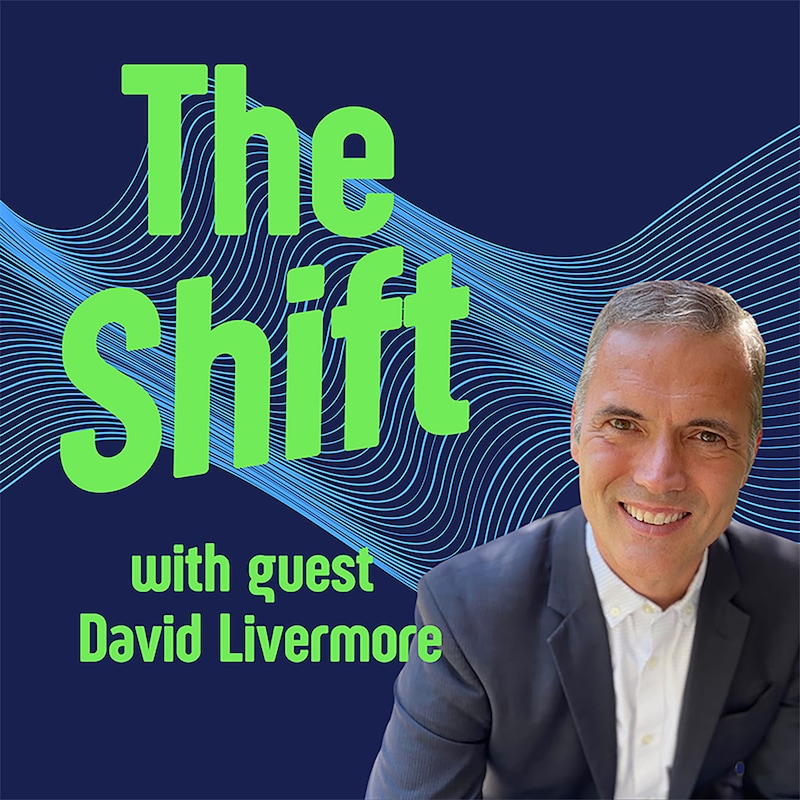
Shownotes
In this episode, Trisha interviews Dr. David Livermore, renowned social scientist, professor at Boston University, founder of the Cultural Intelligence Center, and author of the bestselling Leading with Cultural Intelligence, now in its third edition.
After more than two decades of CQ research, what happens when the framework itself needs to grow and shift? Dr. Livermore shares the research journey behind Prism — a new leadership framework built on over 3,700 interviews across 27 countries — and explores why the pain points keeping global leaders awake at night demanded something genuinely new.
Learn more about David Livermore's work at davidlivermore.com and globalteamlead.com. Connect with David on LinkedIn
Join Trisha in this journey of growth and discovery throughout the year via Substack or LinkedIn.
Resources mentioned
Global Team Lead Master Certification Virtual certification programme for coaches and trainers to become accredited to use the Prism tool and deliver the Global Team Lead curriculum. Next intake: 15–16 April 2026. Details and registration at globalteamlead.com.
Transcripts
I would like to acknowledge the Dharawal people, the Aboriginal people of Australia, whose country I live and work on. I would like to pay my respects to their elders, past, present, and emerging, and thank them for sharing their cultural knowledge and awareness with us.
Trisha:Hi everyone. I'm Trisha Carter, an organizational psychologist and an explorer of cultural intelligence, and I am truly on a quest, a quest to understand what it actually takes to see the world through someone else's eyes, especially when that someone is different to you, as regular listeners will know. I think cultural intelligence is the key to that.
Trisha:So cultural intelligence, cq is the capability to relate and work effectively across cultures. It's built on four different things, your motivation, your knowledge, your strategy, and your behavior. And in this podcast we tend to sit a bit more in the CQ strategy space. That's about thinking about our thinking, the metacognition, as us psychologists would say, and it's the skill that makes perspective taking possible.
Trisha:Today in this episode, I'm delighted to welcome back to the podcast Dr. David Livermore, renowned social scientist, author and expert in cultural intelligence and global leadership. He's a professor at Boston University. He's the founder of the Cultural Intelligence Center and a prolific author and the most well known of as many books.
Trisha:The bestseller, leading With Cultural Intelligence is now in its third edition. I am honored and delighted to call Dave a mentor and a friend, and I'm thrilled that he said yes when I asked him to come and speak with us again. So welcome Dave.
David:Thank you, Trisha. Always a delight to speak with you.
Trisha:We began this podcast together. You are my very first guest and we were talking about what CQ is, and then we dived into the metacognitive dimension that sits at the heart of this show. A lot has happened in the world since then, and in your work itself including the very powerful and much needed piece of leadership research that we are here to speak about today.
Trisha:Really it's to see if we can shift our perspectives on leadership. But before we get into the new work, I want to ask you the question that I ask all my guests. I know you travel a lot with work and with family for fun, so I think you might have a different answer from previously. So Dave, what is a culture other than the culture you grew up in, that you have learned to love and appreciate?
David:I love this question, and the one that came to mind is the UAE perhaps for obvious reasons right now, given at least when we're recording this the conflict that's going on in the Middle East. When I first went to Dubai, it chafed at me a bit. It felt like it was demonstrating values that aren't necessarily core to me.
David:It felt like a lot of bling and opulence and bigger this and bigger that. And, yeah, I've been there many times now. On one of my early visits, I traveled about an hour out of the city just to catch up with a former student. And I said, oh it's so good to be in more true Emirati culture. And he said, what do you mean?
David:And I said something like what I had just said about Dubai. He's like. But it's all part of Emirati culture that's part of the culture. This is part of the culture and it is like, what would it look like for you to see all that as an ambitious culture that really loves to innovate and to say they won't entirely make their future dependent on oil and that, so it really.
David:Created a shift for me in the spirit of this podcast of seeing what I think is true about all of our cultures, that while there might be shadow sides to our cultures, there are also light sides. And so, yeah, I was actually just back there a week ago, only in transit, given the current crisis but just found myself feeling very endeared and feeling a sense of compassion for what they're experiencing right now.
Trisha:Yeah. I can appreciate that one deeply. And I know we have listeners in the UAE, so a shout out to them at the moment, and I can appreciate that. Also value that person who was able to ask those questions. Yeah. You've spent. Your career championing cultural intelligence as a framework for working effectively across difference.
Trisha:So I want to understand what it felt like for you when you started to sense that CQ alone wasn't answering everything you needed it to in the leadership context. I mean, was there a moment, like a conversation or a piece of data or an experience somewhere where you said to yourself. We need something genuinely different to be able to talk about leadership.
David:I think for me it was less a moment and more of a direction a leaning that was evolving over time. And you know, as you would know, as someone who's dedicated so much of your life to this working cultural intelligence as well, we've certainly never said it's an end all. It's a be all. But to your point, how does it need to expand?
David:So for me it was more of the sense that. It's time for CQ to evolve. Like the strength of CQ is, it now has 20 plus years of research, but we started to conceptualize this in the last millennium, literally, you know, so, you know, first published material came out before nine 11. The assessment came out a few years after that.
David:Think about. How much the world has changed. You were saying just between the first episode of the shift that we did together from now and all the more so from when the CQ research came out. So in some ways it's living out cq in relationship to cq, that the world is dynamic, therefore. The way we talk about and think about how to apply research and develop cultural intelligence needs to be dynamic too.
David:So I think it was more that sense than saying CQ is inadequate, but how does it need to expand and deepen.
Trisha:Yeah. Yeah. And going deeply into that leadership perspective. Tell me about the, I guess the research journey that eventually led to dear listeners, what we are now referring to as Prism is what we're gonna be unpacking today. So how did the research start and how did it go?
David:Yeah. Yeah. Thank you. So, as you know, it sort of coincided with about the time that I stepped away from leading the Cultural Intelligence Center, which was a business that I developed and led for over a decade. And so I was consumed with all the demands that come with a growing business. And as I stepped away, I'm like, okay, now what are the questions that I've been kinda hungry to chase for a while?
David:And so then as someone who has at least somewhat of an academic bent thought, well then why don't we make this research rather than just anecdotal? So I was interested. I would say how it started was to say, how do I actually talk to global leaders around the world, team leaders, senior executives, and find out, what's keeping them awake at night? What are the pain points that they're facing? And one of the most regular things that came up, especially if we were putting the culture layer on it, is just how their teams get along regardless of whether or not they talked about it as diversity and inclusion or global teams and collaboration.
David:It was just this idea of we have more and more people from different backgrounds who have to work together. And that's a challenge for us 'cause we know that's critical to our future. So it was really kind of, me, chasing my own curiosity on what's next. And then using research as a way to get at how are people thinking about this?
Trisha:. And I guess within Boston University you have access to you know, students who are wanting to dive into that subject as well.
David:Students. Yes. And students themselves who are from myriad different backgrounds, a very large population of international students. And as you're rightfully noting up by joining a university, it also gave me access to colleagues who have a whole different skills in research and acumen than what I bring and which is part of what we may get into in terms of how we talk about how we actually landed on Prism.
David:But
David:I'm a social scientist. I'm a qualitative researcher, and so interviews and focus groups, that was my sweet spot when we eventually moved without getting ahead of ourselves to like, how do we actually quantify this? I knew I needed people who were quantitative, psychometric people in that,
Trisha:yeah. So you're combining both the quantitative and the qualitative aspects. My understanding is that there are over 3,700 leaders that you surveyed. Is that correct?
David:Yeah.
Trisha:And across 27 countries?
David:Yeah, over a four year period. And yeah, both we did not individually interview every one of those people, but certainly for them to be included, the focus group could be no more than eight to 10 individuals. So it was, you know, as we tend to pride ourselves on, in qualitative research, it was really rich, robust data rather than only getting a tick in a box and a survey.
Trisha:Yeah, it's, and it's always difficult to combine the two, but it sounds like in this research that you've done that. What were you setting out to find and you know, was there a point in the data that it started surprising you?
David:Yeah, so the really broad, what I started to, well, really broad where I set out initially to investigate is, you know, what are these pain points that keep them awake at night? And then as the team conversation started to come up, then that's when we really. Kicked off the research that eventually led to Prism to say, okay, what are the top pain points that are experienced on teams and what are the ones?
David:So we started to code the data and find out what were the issues that surfaced more and more. I think what was somewhat surprising to me, though I did have a bit of a hunch on it was that increasingly people were. Leaders who don't have the expertise that you and I do they don't swim in this space.
David:They were saying more and more that they were dissatisfied with overarching categories of the Germans do this, the Aussies, et cetera. And maybe even they were overstating, like, I'm not even sure nationality matters anymore. I'm, I'm dealing with different generations, professions, functions, and that, and I had long said.
David:Nationality's the number one thing that predicts how teams get along, you know, especially when you move abroad. And their lived experience was beginning to challenge that. So I think that was a surprise that we started to chase further.
Trisha:That is significant. Yeah. You, one of the things that distinguishes the work prism work from a lot of the leadership frameworks is that it looks at actual workplace behavior, and I can see why that is. As you talk about these discussions that emerged, so in the questionnaire there are scenario based items rather than values or aspirations.
Trisha:So tell me about that and how you make that distinction real for people.
David:It was really important to us because a lot of similar measurements that might get at either personality traits or team dynamics or cultural value dimensions focus very much on the shoulds. I think people should speak more directly or more clearly. I think people should work on behalf of the group.
David:And one of the challenges is there's a lot of, putting what you think is the right answer down, or what we call in research as socially desirable responses, so to be very specific about it, we've always had a challenge when you look at some of the cultural value measurements of individualism versus collectivism, and particularly when applied beyond.
David:Families and nationalities, but then suddenly put in the workplace. And you and I have both experienced that we might have people who have very similar Western backgrounds to you and me, and they're all scoring as collectivists because who wants to say I don't behave on behalf of the group? So we, it was really important for us to say.
David:Let's frame this in a way that doesn't immediately imply that one is better than the other, but to say as you're doing work on behalf of the group, do you most effectively do that by working autonomously or by working together with other group members at the same time? So. That's why the distinction was important to us.
David:We certainly weren't the first to do it. The global leadership study, the most comprehensive study ever done on global leadership across 62 different countries, they separated in their cultural value dimensions, both aspirational, shoulds and actual behaviors. So we did look at the work that they did but wanted to look at it more specifically to team dynamics in the workplace.
Trisha:That makes good sense. Yeah. So you found these dimensions, the prism dimensions that show how we actually do work in different ways when we work together. Can you describe those for us briefly and how they impact when we work in teams?
David:Yeah, so Prism is an acronym and I'll share what that is in just a moment. And if I step back just for a moment to, you know, your question was, what was the research question? And I said eventually we leaned in on teams and we asked what are the pain points? Eventually we coded it. We now had an answer to a question that I had been asked for years when teaching CQ and culture values, and that was people saying which of these matter most?
David:And of course, I would say it depends, but now we actually had a research based answer to say, well, based upon 3000 plus executives, these are the five that they've suggested matter most. And so the P of Prism. Stands for Power Dynamics and you know, all of your listeners would be very familiar with the idea that we experience leadership differently.
David:But we really wanted to hone in specifically on how does it play itself out in the workplace, influence versus authority decision making. So we looked at power very specifically as it relates to leadership dynamics. The R of Prism is risk, and one of the things that I've often found in talking about this cross-culturally is risk is very context specific.
David:So I think of a friend of mine who is just talking to recently who's a bank executive who's part of their blockchain, cryptocurrency, branch of the bank, but he grew. In a very traditional Chinese home, and he would say interpersonally with my family, with my kids, with safety, I'm very risk averse.
David:At work, I have a high risk tolerance 'cause my whole job is dependent upon innovating blockchain, you know, crypto currency. And so we wanted to look very specifically in workplace settings, how are you behaving relative to risk? The I of prism is identity. And here we're looking very much at that one I just gave as an example.
David:When you're acting on behalf of the team, do you feel like your best contribution is for you to work more autonomously or to work together with the group, both wanting group outcomes to come as a part of it?
David:S that's one of the newer dimensions, and you and I have talked some about that, but that stands for speed. That was one of the other surprises that came up was how often the global leaders talked about the differences around how quickly do we get this out to market? How quickly do we make a decision? How quickly do people feel comfortable working? That was a key one. So we measure that.
David:And then the last one, Messaging. Direct, indirect. And we very specifically separate it from what some of the cultural models look at of high and low context, but saying very much focused on words, either written or spoken. Is the messaging very explicit and direct, or is it more indirect? Abstract.
Trisha:Yeah. You can just hear how you know significant those aspects are, and recognize as soon as you speak about them, the impacts that they would have. Interpersonally. So with the people between teams as we've been talking, it's really hit me. You know, that so often we look at leadership as leadership, and yet the reality is leadership is really more about the team than it is about the leader.
Trisha:And at the same time, this work has opened our eyes to the ways that leaders actually do lead differently as well. And so their ways of coming to each of these dimensions influences how they then show up or are perceived as a leader with the people in the team. And so you have taken these dimensions and combined them together into leadership archetypes.
Trisha:And I know 'cause we've talked about it, there are already, so many leadership typologies out there. Some have got a solid evidence base and some, let's be honest, have become popular despite the evidence rather than because of it. So. How did you end up with the six archetypes and what gives you the, sort of, the confidence to say they hold up?
Trisha:Where some of these other frameworks, you know, I'm I lean away from, because I don't think they do necessarily hold up on the evidence.
David:this is actually, another response to your question about something that surprised me in the research because we didn't really set out to look for archetypes and patterns, but as we began analyzing the prism data that was coming back, we started to say, Hey, there's some interesting patterns here that you consistently see certain of these dimensions cluster together, for example.
David:No big surprise, but the people who prefer to be more self-directed in their identity to work more autonomously, tend to prefer speed. And so those two work well together. On the other hand, one that was a bit counterintuitive is we sort of thought risk averse people would prefer to move more slowly, not necessarily sometimes risk averse wanna move quickly.
David:Because it's a way to get ahead of the competition or to make sure you don't lose out in that. So we wanted to say, are there any consistent patterns of ones that start to come together? And through lots and lots of looking at the data, and this is where I was. Highly reliant upon my quantitative colleagues.
David:We started to see that there were, initially we had seven or eight, but once we started to do more robust testing of the data, we saw that there were these six patterns. And so to your point, okay. Interesting hypothesis initially. So then it was really important to do several rounds of testing, like how do these play itself out?
David:And then to do as we'd wanna do with good research and say, are we the first people in the world who have ever come up with something here? And if so. That actually raises my suspicion a little bit. Like really nobody else ever figured this out. As we started to look more broadly at a lot of the global leadership literature, and more importantly as we looked again to the globe study, we started to see, oh, there's not a one for one.
David:But there's a lot of correlation with what they found in combinations of the cultural dimensions they looked at and what we're looking at in these team-based behavior dimensions and where you start to see these six different styles of leadership emerge.
Trisha:Fantastic. So can you give us maybe just one or two of the archetypes and explain how that person might be at work and we can sort of go, oh yeah, I know that person.
David:Yeah. Yeah. I mean, so some of them would be really obvious to people. You know, the trailblazers, the kind of leader that we always hear about, you know, the visionary, charismatic. Direct autonomous. And you know, on the other end of the spectrum, at least culturally, we might think more of the command and control director kind of leader.
David:I should mention that even though I'm giving. Some value laden, like tone of voice. Even as I talk to 'em, one of the key points is that neither one is good nor bad. They, you know, similar to how I describe culture, there's a shadow side and there's a light side. But maybe to give one that isn't quite as obvious you know, I've, and I know you have too Trisha, with all the coaching and training you've done throughout the years, I've often talked to individuals.
David:Who, because they don't feel like they fit the caricature of how leadership's talked about sort of think, I guess I'm not cut out to be a leader. And one of the archetypes that I think voices that the most is the coach archetype. And the coach archetype is somebody who. Really isn't necessarily a fan of being in the spotlight isn't necessarily leading first and foremost by inspiring communication upfront, at least in the way that it's often portrayed.
David:But it's really about how do I remove obstacles and create resources for people so that they can thrive and succeed in what they're doing. And so that's an archetype that we probably have all seen, but also know that they are. Sometimes they are not the ones that automatically get identified as, oh, the perfect next up and coming CEO or director in that.
David:And I think this, you know, part of what the research showed is. No, there are functions, there are roles, there are industries, there are cultures where coaches thrive really well. And so for me, that's a sort of an added benefit of doing this work is I want everybody who at least aspires to leadership to see there's a place for them to lead in light of who they are and what their style and their type is.
Trisha:absolutely. That is exactly what inspired me when you first spoke about the work that you were doing in this area, because I've had the same, and dear listeners, I confess, I am the coach archetype that he's speaking about.
David:I didn't remember that. So that was not meant to be a backhanded propping up Trisha.
Trisha:Just yesterday I was in coaching with people and one of the questions that I ask is, you know, how's your relationship with your team leader? And each of them described their team leader in the way that you just described the coach. And they were, you know, describing a good relationship.
Trisha:And they said, it's a good relationship 'cause this is what they're doing. You know, and so it was just. Encouraging and uplifting to hear, you know, how that leader was leading in a way that supported the people that I were working with. So the other thing that came to mind as you were describing that was.
Trisha:A very lovely international Women's Day event where I was in a beautiful hotel with amazing food and the speakers spoke and there were two speakers who each spoke about being mentored by CEOs. Who had encouraged them and uplifted them exactly with that leadership style that you described.
Trisha:And they said how this person had made such a significant difference in their life. And these were women who are now in very strategic roles and having a significant influence. But they each gave that recognition to that leader who had changed and shaped them. So yeah, exactly what you're saying. There are different styles of leader and the style that may not be the one that we automatically see as the trailblazer go-getter is actually still a very powerful leader.
Trisha:So as part of the work that you've developed, for those of us who are in the field using these tools, you have developed a global team lead curriculum and it provides a full training and learning process along with accreditation for team leaders. So tell us a bit more about that.
David:Yeah, so Prism and the leadership archetypes apply to many different applications. In the workplace. We've chosen. To predominantly apply it to the team setting, at least in this first iteration because. Again, that emerged in the research in terms of global leaders pain points, and most of the work of organizations is done in some way by teams.
David:So we really wanted to initially say, boy, if we could help teams figure out how to address these friction points, the social scripts that exist beneath the surface and sort of bring them to surface and make them more visible. That, that, that could be a really. Helpful way forward. So the global team lead curriculum we talk about it as the global team lead os the operating system has four parts to it.
David:The team lead is that the team leader themself becomes aware of their own preferences or work style behaviors on the prism dimensions and look at what their dominant leadership archetype is and their secondary, which we do now have as part of the feedback. Then the second piece of the operating system is teamwork.
David:How does that leader then with their team, help them to use the prism language to sort of begin to discuss some of those behavioral friction points? We also look at something that you and I have talked a lot about over the last few years, vertical diversity that exists. Status differences on the team.
David:So how is a difference in influence or status or privilege? Impact what's there? The third part of the operating system is team culture. How do they actually create a third culture, if you will, that's psychologically safe and allows for these diverse behaviors to actually be leveraged to.
David:Contribute to the performance of the team. And then finally, the most critical part that links to metacognition, that your podcast is so much devoted to team norms. How do we actually plan and develop concrete norms that bring out the best of the differences on our team, but also help us unify around some shared agreements, norms for how we're going to behave together as a team.
Trisha:It's an extensive curriculum that really there's, there are multiple shifts in that as you spoke about, there are shifts for the leader. There are shifts for the individual team members and them working together. There's a group shift process and the curriculum supports each of those.
Trisha:So, it's really encouraging. Dave, as you look at the leaders you've worked with through this research, we've said there are over three and a half thousand people whose responses shaped Prism. And as you look at where leadership development needs to go globally, what are you hoping for?
David:You know, multiple times, even in this episode, Trisha, you and I have referenced the alarming state of our world at the moment, and you and I had a brief informal chat before we started recording and we were. Having some additional conversation about that. And one of the things that gives me hope amidst the alarming state of our world is when I get inside an organization, say, okay, the vast majority of people I talk with want to respect one another.
David:They want to understand one another. And so my hope is that Prism is one tool to help leaders and teams do that, to have language, to talk through things, so we don't immediately. Start using negative language and assume the worst of each other. And the hope that this just becomes one more piece that operationalizes what it means for us to engage with cultural intelligence to build more inclusive teams in that.
Trisha:I can echo that hope 100% and I'm sure that people who are listening will be like me when I first heard about this new set of tools. And we'll say, how can we learn more? So I believe you have an opportunity for people to become an accredited master and certified. So please tell the listeners about that.
David:Yeah. Thank you. So, there's information on this at globalteamlead.com or my website, davidlivermore.com. And we have. Designed a master certification. I'm not overly interested in thinking that I'm gonna be the best person to be running all over the world teaching team leaders how to do this. I'd rather tap the expertise of people like yourself and others who will be master certified.
David:So yes it's a couple day process where by being master certified, they get access. To the Prism tool and can use that as a part of their coaching and their training. As you mentioned, there's also this robust curriculum, but then also they can actually certify individual team leaders to become certified global team leads.
David:As someone who's demonstrated a proficiency in how to develop a culturally intelligent, inclusive team.
Trisha:Fantastic. Have you got some dates there, Dave?
David:Yes, thank you. So, I believe the dates in the US time, these are virtual programs, are the 15th and 16th of April to 2026, I should say, since some of you'll be listening to this in 2030 when the back list of the shift goes for so long. But yes. The 15th and 16th of April is the next one, and we expect to do some others later this year that we'll have posted on the website as well.
Trisha:Fantastic and we will have all those links in the show notes. Dear listeners I need to confess with pride that I have already completed this certification and also with some amazing colleagues who are on the first course. I think it really extends my toolkit and also my personal thinking about leadership and probably a little bit extended my own confidence.
Trisha:In my own style of leadership as Dave showcased without actually realizing that he was showcasing my style of leadership. And for those of you who are thinking, and I know there will be some, Trisha, I want you to ask more questions. You haven't dug deep enough into the shifts that can happen with these tools.
Trisha:I know, and don't worry, Dave has kindly agreed to continue the conversation so you'll hear more from him next week. So thank you Dave
David:Thank you, Trisha. Always a delight.
Trisha:and thank you dear listeners. And as you know, you will want to hear this next episode, so if you haven't yet pushed that follow or subscribe button, do it now and turn on your notifications so that you can join us next week on the shift.
