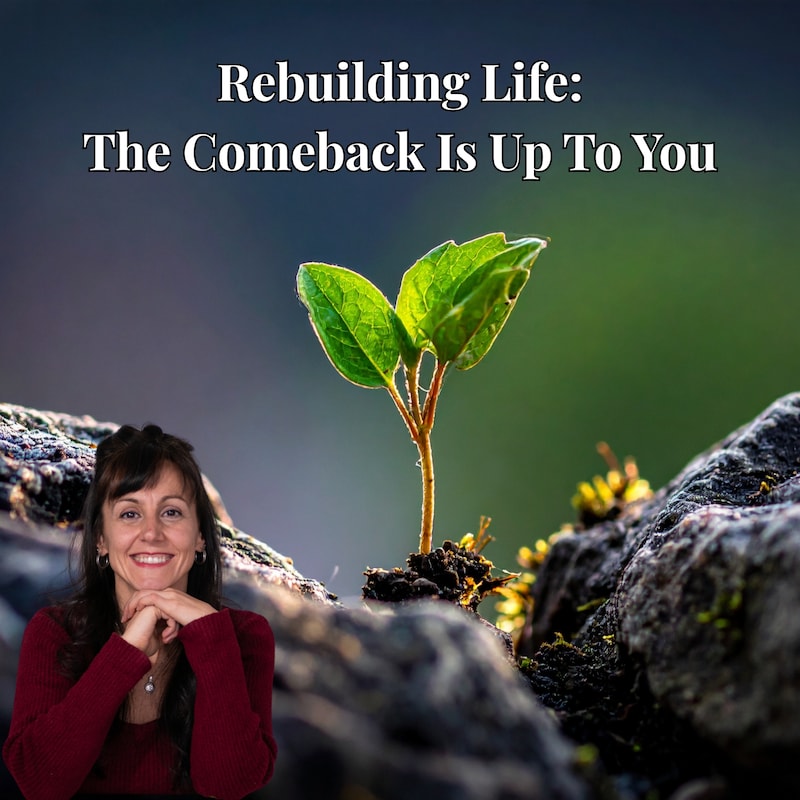
Shownotes
Maria Garcia's journey is a powerful testament to resilience and transformation, showcasing how one can rise from the ashes of adversity.
After a life-changing stroke at just 25, Maria faced immense challenges, including paralysis and loss of speech. However, through determination and the unwavering support of her family, she not only regained her abilities but also unearthed a newfound purpose in life.
In our chat, we dive into her inspiring memoir, *Breaking into the Light*, which chronicles her path of self-discovery, and how a significant shift in her relationship with food played a crucial role in her recovery.
Maria now dedicates herself to coaching others, helping them navigate their journeys of healing and empowerment, proving that life can indeed be transformed against all odds.
You can connect with Maria on her website at: genuinelymaria.com
And on her social platforms at:
FB: facebook.com/maria.garcia.452833
FB Coaching Page: facebook.com/profile.php?id=61565412543083
Instagram: @genuinelymaria.wf
LinkedIn: linkedin.com/in/maria-garcia-7273a8230/
A Warrior’s Spirit can be found on all the major platforms at lnk.bio/daryl_praxis33 as well as on ROKU via the ProsperaTV Network app. Be sure to like or subscribe so you never miss an episode!
The music in this video is copyrighted and used with permission from Raquel & The Joshua 1:8 project © 2025 All Rights Reserved. All rights to the music are owned by Raquel & The Joshua 1:8 project © 2025 All Rights Reserved. You can contact Raquel at https://YourGPSForSuccess.Net
Transcripts
To be totally honest, at some point I lost all hope.
Speaker A:I was like, why didn't I just die?
Speaker A:Why did I live?
Speaker A:And so they kept up alive when I had none left.
Speaker B:I've walked through fire with shadows on my heels Scars turn to stories that taught me to feel lost in the silence found in the flame now wear my battle cry without shame this isn't the end it's where I begin A soul that remembers the fire within welcome.
Speaker C:Back to another episode of A Warrior Spirit, brought to you by Praxis33.
Speaker C:I'm your host, Darrel Snow.
Speaker C:Let's dive in.
Speaker C:I am blessed to interview warriors every year and every day.
Speaker C:So today is another powerful example of such a warrior I have.
Speaker C:Maria Garcia.
Speaker C:Maria is definitely an example of resilience and self discovery.
Speaker C:After earning majors in finance and international business, she initially made her mark in corporate.
Speaker C:And her path took an unexpected turn when a massive stroke altered her life forever.
Speaker C:And through sheer determination and a long, extended recovery, Maria emerged stronger and with a new sense of purpose.
Speaker C:She channeled her transformative journey into her memoir, Breaking into the Light, a journey of self discovery and transformation.
Speaker C:And sharing her journey and lessons learned along the way.
Speaker C:And almost a decade after the book's release, she discovered a groundbreaking nutritional methodology that played a pivotal role in her continued recovery and personal transformation.
Speaker C:Today, Maria is a passionate coach committed to helping others navigate their own journeys of recovery and transformation.
Speaker C:And she specializes in guiding individuals to reset their relationship with food, unlocking profound shifts in their overall life's experience.
Speaker C:And Maria, this is a message that is dear to my heart because my wife has been chronically ill for 11 years now and food and relationships to food have been one of the things that have actually helped her in her own recovery.
Speaker C:So thank you for coming on to share this with me and I appreciate your time today.
Speaker A:You're so welcome.
Speaker A:I loved the intro and the intro song because I feel like, yes, I've really been through the fire.
Speaker C:When I started this show four years ago, it didn't have a theme song, it just had me.
Speaker C:And then a couple years ago I got connected with a mutual friend of ours, Elena Rodriguez, on the Prospera TV network and another host in there created the theme song.
Speaker C:She had a 15 minute conversation with me about my show and what it's about and then created this beautiful song to go with it.
Speaker C:So thank you for recognizing it.
Speaker A:Oh, it definitely landed.
Speaker A:Thank you.
Speaker C:Now, you started off as a finance major and you were imagined doing corporate work.
Speaker C:Were you a corporate trainer or just in Corporate in general?
Speaker A:In corporate in general.
Speaker A:And I was working towards my broker license.
Speaker A:I'd taken the Series seven.
Speaker A:I did really well on that, and I was moving up the corporate ladder even though I'd only been in the corporate world for half a year.
Speaker C:Were you wanting to do mutual funds and stocks or.
Speaker A:Yep, I was set to sell securities.
Speaker C:I had my 6 and 63 license, so I sold stocks and life insurance and things like that.
Speaker C:But I know that the broker aspect of it is way more so.
Speaker C:What kind of got you started in wanting to be in corporate America?
Speaker C:Where did your background begin?
Speaker A:To be honest, it was more of, I'm in college and finance sounds pretty good.
Speaker C:Finance will be around forever, so I think I'll do this.
Speaker C:Well, it beats having an art major because, you know, those liberal arts degrees aren't really valuable later in life.
Speaker C:How long were you in corporate America and how far up that ladder had you climbed before your stroke altered your life forever?
Speaker A:Well, not long at all.
Speaker A:Because when I graduated college at 22, I thought to myself, I'm not really ready to go to work yet in my career, so I think I'll go live in Germany for two years, see.
Speaker C:The world, backpack through the Alps.
Speaker A:Basically, the way I rationalized my desire was to.
Speaker A:To say, well, if I learn German, the Euro is based on the German mark, so maybe it'll help me with my finance degree at some point.
Speaker C:Did you get to go live in Germany for a little while?
Speaker C:Did you go get to.
Speaker A:I did.
Speaker A:I lived in Germany for two years.
Speaker C:And then what brought you back to the United States?
Speaker A:I'm ashamed to say this, but I will say it.
Speaker A:I was in a relationship that I really didn't know how to exit, that I wanted to exit.
Speaker C:Was he.
Speaker C:Was he European?
Speaker C:German?
Speaker A:He was German.
Speaker C:So the easiest way to exit the relationship was to exit the country.
Speaker A:Because I figured, it's been two years, I can now start my career.
Speaker C:And so when you came back to the United States, where did you land?
Speaker C:I mean, this is a pretty big country.
Speaker C:Where were you?
Speaker A:I was in New Jersey.
Speaker C:Okay.
Speaker A:I ended up back home with my parents, and I got a job interview relatively quickly through a friend at a corporate business firm.
Speaker A:And so I passed the interview and they hired me.
Speaker A:And within four months, I was already studying for my broker's exam and moving up that ladder.
Speaker C:So you were around 24, 25 at this point?
Speaker A:Yeah.
Speaker C:Okay.
Speaker A:Yes.
Speaker C:And then did you have any other medical issues prior to the stroke, or was it just really a sudden onset?
Speaker A:None that I was aware of.
Speaker A:But I'm saying that I was aware because the body is actually really resilient, and it takes a long time to create what seems to us instantaneous.
Speaker A:Right.
Speaker A:So, for example, somebody who has diabetes, well, that's been in the works for 20 years.
Speaker A:It didn't just happen.
Speaker A:And that's the same with the stroke and penis.
Speaker C:So at 25, I mean, it's not.
Speaker C:I mean, I'm not an expert, so I'm spitballing, but it doesn't seem like that's common for young people to have as an occurrence.
Speaker C:So obviously at such a young age, it's really devastating because you're just getting started in life.
Speaker C:And all that was the time was the stroke.
Speaker C:There's different varieties of strokes.
Speaker C:Right.
Speaker C:So was yours one that totally altered your speaking and walking ability or just your speech?
Speaker A:Everything.
Speaker A:Everything.
Speaker A:I mean, yes, you're correct.
Speaker A:It's not that common in younger population.
Speaker A:And it's so uncommon that when I went to the hospital thinking I had food poisoning, and they told me, miss, we think you're having a stroke.
Speaker A:And I was like, so much food poisoning, but what's a stroke?
Speaker A:I never even heard the word.
Speaker A:It was not in my vocab at all.
Speaker A:So within 24 hours, I ended up totally paralyzed and mute.
Speaker A:So I was paralyzed from the nose down.
Speaker C:And how long were you in.
Speaker C:And that's.
Speaker C:I don't want to say a vegetative state because your mind was still active, but how long were you in a paralysis state?
Speaker C:And while you were paralyzed from the nose down, your thoughts were still very clear and you could understand.
Speaker C:You just couldn't communicate.
Speaker A:Yeah, that was such a bizarre, yet scary is not even the word terrifying moment in my life.
Speaker A:And the worst of it was that I was the way it was, but everybody thought it was a vegetable because they didn't realize that I could hear.
Speaker A:And I was like, okay, why are organization people talking to my family in my room in front of me?
Speaker C:How long did you remain paralyzed till you could actually communicate?
Speaker C:And when did they realize, oh, she can still hear us.
Speaker C:She just can't communicate with us?
Speaker A:So I think I began to move sometimes after three weeks, and I began to move my right finger just half an inch.
Speaker A:But before that, a friend of mine came in and she was just showing me pictures of a trip we were on together, and she realized, wait a second, is Maria tracking with her eyes?
Speaker A:So she went and told doctors and everybody and the doctors said to her, oh, no, that's involved teary eye movements.
Speaker A:Right.
Speaker A:But she must have also told my family, because they were intelligent enough to say blank once for yes, twice for no.
Speaker C:I would think that it would change the conversations that they were having once they realized, oh, she can actually understand what we're saying.
Speaker C:You know, the dynamics in the room must have changed as well.
Speaker C:How long before you were able to actually indicate, hey, I'm here, you know, yes, blink once for yes, twice for no?
Speaker C:You said that was three weeks, right?
Speaker A:That was two weeks.
Speaker A:The movement happened after three weeks.
Speaker C:Okay, so for two weeks, you.
Speaker C:What was going through your mind for those two weeks, other than how crazy this is?
Speaker A:Yeah.
Speaker A:I was so in shock, so in shock that it was.
Speaker A:To me, it was almost like, this is not real.
Speaker A:This can't be real.
Speaker C:And at 25 or 26, whatever, you know, still a young age, what reached inside of you?
Speaker C:Because we don't overcome those kinds of issues and traumas without intestinal fortitude to pull us back out.
Speaker C:Because you either give up and that's your life, or you fight and you change your life.
Speaker C:Obviously, you're with us today.
Speaker C:So you fought and changed your life.
Speaker C:But what was it inside you that said, this is not where my story ends?
Speaker A:I think a huge part of it was that because I did not know what a stroke was, I had no reference for how I should be.
Speaker A:I didn't know I was supposed to be paralyzed on one side.
Speaker A:And even though my left side was my more effective side, I'm moving all my sides, and I didn't know that I was supposed to remain ill.
Speaker A:I thought, literally in my mind, I thought, oh, they told my boyfriend who lives in Europe, he's going to come visit me when he comes to visit me, I'll probably be in the hospital two or three weeks, and then I'll go home and have them.
Speaker A:That's literally where my mind was.
Speaker C:I find that fascinating because my background is in psychology, so the brain is very important to me and my reference points.
Speaker C:So the fact that you didn't know you weren't supposed to be well made you not act like you were as serious as it was, which is probably what helped your healing.
Speaker C:How long before you were able to then regain your speech?
Speaker A:This speech was one of the very last things to come back.
Speaker A:So I was at one hospital for nearly two months.
Speaker A:I was at another hospital for two full months.
Speaker A:And it was during this second hospitalization where the trach was removed, and I would say one word at a time.
Speaker C:And in those four months, bouncing between hospitals, were you able to Regain other motor skills, More hand movement, more foot movement, more functionality.
Speaker A:Yes.
Speaker A:Yep.
Speaker A:So in the first hospital, I did not get any therapy whatsoever at all.
Speaker A:I was basically lying down 24 7.
Speaker A:So my family actually created shifts so somebody would be with me 24 hours a day.
Speaker A:It was my parents and my brother.
Speaker A:That makes me cry.
Speaker A:Just think about it.
Speaker A:But anyway, during, when my brother would see me and during his eight hours, he would move my limbs for at least half an hour a day, up and down and all around because I was not getting therapy.
Speaker A:And I really credit that for being able to move so freely today.
Speaker C:He was making sure your body didn't go into atrophy.
Speaker C:He was making sure that your muscles still were active to stay engaged so that you could heal.
Speaker C:And at that time you said that the trach was still in so you weren't talking.
Speaker C:So that had to be an incredible amount of belief from your family that you were going to recover to do those type of things to facilitate your recovery when it did happen.
Speaker C:That's an incredible attriment to your attribute.
Speaker C:Sorry to your family for not resigning the fact that this is as good as it's going to get and they were going to do whatever's needed to make it better for you.
Speaker A:Oh, absolutely.
Speaker A:And I credit them for me being here in the first place because to be totally honest, at some point I lost all hope.
Speaker A:I was like, why didn't I just die?
Speaker A:Why did I live?
Speaker A:And so they kept hope alive when I had none left.
Speaker A:And they would, even after I went home in diapers, in a wheelchair, cross eyed, they would make me exercise almost all day.
Speaker A:They became drill sergeants.
Speaker A:I mean, my mom, we had overcoming bike, the ones that look like chairs.
Speaker A:So she was like, come here, you should ride the bike.
Speaker A:And I was like, okay.
Speaker A:So I went to ride the bike, but as soon as I sat and I put my feet on the pedals, they slipped right off.
Speaker A:I could not even hold my feet to the pedals.
Speaker A:That's what the shape I was in.
Speaker A:My mother tied my feet to the petals.
Speaker C:She wanted to make sure that you could do what was necessary.
Speaker C:How long did your recovery journey take for you to be able to have your, your ability to walk and move your limbs and communicate again?
Speaker C:How long was that process?
Speaker A:Oh my gosh.
Speaker A:Well, that was a little bit functional.
Speaker A:Well, when I got home in a wheelchair, I realized, oh, my wheelchair doesn't fit through any of my doorways.
Speaker A:And so that's when I graduated to Eustace, a walker at home out of necessity.
Speaker A:Right.
Speaker C:Do you think if your wheelchair had fit through the house that you would have not tried to even get out as soon as you did?
Speaker C:You think you would have just kind of resigned yourself, that wheelchair is as good as it gets?
Speaker A:I don't know if I would have reassigned myself, but it definitely would have been a prolonged process.
Speaker A:I was resigned basically at that point.
Speaker A:It was my family that was not resigned.
Speaker C:Well, I'm grateful that your family gave you the strength when you didn't have it, because it is.
Speaker C:When we're in the midst of our issue, whatever that issue is, it is really easy to give up.
Speaker C:And it is really easy.
Speaker C:And we.
Speaker C:When we have people around us who won't let us give up, we rekindle that desire to fight and we regain that ability to overcome whatever it is that we're.
Speaker C:That we're going through.
Speaker A:Yeah, totally.
Speaker A:Great.
Speaker C:Yeah, you've obviously done.
Speaker C:Done that as well.
Speaker C:We're going to take a short break, and then we're going to come back and hear how your transformation went from wheelchair bound into writing a book.
Speaker C:So we'll be back right after this.
Speaker D:So when did you realize the noise in your head wasn't actually your voice?
Speaker D:When I noticed every thought sounded borrowed.
Speaker D:Fear, pressure, old scripts just running on repeat.
Speaker D:That's why I listened to breakthrough radio.
Speaker D:Scripture, truth, conversations that actually reset the way you think.
Speaker D:Breakthrough radio.
Speaker D:Because what you hear shapes who you become.
Speaker C:Listen daily.
Speaker C:Welcome back to the show.
Speaker C:We're talking with Maria Garcia today, who is a embodiment of resilience and overcoming.
Speaker C:We were talking about her stroke and how her family wouldn't let her give up.
Speaker C:Obviously, you regained your speech, you regained your mortar skills.
Speaker C:What in you then decided, maybe I should put this in a book, because writing a book isn't easy just on its own, let alone when you're coming through what you've come through.
Speaker C:So what inside you said, yeah, I should put this in a book?
Speaker A:Well, it was a very long process.
Speaker A:The Recovery took nearly 10 years.
Speaker A:It took about eight years.
Speaker A:And when I got to eight years into my recovery, I was recovering at 70% of what I was.
Speaker A:And I figured, first of all, I didn't realize that I was plateaued until year number 10.
Speaker A:Till two years had gone by, nothing had changed.
Speaker A:And during those initial eight years, I had done hyperbaric oxygen therapy, stem cell injections.
Speaker A:I went to Germany for therapy.
Speaker A:And I was just basically throwing noodles because I knew therapy, just therapy was not gonna get me where I wanted to go.
Speaker A:And I figured If I have to live another, I don't know, 50 years, whatever it is, I need quality of life.
Speaker A:And I can't stay remaining this state.
Speaker A:I need quality of life.
Speaker A:And so the second part of Precaution was at that time, I think it was by year number 10, I started doing personal development, and I met somebody and I hired them as a coach, and he suggested to me, oh, maybe you could do a memoir.
Speaker A:And I was like, I don't know about that.
Speaker C:A lot of coaches recommend writing journaling because it does help with the cathartic aspect of it.
Speaker C:But you actually did the book, you know, and here's.
Speaker C:Here's your book, you know, Breaking into the Light.
Speaker C:And I love your cover because it shows, you know, the budding flower coming through the asphalt, which means that if there's a will, there's a way.
Speaker A:Right, Exactly.
Speaker A:And you took the words out of my mouth, to me was a jump catharsis.
Speaker A:I ended up writing the book, but I was writing it more for me as, like, a journal almost.
Speaker A:And as I was writing, I thought, oh, my God, this is changing how I feel.
Speaker C:And what is the aspect of the book that you think helped you the most?
Speaker A:Just seeing it all on paper and seeing how far I had actually come.
Speaker C:So it was a reflection to give you encouragement and hope in your own journey.
Speaker C:So if somebody picks up your book, what will they find in it to help them?
Speaker A:Well, interesting enough.
Speaker A:One of the biggest things that I heard when the book was first released was, you know, I saw myself in that so much, and that kind of shocked me because I thought, wow, how can that be?
Speaker A:How can that be if I live this situation that most people don't live?
Speaker C:They were able to find themselves in it.
Speaker C:Yeah.
Speaker C:And then, you know, in your bio, we talked about how you got into the food and the nutrition of it.
Speaker C:And as I said, I believe that, you know, the right food and the right nutrition will help many people in their own healing, whatever they're healing from.
Speaker C:It plays a pivotal role when you start getting connected with real food and real nutrition, not all the box stuff that, you know, we're being poisoned with.
Speaker C:So what got you into that realm?
Speaker A:Okay, so there's two things I want to mention.
Speaker A:Number one is I want to work on the second edition of the book, including the nutrition stuff.
Speaker A:So if anybody's looking for the book right now, it's only available through me.
Speaker A:So if you contact me, I can ship you.
Speaker A:That's not available anywhere else till the second edition comes out.
Speaker A:And the way I got into the nutrition piece that was actually very interesting because it didn't happen until 15 years after the stroke.
Speaker A:And there was one time I just saw an ad for a program on nutrition, and I was interested because that was also one of the many tools in my toolbox from all those years of recovery.
Speaker A:I had been a macrobiotic, pescetarian, vegetarian.
Speaker A:So I figured, you know what, let me just enroll, because that's a topic I already like.
Speaker A:And I figure I'm going to learn something new about something I already enjoy.
Speaker A:So I enrolled, and within, I think it was something like six months.
Speaker A:And this is already coming from a good diet according to the old food pyramid.
Speaker A:And within six months, I had recovered another 20%.
Speaker A:And I got my life back.
Speaker A:I finally got my life back.
Speaker C:And the only thing you had changed between those six months was the food and the way you had a relationship with food.
Speaker A:That's all.
Speaker A:That's all.
Speaker A:I didn't do any therapy.
Speaker A:I didn't do any treatments, nothing.
Speaker C:So what made you want to start this, which is surviving to thriving, your 10x, your recovery without additional rehab or specialized treatment?
Speaker C:This is unlocking your freedom with food.
Speaker C:The program that you've developed, what precipitated this?
Speaker C:How did you get here?
Speaker A:So when I saw what happened to me, I was so blown away that I was like, I need to know what this is.
Speaker A:I need to know what this sorcery is that happened to me.
Speaker A:So I enrolled to become a coach in the same program that changed my life, but never with the intention of coaching.
Speaker A:My intention was to see what the hell happened to me, because I had no idea.
Speaker A:And during the training, we had to have a pilot class.
Speaker A:And in my pilot class, people were having their own miracles happen to them.
Speaker A:Cfap, machines gone.
Speaker A:Two people, right?
Speaker A:People lost inordinate amounts of weight.
Speaker A:People stopped taking medication, gout, high blood pressure, Advils, daily Advils for pain, and all these miraculous things.
Speaker A:And that's when I was hooked.
Speaker A:I was like, okay, I need to coach real, bring this to the world.
Speaker C:And what do you find in your practice and in your studies and your own healing journey?
Speaker C:What do you find is the nugget of nutrition?
Speaker C:Because there's diets everywhere.
Speaker C:There's all the ones you listed.
Speaker C:There's 10,000 others.
Speaker C:There's yo yoing this and that.
Speaker C:And now we got everyone wanting to take the shortcut through the drugs and other things.
Speaker C:So what do you think is the key to developing a good relationship with food that will keep you on a Healing, natural journey, as opposed to all the other stuff.
Speaker A:Okay, so the number one thing is understanding your food psychology, because without that awareness, you are basically just using willpower, and willpower eventually gives out.
Speaker A:So in the program that I guide, we do a deep dive into your food psychology to understand why you're making the choices you're making, why you don't like certain things, and just to change your relationship with food.
Speaker A:Because once you can move forward with that awareness, then you're not relying on your willpower to do things.
Speaker A:Because if I came in and just said, here, guys, do this for the next whatever, people look at it go, okay, and they might do it for six days.
Speaker A:And life happens, you know?
Speaker C:Yeah.
Speaker C:I think from an outsider looking in and someone who's, you know, tried a gazillion things, I think dieting, just the mentality of dieting is going to set you up for failure, because once you stop the diet, then all the other stuff comes back.
Speaker C:I think you really need to change to a lifestyle change.
Speaker C:A couple years ago, my wife we.
Speaker C:We changed to a carnivore lifestyle.
Speaker C:So predominantly we eat meat and eggs and butter and, you know, bacon and all that stuff, and we sprinkle in some, you know, vegetables and.
Speaker C:And fruits and that.
Speaker C:But instead of considered it a diet, we considered it a lifestyle change.
Speaker C:And it's been tremendous in her healing process from her own chronic issues because.
Speaker C:And then you're not burdened by, oh, I got today.
Speaker C:Today's a Tuesday, so I can't, you know, do anything.
Speaker C:I can't eat this on because it's Tuesday versus, you know, oh, I want to celebrate.
Speaker C:So I'm going to have a piece of cake today, but I'm still going to eat the rest of what I wanted yesterday.
Speaker C:And I don't blow up my mind thinking, oh, I just failed my diet, you know.
Speaker A:Right.
Speaker A:So it's funny because we hijacked this term diet, because diet, in reality, the true meaning of the word is lifestyle.
Speaker A:When we refer to an animal's diet, we don't mean that we're gonna put them on a diet to lose weight.
Speaker A:We just mean what they eat.
Speaker A:So humans have hijacked the term.
Speaker A:And I love what you're saying about a carnivore diet.
Speaker A:There are many nuances to that that we would address in the program, like seasonality.
Speaker A:But if I had to just recommend to somebody in few words and a quick show what to do, I would probably say your best bet is going carnivore.
Speaker A:That's your best Friend.
Speaker C:It's funny because we took all the processed or as much as we could.
Speaker C:We took all the processed box foods out of the house and started eating, you know, steaks and eggs and roast and meat, you know.
Speaker C:And after we had transitioned the house into, you know, this carnivore lifestyle, our son came over one time, he's in his 30s, and he came over and he was looking for something to eat or snack on.
Speaker C:He started going through the cupboards and the freezers and he couldn't find anything.
Speaker C:He was like, man, you guys are eating like bears.
Speaker C:He couldn't find the chips and the salsa and all that other stuff that he was looking for.
Speaker C:But I think there's a lot to be said with your relationship to food and the psychology behind it, you know, and it has more healing properties than people give it credit for.
Speaker C:So when you started this nutritional aspect of your life, you'd already gone through the physical therapy, you'd already gained, you know, some elements of your life back.
Speaker C:How long before the food introduction did you start seeing more results than you'd already experienced with just the therapy and the other stuff you'd been doing?
Speaker A:So I would say that within three months, I was already noticing changes, but it wasn't anything really related to my physicality, was more like, oh, some of my white hair turned black again and I'm wide spoken and I don't have that toenail fungus that's been playing me for decades.
Speaker A:Those kind of things like that.
Speaker C:Interesting.
Speaker C:So, you know, because a lot of people think, oh, once I have gray hair, it's, you know, gonna stay gray.
Speaker C:But you actually experienced a reversal.
Speaker A:Yeah, I'm not gonna say it was all my white hair turned dark.
Speaker A:Yeah, but a lot of it did.
Speaker A:A lot of it did.
Speaker C:Oh, that's excellent.
Speaker C:That's great.
Speaker C:What would you tell someone who's looking to make a change?
Speaker C:Like, how do they embrace this connection?
Speaker C:That's a must with food, because so many people have a battle with it.
Speaker C:They'd rather sit on the couch eating bon bons than address their food issue.
Speaker C:So how do you tell them?
Speaker C:Or what do you tell them?
Speaker A:You know, the food industry today, they've done a number on us.
Speaker A:They've made foods hyper palatable, getting to the bliss point, with just the right amount of fat and the right amount of sweet to make us addicted to those foods.
Speaker A:So if you're addicted to the food and you're on the couch and eating pommel, just know it's not your fault, it's not your fault.
Speaker A:But now that you know that it's your responsibility to change it.
Speaker A:It's not your fault that they did, but it's you that's going to change and nobody else.
Speaker C:And it's really a shame in our country.
Speaker C:You know, I've been to Europe.
Speaker C:My.
Speaker C:My wife is Portuguese.
Speaker C:I've been to, you know, Portugal and Spain, and it's really disheartening to see the foods that you would have here over there, and how much less the ingredients are over there versus over here.
Speaker C:And when my wife is in Portugal, she can eat bread and cheese and all kinds all day long.
Speaker C:We used to joke, hey, I had bread and cheese today, guess which meal it is, everyone, right?
Speaker C:And she do fine with it in here she comes and has two slices of bread, you know, in a row a day in a row, and she's not feeling well.
Speaker C:It's, you know, and everyone over here is like, oh, you're gluten intolerant.
Speaker C:No, you're intolerant to the chemicals that they put on the gluten, you know, because clearly you're not gluten intolerant if you can go to Europe and eat it all day long.
Speaker A:Yeah.
Speaker A:And that really resonates with me because I was born in Spain and I go back to Spain every year almost.
Speaker A:And I see that the people there are not.
Speaker A:They're getting there now because the food industry is taking those countries over even today.
Speaker A:But 10 years ago or so, the foods were totally different.
Speaker A:The way that people looked was totally different.
Speaker A:And now, yes, when I go to Europe, it's obvious that the foods there, for example, the gluten here and bread, that's like Franken gluten.
Speaker A:I don't know what they do to this.
Speaker C:It's funny because it struck me, I'm in my 60s, and it struck me that when I was walking around Europe, it reminded me of America in the 70s, where you didn't see heavy people.
Speaker C:You know, if you did see a heavyset person, it was an anomaly.
Speaker C:It was a one off.
Speaker C:And now if you see a thin person in America, it's an anomaly.
Speaker C:And a one off.
Speaker C:You're like, what do they.
Speaker C:Oh, they must be on that.
Speaker C:That drug that helps keep you thin.
Speaker C:Right.
Speaker C:You can't just be in shape and doing good.
Speaker C:Right.
Speaker A:How crazy is that?
Speaker C:Yeah.
Speaker A:And I think it's like 97 of Americans are metabolically ill and don't even know it.
Speaker C:And that's so disheartening because it.
Speaker C:It is a direct poisoning of our food industry.
Speaker C:To do that, you know?
Speaker C:And so.
Speaker C:But when I was in Europe, and I was like, well, first off, they're not eating the same crap we were eating.
Speaker C:And secondly, they're walking way more than we do.
Speaker C:Like, they walk everywhere, but even going into McDonald's, because one time when we were late for something, we had to get a quick bite.
Speaker C:So against our desire, we popped into a McDonald's.
Speaker C:But even the food in McDonald's tasted a million times better than.
Speaker C:Than the McDonald's here.
Speaker C:And it was like, why is something so basic so vastly and noticeably different?
Speaker C:And other than greed and governmental complacency, what do you think created all that?
Speaker A:That's it.
Speaker A:That's basically it.
Speaker A:Greed, greed, and lobbyists.
Speaker A:What else can I say?
Speaker A:I mean, the chemicals that are allowed in Europe are way different than what in the United States.
Speaker A:There are, like, I think it's over a thousand chemicals that are allowed in the food, whereas in Europe, it's in the tens or something.
Speaker A:It's a very huge disparity.
Speaker C:Yeah.
Speaker C:So over here, other than, like, it takes.
Speaker C:It takes an extra 20 or 30 or 40 minutes sometimes to shop over here because you have to read every back of the.
Speaker C:You can't just grab it off the shelf if you're trying to be conscious about what you're not putting into your body anymore.
Speaker C:So it takes a concerted effort to do that.
Speaker C:And over here, you know, it's really unfortunate.
Speaker C:It costs, you know, a dollar for a cheeseburger, but it costs $7 for a salad, you know, so even trying to eat healthier is a financial chore.
Speaker C:How do you guide some of your clients through that?
Speaker A:Well, number one, when you're eating more nourishing foods, you don't need as much food.
Speaker A:So that in the long term, you're actually not going to be spending that much more because you're going to be eating less.
Speaker A:So that's one thing.
Speaker A:I go for the most nutritionally dense food there is so I can be satisfied longer and not spend as much.
Speaker A:And.
Speaker A:I'm sorry, what was the other part of your question?
Speaker C:I was just trying to see how you help people who come to you and want to get a good relationship with food.
Speaker C:I was just trying to see how you guide them in that direction.
Speaker A:So basically, the program that I'm doing is first a deep dive into your food psychology, and then we make small, incremental changes each week.
Speaker A:So it's not like, do all this.
Speaker A:It's more like this week we're gonna try removing this, taking a Vacation.
Speaker A:And then some weeks we say, well, why don't you add this?
Speaker A:So it's very step by step incremental changes that are very doable.
Speaker A:It's not, it's not anything that was chalk.
Speaker A:You or your Wallace.
Speaker C:Yeah.
Speaker C:I think a lot of people try to make the change so dramatically and, and so rapidly that then their brain gets overwhelmed with what they're trying to do.
Speaker C:And after a while they just.
Speaker C:It's easier to go back to what they know than to try it because they tried to correct too many.
Speaker C:You know, I, I look at.
Speaker C:I'm a. I play sports and so I go out and play golf while I hit the ball.
Speaker C:I don't know if I'd call it a golf, but I hit the ball.
Speaker C:And a coach once told me, don't try to correct everything that's wrong with your swing.
Speaker C:Try correcting one thing at a time.
Speaker C:And it's the same thing that you're talking about because if you try to correct everything, then you don't know really what you're correcting or what isn't working.
Speaker C:And if you do it in a smaller, it's more palatable.
Speaker C:You know, the old adage, eat an elephant one bite at a time comes into play.
Speaker C:So doing that.
Speaker C:I'm curious though, Maria.
Speaker C:You know, your journey was a long one from where you are to where you were was a really long journey.
Speaker C:And I know I've had friends who've had strokes and who've been locked in like you were in their brain.
Speaker C:It took them a long time to learn how to even open a door again, let alone walk and talk.
Speaker C:Were you solely reliant upon your parents for most of that duration or when did you start becoming sustainable to be able to put yourself back out there in a work environment like you're doing now with your coaching and helping others?
Speaker C:How long of a period between all of that and at 25?
Speaker C:That's got to be incredibly tough to not be able to contribute in a meaningful fashion.
Speaker A:And very humbling when your parents and your brother are changing your diaper.
Speaker A:It took me a long time.
Speaker A: ts probably the stroke was in: Speaker A: was in my parents house until: Speaker A:That's when I first moved in and I moved out to somebody else's house, so I had roommates.
Speaker A: ime I moved by myself, it was: Speaker A:Yeah.
Speaker C:Wow.
Speaker C: nd then you began coaching in: Speaker A: I was declined in: Speaker C:I think it's natural for human nature to do the why me?
Speaker C:What if?
Speaker C:Game.
Speaker C:Why did this happen to me?
Speaker C:What would my life have been had it not happened to me?
Speaker C:How long have you released that part of your journey or do you still experience it?
Speaker A:I don't experience that, but I did play that game for a long time, probably at least four or five years or longer.
Speaker A:And the first time that I started to see things differently was when I went to a class in gym.
Speaker A:It was for yoga.
Speaker A:And I thought, well, it's easily modifiable and they'll let me work at my base.
Speaker A:But I didn't realize that it was going to be such a powerful mental exercise because that's when I finally saw the light and the black cloud lifted.
Speaker A:Right.
Speaker A:And I was like.
Speaker C:And you discovered your own hype again, right?
Speaker A:Yeah.
Speaker C:Yeah.
Speaker C:What do you.
Speaker C:What do you tell people who are struggling with their journey knowing that you've gone through so much and it took so much for you to get back on the other side of that?
Speaker C:How do you.
Speaker C:How do you help those who are still in the midst of their own darkness?
Speaker A:Well, the number one thing is really change your relationship with food.
Speaker A:Because if I had known what I know now when I first had the stroke, I wouldn't have had suffer 15 years.
Speaker C:You really think that's food?
Speaker C:You really attribute the food?
Speaker C:Yeah.
Speaker C:Wow.
Speaker C:So.
Speaker A:And I wouldn't have this sexy voice.
Speaker C:Left the Lauren Bacall sound.
Speaker C:But you really think the food played a big factor in that?
Speaker A:Oh, I know it did.
Speaker A:I know it did.
Speaker A:Because how do I heal 20% 15 years after stroke?
Speaker A:How does that even happen?
Speaker A:How is that even possible?
Speaker A:I mean, in my mind to meet up with such a. I don't know, such a happening, such a miracle, such a sorcery, such.
Speaker A:There's no words.
Speaker A:I mean, I can't even describe what went through my mind at the time.
Speaker C:And so who is Maria today versus who Maria was two years ago?
Speaker A:I think the longer I'm on this journey, the more I become the real me, the more I become authentic and grounded and less of a people pleaser.
Speaker A:So I'm just starting to know the real me.
Speaker C:And what do you see is in store for you moving forward in this journey?
Speaker A:I can see myself on stages telling people about this because everybody deserves to know that they can change their lives.
Speaker C:I can appreciate the desire because that's one of the reasons my show even exists.
Speaker C:You know, when God told me to start the show, that's exactly what he said.
Speaker C:Give a voice to the voiceless and help turn their mess into their message.
Speaker C:And that's definitely something.
Speaker C:I think that when you've overcome childhood trauma, everyone can relate to that.
Speaker C:But when you've overcome physical trauma, there's a nuance to that that is still relatable if the story is told.
Speaker C:Because it would have been so easy for Maria Garcia to just say, that's a bad, bad draw this time around.
Speaker C:My lot in life is this, and you know, that's all it's ever going to be.
Speaker C:But you didn't.
Speaker C:You dug in through the help of family and friends, but you dug in and you decided it was going to be different.
Speaker C:And you made the change for it to be different.
Speaker C:And that is something that I think everyone can relate to.
Speaker C:It's a decision that you have to make for yourself.
Speaker C:Because even when you were unable to speak in that hospital bed, I'm sure that your parents wanted more and better for you.
Speaker C:Your brother obviously did because he's the one that started moving your legs.
Speaker C:But when you got home and then you started, you know, to have to use the walker and then you had to do all the other rehab, your family and friends wanted more for you, but you had to want more for you for it to even be effective.
Speaker C:You know, I want my wife to be 100% a thousand healed, as does she.
Speaker C:And the only reason she is is because she wants it as badly as I do.
Speaker C:You know, so what, what inside of you?
Speaker C:Because people give up all the time.
Speaker C:People say, nope, this is as good as it gets.
Speaker C:What inside of you?
Speaker C:Press that fight button to make you where you are today.
Speaker A:That reminds me of the saying, you can take a horse to water, but you can't make a drink anyway.
Speaker C:True.
Speaker A:What turned the switch on for me.
Speaker C:Was.
Speaker A:I have to say, I think it might have been yoga.
Speaker A:I think it might have been yoga.
Speaker A:That's when I first started seeing the light.
Speaker A:And I said, okay, well, I don't want this to be my life.
Speaker A:I want it to have quality of life.
Speaker A:So I'm going to look for things that are going to improve my health.
Speaker C:And how old were you when you first went to that yoga class?
Speaker A:Probably 30.
Speaker C:So you spent a good five years just going through day to day, Not really seeing any hope.
Speaker A:Right.
Speaker A:Because my life was basically, be home, do therapy at home, go to therapy, do therapy there.
Speaker A:And it was just all therapy.
Speaker A:My life was therapy.
Speaker C:So who Suggested yoga to you, who said, try this?
Speaker A:Me, because I finally went back to the gym when I finally got rid of the walker and the canes and all that, and I was stable enough on my faith that I didn't need walking aids.
Speaker A:My balance wasn't what a normal person's is or what a whole person, but it was better.
Speaker A:So I saw the yoga class and I was like, maybe I can do that.
Speaker C:And do you drive now?
Speaker C:Yeah, I do everything that is.
Speaker C:I applaud all of that.
Speaker C:That's really fantastic.
Speaker C:So what do you want your legacy to be, Maria?
Speaker A:One of hope and inspiration.
Speaker A:To know that your life is in your own hands and you don't have to accept what you're told.
Speaker A:You can change all that.
Speaker C:I love that your life is in your own hands.
Speaker C:So when you're on stage and you're on many stages moving forward, because I see you on those stages as well, is that the main message you want people to get from your life or what?
Speaker C:Is somebody sitting in the audience listening to you?
Speaker C:What are you hoping to impart with them?
Speaker A:I think one of the major themes or what this is all about is that the way your body functions is determined by the inputs.
Speaker A:We don't think, we think, we're brainwashed and thinking a calorie is a calorie.
Speaker A:If you have a calorie of coke, it's the same as a calorie from steak.
Speaker A:Not at all.
Speaker A:They couldn't get any more different.
Speaker A:Right.
Speaker A:So basically your inputs directly affect the way your body functions.
Speaker A:Nothing like we're told in society.
Speaker A:I didn't learn all this stuff growing up.
Speaker C:I like that a calorie is not a calorie.
Speaker C:It is definitely your body uses it vastly different and it's stored vastly different.
Speaker C:So I can really appreciate that in your world as we kind of come to a close here and I appreciate your time today.
Speaker C:What does a warrior spirit or having a warrior spirit mean to Maria Garcia?
Speaker A:Getting back up.
Speaker A:That's it.
Speaker A:Just getting back up.
Speaker C:And it doesn't have to be any more depth than that.
Speaker C:Getting back up.
Speaker C:Well, I appreciate that and, you know, thank you for coming and sharing your story and your journey.
Speaker C:I'm looking forward to maybe one day actually sharing a stage with you and hearing, you know, more and watching the impact that you have on those around you, because you're definitely an inspiration and I appreciate that you got back up.
Speaker A:Thank you, Daryl.
Speaker A:This was fantastic.
Speaker A:I really enjoyed the conversation.
Speaker C:Well, I'm glad that you came and if you'd like to get in contact with with Maria, you can do so on her website, genuinelymaria.com as well as on her social platforms Facebook.
Speaker C:She has a Facebook coaching page as well as Instagram and LinkedIn.
Speaker C:And as always, thank you for joining us on this edition of A Warrior Spirit.
Speaker C:Be sure to like or subscribe so you catch all the episodes.
Speaker C:You can tune in on all the major platforms as well as on Roku via the Prospera TV app.
Speaker C:And remember, the journey is sacred.
Speaker C:The warrior is you.
Speaker C:So be inspired, be empowered, and embrace the spirit of the warrior within.
Speaker B:It's how we rise from.





