Shownotes
Links to Steven Webb's podcast and how you can support his work.
- Donate paypal.me/stevenwebb or Coffee stevenwebb.uk
- Steven's courses, podcasts and links: stevenwebb.uk
Support the Podcast: Support Steven and get in touch at https://stevenwebb.uk. Your support and feedback mean the world.
- 00:00 Podcast host discusses meditation's impact on life.
- 04:07 Importance of breath for relaxation and meditation.
- 08:31 Breath is key to physical and mental well-being.
- 10:23 Focusing on the present moment reduces anxiety.
- 14:06 Connection to universal human experience through breathing.
- 17:57 Embrace words’ power, alleviate suffering, find self.
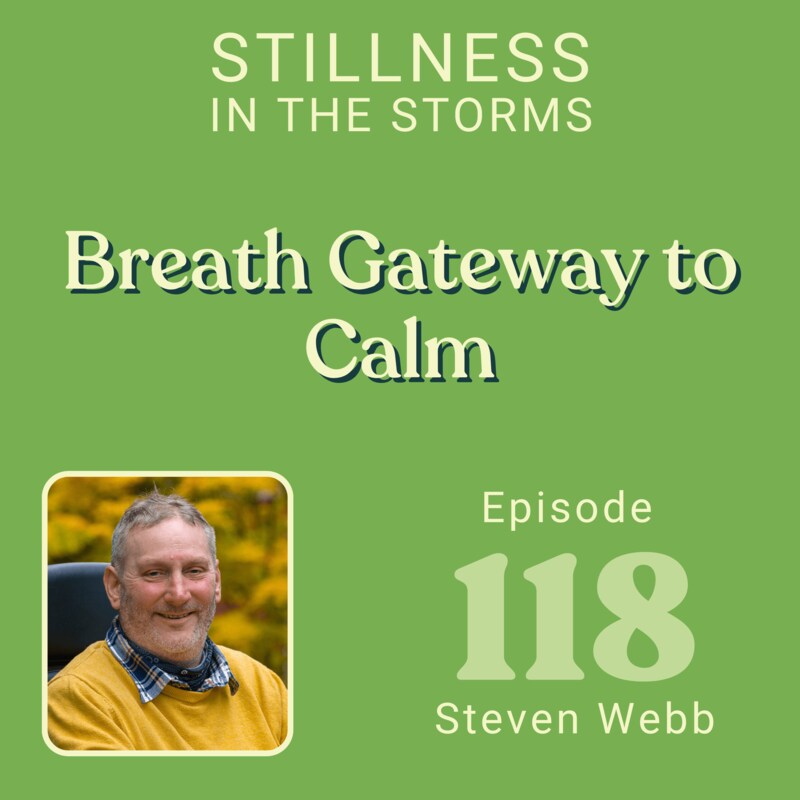
In this episode of Stillness in the Storms, host Steven Webb explores the profound impact of returning to your breath. He discusses the simplicity of this form of meditation and its ability to instill calmness in the body and mind. Webb shares personal experiences, from moments of stress to a time in intensive care, highlighting the power of the breath as a gateway to mindfulness. He delves into the symbolic and deeply philosophical aspects of breath, emphasizing its universal nature and connection to life itself. Join us as we delve into the significance of this simple act and its potential for deep insight and personal growth.
Transcripts
Hello and welcome to this week's podcast. I'm Steven Webb, your host, and this is Stillness in the Storms. I
Steven Webb:want to talk about returning to your breath. And it's the simplest form of meditation.
Steven Webb:And just, ah, I'm breathing in, I'm breathing out. But does it really lead to
Steven Webb:a profound insight? Does it really calm the body? Does it really have a massive impact on your life? Say,
Steven Webb:you're going through some real trouble or is it just a bit of hocus pocus? Is it a little bit
Steven Webb:of a woolly kind of thing? Just returning to your breath Seems so simple, yeah, is it? That's what we're
Steven Webb:going to talk about on today's podcast, so welcome. But just before we get started on that, I just want
Steven Webb:to say thank you to all my supporters, thank you to everybody that donates and again again really deeply appreciate
Steven Webb:you guys. It makes a big difference and thank you for sharing the podcast and thank you for leaving a
Steven Webb:review. I got a review on my inner peace meditations podcast and it just said you've changed my life profoundly,
Steven Webb:and it was like I read it I was like, oh, I want to run away. I can't do that.
Steven Webb:That's not me. But I just I sat with it, I sat in my breath and I was like okay,
Steven Webb:thank you. So if you feel like leaving a review, it makes a big difference. So, thank you. So if
Steven Webb:that's my ask this week, leave a review. That would be awesome. You know, it tells other people where to
Steven Webb:go if they need a little bit of inner peace when they need it most. Let's get on with today's
Steven Webb:topic. Today's topic is returning to the breath, and this is my go-to meditation
Steven Webb:I don't even call it a meditation, I don't even go down that route. To be quite honest, like if
Steven Webb:I'm really struggling, whether I'm sat in a council meeting, whether I'm stuck in traffic on the way down the
Steven Webb:hill, or stuck underneath a bridge when it's raining and I'm feeling myself getting stressed out, or I find
Steven Webb:myself mindfully just my mind's mindlessly wandering around I just okay, let's breathe. I
Steven Webb:just take a few deep breaths and, to be quite honest, they're not even deep breaths. I just take breaths
Steven Webb:because my body knows how to breathe. I don't really need to get involved. My body's I say this on
Steven Webb:my meditations. My body's been breathing for I don't know 52 years and I and every time I get
Steven Webb:involved I mess it up. So I allow my body right now I'm talking to you my body's breathing in
Steven Webb:and out. It's putting me off now I'm thinking about it, but in and out the words. It knows when
Steven Webb:to breathe, it knows how deep to breathe, it knows so I don't need to get involved. So if taking
Steven Webb:deep breaths or slow breaths help and they sometimes do the box breathe in four four four four But
Steven Webb:if you can just return to your breath I'm breathing in,
Steven Webb:I'm breathing out
Steven Webb:you instantly feel more at peace and you can do it whenever you're feeling a little anxious or stressed. There's
Steven Webb:never anywhere that I can think of that you cannot take a moment to take a deep breath before
Steven Webb:doing something. Even if they announce your name and you've got to walk out on stage and there are 10
Steven Webb:000 people waiting for you, you can still just take a breath. Make them wait for one breath you know
Steven Webb:A doctor calls you in the office. Just take a breath
Steven Webb:you know If that phone rings, just take a breath
Steven Webb:You know there's nothing that's that urgent that you cannot. Okay, I've got this.
Steven Webb:So I'm going to go through seven ways in which it really does have a big impact on our lives.
Steven Webb:Because what
Steven Webb:do I do Several times a day, sometimes probably 20, 30 times a day. I'll just return to my breath
Steven Webb:for just, sometimes only 20 seconds, and
Steven Webb:it connects with the environment. It connects with everything around me. It allows my body to take a breather my
Steven Webb:body, you know. If I'm like anybody else, my body's tense and ready and waiting for the catastrophe to happen
Steven Webb:at any moment, or it's mindlessly doing something like browsing or doing those other things. Just taking that breath allows
Steven Webb:my body to to relax. That's everything you do. Just allow your shoulders to relax. So why
Steven Webb:is returning to of breath so important and why? What does it really have a real deep, profound
Steven Webb:impact on your life? And it and it will, because it has with mine and it has with so many
Steven Webb:people. There is deeper meditations you could do. There's all kinds of, there's a thousand different types of meditations
Steven Webb:but there isn't anybody I know, even zen masters, british monks and even the people I talk to that seem
Steven Webb:to have all their shit together compared to people like me and you.
Steven Webb:They all use their breath at some point, so it's immediately there. That's number one. You
Steven Webb:always have access to your breath. If you haven't got access to your breath, you've got a bigger problem than
Steven Webb:sitting there meditating for the next two or three minutes. So even when I was on bed rest and I
Steven Webb:had a you can't see it because I got my neck thing on but I had a tracheotomy for about
Steven Webb:the first four months and I couldn't speak. I had to one tut for yes and two tuts for no.
Steven Webb:And communicating like that while you're on bed rest about what food you like, what you wanted, how you're feeling
Steven Webb:it's not easy
Steven Webb:and but I, in that time I really grew to appreciate my breath and I've just jumped ahead at you
Steven Webb:because I've forgotten about. So when I was in intensive care, I was on what's called a c-pack machine so
Steven Webb:that they put it on your throat and it breathes if you stop breathing. So basically it's
Steven Webb:continuous pressure, something, continuous air. I don't know c-pack it's called
Steven Webb:and what it does is. So if I got too tired because I did not have any chest
Steven Webb:muscles, I only had my diaphragm and instantly, overnight, I had to learn a new way of breathing, a new
Steven Webb:way of um the body doing things, and now I was lying on the bed with 15 pounds of weight
Steven Webb:hanging off the top of my head in intensive care, two or three days after breaking my neck 18 years
Steven Webb:old and I was in Salisbury infirmary, intensive care, couldn't eat anything, couldn't drink anything because my body
Steven Webb:just did not want to move or did not want to adjust to anything. And I would get the little
Steven Webb:momentary rest and I would deliberately just stop breathing and I'd be there and I'd just stop and this machine
Steven Webb:would detect it and go And
Steven Webb:it was so wonderful, it was so relaxing, just oh, I don't even have to breathe, and it was just
Steven Webb:so peaceful and I can remember doing that that The other thing that I really enjoyed during that time was
Steven Webb:the nurses had these little lemon sticks and that because I couldn't eat anything, I couldn't drink anything. It was,
Steven Webb:you know, I suppose, what they could kneel by mouth or something, and this went on for like days. They
Steven Webb:used to wipe this lemon stick on my lips. Oh, that was heaven. So in between, just being able to
Steven Webb:just relax and do nothing, just literally do nothing. I don't even have to breathe and the machine goes and
Steven Webb:breathe for me. That was wonderful. And also those lemon sticks. I never forget those lemon sticks. Um, yeah, when
Steven Webb:you have nothing, the small things really do count, and that's so, so true. We, we think we're
Steven Webb:not happy when we have an abundance of nerdy everything wait Wait to see how much gratitude you have when
Steven Webb:you really have next to nothing and all you do have is your breath for those lemon sticks and I
Steven Webb:remember it very well, very vividly, but moving back. But so your breath is always there. It's one thing
Steven Webb:that it's easy to
Steven Webb:bring to mind, it's easy to go to, it's easier than say, going, what about to sound Or what about
Steven Webb:to how the body's feeling or emotions? You know they come and go and all those things, but your breath
Steven Webb:you
Steven Webb:can almost guarantee if things are going
Steven Webb:slightly above absolutely desperate, you've got your breath. I I don't know what
Steven Webb:point when you don't have your breath, but you know I've been in real situations that, like I say that
Steven Webb:I couldn't breathe that um so moving on, so you got the um the
Steven Webb:physical impact. So the minute you just become aware of your breath and allow your breath to
Steven Webb:be what it is, you have the um parasympathetic
Steven Webb:nerves that come into play and the body just instantly relaxes. It gets better by the
Steven Webb:moment. It becomes more calming, instantly your heart rate lowers, your, it eases tension, your physical
Steven Webb:state supports a state of mental well-being and you've only got to do a couple of breaths for that to
Steven Webb:start happening. Ah
Steven Webb:you if you do that right now, just do a little sigh and allow that breath out. You know, breathing
Steven Webb:in calm, breathing out relax and just allow your body relax you can instantly feel your body. Ah,
Steven Webb:and you didn't know you're holding all that tension in your shoulders and everything. Because we don't, because this is
Steven Webb:normal
Steven Webb:and it's a real I'm Number three, it's a real mindfulness gateway. So it's that gateway to the now. What's
Steven Webb:going on now? So you can, can you hold the breath in your mind as well as how warm is
Steven Webb:the room, what's going on around me, what can I hear, what can I see, what can I feel?
Steven Webb:And instantly that reduces the anxieties. It reduces many of the things that are causing us stress,
Steven Webb:because in the present moment there's very rarely things that are actually going wrong. Most of the things we're thinking
Steven Webb:about is in the past or the future. The present moment, things are normally okay. You
Steven Webb:know, that thing that we're really stressing about hasn't arrived yet and
Steven Webb:if that thing has arrived, you're probably not thinking about going to your breath anyway.
Steven Webb:And it's simple.
Steven Webb:Number four it's simple. It's not complex in any way. You know you it's so simple you'll think
Steven Webb:you're doing it wrong meditating your breath. Okay, sit, breathing in, breathing out,
Steven Webb:And repeat Breathing in, breathing out, repeat
Steven Webb:And you might find it hard to keep the focus on your So count the out breaths. So breathing in
Steven Webb:and then breathing out. One
Steven Webb:breathing in
Steven Webb:breathing out Two, see if you can get to 10 I challenge you um when this
Steven Webb:podcast's over See if you can get to 10 and if you head over to a link in the show
Steven Webb:notes the Inner Peace Meditations podcast. I've recorded and uploaded a returning to your breath meditation
Steven Webb:just to help you with this concept and what I know you know this concept. I know you've returned to
Steven Webb:the breath. You've you've been in a situation before where you've sat down you put your head thing and you've
Steven Webb:just took a deep breath. So you've done it you know It's not something alien to us, but mindfully doing
Steven Webb:is a different thing and the breath is a symbol of life. Number five. You know, to take a breath
Steven Webb:means you're alive. There isn't anything alive on earth that doesn't take the equivalent to a breath. You know, as
Steven Webb:we breathe out the trees breathe in. As we breathe in, the trees breathe out. You know they're not separate
Steven Webb:to us, they're the other half of our lungs and that's the whole of nature, the whole of the breath
Steven Webb:cycle. You know, whether you're in the sea, whether you're a group of whatever it is, it's
Steven Webb:all life. You need breath, you need that transition.
Steven Webb:And the other thing that I find every breath is it's a sign of letting go, a sign of release.
Steven Webb:So you wouldn't take a breath if you didn't have the faith that another breath would come along. And
Steven Webb:every breath is a step into the unknown. I'm going a bit deep here, or maybe a bit far
Steven Webb:but if you think about You're breathing in and then you're letting that breath out. You wouldn't let that breath
Steven Webb:out if it was your last one or if you didn't have faith there was more oxygen or more air
Steven Webb:for you.
Steven Webb:So every breath is just a letting go. I can let go of this moment because a new moment is
Steven Webb:going to come along
Steven Webb:And that's so simple. And
Steven Webb:then, finally, number seven it's it's a connection to the world. You
Steven Webb:know, like I said, there isn't anything else in the world that doesn't take a breath
Steven Webb:And you're connected to everything. Everybody needs to take a breath. That connection with the universal
Steven Webb:experience. You know nobody's nobody will look up and go yeah, I don't know what you mean to take a
Steven Webb:breath, because we all need to do it. We all know the importance of it.
Steven Webb:It's you know the same as your heart beating or the same as your mind thinking or your lungs breathing.
Steven Webb:You'll do your whole life. You might think you don't do these things when you're asleep. I know, you know
Steven Webb:you breathe and are when you're asleep, but the thinking and all those things you're not aware of when you're
Steven Webb:asleep, you do them all just you're not aware of them. You know I will shut the human off, we'll
Steven Webb:take him offline for a minute, because it will just drive us insane. I I like that idea of my
Steven Webb:um inner chimp, my subconscious mind, saying yeah, it's time to go to sleep, I'm going to shut you off
Steven Webb:while I do some maintenance in the brain. I think that's so funny. Anyway, I digress. But
Steven Webb:the breath, just
Steven Webb:it's so simple but yet so important and can it lead to deep, profound insights. Not, yes,
Steven Webb:sit with it long enough.
Steven Webb:You know, if you, every morning, when you wake up, sit on the edge of the bed or go and
Steven Webb:sit cross-legged or at the kitchen table, get your cup of tea or your cup of coffee, make it really
Steven Webb:hot so you cannot drink it for like 10, 20 minutes and just sit there and wait for it to
Steven Webb:cool down and while you're waiting, just breathe in and breathe out. Breathing in calm,
Steven Webb:breathing out, relax. And if you do that 20 minutes every morning, 15 minutes, everyone it will
Steven Webb:it will lead you to a deeper understanding. And the understanding is how does your mind work, how your body
Steven Webb:work? Because once we understand all these things, we can end up playing with them a little bit more. That's
Steven Webb:why a mechanic enjoys the car because they know how they work. They don't mind tinkering and playing around with
Steven Webb:them. It's the same as me with the computer shop, my computer. I don't mind putting bits in and out
Steven Webb:okay, getting other people to do it, because I'm paralysed and can't do it. But I don't mind installing software
Steven Webb:and playing around with it because I know how it works. I know how to fix it. So when we
Steven Webb:know how our body works, when you know how your body works,
Steven Webb:it will give you a a deeper sense of play. You can enjoy it more. You know, and I don't
Steven Webb:mean to make this well. I am going to make this an intimate thing. Didn't intimacy get better when you
Steven Webb:started to discover and learn about your body? It's the same with your breath, same with your thoughts. The deeper
Steven Webb:you go into understanding who you are and, more importantly, who you are not and I've got a podcast that
Steven Webb:goes into that um, who you are not is vitally important because the more we get attached to who we
Steven Webb:are and we realise that who we are is just a figment of our imagination. At best, you know At
Steven Webb:worst it's none of those things either. And you know. Once you realise that on a deeper level, you can
Steven Webb:start to play with it.
Steven Webb:You know, in a similar way, a wonderful quote. What was it? Dance like no one's watching. I
Steven Webb:always like to follow that first bit of the quote Dance like no one's watching. Use your words like the
Steven Webb:whole world's listening. That's my butchering of the original quote, but I I like my version use your
Steven Webb:words like the whole world's um listening because words are powerful and I'm here on a podcast talking
Steven Webb:um But you know, when we return to breath, we start to play with ourselves, play of our body, play
Steven Webb:with what's going on in our minds and play with the true self, the not true self, the face before
Steven Webb:we are born, all those things, and we take them more lightly and we just suffer less.
Steven Webb:That's
Steven Webb:the important thing Is your spiritual journey leading you to suffering less.
Steven Webb:It's working, as
Steven Webb:long as you're not putting your suffering on somebody else just just for the small print there that I'm Steven
Steven Webb:Webb and you can find out more about me or support the podcast. Go to StevenWebb.uk leave a review, just
Steven Webb:you know. Contact me if you want to, if you want me to cover any specific topics or anything like
Steven Webb:that. If you have any questions for me or anything like that, just head over to StevenWebb.uk not only can
Steven Webb:you donate a coffee to support the show, you can message me directly and you can see my other podcasts,
Steven Webb:you can see my blogs and you can also find my Youtube channel and things like that, and you can
Steven Webb:follow me on social media. Look, just return to your breath.
Steven Webb:Enjoy the gaps between the thoughts, between the speaking between the things, because your breath's always there.
Steven Webb:Take care and I love you.






