Shownotes
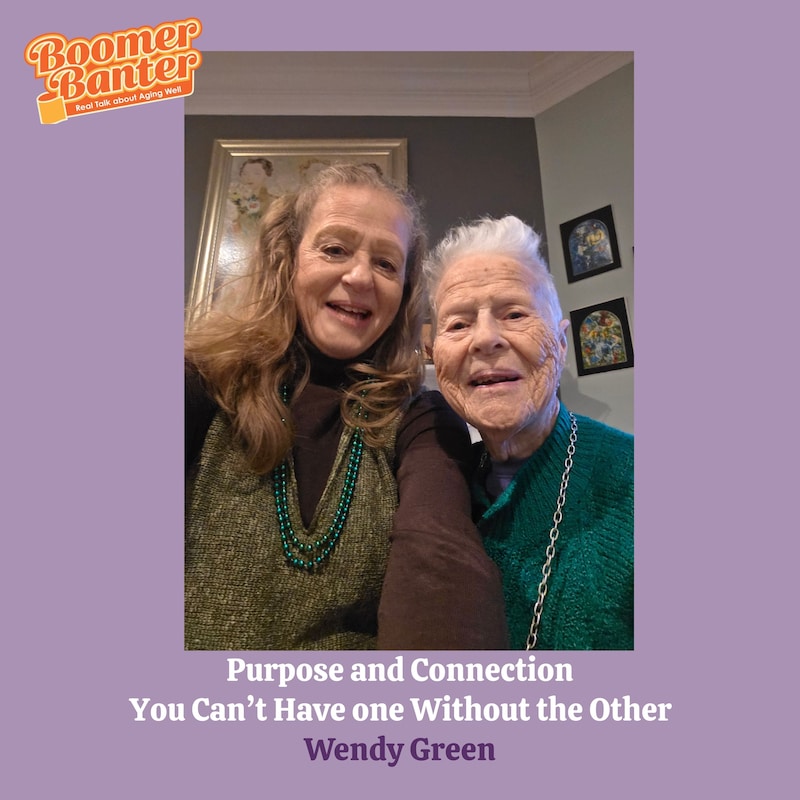
Life took a bit of a turn when my 96-year-old mom moved in with me. Just a month ago, she was stuck in her apartment, feeling isolated and unsure of herself. Now, she’s back in action, setting the table for dinner every night! It’s not just a chore; it’s a revival of her spirit and our connection.
We dig into the importance of having something to do and someone to do it with in this episode. You see, as we age, it’s easy to feel like we’re not needed anymore. It’s like the world has moved on without us! But let me tell you, finding purpose and forming connections is key to thriving in life, especially in our later years.
We explore how many folks, after decades of work and community, can feel lost when they retire. My mom’s journey from feeling useless to being a contributing part of my household illustrates that we need to contribute to feel alive. It’s not just about keeping busy; it’s about engaging with life meaningfully.
I share some eye-opening research about how connection can keep us healthy and happy. Seriously, loneliness can be as harmful as smoking! So, if you’re a retiree feeling like you’ve lost your place in the world, this episode is a warm hug and a wake-up call.
Links referenced in this episode:
- To join the Banter Circle: buymeacoffee.com/heyboomer0413
- Check out Women in the Middle and Women in the Middle Entrepreneurs podcasts at susierosenstein.com
Mentioned in this episode:
Greenwood Capital
GreenwoodCapital.com
Transcripts
It's 5:30 on Tuesday evening and my 96 year old mother is setting the table for dinner.
Speaker A:I know that doesn't sound revolutionary, but here's the thing.
Speaker A:A month ago, she couldn't do this.
Speaker A:Well, more accurately, she didn't think she could do anything really, except sit in her apartment at the continuing care community where she was living, wrapped in blankets, trying to stay warm.
Speaker A:She'd occasionally do a little reading when her eyes weren't too tired, maybe walk to the dining room for a meal.
Speaker A:That was about it.
Speaker A:She was deteriorating.
Speaker A:Not just physically, though there was that too.
Speaker A:The stomach problems, the constant cold, the fog in her eyes, but also mentally, emotionally, socially.
Speaker A:She was shrinking into herself.
Speaker A:So last month we moved her in with me.
Speaker A:And now she's setting the table every single day.
Speaker A:Sometimes it's done before I come out of my office.
Speaker A:Sometimes we talk while she does it.
Speaker A:She asks about my day.
Speaker A:She wants to make sure I'm getting work, my work done.
Speaker A:She's part of the household again, not just occupying space in it.
Speaker A:Her eyes are clear, most of her stomach problems are gone.
Speaker A:And she tells people without prompting how much better she's doing.
Speaker A:So what changed?
Speaker A:Certainly wasn't medication.
Speaker A:There were no medical breakthroughs.
Speaker A:As I see it, I think it's two things she has something to do with that matters to her and to me.
Speaker A:And she has someone to do it with, purpose and connection.
Speaker A:Turns out you really can't have one without the other.
Speaker A:So.
Speaker A:Hello and welcome to Boomer Banter, where we have real talk about aging.
Speaker A:Well, I'm your host with Wendy Green, and every week we talk about the challenges, the changes and the opportunities that come with this season of life.
Speaker A:I work with people who are navigating retirement, mostly everyday folks who've spent their lives as teachers or nurses or working in offices, tradespeople, people who wake up one day and realize that the structure that defined them for 30 to 40 years is just gone.
Speaker A:And a lot of them are struggling.
Speaker A:Not financially, although there are some.
Speaker A:But emotionally, psychologically, socially, they feel like they've lost their meaning, like nobody needs them anymore, like they're supposed to reinvent themselves completely.
Speaker A:And then they tell themselves, well, I'm too old to start over.
Speaker A:I've been helping people work through this for years, but living it with my own mother.
Speaker A:Not the retirement, but the transition from feeling useless to feeling like she matters.
Speaker A:Now, watching her go from barely functional to improving in like 30 days or so, it has crystallized something I knew intellectually, but now I understand viscerally it's not just about having something to do.
Speaker A:I mean, we typically find things to fill our time, but it's about having someone to do it for.
Speaker A:There's this quote from Rick Warren that, you know, I keep thinking about it.
Speaker A:It really speaks to me.
Speaker A:It says, humility is not about thinking less of yourself, but it's about thinking of yourself less.
Speaker A:And what that means is that when you think of yourself less, when you redirect your focus outward towards contribution towards other people, you don't just find purpose, you find connection.
Speaker A:And it's the connection that actually heals your state of being.
Speaker A:So today, let's talk about two things that restore meaning when everything you've built your life around has changed.
Speaker A:Purpose and connection.
Speaker A:And why it's hard to have one without the other.
Speaker A:So let me tell you what my mom's life looked like.
Speaker A:About a month ago.
Speaker A:She was living in this really beautiful continuing care community.
Speaker A:In fact, she had lived independently there with my dad before he passed and with her second husband before he passed.
Speaker A:And.
Speaker A:And a couple years ago, she moved into the independent living apartments.
Speaker A:But it's the kind of place where everything is handled for you.
Speaker A:Meals prepared by chefs, housekeeping comes in and cleans your apartment, changes your sheets, activities are scheduled.
Speaker A:You have to choose whether you're going to participate.
Speaker A:All utilities bundled into a monthly fee.
Speaker A:Sounds ideal, right?
Speaker A:But here's what her days actually looked like.
Speaker A:She'd wake up cold.
Speaker A:She still wakes up cold.
Speaker A:She'd wrap herself in blankets, sit in her chair, read a little if she had the energy, doze, maybe go to the dining room for a meal.
Speaker A:One meal.
Speaker A:But here's the critical part.
Speaker A:She was alone.
Speaker A:Not technically, there were other residents, staff members.
Speaker A:But functionally, in her space, she was alone.
Speaker A:Because when everything is done for you, you don't collaborate with anyone.
Speaker A:You don't contribute to anyone.
Speaker A:You're not needed by anyone in particular.
Speaker A:And without that connection, without someone who actually needs what you have to offer, you turn inward.
Speaker A:You monitor yourself constantly.
Speaker A:The self talk goes like this.
Speaker A:Is my stomach bothering me?
Speaker A:Am I getting enough sleep?
Speaker A:Did I feel dizzy when I stood up?
Speaker A:Wonder when my kids are going to call?
Speaker A:Did I call them?
Speaker A:Everything loops back on itself, and the more isolated you become, the worse you feel.
Speaker A:And I see this exact same pattern with some of the people I teach and coach.
Speaker A:Some are in care communities, some are in their own homes living their retirement lives.
Speaker A:But they're experiencing the same thing, isolation disguised as independence.
Speaker A:They spent 30 years maybe teaching kids how to read.
Speaker A:They had colleagues, they had students, they had parents stopping them in the grocery store, telling them how much their kids loved their class.
Speaker A:But now there's no classroom, no colleagues in the break room, no kids lighting up when they figure something out.
Speaker A:The social fabric that came with the work, gone.
Speaker A:Same with nurses.
Speaker A:They spent 40 years working alongside teams, caring for patients, being part of something urgent and necessary.
Speaker A:Now their days are quiet and unstructured, and they're not sure who they are without that shared mission.
Speaker A:Or think about the office workers who coordinated teams, attended meetings, had work friends they'd grab lunch with, and suddenly they're home alone with no one, sending emails or scheduling zooms.
Speaker A:And here's what they tell me.
Speaker A:It's not just that they're bored, and it's.
Speaker A:It's a sense of loneliness.
Speaker A:But it's not just lonely in the I wish I had more social activities sense, they're lonely in the nobody needs me sense they've lost that relationship that came with being useful to other people.
Speaker A:Can you relate to that?
Speaker A:There's research on this.
Speaker A:The loneliness epidemic among older adults isn't just about living alone.
Speaker A:It's about social isolation, the loss of meaningful connections, especially connections that come from shared purpose.
Speaker A:And that kind of loneliness is as harmful to your health as smoking 15 cigarettes a day.
Speaker A:It increases your risk of dementia, depression, heart disease.
Speaker A:It literally shortens your lifespan.
Speaker A:So when my mom was sitting in that apartment, wrapped in blankets, declining, it wasn't just that she had nothing to do.
Speaker A:There were things that activities she could have done.
Speaker A:It's just that she had no one who needed her to be there.
Speaker A:So what changed for my mom?
Speaker A:Yes, she moved in with me.
Speaker A:But the transformation isn't just about location.
Speaker A:It's about what that change made possible.
Speaker A:Setting the table isn't just a task.
Speaker A:It's a ritual.
Speaker A:We sometimes talk while she does it, or we talk while we sit down for meals.
Speaker A:Like I said, she asks about my day.
Speaker A:I tell her what I'm working on, and sometimes she'll offer suggestions and thoughts about topics or how I'm looking at something.
Speaker A:When my friends visit, she's part of the conversation.
Speaker A:When I'm cooking, she's curious.
Speaker A:She's helping by setting the table, clearing the dishes, being present.
Speaker A:She's not a guest being taken care of.
Speaker A:She's a member of the household.
Speaker A:And that means she's in relationship with me, with the people who visit, with the life happening around her, which includes my cat.
Speaker A:And then everything else followed.
Speaker A:Suddenly, I realized her eyes were clearer.
Speaker A:The Stomach problems were mostly gone, and that had been a big deal.
Speaker A:She gets some physical therapy.
Speaker A:And so she exercises.
Speaker A:Does her exercises every day.
Speaker A:She does some coloring, some journaling.
Speaker A:She checks her phone.
Speaker A:But here's what I want you to understand.
Speaker A:Those improvements aren't just from having tasks to do.
Speaker A:They're having someone to do them for and someone to do them with.
Speaker A:Purpose and connection, in this case, are inseparable.
Speaker A:You can't have one without the other.
Speaker A:And the people that I coach, the ones who thrive, aren't the ones who just find activities to fill their time.
Speaker A:They're the ones who find ways to be useful to other people.
Speaker A:And in the process, they build relationships.
Speaker A:Like the retired teacher who volunteers at our literacy program.
Speaker A:She doesn't just get to use her teaching skills again.
Speaker A:She gets to know other tutors.
Speaker A:She builds relationships with the students, and she becomes part of a community working towards something meaningful.
Speaker A:Literacy.
Speaker A:Or the former nurse who becomes a hospice volunteer.
Speaker A:She doesn't just get to use her caregiving skills.
Speaker A:She connects deeply with patients and families in their most vulnerable moments.
Speaker A:She forms bonds with other hospice volunteers who understand what that work means.
Speaker A:And then there's the, you know, office worker that I worked with who joined a nonprofit board.
Speaker A:And she doesn't just get to use her organizational skills, which they're tremendous, but she works alongside people from completely different backgrounds, all committed to the same mission.
Speaker A:She expanded her social world in ways that her retirement alone never would have.
Speaker A:The Mayo Clinic research on volunteering backs this up.
Speaker A:And what's fascinating is that the health benefits aren't just from the activity itself.
Speaker A:Volunteers report significantly better physical and mental health than non volunteers.
Speaker A:Lower rates of depression and anxiety, lower mortality rates, even when you control for age, gender, and baseline health.
Speaker A:But when researchers dig deeper, they find that a huge part of those benefits come from the social connection, from working alongside people with shared values, from building friendships based on contribution, not just proximity.
Speaker A:One study found that volunteering increases social interaction and helps build support systems based on common interests.
Speaker A:And here's the key part.
Speaker A:Volunteers often come from diverse backgrounds, which means you're not just maintaining your existing social circle, you're expanding it.
Speaker A:You're meeting people you may never have had the opportunity to meet.
Speaker A:Different ages, different life experiences, different perspectives.
Speaker A:And that keeps you engaged, sharp, interested in the world.
Speaker A:I see this with my neighbor.
Speaker A:Her mother passed away.
Speaker A:She was caregiving for her mother, and she has since joined a couple of volunteer opportunities.
Speaker A:And she is exhilarated when she comes home from those opportunities, and she's Making new friends.
Speaker A:It's been wonderful for her.
Speaker A:But this is especially critical as we age, because retirement often comes with loss.
Speaker A:Friends move away or pass away.
Speaker A:We lose a spouse or a partner.
Speaker A:Adult children definitely have their own busy lives.
Speaker A:And your social circle naturally shrinks unless you actively build new connections.
Speaker A:And the best way to build new connections is through shared purpose.
Speaker A:Relationships built around working towards something that matters.
Speaker A:Where you show up, not just for yourself, but because other people are counting on you.
Speaker A:That kind of connection, where you're needed, where you contribute, where you're part of something bigger than yourself, that restores your sense of meaning, your sense of purpose, the reason you're here.
Speaker A:It helps you get up in the morning.
Speaker A:And living with my mom taught me things I could learn from coaching sessions or training classes alone.
Speaker A:First, connection requires consistency.
Speaker A:My mom doesn't set the table just because it's a fun activity.
Speaker A:She sets the table because it's her way of helping.
Speaker A:It's what she does every day at 5:30.
Speaker A:I count on her for it, and she knows that.
Speaker A:And that consistency creates a connection.
Speaker A:We have our ritual, we have our conversation.
Speaker A:We show up for each other in that moment every single day.
Speaker A:And that is what I try to help my clients find in volunteering.
Speaker A:Not just show up whenever you feel like it.
Speaker A:Opportunities, but roles where people are actually counting on you, where your absence would be noticed and would matter.
Speaker A:The literacy tutor who shows up every Thursday at 3 for the same student.
Speaker A:That consistency builds relationship.
Speaker A:The student starts looking forward to Thursdays, and the tutor becomes someone who matters in that person's life.
Speaker A:The hospice volunteer who visits the same patient every week.
Speaker A:Her reliability creates trust, connection, and real relationships, not just with the patient, but with the family.
Speaker A:Second, validation and encouragement work best in the context of connection.
Speaker A:So what do I mean by that?
Speaker A:When my mom says she's too tired to set the table, I don't just say, that's okay.
Speaker A:I say, I get it.
Speaker A:You're tired.
Speaker A:You want to just sit with me while I do it.
Speaker A:Sometimes she might say, yes, and we still have our conversation.
Speaker A:And sometimes she rallies and does it anyway because it's the connection that matters.
Speaker A:The task is just the vehicle for the connection.
Speaker A:And this is what I'm learning with my clients too.
Speaker A:When they're discouraged, when they feel like they're too old or they don't have anything to offer.
Speaker A:When you validate someone's feelings and then connect them, literally connect them to opportunities where they can experience being needed again, you're showing them that you understand and offering possibilities because talking about it helps, but experiencing it, actually showing up and having someone light up because you're there, that's what changes everything.
Speaker A:Third, the opportunities are everywhere and they're desperately needed.
Speaker A:And I preparing for this.
Speaker A:I searched idealist.org for my area, Greenville, South Carolina.
Speaker A:It's not a huge city and the list was extensive.
Speaker A:They needed court monitoring for Mothers Against Drunk Driving.
Speaker A:You sit in courtrooms alongside other volunteers, ensuring accountability.
Speaker A:Hospice companions.
Speaker A:You build relationships with patients and families in their most vulnerable moments.
Speaker A:Visitors for homebound seniors, you become the person who shows up, who connects, who breaks the isolation.
Speaker A:They also were looking for cancer support volunteers, literacy tutors, childcare for parents, and job training.
Speaker A:Every single one of those needs.
Speaker A:It's not just a task, it's a relationship.
Speaker A:It's connection built around purpose.
Speaker A:And that's just one website.
Speaker A:Idealist.org you add in the Red Cross, United Way, AARP, local Rotary clubs, faith communities.
Speaker A:Truly the opportunities are endless.
Speaker A:And the world is not short on places that need what you have to offer.
Speaker A:And you're not short on capacity for meaningful connection.
Speaker A:You just have to redirect where you're looking.
Speaker A:And fourth, this matters even more as we age.
Speaker A:As I said, my mom is 96 almost, and she went from isolated and declining to connected and improving in a little over a month.
Speaker A:Because the research is clear, social connection becomes more important as we age, not less.
Speaker A:As you face loss, friends, spouses, mobility, independence, the relationships you maintain and build become your lifeline.
Speaker A:And if my mom can make that shift at 96, then anyone can.
Speaker A:A 65 year old retired teacher, a 70 year old former nurse, a 62 year old who just left their office job.
Speaker A:The capacity for meaningful connection doesn't decline with age.
Speaker A:The opportunity for it does unless you actively create new opportunities.
Speaker A:And volunteering is one of the most powerful ways to do that.
Speaker A:All right, let's bring this home with some things you can actually do.
Speaker A:If you're feeling invisible, I isolated or like your useful days are behind you.
Speaker A:Here's what I've learned that works.
Speaker A:Recognize that purpose and connection are inseparable.
Speaker A:Don't just find things to fill your time.
Speaker A:You need to find ways to be useful to other people.
Speaker A:And in the process, you'll build those connections that make your life meaningful.
Speaker A:The task is just the vehicle.
Speaker A:The relationships are what matter.
Speaker A:Look to redirect yourself rather than reinvent yourself.
Speaker A:This is important because a lot of times we get hung up on I have to reinvent, I have to become somebody different.
Speaker A:You know, no you don't.
Speaker A:You have a lot of skills that you've learned in your lifetime.
Speaker A:So whatever you did for 30 or 40 years, those skills and the ability to connect with people in specific ways, like teach teachers who know how to break things down and help people understand, or nurses who know how to care for people when they're vulnerable, those skills are still valuable and the relationships those skills make possible are still available to you.
Speaker A:You just need to redirect where you apply them and really look for consistency, not just activity.
Speaker A:When you're exploring volunteer opportunities, look for roles where you would show up regularly, where people will count on you, where your absence would be noticed.
Speaker A:So I have to clarify this a little bit because I had a client who was concerned about volunteering and what if she didn't like the volunteer opportunity?
Speaker A:And what I encouraged her to do was to try it for a month so that people could count on her for the month.
Speaker A:It also gives her time to build those relationships.
Speaker A:See if the vibe in the organization fits with who she is and if after a month it doesn't seem to fit.
Speaker A:She tried.
Speaker A:Look for something else, because this is the time you can do that.
Speaker A:But look for consistency for at least a month.
Speaker A:And start with just one thing, right?
Speaker A:Don't go all crazy and go, well, you know, I can do dog walking or I can go to hospice, or I can do meals on wheels, or yes, you could do all of that.
Speaker A:But don't overwhelm yourself initially.
Speaker A:Look for one thing.
Speaker A:Go to a site like idealist.org or volunteer match.org and find an opportunity that uses skills you have and that connects you with people in a way that matters.
Speaker A:And then give it that month that we talked about.
Speaker A:And if it feels good, commit to doing it regularly.
Speaker A:And if it doesn't fit, then try something else.
Speaker A:But pay attention to the connections that you could make in in those volunteer opportunities, not just the activity.
Speaker A:And remember that social connection.
Speaker A:Although the opportunities may be less as we age, it's more important as we age, as you face loss and you will, the relationships you maintain and build become your lifeline.
Speaker A:Not just for emotional well being, but also for physical health, for longevity, for the will to keep showing up.
Speaker A:Don't look at volunteering as charity.
Speaker A:It's not just giving back, it's building the social fabric that will sustain you through the hardest parts of aging.
Speaker A:Sometimes people say that when you give back, back and volunteer, you actually get more than the people that you are giving to.
Speaker A:So yeah, it may be easier to sit in isolation and Focus on everything that's wrong, what hurts, what we've lost, what we can't do anymore.
Speaker A:But that road leads to more isolation, more decline, the belief that your best days are behind you.
Speaker A:And then there's the alternative.
Speaker A:Finding ways to be useful to other people, building connection through contribution.
Speaker A:That road leads to what my mom experiences when she tells people, I'm doing so much better now because she's not just doing tasks.
Speaker A:She's in relationship.
Speaker A:She matters to me.
Speaker A:I matter to her.
Speaker A:And that connection is what makes everything else possible.
Speaker A:So your skills matter, your experience still matters.
Speaker A:You still matter.
Speaker A:And somewhere there are people who need what you have to offer.
Speaker A:People who will light up when you show up, people who will become your friends, your community, your reason to keep showing up.
Speaker A:And the question is where you will find them.
Speaker A:If you're having trouble finding people who talk about aging in a helpful way, I want to invite you to join our booth, Boomer Banter Circle.
Speaker A:It's where we meet monthly over zoom and we talk about things like volunteering, like friendships, like aging, and we share our thoughts and our feelings and we get insights.
Speaker A: to buymeacoffee.com/hey boomer: Speaker A:And I also want to say that since you listen to this podcast, you might also want to check out Susie Rosenstein's podcast.
Speaker A:She is a member of our Agewise Collective group.
Speaker A:She is also a Master Certified Life Coach, Life Leadership Mentor for Women, 55+ and certified Zentangle Teacher.
Speaker A:Susie helps midlife women stop living on autopilot and step into the leadership era of their lives, honoring the gift of time and the privilege of aging by leading it with clarity, self respect and intention.
Speaker A:Susie's the host of the top rated podcasts Women in the Middle loving life after 50 and women in the Middle Entrepreneurs the Reality of Running a business after 50.
Speaker A:You can look for her wherever you listen to podcasts or go to her website, susierosenstein.com so thanks for listening.
Speaker A:If this resonated with you, I'd love to hear your story.
Speaker A:And if you're navigating this transition yourself and need help figuring out where your skills fit, how to build those connections, reach out.
Speaker A:This is exactly what I help people work through.
Speaker A:You can get me at wendyboomer Biz Biz and I will see you next time.
Speaker A:Thanks so much, Sam.



