Shownotes
- Strategic School Choice is Crucial: Tony emphasizes that picking the right school—one that not only fits academically and socially but also financially—can make all the difference. Shopping for the best net price, leveraging scholarships, and considering both public and private options is essential.
- 529 College Savings Plans Provide a Head Start: Starting a 529 plan early, as Tony’s grandfather did, helped offset the costs of college and allowed Tony to graduate with little to no student debt—an advantage that influenced his final school decision.
- Scholarships and Grants Are Out There—But You Must Apply: Many scholarships go unused because students aren’t aware of them or don’t take the initiative to apply. Proactively seeking out scholarships and working with advisors can meaningfully reduce college costs.
- Debt-Free Graduation Sets You Up for Success: Graduating without significant student loans provides young professionals with greater flexibility, less stress, and a stronger foundation for achieving financial independence and future life goals.
- Campus Involvement Opens Doors: Tony’s advice to get involved on campus (clubs, leadership, internships, and networking with professors) has led to scholarships, career opportunities, and a more fulfilling college experience. Waiting for opportunities isn’t enough—students should be proactive.
Transcripts
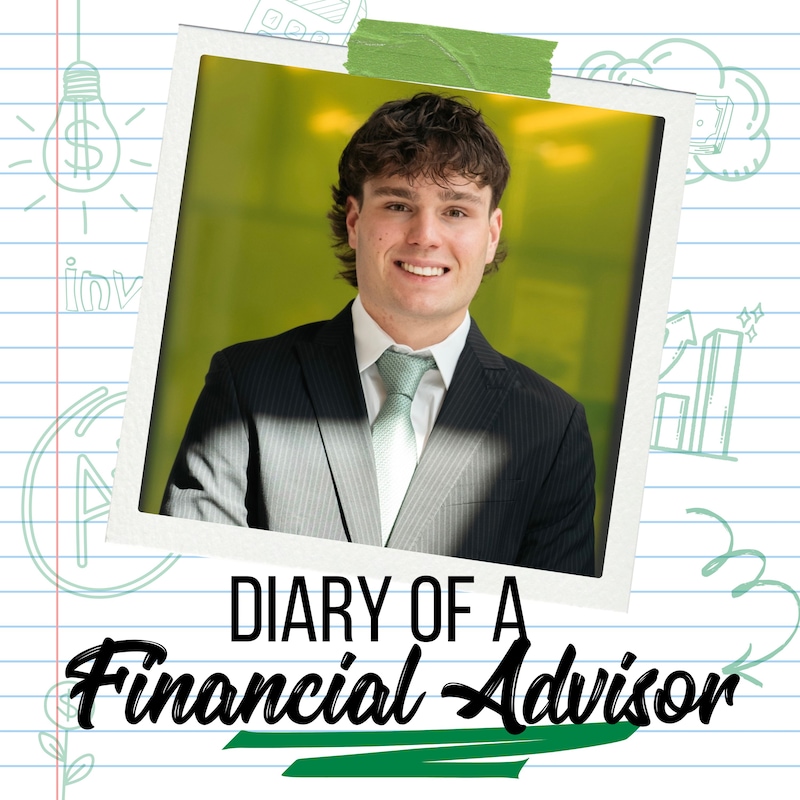
This is Eric Brotman, the host of Don't Retire Graduate, the podcast that asks you what you want to be when you grow up so you can graduate into retirement with passion and with purpose. Welcome to our Diary of a Financial Advisor segment where we interview financial advisors about their professional journeys and their passion for helping others succeed. Today, I'm pleased to be joined by Tony Breen. Tony's an intern at BFG Financial Advisors. He's a senior finance major at Stevenson University, and he's also pursuing a master's in forensic accounting. He's a Sam and Geraldine Dell Scholarship recipient, president of the Financial Management association, and VP of Enactus at Stevenson. All in all, Tony's a very busy guy, but he also holds the distinction as being the only person in six years to ever interview me for this show. So, Tony, the hot seat's yours this time.
Eric Brotman [:Welcome to Don't Retire Graduate.
Tony Breen [:Well, thank you for having me again. It's an honor.
Eric Brotman [:Listen, no one. For someone to have the gumption and the nerve as an intern to say to the person who's been running the podcast and the company, hey, listen, I'd like to interview you for a show took an enormous amount of guts, and I give you an incredible amount of credit for that. That was bold. I liked it.
Tony Breen [:Thank you. I do appreciate that. I had a great time doing that one. I think I learned a lot of things that I wanted to ask after reading the book, and I thought that was a great podcast. So thank you for, oh, running in, having me back.
Eric Brotman [:Listen, I now know what it feels like to be in that seat, but today you're in this seat, and. And of course, you're graduating in May, allegedly. And assuming that actually does happen, you know, we anticipate that you'll be here, which we're excited about. Why. Why financial planning? Why is this. Why is this part of your. Your journey professionally?
Tony Breen [:So I kind of fell into it because I started out as a biology major in school and I didn't mind all my classes, but I absolutely hated the labs and decided that's not what I want to do and made the switch to business administration, joined the finance club and had a little bit of background with it from my father, investing. And I kind of just took off from there, started exploring fields to go down, and wound up with an internship. Now here, my previous internship, and from there, just absolutely loved it and loved the atmosphere and working with clients and things like that.
Eric Brotman [:So you're in the throes of the undergraduate experience. You started, I would think, during or right after Covid.
Tony Breen [:Is that right? Right after.
Eric Brotman [:Right after. So you had a normal freshman year, whatever normal is for a freshman year. Well, that's a blessing because I know a lot of young people sort of missed a year or two of. Of that experience. And it was nice that you were able to get to campus and be a freshman in a more normal, traditional way. College is wickedly expensive. So let's talk a little bit about what families need to consider and sort of how involved you were in the financial considerations of choosing where to go to school.
Tony Breen [:Yeah, so when we chose. So I go to Stevenson. And when we chose Stevenson, it took a lot of research to figure out where to go. We kind of had a checklist of things we needed in school. And ultimately, even though I liked the campus, I liked everything about Stevenson. It really came down to a financial decision. I actually may have had a rare case where in state in New Jersey was the same as, if not more expensive than my private education at Stevenson. So it was a big help that Stevenson offered a lot of scholarships and things like that for me to be able to attend there and attend a private university.
Eric Brotman [:So at bfg, we have been involved with Stevenson for many years. To say that we're honorary Mustangs is an understatement. We love the school and we do a lot of work with Professor Simpkins and with the department and have been involved with scholarships there to help young people finish their junior and senior year where there's a gap. And it's been a wonderful relationship for us professionally with the university. And then in terms of hiring, we've hired a lot of young people from Stevenson who are patient. They're patient enough not to feel like they need to have the corner office the day they show up. There's a can do attitude. These young people come out ready to work.
Eric Brotman [:And all the things we hear about in the media about young people graduating from college and being totally unprepared is simply not true at Stevenson, which I. I got to give the university an enormous amount of credit for getting young people ready, not only ready to learn and to grow, but to. To be a contributing member of an organization right away in just about any field you can come up with. So I want to shift gears a little bit and talk about how people can look at college. How parents, grandparents, even. Even students who are exploring college can look at the different ways to pay for school. Certainly 529 college savings plans are one way, not the only way. What experience do you have or have you talked to Any of your classmates about the ways in which 529s have made a difference to their educational costs?
Tony Breen [:Yeah, certainly. I think at Stevenson there are a lot of students who actually, I'll use myself as an example because I think it's a little easier to talk about that way. But I ended up going to college and I did have 529 plan for my grandfather. He started when I was born and I'm very grateful that I had that opportunity because not everyone has that. And that helped pay for a large majority of my education. And I think that's why I really went with Stevenson at the end of the day, because I did the math based off what the 529 was. And it made the most sense financially for me to be able to go to education without coming out with a ton of money in student loans or something like that, and to get a really good education at the same time.
Eric Brotman [:So you mentioned that there were some scholarships and a lot of times scholarships are out there and they go unused. So. And that's not true just of Stevenson. It's true across the country where there are scholarships available, but people have to apply for them. They have to know they exist. You have to do some homework to apply for scholarships. Um, we've done episodes of our podcast with folks who help families navigate the, the college funding. We talked about 529s.
Eric Brotman [:There's lots of different ways to reduce the cost of school. One is doing a year or two in community college before transferring to a four year university. Do you have friends and colleagues who came in as, as transfer students from junior colleges or, or community colleges where they were able to get some of the credits they needed at a much lower price point.
Tony Breen [:Yeah, actually. So someone who is part of my club on the E board who has good friends with, she actually went to a two year or a two year school, transferred to Stevenson, and when she transferred she had an internship with, believe it was the Department of Defense. And she ended up basically getting paid to go to school at that point. And she picked that all up just through her internships that she had while she was at the two year school and through the resources that school provided her. So I think it's really possible to get scholarships and find great ways to pay for school on all different tracks. I've had friends even go through the military to help pay for their school and that seemed to help them out a lot as well.
Eric Brotman [:So the last choice in paying for education I think has to be student loans, you know, coming out of school at 21 or 22 years old with a giant debt is coming out trying to build your own financial independence path from standing in a hole instead of standing on the ground. I'm sure you have friends and classmates and clubmates and everything else who are facing the reality of graduating in May and having some payments begin within six months. I have to imagine that puts a different level of pressure on you to find a certain kind of job, to potentially have multiple jobs just to cover that cost. What is the pulse of the seniors? I guess your classmates who are coming out of school without debt or with very modest debt versus those who are maybe strapped.
Tony Breen [:I think because I'm friends with a lot of people who have graduated already and knowing them, being close with them, it was never even a conversation they had which was honestly more concerning. They were just kind of like, I'll figure it out when I get there and I get my job. But the people who did have like better plans and didn't have a ton of student loans when they got out, they seem to be in a better situation where they're not, they're not complaining about it like all my other fans were. They're not worried about how they're going to make payments. And it is a topic that comes up a lot amongst my friends who have graduated.
Eric Brotman [:So if you were to give one piece of advice to people who are watching this, maybe their parents with, with high school age kids or younger, maybe they're young people now trying to navigate this themselves, what would that one piece of advice be regarding not only education, higher education in general, but also financially?
Tony Breen [:Yeah, I think the reality of it is pick the right school. Because Stevenson has been so amazing to me and the advisors there and the faculty and everyone who works at Stevenson actually assisted me getting some really big scholarships that have helped made school affordable. In addition to that, Stevenson, even though sticker price is $70,000, I obviously didn't pay that because I got scholarship. So I think picking the right school, what fits best for you and it's going to be different for everyone. Some people it's going to be a public school, some people it's going to be private. But finding somewhere where you could go there for the most affordable price is really important. And then on top of that there's obviously the paying for it and helping a student make those choices or if you have a kid going into college, assisting them with it. And I was really blessed with my parents did help me find where's the best spots for me to go and how to afford it and things like that.
Eric Brotman [:Well, a shout out to your parents for, and grandparents for helping. But also I think we should shout out to them that, that they don't have to worry about you coming home and living in their basement while you're, while you're making sandwiches because you know, you found a path to gainful employment. So mom and dad, we got them from here. Thanks for getting them this far. You know, when we hire young people here, we tend to make this very much an apprenticeship. There's normally a five year period where college graduates will enter the organization, will get some licensure, will learn the client service piece of the business, will then begin their professional and graduate studies, often subsidized by our firm, which is very typical because we don't want you taking student loans on either. And then as our young advisors develop and I don't know, Tony, if you decided you want to be a financial advisor or whether you just like being in the business in lots of different ways, and I'm not going to put you on the spot to answer that right now. It's a little premature for you to know exactly what you want to do.
Eric Brotman [:But, but there's a choose your own adventure component to that where you can, you can be great at a lot of different roles within an organization like ours. And I, I will say selfishly and proudly that we're glad to have you on this bus. I'm glad to have you here and anybody with, willing to interview me is like I said at the, at the start of the show, that that's bold and, and very impressive.
Tony Breen [:Thank you, I do appreciate that.
Eric Brotman [:So any, any parting comments or advice? You talked about picking the right school. Is there, are there any other tips or gotchas or hey, any mistakes maybe that you made that you would, would steer people clear of making so, so that they don't maybe suffer the same consequence.
Tony Breen [:My advice would be, and I give the advice when I speak on campus. It's the same thing every time. Get involved at school, especially if you're at a smaller school like me. There's so many opportunities there. My brother just got to WVU and he already found someone to do research with just cause. He was proactive in finding that I was able to get scholarships and make really great connections with professors and advisors and obviously the wonderful Dr. Simpkins as well, which have helped me in numerous ways and actually helped me get here. So I think the main advice I have is just to get involved because there's so many different ways to help with school and really make the most of school because you could sit in your room all day and just study and get by, or you could really make something of it with college.
Tony Breen [:And I've seen both ways. And kids who get involved and are always busy, they're the ones who seem to enjoy college a little more, too.
Eric Brotman [:So good advice. I think that's sound advice. And for the sophomores and juniors at Stevenson right now who are thinking about internships, don't wait because you really do want to begin that sooner because it does get your foot in a door, whether it's with the company you might wind up working for or with or whether it's ruling something out. You know, I did internships every year at college and it helped me decide what I didn't want to do as much as it helped me decide what I did want to do. So, Tony, thanks. Where can folks get in touch with you if they want to hear more? Hear more, Tony?
Tony Breen [:Yeah, I think the best way to do it would be right now. It's reach out to the FMA clubevenson. Edu. I think we got a lot of great stuff. We could help out with that. Of course, you could always contact the office and ask for me. And I'm always willing to talk to people about college. So I do love my school.
Tony Breen [:And I'd be willing to talk to anyone who's interested in Stevenson or wants a little advice on it.
Eric Brotman [:Tony, thanks for doing this. You know, I really appreciate it. And it's a lot of people who have a lot more experience than you who are very nervous about doing this. And you're cool as a cucumber man. I appreciate it.
Tony Breen [:Thank you.
Eric Brotman [:Well done. I'd like to thank everybody for listening and watching today. If you enjoy the show, please subscribe so you never miss an episode and we can be part of your journey to financial freedom. We'll be back next week with another engaging guest and in two weeks with another entry in our diary of a financial advisor. For now, this is your host and valedictorian Eric Brotler, reminding you don't retire. Graduate securities offered through Kestra Investment Services, llc. Kestra is member finra, sipc. Investment Advisory Services offered through Kestra Advisory Services, llc.
Eric Brotman [:Kestra am an affiliate of Kestra is Kestra is or Kestra as are not affiliated with Brotman Financial or any other entity discussed.

