Shownotes
Why high performers can be the loneliest people in the room.
Some freaks are easy to spot.
Dyed hair. Tattoos. Bold opinions. Loud joy.
And then there are the freaks who look fine.
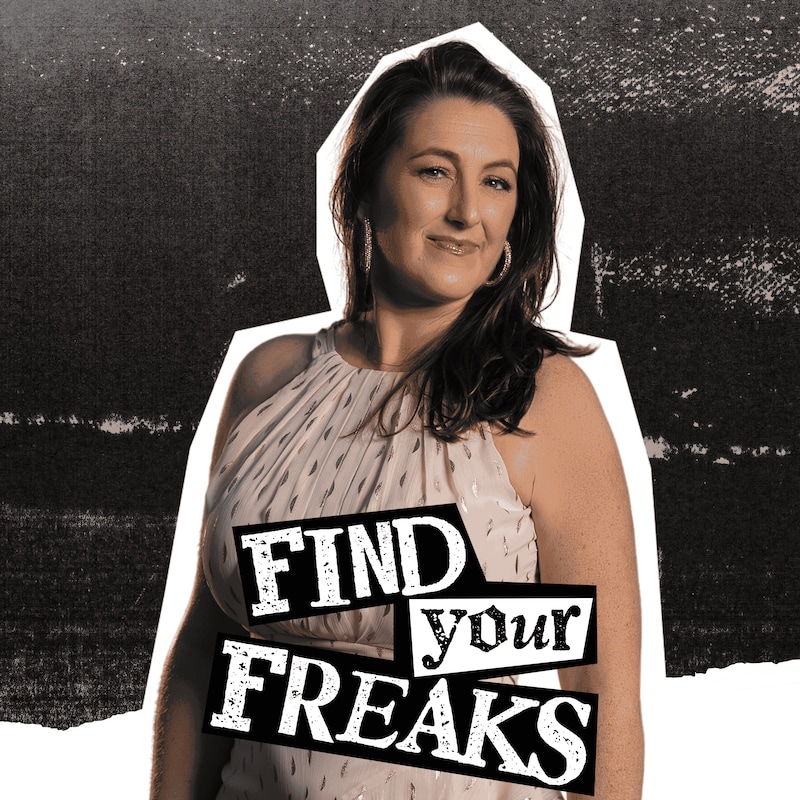
In this episode of Find Your Freaks, Tonya Kubo sits down with former psychotherapist turned soul medic Rachel Alexandria to talk about the hidden loneliness of high performers — the people who appear successful, capable, and unshakeable… while quietly unraveling inside.
Rachel works with executives, founders, and leaders who carry immense responsibility while suppressing their own humanity. Together, Tonya and Rachel explore why competence can become a mask, how perfectionism and people-pleasing are often survival strategies, and why asking for help feels so dangerous when everyone assumes you’re “the strong one.”
If you’ve ever felt invisible because you seem too capable to worry about — or if you love someone who looks like they have it all together — this conversation will help you see what’s really going on beneath the polish.
Episode Highlights
- [04:15] Why high performers are often the most isolated people in the room
- [08:42] The difference between having it together and holding it together
- [13:30] How family dynamics and gaslighting disconnect us from our inner knowing
- [18:55] Burnout, perfectionism, and people-pleasing as survival skills
- [25:10] How perimenopause, ADHD, and long COVID complicate high achievement
- [31:40] Why leaders can’t afford to “fall apart” — and what they do instead
- [38:22] The hidden cost of excellence: “Other things suffered.”
- [45:05] Why asking for help feels so inconvenient — and so necessary
- [52:10] How to be a safe person for someone who looks like they don’t need help
- [58:30] What to do if you’re the one silently struggling
Why High Achievement Can Be So Lonely
Rachel explains that many high performers learned early that competence equals safety.
Being capable, polished, and self-sufficient became a way to survive — not a sign that they don’t need support.
When everyone assumes you’re fine, your pain goes unseen.
And when vulnerability feels risky, loneliness becomes the price of success.
The Cost of Excellence
“There is no gaining of a high level of skill or success without loss.”
In this episode, Tonya and Rachel unpack the uncomfortable truth that achievement always comes with tradeoffs — time, relationships, rest, or health. Burnout often happens when we try to pretend those costs don’t exist.
Slowing down, grieving what’s been lost, and choosing what matters most isn’t weakness.
It’s wisdom.
Asking for Help Without Knowing What It Looks Like
One of the most powerful moments in the conversation centers on this truth:
You don’t need to know how someone will help — only that you need help.
Rachel shares why trying to solve everything alone eventually stops working, and how naming “I don’t know what I need, but I can’t do this alone anymore” can open the door to real healing.
How to Support the People Who “Look Fine”
If you’re worried about someone who always seems okay, Rachel offers simple, human ways to show up:
- Initiate connection without analysis
- Send a “you’ve been on my mind” text
- Offer practical care (meals, errands, presence)
- Make it easy for them to say no — so yes feels safer later
Compassion doesn’t require fixing.
It requires noticing.
Meet Our Guest
Rachel Alexandria is a former psychotherapist turned soul medic who helps high performers clean up their “secret messes” — anxiety, perfectionism, burnout, and loneliness hidden beneath competence. She is the host of the podcast Lonely at the Top and the author of three books exploring conversation, criticism, and stress relief.
Meet Your Host
Tonya Kubo is a community strategist and marketing consultant known for building digital spaces that feel like chosen family. As host of Find Your Freaks, she brings together unconventional thinkers who know “normal” was never the point — and who believe that belonging is built through honesty and human connection.
Key Quotes
- “Some of the loneliest people are the ones everyone thinks are fine.” — Rachel Alexandria
- “There is no gaining success without loss. Other things always suffer.” — Rachel Alexandria
- “What got you here can’t get you to the next place.” — Rachel Alexandria
- “You don’t have to know what help looks like to ask for it.” — Rachel Alexandria
Resources & Mentions
- Lonely at the Top — Rachel’s podcast
- RachelAlexandria.com
- Jennifer Arezio — spiritual teacher and mentor mentioned in the episode
Support the Show
If Find Your Freaks matters to you, consider buying us a coffee to keep the show ad-free. Every dollar supports production so more weirdos can find their people.
Find Your Freaks merchandise is available through Abilities and Attitudes.
Let’s Stay Freaky
What’s Next
Some freaks stand out. Others blend in so well they disappear. Next episode, Tonya explores what it means to be seen when your freakiness is hidden — and why looking fine doesn’t mean you don’t deserve care, community, and connection.
Transcripts
I help high performers clean up their secret messes. The secret messes, people burning out, people struggling with people-pleasing imperfectionism. What I've come to realize over time is that a lot of the people I work with who have secret messes actually come from a family where somebody had a personality disorder.
Somebody asked a person who was very highly successful, how did you get so good at this? And he said, other things suffered. There is no gaining of a high level of skill or accolades or success without loss. I think we all have to learn to say I need help and not have to know what the help is going to look like.
We're wired for connection, but most of us are faking it to fit in. I'm Tonya Kubo, and this is Find Your Freaks, the podcast that flips the script and spotlights the quirks you thought you had to keep quiet. Subscribe now and head to findyourfreaks.com for show notes and extras, because around here, what makes you weird makes you wonderful.
Normal was never the point. Some freaks are easy to spot, right? Dyed hair, piercings, tats, bold style. You know, the ones who scream, I refuse to blend in.
And then there's others who hide their freakiness on the inside. They're a little bit more private, maybe carefully managed, and often painfully lonely. I'm Tonya Kubo, and this is Find Your Freaks, the podcast for people who were never meant to fit the mold.
And today's guest understands that inner world better than anybody else I know. Rachel Alexandria is a former psychotherapist turned soul medic, and she helps high performers clean up their secret messes, the overwhelm, the anxiety, the perfectionism, that people-pleasing that they hide under their resume-ready competence. And she has written three books on the conversation.
If you've been around a while, you've seen us chit-chat on Facebook. Her books are on conversations and her critics and stress relief, and she hosts the podcast Lonely at the Top. She's a brand new podcaster, just like me.
And Lonely at the Top is a show I love. We're going to talk about that in a little bit, because it is such a sanctuary for leaders who are carrying pressure that nobody sees, because everybody thinks they have it all together. Rachel, welcome, welcome.
Yeah, thank you for having me. I'm so excited to be here. I am thrilled because I think this is a very important topic, not just because it's common, but because so few people talk about it.
And you would think that in:My clients, my friends, my partner. But my freaks are, when we're talking about Lonely at the Top and the people that I work with, they are high performers. So we're talking general counsels, we're talking C-suite folks, we're talking VPs, people who have reached what most consider to be the highest level in their careers.
And they secretly don't feel like they get to be their authentic selves. They are hiding things from everyone in their life. They're not living out loud about their sexuality or their orientation.
They are not living out loud about their humanity or they are hiding difficult relationships. They are scared that things in their private life or things that they just have a lot of, I don't know if it's imposter syndrome, although I don't like that expression, but that feeling like I don't really fit here. I don't really belong.
I came from poverty. What am I doing here? I have to keep hustling or I'm going to end up in the gutter. Like they are on the outside, they are people who look like they have it all together.
And on the inside, they feel like they're falling apart. I love the compassion in your voice when you talk about them. And it makes me curious, what is it about these folks, right? Because you're careful, right? They're not all women.
They're not all women. They're not all men. Maybe they don't even identify on a binary.
What is it about them that makes you feel protective or so connected? To some extent, it me. There's just something about my aura, and this has been the case ever since I was a kid, that makes it look like I have everything together and I don't need anyone to help me. And that's almost never true.
Like I have a lot of stuff together. Let's be honest. I am an adult and I know how to take care of my stuff.
I was a latchkey kid, Gen X here, got to be self-responsible. But I understand what it's like to be the strong friend that people don't check on. I've had to learn to get so much better at saying, no, really, I need help.
No, please ask me. Don't take my nonverbals and my appearance or my aura as indication that I don't need you, that I don't want you. I was in my second year of graduate school or no first year.
We were graduating from the first year to second year. This is my therapy school experience. And we had assessments that our peers would give us and our second years would give us.
And the second years in my cohort were kind of like, we don't really know what to say to you. And I was heartbroken at the time. I was like, they're like, you seem like you've got it.
You don't really seem like that. Like we don't know what to what advice to give you. And I felt so alone.
And I broke down crying and then they were like, do you want our help? And I was like, yes, of course I do. So I know that experience so intimately and I feel I see these people. And I deliberately aimed my business at those people because everybody needs help in all walks of life.
But I feel like I have a particular ability to go for the highly responsible, the over responsible, the kind of hypervigilant and be like, no, it's safe to let me in. I can help you. It's okay.
Yes, I know you need me to push you a little bit on this. Like it me. So, I mean, with what you've described, and I love the school story only because of how like obvious that it makes it at like how lonely that can be.
Because I think somebody else could be hearing you tell that story and be like, wow, you must have taken that as such a compliment. Like in therapy school, the therapist couldn't fix you. And then on the flip side, because I come at this from a journalistic perspective, a former journalist and stuff, and there is nothing I hate more than when I send somebody my writing for review and they have no changes.
Because instantly I'm going, did you even read it? Everybody makes mistakes, right? There's two periods somewhere there. There's wonky capitalization and missing comma. It's just humans.
So when somebody says, no, it's perfect, I'm going, no, I feel like you didn't read that. And the response I would often get is who am I to correct you? You're a writer. You were a journalist.
I'm like, who's a human? So I, as you're talking about that, I can totally see how that would make you feel so lonely. I think in your shoes, I would probably feel dismissed, right? Like they were just dialing it in. But I'm wondering if you could paint a picture for us on the flip side for you is when you meet people, because, you know, so far in the conversation, what we've talked about is you meet these people and they're polished and everybody thinks that they don't need anything.
They don't need any help. They're good. What are the clues that you see, or maybe that you hear that tell you otherwise? How do you see them when nobody else does? That's such a good question.
I, how do I, Molly, how do I bring an unconscious competence into, like, well, how do you teach something that you know so intimately that's like, I didn't learn this. It just is what I am. I would say usually they see me.
I'll just say, hey, I help high performers clean up their secret messes. And they'll go, wait, what? I need to talk to you. I'm not usually identifying them.
They're usually self-identifying because they're masking pretty hard. And also most people get pretty uncomfortable when a therapist or a therapist here steps up and is, you don't seem okay. People don't like that.
So I would say I can usually sense anxiety is probably the best thing that I could notice. I can usually, I sense people on a very deep level all the time. With the particular people that I'm working with, I can just feel there's like a very subtle tremor in them.
And it also has to be a willingness to be vulnerable. Because I can sense some people have anxiety, but they're not open. And that's not someone we would want to work together.
Yeah. I would say that I can feel that. It's a very subtle, a very subtle, oh, God, I'm not okay.
And someone please help, you know, that's kind of peeking through their smile and their words. You just mentioned secret messes. What are the ones you see over and over again? Because I imagine with as many years of experience as you have, and also how much the world has changed in the last 15 years alone, because that's part of it is the world has changed so dramatically.
Yeah. I imagine that there are just some that maybe you used to see a lot of and don't see anymore. Maybe some that you've seen bubble up more frequently, say post pandemic, or ones that are just timeless.
And it's like, yeah, this is this never stops being a secret mess that really holds people back. Well, I don't think the general category is all that different. Like the secret messes, people burning out, people struggling with people pleasing and perfectionism.
Those are pretty classic. I don't think those have changed. What I've come to realize over time, that would never go into my marketing is that a lot of the people I work with who have secret messes actually come from a family where somebody had a personality disorder.
They come from families with abuse. They come from families that dissuaded them from listening to their inner knowing. So that's a big part of what we're retraining is not just my opinion, but how do you hear yourself? How do you know what the right move is? What was the indication inside of you? And undoing years of nagging, basically years of gaslighting.
Sometimes it's religious, sometimes it's a specific parent, sometimes it's a former partner. So those are sadly pretty classic. That's all of human history.
And then I would add on to that now dealing with perimenopause and the way that perimenopause can exacerbate ADHD. And so I have several clients who I've seen for a long time and they've moved into perimenopause and just cannot function the way that they used to function. And I've been like, I'm seeing enough indicators that I think you should go get assessed.
And they find out they have ADHD and then they get on meds and then they can suddenly function again. Because this is maybe other folks listening know this, but this is just when perimenopause messes with your hormones, it changes your ability to get by essentially to mask. So that's one.
And then the other would be long COVID. That has definitely brought a lot more work that some of my clients have to do with their health and the ways that anyone confronting some disability have, you know, if you go from a high performer to somebody struggling with a disability, that's a huge identity shift. And so that's, that might've happened with other stuff in another generation.
It's just age. But yeah, those are the current events that influence my work. Yeah.
Well, and it's interesting because statistically speaking, you're totally right. These were issues with different circumstances a generation ago, but you know, what's different now, I think is volume in the case of long COVID, right? Everybody across the planet was exposed to a virus that has had a variety of effects on people. Some people got long COVID the first time and some people it wasn't until the fourth time.
And some people just brought up some other dormant issue that they had. And with perimenopause, perimenopause has always been a thing, but only recently do we have research on it that is old enough for us to start to see some trends. And it's something to talk about.
I know like women my age who have started down that path. And one of the things the doctor will say is, what was your mom's experience? And there are several women my age who have gone to their mothers and their mothers have been angry with them. How dare you ask me such a question? That's private.
We don't talk about that. And then they're just like, no wonder I have no clue about like my body and my health because my mom doesn't talk about her body and her health. And it's just opened a whole level of awareness for them.
And also there's this piece of, gosh, our mothers are weird, aren't they? But it's like they're raised by these women with this norm and it just never like never sunk in until they were on a different side where they felt very empowered by education and they weren't getting it the same way. So I find that really interesting that also has fed into the work that you do. Because the other thing you've said is about people who look like they have it all together.
And as you were talking about these situations, I was just thinking that there's a difference between having it all together and holding it together. Like I know in my life there's been periods where I'm like, I am barely hanging on by a thread here. And if one thing goes wonky, it's a house of cards that falls down.
Yeah. And as I hear you describe some of the people you've worked with, it was always a house of cards and just something pulled and everything collapsed. And then it's overwhelming to try to figure out how to rebuild that.
Yeah. And a lot of people who are at high levels in their career, they can't just fall apart. You can't be the owner of a hundred million dollar company and just fold.
There's an interview on my show with a gal who talks about that. She's like, I don't have another option. So you look at the part that's collapsed and then you have to go fix that part.
But you can't just sit down in the middle of it and be like, you know what? Never mind. That's not a possibility. Yeah.
And so then what? Then hopefully you find someone like me. You work with somebody. You go do some Ayurvedic healing.
If you don't have the option, to let things fall apart, you have to find something to make it work. And some people will lean into addictions because people are going to try to get their dopamine when they can. But other people will move towards healings.
They'll go to a Tony Robbins retreat or they'll go to a silent meditation retreat or they'll find a powerful coach person like me. A lot of high performers that I know have a lot of different healing modalities in place. They're getting acupuncture, they're getting craniosacral work, they're in yoga regularly, meditating regularly.
You have to. And what do you think? Because I think you're right. Part of it is there's a lot of modalities because there is no one size fits all solution.
Even though I think like human nature is we want that, right? It's okay. So of course. Can acupuncture just fix all of it? Can't I just like eat my way to a cure if I don't eat any of this or I only eat that? Can't that just fix it? Right.
But it's like we're all unique, right? The particular recipe of what helps me is not necessarily going to be the particular recipe of what helps you. Mm hmm. I'm wondering because I imagine that most of your clients probably find their way to you in route, like they've done a little bit that's worked and it's not like you're the first step and then they go and find everything else.
But I'm curious, is there a arc that you see these leaders go through, like from not realizing that they are lonely and they're so cut off to that realization to then being on the other side? I think everyone's a little different. And when we're talking about loneliness, because that's not always that's not usually what people come to work with me about. That's not the top identified issue.
But yeah, I'm not an entry level therapist or coach. I am definitely somebody that people come to when they've had other experiences, they've already done some work and they're not getting the results anymore from that earlier, that like beginner and intermediate kind of stuff. The arc.
Everybody has a point that's their breakdown. There's that super famous TED talk by Brene Brown, where she talks about her breakdown, which was really a breakthrough. But I think that's the arc and everybody's spot is different.
Right? I keep thinking of one of my current clients and he came to me. I don't think he was at a point of breakdown. I don't really know.
It's just it's like, when does spirit bring us together? Very few people I think are working with me because they searched for me. One of my clients, she was like, I know I need somebody. And she asked her friend who was seeing a really good therapist, if that therapist could recommend somebody and that therapist knew me and knew I was a fit because she wanted this person's opinion is that there aren't many people with my level of training, like high level executive coach who are also into the woo.
And she needed somebody who was woo friendly so that she could talk about, hey, I have a spiritual mandate to this, that and the other. I'm moving on this path that doesn't seem well advised, but I have a calling like she needed to be able to talk about that. So I guess she was looking.
But a lot of the people I work with. Yeah, they're either looking and they ask somebody or it's just happenstance like they just encounter me and they're like, oh, I didn't know I needed you. I didn't know you existed.
I didn't know this kind of thing was possible. I mean, that's how it was for me when I found allergy elimination acupuncture. I wasn't looking.
I just met somebody in a networking event and he said, oh, I helped through acupuncture. I help people alleviate their allergies. And I was like, that's possible.
Please talk to me. And I started working with him. Have you gotten to a point where you cannot sustain any longer and you know you have to because it's inconvenient, right? To get help is really inconvenient.
It's time out of your day. You're already freaking busy like three times from Sunday and you have to establish a new relationship. Like I have to find a new doctor and I find it exhausting.
It's just like I have to do this research and then go through all the hoops and the fill out forms. And so you have to be at a place where you're really uncomfortable to try to find help. Unless it just shows up right in front of you.
The other path is the spirit path. Yeah. And I think that there is there's so many aspects of life, right? That you're not looking for something until somebody says something.
It's like we have a daughter who has a processing disorder and it affects how she writes. And we always knew she had bad handwriting. I had bad handwriting as a kid.
We thought, oh, it might be this processing disorder. But it wasn't until a casual conversation with somebody else where they were talking about horseback riding lessons that they had enrolled their child in specifically to help her with her handwriting. And I was going horseback riding and handwriting? I'm confused.
Yeah. And they said, oh, yeah, it's this. And they explained the science behind it all.
And this like right brain, left brain connection. And they were traveling really far away. And I said, does it have to be a special kind of horseback riding? And they're like, no, not really.
And so suddenly we were like, our daughter needs horseback riding lessons. Okay. Yeah.
Not something like we are not. We don't own horses. We're not those people.
But and it was a beautiful like three years of our lives where my daughter was in horseback riding lessons. I swore that we were the only people who ever went out there who didn't own horses or a horse trailer or anything. But it was one of those things where I wouldn't even say we knew it was a problem until somebody started talking about a solution.
Yeah. And then it just for me in that moment, I remember just thinking, oh, this actually has the potential to make the future so much easier. And I hadn't even stopped to think about the future being difficult.
And I can imagine and mainly it's maybe it's because I met you in a networking group, I can just imagine how somebody hears you talk or somebody hears somebody talk about you. And they're like, I don't know what it is, but I'm Rachel. Or I need to know more.
I need to follow up with that. One thing I'm curious about, I have a couple of theories, that's in line with what we're talking about here. But one that I'm curious about is have you found that whatever that sort of freakiness that people hide? Is that a superpower that actually makes them good at the things that they are accomplished? Does it feed their accomplishments? Absolutely.
I think leaders are freaks. I mean, I used to think it was normal to want to be in the spotlight, for example, until I went around just talking about it with friends and being like, yeah, I'd want to be in the spotlight. Yeah, I'd want to lead this.
Yeah. And they're like, no, that's not I don't want to be famous. I don't want those things.
And I thought, oh, that's, oh, I just figured everyone wanted this. So if you're in, if you're in like a Hollywood casting call, then yeah, maybe everyone in that room feels that way. But I think most people don't want that.
Most people don't want to be responsible. I was a jury foreman. When I was in my early 20s in Florida, everyone in the room was at least 10 to 30 years older than me.
And I could tell how things were going. It was a very open and shut case. I was just like, okay, so we need a foreman.
And everyone just kind of sits there. And I'm like, I can do it. Like, I don't want to waste time.
Like, I'm happy to do this. So there is something freaky about people who are like, yes, I am the one to shepherd this forward. Like, mom, Donnie, it's kind of a freak, you know, like AOC is kind of a freak.
They're people who like lots of people don't want to be politicians. So if to want that kind of power and responsibility, I think makes you a freak already. Yeah, lots of people just want to get their paycheck and go home.
They don't want to have to think about the whole community. You're a community manager, right? That's one of the many things that you do. And most people can't do that.
I always think about it in terms of people don't have the tool set. They also just don't want to. No, you have to like people even on their bad days.
And like with online communities in particular, you tend to encounter people on their bad days more often than you encounter them their good days. And that's hard for people, right? Because there's a million and one things vying for people's time and attention in any given moment. Why would you choose to work in an area that's like rife with conflict? Kind of have to be a freak.
Yeah, definitely. And I also think, you know, I'm just thinking of all of the leaders I've known in my time and some of the things that I've thought about them, some things that have been said about them. When I was working in higher education, faculty members just in general are known as being arrogant, especially there's this big staff versus faculty divide.
And I was like 30 when I started working at the university and people would talk about this person's arrogant, that person's arrogant. And I always found that the most arrogant people tended to be like the most published, the most well respected. And I remember at one point going, maybe it's just that they had to focus so much on getting to the top of their field.
There's just certain things there's not room for, right? There's not room to practice your social skills. There's not room or maybe even there doesn't feel like time to be to develop a high level of empathy for others. Because you're just so focused on your passion for the field or whatever that is.
It's like there's only so much time and space for any of us to do anything. Yeah. And as you're talking about leaders and I just think of everything comes to the cost.
And the cost isn't always bad. The story I like to tell that I wish I could remember the first person who shared this story, but it's really stuck with me. All of my wisdom feels encapsulated by little anchors, little mantras, little moments that either happened to me or that I read and I felt, oh, that's so true.
Somebody asked a person who was very highly successful, how did you get so good at this? And he said, other things suffered. Hmm. And the Zen in me, like really like the poet in me really resonates with that.
There is no gaining of a high level of skill or accolades or success without loss. There's no way other things have to suffer. And like you said, it's poetic.
And I wonder if that's part of some of the burnout that we see nowadays, right? Is that we're trying to have it all without sacrificing anything, without paying any prices. Yeah. It's not possible.
I have always prioritized my relationships in my life. That was always my highest priority as an only child with a pretty small core family who I didn't live near. And so I've gone around trying to make people my family consciously and unconsciously.
And in the last couple of years I've really seen, I've been working for myself for almost 20 years. So a lot of those years I was just scraping by, like I was paying my rent and eating, but that's kind of it. And I just got clarity a few years ago of like, I can't make relationships my top priority.
If I want to be financially stable, I have to make my business a higher priority. And it sucks because some of my relationships have suffered and it's very visible. And we've had to have conversations because I still care.
I still deeply care about the people I love. And some of them have suffered. And rather than flee from that, I just have to grieve that and own it.
But trying to do it all at the same level and pretend like it's all okay, that would burn me out. And I'm unwilling to do that. I guess probably my top priority is me.
My top priority is my health. Because if I, especially being the high empath that I am, my physical health will fail really fast. I am a canary in the coal mine, baby.
And if I don't prioritize rest and self-care, I fall apart. So I know I cannot try to do everything. I will physically be ill very fast.
So as you're speaking that, I'm just like, wow, that just sounds so wise. There's so much wisdom in what you just said. So I have to ask, is this something that you learned from somebody? Did somebody help you with this realization? Or is this the wisdom that comes from years of having to figure it out solo by compromising your health and your wellbeing and figuring that out? Because I think some people do that for decades and they never connect the dots.
So I'm curious, did you connect them? Did somebody help you connect them? I think it was mostly me. My mom calls me the princess and the pea because I'm super highly sensitive. I'm not ADHD, I'm not autistic, but I have neurodivergent tendencies, especially being an HSP.
Loud noises, things on my skin, all my fabrics are very soft. And anyway, some of it is that. I physically cannot ignore my physical symptoms.
I am a very, for those who know the Enneagram, I am a self-preservation subtype, which is very body conscious. So some of it's that, but I have a very deep relationship with spirit. Mm-hmm.
r I got divorced in the early:Like I'd spend a day in my apartment and be like, I could be here for three days and be dead and no one would know. Even though I was like always trying to like, yeah, Seattle's a hard place for extroverts, I think. At least for me it was.
So some of it is just me listening and having understandings, like me having downloads. I do work with a teacher these days, but I wouldn't say I got that information from her. I would say I got it through just a deep self-knowing and understanding and conversations with spirit.
Well, it sounds like a lot of time with yourself, with your thoughts. That's something I don't think a lot of us allow. I heard the speaker one time, I wish I could remember her name, but she talked about having time to think the unthunk thought.
We're just so busy with our brains are going, our mouths are going. And our phones are going. Oh, yes.
Notifications, computers. So I'm wondering as we begin to wrap up, I know because I know my community pretty well. I know that there's somebody who's listening who is, oh my gosh, this is me.
This is me. Everybody thinks I'm the last person they have to worry about and I wish more people worried about me. I worry about me.
I'm exhausted. I'm barely holding it together. That's languaging I hear a lot.
Where would you suggest they start? What should be their next step? I think we all have to learn to say I need help and not have to know what the help is going to look like. I get that it's a challenge. Some people you can go say I need help to and they become more of a hindrance than a help in trying to help.
They cause more chaos, but there's got to be somebody in your life, a best friend, a pastor, a partner, a teacher, somebody that you admire that you don't even know that well yet who will be able to hold their inner space strongly enough to just say, okay, I see that you need help. Let's brainstorm together or what would help look like for you? Here's some things I have to offer. But if you are trying to solve the problem from within yourself, know that what got you where you are can't get you to the next place.
So yeah, the times in my life where I've had to sit down and be like, I'm a problem solver. I'm a strategist, man. That is part of why I do what I do.
But I've had to sometimes sit with someone and be like, I don't know how to get anywhere from here. And that is a really scary, vulnerable thing to do. But most of you have at least one person in your life that you could say that to who is going to be compassionate and walk with you through it.
And it probably won't look perfect, but it will be something new. And if you have the intention to really get the help you need, and you stay with that intention, you will get there. I like that.
Part of what you're talking about is trusting the process, but also willing to be honest and vulnerable in your request for help. And I'm sure there's an aspect of asking for help from the right person, right? The person who can be compassionate, right? Because not all of us have that ability, or some of us just aren't able to be compassionate in certain instances over others. For people who, yes, I'm wondering about the person who's listening, who's thinking of the people they know, who they think have it all together, and is suddenly now wondering.
Do they? Maybe Rachel's talking about them, and here I've been totally dismissing it. What do you think is something they could say? Because I did hear you earlier when you were like, okay, nobody actually wants to be analyzed from the outside. Nobody wants to be told, hey, I think you have a problem.
I can help you. But what do you think they could say or do to just let it be known that they're that safe person who's able to be compassionate? I think people are bad at initiating connection. So just initiate a connection, just like sending a text.
I mean, I do this. This is how I maintain a lot of long distance friendships, even if we don't, with really busy, cool people. Just from time to time, send a message that's like, hey, you've been on my mind.
How are you doing? Do you have time for a chat? And if not, that's okay. Send somebody a care package. If you have a friend that you think is struggling but has it too together to say, offer to bring them dinner.
Everyone gets fatigued by meal prep. You know what I mean? Unless they're a freaking chef. And even then, probably like, you're like, hey, is there anything you're not eating? Or is there anything you need? And bring them a meal.
Offer to treat them to a massage if they want. And I think here's the other key. Don't get weird if they turn it down.
Yeah. Just be like, okay, cool, man. Just know I'm here for you.
Because yeah, if you become easy to say no to, you get easier to say yes to. That is true. That is so true.
And I think if you become easy to say no to, you end up in some of the most interesting conversations. Because people really do feel like they can say anything to you. Because no is the hardest thing for a lot of people to say, especially our people pleasers, our perfectionists.
Oh, okay. So we are going to have all of your contact information in the show notes. I definitely encourage you, if you're listening and you're enjoying this conversation, you've got to listen to Lonely at the Top.
That is the show I am currently listening to on the 35 mile drive to and from my kid's school. Because the length of the episodes are perfect at 1.5 speed for me. Because I'm the type of person who tries to listen to meditation things at 1.5 speed too.
I feel like I'm so much smarter for the conversations I've gotten to hear on the show, the people who I've gotten to meet through the show. It's really well done. So I just cannot say enough good stuff about Lonely at the Top.
Thank you. And you've interviewed our mutual friend Gwynn Bortner. That was a really fun episode to listen to as well.
But let's move to the rapid fire segment, which I'm one day will be able to say without spitting all over my microphone, which is freak flags fly. I can't get mad at anybody. I came up with the name myself.
So centering is 100% my fault. But it's five questions. No wrong answers, whatever comes to mind.
Are you up for it? Let's do it. All right. So finish this sentence.
You are my kind of freak if. You're my kind of freak if you're really into shiny rocks and never having small talk. I hate small talk.
And what is something you love? I think most HSPs don't like small talk. I've heard that. What is something you love that your friends just don't get? I have so many different friends, but some of my friends do not get that I love D&D.
Oh, OK. Some of my friends don't get that I love Disney stuff. I'm trying to think if there's anything else.
All my different friends probably don't get different aspects of things that I love. I bet if we had all of your friends in the same room, it would be the most amazing, eclectic group of humans just from different aspects of what you've shared. Third question is what community would you infiltrate just to understand it better? Oh, there's some things like I sort of want to know, but I don't want to know.
It'd be interesting to infiltrate furries. OK. And be like, I don't get it.
I'm sure I could read enough on a Reddit somewhere. But yeah, I that would be interesting to understand what that's about. That would be interesting.
What tool, ritual or practice helps you stay connected to your people? Oh, that's such an interesting question. I don't think I have a tool to stay connected to people. Well, I mean, practice.
Yeah, it's like it's reaching out. But when you say stay connected, what I really think about is being connected to that deeper source spirit. And when I'm connected to source, I am inherently connected to my people.
When I'm disconnected from myself and from source, I am not connected to others. And no matter how much I try, it won't matter. To stay connected to source, it's like walks on the beach, getting my feet in the ocean regardless of the temperature.
I live in San Diego, so, you know, that comes with a caveat. I wasn't doing that in Seattle. It's too cold.
But in San Diego, the temperature of the at least. And always making sure I take a moment to cleanse myself of other people's energy, cleanse my like my energetic core of things that don't belong to me and just connect to divine source. Okay, and last question.
That was a juicy one. You gave us a really juicy answer on that one. But last question is who is someone doing freakishly good work who deserves a bigger stage? Oh, my teacher, Jennifer Arezio.
I don't know if you've met. I've heard. I think I follow her on LinkedIn.
Actually, I was just thinking of that for a minute. Yeah, I may have found Gwen through Jennifer. I don't remember.
Yeah. Jennifer's work is phenomenal. And I always think she she deserves more recognition.
More people should see what she's up to or work with her. Awesome. We will get her information.
We'll put that in the show notes as well. Rachel, it is hard to believe the time has gone so quickly. I feel like I could talk to you for another few hours or half a day at least someday.
I just appreciate the conversation so much. I appreciate just the invitation to explore that people are more than what they present on the surface. Because I think that's really the lesson that we're walking away with today is none of us is a one dimensional being.
And if we're not, then you know, we should probably not assume that others are. And I really love the fact that you're highlighting how even if nobody can see your freakiness, that doesn't mean that you don't deserve to have community around it. You don't deserve to have people who are willing to see it and willing to experience it and willing to love you because of it.
Thank you so much for joining us today. And I hope that there can be a next time, because this would be super fun to have this conversation again. I would love to be here anytime you invite me.
Awesome. Thank you for having me. Thank you.
That's it for this episode of Find Your Freaks. To help more weirdos find their way here, subscribe, rate, and leave a review. And if you're craving connection, join the freak show at findyourfreaks.com. What makes you weird makes you wonderful.
Normal was never the point.
