Shownotes
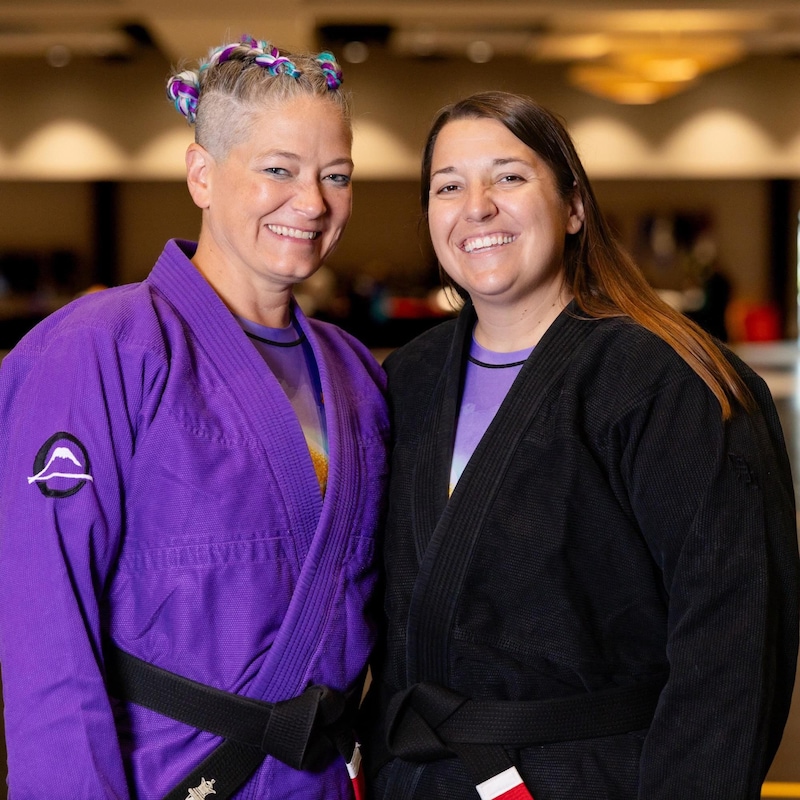
In this episode of Beauty and the Gi we interview Dr. Leslie Davis, aka Dr. Pressure, which might be the best nickname in Jiu Jitsu!
Dr. Leslie is a purple belt out of Illinois. She's a relationship therapist and is doing so many great things for her community and the world! She made big fans of us in this episode and I think you'll feel the same after listening!
Dr. Leslie will be speaking at Roll Model Camp and running one of our Round Tables and we are so excited for the Roll Models to get to meet her and learn from her!
If you love the podcast, share it with a friend!
You can also leave us a 5-star rating in Spotify or Apple Podcasts.
🎧 Listen on Your Favorite App
🎯 New to the Podcast? Start Here
🥋 Learn More About Roll Model Grappling Camp
📱 Connect with Jen & AJ on Social Media
Instagram – @beautyandthegipodcast
Risser!: @jrizzinthehizz on Instagram
AJ: @ajclingerman on Instagram | @roll_model on TikTok
Roll Model Grappling: @rollmodelgrappling on Instagram
Connect with Dr. Leslie
Instagram - @therealdrleslie and @tinyjiujitsu
Youtube - @drlesliedavis
LinkedIn - @Dr. Leslie Davis
Facebook - @Leslie Esther Davis
Website - therealdrleslie.com
🎶 Production
Recording, editing, and production by Risser. Unless you hated it - then AJ did it!
⚠️ Disclaimer
The Beauty and the Gi podcast is presented solely for general informational, educational, and entertainment purposes. It is not a substitute for professional medical, mental health, or coaching advice, diagnosis, or treatment. Please consult your healthcare provider for any condition.
Transcripts
Welcome to Beauty and the gi, a podcast about Jiu Jitsu and so much more.
Speaker A:I'm AJ Klingerman, a Brazilian Jiu Jitsu black belt obsessed with Jiu Jitsu.
Speaker B:And I'm Jennifer Risser, also a Brazilian Jiu Jitsu black belt, full of nonsense and tomfoolery.
Speaker B:And we have a very special guest today.
Speaker B:Would you like to introduce yourself?
Speaker C:Yes.
Speaker C:I am Dr. Leslie Davis, aka Dr. Pressure, and I'm a purple belt with Aries Bros. Jiu Jitsu in Fairview Heights, illinois.
Speaker A:I love Dr. Dr. Pressure is so good.
Speaker A:That's fantastic.
Speaker B:I feel like I just froze in time when you said that.
Speaker B:That's such a good name.
Speaker C:Where does that come from?
Speaker C:So I developed my Jiu Jitsu game as a top player, and I was really focused on my pressure game because I'm very small.
Speaker C:Well, I'll say petite.
Speaker C:So I had to learn how to use my body the way that it works for me.
Speaker C:And my pressure game was something that people could not deny.
Speaker C:And so when I got my doctorate, they started calling me Doc and they developed the name Dr. Pressure.
Speaker A:Oh, my God.
Speaker A:That's fantastic.
Speaker B:That's amazing.
Speaker B:That's such a good nickname.
Speaker B:That's great.
Speaker A:That's the best nickname.
Speaker B:I think that might be the best jujitsu nickname I've ever heard.
Speaker A:I know.
Speaker A:Same, like, I feel like I want you to have, like, a rash card with, like, the Dr. Pepper logo, but it says Dr.
Speaker C:I do have one.
Speaker A:You do?
Speaker C:That's great.
Speaker C:That's awesome.
Speaker A:That's so cool.
Speaker A:Okay, so I'll kind of talk a little bit about one of the reasons we brought you on the podcast today.
Speaker A:So, as most of our listeners know, because we talk about it non stop, our role model, Women's Only Grappling Camp, is coming up July 10th through the 12th in Indianapolis.
Speaker A:We do have spots available still if anybody is wanting to register.
Speaker A:But you were already coming to camp, and I put out a call that I needed some roundtable help, and you contacted me back, and then I put you in for more stuff.
Speaker A:I'm very excited, honestly, like, ever since we first spoke and you were first registered for camp and we became friends on Facebook, every post I see of yours, I'm just like, this is the kind of woman we want at camp.
Speaker A:Like, I think you're fantastic.
Speaker A:I think you're exactly like what we consider a role model.
Speaker C:So thank you.
Speaker C:I appreciate that.
Speaker A:I'm so excited to have you.
Speaker A:So tell us a little bit just about, like, what you do.
Speaker C:Oh, there's so much so I'll try to keep you focused, though.
Speaker C:But my main gig, I am a relationship therapist.
Speaker C:So I have a PhD in counseling and psychological studies, and I started learning about relationships at the age of 13.
Speaker C:And the reason why I will never forget this moment, there was a kid in my class that asked me about how to deal with breaking up with his girlfriend at the time.
Speaker C:And this is like seventh grade stuff, right?
Speaker C:And I gave him some advice.
Speaker C:I don't remember what I said, but I just remember the moment where he's like, you should be a shrink.
Speaker C:I was like, what is that?
Speaker C:You know, when you go talk to someone, you lay on their couch and tell them the problems and you just listen?
Speaker C:I'm like, I could do that, you know?
Speaker C:And so I started learning about relationships because I wanted to help other people, but I also wanted to have a good relationship myself.
Speaker C:So I just poured myself into it.
Speaker C:And that was my focus in my PhD program as well.
Speaker C:And I just figured, like, that's just the lane I'm supposed to fit into.
Speaker C:So I always talk to people, like, with mat chats during class, and people are like, hey, this is what's going on with my girl.
Speaker C:This is what's going on with so and so.
Speaker C:And it's just something I do naturally.
Speaker C:I'm like, why not get paid to do it?
Speaker A:Yeah.
Speaker A:Does that get hard sometimes?
Speaker A:Like, you're like, in the middle of training and you're, like, taking a round off and they're like, let me tell you all my problems.
Speaker C:Oh, no, I enjoy.
Speaker C:But I just remind everyone, I cannot be your therapist.
Speaker C:But I will listen to you.
Speaker C:I will guide you a little bit and help you find a therapist, but because we train together, I just can't cross those boundaries.
Speaker B:Yeah, yeah, yeah.
Speaker B:That's got to be so hard.
Speaker B:We've got a guy who's a therapist that trains with us, and he also has to keep that similar boundary.
Speaker A:Yeah, yeah.
Speaker A:Also, do you still know the kid from when you were 13 years old?
Speaker A:Like, do you remember who he is?
Speaker C:Yes, I remember his name, but I have not spoken with him since we graduated high school.
Speaker C:And that was back in the 90s, so long time ago.
Speaker A:I just wondered, like, does he know he, like, changed your life?
Speaker C:I.
Speaker C:Maybe I should reach out to someone that I'm still friends with from high school that might know where he is and let him know.
Speaker A:Just kind of a cool thing, like, you know, like this, like, off statement, you know, like one off statement that's just like, you know what that's that's true.
Speaker A:That is what I should do.
Speaker C:That's really cool.
Speaker B:Yeah.
Speaker B:And while we're talking about the relationship stuff, we listened to your TEDx talk and we thought it was really good.
Speaker B:We really enjoyed it.
Speaker A:Yeah.
Speaker A:How did that come about?
Speaker A:Sorry.
Speaker C:Oh, my gosh.
Speaker C:Go ahead.
Speaker A:I'm gonna repeat that.
Speaker A:Sorry.
Speaker A:Just so I try not to talk over you.
Speaker A:I'm so sorry.
Speaker A:Okay, how did that come about?
Speaker A:How did you end up being on a TEDx talk?
Speaker A:And how did you come up with the subject for the talk?
Speaker C:That is a very interesting story.
Speaker C:So I did not apply for the TEDx talk.
Speaker C:They found me.
Speaker C:This was last May, so about a year ago.
Speaker C:And I actually think it was divine because I have a vision board that I keep in my bedroom, and I make one every year.
Speaker C:And the year before, I have a picture of myself at a speaking engagement with the microphone, and I put it on there because I wanted to do more of that.
Speaker C:And I didn't know what that looked like.
Speaker C:I just knew I wanted to speak more.
Speaker C:And so what bigger stage to be on than a TEDx talk?
Speaker C:Right?
Speaker C:So they found me.
Speaker C:Yeah, it was an interesting process.
Speaker C:They found me.
Speaker C:I had a.
Speaker C:They call it a vibe check on a Friday.
Speaker C:And then they said, okay, well, if you're interested, let's move forward.
Speaker C:You'll meet with someone else and we'll develop a plan of, like, what the idea is going to be.
Speaker C:So I had nothing planned for this TEDx talk because I wasn't looking for it.
Speaker C:And the next Monday had a second interview, and they're like, okay, we like you now.
Speaker C:We need you to make up, you know, your script, like, just a basic outline that night and submit it the next morning.
Speaker C:I was like, okay, I can do that.
Speaker C:No pressure.
Speaker C:Right?
Speaker C:And later they emailed me and said that I was selected.
Speaker C:And so from then on, it's just, you start writing over and over and over, and I'm a perfectionist.
Speaker C:So it was hard for me to, like, not fix it.
Speaker C:Like, once I stopped writing, I couldn't write anymore.
Speaker C:So that was the hardest part for me.
Speaker C:And I had to memorize it and gave the talk on stage, and it was selected for the TED Editors pick list.
Speaker C:Oh, very cool.
Speaker A:That's so cool.
Speaker B:That's awesome.
Speaker A:That had to feel so cool.
Speaker C:Yeah, it was an interesting moment, I would say, because I actually messed up on stage.
Speaker C:So no one knows unless you were in the room.
Speaker C:And there's pressure.
Speaker C:And I. I relate this to, like, Jiu Jitsu, too.
Speaker C:There was pressure the entire time.
Speaker C:Like, you have to be on point.
Speaker C:You have to do it this way.
Speaker C:You can't mess up.
Speaker C:We'll take you off the stage if you don't have it memorized, like, they drill that into you.
Speaker C:And so the whole time I'm doubting myself, like, am I good enough?
Speaker C:Am I going to do it right?
Speaker C:They can cut me at any moment.
Speaker C:And I was the first speaker.
Speaker C:I was the opener for that TEDx event.
Speaker C:And so there's no pressure.
Speaker C:Right.
Speaker C:And I remember before I stepped on the stage, one of the.
Speaker C:They call them the curators or the coaches.
Speaker C:He's like, you doing okay?
Speaker C:You need to get out any energy.
Speaker C:I'm like, actually, I need to hit something.
Speaker C:So he, like, put up and he let me, like, punch at his hand before I walked on the stage.
Speaker C:And that got me regulated.
Speaker C:So I use, like, just, you know, developing that sense of, I know where I am, I need to get this energy out my body before I go and perform.
Speaker C:Right.
Speaker A:Yeah.
Speaker C:I just.
Speaker C:I don't remember anything that happened while I was on the stage.
Speaker C:It's just.
Speaker C:It was a blur.
Speaker C:It was over and done.
Speaker C:And I was like, okay, what's next?
Speaker A:So then, have you watched the TEDx talk?
Speaker C:I did.
Speaker C:I'm really bad.
Speaker C:I critique myself over and over.
Speaker C:So I can't watch it too much because I'm like, I can't redo it.
Speaker C:Right.
Speaker C:It's over.
Speaker C:But I do want to make sure I. I held onto the.
Speaker C:The purpose of the TEDx talk.
Speaker C:And so TEDx talks, if no one knows it's about a big idea, it's not about you being a great speaker or being some smart person.
Speaker C:Like, anyone can give a TED Talk.
Speaker C:And I wanted to make sure that my idea was clear.
Speaker C:And so my idea was about three ways to stop obsessing over text.
Speaker C:So I think it's something that everyone in the world can relate to, you know, at some time in their life.
Speaker A:Yes.
Speaker A:Yeah.
Speaker B:And it's.
Speaker B:It was very good.
Speaker B:Like, just watching it just.
Speaker B:We didn't really know what we were getting into.
Speaker B:It was performed.
Speaker B:It seemed very good.
Speaker B:The pacing was good.
Speaker B:It seemed like you knew exactly what you were going to say.
Speaker B:Like, it was delivered very well from my perspective.
Speaker B:So I don't know that that's worth almost anything, but it.
Speaker B:We really enjoyed it.
Speaker B:It was really good.
Speaker C:No, that.
Speaker C:That means a lot because there was so much happening up to the TEDx talk that no one knows about unless you're, you know, personally attached to me.
Speaker C:So the month before, I'll give you just a little snippet the month before.
Speaker C:And this gives you a little highlight into my life.
Speaker C:Okay, So I am a mom, a single mom, and I have a son that has a, a heart condition called hypoplastic left heart syndrome.
Speaker C:And so he has half a heart and he's now an adult.
Speaker C:And so it's a little different because I can't be as hands on as I need to be, you know, because he's grown, but I'm still there.
Speaker C:And so the month before my TEDx talk, while I'm rehearsing, trying to make sure I'm perfect, you know, he almost died at home.
Speaker C:So we went to the emergency room.
Speaker C:He was hospitalized because of his heart condition.
Speaker C:I got an injury in jiu jitsu like two weeks before that TEDx talk, so a knee injury.
Speaker C:And it was a week before IBJJF in St. Louis, so I didn't get to compete.
Speaker C:But I had to wear a knee brace for several weeks.
Speaker C:And I actually had a knee brace on the day of the TED Talk and took it off right before I went on stage.
Speaker C:So my whole time, oh my God, I'm wearing heels and I have this jiu jitsu injury.
Speaker C:How am I going to train?
Speaker C:Like, it affected my training, right?
Speaker C:So.
Speaker C:But it's just, you know, things happen in life and you learn to overcome them and it ends up being beautiful in the end.
Speaker C:You just have to get through it.
Speaker A:I hope that your son is doing better now.
Speaker A:How long ago was the TEDx talk?
Speaker C:That was last October.
Speaker C:So just a few months ago.
Speaker C:Yeah, he's doing good.
Speaker C:We, we have moments, like he has moments throughout the year where it's just hard for him, for his health, but he's a trooper.
Speaker C:He's stronger than me, that's for sure.
Speaker A:That's awesome.
Speaker B:Being his mom has to be difficult, though.
Speaker B:I mean, that takes a lot of resilience.
Speaker B:It sounds like everything leading into this TED talk was a lot, Required a lot of resilience for.
Speaker C:Absolutely, yes.
Speaker A:How did you get into Jiu jitsu?
Speaker C:Well, because of him, honestly.
Speaker C:My son, My son was training karate and he could only do martial arts that he couldn't get any impact on his heart, so he couldn't spar with anyone.
Speaker C:And he stopped training karate.
Speaker C:And we were looking for another martial arts school in the area and we found one that did taekwondo, so that challenged him.
Speaker C:And that same year, I have a word of the year every year.
Speaker C:So that year my word was strength.
Speaker C:And I was like well, what can I do to strengthen my mind, body, spirit?
Speaker C:And I've always loved martial arts.
Speaker C:Like, I was in love with Bruce Lee growing up.
Speaker C:And so I decided I guess I'll try jiu jitsu.
Speaker C:I had seen it before.
Speaker C:I just didn't know, like, what it really was.
Speaker C:And I thought it was a little weird, like seeing it from a distance.
Speaker C:But like, oh, this looks really cool.
Speaker C:Like Ronda Rousey kind of inspired me to see her on the ground.
Speaker C:And so I tried it first class and I was addicted, like, instantly.
Speaker C:And that was nine years ago.
Speaker C:So that's awesome.
Speaker A:What's your word of the year this year?
Speaker C:Oh, gosh, I have two.
Speaker C:But my main word that I've been focused on is clarity.
Speaker A:Nice.
Speaker B:Oh, very cool.
Speaker A:I like that.
Speaker A:My main word this year is queen.
Speaker A:It usually kind of goes along with whatever our camp theme is.
Speaker A:So that's.
Speaker C:Yeah, I love that.
Speaker A:One of the things that you're going to talk about at your, on your round table and your short session at camp is on silencing in jiu jitsu.
Speaker A:Would you like to just briefly get into that a little bit and talk about, like, what you want to talk about?
Speaker C:Yes.
Speaker C:You know, you guys are helping me see myself right now.
Speaker C:So I say that because I believe, like, we serve as mirrors for each other.
Speaker C:And so, like, in this conversation, I'm starting to see myself in a way that I didn't before.
Speaker C:So even with that question, the thing that came to mind is how I got into the topic of self silencing.
Speaker C:And last year I started focusing on topics that were more specific to women and looking at research about how that shows up with anxiety or depression.
Speaker C:I came across the term self silencing.
Speaker C:I'm like, what is that?
Speaker C:So, like, as I'm talking about this now, I'm recognizing.
Speaker C:I started studying and digging into self silencing and then I did a TED talk, like getting on a stage to talk about myself.
Speaker C:So that's pretty cool.
Speaker C:But self silencing is how we suppress our thoughts and our feelings to maintain relationships.
Speaker C:So we will pull back on what we need to say because we don't want to rock the boat in the relationship, whether it's romantic or friendship or with family.
Speaker C:And I know I've experienced this myself and I know a lot of women have talked to me about their experiences where this also shows up in jiu jitsu.
Speaker C:You know, it's male dominated space, although historically it wasn't, but we don't talk about that.
Speaker C:But in that space, in that space women are made to be invisible sometimes.
Speaker C:I know it's changing over the last few years, but it still happens.
Speaker C:And it impacts the way that we train.
Speaker C:It impacts how we get new women to join Jiu Jitsu or to join that community.
Speaker C:And I think it's something that if we don't talk about it, it will never change.
Speaker C:So that's why that was something that was really important to bring to the stage.
Speaker C:And I'm so thankful that you're allowing me to speak on that.
Speaker A:We're excited to have you.
Speaker A:I think this is going to be really important for a lot of women in the room.
Speaker A:And I'm, you know, we have a lot more to talk about, but I'm excited for you to get to experience Role Model Camp and just kind of the way we lift women up.
Speaker A:And I'm really, I'm looking forward to this, like, relationship.
Speaker A:So I think it's gonna be really good.
Speaker C:Thank you.
Speaker C:And I'm really excited.
Speaker C:I'm so thankful you reached out and offered the opportunity to attend.
Speaker C:I've always wanted to, but I'll be honest, Let me not lie.
Speaker C:I am not a GI girl.
Speaker C:So that is something that kept me from the Role Model Camp in the past years.
Speaker C:But I just started training GI last year, so I'm really excited to learn.
Speaker A:Nice.
Speaker A:And actually this year we're doing more no GI than we have in the past.
Speaker A:So good news for you maybe.
Speaker B:We felt that vibe.
Speaker B:We were like, we gotta get her in.
Speaker A:We need more no gi.
Speaker A:Okay.
Speaker A:One thing that you had mentioned is that you also work in an anger management class for teens that are involved in the court system.
Speaker A:Can you tell us a little bit about that work?
Speaker C:Yeah.
Speaker C:So about 10 years ago.
Speaker C:It's been a long time.
Speaker C:Ten years ago, I developed a program called Heartbeats, and it's a youth violence prevention program.
Speaker C:And it's a 12 week program that I've condensed down depending on who I'm speaking with.
Speaker C:But it looks at how we can help youth.
Speaker C:So 12 to 18 who have been either a victim of violence, the perpetrator of violence, or they've been a witness to it at some point.
Speaker C:And so a lot of times the people that I'm working with, youth are, they fit all three criteria, you know, at some point in their life.
Speaker C:And recently I've been working with the Madison County Juvenile Diversion Program.
Speaker C:So that's a program where the kids have maybe had their first court experience.
Speaker C:They did something that got them in front of a judge and they have to complete A program.
Speaker C:And so I come in and talk to them about anger management.
Speaker C:And the way I discuss anger management is looking at how anger shows up in our relationships and how it impacts us, how we want to, how we relate to other people with our own anger, and how we relate when someone is showing their anger towards us.
Speaker C:And it's really a powerful conversation that I've noticed.
Speaker C:A lot of the youth, they are in their room because they have to be.
Speaker C:And so when I walk in, they're like, who is this lady?
Speaker C:Like, I'm real short, y'.
Speaker B:All.
Speaker C:So they're like this little girl come to tell me how to deal with my anger.
Speaker C:But what I've noticed is, you know, I think I just have a natural way of relating to them where I get them to open up and share their experiences of what they're dealing with at home.
Speaker C:And some of the parents are, like, shocked, like, how did you get them to talk?
Speaker C:You know?
Speaker C:And I think the important thing is just allowing them the space to say what's on their mind, like, to allow them to break their own silence.
Speaker C:So, yeah, over the years, I've noticed that it doesn't just change them instantly, but it gets them to think different.
Speaker C:And what ends up happening is they change themselves over time, and that ends up changing their entire family.
Speaker B:Wow, that's amazing.
Speaker B:That's really powerful.
Speaker A:Yeah.
Speaker A:You're doing a lot of amazing work.
Speaker C:Yeah.
Speaker B:Thank you.
Speaker B:Thank you for what you're doing.
Speaker A:Absolutely.
Speaker A:It's very impressive.
Speaker C:Can you ask about the new stuff, the new Twitter?
Speaker C:Say what's in private.
Speaker A:Yeah, maybe like.
Speaker A:Okay.
Speaker B:AJ's told me that you've got some sort of new project coming up.
Speaker B:Talk to us about that a little too.
Speaker C:So I'm really proud that I became a women's self defense instructor under Donna Gonzalez.
Speaker A:Yeah.
Speaker C:So I love Donna.
Speaker C:She's amazing.
Speaker C:She's another one you need to talk to.
Speaker C:But she has inspired me for years.
Speaker C:I was a 10 planet girl.
Speaker C:I just changed gems recently, but I was 10p all the way, and she was one that I highly looked up.
Speaker C:So I remember when she started promoting her women's self defense network.
Speaker C:And my Jiu Jitsu bestie did her certification program years ago.
Speaker C:And she's like, we need to do it together.
Speaker C:I'm like, I'm not ready.
Speaker C:I don't think I need to do that.
Speaker C:I wasn't interested.
Speaker C:But I wasn't interested in teaching.
Speaker C:I'll say that.
Speaker C:But I was interested in the information because I have been a victim of violence.
Speaker C:I Know, many women that come to Jiu Jitsu have been a victim or they're at risk of being a victim.
Speaker C:And this was the year was like, it's just time to step out and do all the things that I love to do together.
Speaker C:So combining the psychology and Jiu Jitsu for women specifically is.
Speaker C:It's like the perfect blend for me.
Speaker C:And so I developed a program after taking her certification program and combining all my years of Jiu Jitsu, and it's called Defend and Rise.
Speaker C:And it combines the psychology of looking at the attacker, looking at the cycle of abuse in relationships, looking at power and control, how that shows up.
Speaker C:Because what most people don't realize, I think is most women who are attacked is by someone that they already know.
Speaker C:It's not some stranger on the street.
Speaker C:And so we need to have those conversations to talk about the relationship and how you can avoid some of these red flags so you don't get into situations where you have to physically defend yourself.
Speaker C:So the defense starts in mind.
Speaker B:That's amazing.
Speaker A:Yeah, I love that.
Speaker A:I think that's going to be really, really empowering work.
Speaker A:It's very exciting.
Speaker A:I had a follow up from that and I lost it.
Speaker A:Shoot.
Speaker A:I lost it.
Speaker B:I'm sorry.
Speaker B:It's okay if you don't have to talk about this if you don't want to.
Speaker B:But what made you switch gems?
Speaker C:Oh, that's a good conversation.
Speaker C:I am an open book, y'.
Speaker C:All.
Speaker C:So anyone who knows me knows I wear my heart on my sleeve and I share it from the perspective of this is my experience, not this is something that I'm talking about someone in a negative way, if that makes sense.
Speaker B:Yeah.
Speaker C:So the prior gym that I was training at, I was there, I was highly, like, fiercely loyal, not just to that school, but to tenth Planet overall.
Speaker C:Okay.
Speaker C:I was there for eight and a half years.
Speaker C:Me and my Jiu Jitsu bestie, we started around the same time, got promoted along the way together.
Speaker C:And it was something that was really impactful because we also started a women's program there together.
Speaker C:So we were teaching women's classes.
Speaker C:And before we became instructors, we started a group called We Roll two.
Speaker C:Because we wanted to, once we got our blue belts, we wanted to give back to the new women joining the school that didn't have a role model.
Speaker C:And so we wanted to provide for them.
Speaker C:And we started talking about just things that women experience on the mat, specifically that men don't talk about.
Speaker C:They don't know how to talk about it.
Speaker C:And now they have women Have a safe space to do it with us.
Speaker C:And that lasted for a little bit.
Speaker C:And I think we just developed ourselves and decided, you know, we're not getting the.
Speaker C:I guess we didn't get the support that we needed for those programs.
Speaker C:I think that's the experience.
Speaker C:A lot of women's programs at different schools, but we continue to push because it was something we needed for ourselves too.
Speaker C:And there was a moment we had a promotion night, and there were two other women that were at the same rank as myself that got promoted and I did not.
Speaker C:And I accepted that as a view that they had of me because it didn't make any sense, you know, and it was a moment that I won't forget because it felt like everyone in the room was looking at me when that happened.
Speaker C:But I wanted to make sure that my bestie got the shine that she deserved.
Speaker C:And so I clapped for her.
Speaker C:I got all the girls together.
Speaker C:We took a girl pic, and I had to step away.
Speaker C:And there were some things happening before that moment.
Speaker C:So that wasn't just the only thing.
Speaker C:It was just like the defining moment for me.
Speaker C:There were other things happening years before that I was silent about.
Speaker C:I never spoke up.
Speaker C:I didn't say anything because I knew that that would rock the boat.
Speaker C:I knew that it would.
Speaker C:Maybe I would be blamed for something or it would be taken out of context, although I was just sharing my concern concerns.
Speaker C:And so I decided that it was just time for me to move on.
Speaker C:So I needed to get training in an environment that welcomed me, that accepted me for who I am, that would push me because I felt like I was getting to a point where I wasn't being pushed anymore.
Speaker C:I was just being allowed to train, if that makes sense.
Speaker A:Yeah.
Speaker C:I decided to find a different environment.
Speaker C:And I feel like I have been thriving in this new environment.
Speaker C:And I'm grateful because I was so stuck on Nogi.
Speaker C:Right, Nogi.
Speaker C:That's all I knew.
Speaker C:I had never seen other women train, like, in groups, like larger groups.
Speaker C:But once I stepped out of that environment, I have been introduced to so many more women that train GI and Nogi.
Speaker C:And I'm like, where have y' all been?
Speaker C:I didn't even know you guys were in the area.
Speaker C:So it's been really exciting to see, like, other women in higher ranked women.
Speaker C:There's some black belt females in our area that I didn't even know about.
Speaker C:But they trained Gi, right?
Speaker A:Yeah.
Speaker C:It's just a little different.
Speaker C:But it's.
Speaker C:It's also given me like a new Opportunity to grow.
Speaker C:So it feels like learning a new language right now.
Speaker B:That's awesome.
Speaker A:Yeah.
Speaker A:Do you still consider yourself a no GI girl, though?
Speaker C:Absolutely.
Speaker A:I think I go back and forth a lot.
Speaker C:I do, too.
Speaker A:Yeah.
Speaker A:There I go through seasons of like, can we just do it all?
Speaker A:No GI.
Speaker A:Like, do not make me take my PJs off.
Speaker C:I feel so.
Speaker B:I'm sorry for what you went through.
Speaker B:All right, go ahead, go ahead.
Speaker C:No, I was saying I feel so constricted with the gi.
Speaker C:Like, when I put it on, there's a video of a girl on Instagram and where she's like, ugh.
Speaker C:You know, that's how I feel every time I put it on.
Speaker C:Like, oh, get this thing off of me.
Speaker C:But I will tolerate it.
Speaker C:I've.
Speaker C:One of my goals this year for Jiu Jitsu, specifically is to say that I love the gi.
Speaker C:So I've gone from I hate it to I don't hate it.
Speaker C:Now I'm at.
Speaker C:I like it.
Speaker C:But don't tell my coaches that.
Speaker C:They don't.
Speaker C:But my goal.
Speaker A:Yeah,.
Speaker B:Yeah.
Speaker A:Don't tell them about the podcast.
Speaker B:Yeah, I like, you know, I. I go back and forth sometimes.
Speaker B:I just, like, I don't want to have grips.
Speaker B:Like, just do no gi.
Speaker B:My hands are tired.
Speaker B:They hurt, you know, but sometimes it's like, okay, we got a bunch of 17 year olds in the gym.
Speaker B:Let's put geese on these guys.
Speaker B:Slow them down a little bit.
Speaker B:Exactly.
Speaker A:Yeah.
Speaker A:They have too much energy.
Speaker A:I'm like, I need to just slow you down.
Speaker B:Well, to go back to the story you were kind of telling, I'm sorry for what you've been through.
Speaker B:I think a lot of women have experienced something like that in one way or another.
Speaker B:So it's really admirable that you were able to kind of stand up for yourself and, you know, recognize what no longer served you and, you know, really find a place where you can flourish.
Speaker B:Like, that's amazing.
Speaker A:Yeah.
Speaker C:Thank you.
Speaker C:And I think that is.
Speaker C:That was the hardest decision I ever had to make because.
Speaker C:And I think that's what keeps us stuck is you.
Speaker C:You feel so connected to the people you train with that you feel like you're abandoning them when you are.
Speaker C:When you stay, you're abandoning yourself.
Speaker C:So I had to choose me in that moment.
Speaker A:Absolutely.
Speaker A:Did your Jiu Jitsu bestie stay there?
Speaker C:Yes.
Speaker C:And she's doing well.
Speaker C:I'm so proud of her.
Speaker C:She's still running the women's program and we still communicate, so.
Speaker C:Yeah, I'm really excited to See her growth.
Speaker C:And she's also doing the women's self defense program of her own.
Speaker C:So it's good.
Speaker A:Nice.
Speaker B:Very cool.
Speaker A:Yeah.
Speaker A:Yeah.
Speaker A:I saw you have an event that you're speaking at coming up on June 27th.
Speaker A:Is that correct?
Speaker C:Yes.
Speaker C:So that is.
Speaker A:Do you want to tell us more about that event?
Speaker C:Yeah, so I forget the name of that one, but I. I have so many random speaking events throughout the year where I'm like, okay, who is it with?
Speaker C:I know the topic I'm speaking on, but I may not remember.
Speaker C:But I'll be speaking on rest and looking at rest and relationships.
Speaker C:And sometimes, like, we probably all relate to this as women.
Speaker C:Like, you don't take time to rest for yourself because you feel like you're not doing something for someone else.
Speaker C:And we.
Speaker C:We have to learn that maybe we need to lean on the people that we're serving to allow us that space to rest.
Speaker C:Because we can't pour from an empty cup.
Speaker C:Right.
Speaker C:We have to fill our own cups.
Speaker A:Yeah, I'm bad at that.
Speaker B:I hope they're recording that.
Speaker B:I'd like to show that to a lot of people I know.
Speaker B:Oh, great.
Speaker A:Excellent.
Speaker B:Excellent.
Speaker A:Speaking of YouTube, can you tell people all of the places they can find you?
Speaker A:Yes.
Speaker C:I mean, like, I do so many things which I didn't even get back to, but I'm in so many places as well.
Speaker C:So on YouTube, it's the real Dr. Leslie, which is the same on Instagram.
Speaker C:So I have two Instagram accounts.
Speaker C:The real Dr. Leslie is my professional account, and Tiny Jiu Jitsu is my Jiu Jitsu account.
Speaker C:I try to keep those separate, but I'm also on LinkedIn under Dr. Leslie Davis, and you can find me on Facebook as well.
Speaker C:And my website is therealdoctorleslie.com.
Speaker A:Awesome.
Speaker B:I'll do my best to put those in the show.
Speaker B:Notes for people who can.
Speaker B:Who want to do some clicking.
Speaker A:Yeah.
Speaker A:Nice.
Speaker B:Is there anything else you wanted to promote?
Speaker B:I know we didn't quite get back to all the things, but you do a lot of things.
Speaker C:Not necessarily that I want to promote.
Speaker C:Maybe my brand, Eva Empowered.
Speaker C:I can talk about that.
Speaker B:Yeah, totally.
Speaker C:Okay.
Speaker C:So my brand name, and this is something that has evolved as I've evolved.
Speaker C:It's called Eva Empowered.
Speaker C:And Eva stems from the word Eve, which is the first woman.
Speaker C:So it's woman empowered.
Speaker C:And it's a brand that, you know.
Speaker C:At first, when I started after my PhD, I focused on empowering single moms specifically because that was my journey.
Speaker C:But as I grew And I noticed, like, I don't want to just box myself into only helping single mothers, so I expanded to helping all women with relationships.
Speaker C:And that's how the brand Eva Empowered developed.
Speaker C:And it's something that impacts women in relationships and their mental health.
Speaker C:And so it always turns back into the self silencing that we end up doing.
Speaker C:Right.
Speaker C:So.
Speaker C:So I want to help women who are struggling with toxic relationships to break out of those relationships and know their worth.
Speaker C:And it doesn't mean that they have to end relationships.
Speaker C:It just means that they need to know what their worth is so they can make better choices in the relationships that they cultivate.
Speaker C:Wow.
Speaker B:That's really important work too.
Speaker A:Yeah.
Speaker A:I don't know where you find all the time you're doing a lot of amazing things and I feel a little like I'm not doing enough.
Speaker C:I.
Speaker C:Time block.
Speaker C:That is my secret.
Speaker A:Excellent.
Speaker B:We did a whole podcast about that.
Speaker A:Yeah.
Speaker A:Yeah.
Speaker A:We have another podcast called Role Model Business and it's mostly for martial arts school owners, but we did a couple weeks ago just do an entire podcast on time blocking, so I need to check that out.
Speaker A:Yeah, we'd love for you to.
Speaker A:They're usually, you know, 10 to 20 minute episodes on different subjects specifically for martial arts academies, but a lot of them have carry over to any business, so.
Speaker C:Okay.
Speaker A:Yeah, good.
Speaker A:I'm.
Speaker B:Did we hit all your points?
Speaker A:Yeah, we had everything.
Speaker A:I had notes about.
Speaker A:Is there anything else you wanted to talk about?
Speaker C:Whatever y' all want to talk about.
Speaker C:I can talk about anything.
Speaker B:You're so interesting.
Speaker B:I feel like I want to hear everything.
Speaker A:Did I see that you just celebrated your birthday?
Speaker C:Yes, my birthday was on the 10th, so I am.
Speaker A:Happy birthday.
Speaker C:Thank you.
Speaker A:I. I can't believe you.
Speaker A:Because I'm older than you, so I'm not ready, not ready to be old yet.
Speaker C:I will say my age.
Speaker C:I'm at the age where I'm going through the change, as they call it.
Speaker C:Right.
Speaker C:And I'm starting to recognize how impacts my jiu jitsu.
Speaker C:And that is definitely something that we need to talk about.
Speaker C:I know there's a lot of younger women in Jiu jitsu, but there are older women too, you know, the masters and above.
Speaker C:And perimenopause is a hot topic right now.
Speaker C:And it's something that starts in the 30s and we might be missing the signs, but it's showing up in jiu jitsu.
Speaker C:We just aren't saying anything about it.
Speaker B:Yeah, yeah.
Speaker B:It's funny.
Speaker B:We were on the mat the other day in Women's class, and I was doing, like, some shoulder exercises.
Speaker B:You know, like, a thing that we learned with AJ Is that sometimes you just get frozen shoulder.
Speaker B:As a woman.
Speaker B:Like, that's just a thing that happens to you as you, you know, work through these things.
Speaker B:And one of our, like, early 20s somethings was like, girl, you are always doing something random.
Speaker B:Because I, like, I had one of those, like, stretchy things that I was just doing shoulder exercises, and I was like, listen, I'm about to teach you something.
Speaker B:And I was, like, telling her about that, and it's like, it's true.
Speaker B:We need to just be telling people everything, you know?
Speaker B:Like, I feel like nobody tell told us anything about what to expect or what to worry about, and now you just find out on the back end.
Speaker A:Right.
Speaker A:I didn't recognize that, like, having a hot flash kind of made you panicky, especially in jiu jitsu.
Speaker A:Like, it's just this moment of, like, something's wrong.
Speaker A:I'm overheating.
Speaker A:I don't know what.
Speaker A:Okay.
Speaker A:I'm just having a hot flash.
Speaker A:Like, but you do kind of freak out sometimes.
Speaker A:Like, there's.
Speaker A:It's a lot.
Speaker C:Even the heart palpitations.
Speaker C:That's the main thing I experience when I'm on the mat.
Speaker C:And so I have to pause and see.
Speaker C:Like, is this the perimenopause talking, or is this the jujitsu?
Speaker C:Like, did I just do too much in a roll and I need to calm myself down?
Speaker C:Or is that just perimenopause and I can't control it?
Speaker C:It's hard.
Speaker A:Yeah, it's wild.
Speaker B:What a journey.
Speaker A:What a journey.
Speaker B:Before long, that'll be another business venture you have.
Speaker A:I can't wait to learn more.
Speaker C:I did actually speak on that at a conference in the past year.
Speaker C:So I. I've got something for you if you need it.
Speaker A:Nice.
Speaker A:Yeah, I'd love to listen to that.
Speaker B:I feel like I could listen to you talk about anything.
Speaker A:I don't know if you've noticed, but you've made fans of us.
Speaker C:Well, I've been yours for a long time.
Speaker A:Thank you very much.
Speaker A:I'm very excited for the role models to all get to meet you and learn from you and train with you.
Speaker A:And I am really excited that started training in the ghee a little bit so that we could get you to a role model camp.
Speaker C:Thank you.
Speaker B:Trickery.
Speaker B:Trickery.
Speaker B:We tricked her.
Speaker A:All right, go ahead and wrap it up.
Speaker B:All right.
Speaker B:Well, where.
Speaker A:Where could they find us?
Speaker B:Because we already know where we can find Leslie.
Speaker A:Yes.
Speaker A:You can find us at Beauty and the GE podcast, mostly on Instagram.
Speaker A:We do have a YouTube page as well, which the video for this podcast will be on.
Speaker C:It will be.
Speaker A:Yeah.
Speaker A:And I'm A.J.
Speaker A:Klingerman.
Speaker C:Everywhere you go, don't find me.
Speaker B:I never answer my dm.
Speaker B:Sorry about it.
Speaker B:I'm locked out of my Facebook messenger right now.
Speaker A:Oh, no.
Speaker B:I don't know how I did it.
Speaker A:It happens.
Speaker A:All right, well, if you need reser, contact me, and I'll be happy to help.
Speaker B:Anyway, should we call you Doc?
Speaker A:Should we call you Leslie?
Speaker B:I don't.
Speaker C:I want to be deferential, doctor.
Speaker C:You know, Dr. Leslie or Doc is fine.
Speaker B:Well, thank you for joining us.
Speaker B:It's been a pleasure to talk to you, Doc.
Speaker A:Yes, we've had such a good time, and we can't wait to learn more.
Speaker A:So until next time, we'll see you on the mat.
Speaker A:Beauty and the GI is a production of the Perfect Pibble podcasting company and.
Speaker B:Brought to you by Role Model Grappling.
Speaker C:Sam.





