Shownotes
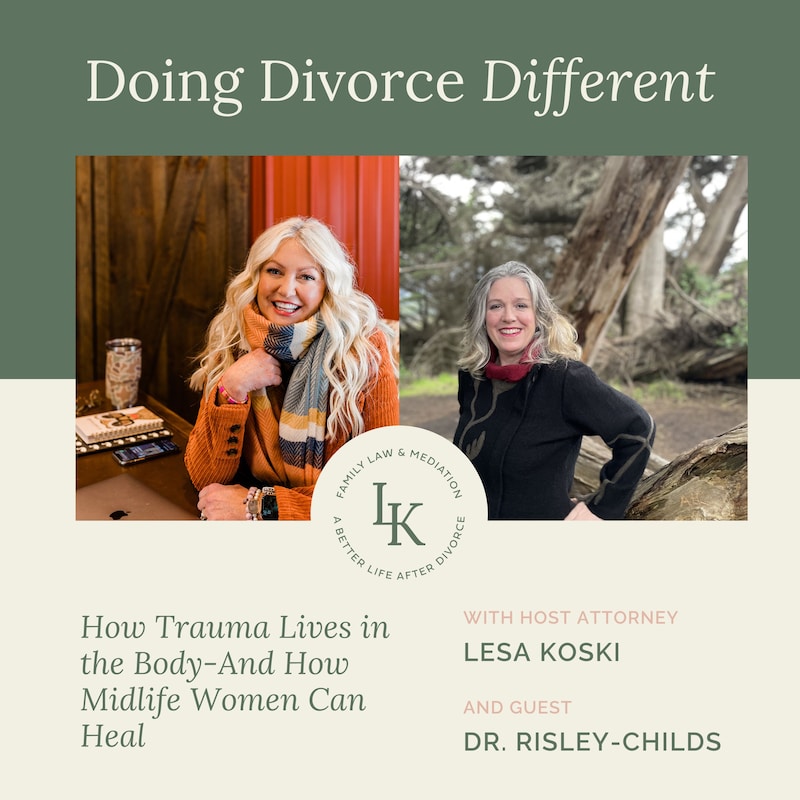
Trauma recovery, nervous system healing, and emotional healing for midlife women are possible at any age. In this powerful conversation, psychiatrist Dr. Risley Childs explains how trauma lives in the body, affects high-achieving women, and how trauma recovery and nervous system healing can begin even decades later.
Many midlife women live in chronic fight-or-flight without realizing trauma recovery is needed. Dr. Childs shares how trauma recovery works, how trauma affects the nervous system, and why trauma recovery is possible regardless of your past.
If you’ve experienced divorce, emotional stress, burnout, or chronic anxiety, this episode will help you understand trauma recovery, nervous system healing, and how to begin healing your trauma safely.
This episode offers hope, science, and practical understanding for trauma recovery and midlife healing.
Timestamps:
(00:00) Introduction to trauma recovery and midlife healing
(02:15) Dr. Childs’ medical background and journey into psychiatry
(05:32) How trauma affects high-achieving women
(09:10) Fight-or-flight and nervous system dysregulation explained
(13:40) How childhood environments shape adult behavior
(18:20) Why trauma lives in the body, not just the mind
(23:10) The vagus nerve and nervous system healing
(28:45) Healing trauma later in life — why it’s not too late
(34:10) Rest, healing, and breaking hyper-achievement patterns
Key Takeaways:
• Trauma often shows up as achievement, people-pleasing, and chronic stress
• Trauma lives in the nervous system and body, not just the mind
• Fight-or-flight states can persist for decades without awareness
• Healing trauma is possible at any age, including midlife
• Rest and nervous system regulation are critical components of healing
Guest Bio:
Dr. Risley Childs is a board-certified psychiatrist with over 30 years of clinical experience. She specializes in trauma recovery, nervous system healing, and helping high-achieving women understand and heal from the long-term effects of trauma.
Resource Links:
Website and Social Media links: https://www.drrisleychilds.com/
to awaken your vagus nerve: https://open.spotify.com/playlist/3VuPpgmSPwk7cErnqrNhCH?si=a3824002e9774659
To calm your vagus nerve: https://open.spotify.com/playlist/3YC0zMSeGQRqg4XmscoyCG?si=d1b93c15519f4ecc
African Drums: https://open.spotify.com/playlist/5z2d4y9MXXjQQiYC8c46Fk?si=10b08e8109634214
Amazon weighted hula hoop: https://a.co/d/06DXlzwC
Tags/Keywords:
trauma recovery, nervous system healing, midlife healing, emotional trauma healing, trauma and nervous system, trauma recovery podcast, women over 40 healing, trauma therapy, divorce trauma healing, fight or flight healing, emotional recovery midlife, psychiatrist interview trauma, Doing Life Different podcast, trauma recovery women
Transcripts
Hi, friends.
2
:I'm so thankful that you're here today.
3
:I know I say this all the time, but
this episode is so special to me.
4
:Um, it was one of those episodes
that just got lost in time.
5
:I just was having this
amazing conversation with Dr.
6
:Wisely Childs.
7
:She's a psychiatrist.
8
:We went on and on and on, and it
lasted an hour, and I'm like, I can't
9
:put this whole thing up in an hour
because nobody's ever used to that.
10
:For goodness sakes, my saddle up lives
are always like five to 10 minutes.
11
:So I've cut this in half.
12
:Today's episode, we're going to
hear from this amazing woman, the
13
:psychiatrist, and we're gonna hear
about nervous system healing and
14
:emotional healing, and it's really
geared toward midlife women, but really.
15
:Age.
16
:So it's um, it's all about.
17
:The, the vagus nerve and, and
healing trauma later in life.
18
:And here's what I want you to know.
19
:It's hopeful because she is hopeful and
she wants you to know that you can heal.
20
:So we dig into all things.
21
:I kind of felt like this
was my Joe Rogan moment.
22
:She was talking a little bit about
psychedelics and how they have helped
23
:her and we really, really dug in.
24
:And so today's episode's gonna
really talk about trauma and
25
:then I'm gonna leave you hanging.
26
:Because next week on Tuesday, we
hear her story and I am not kidding.
27
:You're not gonna believe it.
28
:It's, it's bananas and it,
she went through some really
29
:unbelievably hard, difficult things.
30
:Things that are kind
of hard for me to hear.
31
:But that's next week.
32
:This week.
33
:Tune in, learn about the
trauma, get to know Dr.
34
:Dawn Marie, and then jump
back in next week because it
35
:is, it's one of my favorite.
36
:I love doing these, these podcasts.
37
:But this, if you are going through
something hard like divorce.
38
:Or if you have had trauma in your
past, I mean, it's all of us.
39
:You need to listen.
40
:Thanks for being here.
41
:I.
42
:Speaker: Welcome listeners.
43
:I've got a treat for you today.
44
:I'm so excited.
45
:I've done a little bit of
homework, but I've got Dr.
46
:Risley Childs with me.
47
:Dawn Marie is her beautiful name.
48
:I don't know what I'm gonna
throw at you, Dawn Marie.
49
:I never know what I'm gonna
call someone, but that medical
50
:doctor, doctor is a big deal.
51
:And I say that because I've got my
baby girl who has gone through it.
52
:She's a pediatrician.
53
:Mm-hmm.
54
:So I always wanna thank the
doctors that come on this.
55
:So Dawn Marie is a psychiatrist
and she deals a lot with trauma.
56
:Yeah.
57
:And I think my li, my listeners are
like women going through midlife crisis.
58
:A lot of them divorce because I am
a divorce attorney, kind of turned
59
:mediator trying to help women.
60
:Um.
61
:Know that they can heal.
62
:And I think Don Marie,
that's your message too.
63
:Speaker 2: Yes,
64
:Speaker: absolutely.
65
:Know that you can heal.
66
:And so I'm so excited to get into the
trauma piece because when I studied you
67
:a little bit, I heard you kind of talking
about how I know, like I was always a real
68
:tired, you know, during my days and how
that can, and I was always like, boy, I
69
:can't do as much as that mom over there.
70
:Speaker 2: Yeah.
71
:Speaker: And you said that that can have
to do with trauma and that we can heal it.
72
:And I think that's the key.
73
:Yeah.
74
:We can heal.
75
:And so we're gonna really dig into that.
76
:But because you're a medical doctor,
that's a huge calling and you've
77
:been doing it for a long time.
78
:I wanna hear, can you just share your
story, what led you to do this work
79
:that you're doing now to help people?
80
:Speaker 2: Yeah, so, um,
so yes, I am a physician.
81
:I've been practicing
medicine for 30 years.
82
:I am a board certified psychiatrist.
83
:I didn't always wanna be a psychiatrist.
84
:I went into medicine to be an OB GYN
and, uh, after delivering 80 babies
85
:between my sub internship, my fourth
year of med school and my internship,
86
:uh, getting right out of, uh, medical
school, uh, I was sitting in the light
87
:handle waiting for the, or sitting in
the jug handle, waiting for the light
88
:to turn green, and I was exhausted.
89
:And I said, I don't, this sucks.
90
:I don't think third
Saturday that I was on call.
91
:I'm like, this, this is so exhausting.
92
:And I didn't have the stamina.
93
:I knew that I didn't have the
stamina, but at that point I
94
:didn't know what I wanted to do.
95
:And then psychiatry just kind of
fell in my lap and I loved it.
96
:And you know, I went forth there.
97
:Um, but as far as trauma
goes, I mean, in reality it's.
98
:It's a natural fit because, um,
well, my entire family is, um, quite
99
:pathological and it's very pathological.
100
:I laugh about it now, but, uh, so I did
grow up with a very pathological family.
101
:And the real question is, is why
am I not a forensic psychiatrist?
102
:Yeah.
103
:Um, and uh, the reason why is
because, well, I crashed my
104
:parachute and injured my head.
105
:And it took me eight hours to
get my CV done the next day.
106
:And I just, I did, I could not think
to do the process of, um, all the
107
:paperwork to apply for the fellowship.
108
:It was my final year in residency.
109
:And so, um, that took a while to heal.
110
:It took a good two years.
111
:I had a post, oh,
112
:Speaker: wait a minute.
113
:You crashed your
parachute, like I crashed.
114
:Like, you're not lying.
115
:You really were parachuting and
116
:Speaker 2: crash.
117
:Yeah.
118
:Oh yeah.
119
:I have, I have two,
yeah, I have 289 jumps.
120
:Uh, one from a helicopter,
the rest from airplanes.
121
:I've had, I've jumped out of I think
seven different airplanes of, out
122
:of California, Connecticut, New
Jersey and New York and Florida.
123
:And, um, yeah, I've traveled around
the country a little bit, jumping out
124
:of airplanes and it's a lot of fun.
125
:Speaker: I, I need to jump in, I
gotta ask more about this because
126
:I am not a parachute jumper.
127
:I'm a little bit afraid of
heights and I, I'm so intrigued.
128
:What draws you to that, to that jump?
129
:Speaker 2: Yeah.
130
:So it was something that I had
wanted to do since I was a teenager.
131
:I grew up outside of Philadelphia and they
had a newscaster, Jim O'Brien, who was
132
:the weatherman, and he started skydiving.
133
:And then after he started skydiving,
they, he produced a show called Primetime.
134
:And, um, he introduced
the country to skydiving.
135
:Like he put it out there on television.
136
:And, and then he did all kinds
of other adventurous stuff.
137
:And it was just this big, um,
fun, adventurous kind of show.
138
:And I always liked it.
139
:And I remember when Jim died,
Jim died in a parachute crash.
140
:Oh.
141
:Um, yeah.
142
:I, and.
143
:All of Philadelphia area,
greater area was just devastated.
144
:I still remember watching the
news and having them announce
145
:that and um, and there used to be
something called drop zone.com.
146
:It was a forum for jumpers.
147
:And I remember having discussions
about it, about Jim O'Brien, and
148
:this is what made me wanna jump.
149
:And so it was really, I had turned
35 and I was in my final year of
150
:residency and I said, what do I enjoy?
151
:Because life was, up to that
point, was nothing but work.
152
:Mm-hmm.
153
:And what I did that I
enjoyed was, uh, shopping.
154
:Watching movies, you
know, on my VCR back then.
155
:Speaker: I know.
156
:Speaker 2: And so, and I, um, and
I came to a point where I said,
157
:well, who am I gonna meet shopping?
158
:Well, gay men and married men.
159
:So,
160
:and who am I gonna meet?
161
:You know, who am I gonna
meet watching movies?
162
:Well, the delivery boy from the
local Chinese place on a bicycle.
163
:You know, I was living in the Bronx.
164
:It was kind of right.
165
:So, um, and then I decided I'm
gonna do something that I enjoy.
166
:And I started jumping and it was,
uh, oh, it was the greatest thing I
167
:think that I've ever done as far as,
168
:you know, you jump and all of your
worries just get washed away with
169
:the air, with the, it's an air bath.
170
:And it was just amazing.
171
:And it was, um, it was the most
free that I think I've ever felt.
172
:And there were times where I was under
canopy where I just said, I feel so free.
173
:Yeah.
174
:Speaker: Okay.
175
:I'm taking notes on this.
176
:Speaker 2: Yeah.
177
:Speaker: Um, and that's, so I feel like if
I jumped out off, I'd have a heart attack.
178
:Speaker 2: Like what happens?
179
:We had a skydiver.
180
:He was, he was interesting.
181
:I, I'm sorry his name escapes me,
but he had, um, Johnny something.
182
:Johnny Jo, I think it was, no, not Johnny.
183
:Love it Was Johnny something.
184
:He, he was, I think in his sixties
and it was down in, um, he was
185
:kind of an icon of a skydiver.
186
:Everybody knew who he was and I knew
who he was and I had never met him.
187
:But I saw a picture of him and
I knew right away who it was.
188
:And, uh, he had, um.
189
:He had the last jump of the day, the
sunset dive, and he did what's known
190
:as an eight way where he jumps with
seven other friends and they all get
191
:together and they, you know, do stuff.
192
:And the last, what everyone said was,
um, that the last time they saw him
193
:was he was, uh, you know, he turned
and then, uh, tracked to the sunset
194
:and um, and they found him, uh, on
Skydiver Lane, uh, in the soft sand,
195
:uh, under his, uh, emergency canopy.
196
:And so he died tracking
away into the sunset.
197
:And, you know, we as Skydivers were
like, oh, that's how we all wanna go.
198
:You know, that's just such, so beautiful
and poignant way to go that you go.
199
:We, we didn't look at it as a tragedy.
200
:We looked at it as we're all gonna die.
201
:Die doing what you love, but not
tragically like he had a heart attack.
202
:Speaker: Mm-hmm.
203
:Speaker 2: So he didn't die
of a skydiving accident.
204
:He died of a heart attack
doing what he loved.
205
:Wow.
206
:And, uh, it was so beautiful.
207
:It, it made it to Paul Harvey.
208
:Paul Harvey talked
209
:Speaker: Wow.
210
:Speaker 2: Even know how it was special.
211
:That was so, yeah.
212
:It was pretty amazing.
213
:Speaker: I think, I think what is amazing
me, when I look at you, I just think it's
214
:so amazing how we're all so different.
215
:Speaker 2: Yeah.
216
:Speaker: And, and maybe not really,
because here's the interesting thing,
217
:like, I think about, honest to God, I
have not started thinking about how I
218
:need freedom Uhhuh until like a year ago.
219
:Yeah.
220
:I was so wrapped up in white, knuckling
it and doing everything right.
221
:And all of a sudden I'm like, what?
222
:I just like, let me just,
you know what I mean?
223
:Like, leave me alone
here for a little bit.
224
:I wanna go do my thing.
225
:Um, I don't think I would be
drawn to ever jumping out of a
226
:plane because I think that that's
227
:Speaker 2: okay.
228
:You don't have to be
229
:Speaker: Yeah.
230
:But I do have horses.
231
:I do this in my
232
:Speaker 2: Yeah, exactly.
233
:You feel free when you're galloping.
234
:Right.
235
:And lemme tell, I think that's probably
more dangerous than skydiving is you,
236
:Speaker: there is
237
:Speaker 2: raise of horses.
238
:Speaker: There is a little bit of fear
involved of course in that, because
239
:I don't do it that much anymore.
240
:And it's so funny.
241
:Donmar, I think I've talked about this
before, but I remember like the last time
242
:I was, had this old horse that, that I got
to ride at the barn and I was cantering.
243
:I felt like, oh.
244
:I'm a relat model, you know what I mean?
245
:Yeah.
246
:But they video this and they videoed it.
247
:It was not anything like
what I, I'm like, oh,
248
:I should video it
249
:Speaker 2: that,
250
:but hey, you had fun in your mind.
251
:I did that way And that's how you
felt and that's what's important.
252
:Yeah, exactly.
253
:And I love that life is messy.
254
:It's okay to be messy and messy is sexy.
255
:So
256
:that's what my coach tells me.
257
:I love
258
:Speaker: it.
259
:I love it.
260
:But I love that at age 35, um, you had
the, the thought of, what do I enjoy?
261
:Because I didn't really
start questioning that.
262
:I still am questioning that.
263
:Yeah.
264
:And I'm, you know, 58 years old.
265
:And what I have learned in my, going
through my things in life is I think the
266
:thing that I've been missing the most of.
267
:Is joy.
268
:Speaker 2: Is joy
269
:Speaker: just like fun?
270
:Like what?
271
:What's fun?
272
:And, and some of it's your mindset like,
ooh, I love to play with my grandchildren,
273
:so if I'm babysitting them, we don't.
274
:It's just like in my head,
it's not babysitting.
275
:I get to go have some
fun and play right now.
276
:Speaker 2: Exactly.
277
:Speaker: You know?
278
:So part of it is my mindset about it too.
279
:But, um, I don't know how we got
off on this subject when we're
280
:talking about trauma, but I'm
sure it's part of the journey.
281
:I don't know.
282
:Speaker 2: Absolutely.
283
:And you know, the thing about the
children, what you're experiencing
284
:is the, is the Jo de right?
285
:Those kids have it had all of Yes.
286
:You know.
287
:The crack bags of life put on them.
288
:So they are
289
:Speaker: crack bags of life.
290
:Let's use that as
291
:Speaker 2: I talk real.
292
:I'm from New Jersey.
293
:We usually talk worse actually.
294
:I'm just, you know, 13.
295
:You know, you're looking at, you're
looking at life through their eyes
296
:and because you're looking at life
through their eyes, you're able to have
297
:that wonder again about what life is.
298
:And so it becomes therapeutic.
299
:I mean that, that's the whole
purpose of grandchildren's.
300
:We can experience our children again
and we can experience life again.
301
:Yeah.
302
:And you know, that is the beautiful thing
about having another generation behind us.
303
:Speaker: Yeah.
304
:Well, okay.
305
:I gotta tell a cute story
about my little joie uhhuh.
306
:So she's just one and a half or something.
307
:She's so cute.
308
:And she's got me grandma now.
309
:My husband's like retiring, so he's
getting a little more involved.
310
:My parents, she's got her great
grandparents and her other grandparents,
311
:and we all kind of, her mom's a nurse
and we all just kind of trade off.
312
:And I noticed the other day when
she got up from the floor, she
313
:went, she does the old woman grunt
314
:Speaker 2: they're supposed to do.
315
:Yes, I know.
316
:Speaker: So I.
317
:Speaker 2: They're, they're learning
about life just by, and, and you know,
318
:it's kind of empathetic too, right?
319
:Yeah.
320
:Like they know that you're sore
and they're being sore for you.
321
:They're taking on a little bit of that.
322
:Absolutely.
323
:Yeah.
324
:Speaker: It's so cute.
325
:It's so cute.
326
:But I love that we get to learn
about the wonder of what life
327
:is from our grandchildren.
328
:Yeah.
329
:Okay, so now let's talk.
330
:So my listeners, like I said, there
are a lot of women like midlife
331
:going through a crisis like divorce.
332
:Um, that's a big trauma.
333
:Oh yeah.
334
:But I think too, a lot of us have just
carried traumas through our lives.
335
:And when you say your family
was, what did you say?
336
:Pathologic?
337
:Speaker 2: Pathological, yeah.
338
:Speaker: Yes.
339
:Um,
340
:Speaker 2: pathology.
341
:Yeah.
342
:Speaker: Yeah, yeah.
343
:Yeah.
344
:And I think, I think it's probably true.
345
:I think, I mean, the world is a
lot of confused people just trying
346
:to figure things out, right?
347
:Mm-hmm.
348
:So I think we all have some trauma.
349
:Maybe not everyone does.
350
:I don't know.
351
:In my world.
352
:Speaker 2: Trauma's common.
353
:It's very common.
354
:And the thing is, the effect
of trauma is always the same.
355
:Speaker: Okay.
356
:Talk about that.
357
:What is the effect of trauma?
358
:Speaker 2: Well, the effect of trauma
is, is how do you show up in the world?
359
:How are you vigilant?
360
:How are you, um, how intrusive
thoughts about that trauma?
361
:Uh, always having to think
about it, ruminating on it.
362
:It's the last thing you think about
before you go to bed is the first thing
363
:you think about when you get up in the
morning and even when you're doing the
364
:dishes, you're still thinking about it.
365
:Your brain is stuck in that area,
but it's not just your brain.
366
:Your body is stuck in that area.
367
:Two, there's something
called the vagus nerve.
368
:It is a three branch nerve.
369
:It goes in the front of your
body and the back of your body.
370
:And when you are traumatized,
that gets stuck in that
371
:fight or flight or that fawn.
372
:Mode and, uh, people who have experienced
some kind of especially chronic trauma,
373
:that nerve is stuck in that position and
you can never get out and it's exhausting.
374
:Speaker: Okay.
375
:So I gotta ask you something
and, and I'm sorry to jump in.
376
:So I've been through traumatic events.
377
:Mm-hmm.
378
:But I feel like even before that
I was always in fight or flight.
379
:I always, but I didn't have like a certain
thing that had happened that I kept
380
:thinking, oh, this is why I am like this.
381
:But when I woke up in the morning,
I thought about it was like
382
:hyper achiever, people pleaser.
383
:Speaker 2: Yeah.
384
:Speaker: You know, went to law school,
ran marathons, just like all this
385
:hard stuff because I, and never really
connected closely with anyone because
386
:I thought I always had to impress Yes.
387
:But I don't remember there being a
traumatic event that led me to that.
388
:Does that make sense?
389
:Is that the chronic piece?
390
:Speaker 2: Well, it doesn't have to be
quote, a traumatic event to get there.
391
:And this is what the work that I'm doing
with physician women as their coach is
392
:What I'm doing is I'm looking at, um,
the very beginning when they first had,
393
:when they first realized that they had
to show up for someone else or they were
394
:responsible for someone else's emotions,
or where did you learn that to be a, where
395
:did you learn to be a people pleaser?
396
:And some of the women that I work with
think back to early childhood when
397
:mom was working, dad was working and
there were, there was no one around.
398
:And the only way I am going to get
attention is either I do something
399
:very bad or I do something very good.
400
:And then I may, you know, get
praises and what are we gonna
401
:do to make my parents happy?
402
:Make my mom happy, and
get my dad's attention.
403
:And well, maybe I'm gonna go out
and I'm gonna learn, you know,
404
:my dad likes to play cards.
405
:Okay.
406
:So I wanna learn to play cards just
so dad will pay attention to me.
407
:And you know, we're looking at, if
you and I were to work together,
408
:although I only work with physician
women, but hey, you know, maybe I
409
:can extend it, extend it to attorney
410
:Speaker: women.
411
:Speaker 2: Yeah.
412
:I know I can work, extend it to,
because really, you know, the, the
413
:premise behind it all is all the same.
414
:I've just started with physician women.
415
:Uh, but um, it's, the
premise is still the same.
416
:There's what was way back then
in your early childhood, what
417
:was the, what was the climate?
418
:In your household.
419
:Mm-hmm.
420
:What was that environment like?
421
:Was there tension between your parents?
422
:Was dad just always hired
because he was always working?
423
:Hey, maybe dad had two families and
that's why he was always working.
424
:Speaker: Mm-hmm.
425
:Speaker 2: You know, those
kinds of things happened.
426
:Um, I learned that happened
with my principal high school.
427
:Speaker: Crazy.
428
:Speaker 2: Yeah, I know.
429
:I know.
430
:It's kind of crazy, but uh, yeah,
people live double lives and
431
:you don't always know what else
is going on behind those doors.
432
:Yeah.
433
:Speaker: I wanna say too, and because
I always tell my, I mean, I love
434
:being a mom, but I tell my kids, I'm
sure I cause stuff because I'm just a
435
:confused person trying to figure thing.
436
:You know what I mean?
437
:Speaker 2: Yeah.
438
:Speaker: Don't you?
439
:I think that you can have these traumas
in and have parents that love you and want
440
:it to do what was, you know what I mean?
441
:Is that true?
442
:Speaker 2: Yeah, absolutely.
443
:And the big thing is, is do the parents
recognize that they messed up and are
444
:they trying harder not to do it again?
445
:Speaker: Mm-hmm.
446
:Speaker 2: And that's really where my
position is because I know that I've
447
:had some responses that are out of
proportion to things that happened in
448
:my own household, and I have to step
back and go, okay, wait a minute.
449
:That was wrong.
450
:Let me figure this out.
451
:How can I try again?
452
:And you know, I've been very fortunate
to have children who are very forgiving.
453
:Um, and they see me struggle and they
understand that I had trauma in childhood.
454
:Um, and they understand that
I'm doing everything I can to.
455
:To heal.
456
:And they've noticed significant
improvements by leaps and bounds
457
:just over the past couple of years
when, when I sought out healing.
458
:And so, um, I'm 57, uh,
turning 57 next month.
459
:And, uh, I was, yeah,
I think I was about 54.
460
:I was 54 when I finally said I
have to do something about this.
461
:Speaker: Mm-hmm.
462
:Yeah.
463
:So you were kind of like me, like
you just, I started, I think before
464
:COVID, I started going, I don't think
this is how I really wanna feel,
465
:Speaker 2: feel
466
:Speaker: exactly doing coaching.
467
:And I think I got certified as a life
coach and I was just like, there's just,
468
:and I started, but then I had a big,
kind of a big trauma after that, which I
469
:was like, oh, I mean, I couldn't, I kind
of couldn't use myself coaching because
470
:you know how when you're in the middle.
471
:Of something really, you gotta,
you can't think through it.
472
:You know what I mean?
473
:Exactly.
474
:Yes.
475
:And so I've learned like, move
your body, sit and still, you know,
476
:I've learned things through that.
477
:Speaker 2: Mm-hmm.
478
:Speaker: Um, but it's just, we're
all gonna deal with hard things.
479
:Speaker 2: Yes, absolutely.
480
:And the thing is, when you heal
the mother, you heal the child.
481
:So when you have a problem child,
you have a child that's having
482
:difficulties when the mom heals, the
kid heals because Yeah, I love that.
483
:The environment is much
better for the child.
484
:Speaker: Yeah.
485
:Okay, so trauma, trauma can show up.
486
:What I'm hearing from you is in different
ways, like it can show up, it shows
487
:Speaker 2: up.
488
:Yeah, it shows up everywhere.
489
:And then everything.
490
:So there was, uh, I was Vander
Vander, Vander Keel, VanDerKolk.
491
:Bezel VanDerKolk.
492
:Okay.
493
:Beezer.
494
:VanDerKolk.
495
:Speaker: Okay.
496
:Speaker 2: My head injury is coming
out with my knee residual of that.
497
:I have a hard time with names.
498
:I always have.
499
:So he wrote a book called The
Body Keeps the Score and Oh
500
:yeah, yeah, I've heard of that.
501
:So you know, when you've had physical
trauma, sexual trauma, even emotional
502
:trauma, you can end up storing
that in your body and people who
503
:have that kind of trauma, um, can
later on develop other problems.
504
:I have a very good friend
back on the East Coast.
505
:We went to medical school together.
506
:He is a urologist and he told me, he
said, every woman that comes in to my
507
:office, they've been sexually abused.
508
:Speaker: Really?
509
:Speaker 2: Yeah.
510
:And, uh, you know, the, the genital
urinary system holds onto that
511
:trauma and becomes problematic.
512
:Either sexually transmitted diseases
may be part of it, but also the physical
513
:trauma, the tension that occurred during
the rape or during the molestation, or,
514
:you know, um, or whether or not they
were beaten or, you know, we, we all
515
:know the types of things that can happen.
516
:So all of those things can come
out in the pelvis for a woman
517
:who, uh, had experienced that.
518
:Um, in my own healing, uh, there were
times where during my treatments it,
519
:it almost felt like an exorcism as
though there was something that was
520
:just this big physical release of
all of the terror that I had absorbed
521
:in my childhood was all stored in.
522
:One or more areas.
523
:And during those healing
sessions, boom, they were gone.
524
:Speaker: Okay.
525
:Tell me, how did you release those?
526
:Speaker 2: Uh, you know, in the beginning,
um, traditional psychiatry really just,
527
:uh, it is kind of a bandaid on trauma.
528
:Um, it, uh, it's a medication,
you know, the medications that are
529
:indicated, um, or have approval, uh,
really mask a lot of the symptoms and
530
:mask a lot of the healing, I believe.
531
:Um, psychedelic medicine is something
very different and it is on the horizon,
532
:and we're hoping that it's coming through
and people keep pushing for it because
533
:it's something that's very needed.
534
:Although ketamine is available,
um, I don't know what the ketamine
535
:therapy itself looks like.
536
:I know what the intravenous.
537
:Portion looks like because I received
it and I also did some training in it.
538
:Um, what it does is it really brings
back, um, and allows you to process
539
:through some of those positive memories
and some of those negative memories,
540
:and it reconnects you to those memories.
541
:Um, ketamine and other psychedelics,
uh, cause uh, neurons to grow
542
:and neurons to interconnect.
543
:And you reas reacquaint
yourself with past memories.
544
:And, uh, that's what
psychedelic medicine did for me.
545
:Speaker: Okay.
546
:That's where, okay.
547
:So I haven't done that.
548
:Speaker 2: Yeah.
549
:Speaker: But I know, like I've done,
um, neurolinguistic programming
550
:Speaker 2: and lp Yeah.
551
:Speaker: And I've done, uh, I just
did one session of brain spotting.
552
:Have you heard of that?
553
:Speaker 2: No.
554
:I don't know what brain spotting is.
555
:Speaker: It's a little bit similar.
556
:I had this thing where I put these
headphones on my bone and there was
557
:something, and it was looking in certain
areas and, uh, emotions would pop up.
558
:Speaker 2: Huh.
559
:It sounds like a little bit of e mdr r
It sounds like it's related to MDR, but
560
:Speaker: it's, and I think it's a little
bit like NLP too, like trying So can
561
:you I would be, I would be terrified.
562
:See you jump out of planes
so you can do it psychedelic.
563
:I can't, I don't like that.
564
:I feel like it would, can
I get healing without it?
565
:Can you or do you need
566
:Speaker 2: Oh yeah, I'm sure there,
yeah, I, um, I'm sure you can.
567
:There is, uh, you know, there
are all types of theories
568
:out there and everything.
569
:Everyone works differently.
570
:I mean, I certainly, I don't
encourage schizophrenic patients
571
:to take this because it.
572
:Increases their risk and
makes hallucinations and
573
:all of their symptoms worse.
574
:Although I just read just two days ago
that they took the LSD molecule and they
575
:took away the effect portion that causes
hallucinations and the, uh, result of the
576
:drug is that they are, um, it's able to
grow neurons a hundred time, a hundred
577
:thousand times faster than LSD in itself
does, and without the hallucinations.
578
:And now they're looking at that as,
is this a treatment for schizophrenia?
579
:And that might be possible.
580
:And boy, that would be,
581
:Speaker: wouldn't that
582
:Speaker 2: be revolutionary?
583
:Speaker: Okay.
584
:So Don Marie.
585
:So I, I feel like you're probably, you're
smarter than me about all of this stuff.
586
:So when you're talking about growing
neurons, what, when I think of this.
587
:My brain says, I wanna
change the way I think.
588
:'cause I know I get these
like feelings and I can go,
589
:what's the story behind that?
590
:What's the thought behind that?
591
:Which I'm not making fun of.
592
:That's good to do.
593
:And I look at that and I, I go,
well, that's not serving me.
594
:Or it's not even true.
595
:So I can see it and I can know it.
596
:It's not true.
597
:And yet still it's embedded in
my brain somewhere where it's
598
:the first, you know what I mean?
599
:Like, it doesn't just change it
like a light switch when I know it.
600
:So that means that neural pathway
is still working in the old way,
601
:even though I know it's not true.
602
:Speaker 2: Exactly.
603
:Speaker: So how do you change that?
604
:Speaker 2: Yeah, it takes work.
605
:Speaker: Yeah.
606
:Speaker 2: The thing is, is
with the psychedelics, that
607
:work is just a lot faster.
608
:It
609
:Speaker: LPs maybe for
losing and late fixing
610
:Speaker 2: your No, not the glp.
611
:No glp.
612
:They may even have their own
problems, but, um, I felt very
613
:depressed and suicidal on glp.
614
:I was trying to Oh, you did?
615
:Yeah.
616
:Yeah.
617
:So, uh, and other people don't, they feel
much better and lighter, but there is
618
:definitely something going on in the gut.
619
:That's, uh, causing people to lose
weight, but also that are contributing
620
:to depression, anxiety, bipolar
disorder, schizophrenia, autism.
621
:Uh, there's been some studies out
recently where they're looking at fecal.
622
:I was just gonna say, just
gonna ask you about transplant.
623
:Yeah.
624
:The future of medicine is really
interesting between if, if the
625
:government could just get out of our way,
626
:get outta our way, and give medicine
back to physicians so that we can do
627
:the studies that we need to do, we
will be healing people left and right.
628
:And we can, we will be
so much more prosperous.
629
:But
630
:Speaker: what, okay, so tell me
what, what is government doing
631
:that's standing, what's standing in
the way of you doing these studies?
632
:Speaker 2: Oh, regulations.
633
:No, you can't study LSD.
634
:No.
635
:You can't, uh, have magic mushrooms.
636
:Nope.
637
:Those are on a, a list that
there's no therapeutic value.
638
:Well, no, there was a therapeutic value.
639
:Speaker: What about the fecal?
640
:Um, implanting,
641
:Speaker 2: that's another thing.
642
:Well, it's dirty.
643
:It's it's bias.
644
:It's looking at, oh, well, you
can't possibly put somebody else's
645
:poop up somebody else's butt.
646
:Speaker: Is there any point of it that
you think it's not financially, they're
647
:not financially motivated because there's
648
:Speaker 2: Oh, absolutely.
649
:Because you'll look at, you know, other
drug companies because you know what
650
:happens to their investment in this crap?
651
:SSRI that might just be a little
bit better than the old crap
652
:SSRIs that were out there, that
have been out there for 30 years.
653
:That's a huge investment that they made.
654
:And now LSD comes along and blows it all
away and is curing depression now what?
655
:Now we've just lost all of that money
on that drug in those years that we put
656
:in because something else is better.
657
:Well, that's what the free market does.
658
:The free market
659
:helps everyone benefit by creating
something that's better and that,
660
:that's just fair competition.
661
:Speaker: How do you get back to that?
662
:I mean, it's been, I think it was the
:
663
:Yeah.
664
:Do you see, I, I wrote a thesis on this.
665
:I I saw that as, um, it, it tied,
I felt it tied doctor's hands.
666
:Speaker 2: It really does.
667
:It does.
668
:Speaker: On what they can and, and
the information that they're getting.
669
:I'm wondering is that
sometimes, I don't know.
670
:I don't even wanna get into all this.
671
:I should get my husband.
672
:Speaker 2: Yeah, it's probably a
little bit more than we wanna get
673
:into, but yes, doctor's hands are
tied to how much we can give, how
674
:much we can do, what we can provide.
675
:It's very frustrating.
676
:It's one of the reasons why I'm
saying I don't wanna do this
677
:anymore as a physician, because
I know what my limitations are
678
:with how I can help someone.
679
:And it's very frustrating on
this end knowing that there
680
:are other things available.
681
:You know, you can get
psychedelic medicine in Colorado.
682
:You can get psychedelic
medicine in Oregon.
683
:That is where there, there's uh, I
think there's at least 60 clinics
684
:in Colorado, I just, just read.
685
:Um, but then there are other places, uh,
apparently Mexico and per, uh, Peru, um,
686
:there are sha uh, I can't shaman Shamanic.
687
:Speaker: Mm-hmm.
688
:Speaker 2: Pronunciation.
689
:Yeah.
690
:So there are shamans that do this type
of work and they work with, um, ibogaine
691
:and ayahuasca, which are very potent.
692
:And even Ibogaine Ibogaine may
treat our methamphetamine crisis.
693
:Everyone talks about fentanyl,
but I'll tell you, fentanyl,
694
:fentanyl just kills 'em right away.
695
:The real tragedy is methamphetamines
and how it just destroys a person's
696
:life, and they're just lingering on
by the time their teeth are gone.
697
:The, the crime rate around somebody
who has been using meth, you know,
698
:they, they steal everything to support
it, like crack cocaine back in.
699
:How do they
700
:Speaker: ever get over it?
701
:Do they.
702
:Speaker 2: Uh, very few.
703
:They generally become very psycho.
704
:I've had patients who have
been permanently psychotic
705
:because of methamphetamines.
706
:And, you know, eventually, um, when I
was working down in Southern California,
707
:we would, they would pick up patients
in the middle of the desert who were
708
:just wandering around or are, are in
acute renal failure because they're
709
:so dehydrated from being out in the
desert, looking at the storms high on
710
:methamphetamines and very dehydrated.
711
:And it just, it arose the
entire system little by little.
712
:And you know, they, it, their heart
suffers, their lungs suffer, their kidneys
713
:suffer their muscles, the muscle damage.
714
:I've seen people come in with,
you know, you'd think they'd run
715
:a marathon because of, uh, because
their, their, um, their labs come back.
716
:Mm-hmm.
717
:You know, completely abnormal.
718
:It's, uh, it's a real tragedy.
719
:Yeah.
720
:Methamphetamines is a tragedy.
721
:That's our real tragedy we're going on.
722
:I mean, I
723
:Speaker: think it all is.
724
:Speaker 2: It all is.
725
:But as far as, um, expense, meth is cheap.
726
:Uh, so people get
727
:Speaker: it easier,
728
:Speaker 2: ev everyone gets
it, you know, apparent.
729
:Apparently some years before I even
bought this place, there was a meth
730
:labate across the street from me.
731
:Really whole house.
732
:The whole house is gone.
733
:So, yeah, it's, um,
734
:Speaker: and you know, in my mind I'm just
like, who says I'm just gonna try this?
735
:Speaker 2: People who are traumatized
because they're going their
736
:entire lives feeling miserable
and not knowing how to do it.
737
:And while you and I are people who are
high achievers, because that's how I
738
:dealt with my trauma, what can I do?
739
:Speaker: Yeah.
740
:Oh, it's always that
741
:Speaker 2: proving what's
742
:Speaker: going on, what can I do?
743
:What
744
:Speaker 2: plan, what can I do?
745
:What's going next?
746
:Yeah.
747
:And rest, like, rest was something rest.
748
:Something foreign to me.
749
:Speaker: Yeah.
750
:Speaker 2: I felt that if I was just
watching a movie that I was being lazy.
751
:Yeah.
752
:And I couldn't rest and I always had
to be up doing something and rest
753
:is therapeutic and it's necessary.
754
:And you know, as much as I would tell
my wife when I would tell my nursing
755
:staff, staff and the don't wake Mr.
756
:Smith up.
757
:He has bipolar disorder, he's manic.
758
:He needs to stay.
759
:I don't care about the groups.
760
:Rest is the sleep is therapeutic.
761
:I would tell 'em all the
time, sleep is therapeutic.
762
:And then there's a point where they
were starting to mimic me like, yes, Dr.
763
:Was sleep.
764
:Like, yes, it's therapeutic.
765
:This patient needs sleep.
766
:Yes.
767
:That's what he needs.
768
:And uh, yeah, so, um, taking my own advice
and, uh, trying to unwind that guilt.
769
:You have the same sleep or when
I'm resting, or I know that
770
:I cannot, I'm not 20 anymore.
771
:I'm 57.
772
:My God, there's only so much I can do.
773
:I don't
774
:Speaker: even like to say that.
775
:Any,
776
:Speaker 2: what's that?
777
:Speaker: I still don't like to say that.
778
:Speaker 2: No, I don't either.
779
:I, but you know, I'm still, I'm giving
myself some grace and recognizing that,
780
:uh, you know, my journey's not over and
that I am going through a rough time
781
:right now with some things, and I have to,
and hustling is not the answer anymore.
782
:The answer now is, is to thrive.
783
:And what do I have to do to
thrive while I need to rest?
784
:Speaker: Yeah.
785
:And I think too, something that I've
learned recently is that it's so amazing.
786
:I have this woman on who wrote
a book called The Selfish Year,
787
:Speaker 2: Uhhuh,
788
:Speaker: and she said she just
took a year and she went, I'm just
789
:gonna do everything for myself.
790
:I'm gonna just take care of myself.
791
:And she said.
792
:She said she couldn't believe that
she actually ended up doing more than
793
:she ever did when she wasn't selfish.
794
:Yeah.
795
:Because she just, it opened up time.
796
:She just, you know, did
what was on her heart to do.
797
:Yeah.
798
:She helped more people than she ever
helped because it was just different.
799
:Speaker 2: Yeah.
800
:Speaker: I'm like, that's so cool.
801
:Yeah.
802
:Okay, so Don, right,
we're going off subject.
803
:We
804
:Speaker 2: still haven't, I
still haven't heard my story.
805
:Speaker 5: Okay, friends, I've
been jumping in here now to end
806
:this conversation, come back next
week because her story, I mean,
807
:it sounds like something that
from the Epstein files, it's like,
808
:like I said, it's bananas and um.
809
:It's a really hard thing that
she went through and I'm so
810
:grateful that she, uh, opened up.
811
:So that's next week.
812
:Thank you so much for being here.
813
:Hit subscribe.
814
:Go to lisa koski.com,
815
:sign up for my newsletter, and if you
are going through a divorce and need
816
:some help co-parenting together or you
wanna get your plan in place before
817
:you even go through the divorce to
save you money and time and to help
818
:your kids take that online course,
I have a free masterclass as well.
819
:Thanks so much.