Shownotes
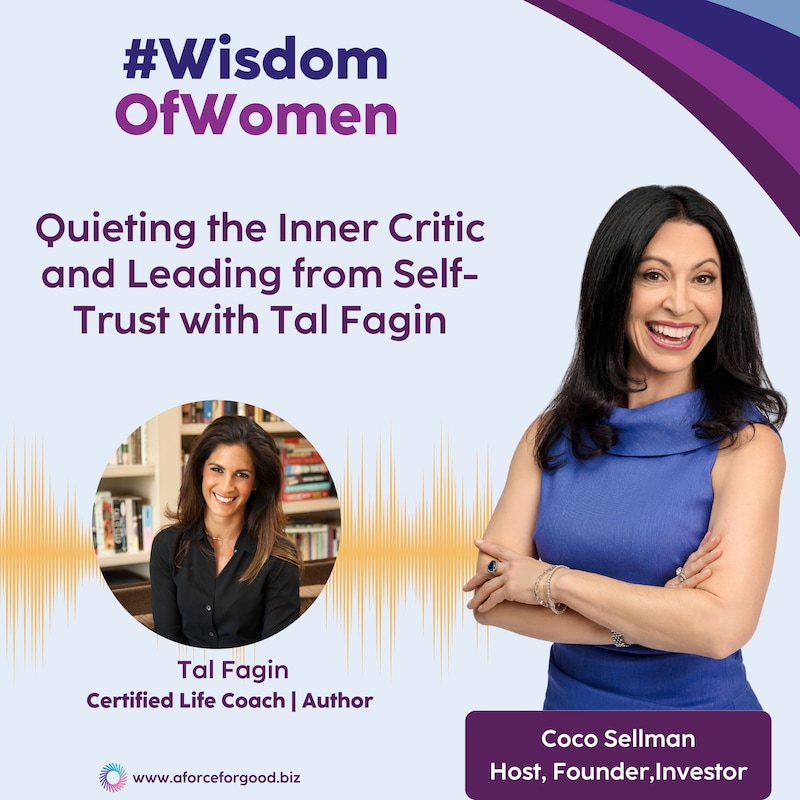
The central discussion of our new episode revolves around the vital need to address and transform the pervasive inner critic that many women encounter, particularly those in high-achieving roles.
We engage in a profound conversation with Tal Fagan, a former attorney turned life coach, who has dedicated her career to assisting women in silencing self-doubt and cultivating self-trust.
Through the use of neuroplasticity-informed strategies and practical tools, Tal elucidates how to navigate the treacherous waters of perfectionism and relentless self-criticism that often plague accomplished professionals. Her insights not only empower listeners to reconnect with their inner wisdom but also emphasize the importance of leading lives grounded in authenticity and confidence.
Together, we explore transformative practices that encourage women to embrace their worth and lead their enterprises with clarity and purpose.
Our Guest This Week:
Tal Fagin is a former attorney turned certified life coach and the author of Sometimes I Think I Suck: Life-Changing Strategies for Self-Critical People.
After years as a high-achieving, hard-driving lawyer battling perfectionism and relentless self-criticism, she transformed her own inner dialogue and redirected her career toward helping other accomplished professionals do the same. Today, she works with mentally healthy, high-functioning leaders who want more—more clarity, confidence, and fulfillment—using practical, science-informed tools grounded in neuroplasticity and deliberate living. Through private coaching, workshops, and her book, Tal equips ambitious women to quiet self-doubt, reconnect with their inner knowing, and lead their lives and businesses from grounded self-trust rather than perfectionism.
Takeaways:
- Tal a certified life coach, transforms her inner dialogue to assist high-achieving women with self-criticism.
- The episode discusses the importance of self-awareness and the necessity to pause and check in with oneself.
- Emphasizing the significance of balanced lives, the episode explores how women can prioritize self-care amidst ambitious pursuits.
- The concept of the inner critic is explored, highlighting its role in shaping self-doubt and decision-making processes.
- Listeners are encouraged to engage with their inner knowing, fostering a deeper connection with their intuition.
Chapters:
- 00:07 - Amplifying Women's Voices in Business
- 05:54 - Transformational Moments in Law and Coaching
- 14:22 - Navigating Career Transitions and Personal Growth
- 19:11 - Understanding Self-Doubt in Business
- 25:39 - Understanding the Inner Critic
- 34:08 - Connecting with Inner Wisdom
- 37:41 - The Importance of Permission for Personal Well-being
- 44:27 - Transforming Work Dynamics: The 3Ds Framework
- 48:19 - Delegation and Self-Care in Leadership
Guest Offers & Contact Information:
Website: www.talfusion.net
LinkedIn: www.linkedin.com/in/tal-fagin
Instagram: https://www.instagram.com/talfagin/
Facebook: https://facebook.com/talfagin
Pick up Tal’s book, “Sometime I Think I Suck” here:
Follow the #WisdomOfWomen show for more inspiring stories and insights from trailblazing women founders, investors, and experts in growth and prosperity.
YouTube: https://tinyurl.com/yja3w7nh
Spotify: https://tinyurl.com/4tak8ajk
Amazon Prime: https://tinyurl.com/366syddj
Apple Podcasts: https://tinyurl.com/bdhananz
RSS Feed: https://feeds.captivate.fm/womengetfunded/
Coco Sellman, the host of #WisdomOfWomen, believes business is a force for good, especially with visionary women at the helm. With over 25 years of entrepreneurial experience, she has launched five companies and guided over 500 startups. As Founder & CEO of A Force for Good, Coco supports purpose-driven women founders in unlocking exponential growth and prosperity. Her recent venture, Allumé Home Care, reached eight-figure revenues and seven-figure profits in just four years before a successful exit in 2024. A venture investor and board director, Coco’s upcoming book, *A Force for Good*, reveals a roadmap for women to lead high-impact, high-growth companies.
Learn more about A Force for Good:
Website: https://aforceforgood.biz/
Are Your GROWING or PLATEAUING? https://aforceforgood.biz/quiz/
FFG Tool of the Week: https://aforceforgood.biz/weekly-tool/
The Book: https://aforceforgood.biz/book/
Growth Accelerator: https://aforceforgood.biz/accelerator/
Transcripts
Welcome to the Wisdom of Women show.
Speaker A:We are dedicated to amplifying the voice of women in business.
Speaker A:A new model of leadership is emerging and we are here to amplify the voices of women leading the way.
Speaker A:I am your host, Coco Selman, five time founder, impact investor and creator of the Force for Good system.
Speaker A:Thank you for joining us today as we illuminate the path to unlocking opportunities and prosperity for women led enterprises by amplifying the voice and wisdom of women.
Speaker A:So today we have the inner critic tamer in our midst.
Speaker A:Tal Fagan, a dear friend for many years, is a former attorney turned certified life coach and the author of get this folks, Sometimes I think I Suck.
Speaker A:Life Changing Strategies for Self Critical People.
Speaker A:After years as a high achieving, hard driving lawyer, battling perfectionism and relentless self criticism, she transformed her own inner dialogue and redirected her career toward helping other accomplished professionals do the same.
Speaker A:Today she works with mentally healthy, high functioning leaders who want more clarity, confidence and fulfillment.
Speaker A:Using practical science informed tools grounded in neuroplasticity and deliberate living.
Speaker A:Through private coaching, corporate coaching workshops and her book Tahl equips ambitious women to quiet self doubt, reconnect with their inner knowing.
Speaker A:Tal equips ambitious women to lead the lives and businesses from grounded self trust rather than perfectionism.
Speaker A:Welcome Tal.
Speaker B:Thank you so much, Coco.
Speaker B:It's so good to be here with you and so excited for this conversation.
Speaker B:Thank you.
Speaker A:Yes.
Speaker A:I'm so excited to be here with you and for our listeners.
Speaker A:I've known Tal for, I want to say at least 15 years.
Speaker B:Right.
Speaker B:We're getting there.
Speaker B:Yeah.
Speaker A:We start kids side by side up in Litchfield, Connecticut and it's just a pleasure to get to be next to you and have gone through this journey of life and motherhood and business alongside each other.
Speaker B:Right.
Speaker B:You were a treasure to find in this transition from city lawyer to country life coach and I'm grateful for you and so much that came with that move.
Speaker B:So it's so nice to see you.
Speaker A:It's so nice to see you.
Speaker A:So Tal, tell us about a book written by a woman that has significantly influenced your life.
Speaker B:Okay, first of all, I love that you ask everyone this question because I love books and I love talking about books.
Speaker B:There's a long list of books that have influenced me in the back of my book, but I had to just pick one for you today.
Speaker B:So I'm gonna go with Loving what Is by Byron Katie.
Speaker B:And we could talk about the book or we could just recommend it to everyone, but it was a total game changer.
Speaker B:For me because it was probably one of the first self help books, I guess, if you want to put it in that category that I ever read.
Speaker B:And at the time I was still very much in my legal, analytical, very cognitive mindset, my approach to spreadsheets and weighing pros and cons and things like that.
Speaker B:And it was before I got into coaching and learned so much about using other skills and really checking in with the body.
Speaker B:But this book, even before I got to that, just taught me about pausing and looking at my situation or helping others look at their situation and realizing how much of what we think is bothering us in life is really, really coming from within.
Speaker B:It's not necessarily those external circumstances.
Speaker B:And so that was a total game changer for me.
Speaker A:I love her book too.
Speaker A:And it reminds me it's a simple technology that she writes about.
Speaker A:She has such a wonderful technology to help us change how we're thinking, which changes how we see things and changes the world.
Speaker A:And it's the transformation word that you talk about in your book.
Speaker A:And like your book, your book is filled with tools.
Speaker A:And I do think that for many of us, especially of us that are the analytical, more linear types, we like a tool.
Speaker B:A tool is helpful, right?
Speaker A:I feel like she said the definition of hell is believing your thoughts are true.
Speaker B:The one I always turn to is when you argue with reality, you lose, but only 100% of the time which such a go to line summarizing just how much we.
Speaker B:And look, don't get me wrong, life happens.
Speaker B:Things happen that are challenging.
Speaker B:We've all been there sometimes on the daily, right.
Speaker B:But there's this added layer of suffering that comes from the way we're thinking about things.
Speaker B:And so learning how to pause, check in, and then ask yourself the right questions changes everything.
Speaker A:Okay, so we're going to get to your book, but before we do that, I would love for you to tell us a little more about you and share some moments, three moments of your life that have somewhat defined who you are.
Speaker A:Three transformational moments could be moments of loss, moments of discovery, moments of courage, accomplishment.
Speaker A:Share us a little.
Speaker A:Let us understand who you are through these important moments of your life.
Speaker B:Again, so many.
Speaker B:And at the risk of turning this into all about and my entire background, I'm going to start with the moments that have really shaped me more recently.
Speaker B:Great.
Speaker A:Great.
Speaker B:When I was practicing law, it was challenging.
Speaker B:I was at Scadden, one of the biggest firms in the world.
Speaker B:It was high stakes, high pressure, everybody was brilliant.
Speaker B:And I often felt like I thought I was fairly confident, but when I got there, I realized how insecure I really was underneath all that confidence, if that makes sense.
Speaker B:And not insecure like I can't do this, but more of holding myself back.
Speaker B:More, Let me wait and see.
Speaker B:What are people saying here?
Speaker B:You know, always taking the temperature of every room that I was in before, I was willing to really put myself and my own ideas forward.
Speaker B:Now, I have since learned that this is fairly common, and almost everyone I work with has some version of this.
Speaker B:But I do remember needing to learn this lesson where I would be holding back and then I would have no choice but to step into my own voice, my own ideas, whatever it was that I had to contribute.
Speaker B:And every time, it was so valuable to whoever was in the room, whether it was clients, partners, colleagues, whatever.
Speaker B:And so I just had to learn really how to trust myself and how to first of all be okay with not knowing everything.
Speaker B:Right.
Speaker B:That's something no one really teaches you when you're starting out.
Speaker B:And there's that fake it to make it approach that so many of these hard driving environments have.
Speaker B:And I realized that fake it to make it is one thing, but taking the time to really be honest with yourself about what you know, what you bring to the table, and even what you don't know and where your questions may be helpful, having the confidence to bring all of that, to bring your whole self into the situation is so much more important than sitting there quietly pretending.
Speaker A:That I love that.
Speaker A:And so often that's what I see is, you know, when we endeavor to try something new, and it's that fear of just showing up fully.
Speaker A:And I love the idea of you, you know, and in your book, you talk about your decision to become a lawyer and then go to law school and then end up at this highfalutin place and how it was probably very hard to bring your whole self because you never really loved it.
Speaker B:Right?
Speaker B:Right.
Speaker B:And to be honest, I loved the place.
Speaker B:I didn't love the work.
Speaker B:Interesting.
Speaker A:Say more about that.
Speaker B:I loved the people I met.
Speaker B:My husband there, as you know, but also many of my lifelong friends, people I still keep in touch with.
Speaker B:There's nothing more fun than the Scadden alumni get together.
Speaker B:So loved the environment, loved that it was challenging, even though it was stressful.
Speaker B:But it was the work itself, like corporate law, that just didn't really make my heart sing.
Speaker B:But it was my time there and actually opportunities to do pro bono work that set me on the right track.
Speaker B:There was one night I was there really late Working on a pro bono case.
Speaker B:It was a petition for a woman who was a victim of domestic violence.
Speaker B:And I looked up and realized it was like midnight and I had no idea.
Speaker B:Like, I was just working away.
Speaker B:And when I was doing the corporate work, I didn't feel that way.
Speaker B:I felt a little grumpy when I was there late and a little like, why am I doing this so suddenly?
Speaker B:It occurred to me in that moment that there was another path and another way to use my legal skills.
Speaker B:And I did ultimately transition to.
Speaker B:To the DA's office to do specifically domestic violence work.
Speaker B:So I was grateful for that.
Speaker A:Yeah.
Speaker A:Well, how was that, though, once you got there?
Speaker A:That's.
Speaker A:I mean, I love that you made that step.
Speaker A:Right.
Speaker A:You leave the high paying, very respected, you know, kind of sky's the limit, and you now go and you're taking a totally different kind of role.
Speaker A:How.
Speaker A:What was that like for you and.
Speaker B:What did that lead you to discover in the.
Speaker B:Overall, it was wonderful, but again, it was very challenging and I will say that the timing was unfortunate.
Speaker B:I.
Speaker B:In between the time I accepted that job and then started, I was pregnant with my oldest.
Speaker B:I became pregnant and, you know, not to go into too many details, but that wasn't my first pregnancy.
Speaker B:The first one didn't make it.
Speaker B:And so I was a little stressed and also stressed about being in a brand new place and wanting to really prove myself there.
Speaker B:So it was difficult.
Speaker B:But I loved the work.
Speaker B:So again, it was sort of this total opposite where all the trappings of the job that I had loved, the paycheck, you know, the people, all of that.
Speaker B:So the bells and whistles were gone, but the work itself was amazing.
Speaker B:Loved it.
Speaker A:Yeah.
Speaker A:And then.
Speaker A:So then what happened next?
Speaker B:Ah, Coco.
Speaker B:So.
Speaker B:So when Leila arrived and Layla's 20.
Speaker A:20.
Speaker B:Layla's 20 now.
Speaker B:Oh, going back a bit.
Speaker B:I grew up super ambitious and planning only on being this big career woman.
Speaker B:And I thought, the family, the kids, sure, I'll have them and they'll be over there on the side while I'm plugging away at work.
Speaker B:And as soon as I had her and I had lost my mother just a little while before having her, and so I was in a different place and I felt like it was.
Speaker B:The universe was telling me to focus on my family, let's put it that way.
Speaker A:And how did that go for you?
Speaker B:It was tough.
Speaker B:I felt super fortunate that I was able to do it in terms of financially.
Speaker B:But if I'm being very honest, I also felt a little stuck because of that if I went back to the DA's office and hired a full time nanny, then I was going to be paying out more than I was earning and I wasn't going to see my daughter while she was awake during the week.
Speaker B:So this was a total conundrum I never expected to find myself in.
Speaker B:And when I did, I made a decision.
Speaker B:So I stayed home and I thought, okay, I'm going to find a different job that is a little bit.
Speaker B:Has a little bit more balance.
Speaker B:Took me a while to do that, but ultimately I did.
Speaker B:Here I am.
Speaker A:I love your story because I think it reflects the journey of ambitious women.
Speaker A:The journey of ambitious women.
Speaker A:We usually don't pick exactly what we're meant to do the first time.
Speaker A:Right.
Speaker A:And we have to navigate that.
Speaker A:And at least if we have, if there's a part of us that really the ambition and the success, for some people it can be enough, maybe.
Speaker A:But for me, I know for you and I know for most of the women that I work with and the founders that I know, it's just not worth it.
Speaker A:Right.
Speaker A:We need more.
Speaker A:And that discovery of who we are and what brings us meaning and what really matters to us isn't something that we know off the bat.
Speaker A:Can you say some more about that?
Speaker A:Because I know you.
Speaker A:So you talk about this in your book.
Speaker B:Yeah, and I talk about this with many clients and especially when I'm talking to younger people, because there's this idea still to this day, even though things have changed a lot since we were in college, let's say that you have to figure it out.
Speaker B:And it's a lot of stress and a lot of pressure when not only.
Speaker B:And this is the theme of all of my work is it's kind of.
Speaker B:It's hard enough out there, don't make it harder for yourself.
Speaker B:Right?
Speaker B:So being young and coming up in the world and trying to figure out, or even if you're not so young, even if you're just trying to figure out your next move and you've already had a few great moves, right?
Speaker B:We think we have to have the answers.
Speaker B:We think we have to know this is what I want to do and this is how you do it, and this is how you get from point A to point B.
Speaker B:And these are the steps to implement.
Speaker B:And it's not always that linear.
Speaker B:It can be cyclical.
Speaker B:It can look like a detour sometimes, but really it's exactly where you need to be going to get you where you want to go.
Speaker B:So I try and encourage people just to hold on.
Speaker B:I don't want to be Pollyanna about things.
Speaker B:If you're out there and you're trying to figure out your next move or a job transition or whatever it is, that is serious work.
Speaker B:And we get into it from a serious place.
Speaker B:But there's also often more happening than we realize beneath the surface and more possibilities than we're aware of.
Speaker B:And so a certain open mindedness, a certain confidence and a willingness to try and fail, that is something I didn't have when I was younger, but I definitely have it now.
Speaker B:So that's huge.
Speaker A:It is.
Speaker A:And you know, when you're.
Speaker A:It makes me think about just the title of your book.
Speaker A:Right.
Speaker A:Is like, of course, when we're young or when we believe the Inner critic, of course we think we suck.
Speaker A:Like, how could you possibly think anything else?
Speaker A:Right.
Speaker A:I love the name.
Speaker A:Sometimes I think I suck because it really slaps me in the face to say, oh boy, I don't want to think that.
Speaker A:Right.
Speaker A:And how am I doing that?
Speaker A:And what are the ways that's holding.
Speaker B:Me back on that part?
Speaker B:Right.
Speaker B:There is key because as much as I love the title and it was catchy and a lot of people, you know, just are drawn to it, some of us don't necessarily frame it that way.
Speaker B:It's not that I walk around thinking I suck, it's that there are these nagging thoughts or nagging insecurities and sometimes we're not even fully aware of them.
Speaker B:So the work is really about.
Speaker B:The thing I talk most about with everybody is pausing.
Speaker B:Pausing and checking in and getting really clear on what is happening to you.
Speaker B:Like right now, do you feel hot?
Speaker B:Do you feel cold?
Speaker B:Are you comfortable?
Speaker B:Would I be happier if I sat back a little bit?
Speaker B:Or am I all revved up from coffee and.
Speaker B:Right.
Speaker B:And just.
Speaker B:Just taking that moment, whatever it is, wherever you are, and really checking in and learning to do that as a practice so that you are moving through life with a little bit more intention and a sense of, oh, yeah, I am responding to my world, but I'm also driving the bus here.
Speaker B:Right.
Speaker B:As opposed to just constantly reacting and being thrown about.
Speaker B:There's so much coming at us all day, every day.
Speaker B:And these are ancient practices.
Speaker B:Right.
Speaker B:I think one I think of often is a back injury that I had that led me to discover meditation.
Speaker A:Wow.
Speaker B:Because at the time my self care routine was like vigorous exercise, punishing vigorous exercise, which is why I think I had the back injury.
Speaker B:And then suddenly I was forced to be a little bit more still.
Speaker B:Yeah.
Speaker B:And it changed everything.
Speaker A:Yeah.
Speaker A:What did it change?
Speaker B:The whole way that I move through the world, the way that I have a conversation.
Speaker A:So a lot of our listeners or founders and we're scaling our companies, we're dealing with loving what is a certain amount of Runway cash, perhaps, and knowing that there's a number of clients they need to sell to or a new product line that needs to launch and things aren't all going their way.
Speaker A:And that voice of self doubt, the critic, the part of you that just wants to run faster, do more, right?
Speaker A:Like, help us with this.
Speaker A:Help us with this, unpack how we can live in a world that is like this and hopefully be in a business we care enough about that it gives us meaning.
Speaker A:But proceed.
Speaker B:One thing I talk about with almost every client who is in, whether it's a startup, whether it's, you know, finance, whatever it may be, but the law, like these professions, there is a certain amount of accepting what is that people don't do, right?
Speaker B:Where on the one hand you've chosen this and you're doing it and the stress is there and you're doing all the things.
Speaker B:But there's some belief somewhere down deep inside that it should be easier or it shouldn't be this way, or I shouldn't feel this overwhelmed or I should be more organized or more on top of this or more whatever it may be, right?
Speaker B:So there's usually something going on underneath the surface that again, is causing that added level of stress.
Speaker B:Just helping people initially, really.
Speaker B:Look at physicians.
Speaker B:I work with a lot of physicians.
Speaker B:What could be more stressful?
Speaker B:People's lives are in your hands, right?
Speaker B:So developing that muscle of accepting what really is unchangeable in this university you've chosen, right.
Speaker B:And then looking at what you're bringing into it, that maybe is causing unnecessary stress or struggle.
Speaker B:And then we work from there.
Speaker A:I love that.
Speaker A:It makes me think about in my founder circle, one of the things we do, we set a goal for the year and then you have your milestones and you have your KPIs that you track weekly and you have your goal, how many this or how many that you want to achieve each week.
Speaker A:And whenever I've implemented this as well with my teams within my companies is the first thing that happens is people shrink up when they see the numbers.
Speaker A:It's.
Speaker A:Well, there's a number is supposed to be X, but it's Y, right?
Speaker A:So like that idea.
Speaker A:Okay.
Speaker A:Would have liked to have done X number this week, but we didn't.
Speaker A:We did a few Less.
Speaker B:Right.
Speaker A:So walk us through the practicality of being able to look at what is, say, you know, sales goal or something like that and have it be less than what it's supposed to be and still find a way to move forward but not have to make it so hard.
Speaker B:Right.
Speaker B:Well, notice you use the term shrink up.
Speaker B:So something has happened.
Speaker B:A number isn't as high as you'd like it to be.
Speaker B:That's a fact.
Speaker B:Right.
Speaker B:Okay.
Speaker B:You're allowed to be upset about it.
Speaker B:I'm not saying you're never going to react to anything.
Speaker B:In fact, it's really important that you do give yourself the space to have whatever initial reaction and feelings that you have, whether it's anger, whether it's fear, whether it's sadness, whatever it may be.
Speaker B:It's actually really important to take that pause to say, we wanted it to be X, but it's Y. I am therefore worried.
Speaker B:Okay?
Speaker B:Feel worried.
Speaker B:It's okay.
Speaker B:Now what are we going to do about it?
Speaker B:Right?
Speaker B:And from this clearer, more capable place, because now you're not shrinking up right now.
Speaker B:You're not saying, I suck.
Speaker B:I never should have done this to begin with.
Speaker B:Who do I think I am that I think I can pull this off?
Speaker B:They were all right about me, those horrible people I knew back in, earlier in my life who said I'd never amount to anything.
Speaker B:Whatever the dialogue is that you're having tends to be unhelpful.
Speaker A:Right.
Speaker B:And you don't want to be in that situation when you've got a big job to do.
Speaker B:You want to be able to say, okay, this didn't go as planned.
Speaker B:I'm going to be upset about it for a moment.
Speaker B:Then I'm going to get clear, get grounded and ask myself some hard questions.
Speaker B:What could I do differently?
Speaker B:Yep.
Speaker B:Yeah.
Speaker B:Why do I think we didn't meet our numbers?
Speaker B:And where might the problems lie and where might the solutions lie?
Speaker B:So there's all kinds of ways to go about correcting a situation.
Speaker B:And this happened.
Speaker B:This is true in your personal light, right?
Speaker B:Like, totally.
Speaker B:You know, this is true.
Speaker A:So you talk about in your book, you say, meet your Lola.
Speaker A:Right?
Speaker A:So talk to us about Lola.
Speaker A:Because what I love about this is that when we can start to identify our Lola, and I have one, and I love that yours is Lola.
Speaker A:I'll call mine Francine.
Speaker B:I was going to ask you, you.
Speaker A:Know, like mine is going to, you know, whenever I'm down, will tell me to work harder.
Speaker A:It's my fault.
Speaker B:Yes.
Speaker A:I am ashamed of always my fault.
Speaker B:That's one of mine.
Speaker B:It's always my fault.
Speaker A:Right.
Speaker A:And it.
Speaker A:For me, it all kind of boils down to this.
Speaker A:I'm not good enough or I'm not enough or something isn't enough.
Speaker A:And.
Speaker A:And so talk to us about the inner critic and how she shows up in all the different places and how she's shaping us as founders, as leaders, as business women, and as moms and partners.
Speaker B:Yeah.
Speaker B:So Lola is the name that I gave to my inner critic.
Speaker B:And there's another book that I love, something about taming your inner mean girl.
Speaker B:And that was where I got the idea, which I then read all kinds of things that sort of backed this up in terms of the science of naming your inner critic and giving her a Persona, giving her a look and a style and, you know, a whole personality, and separating yourself from her.
Speaker B:Right.
Speaker B:Accepting that she is a part of you, but she's not you.
Speaker B:Right.
Speaker B:And so just having a little bit of that distance is super helpful and having the framework of really getting to know her.
Speaker B:So I spend time in the book saying, like, get acquainted with your inner critic.
Speaker B:And then a few chapters later, it's like, let's get better acquainted with your inner critic.
Speaker B:Because the more you really know who she is, what she says, when she tends to show up, you know what your triggers are and what your reactions are, Right?
Speaker B:The impact that this has in your life, the more you really understand those patterns, the more equipped you are to recognize them a lot sooner and diffuse the situation much more quickly.
Speaker B:Right.
Speaker B:So rather than spending an entire day kind of spiraling and reacting in ways that are unhelpful, you can sort of pause, notice what's happening up.
Speaker B:My inner critic's on the scene.
Speaker B:She's telling me I didn't meet my numbers, and therefore I'm destined for failure.
Speaker B:And now I have felt very irritable all day.
Speaker B:I've been snapping at everyone on my team and in my life.
Speaker B:Some people get aggressive like that.
Speaker B:Other people, like, crawl into bed, and they're just like, I can't do this.
Speaker B:And they, you know, I doubt that that's your people, because they're not.
Speaker B:But, you know, everyone's are.
Speaker B:So learning how to understand how it impacts you as an individual, and then what tools you want to pull out of the toolkit to deal with it in that moment, just to say, okay, Lola.
Speaker B:So for me, let's say, when has she shown up recently?
Speaker B:She doesn't show up as much as she used to, which is great, right?
Speaker A:She doesn't.
Speaker A:Hijack the whole show anymore, right?
Speaker B:No, but, like, I might notice that I'm being a little frenetic, right?
Speaker B:I'm doing one thing and then I'm doing another thing, and then I'm dropping that and I'm turning to something else.
Speaker B:And that usually means, like, there's a lack of clarity and maybe a lack of confidence about, you know, the thing I really want to be doing.
Speaker B:And so I've learned that over the years by getting very acquainted with my own patterns and with the way my critic shows up.
Speaker B:Right?
Speaker B:So then I might pause and say, hmm, I'm doing that frenetic thing again.
Speaker B:Right.
Speaker A:Oh, my God.
Speaker A:I just have to stop you for a second because I see this.
Speaker A:I see it in myself, but I also see it so clearly when a founder is trying to break through on something and will go look around at all the other places other than the place, because the thing you gotta go do that's more important that she's wanting to do.
Speaker A:There's something about it that's still scary, right?
Speaker B:It's scary.
Speaker B:And oftentimes again, it can be masked, like the fear.
Speaker B:You don't know it's fear, Right.
Speaker B:It shows up as procrastination.
Speaker B:It shows up as, oh, but I still have to, you know, sign my kids up for the thing and call this doctor.
Speaker B:All of a sudden you're doing all these other things.
Speaker B:So understanding that that can be a coping strategy that is there because remember, the inner critic, as cruel or harsh as she may be, and sometimes she's not mine is.
Speaker B:Some of them are.
Speaker B:But she's there to protect you.
Speaker A:Yes.
Speaker B:To keep you safe.
Speaker A:Yes.
Speaker B:And so there is usually something you might be avoiding.
Speaker B:Right.
Speaker B:If you're getting into that pattern.
Speaker B:And it doesn't have to be like, I'm terrified.
Speaker B:It's just something that, you know, on a subtle level, you're avoiding.
Speaker B:And so to know that about yourself, right.
Speaker B:To be equipped with this information, Information is power, right?
Speaker B:Now, you know, you can do something about it, and you don't have to waste the entire day.
Speaker B:You can get to it a lot sooner.
Speaker B:And with that calm, clear, capable energy that you have underneath all the other.
Speaker A:Stuff, totally the inner voice, knowing voice.
Speaker A:And tell us about her.
Speaker B:So the inner knowing.
Speaker B:I've named mine Leia, who I named after my mother, who's the best person ever.
Speaker B:I miss her.
Speaker B:She's been gone a long time now, but she's very much here with me.
Speaker B:And when I really need that kind of support, that's where I go.
Speaker B:So my inner knowing is like my own little version of my mom.
Speaker B:Yours can be.
Speaker B:It can be anyone.
Speaker B:It can be anything.
Speaker B:It's a spirit, it's a force.
Speaker B:It's intuition.
Speaker B:It's, you know, nature.
Speaker B:It's all kinds of things, right?
Speaker B:But the good stuff, the loving, caring, the wise, the unbothered by all the noise, right?
Speaker B:There's a stillness.
Speaker B:There's an essence there, and we all have it, right?
Speaker B:So just, like, it's easier, I think, to interact with the inner critic when she's someone else.
Speaker B:For me, it was easier to make that inner knowing an older, wiser version of my mother.
Speaker B:But that voice is so much quieter and can be much harder to access.
Speaker B:So it does take practice, it takes patience, but we've all got it.
Speaker B:Like, you've had those moments where you just know something.
Speaker B:You just know it.
Speaker B:And it could be a vision, it could be a phrase that erupts some out of nowhere in your mind.
Speaker B:It could be a moment that, you know, you're walking and the breeze hits you a certain way, and suddenly it feels like a message.
Speaker B:You're like.
Speaker B:And you might be quick to dismiss it, too, because it's not very Western, you know, it's not the way we were all raised, but it's powerful.
Speaker A:I couldn't agree with you more.
Speaker A:I mean, maybe it's part of why we've always been attracted to each other.
Speaker A:Tall.
Speaker A:Because we're both.
Speaker A:We're both, you know, analytical, intelligent, ambitious.
Speaker A:We, you know, and at the same time, we have a deep connection to our spirit, to our inner knowing.
Speaker A:And, you know, this is why I started the Wisdom of Women show.
Speaker A:Because I believe that what the.
Speaker A:What.
Speaker A:What.
Speaker A:What businesses need most is wisdom.
Speaker A:And that idea of moving out of the head and into the body, into the spirit, into the heart, where we make our big decisions and then use the brain right when we need to.
Speaker A:To.
Speaker A:To, like, you know.
Speaker A:Yeah, right.
Speaker B:The world can be rather imbalanced, and our lives can get very imbalanced.
Speaker B:And so it helps to have these reminders.
Speaker B:And I'll be honest with you, when I started writing the book, it was all Lola.
Speaker B:There was no Leia.
Speaker B:It took me a while to remember.
Speaker B:Oh, wait a minute.
Speaker B:Yeah, there's this counterbalance.
Speaker A:And so how do you develop a connection to Leia?
Speaker A:How do you create that so that you can start to become more familiar with her?
Speaker B:It's trial and error for you as an individual.
Speaker B:But I find that quiet time, slow, quiet time often in nature, is the best place for me to be able to do that.
Speaker B:I know others who feel it's journaling.
Speaker B:Yeah.
Speaker B:Meditation again.
Speaker B:Or yoga or any of those kinds of practices that are really there to quiet the noise and help you get more in touch with your essence and your physical body can be helpful.
Speaker B:Listening to music.
Speaker B:Right.
Speaker B:Anything that just gets you out of the doing, doing, doing, doing, doing more always do, you know, and allows you to slow down and really check in with yourself.
Speaker B:And then once you maybe have it once.
Speaker B:Right.
Speaker B:Noticing what it feels like.
Speaker B:Right.
Speaker B:For me.
Speaker B:And I talk about this in the book, but it's a big smile and it's this smile of knowing that is like I'll be thinking about something and puzzling over it and problem solving in my mind.
Speaker B:And then I'll have a thought that.
Speaker B:Then there's this bit and it's like, oh, it was there all along.
Speaker A:Yeah.
Speaker B:And it seems so obvious when it happened, you know, and it's just like, there I am again.
Speaker B:Like, you know, and so that's my version.
Speaker B:Everyone's a little different.
Speaker A:So it's part of our.
Speaker A:I mean, I believe and I.
Speaker A:It's why I wanted you to be on the show is that we all, like.
Speaker A:There's so much more to creating success, money, manifestation in the world of a business.
Speaker A:I see building business as a creative endeavor.
Speaker A:It's just.
Speaker A:It could be painting, it could be plays, it could, you know, it could be music.
Speaker A:For me, I just.
Speaker A:What I like to create is business.
Speaker A:I just like it.
Speaker A:And part of it is the journey and the joy of the game and the making the money and like, all of that is part of the joy.
Speaker A:So it's like how you can be in the game and realize you're in the game and.
Speaker A:Right.
Speaker A:And know and have your critics show up and the inner knowing be there.
Speaker A:It's.
Speaker A:It's.
Speaker A:I find that your book is so helpful for women because it helps you deal with the part of success that isn't the business plan.
Speaker B:I like that.
Speaker A:Right.
Speaker B:Thank you for saying that.
Speaker A:It's because it's everything.
Speaker A:I always use the example.
Speaker A:Shoot.
Speaker A:We can all decide we want to be more healthy and we know what to do.
Speaker A:It's just a whole other thing to do it.
Speaker A:It's like when you're not doing the thing you wish you would do, it's because something is going on.
Speaker A:Right.
Speaker A:Your Lola is acting and needs love, maybe, or attention or just, you know, redirection.
Speaker A:And probably Leah's just hanging out there going, please listen to me.
Speaker A:So talk to me about this and share with me some ways that we can do more of this, as in our daily lives as ambitious women.
Speaker B:Permission is the first word that comes to mind when you say that.
Speaker B:Right.
Speaker B:And permission to take care of yourself.
Speaker B:Permission to prioritize yourself.
Speaker B:Yeah, you have all these goals.
Speaker B:But I guess it's interesting, no one likes the term life coach.
Speaker B:I still don't really like it, but what I do like about it is this is about your life.
Speaker A:Yes.
Speaker B:Right?
Speaker A:Yes.
Speaker B:It's not only about your business, it's not only about your marriage, your children, your friendships.
Speaker B:It's the whole thing.
Speaker B:It's your life.
Speaker B:And sometimes when we're really driven and really ambitious and focused on the big goal, that gets lost in the shuffle a little bit and to our detriment, because that's what can lead to burnout or just other self sabotaging, unhealthy, unhelpful habits.
Speaker B:Again, maintaining that balance, checking in with yourself, taking care of yourself.
Speaker B:Some of the things that I talk about with clients, you know, it's the boring stuff that no one really wants to talk about, but it is the most important stuff.
Speaker B:If you're not getting enough rest, if you're not ever exercising, if you're just eating on the go or eating garbage or whatever it is, first of all, you're probably not going to be as successful as you want to be.
Speaker B:And even if you are, you might not get to enjoy it.
Speaker B:Right.
Speaker B:And that's just the basic basics, those foundations.
Speaker B:Then there are just things like doing things you love to do, things that feed your soul, whether that's time with friends or checking out an art exhibit once in a while or a Broadway show or a hike in the woods, whatever.
Speaker B:It may be like all of these things that we sort of push off or we think we don't have time for, or, you know, they're pretty important.
Speaker B:And so that sort of rest, the resting part of the work rest cycle, gets lost sometimes.
Speaker B:And rest, it can be a nap or it can be a hike, or it can be all kinds of things, right.
Speaker B:I can't tell you how many clients I've had who think what they need is to quit their job, right?
Speaker B:And then they take a vacation and they come back and they're like, oh, right, I'm a whole new person with a whole new perspective.
Speaker B:And they're.
Speaker B:They're resourced in a way, right?
Speaker B:Resources.
Speaker B:They're resourced again.
Speaker B:They have the ability to do the hard things so that, you know, can be the big vacation or it can just Be on, on a daily basis.
Speaker B:What are you doing to make sure you're really at your best and not only to be successful, I mean.
Speaker B:Yes, that's.
Speaker A:Yes.
Speaker B:Right.
Speaker A:Well, and that's.
Speaker A:Yeah.
Speaker A:And that's also why you talk about what truly matters.
Speaker B:Right.
Speaker A:You're the deeper.
Speaker B:Why.
Speaker A:Because when.
Speaker A:And I've had many stages, many moments in my life where it's like you're talking about.
Speaker A:It's like this, this one focus, I become focused on my career, my business.
Speaker A:And yes, my family's there.
Speaker A:Right.
Speaker A:Yes, my health is there.
Speaker A:You know, and, and that always leads to patterns of overwork and relationship disconnect and you know, burnout.
Speaker A:And it just like to not have that balance isn't.
Speaker A:And it doesn't work in the business either, by the way.
Speaker A:Right.
Speaker B:It's.
Speaker A:It all fuels each other.
Speaker A:And you know, one of the things you said was around permission.
Speaker A:And this is one of the things, all of your, everything we're talking about here, knowing your inner critic, knowing what your knowing self feels like, looks like how she presents herself.
Speaker A:It's just knowing oneself.
Speaker A:Right.
Speaker A:Like, if I know that what brings me joy isn't having back to back phone calls all day, then hopefully I set my life up to not have.
Speaker B:Back to back phone calls all day.
Speaker A:And hopefully I give myself permission to say, well, even though I think the only way I can do my job is to have back to back phone calls every way there is another way or I need to make some kind of change.
Speaker A:Talk about that.
Speaker A:When we're in the situation, we think we don't have a choice.
Speaker B:So there's a tool for this.
Speaker B:It's almost everyone's favorite.
Speaker B:I call it the 3DS.
Speaker B:It's a slight moderation on a hardly modified at all version of a Martha Beck tool.
Speaker B:But language is important in terms of the people that I work with.
Speaker B:Right.
Speaker B:You want them to hear what you're saying and receive it.
Speaker B:And so you don't want to sound a little out there.
Speaker B:You want to sound professional.
Speaker B:So in any event, the 3DS, without further ado.
Speaker B:Yeah, ditch it, delegate it, do it up.
Speaker B:Okay.
Speaker B:So if you're in that place where you think you don't have a choice.
Speaker B:I don't want to do this thing, but I have to.
Speaker B:Yeah, I want you to pause.
Speaker B:I want you to check in.
Speaker B:I want you to say, okay, just for fun, let's pull out the 3Ds here.
Speaker B:Can I ditch it?
Speaker B:Can I ditch these phone calls?
Speaker B:Most people will Be like, no, I can't.
Speaker B:I have to.
Speaker A:I have to do these phone calls.
Speaker B:I'll say, okay, well, what do you mean by have to?
Speaker B:Like, are you going to die on the spot if you don't like?
Speaker B:What are the consequences if you choose to ditch these calls?
Speaker B:What consequences are you facing now?
Speaker B:We're looking at it a little bit differently.
Speaker B:Yeah, right, right.
Speaker B:I think I have to because I don't want to deal with the consequences.
Speaker A:Exactly.
Speaker B:That's okay.
Speaker B:You look at the consequences and then ask yourself again, do I have to?
Speaker B:Now the answer is actually maybe I can accept some of that and I can move on without these calls or and this happens, I don't have to, I can skip it.
Speaker B:But if I skip it, this person will be disappointed or my numbers will be Y instead of X, whatever the consequence is.
Speaker B:So I'm going to choose to stick with the calls.
Speaker B:Now, you're operating from a very different place now.
Speaker B:You have agency now.
Speaker B:You're not trapped, you're not a victim of your life.
Speaker B:You're making a choice.
Speaker A:Yeah.
Speaker B:So that's the first step.
Speaker A:Yeah.
Speaker B:The second D is delegate.
Speaker B:Sometimes it's hard for us to do it.
Speaker B:So having this framework and saying, I don't want to do all these calls, is there anyone else who can do this?
Speaker B:Again, the knee jerk reaction is often,.
Speaker A:No, no one can do this.
Speaker A:Only I can do it.
Speaker B:And then finally is the do it up piece, which is if you have decided you're not going to ditch or delegate, then how can you do this in a way that feels better?
Speaker A:Yeah.
Speaker B:That isn't like me forced to trudge through the burdens of my life, but is much more like, here I am and here's why I'm doing it and I'm bringing.
Speaker B:And how do I make it rewarding or fun or just more tolerable, whatever it may be.
Speaker B:Right.
Speaker A:And so how might we do it?
Speaker A:Let's take the phone calls as an example.
Speaker A:So I decide that in fact the phone calls are really important.
Speaker A:It's how I connect with people.
Speaker A:It's how I help convey the results that I so care about.
Speaker A:It's also how I generate the next customer.
Speaker A:I decide this is important.
Speaker A:So how do I do this up?
Speaker B:We start talking about what would make it feel more meaningful to you, what would make it feel more fun for you.
Speaker B:I think the example I use in the book or often with friends is tasks for my family that I feel like this is not why I went to law school.
Speaker B:I do not want to be Doing this, when I can get really pissy and unpleasant around some of that stuff, I can do it up either by reminding myself that it's not about the task.
Speaker B:It's about like the caring and the loving and the tending to people in my life.
Speaker B:That is what I'm really doing.
Speaker B:Right.
Speaker B:So I can be like, you don't want to fold laundry, but you get to watch Bridgerton while you're doing it.
Speaker B:So let's do it up and make it more fun.
Speaker B:You know, it could be any combination of things.
Speaker B:So for you, in terms of the calls, you know, what might it make it feel less onerous to you?
Speaker B:What might make it feel even more fun for you?
Speaker B:Like, could you turn it into a game?
Speaker B:After I do five of them, I get to.
Speaker B:I don't know.
Speaker B:Right, Right.
Speaker B:I could.
Speaker B:I might have a dance, right?
Speaker A:Yeah, I could take a dance.
Speaker A:Well, and it also makes me think about.
Speaker A:Because this is an area that I have had to transform.
Speaker A:Right.
Speaker A:As I have had to stop saying yes to all the calls.
Speaker A:I'm just sharing this examples because sometimes you realize maybe I can't ditch all the calls, but maybe there really are some that I'm doing that I'm doing to be a nice girl.
Speaker A:I'm doing to have people like me, I'm doing.
Speaker A:But I really need to stop doing them because they're taking up too time, too much time in my life and they're keeping me from what I really need to do.
Speaker A:But there also, it could be that maybe it's certain calls that with certain conversations that really light me up.
Speaker A:So maybe it's.
Speaker A:That's how I do it up.
Speaker A:Right.
Speaker A:So when I'm having founder calls that are about XYZ and they're not about how do I get more funding, Right.
Speaker A:Then I'm lit up.
Speaker A:Right.
Speaker A:That's true.
Speaker A:Or maybe it's this.
Speaker A:And this is also true for me.
Speaker B:And I'm helping.
Speaker A:I'm saying this because this is sometimes how it works.
Speaker A:I like to do it in a group.
Speaker A:I'd rather do my founder's office hours and collect with a whole group of people and do it that way than one on one on one.
Speaker A:It's just what's better for me.
Speaker A:For me.
Speaker A:I was thinking about it as I was reading your book.
Speaker A:Did you delegate it?
Speaker A:And I am not afraid to delegate.
Speaker B:Good.
Speaker A:I had a mentor say to me once that it's worth to delegate if you can get somebody else to do the job 80% as well as you in a year.
Speaker A:And so it's not like they have to do it tomorrow.
Speaker A:80%.
Speaker A:But within a year get them to do it 80% to you because nobody's ever going to do it as good as you.
Speaker A:At least that's what you're going to tell yourself.
Speaker A:And then the truth, somebody else can do it.
Speaker A:Let's just say there hasn't been a single role.
Speaker A:I've left companies, I've started, founded and left them and they're fine.
Speaker B:Right.
Speaker A:So let's do a fast fire round.
Speaker B:Okay.
Speaker B:I could go on and on this subject, but yeah.
Speaker A:Yeah.
Speaker A:Okay.
Speaker A:So what's one thought you no longer believe about yourself?
Speaker B:I suck.
Speaker A:One belief high achieving women need to drop.
Speaker B:I have to do it all myself.
Speaker A:I have to do it all myself.
Speaker A:Burnout is usually a sign of what?
Speaker B:Overdoing it.
Speaker A:Yeah.
Speaker A:A simple joy you protect.
Speaker B:Mike's my hikes with my dog.
Speaker A:Great.
Speaker A:One word your younger self needed to hear.
Speaker B:You've got the.
Speaker A:You can have more than one word.
Speaker A:You can have more than one word.
Speaker B:Go ahead.
Speaker A:Words your young words your younger self needed to hear.
Speaker B:You've got the goods so tall.
Speaker A:Tell us how can our listeners and viewers learn more about you and your corporate services, your workshops, everything you're doing to help women?
Speaker B:I have a website, it's talfagancoaching.com there's my book which I hope people are interested in that's out there on Amazon.
Speaker B:And really the website will give you my email, my phone number, what, whatever you need.
Speaker B:But yeah, there's I do this out of really these are all the skills I wish that I had when I was younger.
Speaker B:And so it just brings me great joy and just fills me with that sense of purpose when I can connect with other women and help them stay in the game but do it without the undue stress.
Speaker A:Yeah, I love that.
Speaker A:Well, thank you Tal.
Speaker A:Thank you so much for joining us today on the wisdom of Women show.
Speaker A:We really appreciate the wisdom that you're helping us all rekindle in ourselves and the wisdom that you've shared with us today.
Speaker A:And by all means everybody be sure to check out Tal's book on Amazon.
Speaker A:Sometimes I think I life changing strategies for self critical people.
Speaker A:And be sure to go to the website Tal Fagan coaching.
Speaker A:It'll be right in the show notes for you.
Speaker A:And just remember to please follow like and share the wisdom of women show on whatever your favorite listening or viewing platform is.
Speaker A:And to infuse more of your wisdom into your business, take the Growth Weddingness quiz at atorceforgood Biz quiz and you'll uncover where your insight is needed most in your business.
Speaker A:The world is made better by women led business.
Speaker A:Let's go make the world a better place.
