Shownotes
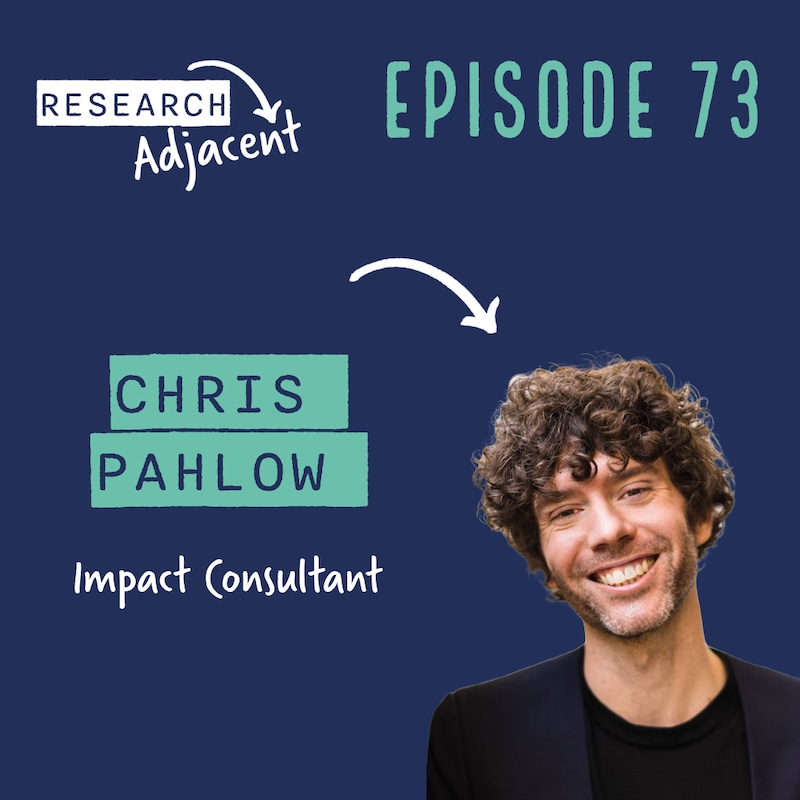
Sarah's guest is impact consultant, Chris Pahlow. Based in Melbourne, Australia, Chris runs the consultancy business Amplifying Research and hosts the podcast of the same name.
Sarah and Chris talk about
- Blagging his way into a university teaching position whilst an indie filmmaker
- Why impact is really all about relationships
- Being honest – even when it's not what people want to hear
- The often-invisible work of research professional staff
Find out more
- Read the show notes and transcript on the podcast website
- Connect with Chris on LinkedIn
- Listen to the Amplifying Research podcast
- Find out about Chris's business Amplifying Research
About Research Adjacent
- Fill out the research-adjacent careers quiz
- Sign up to the Research Adjacent newsletter
- Follow Research Adjacent on LinkedIn Instagram and BlueSky
- Email a comment, question or suggestion
- Leave Sarah a voice message
Mentioned in this episode:
Come along to our Manchester networking event
Join host Sarah McLusky and fellow research-adjacent professionals on Thursday 12 March 2026 at 5.30pm. Find out more and register here https://researchadjacent.circle.so/c/open-events/manchester-research-adjacent-community-networking
Member of the Month: Duncan Yellowlees, DY Training
Let’s put rubbish presentations in the bin – where they belong. Get in touch with Duncan for specialist research presentation skills training www.duncanyellowlees.com
Transcripts
Relationships are at the heart of impact.
Chris Pahlow:You can't really do a whole lot just working away on your
Chris Pahlow:own in the lab or at your desk.
Chris Pahlow:We need connections.
Chris Pahlow:You don't have unlimited resources.
Chris Pahlow:You don't have unlimited time.
Chris Pahlow:So it's really important to think about for the life cycle of the
Chris Pahlow:project, who are the different types of people or organizations where
Chris Pahlow:your time is gonna be best spent.
Chris Pahlow:A personal mission is trying to create a better work environment
Chris Pahlow:for those professional staff who are working so, so hard.
Chris Pahlow:And I think they deserve a lot better a lot of the time.
Sarah McLusky:Hello there.
Sarah McLusky:I'm Sarah McLusky and this is Research Adjacent.
Sarah McLusky:Each episode I talk to amazing research adjacent professionals about what
Sarah McLusky:they do and why it makes a difference.
Sarah McLusky:Keep listening to find out why we think the research adjacent space
Sarah McLusky:is where the real magic happens.
Sarah McLusky:Hello and welcome to another episode of Research Adjacent.
Sarah McLusky:Chris Pahlow, my guest today, is joining us all the way from Australia.
Sarah McLusky:I first heard of and heard Chris through his excellent podcast
Sarah McLusky:Amplifying Research, and if you haven't listened to it yet, make sure you go
Sarah McLusky:and check it -out after you finish listening to this episode of course.
Sarah McLusky:Chris runs a consultancy business, also called Amplifying Research, where
Sarah McLusky:he helps researchers think through research impact, and importantly the
Sarah McLusky:relationships that underpin that impact.
Sarah McLusky:Chris didn't have the most conventional path into this work.
Sarah McLusky:He started out as an indie filmmaker and took on some teaching
Sarah McLusky:work to help pay the bills.
Sarah McLusky:This turned out to be a baptism of fire, but also the path that led him into
Sarah McLusky:research communications, and impact.
Sarah McLusky:Chris and I talk about why relationships are at the heart of the work he does,
Sarah McLusky:how being independent can help him be honest, even when it's not what people
Sarah McLusky:want to hear and the often invisible work of research professional staff.
Sarah McLusky:Listen on to hear Chris's story.
Sarah McLusky:Welcome along to the Research Adjacent podcast.
Sarah McLusky:Chris, it is fantastic to have you here all the way from Australia.
Sarah McLusky:Tell us a bit about who you are and what you do.
Chris Pahlow:Sarah, thank you very much for having me on the show.
Chris Pahlow:Big fan of what you're doing and the mission, of championing research
Chris Pahlow:adjacent folks is something I'm a big believer in and I'm looking
Chris Pahlow:forward to chatting about it.
Chris Pahlow:What do I do?
Chris Pahlow:I run a consulting company here in Melbourne, Australia
Chris Pahlow:called Amplifying Research.
Chris Pahlow:I work with academic teams, primarily focused on research
Chris Pahlow:centers and folks like that.
Chris Pahlow:And I think if I had to think of two words to sum up what my focus
Chris Pahlow:is, it's impact and relationships.
Chris Pahlow:I don't think the language the sector uses is always that helpful.
Chris Pahlow:Terms like comms and engagement, and dissemination and science
Chris Pahlow:communication get thrown around a lot.
Chris Pahlow:And so sometimes I get put into those buckets.
Chris Pahlow:But the way I think about it if someone says, Hey Chris, we wanna do a podcast
Chris Pahlow:series to disseminate our research, or we wanna hold an event, or we
Chris Pahlow:need to update our branding or update our website, inevitably when we are
Chris Pahlow:thinking about external audiences that researchers need to work with, whether
Chris Pahlow:that's practitioners, whether that's industry, whether that's the dreaded
Chris Pahlow:general public in quotation marks.
Chris Pahlow:Ultimately, when we start talking about things we end up talking about the team
Chris Pahlow:within the research center or within the department or whatever it is.
Chris Pahlow:And it's all about relationships.
Chris Pahlow:I'm thinking about something Sarah Morton said, Sarah Morton, from
Chris Pahlow:Matter Of Focus, basically saying that relationships are at the heart of impact.
Chris Pahlow:You can't really do a whole lot just working away on your
Chris Pahlow:own in the lab or at your desk.
Chris Pahlow:We need connections.
Chris Pahlow:And so what I do, when I'm working with researchers and academic
Chris Pahlow:teams, I help them think about.
Chris Pahlow:What do they want to do?
Chris Pahlow:What impact do they want to contribute to, and what are the different relationships
Chris Pahlow:they need to build and strengthen over time to make that impact possible?
Sarah McLusky:I think that sounds very much aligned with
Sarah McLusky:my take on things as well.
Sarah McLusky:And I agree that the language that we use around it is not always helpful.
Sarah McLusky:Where I find myself talking about, oh, I do things like communications, but
Sarah McLusky:it's but that isn't really what I do.
Sarah McLusky:Yeah.
Sarah McLusky:Yeah.
Sarah McLusky:It is.
Sarah McLusky:As you say, much more about people.
Sarah McLusky:So tell us a bit about, so you're based in Australia and I think
Sarah McLusky:impact, as we said, thinking a little bit about the language, impact is
Sarah McLusky:a really big deal here in the UK.
Sarah McLusky:I'd love to hear about whether that understanding of impact in
Sarah McLusky:Australia is the same or whether it's slightly different and what are
Sarah McLusky:the priorities there around impact.
Chris Pahlow:I think we're probably still a little bit behind where
Chris Pahlow:things are at in the UK, but impact is becoming increasingly important.
Chris Pahlow:If we think about things like grant applications, the government funding
Chris Pahlow:bodies, the big funding bodies, they do want to see some sort of
Chris Pahlow:evidence of impact if they're gonna be awarding taxpayers, money to to
Chris Pahlow:research projects, they want to see it.
Chris Pahlow:I think.
Chris Pahlow:I'd like to think it's becoming more and more something that's
Chris Pahlow:on the radar of academics.
Chris Pahlow:Certainly the people that I work with regularly and the people that
Chris Pahlow:inspire me and even inspired me to completely change my career are
Chris Pahlow:the ones who are focused on impact.
Chris Pahlow:And yeah, I feel super grateful to be working with people like that every day.
Sarah McLusky:Oh, that's brilliant.
Sarah McLusky:And I think what I particularly love about, I know the concept of impact.
Sarah McLusky:It isn't, sometimes it's a little bit of a tricky thing for
Sarah McLusky:people to get their head around.
Sarah McLusky:Sometimes it's a bit of a love hate thing.
Sarah McLusky:I know here in the UK it's all become very incentivized, which
Sarah McLusky:has become a little bit difficult.
Sarah McLusky:But the general concept of it that it's, it is about not just let's randomly put
Sarah McLusky:stuff out into the world, but thinking through really carefully who you want
Sarah McLusky:to reach and why you want to reach them.
Sarah McLusky:So tell us a bit about your process your kind of thinking of when
Sarah McLusky:you're working with somebody.
Chris Pahlow:That's a great question and you've caught me
Chris Pahlow:at a very interesting time.
Chris Pahlow:If I can share a little bit about, I guess me and my motivation, something
Chris Pahlow:I've been saying a lot recently is.
Chris Pahlow:I just get really cranky sometimes and I've I've ended up doing the work that
Chris Pahlow:I do and indeed focusing on trying to develop new ways of working and thinking
Chris Pahlow:about impact and thinking about the relationships academics need to have.
Chris Pahlow:It's just because I get too cranky and too frustrated with
Chris Pahlow:the way things have been done.
Chris Pahlow:And I can give you some specific examples at varying levels of
Chris Pahlow:infuriatingness, that's not even a word, but various levels that can make
Chris Pahlow:my blood boil or, make your eyes roll.
Chris Pahlow:And for a long time.
Chris Pahlow:I was consulting specifically on academic videos and podcasts, 'cause we can,
Chris Pahlow:maybe we can talk about this later, but I have a long background in the
Chris Pahlow:film industry and so I ended up working with academics almost by accident.
Chris Pahlow:And so yeah, people would come and say, Hey, we finished our research
Chris Pahlow:project, or we're almost finished.
Chris Pahlow:And let's disseminate it and then you'd be like, okay, well it would've been nice
Chris Pahlow:if you came and talked to us at the start of the project that you're here now.
Chris Pahlow:That's good.
Chris Pahlow:That's a start.
Chris Pahlow:Let's talk about
Sarah McLusky:That's such a recurring theme.
Chris Pahlow:I know.
Chris Pahlow:I know.
Chris Pahlow:And the thing is, everyone's trying their best.
Chris Pahlow:So there's a, I hope, a happy ending to this story.
Chris Pahlow:Certainly.
Chris Pahlow:I'm very optimistic, but people would come and they know they need to do
Chris Pahlow:something with their research, whether it is because on a personal level
Chris Pahlow:they have a, an impact driven mission or whether it's just because the
Chris Pahlow:incentives are changing, as you say.
Chris Pahlow:But then you'd start to ask them questions about, do you have any behavioral goals?
Chris Pahlow:Do you want people to change what they do?
Chris Pahlow:Do you want people to change their beliefs and who?
Chris Pahlow:What type of people do you need to be engaging?
Chris Pahlow:And sometimes they would say, I don't, I dunno, I didn't think about that.
Chris Pahlow:And sometimes they would give you a very long list of my grandma, every person
Chris Pahlow:in the village I grew up in, scientists, you people in space, alien, the general
Chris Pahlow:public like I was saying before, right?
Chris Pahlow:And again I don't put any blame on any of them, and this is something I've been
Chris Pahlow:thinking about a lot the last few years.
Chris Pahlow:I just don't think there's been nearly enough support.
Chris Pahlow:Certainly not what I've experienced here in Australia.
Chris Pahlow:I'm yeah, keen to hear what it's like in your experience over in the UK,
Chris Pahlow:but I just saw so many researchers doing incredible stuff in all sorts
Chris Pahlow:of fields and some of it very moving.
Chris Pahlow:I felt really humbled to be just sitting in on some of the meetings where people,
Chris Pahlow:they're dedicating their life to really trying to make a positive difference
Chris Pahlow:and it just didn't seem like they were getting the support they needed to,
Chris Pahlow:to drive that impact and the longer I got to work with people like that and
Chris Pahlow:was kicking around the universities here in Melbourne, it just seemed like
Chris Pahlow:there are some big structural issues.
Chris Pahlow:And on the one hand, universities are trying to take lessons from industry,
Chris Pahlow:whether, that's something like the film industry or podcasting is increasingly
Chris Pahlow:big in the academic world now.
Chris Pahlow:So whether they're trying to take lessons from those kind of folks, or whether
Chris Pahlow:it's from consulting firms or whether it's from, advertising and marketing.
Chris Pahlow:There's a lot of great stuff there, but the way it's applied,
Chris Pahlow:in my opinion, in the academic world really has a lot of gaps.
Chris Pahlow:And so that's what I'm trying to tackle now.
Chris Pahlow:And so to go back to your question of what's my approach when it comes
Chris Pahlow:to helping people think about who they work with, this is hot off the
Chris Pahlow:presses I haven't even published it on my website yet, but I feel
Chris Pahlow:like people need to prioritize.
Chris Pahlow:That's a really big thing, I understand.
Chris Pahlow:Your work is super important and you're dedicating your life for
Chris Pahlow:a huge part of your life to it.
Chris Pahlow:But you don't have unlimited resources.
Chris Pahlow:You don't have unlimited time.
Chris Pahlow:So it's really important to think about for the life cycle of the
Chris Pahlow:project, who are the different types of people or organizations where
Chris Pahlow:your time is gonna be best spent.
Chris Pahlow:And there's been some great thinking done like Professor Mark Reed and his
Chris Pahlow:team developing the three I framework, encouraging people to think about
Chris Pahlow:not just influence and interest, which those are two criteria that
Chris Pahlow:have been used for a very long time.
Chris Pahlow:But we also need to think about who are we potentially impacting with our work.
Chris Pahlow:So people have been doing great thinking about that, but I also think on top of
Chris Pahlow:prioritizing, we also need to do a bit of categorization and differentiation.
Chris Pahlow:Because in my experience on the ground, working with research teams, when
Chris Pahlow:I'd asked them, okay, who are the stakeholders or who are the relevant
Chris Pahlow:parties you think are most important?
Chris Pahlow:We end up with a huge list or a huge Eisenhower matrix just
Chris Pahlow:with so many different names and so many different cards.
Chris Pahlow:And we'd look at them all, and people would ask, I think, very legitimate
Chris Pahlow:questions of how are we supposed to choose between community members who might be
Chris Pahlow:affected by our work and a funding body, or the faculty executive or, a peak
Chris Pahlow:body, like they're just categorically different types of relationships.
Chris Pahlow:And what I'm trying to do at the moment is to get teams thinking about
Chris Pahlow:not just the dissemination or the translation or knowledge mobilization.
Chris Pahlow:It's really good to think about the beneficiaries or
Chris Pahlow:end users of the research.
Chris Pahlow:But you also gotta think about what I'm calling ecosystem enablers.
Chris Pahlow:So who are the people or organizations that are gonna set up your team
Chris Pahlow:for success and if you're in a university that probably is gonna be
Chris Pahlow:decision makers in the faculty or in chancellery or something like that.
Chris Pahlow:It's really important that you understand the strategic
Chris Pahlow:priorities of the funding bodies.
Chris Pahlow:Increasingly I'm talking with people who are looking for philanthropic
Chris Pahlow:funding or, or, industry partnerships.
Chris Pahlow:So they're not just thinking about funding on a project level, but
Chris Pahlow:they're thinking about the future of their center or their organization.
Chris Pahlow:How can it last more than those first five years?
Chris Pahlow:So I guess that's just an example yeah.
Chris Pahlow:Prioritization, but categorization and thinking about the fact that
Chris Pahlow:not all relationships are the same.
Chris Pahlow:They do have different purposes in the lifecycle of your project or your
Chris Pahlow:organization or indeed your career.
Chris Pahlow:And I guess I'll say one other thing.
Chris Pahlow:I really like the word relationships 'cause I think it has some
Chris Pahlow:really helpful connotations.
Chris Pahlow:And if we go back to my criticism of the existing language it's very common
Chris Pahlow:for me to hear people say things like, oh yeah, comms is one way.
Chris Pahlow:I'm just gonna be broadcasting out my ideas, which I think
Chris Pahlow:is based on a fundamental and very unhelpful misconception.
Chris Pahlow:And they talk about engagement is two ways.
Chris Pahlow:So comms is one way.
Chris Pahlow:I'm just gonna be shouting into the void and hoping someone listens.
Chris Pahlow:Engagement, I, maybe I'll do some listening and I'll do some
Chris Pahlow:talking and we'll split it 50 50.
Chris Pahlow:But when people think about engagement, I think that can still
Chris Pahlow:have some pretty heavy limitations.
Chris Pahlow:They might think about consultation.
Chris Pahlow:Like I, I'll go and do a focus group with some representatives
Chris Pahlow:from a community group.
Chris Pahlow:And it could just be a one-off or a short term kind of situation.
Chris Pahlow:Whereas I think relationships suggest something that's ongoing, something
Chris Pahlow:that's reciprocal something that requires, investment and even like
Chris Pahlow:love and care from all parties.
Chris Pahlow:And I think those things are all really important.
Chris Pahlow:I guess just for life and just for being a person, but especially if you really
Chris Pahlow:do want your work to have lasting impact.
Sarah McLusky:Yeah, I think it's so true.
Sarah McLusky:I think when you say they're shouting into the void there's many
Sarah McLusky:a research communication thing I've seen that it just felt like that.
Sarah McLusky:It's just yeah, we've got some money.
Sarah McLusky:We're just gonna create this thing and then we don't quite
Sarah McLusky:know what we're gonna do with it.
Sarah McLusky:I think it's so interesting is always when it's a tagged on part of the
Sarah McLusky:research, there's always that people always say, I haven't got the time.
Sarah McLusky:Whereas if you think about it as just an integral part of how the research
Sarah McLusky:is done, as you say, not just thinking about it as like a one-off thing,
Sarah McLusky:but like an ongoing relationship that runs, all the way through, that's just
Sarah McLusky:threaded through everything that you do.
Sarah McLusky:And then in those cases, you are gonna have considerably more impact
Sarah McLusky:than chucking thousands of pounds in animation that you're gonna
Sarah McLusky:post once on social media and then it's gonna disappear without trace.
Sarah McLusky:And actually so much of that impact really is about the difference
Sarah McLusky:that we make to people, isn't it?
Chris Pahlow:A hundred percent.
Chris Pahlow:Yeah.
Chris Pahlow:Yeah.
Chris Pahlow:I would be so happy.
Chris Pahlow:I'd be overjoyed if I, if anyone listening who's a researcher.
Chris Pahlow:I know we're pro Sarah, we're probably preaching to, to the choir
Chris Pahlow:here because it is, I know you
Sarah McLusky:I think probably the people who listen to this.
Sarah McLusky:Yeah.
Chris Pahlow:I guess what I would, what I'd love to see in the future is if
Chris Pahlow:folks working in research organizations could just take one day a quarter.
Chris Pahlow:Just take stock of where are your current relationships at, the
Chris Pahlow:important ones, and just do a bit of thinking about what relationships
Chris Pahlow:might be most important next quarter.
Chris Pahlow:If we could just do that four times a year, I think that would
Chris Pahlow:already make a big difference.
Sarah McLusky:Yeah.
Sarah McLusky:Well maybe you're giving yourself something to organize there, to a
Sarah McLusky:kind of online little retreat thing.
Sarah McLusky:Yeah.
Sarah McLusky:Get people to come and talk about it.
Sarah McLusky:I think, as you say, I think our, most of our audience for this podcast
Sarah McLusky:are, will be on board with you.
Sarah McLusky:But yeah, maybe if that message.
Sarah McLusky:Even if people, I think sometimes I find with this podcast, even if it just helps
Sarah McLusky:people feel that they're not alone, I think that can be really helpful.
Sarah McLusky:And even if the conversations they're having are challenging it know that
Sarah McLusky:other people are facing the same challenges, I think can be really helpful.
Sarah McLusky:So you've hinted there that you're, this isn't a world
Sarah McLusky:that you've always worked in.
Sarah McLusky:You came from a very different background.
Sarah McLusky:Tell us a bit about how you've ended up doing what you do
Sarah McLusky:now, what you did before.
Chris Pahlow:It's a pretty long and unusual story.
Chris Pahlow:I imagine I'm probably quite far from the average listener of this podcast.
Chris Pahlow:I imagine a lot of them like yourself, probably went and did PhDs
Chris Pahlow:and had this period where they were considering are they gonna continue
Chris Pahlow:on the academic path or are they gonna do something research adjacent?
Chris Pahlow:That's not my story.
Chris Pahlow:I didn't go to, I didn't even go to film school.
Chris Pahlow:I went to art school, so I'm really coming at it from a different angle.
Chris Pahlow:And um, there's a lot of like little steps in my journey, which
Chris Pahlow:at the time just seemed like really strange, almost random and at times
Chris Pahlow:really frustrating kind of things.
Chris Pahlow:And I. Only now I look back and be like, oh, they all make sense now.
Chris Pahlow:They all contributed.
Chris Pahlow:And so one of the things that happened when I was doing my Bachelor of Creative
Chris Pahlow:Arts here in Melbourne was the university very kindly decided to delete the
Chris Pahlow:degree when I was halfway finished it.
Sarah McLusky:Oh, goodness.
Chris Pahlow:Yeah, I know.
Chris Pahlow:It's great.
Chris Pahlow:I know.
Chris Pahlow:But it meant I did a bunch of philosophy subjects just from the arts faculty
Chris Pahlow:and really enjoyed that and got along with one of my lecturers really well.
Chris Pahlow:And I was, at the time I was pursuing being a screenwriter and director
Chris Pahlow:and I was already working on a bunch of short films and documentaries
Chris Pahlow:and having some pretty good success in festivals and stuff like that.
Chris Pahlow:And so I just needed some money to live while I made
Chris Pahlow:independent uh, films because if.
Chris Pahlow:If anyone listening knows anything about the film industry, it's a terrible,
Chris Pahlow:terrible way to make any kinda living.
Chris Pahlow:And I real, I thought teaching would be fun and I thought it'd
Chris Pahlow:be something I would enjoy.
Chris Pahlow:So I just asked one of my philosophy lecturers like, Hey,
Chris Pahlow:can I come work for you as a tutor?
Chris Pahlow:And he's no I don't need anyone, but I just got offered this
Chris Pahlow:job at another university.
Chris Pahlow:I don't think you're qualified, but why don't you just give them a call
Chris Pahlow:and see, and I wasn't qualified.
Chris Pahlow:It was teaching a master's course in a graduate school of business,
Chris Pahlow:and the subject was critical thinking and communication.
Sarah McLusky:Oh.
Sarah McLusky:Oh, wow.
Chris Pahlow:I'd only really done continental philosophy.
Chris Pahlow:I hadn't studied any formal logic or anything, but you know what it's
Chris Pahlow:like in university sometimes they just need someone to start next
Chris Pahlow:week, and if you show up at the right time they'll give you a job.
Sarah McLusky:You're just the one that's there.
Sarah McLusky:Yeah.
Chris Pahlow:And so I went in and had my interview and they're like, okay, great.
Chris Pahlow:Have you read these books on the reading list?
Chris Pahlow:And I'm like, no.
Chris Pahlow:But I certainly could read them like, terrific, go to this tute now
Chris Pahlow:you can watch what this tutor does and then you can do it tomorrow.
Chris Pahlow:And, already I, that's already strange enough as my kind of
Chris Pahlow:induction into the, a academic world.
Chris Pahlow:But then I went to the tute and teaching is now my friend Ashley Barnett, and
Chris Pahlow:he starts the class pretty normally talking about what critical thinking is.
Chris Pahlow:And then he starts doing magic tricks.
Chris Pahlow:He's like literally like pulling things out of his sleeves and making
Chris Pahlow:things appear behind people's ears.
Chris Pahlow:And I'm like.
Chris Pahlow:I'm like looking around what the, am I supposed to learn how
Chris Pahlow:to do magic to teach this class?
Chris Pahlow:And no, that wasn't the expectation.
Chris Pahlow:He just happened to be an academic who was like a magician in his part-time and he
Chris Pahlow:was like an exceptionally good teacher.
Chris Pahlow:Yeah.
Chris Pahlow:But if I look back at that was, a real baptism of fire, but it's really paid off
Chris Pahlow:because so much of what I've done over the last few years has been, challenging
Chris Pahlow:folks to think about different ways of communicating stuff and not just
Chris Pahlow:going to the obvious kind of situation.
Chris Pahlow:And I did that for about six and a half years, and then I taught another
Chris Pahlow:couple of unis in their film schools, which made a lot more sense at the
Chris Pahlow:time when I was making my first movie.
Chris Pahlow:And yeah, like I said, the film industry's a terrible way to make money, so I
Chris Pahlow:just kept hanging around universities and eventually got asked to consult
Chris Pahlow:at the University of Melbourne on a bunch of different media projects and I
Chris Pahlow:worked off and on with them for a very long time, and it was some of those
Chris Pahlow:situations I described before seeing just how hard researchers were trying
Chris Pahlow:and how big their impact goals were.
Chris Pahlow:And again, I just didn't feel like the structures were set up to help them.
Chris Pahlow:And I felt like I was getting involved too late.
Chris Pahlow:Like I said, it might be the end of a project but even the fact that I was
Chris Pahlow:consulting with a video and media team and kind of like you said, it's good to
Chris Pahlow:think about who your audience is and what you want them to do differently before
Chris Pahlow:you spend all the, all that money on an animation or a podcast or whatever it is.
Chris Pahlow:And I found myself in the very awkward position of, the video and media team
Chris Pahlow:at this university would say, Hey Chris, can you come and take a look at these
Chris Pahlow:podcast projects, these video projects, and we wanna know what you think about
Chris Pahlow:it and what you think they should do.
Chris Pahlow:And I'd have to say, I don't think they should make a video, or I don't
Chris Pahlow:think they should make a podcast.
Chris Pahlow:And eventually that led me to basically just consulting on comms strategy,
Chris Pahlow:and then the more I work with these organizations, like I said at the
Chris Pahlow:start of the episode, very often it would be like, yeah, great, let's
Chris Pahlow:communicate with your external audiences.
Chris Pahlow:But right now you've got a team of amazing people who don't even know what each
Chris Pahlow:other do, and they don't know how to, talk about their work in the same way they
Chris Pahlow:have potentially fundamental disagreements about what they're doing, and how
Chris Pahlow:they should talk and think about it.
Chris Pahlow:This is I think, probably particularly challenging when we talk about
Chris Pahlow:interdisciplinary research, but I guess a long story sorry, hopefully
Chris Pahlow:there was some LOLs along the way.
Chris Pahlow:But yeah a long, strange journey of going from teaching in universities
Chris Pahlow:when I probably shouldn't to working on podcasts and movies to, yeah, eventually
Chris Pahlow:like consulting on research strategy, particularly about stakeholders.
Sarah McLusky:Yeah.
Sarah McLusky:That is a very unusual and very interesting journey, but
Sarah McLusky:you are reminding me of Yeah.
Sarah McLusky:I've certainly been the person in the room where I've just
Sarah McLusky:gone, no, you really shouldn't be spending your money on this thing.
Sarah McLusky:And that is quite a brave thing to do sometimes, especially when it's
Sarah McLusky:potentially like putting you out of a job.
Sarah McLusky:I've certainly been there, but when you think Yeah.
Sarah McLusky:But this is the right thing to do.
Sarah McLusky:How do you approach situations like that?
Chris Pahlow:You're right.
Chris Pahlow:It is hard and there's definitely been a lot of emotions over the years,
Chris Pahlow:particularly in the early years when I was finding my feet with this stuff.
Chris Pahlow:I used to joke it's lucky that I'm a consultant 'cause I can just throw a
Chris Pahlow:hand grenade into the room and if, if people don't like what I say, I can, I
Chris Pahlow:just don't have to show up to the office for a few days 'cause I don't work here.
Chris Pahlow:And I'm joking, but I do think that's actually been a bit of a superpower.
Chris Pahlow:Like I, I'm thinking of one particular meeting where a project
Chris Pahlow:was, had really gone off the rails.
Chris Pahlow:It was like six months overdue.
Chris Pahlow:All the stuff that can happen in any big organization like staff have changed.
Chris Pahlow:And, the briefs been changed five times and everyone's trying their best, but the
Chris Pahlow:circumstance is just not really working.
Chris Pahlow:And I could go into the call and say Hey, this project's not
Chris Pahlow:working, we need to finish it.
Chris Pahlow:These are the things we need to do.
Chris Pahlow:And if we can't do that, I think we just need to stop and start again from scratch.
Chris Pahlow:And.
Chris Pahlow:That was quite a shocking thing for someone to say when there's been what I'm
Chris Pahlow:struggling to remember from my critical thinking days, the sunk cost bias.
Chris Pahlow:Yeah, that's what I'm trying to think of.
Sarah McLusky:Sunk cost fallacy.
Sarah McLusky:Yeah.
Chris Pahlow:Everyone's been working it for so long.
Chris Pahlow:They've invested so much time and money and energy, but it's just not working.
Chris Pahlow:And if we keep going, they're just throwing good money after bad.
Chris Pahlow:And I realized when I said that I was the only one on the call who could say that
Chris Pahlow:and the senior manager, she paused for a moment and she looked at me and she said.
Chris Pahlow:You don't work for the university, do you?
Chris Pahlow:And I was like no, I don't.
Sarah McLusky:Yeah.
Chris Pahlow:And I found, even though those moments were scary and there were
Chris Pahlow:times I was like, oh, that's it i'm getting kicked off that project now.
Chris Pahlow:I think people, I. Trusted that I was being honest because yeah, I
Chris Pahlow:think it is scary and I don't know, I just couldn't sleep at night if
Chris Pahlow:I just went along with this stuff.
Chris Pahlow:And like I said, I just got too cranky and if I think if I wanted an easier
Chris Pahlow:life I wouldn't be doing anything I'm doing, but I just can't, I can't bear
Chris Pahlow:the frustration sometimes, Sarah.
Chris Pahlow:I just, we gotta do something about this.
Sarah McLusky:Oh, I can completely relate to that.
Sarah McLusky:And I think, again, I do think it is powerful.
Sarah McLusky:I don't think I could have made this podcast and said some of
Sarah McLusky:the things I've said if I had been employed in an organization.
Sarah McLusky:So yeah it can be a very powerful place to, to be.
Sarah McLusky:Power that needs to be used with responsibility, as you say, when doing
Sarah McLusky:it, when you feel it's the right thing.
Sarah McLusky:Yeah.
Chris Pahlow:Yeah and like I don't want us to just be congratulating
Chris Pahlow:ourselves too much, but like I said at the start, I really do believe in your
Chris Pahlow:mission and I think what you're doing is really important because while I
Chris Pahlow:could make a joke and say, yeah, I'll just not turn up to the office for
Chris Pahlow:a few days 'cause I don't work here.
Chris Pahlow:Everybody else still did work there.
Chris Pahlow:And it really made me upset to see how often professional staff and
Chris Pahlow:universities were treated like second class citizens and bossed around.
Chris Pahlow:And as my, a big part of my mission is trying to help amazing researchers
Chris Pahlow:drive impact, but I, a secondary mission, a personal mission is
Chris Pahlow:trying to create a better work environment for those professional
Chris Pahlow:staff who are working so, so hard.
Chris Pahlow:And I think they deserve a lot better a lot of the time.
Sarah McLusky:Yeah.
Sarah McLusky:Couldn't agree more.
Sarah McLusky:And I think well perhaps that nicely leads us onto a question I like to ask
Sarah McLusky:all of my guests, which is, if you had a magic wand, what would you change
Sarah McLusky:about this world that you work in?
Chris Pahlow:The whole world or just the academic world?
Sarah McLusky:Just, just your little impact, research impact little corner.
Sarah McLusky:Although, it can be something connected, but it's your choice.
Sarah McLusky:If money and time were no object.
Chris Pahlow:I mean there's a million things, but something
Chris Pahlow:that's, I think a personal bug bear.
Chris Pahlow:I think the academic world needs to put a lot more money into, yeah,
Chris Pahlow:what would come under professional staff or professional services?
Chris Pahlow:I'm biased because most of what I have done over the years has been communication
Chris Pahlow:sort related, but I've just been in too many meetings where the leaders
Chris Pahlow:of a department or a center are saying like, we don't understand what's wrong
Chris Pahlow:with our operations, or why does it take so long to get any anything done?
Chris Pahlow:And I have to point out again and again, this is a multimillion dollar
Chris Pahlow:operation you're running here.
Chris Pahlow:And if we looked at a commercial business who had the same yearly revenue.
Chris Pahlow:They would have it's not even a comparison I don't know, 10 x, a hundred x in terms
Chris Pahlow:of the spend and amount of staff they'd have working on things like marketing
Chris Pahlow:and sales and all that kind of stuff.
Chris Pahlow:And so I feel like I, it's, there's just, it's just a lose lose situation.
Chris Pahlow:It's bad for academics 'cause they get frustrated.
Chris Pahlow:And it's also not fair to the professional staff who are working so hard and
Chris Pahlow:they're trying to do five people's jobs and they're not getting paid enough.
Sarah McLusky:Yeah.
Sarah McLusky:And I think that is very much what we're about is just making it
Sarah McLusky:apparent this work that is being done, because I think so often it is
Sarah McLusky:invisible unless there's a problem.
Sarah McLusky:And if there's a problem, suddenly yeah, it explodes.
Sarah McLusky:And I think also that really genuinely valuing the professional staff
Sarah McLusky:who work in these organizations is the secret to almost everything.
Sarah McLusky:So when academics are saying, oh, we're too busy and we can't, and now you
Sarah McLusky:expect us to do all this other stuff on top of our jobs, it's like well, no, we
Sarah McLusky:don't necessarily expect you to do it.
Sarah McLusky:You could put other people in place who can do these other things that feel
Sarah McLusky:like it's, another demand on your time.
Sarah McLusky:And yeah.
Sarah McLusky:So I think the secret to making things better is bridging that
Sarah McLusky:divide between this kind of sense of academic and professional staff
Sarah McLusky:research adjacent, whatever you want to call them, and thinking about
Sarah McLusky:how we can get them working together because that's what they're doing.
Sarah McLusky:They're all working together for a shared aim, but at the moment,
Sarah McLusky:doing it in very different ways.
Chris Pahlow:And look, I empathize, like I know things are hard.
Chris Pahlow:I know.
Chris Pahlow:The structures aren't set up to make what I'm suggesting easy.
Chris Pahlow:And a lot of people would say it's not even possible, but I guess it's
Chris Pahlow:the magic wand question and I hope
Sarah McLusky:Absolutely.
Chris Pahlow:If we have this conversation again in 10 or 20 years, I really
Chris Pahlow:hope things have started to shift.
Sarah McLusky:Yeah.
Sarah McLusky:Me too.
Sarah McLusky:Me too.
Sarah McLusky:Saying then that, we haven't really talked about this, but we're seeing
Sarah McLusky:what you can see on this podcast.
Sarah McLusky:Part of the reason we're thinking about that is 'cause you have
Sarah McLusky:a podcast as well, don't you?
Sarah McLusky:So would you like to tell the listeners a little bit about your
Sarah McLusky:podcast and where they can find it?
Sarah McLusky:The sorts of things you cover?
Chris Pahlow:I'd love to.
Chris Pahlow:So the pod is called Amplifying Research, just like my company and I have the
Chris Pahlow:great pleasure of talking to amazing people from all around the world people
Chris Pahlow:who are passionate about impact, and we talk about how research organizations
Chris Pahlow:can communicate more effectively, how they can engage more effectively, and how
Chris Pahlow:they can collaborate more effectively.
Chris Pahlow:Um, Incredible guests, like people talking about how can you co-design
Chris Pahlow:research projects with different communities, people talking about stuff,
Chris Pahlow:more like what we've been talking about.
Chris Pahlow:How can you work in comms or engagement and embed the right
Chris Pahlow:kind of approach in your center?
Chris Pahlow:Yeah, I feel really grateful just to get to talk to super, super cool people
Chris Pahlow:who yeah, they're trying to share everything they've worked on and all the
Chris Pahlow:knowledge they've got with the world.
Chris Pahlow:Yeah, so check it out.
Chris Pahlow:You can find it on Spotify, Apple Podcasts.
Chris Pahlow:Just type in Amplifying Research.
Sarah McLusky:Yeah, I would definitely recommend it for anybody who is in
Sarah McLusky:this kind of comms engagement impact kind of space you've had some fantastic
Sarah McLusky:guests on and really talking about this, more the strategic piece, isn't it?
Sarah McLusky:It's the whys and where fors of doing things better.
Sarah McLusky:So yeah, definitely recommended.
Sarah McLusky:And if people want to get in touch with you personally or find out
Sarah McLusky:more about your company, where would you have them go and look?
Chris Pahlow:You can find me on amplifyingresearch.com or just come look
Chris Pahlow:me up on LinkedIn and shoot me a message.
Chris Pahlow:Yeah, very happy to have a chat if you care about impact and any
Chris Pahlow:of the things we've talked about.
Chris Pahlow:Very happy to have a chat.
Sarah McLusky:Fantastic.
Sarah McLusky:So it just remains to say thank you so much for coming along and sharing
Sarah McLusky:what you do and sharing your story.
Chris Pahlow:Sarah, thank you very much for having me.
Chris Pahlow:Again, huge fan and it's yeah, it's like an honor and a pleasure to be on the show.
Sarah McLusky:Oh, thank you.
Sarah McLusky:That's really kind.
Sarah McLusky:Thanks for listening to Research Adjacent.
Sarah McLusky:If you're listening in a podcast app, please check your subscribed and then
Sarah McLusky:use the links in the episode description to find full show notes and to follow
Sarah McLusky:the podcast on LinkedIn or Instagram.
Sarah McLusky:You can also find all the links and other episodes at www.researchadjacent.com.
Sarah McLusky:Research Adjacent is presented and produced by Sarah McLusky,
Sarah McLusky:and the theme music is by Lemon Music Studios on Pixabay.
Sarah McLusky:And you, yes you, get a big gold star for listening right to the end.
Sarah McLusky:See you next time.
