Shownotes
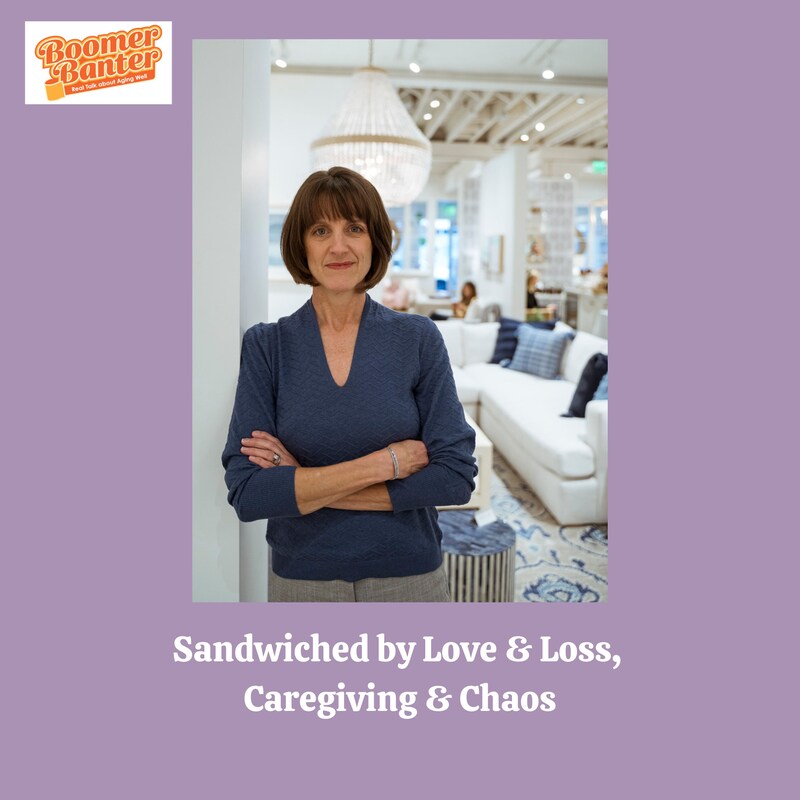
Today, we’re diving deep into the wild world of caregiving with our guest, Nicole Smith. She found herself juggling not just one, but three family members needing serious help—talk about a juggling act!
Nicole wasn’t planning to become an elder care expert, but life threw her a curveball when her mom was diagnosed with Alzheimer’s, and her dad and step-mother faced their own challenges. She ended up writing a book called "Diagnosis: Dementia - Your Guide to Elder Care Planning and Crisis Management," and trust me, it’s packed with wisdom you won’t want to miss.
We’ll laugh, we’ll cry, and we’ll uncover why having a support network is crucial when the chaos of caregiving kicks in. So let’s get into it!
Takeaways:
- Juggling multiple family members with health issues, can feel like a wild roller coaster ride.
- We explore the emotional toll of caregiving, with Nicole's personal anecdotes highlighting the struggles, frustrations, and humor found in tricky family dynamics.
- This episode encourages proactive conversations about aging and caregiving, stressing that it's vital to prepare in advance rather than waiting for a crisis to strike.
- We discuss the invaluable resources available for caregivers, like the Daughterhood community, which provides support and shared experiences for those navigating similar challenges.
Links referenced in this episode:
- Age Well With Us: Subscribe at heyboomer.biz
- Support the Boomer Banter Walk to End Alzheimer's team
- Find support a daughterhood.org
- Learn more about Greenwood Capital or find resources at www.GreenwoodCapital.com/holding-it-together. Boomer Banter is sponsored in part by Greenwood Capital Associates, LLC. Greenwood Capital Associates, LLC is an SEC Registered Investment Advisory firm with offices in Greenville and Greenwood, SC. As a fiduciary firm, Greenwood Capital is obligated to disclose any potential conflicts of interest with this arrangement. The host of “Boomer Banter”, Wendy Green, is a client of Greenwood Capital, and her show “Boomer Banter” has been compensated for her testimonial through Greenwood Capital’s sponsorship. Greenwood Capital is a Legacy sponsor at the stated rate of $2,600 for the 2025 calendar year.greenwoodcapital.com
Transcripts
Well, hello and welcome to Boomer Banter, where we have real talk about aging. Well, I am your host, Wendy Greene. And every week we have honest conversations about what it really means to grow older in today's world.
We navigate health purpose, relationships, finances, caregiving, and everything in between. And today's episode is for anyone who has ever felt pulled in too many directions, for anyone who suddenly become the one holding it all together.
So imagine this. Your mom is diagnosed with Alzheimer's, Your dad is facing a brain condition that mimics Alzheimer's or dementia, and your stepmom has aphasia.
And all of them need your help immediately. Now add five kids of your own.
Spread that across four different states, and try to make sense of medical, legal and financial systems you've never had to navigate before. Well, that's what happened to today's guest, Nicole Smith.
She didn't set out to become an expert on elder care planning, but when her life turned upside down, she knew she couldn't be the only one going through it. So you know what she did? She wrote the book she wished she had at the time called Diagnosis Guide to Elder Care Planning and Crisis Management.
And in today's conversation, we'll talk about what she went through, what she learned, and why community and support are essential for surviving the chaos of caregiving. But first, I want to invite you to Age well with us.
So if you go to Boomer heyboomer Biz and click on Age well with us, you will be subscribing to our newsletter where you get weekly information about the current show, about what's upcoming, any events that we have going, and inspiration. So hopefully you can do that. I also wanted to say that I have put together again.
This is probably our fifth year of our Walk to End Alzheimer's team and I hope that you will join us on our walk. It's going to be October 4th here in Greenville, South Carolina. If you can't join us, you can at least support us with a donation.
So if you go to act act alz.org goto boomer banter, you can join the team or you can donate and I will put that in the show notes. So you have until October to become a supporter of the Walk to End Alzheimer's Boomer Banter Team. So hopefully you will do that soon.
Okay, I am ready to bring Nicole on and introduce her to all of you. Hello, Nicole. So glad you could join us today.
Nicole Smith:Happy to be here. Thanks for sharing my story.
Wendy Green:Well, it's an amazing story. So take us back. What was going on in your life when everything began to unravel with your mom, your dad, and your stepmom.
Nicole Smith:Yeah, well, maybe. Maybe all of us remember where we were in mid March of 20. 20.
Wendy Green:20. Yeah.
Nicole Smith:So, yeah, literally, my caregiving journey and Covid started about the same time.
I was living in New Jersey and my mother was living in Los Angeles, and my aunt, who is my mother's older sister and has been a nurse for half a century, had been kind of monitoring my mom and seeing my mom more often than I had. She lived in Maryland, actually, still does.
And she said, hey, your mom's going for this neurology appointment and you need to fly to LA and go with her. And I was like, fine. I mean, it wasn't. I was like, okay, great, I'll do that. And at the time, I really didn't understand what was going on.
I thought a neurology appointment was maybe like a normal thing you did as you age. You know, you go to the dentist, you go to your checkup. She. I just. I really didn't think much of it. She said. I mean, she just said, go.
And I'm like, I'll go, you know, fine. And then I did call her before, and I said, what's this Covid thing? You think I'll be able to get home? And. Oh, yeah, it's no big deal.
Yeah, but nobody knew. No, you. Nobody.
Wendy Green:Right, Right.
Nicole Smith:So, yeah, so I went to that first appointment, and it was funny because. And my mom didn't want to go, but Aunt Nancy was making her go, and I was there to make sure she went. And.
And so we get in there and the neurologist starts to ask her the basic questions, like, you know, what are your sleep habits, your eating habits, your drinking habits, whatever. And then she says to my mom, hey, do you smoke? And my mom looks at her deadpan and says, I smoke, but I don't inhale. So.
So I burst out laughing, and the neurologist smirks, and then my mom gets irate. And then the neurologist Smith sends me out of the room five minutes into the appointment. So I flew all this way, and now I'm not even there.
So what happened after that is they were able to get my Aunt Nancy on the phone, and she was kind of the observer family member, which is a critical component of these appointments, because if you believe everything the person that may have dementia says, you're not going to get really an accurate visit or diagnosis. So that's where it all started. And then I was able to Fly home. And then the world shut down. And my mom was by herself in LA for a year, 15 months.
Wendy Green:Wow. And so was the neurologist at that point able. Did she diagnose at that appointment?
Nicole Smith:So that was her initial appointment. So a lot of times the initial appointment is kind of like the baseline. Um, so that was kind of. And we didn't. I'm sure there were labs and not lab.
Well, there had been some labs. Like Aunt Nancy was monitoring all the portals and all that stuff, but then we didn't follow up.
I think it was like another 15 months before we had the second neurology appointment because then Covid had settled down and I. I was going a lot more than to la and I was with her for that appointment, but that was like a nightmare because she kept getting notices on her phone for the appointment, but then she would cancel it because she didn't want to go. And we were trying to contact the, you know, contact the doctor, contact the admin, like, oh, yeah, we put her a note in the file.
We're not going to cancel it. And then she would cancel it again.
And then getting her there, I had to trick her into thinking she was getting a Covid booster because she didn't want to go. And I had to give. It was. It's just. I mean, every single thing with my mom was this.
It was like, complicated to the Nth degree, and because she was just aware enough to make everything just really difficult.
Wendy Green:Yeah. And she was angry at you for a lot of trying to make her go. And. And at her sister, too. She was angry at her sister, too?
Nicole Smith:Oh, yeah. Yeah. So there were three. So as my aunt, my sister, my. My.
My aunt, my mom's sister, my sister and me and my sister lived like 10 minutes from my mom, but she had asthma and was terrified of dying, so she didn't want to be around anyone. Like, it's. It's family dynamics. So it was. That got really complicated, got contentious.
So there was the three of us trying to help my mom, and then it got into legal stuff because every time she would get mad at one of us, she would change her powers of attorney and her will. And, like, she would.
And then she would mail that to the attorney, and the attorney would charge her $700 and then mail back the changes, and then the whole thing would happen all over again. So the attorney was making a lot of money off this, like, so, I mean, and.
But the attorney didn't know she had dementia because an email never got to her. And, like, I Said like everything that should have been like kind of straightforward ended up being just crazy.
Wendy Green:So while this was going on, Nicole, you also found out about your dad and your stepmom, is that right?
Nicole Smith:Yeah, yeah. So my.
So I was flying back and forth in California trying to figure out all this stuff with my mom and, and then my dad and my stepmom live in Iowa, where I grew up. And my stepmom had just turned 70 and she was around, she had retired, she had had some kind of part time jobs and she'd retired.
And then I, I know my dad was kind of facilitating her appointments. And then it again, like all this was going on behind the scenes while I was dealing with mom.
And so, yeah, she got aphasia and then that tends to hit people younger and tends to be more progressive. And actually she just moved into memory care. In May, my dad moved her into memory care.
And then my dad had, he knew he had normal pressure hydrocephalus. He had gone to Mayo Clinic about, you know, eight years before and got the full workup and everything.
And they said, well, you know, you're not completely debilitated, so it is a possibility in the future. And then fast forward and he was like shuffling and his movement was really restricted. So the norm.
So he has the same kind Billy Joel has, I think, which is hinders movement. So there's three kinds of normal pressure hydrocephalus. The one is wet, which means it causes incontinence.
Number two is wacky, which causes cognitive changes. And then number three is wobbly, which is the physical changes.
So my dad didn't really have the cognitive kind, but he had the wobbly kind, thank goodness. And, and he had the surgery. And it is transformational.
He got everything back, got his mobility back, and he's working and riding and going to the farm and yeah, it's. He's 82. Yeah, he's. He's a busy guy.
Wendy Green:Well, that's great. So that kind of took some of that pressure off of your plate. But you still had a family to deal with, so you were kind of stuck in the middle.
How did this all affect you personally, Nicole?
Nicole Smith:Oh, well, I didn't know what I was dealing with. Like dementia was not on my radar. You know, I thought, you know. Yes, my parents are getting older and a lot of people get cancer when they get old.
You know, I mean, my husband's parents both passed from cancer as they were older, much older. And so I just kind of, you know, I didn't really think a lot about it. But dementia was not on my radar at all. I didn't know anything about it.
And once I finally started kind of getting things a little bit under control, the travel and everything, I started listening to podcasts and looking for books, and I'm like, okay, I need to figure out what's going on underneath all of this. Like, first it's whack a mole, or it's still whack a mole every day, caregiving, whack a mole. What's popping up? What do you have to deal with?
Put out the fires. And I still do that every day, but now in my spare time, I read books, I go to conferences, I follow things, and. And I am the dementia daughter.
Wendy Green:The dementia caregiving daughter. The dementia expert daughter. Yeah. So. So you were looking for all of this help. What did you find?
Nicole Smith:Well, I. I found the 36 hour day, which is like, it's a Bible, right? It's. It's written by a physician. It's been out for 20 years, multiple revisions. And it is. It is the Bible. It's the gold mine.
But I mean, who has time to read that when you're running around crazy? And now I do. I am a reader. So now I time have. I've read about 50 books about dementia, and still there's more to come. So I.
And then I started listening to podcasts, I started talking to people, and then I found daughterhood, which is. Was a godsend.
Wendy Green:Yes, I want to talk about that. I want to do want to talk about that. And.
But before that, before we get to daughterhood, you had told me that there was all this stuff you needed to know, legal, medical, you know, all of this stuff that you couldn't find the information at that point. And so that's what kind of drove you to writing this book. Is that. Is that the turning point that said, okay, I got to write?
Nicole Smith:Correct. Correct. Yeah. The luckily, my very, very first kind of contact was I.
My son was really good friends with this other little boy, and his mother works in, like, elder care. She. Or like a senior living that whole space. And I kind of knew that. I thought she was in, like, commercial real estate or something.
I didn't even know. And then once this started to happen, I. It clicked, and I'm like, that's what she does. And so I immediately called her and she helped me. Okay.
She's like, you need to do this and you need to know this. And I started just hanging out with her and picking her brain and, like, what I need to do, because she deals with These families every single day.
And so, and I'm not an expert in any of this, but I, I, I'm a good communicator and I'm a delegator. I'm not afraid to ask for help.
So on the medical side, Aunt Nancy was already handling everything medical, any questions, any appointments, any kind of follow up there. And then luckily I'm married to a cpa, so any kind of financial stuff, the taxes, the Social Security, you know, all that.
He, he was my guy or he was my guy. And then I found out that elder law attorneys, I found out what they do and how they exist. But I, it's also very different in every state.
And so I went down a list and called like a dozen elder law attorneys in Los Angeles because that's where mom was and that's, we didn't know what was going to happen. And so I hired him. It took me like two hours on the phone trying to get people and I finally connected with him. I liked him.
He had personal history with family Alzheimer's, so he got it professionally and personally. So I hired him. He walked me through a lot of this and I learned a lot.
And then I talked to elder law attorney in Jersey, talked to elder law attorney in Maryland, talked to elder attorney Iowa. Like I, because I didn't know where she end would end up. And it, it just varies. Everything varies.
And so as I was finding websites and resources, I started to just kind of cultivate and curate different things that helped me because I was, and I knew I wasn't the only one going through this. Like once you start talking about something like in the drugstore. Oh yeah, my grandpa, my aunt, my wife, my, you know, cousin.
So I, and I also call this like the wild west of elder care because with the AI and all this stuff you've got all these companies try to, trying to automate and monetize and, and you know, make their mark in the, in the elder care world. But a lot of them are, you know, fancy technology but they don't get down to like caregiving is still kind of a human skill.
Wendy Green:Definitely a human skill.
Nicole Smith:Yeah, yeah. I mean, and there are, there's very cool things for you. I'm a binder person, I'm a paper person.
So I have like, you know, all these binders and hole punches and I'm still very much tactile. So I, I have my binders, but some people maybe heard of the Knockbox or they've got electronic, you know, record keeping and. Yeah.
Wendy Green:But I need to ask you like, like your mom was in la, then you moved her to New Jersey?
Nicole Smith:Maryland.
Wendy Green:To Maryland.
Nicole Smith:I tried to move her to New Jersey. It's. So I wanted to move her to New Jersey and I had my really good buddy friend kind of direct me which were the best places.
And then we did a, like a FaceTime evaluation with the nurse who was like 12. But anyway, she said she's like, oh, well, your mom knows who the president is, so she can't have dementia, so we can't take her. Okay.
So, I mean, I mean, I'm not an expert in dementia, but, you know, and a lot of the primary care physicians, they, they're not experts in dementia. I mean, they're. It's, it's just so nuanced. Right.
And plus my mom, as well as other people with dementia, they can rise to the occasion and say, you know, seem totally normal, totally with it. You know, they, that's just like a natural skill that the brain just kicks in when it's in survival mode.
And they, they, you know, my mom used to be a. Run her own business. She could bring that bravado. So.
Wendy Green:So the big question behind that. And then you moved her to Arizona was with the elder law. Did you have to remake her will and her power of attorney and all every time she moved?
Nicole Smith:No, no, because. Well, you have to talk to an elder law attorney because it varies.
So but like, because she was living in California and everything was drafted in California, it still, it's still valid. So they do like you to. But I'm talking. Well, so I also was.
The elder law attorney in la encouraged me to try to get, to do conservatorship and guardianship because she would not leave her house. And I didn't want to do that because it's very complicated. It's government, it's expensive, it's court fees.
But that might have been our only option if she hadn't run out in the middle of the night and caused massive chaos. And so then she got admitted to the psych ward. So, so, so, I mean, we just, it. We.
And then she was even in, she was in the hospital and the psychiatrist assigned to evaluate her said. He even called back and said, well, she's fine. Why is she here? I'm like, oh. Like so.
But I had to fax all the letters, like from the neurologist and the doctor. And I mean, it was, There were so many moving parts. And we had. I, yeah, I, I could go on and on. Like, we, we had.
My aunt had to work with the neurologist and the primary physician for eight months to get them to write the letters to declare her incapacitated, which is crazy, you know, and that's, we need those to invoke the terms of the trust. And I mean, that's what I'm saying. Like, I just learned all this because I had, I was playing whack a mole.
Like, every time I thought, okay, we got this, and it's something else and something else. And so.
Wendy Green:Okay, so, so at some point you were like, okay, there's all of these things that a person in your situation doesn't know, and you started to put all this down.
Was there, was there a couple of things that you wished you had known, like, right off the bat, what that would have made some of this easier for you?
Nicole Smith:I, I, I wish I would have known about dementia, but that, that is, I mean, that's the rub, right? You don't. Everybody waits for a crisis and nobody. And you might not get dementia.
I mean, our family did and, or developed it, and they still don't know what causes it or why it happens or who's, who's at risk. Like, is there still a hundred years after the first, first case, the first documented case, they still don't really know that much.
I mean, there's all this money and research going on. What would I know? I, so I'm not afraid to talk to people and share my problems and ask for help.
And so I think that was my biggest asset is like, I'm, because there's, you know, there can be shame and blame associated with dementia, but I, I wasn't worried about that. I'm like, okay, everyone to the world. My mom has dementia. What do I do? How do I get help? You know, just, just be, be aware of your aging parents.
So pay attention to your aging parents. That's what you need to know.
And, and they're going to be reluctant to have any help because they want to be independent, of course, but you need to pay attention because they're going to cover up and they're gonna tell you they're fine. And unless you get eyes on, unless you get your documents in order, it's gonna be chaos and it's gonna be a crisis call you're gonna get.
Wendy Green:Nicole, I want to talk about the family dynamics a little bit. I mean, you had your aunt helping, right? How did things go with your sister?
Nicole Smith:Well, she, we've always gotten along. We're very different, as some siblings are.
But she lived, like I said, like 10, 15 minutes from my mom in LA, and I live 3,000 miles away with all the kids. She has two kids, I have five kids, and she works. I don't. I don't work outside the home. And.
And she, again, she was very paranoid about the whole health situation.
Wendy Green:Sure.
Nicole Smith:And she's had asthma since she was, like, an infant. So it's, you know, and she managed it really well. And. But the thing that I didn't appreciate is that she. I came to help.
I came to sell the house, move stuff, figure it out, take the appointments, do everything, which was fine. But then she kept saying, oh, were you doing this wrong? And you're doing that wrong and you can't do it that way?
I'm like, well, are you going to help? Well, no, I just want you to know that you're doing a terrible job. Like. Okay.
So I literally blocked her from everything for two years and did speak to her. Yeah.
Wendy Green:Oh, I'm sorry.
Nicole Smith:I'm like, you know, if you're not. I don't expect to be thanked, but I don't want to be criticized.
Wendy Green:Is it better now?
Nicole Smith:And that's very common. Very common. You know, I'm the oldest daughter. They'll. Yeah.
Wendy Green:So, yeah, it is common. And hopefully you're. You're better now with your sister again.
Nicole Smith:Yeah, I mean, we're, you know, we're cordial. We both have kids at the same university here, and we get together and it's all. It's all fine now. But I, you know.
Wendy Green:Yeah, it was hard. So one of the challenges that in your book, you talk about, you know, your mom's resistance to everything you wanted to do.
So do you have any tips on how to deal when you're dealing with somebody that is so resistant to your help or taking them to doctors or looking at a place for them to move into or any tips? Because everybody. A lot of people face that.
Nicole Smith:Yeah, you have to be sneaky and lie. No, well, I mean. Well, I mean.
Well, first of all, don't argue with them because, I mean, we were having screaming matches because she was like, no, no, I've got. She was running out of money. She couldn't stay in her house. Like, she. But she's like, no, I'm. I'm a gazillionaire. And I.
And I said, well, let's, you know, let's look at your checkbook and let's see. Let me see where you got all this money. No, you can't look at my checkbook. That, you know, you can't do that. I'VE got this under control.
So as soon as I realized her reality was her reality and it was different. Like, I called him mom mantras, which she would sit there and lecture me for, like, 45 minutes and the same thing.
And I finally realized, as I started to learn more about dementia, that her reality was her own reality. So she believed what she believed, and it didn't matter what anybody said or anybody did. So I had to accept that and respect that. So no more arguing.
Yeah, Mom. Fine, Mom. I understand, Mom. And then she was very secretive about stuff.
So when she was napping or whatever, I would sneak into her office and take pictures of passwords and steal files and copy things and, I mean, and it was hard to do because this is your parent, and as a little girl, you're taught not to lie and not to defy your parents. And I was like, no. And every time I got back, because I was like, oh, I don't want to take too much. I'm just going to take this.
And then I was like, oh, I should have taken that. I should have done this, and I should have. So I just started accumulating stuff.
And then me being sneaky and stealing those passwords helped when she escaped in the middle of the night in Maryland, and we had to find her, so. Because I had all the passwords for her credit card and her. The phones and everything. So ultimately that saved hers.
Because we found her because of those passwords.
Wendy Green:Yeah. So that must have been quite a challenge for you emotionally.
You know, like, part of you is feeling guilty that you're sneaking behind her back with all this, and the other part of you is like, yeah, but this. This is the only way I can help her.
Nicole Smith:Yeah. I mean, we had to save her from herself, basically.
And it was sneaky, but I was so mad about everything that she did and said, and she would ask me to fly out because she was lonely and scared and whatever. And then I'd be there less than 24 hours, and she would get all happy and she'd feel secure again. And then she would be. She would say, get out.
I don't need you anymore. Why are you here? I'm done with you. I mean, so it was so. You know, she was just so mean, and because she was struggling, right. And.
And she was fiercely holding on to her independence. Car was a whole other issue of a giant nightmare to deal with. Like. Like I said, every little thing. There's nothing easy about it whatsoever.
Wendy Green:Yeah, it was quite a journey for you, no question about it. So you Started to mention daughterhood as a place to get support. So tell us about daughterhood.
Nicole Smith:Yeah, someone gave me a book that she wrote about caregiving for her mother and inside was a little bookmark for daughterhood. I'm like, oh my gosh, what's daughterhood?
Because again, I'm constantly, if there's a website or something that shows up, I'm looking it up, reading about it, checking it out, and I was like, oh, this is amazing. So it was started by ann Tomlinson about 10 years ago. It's going to be the 10 year anniversary.
And she was a caregiver, but she's also very well established in D.C. in the whole government advisory, Medicare and Medicaid. So professionally she is like in it. And then she dealt with it personally and she said, you know, we daughters need a support network.
We need a network. And so she started it and they established like maybe 10 daughterhood circles around the country that where they.
People would meet in person and just hang out and talk about their issues and share resources and everything. So those were great. And then of course Covid happened, so everything shut down and all the circles shut down.
And so then she kind of regrouped and said, well, this is a good opportunity to take this all virtual, to make all the. And you know, because everything expanded with zoom and everything. So they regrouped and became a 501C3 to figure out how to help more caregivers.
And then there's support groups, virtual support groups all month long, every month, about everything for caregivers.
So it's whether Dementia 101, elder law attorneys, grief, anticipatory grief, caregiving, one on one hospital discharge, like I lead co. Lead one connection circle once a month. And we just basically just open up and say, anybody's got any issues, anybody got anything they want to discuss.
And the really good thing is, is that the caregivers, the more advanced or more experienced caregivers, will help the newbies. Like so it's very interactive and it's, it's amazing.
Wendy Green:And so, so you're, what you're saying is it's a, It's a website, daughterhood.com. right. Is it just. Okay, it's a 501C3. And is it just for caregivers, for dementia patients?
Nicole Smith:No, no, it's any kind of caregiving. So. And it's not just for daughters.
So we have spouses on there, we have sons, we have grandkids, like, so it just, it's for anybody who wants to discuss caregiving. And I Think primarily it's, it is primarily daughters dealing with aging parents or spouses.
There's a lot of spouses on there, but it's also, it's for any kind of resources. So if you're caregiving in any way, shape or form, you're welcome.
Wendy Green:And there are some that sound like they're training like Caregiving 101. And then there are some that are more like a support group, like what are your issues today? Is that right?
Nicole Smith:Yeah. So what the way that we, the terms we give them is a topic circle. We'll focus on a certain topic like dementia or discharge.
And then the connection circles are more of just kind of an open forum to share and discuss and, and they're labeled on the website. And then later this month I'm leading a, a circle called the sandwich generation circle. It's more going to be kind of a little.
Yeah, so we're going to start that.
Wendy Green:That's perfect for you. Do you still have kids at home?
Nicole Smith:I have one teenager at home. So I talk about that.
So while I'm trying to get my mom to stop driving and that's a nightmare, I have teenagers, you know, just getting their license and having fender benders and tickets. And so, you know, it's just like both ends of the spectrum here, you know.
Wendy Green:Yeah.
So if, if a friend of yours came up and said, you know, oh my gosh, you know, I'm just starting down this path with my mom, what would be your advice to them?
Nicole Smith:Well, I just had this. My friend called me the other day and I was like, well, you know, I, in my book, I say you need to have these conversations.
Nobody wants to talk about death and dying and debilitation and dementia. But you have, we're all aging, we're all going to need some kind of care.
And so you've got to get comfortable talking about these things and starting it in a very calm manner, not in the middle of Thanksgiving dinner. So I would say talk about. Because we're all, a lot of the families are spread far and wide these days.
So talk about where, where is your loved one going to live?
Like, are your parents going to stay in the community they've been in forever, Stay in their house, stay, join an assisted living there, where are they going to stay? How do they want to live? Have these conversations and who's going to pay for it?
Like Medicare does not pay for long term care, does not pay for assisted living, does not pay for any of this. You can, you can talk to an elder law attorney and Impoverish yourself so that you qualify for Medicaid and they will pay.
But it's not, it's like a three year process. So there's, there's resources available but you, you have to dig.
So I always tell people to contact your local area agency on aging there, there's one in every county all across the US and they've got resources for legal, medical, financial. They should, they're all, they're not all exactly the same, but they've got resources.
So I, I, for example, I went to my triple A to talk about Medicare because I had to change my mom's Medicare and it was a nightmare and I was ill advised. And so that was my latest, you know, whack a mole moment last year. That's all I spent was trying to figure out Medicare, which is impossible.
So, so I always tell people to go the triple, the area Agency on aging.
And then I tell people, number one, get powers of attorney for yourself, your parents and any kids over 18 for medical, financial, and then some states even have a mental health power of attorney.
Wendy Green:What do you mean for any kids over 18 get powers?
Nicole Smith:Well, because, so I've got kids over 18 and basically if anything happens to them, even though you're your parent, their parent, you have no say whatsoever. Like you remember the whole Karen and Quinlan story and all that.
So you, and I'm guilty of not doing this because my kids are in all these different states. And that's where the lawyer said, well, when they really should do it in the state that they're in, which makes sense. But then they're going to move.
So I haven't. And it costs maybe, I think it's like $1,000 to get those drawn up. So it's not cheap.
But for parents, for yourself and parents on the back end, if you don't have those and you end up going to probate, it's going to be way more expensive.
Wendy Green:And if they're married though, that would go to their spouse, right?
Nicole Smith:Not necessarily. No, no, no. It depends on state law, common law.
And then what happens a lot of times is people middle aged, they'll get divorced and they have a second spouse, second family, kids, but then they forgot to change the beneficiary on their pension and it's going to the first wife. So I mean that's what I'm saying, that the powers of attorney is like your very basic starting point.
And then you get into advance directives and will and estate and trust and, and it gets complicated from their beneficiary Designation payable on death for CDs. And the bank sometimes don't recognize power of attorney. So it really gets complicated really, really fast.
So that's why you start with your powers of attorney. You have an actual attorney address those powers of attorney. And.
Yeah, so I just wouldn't, I wouldn't mess with, mess with those because the law can get tricky and it's nuanced and if you, if you aren't clear, then probate is going to be like. Nope.
Wendy Green:Yeah. Now, you mentioned when we were talking the other day about, you know, you recognize that you're in a good, strong financial position.
And so being able to do some of these things was not as, let's say, financially difficult, emotionally terribly difficult. But in your book, you also provide an awful lot of resources for people that may not have the financial wherewithal that you have.
And so, you know, how did you find some of these other resources?
Nicole Smith:Well, I basically started with the area Agency on Aging, because that is your, like, government, state, federal resource for everything aging. Everything aging.
Wendy Green:So.
Nicole Smith:And then there's like a million organizations. Like, you got aging life care managers that can help. Like, you can, you can build your team from friends, family, family, paid professionals.
But you have to, you have to know the terms. Like I said, becoming a caregiver is like learning four new languages simultaneously while under duress.
So you have to know the financial terms, the medical terms, the legal terms, and the caregiving terms. Like, so when I, when I called, when I got this list from, I think the hospital about like, mental health and mental this.
So I, there was all these, like, mental health hotlines and all. So I started calling and I was like, okay, my mom has Alzheimer's. Like, how can you help me?
And they're like, no, we're mental health, we're not Alzheimer's. I'm like, it's all mental. But it's, I didn't, there's a, there's delineation.
Wendy Green:You need the right terms.
Nicole Smith:You have to have the right terms. You have to know what to ask, how to ask it, who to ask. And so it is overwhelming. That's why I call my book, I call it Organize the Overwhelm.
And you just, we just have to start with, you know, whack a mole. Like, usually whack a mole is going to present itself.
So our first thing was trying to get mom to move into independent or assisted living at that time. And she, she kind of went along just to kind of pss, but she had no intention of going anywhere. And so that's when I had to learn about.
Okay, well, your only option is going to be guardianship to get her out of her house. And that takes six months and $10,000. And, like, I mean, who has that right?
Wendy Green:Right.
Nicole Smith:So. So you, you just got to find, find somebody.
Triple A Areas Agency on Aging, because they can direct you to Medicaid, they can direct you to housing, they can direct you to waivers, they can direct you to vouchers. So they know the system. It's all about working the system. And it's a fast, confusing, red tape, nightmare system.
Wendy Green:It does sound like it. So when you think about your mom's future, your future, what gives you hope, Nicole?
Nicole Smith:Well, I. They're trying to find a cure in earnest. So there, you know, there's a lot of people working really hard to solve this global problem.
But I always go back to what we've all known forever. What's good for the body is good for the brain. So diet and exercise and sleep, stress, friendships.
So, I mean, we all kind of know what we're supposed to do. But, you know, we all want a pill, right? And the pharma companies want to give us a pill, but.
Wendy Green:That's right.
Nicole Smith:You know, and my friend was saying she's got a, a friend who is like, having all these problems, and I don't even. I think she's early 70s, but she's on all these meds.
She's on, you know, and my friend was like, you know, the meds are a problem because you have this med and then you counteract it with this med, and then you counteract the symptoms. Pretty soon you got 15 meds you're taking.
And then, you know, so they say when people go on hospice and they, they take away all their meds, they like, come back to life because they don't have all this stuff in their system. So I've got deep prescribing in my book, too. Yeah, it's. It's very. It's a vast. But I tried to break it down into simple terms.
It sounds super complicated, and it is, but I tried to break it down. And here's the financial, here's the medical, here's the legal, here's the support groups.
Wendy Green:And in and amongst that, you tell your story, which was just overwhelming just to read it.
Nicole Smith:So.
Wendy Green:Before we wrap up, what do you hope people can take away from your story?
Nicole Smith:Know that you're not alone. There's a. There's 50 million caregivers out there. 50 million. So don't be ashamed don't be afraid. Don't be quiet about it.
So find people at your senior center, in your church, in your neighborhood, at your hospital, with your friends. I mean, find somebody you can talk to and somebody that can help you because you have to have a team. Like my Aunt Nancy was my rock.
Like I, you know, we would cry together, talk together, share together. So luckily I had her and still do a hundred percent.
Like we are intertwined and, and I, I would be dead right now if I didn't have her to help me through this because caregiver stress is off the charts.
Wendy Green:Yeah. Well, thank you, Aunt Nancy, for helping Nicole.
And thank you, Nicole, for writing, yeah, thank you, Nicole, for writing this book, diagnosis, dementia, your guide to elder care planning and crisis management to help all the rest of us who may one day have to face this. And as we've been talking about these challenges of caregiving, I want to mention our sponsor, Greenwood Capital.
Greenwood Capital understands these caregiving struggles and the medical financial struggles. As one advisor, Ann, recently shared her experience of navigating aging, her parents who are 300 miles away.
And that story is on the Greenwood Capital website. And all that is to say that I can count on them.
My advisor at Greenwood Capital, for realistic, goal driven financial advice, they meet clients with compassion since they have been where we are. And I want to share that as a sponsor, Greenwood Capital has compensated my business for this testimonial.
And for more information about how they can help you make a financial plan, go to greenwoodcapital.com also take a moment to join us on Boomer Banter by going to HeyBoomer Biz and click on Age well with us. And please support our walk to end Alzheimer's.
We all want to eradicate this disease, but we also want to help the people that are still living with it. And the walk to end Alzheimer's or the Alzheimer's organization does a lot of that kind of stuff. Support.
I will put that link in the show notes as well. All right, before you go, next week, I'm so excited. I am off to Costa Rica for 10 days.
Nicole Smith:Oh, boy.
Wendy Green:But that means I won't have a show on August 11th next Monday. So here's my plan.
I am going to do a solo show on August 18th when I get back and I'm going to talk to you about my adventure and aging well and travel and movement and eating well and all of the wonderful things that I learned in Costa Rica from being there and from the other people on the tour with me. So hopefully you will Join us on August 18th to share that with me. And I want to say caregiving is messy.
It's layered with love, loss, guilt, and grace. And as Nicole has shown us today, it's also a calling that no one's ever really ready for.
But by sharing her truth and the tools she created out of that truth and that she shares with us, she's offering other families a better way forward. If you're in the thick of caregiving or you know it's coming one day, I encourage you to check out Nicole's book again.
It's called Diagnosis Guide for Elder Care Planning and Crisis Management, and explore the free Support available through daughterhood.org you don't have to go it alone. As Nicole said, that's a big takeaway and you don't have to wait for a crisis.
So Nicole, thank you so much for all that you've shared and all that you've written. We appreciate it and I look forward to seeing all of you back to Boomer Banter in a couple weeks. By.
Nicole Smith:It.



