Shownotes
Career change at 40? Learn how skilled trades careers, plumbing apprenticeships, and the Trade Up Program help adults start working with your hands.
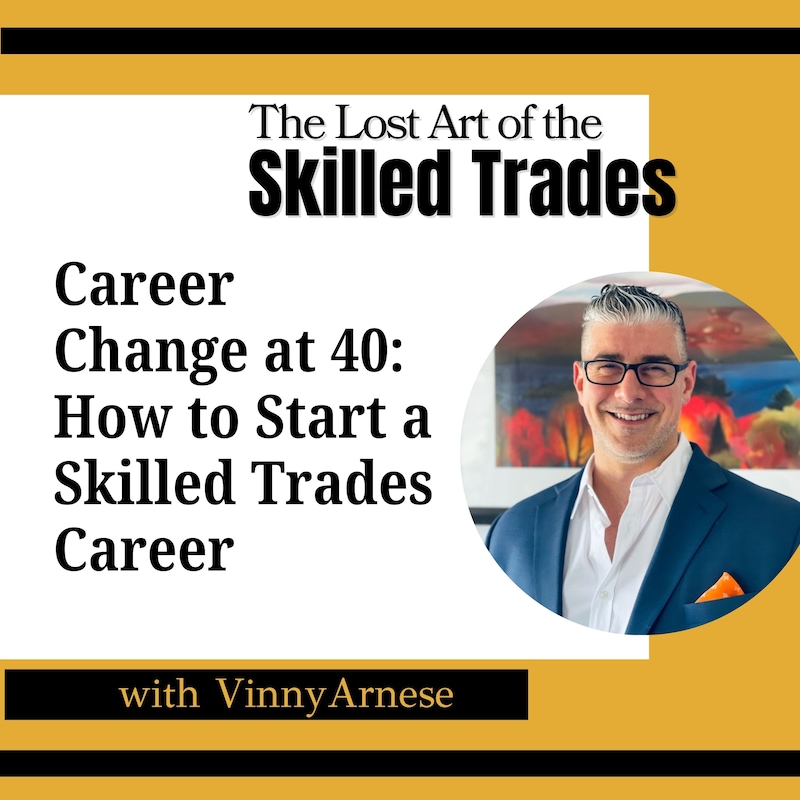
Host Andrew Brown sits down with Lixil America’s Senior National Sales Trainer Vinny Arnese to unpack what it really looks like to make a career change at 40, begin a plumbing apprenticeship, join the Skilled Trades, or shift into a hands-on career through the Trade Up Program.
They break down the rising demand for skilled trades careers, why so many people over 40 are ditching white-collar stress for working with your hands, and how Lixil’s national initiatives support contractors, educators, and the next generation through real advocacy.
Whether you're exploring a career change at 40, researching skilled trades careers, or considering a plumbing apprenticeship, this episode delivers grounded advice, personal stories, and real industry insight you won’t hear anywhere else.
IN THIS EPISODE:
● (00:00) – Why Skilled Trades Careers Are Exploding: Demand, wages, and why more people make a career change at 40.
● (04:52) – Is It Too Late at 40? Real stories of adults shifting careers and finally enjoying working with your hands.
● (10:41) – Inside the Trade Up Program: How Lixil America is reshaping pathways into skilled trades careers through advocacy & education.
● (18:22) – What a Plumbing Apprenticeship Really Looks Like: Earn-while-you-learn, tuition support, and contractor pathways.
● (25:55) – Gen Z, School Counselors & Trades Education: Why the industry needs more structured messaging and exposure.
● (32:14) – Purpose & Fulfillment Through Hands-On Work: Problem-solving, craftsmanship, and why working with your hands transforms lives.
Key Takeaways:
● A career change at 40 is not only realistic—it’s becoming one of the fastest-growing entry points into skilled trades careers.
● A plumbing apprenticeship gives you paid training, fast advancement, and long-term job security without student debt.
● Lixil America’s Trade Up Program is helping adults and students find real pathways into the trades through advocacy and hands-on exposure.
● Working with your hands offers creativity, purpose, problem-solving, and financial stability in a way many white-collar roles no longer provide.
About the Guest
Vinny Arnese is the Senior National Sales Trainer for Lixil America, representing American Standard, GROHE, and DXV. He leads Lixil’s nationwide Trade Up Program, an initiative designed to close the talent gap by guiding students, adults, contractors, and educators toward skilled trades careers—including mechanical, plumbing, HVAC, electricians, millwrights, and construction.
A passionate advocate for the Skilled Trades, Vinny works closely with educators, unions, contractors, and industry experts. His mission is to help anyone—from high school students to those making a career change at 40—discover the stability and fulfillment of working with your hands through training, mentorship, and access to proper education pathways like a plumbing apprenticeship.
Keywords
Career Change at 40, Skilled Trades Careers, Plumbing Apprenticeship, Trade Up Program, Working With Your Hands, Skilled Trades, Trades Industry, Andrew Brown, Vinny Arnese, Lixil, Lixil America, Toolfetch, Carpentry, HVAC, Electricians, Plumbers, Millwrights, Construction, Craftsmanship, Problem-Solving, Creativity, Tradespeople, Advocacy, Trades Careers, Contractors, Industry Experts, Education, Skilled Trades Advisory Council
Resource Links:
Linkedin Profile: https://www.linkedin.com/in/vinny-arnese-7a71006b/
Lixil Website: https://www.lixil.com/
SUPPORT THE SHOW:
If you’re getting value from these episodes and want to help keep the mics on, consider tipping the show here → https://andrewbrowntrades.kit.com/products/toolbox
Every dollar helps us keep bringing unfiltered insights from the trades, straight to your ears.
Transcripts
Is it too old to get into the trade?
Speaker:I'm 40.
Speaker:Can you elaborate on that?
Speaker:Like if you're 40, 45 years old and you just, you've been in, let's say
Speaker:a white collar job and like you just weren't fulfilled, but you kind of
Speaker:wanted to work with your hands and now at 40 plus you're making that shift.
Speaker:What have you seen with those individuals?
Speaker:Like did they come from a white collar world and made the shift?
Speaker:Some of them, yes.
Speaker:Some of them are just not happy with what their career is and
Speaker:what, what they're being, their financial freedom or lack thereof.
Speaker:Right.
Speaker:And then they learn when you go to the trades, you, you have the
Speaker:ability to not only go to school while you do your other job.
Speaker:And you could also make money if you're working for a plumbing outfit.
Speaker:Hi, I'm Andrew Brown.
Speaker:You're listening to The Lost Art of the Skilled Trades Podcast, a show that
Speaker:shines the spotlight on careers in the skilled trades that are high paying.
Speaker:Honorable, rewarding and fulfilling.
Speaker:The trades are the backbone of the economy that keep us running, and without
Speaker:them, our world would cease to exist.
Speaker:Alright, welcome back to The Lost Art of the Skilled Trades.
Speaker:I'm here super excited with Vinny Arnese, senior National Sales
Speaker:Trainer for Lixil America's.
Speaker:Welcome to the show.
Speaker:Thank you, Andrew.
Speaker:I'm happy to be here.
Speaker:Excited.
Speaker:Yeah, it's, it's super exciting.
Speaker:We're, we're live here on TikTok, so we want to get people to, you know,
Speaker:see the live podcast, but we're here at PHCC Connect here in Michigan.
Speaker:My first time here, and the energy is just.
Speaker:Off the chart.
Speaker:It's great.
Speaker:This is my first time as well.
Speaker:I'm, I'm really excited.
Speaker:There's a lot of familiar faces, uh, a lot of competition here, which is
Speaker:always great to, to catch up with them.
Speaker:Oh, a hundred percent.
Speaker:You've got people, obviously you can't see, you got, uh, apprentices over
Speaker:there who are working on their, they're putting together their, their the
Speaker:project and trying to get to, you know.
Speaker:Um, to solve a couple of things, but it was pretty cool being over there
Speaker:and seeing what they're we're doing.
Speaker:Did you catch it over there?
Speaker:Oh yeah.
Speaker:Yeah.
Speaker:They're, they're setting up, uh, different, different setups,
Speaker:different pitches of pipes.
Speaker:It, there's a lot of, actually, there's a lot of, uh, schematics
Speaker:they have to follow to get through.
Speaker:It's, it's really, it's really cool to watch it live.
Speaker:Yeah, it's, it's super exciting.
Speaker:Um, we happen to meet at the Water Experience Center.
Speaker:A handful of months ago with Juline Cassidy.
Speaker:Yes, that's correct.
Speaker:Yes.
Speaker:Who is uh, who is a plumber?
Speaker:She's union.
Speaker:She's about what I think four foot two.
Speaker:She's going four foot, two and strong.
Speaker:But she's strong.
Speaker:But like the personality, she is just a wonderful human being and she has
Speaker:tools and tiaras, her foundation, and she teaches, uh, young girls how.
Speaker:About plumbing?
Speaker:Yeah.
Speaker:She, she does an amazing job of getting the, the next generation, and it's
Speaker:a range of, of young girls from, I think, I believe it's eight to 18.
Speaker:So really just introducing them to construction, uh, different trades,
Speaker:electrical, plumbing, uh, and really opens the eyes of the girls
Speaker:for, uh, different opportunities.
Speaker:Yeah, I mean, just watching those girls like light up.
Speaker:And just, you know, you guys were doing different things.
Speaker:There was, uh, you had a, a toilet that was open to show them how it works.
Speaker:They were playing with the water, but like these kids had great personalities and
Speaker:one of them, I forget her name, she came up to me, she gave me a hug at the end.
Speaker:When I left.
Speaker:It was like, I saw, it was wonderful.
Speaker:She, did she give you a picture too, right?
Speaker:She.
Speaker:Uh, I maybe there was a bunch of pictures getting drawn.
Speaker:Yeah.
Speaker:Which I saw the hug happen with, which is great.
Speaker:That's, that's part of it.
Speaker:They end up connecting with everybody that's a part of the event.
Speaker:Yeah.
Speaker:Which is really great.
Speaker:Yeah, it is.
Speaker:And to, to showcase to, to those girls what you can do with your hands.
Speaker:And, you know, ju obviously is, is successful and it's
Speaker:gone above and beyond, right.
Speaker:So now she's, you know, social media.
Speaker:You know, she speaks, but just, just wonderful to see what she's
Speaker:doing with her, with her foundation.
Speaker:Yeah, great.
Speaker:She's a great advocate for the industry and for next generation.
Speaker:Yeah, just young girls getting the tools in their hands.
Speaker:Awesome.
Speaker:Tell the audience a little bit about Lixil and what they do.
Speaker:'Cause I don't think people know the brands underneath and you,
Speaker:everyone has probably used it.
Speaker:Who's a guy?
Speaker:Most likely.
Speaker:Most likely.
Speaker:But if you want a clue Yeah, yeah.
Speaker:Fill in the, fill in the blanks there.
Speaker:So most people ask me like, what's, who do you work for?
Speaker:And I, I, I will say American Standard, but I do say lel.
Speaker:'cause Lel is our parent company headquartered in Tokyo.
Speaker:So we're a global company.
Speaker:But you all, everybody, you would know us as American Standard
Speaker:Grower or Growy and our DXV brands.
Speaker:So lel is the parent company.
Speaker:They allow us to, uh, experiment and learn and, and leverage
Speaker:their technology from Japan.
Speaker:So we have a lot of days coming out in our American standard
Speaker:line, uh, in the Americas.
Speaker:This is where we are headquartered in.
Speaker:We're headquartered in New Jersey, so Lel Americas, you'll mainly see the
Speaker:brands, American Standard Grower and DXV.
Speaker:We do so many globally.
Speaker:But like, like you said, I think most people look down at a toilet or urinal
Speaker:and they see the American standard logo.
Speaker:Yeah.
Speaker:Your whole life.
Speaker:But most people know it by that.
Speaker:Yeah.
Speaker:American standard.
Speaker:I, I would imagine it's been around a hundred.
Speaker:Actually this year is a hundred 50th celebration, so this year we are
Speaker:celebrating 150 years of business.
Speaker:Unbelievable.
Speaker:Yeah.
Speaker:It's pretty wild.
Speaker:Unbelievable.
Speaker:So I think we know what we're doing.
Speaker:Yeah.
Speaker:Yeah, but the, the organization does have, uh, I believe a trade up initiative,
Speaker:which I wanna talk about a little bit about what the company is doing.
Speaker:'cause I know you work on that side of it.
Speaker:Tell us a little bit about sort of that initiative for the
Speaker:company and what they're, what they're doing in the industry.
Speaker:Yeah, definitely.
Speaker:Thank you, Andrew.
Speaker:So, um, the Trade Up Initiative or Trade Up program, it's, it was a group of people
Speaker:that came together at LSL that decided, um, we have, they didn't decide it, but
Speaker:we noticed we have a huge shortage of tradespeople, specifically plumbers.
Speaker:Uh, and so for every five, uh, plumbers that retire, there's
Speaker:only one or two coming in.
Speaker:Being that we are a, I wanna say one of the largest plumbing
Speaker:manufacturers in the world, we feel the responsibility to do something.
Speaker:So we came up with Trade Up and the idea was that it's okay to
Speaker:trade up your career no matter what age you are to go into a trade.
Speaker:So my own personal story is I went to school for it.
Speaker:It was great.
Speaker:It it, yes.
Speaker:It Oh, you way different way off.
Speaker:Studied welding.
Speaker:Then I went to college for it and I was good at it, but it was not in my heart.
Speaker:I was not having the fun that I, I would hope to.
Speaker:Uh, and, and I say that seriously, it should be fun.
Speaker:What you do for work should be fun.
Speaker:Uh, so I literally traded up.
Speaker:To come to American Standard and have an opportunity with a huge company.
Speaker:So 22 years later, I'm now a national trainer and I, I lead the program trade up
Speaker:for our advocacy for the next generation.
Speaker:What does that feel?
Speaker:It's gotta be a sense of fulfillment for you to give back.
Speaker:Um, what are the type of events that you guys put together so people can
Speaker:get a sense for what Trade up does?
Speaker:So you, you actually said it right there.
Speaker:It, it is extremely fulfilling.
Speaker:Uh, the most fun I have is when I'm standing in front of
Speaker:students talking about B days.
Speaker:It's, it, it a funny conversation, but to get everybody in the, the
Speaker:moment of the industry and what we're doing at lel, that's what I
Speaker:find the most fun for me, getting them excited about new innovations.
Speaker:Uh, and, and really it's in, in front of any students, so high school
Speaker:students, uh, union students, so students that haven't made the decision.
Speaker:And then students that have already made the decision and they're already
Speaker:going to their apprenticeship, we wanna reach every, every avenue.
Speaker:And what do you see with most of these kids?
Speaker:What's the age range?
Speaker:So, in the high school, uh, it's, it's usually about
Speaker:sophomores, juniors, and seniors.
Speaker:They're about to make that decision, uh, which is, you know, 15, 16, 17 year olds.
Speaker:And then when we get into the unions, it's anywheres from.
Speaker:18. Um, then you could have somebody who traded up their
Speaker:career and they could be 45, 55.
Speaker:There are, there are some individuals that trade up and they're not
Speaker:happy with what they're doing.
Speaker:So you sometimes you get a mixed bag of, of ages.
Speaker:Well, I wanna, I want to reinforce that because some, there's a lot
Speaker:of people come to me and say, is it too old to get into the trade?
Speaker:I'm 40.
Speaker:Can you elaborate on that?
Speaker:Like if you're 40, 45 years old and you just, you've been in, let's say
Speaker:a white collar job and like you just weren't fulfilled, but you kind of
Speaker:wanted to work with your hands and now at 40 plus you're making that shift.
Speaker:What have you seen with those individuals?
Speaker:Like did they come from a white collar world and made the shift?
Speaker:Uh, some of them, yes.
Speaker:Some of them are just not happy with what their career is and
Speaker:what, what they're being, their financial freedom or lack thereof.
Speaker:Right?
Speaker:And then they learn when you go to the trades, you, you have the ability to
Speaker:not only go to school while you do your other job, and you could also make money
Speaker:if you're working for a plumbing outfit.
Speaker:So it, it, it's kind of a, a no brainer if you're not happy.
Speaker:Switch it up, trade up, and it doesn't have to be a trade, but if
Speaker:you're not happy with what you're doing, you should trade up to
Speaker:something that is gonna bring you joy.
Speaker:Yeah.
Speaker:A sense of fulfillment.
Speaker:I mean, I have a extended family member who was working
Speaker:for Trader Joe's for 15 years.
Speaker:He traded up to be an electrician.
Speaker:But at 36, and I just wanna reinforce this to people who are
Speaker:watching, he's got two kids, right?
Speaker:He had to take a step back and pay.
Speaker:Now he's trying to get into the union, but he's much happier,
Speaker:you know, follow your passion.
Speaker:Right.
Speaker:Is he doing A little bit later in life?
Speaker:Yeah.
Speaker:That's okay.
Speaker:But that's, that's cool.
Speaker:But now he's on his way.
Speaker:Like you said, you gotta take a step back.
Speaker:Right.
Speaker:You got a family and there's options to go to night school.
Speaker:So you have a full-time job.
Speaker:You do.
Speaker:You take care of your family, you bring the money in, you go to night school.
Speaker:You learn, you get your credits and you learn and then you end up just start
Speaker:working for a plumbing outfit while you're going to night school and that
Speaker:plumbing outfit might pay your tuition.
Speaker:That's another, that's another point.
Speaker:Does everybody hear that plumbing outfits are looking for talent?
Speaker:They are.
Speaker:They will help you with your tuition.
Speaker:All you gotta do is ask.
Speaker:Yeah.
Speaker:I mean, you don't get that in college unless you've got, unless
Speaker:you're getting scholarships.
Speaker:Oh, you just got scholarships.
Speaker:But, but that's, you know, that's qualit of more work.
Speaker:It's hard to, hard to get that.
Speaker:It is hard to do that, but I always say like, if you are gonna
Speaker:work with your hands, you don't.
Speaker:You don't necessarily have to have that debt.
Speaker:You don't have to, you know, go for that four year college degree and
Speaker:you can go straight in, work as an apprentice or apprenticeship, right.
Speaker:Start making money, but you're learning and you're earning at
Speaker:the same time, which is wonderful.
Speaker:It's a win, win-win.
Speaker:You have the experience 'cause you got academic college, which there's
Speaker:nothing wrong, but when you come outta academic college, you don't have the
Speaker:experience, so you're expecting to come out with a a certain salary.
Speaker:In the trades, you're getting that experience as you're going to school.
Speaker:So when you graduate, you can start at 60 k, you can start at maybe 70
Speaker:depending on the, the, the demand.
Speaker:Did anybody in your family, were they in the trades?
Speaker:Yeah.
Speaker:Who was in the trades?
Speaker:Yes.
Speaker:My uncle, uh, was a, uh, foreman in, uh, welding.
Speaker:So, and he worked in New York City.
Speaker:Uh, he actually worked on, on the nine 11 when all that was happening.
Speaker:He, he was part of that crew.
Speaker:So, and my cousin was a welder as well.
Speaker:I actually studied welding, so it, it was part, it's part of my family.
Speaker:My uncle was a contractor, so I never, I never got into
Speaker:it as far as being a plumber.
Speaker:Um, now that I teach the plumbers, I wish I did because it's really
Speaker:fulfilling and you can make a lot of money in a, in a short amount of time.
Speaker:Yeah.
Speaker:I mean the, the wages are there.
Speaker:You know, I've, I've had some individuals who were on the podcast and they
Speaker:talk about the money that's made.
Speaker:I think a lot of people focus on what the initial apprentice wages are.
Speaker:So if it's like 20 an hour, well I can make more going to McDonald's or you know,
Speaker:working, but you scale up very quickly.
Speaker:But I think maybe the young generation is looking at, wants instant gratification.
Speaker:Versus delayed gratification.
Speaker:Yes.
Speaker:And I think that's part of the education.
Speaker:We, we will go into the schools first 20, 30 minutes.
Speaker:We don't talk about plumbing, we talk about, uh, mindset and success.
Speaker:Oh, okay.
Speaker:So it's, it's how do you stay in the correct mindset and have the right
Speaker:expectation because you can't graduate and expect to get instantly $90,000.
Speaker:Um, it's hard work.
Speaker:You gotta put in the hard work.
Speaker:You gotta show that you have value and you have assets.
Speaker:Your employer will see that and they will bump you up.
Speaker:Quicker than you think.
Speaker:Yeah.
Speaker:As opposed to white collar.
Speaker:Yeah.
Speaker:But do you get that feedback when you are working with,
Speaker:you know, some of these kids?
Speaker:Like, when am I gonna make this?
Speaker:Like, is that some of the, the conversations that
Speaker:you're, that you're having?
Speaker:Uh, yeah.
Speaker:Actually, uh, uh, one of our first questions is how do you define success?
Speaker:And a lot of the students will tell, tell me, getting rich, having
Speaker:5 million in the bank account.
Speaker:And, and we all say that, yes, that is, that is a form of success.
Speaker:But if you trade all of your happiness and now you're just grinding 18 hours
Speaker:a day and you have no life for three years, um, is, are you truly successful?
Speaker:So that, that's kind of where we kind of put it in perspective.
Speaker:And then they, they think about it and then we talk about, you know,
Speaker:you can make as much as you want.
Speaker:It all depends on how hard you want to put, put the energy into, right?
Speaker:So hard work pays off, right?
Speaker:What you put in is what you.
Speaker:Get out.
Speaker:Yes.
Speaker:Basically.
Speaker:So, so we set the expectation of you're not coming out of this making 90,000.
Speaker:You, you know, you might, you might do well if you're a really skilled, uh,
Speaker:individual, but it takes a little time to, to climb the, the ladder, but like
Speaker:you said, quicker in the trades than say white collar or, or corporate world.
Speaker:Yeah.
Speaker:But also how do you, wherever I go, whether I'm at a plumbing show, a welding
Speaker:show, whatever I am across the country, it's always the same conversation.
Speaker:We cannot find X, Y, Z. Then on the the flip side, a lot of kids are
Speaker:saying, well, I'm, the wages are not there, which we've debunked,
Speaker:you know, so many different times.
Speaker:Wages are there.
Speaker:It's just, it's, it's difficult and we need to educate the younger generation.
Speaker:How do we, how do we get Gen Z ages 13 to 28 to get interested?
Speaker:Where do we, where do we have to besides sort of the, some of the
Speaker:high schools and, and middle schools?
Speaker:Where else do we have to show up?
Speaker:You think these kind of shows?
Speaker:I mean, reaching the educators I think is a, a big part of it.
Speaker:And, and I think we need to, um, change their perspective.
Speaker:We need to make it fun.
Speaker:We need to like make, we need to let them know that you can have fun with this and
Speaker:there are a lot of cool innovations that you'll end up working with that are,
Speaker:you're not crawling around in sewage.
Speaker:That's just the perception that people think about plumbing and, and
Speaker:there's a lot of great innovations like, uh, Japanese toilets, electronic
Speaker:toilet, these, these are really.
Speaker:Awesome products that solve all these issues, but they're, they're really cool.
Speaker:So yeah, I think they, we need to get them excited about the industry.
Speaker:I think that's part of it.
Speaker:And the, these shows are, are a, a great option to get to the educators,
Speaker:to get our foot in the door and help them with the excitement.
Speaker:Yeah, because I don't feel like when somebody sits down with a guidance
Speaker:counselor, even though they have a technical spark or mechanical ability,
Speaker:what's that conversation like?
Speaker:Is, is the first question.
Speaker:What college are you going to or what, you know, vocational school or where, where
Speaker:are you going to work with your hands?
Speaker:I don't think that conversation ha happens per se, and I think that needs to change,
Speaker:but it's more so somebody in the guidance, they don't have the information out there.
Speaker:We have, uh, I'm a part of a foundation called Explore the Trades, and they
Speaker:send out these media kits to, it's, it's in about 20% of high schools
Speaker:around the country and it showcases like the career path of a plumber or
Speaker:career path of, uh, an electrician.
Speaker:But those are hung up in the guidance counselor.
Speaker:So when somebody comes in, a kid said, oh wait, you know, you talked about
Speaker:college, but that's peaking by interest.
Speaker:Those are the things like.
Speaker:It helps.
Speaker:It makes an impact.
Speaker:Yes.
Speaker:And and I think the guidance counselor should have all those options out, because
Speaker:you won't know about that unless someone shows you or talks to you about it.
Speaker:And it, it is a lucrative plan.
Speaker:A um, I know it's always pointed to, well, I go to the trades.
Speaker:That's your backup plan.
Speaker:I mean, I went to Vote type and they, my fellow students called it
Speaker:slow tech, called it Get High tech.
Speaker:In reality, I learned so much more.
Speaker:I learned, I basically learned lessons for life where my actual high
Speaker:school was more fights, more drugs, way worse than everything else.
Speaker:I was at vo-tech learning skills for, for the future.
Speaker:So it's.
Speaker:It is something that I think is, uh, it's the underdog, the trades, but
Speaker:it's, it's making its way up now.
Speaker:I think people are starting to see the, the importance.
Speaker:Yeah.
Speaker:I just, I, I just feel with the AI impact and what's happening with white collar
Speaker:jobs, people are, I have friends that come up to me and just like Andrew,
Speaker:I've been at my job for 20 years and AI and what I do, I'm, I'm worried.
Speaker:Yeah, yeah.
Speaker:It's, it's gonna take over a lot of jobs.
Speaker:Yeah.
Speaker:And if you're in the trades, that's skilled.
Speaker:Those are skills that.
Speaker:Cannot be replicated by a robot at the, at the moment.
Speaker:At the moment, who knows?
Speaker:That'll change.
Speaker:And we will adapt with the industry, of course, because we, we have to.
Speaker:And you can't replace, um, skilled learned hard work with a computer.
Speaker:It's not in every single industry.
Speaker:You cannot do that.
Speaker:No.
Speaker:That's why I always think the trades have a long runway.
Speaker:You know, it's not gonna be disrupted as much as white collar.
Speaker:Which, which is a good thing.
Speaker:No.
Speaker:And a lot of the contractors that I meet that are very successful, you
Speaker:wouldn't know that they have three homes.
Speaker:You wouldn't know that they're driving a a Range Rover.
Speaker:You, you wouldn't know it.
Speaker:Right.
Speaker:And they're very humble.
Speaker:And that's another thing that I really, I really enjoy, is that I talk to
Speaker:a lot of plumbers, men and women.
Speaker:They're all down to earth.
Speaker:And they get in the parking lot and they got a Mercedes, they got a, you know,
Speaker:and it's, it's awesome to see that.
Speaker:Yes.
Speaker:It, it, it is.
Speaker:And I think also Mike Rowe of Dirty Jobs kind of showcased that years ago
Speaker:where blue collar work, like Yeah.
Speaker:It's not exciting work, but you're making a crap load of money.
Speaker:Yes.
Speaker:Literally a crap load of money.
Speaker:The crap load, a lot of money.
Speaker:A crap, crap load of money.
Speaker:And that's, that's perfectly fine.
Speaker:That's perfectly fine.
Speaker:You wanna work with your hands.
Speaker:You can do extremely well.
Speaker:It's just how far you wanna, how far you wanna push it.
Speaker:Yes.
Speaker:You work, you work with your strengths.
Speaker:And that's actually a, a piece we, we share is, um, I, I equate a lot
Speaker:of training 'cause I, I teach more martial arts and Muay Thai, so all
Speaker:that hard work can't be bought.
Speaker:You gotta, you gotta put in the time.
Speaker:And if you don't put in the time and the hard work, then it's not gonna pay off.
Speaker:Hard work does pay off.
Speaker:Yeah, it does.
Speaker:Yeah.
Speaker:Listen to that.
Speaker:Everyone Hard work pays off and it does hard work.
Speaker:Hard work.
Speaker:You ha you have to be willing to do the hard work, but it, it pays off in a one.
Speaker:Yeah.
Speaker:I think that's what it's what it's all about.
Speaker:Is there anything about Lexel or American Standard that people should
Speaker:know, um, about the brand or anything?
Speaker:Obviously about the, uh, the trade Up initiative?
Speaker:Anything for the, for the trades or anything that, uh, people should know?
Speaker:Again, I, again, American standards celebrating 150 years,
Speaker:I'm wearing the, the outfit.
Speaker:But Lakeville as a whole, our, our mission is to make better homes a
Speaker:reality for everyone everywhere.
Speaker:Um, it's not a company looking to make money off of just companies.
Speaker:It's actually a company looking to do responsible things and create a
Speaker:hygienic living solutions for all of our, all of our customers, all of
Speaker:humanity really, because we are global.
Speaker:So I, I wanna say in, in a nutshell.
Speaker:Lel takes responsibility for, for the protection of the health of the globe.
Speaker:That's, that's what we, we try to really strive on.
Speaker:Yeah.
Speaker:I mean it's, uh, it's a mission and, and I like that you have this, uh, initiative.
Speaker:I like what you're doing and making impact in your, your way and, you know,
Speaker:helping some of these students really say, okay, I wanna work with my hands,
Speaker:but you're also working with people who are 40 plus 50 who are making a career
Speaker:change that it's okay to make that.
Speaker:Career change and you could be successful.
Speaker:It's just later on in life.
Speaker:That's okay.
Speaker:And that's all good.
Speaker:And some of, I'm gonna be honest with you, some of these, some of these,
Speaker:I don't wanna say guys, 'cause it's guys and girls, some of 'em are scared
Speaker:at that age, making it a big change.
Speaker:And we come in and we, and again, we try to make it fun, but we also try
Speaker:to talk about the, the huge value of the change that you're making.
Speaker:This is a huge value not only to yourself, but to all the customers that you're
Speaker:gonna serve and you're gonna impact their lives, impact the hygienic, uh, uh,
Speaker:environments that they're gonna be in.
Speaker:And you put in that perspective, people start to really, um, they start
Speaker:to really understand what it is that they're doing and, and their, their
Speaker:profession is you're a protector.
Speaker:I call them water doctors.
Speaker:That's my a hundred percent, a hundred percent water doctor protectors
Speaker:of the, you know, the protectors.
Speaker:Well, if they nation's water supply, a surgeon, scrub surgeon has to scrub.
Speaker:You need a water doctor to set up the potable water to that scrub station.
Speaker:So it's it's hand in hand partnership.
Speaker:They're just as important as medical doctors.
Speaker:You guys hear that?
Speaker:Plumbers are just as important.
Speaker:Same thing with electricians and welders.
Speaker:Plumbers save more lives than doctors.
Speaker:They do no bs.
Speaker:No Bs.
Speaker:No bs, no IBS maybe.
Speaker:No, that's that's good.
Speaker:I like them.
Speaker:Very punny.
Speaker:Yes, very punny Andrew.
Speaker:Yes.
Speaker:Are there any success stories that, you know, going through, obviously there's
Speaker:initiative or any success stories that you wanna call out that really kind of
Speaker:like, that was like a really good like.
Speaker:Story and journey of that individual.
Speaker:Um, yeah, there, I mean, there, there's a, there's a bunch, uh,
Speaker:there's, there's one, uh, one grown man, now I'm gonna call him a kid.
Speaker:He is not a kid, but he did go through a couple of our trainings years ago, and
Speaker:he ended up, uh, getting a job at F wwe.
Speaker:So one of the, one of our wholesalers, uh, and he, he did, he did want to
Speaker:go the route as a of a plumber, but he went the route of the wholesaler
Speaker:and now he's moved up and now he's a, he's a, uh, territory manager.
Speaker:And he's worked his way up because he had the knowledge of the industry.
Speaker:He was able to prove himself through to the wholesaler.
Speaker:So he went a different route.
Speaker:Uh, and I wanna say that there's, there's success stories in any of these.
Speaker:You can choose to go the plumbing route and then you can
Speaker:trade up to go somewhere else.
Speaker:It, it's, it goes either way.
Speaker:So I'm really proud of that student.
Speaker:He actually works across the street from our headquarters.
Speaker:Uh, and I see him once in a while and it's say, Hey, you wanna come over to
Speaker:the, the, the plumbing manufacturing side?
Speaker:And he says, no, no, I'm, I got a good setup here.
Speaker:I, I'm, I'm enjoying it.
Speaker:So.
Speaker:So I'm, I'm happy that we make an impact like that where I am still
Speaker:able to have contact with him and he'll, he'll contact me once in a
Speaker:while and yeah, it's, it's good.
Speaker:Yeah.
Speaker:You gotta find your path.
Speaker:And maybe it's not in the field, per se, right?
Speaker:But he's got that knowledge base that, that really kinda helped him on his, uh.
Speaker:On his journey.
Speaker:Yeah.
Speaker:That's, it's, it, that's one path.
Speaker:The other path is I have students that have gone through our program and then
Speaker:they've have gone up to be an instructor at, uh, ho Hocus Trade College.
Speaker:Actually, the, one of the judges here is the director of Ho Hocus
Speaker:Trade College in New Jersey.
Speaker:And some of his students went through my class, not because of me, but because they
Speaker:have great instructors and they advanced to being, uh, becoming an instructor.
Speaker:Um, so I would like to say I'm, I'm a part of that, but, but I was just
Speaker:there a couple times, but it, again, I come back and we, we um, it feels like
Speaker:comradery with the students that I, I come back and I get to talk to students
Speaker:that I know and now they're a teacher.
Speaker:It's a good feeling.
Speaker:Yeah.
Speaker:It really is a good feeling.
Speaker:Then you, if people wanna find out more about actually American
Speaker:Standard, where do they go?
Speaker:Social media, website.
Speaker:Yeah.
Speaker:So at the moment, uh, american standard.com uh, slash trade
Speaker:up will house, uh, all the information on trade up.
Speaker:Uh, we will have a, a separate website coming out soon.
Speaker:Uh, we do have all kinds of resources for plumbers, uh, for
Speaker:anybody looking to get in the trades, actually explore the trades.
Speaker:I believe we have a link on there as well.
Speaker:Uh, so if anybody's looking on how to start, that's a great
Speaker:place to start on, on where to go.
Speaker:Uh, yeah, that definitely american standard.com.
Speaker:That's your easiest way to go.
Speaker:Okay.
Speaker:Well, it's super awesome, uh, at what the brand is doing and giving back,
Speaker:and you're, you know, that's fulfilling work across the board, changing a life.
Speaker:It's, it's pretty, uh, it's pretty awesome what you're
Speaker:doing, so keep making an impact.
Speaker:Thank you.
Speaker:It's me, me and the team.
Speaker:I can't take all the credit.
Speaker:I, there's, there's a bunch of us on the team.
Speaker:We do it nationally and, um, we're, we're excited to, to serve the community and
Speaker:serve the industry with, with the, the protectors of the health of the nation.
Speaker:A hundred percent Teamwork makes the dream work always, always.
Speaker:So about, you know it.
Speaker:Alright, Vinny, thanks so much for coming on the show.
Speaker:Awesome.
Speaker:Thank, thank you.
Speaker:This has been a pleasure.
Speaker:Thank I appreciate you having me.
Speaker:Yeah.
Speaker:Thank you.
Speaker:Awesome.
Speaker:Thanks for listening to The Lost Art of the Skilled Trades.
Speaker:Visit [email protected] for more resources and tips.
Speaker:Join us next time for real stories and meaningful initiatives as we celebrate
Speaker:our men and women in the skilled trades and shape the future together.