Shownotes
Big Food, Bad Science, and the Metabolic Health Crisis No One Wants to Talk About
What if the biggest threats to our health aren’t a lack of discipline or motivation—but decades of flawed science, industry influence, and nutrition dogma?
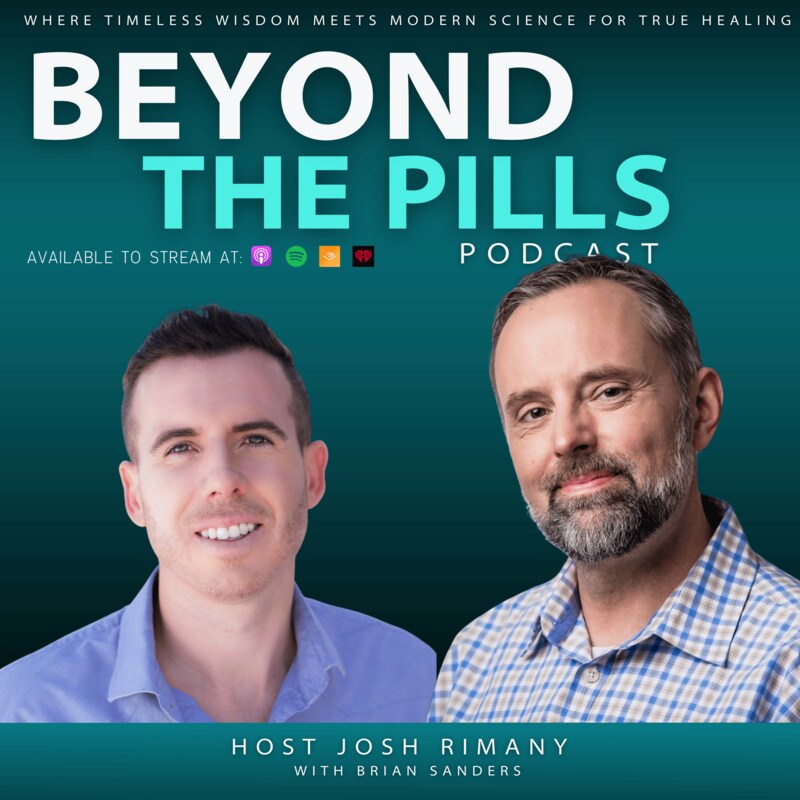
In this eye-opening episode of Beyond The Pills, Josh Rimany sits down with Brian Sanders, health researcher, filmmaker, and founder of Sapien.org, for a bold conversation that challenges everything we’ve been told about food, fat, and human health.
Brian is best known as the creator of the documentary Food Lies, where he investigates the origins of modern nutrition guidelines and exposes how weak science, corporate interests, and misinformation helped shape what we eat—and why chronic disease, obesity, and metabolic dysfunction are now widespread. His work pulls back the curtain on how seed oils, processed foods, and misguided dietary advice became normalized despite mounting evidence of harm.
Through Sapien.org, Brian explores ancestral nutrition, metabolic health, circadian biology, and lifestyle design—helping people reconnect with the evolutionary principles that allowed humans to thrive for thousands of years. In this conversation, he and Josh examine how far modern life has drifted from our biological design, and why returning to real food and foundational lifestyle practices may be the key to restoring health.
Together, they explore:
- The real science behind seed oils, saturated fat, and cholesterol
- How nutrition research can be biased, misinterpreted, or driven by industry
- Why metabolic disease continues to rise despite decades of “healthy” guidelines
- The disconnect between ancestral diets and modern food systems
- How aligning with our evolutionary biology can support long-term health
This episode goes beyond trends, prescriptions, and quick fixes to address the root causes of chronic illness. If you’ve ever felt confused by conflicting nutrition advice or questioned mainstream health narratives, this conversation will give you the clarity and courage to think differently.
This is not medical advice. It’s an invitation to question what you’ve been taught, reclaim personal responsibility, and pursue health beyond the pills.
💊 Join The Beyond The Pills Community Today, Unlock True Healing Tomorrow!
Transcripts
109_BrianSanders
===
Josh: [:Join me and other practitioners as we guide you towards vibrant health, body, mind, and spirit, and move beyond symptom management into true healing. Hello. Hello everyone. Welcome back to Beyond The Pills. I'm Josh Rimini, pharmacist Turned Healer, and today we have a special guest, uh, with us today. Brian Sanders.
an health by aligning modern [:Through sapien.org, Brian explores ancestral nutrition, metabolic health, and circadian biology and lifestyle design, helping people reconnect with the principles that made humans thrive for thousands of years. His work challenges conventional narratives and empowers individuals to reclaim their health by living in alignment.
With how we were truly designed to live. Welcome to the show, my friend. Yeah, Josh. Thank you. How do you like those, uh, bios? They're fun, right? Listening from your own side, like, what
Brian: am I actually [:That's great.
Josh: Well, you and I connected and we instantly had a lot of. Alignment. Your, your, your life story is this, food is medicine, right? We've set, we talk about this a lot, and so let's just start like, what's the moment that made you question modern nutrition and realize something was deeply broken,
Brian: you know?
these things, making food at [:It seems to be good in theory, but I just don't think it's healthy and what we need. And they got cancer and Alzheimer's because they kind of have the standard like gain a pound a year. The doctors don't tell 'em there's anything wrong. Like I go back and look at their medical records. I'm like, oh, they had pre-diabetes.
You know, no one told them anything. They were just doing their thing and they just, you know, they're not obese, but you just kind of have that belly fat, right? You have the visceral fat inside and the belly fat is just basically a sign that you're, you're not eating correctly, but it's just like this slow process.
And so I'm 30, I am starting to get the dad bod. I'm kind of going down this same path of like, oh, I can't play sports anymore and I just have all these little problems and taking over counter medications and this is just what it's like when you're 30. You know, people make those jokes and then I quickly realized that that's not the case.
his, I read his book, primal [:My life changed. Everything got better. All these things went away. Never have to take any medications over the counter, anything anymore. Don't get sick anymore. Lost, you know, 20, 25 pounds of fat. I didn't even know I had some of it, you know, just got it. Got rid of a lot of visceral fat. Everything went away, all my problems.
And I just felt amazing and decided I needed to tell the world. Also, I saw one too many vegan documentary. So, uh, I saw, uh, Cowspiracy and what the hell? I just thought I needed to make my own. That really just tells the true story, and it's not a plant versus animal war. That's kind of what it's turned into.
's really not the important. [:And that's what I discovered. There's a lot of infighting, there's a lot of misinformation. There's a lot of. It's a lot of stuff going on and it makes it really confusing to the normal person. And my role in this is to be sort of a communicator interview. I've interviewed hundreds of doctors and scientists over the years.
I've been to Africa. I spent time with the hunter gatherers. I've just done so much to, to boil this down. Make it more digestible to use a food pun and uh, yeah, get it out to the world.
all it validation, but like. [:Big food over here. Ultra. It's not even process anymore. They now have a category like it, everyone says ultra process, like what happen. Yeah. You know? And we know that. I thank you for sharing your story with your parents because that's. The continuum of health that we see in this country, at least from the perspective of, you know, we see the signs of moving towards that, but we don't really put food and lifestyle at the forefront of health.
k that's, that's the message [:You know, and so talk to people a little bit about like the. The, the community you've built built a building here in Austin, but also like the documentary, like there's a compelling story around this where you wanna not necessarily expose everything, but you really wanna get people towards a, a big capital T truth as it relates to their health.
Because I agree, 80% of all this is food.
Brian: Yeah, a hundred percent. And we just need to let people know that. So, yeah, I became sort of a community organizer along the way. And yes, I do have a, a physical location called Sapien Center in Austin where we do a lot of events and, uh, we have members and we do so many things to bring people together that believe in this.
[:And that's also what I've found, uh, how there's like five pillars of being human. Maybe I'll go there and one of them is community. One of them is understands a purpose and community, right? And so food is, I think the first pillar, like you said, 80% I'd say would be what you eat. You're eating three to four pounds of food per day every single day.
It's really what matters most. There's, you could get into lots of debates about that 'cause some people are like, well actually it's movement. Or some people are like, sleep is, you know, all or your hormones. You know, they have all these different ideas. But I really do think it comes down to food because I've, you could debunk each one of those other things.
iend, Dr. Eric Westman, that [:Right? So there's so many examples of, of people doing this where the, the one thing they change is food. Supersedes everything else. So, so yeah, to the, the five pillars of being human is, is kind of what sapien is. It's a sapien diet, lifestyle, philosophy, movement. Even. I wanna start, I'm starting to sapien movement.
I want to make this a worldwide thing. Food is number one, movement. Maybe number two, right? You have to keep your body moving. Everyone knows this, but you know, not everyone has to spend two hours in the gym. You know, if people think like, oh, well I don't have time to do this. Well, it's like, I mean, walk after a meal, walk before a meal, you know, simple stuff like that, we can get into that later.
Sleep is a third [:You know, I had roommates back then. You know what I mean? It's just, it's just people don't prioritize it. The fourth pillar would be the environment. You know, clean air, clean water, sun getting out, outdoor, right, all that stuff. And then the fifth, not that it's the fifth, it's the least important, but back to community purpose.
lation even up until say, the: eally up to upticks is around:Josh: Yeah, we, I, and I like that you're bringing in the simplicity, because I think a lot of times we're going into complex as well. Like I'm a functional medicine provider and there's a lot of this longevity.
What stack do you do, what things you are, and it's like. I, I, I, again, I get down the same road with patients and clients. It's like, you want the number one longevity stack? Well sleep. Yeah. It's like sleep will put three years of life on you. Like study-wise, like we've studied sleep in the way that we're not prioritizing food, sleep movement.
I say is sitting is the new [:So I'm glad you're bringing these simplistic things that we all can do. Get out in nature, drink healthy water, you know, do the things that we did. We just did an awesome podcast on structured water. It was so fun because we put light into. That one topic. This is why I love the podcast. For me, it's a movement too.
It's the beyond the pills side. It's like how do we take lifestyle and move people beyond the, the medicated only approach to health? Like I feel that's the sick care model, not the WellCare model. And if we're gonna move back to wellness, we have to learn, like you said, this is not a short period of time.
n the seventies and eighties [:I've been all over the world too, studying these things with healers and it's. The, the story is generally the same. It's like keeping that same routine. And so, so tell us a little bit about how the community kind of grew. 'cause you've got a pretty big community there in Austin. I love the city of Austin.
is to align all the wellness [:It's not making me any money. It's like the least making money part of what I do, but it's the most rewarding. So I love that you brought that up.
Brian: Yes, it's, it's what I do. It's what? It's what I love to do. Yeah. Tomorrow we're having a big event. It's over a hundred people. We have standing room only, so I have a Savion center can fit about 230 people indoor and outdoor.
But to do like a speaking event, it's probably like 90. So we have 1 0 5 people, including Dr. Mark Hyman's coming and like all these interesting people are coming. Uh, like, you know, big, big names. I don't want to blow up everyone's spot, but, you know, it's super fun being in Austin because a lot of those big names live here and they, yeah, they join us.
nnected with the head of the [:Lines and incentives. So right now, everyone know sick care incentives are to prescribe more pills and procedures, which is exactly the opposite of what you're trying to promote. And that's how they make money. And insurance companies make money in all different ways, right? There's, yeah. And so we need a whole new system and it's not gonna happen overnight, but I'm really excited about this event tomorrow.
'cause he's. I got this thing he's been working on for years and I, I kind of helping him put into a presentation and make some visuals and we're gonna kind of pitch it to this audience. And the audience is, like I said, like actual movers and shakers, you know, decision makers, people we can help shape this.
ng more money for more pills [:So instead of more pills and procedures, they're incentivized to improve the health markers, lower A1C lower triglycerides, like stuff that we can all agree on. Just simple stuff. That, uh, would be a, a marker of lifespan. Right. That, that's why it's called the lifespan model.
Josh: Well, I think that's, that's the first step to getting to a proactive model, right?
Like our, our wellness made simple. We're, we're launching this too. It's awesome. It's 'cause. It's got three simple labs and one of them's an A1C. It's like, oh, we need to, we need to know this at any particular point in time to see where your meta, it's an easy screening factor to move things the other way, you know?
rrier thing. So yes. I think [:That ultimately has the downstream effect of less prescriptions and less procedures. So my mission is attached to de-prescribing unnecessary medications. How do we do that? Is through this kind of conversation. We do it through food, we do it through community. That's the best way to do it. Nobody wants to do this in a silo.
So I'm glad that you're bringing this, this to head. I'm glad people are listening. To me, it's a collective that's forming to get this, this off the ground.
ally can't do it alone. I've [:He was going away from the sick care model and so I actually got to be with patients and, and see what the struggles were. And a lot of times they just don't know the information at all. But a lot of times they don't. Have people around them that are gonna help them. Right? And so you need that community.
And also it's almost, it's they need a change of identity. That's the most interesting thing that I've learned over the years, is you need to change your own mindset about yourself and, and that I am a healthy person. I am someone who does, who eats real food. I am sapien, I am. Right. And until someone makes that decision, they're not gonna actually make a change.
re just going out to eat at, [:But it's just some sort of like diet plan to them. They're like, oh, well, you know, Brian said to, to like, focus on this or eat this. But they don't really know why, or they don't have any bigger reason and they just won't do it. Or they'll just do it for two weeks and then stop. And so yeah, to bring it back to the community part, it's if, how it really works is.
When you have people around you supporting you or you, you, in Austin, there's thousands and thousands of people doing this, tens of thousands, and so you feel normal doing it, right? We go to events at Savings Center, we go to events around town. All the people I know are on the same page, and it makes it so much easier.
mans are craving, connection [:Mm-hmm. Phoenix is, you know, people in communities stick together. It's part of the acumen equation and. This is why group programming works because you're in it together. When you learn from your peers, you actually learn more than learning from someone that's dictating the care to you. So I think the new model is more like helping each other along the way.
GLP thing right now is like, [:You're good. Do whatever you wanna do and just jab yourself every month. You're fine. You know? Now it's good for people that need to get a little jumpstart, like you said, but it's not designed for. The fix. Right. It's actually unhealthy to do that long term. So we still have gotten in this ro root of, you know, the, the, the, the interesting way of saying is like, don't do the things we're talking about here, like be, be the new human where there's, it's like you're sitting, you're eating crappy food and you're not connecting with humans.
It's like the opposite of what. Thriving
me to a few like fundamental [:One. Is humans are sort of naturally shortsighted. We want immediate gratification. So it's, it's, it's kind of sad that that's kind of built into most humans. Some have more longer term thinking. Delayed gratification, I think is a huge skillset to have. Right. In a, in a way of thinking. It's a
Josh: muscle for sure.
Brian: Yeah. You, yeah. You need to work out that muscle for sure. Of like, okay, I could eat this Uber Eats right now and I'm not gonna die from one meal. But you, you gotta think about it long term and it's, yeah, you, you. So that's one is that short term thinking, but two is, there's like a fundamental law of nature of, of the profits and the processing.
tle properly and shipping it [:It's really interesting. I didn't really think about it till I started a, a business and I was like, oh, no one's making money off of like lettuce or strawberries, either, like any whole food item just doesn't have a profit margin on it. And so even if, I mean, maybe there's a few companies in the world at such a large scale, they're making enough.
Money to, you know, have a good business, but they're still not making billions in profits like processed food. They, you know, they could be making billions in revenues. Some of these huge, huge meat manufacturers who are doing things the wrong way, for one, or like, I bet you know, there's some like Driscoll or you know, there's some like fruit man fruit distributors that are, are everywhere, but they're not making money like craft and Unilever.
panies that have such a high [:That's a huge profit margin. And then once you get that, you can do lobbying. You have billions of dollars, you know. Multimillion dollar lobbying budgets. You have multibillion dollar marketing budgets. You have multi and. You can change the narrative. You can even do fake studies, right? They just fund who's funding all these studies, there's a lot of them.
They're just like, Barilla pasta or you know, these different companies that have enough money to fund things. So that's why all the recommendations are kind of going against us. Like Coca-Cola, they even funded this like lifestyle medicine, something, something, you know, it sounded good, but, and then, and then you realize what the, the whole message was was like, drink coke and then exercise more.
[:We're, we're like, this is the, this is not how humans work. You. You can't just starve ourselves and try to work out more and just keep eating the same bad foods. It doesn't work.
Josh: I, I, there's so, it's so parallel, and I think this is, I I wanna talk about the essence of food lies, because I feel like what you're saying is the stuff you've been undercover like you've been discovering.
eed to see because they have [:It's like big pharma, big food. They're, when the ethics and the intention aren't matched together, right? Because they are for profit companies, but it's at an ethical. It's, it's at the, what I, what do I wanna say, is like, it's at the expense of the consumer, right? Yeah. Like, there's like 38 grams of highly processed sugar in one 12 ounce container.
That was never meant to be like that. I, I can't even drink soda now. It's so damn sweet. But we're being conditioned to, have you ever heard of the bli, the, what do they call it? The bliss factor? Oh yeah. Like there's cheese and there was like 76 Dr. Pepper recipes before they got to the one that was like the most highly sought after where you sift one and you had to get more.
Right. In the Doritos Bliss point
actually. Yeah. Bliss Point [:Josh: they have, they have PhDs that they put on staff to literally study the human.
Like dopamine experience when with food, it's like, how can we make food as addictive as possible? And you know, I'd like to see the study on Coca-Cola and the phytonutrient density of it. Right?
Brian: Oh, well that, but the problem is no one's gonna fund that. So that's another thing I realized along the way. No one's gonna fund it.
There's no money. But if, if there was some profit on Real Food. Which is not, that's my whole point. There's no profit. But if somehow there magically was a profit, then maybe we could combat it and, and show that that's wrong, but there's just no profit in, so no one can do the studies, wouldn't it?
am by living light metabolic [:I was thinking about this the other day and maybe it's a conversation to have is like if you re you talked about eating healthy with food stamps, right? We know that they're, the whole administration's doing whatever they're doing, but like imagine if they incentivize people to eat whole foods with food stamps.
Like Yeah. And, and incentivize people to get health coaching from a mid-level provider or just a health coach to move them down. This continuum that you and I are, are helping people with where it's like a 10th or even a hundredth of the cost of thick care. Yet, we haven't even put it like an inch of it into the space of the payable system.
Right. So I'll be curious and I'd love to continue and collaborate on that, but let's, let's talk a little bit about food lies. This is your, your baby.
Brian: Oh yeah.
y excited about it. Um, tell [:Brian: Well, yeah, it's been an eight year journey, so this whole time, eight years ago, I just quit my job and decided to do this and people should actually watch the, the trailer. It's on YouTube, just search food, live intro, and it's something we made. Ha, handmade, no, ai, how we actually made each scene. You, you have to watch it, it's very intricate and it tells the story, but, uh, eight years ago.
I just decided to just quit it all and make this, because I thought that's the number one thing I could do is some people are doing some top-down stuff and maybe there could be some regulations Yes. To like take sugar and soda off the food stamps for one thing. Right. That would be nice. At least you can still buy it.
w, would be get something on [:And, and it's. A lot easier said than done. If I wanted to make, um, a mediocre thing, I could have put it out a long time ago, but it's just been a, a real journey trying to make something so good and get a celebrity involved. Get all the best people around the world. We, we, like I said, went to Africa, spent time with a hundred gatherers, filmed with them, filmed with tons of doctors and scientists, filmed with regenerative ag.
People like Joel Salt and Will Harris, you know, doing the good practices. Just putting it all together into, yeah, this is my magnum opus, putting it together, something that people can just sit down and and enjoy, and then at the end realize, oh, I get it now. This is what humans need to eat. And it's, the answer is real food, right?
kind of simple, but it takes [:It's like why did the medical system has been pushed into this for-profit pills and procedures model. For about a hundred years now, and that you can't undo all that, right? It's like some of these things that they're taught kind of go against. What's good for humans, but you can't really undo that. It's such a hard thing to, to change people's mind about things.
u know, my idea is to put it [:Josh: I love that. And I think, I feel, I feel strongly about that too is like, you know, empowering people to make informed, confident decisions on their own health. You know, I, I firmly believe, you know. The, the pharmacy of the future's right here. It's inside of us. We can make the chemicals we need through the things that we can do in order to live more like a human, like you said, it's, it's, it's, and, and your passion is awesome because it's, it's starts with the food, right?
e point. Like we, people are [:True health and healing happens when we take agency of our own health. We start doing these things more in community, like you said, and we from a farm, not a factory. It's like that. That's a pretty simple thing to do. And we're not gonna undo it and go and all, all in on one side. It's like, again, I think 80 20 works really well for even just this.
If people did it 80% of the time, they'd be in such a better place in their own health and they've taken charge, which is also, I think, part of that equation. You talked about a little bit of the neuroscience of change, right? Mm-hmm. I've studied, I've gone on deep dives in that realm because. Everyone has some relationship with food, and if we don't change that relationship, nothing will happen.
Like you said, it's [:But having community, like you said, having people that are doing this with the right ethics and intention, right? There's, there's healers aren't billionaires, but they help the world and that that feels good because we're all in this together in some way. And I love that you're putting that in the forefront of all of that.
So what, what is, besides that whole essence of the food lies, what is the, what are some of the things people can expect when they, when they see this as it comes out?
maybe just for me. Oh yeah, [:'cause you're like, why isn't it out? And, uh, no, we, we start, first we make the case why food is the most powerful. Some people's like, oh, it's just genetic. Like this is insane. This is not genetic. Like this has changed in the last like 30 years. Like gen genes don't change in 30 years. It's
Josh: epigenetics. It's the signals.
Brian: Yes. And the signals are from our environment and the food we're eating and environment. So it's insane that people are saying that. I mean, these people are like the ones pushing. Pills and procedures, right? They're like, oh, it's not your fault, it's genetic, and here's ozempic, and here's all the pill, right?
We just need real food, like [:And so that, that should be included. And something like. Like red meat I think is a health food. Like I talked about regenerative agriculture, right? And, and raising animals properly. But this is something that humans have always eaten. So there, there's kind of something people don't know that like where, where we've come from, like what have we eaten?
ods that people don't really [:Like I, I'm a big supporter of, of whole food diets and being, you could, you know, I don't really care if you're like more plant heavy or not. Uh, right. 'cause that's just as long as we're eating whole Foods, that that's a big thing. But that's
Josh: a big step in the right direction. Like it, it's like you can fine tune after that.
Right. Absolutely. I call it plant forward because yes, all that phytonutrient density, half your plate should be some fruits and veggies, but meat, not meat. Like, that's kind of choice, you know? And we can dig into the genetics on that side if we want to, but we don't have to. I love that you said that with the beef.
'cause I, I have a relationship with. The farmer here, and he's actually due for this podcast. I can't wait to get him on after this one for sure, because he raises good like beef. He's awesome. It's all grass, finished the whole thing and it's processed the right way. And I just have this beautiful conversation.
it's what I got. It's like, [:Brian: yeah,
Josh: that, that's why I, your story is like.
I validated that through the guy who raises the beef, like he eats it all the time. He is like, my, my blood is fine. 'cause it's full of good omegas.
Brian: Absolutely. Yeah. You, you need to get that diverse diet that the animal's eating and you don't want them in a feedlot. You don't want them eating just soy being oil and corn and stuff like that.
So it really is, what I've found along the way is the number one. Okay, I'll back up a tiny bit. Humans live all over the planet and we're so smart and adaptable. We can eat all kinds of diets and yes, there's different genetics, different heritage people can do better on more fish and plants and some people do better on meat and dairy and there's all these things 'cause we're so adaptable.
But what we do [:And it turns out it interacts with your body in a different way, especially when you're processing down carbohydrates specifically. It, it interacts with our gut in a different way and it creates a higher blood sugar response, right? It inter it. It interacts with our gut hormones. Worse, like these GLP one, it's kind of like a reverse ozempic, right?
ore metabolic problem you'd, [:So it's like it goes beyond just the calorie story and. I've never thought of this way, but it's, it's a rever, processed foods are a reverse GLP one. Right. It's like, it, it kind of makes you hungrier. It, it like if you,
Josh: well it's, it's the, it's the gas versus the, the break. Right. And now it's like, well, if I keep eating that food, I just, I just came up with this analogy, but it makes sense to me.
'cause people, they need to, people like we remember from analogy, but like, we're magic putting. The gas on with the, the highly processed foods and then throwing the brake on at the same time with the GLP one, uh, your car isn't gonna work very well 'cause it's, it's trying to do both at the same time. Yeah.
It literally doesn't make sense at all to me.
It's like a natural ozempic, [:I understand that, you know, there's something going on there, but people can't just, like, it's not working. They, they, we have satiety mechanisms, right? We have a fullness mechanism in our body and. That's really what matters most is like, how, how do I not be hungry? Like, everyone who's needs to lose weight is, is overeating, but why are they overeating, right?
So if you just say calories and calories out, you're just describing the situation, like, why can't someone become rich? Oh, just make more money than you spend, right? You've just, just, you just saying calories and calories out. You've just, oh, okay. That doesn't help me at all. Right? Or you basically someone just saying.
, but that doesn't help them [:Does that make sense? Like you need to get all of what you need for less empty calories.
Josh: Well, that, that's, that's the, the talk that we have is like, there's. There's a density category for nutrients, right. And all this stuff we're talking about in a highly processed food has got little to no nutritional value to it besides a caloric value.
Brian: Exactly. So you can't long term just eat processed foods and get all you need and stay in this calorie balance because it's, they're diluted of nutrition. Exactly right. Right. Processed foods are, by definition, are basically diluted of nutrition. So mathematically doesn't even work out. Like you can, you can force yourself to eat fewer calories.
You can eat junk [:It's like long term you need to get all of your nutrients for less empty calories and how to do that is with real food. So it's like kind of more of like a, a mathematical reason why you need to eat real food.
Josh: Well, that, that puts simplicity into it. And, and just thinking of from getting folks, you know, it's not our fault.
he pharma side more 'cause a [:Going on with the, the sick care model is to manage disease, not promote health. And like what you're saying is, let's get more nutrient density. Let's do the things that are low cost or no cost, and let's teach each other where we came from. And I think we can put a modern spin on that because we have all the tools in place.
To help us in this realm. And, and I'm looking, very much looking forward to working more closely around the, the lens of how do we include practitioners, healthcare providers, health coaches, the community, other kinds of businesses that are rooted around this concept. Whole Foods like. It's, they're out there.
at are more deli de designed [:It's like, we eat clean meat, we just don't eat meat. Right. It's like these are factors that. Are starting to pick up, I believe the regenerative farming, the regenerative aspect of things. And so I'm hopeful for the future and I think we got a lot of work to do.
Brian: Mm-hmm. Yeah. Now it is hard because back to the food manufacturers, they actually incentivize to put less nutrition into food.
, but it had more just empty [:And the group that got the more empty calories and less protein and nutrients, they just ate more food and got sick, overweight, died earlier, all these things. And they, and then they did the math. And in the other group they were fine. And they actually got the same amount of protein in each group. So the, the group with the processed, it was basically a version of processed foods.
They had to eat more food to get the same amount of protein. They got fat and sick basically. So that's just what's happening to the country. So, but then how that relates to food manufacturers. So people talk about Bliss Point and their engineering flavors, and that's all true. But also if, if someone of MO a food manufacturer puts in less nutrition, people will eat more of that food product.
put less nutrition in their [:Josh: Well, they're incentivized so they can sell more. So people eat more. So they can take like the the system. See, this is where like, I think. People are starting. I, I know they are. I'm in the circles all over and you are too. Like people are starting to sort of be awakened to this. So I'm glad that you're building this awareness in what you're doing because it is pretty amazing to think about and hear like are the industries that are around feeding us with things and.
e human equation pretty damn [:So you eat more so you get fat more so you get sick more so you take more medicine and we never really put you at the forefront of educating you on how you can actually do something better. You know, that's. That's an interesting concept to, to ponder with.
Brian: Uh, it's hard. Yeah. I've been thinking about how to undo that.
You know, we have to like realign the incentives and it, it is pretty hard because sadly that's kind of the world we live in, where the people with all the money have gotten that way and they want to keep it that way. And you have to come out with some like radical different models, like the lifespan model, you know, that we're gonna talk about tomorrow at the event to try to reverse that.
e way, people can just do it [:Josh: I've done it. I, I, well, this was like, I think every summer I go to the farmer's market.
I buy my week's worth of food produce. Meat, clean meat from all like organic or no pesticide Farmers. I know, not real packages. And I put it all in the thing. There's, there's everything that's Whole Foods there. And I take everything we bought and I say this is, of course you have stock in your house, like beans and things, but you know, I could feed a family of four for under 10 bucks a day.
Brian: Yeah.
it's not terribly expensive, [:Brian: It's pretty cheap. Oh, a hundred percent. I, it always turns to that because people, I do a lot of social media. You can find me at Food Lies on Instagram and stuff, and. You know, people always attack. They're like, oh, well this is for the rich people, or this is, you know, not sustainable. Or these people on food set, like, I live, like I'm poor for, for whatever reason.
I've just decided, I guess along the way, you know, I, I quit my job. I, I didn't have income for the first couple years and I did this on. A very small budget. It just takes a little different priorities of your time. But I mean, it takes time and money to do anything, right? It takes time, money to, or order Uber Eats, whatever these, these things that, that they're actually way more expensive.
offees. I don't need snacks. [:You can make, I make batches of bone broth, rice, you know, I cook the rice and bone broth. I like do all these things and then I just have it for the week. It's, it's for couple dollars per meal.
Josh: Yeah. I, I do the same. And it's part, part of that modern day approach is convenience. Right. I. Half of the objections I get to my metabolic reset programming.
It's a mind body reset. So it's not just food is, it's simp, it's this, it's whole foods. It's like fruit, veggies, meat, repeat. Mm-hmm. Twice a day. You're in pretty good place kind of thing. Like we teach people. Then the, the objections are, I don't cook. Mm-hmm. I was like, well, we gotta learn how to cook. Now we do.
n. My, my wife cooks our dog [:Brian: Yeah. Well, cooking is not hard there. I mean, if you're trying to prepare. Some insane recipe. Yeah, it can get hard. And yeah, having to get all these different ingredients and skills, that's not what you need to do. You need to just heat up some protein and serve, you know, some fruits and vegetables. It's, it's super simple.
Like, I don't, I don't understand, like, I, like, I just, I don't know. I, I cook eggs in a pan and I, you know, I have like sauerkraut and pickles, like they're just sitting in the fridge. Like some of the half the stuff is just gonna sit in your fridge and then you just. Heat it up or just put it on a plate.
Like it's not, I'm not a, a professional chef at all.
Josh: Well, it's a [:Brian: Yeah, that's kind of like a main place you can go and find out all that's going on.
I have a food guide there for Free Food Lies is on YouTube and Instagram and all the places. Uh, so I just do all kinds of content. I try to make it fun. Uh, yeah, I do some memes and stuff and then my podcast, peak Human. Yeah, you can subscribe to that. Interview all kinds of people and Yeah. This stuff, yeah, I mean, we, we've only scratched the surface.
I really wish it didn't take so long to get my series out, but uh, that's really where the main info is gonna come. Oh, and I guess just to finish it off, I talked about how we we're gonna talk about where humans came from, why we require Whole Foods, why, you know, what we require, but it goes into.
Everything that [:And so we, we give that model it throughout the series. And then the last episodes, episode six, is about regenerative agriculture. So it's, it addresses how do we do this properly, you know, in environmental concerns, all these other things. So it really like takes you through the whole journey.
Josh: That's amazing.
d the pills like movement in [:I love that you, you bring this to the head of like, awareness of not only food as medicine and lifestyle, but we're not trying to go back like in, we're trying to move forward. And I think that's the real, the real big positive, energetic message that we can impart here is, you know, in that space I always like to, so find 'em on sapien.org.
Look at the documentary Food Lies, the, the trailer. We'll put the links in the, the episode here, but if you could leave the listeners with like one truth about being human health and healing, what would it be? Mm.
of that is align to nature, [:So you. You can change your life by just kind of taking a look at anything. I think any problem in society, it happens when you try to cheat nature or you go away from nature. Processed foods is a very easy example. We thought, oh, it's just calories in, calories out. So we'll just like make, you know, some kind of concoction of different ingredients and it has maybe the same macros as some other food and it'll be fine.
And it's not. This is like a failed experiment, right? Processed foods, it's going away from nature and it's backfiring. Anything that goes away from nature backfires. Even just people's depressions, like loneliness, anxiety, all these things people are spending all this time online and with social media and all this stuff.
y. Just having a whole bunch [:So it's basically just that my main philosophy is just going back to nature. Uh, you know, you can't cheat it just, we're never gonna have a pill. Where you can sleep for two hours, but you take this magic pill and it's like you slept for eight hours. It's just not physically possible. Like I don't think that's ever gonna happen, right?
It's just your brain needs to clear itself out. You need the different cycles of REM sleep and deep sleep. You can't just fake that with a pill. So, so yeah, my main message is just kind of think of that when you like go about your day, it's like, oh, what, what is this? Ozempic? Oh, well, it's trying to cheat nature.
s like paleo guy with a club [:It's just like, just kind of like take a look at at things around you and it's, it's just how did we do this even a hundred years ago? What did my grandparents eat and how did they live? So
Josh: that's it. I love, I love that. That's great wisdom. Uh, and very much like the word alignment is something that I use a lot.
And that's, that's what you're talking about. I was like getting aligned back to nature, which is generally the essence of what you said about Whole Foods. It's all just coming from, that's why. I'm a big plant medicine advocate, not just for psychedelics, but like all plants. Like plants are here because nature intended them to.
This is why I love adaptogens 'cause they work in our body, like they work in nature. Like how cool is that?
Brian: Mm-hmm.
hat you're doing, my friend. [:Uh, this has, this has been a great, great episode. Thank you for all you're doing and putting in that mission. For sure. Absolutely. Thank you for having me. Yeah, this has been fun. Well, this is a wrap, guys. Until next time, stay well. Thanks for joining me today on Beyond the Pills. If our mission to de-prescribe 10 million unnecessary medications resonates with you, share this episode, subscribe and leave a review.
Whether you're a practitioner or someone ready to reclaim your health, visit rx to wellness.com For free resources to begin your journey together, let's go beyond the pills and co-create a world of vibrant health and true healing. Until next time, live better and stay well.





