Shownotes
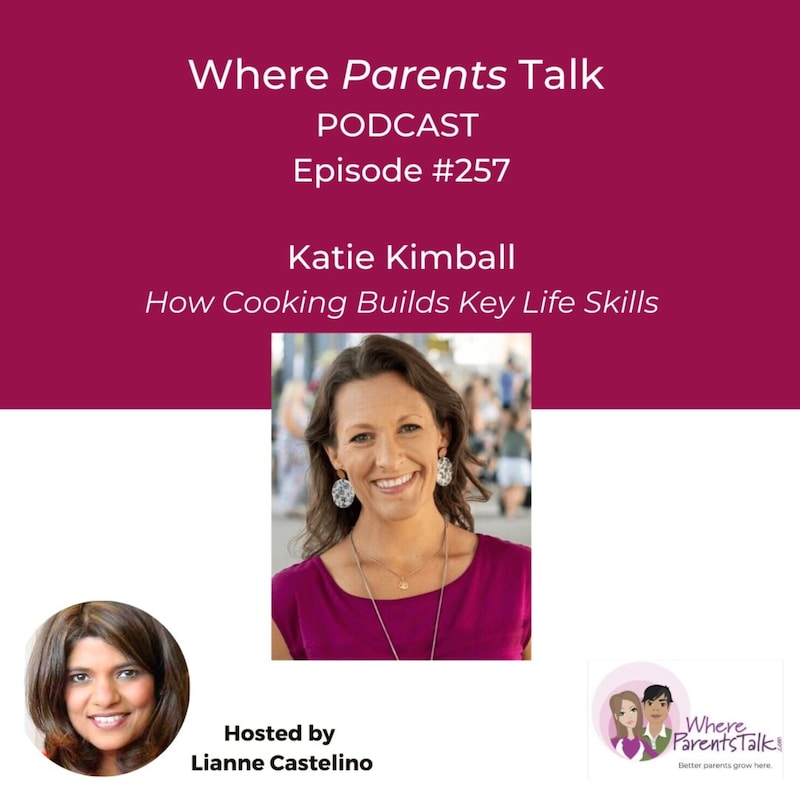
On this episode of the Where Parents Talk podcast, host Lianne Castelino sits down with picky eating expert, educator, and founder of Raising Healthy Families, Katie Kimball.
Kimball explains why teaching teens to cook is about far more than food. It’s about:
- Reducing teen anxiety through competence and ownership
- Building executive functioning and life skills
- Strengthening family connection
- Preparing kids for independent adulthood
- Avoiding the “avalanche effect” at age 18
- Creating a healthy family culture around food
With teen anxiety and depression rates rising, parents are searching for practical ways to empower their children. Kimball shares research-backed insights on how cooking builds confidence that spills into academics, social life, and emotional well-being.
The conversation shares approaches on how to raise a confident, capable adult who can budget, meal plan, feed themselves, and build meaningful community.
This podcast is for parents, guardians, teachers and caregivers to learn proven strategies and trusted tips on raising kids, teens and young adults based on science, evidenced and lived experience.
You’ll learn the latest on topics like managing bullying, consent, fostering healthy relationships, and the interconnectedness of mental, emotional and physical health.
Links referenced in this episode:
Companies mentioned in this episode:
- Raising Healthy Families
- Kids Cook Real Food
Transcripts
Welcome to the Where Parents Talk podcast. We help grow better parents through science, evidence, and the lived experience of other parents.
Learn how to better navigate the mental and physical health of your tween teen or young adult through proven expert advice. Here's your host, Lianne Castelino.
Speaker B:Welcome to Where Parents Talk. My name is Lianne Castelino. Our guest today is a picky eating expert and a speaker.
Katie Kimball is also a certified stress master educator and founder of Raising Healthy Families. She's an author and a mother of four. Katie joins us today from Grand Rapids, Michigan. Thank you so much for taking the time.
Speaker A:Oh, it's my pleasure, Lianne thank you for letting me talk to your audience about teens and cooking and all the things I'm so passionate about.
Speaker B:Lots to get into, and definitely you're passionate about a lot of things, but they tend to point in one direction, which is really all about raising confident, capable future adults. So what does that entail, in your view?
Speaker A:You know, I feel like we're living in a tough world right now where a lot of adults are talking about teens like they're hopeless. And I'm sure this happens at every single generation, right? We look at the young people and we're like, oh, there's such a mess. Well, you know what?
They're really not. There's a lot of hope there.
But, but we do have a decent bit of fallout from things like helicopter parenting, from them having to go through Covid and just, just from everything that's kind of going on right now. So when I think about raising a confident, capable future adult, it starts at age 5 and 10 and 15, like 17 and 18.
It's not too late, but it's almost too late. You know, like, we really have to work to have that end vision in mind.
And the end vision is a young adult who can step out of your home, who can budget their money, cook and feed themselves and contribute to society and enjoy life. Like I want my kids to be, you know, finding their future spouse. My 20 year old just got engaged. It's so exciting right now.
So he's like, you know, really stepping into adulthood.
And it's exciting to watch the 18 to 20 years, you know, that I've parented him come to fruition now because he, he is like a healthy, independent, almost adult.
Speaker B:Congratulations, by the way. So when we talk about those, you know, capable, confident young adults, where does food fit for you?
Factor into that equation, because so much of what you do is centered on that topic.
Speaker A:You know, we're seeing the Rates of chronic disease skyrocket not only, I mean, yes, among teens, but nobody's really worried about that yet. But I think when we look at people in their 40s, 50s, 60s, we're like, Gosh, what's going on?
Like, the average number of prescriptions at age 50, I think is, is three. It's like, oh, we're really, we're really relying on modern medicine to help us feel better.
And many of us adults are walking through life feeling kind of cruddy all the time.
And so in my experience, I mean, I've been online for 17 years helping families try to figure out how to dig through the research and what, you know, what will actually like, serve our bodies.
And so as much as we want to form our children, our teens, our young adults, you know, mentally to go into the world, we would love them to get good grades and go to college and whatever, whatever the vision is for them, if they aren't functioning well at the physiological level, they're not going to be able to achieve their goals. And so you are. What you eat isn't a cliche. It's, you know what I mean? It's science. Like we, we, we nourish our bodies based on what we put in it.
And so I really work hard with my own kids to help pass on ownership of health to them. That takes a lot of conversation. It takes a lot of building a family culture around how we eat and what we eat.
In fact, real quote, I don't know if he wanted money or not, but my freshman in high school just last night said, yeah, I would rather have like cherry tomatoes than Doritos.
I was like, that's wonderful, you know, and so that's just the culture we've built that my kids understand that what they put in their mouths has an effect on how they feel and their, their general sense of wellness, their energy, and also, you know, their future wellness. And so we need to pass on the ownership of health, but we also have to pass on the logistics.
If you don't know how to cut a up vegetables and fruits, the produce section is locked to you.
As a young adult, you know, going into the world is this very expensive to buy healthy food that someone else has cut up for you, you know, and so I really want to be a good steward of my kids financial resources by helping them be good stewards of their bodily resources. And I just think that is like the foundation of their success, whatever their goals may be.
Speaker B:So when did this journey and this realization for you with your own family start and by realization I the importance of teaching kids to navigate the kitchen and to prepare food for themselves. When did that start for you?
Speaker A:Well, My oldest was 10 and he had to, in the end of fourth grade, had to do a how to speech. They could teach anything from swinging a baseball bat to making chocolate chip cookies. And so I'm like, oh, honey, you know, mom does food.
Maybe we can do food. So he taught his class how to make homemade guacamole, which was really cool.
I got to come and watch because you can't put a chef's knife in a 10 year old's backpack even, even back then, right? And so I was very proud of him. Like thwacks the pit out of the avocado and the other adults in the room are like, oh my goodness.
You know, and at the same time I had a bit of an internal crisis because I thought, oh, this is the only recipe he knows how to make. Right.
Like, as cool as that was, and as much as I felt like that was raising the bar on your average fourth grader in America, it was also the only thing he knew how to make. And you know, 10 is just past that halfway crest of nine.
Like you're halfway through finished if the child follows a traditional path and leaves home around 18. So I thought, this has got to change.
I've got to make sure I'm more intentionally pulling him into the kitchen, not just on, you know, his like, star recipe guacamole. So that's when 10 years ago I launched Kids Cook Real Food.
So I am a teacher by trade and I thought, I know other parents have the same problem because so many of us weren't taught to cook by our moms. You know, we were kind of skipped our generation. And so we're not passing it on to our kids.
I thought this is really important for all the kids to be involved so that they can help me around the house.
You know, I just had my fourth baby and I felt like I was, you know, spending way too much time in the kitchen and for their long term success and, you know, ability to feed themselves. But in the last 10 years, it's been incredible how much I've learned about the benefits of getting kids and teens in the kitchen.
Like, surprising, surprising amounts of benefits. Way beyond, like, oh, you'll get a little help, you know, cutting up those carrots.
Speaker B:Mom, let's go through some of that.
Because I don't know that the average person thinks about these things or knows about them as they're maybe considering teaching their kids how to cook.
Speaker A:Yeah, we call it our three C's now of connection, confidence and creativity.
And so when you think about connecting with your kid, that moment where you're working together on a project, you know, where you're seeking the same goal, you're kind of shoulder to shoulder in the kitchen, you're not making eye contact.
They always say that's important for like deep conversations, but even for light conversation, the fact that you are together in a space, you know, doing something that's neutral and non emotional is amazing. And cooking together then lends itself to family dinners.
So that that ability to connect kids with their parents, kids with their history, you know, oh, this is a recipe grandma used to make, right? And kids with their food is super important. And then the confidence piece, it just can't be understated.
You know, we statistically over one third of our teenagers are clinically anxious or depressed, not just like feeling down some days, like they are diagnosed. And so we know that there are certainly undiagnosed cases as well. That's too many. That's way too many.
And so why are our kids having such a negative outlook on life or feeling so anxious? Here's one theory as to why teens feel anxious. It's because they don't have control over their lives. Like, like what do humans fear most of all?
The unknown. So, so if you are a teenager and your parents have been doing everything for you and it feels like, like we're well intentioned parents.
It's not that we don't love our kids, so we do everything for them. We love our kids.
So we're like trying to make their childhoods easier, but in the same moment they're walking through life thinking subconsciously or consciously, well, you know, my parents are doing everything.
If I run into a problem or they actually run into a problem and then they realize they don't have coping skills, they don't have skills to like approach the world and be an agent of their own destiny. And so that small piece of I can cook for myself, I know how to make food, I can nourish another human being and keep them alive.
Like that's pretty authentic success. That's, it's better than like I can kick a ball into a soccer goal as much as sports is amazing. And it really does help kids gain confidence.
I think food is a common denominator for everyone. Like we all eat, we all need to be nourished.
And so it doesn't matter what skills or what personality you have, you can find success in the kitchen and you can see that success when another person eats your food and they're like, this is good. Like, that's authentic. That's not a participation trophy. And it gives kids and teens this chance to, like, practice failure and getting through that.
And it really does. You know, there's a. There was a study out of ucla, for example, that showed that having a sense of purpose is a massive antidote to teenage anxiety.
Okay, great. The purpose, like feeding your family once a week for family dinner. It seems small, but it's not. It really. It really stacks up.
So I kind of call it the anti anxiety antidote. That if we can give our kids these basic skills, it's amazing. And creativity is our third C. And that's just something so lacking in today's world.
When we're, you know, tend to be on screens, we tend to be consuming a lot of other people's creativity. We don't work with our hands very much, and that's very therapeutic. Again, it comes back to anxiety.
When you're working with your hands, you're opening up the upper part of your brain that tells stories that. That connects with people.
And so it can be a really special thing for kids to be able to not only just work with their hands, but also to be creative in an artistic sense, making up their own recipes. You know, once they understand how food works, they get to take a recipe an adult wrote and change it.
That's a massive sense of agency and creativity.
Speaker B:So much in what you just shared, Katie, and all of it is so relevant. And I don't know that parents consider that, because you do have many parents who, you know, coach cooking is not their favorite activity.
They are not good at it. And they might look at this as like, I don't have the time. It's just easier if I do it myself. So what would you say to that category of parents?
Speaker A:It's kind of like saying, I don't have enough money to invest.
You know, where the financial gurus would say, you got five bucks, invest that five bucks, because you want to see it turn into $5.50 by the end of the year. It's really the same thing with passing on cooking or any life skill to your kids and teens. It.
Yes, it will take a little bit of time, not a ton of time, really, but it will take some time and some investment. But the return on investment is massive. So, I mean, we talked about me having four kids.
Well, the older three of them each make one meal a week at this point. And so talk about me having more Time to get my work done or go for a walk or exercise or, you know what I mean?
Like, do the things that I need to do to keep mom centered and grounded and her cup filled. Three meals a week off. If that's, if that's not a good goal, I don't know what is.
So the, the process, Leanne, really, is to break down our mental roadblocks. Like, it's easy to go, oh, teach kids to cook. Katie Kimball wants me to put that on my to do list. Like, hello, that's huge.
No, not teach kids to cook. You know, teach kids to use a knife to cut an apple or. Right. Like, choose one skill.
Because really all cooking is, is a, of different skills that intertwine. Maybe a little, a little knowledge about how flavor works, you know, and so if we can just break that down into a five minute task.
Well, now you can put that on your to do list and not hate me because it feels doable enough. And so that, that's what I always tell parents is, you know, if you have a tiny child, teach them how to measure a teaspoon of salt.
Like, it's a five minute task.
If you've got a teenager, let's, you know, knives are very motivating for teens because they're cool, they're edgy, they're dangerous, you know, and, but. So let's see if we can get a teen in the kitchen, you know, using a chef's knife. Don't start with an onion. That's like the hardest.
That's the hardest vegetable. Don't start with an onion. I always tell people, start with like a cucumber or a zucchini, which is that medium density.
Your knives don't have to be super sharp. It's nice and long, so your guide hand can stay far away from the knife as the kid is figuring things out.
But those long, long vegetables, carrots, celery, cucumber, zucchini. That's where you can start and keep it to five minute tasks.
Not at the dinner rush hour, because you don't have five minutes when soccer practice is in 23 minutes. But see if you can find a time. Like if your teenager is a night owl, get out that cutting board at 10 o' clock if you have to.
You know what I'm saying? Or find a time on a weekend. It's so, so, so worth the investment,
Speaker B:you know, as you're talking, Katie, I'm reminded of the fact that when people ask me, you know, when I, what does it mean to me when I'M on vacation. And my answer's the same, I'm on vacation when someone else is cooking. So I completely.
The fact that you've got three kids that are giving you three nights off during the week, that is tremendous.
You know, the other thing that you talked about there was helicopter parenting a little bit earlier and the idea that a lot of parents don't realize that they are compromising their child's future independence out of love and not wanting to let go and letting them have their own experiences. So what do you say to that parent, parent that something like the food piece could help support them giving their kids more independence?
Like how can you sort of make. Simplify that for, for those parents?
Speaker A:Yeah, it's a whole mindset piece.
I mean, I really think there's, there's a different mindset to parenting teens as you needed for like the toddlers, the elementary years, even the middle school years. And so just a really simple non food example. My son has been in theater a couple years. He's the freshman.
And so you know, when your kids are in elementary school, even in middle school, you fill out the forms for them, you do the online tasks, right? You keep them, you tell them when their calendar event is, when their rehearsal is or whatever. And we sort of manage everything for them.
And so when he hit middle school, we started releasing some of that responsibility so that he had to know when, when his rehearsals were. Well, this year I said, hey, like it's your turn to fill out this form just at the very beginning of the season. And it took him a while.
And I was like, just, you know, just pointing out that I've done that for you for the last five years. And then I had, I had my son put all of his rehearsals in the shared family calendar again.
First time he had done that, but it was really, really intentional for me. Like this is incredibly important that I stop doing the thing.
And even though it probably took me just as long to like pass it to him, right, because I had to remind him, I had to show him how to use Google Calendar.
But it, but it's important because he needs these skills and no kid, no young adult can handle all the responsibilities of adulthood crashing down in your shoulders at age 18, like that's anxiety inducing. And so how do we do that with food?
Well, it sort of happens naturally because they start to leave the house and buy their own food, they start to buy snacks, you know what I mean? They're out of your, your vision a lot more and starting to make their own decisions.
So the goal is then to make sure that they have the capabilities to make good decisions. So really, you know, there's that two avenues. Ownership of health and logistics, being able to cook.
So the ownership of health, that's got to be conversations and family culture, like all the way down to elementary school, but then passing on, you know, that ownership. If you're still packing your lunch, packing the lunch for the teenager, that would be a really good one. Just start to let go or Lego really quickly.
You can peel off the band aid once they're teenagers, you know, if you're still making breakfast for your teens every single day and you might be saying, Katie, it's, it's necessary, like they only have, you know, 22 minutes from when the teenager gets out of bed to when they have to hop on the bus or jump in their car to go to school.
I would, I would challenge that because probably as an adult, you know, or a college student, no one's going to be making them food and managing their calendar. So that's, it's just that vision of like, where do they need to be to be able to leave home?
And those need to be gradual steps and not an avalanche at the end. So if, if you don't feel like they would have time to make themselves breakfast, then it's a, it's a conversation.
Hey, like if you were on your own, what would this look like? You know, would you be able to make muffins over the weekend that then you could have with a big glass of milk to start your protein?
You know, start your day with protein ever for every family. I think the troubleshooting looks different, but the mindset is the same. It's what am I doing for this teenager?
That I should start releasing responsibility to the teenager now so that it doesn't wamp on their head when they leave home.
Speaker B:It's a really strong visual you've just provided. Katie. Avoid the avalanche. It's so true. You know, you do so many different things, as we kind of alluded to off the top.
And your apron says, teens cook real Food. Take us through how you support parents, you and your team, with respect to helping kids learn how to cook.
Speaker A:Well, we've been teaching kids to cook for 10 years, and so we do that through a pre recorded cooking class that over 20,000 families have used to get their, their kids with a good foundation. And I'm so thrilled to bring teens cook real food to the world. It's really been a labor of love and it was so different.
Leanne, thinking about teaching Teens what they need for young adulthood versus, like, oh, like, what do kids need to know to follow a recipe? I thought it would be almost the same. I thought it would be like, oh, like what the kids KN us a little bit more.
It was about four times as much information once I started listing it all out. So I really went at teens cook real food with the developmental mindset of what do teens need psychologically?
And then what do they need logistically to cook for themselves? And that psychological point, I think, is where parents can really learn from what I did. I thought about, what do teens want?
They want independence, you know, they want agency and control over their lives. They don't want anyone to tell them what to do. They. But yet they need guidance. We can't just throw them out to the wolves.
So that's what I really tried to do in our. In our classes. So I hired eight teens. They came into my home.
We filmed over 120 videos, which sounds like too much, but the beautiful thing is that a teenager can be like, I want to make a burger. Great. So you jump into the grilling burgers lesson and you just do it, you know, so it's not like you have to start top to bottom.
You could, because that's where you would, like, learn the basics first and the knife skills and the flavor.
But if you just want to make a burger or you just want to make pizza or you want to make homemade Mac and cheese, like, you can just shoot for that video, watch it and see what happens. Because I think that's what I mean, that's what teens want, right? They just want to do their own thing.
I tell them throughout the course that lots of rules can be broken if I've learned one thing, you know, in my years of cooking. And so that's really fun for teens to hear. The. I mean, the kids made mistakes, too. It's very, very real.
We had a, you know, cut on the finger happen right on camera, and we did not edit that out. We processed through, like, what happened and what mistake was actually made that caused that.
We ran this through 50 beta testing families, and the families were like, we're so glad, Katie, that you left that in, because kids need to see that it's not all like. Like, life is not perfectly edited, you know, and we had. We had kids. I don't know. I can picture one time one of our cast members, like, can I try it?
Can I taste the cumin? I'm like, sure. Like, licks cumin powder off his finger and recoils back, like, Six feet. He was like, oh, that was a terrible idea. Don't do that.
But again, we don't edit that out, first of all, because it's crazy hilarious to watch. And second, because I want teenagers to know that cooking is about experimenting. It's about like, hey, can I try this? Will it work?
As long as it's not, like, you know, raw meat safety, we kind of take the gloves off and let them have at it. And so it was a blast to put it together.
And I think it really encapsulates the mindset of how parents need to teach their teens and coach their teens and parent their teens, which is, you know, they need lots of choices. They need to be individuals.
They need to know what rules can be pushed and broken, but what rules are firm because you're still the parent, and that they should to step into their creativity. So it was. It was amazing to watch our teen cast members learn more. Like, we had one coming in. Maddie was super afraid of knives.
She actually liked cooking before she joined the class, but she said, I always have my mom cut up the food, and then I'll cook. I'll cook it. And I was like, ooh, challenge accepted. You know, so that was our goal with her, is how can she be more comfortable with knives?
And it was very successful. She absolutely was. And so I think what I.
What my wish is for teens is that they can feel ownership, that they can feel ability, you know, that they really understand not just how to follow a recipe, how to be, you know, kind of the. The monkey who follows the directions, but how to make food. How to make food and experience and how to adapt things. Really, really fun.
Speaker B:That sounds like a fun shoot for sure. And, you know, it's interesting. Years ago, somebody once told me, and I've never forgotten it, because I just think it's so true.
If you can read, you can cook, and everything else in between, like, you, basically, you can learn. So I totally take what you're saying now for parents for whom perhaps they didn't have this exposure, they are, you know, not cooks.
They maybe don't enjoy the kitchen. You know, what can you say to them?
And how do you help support them to overcome that insecurity and teach them what they're still learning while they're also teaching their kids.
Speaker A:One of the hardest parts of parenting, especially with teens who. Who are quick to judge, is vulnerability.
But it's so important, I think, when kids can see that we don't know everything and we're willing to admit it, you know, that we don't try to put ourselves up on this perfect pedestal because teens will see through that, right? Like, teens will understand, they'll, they'll know that we're not perfect. So we have to admit where we don't know something and just learn together.
Like that's where that connection comes in is, why not? You know, then. And that's what I, that's what I'm here for, right, is we had a chef come in and film lessons. And so you don't have to be the chef.
You could just invite the chef into your home virtually and he'll teach your teens. A lot of our beta testing families were saying, wow, I am learning so much. This is surprising.
You know, like I, I already thought I was a great home cook, but geez, every single video I learned one, at least one little nugget, you know, especially when it came to meal planning and grocery shopping. That's a, that's a pretty big section for teens that I didn't even touch with kids. I call it hunting and gathering.
I like to be a little cheeky with the kids and, and it's, it's intense, right? The ability to get food into your house to stay on a budget. Like all that has to happen before you get out that chef's knife to cut up the carrot.
There's a lot there and it's a lot of really high level, executive functioning skills that the kids wouldn't have even. Like the middle schoolers taking the course, freshmen and sophomores, you know, grade nine and grade ten, they're not really going to need that yet.
But that's why we do lifetime access, so that when they're grade 11, grade 12, heading off to university, they really do need to know how to get food to their house.
And so it was, it was a joy for me really to think about what have I learned in the last 22 years of being a real adult that I can pass on to these teens at the very genesis of their entry into adulthood?
Speaker B:And on that note, I'm curious because you said you started with your eldest when he was 10, and I'm going to assume that you started probably earlier with each child that you had. What did you see about their learning about the kitchen and cooking that then helped them in other aspects of gaining independence?
Speaker A:It's amazing. I always had this theory going as I watched my kids learn.
So like my daughter, she's my 17 year old who's just about to graduate high school and she's, she really loved cooking. You know, the others like they like it, but she loved it.
And so she would lean into making a, you know, huge menu for Mother's day with, like, 17 things she was gonna make.
You know, like, really, I don't know if you have any, like, high achievers like this, but she's high achiever, so she did that in the kitchen, and it was great. I mean, she learned how to use a chef's knife at age seven.
So, of course, her skills have built to the point where she probably cooks better than most adults. But you asked how that affects other areas of life.
So my theory for years had been, I think that building confidence in the kitchen also seems to, like, spill out of the kitchen bucket into the rest of life. And I got to interview a sociologist or social worker, and she confirmed. She's like, yeah, actually, there is research that shows that we have.
We have, like, one bucket of confidence. So it doesn't matter where you build your confidence. You get to use it from the kitchen in your academic life.
You get to use that kitchen confidence in your social life. And we definitely saw that with my daughter as far back. I mean, I'm imagining in fifth grade again, very.
She's a very reserved girl, in spite of the high achieving. But she decided to run for class treasurer.
Speaker B:And I was like, whoa.
Speaker A:Like, this is not, you know, this is not what I would expect from her. But her little speech that she had to give her class was all about how she helps her family out by cooking in the kitchen.
And that, you know, demonstrates her responsibility. And I was like, oh. Like, it was such a clear connection. And it's really cool that research backs up, you know, what we see in our families.
We'd always love to see that. Like, oh, I think this is how it works with my kids. Science says it does well.
Speaker B:And on that note, there's a lot of science, as you would know, around the benefits of eating together as a family. Right? And we haven't even gotten into that, but the science is very clear on that.
What would you say to parents who may be listening or watching, watching watching who feel that they're behind? They miss the boat. They have to catch up if they so choose. What would you want them to know about how they can do that?
What small steps can they take today?
Speaker A:Well, it's never too late. My husband learned all of his skills post marrying me, so I have. I have experience in training adults, too. But, I mean, there is a pressure, right?
We feel this countdown timer when our kids get close to the end of their. Their time with us. Or their high school years. And so I would really think of it like a boot camp. We talk about our mindset as teens.
The teens mindset needs to shift too.
And potentially many of us parents have, have missed this conversation of like, how do we get our teens to visualize their future and start to think about what will it be like when I'm in my own apartment, like, mind blown? You know, for some teens, they, they just haven't even gone there yet.
So that's the first step is get your teens mindset to thinking about what will it be like when I leave home? Do I know what a budget is?
Do I know how to, you know, meal plan and grocery shopping, get food into my house and feed myself if, you know, once I'm through the dorms and the cafeteria is off the table. And then you can kind of do like a, like a boot camp. All right, let's slate out these months that you have left.
This month is knife skills, you know, and maybe you create some sort of reward at the end of the month or at the end of like a six month sprint where they can, you can take them out to an amazing dinner or you know, host a party for all their friends at their house. Like, you know, what would motivate your kid so?
Incentivize them with, with something that's not too expensive, but also that whole, like, they should be incentivized by their futuristic thinking. Like, I actually do need these skills.
You know, mom and dad are going to structure it a little bit for me and that's, that's the way I would love to see people use teens cook real food is, is like, okay, I'm almost out of time here. Like, I can't do all the thinking of what they need, but I can just, I can buy this course.
We can say, all right, we're going to do, you know, the science of flavor for this month. We're gonna do knife skills.
And then I want you to learn, be able to, you know, by the end of the third month, you should be able to make three full meals. Setting those kind of goals, I think is, it's like the sticker charts for teens. Don't make a sticker chart.
But it's that idea of setting manageable goals and keeping their motivation high because when they understand they really need it, ideally they're in it to win it with you.
Speaker B:Curious, in the families that you meet, are there any trends that you see that are quite common in terms of parents who perhaps have not taken their kids into the kitchen?
Speaker A:You know, the biggest trend I actually see is that more and more parents are prioritizing life skills. And even that's, you know, that's the people who come to me. Right. But parents are really realizing that the school's not teaching home EC anymore.
Like, nobody, no one else is going to teach your kid to dust and vacuum and do dishes and make food for themselves. So. And it doesn't happen naturally. I think a lot of parents look around and go, oh, shucks. Like, I kind.
I kind of thought this would, like, transfer from osmosis, from what I was doing around the house, and it doesn't happen. And so they really desire life skills, including cooking for their kids. And so I, you know, I don't want to. I don't want to teach from fear.
Like, I don't. I don't think it's ever too late. I don't think we need to say that, oh, my gosh, I'm so afraid that my kid won't launch. It's really.
It's really the joy of.
I really want my kid to have this confidence if this is something that can reduce their anxiety, you know, and build their foundation and give them an identity and make home a safe space to come back to when they're out of the house. Oh, like, that's. That's how I want people to look at cooking. Whether your child is 10 or 13
Speaker B:or 18, we certainly have focused largely this conversation on food, the kitchen, cooking.
But is there a life skill, in your view, that you believe parents really need to focus on teaching that would then have the biggest ripple effect across helping those kids become independent?
Speaker A:Well, you kind of just told me, I can't choose cooking, which of course is.
Speaker B:That's what it is.
Speaker A:But. But, I mean, I. The thing is, in teens cook real food, we had this marvelous chef and his wife do a whole lesson on why do we eat? To build community.
Okay, so there's a threefold purpose of eating. Yes, we eat to nourish ourselves, to survive physically. But as humans, we eat to build community, and we eat for pleasure because it's fun.
Those are the three purposes. And so when we think about that middle one, I would say the ability to interact with others is such a foundational skill.
And in this world of mobile devices and cell phones, it's quickly becoming lost, and that's a grave danger. So what's great? Again, the positive.
Let's look at the positive in the cohort our teenagers and young adults are in knowing how to interact with human beings without a phone and not through text is going to vault them into the top 1% of their peer group and so use food to do that. Right.
How can we invite our kids, friends, or invite other adults to build community around the food that you and your teenager are making together that like, wow. That like, supercharges the whole package. Yes.
We want you to learn how to cook so you can feed yourself, but also so that you can be the apartment, the cool apartment, you know, where your friends in college and your young adult friends and you come over because, man, you can cook, you know, and they want to come over and they want to stash their cell phones at the door and have real conversation. Like, I'm almost getting goosebumps thinking about it. Isn't that what we want for our kids?
Speaker B:100%.
Speaker A:Yeah. So it's the twofold, then. You gotta, you know how to cook and know how to communicate and interact with others.
Speaker B:What a wonderful, hopeful message to end on. Katie Kimball, educator and founder of Raising Healthy Families. We could certainly go on.
We've only scratched the surface, but really, thank you for your time and your insight today.
Speaker A:Oh, you're so welcome, Leanne. And I just want to let people know, if they go to raisinghealthyfamilies.com whereparents talks, we will have something juicy for them there.
A little free gift to help their teens get into the kitchen.
Speaker B:That's awesome. Thank you so much, Katie.
Speaker A:You bet. To learn more about today's podcast guest and topic, as well as other parenting themes, visit whereparentstalk.com.
