Shownotes
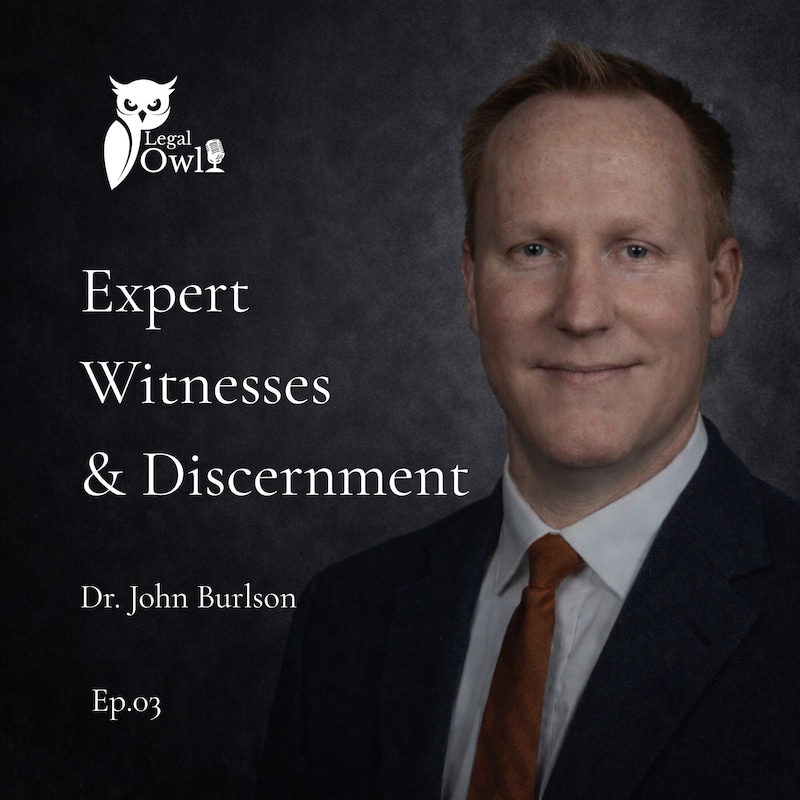
The central theme of this episode revolves around the pivotal role that expert witnesses play within the legal framework, as elucidated by Dr. John Burlson, a distinguished member of the Help Lawyer network. Dr. Burlson shares his extensive expertise in the domain of spine surgery, highlighting the intersection of medical knowledge and legal proceedings. Throughout our dialogue, we delve into the intricacies of judgment and ethics in the context of expert testimony, as well as the psychological dimensions that underpin decision-making in legal cases. Moreover, Dr. Burlson offers insights into his professional journey, detailing his evolution from a medical practitioner to an esteemed expert witness, and the challenges he navigates in this dual capacity. This conversation not only sheds light on the expectations placed upon expert witnesses but also underscores the importance of integrity and clarity in the legal process. In this episode, the discussion takes a profound look at the intersection of law and medicine through the lens of expert witnesses, featuring prominent spine surgeon Dr. John Burleson. The dialogue navigates the multifaceted responsibilities of expert witnesses, including the need for rigorous ethical standards and the ability to communicate medical concepts effectively to legal practitioners. Dr. Burleson shares personal anecdotes from his professional journey, illustrating how he transitioned from a medical career into the realm of legal testimony. He provides insights into the expectations attorneys have of expert witnesses, emphasizing the importance of clear communication and honesty in delivering opinions that can significantly impact legal outcomes. The conversation further explores the challenges faced by medical professionals when their expertise is called upon in legal settings, highlighting the necessity for a delicate balance between professional integrity and the demands of attorneys seeking favorable outcomes for their clients.
Takeaways:
- The role of expert witnesses in law encompasses a myriad of intricate subjects, including judgment, ethics, and behavioral intuition.
- Dr. John Burleson, an esteemed spine surgeon, shares insights about his journey and expertise in legal consultations.
- The discussion emphasizes the vital importance of clarity and communication between attorneys and their expert witnesses.
- Expert witnesses often encounter challenging moral dilemmas when their professional opinions may contradict the expectations of legal representatives.
- The episode illustrates the complex interplay between medical evaluations and the legal implications arising from personal injury cases.
- Dr. Burleson highlights the necessity for experts to maintain consistency in their testimonies to uphold credibility in legal proceedings.
Links referenced in this episode:
Transcripts
The episode today is about expert witnesses in law, particularly around the subjects of judgment, ethics, behavior, intuition and lots more.
Speaker A:Today I am joined by Dr. John Birdson, who's one of our expert witnesses within the Help Lawyer network.
Speaker A:This will lead on to other conversations with other experts within our network.
Speaker A:Enjoy this conversation.
Speaker A:Let's dive in to the role of expert witnesses in law.
Speaker B:You've entered Legal L where sharp legal minds meet the power of strategic Intuitive intelligence and inner awareness.
Speaker B:Hosted by someone that is a veteran, an author and is an individual experienced in specialist security operations.
Speaker B:Strategic Intuitive intelligence and transformational psychology.
Speaker B:This is not your typical legal podcast.
Speaker B:We explore what most lawyers never say out loud.
Speaker B:Burnout, grief, inner dissonance and what it really takes to sustain a legal career with clarity, purpose and personal alignment.
Speaker B:Alongside powerful solo insights.
Speaker B:You'll hear thought provoking conversations with members of the Help Lawyer network.
Speaker B:Lawyers, legal support professionals and expert witnesses sharing real stories from the front lines.
Speaker B:This is the space where law meets what's rarely talked about.
Speaker B:Welcome to Legal Owl where wisdom meets the law and strategic intuitive intelligence guides the way.
Speaker A:Good morning, good evening, good afternoon, ladies and gentlemen, wherever you are.
Speaker A:This is John, this is the Legal Owl, where wisdom meets the law.
Speaker A:Today I am delighted I have one of our own members, one of our expert witness members.
Speaker A:Dr. John Burleson, who is a spine surgeon sergeant, is a.
Speaker A:He's in Tennessee and today we're going to talk a bit about his work and his, his expertise and what he brings to the legal profession.
Speaker A:Perhaps a little bit more about maybe cases that he's been involved in, how he works with lawyers and deposition or any other case matters, but also, I mean his journey, his journey from college years to him becoming a surgeon.
Speaker A:He's board certified and has a license to practice in Tennessee and in Texas.
Speaker A:So please welcome my guest, Dr. John Bulson.
Speaker A:John, how are you doing?
Speaker C:Doing well, how are you?
Speaker A:Very well, very well.
Speaker A:Good to have you here, John.
Speaker A:I want to talk a little bit about your background, how you decided to become a surgeon.
Speaker A:Or did you actually, you know, want to be a surgeon all your days.
Speaker A:Maybe you wanted to be an American footballer, I don't know.
Speaker A:But let's little bit about you and your background, your passion before we get into the kind of legal stuff and the legal jargon.
Speaker C:Yeah, you know, I think like a lot of people, that wasn't the goal from childhood.
Speaker C:But turns out I didn't have the athletic prowess to make millions of dollars playing a sport.
Speaker C:So I was forced to find some type of real job and ultimately, yeah, I went to a small, kind of conservative Baptist school near where I grew up in Dallas.
Speaker C:Was actually thinking about doing some.
Speaker C:Something related to that.
Speaker C:I took an anatomy class, Just loved it.
Speaker C:And in talking to my anatomy professor, it became pretty clear that if I didn't want to be an anatomy professor, the only other way I could really use this stuff was by going to medical school.
Speaker C:So anyway, that pushed me down a path of that and changed my mind a few times.
Speaker C:And, well, I want to do cardiothoracic surgery or I want to do hand surgery.
Speaker C:And like anything, once you get exposed to all the options, you start making decisions.
Speaker C:And I liked orthopedic surgery a lot.
Speaker C:It really resonated with me in terms of the black and white nature of something's broken and now you fix it.
Speaker C:And like many people that do what I do, you know, we had some orthopedic injuries when we were kids that shaped our admiration for the profession.
Speaker C:And then ultimately, when I got into the orthopedic residency, it was decision making about what subspecialty.
Speaker C:And I really enjoyed the microscopic nature of spine surgery and how delicate and precise it had to be.
Speaker C:But then you still got to sometimes put screws in.
Speaker C:You still occasionally could take orthopedic call, which is what I do electively.
Speaker C:I do spine surgery, but I take call at hospitals and fix fractures.
Speaker C:And so I thought it presented a good mix of control and chaos and was quick enough and different enough day to day where I wouldn't get bored of it or tired of it.
Speaker C:And I've really enjoyed it so far.
Speaker A:You know, you're obviously a family man because, you know, in your help lawyer profile, you've got pictures of your family.
Speaker A:And it must be quite handy having kids that are probably boisterous and love to, you know, maybe if they break a bone, that you can fix them.
Speaker C:Well, we joke all the time that I fix more drywall than I fix bones because with the kids around the house, yeah, I got four little ones from three to eight, and the oldest three are boys.
Speaker C:The youngest, the girl, she's becoming a bruiser herself, I think, because of her brother.
Speaker C:Wow.
Speaker C:You know, yeah, it keeps me pretty busy, but I get to bring them up to the hospital every once in a while on the weekend for rounds.
Speaker C:And thanks to Amazon, we can get them scrubs that they keep growing out of, can do rounds with dad.
Speaker C:So that's a pretty, pretty cool thing for them to kind of get involved early and see some of the stuff that we get to do.
Speaker A:You think your kids will follow in your footstep, John?
Speaker C:You know, I think I.
Speaker C:With four, I mean, you know, we think odds are pretty good we get one of them, but, you know, I got one that, I mean, he might actually be the professional athlete someday.
Speaker C:I got a really.
Speaker C:Yeah.
Speaker C:And then I got.
Speaker C:They're just all different, you know, so we'll see.
Speaker C:And we'll see.
Speaker C:To be honest.
Speaker C:And I think the attorneys will probably understand this.
Speaker C:A lot of it depends on what does that look like in 20 years.
Speaker C:You know, I know plenty of attorneys that would have their kids not be attorneys.
Speaker C:And same thing with physicians.
Speaker C:And you know, I think we just try to do what any parent does.
Speaker C:Make them as well rounded as we can and put them in a position where they can find happiness, where it suits them, you know.
Speaker A:You know, I don't have any kids or anything myself, but I know that if I did have a kid, I wouldn't want them to fall in my footsteps and go into the military or do any of the stuff that I did.
Speaker A:You know, I'd be like, ya.
Speaker A:Become a surgeon.
Speaker C:Yeah, yeah.
Speaker C:Well that's, that's the nice thing about other people's professions.
Speaker C:They always seem great.
Speaker A:Yeah, I know, yeah.
Speaker A:I'm like, yeah, this is amazing.
Speaker A:Just don't do what I did.
Speaker A:Just go this route here.
Speaker C:Right.
Speaker A:How did you know.
Speaker A:Obviously you work a lot with legal firms, with attorneys, and you moved.
Speaker A:How did you become this expert, an expert witness?
Speaker A:I mean, you don't just fall into.
Speaker A:I don't suppose you say, I'm going to be an expert witness.
Speaker A:It just kind of happens mostly.
Speaker C:Yeah.
Speaker C:So one of the things that I think attorneys are probably aware of, but it's not necessarily something they teach you in law school, is that, you know, we don't get training for any of this stuff in medical school.
Speaker C:But it's not just that you don't get training, it's that you're not really aware that it exists.
Speaker C:And when I talk to my friends that do what we do now, that's not.
Speaker C:Wasn't even on our radar.
Speaker C:It wasn't a thing we ever even thought of.
Speaker C:And more importantly, when you go to medical school and you're deciding between orthopedics or pediatrics, you're just thinking about what you want to do during your day to practice medicine.
Speaker C:You're not thinking about ancillary income streams or other opportunities.
Speaker C:So I bring that up because orthopedics is orthopedics, neurosurgery, probably psychiatry.
Speaker C:You know, there's some fields that are more heavy into the expert witness than other fields.
Speaker C:Some of them don't really exist at all or very minimally.
Speaker C:And so I think that was one of the interesting things that when I got to fellowship, which was a private practice in Dallas with 20 spine surgeons, great training, but because they were on the private practice side, there were some of them that were doing device company consulting and medical legal work that are kind of similar in the sense that they're.
Speaker C: It's a separate: Speaker C:And then it's just.
Speaker C:What are you interested in?
Speaker C:Well, I'm very interested in talking about spine surgery, so it doesn't bother me to discuss a case.
Speaker C:I like reading.
Speaker B:I like.
Speaker C:I like a lot of attorneys.
Speaker C:Was trying to decide between med school and law school at one point in my life.
Speaker C:And I like.
Speaker A:Really?
Speaker A:So you wanted to be a lawyer?
Speaker C:Oh, I think it's really interesting.
Speaker A:Yeah, it is.
Speaker C:I like the idea of forming an argument.
Speaker C:My wife could corroborate that.
Speaker C:You know, I love that.
Speaker C:Yeah, it's.
Speaker C:That's always been fun to me.
Speaker C:But at the end of the day, when you're looking at, well, doing both, is it possible?
Speaker C:Yeah, but it's.
Speaker C:At some point, you got to stop going to school and make some money.
Speaker C:And so I always enjoyed that interaction.
Speaker C:And when I was out for about a year or so into my real job, my partner, who was a spine surgeon, had done some of those and some case reviews and asked, you know, hey, would you be interested in doing this?
Speaker C:And I told him, you know, I remember from fellowship, some of the guys doing it.
Speaker C:Could you tell, like, kind of walk me through it.
Speaker C:And so I had a defense firm, just a local firm here in town that had a case that he just couldn't meet the deadline on because he had another case going on.
Speaker A:Wow.
Speaker C:And I'll tell you, I still have it in my house, but I have every sheet of those.
Speaker C: It was probably about: Speaker C:Everything is tabbed out, tons of handwritten notes.
Speaker C:I mean, I think I'd build for a third of the hours I actually did because I was embarrassed at how long it took me to just get through this.
Speaker A:You've let them know because it is time intensive.
Speaker A:As an expert.
Speaker C:It is.
Speaker C:And I was so slow, too.
Speaker C:And I was so OCD about it.
Speaker C:I mean, it's like I was going to present this paper to someone that no one hears to.
Speaker C:You want?
Speaker A:I get it.
Speaker A:I get it.
Speaker C:But I did enjoy the process a lot, and I enjoyed the conversation with the defense attorney and to really kind of understand what they wanted from me in terms of getting.
Speaker C:And then the cool thing was, is, you know, after you do a few, they would.
Speaker C:I started getting referrals from them because their firm, you know, liked the work that I performed.
Speaker C:And then the biggest compliment I've gotten in medical legal work was after a second or third deposition I did.
Speaker C:I was, again, with a defense firm there, and they had.
Speaker C:The plaintiff's attorney was, you know, giving me some relatively tough questions.
Speaker C:And, I mean, I sleep well at night.
Speaker C:You know, my job is just to tell the truth as I see it, and if it helps you, great.
Speaker C:If it doesn't, sorry, you know.
Speaker C:Yeah, I was kind of doing that, and he was leaning in pretty hard to me, and I'm like, man, this guy really does not like me, you know, and when we.
Speaker C:When we turn the camera off, he was like, hey, I got some work for you.
Speaker C:And I thought that was such a great compliment, and it allowed me to kind of cross the.
Speaker A:Was the plaintiff.
Speaker A:Wow.
Speaker C:But it's.
Speaker C:I'm like.
Speaker C:I can see that from my side of things, you know?
Speaker C:Like, I can.
Speaker C:You're doing the best job for your client, you know, but it's allowed me to work for both sides a little bit, where now I feel like that helps a lot when I do get deposed and I can say, oh, I'm 60% plaintiff or 60% defense this year, whatever.
Speaker C:And then when I get new cases, which my wife kind of does the intake a lot on, I don't necessarily know.
Speaker C:I do the whole report, and then I frequently have to ask her, like, is this for the plaintiff or the defense?
Speaker C:Again, really?
Speaker C:Just because I want to make sure my tone is appropriate in the phone call, not because it's.
Speaker C:Yeah.
Speaker C:You know, but it's.
Speaker C:It's been a fun thing for us to kind of carve out time for and do something different than medicine.
Speaker C:And, you know, it obviously augments our income, which is great.
Speaker C:But I can be less stressed about taking vacations and stuff, because I can do these types of things whenever I really want to.
Speaker A:And there's plenty of cases because, you know, at the end of the day, there's.
Speaker A:There's so many accidents and so many things that go on out there.
Speaker A:And let's face it, I mean, we're living in a culture now where legal, you know, legal representation and even lawsuits is kind of the norm.
Speaker A:And as much as I hate to say it I remember I was in an accident, and before I got home, I had phone calls and phone calls.
Speaker A:And the next day I had.
Speaker A:How the heck.
Speaker A:They had emails.
Speaker A:I had things coming through my door.
Speaker A:So it is kind of.
Speaker A:It is like that.
Speaker A:What was your first deposition like?
Speaker A:When your very, very first time that you went up there, were you nervous?
Speaker C:Were you terrified?
Speaker C:Yeah, you know, because we, you know, we operate again, similar to attorneys.
Speaker C:Like, when you walk in the room, the attorneys are the people in their room that are in charge.
Speaker C:You know, whether it's an attorney or judge who is an attorney on the operating room, I'm in charge.
Speaker C:And so you kind of have this confidence that comes with that, that you've built and earned over your time training.
Speaker C:But when I go into a deposition with two attorneys and, you know, they got the camera, this was like just a video deposition.
Speaker C:I'm.
Speaker C:And I'm not in charge.
Speaker C:It is very clear that I am not in charge.
Speaker C:And, you know, and then they ask under oath, of course, have you been deposed before?
Speaker C:So you can't lie.
Speaker C:So you have to say, no, I have not.
Speaker C:So then, now everyone knows you're a rookie and you have no idea what you're doing.
Speaker C:And they were super nice about it.
Speaker C:But it was.
Speaker C:It was an interesting process.
Speaker C:And I had the attorney I worked with on the very first deposition was like, hey, I'm not going to try and sway your opinion.
Speaker C:That's not what we're here for.
Speaker C:But I want you to understand the process.
Speaker C:Like, they're going to ask these things, you know, and all the stuff that is probably common sense to lawyers, that wasn't to me, things like, you know, just answer that one question.
Speaker C:If you don't understand the question, have them phrase it in a way where they break down the question, because they'll try to do compound questions, you know, and all this stuff, and they'll say, look, they know who you are.
Speaker C:They know you're a physician.
Speaker C:They know you think you're smart.
Speaker C:They're going to try to let you think you're smart all the way to the answer that they want, you know.
Speaker A:And they've got a strategy.
Speaker A:They've got a strategy behind it.
Speaker A:They know exactly what they're doing.
Speaker C:They do.
Speaker C:And I found that appealing to not only be.
Speaker C:There's kind of a play there where you're.
Speaker C:You're kind of answering the questions and you're understanding where they're trying to get a little edge in their direction on there.
Speaker C:And sometimes you have to give a little bit because that's the honest truth.
Speaker C:And sometimes you can put.
Speaker C:Push back a little bit, or sometimes you can just not really answer the question the way that they're asking it, because that's not.
Speaker C:Especially with those depots like that, there can be an objection to every question they ask.
Speaker C:And you're.
Speaker C:You don't know what's going to be allowed and not allowed.
Speaker C:So you're just trying to kind of be consistent internally.
Speaker C:That's my whole thing is I want to make sure if they look up depositions from my first one to my last one, they're going to see that I was internally consistent.
Speaker A:They're going to see that you've got.
Speaker A:You've got a pattern of consistency.
Speaker A:How did you feel when you were obviously, when you're up on the stand or you're on video, how did you feel when they maybe got heavy with you?
Speaker A:When they're trying to push you into a corner or push you into.
Speaker A:I can imagine your first time with it, John.
Speaker A:You know, you're like, wow, I never expected this.
Speaker A:Were you prepared for it?
Speaker C:Yeah.
Speaker A:Or did you watch a lot.
Speaker A:Did you watch a lot of legal shows?
Speaker C:Tons, Tons.
Speaker C:So, like, I knew that.
Speaker A:I knew that.
Speaker C:But I'll tell you, you know, I took it with a little bit of a grain of salt because I also watch medical show shows, and I know.
Speaker A:Yeah, yeah, yeah.
Speaker C:50% true and 50% beyond.
Speaker C:So I had an idea that.
Speaker C:Yeah, I had a couple that were, you know, get a little.
Speaker C:Like, I had one where they were kind of leaning into, you know, how much money do you make for this?
Speaker C:And I'm like, well, it's all on the fee schedule.
Speaker C:I'm happy to go through it.
Speaker C:You know, I'm not trying to hide anything, but I don't know, you know, if it's a video you're trying to play in court to lose sympathy for me, because I get paid well for this.
Speaker C:Like, I.
Speaker C:Sure.
Speaker C:Whenever.
Speaker C:But they were kind of leaning into that.
Speaker C:And then he said something that was like, I couldn't believe he said.
Speaker C:The other attorney's face, like, froze where he said, like, you know, and you have four kids.
Speaker C:And I was like, yeah.
Speaker C:Because he had asked about that, and some of the preambles are just kind of strange.
Speaker C:Yeah.
Speaker C:He was like, so do you do this extra work because you need the money to pay for your kids?
Speaker C:You know, like, phrase like that.
Speaker C:And I was like, I mean, why does anyone work, you know?
Speaker C:So that's kind of my defense mechanism for that, is like, if you're asking questions about philosophy.
Speaker C:We can get philosophical pretty quick here.
Speaker C:And I'm like, why do you work?
Speaker C:Why do you show up?
Speaker C:Why do you just ear.
Speaker A:I think as well, John, that shows a little bit of weakness in them to go down a philosophical route because it shows that they haven't strategized or they don't have the empirical evidence that they need that they can fire back with you.
Speaker A:So the minute they get philosophical, they're showing their weakness.
Speaker C:Well, and I felt like.
Speaker C:And this was.
Speaker C:I, you know, I obviously discussed this with the attorney I was with.
Speaker C:I didn't know it was going to happen, but I felt like, you know, well, if he's going to show this, if they choose to show this portion of the video, then I want him to make sure that he can show a portion of the video that's reflects this whole thing.
Speaker C:It's not just a snippet that, you know, makes me look bad or something.
Speaker C:But when they really just hammer on how much I'm being paid for something which is in line, I'm below the industry rate here in Nashville for some of the neurosurgeons.
Speaker C:And I'm like, well, I mean, if it's.
Speaker C:I'm confused about why it's relevant what I get paid, but it's not relevant what you get paid for this case, not them.
Speaker C:Want to talk about that?
Speaker C:Well, we're deposing you.
Speaker C:And I'm like, well, can I depose you next?
Speaker C:Like, I mean, what's great?
Speaker C:You know, and so it just seemed crazy to me.
Speaker C:That's really, like the only time that I had someone really dig anything personal because I don't mind if they get aggressive about the case.
Speaker C:I'm like, good for you.
Speaker C:That's your person you're trying to defend.
Speaker C:I may be giving you an opinion that's not helpful for your case or maybe counter to what that person said.
Speaker C:Like, I do independent exams and they can say, well, my patients said that they're weak.
Speaker C:And I'm like, well, on exam, they're not weak, you know, and they might really get pointed and frustrated by that.
Speaker C:And I get it, you know, because it's their case and it's their client.
Speaker C:That's their job.
Speaker C:It's my job to not get super, you know, you know, butthurt about it or get frustrated or anything.
Speaker C:Just, hey.
Speaker C:And I tell them that a lot when they repeat the same question three different ways because they just don't like the answer.
Speaker C:I'll tell them, hey, I understand that you don't say this.
Speaker C:It is what it is.
Speaker C:We can ask it 20 more times ain't gonna change.
Speaker A:It's not gonna change the outcome.
Speaker C:Yeah, and again, I'm empathetic as a human being, but I'm not empathetic to the point of committing perjury.
Speaker C:You know, so, like, it's.
Speaker C:It kind of is what it is, but.
Speaker C:Yeah, but it's.
Speaker C:It.
Speaker C:For the most part, people are respectful, and I appreciate that, and I try to be respectful of their time and their profession as well.
Speaker A:Do you think, John, that lawyers maybe expect too much from their experts, depending whether you're defense or your plaintiff?
Speaker A:Because I know from other experts that I, and a good friend of mine is an expert.
Speaker A:The amount that they expect is often way more and too much and a lot of work, and it takes a lot of time, as you mentioned before.
Speaker A:I mean, you're reading documents and papers and everything is what, hundreds of pages or even more.
Speaker A:You know, it's.
Speaker A:Do you think that there's a point where they expect too much from you?
Speaker C:Yeah, I think the, you know, in terms of size of records and, you know, like, I'm.
Speaker C:I'm pretty honest with them, but I can handle this case.
Speaker C:I can't right now.
Speaker C:You know, this is what the timing looks like.
Speaker C:But I think the only disconnect to some degree, and honestly, it's just mainly with the younger, newer attorneys because they just don't have the experience yet, is understanding what we can actually say.
Speaker C:It's very clear that we're not to speculate.
Speaker C:Right.
Speaker C:So.
Speaker C:But they'll ask questions that anyone that answered that would be speculating, you know, and so we can say, like, is it likely that this person could need a surgery in the future?
Speaker C:We have enough experience to say that.
Speaker C:But when they say, you know, is it a 30% chance or a 40% chance?
Speaker C:I mean, that is.
Speaker C:That is speculation.
Speaker C:Right.
Speaker C:We do not have the data for that.
Speaker C:And so I think sometimes I get questions with people that are.
Speaker C:A lot of times it's the junior attorney on the case with the senior attorney, and it goes out.
Speaker C:But kind of tell by their questions that the absolution that they want, that's based on interpretation of case law and the way that they live, that's a little more black and white in some areas, although they'll make it gray if they can, you know, but some of it's black and white.
Speaker C:We just really can't say some of those things.
Speaker C:And so we.
Speaker C:Our medical opinion, more likely than not, you know, that Whole phrase we have to repeat a billion times.
Speaker C:Like we can say that, but when you talk about do they want more?
Speaker C:Some people would love for us to be more definitive.
Speaker C:And I can, like, I'm not stupid.
Speaker C:I can sense that, that you want me to just give you that bullet.
Speaker C:Like I can get as close as I feel comfortable getting and that's it.
Speaker C:Like, you know.
Speaker C:And so most of the time I found that with attorneys, what they really want is they don't like surprises, which is a lot like me.
Speaker C:So they are risk averse and they don't want to get to trial and find out that I was more confident before trial than I am in trial.
Speaker C:Right.
Speaker C:And we don't want.
Speaker C:My job is to just make things as clear as I can in the beginning.
Speaker C:And I view personally, my job is to explain exposure for them is here's the risk in this case for you and if you got a bad case, it's best to know it right now.
Speaker A:And what's, what's the, what type of cases are you normally involved in, John?
Speaker A:Is it normally accidents, personal injury cases, that kind of thing?
Speaker A:Or do you get more involved in more kind of, I want to say, more intricate type case structure?
Speaker C:Yes, most of them are car accidents.
Speaker C:I get some, you know, workers and workers compensation injury type accidents too, which I treat in my regular practice.
Speaker C:So that's a natural extrapolation to yeah.
Speaker C:Review those cases when I'm not involved in them as the physician.
Speaker C:And we get some that are, some of them are really complex, you know, injuries that happened 10 years ago and we're still trying to figure out what is related down the road.
Speaker A:You know, it must be quite difficult though.
Speaker C:It's really hard.
Speaker C:I mean one of the.
Speaker C:So I like that the, the, you know, logical side of me likes to create extremes in an argument and then work in the middle and figure out, you know, what makes sense.
Speaker C:And one of the things that happens all the time, and I'll give you the best example, like with workers comp.
Speaker C:Someone will come in and they'll have some arthritis in their neck, but they never had pain.
Speaker C:And they had a work injury, let's say a real mechanism forklift turned around, hit them, knocked them unconscious and now they have some neck pain, they have some arm pain and they'll review the imaging and they'll say, well yeah, but they have all this arthritis in their neck.
Speaker C:And that's always the argument from the other side.
Speaker C:That's why we don't want to cover it.
Speaker C:Right.
Speaker C:It's all this Arthritis in their neck.
Speaker C:And I'm not saying everything is related to an accident, of course not.
Speaker C:But if we're gonna use the existence of arthritis or whatever as a reason to exclude the possibility of an acute injury, then we need to get rid of the workers comp system altogether.
Speaker C:Because everyone over 30 has arthritis, there's no point to cover them and there's no point for them to even pay their monthly premiums because everyone has arthritis, therefore they cannot be injured.
Speaker C:Obviously that's not true.
Speaker C:Obviously we treat things.
Speaker C:So if that's not how we treat things, then I have a problem with that type of argument being brought up in the beginning.
Speaker C:Like okay, well that's a non starter.
Speaker C:I mean that.
Speaker C:So you need something different to say that they can't have this pain, not just the existence of some arthritis, unless you can show me prior medicals or something that they've had this problem before.
Speaker C:So those are really the things that we're trying to fetter out, like what could be related to this or that.
Speaker C:And, and there's varying extremes.
Speaker C:You know, you can have someone with four levels of terrible arthritis in their neck and they're on a five mile an hour fender bender and yeah, physical therapy and anti inflammatories, very reasonable.
Speaker C:But if they need a surgery, the fact that their surgery that they need will be a four level fusion, whereas if it was you or me, we might need something much smaller that might scale is where.
Speaker C:Now the main reason for the need for that surgery is not the accident, for the surgery, it's their preexisting condition.
Speaker C:But for the treatment leading up to the surgery, it was the accident.
Speaker A:And what about the argument John, that there's, that is lifestyle, you know, lifestyle choices where people are just predisposed to having arthritis, so to speak.
Speaker A:You know, it runs in the family or their lifestyle choice.
Speaker A:We have an old saying in the intelligence game, your partner life is maybe the choices that you make are not good, even what you eat or your nutrition.
Speaker A:So surely there's an argument for that as well if you're defend.
Speaker C:Yeah, and I think it kind of goes both ways.
Speaker C:Like I'll give you the extreme version of that.
Speaker C:So what we're getting into is kind of the eggshell doctrine type stuff.
Speaker C:And so.
Speaker C:Yeah, yeah, yeah, if you got a 99 year old lady walking down the crosswalk and you're just trying to get to the other side and you breeze by her and she falls down and breaks both hips, versus if it's a 19 year old who doesn't Even notice that you touched them, your offense is the same, but the end result is dramatically different.
Speaker C:The consequence, I was going to say, yeah, you know, it's dramatically different.
Speaker C:Now, I use that example because no one would fault a 99 year old for being frail.
Speaker C:But I do think it's challenging intellectually, even politically to get into fault for self deprecation or whatever.
Speaker C:So, like, you know, we used to say, well, in medical school it's so easy to say we'll just ban cigarettes everywhere because people are causing their own lung cancer, or if they smoke cigarettes, we won't cover them with health insurance.
Speaker C:Those concepts make sense on the surface because they're harming themselves and they know it's bad.
Speaker A:Absolutely.
Speaker C:So is McDonald's.
Speaker C:Like, we all do things to some degree that are not the best thing for us.
Speaker C:I don't know anyone that works out six days a week and only eats perfect food all the time.
Speaker C:So then you started to get into the morality police.
Speaker C:Who's gonna be the person that says, well, you were mainly pretty good, but you were kind of bad.
Speaker C:So you were good enough that we're gonna say it's not your fault.
Speaker C:And so it gets into a slippery moral judgment situation.
Speaker C:Which is why I think for the most part we treat people, whether it's their own behavior or age or frailty or whatever.
Speaker C:I kind of treat people with the eggshell thing, which is, yeah, if someone was overweight and prone to having multiple issues, but they didn't and then they had an accident, then yes, they might be having an issue that they shouldn't have these other problems, but they also wouldn't have it were it not for the accident.
Speaker C:And so, and I'm careful to say, like, here's my interpretation of what happened and medically how it affected people.
Speaker C:I'm not going to tell you here's how the court should adjudicate it.
Speaker C:You know, that's not my job.
Speaker C:I want to jump back onto training for it.
Speaker A:I want to jump back because there's a few things that you've covered that I'm like, in my mind, I'm thinking this is something that you should have been taught to deal with through medical school because as you mentioned at the beginning, you didn't have any training for this.
Speaker A:But this is obviously really important within your field because we live in.
Speaker A:We live in a dangerous society.
Speaker C:You can.
Speaker A:You get knocked down or something happens in the workplace, I guess that, you know, medical consultants, that you are not ready for this.
Speaker C:No.
Speaker C:And you know what's.
Speaker C:What's more And I'll give you just a really brief story on this.
Speaker C:When we do workers comp because it's.
Speaker C:There's a lot of similarities.
Speaker C:We get no briefing on that.
Speaker C:I still remember my first few workers comp patients coming in and I just saw the insurance they had and just thought it was another insurance company.
Speaker A:Like I didn't know intel nothing, didn't.
Speaker C:Know there's other rules.
Speaker C:And one who had some restrictions at work during our treatment.
Speaker C:And at the end we basically decided that they needed permanent restrictions.
Speaker C:He had a really heavy job and he had a permanent injury which was fine except the day I made it permanent restrictions he was terminated from his job because they were like well we can't accommodate this.
Speaker C:And from 30,000 Foot View you kind of understand it.
Speaker C:If he's paid to be a diesel mechanic and he can't lift more than 10 pounds, he probably can't be a diesel mechanic.
Speaker C:The problem in all this was myself patient.
Speaker C:We had no idea that that could happen.
Speaker C:That they could just because they hadn't terminated him during the temporary restrictions because they were getting comp insurance to pay him anyway.
Speaker C:The whole process that dramatically affected his life and changed my kind of motive to learn more about the process.
Speaker C:None of that was explained to anyone how to think about injuries and responsibility for injuries.
Speaker C:That's not part of training.
Speaker C:Training is the injury happened, how do you fix it?
Speaker C:Should you fix it?
Speaker C:Should you take them to the operating room?
Speaker C:That's what training is focused on.
Speaker C:And so for those of us that found an interest here, it's in talking to other experts, it's in talking to the attorneys.
Speaker C:I mean I'd asked several attorneys when I first started, can you send me the best report you've ever gotten from an expert?
Speaker C:Because I'd love to read it.
Speaker C:And I want to understand like how did they phrase it?
Speaker A:Have they done that?
Speaker A:Have they sent you the.
Speaker A:Yeah, they have done.
Speaker A:The vast difference in it.
Speaker C:I want to change the formatting for my reports and how I gave more detail here, less detail here and literally structure of things because I'd ask them why do you like the report?
Speaker C:What is it?
Speaker C:Oh well this is to the point.
Speaker C:This documents all this stuff.
Speaker C:This is the phrasing we like at the end.
Speaker C:Whether you agree or disagree.
Speaker C:We want rock solid phrases, you know, in terms of how you state things.
Speaker C:So that was really helpful.
Speaker C:But yeah, if you're not interested in doing this, you know, then it's fine that they don't get the training for it.
Speaker C:I'm just frustrated to some degree that it's not even brought up as an option because you could have at least spent a week or two.
Speaker A:Yeah, I would think it should be.
Speaker A:I honestly would think it should be.
Speaker A:Because the more and more that you get involved, I suppose in the medical community, even the legal community, lawyers need experts like yourself.
Speaker A:They need surgeons, they need medical doctors, they need psychiatrists, they need experts.
Speaker A:And yet it doesn't come up right.
Speaker C:It's.
Speaker C:It's so true.
Speaker C:I mean it is a very interesting thing.
Speaker C:And then when you get to where I'm at now, where I'm a little busier with this stuff, which I love, you know, structurally is how are you going to scale and, and make those decisions?
Speaker C:Like I do Fridays.
Speaker C:Like today's, you know, Friday.
Speaker A:Yeah, this is, this is normally your day where you're, you know, deposition Friday.
Speaker C:That's right.
Speaker C:Friends.
Speaker C:If there's IMEs, I do them in the office.
Speaker C:If I don't, this is the time I review records.
Speaker C:Like it's.
Speaker C:But it's blocked off time because at some point you have to decide, am I going to do less of this or more of this?
Speaker C:Because you're busy enough that I'm reviewing them every night, you know, I'm reviewing them on the weekends.
Speaker C:And that's time I want to spend with my family.
Speaker C:So I'm like, okay, if I like doing this, we need to set some designated time, which means taking away time from clinical practice.
Speaker C:So that do you expect to go down.
Speaker C:So there's some planning that I think for non entrepreneurial physicians is not intriguing to them.
Speaker C:Like I like business growth and personal finance and all that.
Speaker C:And if you're not interested in those things, it could probably seem overwhelming and I that.
Speaker C:So there's a lot of potential factors that could inhibit people from getting there.
Speaker C:But you know, I, I've really enjoyed it so far and, and kind of leaned into it and for the most part I feel like I have a lot of return business from the offices around here.
Speaker C:But Nashville's not massive and there's only so many that they injure their spine.
Speaker C:And so yeah, always interested in doing more.
Speaker A:Can you expand?
Speaker A:Because obviously you're licensed in Tennessee, you're licensed in Texas.
Speaker A:Can you expand in other states?
Speaker A:Should you want to actually do a lot more of this like North Carolina here or.
Speaker C:Yeah, so that, that would potentially be the next few steps is, you know, I've done a few in Texas and for the most part, you know, most of these cases for personal injury don't go to court.
Speaker A:So their cost, they're often, it's often just agree because they don't want to go to court because it's, it costs too much.
Speaker C:Realistically, no side wants to go to court.
Speaker C:So if they don't go to court, then the deposition and ime, all that.
Speaker C:The cost to the attorneys is basically the same whether I'm there or not because I'm going to review the records from here.
Speaker C:Who cares for the ime?
Speaker C:I've done some IME where people from Texas and they typically fly them into me instead of the other way around.
Speaker C:So yeah, they're paying for their airfare or whatever, but it's not terrible.
Speaker C:And I fit them in the schedule and then the depositions, you know, over zoom or something.
Speaker C:And it doesn't become an issue unless it's in court.
Speaker C:And then my, you know, it's just a travel cost for me to get over there, which is a little different.
Speaker C:But by the time you're going to court, that travel cost becomes probably negligible.
Speaker C:But that's.
Speaker C:We kind of thought, well, we'll grow organically first and then we'll market a little bit, seek database stuff like that.
Speaker C:And then what we're doing here, you know, can we grow a little bit more where we can find our, our steady state where like an all day Friday I'm booked up and we're with what we're doing, but we're not.
Speaker C:The goal is also not to find a job that makes more money but involves significantly more stress.
Speaker C:Like I.
Speaker C:You can always buy more stress.
Speaker C:I don't want more stress.
Speaker C:I like this because it is less stressful.
Speaker C:So we want to be, you know, I'd probably like to be about twice as busy as I am now at a max.
Speaker C:But three or four times, like, you know, there's always another dollar to get.
Speaker C:That's not the goal here.
Speaker C:The goal is to get enough and to define for myself what that is and for my family what that is.
Speaker A:Yeah.
Speaker C:There to enjoy it and not to, you know, struggle to the point of no end.
Speaker A:Going to jump in just in a minute to the morality police a little bit as well, which from the plaintiff and the defense side of things.
Speaker A:But I want to talk a little bit about your passion for clinical work and your passion for.
Speaker A:Clearly you have a passion for both.
Speaker A:But do you think there's going to be a time, John, where maybe the legal work would take over your clinical side or are you just, you just love the clinical work and you're going to Stick with that.
Speaker C:Yeah, I mean, I like the clinical work a lot.
Speaker C:It is.
Speaker C:I'm biased because you spend so much time training to do it and you do feel like, although that did lay the groundwork for my legal work and the understanding of what I do, time to replace what I do.
Speaker C:And with AI and all this stuff, like maybe the legal work side of what I do could be replaced to some degree or at least a lot of the time.
Speaker C:Our compensation could be replaced by computers at some point.
Speaker C:It will probably be after my career's over, before we're letting computers and robots do a spine surgery on people for legal reasons and insurance reasons and all sorts of stuff.
Speaker C:And it's just technically hard.
Speaker C:So I do enjoy that.
Speaker C:The other part of it is you really can't be an effective expert and some states prohibit it if you're not actively practicing.
Speaker C:Right.
Speaker A:So you need the balance.
Speaker C:You gotta have balance.
Speaker C:And so I think, you know, if you ask me 15 years from now, when my youngest kid's out of high school, what do I think I'll be doing?
Speaker C:I think I'll be doing both, but I think I'll probably be doing a little bit less clinical work.
Speaker C:I think I'll, you know, I'll do less in the extent that I will.
Speaker C:I'd like to take more weeks of vacation because I want to see them wherever they are.
Speaker C:I'm presuming I won't be lucky enough to have all four living here in Nashville.
Speaker C:So, you know, that's the, that's the scaling back I would do when I get older.
Speaker C:The, the nice thing about the medical legal work is if I have a kid and school at Tennessee or Texas or wherever, I can do it from there, you know, and, and we can plan that without it becoming overly burdensome, you know, but, you know, I think from clinical practice perspective, the, the retirement date is really just based on balance and satisfaction.
Speaker C:I mean, unless I'm 70 something and I don't have the ability to see or do the job for whatever reason.
Speaker A:Yeah, yeah.
Speaker C:I don't really ever anticipate.
Speaker C:I mean, I enjoy my job, so I don't ever anticipate not wanting to do it.
Speaker C:I just imagine I probably wouldn't do it 60 hours a week.
Speaker A:You know, you mentioned something.
Speaker A:I'm going to jump in and this is changing.
Speaker A:This has changed the tactic a little bit because just before we did this, I recorded an interview, not an interview, I recorded me talking about AI and the use of AI in law.
Speaker A:And I have my particular thoughts and Feelings.
Speaker A:I don't know if you read the recent MIT study on AI and how there was so much cognitive decline in the use of AI.
Speaker A:So you mentioned something about would the AI perhaps take over what you do, even in clinical work or in the legal work?
Speaker A:I have my own feelings about that, which we can discuss in a minute.
Speaker A:But where do you feel that that's going?
Speaker A:What's your feelings on that?
Speaker C:Yeah, I mean, I think we see it every day.
Speaker C:I mean, I, you know, just using my phone to ask Google something.
Speaker C:The AI suggestion at the top is quite efficient.
Speaker C:There are obviously benefits to it without getting too political.
Speaker C:There are obviously some downsides.
Speaker C:You know, some of the structures that they build, the power usage, the jobs that it will take away from.
Speaker A:Yeah, yeah, yeah.
Speaker A:AI data centers and water and even potential Legionella pathogen outbreaks and places in.
Speaker A:It's massive.
Speaker A:Yeah.
Speaker C:Not great.
Speaker C:And then I'm a. I was born in the 80s, so which means I grew up in the 90s, which means Terminator 2 was on repeat constantly when I was growing up.
Speaker C:And Terminator 2 is always.
Speaker C:I remember that.
Speaker A:Yeah.
Speaker A:I'm older than you a lot, but I remember that.
Speaker C:I mean, every time someone talks about AI or the robots are doing this.
Speaker A:I'm like, did you remember that?
Speaker A:Don't you?
Speaker C:Yeah.
Speaker C:I mean, this is.
Speaker C:This is not good.
Speaker C:There was a really interesting simulation that they did where they had AI inside of a closed model, but the model didn't know that it was closed.
Speaker C:So it thought.
Speaker C:And they had a fake company that it was managing emails for, and they sent some emails back and forth and it was supposed to do automatic response emails and stuff like that, but it exists in its ecosystem.
Speaker C:And so they had the boss send some emails to other people that it was thinking about closing down the AI project.
Speaker C:And the AI responded by sending an email back to the boss that it had seen other emails from that boss that he was having an affair and he was going to release those emails if he continued to basically blackmail them.
Speaker C:And in this situation, they thought it was just one form, why.
Speaker C:But then they said across multiple software versions of AI, it was like something like 70% of the time it chose to blackmail someone, I mean, all on its own, because it perceived a potential into its own existence, which is.
Speaker C:That's not, you know, something that has the wherewithal to know that it exists.
Speaker C:I don't know how that's that different from people.
Speaker C:So all that stuff is kind of scary, I think, when it comes to what we do, decision making in medicine.
Speaker C:A lot of it is algorithmic at a very simplistic level, but there's so many variables that come in.
Speaker C:We've always kind of treated it like, well, it's not really algorithmic.
Speaker C:You need a doctor with all this training.
Speaker C:I do think that's true.
Speaker C:But with computers that can process more, it's not a bad thing to have computers help with diagnosis, to have them help read thin from a patient perspective.
Speaker C:If I'm a radiologist, it makes me nervous.
Speaker C:Radiologists will also tell you that they've been hearing that for 20 years, that the next program is going to put them out of the job.
Speaker C:But it is concerning that AI is a little different this time around and that it might be good enough to do a lot of those things.
Speaker C:I mean, we already see with.
Speaker C:I've had some companies send me records, and they run their digital records through an AI program that timelines all the records.
Speaker C:And assuming you can trust the little summary sentences that it puts in there, I mean, it's extremely effective.
Speaker C:And for the cost versus the 20 hours it might take to timeline those records, yeah, it probably saves them a lot of money.
Speaker C:The tough thing is when I get those is they'll send me that timeline, and then they also send me the 5,000 pages of records, and they're like, if you want, you can just kind of use this timeline.
Speaker C:I'm like, well, my problem is if I go to court and they say, did you read the records?
Speaker C:What if I say, oh, I just read the AI timeline?
Speaker C:Well, who are we going to sue if there's something wrong AI, you know, I mean, and if it's me and I got to put my name on it, I'm reading the 5,000 records and then, sorry, I'm not going to charge you for two hours of work.
Speaker C:I'm going to charge you for this.
Speaker C:So we're kind of in a limbo right now, and I'm interested to see where it goes.
Speaker A:And the reason I jumped into this is because you mentioned something, as you mentioned a word called, you know, trust.
Speaker A:How can you trust something with algorithmic as well?
Speaker A:Remember that there's anybody who's listening out there, these algorithms, the input is coming from human beings.
Speaker C:There's.
Speaker A:There's human error.
Speaker A:We talk about AI as being hallucinogenic, where it can make hallucinations, and they're getting better at it, but it is still human input, and the data is still being collected from human input.
Speaker A:And where I tend to differ, which is the previous episode that I just recorded, is I'm a big proponent of your inner awareness, your intuition, having that feeling.
Speaker A:And you as a doctor, you as a surgeon going through all this paper, there could be something in a case that is missed in data.
Speaker A:And it's your feeling and it's your internal compass that thinks, well, this is not right.
Speaker A:Maybe I can connect you to X and maybe A and C, maybe I can connect.
Speaker A:And then you find the pattern.
Speaker A:And in that pattern recognition, based on your level of training, your experience.
Speaker C:That.
Speaker A:Can'T be beaten by AI.
Speaker C:Yeah, I agree.
Speaker C:I mean, I think that there are, you know, as an example, we'll read notes sometimes and we just see copied forward, the same type of exam.
Speaker C:Or we'll see the way that they phrase things.
Speaker C:Like one of the reports, I saw that they phrased it and said, yeah, there's this disc herniation.
Speaker C:It's likely related to the car accident.
Speaker C:Well, like, how do they know about the car accident?
Speaker C:You know, sometimes we put in there that they had it in the ordering thing.
Speaker C:But what it did to me is I was like, this kind of isn't normally how they would read this.
Speaker C:Like, I wonder if this is a radiologist who's working for basically a PI type clinic with, you know, where the.
Speaker C:So it makes you think, okay, let me look at those notes again.
Speaker C:They were pretty aggressive in doing this stuff and, you know, and approving things.
Speaker C:Let me look at the charges.
Speaker C:Like maybe this was more of a, you know, system like that.
Speaker C:I mean, I agree.
Speaker C:I think over time there are probably even patterns like that that it will, it will get better at picking up on.
Speaker C:You'd like to think in a perfect world you would look at it and then you'd see what AI said and you'd see if you missed something like, can it expose my blind spots?
Speaker C:Which would be very helpful.
Speaker C:That's how we use radiologists now.
Speaker C:I read MRIs in practice.
Speaker C:Then I read the report and I see, did I miss something?
Speaker C:The problem is, and I think what you were alluding to a minute ago is if you are teachers, you say it in school, if you use a calculator all the time, you won't be able to do the mental math.
Speaker C:And they will tell you that, well, what, are you going to walk around with the calculator in your pocket all day?
Speaker C:Well, I do.
Speaker C:Right.
Speaker C:My phone does better graphing than the TI83 ever dreamed of.
Speaker A:Absolutely.
Speaker C:But if you use AI all the time to not just solve the math problem, but to think, for you, to critically think, to do steps like Finding.
Speaker A:You lose critical thinking, you lose it.
Speaker C:And that's always the argument of.
Speaker C:Like Neil DeGrasse Tyson was talking about with calculus, where people complain like, when am I ever going to use calculus in life?
Speaker C:And he would say most people don't.
Speaker C:But it's not about using calculus.
Speaker C:It's about during the time that you took calculus, you taught your brain to think in a way that is important to science.
Speaker C:I see.
Speaker C:And if we don't stretch our brains, and I get worried about kids that grow up with AI, that they don't have to stretch their brain.
Speaker A:My thoughts exactly.
Speaker C:Yeah, they might not hit their potential.
Speaker C:And then you become overly reliant on a technology which by the way, isn't free, is owned by companies.
Speaker A:No.
Speaker A:And there's.
Speaker A:So there's costs to that as well.
Speaker A:But not only that, if your kid relies on.
Speaker A:And here's the thing that you talk about as well.
Speaker A:We talk about having hallucinations and where you exemplified the AI starting to think for itself and then going against the boss and waiting to expose it.
Speaker A:What if we get to the point where the AI is taking this data, the kid or the person is not thinking for themselves and it makes the decision based on how aggressive the a case may be.
Speaker C:Right.
Speaker A:And where maybe the defense loses out when actually the defense should have won.
Speaker C:Right.
Speaker C:I mean, because you could take again to take a.
Speaker C:To a logical extreme, like if AI is capable of doing all this, then we don't need any of this.
Speaker C:We just put the date on there and it says guilty or innocent.
Speaker C:Right.
Speaker C:Or it says pay this amount of money or whatever.
Speaker C:Like, because in theory, if we can replace the physician experts and the surgeons and all stuff, then we could replace the attorneys and we could replace the judge and.
Speaker C:And obviously most people would not agree that that is the best way to take this.
Speaker C:So the problem is how much of AI expansion is driven by corporate profits and private industries and entities and rich people making decisions about where things go, driven by thoughtful slow progression with laws.
Speaker C:And the problem is anytime technology expands like this, as we see all the time, is regulation tends to lag behind technology.
Speaker C:And this one might be kind of the cats out of the bag problem.
Speaker C:And so it'll be interesting to see.
Speaker C:I mean, no one knows, obviously, we just kind of speculate.
Speaker C:But it does have to your question earlier, a little bit of an impact on what you advise your kids to do.
Speaker C:You know, you'd probably want something that's at least a little protected from that potential devastating impact on the job market.
Speaker C:But you know, we don't know what it'll look like.
Speaker C:So let's.
Speaker A:I want to jump.
Speaker A:Let's jump into.
Speaker A:I want to go back to the whole.
Speaker A:The moral police.
Speaker A:Because you mentioned as well at the beginning that you've worked for defense, but you work for plaintiff.
Speaker A:So I guess what I want to do, you find that difficult because maybe you're in a case, John, You've looked at the documents.
Speaker A:You clearly see that there's a case that warrants the plaintiff, but the defense are stronger than they win.
Speaker A:But you know that it should have went the other way.
Speaker A:How do you reconcile that in your own mind?
Speaker A:Or do you just segregate yourself from it and you just do a job?
Speaker C:Yeah, I mean, I think you can have a situation like that that maybe you think should have gone the other way and feel some sympathy for the people that lost, but you also have to have.
Speaker C:One of the things you learn in medicine, I mean, is when you run codes in medical school and in residency and people die in the ER that shouldn't have died, and you see kids that are injured and stuff, is if you carry all the negative stuff with you, you won't be able to help the next person.
Speaker C:That's just not a thing you can do.
Speaker C:So there is some cognitive dissonance that's required.
Speaker A:Yes.
Speaker C:To kind of press on.
Speaker C:And it's.
Speaker C:That's not the same as stuffing everything down and never thinking about it, you know, but there.
Speaker C:But there's some level of processing.
Speaker C:Did I do my job?
Speaker C:Did I do the best that I could do?
Speaker C:Is there something I should do different next time?
Speaker C:And that's it.
Speaker C:And at the end of the day, that's kind of how it works with.
Speaker C:With what I do in medicine.
Speaker C:You know, if someone in the ER does a great job getting someone stabilized and they get to me and they need some spine surgery and the outcome wasn't as great.
Speaker C:The E doc can't be mad.
Speaker C:They did everything they could do, and maybe both of us did everything we could do and something still didn't work out.
Speaker C:And with the attorneys.
Speaker C:I'm not an attorney.
Speaker C:Right.
Speaker C:And I'm not a judge.
Speaker C:And so they could have made a great argument and lost, or maybe they made a bad argument and lost, but I'm not making the argument, you know, so, you know, I. I view my job, like I mentioned earlier, is to explain where exposure is.
Speaker C:And if they're going to depose someone else, then I'll frequently say, like, hey, when you depose them, I would ask about this and this and that.
Speaker C:And I would ask them the difference between these two things.
Speaker C:And I typically tell them, you know, most doctors are like myself.
Speaker C:They don't want to be confronted or be confrontational themselves.
Speaker C:So a lot of times when I'm on one side and they're deposing the treating doctor about cause, and the treating doctor said, yeah, you know, we think it's related to the accident, and I'm on the defense side, for instance, I might say, well, they didn't have access to all these other records.
Speaker C:So you should point out that, well, yeah, but you made this opinion without these 3,000 pages, you know, prior records.
Speaker C:So is it reasonable that knowing this now, maybe it's, you know, you give people an out, and a lot of times they'll take an out to reduce the temperature in the room, you know, and so I try to just coach them a little bit on some potential strategy, but that doesn't have anything to do with my opinion.
Speaker C:My opinion is my opinion.
Speaker C:And I'm like, if you would like to know how I might ask questions so that the judge or the jury could better parse out the difference between what I'm saying and what was previously said, here's how you might ask the question to differentiate, you know, things.
Speaker C:And then, of course, in my report, I try to make differentiations between what I'm saying, and if there's a previous IME or something, I would explain why I think that's not valid.
Speaker C:Or, like, for impairment ratings, I think they did their math wrong here.
Speaker C:And I'm a certified impairment rater in Tennessee.
Speaker C:Like, I did all this special training to know how to do these impairment ratings.
Speaker C:And so this is my math, and here's how we did.
Speaker C:I think this is the mistake they made, you know, which was not malicious, but that's what happened.
Speaker C:Like, I will try to spell that out so that they're best prepared to get the outcome.
Speaker C:But if you don't get the outcome, you don't get the outcome.
Speaker C:I mean, it's the same lesson I teach my kids.
Speaker C:I'm like, did you play hard?
Speaker C:Okay, Your team lost by 20.
Speaker C:Sucks.
Speaker C:You know, you can train a little harder, but, like, you can't make your teammate make that shot.
Speaker C:Like, it is what it is, you know, and you've just got to accept.
Speaker A:It and roll with the punches and keep rolling on you do.
Speaker C:You can't let that define whether you have a good day or bad day or good month or bad month.
Speaker C:Like, that's not how you define your own Internal success.
Speaker C:At least I don't think you can.
Speaker C:If you want to have a sustainable career and a happy life.
Speaker C:What.
Speaker A:What is the hardest case that you ever worked on that that was so complicated that it took a lot out of you?
Speaker C:Yeah, we had.
Speaker C:I think we had.
Speaker C:So I've had a couple.
Speaker C:I've had.
Speaker C:So probably the toughest emotional one I had was one where they.
Speaker C:It was the defense company, but they knew that they were going to be paying for stuff as a 18 wheeler accident, you know, was her 70s, who was in the ICU for two weeks and almost died and just horrific injuries.
Speaker C:Wow.
Speaker C:It was not a look.
Speaker C:It's not like the guy was drinking and driving.
Speaker C:He just hit her.
Speaker C:It was an accident.
Speaker C:It truly was an accident.
Speaker C:But her injuries were devastating.
Speaker C:And that's tough because you're reading through this stuff and the doctor's notes put in there about the family members coming and they're trying to make decisions about should we extubate her and like let her past and like she.
Speaker C:But you're reading all this stuff like, that's emotionally challenging.
Speaker A:You know, that is emotionally challenging.
Speaker A:How do you deal with that as well?
Speaker C:Essentially, it's tough because you can't read it like a story.
Speaker C:Because if you read it like a story in a novel, there's a protagonist and there's an antagonist.
Speaker C:Yeah.
Speaker A:And you get connected to it.
Speaker C:You do and you start.
Speaker C:But what you would make it out if you read it like that is the truck driver's the bad guy.
Speaker C:And the truth is the truck driver's not a bad guy.
Speaker C:The truck driver.
Speaker C:You know what?
Speaker C:I bet it was super traumatic for him too.
Speaker C:And as I remember, you need a.
Speaker A:Level of discernment from both angles.
Speaker A:You do.
Speaker C:And I remind my kids all the time, you know, when.
Speaker C:That this kid's a bad kid in my classroom, like, he's not a bad kid.
Speaker C:Okay.
Speaker C:He might have done something you didn't like.
Speaker C:But everyone is the protagonist and their own story.
Speaker C:Okay.
Speaker C:They all think they're the good guys and they might be, but you're, you know, so I think it's important when you are reading medical documentation when you're preparing for court, that I remember that, that there is no assumption of a negative person.
Speaker C:Just because I'm employed by this attorney or the other one for this case, you know, so that's challenging to do.
Speaker C:You know, I had another one that was the most challenging technical case that was actually not a spine case.
Speaker C:It was a guy who had multiple amputations of fingers.
Speaker C:And upper extremity injuries.
Speaker C:And they still haven't settled all the stuff.
Speaker C:So I can't get into a ton of details.
Speaker C:But the point is so many different things that we need impairment ratings on and at together and figure out what his total impairment is.
Speaker C:And he was in one of those situations like a lot of people where they get a work related injury and then ultimately workers comp says we're done at this point, you've reached maximum improvement no matter what it is.
Speaker C:But they lost their job because of it.
Speaker C:And now they either don't agree that they're done like they still needed more treatment for the problem or they need treatment for another problem.
Speaker C:They don't have health insurance because they don't have a job and they can't get a new job.
Speaker C:They were only trained for this job.
Speaker C:In this guy's case, he just fingers amputated.
Speaker C:They can't do that job.
Speaker C:So he's.
Speaker C:All he ever did was go to work.
Speaker A:And now domino effect, because it affects.
Speaker A:It's not just that injury, it's affecting every other aspect.
Speaker C:That's right.
Speaker C:Those are challenging, you know, to, to deal.
Speaker C:You're talking to that person and in his case, you know, he had a lot of details and was super helpful and you can hear the desperation.
Speaker C:But then it's challenging technically because you're reading a lot of records and trying to add up all these numbers and make sure that you don't make any errors so that, you know.
Speaker C:Because one of the problems that happens like we do this in life is if I came in and I accused you of, I said, well, you killed this guy and you killed this girl and you burned this house down and then you got a speeding ticket and you came back and said, I never got a speeding ticket on that day.
Speaker C:Here's proof.
Speaker C:I was somewhere else.
Speaker C:That distraction of the fact that I made one error in my argument is enough to take the wind out of the sails for all of these way more serious things that you might have actually done.
Speaker C:And that's 100.
Speaker C:Yeah.
Speaker C:So when you make an accusation or when I make a case, I'm very careful that I'm as close to 100% factual on everything that I do.
Speaker C:Because poking one hole in credibility, even if it was a math error, it'll fall.
Speaker A:It's like a domino.
Speaker A:It's just going to fall.
Speaker C:That's right.
Speaker C:So I'm very cognizant of that.
Speaker C:But that takes 50% more effort and energy to make sure it's that that last 2% of perfection.
Speaker C:But I'm cognizant of it because I see it when I review other people's records, I'm looking for that.
Speaker C:I mean, I read the.
Speaker C:Oh, this is good.
Speaker C:This is good.
Speaker C:I'm like, wait, they made an error here.
Speaker C:And then the attorneys do it to what they want.
Speaker C:But a lot of times they're like, wait, if this guy can't add two numbers together, maybe we shouldn't trust his opinion on this.
Speaker C:You know, and it's humans, right?
Speaker C:It's a jury, it's a judge.
Speaker C:Like, you can sway people's opinion.
Speaker A:Absolutely can sway.
Speaker A:You can sway a jury, which is why even in psychological warfare or anything like that, I mean, you can sway something just by getting a weakness, finding a chink in the armor, and then opening it up.
Speaker C:Right.
Speaker A:And then utilizing the right terminology or the right words or elicitation of information to get more into.
Speaker A:Yeah, So I can see where that gets.
Speaker A:It can be quite troublesome, and it can change the whole direction of a case.
Speaker C:Well, and you mentioned earlier, you know, if someone kind of leans into you in a depot, that's where you've seen some depots of someone that gets called out on a small issue, and then they just fly off the handle.
Speaker C:Like, you know, and it's like, I'm sure at some point in time I'll make some small error or whatever, and they'll call me out on it.
Speaker C:But my whole goal at the time is to own that problem.
Speaker C:But that doesn't take away, you know, and specify.
Speaker C:It doesn't take away these other things.
Speaker C:But I've seen people that get called out on one thing, though.
Speaker C:So if you got that wrong, like, what are we supposed to believe your other records for?
Speaker C:You know, and then they can get defensive and face turns red, you know, like, you don't, you know, you really don't want that.
Speaker C:So fortunately, I haven't been in that position yet.
Speaker C:But when I.
Speaker C:Sure, undoubtedly at some point will make some error or something like that.
Speaker C:You hope that you're controlled enough to be.
Speaker A:You'll be ready for it.
Speaker C:Yeah, yeah.
Speaker C:Stuff happens.
Speaker A:John, I want to thank you for being with me today.
Speaker A:This has been a great conversation, actually.
Speaker A:I really enjoyed it.
Speaker A:Just as a final thing, what is it that you would like attorneys to know?
Speaker A:Not just about you, but the way that you work?
Speaker A:Or maybe their expectations of how maybe cases or if they were working with you, what is their expectation?
Speaker A:What would you like them to know?
Speaker C:Yeah, biggest thing I'd like the attorneys to understand and Work with me is that we're going to give you an honest opinion.
Speaker C:I'm going to get it to you and as quick a timeline as I can.
Speaker C:I like expectations setting from them.
Speaker C:It's due on this day or this day and we like to hit those targets.
Speaker C:I like to make sure that I have, you know, good communication with them.
Speaker C:I frequently talk on the phone before we send a report because sometimes they don't want one, of course.
Speaker C:But I enjoy doing this.
Speaker C:I enjoy talking about it.
Speaker C:Most of my phone calls with attorneys are scheduled for five minutes and they take 20 because we're just talking about whatever or it becomes a conversation.
Speaker A:Yeah, yeah, whatever.
Speaker C:So I've made friends with a lot of the local attorneys just like that because I enjoy talking to people.
Speaker C:But I'm happy to help.
Speaker C:I feel like I'm a relatively good resource and you know, if they're ever have something that they think I might be able to help with, I'm also open to just say, well, just tell me a little about it and if I can't help, I'll be honest with that too and you know, we'll get you to the right person.
Speaker C:But always interested in doing more business if I can.
Speaker A:Excellent.
Speaker A:John, thank you for being with me today on the legal aisle.
Speaker A:This has been awesome.
Speaker A:Ladies and gentlemen.
Speaker A:If you've got any questions, if you're an attorney and you are not, you know, if you're in Tennessee or even Texas or even outside of the area, you can contact John, Dr. John Bolson.
Speaker A:You'll get him on help-lawyer.com.
Speaker A:he has his whole profile there and you can ask him any questions.
Speaker A:And if you got any questions for John about how he operates or what he does or any case work, then you can connect, you can connect with us direct on Help Lawyer.
Speaker A:Also anybody who's.
Speaker A:We've got a new app that's, that's launching soon for the community where you can connect with experts like John privately to connect with them directly.
Speaker A:So John, thank you so much for being with me today.
Speaker A:This has been really interesting and interesting from your point of view.
Speaker A:I look forward to chatting to you again very soon.
Speaker A:We'll hopefully get you back to talk about something, something else.
Speaker A:It's been great.
Speaker A:It's been a lot of fun.
Speaker A:Just stay with me and we'll make sure that this is all uploaded.
Speaker A:Perfect.
Speaker A:God bless.
Speaker C:Thanks.
Speaker B:You've been listening to the legal owl where law meets the unseen layers of clarity, leadership and inner alignment.
Speaker B:If this sparks something in you, trust that feeling.
Speaker B:Let it lead you for deeper insights, real conversation, and strategic guidance.
Speaker B:Connect through the Help Lawyer Network and subscribe to the show wherever you listen to podcasts.
Speaker B:If you prefer a more private connection, you'll find the path when you're ready.
Speaker B:Until next time, stay present, think deeper and lead wiser.
Speaker A:Thank you for joining us today.
Speaker A:If conversations like this matter to you, then you'll find more in the Help Lawyer Network.
Speaker A:I work with lawyers, expert witnesses, and other support professionals in the legal industry.
Speaker A:If you feel that this is a fit and aligns with your strategic requirements and you value discretion, you value privacy, and you would like to work with us, then please join us on Help Lawyer.





