Shownotes
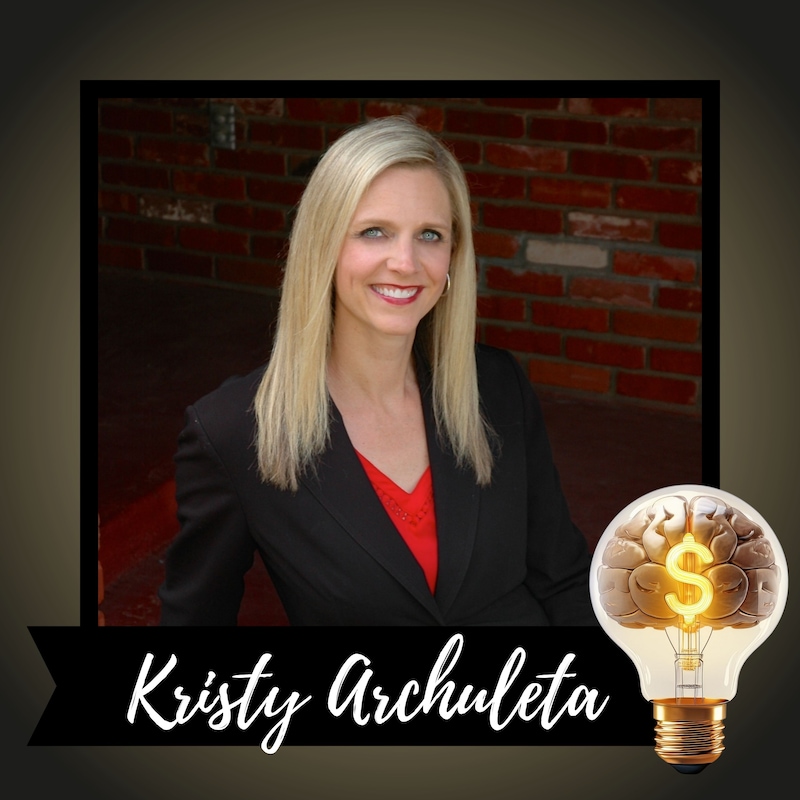
In this episode of Financial Behavior Thought Leaders, host Dr. Mary Bell Carlson sits down with Dr. Kristy Archuleta, a true pioneer in the field of financial therapy. Dr. Archuleta is a licensed marriage and family therapist, certified financial therapist, and professor of financial planning at the University of Georgia. As a cofounder of both the Financial Therapy Association and the Journal of Financial Therapy, Kristy has played a crucial role in integrating mental health and personal finance. Her groundbreaking work is reshaping how financial professionals understand stress, anxiety, and the emotional experience of money.
The episode takes you behind the scenes as Kristy shares her journey from growing up in a service-oriented farm family to breaking new ground at the intersection of therapy and financial planning. She discusses her early passion for helping people, her academic path, and the powerful “aha” moment when she realized that couples’ money issues were a critical—yet overlooked—factor in relationships. Kristy and Mary also explore the evolution of her career from nervous public speaker to sought-after keynote presenter, and why integrating psychology into financial services is more essential than ever.
During their conversation, Kristy unpacks her most popular keynote, "Managing Financial Stress and Anxiety,” and reveals why financial professionals must understand both their clients’ and their own emotions. Through engaging stories from her work and research, she illustrates the difference between stress and anxiety, and offers practical tools for making complex psychological concepts accessible and actionable for advisors and their clients.
Five Key Takeaways:
- Merging Mental Health and Money is Critical—for Clients and Advisors Alike: Dr. Archuleta emphasizes that finance is fundamentally a people business. She highlights how unresolved mental health dynamics—like stress, anxiety, and conflict—shape financial decisions. Yet, traditional financial training rarely addresses these issues, making it vital for today’s advisors to develop emotional intelligence and counseling skills.
- Financial Stress and Financial Anxiety Are Not the Same Thing: A central message from Kristy’s keynote is that financial stress (triggered by specific stressors that can be resolved) is distinct from financial anxiety (an ongoing, generalized worry—even once stressors are removed). Understanding this difference helps advisors target their interventions more effectively and develop true empathy for clients’ struggles.
- Your Emotions Directly Impact Your Clients’ Experience: Citing research and her own experience, Kristy reminds professionals that their own unaddressed stress and anxiety can “show up in the room” and affect their clients. Self-awareness and personal emotional regulation are therefore just as important as technical knowledge in building trust and promoting client well-being.
- Therapeutic Tools Can Be Adapted for Financial Planning: Kristy discusses how frameworks from psychology—such as solution-focused therapy—can be adapted to advising and planning. By making these well-researched tools practical and relatable, she empowers advisors to support real behavioral change, without stepping outside their scope of practice.
- The Power of Story—Both in Client Work and on Stage: Through memorable stories from the University of Georgia’s Love and Money Center, Kristy shows how collaborative, integrative approaches can make a dramatic difference for clients. She also reflects on making “hard things normalized” in her presentations, holding space for vulnerability and growth, and encouraging advisors to get comfortable with the emotions that inevitably arise in financial conversations.
If you’re looking for an engaging, insightful speaker for your next event—someone who can address the emotional side of money with clarity and compassion—you can learn more and book Dr. Kristy Archuleta at keynote.financial/kristy-l-archuleta.
Thanks for joining us on this episode of Financial Behavior Thought Leaders. Join us next time for more insightful discussions with the voices influencing the financial industry.
Additional Resources:
Transcripts
Welcome to Financial Behavior Thought Leaders. I'm Mary, and this podcast takes you beyond the scenes with top speakers in financial services. So whether you're a financial advisor booking a client event, an event planner looking for the perfect keynote, or a financial professional wanting to learn from industry thought leaders, you're in the right place. Today, we're featuring doctor Kristy Archuleta, one of financial behavior keynote groups exclusive speakers. Doctor Archuleta is a licensed marriage and family therapist, a certified financial therapist, and a professor of financial planning at the University of Georgia. She's internationally recognized as a trailblazer in the field of financial therapy, and she's cofounded both the Financial Therapy Association and the Journal of Financial Therapy. She's leading the way in integrating mental health and personal finance. In this episode, we're gonna explore her journey to the stage, dig into her powerful keynote, managing financial stress and anxiety, and hear a story straight from her talk that will stay with you long after the episode ends.
Mary Bell Carlson [:Welcome, Kristy. We're glad to have you today.
Kristy Archuleta [:It is great to be here, Mary.
Mary Bell Carlson [:So, Kristy, before we get into your keynote, I wanna hear how you got started incur your career and what led you to the state.
Kristy Archuleta [:Yeah. How long do you got? Oh, yeah. These episodes are supposed to be short. Okay. So we'll do the abbreviated version. My I really getting into this career, I had a passion for helping people and, was largely driven by the family that I grew up in, very service oriented, very community focused, and that had a heart for helping others. So that was one of the things that really drove me to wanting to be a marriage and family therapist. And then I just grew up in a really wonderful family, and I wanted other people to have families like mine, to be real honest.
Kristy Archuleta [:And I had an interest in finance, and in business, and I didn't really know how to integrate the two. I knew at some point, I would probably own a farm business because I'm going to eventually, one day, maybe inherit one because I grew up on a farm. So that's what my my family does. And I actually went to a talk by in college. So I was an undergraduate student. I'm probably a sophomore maybe, maybe a junior. And I talk, to or I hear this couple who were speakers. They had come in for an event, and they were both licensed marriage and family therapists, And they were talking about marriage.
Kristy Archuleta [:And as a family science undergraduate student who was also minoring in business management, which was kind of odd, I think, for my college advisor, but that's okay. She, the the couple talked about how money was a huge source of conflict for couples. And I re I had never heard that before. And as I left that talk, I remember very vividly walking back to my house and thinking this is what I could do. I can somehow work with couples and money issues at the same time because they are overlapping. And so I just started looking for spaces that wouldn't places that would help to really train me to do that. At that point in time, again, talking in decades, several decades ago, there wasn't a place to do that. And so I just kinda had to make it up.
Kristy Archuleta [:And so I looked for marriage and family therapy programs that were kind of at hooked into a financial planning program, like, as in hooked in, like, it was maybe in the same college as the marriage and family therapy program. And so I started doing some investigating around that and ended up at Kansas State and just had some wonderful mentors there to help shape, my career and and where where it is today. So
Mary Bell Carlson [:So you're a pioneer for sure. Right? Because you're right. Nobody was thinking money and therapy in the same sentence. No. I I remember Carl Richards a few years ago said from the stage, Kristy's the godmother of financial therapy. And I thought, you know, that really sums it up in in just a couple of words. So you're really known for this idea of financial therapy, financial anxiety, so many of these topics. But how did you get on to the stage?
Kristy Archuleta [:Okay. I I people are probably gonna laugh at this story. But I was literally the kid on stage at the church Christmas program when I'm, like, four. I think I did it every year, actually, whenever we were old enough to be on stage. We come out there, and I would just start bawling because I was terrified. So terrified. And I am sure that this was the most embarrassing experience for my parents. So, anyway, that that was me and just terrified of being on stage.
Kristy Archuleta [:And I think just getting into teaching and then the the practice of being up in front of well, being up in front of college students, that will take that fear right out of you because number one rule in in teaching is never show fear. Yes. So so, you know, doing that day in and day out, I think really made me more comfortable being up on stage And then being in front of diverse sets of audiences, not just students, I recognized there was this opportunity when people would come up and say, I hadn't thought about that before, or, wow. Let you know, I need to res this resonated with me. I really need to, like, sit on this more. Those you you really never know how something you might say might sit with someone and have an impact on them and even lead them towards on some sort of change journey. And I I just found that it was so exciting to be able to have an impact on people when there's more than just one or two people in the room. Because I'm also a therapist, so was used to doing that in in therapy sessions.
Kristy Archuleta [:But leading putting that out on a bigger stage was really important.
Mary Bell Carlson [:Well, I think it's part of being a pioneer. Like, you have if you're the first one doing this, you have to be part of that movement that takes it out and furthers it. And so that leads to my second question here of your work, and like we said, financial therapy, financial anxiety, but also couples of money. And you really do an incredible job integrating mental health and financial planning. Why are these areas so important for today's financial advisors?
Kristy Archuleta [:Oh, wow. I think that we see these things all of the time. Whether you want to recognize that they're there or not, there's always an underlying aspect of of whatever is going on. So it's really just tapping into that. And I think my therapy training taught me that. So, like, what are those underlying issues or underlying mechanisms that are prompting us to keep going on and on? You know, how does how does that affect how a person is showing up? How does it affect how they're interacting with one another? And then what are some of the tools and techniques, AKA interventions, if in the therapy world, how can we utilize those from mental health to have an impact on, clients in financial services? And so I think one of the things that was shocking to me very, very early on is that financial planning, financial services, that that is a people business. But we did not train students to do people work. The most we gave them and when at the institution I was at, we had a very strong financial counseling communication curriculum.
Kristy Archuleta [:And so they were definitely getting more there already than most other students were at the time. And, but still it was not getting at the heart of issues. It wasn't diving into some of the things that are so important. Yeah. They were essential skills that we were really training people to have those essential skills to communicate, but not necessarily help them change or alter a path that they were on, whether that was in regard to financial behavior specifically, or some of these other things like financial anxiety and stress, couple conflict around money, family conflict around money. And so how how do we do that? How do we do it effectively?
Mary Bell Carlson [:I think one of the things that you do so well at is you've studied this body of literature that's known as psychology. Right? And many of us, myself included, I have no background in psychology. And yet when as a student learning from you, you are able to take those psychological principles, which by the way have been around for decades and even hundreds of years that are very new to us in the financial services world and apply them. And I'll give one quick example, solution focused therapy. That has been around for decades, and it has been studied and researched very thoroughly in the psychological world. It has never been brought to financial services, and you were the first to do that. And it was really amazing to see this framework, which was so different than what we're used to as financial advisors, and you bring it to life in a financial planning setting. I think that's what excites me as a practitioner, but also as a research that you get to utilize something that has been studied and taken from somewhere else and really apply it in in kind of a cool way to make it come to life.
Kristy Archuleta [:Yeah. I think that's one of my favorite things to do is make something that's kind of conceptual and make it very applicable and put so you can take it and put it into practice. So I love to make things very complex, very relatable.
Mary Bell Carlson [:I love it. And that's actually leading into our next question because you've spoken at universities, national conferences, private firms, client events. So when planners book you, what do you think most resonates with your audience, and what's the impact that you specifically bring to the room?
Kristy Archuleta [:Well, I would probably say give you my answer that I just gave is really making some complex what might seem like complex topics very relatable, implementable, if that's a word. So very practical, like, how do you do this? It's not enough to say, for example, you have this cognitive bias. What is it that you're gonna do about it? Or you you seem to have a lot of conflict around money. What what do you actually what can you actually do in that moment to help your clients get over the the stress or not get over, but work through the stress, work through the anxiety, instead of just ignoring it and pretending like it's not happening because it's something that's always going on. It's not necessarily something that you were trained because that's not how our programs are set up. But how can you work with the humanness of people that is constantly present because they're humans?
Mary Bell Carlson [:Yeah. Totally. And I think you can do it from a stage. I've seen in your presentations how you can really bring a room in almost like you're in a therapy session, but not with the awkwardness. Right? Like, you're really able to make it a comfortable space to talk about some really, really hard topics that most of us as advisers or or professionals shy away from. And yet you can bring up those topics that actually we do see. Whether we want to see them or not, they are there. And I think that's the beauty of having your background on a stage is making hard things normalized and being okay with clients cry.
Mary Bell Carlson [:I remember one time, I had a planner who said, oh my gosh. I had a a a client cry in my office. Do I need to turn them over to a a therapist to get help? And I was like, no. You just need to learn to be comfortable with crying. It's okay. Right? So the having that human element, I think, is important. And when you bring it to stage in a way that is unique, the other thing you bring to stage in one of your most popular presentations is called managing financial stress and anxiety. Tell us about that.
Kristy Archuleta [:Yeah. So really, the the core message here is distinguishing financial stress and financial anxiety. So kinda depending on how much you know about the topic, you're you're always probably working with someone who's experiencing some sort of stress and anxiety because that's just part of being a person. Yeah. And specifically I've gotten into studying financial stress and financial anxiety, and it's they're not the same. We often talk about them in practice and even in research as the same, and they are very clearly not the same. And so what I want people to take away from this is to be able to distinguish financial anxiety and stress from one another, not just for your clients, definitely for your clients, but also for yourselves because how you show up in the room with your clients actually might have an impact on how anxious or stressed they are. So I have some colleagues who have done some research in this area, and it's that shows demonstrates that how you as an adviser show up in the room actually has an impact.
Kristy Archuleta [:So if your stress is up, your client's stress is gonna be up. And so having to, like, not just only navigate your client financial anxiety and financial stress, managing your own anxiety and stress is also really important. So it's kind of like a two for one type of deal here. And so I ask people to assess their financial anxiety and their financial stress because I do think that the best way to learn is through yourself. And so if we're picking up the part the pieces that are picking up the parts about ourselves and how and understand ourselves better, it not only makes us better. It not only makes us better for our clients, it also helps us it also helps our clients. So you can use these same tools with your clients.
Mary Bell Carlson [:Absolutely. And, you know, I think that's the big part is understanding yourself. I mean, at the end of the day, we so often as advisors think, oh, it's all about the client. It really starts here.
Kristy Archuleta [:Yeah.
Mary Bell Carlson [:No worries. That word. So can you share a story from your talk that really resonates?
Kristy Archuleta [:Yeah. So one of my favorite stories that I that I talk about actually come out of our clinic at the University of Georgia called the Love and Money Center, formerly known as the Aspire Clinic. But I actually have two stories. So one story, I actually have nothing to do with because it happened before my time, but is so, I think, poignant of this issue of stress and and anxiety. So there was a client that came in and was seeking services from, a therapist, and they were really working on their just managing stress, so stress management types of techniques. And the client was just just didn't seem to be getting any better and had shared with the therapist that they were really stressed about their financial situation and getting into graduate school, and they didn't really know how they were gonna be paying for it. And so they continue to work on these stress management tools and techniques like a therapist would do. And therapists, by the way, are not trained to to work with financial issues.
Kristy Archuleta [:And so the cool thing about our clinic is that it houses both marriage and family therapy or couple and family therapy students as well as financial planning students. And so the couple and family therapy student invited a financial planning student to come in and do some co work with them. And the the financial planning student came in and said, told them all about student loans and how you didn't need good credit score to apply for federal student aid. And that was one of the things that the student was really anxious. That was very stressed about. They didn't have a very good credit score and this their stress went away almost immediately because the of this sense of like, the I I don't have to worry about this anymore because this isn't something that I need to be stressed out over. I've been stressed for nothing. Yeah.
Kristy Archuleta [:Problem solved. And so I think that's a really powerful tool in looking at financial stress. When the stressor is taken away, the stress goes down. Anxiety looks a little bit different because there's always kind of this underlying anxiety that's happening or worry that's happening that doesn't ever go away. And so we haven't had another client come in to, the clinic, except that this time they were a financial planning client and they were actually seeking services also at the same time from a couple and family therapy student. And so the financial planning student kept working with the, the, the client and the client or the student, the financial planning student asked the client, said, hey. Have you ever told your therapist that you're, you know, really stressed or really anxious about your financial situation? And this said, no. I I no.
Kristy Archuleta [:I've never even thought about doing that. And they're like, well, what are you oh, okay. What are you working on with your your therapist? I said, well, we've been working on stress and anxiety, way ways to manage that. But it never occurred to me to tell my therapist that it was about money. So it gave a really cool opportunity for those two students to to work together and to collaborate on that client. So I I tell that story because clients don't know what it is that they're really dealing with. They is it financial anxiety? Is it financial stress? Who do I tell this to? Do I tell this to my financial professional? Do I tell this to my mental health professional? And I think the really important thing here is that sometimes as a financial professional, you're the you're the first one to know some of the most intimate aspects of a client's life and what a powerful and important place position you have in that client's life.
Mary Bell Carlson [:Absolutely. Well, I appreciate everything you've done. But before we wrap up, I wanna give our listeners one more chance to get to know you. You have co edited financial therapy theory and practice. You've also coauthored financial planning and counseling skills, and you have a new book on your way. So there is a lot of writing up, but I wanna know about what's unique about you and your maybe your creative and writing process that most people don't know?
Kristy Archuleta [:I think one thing about my creative process, and I don't get to do this as much as I would like to do because I'm too far away. But then I was telling you about our family farm. Mhmm. And that is my favorite place to to be and to think is on a tractor in the middle of a field, working the ground. It's where I come up with my best ideas and how I plan things out.
Mary Bell Carlson [:I love that. Yeah. No. Something about the earth and just that grounding. I've talked to you a few times on that tractor, and I will say you get pretty creative in a tractor. So I think that's our message today is you don't own a tractor yet, go get one and work the earth. Right?
Kristy Archuleta [:That's right. That's right.
Mary Bell Carlson [:You might write a book.
Kristy Archuleta [:I I call it farm girl therapy.
Mary Bell Carlson [:Farm girl therapy. I love it. Well, Kristy, thank you so much for joining us today. And if you're looking for an engaging, insightful speaker for your next event, someone who can address both the emotional side of money with both clarity and compassion. You can learn more and book Kristy at keynote.financial. Thank you for joining us in this episode of Financial Behavior Thought Leaders, and join us next time for more insightful discussions with the voices that influence this industry. Thank you, Kristy.
Kristy Archuleta [:Thanks, Mary.
