Shownotes
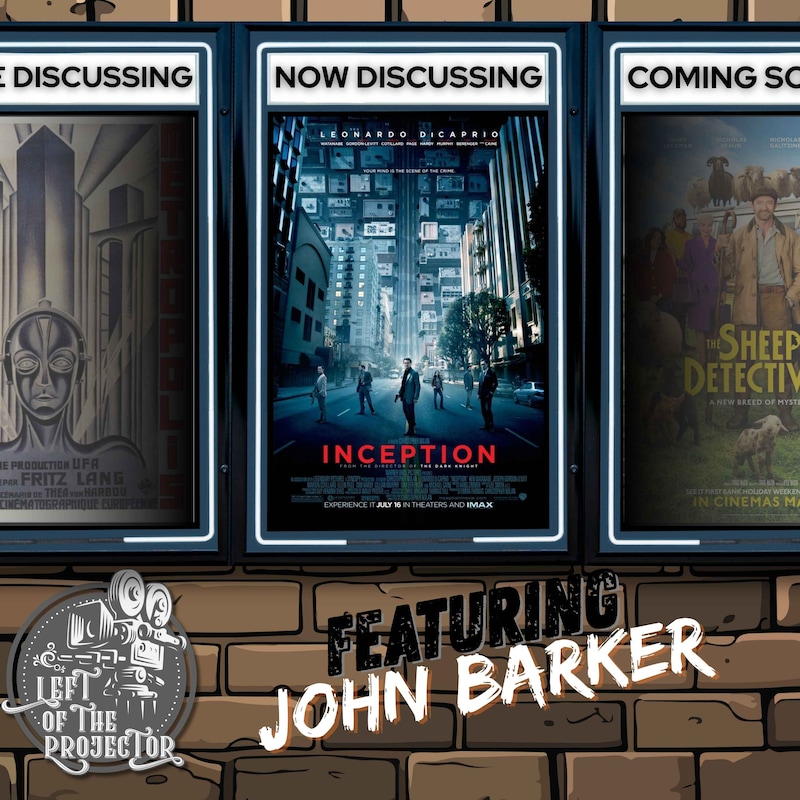
Is this week a dream? Find out as we chat with John Barker, Host of All The Right Movies and author of the upcoming book All the Right Movies: The Stories and Secrets Behind the Making of 25 of Hollywood's Greatest Films .
Guest Links
https://www.linkedin.com/in/john-barker-atrm/
https://alltherightmovies.com/
https://www.amazon.com/All-Right-Movies-Hollywoods-Greatest-ebook/dp/B0GQ5HNJVT
Left of the Projector Links
Left of the Projector on Letterboxd
Left of the Projector on Instagram
Left of the Projector on Patreon
Left of the Projector on Threadless
Host Links
Transcripts
Track 2: Hello, and welcome to Left of the Projector. I'm your host, Bill,
Speaker:Track 2: back again with another film discussion from the left.
Speaker:Track 2: If you'd like to support the show for as little as $3 a month,
Speaker:Track 2: you can go to Patreon forward slash Left of the Projector pod.
Speaker:Track 2: If you like the dress and style, we've got shirts and at leftoftheprojectorpod.threadless.com.
Speaker:Track 2: Show everyone you got the best taste around. Wherever you're listening,
Speaker:Track 2: give us a rating and subscribe so you'll get notified of our weekly episodes
Speaker:Track 2: that drop every Tuesday. Now, onto the show.
Speaker:Track 2: This week on Left of the Projector, you are going to dream. And while you are
Speaker:Track 2: dreaming, you're going to dream about listening to Left of the Projector.
Speaker:Track 2: And while you dream about dreaming about Left of the Projector,
Speaker:Track 2: you'll have the greatest idea ever.
Speaker:Track 2: Tell everyone you know about Left of the Projector. And now you're awake and
Speaker:Track 2: listening to an episode on Inception, directed by Christopher Nolan.
Speaker:Track 2: It was a box office smash, making nearly $900 million on an estimated $160 million budget.
Speaker:Track 2: It stars Leonardo DiCaprio, Ken Watanabe, Joseph Gordon-Levitt,
Speaker:Track 2: Marion Cotillard, Elliot Page, Tom Hardy, Cillian Murphy, Tom Berenger, and Michael Caine.
Speaker:Track 2: With us to discuss this while we are fully awake is John Barker.
Speaker:Track 2: John is the co-founder and managing director of all the right movies.
Speaker:Track 2: And we'll be co-authoring a book by the same name and the stories and secrets
Speaker:Track 2: behind 25 of Hollywood's greatest films.
Speaker:Track 2: And of course, as always, my co-host, Evan and Ward. Welcome to the show, John.
Speaker:Track 3: What a lovely intro that was. Thank you very much. Very kind. Delighted to be here.
Speaker:Track 3: I've been a fan of your show for a while, fellas, but I first came across the Total Recall one.
Speaker:Track 3: I think that was the one I emailed about. And then obviously went straight from
Speaker:Track 3: that into Showgirls, as you would, obviously.
Speaker:Track 3: Hmm yeah it feels
Speaker:Track 3: like a transition transition and then
Speaker:Track 3: they were the ones that made me reach out so yeah delighted to be here um
Speaker:Track 3: yeah our podcast is called all the right movies where film podcasts it were
Speaker:Track 3: similar similar things to what you guys in some way do um similar kind of energy
Speaker:Track 3: i think we go very deep on the kind of behind the scenes stories like creative
Speaker:Track 3: decisions and that kind of thing we tell the story of hollywood one film at
Speaker:Track 3: a time we like to say um four of us doing it, it's not just me.
Speaker:Track 3: And yeah, there's a book coming in September. So if anyone wants to take a look
Speaker:Track 3: or have a listen, then you can find us anywhere, really.
Speaker:Track 2: Yeah. And of course, as always, we'll attach, you know, we'll provide links
Speaker:Track 2: to the show notes, all of us, you know, John's projects, as well as the book
Speaker:Track 2: and everything like that.
Speaker:Track 3: Perfect. Thank you.
Speaker:Track 1: Yeah. So I guess the like sort of opening question we usually ask for guests
Speaker:Track 1: is, what led you to choose Inception?
Speaker:Track 1: I know you said a couple of options, but we ended up landing on inception.
Speaker:Track 3: We did but.
Speaker:Track 1: What would what made you sort of pick that and if you have any i don't know
Speaker:Track 1: memories of the film it came out you know a fair amount of time ago now uh.
Speaker:Track 3: 2010 wasn't it yeah yeah.
Speaker:Track 1: So i guess what uh what led to you kind of picking it and you know any history with it.
Speaker:Track 3: Yeah i mean well i'm a big christopher nolan fan as many
Speaker:Track 3: people are obviously i think nolan kind of has this sort
Speaker:Track 3: of great like identity as a filmmaker where it's just
Speaker:Track 3: if he's kind of went what if somebody made films as spectacular
Speaker:Track 3: and like action-packed as someone like steven spielberg would
Speaker:Track 3: have the brains of a stanley kubrick film i think
Speaker:Track 3: that's where he kind of sits kind of very much in both those camps very unique
Speaker:Track 3: place to be and this is my favorite by him i did
Speaker:Track 3: say when it came out kind of blew me away when i saw it in 2010 it
Speaker:Track 3: might even be my favorite film this century i would say i mean there's lots
Speaker:Track 3: i like but it's one of those rare things i think where you have like blockbuster
Speaker:Track 3: which also has some thought-provoking ideas some thought-provoking themes and
Speaker:Track 3: it's also got a heart as well the emotional core around cobb leaning on to caprio's
Speaker:Track 3: character and his kids and wanting to get home that kind of powers everything,
Speaker:Track 3: and saying this i might get shot down by you guys but i think this might be
Speaker:Track 3: the last great original blockbuster hollywood made,
Speaker:Track 3: Because everything as big as this is like an adaptation or a sequel or a reboot nowadays.
Speaker:Track 3: And I think the fact that Warner's gave Nolan, what, $160 million,
Speaker:Track 3: you said, to make an original idea, that just kind of doesn't happen anymore, I don't think.
Speaker:Track 3: But yeah, loads to talk about in terms of Nolan, which I'm always happy to do.
Speaker:Track 3: The huge filmmaking, the huge spectacle, and the things it has to say as well.
Speaker:Track 3: So this was always going to be the one I went to as soon as I saw it on your list, to be honest.
Speaker:Track 1: I also saw it in the theater. It's personally not my favorite Nolan film.
Speaker:Track 1: My favorite nola film is actually the prestige which we did an episode not long ago i mean,
Speaker:Track 1: that one for me just hits the most but what about you warden bill what are you
Speaker:Track 1: uh did you see this in the theater do you have like how does it how does it
Speaker:Track 1: fit in like the nolan canon i.
Speaker:Track 4: Don't think i saw this in theaters but like i mean it's a banger movie it's
Speaker:Track 4: solid it's a lot of fun um incredible blockbuster cinematography stuff like
Speaker:Track 4: that like i have some like things i could say but uh i'll wait until we get into it.
Speaker:Track 2: Yeah i saw this in the film uh in
Speaker:Track 2: the theaters uh i remember going to say it um it's
Speaker:Track 2: definitely i think it's up i mean prestige is my
Speaker:Track 2: it's so good it's so good film but uh i do really i do really enjoy this and
Speaker:Track 2: i i do think i think you know john's right you know it's like it's it's a huge
Speaker:Track 2: blockbuster but it also has like actual like thought you know in a world in which most of these,
Speaker:Track 2: movies that look and do the things this movie does would be,
Speaker:Track 2: fast and furious like that's where the level of
Speaker:Track 2: intellectual depth would end you know
Speaker:Track 2: which is not to slight the fast and the furious movies
Speaker:Track 2: uh but they are worth what they are worth um for what they are um but yeah i
Speaker:Track 2: mean this is it's an incredibly cinematic and huge and you know epic movie but
Speaker:Track 2: it also has like it's like goes the opposite way as well just super deep you
Speaker:Track 2: know So I really, I like this movie.
Speaker:Track 2: And honestly, I'm kind of shocked it took me a lot, just like to rewatch it
Speaker:Track 2: because I haven't seen it since it's on the theaters.
Speaker:Track 1: Oh, wow. I had seen it maybe once. I saw it in the theater. I remember really liking it.
Speaker:Track 1: And then I maybe saw it once a few years after that, maybe when it came out
Speaker:Track 1: on DVD or something. But I hadn't seen it then, since then.
Speaker:Track 1: So it had been a long time since I had seen it. And I honestly, I don't know.
Speaker:Track 1: I wonder if you pull like most people, you ask them what their favorite Christopher
Speaker:Track 1: Nolan film, I wonder if it's this, or most people say Dark Knight,
Speaker:Track 1: or maybe they say Interstellar.
Speaker:Track 1: I know that has like a, I don't want to say a cult following because it was
Speaker:Track 1: a huge blockbuster as well, but I don't know which one people tend to like the most.
Speaker:Track 1: But this is, yeah, blockbuster filmmaking at its, honestly, at its best.
Speaker:Track 1: And no one doesn't waste a single penny of that $160 million.
Speaker:Track 1: It just looks really good. You watch, we say this all the time,
Speaker:Track 1: you watch like a Marvel movie from, you know, five or six years ago,
Speaker:Track 1: and the effects just don't even look that good anymore and this is just i feel like.
Speaker:Track 2: It's phenomenal it's flawless yeah he.
Speaker:Track 3: Loves his practical effects christopher nolan doesn't he uses digital but only kind of when he has to.
Speaker:Track 2: Yeah so much of this is so much of this is practical which and for the practical
Speaker:Track 2: effects that they are i mean i think practical effects always age better but
Speaker:Track 2: for like in the case of this and i'm not the kind of person that like automatically
Speaker:Track 2: poop who's like cgi and all that,
Speaker:Track 2: I think it has its place, but for what he uses in this,
Speaker:Track 2: the CGI is exactly where it needs to be.
Speaker:Track 2: These kinds of practical effects, they're never going to age out.
Speaker:Track 2: They're always going to look as good. This is...
Speaker:Track 3: Exactly because he's.
Speaker:Track 2: Not he's not creating monsters and aliens he's create he's using you know practical effects to recreate.
Speaker:Track 3: Environments because it's so well judged it kind of well it
Speaker:Track 3: looks real doesn't it so as long as it looks real it'll kind of never age yeah
Speaker:Track 3: whereas when you see say a marvel film and you're right digital has its place
Speaker:Track 3: for sure marvel kind of saturate themselves in digital which means as it gets
Speaker:Track 3: older it'll leave quite quite quickly i think whereas nolan's stuff so well
Speaker:Track 3: judged about when to use digital when to use practical and this is maybe the best example of it.
Speaker:Track 1: Yeah, exactly. Yeah. And for maybe anyone out there who hasn't seen Inception
Speaker:Track 1: in a while, obviously, we're going to have spoilers throughout this discussion.
Speaker:Track 1: But as like maybe a brief reminder for people about what, you know, the plot of this is.
Speaker:Track 1: So Leonardo DiCaprio is Dom Cobb, and he's basically, along with his partner,
Speaker:Track 1: Joseph Gordon-Levitt, who is Arthur, they are basically corporate espionage
Speaker:Track 1: thieves who go inside of people's subconscious to steal information for,
Speaker:Track 1: corporations we only sort of really learn about one job they start at the beginning
Speaker:Track 1: of the film that it ends up failing and then to the rest of the film is sort of uh,
Speaker:Track 1: Helping the character Sato continue to do what he wants to do,
Speaker:Track 1: which is to actually implant or have an inception of an idea into the subconscious
Speaker:Track 1: to benefit his company in the future.
Speaker:Track 1: And we really follow along the dreamlike sequences and times where you sort
Speaker:Track 1: of you're watching it. You don't know it's a it's a dream.
Speaker:Track 1: And one of the things that I appreciate about about Christopher Nolan's filmmaking
Speaker:Track 1: is so many of his movies, I think of The Prestige,
Speaker:Track 1: I think of Oppenheimer so many times as he kind of quote unquote give away something
Speaker:Track 1: about the film in like an opening that's usually a flashback or something that
Speaker:Track 1: you discover later, but you don't understand it in the context of the film.
Speaker:Track 1: And I think that what makes his filmmaking so good is that he hides things in
Speaker:Track 1: plain sight, but you don't see them.
Speaker:Track 3: Yeah. I think he loves a big bang opening to his films, doesn't he?
Speaker:Track 3: That's where I think you can definitely see like Spielberg. I think my favorite
Speaker:Track 3: is what you mentioned, Evan, the dark night, the intro to that,
Speaker:Track 3: the joke, our intro and the bank heist, that is incredible.
Speaker:Track 3: It's like its own short film, but he also does this thing. I think what you
Speaker:Track 3: were touching on there where his openings sometimes like seem to teach the audience
Speaker:Track 3: how to watch his films because his films are so unique narratively sometimes
Speaker:Track 3: he does that in Memento with all the,
Speaker:Track 3: crazy backwards timeline stuff and in the prestige he
Speaker:Track 3: kind of gives away the reveal of who was doing the trick and how they
Speaker:Track 3: do the trick in the first minute but it's really subtle and then
Speaker:Track 3: inception the first shot it's cob isn't it lying on the
Speaker:Track 3: beach like wash up on the beach and that's the same image as the
Speaker:Track 3: end of the film so it kind of opens at the end so the
Speaker:Track 3: non-linear narratives there straight away and that's the reveal as well
Speaker:Track 3: because i think we also see his kids on the beach as well that's
Speaker:Track 3: in the very first shot so that's his main motivation and i
Speaker:Track 3: think the other thing the opening does which good openers tend to do is it
Speaker:Track 3: sets our expectations i think for everything that's going
Speaker:Track 3: to come because narratively the opening itself it moves
Speaker:Track 3: like an absolute rocket the spectacle is like
Speaker:Track 3: enormous with the water coming pouring in the walls
Speaker:Track 3: and stuff like that and there's enough exposition in the first what 10-15 minutes
Speaker:Track 3: to power like an entire film so i think it's clever because it tells us this
Speaker:Track 3: is an action film it'll move really quickly and you need to pay attention so
Speaker:Track 3: we kind of know that he tells us that without telling us just by making the
Speaker:Track 3: start like that as well which i think is really clever he does that quite a lot i think yeah i think.
Speaker:Track 2: I think this, you know, add uniquely that he, like in the prestige,
Speaker:Track 2: like it is very straightforward and memento.
Speaker:Track 2: And like, you know, a lot of those other films, it's very, you know,
Speaker:Track 2: like he does explain how to watch this movie and he kind of like gives it away in the beginning.
Speaker:Track 2: Not like reveals, but he lets you know.
Speaker:Track 2: I feel like the inception is the most open.
Speaker:Track 2: A it you can be left doubting whether that hint is the is actually giving it away in the end.
Speaker:Track 1: You know for i don't know that i think
Speaker:Track 1: when it came out i remember them doing the oscars
Speaker:Track 1: that following year and they you know that was sort of the big thing is like
Speaker:Track 1: the dream within a dream and sort of the the idea inception
Speaker:Track 1: of being able to you know actually enter someone's subconscious
Speaker:Track 1: and throughout the movie you are
Speaker:Track 1: often unsure of when like reality
Speaker:Track 1: ends and dreams begin and vice versa and you
Speaker:Track 1: know it's trying to help you understand that there's like these there is
Speaker:Track 1: the dream world and then there's the reality world and which
Speaker:Track 1: one is actually the real one maybe for especially for
Speaker:Track 1: leo dicabrio cobb's character where he later
Speaker:Track 1: reveals he can't even dream without entering you
Speaker:Track 1: know through these ways and it's both sad
Speaker:Track 1: to have him sort of reveal that that he can no
Speaker:Track 1: longer dream and then i also like think about
Speaker:Track 1: the deeper ideas like can he not dream physically or he can he no longer actually
Speaker:Track 1: dream of things he can't actually come up with any ideas for himself anymore
Speaker:Track 1: because all he is is being inserted into other people's you know subconscious
Speaker:Track 1: and their dreams and memories for himself like he doesn't even have of,
Speaker:Track 1: i feel like he doesn't even have a reality or a dream version of himself anymore which is kind of yeah.
Speaker:Track 4: I mean for cob it's even sadder than
Speaker:Track 4: not being able to physically dream like it's stated
Speaker:Track 4: in the film like that's why you got all those guys in the basement of yusuf's
Speaker:Track 4: fucking shop is because they can't physically dream anymore like that's the
Speaker:Track 4: only way they can dream now um for cob though it's not dreaming it's reliving
Speaker:Track 4: memories with maul yeah that's all it is yeah.
Speaker:Track 2: They talk so much the conversation is about
Speaker:Track 2: dreams and when they talk
Speaker:Track 2: about it you are automatically placed
Speaker:Track 2: to talk to think about it reflect on it as like what we talk about like dreams
Speaker:Track 2: like you know you go to sleep you have a dream but in the end like what they're
Speaker:Track 2: actually talking about is the less literal term of dream, but the metaphorical dream,
Speaker:Track 2: because Cobb has one dream that he wants to achieve.
Speaker:Track 2: And that is not, you know, and when we say like dream in this case, it's, it's,
Speaker:Track 2: the dream of something like of achieving something it's having something come
Speaker:Track 2: to fruition and that is just be with his children like at that point he just
Speaker:Track 2: that's his dream is to go home and be with his kids that's it.
Speaker:Track 3: I think it's interesting the point that ward made there about the basement scene
Speaker:Track 3: in mombata i like what you call the use of shop
Speaker:Track 3: that's quite nice but you've got all these like old fellas like paying
Speaker:Track 3: to come in every day presumably because they can't bear like waiting
Speaker:Track 3: life anymore and the guy who seems to be running things he says he
Speaker:Track 3: says something like the dreams become their reality who are you to say
Speaker:Track 3: otherwise and i think that might be one of the core arguments
Speaker:Track 3: of the film like is a dream worse than reality and then
Speaker:Track 3: that begs begs the question of kind of what is reality because it's
Speaker:Track 3: what our mind kind of perceives it to be isn't it so if it's a dream or
Speaker:Track 3: if it's real if it is what you perceive what's the
Speaker:Track 3: difference who are you to say otherwise i think that's kind of nolan speaking
Speaker:Track 3: to us there and it does explore as well because yeah you've
Speaker:Track 3: got mal whose dream who's chosen dreams over
Speaker:Track 3: reality and she couldn't find her way back she got kind of lost it seems like
Speaker:Track 3: and then cobb's whole arc is choosing reality or trying to to be with his kids
Speaker:Track 3: but then at the end it's ambiguous about what he has chosen so it seems to explore
Speaker:Track 3: all these different ways of looking at dreams and that kind of thing which is
Speaker:Track 3: just mind-blowing to me and.
Speaker:Track 4: I was even trying to think about like the movie too where it's like you got
Speaker:Track 4: corporations is just running fucking rampant with guns.
Speaker:Track 3: Yeah so.
Speaker:Track 4: Obviously this is like a very very totalitarian capitalist system and so it's
Speaker:Track 4: like why wouldn't people reach out to an escape into another reality that things
Speaker:Track 4: are so bad in the actual material one that they live in yeah.
Speaker:Track 2: But the only time we.
Speaker:Track 4: Yeah we don't get to see a lot of the world but yeah we it was just an idea i was I.
Speaker:Track 2: Think that ties in really perfectly with the use of shop,
Speaker:Track 2: because all I could think about, the only time we see corporate agents running
Speaker:Track 2: around with guns in reality is in Mombasa.
Speaker:Track 2: Right? That's their Mombasa, right? And all I could think was,
Speaker:Track 2: it's like, it never changes.
Speaker:Track 2: It's like any, the global South is just the place where white men with guns
Speaker:Track 2: run around shooting at each other and using it as a means of exerting their
Speaker:Track 2: power with no regard for the people that live there. None.
Speaker:Track 2: And, you know, it's just like, yeah, it makes sense that the people that live
Speaker:Track 2: in that place would want to leave that behind.
Speaker:Track 2: But largely this, and at the same time,
Speaker:Track 2: because the rest of it is all just in dreams, this is just people with power
Speaker:Track 2: making their own lives miserable and shooting at each other and using people
Speaker:Track 2: for their own ends when they could just not do that.
Speaker:Track 2: Like you could just not do that you could just,
Speaker:Track 2: be people that like contribute to society.
Speaker:Track 3: Yeah well saito who kind of employs
Speaker:Track 3: cob he's like obviously a big corporate businessman isn't he and his goal seems
Speaker:Track 3: like is just he wants to remove a competitor so it's really cynical his goals
Speaker:Track 3: even though he's kind of presented as the good guy in some ways and then cob's
Speaker:Track 3: team are basically like contractors so they only get to use their skills when
Speaker:Track 3: like some rich billionaire pays them to yeah.
Speaker:Track 4: It's capitalist infighting with mercenaries but dreams instead of.
Speaker:Track 3: Bombs which.
Speaker:Track 2: I mean hey but honestly for the most part i guess people are making out better on that than.
Speaker:Track 1: In the real world you say dream you say dreams instead
Speaker:Track 1: of bomb but really it's the thing that they need to do to be able to maybe prevent
Speaker:Track 1: i don't want to like prevent bombing so he wants to take over this organization
Speaker:Track 1: set to basically have a global control over i don't does it is it a realist
Speaker:Track 1: uh real estate company i forget what it did they ever say.
Speaker:Track 3: Engineering.
Speaker:Track 1: Oh, energy, right. So basically to control the world's energy.
Speaker:Track 4: And it's like his main competitor. Yeah, it's like his main competitor.
Speaker:Track 4: He basically wants a monopoly.
Speaker:Track 1: What will that will then do by being the global controller of energy would just
Speaker:Track 1: then lead to both prevent and lead to more violence because then it's going
Speaker:Track 1: to have people fighting over the costs of that energy.
Speaker:Track 1: Just the the stranglehold on it you know one person
Speaker:Track 1: or two people shouldn't own the world's energy
Speaker:Track 1: or any of these things they should in reality be you know co-owned by everyone
Speaker:Track 1: so you can have equal access to it but yeah in a very cynical and you said john
Speaker:Track 1: like that you're sort of supposed to view him as sort of the quote-unquote good
Speaker:Track 1: guy when he is is nowhere near you know he is very cynical and evil yeah.
Speaker:Track 3: Well the job that hired for as well cobb's team like planting this idea so deep
Speaker:Track 3: in someone's subconscious that they kind of believe it's their own idea that's
Speaker:Track 3: almost some like futuristic form of like advertising or propaganda or something
Speaker:Track 3: if that was a real thing you can guarantee corporations will be tapping right
Speaker:Track 3: into that and selling things to people.
Speaker:Track 1: I mean wow i feel like we sort of this.
Speaker:Track 2: Is the torture.
Speaker:Track 1: Nexus this.
Speaker:Track 2: Is the torture nexus they will be made.
Speaker:Track 1: Well i mean it's not
Speaker:Track 1: so far and different from other sort
Speaker:Track 1: of uh dystopian so we don't like maybe think
Speaker:Track 1: of this film as like a dystopian movie we sort
Speaker:Track 1: of think of it you know science fiction action whatever
Speaker:Track 1: but it really is like a dystopian world where people who
Speaker:Track 1: control a certain technology can insert and
Speaker:Track 1: steal information from you and i mean
Speaker:Track 1: i don't know if i put this directly in like the notes but it's not
Speaker:Track 1: that far removed from the idea of you know
Speaker:Track 1: ai functions that are essentially scouring the internet and stealing you know
Speaker:Track 1: studio league studio ghibli movies and their art and all these things and people's
Speaker:Track 1: you know in personal intellectual property and then selling that to the masses
Speaker:Track 1: as like a copy of this in some like uh,
Speaker:Track 1: cynical way so it is kind of a dystopia i.
Speaker:Track 4: Mean it was literally created as a military training tool so that soldiers could
Speaker:Track 4: actually kill each other and experience wounds in physical damage.
Speaker:Track 1: Yeah i think.
Speaker:Track 3: Doesn't it yeah it feels to me like i mean we don't really find out but it feels
Speaker:Track 3: to me like the technology is still quite new and it hasn't really got out to
Speaker:Track 3: the masses yet but it feels like if you move in this world forward 10 years
Speaker:Track 3: it would have just completely changed everything this technology that's how it feels to me i.
Speaker:Track 2: Feel like it has to be somewhat widespread or else you wouldn't have a.
Speaker:Track 3: Basement full of people on it.
Speaker:Track 1: But yeah.
Speaker:Track 4: Basement full of people you got college courses on this shit yeah like.
Speaker:Track 1: Well is the college course you got ma.
Speaker:Track 4: And dom in their free time just doing it.
Speaker:Track 1: Is the yeah is the college technology or is it simply just on dreams and then
Speaker:Track 1: like the ella pages character then learns that this is actually something that
Speaker:Track 1: they can can do adrian her character in it i don't know no i ariadna sorry you're right you're right.
Speaker:Track 2: It's it's a hard name to i.
Speaker:Track 1: Don't know but yeah i mean you're right probably in 10 years the you know the
Speaker:Track 1: one of these sito could then take control of this technology and sell it you
Speaker:Track 1: know or um employ an entire army of people who can do what leonardo dicaprio
Speaker:Track 1: is going to do to be able to go around the world and implanting ideas,
Speaker:Track 1: you know, have them forget about.
Speaker:Track 4: No, he's going to hire Cobb to train an AI system so that he can mass employ
Speaker:Track 4: AI systems to inset people at scale.
Speaker:Track 1: Yeah, that's why it is kind of a dystopia, right?
Speaker:Track 2: I can see that.
Speaker:Track 3: Yeah well that kind of capitalist angle i think that's why nolan kind of structures
Speaker:Track 3: cobb's team like a it's like a film crew isn't it where you've got like cobb's
Speaker:Track 3: kind of the director he's the one with the vision then arthur's the producer
Speaker:Track 3: he does the research he kind of pulls it all together,
Speaker:Track 3: arianna's like i guess a production designer because she sort of builds the
Speaker:Track 3: world eames is obviously the actor because he's like literally pretending to
Speaker:Track 3: be different people and then site was the money man the studio
Speaker:Track 3: and then so i think it's like a another angle
Speaker:Track 3: is that it's a film about a group of artists who only get to use their skills
Speaker:Track 3: and their kind of craft when a corporation pays them to i mean nolan understands
Speaker:Track 3: that i'm not sure nolan's commenting on hollywood maybe but i think he's based
Speaker:Track 3: a team around that kind of structure because that's the one he knows so that's
Speaker:Track 3: kind of there as well from a capitalist point of view i think yeah.
Speaker:Track 2: Ward you wanna what you're talking about propaganda.
Speaker:Track 4: Yeah no i don't think it's that dystopian the idea of
Speaker:Track 4: inception i mean like and i'll i'll open
Speaker:Track 4: up and be honest i wasn't the first one to have this idea i looked it up i came
Speaker:Track 4: to it independently though uh but no like the process of inception is very much
Speaker:Track 4: like how hegemonic control is implanted and normalized you know capitalist hegemonic control,
Speaker:Track 4: but instead of like hot dudes coming into our dreams it's advertisements media
Speaker:Track 4: education systems and news propaganda constantly telling us what to think and
Speaker:Track 4: how to think it i think the film captures incredibly well the fact of how and
Speaker:Track 4: when hegemonic control is the most effective,
Speaker:Track 4: which is when the subject internalizes the will and desire of the ruling class
Speaker:Track 4: and experiences it as free will.
Speaker:Track 4: Like, as Gramsci would say, like, the battleground for common sense,
Speaker:Track 4: it's whatever the culture has decided is common sense.
Speaker:Track 4: But people act like, no, no, no, that is common sense. It's like,
Speaker:Track 4: no, no, that's what you've been taught.
Speaker:Track 4: And that's how they maintain these systems of control. And the process of Inception
Speaker:Track 4: mirrors that process beautifully.
Speaker:Track 2: When you're in a dream, you don't question that dream.
Speaker:Track 2: No matter how outlandish it
Speaker:Track 2: may be like you never question what's
Speaker:Track 2: happening and in reality it's the same kind of what when
Speaker:Track 2: we talk about gaining class consciousness like waking up
Speaker:Track 2: and it's the same kind of thing it's like you gain
Speaker:Track 2: class consciousness you start to see the systems you wake up and
Speaker:Track 2: you go wait a minute that that actually doesn't make sense that
Speaker:Track 2: actually those pieces don't fit together that actually
Speaker:Track 2: is illogical it is irrational to think through the through these capitalist
Speaker:Track 2: like mentalities the same way like you wake up a dream and you're like wait
Speaker:Track 2: a minute crocodiles don't fly with farts it's like you know i can't actually pick.
Speaker:Track 4: On myself by my bootstraps.
Speaker:Track 2: Yeah exactly yeah that's impossible well.
Speaker:Track 1: The like going to like back to the sort of their goal in the movie.
Speaker:Track 1: I mean, their initial job and then later job is, you know, first is to steal
Speaker:Track 1: intellectual property from a corporation.
Speaker:Track 1: And that seems to probably be what they're constantly doing over and over. And then...
Speaker:Track 2: But it's not even the job. That's an audition.
Speaker:Track 1: Oh, you think that's how you view it?
Speaker:Track 2: That's all that is.
Speaker:Track 2: The first job is an audition. It's an audition. That's like the whole thing.
Speaker:Track 2: Saito's like, he comes with the job and it's like to see, to prove.
Speaker:Track 2: I mean, I think he even says, it's like, oh yeah, you've proven like, you know.
Speaker:Track 1: Yes. Yes.
Speaker:Track 4: He's like, you're as good as they say you are. A dream within a dream. Like, oh shit.
Speaker:Track 1: So do you think that was, do you still, do you then not see them having done
Speaker:Track 1: this multiple times before?
Speaker:Track 4: Oh, they definitely have.
Speaker:Track 2: So clearly, yeah.
Speaker:Track 4: They reference a ton of other jobs.
Speaker:Track 1: Yeah, I mean, that's why they're in Moobossi getting chased.
Speaker:Track 4: They have names for bits, like thieves do, like in Ocean's Eleven.
Speaker:Track 2: Yeah.
Speaker:Track 4: Like, they got, we're going to do a Mr. Charles.
Speaker:Track 2: True.
Speaker:Track 1: Okay, that, yeah, that's.
Speaker:Track 2: Eames, Eames at one point is like, I have the perfect lady for this.
Speaker:Track 2: Like, yeah, no, they've done it plenty of times.
Speaker:Track 4: Yeah. It's like, oh, I need a forger. And it's like, oh, somebody,
Speaker:Track 4: that's what they call somebody who can, like, impersonate other people in dreams.
Speaker:Track 4: Like, they got names for, like, specific types of thieves.
Speaker:Track 1: And Yusef is the chemist for that. That's why they go to Mubasa to begin with, right?
Speaker:Track 1: To find him because he can put you in a psychological state with drugs that
Speaker:Track 1: make it so it's harder to wake up so you can go like into the dream within a dream within a dream.
Speaker:Track 4: But not fuck with the ear. Pretty impressive.
Speaker:Track 2: It's very interesting. It's like some of these people, it's like they've developed.
Speaker:Track 4: I do like when they push Joseph Gordon-Levitt over and over again in the chair.
Speaker:Track 4: I thought that was really funny.
Speaker:Track 2: It's like it implies that like different people have different skills.
Speaker:Track 2: It's like different people that do this have like basically like superpowers
Speaker:Track 2: it's like ains is like you know capable of like manipulating reality to a greater
Speaker:Track 2: degree in you know the dream state,
Speaker:Track 2: ariadne can like construct a world it's it's it is an interesting concept.
Speaker:Track 1: Yeah i i can't believe i i completely missed that that i mean i know i remember
Speaker:Track 1: that you know that saito's in that dream but i didn't in my head wasn't thinking
Speaker:Track 1: of it as being an audition to
Speaker:Track 1: prove that they could do you know do the job for him of actually you know.
Speaker:Track 3: Imp well the thing about this job is that it's inception isn't it because normally
Speaker:Track 3: they go into people's dreams and just take secrets this is about planting an
Speaker:Track 3: idea so this is that's why this is new i think yeah.
Speaker:Track 2: Yeah and it is they do kind of like it does kind of and.
Speaker:Track 4: It's not even that new of an idea because i mean like saito talks about it.
Speaker:Track 2: Eems when.
Speaker:Track 4: Cod meets up with him in mubasa it's like oh yeah no totally possible it just
Speaker:Track 4: gotta be like it's not the newest idea it just seems.
Speaker:Track 2: Rather really hard really.
Speaker:Track 3: Hard to do but you can see it isn't it he says it's perfectly possible it's
Speaker:Track 3: just very difficult bloody difficult I think he says yeah I.
Speaker:Track 4: Think that's why they mostly rely on extraction.
Speaker:Track 2: Yeah I do think that like what you were saying John about like how like Nolan
Speaker:Track 2: sets it up like and we've talked about this before like how a lot of Nolan's work is,
Speaker:Track 2: so about like art and making art it's like yeah,
Speaker:Track 2: very personal in a very deep way um
Speaker:Track 2: and like i think it's you know i yeah i
Speaker:Track 2: want to like to i want to talk about like all like the ways in which this is
Speaker:Track 2: like you know they can be interpreted from a leftist perspective but like i
Speaker:Track 2: think that like overwhelmingly like you are correct and he is making a movie
Speaker:Track 2: about his experience as an artist like that's what it is i.
Speaker:Track 3: Think he usually is isn't he i think northern's so obsessed with like just the idea.
Speaker:Track 2: Of creativity.
Speaker:Track 3: That all these films are about that, like the prestige, what he relates to there.
Speaker:Track 3: It's about 19th century magicians, but it's the fact that creating things,
Speaker:Track 3: he massively relates to that, I think.
Speaker:Track 3: And then here, Ariadne says, when she comes back, when Cobb says,
Speaker:Track 3: she'll come back because she can't accept the real world now.
Speaker:Track 3: And she does, and she calls what she was doing with the architecture, pure creation.
Speaker:Track 3: I think that's Nolan. That's Nolan's words, I think.
Speaker:Track 1: Yeah.
Speaker:Track 2: Yeah. It's so much about like being an artist and creating things.
Speaker:Track 3: Yeah.
Speaker:Track 2: But then also like being...
Speaker:Track 2: Is shackled to a system that wants to benefit from those things.
Speaker:Track 2: And yet at the same time, I also think, especially again, you know,
Speaker:Track 2: Nolan historically is pretty closed mouth on a lot of ways.
Speaker:Track 2: But in recent years, he has said some certain things which have revealed some
Speaker:Track 2: prejudices and biases towards certain class systems.
Speaker:Track 2: Um and i do think that like sito really kind of gives that game away that he
Speaker:Track 2: does think there are good billionaires because he does want you to think like
Speaker:Track 2: sito's like the good guy like yeah,
Speaker:Track 2: like he very much i do think that it gives the game away that no one thinks
Speaker:Track 2: like yeah some billionaires we actually do need billionaires and some of them
Speaker:Track 2: are good they're good guys they have to fund his films right yeah well.
Speaker:Track 1: And then he's.
Speaker:Track 4: Got he's got a fun he's got a fun the dream heist and he's a really good guy
Speaker:Track 4: for holding up his end of the bargain you know the deal that he fucking made
Speaker:Track 4: after he basically coerced Cobb into the job.
Speaker:Track 1: Well and then you're talking about how the movies all are sort of about the
Speaker:Track 1: you know the art and in the and someone trying to do I mean I think Oppenheimer
Speaker:Track 1: is sort of like the culmination of that because Oppenheimer is creating an idea
Speaker:Track 1: that then leads to literal mass murder and destruction because once the idea is sort of,
Speaker:Track 1: comes out the art is created you don't no
Speaker:Track 1: longer have control over it in the you know in our world anymore and you know
Speaker:Track 1: it's like uh i'm trying to like think of his other movies where that fits into
Speaker:Track 1: i think even batman the series you know batman as a as his persona you know
Speaker:Track 1: as a good billionaire quote-unquote too so yeah.
Speaker:Track 3: Well his batman as well is all very much about creating like an identity it's
Speaker:Track 3: all went through the films about how he's a symbol for things and that relates
Speaker:Track 3: to Nolan creating identities for his films and things he creates,
Speaker:Track 3: I think creating a brand kind of, I've never really seen Batman looked at in that way before,
Speaker:Track 3: but Nolan always kind of brings, I think just what, I don't think he's always
Speaker:Track 3: necessarily making a point, I think he's just what he understands,
Speaker:Track 3: he understands that the relationship between
Speaker:Track 3: a film crew and a studio so he kind of structures inception like that i'm not
Speaker:Track 3: i'm not saying he's necessarily saying critiquing it i think it's just i understand
Speaker:Track 3: that so i can make that work but and i think he just brings that to everything he does.
Speaker:Track 1: Yeah yeah and i think we were talking sort of in our like our
Speaker:Track 1: group chat about this before is i think you just mentioned
Speaker:Track 1: it too bill and like that's actually the plot of this movie is where lernardo
Speaker:Track 1: caprio wants to go home he wants to go back to his
Speaker:Track 1: reality that he lost be with his children and sort
Speaker:Track 1: of have this sort of you know quote-unquote happy ending and it seems like a
Speaker:Track 1: lot of uh the parts of nolan films is the idea of also sort of finding their
Speaker:Track 1: way home like even the prestige you would say is like that i think a lot of
Speaker:Track 1: them have that same feeling so it's really nolan injecting this into these i.
Speaker:Track 4: Was i was joking that a lot of nolan films.
Speaker:Track 1: Are yeah sorry ward has crazy things.
Speaker:Track 4: Man does crazy things just to get home, but include the fact that the aesthetic
Speaker:Track 4: of the movie is overwhelmingly like Ikea catalog slash airport lounge,
Speaker:Track 4: because that's Nolan's aesthetic.
Speaker:Track 2: The Prestige is the only one that breaks that.
Speaker:Track 4: Prestige breaks that one pretty good, but this one is like, oh,
Speaker:Track 4: it's on exhibit in this. I love it.
Speaker:Track 2: I mean, it's beautiful.
Speaker:Track 4: It's beautiful. I'm not going to say that it's not beautiful,
Speaker:Track 4: but it is so Nolan's aesthetic of airport like premium airport lounge and it's
Speaker:Track 4: throughout the movie and I love it.
Speaker:Track 2: That like very like modernist, you know.
Speaker:Track 4: Aesthetic.
Speaker:Track 1: I like it though.
Speaker:Track 4: Yeah no i like it too but like god that is his aesthetic.
Speaker:Track 3: It definitely is i think the idea of going home is something that's in a
Speaker:Track 3: lot of his films because i mean some of them it's like literal like interstellar is
Speaker:Track 3: literally about getting back home dun kirk is about literally getting
Speaker:Track 3: back home so he's not even hiding it there here he's getting
Speaker:Track 3: back home but home here is obviously to it's not
Speaker:Track 3: a place it's his children and even more specifically i
Speaker:Track 3: think his children's faces but it's like he can't even remember what they look
Speaker:Track 3: like anymore because we can't see them either so the
Speaker:Track 3: entire film is like structured around yeah until the end exactly
Speaker:Track 3: yeah so what does that mean but it's all
Speaker:Track 3: structured around him like earning the right to look at
Speaker:Track 3: his kids properly it seems like that's what he's fighting for and that's the
Speaker:Track 3: emotional core behind all of his motivations and what backs it up as well the
Speaker:Track 3: whole going home thing is that Cobb's first name is Dom and in lots of languages
Speaker:Track 3: coming from like I think it's Latin Domus Dom means home so nolan's even put
Speaker:Track 3: this motivation right there in his name yeah.
Speaker:Track 2: Damn nolan to me is one of those like directors who like.
Speaker:Track 2: Very much you know we talk a lot about like you know separating the art for
Speaker:Track 2: the artist but also like um how culture and the society the material conditions
Speaker:Track 2: you live in the society you live in,
Speaker:Track 2: fundamentally affects what you create and how it is impossible to separate those things.
Speaker:Track 2: And it's like Nolan on the surface, like the more we talk about it,
Speaker:Track 2: it's like, it's almost like, like how you said, John, it's like he,
Speaker:Track 2: you know, he's making things from like the perspective of what he understands. And it's like, yeah,
Speaker:Track 2: It almost seems like at a certain level, like Nolan makes films on an unconscious level.
Speaker:Track 2: It's just like pure aid streaming and like not even aid, but like the subconscious,
Speaker:Track 2: like streaming out and like being shaped as he goes.
Speaker:Track 2: And it's like, but then you look at it and you have to, like you said about
Speaker:Track 2: going home and it's like all those things.
Speaker:Track 2: It's like, it's struggling against systems that want to control and all that.
Speaker:Track 2: It's like, and then you have to look at that and realize that even if he isn't
Speaker:Track 2: deliberately telling a certain thing,
Speaker:Track 2: he is still reflecting the reality of the situation and how people's lives are
Speaker:Track 2: controlled and manipulated and, um,
Speaker:Track 2: managed by forces beyond their control.
Speaker:Track 2: And it's like, you can't help but have those things be reflected in what you create.
Speaker:Track 3: Here then where we're talking about like Saito being the sort of bad guy slash
Speaker:Track 3: good guy depending on how we look at it do you think Nolan's making a point
Speaker:Track 3: about that or you think he's got the billionaire being in the kind of funder
Speaker:Track 3: just because that's kind of how films tend to be or do you think he's making a point about that I.
Speaker:Track 4: Think it's a bit of like a self-reflection like projection where it's like yes
Speaker:Track 4: it is part of the art making process where you need a funded billionaire but
Speaker:Track 4: also like just understanding the reality of the world.
Speaker:Track 3: Where it's.
Speaker:Track 4: Like rich people can make things happen so it would be like rich corporate espionage
Speaker:Track 4: is using this technology and that's how you can make a cool heist film i.
Speaker:Track 2: Think that his placement of him is an indication of that and a reflection of
Speaker:Track 2: that but his depiction of him inherently as a good guy is a.
Speaker:Track 3: Reflection of.
Speaker:Track 2: No one's own prejudices and internal and internal biases.
Speaker:Track 3: What do you think it's conscious or subconscious i.
Speaker:Track 2: Don't know what's the dream.
Speaker:Track 3: Yeah,
Speaker:Track 3: yeah fair enough.
Speaker:Track 1: It's it's it's
Speaker:Track 1: funny you say that because then i think because then you think about the
Speaker:Track 1: movie too where you're watching the dream
Speaker:Track 1: versions that are happening in the film and like then the dream within the dream
Speaker:Track 1: within the dream and you no longer have an idea of what is it that they're creating
Speaker:Track 1: as part of this world or is it what is it that the dreamer is actually creating
Speaker:Track 1: and it's just the idea of having a dream within a dream is so insane to me because,
Speaker:Track 1: how does the second dreamer's dream impact you know the first person and it's
Speaker:Track 1: i don't know it's this uh i could go you know you could go back and forth it's just it's so they.
Speaker:Track 4: Kind of they kind of explain it a little bit where it's like that's like why
Speaker:Track 4: when on the third dream like the dream within a dream within a dream they went into.
Speaker:Track 1: Fisher's head.
Speaker:Track 4: But lied to him saying we're going into the other guy's head so that he'd help him break into.
Speaker:Track 1: His own head true yeah but.
Speaker:Track 3: I always do think that i've always thought watching this that you mentioned
Speaker:Track 3: there ward about how it's he's making a heist film which he absolutely is and
Speaker:Track 3: i think i've always thought of all the things that are going on with the technology
Speaker:Track 3: and the concepts and the themes and everything i think his aim at the end of
Speaker:Track 3: it here is to make a great heist film because he loves James Bond, doesn't he?
Speaker:Track 3: I think this is the closest he's going to get to a Bond film and he kind of knows it.
Speaker:Track 3: You see it at the end with the snow, it's on Her Majesty's Secret Service.
Speaker:Track 3: It's exactly the same. It's like the same.
Speaker:Track 4: Yeah, I saw an interview with him where he was talking like he was working on
Speaker:Track 4: this movie for like 10 years or some shit.
Speaker:Track 4: And he originally like the original idea was like, I want a heist movie set
Speaker:Track 4: in like, like in dreams, like a dream heist movie, but it took him like six
Speaker:Track 4: years to try to figure out how to like get the story to where it needed to be.
Speaker:Track 3: Yeah I think after the dark night because I was so successful Warner's basically
Speaker:Track 3: just went whatever you want here's the money go make it.
Speaker:Track 2: Yeah so you don't you don't think they would give him a.
Speaker:Track 3: Bounce film I think they didn't offer him it and he wasn't interested because
Speaker:Track 3: he wanted to have final cut yeah he said no,
Speaker:Track 3: yeah he said.
Speaker:Track 1: No because of the final cut.
Speaker:Track 3: Yeah he said he wanted final cut yeah which he's never going to get on a bond
Speaker:Track 3: film are you so wait yeah warner.
Speaker:Track 2: Brothers gave him a give him a final cut on batman i don't because that's.
Speaker:Track 3: No no batman begins because he's kind of a nobody then really wasn't he compared
Speaker:Track 3: to now i think i think he got.
Speaker:Track 1: It for like interstellar and probably tenet and oppenheimer i bet he got final cut.
Speaker:Track 3: Oh yeah yeah 100 i get them for that i think they went to nolan for bond the
Speaker:Track 3: the new one with the deal is doing it i think i think they went to Nolan first,
Speaker:Track 3: and he wanted a final cut because he's in a position to ask for it now,
Speaker:Track 3: but I mean, you're never going to get it, are you?
Speaker:Track 2: Yeah no not with amazon.
Speaker:Track 3: Not with bond that's.
Speaker:Track 1: Right isn't amazon studios.
Speaker:Track 3: Well yeah yeah i think it is now yeah i.
Speaker:Track 1: Would love to see a his bond movie though that would be pretty.
Speaker:Track 3: Oh me too what i'd love to see them do was to say right
Speaker:Track 3: you can have final cut but what we want is a trilogy go and do what you want
Speaker:Track 3: cast who you want it's going to be standalone three films and then we'll start
Speaker:Track 3: again yeah and just do what you want with it cast cast your bond cast your em
Speaker:Track 3: cast all those people christopher nolan's bond a trilogy it would make a fortune
Speaker:Track 3: and it would be really interesting to see what he would do oh.
Speaker:Track 2: Yeah i mean the the batman films defined batman for people like that watch the
Speaker:Track 2: as like a person like i read comics for years before that and it was a huge
Speaker:Track 2: batman fan and i saw like how that like even in like in the comic world like
Speaker:Track 2: how that came to define the character,
Speaker:Track 2: so strongly for years.
Speaker:Track 3: But he takes influences from the comics as well doesn't he because i think when
Speaker:Track 3: he came to batman something that he must have thought him and david goya when
Speaker:Track 3: they wrote it because they've got all these decades and decades and decades
Speaker:Track 3: of great batman stories and hardly anything on the big screen must have thought
Speaker:Track 3: we've got this absolute gold mine here that we can just pick the best bits from
Speaker:Track 3: and that's kind of what they did in lots of ways i.
Speaker:Track 2: Mean i wouldn't say hardly anything on the big screen there was yeah quite a few batman films.
Speaker:Track 3: Like four maybe four films but yeah but not these storylines 80 years worth of comics yeah.
Speaker:Track 4: George clooney had nipples in one.
Speaker:Track 1: Right that's true yeah you're right you had the uh the batman batman returns.
Speaker:Track 3: Batman forever.
Speaker:Track 1: And what's the other.
Speaker:Track 3: One? Yeah, yeah, it's the five.
Speaker:Track 2: Don't forget the Adam West Batman film.
Speaker:Track 1: I mean, you probably could have multiple episodes on all of the sort of Easter eggs.
Speaker:Track 1: Like if you go on YouTube, you can look up videos of all the little Easter eggs
Speaker:Track 1: and names and the way that he, you know, you said how his name is Dom, which means going home.
Speaker:Track 1: All of the things that no one does. like one thing that i
Speaker:Track 1: appreciate and pretty much every one of his films is the
Speaker:Track 1: attention to the detail of everything the names of the characters things that
Speaker:Track 1: they're doing in it you know the the uh you know things that you probably don't
Speaker:Track 1: even notice in the background of films that are in the in the film as you're
Speaker:Track 1: watching it and this one is no different i don't have all of the loads yeah i think.
Speaker:Track 3: There's a wall i think one of them is that if you take all the main characters
Speaker:Track 3: first names are names like dom arthur eames all of them put them together it
Speaker:Track 3: spells out dreams i think.
Speaker:Track 1: That's right get the.
Speaker:Track 3: Fuck out i think so i think it's right yeah.
Speaker:Track 1: Yeah actually d r yeah it does,
Speaker:Track 1: i mean depends upon the order you put them in i guess and then this is another
Speaker:Track 1: thing i saw this one on on imdb it was that when you see when they played this
Speaker:Track 1: movie on cable they the amount of time that they listed for the film was like two days, 40 hours.
Speaker:Track 1: I can't remember the exact amount, which is how long the movie would be if it
Speaker:Track 1: were taking place in the dream version.
Speaker:Track 1: Because the reality moves that yeah.
Speaker:Track 3: Because the song that they play the is pf
Speaker:Track 3: one uh john noisian regret a rianne
Speaker:Track 3: that's two minutes 28 seconds long that whole song and
Speaker:Track 3: the film is two hours 28 minutes long it's done intentionally there's
Speaker:Track 3: loads of stuff there's a bit there's a bit at the end as well i don't know if you've noticed but when
Speaker:Track 3: the um when the credits roll it comes up with inception and
Speaker:Track 3: then as you watch the whole credits it goes you see inception flash up again
Speaker:Track 3: in the middle and then inception flashes up again at the end so it's like going
Speaker:Track 3: back up the dream levels the three dream levels and then at the end of the credits
Speaker:Track 3: he plays nausea and regret as well so it's like he's waking you up from the
Speaker:Track 3: dream at the end of the film it's ridiculous i.
Speaker:Track 1: Did i did not notice that or.
Speaker:Track 3: Didn't know.
Speaker:Track 1: About that that's that's.
Speaker:Track 3: So much in there yeah well.
Speaker:Track 1: I mean that's actually maybe a good uh segue to talk about the ending and that's
Speaker:Track 1: like been was debated for many years so you know they finally the culmination
Speaker:Track 1: of it is that they through almost sheer luck and determination.
Speaker:Track 1: They're able to not only go through the three dreams, the dream within the dream
Speaker:Track 1: within the dream, but then they have to go into the sort of the world below
Speaker:Track 1: that where you can just be lost and finally are able to succeed.
Speaker:Track 1: And then it takes you way back to the very initial scene on the beach where
Speaker:Track 1: Leonardo DiCaprio goes to see Saito as this old man and is able to,
Speaker:Track 1: you know, fix things the way he needs to.
Speaker:Track 1: And then he wakes up, he comes back as if they're on, you know,
Speaker:Track 1: they're on the plane, they get off the plane,
Speaker:Track 1: they're all sort of looking at each other, you know we yeah we did it you finally
Speaker:Track 1: get to go home and you see him go into his house and you
Speaker:Track 1: see him go out to speak to his children and he spins the
Speaker:Track 1: totem his little top and you don't
Speaker:Track 1: see it stop and maybe we should have mentioned earlier is
Speaker:Track 1: that the they all have this little totem that they can use to ensure that they're
Speaker:Track 1: in the reality version and not the dream version and it doesn't stop moving
Speaker:Track 1: and so the thought for many people is okay is he still in the dream or does
Speaker:Track 1: he actually wake up and part of my my thinking is like does it matter,
Speaker:Track 1: in like a very cynical way like does it okay i.
Speaker:Track 2: Think it does i have yeah i just i'm gonna i'm gonna let everybody else talk about this.
Speaker:Track 1: First okay john what do you think i mean you don't have to answer that question
Speaker:Track 1: exactly but like what do you make of the sort of ambiguity ambiguity of it.
Speaker:Track 3: Yeah i mean that's one of the things that gets taught about the most isn't it i think nor,
Speaker:Track 3: nor often does this thing where he has like layers to his
Speaker:Track 3: themes like he kind of does it in the prestige where there's
Speaker:Track 3: like twists within twists within twists and stuff like that and here
Speaker:Track 3: the main question that the narrative asks at the end is is common
Speaker:Track 3: reality or is he in a dream he doesn't tell us
Speaker:Track 3: which is which but i think the more interesting question which you're
Speaker:Track 3: saying is if he is in a dream does it
Speaker:Track 3: matter and i'm gonna
Speaker:Track 3: have to disagree with you bill because i don't think it does matter because
Speaker:Track 3: i think reality as we see it is kind of our
Speaker:Track 3: perception of what's around us isn't it it's like sounds and
Speaker:Track 3: sights and smells and if you're in a dream or if you're not isn't it the same
Speaker:Track 3: thing i think the main thing for me to take i take away from it is is it what
Speaker:Track 3: he wants and is he happy there which it seems like he is so i think that's what
Speaker:Track 3: matters and if he is happy there then who are we to say otherwise that's kind of how i look at it.
Speaker:Track 4: Ready word um so i think he's in the real world because you don't have to be
Speaker:Track 4: dreaming to understand And the United States is corrupt enough that some billionaire
Speaker:Track 4: can make a phone call and get a felon,
Speaker:Track 4: illegal person back into the fucking country.
Speaker:Track 4: The U.S. is that corrupt. That's easy. You don't have to be dreaming to believe that.
Speaker:Track 2: You've got to be dreaming to believe otherwise.
Speaker:Track 4: But it doesn't. Yeah.
Speaker:Track 4: Does it matter, though?
Speaker:Track 1: You say it doesn't matter.
Speaker:Track 4: As a miserable Marxist, it doesn't matter. All the systems of exploitation and
Speaker:Track 4: control still exist. It doesn't matter where he's at. He didn't change anything.
Speaker:Track 1: Yeah, that's how I fall, too.
Speaker:Track 3: Nolan will never ever tell us, will he? I think Nolan knows,
Speaker:Track 3: but he will never ever tell us. That's what he liked.
Speaker:Track 1: After you give your reason, Bill, I'm going to share something that supposedly,
Speaker:Track 1: quote-unquote, solves the mystery.
Speaker:Track 1: I say that in quotes because no one ever confirms anything.
Speaker:Track 3: I thought I was thinking, yeah.
Speaker:Track 1: Yeah, Michael Caine thing.
Speaker:Track 2: It's the Michael Caine thing.
Speaker:Track 1: Well, for anyone who doesn't know, I'll just say it real quick,
Speaker:Track 1: is that Michael Caine, when he agreed to do the movie or was given the script,
Speaker:Track 1: he was confused about which scenes are dreams and reality.
Speaker:Track 1: And Nolan apparently told him that if he's in the scene, it's reality.
Speaker:Track 1: And so in the final scene of the film, when Michael Caine takes him back to
Speaker:Track 1: his house, he is in the scene and thus it should be considered reality.
Speaker:Track 1: And then they've gone even further and they've, people have recorded the sound
Speaker:Track 1: that the top makes when it's about to stop spinning.
Speaker:Track 1: And they claim that if you stop it and you do it in the same part at the end,
Speaker:Track 1: it actually is about to stop spinning, but you don't get to see it.
Speaker:Track 1: And so it's left to the viewer.
Speaker:Track 2: So, you know. I think there's two levels to this. First of all, is he in a dream?
Speaker:Track 2: Yes, he is in a dream because his dream is to be with his children.
Speaker:Track 2: But that is also reality. He is in a dream because he's with his children.
Speaker:Track 2: And the fact that we know it is reality, I think, first of all,
Speaker:Track 2: because you don't have to record it.
Speaker:Track 2: You can tell at the end when it cuts that the top is about to fall.
Speaker:Track 2: He doesn't care because he, he doesn't need to have it confirmed because he
Speaker:Track 2: gets to see his children again. And that's his dream.
Speaker:Track 2: That is his literal, like objective dream to see his children again.
Speaker:Track 2: We see the children's face.
Speaker:Track 2: So as audience members, we should know this is reality.
Speaker:Track 2: But more to the point, like, I think it matters because to claim that,
Speaker:Track 2: like, basically it's like, it's an argument about idealism.
Speaker:Track 2: And when I say idealism, I mean the philosophical concept, not the idea of,
Speaker:Track 2: like, you know, you believe in the utopia.
Speaker:Track 2: The idea that, like, idealism, that, like, your thoughts can,
Speaker:Track 2: like, you know, it's the fundamental tenet of liberalism.
Speaker:Track 2: That, like, if you think something, then that's the way reality is.
Speaker:Track 2: And I despise people that live in their own little constructed fantasy lands.
Speaker:Track 2: It's why I kind of hate Disney world and Disney adults and like the way they like go there.
Speaker:Track 2: It's like, well, I can escape from reality. Fuck you. Like.
Speaker:Track 2: The entire thing that all paces me off so much, because you know what?
Speaker:Track 2: You know what is important about reality?
Speaker:Track 2: The fact that your actions affect other people and that your existence is not
Speaker:Track 2: solely predicated upon your individualist
Speaker:Track 2: thought and tendencies and your desires, your selfish desires.
Speaker:Track 2: No, reality is about connecting with other people. In this case,
Speaker:Track 2: the most obvious being his children.
Speaker:Track 2: That's reality. That's what's important. The fact that like his children are
Speaker:Track 2: individuals and that they have their own identity and that he can be in their
Speaker:Track 2: life and they will grow up and be people in their own right.
Speaker:Track 2: That's what's important.
Speaker:Track 2: That's what is like that's why it is important to
Speaker:Track 2: be like oh because you know what like yeah in the
Speaker:Track 2: dream world of reality these systems still exist but
Speaker:Track 2: in reality if you work with other people if you join community if you work with
Speaker:Track 2: other people if you move forward in concert with other human beings you can
Speaker:Track 2: change that you can change reality when connecting with other people because
Speaker:Track 2: it is about more than just you and what you want and what you dreamed and what
Speaker:Track 2: you care about it's about more than you.
Speaker:Track 2: That's why it's important to be like, this is reality because it's about more
Speaker:Track 2: than you. You're not the sole purpose. You're not the sole focus.
Speaker:Track 3: I think what Nolan said was, so many with Nolan, and you'll never, ever say,
Speaker:Track 3: specifically where he is i don't think but he did
Speaker:Track 3: see that the important thing from his point of view is that cob is happy now
Speaker:Track 3: he made a decision whether he's in a dream or not he's kind of not really concerned
Speaker:Track 3: with it anymore he's just concerned about being with his kids and he said that's
Speaker:Track 3: the main thing he's kind of his arc is complete because he's got over that wanting
Speaker:Track 3: to be somewhere else yeah yeah yeah.
Speaker:Track 2: I mean as a character yeah that's but there's you know there's There's the point
Speaker:Track 2: of the point of the character's.
Speaker:Track 3: Point of view and.
Speaker:Track 2: What the story means beyond that. And it's like, yeah, for Cobb's character,
Speaker:Track 2: yeah, it's true. His arc is complete.
Speaker:Track 2: But I also think that from a story perspective, that that is fundamentally about
Speaker:Track 2: being in reality. Because you know what?
Speaker:Track 2: Nobody, I think, listen, I don't have kids. John, do you have kids?
Speaker:Track 3: I don't.
Speaker:Track 2: All right, so you and I, we don't have kids. Ward and Evan have kids.
Speaker:Track 2: Ward evan is having kids like every day a dream,
Speaker:Track 2: not every day like and i
Speaker:Track 2: have to assume based on the way dom
Speaker:Track 2: like his character talks to his
Speaker:Track 2: kids and like he understands like
Speaker:Track 2: kids are kind of a nightmare sometimes like and like he
Speaker:Track 2: understands the reality of like being a parent like
Speaker:Track 2: the way he talks to his kids like it seems like he actually understands
Speaker:Track 2: that and it's like that to him it's
Speaker:Track 2: like yeah he's happy but like that comes with like reality it comes with like
Speaker:Track 2: the harsh truths of being a parent like that's not you know it's not all just
Speaker:Track 2: like gumdrops and you know rainbows and fucking wonderful shit it's but what's
Speaker:Track 2: important is being with his kids yeah,
Speaker:Track 2: For his kids' sake.
Speaker:Track 1: I think that's why it's so important that he, that one of the thing that Cobb
Speaker:Track 1: does throughout the movie and he sort of gets caught by Elliot Page's character
Speaker:Track 1: is going into a dream, but it's actually his memories, which is sort of what
Speaker:Track 1: he tells people not to do.
Speaker:Track 1: It's like, you shouldn't go into your memories. You should only be going into a dream.
Speaker:Track 1: And he has to keep hold of that memory because if he doesn't,
Speaker:Track 1: could he ever actually achieve his dream of being back with his children again?
Speaker:Track 1: And I think it goes back to the same, sort of the same concept is that he can't
Speaker:Track 1: let go of those memories because if he does, will he even remember?
Speaker:Track 1: Because he said he can't dream anymore. Will he even, I know that in the reality
Speaker:Track 1: version of Cobb is the dream to go see his kids, but you might even lose that
Speaker:Track 1: part of him if he can't even remember it anymore.
Speaker:Track 2: He will also have to confront and come to terms with the fact that his wife
Speaker:Track 2: was fundamentally acting from a completely selfish point of view to not leave
Speaker:Track 2: the dream world originally.
Speaker:Track 2: She would have gladly abandoned her children.
Speaker:Track 2: And again, that's the point. That's what the difference between reality and the dream.
Speaker:Track 2: The fact is that reality involves other people.
Speaker:Track 2: And your connection with people matters. And she would have gladly let that
Speaker:Track 2: go purely from a selfish perspective for her own ends. And she would have abandoned her children.
Speaker:Track 2: And yeah, it's his fault that in the end, like she kills herself,
Speaker:Track 2: but she already made that choice.
Speaker:Track 2: She made that choice. And really in the end, like he, she made that choice long before he did.
Speaker:Track 2: If that makes sense.
Speaker:Track 3: It's almost like she became kind of addicted to it. Like those guys in Mombasa,
Speaker:Track 3: they seem to be addicted to it as well.
Speaker:Track 3: I don't think it's a coincidence that that kind of whole setting looks like
Speaker:Track 3: an Orbeam den. I don't think that's a coincidence at all.
Speaker:Track 2: Oh, yeah. Yeah, that's not a coincidence.
Speaker:Track 2: Including the trip sitter.
Speaker:Track 3: Yeah.
Speaker:Track 4: Yeah.
Speaker:Track 1: I can totally see that being the case, that she became addicted to this version
Speaker:Track 1: of her, you know, quote unquote life, and she was unwilling to let it go,
Speaker:Track 1: even if it meant never getting back to her children, which is,
Speaker:Track 1: as you said, Bill, very selfish.
Speaker:Track 1: I mean, she's choosing this dream for eternity over the lives of her kids.
Speaker:Track 2: And her kids are in that dream, but they're not them.
Speaker:Track 2: They're just idealistic projections of them, which is what I'm saying.
Speaker:Track 2: Dom understands his kids are also kind of shits.
Speaker:Track 2: When the one kid picks up the phone and he's like god you put your put your
Speaker:Track 2: grandfather on like he understands like his kid like his kid can be a shit and
Speaker:Track 2: it's like he still wants to go back to the kid that could sometimes be a shit.
Speaker:Track 1: Well the like the the the thing that's also sort of revealed at the end too
Speaker:Track 1: as part of i guess there's like sort of multiple reveals is that you learn that it was,
Speaker:Track 1: dom that planted the idea that led to his wife killing herself and like it's
Speaker:Track 1: also you never really, he never really ever in the movie comes to terms with
Speaker:Track 1: that guilt, I don't think.
Speaker:Track 3: No, he absolutely doesn't. He talks about it right towards the end of the film.
Speaker:Track 3: I think the final dialogue scene between Marl and Cobb, he's talking about how
Speaker:Track 3: guilty he feels, isn't he?
Speaker:Track 1: Yeah, I mean, I guess he does feel guilt, but there's no...
Speaker:Track 1: Resolution for that he sort of like lets mal go from this eternal dream state
Speaker:Track 1: so he could finally come back to reality it's um.
Speaker:Track 2: Because he realizes that he's doing the same thing she was doing and the only way that.
Speaker:Track 4: It's not actually.
Speaker:Track 2: Maul yeah.
Speaker:Track 4: It's just idealistic projection yeah same as the kids.
Speaker:Track 2: And the only way he can achieve his
Speaker:Track 2: actual dream is by letting that go and
Speaker:Track 2: i think part of it is also like admitting that like when he
Speaker:Track 2: when we with elliot page's character
Speaker:Track 2: like watched like her commit suicide i feel
Speaker:Track 2: like that whole part is his character also
Speaker:Track 2: kind of like coming to terms of the fact that like like i said like she made
Speaker:Track 2: this choice long before he accepted her she made the choice to die and leave
Speaker:Track 2: the kids long before that and i feel like that whole scene making him watch
Speaker:Track 2: that again was him coming to terms with that those.
Speaker:Track 3: Scenes as well are really interesting where we see maul like jump off the off
Speaker:Track 3: the ledge and ariadne kind of lambasts um cob for going back inside his own
Speaker:Track 3: memories which he's not meant to do it's kind of the point we know that we.
Speaker:Track 2: Realize that.
Speaker:Track 3: Cob is probably the most unhinged person of all of the crew but.
Speaker:Track 2: Also the thing is as well yeah all the exposition that we've had until.
Speaker:Track 3: Now which has been a lot has mostly been delivered from Cobb to Ariadne for us to listen to,
Speaker:Track 3: um to be in ariadne's shoes so if cobb's telling us everything and he's the
Speaker:Track 3: most unhinged person i mean how much of this is even correct what he's telling
Speaker:Track 3: us is he could be the most unreliable narrator kind of in the world yeah.
Speaker:Track 1: Yeah that's true yeah i think about that a lot of movies where you're getting
Speaker:Track 1: the story from a person who is not a reliable source of information throughout the whole thing.
Speaker:Track 3: Because in the star in paris when he's delivering all the when he's drawing
Speaker:Track 3: the diagrams and we see the storefront blowing up and stuff like that he's giving
Speaker:Track 3: all that exposition to ariadne and to us and we just buy it we're just lapping
Speaker:Track 3: it up because we think this guy's on the ball he knows exactly what he's doing
Speaker:Track 3: later on if he was telling us
Speaker:Track 3: that we'll be thinking hang on a minute am i going to listen to this guy,
Speaker:Track 3: i think no one's smart enough as a writer and a filmmaker to do that to tell
Speaker:Track 3: us the information when we trust him and then have us realize hang on a minute
Speaker:Track 3: do i trust him and at all So I think that's another angle as well.
Speaker:Track 3: It's quite interesting.
Speaker:Track 1: Yeah. Speaking of the exposition, like one thing that I forgot to mention that
Speaker:Track 1: sometimes I've seen as like a critique of it is that because the movie is so
Speaker:Track 1: complicated or like the whole technology and what's reality is you get a lot of exposition,
Speaker:Track 1: but he does it in a way that really fits the narrative.
Speaker:Track 1: I think just as you said, John, is he's giving you the information of how you
Speaker:Track 1: construct this early on because if that had happened later or even at the beginning
Speaker:Track 1: of the film it wouldn't have made any sense at all and you wouldn't have believed
Speaker:Track 1: it so i don't think it's too much exposition because it's just a complex just
Speaker:Track 1: like in the movie tenant which is even more complex than this.
Speaker:Track 3: Yeah yeah i think that's probably the biggest stick that
Speaker:Track 3: people use to kind of beat the film with a lot of
Speaker:Track 3: northern films but this one as well the exposition i
Speaker:Track 3: do get it but personally i kind of like all the exposition i
Speaker:Track 3: mean but there is a lot to get through the first hour of the film is basically
Speaker:Track 3: entirely exposition and then probably the rest of the film about a third of
Speaker:Track 3: it is probably exposition I think it works for me because Nolan kind of understands
Speaker:Track 3: that and he's smart enough to justify I think all the exposition by having it
Speaker:Track 3: given to us in really engaging scenes either through,
Speaker:Track 3: huge spectacle or great action not just engaging visuals
Speaker:Track 3: that scene in Paris I'm talking about between Cobb and Ariadne
Speaker:Track 3: is probably the best example because 10 minutes of Cobb just talking to Ariadne
Speaker:Track 3: literally telling her what's going on telling us what's going on and how the
Speaker:Track 3: whole dream world works but the visuals of them exploding fronts and the city
Speaker:Track 3: falling in on itself and the smashing mirrors it's all just fantastic to look
Speaker:Track 3: at so it kind of works I think yeah.
Speaker:Track 4: I say yeah like it's a lot of exposition but like you kind of need it for a
Speaker:Track 4: movie like this but it's also laundered extremely well through the fact that
Speaker:Track 4: oh hey we got a new heist member we.
Speaker:Track 3: Gotta train them.
Speaker:Track 4: Up like that's how it's so that's how it's like flows so naturally.
Speaker:Track 2: It's i feel like this comes down to like you know we have so many people like
Speaker:Track 2: with the internet and like how like you know communicate like conversations
Speaker:Track 2: about like media and everything it's like everyone's an expert but it's like
Speaker:Track 2: people take like bits and pieces of things and then just run with it.
Speaker:Track 2: Like people, people heard show don't tell, and then just ran with it.
Speaker:Track 2: And like, don't look beyond it's like, yeah, show, don't tell,
Speaker:Track 2: but also like, it's all contextual.
Speaker:Track 2: Like, yes, he is telling us things here, but also like there is another layer to it.
Speaker:Track 2: It's not just two people like, you know, talking heads, just like,
Speaker:Track 2: it's not the Amazon war with the worlds where you know ice tea.
Speaker:Track 3: Cube whichever i don't know ice.
Speaker:Track 2: Cube is sitting in front of like a computer monitor telling.
Speaker:Track 3: Us what he's doing like it's not that there's a difference.
Speaker:Track 1: Which is really good like.
Speaker:Track 2: But it's like he's yes he's telling us because there's certain ways like you're
Speaker:Track 2: never gonna get this otherwise but he's also showing it at the same time.
Speaker:Track 1: The showing yeah the like the scene as we we briefly kind of talked maybe we
Speaker:Track 1: didn't really talk about the special effects but we talked about the practical
Speaker:Track 1: effects too but the scene where they're at the cafe and they're still and everything
Speaker:Track 1: is exploding around them looks so good and then you see the sort of the flipping
Speaker:Track 1: of the road upside down and then.
Speaker:Track 3: People often.
Speaker:Track 1: Talk about the the bridge under the bridge mirror shot as like an an incredible
Speaker:Track 1: you know piece of cinematography too.
Speaker:Track 3: Yeah well that cafe explosion that was largely
Speaker:Track 3: practical i know how they did that was that um they had these super high speed
Speaker:Track 3: cameras that shot at like 1500 frames a second instead of the normal 24 frames
Speaker:Track 3: a second and then they had air cannons propelling all the different debris out
Speaker:Track 3: so then when they play it back and slow it down it's super detailed because
Speaker:Track 3: they've got like 1500 frames a second instead of like 24 so he knows what he's doing here
Speaker:Track 3: i think his rule is kind of i think i think whenever that he comes up with an
Speaker:Track 3: idea for where they need special effects i think his first rule is can we do
Speaker:Track 3: it practically if we can do it practically because it will look really really
Speaker:Track 3: well if not like the falling city
Speaker:Track 3: then we can look at cgi i think i think that's his rule it seems to be.
Speaker:Track 1: I do do you know how he does the mirror shot where basically you know you can't
Speaker:Track 1: see the camera i i was gonna watch a video about it but i just didn't get a chance to.
Speaker:Track 3: That i think is cgi i think yeah it has to be right.
Speaker:Track 1: Like there's no other way to to hide a you know.
Speaker:Track 3: Yeah they're.
Speaker:Track 1: Literally looking through the mirror and.
Speaker:Track 3: Other the the penrose step shot you know when ariadne and
Speaker:Track 3: arthur are on the steps and it kind of looks like a paradox that's all practical
Speaker:Track 3: because they're wally fist of the dp he said that had to work down to like the
Speaker:Track 3: millimeter the mathematics of exactly where the camera would go because if it
Speaker:Track 3: was a millimeter off it couldn't fool your eyes so they spent like weeks and
Speaker:Track 3: weeks and weeks working out the mathematics behind that shot and it's like a
Speaker:Track 3: three or four second shot yeah.
Speaker:Track 2: That's how they um that's all that for how they do the the moving camera force.
Speaker:Track 3: Perspective where.
Speaker:Track 2: They figured it out again but yeah like in lord of the rings too where you have the hobbits.
Speaker:Track 1: And you know the they're on dollies.
Speaker:Track 2: So basically this movie this movie couldn't have been made without peter.
Speaker:Track 3: Jackson yeah yeah they did it first yeah that's right yeah yeah.
Speaker:Track 1: I mean that's uh that's right paved the way but yeah no one does just incredible
Speaker:Track 1: things when in like in most of his movies there's incredible effects that just
Speaker:Track 1: you watch them and you're just kind of in awe that's why, you know,
Speaker:Track 1: we said at the beginning is these will hold up because they just,
Speaker:Track 1: He didn't do more than he needed to. He did, you know, camera tricks and speed
Speaker:Track 1: tricks and these kind of things and just, yeah.
Speaker:Track 3: Was it you, Bill, that was saying you hadn't seen this since you saw it at the
Speaker:Track 3: theater? How did you think it did?
Speaker:Track 3: Watching it in today's eyes then, how did you think it held up?
Speaker:Track 2: It looks amazing. It's absolutely amazing. Like, it looks better than most movies that come out now.
Speaker:Track 1: Yeah, that's...
Speaker:Track 3: I mean, I agree, but I watched it, like, for the last 15 years almost nonstop,
Speaker:Track 3: but I was interested to see what someone who hasn't watched it come and do it
Speaker:Track 3: for the fresh eyes things.
Speaker:Track 2: It's it's the same thing as like like
Speaker:Track 2: we just did metropolis and metropolis is filled
Speaker:Track 2: with practical effects that makes ridiculous things
Speaker:Track 2: like impossible things that they things they could not have created in time
Speaker:Track 2: look real and you watch metropolis now and because it's a practical effect you're
Speaker:Track 2: like you it aged so well the practical effects in metropolis look as good as
Speaker:Track 2: the practical effects in yeah because there is kind.
Speaker:Track 3: Of that ongoing thing in cinema isn't it between practical and cgi effects and
Speaker:Track 3: cgi tends to get tends to get a little bit looked on down on maybe by some people
Speaker:Track 3: why do you think that is why do you think practicals looking as being like oh
Speaker:Track 3: that's the way to go if you can cgi you shouldn't you shouldn't do it unless
Speaker:Track 3: you have to why do you think that is.
Speaker:Track 2: I i think it's because and like i said i am not the kind of person who like
Speaker:Track 2: complains about cgi like i don't have anything against cgi um but i think,
Speaker:Track 2: But you know what? If you look at, like, say, the original Jurassic Park and
Speaker:Track 2: look at the CGI in the original Jurassic Park, what it comes,
Speaker:Track 2: like, the CGI in the original Jurassic Park looks incredible still today.
Speaker:Track 2: You put on Jurassic Park right now and watch it.
Speaker:Track 3: It looks incredible.
Speaker:Track 2: The Tyrannosaurus Rex, I mean, it looks incredible.
Speaker:Track 2: And what i think it really boils down
Speaker:Track 2: to is that as time has gone by and they've just leaned more heavily into it
Speaker:Track 2: and they become more detached from reality they forgot how to like meld those
Speaker:Track 2: two things together and they they rely too heavily on the perfection of cgi forgetting,
Speaker:Track 2: that reality isn't perfect like there
Speaker:Track 2: is a um a comic from years ago
Speaker:Track 2: called red star and it was rendered it's
Speaker:Track 2: a it's a comic that is largely mostly was
Speaker:Track 2: created in 3d graphics and the artist talks about like what he would do is like
Speaker:Track 2: and how it looks so good why it looks so good is he'd make it all and then he
Speaker:Track 2: deliberately had imperfections back and that's why it felt real That's why it felt good.
Speaker:Track 2: That's why it didn't feel so sterile and just created in a computer.
Speaker:Track 2: And people seem to have...
Speaker:Track 2: Forgotten reality is not perfect it doesn't flow like that.
Speaker:Track 1: Can i add another thing i think you're completely right bill but the other thing that's
Speaker:Track 1: happened i think with cgi and movies
Speaker:Track 1: i mean we talked about before you know the inception he'd been planning inception
Speaker:Track 1: for many years it took i think it i think it took i don't i didn't see how exactly
Speaker:Track 1: how long it took the film but i imagine it was probably uh i could look it up
Speaker:Track 1: but took a while so it started oh it started in 2009 in June.
Speaker:Track 1: It took a long time. I guess the point that I'm trying to make is that a lot
Speaker:Track 1: of movies before, you know, in the 90s, like Jurassic Park, is that they would spend a long time,
Speaker:Track 1: perfecting the imperfect versions of those CGI's.
Speaker:Track 1: They had people who were expert at their crafts.
Speaker:Track 1: Now they make a movie and the studio wants to get that out to the theater right
Speaker:Track 1: away so they can start making money back on the investment that they spent on all that CGI.
Speaker:Track 1: And so it leads to people who were doing the CGI having to go more quickly.
Speaker:Track 1: They now Disney just fired a bunch of their Marvel CGI people to use AI to do
Speaker:Track 1: it and it'll probably look even worse.
Speaker:Track 1: So I think part of it is just the lack of attention to people who are actually experts at that craft.
Speaker:Track 1: And so now you movie makers who can still use practical effects I think is viewed
Speaker:Track 1: as better just because of the degradation of,
Speaker:Track 1: actual cgi you know like a marvel movie where everything is just a green screen
Speaker:Track 1: and everything is added in post.
Speaker:Track 3: Yeah it's.
Speaker:Track 2: The volume yeah it's the volume.
Speaker:Track 3: Not a green screen people do probably seem to respect the
Speaker:Track 3: artistry of practical effects more like the original
Speaker:Track 3: star wars you could pick anything but the original star wars where they're making like
Speaker:Track 3: miniature models of the millennium falcon and tie fighters and all of
Speaker:Track 3: this i think people just like the idea of that more all these
Speaker:Track 3: model builders or painters matt painters or whatever it is and the idea of a
Speaker:Track 3: load of people sitting in front of a computer i think maybe people like that
Speaker:Track 3: idea more as well it's more romantic i think um but i think you're both right
Speaker:Track 3: i think there's a lot of things go into it but i i'm a big fan of cgi but i
Speaker:Track 3: like the balance nolan is my
Speaker:Track 3: favorite effects director at the minute because he has that balance yeah.
Speaker:Track 2: What i what i always think about in terms of this is if you're familiar with
Speaker:Track 2: the the netflix dark crystal series um so,
Speaker:Track 2: Have we all seen The Dark Crystal?
Speaker:Track 1: Not for a long time, but yes.
Speaker:Track 2: Oh, man. Ward. That's your assignment now, Ward.
Speaker:Track 2: Fuck. Go watch The Dark Crystal. Go watch The Dark Crystal with Austin.
Speaker:Track 2: Traumatize your child. Okay.
Speaker:Track 2: So, for those who are not familiar with The Dark Crystal, it's a 1980 dark fantasy Muppet film.
Speaker:Track 2: Everything is practical. It's all practical. It's fucking Muppets.
Speaker:Track 2: It's either Muppets or people in costumes,
Speaker:Track 2: but they're like Muppet costumes um I
Speaker:Track 2: love the Dark Crystal um I grew
Speaker:Track 2: up you know I was born to early 80s and you know almost you know very early
Speaker:Track 2: 80s and like grew up with that kind of like dark fantasy that time um and Dark
Speaker:Track 2: Crystal's a huge huge thing in
Speaker:Track 2: my life and so the series the Dark Crystal series on Netflix Right it is,
Speaker:Track 2: overwhelmingly practical effects but In certain places, they overlaid CGI over those,
Speaker:Track 2: just, so, like, they took practical, and then instead of going whole hog or,
Speaker:Track 2: like, relying totally on CGI,
Speaker:Track 2: they did what so many successful people that use the two, just like Jurassic
Speaker:Track 2: Park, where it's not all one or the other, it's a successful synthesis of the two.
Speaker:Track 2: It is using the strengths and the weaknesses of both things to get the perfect thing.
Speaker:Track 2: Lord of the Rings is the same way. It's hugely practical.
Speaker:Track 2: And then they take little parts and they improve it just a little bit.
Speaker:Track 3: Yeah did you hear what happened with the thing it was quite interesting with
Speaker:Track 3: that because obviously the original the thing from like 1982 famously
Speaker:Track 3: rob boteen crazy practical effects nearly killed
Speaker:Track 3: them making them then they did the remake in 2011 i think it was and the idea
Speaker:Track 3: originally was to do it all practically as well and have the creature practical
Speaker:Track 3: but then when they did it and the studio started seeing it they were like no
Speaker:Track 3: teenagers are going to laugh at this and had them do it all again cgi so and
Speaker:Track 3: for the worse for me for me.
Speaker:Track 1: Speaking of cgi or speaking of like practical effects and you mentioned lord of
Speaker:Track 1: the rings is that they indy circus in an interview where he's
Speaker:Track 1: making that new the hunt for golem or the search for golem i forget
Speaker:Track 1: the new title of that new movie they're coming out with and
Speaker:Track 1: he hunt for golem yes he said that he's going
Speaker:Track 1: back and bringing the people who created the lord
Speaker:Track 1: of the rings trilogy initially and where they made like
Speaker:Track 1: giant sets of you know ministeria and
Speaker:Track 1: they you know camera goes around so it actually looks
Speaker:Track 1: like they don't do it all through cgi and i
Speaker:Track 1: think that's like a smart move and he understands that people want
Speaker:Track 1: to see that version and that type of
Speaker:Track 1: movie where it's not reliant on to cgi and everything like they did with the
Speaker:Track 1: hobbit trilogy where all of the people all the orcs and the people fighting
Speaker:Track 1: were all cgi and it did not look as good as all of the actual actors playing
Speaker:Track 1: in makeup in the lord of the ring so i like to think that more directors like,
Speaker:Track 1: other than nolan we'll do that more and i hope that they are allowed to.
Speaker:Track 3: Well that was wet at workshop wasn't it did the lord of the rings miniatures
Speaker:Track 3: they had yeah they called them bigot chairs because they were so huge like yes
Speaker:Track 3: that minister it was like 25 feet tall or something which meant jackson could
Speaker:Track 3: get right in with his camera and it still looks great so those like great shots
Speaker:Track 3: where you see it like sweeping across mordor and things like that um it's it's
Speaker:Track 3: the miniatures are so detailed that he could do that and they just look fantastic
Speaker:Track 3: but yeah that was a very much of end of miniature scale models,
Speaker:Track 3: everything that you, every effect trick in the book, you brought Lord of the Rings, didn't you?
Speaker:Track 2: And you know, there's a conversation to be had about CGI versus miniature and,
Speaker:Track 2: or practical effects and how that shift has been driven by studios as a means
Speaker:Track 2: of controlling workers, paying workers less and retaining profits on their ends.
Speaker:Track 2: Like there is a huge, huge conversation to be had about
Speaker:Track 2: that and how they have consolidated power and
Speaker:Track 2: made it possible for them to further exploit workers because it is far easier
Speaker:Track 2: to ship off and outsource digital work to places with less labor protections.
Speaker:Track 2: Not that America's fucking great by any stretch of the imagination,
Speaker:Track 2: but it is definitely, and then on top of that, because of that they have managed
Speaker:Track 2: to kill so many of those skills.
Speaker:Track 1: Well they the US studios are now filming things in England because they have
Speaker:Track 1: you have healthcare and they don't have to pay that on top of the salaries they're
Speaker:Track 1: already paying like in the United States.
Speaker:Track 2: Yeah.
Speaker:Track 1: Anyway this is in Canada.
Speaker:Track 3: Canada yeah well there's a lot of controversy a few years ago with marvel wasn't
Speaker:Track 3: there about how they were treating their cgi artists and things like that and
Speaker:Track 3: underpinning them undercutting them because they could basically yep.
Speaker:Track 1: Yeah no i know we straight a little bit from um inception we went into uh into
Speaker:Track 1: that but but john was there any any last thing that you had that you we didn't
Speaker:Track 1: bring up about inception any of your notes that we you want to hit before we
Speaker:Track 1: left or final thoughts anything like that.
Speaker:Track 3: There wasn't to be honest we've covered everything that i had so we've done
Speaker:Track 3: a we've done quite well i think though i think the only note i have that we
Speaker:Track 3: didn't cover did we cover it i don't think we did it was just uh on did we did
Speaker:Track 3: i mention it on ariadne where her name came from did i mention that no it comes
Speaker:Track 3: from greek mythology so ariadne in greek mythology was a princess who helped
Speaker:Track 3: theseus escape from the labyrinth like the minotaur and all that so that's why
Speaker:Track 3: it's just called that way she draws a labyrinth doesn't she on a bit of paper and.
Speaker:Track 2: She helps him escape dams and.
Speaker:Track 3: Reality i'm sorry end of conversation yeah yeah yeah yeah very nice i never thought about that.
Speaker:Track 1: That's a good point. Yeah.
Speaker:Track 3: Are you good yeah no.
Speaker:Track 1: Yeah no but um do you you did mention we did mention your your show and your
Speaker:Track 1: book at the beginning but you want to maybe tell people i think you already
Speaker:Track 1: said that but you want to tell people when your book comes out unless it's already out.
Speaker:Track 3: No it's on pre-sale at the minute this will be released yes on
Speaker:Track 3: pre-sale at the minute it comes out officially in september so
Speaker:Track 3: the okay so this will be out before that yeah so the title is
Speaker:Track 3: all the right movies the stories and secrets behind the making of 25 iconic
Speaker:Track 3: films bit of a mouthful yeah out in september so
Speaker:Track 3: we kind of talk about 25 significant films
Speaker:Track 3: we call them classics films that have kind of mattered in the course of
Speaker:Track 3: the history of hollywood um and talk
Speaker:Track 3: about how they were made um in kind of fun interesting
Speaker:Track 3: ways we like to think and we've got interviews with a cast a crew member
Speaker:Track 3: for each from each one as well um and yeah
Speaker:Track 3: it's very much powered by the same kind of research that goes into the podcast because like
Speaker:Track 3: i was saying our podcast has a very similar vibe to what we're talking about
Speaker:Track 3: here and what you guys have we just go very big on kind of how things were done
Speaker:Track 3: in the making of things that's how I kind of know some pointless trivia about
Speaker:Track 3: certain films because we've done an episode on Inception a few years ago so
Speaker:Track 3: it's kind of rocking my brains on that um but yeah if people are interested
Speaker:Track 3: in that then please do uh check us out we're on all the major platforms Apple,
Speaker:Track 3: Podcasts Spotify YouTube our website allthebrankmovies.com so have a look.
Speaker:Track 1: Awesome John yeah and you can the same thing you can find Left the Projector
Speaker:Track 1: wherever uh podcasts are available and John thank you so much for uh for coming on today thank.
Speaker:Track 3: You for having me I've loved it Some really interesting takes.
Speaker:Track 2: Thank you for joining us.
Speaker:Track 4: Thank you.
Speaker:Track 1: Excellent. Well, for Bill and Ward, we will catch everyone next time.






