Shownotes
What if the secret to transforming workplace culture and leadership isn't in being the smartest person in the room—but in being the most human? Chief Heart Officer Claude Silver says it's time to lead with heart, not hierarchy.
In today’s high-stress, fast-paced work environments, many professionals feel disconnected, burned out, or afraid to show up as their true selves. This episode offers a powerful reframe: emotional fluency, heart-led leadership, and true belonging at work aren’t soft skills—they're the essential ones. Whether you're a new employee or a seasoned executive, this conversation invites you to rethink how we work, lead, and live together.
- Discover why emotional intelligence isn't enough—and why emotional fluency matters more.
- Learn how to build cultures of belonging through compassion, courage, and real connection.
- Gain practical ways to bring your full self to work—without the fear or the mask.
Listen now to hear Claude Silver share how leading with heart can radically shift the way we work, live, and connect.
Receive one of my FREE Pause Breathe Reflect Stickers via this link sticker.
Sign up for My RIPPLE EFFECT newsletter by clicking Ripple Effect or finding me on Substack.
We can also connect on LinkedIn.
Download the Pause Breathe Reflect App with Microdose EQ by clicking App on your smartphone.
Subscribe to be sure you don’t miss any of the micro-meditations, wellness tips, and guidance that I publish every Monday, Wednesday, and Friday at 7:11 am.
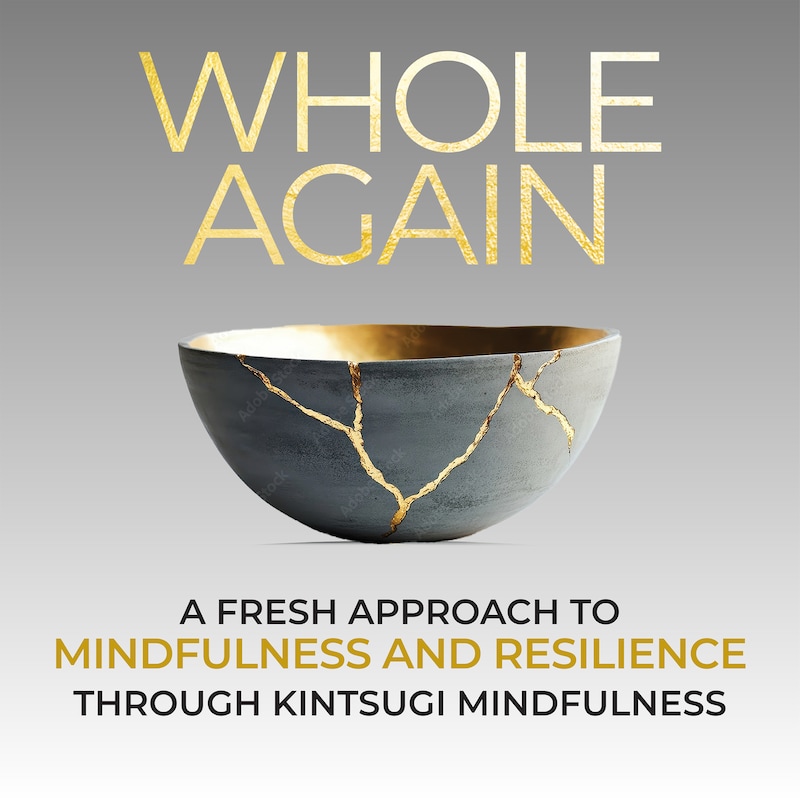
With Whole Again: A Fresh Approach to Healing, Growth & Resilience after Physical Trauma through Kintsugi Mindfulness, listeners explore resilience through personal stories of trauma, scars, and injury while learning to overcome PTSD, imposter syndrome, self-doubt, and perfectionism with self-compassion, self-love, and self-worth. Through insightful discussions on building resilience, fitness, and stress management, as well as mindfulness practices and digital wellness, the show offers practical tools such as breathwork, micro-dose meditation, grounding techniques, visualization, and daily affirmations for anxiety relief and stress reduction. Inspired by the art of kintsugi, the podcast embodies healing as a transformative process, encouraging a shift in perspective from worry and overwhelm to gratitude and personal growth. By exploring the mind-body connection, micro-dosing strategies for emotional well-being, and holistic approaches to self-care, this podcast empowers listeners to cultivate emotional resilience and live with greater balance and intention.
Pick up your copy of Claude's book, Be Yourself at Work, at Powell's.
Transcripts
Hey there, it's Michael. Welcome to Whole again, A show about how to navigate today's uncertainty with more mindfulness, resilience, and a bit more grace. And as we begin the new year together, I have a special conversation to share with you. It's with Claude Silver, she's the Chief Heart Officer at VaynerMedia.
rst learned about her back in:I would much rather hang with people who are coming from a good place in their heart, leading with compassion and empathy and kindness and gratitude and love, and are open to different mindedness, different perspectives, if you will. That's how we create cultures of belonging. It's not through grouping together like-mindedness where everyone thinks the same way.
And I did something with Claude that I have never done before Claude. Or after hearing her speak, I reached out to a speaker and said, simply, that was amazing. I would love to connect and talk further. My expectations were she'd be flooded with messages and mind would not be answered. But I was pleasantly surprised when Claude said, yeah, let's do it.
Let's have a conversation. And that was pre pandemic. And here we are today. And a few weeks ago, I sat down with Claude to talk about her book, be Yourself At Work, the groundbreaking power of showing up, standing out, and leading from the heart. What she shares is valuable regardless of where you happen to be in your career.
You could be starting out and at the most junior level, or you've made a few laps around the block and are leading a multinational company as CEO. What Claude addresses in this book is what we need now to make work work better for all of us, not just some of us. As I share in our conversation, when we change how we work together, we have the ability to change how we live together.
And I know you know, we need to do both now in this moment, we share to change how we live and to change how we work for the better. So we can create cultures that can help us feel whole again. To help us feel like we belong and all of our voices matter because they do each and every one of us. This is how we move forward through this moment we all share so we can create better tomorrows for all of us.
Again, not just some of us. So if you're ready to meet a fellow like-hearted human, get comfortable, sit back. Take a listen to my interview with Claude Silver
Claude. Hi, good morning. Welcome to the show.
Good morning. Great to see you.
Good. Good to see you as well. So I'm gonna start here 'cause your book starts in nature, at least from my perspective. Yeah. So is there a place in nature that. Today lights you up or makes you feel whole again.
So I'm so glad you asked that question because when I go to that place, in my mind, it is always right across the Golden Gate Bridge as you enter into Marin and you Oh yeah.
Go up Mount Tam. Yes. And. Do some hiking and then all of a sudden you're on the edge of the world looking out at the ocean. Maybe Alaska's over there. I have no idea, but it is vast and incredible. That is the place I go inside. Yes, the time. I haven't been there in years, but that's my, that is my place for sure.
That is, it's, it's remarkable. And, um, because I grew up in Santa Fe, New Mexico, I am very much used to that type of environment, which is, um, it's mountainous, but it's also got a lot of browns in it and, and richness of kind of, um. The, the mesa, the sunset, the sky. I mean, it's almost always a blue sky there.
So those are the places I go to when I, when I go,
when you share that, uh, my senses light up, right? Because we, we experience life through our senses, and so we get into nature. We can feel that awe and, you know, being in Santa Fe, being there across the Golden Gate Bridge and looking out into. The vastness, the ocean, we do gain perspective of really around how small we are, uh, but also how essential we are and it, it can help us navigate.
Life when there's challenges. That's why I, I love thinking of nature as medicine. I also like thinking of music as medicine. And of course music plays a role in the whole story. So this is the time of year where people unwrap their Spotify rap. And I know you're on rap, uh, on Spotify rather. So what was the song that was in your head?
This year? Oh, well, let's be honest. I have two young girls, so defying Gravity from the Wicked soundtrack was probably number one. We had a lot of Taylor Swift, obviously. Of course, yes. We had Golden, which is the, oh, yes,
of course. Yes.
I don't think I had any of my music except for Rufuss Del Soul, which I just love.
Oh. Good stuff. Ah,
love, love, love. So that was ranked on there too, but I have to say the kids took priority, which I, I can listen to define gravity all day long.
Uh oh, absolutely. I thought you were gonna go Raffi in baby beluga, so your kids No, for that. But back in the day, you know, top, top song on the list,
we had a lot of Raffi, we had a lot of all, all of it, but.
We have a lot of d um, dance parties at home.
Yeah, I love it. Yeah, I, I love the whole idea of dancing, like no one's watching. I tend to do that in the car. You know, people look at me at stoplights and they're, they probably wonder if I'm having a seizure, to be honest, but, but it's like a. The movement is great, right?
So it just, you gotta move. That's, you gotta move, you gotta move, you gotta listen to music. So your book, be Yourself at Work, the groundbreaking power of showing up, standing up, and leading from the heart, which I love because I do believe that we should be on a mission to surround ourselves with, um, like-hearted.
Folks who are open to different mindedness as opposed to like-minded people. Yes. So why, why this book and why now?
The book has been written inside of me for the last 10 years. It's been something that has been, I've been revising it and revising it and revising it. Why now? Because we are at an inflection point.
orking with this community of:But it's not enough. There are people that don't have the wonderful opportunities that I've had that don't have a place where they feel like they belong in the workplace. They don't have a a, a Gary Vaynerchuk. They don't have a me, they don't have psychological safety, and it's just enough. I can't, you know, I, I'm not gonna sit by and watch that anymore.
Yeah. That's why
I do think I, I agree with you. I think we're at a moment. We're, we're at an inflection point, if you will. As you mentioned, this inflection point can be two decades long. Who knows? It could be two years long, but. Staying on the sidelines is basically handing over the keys to someone else to drive us through this inflection point.
So I love the fact that you decided like now is the time. Uh, we do spend so much time at work and I do, I do believe, I have long belief that if we can change how we work together, we have the ability to change how we live together and we need to change how we. How we live together. And so this whole concept of be yourself at work, uh, in other words like, uh, you know, be you boo Right?
Do your thing, show up. So, so there I'm gonna give you the Yeah. But, right? Yep. Because you, you're not. Necessarily the first person that has said, be yourself at work. So the Yeah. But is like, yeah, Claude, I get it. I, I I want to, but I, I just can't hear. Right. You're, you're just Gen Xer, you know, you were into Nirvana and you know all, Hey, that grunge thing going on.
ith Gary in a great. Group of:I say, you don't need to work with Gary. You don't need to work with anyone special. That is who you are. So why don't you bring the change? If you have a heart to help and you know you thrive best when you are real and not.
Under the, uh, the cloak of a mask or armor, then do that. Why don't you lead the pack? Because I guarantee you there are more people that would want to do what you're doing than want to hide. No one wants to hide at work. They hide because they're afraid. So my friend. Try to look at your fear in the face and say, you know what?
Today I'm just going to inch a little bit closer to showing the workplace who I am, who I am, and maybe that means you're gonna share that you sing all the time in your head. Or maybe that's like you do crossword puzzles every day. It doesn't matter. What matters is that you bloom. That's what matters.
That's your birthright.
I love that. I do. Yeah. We do need to feel trust at work. You know, we could go back to the Google. Project. Yep. But this whole sense of belonging, right? So when we go back to indigenous people, the sense of belonging was fundamental, right? Fundamental. Like you are part of, uh, this tribe, you are part of who we are, uh, all of you, right?
And so we, we thirst for that
Yes. As
humans and companies move at the speed of that.
Yes. And, and to think that. We are, we are so, um, we are so stuck with feeling that other people are looking at us and judging us. That may be the case. That may not be the case, but that can't stop you from being your magnificent self, which you are.
But we need to see that. We need to feel that you matter, you matter. You matter.
And with that, um, try to ease the judgment we place on ourselves. Yes. You know that conver I've often talked about how the most important conversation you have each day is the one you have with yourself. And so when we judge ourselves for not being fill in the blank enough or too much, uh, then we point the finger at other people and we might judge other people that.
Always holds us back from really sharing our brilliance, uh, bringing our energy, uh, building connection, helping us, um, well, in a word, uh, two words feel whole again. And I love, I love that you called that out in this book. I also love the fact that when I was listening to the book at, at times, I wondered like.
Who is Claude writing this for? Right. And so in a very good way, not in a critical way, because there are times where it's like, alright, she's writing this book for someone who's just starting off in their career. And then we'd go a chapter and I, I, I, I don't know, maybe she's speaking to middle management.
And then, then I was like, no, no, Michael. Talking to CEOs, and so I love the fact that there's such great range and agility in how you approach this book. So I, I do wanna touch on CEOs and executive leaders because you talk about emotional intelligence in three pillars, and I love for you to share the three pillars, but as you do so, I'm also curious, we've talked about emotional.
Intelligence probably throughout my whole career. And we're of similar age, so both of our careers, it's, there are plenty of books. Um, you know, before we went to Jeff Bezos, five and Dime to buy books. So you could go to Barnes and Noble and see the leadership section of the bookstore.
Yeah. And
realized there are a ton of books on a variety of different leadership topics.
So, so as you share, I, I, I hope you can comment on why do you think there's still a gap? Even though there's so much knowledge out there that emotional intelligence as a leader is so damn important.
First and foremost, I was that kid that went to borders in Barnes and Nobles and sat down under the leadership management self-help section for hours and hours.
That was me. I, I ate it up. Um, that's what we did. Gen Xers, right? Yeah. So the three pillars are emotional optimism. Emotional bravery and emotional efficiency. To answer the question, those leaders, they have fear. They are still, I believe, living and working in some archaic notion that leadership means top down ivory tower.
I'm smarter than you and I'll tell you what to do. That game is over. Over, over, over these Gen Zs. These gen alphas. No, no thanks. They're not interested and they're not gonna stay at your company. They're just not. And this is a generalization of course, but this top down, I am mightier, holier, uh, more sophisticated and smarter than you, is a farce.
And we've lived in that for so long. That's you and I started our working lives in that type of construct. Yes. Uh, yeah. It's terrible. It's terrible. So why do I, why did I A, you wrote, you said it. Well, I wrote this book for everyone. I wrote this book for high school students, for people entering into the career for you, for me, middle managers, directors, people that are pivoting.
What I'm trying to get across isn't so much emotional intelligence. It is emotional fluency, which is the language of emotion, the language of being human rather than talking like a PhD all day in a robot because the a min, a minutia of people can understand that talk. Why not just talk real, real talk? I feel scared.
Okay. What do you feel scared of? I feel scared that I'm gonna get found out that I don't know what I'm doing. Okay. Well let's talk about it. That's called the imposter syndrome. Let's find the evidence that you don't know what you're talking about. Oh, we can't find any evidence. Right? So what is there evidence of.
Yeah, that you are a different thinker, uh, that you have dyslexia. It's your superpower, and it has helped you find patterns in people. Whoa, that's amazing. So, by the way. The CEOs and the C-suite need to know that too, because they're probably sitting there just with the same type of anxiety, but they've covered it up with so much politic and so much hiding.
So when I'm talking about emotional optimism, optimism is belief in the future, optimism is possibility. Optimism is very much the sun's going to shine tomorrow. I might be feeling terrible today. But I am not a sad person. That incident made me feel really sad, being able to see the possibility, knowing I have agency to change how I think, but only I can do that with support.
Emotional bravery is actually understanding. Okay. Huh? If I want that situation to change, I'm gonna have to take action and ask for something. A conversation, a review, uh, whatever it is, I'm going to have to take a brave step forward and take action, which is again, our birthright and emotional efficiency is literally building speed, building the muscle so that the next time that happens, you get through it quicker.
The next time that team crashes and burns, you don't have to deal with all the drama. Because you've built the resilience muscle. It's faster. Efficiency is what we all want to get better at. Whether or not you're in an organization, that's where speed is a KPI, or you just wanna get better and faster for yourself so that you're not dwelling in the past or future tripping.
So that's literally what it's about and it. It is for all of us, but back to the C-suite, it is time to literally take those shackles off and dance if you wanna dance. I, I, we, we earned it. We earned it. No one wants to come into work and be a robot. I just don't believe that.
I don't believe it either. I think it's time, no disrespect to him as a human, but to put the Jack Welsh playbook that we all grew up on.
Thank you. Uh, like in the back of the book case, it, it, it, the legacy shows us it didn't really work all that well. Like we look back for ge. So we, we, we grew up in a model of command and control in the bottom 10%. They get whacked, right? So it was all around accountability and meritocracy and it, it just didn't work.
So, uh, you know, you um, you just mentioned speed. So in an agency, obviously we gotta move fast. We gotta, we, we gotta go fast. And in your book you have a lot of great examples of times where you took a moment to have. A empathetic conversation with someone.
Yeah.
So, so all this that, you know, you're, you're asking people to step into because we need to step into it does take time.
So how do you, you know, sort of square the, the need to go fast with also some of these, uh. Someone would say softer skills that are so damn hard to do. Yep. That require time. How do you, how do you best navigate that, or what recommendations would you have for folks?
Well, first and foremost, find a relationship with patients for yourself.
Rome wasn't built in a day. There is such a thing as a marathon and there are such a thing as a sprint. What do you need to sprint at? Probably What's on your to-do list today? What do you need a marathon for? Learning how to speak human. Finding enough courage in my bones to go talk to my boss. It's not gonna happen today necessarily.
I need to work on it. I need to get help, coaching, whatnot. But understanding the difference between what is immediate, right? I need to get back to that client today and what isn't. We are gonna rewrite the brief because we struck out that first time. So let's do our research. Let's go back into it. Let the client know we will deliver.
In two weeks time, that isn't urgent. That takes time. You know, we have to simmer. It's just like, yeah, I'm not, I'm not a physics person, but I'm just gonna imagine you boil water and you put the temp, you put the stove on high. That's immediate. I immediately need that water to boil so I can put the pasta in.
Then I need it to simmer. I have a longer time. I don't need to boil. I, it, it doesn't need to be ready right now. I'm gonna go chop the onions and chop the carrots and chop everything else and let it simmer.
It's a good, uh, crock pot versus microwave type of cooking approach. Right, exactly.
Oh my gosh.
Exactly. That's actually a great one.
So that's awesome. So I have one criticism of the book.
Please.
Can I share it with you?
I wish you would.
So I put it up on Audible and I'm like, I'm gonna get like six hours of Claude in my ear. And I'm like, this is gonna be so great. Oh my God. And it starts off, I hear Claude's voice, I'm like, oh yes, this is awesome.
It's Claude like, 'cause we haven't had a chance to talk.
Yes.
You know, we've, we've exchanged messages, but not like voice. Right. We're
all prompts.
And I hear, I hear Gary's voice like, okay, that's understandable. And then the narrator comes on who sounds like a wonderful person. So there's no criticism to her.
But I, I am just sort of curious as an author, how did you make the decision to. Not narrate your own book. Yeah. Uh, because authors do it in a lot of different ways, and I don't think there's one perfect way, but I was just curious as to what your thought process was.
I'm so glad you asked that question, Michael.
As I say in the book, I'm dyslexic. My dyslexia, one of the ways it comes out is reading out loud and I skip words and I skip sentences, and so we started. Just for me to get through the introduction. Took two days, that's two, so five hours each day to get through the entire introduction, which isn't a long time.
Why? Because I skip words and so I had to make that decision, which crushed me because I only to books. I don't read anymore. I only listen. It crushed my soul. So my hope is we can put out another edition where I read it. I just need more time. And it is, it's literally, you know, it's, it's, it's laughable when I'm reading out loud to my kids and they don't really read yet.
Thank God I'm, I mean, I'm like here and there and there and there. Mm-hmm. So it's a real, it's a real thing for me.
Uh, I feel you, um, in your, it brought me back to elementary school. Scariest things for me growing up was reading out loud in class I to, to this point. I, I will share during Passover during a Seder,
yes,
I am the guy reading ahead.
To see what part of the ha I have to read and if there are any tough words. Yeah. And so I, I, I'm not really paying attention. I'm just really trying to figure out how long is everyone else going to read before they hand it off to me. And then I'm thinking, God, give me, God, give me something. Give me the shortest passage, possible passage.
Yeah. Gimme one of the, uh. You know the boils or the Yes.
Yeah. Yeah. Gimme the 10 plagues. I can do the 10 plagues. Do the 10 Gimme that. That's right up my alley. I can crush the 10 plagues, but going through some of the other stuff.
Yeah.
Terrifying. Terrifying. It's so, yes. Oh, I so. So love your answer, and thank you so much for writing the book and coming on and helping us, uh, feel whole again in not only your, your writing, but uh, everything that you share.
So I, I so appreciate you.
I'm back at you. Thank you for doing the work.
Isn't Claude, as I would say, awesome sauce. I love the energy and perspective she brings to help us work better, and I know her book will make a meaningful difference if you pick up a copy or listen to one. And I'll put all the links in the show notes because, hey, this is a podcast. It needs show notes, so lemme know what you think after you get done reading it and what you plan to implement.
There are a lot of different ways, small steps that you can do consistently. This isn't, as she mentioned, a huge sprint. We're not gonna change overnight, but we can take small, consistent steps to creating better cultures, cultures of belonging so we can help more people. A rising tide indeed lists all ships.
I so appreciate you being part of our whole again, community. If you haven't yet signed up for the free text messages I send out a few times a week, you can do so by texting whole again to 8 6 6 6 1 2 4 6 0 4, and I'll set you up. And if you're interested in learning about the work I. From the teaching I share on Substack or the partnering with executive leaders through coaching, or even the speaking I do to help organizations perform in today's uncertain times.
Please reach out because I would love to talk with you about how we can make 20 26 1 of your most meaningful years ever.
And if you wish to learn more about creating beautiful ripples and how to prevent a bad moment from turning into a bad day, please visit my website, Michael O'Brien schiff.com. And sign up for my newsletter called The Ripple Effect, and join us each Monday, Wednesday, and Friday here at Whole Again, and discover how you can heal, grow, and become more resilient and celebrate our scars as golden symbols of strength and resilience.
Until then, remember, you can always come back to your breath. You've got this. And. We've got you.