Shownotes
Season 25, Episode 104 - Shaun Boyce, Bobby Schindler
Summary
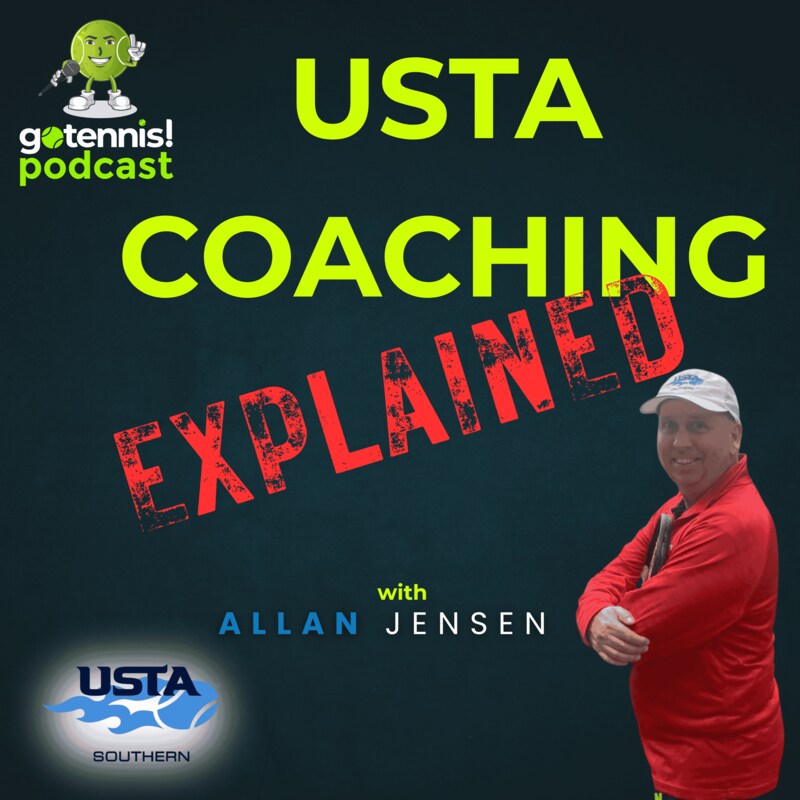
In this episode you'll discover Allan Jensen. Allan is the Hispanic Outreach Director for USTA Southern as well as a Coach Developer for USTA Coaching.
Keywords
tennis, financial support, emerging players, professional circuit, travel costs, opportunities, sports funding
Full YouTube Video: https://youtu.be/bA14577NZ5U
King of Tennis Answer: https://youtu.be/9vKjZzxpWis
Contact Our Hosts
- Shaun Boyce, RSPA: shaun@americanracketsportsassociation.com | https://americanracketsportsassociation.com/
- Bobby Schindler, RSPA: schindlerb@comcast.net | https://letsgotennis.com/windermere
- Geovanna Boyce: geovy@regeovinate.com | https://regeovinate.com/
- GoTennis Website: https://letsgotennis.com/
More about USTA COACHING
More about Allan Jensen
https://www.linkedin.com/in/allan-jensen-943b6519b/
Register for the Hispanic Coaches Workshop
Join Our Community
Check out the GoTennis! Atlanta Facebook page for deals, updates, events, podcasts, news, stories, coach profiles, club information, and more.
Support the Show
- Donate Directly: https://gotennispodcast.captivate.fm/support
- Crypto Donations: Get into crypto with https://coinbase.com/join/PEWRLWK?src=referral-link
Start Your Own Podcast
Considering your own podcast? We recommend Captivate: This podcast is hosted by Captivate, try it yourself for free.
Transcripts
Hey, hey, this is Shaun with the GoTennis Podcast, powered by Signature Tennis.
Speaker:Check us out at LetsGoTennis.com, and we invite you to the Hispanic Coaches Workshop
Speaker:at Atlanta Athletic Club on November 16th.
Speaker:Also, we're always looking for Spanish content, so if you are in Hispanic coach looking
Speaker:to collaborate with the podcast, please contact us.
Speaker:And now let's get into our recent conversation with Alan Jensen.
Speaker:Alan has a fantastic story starting out in Argentina playing college tennis in Hawaii
Speaker:and ending up in Atlanta.
Speaker:He isn't the Hispanic outreach director and coach developer for USTA Southern.
Speaker:Have a listen and let us know what you think.
Speaker:Who are you and why do we care?
Speaker:Well, thank you for this opportunity, Bobby and Shaun, for being here.
Speaker:Well, I give you a little bit of a background of myself.
Speaker:I am originally from Argentina, from Buenos Aires, Argentina.
Speaker:I played juniors down there, and then I came to the States and played for BYU Hawaii.
Speaker:And after I graduated with a degree of physical education with a commercial emphasis, I decided
Speaker:to get into the business of tennis. And when we moved, when I moved with my wife from Hawaii,
Speaker:to Atlanta, I started working in the Jewish Community Center for 10 years.
Speaker:I was the director of tennis there.
Speaker:First I was the head pro.
Speaker:I was working under Paul Warthellamaya, a very good friend of mine.
Speaker:And then when he left, I became the director of tennis on this facility that it was a private
Speaker:facility.
Speaker:After that, I went to work for an ENSELE Golf Club for six months.
Speaker:It was a little bit too far away from me.
Speaker:I loved it, but it was too far.
Speaker:And then I got a job at a Dunwoody Counter Club that I was there, the director of women's
Speaker:tennis.
Speaker:And I was there for a year and a half.
Speaker:After that, I got the director position at Madlock Bridge, Tennis Center.
Speaker:Right there in Jones Creek.
Speaker:I was there for five years.
Speaker:And then I moved into the role that I'm currently in right now that it's USDA Southern.
Speaker:I'm the manager for Hispanic outreach and trainings.
Speaker:So what basically what I do is I promote tennis to the Hispanic community.
Speaker:And also I now with a new USDA coaching, one of the three people that are in charge of
Speaker:in the Southern section with USDA coaching.
Speaker:The good thing, what I like about all this is that I've been, I had experience of being
Speaker:director of tennis in different areas.
Speaker:For example, I forgot to tell you too that I was working in a resort in Hawaii.
Speaker:So I got the good thing about it is I got experience of working in four different areas.
Speaker:Counter Club, a private facility, a resort, H.O.A. and now I'm in the USDA.
Speaker:So it's been a great journey.
Speaker:I love it and I enjoy every minute.
Speaker:So you mentioned you are one of the three coaches in the South, you say, that's targeting
Speaker:this new USDA coaching initiative that's kind of been a big topic recently.
Speaker:So you talked to us about that?
Speaker:Yeah.
Speaker:Well, there's three people that are in the office at the USDA Southern that are in charge
Speaker:of the coaching, USDA coaching in the Southern section.
Speaker:Now we are not doing all the stuff.
Speaker:We have other coach developers through the Southern section that will be delivering those
Speaker:courses.
Speaker:But we are, the three of us, we manage the day-to-day things about the USDA coaching that started
Speaker:in August 15, 2013.
Speaker:It's been a great, you know, we have over 5,000 in the country that sign up and 800 are
Speaker:in the Southern section.
Speaker:And 5,000 coaches signed up.
Speaker:Now there are four different ways, four different versions of this where there are levels.
Speaker:I signed up for the free one just to get kind of to see what's going on and what's happening
Speaker:and where are the levels?
Speaker:Are we already certifying coaches?
Speaker:Is this just a membership at this point?
Speaker:What does it look like?
Speaker:Well, we just started rolling out the membership.
Speaker:That means that we are, right now we are people that want to become, they have four different
Speaker:areas.
Speaker:They can membership.
Speaker:There's one, the free one, there is the baseline that they don't need to, you know, it's a free
Speaker:ticket, just to, you know, a couple of benefits.
Speaker:Then you have the rally that is $49.
Speaker:That has a little bit more of, you know, stuff that we, you know, things that we are promoting.
Speaker:Then we have the pro that is the 149 and that is the one that basically is what people
Speaker:already have insurance.
Speaker:They don't need insurance.
Speaker:They can go into this, into that membership or the pro class that is the one that they can
Speaker:get full benefits and get the insurance for them.
Speaker:So there's the four different versions.
Speaker:And like I said, I signed up for the free one because I want to get the emails.
Speaker:I want to know what's going on as a certified coach.
Speaker:I'm not sure what to do next, meaning is this, what is this replace?
Speaker:Is this something that's cheaper than something I already have?
Speaker:Are you guys going to want to retest me?
Speaker:Like there are so many questions that everybody has about this USDA initiative coming in because
Speaker:it's competing with RSPA and PTR and some others directly where it used to be a bit together.
Speaker:It used to be a little more friendly.
Speaker:So now there's a competition here of what you're offering is a struggle for them because
Speaker:I'm RSPA, Bobby is as well.
Speaker:We love to tell the story that we got certified on the same day, the same place.
Speaker:That's where we met.
Speaker:That's always fun.
Speaker:So we'll skip that part, Bobby.
Speaker:I think people have heard that before.
Speaker:But now, does USDA expect us to switch over?
Speaker:It's cheaper.
Speaker:Is it better?
Speaker:Do we even know yet?
Speaker:Well, just remember this, that USDA culture is only going to be tennis really.
Speaker:RSPA and PTR, they have the racket sports.
Speaker:That means they have the other sports.
Speaker:So the first difference is that we are just going to take care of the tennis area.
Speaker:Pickable, Fadel, Squash, Rocketball, we are not going to get into that.
Speaker:We are United States tennis association, so we are just staying as in tennis.
Speaker:That's one of the main difference.
Speaker:So we are not competing.
Speaker:We're just providing some other options to people to go.
Speaker:We are going to do tennis.
Speaker:If you need to go and get a certification of PTR or pickable, you are not going to be able
Speaker:to get that through us.
Speaker:So that's the one of the main difference with it.
Speaker:And the second one is, I think that you as a tennis pro, you need to see what you're
Speaker:going to do anywhere you get the most benefits out of.
Speaker:Basically, you need to go and compare what you're paying and what you're getting out of it.
Speaker:One of the biggest benefits that I see that USDA is, they got the tennis drills dot to
Speaker:me.
Speaker:That usually it's like $200 a year, here you got it with your membership.
Speaker:So you're getting some benefits that we were not able to get in the other ones.
Speaker:So like I always say, you need to go and see which association is the one who's going
Speaker:to give you the best information and the best thing.
Speaker:We are not.
Speaker:We are just tennis only.
Speaker:So that's basically it.
Speaker:That makes sense.
Speaker:Bobby, you got questions on the coaching side?
Speaker:No, that's a clear differentiator right there.
Speaker:In my eyes.
Speaker:Yeah, just remember to just remember to that there are social, you know, right now we started
Speaker:with equivalency.
Speaker:So that means that if you are, let's for example, RSPA professional, you are going to get
Speaker:a certain there's a like a little equivalency slide that will tell you where you stand.
Speaker:If you are a master pro, you're going to get into the master professional group that is
Speaker:the highest one that you have that you can be.
Speaker:So right now we're just if people wants to come over, you know, they can come over, they
Speaker:can see where they stand and then get the education.
Speaker:We are going, we are getting, you know, we people who transfer, you know, they will give
Speaker:them a equivalency where they are going to be standing.
Speaker:So there's got it.
Speaker:I'm the P 3500 tennis coach and Bobby's the RS 3000 and we have that same concept when
Speaker:we come over.
Speaker:That makes a lot of sense and that is going to be easy hopefully for people to understand.
Speaker:Yeah.
Speaker:So we're not giving up something.
Speaker:We're still offering you, I'm speaking as though I'm USDA.
Speaker:We, the USDA is still offering the equivalency like you said, that word is good because it says
Speaker:you've worked hard to get here.
Speaker:We had conversations, Bobby and I have with people that have been with other organizations
Speaker:for decades and they're saying, well, what about this work?
Speaker:What about all this education?
Speaker:How does that get displayed on my new bench?
Speaker:Exactly.
Speaker:So they don't have to do any, they will have to continue on education like we always do, but
Speaker:if you're not certified, you are going to get the equivalency to that.
Speaker:And now for the people who are starting in the business, they will have to go through, you
Speaker:know, the coaches fundamental workshop, the, the pray facilitator that they are changing
Speaker:names for next year, but you have to go through the process.
Speaker:So, you know, it's like everything, you know, you get grandfather in because you already
Speaker:did your, your turn, you know, you worked hard, you got your certification.
Speaker:And then if you want to move to the next level, then you, you will have the opportunity to
Speaker:go ahead and, and work your way up.
Speaker:You know, so right now we only have, right now is we, we are working on the equivalency,
Speaker:starting in January.
Speaker:And it will be starting with a, with a whole process of certification.
Speaker:So people will be able to like, if you have a new pro and your staff, that they will be
Speaker:able to go ahead and just start the president of, of, of getting their certification.
Speaker:Got it.
Speaker:Makes sense.
Speaker:And you also mentioned there's a Hispanic workshop coming up and that's in the Atlanta area.
Speaker:That's correct.
Speaker:I, one of my things that I took when I started with this position, the manager for Hispanic
Speaker:Outreach was to try to create a continuing education for the tennis pros.
Speaker:And you know, we, this is the fifth year that I'm doing it.
Speaker:We have a good followers, a lot of good people.
Speaker:They're a speaker as well as participants.
Speaker:And the idea behind it was to, you know, we as a Hispanic people, we like to feel comfortable
Speaker:in the settings that we're in.
Speaker:And, and, and, and you know, some people saying that I'm doing this and I'm trying to divide
Speaker:this Hispanic with the American speaking, you know, people and I'm like, no, I'm not.
Speaker:I'm just trying to get to them to feel comfortable and feel welcome.
Speaker:And then know that I will be in the other RSPA or PTR or whatever that I, you know, I was
Speaker:there for them that they could come over and attend those conference and be able to know
Speaker:someone.
Speaker:You know, I remember when I started, you know, 25, 26 years ago when I came to Atlanta, you
Speaker:know, I didn't know anybody and nobody talked to me, you know, because I had an accent, you
Speaker:know, and I was kind of like different.
Speaker:So not because of my hair, okay?
Speaker:I was going to ask.
Speaker:No, no, no, no, but it was, you know, and then I said, you know, when I, when I got this
Speaker:position, I said, well, I want people to not to feel, you know, left out and knowing that
Speaker:they have someone there that they can talk to and find more information about USDA, about
Speaker:tennis itself, you know, I'm always a phone call away from people that they want to feel,
Speaker:you know, because sometimes we ask questions and, you know, that sometimes it doesn't make
Speaker:sense in English for us, but then when we do it in Spanish, you know, it comes out easier.
Speaker:So we have this event at Atlanta Thread Club on November 16th from 924.
Speaker:And we would like to see you, you know, whoever is there, whoever wants to come, you're welcome,
Speaker:you know, it's in Spanish.
Speaker:And we have a couple of great speakers.
Speaker:Yeah.
Speaker:Well, because I might be changing it a little bit, I might have someone to translate in the
Speaker:future.
Speaker:So I might do something like that.
Speaker:But we have Fernando Segal, who is the director of the GPTCA.
Speaker:I think some of you already did the course with him and he also was at the RSPA summer conference.
Speaker:And we have Gustavo Granito, who worked for ITF for many, many years.
Speaker:And they are two great, great speakers as well as they are very knowledgeable about the game
Speaker:of tennis.
Speaker:They've been around for a while and they did a lot of good stuff for a lot of different
Speaker:tennis associations around the South America and Central America and then in Europe.
Speaker:So it's going to be a great, great time.
Speaker:Don't forget Atlanta Thread Club November 16th, 924.
Speaker:Awesome.
Speaker:We'll put all that in show notes as well.
Speaker:Make sure there's a link to it.
Speaker:And there's a registration that we'll link to as well for those of one of its end.
Speaker:Now Bobby, I think in my head I've been planning this transition.
Speaker:So we're going to see how this goes.
Speaker:So when you first came to Atlanta as well because you're from New York and you got an accent.
Speaker:Did you have to say, Bobby, I just feel similar.
Speaker:It's coming to New York with my accent.
Speaker:And then being histanic with Shinler is the last name.
Speaker:I'm just a complete anomaly here.
Speaker:So, you know, they said, "Genson," and they're like, "You're not Hispanic, you know, but
Speaker:I'm supposed to give you a little bit of a background.
Speaker:My mom was Norwegian, and my dad was Danish."
Speaker:So that's why I know it's that interesting, isn't it?
Speaker:Very much so, yeah.
Speaker:Well, we joke a lot because Bobby's got obviously the German or Jewish last name with the
Speaker:Hispanic mother, but doesn't speak Spanish.
Speaker:So he can't consider himself Hispanic technically, in my opinion, but I'm not the arbiter of those
Speaker:things.
Speaker:But I like the idea of Hispanic.
Speaker:If you have a 1% of Hispanic, he's his Hispanic.
Speaker:Come on.
Speaker:Well, my last name was that is so.
Speaker:If I had my mother's last name and that is like, "Don't, if you ever met Hesseke, O'Neal,
Speaker:Virum, that you wouldn't have doubted that I came from Hispanic."
Speaker:And the fact I cannot say H and U together, that's my calling card.
Speaker:That's where you can tell that my grandmother now is a very frustrating that she was the lady
Speaker:who raised me until I was three years old, so Spanish should be my first language most
Speaker:definitely.
Speaker:But I do have speech impediment as a result of it, so that's good.
Speaker:Well, Justin, I used to be in, you know, when I went to school and I had to do it like
Speaker:right up power or whatever, I would mix the three languages.
Speaker:English, Spanish, and Danish and Norwegian, I would just mix it up.
Speaker:You know?
Speaker:Yeah, I think I see that with one of our friends is Sebastian and he's got South African
Speaker:mother, I think, his Hispanic father, the third generation tennis prototype.
Speaker:But he speaks three languages and every once in a while when his family just switches
Speaker:the language over to something else, just to kind of keep it fresh.
Speaker:Yep.
Speaker:That'd be something I, at some point I'll do when I'm down an Ecuador with my life at some
Speaker:point I'll flip it over just see if I can keep up with my own own.
Speaker:Well, she needs to drop you off in the middle of the city and then she disappears and then
Speaker:you have to figure out how to get back home.
Speaker:Yeah, exactly.
Speaker:Here you are in Kito, Sean.
Speaker:Let me see it.
Speaker:Oh, yeah, exactly.
Speaker:I was just in the state when I came to the states, there was not that many Hispanic tennis,
Speaker:you know, tennis players in NCAA or in AIA.
Speaker:And you know, there was no other option I need to talk speaks English.
Speaker:And you know, that was that was kind of hard a little bit, but you know, after 27 years,
Speaker:I overcome that.
Speaker:Well, we joke with Bobby's transition because I think it's harder learning a language is
Speaker:a lot harder than learning to be nice to people.
Speaker:So you really got to come down into the south out of New York and be like, okay, it's easier
Speaker:for me to learn Spanish than it is for me to learn to be nice to people.
Speaker:That's actually a more difficult thing to do.
Speaker:So we encourage and say thank you to Bobby for learning that skill because we joke with
Speaker:my wife all the time.
Speaker:She's like, when you go there, you just assume everybody's going to be mean to you.
Speaker:It's just part of the deal.
Speaker:But we were getting a little sidetracked there.
Speaker:Sorry.
Speaker:No, I guess so.
Speaker:But we've covered who you are and why you're here.
Speaker:You're a unique figure because not because you're Norwegian and from South America at the
Speaker:same time.
Speaker:But because of what you're doing with Hispanic outreach, you handle some of the DEI initiatives
Speaker:for USDA Southern and you're also on the American Racketsports Association Georgia Board of Directors
Speaker:helping them do what they do.
Speaker:And we appreciate everything that you do because of the connectivity and the experience
Speaker:that you bring because there's a knowledge there.
Speaker:It's one thing to be a tennis coach and then kind of learn to run a business in the tennis
Speaker:world.
Speaker:It's another thing to go into USDA and actually work on these initiatives and figure
Speaker:out how to get these things done.
Speaker:Give us kind of a short version of what a day or a week in the life of Alan Jensen is
Speaker:because you travel a lot.
Speaker:Yeah, I travel a lot through the South.
Speaker:We in the Southern section we have nine states.
Speaker:So I cover all the nine states and basically is my thing is I want to put records on their
Speaker:hands of the kids and adults as many records as I can.
Speaker:So I go to festivals, I go to schools, I go to activities that they have.
Speaker:You know, sometimes they go to a business meeting from a Hispanic association in Columbus
Speaker:for example.
Speaker:And that is one thing that I do.
Speaker:I just bring records, give it out and as you know, give out.
Speaker:So I'm on the phone a lot, I'm flying a lot, traveling a lot through the South.
Speaker:Usually when I go to a festival, you know, we might not this year because with all the
Speaker:things that are happening, but in years past, you know, there was one festival that were
Speaker:like 20,000 people coming through.
Speaker:So they are you're able to touch a lot of a lot of people that, you know, they might have
Speaker:never thought about tennis as a sport.
Speaker:And then you have a couple of nets, you have a couple of records, they start playing tennis,
Speaker:they start liking it.
Speaker:Boom, I gave them out.
Speaker:I will say that in the last couple of years, two, three years, I might have given out like
Speaker:around a couple of thousand records.
Speaker:You know, and my thing is, you know, why I started to do that is because when I was little
Speaker:and this is how I started playing tennis, I found a racket in the basement of my house and
Speaker:I asked my dad, he said, what is this?
Speaker:You know, he said, well, it's a racket, you play against other people, but you know, here,
Speaker:you can hit it against the wall.
Speaker:And I started to play against the wall and then I got hooked up.
Speaker:I broke a couple of windows of the kitchen.
Speaker:My mom, instead of getting upset at me, said, hey, we have something here in her hands.
Speaker:So she said, well, you know, there's clubs close to the house, it was two blocks away.
Speaker:So she said, I will take it, take some lessons.
Speaker:So after that, you know, I spent all my life just playing tennis.
Speaker:So when I got this position as a manager of a Hispanic outreach, I said, you know, I want
Speaker:to give out the rackets, I want to give them out.
Speaker:You never know when someone will pick it up.
Speaker:Someone will happen like me that I find it in the basement of my house and then I started
Speaker:playing.
Speaker:So, you know, that's what I do and that's what I love to do.
Speaker:And when I see the kids taking the racket with them with a couple of tennis balls and the
Speaker:parents are excited and they ask for information about tennis, that is what it's all about.
Speaker:And, you know, also the other thing too is I help out people who want to start a program
Speaker:that is programmably Hispanic.
Speaker:So I help them out how to get funding for that with grants that USDA, diversity and inclusion
Speaker:has.
Speaker:So I start working with them to get the thing.
Speaker:I have, you know, one of my sex role was I had one group of, it's a group in North Carolina
Speaker:that she wanted to start a program.
Speaker:So I started, you know, helping her out with grants, giving her money, giving her equipment.
Speaker:And now she has two sites, she has almost 200 kids going and doing tennis plus she got
Speaker:a van with the log of her academy or program.
Speaker:And she goes all over the city with that, you know, advertising tennis for the Hispanic community.
Speaker:So, you know, those are the things that, you know, I do a lot is trying to, when I find someone
Speaker:who's interested in helping them out.
Speaker:And also it's not only me, you know, it's the state's offices too that help out too.
Speaker:So it's a joint effort with all of them.
Speaker:It's always good when you love what you do, Bobby.
Speaker:You can care.
Speaker:Future she only.
Speaker:Yep.
Speaker:Where Bobby always says, I just love hitting the ball.
Speaker:Bobby figured out, you know what, people will pay me to hit the ball.
Speaker:All right.
Speaker:I got an idea.
Speaker:Let's go do this and then trying to figure out how to spread it and spread that love because
Speaker:Bobby, we all, we love everybody's origin story.
Speaker:Like, how did you get into it?
Speaker:What did it happen that really got you hooked?
Speaker:And sometimes it isn't that seminal moment that we talked about, oh my god, I had you
Speaker:got to talk to me.
Speaker:I saw the guys make, I want to be like that.
Speaker:But sometimes it's just hitting on the wall.
Speaker:That was evidently like Alan.
Speaker:I think that's why we like the fast track.
Speaker:It's like, this, you know what?
Speaker:This, yes, I can do this.
Speaker:This is good by myself.
Speaker:I don't even need a friend.
Speaker:I don't have to be nice to anybody.
Speaker:I don't have to worry about getting paid or not getting paid.
Speaker:This is great.
Speaker:I think when you start on a wall, you also have a greater appreciation for a court.
Speaker:You've gone to, you know, this is now the big time.
Speaker:I was a garage door.
Speaker:Hey, you know, we talked, the USDA made the deal with Jorge Capastano.
Speaker:He was the same way.
Speaker:You know, he started on a wall and he then he worked his way into a club.
Speaker:I think the folks that start on the wall and the garage probably have a little more
Speaker:appreciation for where we ended up.
Speaker:And that's why at advanced stages, we're still so involved where, you know, you hear the
Speaker:hall stories of the division one athlete who quit.
Speaker:So that's, you know, that's sad.
Speaker:We don't want to lose those.
Speaker:So I think there's a good thing to the origin story that has a wall in the background.
Speaker:Yeah, no, I think the wall was great.
Speaker:And then, you know, in Argentina with the walls, you know, the courts were always full.
Speaker:So you only got like an hour of being on the court to play.
Speaker:So you were, you know, playing against the wall and then going back to the court like 10 minutes
Speaker:before your time and work on your volley to volley until they were like, okay, the time
Speaker:is over.
Speaker:Now it's my turn and we'll go in and we were just ready to play.
Speaker:We didn't have to warm up and all that stuff because we already warm up before.
Speaker:So we went that hour, we were able to go out and just play a match and play, you know,
Speaker:play and then get out again and wait for your turn again.
Speaker:So.
Speaker:And the wall in that vein is a great barometer of how serious somebody is.
Speaker:I always get a beginner and wind him here.
Speaker:We have a hitting wall and they always tell me how quickly, you know, how fast can I improve?
Speaker:I said, well, if you were truly serious, let's go down to court six because that's where
Speaker:our hitting wall is because this is where you're going to have to spend a lot of time.
Speaker:Then we show them a few drills.
Speaker:This is to hit ice don't back up because you're going to spend more time chasing after
Speaker:them the ball.
Speaker:Then you're going to be hitting it.
Speaker:Be realistic.
Speaker:You know, hit from a few feet.
Speaker:You do that 20 times in a row.
Speaker:Take a step back.
Speaker:Do it 20 times in a row and more.
Speaker:Take a step back.
Speaker:You know, that's a couple of months worth right there, but they don't know that.
Speaker:But it's a great way to see how somebody's dedicated or they, you know, they saw all the
Speaker:people play it said this must be easy and then, oh, it's not easy.
Speaker:And you know, do they stick with it once you've the realization hits because another great
Speaker:thing obviously that's going on with tennis right now is all the health benefits that are
Speaker:coming out.
Speaker:So there's yet another incentive to get people involved.
Speaker:And hopefully we can use that as our organizations to get people past some of the hurdles that
Speaker:they're going to hit with improvement, you know, getting static on the improvement curve.
Speaker:Well, you know, like I give you an example.
Speaker:This I had a group when I was at a malach age.
Speaker:I had an undergroup and I had two groups, one who was able to play matches and one who was
Speaker:not.
Speaker:And the people who the parents of the ones that were not playing in the team, they were like,
Speaker:well, John is is is is friend of Matthew.
Speaker:Why is it that they're not together?
Speaker:And I said, well, this group is playing already matches.
Speaker:They are working hard and they're working.
Speaker:And then they will say, well, what do I need to do?
Speaker:And I said, well, I need to take more lessons.
Speaker:And I said, no, no, what I need you to do is continue with the group lessons, maybe take
Speaker:a 30 minutes prior lesson with me.
Speaker:And then you need to go out and play with him.
Speaker:You need to go out and play.
Speaker:You cannot just pretend that taking a lesson will get you to play if you play only once
Speaker:a week.
Speaker:You need to play two or three times a week with him.
Speaker:I'm not not two hours.
Speaker:Just go for 30 minutes.
Speaker:Go and hit some balls.
Speaker:After that, those kids, you know, I could see that parents going out and play.
Speaker:And they and then I will put him back into the team and then I was rotating.
Speaker:And then after that, I started getting a lot of kids because they saw that how important
Speaker:it was to play and not just play once a week.
Speaker:Yeah, I'll reference something.
Speaker:Another board member of the American Racketsports Association in Georgia said to me recently,
Speaker:he said the kids that ended up having the highest success rate, going pro, college, whatever
Speaker:it is, I had to drag them off the court.
Speaker:It was, I didn't have to say, come on, let's play more.
Speaker:If you have to ask, am I doing enough, you're not.
Speaker:Because the idea is he had to send them home to rest.
Speaker:And those are the kids we addicted is usually the wrong, it's, it's got a negative, but that's
Speaker:what this is.
Speaker:Yeah, that's the addiction, right?
Speaker:This is true.
Speaker:Yeah, it's a good addiction.
Speaker:A good addiction, there we go.
Speaker:So we can, we can take that word and take away the stigma to it.
Speaker:Yeah.
Speaker:All right, so let me jump into our final question for Alan, because I think we covered everything
Speaker:we needed to and now we appreciate your time, of course.
Speaker:And we end with my favorite question because I get a chance to kind of find out, find
Speaker:some of the best ideas that are out there.
Speaker:And I think that's one of these Bobby and I like to do.
Speaker:We call each other afterwards.
Speaker:But was that a good idea?
Speaker:Do we want to talk about that more?
Speaker:Should we consider that?
Speaker:But the idea here is, Alan, if you were the king of tennis, so whether it's Atlanta, the
Speaker:South, Southern United States, the world, professional, social, any version of tennis at
Speaker:all.
Speaker:Are king of tennis, is there anything you would do or change?
Speaker:Well, I think I'm going to answer that in two parts because we always think about the
Speaker:professional players.
Speaker:All right, so in the professional area, I would say that I think that a guy like Sinner
Speaker:doesn't need to win like $3 million, winning a tournament.
Speaker:I think that money should be going down to the futures and challengers because there's
Speaker:a lot of people, there's a lot of players that don't have, that they are very good players,
Speaker:but they don't have the opportunity to make it on the pro circuit because they don't
Speaker:have the money to travel.
Speaker:You know, there's a lot of, you know, I know stories about in Argentina that people were
Speaker:great players, they were all the top players were inviting them, by him to come and play
Speaker:because he was a great player, but he didn't have the money to go on and travel.
Speaker:So I think one, that area over there, I think it should be, you know, giving more money
Speaker:to the bottom because how long does it take a player to develop and getting the top 100,
Speaker:maybe when they turn 24, 24 year old?
Speaker:So I think that between 19 and 24, you know, that's the time to develop and that's the time
Speaker:that I think that the players need to get some more money so they can be able to survive.
Speaker:And then the next one that it will be more like in the grassroot is that we always talk
Speaker:about tennis as an expensive sport, okay?
Speaker:But it's expensive in what? For the people who are already playing tournaments, I'm traveling
Speaker:around the country that they need rockets, they need shoes, they need clothing, they need
Speaker:hotels, food.
Speaker:Yeah, that is expensive because, you know, a rocket is 200 bucks.
Speaker:You know, tournament is, you know, going to a tournament, you have to pay $150, $160 a night.
Speaker:So that is expensive but when I go to the grassroot that we want to have 35 million people playing
Speaker:tennis in 2035, that's where we're going to get the people in the grassroot.
Speaker:And you know, if you think about it, that's why I was able to give that many rocket hours
Speaker:because a rocket cost 120 bucks maybe, retail 20 bucks, you know, they can buy a pair of shoes
Speaker:and go out and play a can of all cost four bucks.
Speaker:And then they can go to a public facility and pay $5 for to play tennis.
Speaker:So it's not expensive but when you start thinking about, okay, we're going to play leagues, not
Speaker:leagues but when you start playing a high level, yeah, then it gets a little bit more expensive
Speaker:because you know, you start thinking, okay, well, now I want, you know, the spare of shoes that
Speaker:cost $200 and now I want the rocket and then it goes up.
Speaker:So those are the two things that I will try to change a little bit and I think that the
Speaker:grassroot thing is trying to promote that tennis is not expensive to start it.
Speaker:You know, I would say with $50 you can play.
Speaker:You know, so yeah, and we have a different version of accessibility and affordability here
Speaker:and so.
Speaker:So as Bobby can attest to playing up north is different?
Speaker:Yep.
Speaker:Yes.
Speaker:Oh yeah, we played indoors.
Speaker:I mean, you know, it was a season.
Speaker:It was, you know, that was my winter sport because when we got warm again, I was back on
Speaker:a baseball field.
Speaker:So that was the irony.
Speaker:But in that, I think that's the great, you know, down here.
Speaker:Why it's so, why it is addictive?
Speaker:You can do it every day.
Speaker:You know, it doesn't, you don't put it away.
Speaker:You know, I think about what these kids play and what I've played the amount of tennis I've
Speaker:played over the last 30 years.
Speaker:I played two days a week, three days a week tops, four months out of the year when I was
Speaker:growing up.
Speaker:Up until it was probably 14 or 15 years old.
Speaker:So, you know, I think about what I, you know, just having the access down here.
Speaker:As you said, Alan, just putting in the 25, 30 minutes a day, which I would have been able
Speaker:to do with a wall.
Speaker:You know, where it could have gone.
Speaker:So I do think that's, and I also like the idea, frankly, the way that one feeds into the
Speaker:other.
Speaker:If we were to increase, you look at a sport like football, and I know it's violent.
Speaker:So there's a shortest career span.
Speaker:But you have 30 teams with a roster of 50, some more players.
Speaker:There are 1,500 people getting paid a very livable income during that time period.
Speaker:You might have 50 to 100 men and women tennis players making an income.
Speaker:Doesn't that affect the amount of people that enter the sport?
Speaker:And I also use the fact that, you know, people asked me, well, what was my ranking when it's
Speaker:a kid?
Speaker:And I was like, ranking, there were 20 kids better than me in my club.
Speaker:I didn't need to travel to lose.
Speaker:I could travel to lose any day of the week.
Speaker:Now it was a moment in time when you sit back and look, Chris Garner, I mean, we were loaded.
Speaker:It was the tennis boom, Long Island.
Speaker:It was the one club that everybody on the island went to outside of Port Jeff.
Speaker:We've been Suffolk County version.
Speaker:But we didn't need to travel for competition and do the tournaments because we had so much
Speaker:of it.
Speaker:And I think that's the progress route for programs.
Speaker:Would that alleviate some of the expense that you mean when you try to become a serious tournament player?
Speaker:So I think that the two could very much feed off each other in that capacity.
Speaker:And that's why the benefit that we have here in the south that we can play all year round.
Speaker:And I think that's the goal of the course.
Speaker:Where I live, I can find 50 courts in a radius of two miles, something like that.
Speaker:Then you go to another state.
Speaker:And there's not that many.
Speaker:One funny thing that happened to me when I started was, you know, I was with the mentality Atlanta.
Speaker:We have what, how many courts do we have 2000 or something like that in Atlanta area?
Speaker:And I was like, oh, let's do this in the in a park.
Speaker:Well, we don't have that many parks.
Speaker:Well, let's do this in a facility at HOA.
Speaker:Well, we don't they they are not used to have tennis courts.
Speaker:So, you know, we were like, I was like, okay, this is a stock.
Speaker:So we had to figure out how we can do it.
Speaker:And like you said, in New York, yeah, definitely it's a more expensive tennis, you know, because of indoors.
Speaker:Yeah, that's the only place you can play.
Speaker:But, you know, here in the South, we're lucky that we have so many courts and so many people around that they play tennis.
Speaker:Well, Alan, Alan, this has been fantastic.
Speaker:I really appreciate it.
Speaker:And we really appreciate it.
Speaker:And we will follow up again.
Speaker:We're going to get this out and make sure everybody knows about the Hispanic conference that is November 16.
Speaker:I'm going to get this right 16 Atlanta athletic club all day.
Speaker:92924.
Speaker:For everybody else listening, we appreciate Alan Jensen of USDA Summit.
Speaker:Thanks so much.
Speaker:Thank you very much.
Speaker:I appreciate it.
Speaker:Thank you.
Speaker:Well, there you have it.
Speaker:We want to thank reGeovinate.com for use of the studio and signature tennis for their support.
Speaker:And be sure to hit that follow button.
Speaker:For more racket sports content, you can go to LetsGoTennis.com.
Speaker:And while you're there, check out our calendar of events, great deals on racket sports products, apparel, and more.
Speaker:If you're a coach, director of any racket sports, or just someone who wants to utilize our online shop,
Speaker:contact us about setting up your own shop collection to offer your branded merchandise to the racket sports world.
Speaker:And with that, we're out.
Speaker:See you next time.
Speaker:[Music]
Speaker:[Music]






