Shownotes
📺 Watch on YouTube and Spotify
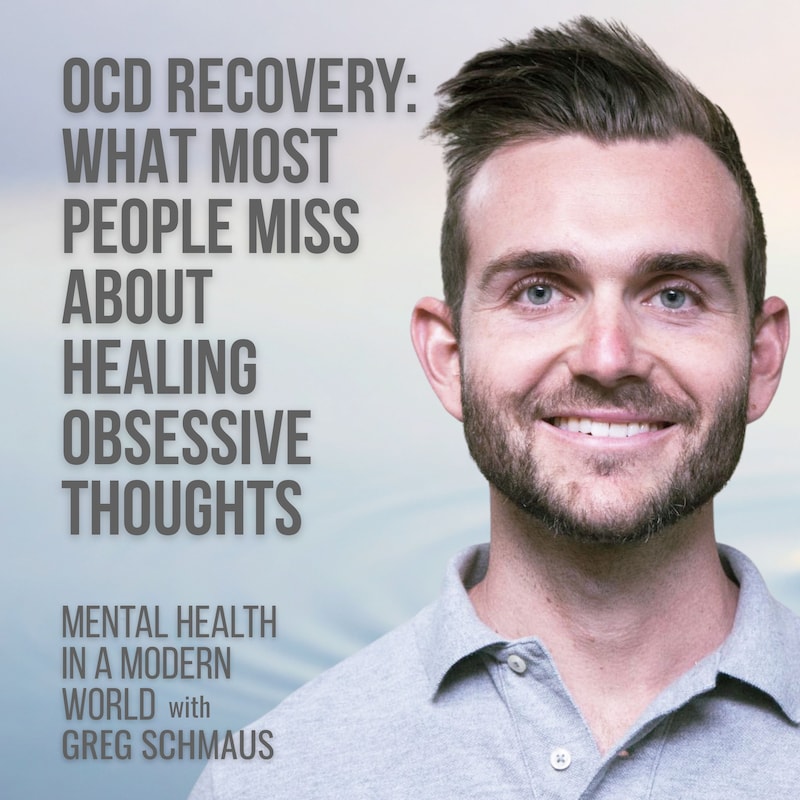
“You resist persists. If you want to shrink something, let it expand. If you want to get rid of something, allow it to flourish. As soon as you make one thing good, another thing becomes bad,” says Greg Schmaus, holistic health practitioner and founder of Healing 4D, who joins Mental Health in a Modern World to share his deeply personal and professional journey healing obsessive compulsive disorder.
In this episode, Greg Schmaus unpacks why OCD is skyrocketing today and how conventional approaches may miss its true roots. Drawing from his experience healing his own severe OCD after a Division 1 collegiate athletic career, he explains how trauma fragments the psyche, why unaddressed gut infections and inflammation can inflame the mind, and how true healing requires a blend of somatic work, Internal Family Systems (IFS) therapy, mindfulness, and paradoxical spiritual practice.
He busts common myths, shares paradoxes drawn from Zen and Taoist teachings, and outlines his integrated, holistic approach—rooted in his Four Doctors philosophy and real-world case experience—to address the entire mind-body-spirit landscape.
Tune in to Mental Health in a Modern World to discover why, for Greg Schmaus, OCD became not just something to overcome, but his greatest spiritual teacher, guiding him and his clients back to unity consciousness and genuine self-healing.
5 Key Takeaways
Healing OCD requires a comprehensive and compassionate approach—explore these five actionable steps to begin your transformation today:
- Address unresolved trauma using Internal Family Systems (IFS) therapy by working with protector and exile parts of your psyche.
- Shift focus from obsessive thoughts to bodily sensations—practice somatic awareness to feel and process stored emotions.
- Embrace mindfulness and non-judgmental awareness, allowing thoughts and feelings to arise and pass without resistance or attachment.
- Build a strong healing foundation by prioritizing lifestyle essentials: a nourishing diet, restorative sleep, regular movement, and time for happiness.
- Contemplate and practice spiritual paradoxes: let go of resisting thoughts, allow them to expand, and observe how this creates inner quiet.
Start with one of these steps today—your path to wholeness and relief begins with a single, intentional action.
Memorable Quotes
"You resist, persists. If you want to shrink something, let it expand. If you want to get rid of something, allow it to flourish. As soon as you make one thing good, another thing becomes bad."
"You cannot heal OCD in the mind; you heal it in the body. The language of the mind is thinking. The language of the body is feeling."
"OCD was the greatest spiritual teacher I've ever had because it taught me how the mind works, how reality works, how energy works, and how to eventually find my way back to that place of witnessing, that place of observing, and that mindfulness space of non-attachment and non-aversion."
Resources Mentioned
Internal Family Systems (Richard Schwartz, IFS Model) – https://ifs-institute.com/
Tao Te Ching by Lao Tzu - https://amzn.to/4nijMpF
Connect with Greg
Website - https://www.healing4d.com/
Instagram - https://www.instagram.com/4d_healing/
YouTube - https://www.youtube.com/@gregschmaus
LinkedIn - https://www.linkedin.com/in/greg-schmaus-22929589/
🎙️🎙️🎙️
Podcast Production & Marketing by FullCast: https://fullcast.co
Discover the best podcast services in the world at The Podosphere: https://www.thepodosphere.com/
Mentioned in this episode:
Embark on The HTM Journey
Embark on The HTM Journey
Transcripts
You resist persists. If you want to shrink something, let it expand. If you want
Speaker:to get rid of something, allow it to flourish. As soon as you make one
Speaker:thing good, another thing becomes bad. So working with some of these
Speaker:deep spiritual truths and practicing them and contemplating
Speaker:them and working with the different meditation practices
Speaker:that can allow you to get into those states is really, really helpful. In a
Speaker:world moving faster than our minds were designed to handle, mental health is becoming
Speaker:one of the defining challenges of our time. Welcome to Mental Health in a
Speaker:Modern World with holistic health practitioner Greg Schmauss.
Speaker:After overcoming severe anxiety and OCD in his own life,
Speaker:Greg dedicated the past decade to helping others heal through a fully
Speaker:integrated approach to mental health, combining lifestyle coaching, psycho
Speaker:emotional healing, mindfulness, and archetypal work. Over
Speaker:the years, he's facilitated thousands of sessions guiding people back to
Speaker:peace, clarity, and a deeper connection with themselves.
Speaker:Each week, Greg shares powerful solo insights, conversations with
Speaker:leading voices in holistic healing, and immersive live coaching sessions that
Speaker:take you inside the healing process itself. New episodes every
Speaker:Friday follow the show and start reclaiming sovereignty over your mind
Speaker:in a modern world. Here's Greg. Welcome to this
Speaker:week's episode on Mental Health in a modern World. So this
Speaker:week we're diving into healing obsessive compulsive
Speaker:disorder, healing ocd, which is a topic that is
Speaker:near and dear to my heart because this is something that I struggled
Speaker:with for many years, going back to when I was an
Speaker:athlete playing Division 1 golf at the University of Houston. When I was 19 years
Speaker:old, I began struggling with severe OCD.
Speaker:And so a lot of my healing journey was initiated
Speaker:from, you know, the challenges that I struggled with OCD. And I've
Speaker:spent the last 10 to 15 years coaching many, many
Speaker:clients and students and, you know, overcoming
Speaker:this challenge. And so it's pretty widespread, especially with
Speaker:a lot of the current mental health challenges that, you know,
Speaker:rates are really increasing. Anxiety, depression, adhd,
Speaker:ocd, they're kind of skyrocketing at the moment for many
Speaker:reasons. So I just wanted to do an episode specifically
Speaker:on OCD because I have so many people reach out to me as
Speaker:students, as clients, as people tuning into the show on how
Speaker:to heal ocd. So today we're going to take a deep dive into it.
Speaker:So we're going to start with what is ocd? So a basic definition is
Speaker:OCD is a chronic mental health condition characterized
Speaker:by uncontrollable, reoccurring thoughts, which we would call
Speaker:obsessions and repetitive behaviors which we would call
Speaker:compulsions that a person feels driven to perform.
Speaker:So the obsessive, compulsive nature, the obsessions,
Speaker:are usually the thought patterns, and then the compulsions are
Speaker:usually the behavior patterns that follow that
Speaker:sometimes feel uncontrollable and that someone
Speaker:needs to constantly perform and loop on. Now,
Speaker:most conventional treatments are either the use of medications
Speaker:like SSRIs or therapies, including
Speaker:exposure and response prevention, or. Or cognitive
Speaker:behavioral therapy, or a combination of medication and
Speaker:therapies. And I just want to say that there is a time and place for
Speaker:medications. There's a time and place for these therapies. So,
Speaker:you know, I take a holistic approach. And holistic means not just
Speaker:natural, holistic means, whole holistic means, all
Speaker:inclusive. And sometimes that includes medication, sometimes
Speaker:that includes some of these conventional therapies. So I just want people
Speaker:to understand that when I talk about a holistic approach, it is all
Speaker:inclusive. Now, the root causes of
Speaker:ocd, from my experience, are
Speaker:two. Two of the most common root causes that I've seen. Number one is
Speaker:trauma. I would say that would be number one. Top of the list is
Speaker:unhealed or unresolved trauma that creates
Speaker:OCD as an adaptive strategy. And number two is
Speaker:actually chronic infections. So actually going into the
Speaker:body and biologically looking at chronic infections, chronic
Speaker:inflammation, and certain autoimmune patterns that end up
Speaker:creating a lot of neural inflammation. A lot of people that
Speaker:have OCD very often have gut
Speaker:dysbiosis or chronic strep infections,
Speaker:parasite infections, things like that. So whenever we cause
Speaker:inflammation or permeability in the gut, a lot of times it ends
Speaker:up in creating permeability and inflammation in the brain as
Speaker:well. So today we'll focus on trauma,
Speaker:chronic infections, and we're going to address it, we could say, from
Speaker:different vantage points. We're going to look at it from different angles. We're
Speaker:going to peel it back one layer at a time, and we'll go
Speaker:through the different approaches that we can take. Getting to the root
Speaker:cause. Now, if we start with trauma, trauma, I
Speaker:would say, is the root cause of most mental health conditions,
Speaker:especially ocd. And so if we define
Speaker:trauma, you know, trauma is an experience that we have
Speaker:that obviously creates a stress response. But what happens
Speaker:when we experience trauma is there's some part of us,
Speaker:some part of the psyche that fragments off and almost gets
Speaker:frozen in time. So when we experience trauma, we're
Speaker:experiencing some events that some part of us actually
Speaker:gets stuck in. Some part of us gets frozen in time,
Speaker:and some part of us almost fragments off from the whole of us
Speaker:and stays trapped in that experience. And what
Speaker:happens when some part of us fragments during trauma
Speaker:and get stuck in time or stuck in an experience
Speaker:is we end up creating or recruiting protectors
Speaker:to keep that traumatized part locked away
Speaker:or deactivated. Right? So the psyche recruits
Speaker:a protective system to keep that
Speaker:traumatized part locked away, to keep it safe
Speaker:and to keep it from getting triggered or activated.
Speaker:And also, remember, trauma is stored in the body. Memory is
Speaker:stored in the mind. Memory can be stored in the brain, but
Speaker:trauma is really stored in the tissues. It's stored in
Speaker:our fascia, it's stored in our organs. It's stored really in the
Speaker:body. And so when we're approaching
Speaker:the healing of trauma, we really want to approach it from a
Speaker:somatic standpoint. But we will talk about how the psyches
Speaker:involved, but in reality, things like ocd, they're really
Speaker:healed through the body. Now, one of my favorite approaches to
Speaker:working with OCD and working with the psyche in general
Speaker:is an approach called ifs, which stands for
Speaker:internal family systems. So this system developed by
Speaker:Richard Schwartz, who's an amazing family therapist, who
Speaker:developed this system about 30 years ago,
Speaker:it's a way of working with the psyche using what's called
Speaker:parts work. And essentially, parts work
Speaker:takes the psyche and it breaks it down into this
Speaker:multiplicity of parts where there's not just one self, there's almost
Speaker:like many different parts involved in this one
Speaker:self. Right. So a lot of people might call that multiple
Speaker:personality disorder, where there's multiple voices
Speaker:speaking all the time. But the truth is, we all have parts. Like,
Speaker:you've had this time or this experience in your life where you've said, well, a
Speaker:part of me feels this way, but another part of me feels this way. Or
Speaker:a part of me wants to do this, but another part of me wants to
Speaker:do that. Right? So we have, in our language, this idea of
Speaker:parts. And so IFS is a way of working with
Speaker:the psyche through that lens of parts.
Speaker:And just to break this down through an
Speaker:IFS lens, we have the core self, which we could say
Speaker:is our higher self, our essential self. Then we have what's called
Speaker:protector parts and protectors parts. Their job
Speaker:is to protect the wounds, the traumas, the exiles
Speaker:that experienced trauma once upon a time. Now,
Speaker:when it comes to protector parts, we have two categories of
Speaker:protectors. We have what's called managers, and we
Speaker:have firefighters. So managers are the
Speaker:proactive parts that try and manage the system
Speaker:to make sure that exiles or traumas don't get
Speaker:activated. Firefighters are
Speaker:reactive Parts that once the traumas do
Speaker:get activated, the firefighters are there to put out the
Speaker:fire, right? So managers are proactive and
Speaker:prevention oriented. Firefighters are
Speaker:reactive and go to extreme measures to put out the
Speaker:fire when a, when an exile or a wound or
Speaker:a trauma gets activated. Now, when it
Speaker:comes to ocd, we have the obsessive and
Speaker:compulsive peace. So if we break that down, the obsessive
Speaker:piece are very often the managers. The intrusive
Speaker:thoughts, the looping thoughts, the obsessions, the micromanaging, the
Speaker:controlling, the perfectionism, the worrying,
Speaker:the avoidance, the planning. A lot of the obsessive
Speaker:nature of ocd, the obsessive parts are
Speaker:the managers and the compulsive parts are
Speaker:the firefighters, right? So you can see how OCD is
Speaker:actually a perfect representation of
Speaker:managers and firefighters. Obsessions being
Speaker:managers, compulsions being firefighters. So the
Speaker:firefighters compulsively react to put out
Speaker:the fire once the trauma is triggered. This could be
Speaker:cleaning, reassurance seeking, checking,
Speaker:ordering, micromanaging. But, but the
Speaker:micromanaging would be more the managers. But the cleaning, the
Speaker:reassurance, the checking, the ordering, these are ways that once
Speaker:something gets triggered, the compulsion the firefighter is
Speaker:there to, to soothe, to put out the fire, to make sure
Speaker:that whatever gets activated, you know, gets put out
Speaker:immediately. Right? So you can see all protectors
Speaker:are assigned to these traumatized parts, what
Speaker:we call exiles, as a result of the trauma they
Speaker:experienced, right? So to try and get rid of
Speaker:or treat OCD without addressing the trauma
Speaker:or the exile, a lot of times does more harm than
Speaker:good because you're trying to eliminate an
Speaker:exiled parts protective system which you're going to create
Speaker:what's called backlash. So a lot of times the
Speaker:conventional therapies that try and eradicate the OCD
Speaker:symptoms, or try and manage the OCD symptoms, or
Speaker:try and lessen the OCD symptoms without
Speaker:addressing the original trauma can often do more
Speaker:harm than good because you're trying to get rid of the
Speaker:protective system before the exile or the core
Speaker:trauma has been addressed, right? So we have to work from,
Speaker:with the protectors first until we can get down
Speaker:to the exiles and the trauma. And once we heal the
Speaker:trauma, a lot of times the protectors aren't as needed anymore and
Speaker:they can take on different roles. So working with
Speaker:OCD on a psychological level,
Speaker:ifs, from my experience, is the best
Speaker:modality for working with the protector parts.
Speaker:The managers, which are the obsessions, the
Speaker:firefighters, which are the compulsions, working with the
Speaker:protectors, then getting to the exiles, healing the
Speaker:trauma, and then the protectors can take on new
Speaker:roles. And it almost has to be like that order of
Speaker:operations. If you try and get to the exiles too
Speaker:quickly, or if you try and get rid of the protectors,
Speaker:you're going to create even more stress in the system.
Speaker:Right. So it's a beautiful approach to working with the
Speaker:psyche in a very compassionate way, a very gentle way,
Speaker:and it's very nuanced, very surgical, and
Speaker:really goes a long way. So I've had a lot of great success with that.
Speaker:Now, healing ocd, like we said, happens in the body.
Speaker:So there's a somatic approach that we need to take when it comes to
Speaker:healing ocd. Healing OCD is. OCD is a lot of
Speaker:mental activity, a lot of looping, a lot of obsessing, a lot
Speaker:of intrusive thinking. And so, you know, there's an old saying, you
Speaker:can't heal a problem at the same level that created it. So
Speaker:the mind is what generates ocd. So we can't heal a
Speaker:problem in the mind with more mind. We have to go
Speaker:one level deeper, which is into the body. You cannot
Speaker:heal OCD in the mind, you heal it in the body. And
Speaker:a framework that I want to share with you that's really important to
Speaker:understand is that the language of the mind
Speaker:is thinking. The language of the mind is thought.
Speaker:The language of the body is feeling.
Speaker:The language of the mind is thinking. The language of the body
Speaker:is feeling. Now, thinking and feeling are
Speaker:complementary opposites. If you imagine a
Speaker:seesaw, when one side goes up, the other side goes down,
Speaker:and vice versa. If thinking is on one side of
Speaker:the seesaw and feeling is on the other side of the
Speaker:seesaw, the more we think, the less we feel.
Speaker:The more we feel, the less we need to think.
Speaker:And so whenever there is OCD in the mind, there's a lot of mental
Speaker:activity. And a lot of times those are the protectors that are
Speaker:trying to downregulate feeling. Because feeling in
Speaker:the body, the body is where the trauma is. So a lot of times we
Speaker:upregulate thought as a way of trying to down
Speaker:regulate feeling, upregulate activity in
Speaker:the mind, to down regulate awareness and
Speaker:activity in the body, because the body is where the trauma is stored.
Speaker:The unprocessed emotions are stored in the body.
Speaker:So the more you are able to access and feel the
Speaker:emotions in the body, the less activity there is in
Speaker:the mind. Right? So one of the big questions I always ask,
Speaker:whether it's myself, when I was healing from it, clients that I work with
Speaker:Is what is the mind trying to keep me
Speaker:away from feeling in my body? It's an
Speaker:incredible question. What is my mind through all the mental activity?
Speaker:And you can apply this to things other than ocd. You can apply this to
Speaker:anxiety, you can apply this to adhd, you can apply
Speaker:this to just racing thoughts. What is my mind
Speaker:trying to keep me away from feeling in my body? Is
Speaker:it grief and sadness? Is it
Speaker:anger? Is it fear? Right. So what
Speaker:is my mind, through thought, trying to keep me away
Speaker:from feeling in the body? So a somatic approach
Speaker:to healing OCD is very important. And once we're able
Speaker:to access the feelings and emotions in the
Speaker:body, the quieter the mind gets. The mind
Speaker:gets quieter and quieter, the more we're able to
Speaker:feel, but the less we're able to feel, the more
Speaker:the mind has to upregulate thought as a way of
Speaker:keeping us away from the unprocessed emotions
Speaker:or traumas in the body. Right. And I always use a
Speaker:blend of ifs and
Speaker:somatic work. We can call it somatic ifs work,
Speaker:you know, which is parts work in the psyche, but orienting
Speaker:to the body. So working with the mind and the
Speaker:psyche from the lens or perspective of parts and
Speaker:then bringing the awareness and the healing work into the body,
Speaker:it's a great combination, and it works really, really well.
Speaker:Next, we're going to address it from a spiritual perspective.
Speaker:So OCD is something we heal in the psyche, it's
Speaker:something we heal in the body. But there's also a
Speaker:spiritual crisis that we want to explore, and
Speaker:there's a spiritual process that we want to address
Speaker:and acknowledge when it comes to healing ocd.
Speaker:So as a basic framework, the mind
Speaker:is like an ocean. So imagine the mind like an ocean,
Speaker:and each thought is a wave or a
Speaker:ripple on the surface of the ocean. You
Speaker:could say the waves are your conscious thoughts. What's
Speaker:under the surface of the ocean is the unconscious.
Speaker:But just in general, the ocean would be the mind,
Speaker:and each wave would be a thought. Right
Speaker:now, OCD is
Speaker:kind of like swimming against the tide. Someone
Speaker:who has OCD is not really able to go with the flow,
Speaker:because OCD comes with a lot of rigidity. So OCD is kind of like
Speaker:the opposite of flow. When we're going with the flow, it's very
Speaker:different than the obsessive compulsive nature of ocd.
Speaker:So OCD is kind of like the rigidity, which is the
Speaker:opposite of flow. So OCD is very much
Speaker:swimming against the tide or swimming against the
Speaker:flow, or the Natural current of the ocean.
Speaker:Now, mindfulness is learning how to
Speaker:surf the waves, right? Awareness, Mindfulness
Speaker:is learning how to surf the waves of the ocean
Speaker:rather than swimming against the tide of all the time, which
Speaker:first of all creates exhaustion, it creates suffering,
Speaker:and eventually we drown in it. And a lot of people feel like they're
Speaker:drowning in the ocd, they're drowning in their own minds. And
Speaker:it's really when we're trying to swim against the tide, which
Speaker:once again is always a result of unhealed trauma.
Speaker:So mindfulness, the practice of mindfulness,
Speaker:which I would define mindfulness as a
Speaker:non judgmental awareness of your moment to
Speaker:moment experience. So mindfulness, just my
Speaker:definition. A non judgmental awareness
Speaker:of your moment to moment experience. So a
Speaker:non judgmental awareness of a moment to moment experience
Speaker:allows you to ride the wave of each thought,
Speaker:each emotion, each body sensation, and
Speaker:each experience. Moment to moment.
Speaker:And so mindfulness allows us to surf the waves
Speaker:rather than ocd, swimming against the tide. So just wanted to
Speaker:open it up with that analogy. And also
Speaker:when I was healing ocd, I started to read a lot of
Speaker:Eastern philosophy, a lot of Eastern scripture,
Speaker:like Taoism and Zen Buddhism and a lot
Speaker:of these beautiful ancient traditions of the Far East.
Speaker:And when you would read these scriptures and these
Speaker:proverbs and these, these teachings and offerings,
Speaker:what I found was the deepest truths. I would always find it
Speaker:would be a paradox. Like, we know the, the paradox what you
Speaker:resist persists. There's a paradox.
Speaker:I would read something that would say, if you want to shrink something, let it
Speaker:expand. I would read another proverb that would say, if you want to get
Speaker:rid of something, let it flourish, right? And
Speaker:at first you're like, that doesn't make sense. But what I did was I
Speaker:took those, you know, scriptures, those teachings, and I
Speaker:applied it to my own mind. I applied it to my own psyche.
Speaker:And what I found was if I
Speaker:went the opposite direction versus trying to get rid of
Speaker:the ocd, if I said, okay, I'm going to allow these
Speaker:obsessive thoughts to expand, just going to tell my
Speaker:mind, all right, whatever you want to think about, just go do it. You know,
Speaker:I'm just going to sit back here, go do it. And all of a sudden
Speaker:the mind would go calm, the mind would go silent.
Speaker:Or if my mind was looping on something, I would just say to, okay, you
Speaker:know, go, flourish. Do whatever it is that you want to do. I'll
Speaker:give you space. And all of a sudden it would go quiet.
Speaker:And I noticed that the mind works on A paradox.
Speaker:The more space I gave my mind, the less it would take,
Speaker:the more I would would allow it to roam free, the more it would stay
Speaker:by my side. And so healing the mind
Speaker:became this paradox where if I would try and get
Speaker:rid of it, it would make it worse. If I would try and push it
Speaker:away, it would push back. If I would resist, it would
Speaker:persist. But if I allowed it to expand and
Speaker:flourish, it would quiet down and go silent pretty immediately,
Speaker:right? The other teaching that I found in Scripture was in the
Speaker:Dao Te Ching, as soon as you make one thing good,
Speaker:another thing becomes bad. Very simple teaching on
Speaker:duality. And so I said, okay, well, if mindfulness is
Speaker:a non judgmental awareness, that means
Speaker:I can't judge one thought as good and another thought is bad.
Speaker:I can't judge one thought or one feeling as good and
Speaker:another feeling as bad as I need to be equally willing
Speaker:to be present with the negative thoughts just as much
Speaker:as the positive thoughts, be present with the uncomfortable feelings
Speaker:just as much as the comfortable feelings, and actually enter
Speaker:this state of what we would call non attachment and non
Speaker:aversion. So non attachment and non aversion is a Buddhist
Speaker:term where we're not attaching to all the positive
Speaker:things and we're not in aversion to all the negative things.
Speaker:Attachment and aversion creates a polarized experience in
Speaker:the mind and body. A lot of times we spend our life
Speaker:attaching to all the positive thoughts and living in
Speaker:aversion to all the negative ones, attaching to all the
Speaker:positive and pleasurable feelings and experiences, and
Speaker:living in aversion to all the uncomfortable or negative
Speaker:ones. And so to heal OCD and to enter
Speaker:a state of mindfulness, I needed to move into a
Speaker:state of non attachment and non aversion. So a
Speaker:positive thought comes up or a positive feeling comes up. I don't
Speaker:attach to it. A negative thought or a negative feeling comes
Speaker:up. I'm not in aversion to it. And that starts to open
Speaker:this spaciousness, this space of awareness, this space
Speaker:of the witness or the observer that is beyond polarity,
Speaker:right? And that's a spiritual experience. That's a spiritual process. That's
Speaker:real spiritual healing. And so that's why OCD
Speaker:is really this constant state of attachment and aversion. It's this
Speaker:constant state of swimming against the tide. So healing
Speaker:OCD is about surrendering attachment and
Speaker:aversion and surrendering to the flow or
Speaker:the way, what we would call the dao, right?
Speaker:So healing OCD is surrendering to the Flow of the dao
Speaker:and the practice of mindfulness through non attachment and non
Speaker:aversion. And so this is why I wanted to bring this spiritual
Speaker:piece. And because on a very deep level, you know, I've said this many times
Speaker:on podcasts, OCD was the greatest spiritual teacher I've ever had
Speaker:because it taught me how the mind works, it taught me how reality works, it
Speaker:taught me how energy works, and it taught me how to
Speaker:eventually find my way back to that
Speaker:place of witnessing, that place of observing,
Speaker:and that mindfulness space of non attachment and non
Speaker:aversion. And we might call that unity consciousness,
Speaker:right? And so OCD brought me back to that space
Speaker:of unity consciousness that is beyond polarity, that is
Speaker:beyond duality, and it's what we would call a non dual awareness.
Speaker:I want to also, you know, lastly address the
Speaker:lifestyle piece. You know, when I'm working with clients, we
Speaker:always need to address diet and lifestyle. And
Speaker:now I'm trained by Paul Check at the Czech Institute. So I always
Speaker:look at it from what we call a four doctor perspective, which is Dr. Diet,
Speaker:Dr. Quiet, Dr. Movement, and Dr. Happiness.
Speaker:So Dr. Diet is how you're feeding your body. Dr. Quiet
Speaker:is how you're resting your body. Dr. Movement is how you're moving your
Speaker:body. And Dr. Happiness is how you engage your mind,
Speaker:your emotions, and how you create happiness for yourself.
Speaker:Now, it's very hard to heal the mind or heal OCD if you're
Speaker:staying up till 3am every morning or every night. It's very hard to
Speaker:heal OCD if you're eating processed foods and you're
Speaker:inflaming your body all the time. It's very hard to heal OCD if
Speaker:you're sedentary all the time and you're not moving your body. Right? So
Speaker:the mind can only be as healthy as the body that it's living in.
Speaker:And so getting the body healthy, reducing
Speaker:chronic inflammation, clearing chronic infections, these
Speaker:are the absolute essential building blocks to healing
Speaker:the mind or healing ocd. It's very much the foundation. So
Speaker:when I'm working with clients, I always make sure that the diet
Speaker:and lifestyle piece is not overlooked and then that we're not
Speaker:always just doing deep inner trauma healing work. If we're
Speaker:eating Rice Krispies and Cheerios all
Speaker:day, it's never going to work. And the reason for that is
Speaker:the more unhealthy the body is, the more the nervous
Speaker:system's in a chronic stress response, and the more the
Speaker:nervous system's in a chronic stress response, the more the mind
Speaker:is Living in a state of fear and survival. And we always
Speaker:revert back to our old programs. So you can't really
Speaker:heal deep trauma if the body and nervous system
Speaker:is in a constant fight or flight state. So by healing the
Speaker:body and reducing inflammation and clearing infections,
Speaker:getting the diet cleaned up, getting to bed on time, exercising
Speaker:regularly, drinking quality water, getting out in nature
Speaker:and grounding, getting your feet on the earth, getting a good amount of
Speaker:sunshine each day on your body, these are really the building blocks
Speaker:that allow healing to take place. So it's really important that we
Speaker:address what Paul Check calls the four doctors prior
Speaker:to doing any deeper trauma work. Now sometimes
Speaker:you need to do a little trauma healing work before someone has the
Speaker:capacity to make lifestyle changes because there's a strong
Speaker:saboteur or patterns of self sabotage. So sometimes
Speaker:you need to work backwards. But most of the time it's
Speaker:really, really helpful to address, you know,
Speaker:the foundational principles of diet and lifestyle prior to
Speaker:doing some of the deeper healing work. So just in
Speaker:summary, trauma, chronic infections
Speaker:and inflammation, these are usually the root causes of ocd.
Speaker:Trauma being number one. We talked about addressing it
Speaker:from a psychological standpoint and, and working with
Speaker:the psyche through the lens of ifs or parts work. Working
Speaker:with the psyche as a collection of parts where we have protector
Speaker:parts managers which are proactive and
Speaker:prevention oriented, firefighters that are reactive,
Speaker:the obsessive parts being the managers, the compulsive parts being the
Speaker:firefighters, working with the protective system so we can
Speaker:then get to the exiles, heal the trauma, so then the
Speaker:protectors can release their roles, take on new roles
Speaker:rather than being what we would call ocd. So working
Speaker:with the psyche from a parts perspective and then working with
Speaker:the body somatically, we talked about the complimentary
Speaker:opposites of thinking and feeling. And the more we think, the
Speaker:less we feel, the more we feel, the quieter the mind can get. And
Speaker:so really orienting into the body, working with
Speaker:unprocessed feelings and emotions in the body. And once that energy
Speaker:gets freed up, then the mind can begin to quiet down.
Speaker:The mind is almost like a release valve or a pressure valve
Speaker:for where there's energetic or emotional blocks in the body.
Speaker:So working somatically and then working
Speaker:spiritually, working with some of these concepts of non
Speaker:duality, of moving beyond polarity, of moving
Speaker:into a non judgmental awareness, which is what we would call
Speaker:mindfulness. And working with the paradoxes of
Speaker:healing the mind right, what you resist, persists. If you want to
Speaker:shrink something, let it expand. If you want to get rid of something, allow it
Speaker:to flourish. As soon as you make one thing good, another thing
Speaker:becomes bad. So working with some of these deep spiritual
Speaker:truths and practicing them and contemplating them and
Speaker:working with the different meditation practices that can
Speaker:allow you to get into those states is really, really helpful. And
Speaker:then finally we have lifestyle approach, which is really
Speaker:addressing diet, quiet, movement,
Speaker:happiness for doctors, and making sure that we're setting the
Speaker:foundation of holistic healing rather than just trying
Speaker:to do targeted specific work. We have to address the
Speaker:whole organism because like I've said in previous podcasts, we are
Speaker:biopsychosocial spiritual beings. Bio is your
Speaker:biology, psycho is your psyche, social is your environment,
Speaker:and spiritual is your energetic or soul nature.
Speaker:And so we have to address all four levels in order to
Speaker:really have a complete system. And if you enjoyed this
Speaker:podcast and you would like to take a deeper dive, I have my
Speaker:Healing the Mind a Journey to Wholeness online program. It's my
Speaker:21 day flagship program that takes a fully holistic and integrative
Speaker:approach to mental health. I built this program out of my own
Speaker:healing journey. Healing from ocd, healing from anxiety,
Speaker:healing from a lot of the mental health challenges that we're focusing on
Speaker:in this podcast and addressing in our world today. So to
Speaker:dive into that you can go to
Speaker:healing40.comhtm
Speaker:and if you use the code podcast at checkout you can save 20%
Speaker:off. And then you can always reach out to me for one on one coaching
Speaker:by going to my website at healing4d.com so I hope
Speaker:you enjoyed this journey today exploring the
Speaker:nuances of O C D. I hope this podcast really supports you
Speaker:in your own healing journey or anyone that you know that might struggle
Speaker:with O C D. I invite you to share it with them. It's important that
Speaker:we spread and share the love as much as possible because the
Speaker:world really needs a lot of healing right now and I look forward to sharing
Speaker:more with you in next week's podcast. Have a beautiful rest of your
Speaker:day. Bye bye.




