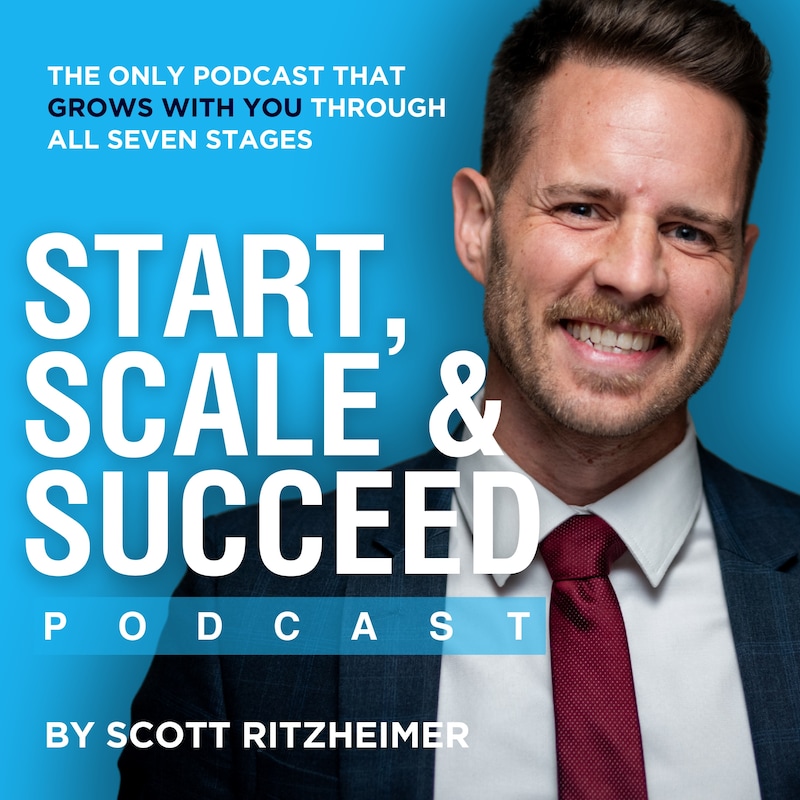
Shownotes
In this clarifying episode, Scott Ritzheimer, Founder of Scale Architects, shares why asking the right question about your current stage matters more than chasing the next one. If you're unsure which level you're in, feel stuck pursuing the wrong growth, or worry you're building something you won't want to lead, you won't want to miss it.
You will discover:
- Why knowing your exact Founder's Evolution stage prevents wasting effort on the wrong next level
- What each stage truly requires so you can thrive where you are or prepare for transition
- How to decide whether to optimize your current level or evolve to the next one
This episode is ideal for for Founders, Owners, and CEOs in stages 1,2,3,4,5,6,7 of The Founder's Evolution. Not sure which stage you're in? Find out for free in less than 10 minutes at https://www.scalearchitects.com/founders/quiz
Scott helped start nearly 20,000 new businesses and nonprofits and with his business partner started led their multimillion-dollar business through an exceptional and extended growth phase (over 10 years of double-digit growth) all before he turned 35.He founded Scale Architects to help founders and CEOs identify and implement the one essential strategy they need right now to get them on the fast track to Predictable Success.
Want to learn more about Scott Ritzheimer's work at Scale Architects? Check out his website at https://www.scalearchitects.com/
Connect with Scott through his LinkedIn at https://www.linkedin.com/in/scottritzheimer
Transcripts
Hello, hello, and welcome. Welcome once again
Scott Ritzheimer:to the Start, Scale, and Succeed podcast, the only podcast that
Scott Ritzheimer:grows with you through all seven levels of your journey as a
Scott Ritzheimer:founder. I'm your host, Scott Retheimer, and today I want to
Scott Ritzheimer:talk about one of the most important lessons that I've
Scott Ritzheimer:learned, and that is, in particular, the value of asking
Scott Ritzheimer:the right question, you see, we waste an enormous amount of time
Scott Ritzheimer:as founders, as leaders, even as entire organizations, trying so
Scott Ritzheimer:hard to find the right answers to what is ultimately the wrong
Scott Ritzheimer:question, and arguably the most glaring example of that is the
Scott Ritzheimer:most common question that I'm asked, particularly by coaches
Scott Ritzheimer:that I meet for the first time, and this is, of course, outside
Scott Ritzheimer:of how old are you, because I still look like I'm 22 but
Scott Ritzheimer:that's that's another thing for another time. By the way, if
Scott Ritzheimer:you're not watching this on video, we've got video options,
Scott Ritzheimer:not just on YouTube anymore, but also probably in your favorite
Scott Ritzheimer:podcast player. You can choose the video option in Spotify. You
Scott Ritzheimer:can also choose the video option here in Apple Podcasts, or one
Scott Ritzheimer:of the first podcasts to release this option in Apple as well.
Scott Ritzheimer:So, check it out if you're in your player, there's a little
Scott Ritzheimer:video option in both Spotify and Apple Podcasts. Some of your
Scott Ritzheimer:other favorite shows might be that way as well. It's a cool
Scott Ritzheimer:experience, and, and one that I think you'll enjoy. So, back to
Scott Ritzheimer:this really bad question, this fundamentally flawed question.
Scott Ritzheimer:Are you ready? Okay. So, the question is, how do I get to the
Scott Ritzheimer:next level, and we ask this in a lot of different ways. We're
Scott Ritzheimer:actually going to address several of them over the course
Scott Ritzheimer:of this series. This is the first in a what will be a seven
Scott Ritzheimer:part series. We'll talk about that in a moment, but how do I
Scott Ritzheimer:get to the next level? Now you're probably wondering, like,
Scott Ritzheimer:what, like, why is that such a bad question, and, and a big
Scott Ritzheimer:part of the reason why is that it usually means, especially
Scott Ritzheimer:when it's asked in those words, it usually means that the
Scott Ritzheimer:founder doesn't actually know what the next level is, and, and
Scott Ritzheimer:more importantly, and almost certainly they don't know if
Scott Ritzheimer:that next level is right for them, you see. This matters
Scott Ritzheimer:because founders find answers. It's just what we do. We will
Scott Ritzheimer:find an answer where everyone has given up, like 17 years ago.
Scott Ritzheimer:There's a stubbornness, a determination, a cleverness, a
Scott Ritzheimer:resilience, a just recalcitrance in founders that forces us to
Scott Ritzheimer:find the answer, and that's why it's so deeply important for you
Scott Ritzheimer:to ask the right question, because otherwise you're going
Scott Ritzheimer:to find the right answer, or at least an answer, hopefully the
Scott Ritzheimer:right one, but it's whether it's right or not, it doesn't matter,
Scott Ritzheimer:because it's an answer to the wrong problem. And then, what do
Scott Ritzheimer:we do? We then go and build an organization, and I can't tell
Scott Ritzheimer:you how many times I see this happen. We build an organization
Scott Ritzheimer:that we don't actually want to lead. We end up doing something,
Scott Ritzheimer:either as an organization or in our individual job within that
Scott Ritzheimer:organization that we don't actually want to do, and truth
Scott Ritzheimer:be told, the honest truth of it is you probably won't make any
Scott Ritzheimer:more money doing it, and that's such a big driver, especially
Scott Ritzheimer:culturally, is like I've got a blank because why, because
Scott Ritzheimer:that'll make me more successful. What does that mean? Because
Scott Ritzheimer:I'll be making more money, and while it might be true,
Scott Ritzheimer:especially within the context of the founders' evolution, that
Scott Ritzheimer:that you might be able to generate more revenue in a later
Scott Ritzheimer:stage, it's not even close to true that that more revenue,
Scott Ritzheimer:more of that revenue will make it to you. In fact, I think you
Scott Ritzheimer:can not only enjoy the right level more, but if you optimize
Scott Ritzheimer:for the right level for you, most of the time that's also the
Scott Ritzheimer:same level in which you'll make the most money yourself, and
Scott Ritzheimer:we'll unpack that a little bit as we go throughout the series,
Scott Ritzheimer:but, but that is what this series is about. We're gonna do
Scott Ritzheimer:a full solo series, just you and me, it would be a lot of fun.
Scott Ritzheimer:And the series is going to be called Should You Really.
Scott Ritzheimer:We're going to talk about how you can figure out whether or
Scott Ritzheimer:not the next level is right for you now. Before that, some of
Scott Ritzheimer:you might be new, some of you might have been around for a
Scott Ritzheimer:little while, but there are there are two questions that we
Scott Ritzheimer:have to answer before we can actually get to that. Is the
Scott Ritzheimer:next level right for you? And the first of those questions is
Scott Ritzheimer:one that we've addressed a couple of different times. And
Scott Ritzheimer:that is what level are you currently in, so we're gonna,
Scott Ritzheimer:we're gonna lay just a little bit more context there, at least
Scott Ritzheimer:you need to know to get caught up, and that's going to be a
Scott Ritzheimer:real helpful precursor to the following episodes in the
Scott Ritzheimer:series. The second question is pretty easy once you've answered
Scott Ritzheimer:the first one, so once we've answered the question, what
Scott Ritzheimer:level are you currently in, then the then the the next level is
Scott Ritzheimer:it's kind of one of three options, the next level is
Scott Ritzheimer:either the next in progression up the chart, if you will, so
Scott Ritzheimer:from level three to level four, for example, that could be the
Scott Ritzheimer:next level, the next level could actually just be a better
Scott Ritzheimer:version of this level. It could be that you really genuinely
Scott Ritzheimer:learned to thrive in this level, and we're going to talk about
Scott Ritzheimer:that decision. How do you know if the next level is actually
Scott Ritzheimer:stepping forward to the next level, or how do you know if the
Scott Ritzheimer:quote unquote next level for you isn't actually the next level at
Scott Ritzheimer:all? It's just an optimization of the level that you're
Scott Ritzheimer:currently in, learning to embrace it, learning to thrive
Scott Ritzheimer:in it. How do you know if that's right for you? And again, we're
Scott Ritzheimer:going to address this throughout the series. Now, there is a
Scott Ritzheimer:third option, we're not going to talk about it in this series,
Scott Ritzheimer:but the third option might be, it's kind of like I think about
Scott Ritzheimer:this every time I fly, I'm headed to see a client, or even
Scott Ritzheimer:better yet, headed home, and, and sitting on the plane, and
Scott Ritzheimer:they go through their whole exit spiel, and what do they say?
Scott Ritzheimer:They say the closest exit might be behind you, and that's true
Scott Ritzheimer:in, in the founders' evolution as well. Sometimes the right
Scott Ritzheimer:level is actually in your rearview mirror, sometimes we
Scott Ritzheimer:just breeze right through it, never recognize how good it
Scott Ritzheimer:really is until we've lost it. So, there is an option to go
Scott Ritzheimer:back again. We're not going to address that in this series, but
Scott Ritzheimer:that's a very valid option. And even the idea that it is back
Scott Ritzheimer:sounds negative, but it's not. Better way of thinking about it,
Scott Ritzheimer:we just talked about this a couple episodes ago, is
Scott Ritzheimer:returning home right. Going home is not any worse than going to
Scott Ritzheimer:visit my client for the on the outbound journey. It's just two
Scott Ritzheimer:parts of the same journey, and so going home isn't a bad thing.
Scott Ritzheimer:Going back isn't a bad thing, but neither here nor there. In
Scott Ritzheimer:this episode, what I want to do is just, just do a quick run
Scott Ritzheimer:through of these different levels, because we do need to
Scott Ritzheimer:know what the levels are. That's the easiest way to find out
Scott Ritzheimer:which one you're in. We're going to then go through and address
Scott Ritzheimer:each level one at a time for the remaining six episodes in the
Scott Ritzheimer:series. And yes, there are seven episodes, seven levels, and
Scott Ritzheimer:there's only six episodes. How does that work? We're actually
Scott Ritzheimer:going to talk about the transition point between each of
Scott Ritzheimer:the levels, so in the next episode we're going to talk
Scott Ritzheimer:about how to navigate the transition point between levels
Scott Ritzheimer:one and two, and then the next episode after that between
Scott Ritzheimer:levels two and three. So there are six transition points in the
Scott Ritzheimer:journey, there's no transition point out of level seven, except
Scott Ritzheimer:the way that we'll all leave this earth, but that's that's
Scott Ritzheimer:another thing for another time. So, let's go to this first
Scott Ritzheimer:question, What level are you currently in now? For those of
Scott Ritzheimer:you who've been with us for a little while, Les and I talked
Scott Ritzheimer:about this at length, believe it was back in episodes 303 101
Scott Ritzheimer:I'll check that afterwards, and whatever episode it was, I'll
Scott Ritzheimer:get it in the show notes for you, so you can go directly to
Scott Ritzheimer:there.
Scott Ritzheimer:So, if anything about this episode is interesting, or you
Scott Ritzheimer:want to know more, we spent a lot more time on it back in, in
Scott Ritzheimer:a couple episodes in the past, so we'll link those. You can go
Scott Ritzheimer:back to them, and and you're welcome to do so, that's all in
Scott Ritzheimer:the show notes. We also, for those of you who are new, or
Scott Ritzheimer:those of you who don't know what level you're currently in,
Scott Ritzheimer:there's kind of an easy button on this. We have a quiz at
Scott Ritzheimer:Founders quiz.com that will tell you exactly what level you're
Scott Ritzheimer:in. That link is in the show notes, as well, you can grab
Scott Ritzheimer:that. So, in either case, if you leave this episode and you have
Scott Ritzheimer:some kind of a question still about what level you're in,
Scott Ritzheimer:there's two easy answers there. You can go back and listen to a
Scott Ritzheimer:little bit more, that'd be cool, or you can jump into Founders
Scott Ritzheimer:quiz.com and just take the assessment, they'll tell you,
Scott Ritzheimer:and it's like 10 or 11 questions, it's just really
Scott Ritzheimer:easy, all right. So all that out of the way. Here's, here's what
Scott Ritzheimer:I think is the easiest way, in 510, minutes, that you can tell
Scott Ritzheimer:what founders level you're in. So I'm going to walk through
Scott Ritzheimer:these levels one at a time, and and here are the questions we
Scott Ritzheimer:want to think about. So, level one, are you in level one? The
Scott Ritzheimer:first question we want to ask is, have you started your own
Scott Ritzheimer:business or nonprofit and gone full time, like it's your
Scott Ritzheimer:primary occupation? If not, then you're in level one. That, like,
Scott Ritzheimer:the vast majority of the population relative to the
Scott Ritzheimer:founders' evolution is in level one. This is the employee stay.
Scott Ritzheimer:Just also the pre-founder stage, but particularly when it comes
Scott Ritzheimer:to the founders' evolution level one is for founders different
Scott Ritzheimer:than everybody else, and and in the book that's coming out,
Scott Ritzheimer:we'll talk about that in a little bit, but there is, we
Scott Ritzheimer:spent a lot of time talking about this because there are a
Scott Ritzheimer:lot of people who just have bad jobs or don't like their work,
Scott Ritzheimer:but for pre-founders and kind of frustrated employees in general,
Scott Ritzheimer:there's this sense of being what I call a dissatisfied employee
Scott Ritzheimer:and what really like is the genesis of the difference
Scott Ritzheimer:between a pre-founder and just someone who's frustrated with
Scott Ritzheimer:their job is that the pre-founder isn't really
Scott Ritzheimer:thinking like, how do I make more money, although that
Scott Ritzheimer:matters, they're not necessarily even thinking how do I get more
Scott Ritzheimer:freedom, even though that matters too, that's not quite as
Scott Ritzheimer:much of a differentiating factor as it used to be. They aren't
Scott Ritzheimer:thinking, how do I get rid of my boss, although that's probably a
Scott Ritzheimer:factor as well. What I see in, in those who are set up to be
Scott Ritzheimer:successful founders, right, who might be jumping into this
Scott Ritzheimer:journey the right way is they're asking the question, isn't there
Scott Ritzheimer:a better way? Isn't there a better way, a better product, a
Scott Ritzheimer:better service, a better way of treating our employees, a better
Scott Ritzheimer:way of managing a team? That one not so much, but you'll find out
Scott Ritzheimer:that it's necessary in a little bit, but I we're so level one is
Scott Ritzheimer:someone who's thinking about that better way, and they're
Scott Ritzheimer:wondering, Should I start my own business? Should I start my own
Scott Ritzheimer:nonprofit to pursue that? Should I go full time? That's level
Scott Ritzheimer:one, and if that's you, and you're asking that question, and
Scott Ritzheimer:you haven't fully answered it yet, or you're just starting to
Scott Ritzheimer:ask it. Then the next episode in this series can be fantastic,
Scott Ritzheimer:because we're going to talk about whether or not you should
Scott Ritzheimer:start your own organization. It's amazing. So that's level
Scott Ritzheimer:one. If you haven't gone full time yet, that's kind of the
Scott Ritzheimer:transition point. Level two, if you have started your own
Scott Ritzheimer:organization already, then you're going to be somewhere
Scott Ritzheimer:else on the founders evolution. You're gonna be somewhere
Scott Ritzheimer:between two and seven. So, how do we start to flesh that out?
Scott Ritzheimer:What's level two look like specifically? Well, in level
Scott Ritzheimer:two, it might be just you as a solopreneur, it might be you and
Scott Ritzheimer:like up to a handful of employees, I know that's very
Scott Ritzheimer:technical amount, but it's different for different folks.
Scott Ritzheimer:Contractors fit into that equation as well, but you
Scott Ritzheimer:basically have a small, small team, might be just you and a
Scott Ritzheimer:couple of helpers, and you're probably riding the
Scott Ritzheimer:entrepreneurial roller coaster pretty hardcore as, as a level
Scott Ritzheimer:two, what I call startup entrepreneur, and how you know
Scott Ritzheimer:you're in this stage again, you've, you've gone full time,
Scott Ritzheimer:that's a prerequisite, you don't have more than a handful of
Scott Ritzheimer:employees, because that's going to push you into a later level,
Scott Ritzheimer:but you're probably sitting there asking yourself, what was
Scott Ritzheimer:I thinking, like why in the world before I made the leap, I
Scott Ritzheimer:thought the only thing I could ever possibly do, and the only
Scott Ritzheimer:way I could ever possibly succeed, was to start my own
Scott Ritzheimer:organization. And now that I've done it, I think that's the
Scott Ritzheimer:stupidest thing I've ever done in my life, and I don't know
Scott Ritzheimer:what I'm going to do now. That's kind of how it feels now. It
Scott Ritzheimer:might not be true, it might be true. There's lots of folks who
Scott Ritzheimer:shouldn't have started their own organization, hence the next
Scott Ritzheimer:episode in this series. But the idea here is we're in it, and
Scott Ritzheimer:it's like three times as hard, takes three times as long, costs
Scott Ritzheimer:three times as much as we ever could have imagined. And that
Scott Ritzheimer:startup entrepreneur phase is pretty tough, but that's level
Scott Ritzheimer:two. Level two is largely about you as an entrepreneur, and you
Scott Ritzheimer:might have a handful of folks around you that are just kind of
Scott Ritzheimer:there to help you, some assistance, maybe a tech or two,
Scott Ritzheimer:depends on what you do and what the work looks like, but that's
Scott Ritzheimer:level two, relatively small scale. It's not a, it's not an
Scott Ritzheimer:amount of time. That's an easy misconception. You might be in
Scott Ritzheimer:level two your entire time as a full-time entrepreneur, as a
Scott Ritzheimer:full-time founder. For me, in my role, I've actually chosen to
Scott Ritzheimer:stay in level two. I'm intentionally resisting, at
Scott Ritzheimer:least for now, the pool into level three, so there's no time
Scott Ritzheimer:limit on how long you're in level two. You can stay there
Scott Ritzheimer:for as long as you want. That's actually true with all of these
Scott Ritzheimer:levels. There it commonly takes at least a few years, though, so
Scott Ritzheimer:very few people move. Faster than that, it is possible you
Scott Ritzheimer:can have venture backing and get a couple early wins, need a
Scott Ritzheimer:bigger team, and zoom through level two into level three. That
Scott Ritzheimer:does happen from time to time, and that's what we're going to
Scott Ritzheimer:talk about now. So, level two startup entrepreneur, what was I
Scott Ritzheimer:thinking? Riding the roller coaster, you and maybe a handful
Scott Ritzheimer:of helpers level three, so to be in level three, you must have
Scott Ritzheimer:been in level two, which means that all of the requisites of
Scott Ritzheimer:level two, like namely you've gone full time, need to be true
Scott Ritzheimer:for level three as well, and in addition to that, you have to
Scott Ritzheimer:have hired more than a handful of employees, so what is this
Scott Ritzheimer:handful I've been talking about? It's very technical term, I
Scott Ritzheimer:know, but it's somewhere between five and 15, and it varies based
Scott Ritzheimer:on a whole bunch of circumstances, but here's what's
Scott Ritzheimer:the same across all those circumstances, somewhere along
Scott Ritzheimer:the way between bouts of pulling out your hair, usually you find
Scott Ritzheimer:yourself asking what is wrong with these people, like what is
Scott Ritzheimer:wrong with these people, because in level three you, this is
Scott Ritzheimer:where you experience all the joys said facetiously of being a
Scott Ritzheimer:reluctant manager. Welcome to the game. Super exciting,
Scott Ritzheimer:reluctant manager, but that's what level three is like. I joke
Scott Ritzheimer:about this often, but it's just true. Like, I've never met a
Scott Ritzheimer:founder who launched their organization, did all the work
Scott Ritzheimer:of getting to and through level two with the hope and ambition
Scott Ritzheimer:of being able to lead a small team of people like that, that's
Scott Ritzheimer:just I'm sure one exists somewhere, probably named Jeff,
Scott Ritzheimer:you know, and he probably did a great job. Well done, Jeff, but
Scott Ritzheimer:that's just not the way that most of us are cut out, the
Scott Ritzheimer:internal wiring requirement that's necessary to get from one
Scott Ritzheimer:to two is almost the opposite of what it takes to thrive from two
Scott Ritzheimer:to three, and we're left with this question, What is wrong
Scott Ritzheimer:with these people? And that actually might be the right
Scott Ritzheimer:question for some of your folks. It's almost certainly the right
Scott Ritzheimer:question.
Scott Ritzheimer:You've probably hired some of the wrong people, but whether
Scott Ritzheimer:you hired the wrong people or whether it's just a you problem,
Scott Ritzheimer:either case, it's a you problem. You need to, at this stage,
Scott Ritzheimer:learn what the right people are, so that you can hire them, and
Scott Ritzheimer:you need to learn how to manage those people, because they need
Scott Ritzheimer:to be managed in a way that you do not want to be managed, and
Scott Ritzheimer:to some extent you might not even be able to imagine wanting
Scott Ritzheimer:to be managed, but they're, they're different than you, they
Scott Ritzheimer:should be different than you, otherwise they'd be competing
Scott Ritzheimer:with you, and that's not what we want, we want a team that's
Scott Ritzheimer:working with us, and they need to be managed differently than
Scott Ritzheimer:us, so that's level three, you're asking, you've got a
Scott Ritzheimer:handful of people, you're full time, and you're thinking,
Scott Ritzheimer:what's wrong with these people? They're just driving you crazy,
Scott Ritzheimer:they're driving you crazy. That brings us to level four. Now,
Scott Ritzheimer:level four again, it's going to build on all the rest. So, we've
Scott Ritzheimer:gone full time, we've got more than a handful of people, we've
Scott Ritzheimer:actually got more than a handful of a handful of people, and to
Scott Ritzheimer:be in level four, you're likely going to be somewhere between 15
Scott Ritzheimer:and 45 people. Now that's a pretty big range, given that the
Scott Ritzheimer:first range was like one to five, the second range was five
Scott Ritzheimer:to 15. We get to a pretty big range here, 15 to 45 people, and
Scott Ritzheimer:a lot of things change in an organization during that window,
Scott Ritzheimer:and that's not a literal window either. Some folks might not get
Scott Ritzheimer:there until 25 some might stay in it until they're 7580 I've
Scott Ritzheimer:seen in level four. The these are just kind of guidelines, but
Scott Ritzheimer:it's a, it's a rough way of getting a sense for for where
Scott Ritzheimer:you might be, but basically, why that 15 to 45 matters is because
Scott Ritzheimer:what's going on is that you're trying now to lead through other
Scott Ritzheimer:leaders, that that's that's a different game, and you're
Scott Ritzheimer:realizing at the same time, because of how challenging that
Scott Ritzheimer:is, and because of a lot of stuff that comes with scaling
Scott Ritzheimer:and growth, that that the whole growing and scaling thing is not
Scott Ritzheimer:anywhere near as great as you thought, and what's so difficult
Scott Ritzheimer:about this stage, and it's genuinely where my heart goes
Scott Ritzheimer:out the most, is level four folks, I enjoy working with them
Scott Ritzheimer:the most, because I feel the pain that they're going through.
Scott Ritzheimer:For many folks, three is a really tough stage, but four is
Scott Ritzheimer:the worst out of all of them. Sorry, level, and here's, here's
Scott Ritzheimer:why, because so much about level four is so good, like, by, by
Scott Ritzheimer:most men. Measures that we would use to determine success. You're
Scott Ritzheimer:more successful than ever. You probably have higher revenue
Scott Ritzheimer:than ever. You have greater brand recognition than ever.
Scott Ritzheimer:You're being celebrated externally more than ever. Your
Scott Ritzheimer:group of peers all envy you more than ever. Your folks have
Scott Ritzheimer:magazine articles written about them at this level. You might
Scott Ritzheimer:even be more profitable, at least in terms of dollar amount,
Scott Ritzheimer:than you have ever at parts of this stage. However, the
Scott Ritzheimer:disillusioned leader levels is level four that we're talking
Scott Ritzheimer:about, that profitability tends to decline pretty rapidly
Scott Ritzheimer:somewhere in this this level and what's going on there is a
Scott Ritzheimer:there's a certain amount of illusion meant that that is
Scott Ritzheimer:necessary to approach and survive the earlier levels of
Scott Ritzheimer:this process, just honestly, if you're going to go from level
Scott Ritzheimer:one to level two, you got about an 80% chance of failing at
Scott Ritzheimer:that. That's pretty high, which means that you have to be
Scott Ritzheimer:somewhat illusioned to think that you're the guy or the girl
Scott Ritzheimer:who's going to be in the 20% right, like 80% don't start that
Scott Ritzheimer:journey thinking that they're gonna fail. 100% of us believe
Scott Ritzheimer:that we're going to succeed, when in fact 100% of us would
Scott Ritzheimer:probably be better off believing that we won't succeed, because
Scott Ritzheimer:that's far more likely.
Scott Ritzheimer:Eight to two, and so there's a, there's an illusionment that
Scott Ritzheimer:happens there, there's an illusionment that happens in
Scott Ritzheimer:level three, where we think, well, if I can just get to this
Scott Ritzheimer:point, this frustration stuff's gonna go away, if I can reach my
Scott Ritzheimer:first $10 million or if I can make my first million dollar
Scott Ritzheimer:profit, or if we can open our eighth location, or if I can
Scott Ritzheimer:just have a better COO, or or something, there's some
Scott Ritzheimer:milestone that we think's gonna fix this thing, because while
Scott Ritzheimer:we'll brag about how everything's working inside, we
Scott Ritzheimer:kind of feel like it's fundamentally broken, and and
Scott Ritzheimer:this is that that level four, and what happens here is we get
Scott Ritzheimer:those things and they don't work. We do what we used to do
Scott Ritzheimer:and things get worse, and what happens is we start to lose
Scott Ritzheimer:those illusions, which sounds like a good thing, but it
Scott Ritzheimer:doesn't feel like a good thing. Like when your hopes and dreams
Scott Ritzheimer:feel like they're being ripped from your soul, that's not a
Scott Ritzheimer:pleasant experience. And what it leads us to is this question,
Scott Ritzheimer:like, is this it? Is this as far as it goes? And if you feel that
Scott Ritzheimer:way, you're far from alone. In my experience, for founders,
Scott Ritzheimer:this is the hardest level, but it doesn't have to stop here,
Scott Ritzheimer:because the next level is level five, and this is what I call
Scott Ritzheimer:the chief executive level, and here's the difference between
Scott Ritzheimer:level four and level five, outside of just how they feel.
Scott Ritzheimer:In level five, you finally have at least, and usually more than
Scott Ritzheimer:one true executive on your team. And for folks who've never had
Scott Ritzheimer:an executive on your team, it's really difficult to articulate
Scott Ritzheimer:what that feels like, but every client I've seen go through this
Scott Ritzheimer:transition of having a bunch of leaders, a bunch of helpers to a
Scott Ritzheimer:bunch of leaders to getting that first like true bona fide like
Scott Ritzheimer:executive caliber leader on their team, it is night and day,
Scott Ritzheimer:it's night and day, and it allows you to lead an enterprise
Scott Ritzheimer:larger than you ever could in level four, you're not limited
Scott Ritzheimer:to 4555 75 employees, team members. There's there's not
Scott Ritzheimer:really a cap. There's some pretty freaking big
Scott Ritzheimer:organizations out there that are led by level five founders, and
Scott Ritzheimer:what's really wonderful about this level as a founder is that
Scott Ritzheimer:not the weight of every decision is not on your shoulders
Scott Ritzheimer:anymore, and in fact you, your job really in a positive way
Scott Ritzheimer:shrinks to something like the three to five most important
Scott Ritzheimer:decisions that need to be made in a year, your job focus
Scott Ritzheimer:refocuses not on how do we solve the fires of this year to how do
Scott Ritzheimer:we set ourselves up for success next year and the following
Scott Ritzheimer:year, and the the the change, the dramatic change of the
Scott Ritzheimer:busyness and frenetic energy of level four gives way to a quiet
Scott Ritzheimer:office more often than you'd think, which leads to this
Scott Ritzheimer:really strange but deep question of Who am I. That's the big
Scott Ritzheimer:question in level five. If I'm not necessary for every part of
Scott Ritzheimer:my organization to thrive, if it can continue to succeed without
Scott Ritzheimer:me having to drag it there. Like, what does that mean about
Scott Ritzheimer:who I am, and that's a big question we have to wrestle with
Scott Ritzheimer:in level five. All right, I gotta move these a little
Scott Ritzheimer:faster. Level six, eventually the time comes where you don't
Scott Ritzheimer:need to step back, that's not the right language really at all
Scott Ritzheimer:for this transition. It's time to step out. It's time to step
Scott Ritzheimer:out of leading and hand the reins to another, and I'm going
Scott Ritzheimer:to be clear on this visionary with a fresh vision for a
Scott Ritzheimer:greater future for the organization. If you want to get
Scott Ritzheimer:to the richest experience in level six, that's how we're
Scott Ritzheimer:going to do it. It's not the only way, but it is by far the
Scott Ritzheimer:best way. And at this level, you get to experience owning and not
Scott Ritzheimer:running.
Scott Ritzheimer:You might also sell the business and take on a different style of
Scott Ritzheimer:ownership, like ownership in other assets that are not your
Scott Ritzheimer:business, but basically this is the owner level, and in the
Scott Ritzheimer:owner level, when we're not operating, we're not leading,
Scott Ritzheimer:you thought you had time in level five, you've got time in
Scott Ritzheimer:level six, and it leads founders to ask the question, like, well,
Scott Ritzheimer:now what do I do, and, and so that's the owner levels, where
Scott Ritzheimer:we're investing, we're managing a portfolio, basically, but
Scott Ritzheimer:we're not doing all of the work ourselves anymore, or even
Scott Ritzheimer:leading the people that do, and then finally there's level
Scott Ritzheimer:seven. It's a visionary founder level, where you have all the
Scott Ritzheimer:financial and time freedom, so that you don't need to work
Scott Ritzheimer:anymore. In fact, in level seven, we don't even need an
Scott Ritzheimer:ROI, an ROI anymore. Instead, level seven, we are as close as
Scott Ritzheimer:possible to wholly invested in our legacy, because what we're
Scott Ritzheimer:really doing in level seven is answering the question, what do
Scott Ritzheimer:I want to leave behind, and you're doing that with a level
Scott Ritzheimer:of asset and richness that allows you to like make a really
Scott Ritzheimer:significant impact, so chew on those for a little bit.
Scott Ritzheimer:Hopefully, you've been able to narrow it down to just one, and
Scott Ritzheimer:and it is just one. You're only in one level at a time, at least
Scott Ritzheimer:one level per enterprise that you lead as a founder, and and a
Scott Ritzheimer:couple things, you can't skip a level, so again, what that means
Scott Ritzheimer:is we've killed two birds with one stone. If you know what
Scott Ritzheimer:level you're in, then that means you know what level's next. And
Scott Ritzheimer:so the option really comes down to, do I continue to learn to
Scott Ritzheimer:thrive in my current level, or is it time for me to evolve to
Scott Ritzheimer:the next one? And that's the question that we're going to
Scott Ritzheimer:answer in this series, we've, we've spent another episode on,
Scott Ritzheimer:on this topic in particular, so for the sake of time, and to not
Scott Ritzheimer:over teach it, one of the big things we're going to come back
Scott Ritzheimer:to a lot is just in general, how do you think about which level
Scott Ritzheimer:you want, and the answer is not the biggest one, right? Most of
Scott Ritzheimer:the time, when we see there's seven levels, well, then
Scott Ritzheimer:obviously I want the seventh level, and that's going to be
Scott Ritzheimer:true for something less than 1% of the population, both because
Scott Ritzheimer:it's really hard to do, but also because it's just not right for
Scott Ritzheimer:most folks, and so in episode 363 which is going to be in the
Scott Ritzheimer:show notes, there's a whole episode on what I believe is the
Scott Ritzheimer:North Star for this decision for you, and that is what is your
Scott Ritzheimer:vision for the organization, so you want to build the
Scott Ritzheimer:organization to this, the lowest or earliest level that you can,
Scott Ritzheimer:while still meeting your vision for the organization, and, and
Scott Ritzheimer:so we're going to talk about what that looks like in
Scott Ritzheimer:practical terms at each of these transition points. Let me end
Scott Ritzheimer:with this sneak peek at what's coming, and how to use this
Scott Ritzheimer:series, because one of the challenges of podcasting in
Scott Ritzheimer:general, but being true to the model, is that really, if we do
Scott Ritzheimer:this right, only one of the remaining episodes in this
Scott Ritzheimer:series is going to matter for you. Now, you might gain
Scott Ritzheimer:something from all of them, you might have a lot of fun
Scott Ritzheimer:listening to them. We'd love to have you there. Send me messages
Scott Ritzheimer:about how much you love them. It makes me feel warm inside. I'm
Scott Ritzheimer:just kidding. But really, what you want to do is keep an eye
Scott Ritzheimer:out for the one episode in the series that's coming up that
Scott Ritzheimer:applies to the transition point that you're at. So, if you're in
Scott Ritzheimer:level one, you're going to pay attention to the next episode,
Scott Ritzheimer:episode two in the series, where we talk about whether or not you
Scott Ritzheimer:should really start your own organization, or if you can make
Scott Ritzheimer:life a lot easier by doing it through an existing one. If you
Scott Ritzheimer:are looking at getting into level three, right, so you're in
Scott Ritzheimer:level two, thinking about level three, then episode three is for
Scott Ritzheimer:you.
Scott Ritzheimer:Where we're going to talk about whether you should hire and
Scott Ritzheimer:manage a whole team or if you can shift to higher leverage
Scott Ritzheimer:work and keep it simple. Then we're going to go level three,
Scott Ritzheimer:and for those that are thinking about level four, we're going to
Scott Ritzheimer:look at should you hire other managers or can you actually get
Scott Ritzheimer:the impact that you want with a small and mighty team of 10 to
Scott Ritzheimer:15 people that you can easily lead on your own with just a few
Scott Ritzheimer:skills from a management perspective. The following
Scott Ritzheimer:episode, episode five in the series, is going to be on the
Scott Ritzheimer:transition from level four to level five, and so if you're in
Scott Ritzheimer:level four, you're really going to be asking the question,
Scott Ritzheimer:Should you scale, or even more specifically, should you scale
Scott Ritzheimer:your staff, because that's where most of the complexity tends to
Scott Ritzheimer:come from, or can you lead an organization that really is just
Scott Ritzheimer:the right size to serve your market well, and and that's the
Scott Ritzheimer:real question between levels four and level five. Levels four
Scott Ritzheimer:and five. Level five, we will ask. This can be the sixth
Scott Ritzheimer:episode in the series, because we're talking about whether or
Scott Ritzheimer:not you should go to level six right now, and that is, should
Scott Ritzheimer:you really step down and let someone else carry the vision,
Scott Ritzheimer:so you can chase something bigger. Do you know what you're
Scott Ritzheimer:going to, or is the one organization that you're already
Scott Ritzheimer:leading enough for you to thrive now, or for the next 345 years,
Scott Ritzheimer:at least. And then the final episode in the series, we're
Scott Ritzheimer:going to talk about the transition from level six to
Scott Ritzheimer:level seven, and we're going to say we're going to answer the
Scott Ritzheimer:question, Should you really push, push past ownership,
Scott Ritzheimer:right? This thing that you've worked so hard to create, this
Scott Ritzheimer:wealth that you've created. Should we push beyond that being
Scott Ritzheimer:the milestone for you and start working on building a legacy
Scott Ritzheimer:that shapes the world you leave behind, or can you just fulfill
Scott Ritzheimer:that vision through the companies that you own? Because
Scott Ritzheimer:there's no problem with staying in level six if you don't need
Scott Ritzheimer:to get to level seven, so stay tuned. We're going to be going
Scott Ritzheimer:through these. I, you know, to be honest, don't know what the
Scott Ritzheimer:release cycle is going to be. We might stagger them, we might put
Scott Ritzheimer:them all in order. I don't entirely know yet, but it'll
Scott Ritzheimer:probably be about one a week. And, and for those episodes that
Scott Ritzheimer:don't apply to you, obviously, again, you're welcome to listen
Scott Ritzheimer:to them, but what would be super helpful would be if you know
Scott Ritzheimer:someone who you think might be in that level, share it with
Scott Ritzheimer:them, like especially if you go back and listen to them, like,
Scott Ritzheimer:man, I wish I had this five years ago, 10 years ago, 30
Scott Ritzheimer:years ago. Then give it to someone else who's there now, it
Scott Ritzheimer:could change their life forever. Most of you know, podcast
Scott Ritzheimer:changed my life, and I hope that this, this can for you and, and
Scott Ritzheimer:your friend as well. With that, I know this episode went longer
Scott Ritzheimer:than usual, and I promise I'm gonna try and keep the rest of
Scott Ritzheimer:these as short as possible. But all that's because you know your
Scott Ritzheimer:time and attention mean the world to us. I hope in this
Scott Ritzheimer:episode you got a little more clarity than you had before, and
Scott Ritzheimer:I can't wait to see you next time. Take care. Hey everyone,
Scott Ritzheimer:Scotty Timer here. Thank you so much for listening to the Start
Scott Ritzheimer:Scale and Succeed podcast. I hope this episode gave you
Scott Ritzheimer:exactly what you need for the level you're in right now, if
Scott Ritzheimer:you want to discover what level you're in, take our 10 question
Scott Ritzheimer:founders evolution quiz for [email protected] That's
Scott Ritzheimer:foundersquiz.com It'll pinpoint exactly where you are and give
Scott Ritzheimer:you tailored tips to move forward and reach that next
Scott Ritzheimer:level in your journey as a founder. If you got something
Scott Ritzheimer:out of today's episode, don't forget to subscribe, rate, or
Scott Ritzheimer:review. It helps us reach more founders like you. And let's be
Scott Ritzheimer:honest, it means a ton to me, my team, and all our incredible
Scott Ritzheimer:guests. So, keep starting, scaling, and succeeding, and
Scott Ritzheimer:I'll see you in the next episode.