Shownotes
Episode Summary
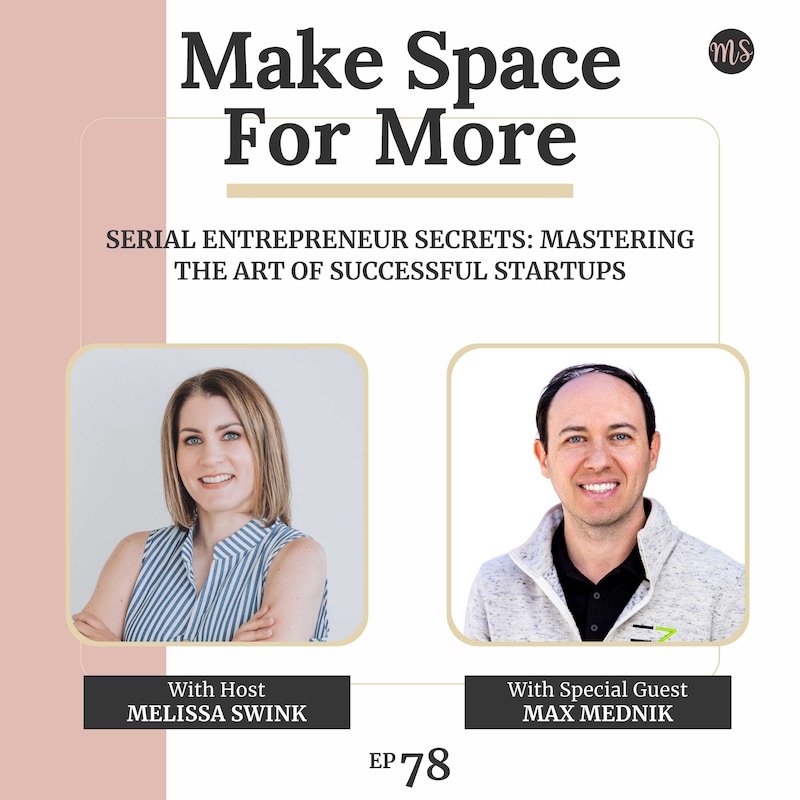
In this week’s “Make Space for More,” host Melissa Swink interviews Max Mednik, a serial entrepreneur and COO of Epsilon3. They discussed Max's journey in entrepreneurship, the evolution of his startups, the importance of idea generation and execution, and the challenges faced in growing a business.
Max shares insights on networking, maintaining relationships, and staying productive as an entrepreneur. He also offers advice to aspiring founders on navigating their growth and decision-making processes. Tune in to learn practical tips from the trenches!
Key Highlights:
- Discover why successful entrepreneurship isn't just about great ideas; it's about systematic execution and validation through real customer willingness to pay.
- Learn how strategic organization and project management can transform your entrepreneurial journey from chaotic to controlled.
- Learn why wearing multiple hats isn't just a startup phase. It's a crucial skill for long-term entrepreneurial success.
- Find out how intentional networking and relationship-building lay the foundation for finding the right co-founders and opportunities.
- Get the inside scoop on how successful entrepreneurs stay productive while juggling multiple ventures and responsibilities.
- Learn why asking specific, targeted questions is your secret weapon for getting the expert guidance you need to grow.
About Our Guest:
Max Mednik is co-founder and COO of Epsilon3, which makes process and resource management software for many mission-critical industries. He is a serial entrepreneur and software engineer. He has co-founded four startups (three of which still exist today) spanning financial technology, legal technology, and aerospace and defense.
About Melissa:
Melissa Swink, Founder & CEO of Melissa Swink & Co., has a team of virtual assistants who provide administrative and marketing support for small businesses and non-profits.
Since 2012, Melissa and her team have helped more than 100 businesses grow through the services they offer, and she is dedicated to helping entrepreneurs create profitable, scalable businesses they love.
Her work is all about doing what works (and eliminating what doesn’t) and driving real, measurable results. Visit www.melissaswink.com to learn more!
Thanks for listening!
If you enjoyed this episode and think that others could benefit from listening, please share it using the social media buttons on this page. Do you have some feedback or questions about this episode? Leave a comment in the section below!
Subscribe to the podcast
If you would like to get automatic updates of new podcast episodes, you can subscribe to the podcast on Apple Podcasts or Stitcher. You can also subscribe in your favorite podcast app.
Leave us an Apple Podcast review
Ratings and reviews from our listeners are really valuable and greatly appreciated. They help our podcast rank higher on Apple Podcasts, which exposes our show to more awesome listeners like you. If you have a minute, please leave an honest review.
Transcripts
Hi everyone, welcome to the Make Space for More podcast. I'm your host, Melissa Swink, and in today's episode, we are going to be chatting with Max Mednik. Max is a serial entrepreneur. I cannot wait to hear his story of how he has founded the companies that he has, his journey along the way, lessons learned, and most importantly, how do you juggle all of this when you're in growth mode all of the time? When do you continue to work in the companies? When is it time to look at pursuing other interests?
There are so many things I'm looking forward to diving into with him today. So before we go any further though, I want to formally introduce Max and then hear from him in his own words. So Max Mednick is a co-founder and COO of Epsilon 3, which makes process and resource management software for many mission critical industries. He is a serial entrepreneur and software engineer. He has co-founded four startups, three of which still exist today.
spanning financial technology, legal technology, and aerospace and defense. Max, welcome to the show. Thank you so much for making the time to talk with me today and share with our audience. These are all really interesting industries, and you and I, of course, are connected through your work in Epsilon 3, but I didn't even realize until today that Epsilon 3 is your current gig, and you have many other businesses that you've started in the past as well. So I wanna listen to...
how things have kind of grown and evolved for you over the years. But first things first, why don't you just tell us a little bit about you?
Max Mednik (:Yeah, thanks so much for having me and welcoming me. I'm excited to talk to you. So yeah, I've been working on different startups for many years now. And I think it was even in college that I realized that it was something that I was interested in. I think I took some entrepreneurship classes in college and just was really excited by some of the case studies and stories I heard about other founders and having been interested in technology and software. It was something that I think
seemed exciting to try to do on my own as well.
Melissa Swink (:Gotcha, gotcha. Now just out of curiosity, what was your major in college? Okay, gotcha. And then you took some entrepreneurship classes or business classes along the way. And so obviously those two go very well together hand in hand.
Max Mednik (:I study computer science.
Max Mednik (:Yeah. And I went to Stanford and it was kind of an exciting time where it was after kind of the dot com bubble stuff, but also right as Facebook and Google and some of these newer generation of companies were just getting started. And so there was just a lot of excitement in like Silicon Valley and all these really interesting speakers that they brought on campus that shared their stories of how they built these really cool companies. So
I think I was kind of inspired by all of that stuff that was happening, for sure.
Melissa Swink (:Yeah, it sounds like you were in the right place at the right time.
Max Mednik (:Yeah, yeah, I agree with that for sure. Although I knew I was interested in computer science before college, but definitely going to Stanford was a big influence there and just being around and seeing everything that was happening there was definitely good timing.
Melissa Swink (:Sure, absolutely. talking about college and then we know that you have founded many companies since then. Did you work in a corporate gig right after college or did you jump right into the world of entrepreneurship and startups?
Max Mednik (:I just jumped right in and I ended up between startups two and three. Then I worked at Google for a few years. I worked as a software engineer and tech lead on Chrome and on machine intelligence, but right out of college I didn't just work somewhere. Also during college I had a couple summer internships where those were paid jobs for larger companies.
Melissa Swink (:Okay.
Max Mednik (:But they were just kind of internships. But I think it, well, even while I was in college, I started having some initial startup ideas and started working on some concepts with a couple other teammates and kind of classmates of mine. And so right out of college, graduation, we kept working on those ideas, which became like the first startup, which I worked on for a while. Yeah.
Melissa Swink (:That's awesome. You know, it's interesting that you share that because I have another client that we've worked with in the past who initially this was an MBA project. So essentially they had an MBA project that they came up with a business concept. And then after they both graduated and got their masters, they decided to go ahead and run with it. So, and they're still continuing to grow and build to this day. So there's a lot of great relationships and certainly ideas generated during that time for sure.
Max Mednik (:That's, yeah, that's amazing.
Max Mednik (:For sure. So I ended up, did an MBA after my first startup or during it. And then I had an idea during that MBA, which also we wrote a business plan for, we won a business plan composition and we tried to, started it after business school as well. So that was my second startup. So it's kind of a similar story as your other client that came out of that program. So yeah, definitely, I think this academic environments, especially when they foster like entrepreneurs.
and those kinds of things are often a nice place to test out concepts and potentially find something to work on.
Melissa Swink (:Yeah, absolutely. Would you say that you're an idea generator?
Max Mednik (:To some extent, yes. Although I think I know other people that are even more creative than me. And I'm honestly better at, I think I'm better at execution and organization, project management and that kind of stuff than the having really crazy, big ideas and visions. I think, yes, I have come up with some of my own ideas, but there are, I feel like a little bit more, I don't know, modest or just like.
direct versus something revolutionary or more creative. I feel like I've worked with other people before that were more of that category. But I think to some extent, any entrepreneur has to be creative.
Melissa Swink (:Right. And I would say that it's like the yin to your yang, right? Because you're in operation. you have to have certainly the ideas or at least the vision. And then you also have to have the ability to implement and actually act upon those ideas. Because I know people who are idea generators, and that's usually as far as it goes. Right? They're super interesting to listen to, and they have all these great ideas. But when the rubber meets the road, things don't necessarily come to fruition. So that's the key differentiator there, I think.
Max Mednik (:Yeah, definitely.
Melissa Swink (:Yeah, absolutely. you have co-founded other startups. typically, there certain, so have you all, so with those startups, I know right now you are a COO, have you always worked on the operations side of things or have you had different roles within those startups that you've co-founded in the past?
Max Mednik (:in this startup and the last one I've been COO and helping on operations, but COO is kind of just a very general broad thing. it's like a lot of different things like, say I do a lot of sales stuff, finance, HR, IT. It's a lot of different hats that you wear, especially in a small, quickly growing company, which I did in my last company as well. but in other ones, like the earlier ones.
Melissa Swink (:Sure.
Max Mednik (:I wrote a lot of the code as well. so I did a lot of the engineering too. And so the role has kind of shifted over the years and with each company, it's been a little different. I kind of work on whatever is the most important thing or kind of the biggest item that I could help out the most with. And then as the team evolves and my, whatever I need to focus on shifts, I kind of go with that as well. So I've tried to be flexible.
kind of throughout all the experiences.
Melissa Swink (:Yeah, absolutely. Yeah, I was just thinking too, our last guest was talking about having a small but mighty team. And so there are days that you're wearing a variety of hats, even if it's not necessarily within your role per se, if it's something that needs to get done and depending on how urgent it is, it might be all hands on deck and we're all solving this problem together. Yeah.
Max Mednik (:That's right. Yeah, that's kind of what it comes with the territory of this type of stuff.
Melissa Swink (:No two days are the same, that's for sure.
Max Mednik (:Yeah, which is, yeah, it's exciting and you're constantly learning new things, which is, think, part of what I enjoy about startups and entrepreneurship.
Melissa Swink (:That was just what I was going to ask you too. mean, ultimately what draws you is starting companies. that, you know, the challenge or seeing that idea go from concept to fruition? Is that the variety, all of the above?
Max Mednik (:I think for me, there's a couple of factors. One is, yeah, seeing an idea come to life and having some sort of tangible impact on the world or someone's life or some, I don't know, helping someone else be successful in some way and like partially aided by something that I might've done. That's exciting. But also I think the learning piece of it and me kind of learning and growing is another piece of it. But also I think my personality is just...
such that I'm not, I don't like dealing, I'm not a great with authority and with like someone else making decisions that I don't agree with. And just kind of like staying in my little swim lane and just being one cog in a giant system. I don't know, for me it's less exciting. And I find that I get really demotivated if I'm part of a big thing and some random person's making decisions that I've never talked to and that I disagree with.
kind of demotivating. I feel like I'm just more naturally suited to smaller things. And here I make lots of mistakes, but at least I own it. And if it's a bad decision, like I know that I did that and then I can do better in the future. But I at least have some aspect of control, which probably is another reason that I'm kind of drawn to this stuff too.
Melissa Swink (:Right.
Melissa Swink (:Sure, absolutely. And I can certainly relate to that with the whole, you know, entrepreneurship really is freedom. It's interesting because Marissa Reether and I talked when she was on our episode, she's one of the senior VAs on our team. She was talking about having control over her time and her work and who she does that work with and collaborates with and such. And I was like, it's interesting because, yeah, you have control and then you also have the freedom. So control and freedom are kind of
similar words that people use for the same thing. You want to be able to have that autonomy.
Max Mednik (:Yeah, exactly.
Melissa Swink (:100%. So with the startups that, just like the work that you've done and your entrepreneurship, how do you decide which problems are worth solving? Or certainly I think opportunities come up, especially in the software world where it's like, are the needs? Which ones do we work to solve? Which ones kind of, I don't want to say don't make the cut or like, do you have a way of filtering things out?
Max Mednik (:It's really hard. I think that's part of kind of like the art of it, which is really difficult to quantify or do objectively. But I think some things that have helped me in the past are just like lot of detailed tracking and recording, like write down all the ideas, write down all the data and information about all of them, investigate all of them, try to test each of them. But at the end of the day, you're I think constantly making decisions and
prioritizing stuff based off of what's the highest priority or what's the highest likelihood of succeeding or having a big impact. so, and even when you're actually executing on an idea, it's like constant daily prioritization. do you work on this thing or this thing, or which one's going to be the most useful investment of time or money? But I think tracking all the ideas and then usually I try to come up with some sort of quantifiable metric or goal.
or target or kind of minimal threshold like, to, to pursue an idea further, we need to at least find like three customers that are willing to pay us like this amount of money. And if we can't even find three of them, like you don't even go. you put, or you launched a new product and you need to get at least a hundred people using it after three months. And if you don't, then no one cares about us to go do something. So like having some sort of, goal or threshold that is numerical where.
Melissa Swink (:yes.
Max Mednik (:it proves out that like, if you can at least reach that, you can keep going or keep investing in it. I think that kind of methodology has helped me in the past to figure out about either to, whether to pursue a new thing or to keep going in a current direction.
Melissa Swink (:Yes, that makes an excellent point because ultimately the bottom line is, yes, this problem needs to be solved, but are people willing to pay for it? I mean, at the end of the day, bottom line is, so I like that you have those benchmarks for yourself where you're like, are at least three people willing to make a purchase to get this problem solved or do we need X number of people using this system in order to keep this functional? So, yeah.
Max Mednik (:Yeah.
Max Mednik (:Yeah, I think that's, I think that's one of the tough lessons I learned from my second startup because we got a lot of, initially we just asked a lot of people like, would you use this thing if we built it or are you, you, do you, uh, do you hate this other thing that you do now? And a lot of people are like, yeah, I hate it. It's annoying. Sure. I would use your, I would use a better system if it, if it were around. But that kind of validation wasn't really, um,
like legitimate and people are often nicer to your face than like their actions. like, they're not like, if they're gonna actually like open up their wallet and spend money or they're gonna spend their time like actually using a product, that's gonna be a lot more of a real indicator of interest for people like time or money that they invest into it versus just asking them like, hey, do you think this would be useful? Yeah.
Melissa Swink (:Mm-hmm.
Melissa Swink (:Sure. Yeah, absolutely. Otherwise, it's just kind of, I would say more basic market research, if you will. Like, hey, anybody interested in something like this? Okay, cool. It's got to have some muscle behind it for sure.
Max Mednik (:Yeah, there's a, right. There's this book called The Mom Test that I read a few years ago that was really good that talked about this kind of exact thing and how to ask people questions the right way to see if they're actually for real interested or if like a concept is actually a good idea worth pursuing versus just, they're just being nice to you.
Melissa Swink (:Hmm.
Melissa Swink (:Yes.
Melissa Swink (:Yes, absolutely. I actually, I'm just thinking about this now that I did work with a startup back in 2020. They ultimately decided to close down because people were really passionate about the problem that they were aiming to solve, but they realized that they had ultimately built the wrong plane. The plane was too small. And so they needed to go back to the drawing board and figure out another model that was going to be more sustainable and have a greater impact than what they were doing.
It's just interesting how you have to connect all those dots in order to make something really work. Absolutely. You obviously have been involved in a variety of businesses, lots of lessons over the years and things like that. When do you decide personally when you want to take a step back from something you've been working on for so long and then focus your time and energy building something new?
Max Mednik (:Yeah, definitely.
Max Mednik (:I think it's always a very difficult decision and it's always like case by case and situational and stuff. And so like each of my kind of transitions had just like various. like during one of them, it was like the start of COVID and I had like a young kid and there's like a weird situation with other transitions going on with that company and they're unrelated to me. like other times it's maybe been
Like we couldn't hit like that metric like we decided to pivot or shut something down. So there's, it's usually either something that's either like if it's not working in the business or there's some kind of issue with the team or changes in the team that or changes in the direction of the company or the opportunity that.
I might want to do something different or maybe just the timing isn't good. I know. So it's always been kind of some sort of, some sort of either personal or situational thing or just some company metric that just, it didn't keep making sense to keep like pushing in some direction if there wasn't, kind of enough validation in the market. and so those have been kind of some of the reasons for, for the transitions, like at least out of stuff and then transitions into new things.
have been either like, I meet somebody that has an interesting idea or some kind of compelling opportunity comes up or I have some idea. But some of the recent ones have been someone that I knew in college or someone they connected me to or whatever, just a new person I meet that has an interesting idea that we partner up to work on. that's kind and again, we try to seek some validation in the market.
get some people that help validate that there's actually demand for something and then we go and pursue that.
Melissa Swink (:Okay, gotcha. Now I'm just curious, how are you meeting your co-founders or how are you meeting other founders and having these conversations about discussing ideas or if you have an idea for something or if they have something they're working on and you guys decide to collaborate, where are you finding others and how are you having those conversations? I'm purely curious.
Max Mednik (:Yeah, I think it's always kind of coincidental and random to some extent, but from my specific situations, it's been either friends from school or college or like a former coworker or these kinds of things. But generally, I think what has helped me before is actually making an effort to continue to stay in touch with people, share updates about...
my situation or what I'm looking for, ask for introductions. So oftentimes I would send email updates or ask for calls to check in with. I kind of may have like in my head a list of, I don't know, a couple dozen people that I've worked with before, or wasn't classes with before, just people that I really respect. And they know a lot of people. And so if I tell them, hey, I'm looking for something new about this, or do you know someone who works on this?
which could also be useful for just like a normal business context, even if you're not in a transition, sharing those kinds of updates and networking kind of in general. I think, but being proactive on that, I think that's the kind of thing that has helped me in the past with people that introduced me to somebody new or somebody else who might be looking for something interesting. So it's really been through either other networks that I'm part of, like through other companies or jobs or
Melissa Swink (:Hmm?
Max Mednik (:schools that I've been part of. And just reaching out to people, think, proactively, think that has helped me a lot in the past. There are also other things like there's like co-founder meetups and just like entrepreneurship meetups and different events that happen. I'm like a lot busier now, so I'm not going to as many of those, but in the past, I've gone to, I've gone to lots of events like hackathons.
Melissa Swink (:Sure.
Max Mednik (:kind of like just open events for software entrepreneurs or just different, even like sub specific kind of groups of people interested in different technologies. And those are great ways to meet people as well. I've met some people at those kinds of hackathons or just like open a founder meetup things that I met people like a decade or two ago and I still keep in touch with them. And those have led to introductions to other things. I think those are.
Just get out there and go to those kinds of things if you want to meet people.
Melissa Swink (:How do you maintain your contact database, if you will? That's actually something that came up with another client of ours recently where she's like, I'm meeting so many wonderful people all the time. I have known many influential people for years. She's like, I need help even keeping track of everybody and almost tagging them according to what type of contact they are. they another founder? Are they?
you know, another software engineer, just all the different things. Like, how are you keeping track of all these relationships that you're building and maintaining?
Max Mednik (:It's really hard and I wish I did even better at this, and maintain it better. But part of it is like maintaining the contact database, but the other part is. At practically reaching out and it's finding time. Like I do it when it's like, I need to, but probably the best practice would be just always do it to some extent. Like I wish I had, I don't know, some reminder I've looked for apps that can try to do this as well, but, like.
Melissa Swink (:Sure.
Max Mednik (:some sort of recurring thing that like every week I need to reach out to these 10 people, catch up with them, maybe set up, and just say, would force me to do that. Like that'd be great. I don't do that. I wish I was more organized or had something like that. But what I do do is I have like my Google contacts, very, I have lots of categories and I do tag people with categories like entrepreneur or engineer or lawyer or a doctor. I mean, I have some frequently used ones that are like common.
Jobs that people have or ways that like if I need to find other engineers or other founders or other whatever So I have like a bunch of categories and then in LinkedIn I mean I tried to add people as much as I can and I have like my email helps me There's like a sidebar where I can quickly find a person's LinkedIn profile and I'll connect with them but that's kind of it and then I have a category as well of like
people that are in the context that's like either like mentors or advisors or just other friends that have been really good in the past that either like through their network or just their expertise and past experience. And I will just sometimes like email a bunch of them if I have a question about stuff or just, you know, and try to help them as well when they reach out. So I think having some of those categories and keeping that.
as up to date as you can, I think is definitely helpful.
Melissa Swink (:Yeah, no, that's all very helpful. I was thinking that even just basic email or, know, certainly LinkedIn is a tool that people can leverage as well. That would be interesting to see if there's an app that can help do this. But I was thinking as you were talking about this, just trying to reach out to people periodically. Actually, the startup that I mentioned a bit ago where they decided to close it down because they needed to build a bigger and better plane in order to solve this problem. Oddly enough, I got an email from him.
a couple of days ago, it was just a mass email, but it was literally like a, here's what's new with me. And it was some personal, it was some professional, it wasn't salesy or anything like that. And even questions like, hey, I'm looking to meet people like this, just kind of describing maybe a contact that he was looking for. One example, I have a client who is an inventor. He was for a while looking for an intellectual property attorney, looking for recommendations.
So was just a general update on where things are at and all the different projects he's working on. And it was really cool actually, like I responded to it. So who knows, maybe somebody can take that idea and run with it as well, just to every contact. And he literally says at the top, you're receiving this email because at some point in my life, I have met you, I have talked to you, I've worked with you, whatever, everybody's all in the same bucket.
Max Mednik (:Yeah.
Max Mednik (:That's cool. I've gotten some emails like that from some friends, like I have a college friend or two that they send also these giant emails, but it's cute because there's like family photos, there's details about their work and personal life. And it's nice to see those updates. I've thought about, I've done that kind of stuff, but not regularly. And it's never been to all my contacts, but it's probably just been to like a few dozen people. But I think that's a great idea. And that kind of thing probably opens up some interesting doors and opportunities for people.
and helps other people remember that they exist and they also could be an interesting person to collaborate with in the future. So yeah, I think that's a great practice.
Melissa Swink (:Right. Yeah, it definitely captured my attention. And I think because it was truly interesting to read what he's up to these days, know, family related and business related and just personal interests. It was, it was cool. I mean, I put it in my Melissa to read folder in my email and I actually took, you know, five minutes to scroll through it and responded back. who knows, maybe that'll be helpful for somebody who's listening, but.
Max Mednik (:Yeah.
Max Mednik (:Yeah, that's great.
Max Mednik (:That's awesome.
Melissa Swink (:Max, do you have any other habits or routines that can help you stay focused, especially when times are busy or you're going through maybe a high stakes period?
Max Mednik (:I think I, I saw some of your books back there. think we've probably read a lot of similar stuff, but I'm, I follow like getting things done methodology. Like I try to write everything down and I'm like a pretty thorough like task list. try to have like inbox zero, like my task was zero, all this stuff. So, I use Asana, I used to do this. These are just like some of the apps I used to kind of manage all the tasks, but
Melissa Swink (:Shifting gears a bit here.
Max Mednik (:For me, like everything gets written down. Everything gets cleared out of inboxes and And then I also like I meditate every day. I try to do something physical every day There are some days that I can't but even if it's like 15 or 20 minutes like in the same room or just go outside for 15 minutes and do something quick I think that helps as well. So those are those are just some of some of the things
Melissa Swink (:Yeah, overall, I think what I'm hearing you say is just clearing the mind. Like I talk to clients all the time about if you are storing all your to-dos and trying to keep everything straight in your brain, it's too much. It's not meant to do all of that. So it's like, let's get out of the brain into a space like a sauna or some sort of to-do list or even for me personally, I'll just use like my Apple like task list or something on my phone if it's a personal reminder and such. But you're right. And then also having that meditation time or just
Max Mednik (:Yeah.
Melissa Swink (:getting out, getting a walk in or some physical activity, just trying to keep the brain clear. Yeah, absolutely. And it's harder when life is busy and there's a lot going on in the business. It's harder to make the time to do that.
Max Mednik (:Yeah, yeah, definitely.
Max Mednik (:Yeah, I agree. And it's often hard to juggle different things and make room for it. yeah, I think as long as you are also patient with yourself, sometimes days might not be perfect. But if generally over the course of a week or whatever, several days, you manage to do enough of that stuff, I think you're in good shape.
Melissa Swink (:Yeah, yeah, absolutely. Okay, Max, the last question that I have for you before we wrap up here is if there's a founder out there who's listening, who is very technically skilled, but they're struggling to grow their business beyond themselves, maybe they're a solopreneur, they have a small team and they're just, you know, they're very good at what they do, but maybe are struggling to kind of get to that next place that they want to be at in their business. What advice would you give to them?
Max Mednik (:It might, think oftentimes like the very specific tactics would depend on their situation and what's happening. Like, is it a sales problem or like a team hiring, recruiting problem or whatever kind of thing. But in general, I face the same kinds of questions all the time of these kinds of problems. don't have solutions to, or kind of roadblocks and things. And usually my approach is to reach out to people that I think are experts or that have some sort of knowledge about something.
and ask for some assistance or help. And oftentimes people will be willing to have quick conversations and share knowledge. I'll do that. And I'll also just try to read as much as I can online. There's so many resources like Y Combinator, YCs. They publish a ton of articles and videos and startup advice. there's probably people have written blog posts about pretty much every topic.
Melissa Swink (:Mm-hmm.
Max Mednik (:sales, founding, legal, like every probably every aspect and every little problem you probably have that that founder that hypothetical founder is probably not is not the first person ever to deal with that issue and other people have dealt with it and might have good ideas. So I would try to look online read and probably reach out to a bunch of people, even if you don't know them and mention briefly what issue you're having and see if they might have assistance because I think that people generally are open to helping others.
So that's kind of how I would approach it how I have approached it when I've had those kinds of situations.
Melissa Swink (:Yes, absolutely. I agree with you. I think people genuinely want to help, but you have to ask good questions. If you're just asking kind of a vague question, at least when people come to me, I'm kind like, man, like that's kind of loaded or, you know, it depends, right? We need to know more about the situation. But if somebody asked me a very specific question, I'm happy to answer it. And I'm often happy to answer it even through a voice memo or I'll even...
Max Mednik (:Yeah.
Melissa Swink (:create a loom video for somebody to be like, here's how I would solve this problem. Like asking good questions, you're gonna get great answers.
Max Mednik (:Yeah.
Max Mednik (:Yeah, yeah, exactly. Being specific, I think helps a lot.
Melissa Swink (:Yes, absolutely. Absolutely. And I love that you had mentioned, you know, reaching out to others and, you know, asking for their input and expertise. Max, there are so many golden nuggets that you shared. And I know I put you on the spot a couple of times, like, how do you do this? Or what is your advice here? So I appreciate you playing along. If one of our listeners or if we have a listener who's interested in connecting with you, where can they find you online?
Max Mednik (:Um, you, if you could go to my company, Epsilon three.io, um, there's a page about me and there's some contact info as well. can also, my personal website is maxmednic.com. There's like a contact form and there's random stuff that I read and, and the info there as well. And my LinkedIn and other things too.
Melissa Swink (:Okay. Yes. And we'll certainly link those in the show notes as well. So Max, again, thank you so much for taking the time to talk with us today. Really appreciate all of the golden nuggets that you shared and to our audience, really appreciate your support and tuning into today's episode. Again, our goal is to share practical tools and information and tips and strategies for growing your business beyond you. So I will be back next week with another episode of Make Space for More. Have a wonderful day, everyone. Bye-bye.




