Shownotes
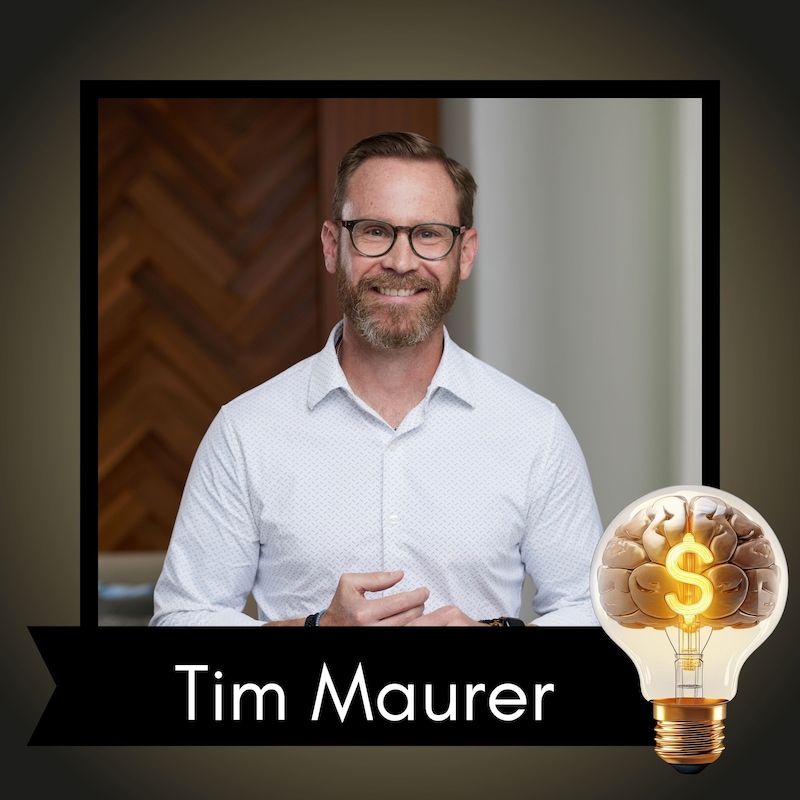
In this episode of Financial Behavior Thought Leaders, host Dr. Mary Bell Carlson sits down with Tim Maurer, CFP®, Chief Advisory Officer at Signature FD and a renowned figure in financial planning and behavioral finance. Known for his dynamic keynotes and practical wisdom, Tim brings over twenty years of experience in financial services, along with appearances on major outlets like The Today Show and contributions to Forbes.
This conversation centers around Tim’s flagship presentation, “Winning The Work: A Threefold Growth Plan for Professional Advisors,” and unpacks how advisors can integrate personal values, professional skill, and business development for sustainable, holistic success.
Mary and Tim begin with a behind-the-scenes look at Tim’s path to the stage, sharing candid stories of his first (rain-soaked and almost-late) media appearance and how teaching at Towson University led him to rewrite the textbook—literally—for financial planning students.
Their discussion then shifts to the heart of Tim’s keynote. Tim explains his belief that “personal finance is more personal than finance,” emphasizing the necessity of blending behavioral insights with the technical side of advising. The episode delves into his threefold framework: business development, professional development, and—often neglected—personal growth. Tim also shares the value of true relationship management, grounding the conversation with practical examples and the power of following through on intentions.
You’ll hear a powerful, personal story from Tim’s own life—a near-fatal car accident—that shaped his commitment to vulnerability, growth, and purposeful storytelling from the stage. Behind every presentation, Tim reveals, is a drive not only to teach, but to engage and entertain, ultimately building deeper trust with every audience.
Five Key Takeaways:
- Personal Finance is Inherently Personal: Tim reiterates that technical knowledge, while essential, is insufficient on its own—advisors must recognize and address the emotional and behavioral components driving client decisions. By making personal finance more about the person than just the numbers, advisors can foster stronger client relationships and drive real change.
- Threefold Growth for Advisors is Essential: Tim’s “Winning The Work” keynote centers on the interconnectedness of business development, professional development, and personal growth. Excelling in just one or two areas can leave an advisor limited; true success comes when all three are intentionally cultivated and aligned with core values.
- Relationship Management is More Than a Job Title: Authentic relationship management means being a trust-builder in one’s community and staying accountable for keeping in touch and following up—going beyond surface-level intentions. This simple practice can set financial professionals apart and opens doors to new opportunities, deeper trust, and personal satisfaction.
- Vulnerability and Storytelling Build Trust: Sharing personal stories—even those rooted in difficult or painful experiences—can forge genuine connections with audiences. Tim’s willingness to be vulnerable on stage is a powerful reminder that advisors don’t have to be the “smartest person in the room” to make an impact. Instead, relatability, honesty, and humanity are key drivers of trust and memorability.
- Creativity and Fun are Integral to Career Fulfillment: Tim discusses how speaking, writing, and creating serve as outlets for his creativity and make his work deeply satisfying. He encourages other advisors to find and embrace their own creative “itch,” stressing that the best financial professionals infuse their practice with enjoyment, self-expression, and a sense of purpose—making financial advising not just a job, but a dream profession.
If you’re looking for a speaker who can offer a holistic approach to business growth—someone who blends personal development with professional strategies—you can learn more and book Tim Maurer at keynote.financial/tim-maurer.
Thanks for joining us on Financial Behavior Thought Leaders. We’ll be back soon with more conversations that bring you closer to the leading voices in financial services.
Additional Resources:
Simple Money: https://a.co/d/1uxQUsT
The Ultimate Financial Plan: Balancing Your Money and Life: https://a.co/d/c1QcqqX
Transcripts
Welcome to Financial Behavior Thought Leaders. I'm Mary, and this is the podcast that takes you behind the scenes with top speakers in financial services. So whether you're a financial adviser looking to book a client event or an event planner looking for a perfect keynote or a financial professional just wanting to learn from industry thought leaders, you're in the right place. Today, we're featuring Tim Maurer, one of the financial behavior keynote group's exclusive speakers. Tim is a certified financial planner, registered life planner, and the chief advisory officer at Signature FD. With twenty years of experience in financial advising, Tim is a passionate advocate for helping advisors and clients integrate into their personal values in their with their financial goals. He's the author of Simple Money, a weekly contributor to Forbes, a member of CNBC advisor council. And Tim has appeared on major media outlets like The Today Show, CNBC, and The New York Times.
Mary Bell Carlson [:In this episode, we're gonna dive deep into Tim's keynote, winning the work, a threefold growth plan for professional advisors, and explore how his approach can help financial advisors grow personally, professionally, and in their business development. Plus, we'll hear a story from his presentation that always resonates with his audience. So, Tim, thanks for joining the show today.
Tim Maurer [:It's my pleasure, Mary. Thank you for having me.
Mary Bell Carlson [:Before we dive in to your keynote, I want you to tell us a little bit about your background story and how you got into
Tim Maurer [:speaking. Oh, boy. You know, it's it's it's actually a little bit of an embarrassing story. I got involved in speaking and media once when I was working for a company that needed a fill in in the Baltimore area. Somebody to go on to the Washington DC CBS affiliate to talk about what was happening in the market that day. So somebody else was teed up to do it. They got sick. I got the call, and you know the Baltimore DC area well.
Tim Maurer [:So you know how crazy it can be to get around. So for my very first live television event, I was navigating the Baltimore Beltway and the DC Beltway on a rainy morning. And I kid you not, I I hate to even admit this. I was late for my first live television appearance. I was on the phone with the producer who was guiding me in through, like, back roads off of Connecticut Avenue. I end up showing up. I'm in a wool suit, of course, because that's how we did it back then, and it's pouring down rain. So I walk in there looking like, you know, a a a drenched puppy just walked off the street, and I'm late rushing in for my first live television appearance.
Tim Maurer [:I thought for sure it would be my last. It ended up kind of endearing me to that particular producer who I stay in touch with to this day. Wow. And I ended up doing a ton of segments on that show, and it led to some other TV and radio opportunities as well. But as it relates to speaking specifically and the work that you were doing, the awesome work that you're doing with a bunch of great speakers, it was really Towson University, another Baltimore connection. It was my alma mater. And after I graduated from Towson and learned something about this business, and that took several years, I felt this deep desire to go back and teach the class I never got a chance to take. So it took me a couple years to get my nose in the door there because I didn't have my PhD, unlike you.
Tim Maurer [:And, but I convinced them eventually that they should have a certified financial planner practitioner teaching the future certified financial planner practitioners of the future. And so I got the opportunity to teach there, and I did for seven years as an adjunct faculty member. So I feel like I was really forged in the fire. Right?
Mary Bell Carlson [:But you have to stand up with
Tim Maurer [:30 to 40 apathetic college students every semester and try and bring to life something that they would rather just mail in for a grade, and I understand their perspective as well. I had 15 opportunities each semester to try and engage them and and unwire their expectations, rewire them, and point people in the direction of the the business that you and I love so dearly.
Mary Bell Carlson [:Well, I love that your stories really are going from the frying pan right into the fire. Like, you don't go anything soft there. Like, everything is just a % all in. Uh-huh. And burn well and we were kind of chatting. We we do laugh. For those of us that have taught at universities or academics of any sort, we always say your hardest critic is keeping those college students awake. Right? Like, if you can keep their short attention spans, then you have the rest of the audiences.
Tim Maurer [:It is so true. And I will tell you that attempting to use the curriculum that they gave me not only opened up more of my speaking potential because I had to rewire the way I was thinking about this stuff. And what I mean is I hated the curriculum. They handed me this textbook that cost, like, a hundred and $79 and had a slew of multiple choice exams, and I looked at it, disagreed with half of it. So, ultimately, it was my absentee, like you say, going all in. I ended up rewriting the curriculum by the second semester class by class. That ended up becoming my first book, The Ultimate Financial Plan I coauthored with Jim Stovall, and then that turned into my second book, Over My Shoulders Here Simple Money. Both of those got approved by the CFP board, and I used them for textbooks.
Tim Maurer [:So then the students were able to go on to Amazon.com and get their textbook for $17.99 instead of paying a hundred and $79 for this big heavy, you know, paperweight.
Mary Bell Carlson [:Multiple choice questionnaire.
Tim Maurer [:Exactly.
Mary Bell Carlson [:Well, that just shows again, like, you just go a 50 into it. If if there's not a book written, you'll write it. If it's there's not something to do, you'll do it. I love it. Yeah.
Tim Maurer [:I think so.
Mary Bell Carlson [:Well, Tim, especially among advisors, you're known for some pretty specific topics, including holistic advisor growth, some b five simplification and application, and then my favorite, the real story story. So you're gonna have to break these down, tell us what it means, and tell us why it's so important for today's advisers.
Tim Maurer [:Well, the thing that I become known for saying for several years right now, it's it's perhaps because I had the pleasure of saying it in front of our friend Carl Richards, and I mentioned this notion back I mean, this was now eighteen years ago, and I think I was speaking at one of my first conferences. It was an FPA event. And, I was hanging out with Michael Kitsis who who is a good friend. He and I grew up in the same FPA chapter. We've known each other for years, and I met Carl Richards for the first time. And we were on the same panel together, the three of us. Can you imagine that? That's awesome. Anybody get a word in edgewise.
Mary Bell Carlson [:Right there.
Tim Maurer [:Let me tell you. Let me tell you. But I had shared this notion of personal finance is more personal than finance, and what it was is more an observation at that point in time as an adviser with some years into my belt. I was having this conversation anecdotally with advisers. Do you find that regardless of how great your recommendations are, people aren't always implementing them? And, of course, now we've learned that this is endemic in the industry. It's a challenge. It's maybe the number one challenge that we have as financial advisers.
Mary Bell Carlson [:And so
Tim Maurer [:it was initially an anecdotal observation that became amusing that now has been certified through the field of behavior economics as scientific fact. So I can't stop saying it anymore. Personal finance is indeed more personal than it is finance. So much of what I have to explicate for advisers has been in the realm not just of behavior economics and behavioral finance in in the most technical sense, but how do we apply the wisdom of what we've learned from the field of behavioral economics? And how do we actually use it to our own advantage in our practice management as well. And so that's how it's gone from behavioral finance one zero one to say more advanced applications of behavioral finance. And increasingly, I find myself talking about adviser growth. Yes. Business development and finding a way to blend that in and reconcile it with our duty, our sworn duty as fiduciaries.
Tim Maurer [:How can those two things coexist at the same time? But not only how can we grow a business sense, how do we continue to grow personally and professionally in a career that is as demanding as financial planning and wealth management can be?
Mary Bell Carlson [:Yeah. Absolutely. And I think that so often we look at things and think, oh, that's for someone else. Right? Like, my friend's struggling with this or my client's struggling with this. And we've talked a lot on here about, like, looking inward, and that's the hard work. And it kind of rolls into your keynote, let's go there, of winning the work. You offer a three frog threefold growth pattern for advisors that tie your business development with your professional and personal growth. And I like that you add that personal growth core.
Mary Bell Carlson [:Tell us what this winning the work is all about. Give us the elements of that keynote.
Tim Maurer [:Let's let's start with the the elephant in the room as or this notion of business development. I owe the phrase winning the work. And by the way, I asked for his permission before I made this the title of this keynote presentation to Mo Bonnell. Mo Bonnell is the author of the book, Give to Grow. He's an unbelievable business development consultant who came out of the actuarial space. So for those of us who are advisers and have always had, say, a troubling relationship with the notion of business development and sales because we saw it in some way as antithetical with our duty as fiduciaries, I think Moe is one of the people who's helped open my eyes to the possibilities here of finding a more professional pursuit of business development that is wholly aligned with our pledge of, a fiduciary level of responsibility with our clients. So it is a shockingly simple method to business development that involves two lists and one weekly practice that I'll share with advisers in this keynote presentation. But, yes, beyond business development, something that I think we all know is important, something that we may have seen historically as a necessary evil, Now we have a way to use this as a way to blend into our personality as an advisor, find a way to do business development, and more importantly, relationship management that is very, very consistent with our core values as professionals in the industry.
Tim Maurer [:But I think that when you think about business development, it's connection to our professional development, which is just the table stakes. We have to be technically proficient. That is never going away even with all the advancements of AI. They're phenomenal, by the way. But our professional development remains vital in in in connection to our business development. And then perhaps most importantly, our personal development is one of the things that too often gets left behind because I know you've seen this. We've been in this business long enough to know people who have been extremely successful at least for a spurt from a business development perspective or maybe even a professional development perspective, but they're necessarily limited by their personal growth and development. Similarly, when our personal growth and development is something that is really strong, it will be a great supporter of our professional and business development.
Tim Maurer [:So I absolutely see this threefold approach as something that is inextricably intertwined. They have to work together in order for all three to be optimized.
Mary Bell Carlson [:Yeah. No. And I love that. I think so often, and especially now as we're seeing a lot of turbulence and things happening, you can feel overwhelmed and burned out really
Tim Maurer [:easily personally.
Mary Bell Carlson [:And that will resonate in your relationship with clients. I wanna go back to a word you use and maybe dig in a bit here, and that was relationship management. Talk to us about what that means and what you mean by managing relationships.
Tim Maurer [:Now I'm not talking about relationship management as it may be defined within, say, job descriptions and resumes for financial advisors. I'm talking about being a trusted member of our communities. I'm talking about being a responsible manager of relationships. So let me give you a great example. How many times and and and I'll I'll I'll confess that I've probably said this to you. We've probably crossed paths at a conference, high fived, caught up for a couple minutes because we haven't talked for perhaps years, and then said, hey. We should catch up sometime. This is a very, very common thing that we do.
Tim Maurer [:We have all the best intentions when we say that, and we do it all the time to just about everybody we interact with. And then what do we what do we inevitably do? We get caught up in our day to day. We don't actually follow-up, and we go another three or four years before we see each other. We high five again, and it takes us all that time to get reconnected. So true relationship management, I believe, is a method and a process that we can learn and perfect, And it is very, very much in tune with our our perspective as fiduciaries. Right? Again, if we if we always come back to this notion that we act in the best interest of people, shouldn't we say what we mean and mean what we say? Shouldn't we follow-up with somebody if we've said, hey. We should get together. We should talk about this or that.
Tim Maurer [:And so with this whole approach to winning the work, it's really differentiating between doing the work, which I think everybody in your audience is is is eminently capable of. But could we be just as professional when it comes to winning the work? And that is relationship management, and that is managing opportunities that come our way effectively and responsibly.
Mary Bell Carlson [:Well, and I love the element of really establishing trust. You know? It really gets of doing what you're actually saying you're going to do and following through with that. As small as that is, you know, it can be in the small things, but also in the big things. And I I think that it brings in those elements that are the non tangibles. They're not the ones you're gonna learn often professional development, but you do spend a lot of time when you dig beneath your surface. That's what you're looking for at the core. You're meeting the needs of other human beings that are in your path.
Tim Maurer [:And that is so well said. And what do we see in the evidence of people who make decisions to work with financial advisors? Yes. Our competency absolutely matters. Those are table stakes, but ultimately, our clients or our prospects are making these decisions based on whether or not they trust us. Guess what one of the other major features of trust is? And this this actually drives us crazy because it can't show up on a resume. As advisors, we're so quantitatively oriented. This drives us crazy. The number one driver of trust, likability.
Tim Maurer [:Likability.
Mary Bell Carlson [:Oh, yes.
Tim Maurer [:I mean, we tend to think of this in a way that almost cheapens the process. But here again, there is a way to cultivate a mentality that is more likable, that is better connected to the people that we interact with, that is more responsible, that says yes when you mean yes, says no when you mean no, because that's just as if not more important and leads to more trusting, stable relationships where the opportunities that come to be are truly mutually beneficial and fruitful.
Mary Bell Carlson [:Well, in what you're talking about in terms of relationships, you're really having the relationship transcend the advice and everything that we and I'm gonna put in quotes here, that we charge for. Right? Yes. And so I think there's in this big shift in what value am I bringing as a financial advisor. If an AI machine or a robot or a computer, whatever you're can do the work, what value am I bringing? But what you've just stated of that human connection and likability and trust, those are things that are not replicable in an AI computer technology world.
Tim Maurer [:It's so true. And it is the advisors who master those skills who will then be best positioned to utilize these new advancements because that's what they are in technology to be even better connectors of people in the future. That's how we'll utilize them. It's not about a replacement thing. It's the people who are the most trustworthy, the most likable, the most competent, and the best in their craft are the ones who are gonna use these tools to enhance and augment relationships, not just automate tasks and take notes when we, when we when we don't wanna do it ourselves.
Mary Bell Carlson [:Sure. Sure. Well, speaking of masterful, one thing you are really good at is telling a story. And so I would love for you to share a story from your speech, winning the work, that really resonates with your listeners. Would you share that with us today? Oh, my gosh. A story that resonates with your Would you share that
Tim Maurer [:with us today? Oh my gosh. A story that resonates with with our listeners. Actually, is it okay if I give you a glimpse of a story that really was kind of foundational or formational in my becoming a speaker in the first place?
Mary Bell Carlson [:Oh, please. Jump right in.
Tim Maurer [:So this is one that only shows up in one of my keynotes called the narrative imperative. The concept of story being truly, a necessity in the work that we do. And, and it was based on the biggest mistake I made in life. At the age of 18, I was that typical punk kid that, that really wanted to say no to every single authority figure on the planet. And after a series of bad decisions on a on a Tuesday in June after my freshman year of college, I fell asleep behind the wheel and had a a terrible car accident. Of course, because I said no to all authority figures. I didn't have my seat belt on. My car rolled down an embankment.
Tim Maurer [:I woke up hitting the rumble strips just as the car was creaming off the steep embankment. And, unfortunately, the car was not visible to people at 02:00, three o'clock in the morning on a Tuesday night, And so I ended up trapped in the car for four hours. This is on the Bel Air bypass, by the way, in, in Hartford County just North of Baltimore. And so, trapped in the car for four hours, broken and bloodied with my pain increasing as the adrenaline went down, I thought it was over. And so this genuine near death experience is one that I've extrapolated more throughout my speaking in part because it was part of my therapy to navigate, coming to grips with what had happened and to turn this horrible, horrible thing into something that ultimately reshaped me and then could also be an example that would be gripping for others and might help them find a greater sense of meaning and purpose both in life and their work. And so this particular, incident, even though it's not the slightest bit funny and it's not something that I would wish on anyone, it's the most important thing that has ever happened to me, and it has forever shaped my work since then. But it also made for good therapy to be able to tell this story again in front of people, something that I wasn't able to do for about a decade after I had the accident.
Mary Bell Carlson [:Well, and it really goes back, right? What you were saying in winning the work, and that is the personal development. I mean, for you to be able to tell, retail such a traumatic event in your life and be able to learn from it, that's growth, right? Like that is really looking inward to be able to express outward some of your own weaknesses, right? Like some of the own shame you felt or embarrassment or all the other strong feelings that we have. And I love that you've done the work, but now you actually don't just tell others, you tell it on a stage and you bring it. I mean, that's pretty exposing to be real honest.
Tim Maurer [:Yep. It takes a good bit of vulnerability, I'll confess. But there are a few things that build trust beyond likability, like vulnerability. That's one of the other big factors. And so, the truth is I don't get up on stage because I am like Michael Kitsis. I'm not the smartest guy in the room. I've never been the smartest guy in the room. I do a decent job of synthesizing information, taking complex stuff that people like Michael Kitsis can figure out and originate and then help translate it to people so that they can understand it, synthesize it better into their lives.
Tim Maurer [:And, yes, I love a good story. And so I think that is another one of those features, Mary, of speaking of work that we do that despite all of the evolution of technology for several thousand years now, story has been one of the most effective ways, if not the most effective way to communicate a point to bring somebody alongside of you to help see your perspective, and then to leave them with something memorable that will hopefully benefit them in their own lives.
Mary Bell Carlson [:Well and I like the side that you're not just leaving them something memorable that makes them feel good or like, oh, I'm empowered. But, like, what really sets you apart from others is your ability to apply everything that you're stating. And I think that's your unique background. You are perfectly set up for that because not only have you talked about the work and research and you understand it from maybe a research perspective or evidence based perspective Mhmm. But you actually do it. You don't just win the work, you're doing the work. And I think that's such a vital part that really set you apart from others as you know how to apply it, not just about the theory or whatever you're talking about.
Tim Maurer [:Man, generally speaking, I think that's probably just based on one of my own limitations. Like, I have to try to do it in order to learn it. And then I'm sure you've heard before that there's no better way to learn something than to teach it. And so for me, it has been my greatest learning experience in my career to be a speaker, a teacher, a trainer. That has been how I have grown much in the same way that as a person, I've grown through the institutions of marriage, through the institutions of parenting. It is going through these phases of life that have have grown me up, that have taught me
Mary Bell Carlson [:things.
Tim Maurer [:And and that's that's how I see it. That's how I see teaching. That's how I see engaging. That's how I see speaking is I have as much to learn as anybody else who is sitting out there. It's a collective experience.
Mary Bell Carlson [:Well, thank you for sharing that side. And what that's kind of the last thing we wanna go into is behind the scenes. You've written a few books, including Simple Money, as you mentioned before, and financial life planning. You have a newsletter and a podcast. So tell us more about these and, really, what inspires you to be in that creative process to write and share the information that you have learned yourself?
Tim Maurer [:Well, what inspires me is another probably mistake. So the whole way through my college career, I was in a rock and roll band with my younger brother and three very, very close friends. And because of our immaturity, we really thought, Mary, that we were gonna be the next Led Zeppelin or Pearl Jam or Radiohead or something. That those were our aspirations. We kinda got to the end of that having done a lot of practice and put a couple of albums out and played a bunch of gigs and realized nobody's gonna pay us to do this. So I decided to cut my hair, cover up my tattoos, and use my finance degree. And, and and I thought when I did that, I was leaving behind that creative part of who I was Mhmm. As a person.
Tim Maurer [:And so it was really not for years later that I got the opportunity to teach, that I got the opportunity to be on stage, and I realized that this was my, unique ability to create, to craft, to storytell, to entertain, to engage, and educate, and this was was my creative act within my work. And so as I'm sure that you know, there are more than enough brilliant, boring speakers in the realm of personal finance and wealth management. And so I saw an opportunity there to to satisfy my creative impulse and also satisfy, hopefully, a need within the industry to have speakers that were more engaging, entertaining, and therefore, educational. But it was scratching an itch that, for me as part of my career, it was kinda everything because it's where it all came together and felt like, okay. This is my creative act. So what I do, I am the chief advisory officer at Signature FD, the foremost advocate for 33 amazing advisers and growing, and a 30 person firm with 70 some partners. That's what I do. But as it relates to Forbes, the writing, the books, the newsletters, and the speaking, that is me exercising my unique ability in a way that brings my career together in a truly holistic way.
Tim Maurer [:And it enables me to better point people in the direction of the great company that I have the privilege of serving.
Mary Bell Carlson [:Man, Tim, I think that's one of the most unique things about speaking is you're bringing it all together and it's your way of giving back, but it's also what sets you apart is that creative side. And, you know, even now as a speaker, I continue to think, well, I'm a speaker, not an entertainer, but you are both. Right? You are the entertainment, you are that creative side. The more we open up, not just as a speaker, but as a person, and we allow for creativity, we allow for that enlightenment to be real honest. It not only makes the world a better place, but it adds to that trust factor that you brought up so much earlier. It adds to that that human element that just can't be replicated in another space.
Tim Maurer [:That's so well said. Beautiful. But but I wanna add it is so well said. And we could just drop the mic right there, but I wanna add one other factor.
Mary Bell Carlson [:Please.
Tim Maurer [:It's just fun. Like It is. We we have a privilege of I think ours is the best profession in the world because we have the ability. If you have the capacity for it, we have the ability to be in a helping profession that does not require us to sacrifice our financial well-being the way that most helping professions do. Right? And so I know so many people who are social workers, teachers, law enforcement officers, pastors, priests, and rabbis, and I so admire them for having sacrificed much of their financial well-being for the sake of the helping profession they pursue. We get the opportunity to be in a genuine helping profession without making that sacrifice. In fact, we can make quite a good living, which is just incredible to me. So this should be our dream job.
Tim Maurer [:And guess what? If you're doing your dream job, it should be fun. Yeah. We should be able to go to conferences, engage with one another, and not just learn, but be inspired. And so I I consider it a privilege to to play a small part in that.
Mary Bell Carlson [:I love that. Well, if you're looking for a speaker who can both offer a holistic approach to your business growth and blend that personal development and professional strategies, book Tim Mauer. It's a keynote dot financial, and thanks for joining us on Financial Behavior Thought Leaders. We'll be back soon with more conversations that bring you closer to the leading voices in financial services. Thanks for joining us too. Thank you.
