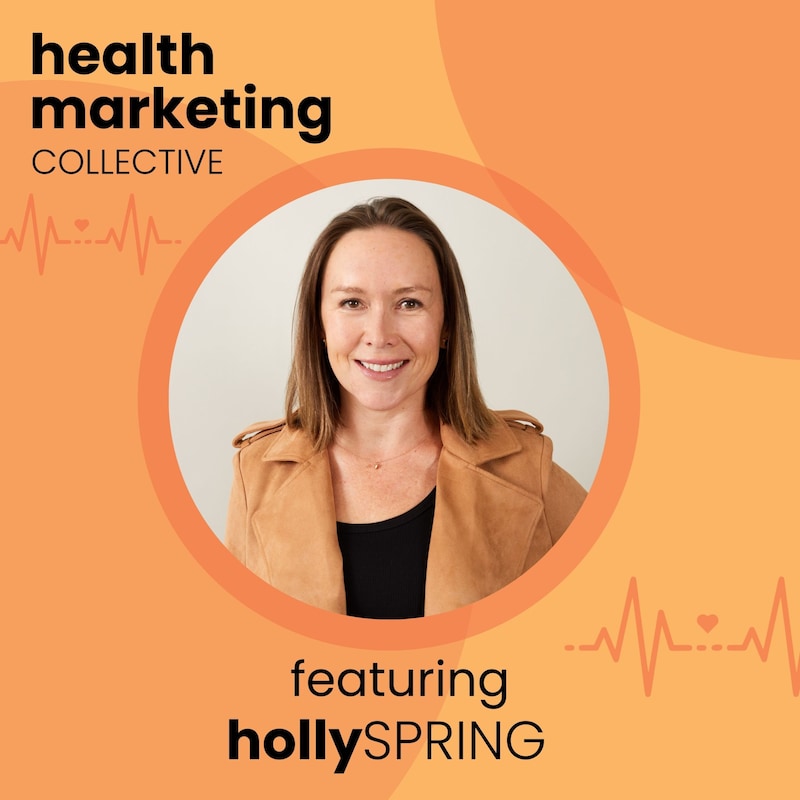
Shownotes
- Clarity and Simplicity Win During Disruption: Holly emphasized that, especially in transformative moments, more information is not necessarily better. Instead, marketers should focus on clear, simple messages delivered through trusted voices. Avoid the trap of excessive complexity and lean on simplicity to help audiences—whether internal teams, clients, or consumers—truly understand and connect with your story.
- Building a Timeless, Elastic Narrative: Great narratives answer the basics: who you are, what you do, and the value you deliver. Holly shared Included Health’s approach of selecting familiar but meaningful words that are aspirational enough to grow with the company, yet grounded in today’s reality. Successful messaging is both “speakable” (easy for everyone to use in conversation) and emotionally charged—capable of rallying both employees and customers.
- Buzzwords Alone Don’t Differentiate: In a marketplace saturated with terms like “integrated care” and “whole person health,” standing out requires more than industry jargon. Holly described how Included Health extends buzzwords with clear, ownable language—such as “mind, body, wallet support”—to spark genuine curiosity and make their value proposition concrete and memorable.
- Internal Alignment Is a Process—Not an Event: Achieving strong company-wide adoption of a new narrative demands intentional rollout: from partnering with the CEO and leadership, to department-level rollouts, all-company meetings, and hands-on workshops. Holly advised that embracing new language often feels awkward and requires letting go of comfortable legacy terms, but it’s necessary to position the organization for where it’s going—not where it’s been.
- Harness AI for Both Efficiency and Strategy—And Use It as a Feedback Loop: Holly described Included Health’s integrated approach to AI: using tools like Writer for generating content “catalogs” that meet both audience needs and channel requirements, while emphasizing that efficiency gains must serve broader strategy. The team also runs regular “LLM audits”—asking AI tools what they know about Included Health—to reveal how the company is perceived externally, using that insight to refine future content and strengthen employer branding.
Transcripts
Welcome back to the Health Marketing Collective, where strong leadership meets marketing excellence. I'm your host, Sarah Payne, and today's conversation is about clarity. In an industry with jargon filled narratives and content for the sake of content, marketing, leaders are challenged to make ideas sharper, more relevant, and more human. Holly Spring has built a career doing just that. Holly is the vice president of corporate communications at Included Health. She's a seasoned storyteller who has shaped narratives through some of healthcare's most pivotal transformations, from EMRs and clinician voice tech adoptions to the rise of virtual care. During COVID Today, she leads the team bringing Included Health's narrative to life and ensuring it resonates with journalists, employers and members. We'll talk about what makes a narrative actually work and how to get strong internal alignment before external launch.
Sarah Payne [:Holly, welcome to the show.
Holly Spring [:Hi, Sarah. Thanks for having me.
Sarah Payne [:Yeah, thanks so much for being here. I'm really excited to dig into this topic and conversation with you. I thought it would be great just to set a good foundation for the conversation, Holly, to talk a little bit about your career arc and what you've learned. I know you've worked through several big shifts in healthcare. As I mentioned in the intro, when you look back, what have those moments taught you about how to communicate during times of disruption?
Holly Spring [:Yeah, good question. I mean, I think looking back, there's a lot of, you know, there's a lot that feels like it, it repeats itself. Right. So there's a lot of trends to reflect on. And then there's also a lot of moments looking back that felt like completely net new at the time. And even looking back feel a little bit like kind of standalone moments. But I do think the consistent lesson for me is that more information isn't always better. So, you know, in moments of disruption, I think what really matters is being intentional about what you're grounding people on.
Holly Spring [:Sometimes that's a differentiated value proposition in the market stated really simply. I think other times it could be providing the right context and framing for a certain audience, whether it's an internal audience or even a client audience. But I think just reflecting on this question, the through line has really been, you know, clear, simple messages delivered consistently through trusted voices is really what matters versus, say, like thinking through volume or even feeling like you need to lean into novelty. I think tried and true. Yeah. Clear, simple message, trusted voices and more is not necessarily more at the moments of disruption.
Sarah Payne [:Yeah, I couldn't agree more. So many great points. We could dig into each one of those and make a Complete episode. We'll touch on a lot of these different things as we go along the way. I believe these points of transformation can easily create narrative confusion from your perspective. You know, giving advice to other marketing leaders, how do you know when that legacy narrative is breaking and when a new one needs to be born? Right. Either inside the organization or out in the market?
Holly Spring [:Yeah, I mean, I think if a narrative is not answering some pretty basic questions, questions like who you are and what you do, it deserves a revisit. I think kind of foundationally or I think if you find yourself constantly adding caveats or hearing people in your company using the narrative, but then adding caveats to make the narrative work, it's probably not working. And so to me, longevity in a narrative means up front, you're thinking about the words you use before they even hit the page and, and thinking about this question, you know, the words that at included health. So we, we built our narrative about a year ago or maybe over a year ago, and before we even put words on the page, we started to thinking about the words. So what type of words did we want to step into? And for us, that was about finding words that communicate what our company aspires to be down the road. And also words that are grounded in what the company delivers today. So a certain level of elasticity, if you will. We're also looking for words that are not only speakable, but already meaningful to people.
Holly Spring [:So simple words and also words that create a strong jumping off point for us to then go deeper into the chapters of our company story or into the product portfolio. And then finally we were thinking about the words we use in terms of words that we can use to create emotion from, to motivate our employees to align folks across the company. But then also words that we could use to create emotion from out there in the market too, to really get the attention of the market.
Sarah Payne [:Yeah, that's so great. And we're talking about when people are putting some sort of a caveat into a narrative, that's a sign that it's not working. Right. And so that's where you've got to dig in and figure out, right. What do we need to do to modify here? Because it's not working anymore. Love that, because I've seen it happen. I've seen it happen so many times. Right.
Sarah Payne [:We've got this beautiful, pretty messaging framework in a three ring binder somewhere. Right. Laminated. Now I'm dating myself here. But you, you know what I'm saying?
Holly Spring [:I know what you're saying.
Sarah Payne [:And Then it just, it breaks in the execution because it's, for whatever reason it's not working. And so people feel the need to modify it on the fly. And that's when it's time to take a step back. You also use so many great words to describe, you know, what, what is the ideal direction for a narrative. Aspirational and grounded. Right. It has enough of that elasticity, as you said, so that it can grow with the organization over time. But it's also still true today to some level.
Sarah Payne [:I loved this idea of speakable being simple because I think that again is where people end up modifying on the fly because it's not speakable. Right. It's not their conversational, everyday language and so they feel the need to, to make it their own. And also loved your point about creating emotion.
Holly Spring [:Totally.
Sarah Payne [:So true.
Holly Spring [:Yeah.
Sarah Payne [:So let's talk a little bit about what the structure of a really good narrative looks like. I, I've heard you talk about it being a one page narrative and how this is so important to get it all on one. Can you break it down for us in terms of the key components that you see existing inside of that one page narrative?
Holly Spring [:Yeah, I mean, I think the, at the highest level, it's really not rocket science. It's incredibly simple. But so a good narrative, one pager should be kind of the placemat for who you are, why you're essential or why you exist, what you do or deliver and then the value. But getting there is really hard. And yes, reflecting back on how we got there, it makes me think of the saying, sorry, I would have written a shorter letter but I didn't have the time. So for us to get to the narrative, it really, it took time and it probably took, I mean, probably the better part of a quarter if I'm being honest with you. And it's, it's because getting to the crux of a narrative is hard. And for us it meant doing like a market walkabout, if you will.
Holly Spring [:We went out there and we looked at what others were saying in the health care industry, across the industry. We looked at our traditional peers, we looked at upstarts and more, you know, startup health care companies, we looked at the big incumbents and we were really just trying to get a sense for what are the categories exist, what are the words that are being used. And then I think most importantly, we explored and looked for inspiration beyond healthcare. So we went to brands. Where we wanted to go is to find brands that, like us, like, included health, created a service to change an Experience. So, you know, the solutions and services that included health brings to people. The aim is to create a new experience of healthcare. Our mission is to raise the standard of healthcare for everyone.
Holly Spring [:But what we're trying to do is to change the experience of healthcare. So we went out there and we were looking at brands like, you know, Amazon and Uber and Netflix, Airbnb, all brands that created services to change the, the way people experience something. So, you know, like from getting from place to place, shopping, entertainment, travel, all of these brands created services to change experiences. And what we really found ourselves reflecting on is that these brands, right, these beloved brands that we all know, they use words in a really artful way. They, they tend to use really familiar words in new ways. So there's no really like mental gymnastics to get a sense of who these companies are, what they do. You know, looking at, you know, again, like Amazon and Uber and Airbnb and streaming, like, you know, terms like the everything store or rideshare or a super host or streaming, all of these words are actually really familiar to people. They just define them in novel ways.
Holly Spring [:So we were really inspired about that. We approached getting to our one pager. I would say, like first and foremost, with time, with curiosity and some exploration.
Sarah Payne [:Yeah, I love this idea of getting inspiration from outside the industry. I think it's so incredibly important, especially in healthcare right now. And because we're going through so much change and disruption, it also makes me think about avoiding the buzzword trap. Right. Because, you know, we've got all of these phrases in health care, integrated care, value based care, whole person care. Right. And those are important to certain target audiences. Right.
Sarah Payne [:And so we have to acknowledge that that's part of a solution. You know, maybe that's part of a problem we're solving or a solution we've been offering to a problem that they have. But differentiation can really disappear when everyone is using that same jargon. So how do you approach that in your narrative and with your team as they actually go to adopt the narrative in real practical use?
Holly Spring [:Yeah, it's been interesting because, you know, you certainly want to be in market in a category where folks are looking, right. So you don't want to be so creative or out there that, you know, buyers aren't finding you. And I think it feels like in healthcare in particular, but surely other industries as well, there are so many buzzwords. And I would say the way we've approached it is it's not that we don't use buzzwords or we don't use terms like you said an integrated care or whole person health. But I think what we found is that on their own, it's usually not sufficient. If you want to try and really define who you are, what you do, the differentiated value you offer, I think you have to go beyond the buzzword and work a little bit harder. So I do think it's worth brands carrying the burden of making buzzwords more meaningful if they're going to be used. So maybe I can give an example at included health, we use whole person care.
Holly Spring [:We, we do deliver integrated care, but we tend to go about it a little bit differently. So if we talk about, you know, included health, delivering whole person care, we'll follow that up by saying, you know, we care for people holistically. Even holistically is kind of a buzzword. So it's like we care for people holistically, what we call mind, body, wallet support, so people can experience healthcare differently. What does that mean? It means getting better access, better answers and better advocacy. But I think the following up whole person care in particular with this idea of mind, body, wallet support, that gives us a little bit more, I guess, space or create, create space for us to unpack that. Or someone might say, what do you mean by that? And then we get the opportunity to say, you know, it's, it's mental health and it's physical health. It's all of the financial and administrative support people don't get but need, you know, so they can come to us, one team, one app, one place for that, you know, holistic care, which, you know, the buzzword is whole person care.
Holly Spring [:But we, we try and make it our, our own a little bit more.
Sarah Payne [:I love those four words, mind, body, wallet, support. It simplifies it, as you said. And the word for me that really kind of gets me to go like this is wallet, because it's not necessarily expected. Right. Like we hear mind and body. Right. And I, and, and of course we want that. We want healthcare to not just be looking at the body, but.
Sarah Payne [:And the one that got me again was wallet. And so that says to me like, you guys are really thinking about things in a very holistic and differentiated way.
Holly Spring [:Yeah, we're certainly trying to.
Sarah Payne [:I love that you gave some examples because I was actually going to go there next. Are there any campaigns or content moments from the past year since, or, you know, a little over a year since you've launched this that you think really best demonstrate what that strong, any strong corporate narrative should look like in action, not just on paper, but out of the real World.
Holly Spring [:Yeah, I think so the narrative work, I mean, it's. We landed it over a year ago. It definitely has a long tail and will continue to have a long tail as we kind of, you know, the words wash over us and over our assets and even as we think through what they mean and the solutions we offer to market today and then also what they mean as we're trying to innovate into the next couple of kind of era of where the company is going. I think one of the, one of our kind of fresh takes on a campaign which is in market right now is on AI. As you and everyone knows, everyone's talking about artificial intelligence. And it's really hard to both, you know, unpack and be clear on what that means for a company, how that transfers through a company to value the folks who are purchasing it or maybe the, you know, whether it's consumers or members or patients who are on the other side, which are, who are leveraging it. So we have a campaign in market and have created a lot of content. We talk about catalogs of content.
Holly Spring [:So we've created a whole catalog of content on this concept of AI and eq. So the idea is that of course we use, you know, machine learning, artificial intelligence intelligence. We're led by quality data in terms of where we guide people for healthcare access and healthcare answers. But it's always done in the context of what we talk about. Clinician in the loop or a human in the loop. So this idea of AI and EQ is really putting forward the combination of clinical expertise and system expertise. So doctors, right, who one of our members can see really momentarily if they need anything from urgent care or primary care, um, or on the system expertise side of things, if someone's overwhelmed with a, you know, gee, am I supposed to pay this bill? Or hey, my kid needs a specialist and this is my zip code and I don't know if it's covered or are they accepting new patients. In both scenarios, we can get a clinician on the phone or, you know, on a video call, or we can get a system expert, a human being on the phone.
Holly Spring [:So we're really leaning into this AI and eq. We don't think healthcare, certainly not now and you know, who knows, maybe not ever will ever be fully tech led, but it's really making sure it's both humans and tech in service to people.
Sarah Payne [:I think that's smart in terms of building trust, especially where we're at right now with AI adoption for sure. I want to come back to AI in a Little bit and talk about sort of your philosophy on it and how you're adopting it into your, your team and your communications philosophy. But I want to talk first about internal alignment. We touched on that in, in the intro. You know, if your executives aren't, aren't using the narrative, it's not working. So what does that narrative adoption and that internal alignment, what did that look like inside included health.
Holly Spring [:Yeah, it was a process. It was a process. It is a process. It started with CEO partnership. To be completely honest with you, I have the lucky opportunity to work with the CEO, who's also a founder, who happens to care a lot about the way we represent and talk about the company, which is definitely an asset and additive to the process. So it started with CEO partnership, then it landed next with leadership rollout. So someone like me going around to leadership meetings and talking about the narrative, then into department rollouts and then all company rollout at an all hands meeting. And one of the things we talk a lot about, or I talk a lot about is this idea is the way you talk about our company anywhere matters, everywhere.
Holly Spring [:And we really have challenged the company to use the narrative because our company has been around for a long time, well over a decade, and started off as one thing, right? So the company started off as expert medical opinions, and then it evolved through acquisition into a virtual care provider. It then evolved again into, you know, inclusive care for everyone with a focus on marginalized communities and individuals. But we're so much more than that. So where we ultimately landed with included health and narrative is are personalized all in one healthcare. So with that, we are going kind of to the next orbit outside of being a navigator or a telehealth company. And we're stepping into new words. And even if it feels uncomfortable or awkward, if you're grounding yourselves or our company as a telehealth company or a navigation company, you're really kind of selling the company short. But also like, you work for an amazing company, right? Personalized all in one healthcare.
Holly Spring [:We support people holistically, mind, body and wallet for like, anything and everything that comes up. So there's definitely been, I would say, a rollout process, but then also like a rallying cry to the company in terms of reminding folks where they work and what our mission is. And it's been a real call to action to not only use the words, but then to challenge. You know, we, we've, we've run workshops and exercises where we're trying to challenge people to think about. So how do you then you know, bring that to life. So not only the words. So it's not just, you know, me, Holly Spring, talking about how we care for care for people, mind, body and wallet, but then thinking through how I'm going to represent that. So maybe it's sharing my own personal anecdote as being a member and using the services or maybe it's leveraging, you know, a case study from out there in the market.
Holly Spring [:But we're really trying to help people step into the narrative and then find personal, natural ways to use it.
Sarah Payne [:I love that. Thank you for walking through that. I appreciate how you candidly acknowledged what can sometimes be awkward when you are rolling out like true disruptors, true innovators building new categories are going to use new words and new language that doesn't match what someone else is doing. Right. And so it's new to the market, but then it's also new to the organization. Right. And so it could mean having to let go of a, you know, a way that had become so practice and so second nature previously and as you say, stepping into this new normal. So I just really appreciated you articulated that very beautifully.
Sarah Payne [:I think a lot of the pain that people can feel when actually rolling this out internally and I love how you describe it, you know, really having this be a call to action for employees.
Holly Spring [:Yeah. And I think like one of the, a small highlight over the past couple months has been showing up to our all hands meetings, which covers, you know, a range of topics across the company and includes a range of voices across the company. And we're, you know, thousands and thousands of employees at this point. And there's been a couple times where, you know, maybe someone from the product team or from the care coordination side of the house will give an update on what their organization is working on in service to, to the people we serve. And they'll frame it up to be like, you know, I'm going to give an update on how we're leveraging AI to better support people, mind, body and wallet. So it's incredibly rewarding to see people like really use the words in a natural way to talk about their own day to day the work they do, but then to really connect it to kind of how we're serving people externally.
Sarah Payne [:You also referenced earlier that this is sort of an evolving thing too. Are there still, you know, in the early days of rolling this out, were there, were there some words or phrases that you found just were not working for people that you made a conscious decision to, to modify or how did you sort of work through some of that.
Holly Spring [:Yeah, that's a great question. And so the narrative. So our placemat has a lot of words on it, right? When you get into the, like, the why and the what, the how and the value, there are so many words and what we found. So our what is personalized all in one healthcare. Like, that's our equivalent of stepping into words that are known and familiar to people. Right. We know what personalized means, we know what all in one means, we know what healthcare means. So that's our what.
Holly Spring [:And then we also start. We use words like we enable better access, better answers, better advocacy. And there's like a double click into all those. You could go. But what we've really learned, what the words that folks are picking up internally is Mind Body Wallet. And I think it's been. It's certainly been noticeable to me and to others, but we've leaned. We've leaned into it too.
Holly Spring [:It's like, great. So, like, go there. Because I think that's also. It's incredibly simple. You know, Mind Body Wallet, like you said, kind of a little bit unexpected because I think people usually expect Mind Body spirit, but the Mind Body Wallet is both familiar enough and intriguing enough to kind of be like, oh, say more. What does that mean? So I would say we're. We're mostly leaning into the Mind Body Wallet as maybe one of our areas that can and should be owned a bit more.
Sarah Payne [:Love that. So great. So I want to go back to AI because of course, it's such a hot topic, as you said. What's your perspective on how either corporate comms teams or CMOs should be thinking about AI as part of their comms infrastructure? Like strategically, not just a tool?
Holly Spring [:Yeah, it's a good question. And I now have the kind of lucky opportunity to have both the corporate marketing team and the corporate communications team together as an integrated function. So we think about it, we think we're thinking about it. We're thinking about it a lot. And I'm kind of reflecting on a conversation I even had earlier this morning. So as a marketing corporate comms team, we've embraced a tool. The tool we selected is called Writer. Right now, we're beyond rollout, but we're in that process with the tool that we're trying to optimize it, we're trying to personalize it.
Holly Spring [:You know, figuring out how to do things like create Personas and train it in tone and, yeah. Create certain individual voices. You know, we. For spokespeople across the company to think through. How do we Leverage it to create audience based content, channel based content. I think earlier in the conversation I mentioned that we think a lot about content catalogs. So on a certain topic I mentioned AI and eq. It's like, what does the catalog of content look like for that campaign? And now how are we leveraging AI to really populate that content? So we tend to think about anchor pieces that are really rich and kind of define our point of view on a certain topic.
Holly Spring [:And increasingly the expectation is that we will leverage AI to version different, you know, different content types and assets off of the anchor content, whether it's for channels, Personas or otherwise. So that's one thing, I think. Something else that stands out. Well, I guess maybe two things. I think AI, I think there's two different ways to think about AI through the lens of efficiency and then the lens of strategy.
Sarah Payne [:Yes.
Holly Spring [:And I think it's worthwhile looking at it through both of those lenses. And I don't think one. They're one in the same. Right, agreed. I think you could digest and kind of force feed everyone AI and achieve tremendous efficiency without advancing your strategy. So I think it's trying to think through how you thread the needle on both of those things. Number one, and I can't, maybe I can come back sometime and tell you exactly how we got to the other side of it, but we're definitely, I would say in the mucky middle there, but fully committed to figuring it out. And then the other point, I was going to say kind of along those lines, fully committed to figuring it out is what's really important to me is how me and my leaders kind of co lead our team to embrace AI not only because it's required, which, you know, not that it is like actually underlined required, but it is required.
Holly Spring [:Yes, because we do want to be more efficient. But I also increasingly am thinking about how can the team step into AI lead in AI for our current campaigns, for our company. And then on the other side of this, whether you're working, you know, on my team or at included health, but you're set up for your career. Right. Like you now have this tool that helps you have a point of view, contribute or maybe lead a team yourselves in a way that is both efficient and strategic. And I really feel like the opportunity is right now to be on.
Sarah Payne [:The.
Holly Spring [:Leading side of figuring that out. And I think it's going to be, you know, a career game changer. Whether it's giving you, you know, just role security at a time where some roles could be eliminated or Maybe re scoped. So I think really thinking through, like, how do you use this as a superpower.
Sarah Payne [:Yes.
Holly Spring [:Is incredibly exciting. I think it's really exciting.
Sarah Payne [:I agree. 100% agree. It isn't. Are we, Aren't we. We are. Right. And, and we're. We're all in it right now figuring out that balance of that efficiency gain.
Sarah Payne [:Yes. But also the, the strategic part as well on that point. I've heard that you do LLM audits, you know, asking AI what it knows about the company and using that as an important feedback loop. What have you learned from doing that and. Or how is your team using those insights from those audits to really shape the content and the thought leadership that you're putting out there?
Holly Spring [:Yeah, I think it's an ongoing cycle. It's something that we've been doing, tapping into, you know, a bunch of the different tools, whether it's Gemini or Chat, GPT or, you know, any, any of the other ones out there to really, I would say take stock of.
Sarah Payne [:Both.
Holly Spring [:Like, what are we being seen as and for? I think largely in terms of what we've learned. I think it's validated a lot of the work we've done on the narrative and in some ways we're seeing, in many ways we're seeing what we put out in the world come back. Come back to us. Which I think is pretty validating because a lot of the models work off of, you know, third party kind of either the earned media validated versus just, you know, pulling content from your own website or things like that. So in some ways it's been validating. It's also been incredibly useful in terms of competitive analysis or trying to get a sense for what other companies are positioning themselves as. We've also looked at it through an employer brand perspective to try and get a sense for. Yeah.
Holly Spring [:What we're being seen as in terms of. From a hiring perspective, you know, because we're always looking to grow our talent on clinicians and engineers, product leaders. So yeah, it's definitely become like an accelerant of knowledge, I would say.
Sarah Payne [:Yeah. Very smart. Thank you for sharing those details with us. I would love to transition for a quick fire here if you're game with me, Holly, before we wrap up. So what do you see is one thing that CMOs or corporate comms leaders should stop doing in 2025. I'm sorry, in 2026. 2026.
Holly Spring [:Well, you know, the question makes me think of Hamilton the Musical, the Aaron Burser, you know.
Sarah Payne [:Yes.
Holly Spring [:As if you stand for everything, you stand for nothing. I mean, it's probably no secret at this point having this conversation, but I think narrative clarity, incredible incredibility matters a lot. And I think that those who come with fewer, sharper ideas are better served and really leaning into them. And yeah. So I think, you know, in 2026, I think CMOs should wake up to the fact that more is not always more. Lean into strategy of efficiency and focus with the discipline to say no, honestly, in the spirit of trying to achieve, I would say like a coherent consistency.
Sarah Payne [:So refreshing. Totally agree with you on that. What's one thing they should start doing to better influence their executives, their boards, their buyers?
Holly Spring [:I think CMOs should start really trying to exist, having their organization exist as a feedback loop for the business. So not just reporting on campaign performance.
Sarah Payne [:Yes.
Holly Spring [:Showing how do in market programs reveal what actually resonates and what doesn't. I think that, I think marketing at its best is both a growth engine for the company and a proving ground. So not only like fueling demand today, but also can be used to test and validate where the company should go next. And I think to unlock those insights not only again fuels growth drives future strategy, but I also think it's when a department is, you know, maybe not only seen as a cost center, but really get trusted source for being, you know, for the strategic insight that it's bringing to bear.
Sarah Payne [:Yeah, marketing is a business strategy. Right. Having a seat at that table, helping to influence the consumer experience, the customer experience, the patient experience, whichever, whichever word best suits the brand. Here we talk a lot on this show about being bold and healthcare. What does boldness look like to you in communications and what does it not look like?
Holly Spring [:I think boldness is conviction. So being really clear on what you're talking about and why you're talking about it. I think when a company does that well, it maps directly back to the company's mission. So it's obvious when, whether it's a CEO or a company or any spokesperson, if they're talking out on a certain topic, it's because they have real expertise and relevance. And I think that's when you start to really earn the perspective of persuasion and shifting opinions. And people aren't just showing up to listen, but they're really leaning in when you're kind of out there on one of those topics.
Sarah Payne [:You used a word earlier that I think is relevant now in terms of what does it not look like? And you said it's not novelty. You're not, we're not Running at novelty. It's not boldness for the sake of being bold. And so I think there can be that temptation to run at the it thing. Right. That. That novelty. But I.
Sarah Payne [:I loved what you said earlier around that.
Holly Spring [:Yeah. And I guess on the. On the other side, I think what boldness is not. Is I think performative communication, again, like weighing in on everything without a clear is not bold. And I also. And that can be hard to get to, you know, because it's easy to celebrate every moment or. Yeah, kind of stand for everything. That's easy.
Holly Spring [:But I think, like, really being selective of where you're gonna put, you know, put all your chips or activate the full team instead of messages and campaign lovers is. It's hard. And I think it's worthwhile. And, you know, I also think it's any company that's, like, overly controlled with its messaging overprotected, overly filtered, you know, I don't think people don't want the edited version. And, yeah, they want something real. So trying to find your real voice across the market is kind of the, you know, definitely the way to go.
Sarah Payne [:Love that. Couldn't agree more. I think that's a great place to. To end the conversation today, Holly. It's been such a thoughtful and grounding conversation. Thank you so much for sharing your perspective and what it really takes to communicate clearly in such a crowded landscape.
Holly Spring [:Thanks. Thanks for having. Having me. I definitely was looking forward to this conversation, so I appreciate it.
Sarah Payne [:Yeah, I learned a lot, and it was definitely, definitely fun too. So thank you so much. All right, to our listeners, if this episode has resonated, please be sure to subscribe wherever you get your podcasts. As always, thank you for listening to the Health Marketing Collective, where strong leadership meets marketing excellence, because the future of healthcare depends on it. We'll see you next time.
