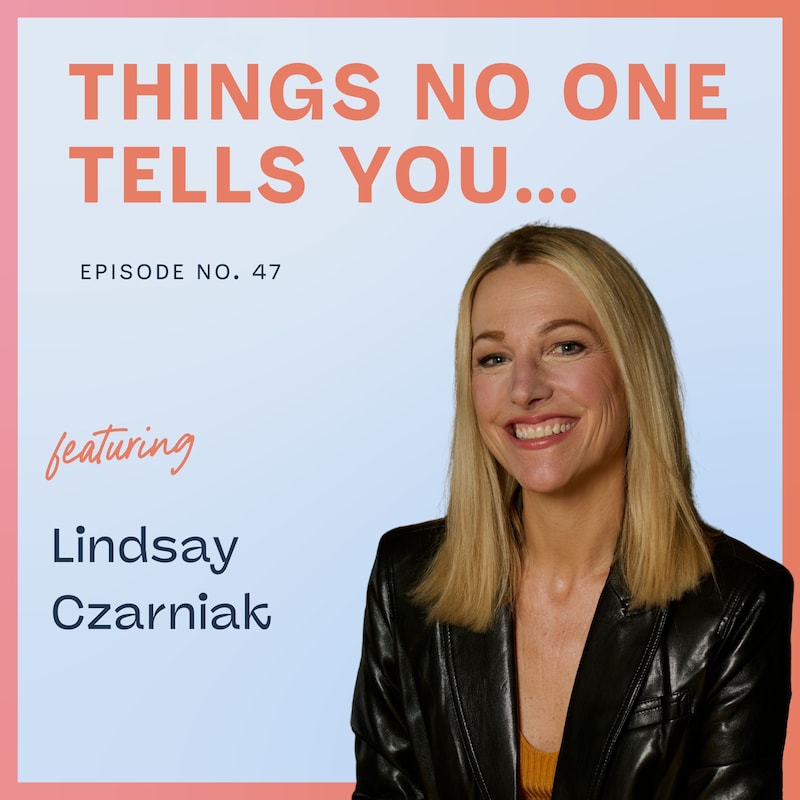
Shownotes
Season 2 of Things No One Tells You turned into something I didn’t fully expect.
Yes, we talked to Olympians, musicians, broadcasters, athletes, and entrepreneurs. But underneath all of those stories was a much bigger conversation about presence, connection, and what success actually means once you finally get there.
In this special season wrap-up episode, I revisit some of the moments that stayed with me most. Angela Ruggiero shares why life works best when we’re fully present and “playing jazz.” Joan Lunden reflects on navigating motherhood while building a groundbreaking career. Jeff Francoeur opens up about helping kids feel valued in sports and in life. Vernon Davis shares the hard truth that success alone doesn’t guarantee happiness or stability. And Ani DiFranco reminds us that authentic connection may actually be the whole point.
What You’ll Hear:
- Angela Ruggiero on fun, presence, and “playing jazz” (01:00)
- Joan Lunden on motherhood and breaking barriers (07:41)
- Jeff Francoeur on youth sports and feeling valued (12:55)
- Vernon Davis on success, money, and learning the hard way (20:08)
- Ani DiFranco on connection over achievement (26:51)
- The biggest lessons and themes from Season 2 (35:16)
This season brought so many honest conversations, unexpected insights, and moments I’ll carry with me for a long time. I’m incredibly grateful to everyone who has been part of our community this season.
Season 3 officially launches this summer, and we have so many exciting conversations ahead. Be sure to subscribe, rate, and share Things No One Tells You so you don’t miss what’s next.
You can watch this interview on YouTube: https://youtu.be/DvdfpoTJprA
For a full transcript and more, check out our blog post: https://www.lindsaycz.com/show-notes/season-2-wrap-up-47
Episodes mentioned:
Ep 35 What Really Matters in Youth Sports with Jeff Francoeur https://www.lindsaycz.com/show-notes/jeff-francoeur-35
Ep 37 What It Really Takes to Win Gold with Angela Ruggiero https://www.lindsaycz.com/show-notes/angela-ruggiero-37
Ep 39 Saying Yes Before You Feel Ready with Joan Lunden https://www.lindsaycz.com/show-notes/joan-lunden-39
Ep 40 Second Acts After an NFL Career with Vernon Davis https://www.lindsaycz.com/show-notes/vernon-davis-40
Ep 42 Building a Career Without Compromising Your Voice with Ani DiFranco https://www.lindsaycz.com/show-notes/ani-difranco-42
Support this podcast:
Follow Things No One Tells You on Instagram: https://www.instagram.com/thingsnoonetellsyoupod/
Stay connected with Lindsay https://www.lindsaycz.com/ and follow her on Instagram https://www.instagram.com/lindsaycz/
Subscribe to my YouTube channel https://www.youtube.com/@lindsaycz
Transcripts
[00:00:20] So going into this season, we didn't necessarily have a big theme that we wanted to cover, but one really started to emerge. And we should mention that we were talking to Olympians, musicians, authors, and athletes. But the thing that kept coming up was reinvention, pivoting, and also the specific notion of following something that just feels really easy.
[:[00:01:06] And I was so grateful because that meant ultimately that we were able to cover the women's gold medal hockey game together. And that is something that I will take with me for the rest of my life, because there is nothing like watching a super high-stakes sporting event, a moment where you know lives are gonna change on either side of the win or the loss, with someone who has lived it, who is invested. After all, she still considers that team a sisterhood.
[:[00:01:59] To have fun. Does that make sense? So the thing no one tells you is the importance of having fun? Yeah. I've had to learn- I didn't read- I had fun playing hockey. When I got a job, I wasn't good at it. I was, like, half-assing it. At work, when I wasn't having fun, it was the same thing. It was, like, dreadful.
[:[00:02:41] Yeah. It's the thread that I'm like, "Oh, when I'm enjoying myself, and I'm having fun, when I'm pri- when I'm remembering this is supposed to be fun, I'm following the right path. I'm in the moment with my kids or with my family, or I'm in the, Like, that's what life is supposed to be. Like, you don't have to follow the hard, you know?
[:[00:03:22] Like, when I think back to this Olympic experience we're talking about, whenever someone asks me, I'm like, the feeling that comes to mind is just fun, and it also feels easy. And it's not easy, but it was like this feeling of everyone working together, you've got the people in position- Yeah.
[:[00:04:00] Like, you're feeling the moment, and you're then responding to the moment, and so it's like this light, like, it's not like the pressure of live TV and like the urgency of the thing. You're just like, you're like, "Oh yeah, this is fun." Like, "Let's go. Let's do it." And it's that, like maybe presentness.
[:[00:04:32] Jeff: Yeah.
[:[00:04:48] Yeah. And now I feel like I'm just talking deep thoughts with Lindsay. Yeah. But like- Yeah, but, yeah, there's some, there's a there Yeah, but you also had to receive that. Like, you had to be listening and open and present. Yeah. Which again, I've been in the same conversation with someone, and they're like stressed about what they're gonna say next, or
[:[00:05:25] So that's why I always use the expression jazz. It's like, you gotta play jazz. Right. I noticed that. I was like, there wasn't jazz music playing, but do you think everybody... Well, you, yeah. I, that's my expression to just say like, jazz music is like, I love jazz, I don't love jazz, but I like the idea of jazz, and like, that's hockey.
[:[00:06:02] And when Megan Keller sprints, sh- Heise knows where she is without calling for it all the way you know, all the way down the ice. She knows to send that puck, and you're like, you're there. That is the flow of life. Like, if you can get into the flow of life, and that's what I forget sometimes, if I get so, "I gotta get to this next thing, I gotta do this thing," and I'm in my head versus, like, present.
[:[00:06:44] And they're, and we could see in that final they were, like, choking their sticks a little, right? And they were a little nervous, and probably weren't, like, settled into their bodies with each other. And the second they did, they played jazz together, and they scored that goal, and they won the Olympics, right?
[:[00:07:20] You see that in sports a lot. But also, I think we can relate that to just things in life. So I thought that was cool. And specifically, just the thought of going with the thing that feels easy, that really lights you up, that sometimes it should just be as simple as that. And that is something that my next guest also covered as well.
[:[00:08:03] It was followed 20 minutes later by the call that she was, in fact, pregnant. So I did not know all the details that went into that. I loved her book. I loved hearing that story about how she embraced that unknown bit of change, and what really came out of that next. So Joan really shares a lot about figuring things out as you go and following up on the opportunity.There are so many things that I wanna ask you about, 'cause this is so chock-full of just really fascinating, relatable stories on some levels.
[:[00:08:42] Joan: Yeah, the phone call was 20 minutes after the phone call from the agent, "You got the job."
[:[00:08:47] Joan: 20 minutes later, "Congratulations, you're pregnant."
[:[00:09:13] And I remember I called my agent and said, "You know, I've interviewed a lot of people from La Leche League, so I know I should breastfeed. Will you ask them if I can bring Jamie with me, because I'm gonna be breastfeeding?" Now, just remember, in 1979, that was one of the words that the FCC said you could not say on television.
[:[00:09:54] I don't think they understood. Kudos to ABC for saying yes. I think that they felt it was gonna be the best-kept secret. I really do.
[:[00:10:10] Lindsay: Look, there's the picture.
[:[00:10:13] Lindsay: That was amazing
[:[00:10:15] Joan: Yeah.
[:[00:10:17] Joan: And they, I really, and oh, and then we had a press conference the first day after the show, and the PR guy took me aside and said, "Whatever you do, do not say that you have that baby upstairs."These are reporters, these are TV critics.
[:[00:10:52] First question, Time Magazine, "We hear you're bringing your baby to work. How did you work that out with ABC?" Like, my eyes shot to the back of the room where all the executives were, but I had to answer his question.
[:[00:11:05] Joan: Were they like I said, "Well, ABC actually gave it to me in my contract that I could bring my baby to work because I'm breastfeeding."
[:[00:11:38] Lindsay: That's amazing.
[:[00:11:58] And I'm sitting with Jamie in my lap, ready to go down and see the jewels of London. I mean, it was really a pretty crazy, extraordinary life. And it was- Yeah ... a lot of fun being able to share it with everyone.
[:[00:12:19] I thought it was really cool how she honed in on just saying yes. You know, if you don't know how to do the thing, just figure it out as you go. I know there were so many times I did that early in my career, and sometimes that I'd be like, "Oh my gosh, am I really gonna try to do this? Is that a big mistake?"
[:[00:12:55] Maybe you find out you don't, but if they do, that's part of the secret sauce. And that also makes me think of my ne- my next guest, Jeff Francoeur, a star baseball player. Was with the Atlanta Braves and other teams for so long. He has so many accolades to his name. Jeff is someone I've known for a long time.
[:[00:13:41] And that also has to do with starting with the coaching, right? So he talks to adults about these messages, along with his team, just about people's stories and what we need to know,w and what things we can apply. Once we figure things out, we can use that knowledge to really enrich others, like when we coach youth sports.
[:[00:14:15] Jeff: Man, I mean, there's so many different ways you could go, but I think the thing no one tells you, right, is that, like, kids just, they wanna have fun.
[:[00:14:47] And we were one girl off, the six and seven holes switching. And so my point is, these kids are smart. They know who's the best. They know who's the most talented. They see it. And not every kid's gonna have that ability, but how can coaches, how can parents make their kid feel valued? Where I might not be the home run hitter on the team, right?
[:[00:15:24] Lindsay: And what age range do you think that's really important? And it might be big. I don't know. I haven't asked you that question.
[:[00:15:47] Teaching nothing but the game. Yes, you want them to compete. You want them to feel that energy and that edge to try to win, but winning does not mean everything. I say you get to middle school, sixth through eighth grade, you have to start deciding, like, "Do I wanna do this in high school," right? 'Cause if you do, you're gonna have to put work in it.
[:[00:16:04] Lindsay: Yeah.
[:[00:16:22] Like, if you're a sophomore or junior, and you know you can play in college, like, go for it, man. I implore parents, go for it then. If that means you have to go to Colorado for four days for a camp, then do it. But these kids now, I don't know how much you know, like they're traveling to Colorado from DC with a nine-year travel baseball team, and I'm like, "What are we doing?"
[:[00:16:56] Jeff: I'm also an optimist. I am. Like that's…
[:[00:17:04] I think that, having a middle schooler, I love hearing that breakdown of ages because you're exactly right. It's like what we've started to see is whether it's baseball or basketball, and basketball for us has been interesting because you start to realize that as kids are really getting into maybe more of what they like at that age.
[:[00:17:42] in baseball. So right. So then it's like your point, the realization that like, okay, you need whatever it is, the training or maybe the outside help, and certainly the practice all the time. But I think that is really interesting, and do you think that at what age do you think it's important to consider that sort of outside training?
[:[00:18:07] Jeff: Well, I have all these parents that are like, "My kid gets a hitting lesson at nine years old," or like there's a nine-year-old kid who is doing QB lessons twice a week, and I'm like, I just don't. Personally, I've asked my dad this, 'cause I was a great athlete.
[:[00:18:39] You know, she's got some size on her now. She's going through puberty, so I'm like, she understands hitting now. She understands her body, what she can do. I don't think that at nine years old, kids can. I think it's parents, take your kid to the cages. You know, like your son, go out and shoot baskets for an hour.
[:[00:19:11] we do a fielding lesson a week, and I'm like, "I will pay for that. I'll drive you." I drive her in traffic in LA, and I do this, but I'm like, "I also need to see the next day or the following day you in the backyard doing some of these drills that they're teaching you. And if you do that, I will continue to take you, and let's do this as long as your heart desires.
[:[00:19:38] Lindsay: Jeff Francoeur, I mean, there were so many valuable insights and so many things that he talked about in terms of, you know, being supportive parents that made me think about myself on the sidelines.
[:[00:20:08] And feeling valued is something that this next guest, Vernon Davis, played for a long time in the NFL as a star tight end. Vernon is someone I've known for a while. I've covered him on several different teams. And Vernon was super open in this conversation because, also, sidebar, he's now an actor and he's doing a bunch of different things.
[:[00:20:49] And when he was making it into the league, feeling that there was all of this pressure that he wanted to make it for his family, but how everybody assumes that it's gonna be this perfect ending, and it isn't always, and what that means for a player, what that means for a man. And I thought that was really interesting to hear and think about in the context of also just coming off of Jeff and thinking about it from a child's standpoint, an adolescent growing up, playing a sport, into someone like him, who goes on to make it for an NFL team.
[:[00:21:35] Vernon: Yeah, a lot of people don't tell you'll make it to the NFL and lose everything.
[:[00:21:57] But what exactly is that? Is that valid? Is that true? How true is that? Well, it's not really true because you can make it to the NFL and lose all the money that you have. You can make it to the NFL, and put yourself in a situation that puts you in jail for the rest of your life.
[:[00:22:29] Lindsay: So, how have you experienced that?
[:[00:22:42] I didn't know- Yeah, I didn't have that growing up. Li Ke,e no one really taught me that. So one day I woke up, I'm headed to practice, and my financial advisor calls me. He's like, "Hey Vernon, you do know that you have X amount of dollars in the bank, right?" I was like, "Oh, really?" You know, I wasn't paying attention- I wasn't tracking that.
[:[00:23:17] Lindsay: Just- Like helping to take care of other people.
[:[00:23:21] So that was the moment for me where I said, "Look, I have to really educate myself on what I have going on." Right? If you don't educate yourself, then how are you gonna be able to take care of it? So what I did was I started to wake up and develop a process of being able to look at my accounts, right, the different accounts that I had.
[:[00:23:57] Let me hire a business attorney to help me." Right? 'Cause if you have an attorney, if you have a business attorney, they know everything. They know how to structure things, right? Yeah. So if they know, if they're the ones that are structuring these agreements, then I can learn a lot from them.
[:[00:24:21] Lindsay: Really? And what did they do for you? Like, how did they, what kind of structure did they help you implement?
[:[00:24:34] He just kind of guided me through all of the different things that I had going on. And, I was able to see and sign every deal that, you know, we had going on. And at the time, I was with Levi's. I was with, I had, I did something with Sports Illustrated. I was just all, you know, I was all over the place doing a lot of different things, and he was there to guide me.
[:[00:25:01] Vernon: No. No, he was separate from my agent. It was all business and endorsements. We just handled those documents together.
[:[00:25:15] You reminded me a lot of the Olympics. Like, I just got done covering the Olympics, and I know you're like, you're a big curling fan, right? You like curling.
[:[00:25:24] Lindsay: Yeah. It's hard, right? But I know. I think that's really cool. But something that I feel like a lot of the athletes that would be the analysts that would work with us would talk about is just, one in particular was like, you know, she played women's hockey, and it's like, "I didn't see anyone like me doing what I was doing."
[:[00:26:04] Vernon: Yeah. I know. I feel like imposs- nothing is impossible. I mean, you can do anything if you put your mind to it.
[:[00:26:32] So it just goes to show, like you never know what someone's thinking, and we are all wired the same. But one thing I guess, as I say that, that is different is just making it and then what you do, you know? What is your level of making it? Is it succeeding in exactly what you've set out to do, or is it something else?
[:[00:27:18] Probably two minutes in, I realized sitting on stage with her, I'm like, "Oh, this feels like a sleepover." Like, these people are so excited to hear what she has to say. They are so in awe of her. It felt really different from anything that I've done before because that audience made it feel like this warm cocoon of happiness that we're all feeling seen and touched by what she was saying.
[:[00:28:08] And it's one moment that she painted so clearly, being the artist that she is, and I can't wait for you to hear this. So who did you have in your corner that was giving you the confidence to do that and create your own label? And were they giving you the type of confidence that convinced you that it was going to work?
[:[00:28:36] Ani: Yeah, what I had was that girl crying into her beer. That's who I had. And I think I was... No, but for real, I think I was blessed. One of my biggest graces, I think, that has carried me is that it thrilled me. In the Essex Street Pub with five people in the room, three of them listening, if I was lucky-
[:[00:29:35] This is it. And I and just, but I, I didn't have to think that, or I didn't have to try to get there. I felt it. I felt it. I felt really thrilled, despite not being a success by anyone's measure. If I connected with somebody, that was like the goal, and it started happening immediately, so immediately, I was a success as far as I was concerned.
[:[00:30:38] So how do other people get that? Like, how do you describe that? And I know it's part of- Yeah ... what you share in the book.
[:[00:31:13] You know, will you share your story of your grandma when- right before she passed?
[:[00:31:44] I recently did this donkey meditation that was at this place where you can go. Anyway, I went into the room- Yes ... up there where they had me sitting, and on the wall there's a picture of a donkey. Yeah. And I was like, they don't, they didn't know. They don't know. But the story about my grandma is that when my grandmother passed, which was two years ago, a few months before we had been talking, I was in conversation with my grandma and my mom, and we were sitting around her kitchen table.
[:[00:32:33] and my grandma said, super calm, "You know what I've started doing? I've started putting myself with the animals." And my mom and I looked at each other like, "What is she talking about?" And she said, which is funny because she had this family of deer too, I didn't tell you this, and they would come to her yard, and one of them had a broken leg.
[:[00:33:15] I mean, she was dead serious, and it was a peace that she was describing, you know?
[:[00:33:51] And we humans think we are so special for being able to destroy our host planet. For being able to transform ourselves from mammal to parasite. You know, like... So yeah, and this human culture that teaches you need to get there, when really you need to get back there.
[:[00:34:20] and I am, beyond everything we've heard here, maybe I'm most grateful to have heard that piece of that conversation, and to have been able to share it with all of you. Because I think it just really shares that when we're feeling that there is something that we're being called to do, or when there is something that makes us feel so excited that maybe it's a natural talent, maybe it's not, and it's just something that makes us feel happy, as long as the purpose is, clear and true, it doesn't have to be some huge thunderbolt of a moment of someone who is supposed to tell us that we're doing the right thing says that.
[:[00:35:16] Oh my goodness, we have learned so much from all of our guests who have joined us this season for Things No One Tells You. We have laughed, we have cried, we have been inspired, certainly by the things no one tells you that all of our guests have shared, and the time that they've taken to have these conversations has been real and meaningful to all of us.
[:



