Transcripts
My friend sent me this quote of, like, you know, all I want to do is, like, do the dishes while the sun's setting and after having fed, like my family and like, go out into the grass and feel it and smell the, you know, have the wind blow and you're like, heck, yeah, I could do that every day, you know, and that's offered us every day. We just hustle right by it, you know, and so now we find that.
Abner:Inspiration most often finds us working. It's not something. Sometimes, like some songs, you get the inspiration, it just flows out of you. But often you just got to do the work and you'll.
It's like a sweet surprise. But it is frequent, right? Like, you're working, you're working. Maybe it's 10 minutes, maybe it's two hours.
Grant:Style is more than just the clothes you wear. It's the essence of who you are, and it's in everything you do. Discover it here and unleash your style beyond what you wear. Hey, everyone.
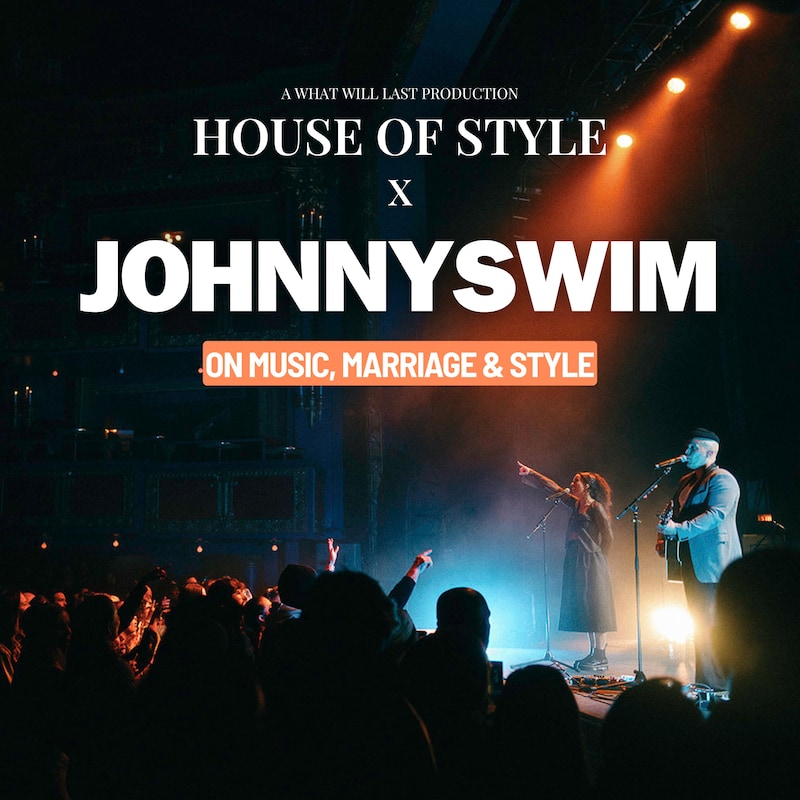
Welcome back to House of Style. I'm your host, Grant Alexander, and today's episode is already beyond special to me. My wife Corey is here on set watching me film for the first time.
And that feels fitting because the couple I'm sitting down with today helped shape one of the most memorable moments in our lives. When we were planning our wedding, we didn't choose our first dance song just because it was beautiful.
We chose it because it said everything we couldn't. And it captured exactly where we were and exactly where we were going. And my guest wrote it. Their sound, their harmony, their honesty.
It's why I've been a die hard fan and hooked since the day I saw their NPR Tiny Desk Concert, which aired probably 11 years ago. Now they've been a part of my story, and now they're here to help me share theirs.
So Amanda Sudano and Abner Ramirez are a husband wife duo that make up JOHNNYSWIM. And they don't just make music.
They build stories like no other artists, you know, and it's of what it means to love deeply, to hurt honestly, to hold faith and doubt in the same breath. And their latest album, when the War Is Over, I think might be their most vulnerable and refined record yet.
And today we get to walk through that and so much more with them, not just as fans of the music, but through the lens of style. Not the kind you put on.
That's not what we do at House of Style, but it's the kind you live in, that the style of process, the style that shows up when you're tired, when you're parenting on fumes, when you're trying to stay married, stay creative, stay hopeful. The kind of style that carries you through fire and still leaves room for beauty. I am so honored to share this time with them and you all.
So let's get into it. Mr. And Mrs. Swim, welcome.
Abner:Is it possible just end it there?
Amanda:Yeah. That was great.
Grant:Thanks. We could.
Abner:Good night, everybody. Good night. Thank you so much. I feel great. That's perfect.
Grant:That was my goal.
Amanda:Wonderful.
Grant:I am really excited, you know, we were talking beforehand that I saw that NPR Tiny Dust concert, and it's such a great platform for emerging artists and established ones. And there was something about your performance that was so real that right away, I think you get hooked.
And now, as, you know, part of the Swim fam, it's like, you guys are, like. You're so transparent and open, and I probably guess that when you meet people on the road, they all feel like they know you, probably.
Amanda:I honestly, I attribute it to us both being the babies of the family. You know, we just don't know how to fake anything.
Abner:Yeah.
Amanda:We just walk in going, hey, I'm here.
Grant:So just having fun.
Amanda:Yeah, we're here to have fun.
Abner:Her dad gave us great advice early in our career when we were first starting to write songs together. You know, some people give advice like, do what you love. You'll never work a day in your life, which is an absolute lie. Like, the deepest lie ever.
We do what we love. And I've never worked. I can't imagine working harder.
Grant:Right.
Abner:But he said, if you can make a living being yourself, you could do that for the rest of your life. And we definitely held to that. And I think that's a staple, hopefully.
And it's great to hear you say all the wonderful things you're saying, because it's something that's been a conscious choice as much as it is a natural decision for us. And easy, I think, to be honest.
Grant:Yeah.
Abner:Almost too honest sometimes. It's. It's something that we've. We were hopeful for sure. We could make a life being ourselves. And we never got to fake it.
We never got to figure out the new version. We just keep being us.
Grant:That's awesome. And I believe to my core, that that's style. Style, too many people think about it as from a fashion perspective, but style is in everything.
It's the way you speak with people. It's the way you play and write music. It's the way you raise kids. It's all of that. So that's what I want to kind of.
Anything from past interviews that are just easy questions. I want to kind of hone in on the style of it all. The way you create, connect, share, all of that.
Amanda:Love it.
Grant:So when I first listened to the latest album, "When The War Is Over," I, I always listen to an album a few times through. Just, like, let it cascade over you and just feel it. And I walked away floored.
And I felt like I was sitting through that war with you guys. And I have been going through some burnout myself, intense burnout that I've never, ever had before.
I've never talked about it either, outside of Corey. And it just hit at such a right time.
Plus, I'm also thinking technically, musically, the arrangements and what you've done differently from album to album. Do you think this is the most you you've been to this point on this album?
Amanda:I for sure think it is. I think, you know, the first couple albums, you're figuring out what it is.
And I think it's also partially because when you're touring, you get to change every night. You know what I mean?
Like, if something doesn't feel right, if somebody plays something differently, you're kind of, like, honing things in as you go. Um, and then, you know. So the first.
The first album feels very much like us because it was years of us touring these songs, and by the time we got in the studio, it came out. And then you kind of go through these.
The next couple albums where you're writing and you're touring at the same time, but you're not really touring the new songs, you're still touring the old songs, you know, that kind of thing. And so you kind of, like, get it done.
Grant:Yeah.
Amanda:For lack of a better term. And then this one, we just. We did it more like we did the very first album, which. Not the touring aspect, but getting everybody in the same room.
So this was an album like. That was written in a very vulnerable spot and then recorded based on vibes. And so, you know, it was everybody in the same room.
We rented out this big studio, and we did it in two chunks. We did it a year apart in two chunks. We wrote six songs.
Abner:We did those songs literally almost to the day.
Amanda:Almost to the day a year apart. And we all were in the same room, all of our favorite players and people that know us deeply, you know.
Abner:And they played with us for. Nobody's played with us less than 10 years.
Amanda:Yeah, everybody that's, you know, everybody's been on every album kind of thing.
Grant:Yeah.
Amanda:And we just would play through the songs and we record them a couple times, and somebody would go, oh, I like what you're doing there. Yeah, let's follow that. Or, you know, like, we would find random instruments in the studio, and we'd be like, look at this thing.
Abner:The guys playing with us, because they're much better than us.
Amanda:Yeah, they would find instruments. Or like, our drummer, Aaron Redfield was like. Had a chopstick, and he's like, listen to what this sounds like on the. On the piano leg.
And so we recorded it, you know, and so it was just like a couple days of us just being creative together and bringing the songs to life. And then Abner would go home and obsess over it and listen to every single take and every single.
What every single person was doing and distill it down into what you hear today. But it was just.
It felt like such a fun, creative, you know, creative process, but also one that was built around community, which is funny because it was written in such isolation, but it was recorded in community.
Abner:Yeah, I like that. And I think also, it is our most honest work, and thank you for even noticing that.
And I think the main reason it's the most vulnerable, maybe honest work that we've ever done is because it's the most we've known ourselves. We've been doing a lot of work, you know, therapeutically, literally going to therapy. You can't write songs together. You can't be acupuncture.
You can't work with your spouse without a certain level of. Before. We're professional musicians.
I think we're professional communicators, I think with each other, with other people, with an audience through song. Less in this. Cause I ramble. But learning to communicate with each other and growing together and growing deeper into ourselves, there was more.
It's almost like there's a greater palette to draw from as we got to know ourselves better through this. This process of mental health and physical health journeys. So I. It's the most honest. Because it's the most honest. We.
We have the ability to be sure if that makes sense.
Grant:So in, from, like, a technical perspective, I thought that this was not an, I don't know if this comes off in a bad way, but, like, less polished.
Like, there wasn't, like. I felt like I heard everybody in the same room. Not a ton of, like, prerecorded, like, beats that you. You put in.
Amanda:Right.
Grant:Not a lot of. Like, there wasn't a lot of background that came in, like, past albums have had.
Abner:Yeah.
Grant:And was that intentional or was that necessary just based on where you guys were at?
Abner:100% intentional. We're at a point in music production right now where everything. And it's awesome, and so many people use it in such beautiful and amazing ways.
seconds, get a:So 90s microphones. Like, I can just get that right now, and I can drag and drop it into a session and start building a song for me. Excuse me.
For many people, I think that having that access is really inspirational and really inspiring. A really creative process for me. I find myself numbed by options.
And so we made a conscious effort on this album that every sound had to have a pair of eyeballs behind it. I love that every sound had to have a human brain that was creating it in front of a microphone.
Grant:That's cool.
Abner:And with that, you get. With that, it's not even looseness, I guess it's. With that concept, you get much more.
You get natural sounds, and you find yourself targeting honesty instead of perfection. And so, like, I love the drumstick sound. Tonight at our show with the Vic in Chicago, you'll hear samples.
Will be triggering a sample sound of a guy hitting a chopstick on a piano leg. And you'd never know that's what the sound is.
Grant:Right?
Abner:That's what it is.
Grant:But are you gonna point that out? Like, are you gonna tell people this is a chopstick? No wonder.
Abner:No, just let him enjoy the song.
Grant:I'm really curious what it sounds like, so I'll be on the lookout for it.
Abner:It sounds nothing like a chopstick on a piano leg. It sounds like a monster hitting a snare drum or something.
Grant:So you brought up that kind of tied this to diamonds. And last year was your 10th anniversary of diamonds. I loved the commentary that.
Amanda:Oh, yeah.
Grant:And the additional songs when I was thinking about I, in my head, linked this to Diamonds. I almost felt that when the War is over was like this spiritual sequel to it or almost like knowing what you know now.
Amanda:Right.
Grant:Is it like the prequel?
Amanda:Yeah.
Grant:You know, like, you have to go through.
Amanda:Right.
Grant:The war and go out through all that crap to get to the diamonds.
Abner:Let me say this real quick. Is that absolutely, sonically the theme going into this album? Was we got to make it like we made Diamonds.
Grant:Cool.
Abner:Let's make it like we made Diamonds. It's crazy that you picked up that, because it was completely the direction we went. I just want to say.
Amanda:I was going to say. And then.
And then emotionally, Diamonds was written when we lost parents, and so it was written kind of like in and coming out of a tumultuous, like, very emotionally draining season. And this album was, too. You know? So as I think was the other ones, you know, we were. What were we writing about?
Like, we were writing about having babies, and we were writing about our friends getting divorced. We were right. You know, we were writing about all these things that, like, really mattered, but there wasn't the same pressure emotionally for, for both of us that there was, like, come. You know, when we were recording Diamonds, like, we were in. We were coming out of a truly, like, devastating season.
And then in this one, too, we were coming out of, like, a very, you know, in a lot of ways, devastating season. And so I think maybe that pressure squeezed out the same similar juices.
Abner:I think so. I think in Diamonds
Amanda:That was weird.
Abner:No, I could squeeze out juices, for sure. Emotional juices. Just squirt right out.
Amanda:I love that analogy, Amanda. I apologize.
Abner:I feel like Diamonds, I think, in Diamonds. When I imagine the songwriting process in Diamonds, where we were emotionally or what we were trying to capture.
First of all, the train going by is crazy. Please tell me it's a train. Or am I back in California? Not an earthquake. It's a train.
When I think about Diamonds and where we were emotionally and what kind of the trajectory was or the journey was, is we saw monsters and we had to, we had to affirm that we could conquer, that we could beat the monster. You know what I mean? And I think that's where the songs and Diamonds are. And I think the.
The sequel, as you said to Diamonds in this album is, okay, we see the monsters. This time I'm gonna sit with it and look it in the eye. The I'm not. The journey isn't how do I get past it? How do I conquer this mountain? It's what if I had to sit with it?
Grant:Yeah.
Abner:What if I had to stare the ugly thing in the face? And that's where I think this album feels like the next chapter of, really, the first album.
Grant:I love what you were saying, and that seems like it's really about the process of going through it and not about the end result and, like, trying to get there. You left room for everyone with all of their. Right, whatever. Yeah. To. To. To feel it and Sit with it and just be like, it's okay to be in it.
Amanda:Right.
Grant:Because I. I think one of the most.
The coolest things that you guys do and that you have a masterful take on is taking something negative and, like, just usually devastating, but making it hopeful.
Amanda:Yeah.
Grant:I mean, the song Devastating itself.
Amanda:Right.
Grant:Like, you're thinking about when your partner is dead.
Amanda:Yeah.
Grant:And gone. And rather than it being sad, it's like that heartache and the disaster, that devastation, is supposed to be a beautiful thing.
And I felt that, like, the, the vibe of Devastating also really coming through. Just like, it's okay to feel this way. It's okay to be in the war.
Amanda:Right.
Grant:And like, that. That's part of.
Abner:Come on. I love being here. Where's the camera? I love being here. This is amazing. Oh, yeah, please, more. Keep going.
Amanda:No, you're. You're right. I think. You know. I don't know. I don't know that I'm gonna say anything.
Abner:That's exactly right.
Amanda:That's exactly right. I'm glad that that's what comes back.
Abner:You know, what's. Thank you. This is what I really appreciate about what you're saying, too. We've. I've. We've always had an.
Amanda:Oh, just you.
Abner:Yeah. We've had an allergy. I know I've had one heavy. From the very beginning, against being the cute couple band. Like. Like, I don't like that.
That doesn't fit. Even kind of what we want to accomplish. Oh, look at this cute couple making. They're married and they make love songs, which is fine.
But that's, like, a thing, and it's not the thing at all. The thing is, to your point, love, like, even a wedding is. Sure, it's cute. It's beautiful. It should be.
It should be beautiful, and it should be, in some ways cute.
But the end of the day, I'm getting in front of all my closest family and friends, and I'm declaring before them, before God, the universe and anybody watching, that I will be in this until my body dissolves. And I will do this until it is through treacherous times, through calamity, through beautiful times. This is what we're swearing to God.
Not just, like, lightly doing, swearing to God that I will do this with all my heart and passion until my body fails me and I'm no longer here. That's a crazy thing to say in front of people. We've made it really normal, but that's what we're doing.
Grant:Right?
Abner:And in the same way, I feel like love songs should feel that same. You should feel the. The treacherous times. You should feel the calamity. You should, of course, feel the joy. Of course feel the hope.
But, man, if we're only focusing on the hope and the joy of romance, I think it's worse than only eating candy. I think it's worse than only having a sugary diet.
Grant:Yeah.
Abner:I think it's. You're defiling how wonderfully, horribly beautiful it is. Imagine only painting in bright colors. That can be a thing. It's cool. It can be.
Somebody can make that dope, but that's not reality.
Grant:Right.
Abner:Right. Where's the shadows really in the shadows make the bright parts even more beautiful. So, yeah, thank you for pointing that out.
Grant:I'm happy.
Abner:That gets me stoked.
Grant:On the topic of style and going through kind of the discography. It's like Diamonds was love. It was romantic.
Georgia Kapan was reflective, and I feel like for the first time, that was where the cracks opened up, but you kind of got away from the cute couple. Were perfect. Thing shared a few of the. More, like, heartbreak, the more intense moments.
Abner:This is the best first date ever, by the way.
Grant:Wonderful. I love that. And then moonlight was exploratory. I feel like. Yeah, it was a lot. A lot different technically. And then JOHNNYSWIM was like.
I felt just family, and I think I got that more so because of having kids and being a parent. And then, like, this one feels just raw and unpolished. All of those shifts are. It's a shift in style.
Were all of those conscious shifts, or was it something that's just like, this is what's. It's, like, situational. It's like, this is what's happening in our life right now. So we're writing songs about that. Or was like, this time we.
I want to explore adding these beats and making.
Abner:Yeah.
Grant:A little more moonlight.
Amanda:No, I think. I think. I think we would have probably done a lot better in our career had we thought about what style we wanted and chosen it.
But I think we've always kind of like what he was saying before, you know, be yourself and you can have, you know, a career forever. We've always just kind of gone what feels right right now? What feels like, what do we want to do? What. Like, what inspires us and what feels.
We have a really hard time. You know, if somebody says, you need to write a song like this, we're like, probably not gonna happen.
You know, like, maybe it will, but it's only gonna happen if it's not.
Abner:It's never gonna happen. Like that.
Amanda:Right. It's never gonna happen like that.
Abner:So we had somebody that worked with us once and be like, you just need to write another home. You need. We have a, you know, full on, stop clap folk song called Home. You need to write another home. It'll like, elevate the career to whatever.
It's like, man, I don't want to. I don't wanna.
Amanda:Unless it happens.
Abner:If you're satisfied not growing. Have you satisfied not getting any better, not getting any bigger. I was like, I guess I am, because I ain't doing that.
Amanda:Yeah, yeah. We, you know, definitely, We're. We're just. Again, we're babies of the family. We do what we want.
Abner:Yeah, that's exactly right. That's exactly right. I do think it's a mix. I think it's. I think. I think you see the. Not the trick. You see kind of the. The landscape around you.
As, you know, we live together, we were married, we build a life and lives of our children together. And so there's always, you know, you can kind of see the landscape moving in the next album. And it kind of. It informs the content of the music.
Grant:Sure.
Abner:And then as that begins to take shape, it creates kind of its own landscape. It's like, all right, we're. What does this feel like on an album? Where's this gonna. Where's this gonna go?
So I think it's both just kind of doing what. What's there.
Grant:Yeah.
Abner:Accomplishing what's at hand in the songs, what you're going through. For sure. But I think on also, it's like in moonlight, as you pointed out, it was for sure. Let's do something new. Let's do something.
Let's take a chance.
Amanda:Well, moonlight was the first album that Abner didn't produce.
Abner:Only album.
Amanda:Yeah. So the first and only album that Abner didn't produce. So we were getting in with this, a great songwriter, producer Malay Ho, who.
Genius, like, actual genius, who, you know, was responsible for Orange and, you know, so many.
Abner:Like, he did Blonde, like kind of the new wave of music. I think he's got a big thumbprint on.
Amanda:Yeah. His discography is, like, intense. But he's also a dear friend and also loves to eat. And so stylistically, it was.
It was a great match because he would get in and be like, let's write a song. We wrote Bridges was the first song we wrote with him.
We're in his, like, little apartment that's, like, probably this, like, smaller than here in his room.
Abner:Yeah.
Amanda:And he's got his whole little set up at the dining room table, and we were, like, recording bridges. And then he's like, all right, cool. That feels good. Should we open some wine to have a tomahawk steak I'm gonna make?
And we're like, we're here for this.
Abner:That is the style we like, is.
Amanda:The style we like. And so. And that was, like, our first real, like, hang with him, and we're like, we're gonna get along just fine. And we did.
I mean, literally have pictures of. I was pregnant with Luna, our second. Our second child, for most of that recording process.
And so there's all these pictures of me just, like, fully pregnant on the couch, like, doing vocals, laying down.
Abner:There's. There's a photo series that I love where Amanda's, like, cutting a vocal, laying down on a couch. Big belly.
And then a week later, Malay at the desk, recording Amanda holding the baby as Amanda standing in the vocal booth next to him.
Amanda:And he literally, like, most of that album was made with Luna in his arms. Like, he would. I would walk in, I would hand him the baby. He would sit there at the computer and hold her the whole time, and she would just.
She loved it, you know, and I loved it. And so that. And that album was. It was so fun to kind of get in there and for.
I think, for Abner to get out of producer mindset and just go, what do we want to write?
Abner:I learned as much in making one album as I could have, maybe 20 years. Like, the guy's. He's an actual genius, brilliant mind, an amazing creator. It was. I. Yeah, I learned a ton.
Amanda:Yeah. So it was. It scratched that. That album, the whole process scratched an itch that I think.
I think probably has made our career longer, not just because of what we learned, but because of the break it gave us from, like, feeling stuck, I think.
Grant:Yeah, I like that. How would you say your personal styles have shifted over the last decade?
Amanda:Oh, boy.
Abner:Yeah, I find for me. Well, you want to answer for me?
Amanda:Oh, interesting. I think Abner's always had his own style. He's not somebody who, like, he gets inspired by other people, but he definitely isn't.
He knows what he likes, and he is not worried about if you like it or not. He doesn't care. You don't like it, that's your problem. You know, he will do what he wants, which is so refreshing, because I'm the opposite.
Like, I'll be like, oh, well, I'll let you speak for. For my part, but I'll Be like, oh, I got these things I like. Like, I have. We have my. My sister's husband, Mike, is known for his style.
I mean, just across the board known for his style. He's had many jobs in different fields, and it's always because his style is impactful, and he knows what's cool, and.
Abner:He knows what I mean. From record labels, from running record labels to being the head shoe designer at Saint Laurent. Like, just.
Amanda:Yeah, he's just across the board style guy, right? And he. I would, like, save up my money to buy a pair of shoes that I loved. I've been eyeing these shoes for forever, and I wear them the first time.
I'm so excited. Walk in. He goes, so, what do you like about those? And I was like, I don't know. I just really liked him.
Abner:Okay.
Amanda:And then you're like, I'm taking the shoes off. Like, yeah, exactly. And the shoes never got worn again. And Abner would have been like, yeah, I love them. Yeah, like, done deal.
And I literally threw the shoes away. I was like, they're wearing.
Abner:Well, honestly, I probably would have only worn those shoes. I would have been, like, really mad.
Grant:And just stick it to them.
Abner:Yeah. Like, watch. Watch. There's songs that exist because people on our team thought the song wouldn't work. We have.
The one that comes to mind, first of all, is Hummingbird.
Grant:Yeah.
Abner:When we started recording Hummingbird, there was somebody in the management team was like, that song just doesn't work. Like, maybe we'll put that on a B sides bonus track. Maybe a YouTube video or something. I don't know. I was like, no, Watch.
And, like, I made it my life's work to make that song crush. And I'm really proud of the song Amanda. The way Amanda's style shifted in the last 10 years. We've been together 20 years.
Amanda:This is gonna be upsetting, isn't it?
Abner:Which is unreal because we're only 26.
Amanda:Yeah, I know. We're so young.
Abner:We met in preschool. Still together. It's unbelievable. Amanda's first words were, I know my own mind.
Amanda:Legit. My first.
Abner:Yeah, legit. Her first words were, I know my own mind. She goes to bed. Our first argument was that.
Amanda:Which, by the way, meant that I was just silent for a long time. Like, it wasn't that I couldn't talk. It was just that I didn't talk until I was like, leave your own mind.
Abner:Yeah, yeah, yeah. Our first argument when we were dating, I was leaving P. F Chang's, where I was a food Runner. I never elevated to a server there.
I was leaving P F Chang's at like 9 or 8 after closing. I was like, hey, I'm gonna go home and change. I'll come pick you up. Let's go to this. To so and so's party. And she laughed.
She, like, giggled, like, as if I was making a joke. I was like, I'm not making fun of me. Like, genuinely thought I was joking. I was like, why are you laughing? She goes, I am in bed.
Amanda:Like, okay, and I'm not getting it.
Abner:Well, you can get up and, like, put some clothes. She's like, why would I do that? I was like, party starts at 10. It starts at 10. We're children. Let's go.
I thought we were very grown adults, you know, we're 20 something. Let's go. It starts at 10. And that was a legit argument. We got in. So she knows her own mind, the way I think. And I think that has remained.
Amanda:I thought that was going to go into how I like to be comfortable at all times.
Abner:No, it was. It's about knowing your own mind. Sorry. But also being comfortable, for sure.
But this is when I think of you over the last 10 years, and if there's anything that's shifted or anything that's grown or changed or evolved in your personal style, I think of this. She knows what she knows. Absolutely. When she's convinced of something, she's convinced of it creatively writing a song, whatever. I think she used to.
This is where I see the change. She used to want to adopt. If you're super stoked about it or if you're. If the world says it's great, she used to want to adopt it.
And she'll try to fit that idea. Whether it's a musical idea, melodic idea, writing with me or whatever, she'll try to figure out a way to make it fit.
Where I see your growth in the last 10 years and your change in style is that if it's not hers, it's not hers. And it's not like, I know what I know and what I don't know, I do not know. And she confidently doesn't know the things she doesn't know.
Does that make sense? Yeah. And she'll ask for help, and she'll ask for. She'll look up resources. Whether that's Amy Waters, Amy, does this look right?
Or if it's Amy, Help Me. Whether it's a. Whether it's visual, stylistically, style things, or sonic things, like, I don't know. I don't know.
She sees me be passionate about it and she's like, okay, you're clearly very into that. I'm not right now. So I think you should keep working on that and we'll get back to it later together. But by all means, keep your thing going.
And it's a really mature thing. It's like more laser focused on what she's confident in and the things she's not confident in, she's not bothered by.
Grant:Yeah.
Amanda:Just because I'm tired.
Grant:That's fair.
Amanda:At all times.
Grant:That's fair. That's a great point, though. Like, I. I think if more people, the things that you don't care for, you're not passionate about.
If you can just rid yourself of them rather than worry about them or be okay asking for help and delegating.
Abner:Exactly.
Grant:I think that's remarkably healthy and awesome.
Abner:I think so too.
Amanda:Thanks, babe.
Grant:So has it been one thing I've always kind of wondered with musicians, like, how do you know when a song is done?
Abner:That's hilarious.
Amanda:You don't ever. Because they say the song is due.
Abner:And you're like, okay, yeah, the song's not done. It's due.
Amanda:Yeah. I mean, there's still. I mean, this album, like every song, I could go down and be like, I wish I would have changed that. Should have changed that.
That vocal I hate.
Abner:This is the balance. This is the dance too. Because so many things happen spur of the moment. So many things happen because of the limitation in time.
Imagine a painting never having a frame and you just continue and you continue and you continue. It's fine. And maybe there's a piece of art that would be that way. That's cool. But ultimately, what gives it value is the limitations.
Grant:Right?
Abner:Right. The Mona Lisa is this big. Yeah, Right. If it was huge, maybe be different. I don't know. Just so much detail in such a small space.
In our line of work and writing songs, there's so much stuff that happens in the moment. There's a line. She walked in feeling pretty miserable, dare I say, making this album.
And we were recording, I was editing Psilocybin, a song of ours on there, and she's like, oh, I got a line, I got a line. Just give me a microphone. No energy, didn't have much. Grabbed it and she wrote the bridge and just sang it all in one fell swoop. Look at us.
She grabbed this microphone. SM7 look at us, we're all brand new and then she laid down. What's that? How do you sing it at the Very, very end of the song. Oh, look at us.
We're all brand new. Some beautiful, like, eloquent line with no energy.
Pale face just sang it, put the microphone down, went back to bed, and like that, without limitation. She might have thought, all right, I can get to that on Tuesday. I'll do it whenever. But there's something beautiful that happens.
There's something beautiful. All that to say is that you. The song's never done. You just do. You just stop. You don't finish. You stop.
And maybe that's different for other folks, but certainly for us, you just stop writing the song. You don't finish writing the song. And. And it. There's beauty in that as well.
Amanda:I feel like maybe another answer to that is when you start hating the song. It's true. When you start listening, you're like, I.
Grant:Hate it too much.
Amanda:Yeah, exactly. Like, I don't even want to hear.
Abner:I don't know this, but Amanda makes this reference. You could put so much makeup on that you start looking like a clown. Yeah, that's okay. I'm clowning it. Let's.
Amanda:Or like, when you work so hard on a meal. Like, I made cook of on the other day, and by the time it was done, I had two bites, and I was like, I don't want it. And I. We had so many.
So much leftovers. I don't want any of the leftovers. I just spent so much time on it, smelling it all day, and I was like, I'm done.
So that's how you know when a song is done. You smelled it too much.
Grant:That's great. Or it's clowning. Yeah. Right. So I think you've compared songwriting to archeology or anthropology. One of.
Abner:Sure.
Grant:Yeah. And, like, sometimes you use dynamite, sometimes the feather duster.
Abner:Yeah. Can you guy have I said that? I love it here? Love it here.
Grant:Can you give an example of one song that needed dynamite? One that uses a feather.
Amanda:Feather duster.
Abner:I'll do dynamite.
Amanda:Okay. Feather duster would be Annie. It was like, one of our first songs that we wrote. Abner wrote the very first line.
Carpets, the holes, the shape, your feet. Last time I saw you walk away from me. Oh, Annie. But he was riding it. His roommate, he had, like, a shag rug.
And his roommate had left to go get some more Cheetos at the, like, corner market.
And they were, like, playing Halo or something, and he was like, oh, look how, like, there's something poetic about his footprint being, like, left in the carpet. And he wrote that one line.
Abner:Imagine if that was somebody that I loved and they left. And that was the last time I saw them. This is all I had left them.
Literally, like Cheeto dust on my belly and inhaler next to me, Halo headset, yelling at a 12.
Amanda:Super hot. Obviously, all of his seduction. And so he wrote that line, and it kind of. And obviously we changed the name from William to Annie. And so we had that.
And we're like, oh, that's great. We're gonna make something. But it literally took years, and it was, like, little chunks of that song. It.
Abner:Six years. Seven years.
Amanda:Probably took about six years before we actually, like, really finished the song. But, yeah, so that one was like a feather duster. We'd start writing it, and we'd, like. Desmond's song is another one.
Abner:You could force the song to be finished, which is what I say dynamite is. And if we would have used dynamite on any. It never would have been released. It never would have been.
We may have had something, but it wouldn't be what it is.
Amanda:Yeah. Desmond's song. We started writing when we were dating, and it didn't. We didn't put it out until last album, JOHNNYSWIM.
So that one was even longer, where it was just like, ah. We'd start writing. It's not quite right.
Grant:Let.
Amanda:Let's let it breathe for a second.
Grant:Like, little point. Sorry to interrupt.
Abner:Yeah.
Grant:But at what point did you bring in Toby?
Abner:Yeah.
Grant:To. In, like, did that help Desmond finish it for Desmond?
Amanda:No, I think we had already finished it at that point. And we. Every album, we just go. Because he's one of our dearest friends, we go, hey, just pick a song.
Abner:If you send him the album. I sent him a Dropbox link with the whole album, and we thought he'd.
Amanda:Want to be on Holla or like, something else that was like, you know, whatever. And he was like, I want to do Desmond song. We're like, great.
Grant:That's cool.
Amanda:Yeah.
Grant:And so I. We're gonna get to the dynamite. I love that you brought him back.
Amanda:Yeah.
Grant:For dopamine.
Abner:Yeah.
Grant:I think "Dopamine" is one of the most interesting songs on the album. Just from, like, a arrangement.
Amanda:Right.
Grant:Him on that track is awesome. Also. I'm a huge nerd. I feel like you guys are probably a little nerdy.
Amanda:Yeah.
Grant:I hear a lot of gaming.
Amanda:Yes.
Abner:You tell me. Walking to use my inhaler immediately.
Grant:I love it.
Amanda:It's perfect.
Abner:That's like a staple. I love that I don't have tape on my glasses, but I got my inhaler.
Grant:But I love that he was on it. He talks about what in "Desmond's Song". It was Pikachu. This one is Slytherin.
Amanda:Yeah, that's true.
Grant:So I. I think I thought it was awesome in that. You know, one thing I picked up on was in. In both, you had some strumming on the guitar, some picking in it.
And like, specifically with Dopamine, it was like a new, more updated, energetic Dopamine. And I was kind of thinking, like, does bringing somebody in like that help finish a song? Do they get, you know, or do they just get the Dropbox Toby?
Abner:Both.
Amanda:For both of those. Toby just got the song done. We just. We just added bars for those.
Abner:However it comes, man, it's not something we. Look, we find that inspiration most often finds us working. It's not something. Sometimes, like some songs, you get the inspiration.
It just flows out of you.
Grant:Yeah.
Abner:But often you just got to do the work and you. It's like a sweet surprise. But it is frequent. Right. Like you're working, you're working.
And maybe it's 10 minutes, maybe it's two hours, maybe it's three days, but all of a sudden this little thing shows up and like, oh, yeah, yeah, yeah, I'll follow you. Where are we going? And so it could be. It hasn't been, but I could see that happening with Toby.
Grant:Yeah.
Abner:Or with anything, you know, a conversation, a train rolling by.
Grant:Yeah.
Abner:Stuff like that. On a piano leg. An example of. There's two that come to mind immediately. Home and Ring the Bells were dynamite songs. Songs that were written.
You needed to use dynamite. I'll use Ring the Bells as. As the example, though. Our dear friend Drew Holcomb, we decided we're going to make this collaborative EP together.
He flew out to LA to write some songs for a few days with us. And I'm going to take my watch off. I keep seeing the reflection hit you in the face. It keeps doing this.
He came over to write some songs for a few days and the day before he got there was the Charlotte, or the few days before Charlottesville. The Charlottesville thing that happened years ago, really kind of racist. Weirdly religious and racist march. That was anti Semitic.
Grant:Right.
Abner:It was anti people of color.
And we were just talking about how crazy it is that in days following these leaders of faith were people of faith, a religious background, evangelical background, that all these big. Many evangelical leaders remain silent.
And then the big takeaway at the time was there's good people on both sides was the big takeaway from Trust Me. And in that people. Leaders of faith would follow that good people on both sides thing. Like, this is very obviously the bad guys.
Very obviously, Jews will not replace us.
I hate that it even came to my mouth that people would march in unison and find brotherhood in a statement so insanely derogatory and so insanely misguided and evil, truly evil. That we can't stand up against evil when it's obvious. Doesn't make me lose faith in my belief system, but it makes me lose faith in you.
Grant:Right.
Abner:And so the whole song, the conversation was there. And we just grabbed a guitar and started strumming. And I remember we used to live in a house that had a little stairwell up to our studio.
And I stood in the stairwell because it sounded cool. And we just started saying things like, go ahead.
Amanda:I was gonna say we call it Mouth Ouija. But Abner will get into these, like, zones. And this was one of them. And this was a dynamite one.
And Home was a similar way where he's just like, man, 7, 7, 7, 7, seven. He'll just play guitar and I'll just.
Abner:Say, what'd I say? What did I say?
Amanda:And, like, me and Drew were just sitting there. Well, it sounded like you said this. And be like, sure, you know. But like, he's. He's. He is saying some words. But, like, for sure.
Abner:The first line comes right out. Ring like home. The first line came out immediately. I was like, what if I said something ridiculously country?
What's the most country thing you can say? Right around the corner down by the canyon. That's silly. Let's say that. And then you start mouth Luigi. And words come.
And it would ring the bells Ring the bells this time I mean it. Bid the hatred Fare the will Give back the pieces of my Jesus Take your counterfeit to hell had that good. Feels good. Now I'm mad. Let's go.
You know what I mean?
Grant:Yeah.
Abner:And so then it's just going. And you're in. The song was written in, like, 20 minutes. Like, it's just dynamite. The whole time. The whole time. The whole time.
But that's what it needed. And you feel it when you sing it. And hopefully when you listen to it, I. For sure, when you sing it, you feel it. You feel that dynamite.
But not every song's that. Not every song should be that. But that's definitely one that was written with dynamite instead of a feather duster.
Grant:I absolutely. Because that was one of the songs on the Tiny Dust concert. And, like, that's the booming home.
Amanda:Oh, yeah.
Grant:I Get now hearing that, I'm like, oh, that makes total sense.
Abner:Like, we didn't think, let's write a song about a girl that gets beat by her dad. Let's write a song about a homeless man whose parents were alcoholics, or write a song about a person who loses it. We didn't.
Those weren't conversations we had.
Grant:Yeah.
Abner:They were just things that came out of us in a. In a moment of absolute explosion.
Grant:Yeah. So I love all of this. I want to. I think. I want to take the Drew Holcomb stuff. And you brought up unity. And I think unity.
I mean, unity, home, family, love. Those are all constant themes, I think, throughout. Throughout your music. How do you get.
Because right now, like, what you just described is still happening in the country right now, how do you bring unity to your shows, knowing full well that everybody's showing up? Have very different opinions and viewpoints on the world.
Abner:I love the idea of ancient kings visiting each other. They might be warring, but when they meet, they pour two glasses of wine. They'd clank their cups together. What we know now is the toast.
And the wine would spill from one cup to the other. In this moment, it doesn't matter if our people are fighting outside. In this moment, we are one people.
Amanda:Don't chat GPT us, because this is a story that we love. I don't know if we assume it's.
Abner:True, but I love the idea. Regardless. Regardless, it feels true. It probably is. It is to me. I love the idea. I didn't say the fact. The historical fact.
I love the idea of two cups, the goblets hitting the wine, splashing. And if your cup's poisoned, Mine cup, My cup's poisoned. I trust in this moment, there's trust. In this moment, there's unity.
There is no, to quote Harry Potter, doesn't matter how deep the darkness is. All you need is a little bit of light to defeat. Right. I know the spirit phrase, you just need a little bit of light.
And I, as mad as I can get, as much as I have an opinion and as much as I have people that I disagree with, I know that that's not the most important thing. And I know that's not the driving force behind what we do creatively, artistically, as people, the driving force is that light.
Because it doesn't matter how deeply we disagree, we are better together. Doesn't matter the semantics, it doesn't matter the politics. We know we're better together. We know we should care for each other. It's in us.
It's ingrained in our DNA. We should take care of each other. We got to find a way to do it. We can love each other well. We can be kind to each other.
So the way we navigate kind of these strong feelings at our concerts is knowing that the whole point is this moment in the show together. The whole point is that we can all leave better than we walked in, us included. And it's not because we do something.
It's not because we're doing something. It's because we're together.
Grant:Yeah.
Abner:There's power in community. There's power in unity.
And I think, if anything, a concert is an example, is a great example, if not the example that you can outside the walls, have deep, entrenched disagreements, but inside, it's a picture of who we really are, not just who we should be. It's who we actually are. Because watch us be this. Watch for these 90 minutes, be one people.
Grant:I love that.
Abner:You know what I'm saying?
Grant:Yeah.
Abner:Oh, it gets me fired up. I feel like if for no other reason, that's why I do what we do. That's why I'm. That's a purpose in JOHNNYSWIM is. I want. I hope you leave tonight.
When you come to the show with your wife more in love than you walked in, I literally hope. I really believe a spiritual thing happens. We don't have to sing songs about any God. We don't have to sing songs about it.
I think something supernatural happens when we all open our mouths to sing together. I believe in creation. I believe the way it was made wasn't with a command, but with the sound of a voice that sang a melody, much like C.S.
lewis describes in the Chronicles of Narnia. A melody sang from beyond the horizon.
And as the melody moved, the stars started shining and the earth took shape, and it took light and it took force. And I believe we can interact with something so cosmic when we get together in the same room. It transcends politics, it transcends philosophies.
It even transcends the ability to describe it, because it's just a sound that we can make together, and it shows us who we really are. I'm fired up. I can leave.
Grant:I love that so much. I also. I love that so much. I also love these, these references. I'm a huge Chronicles of Narnia fan. I can't wait for the show.
Abner:Oh, yeah.
Grant:Super pumped for that one. But that is. I think that's really beautiful, and I think it's. That's something I believe style can do.
Abner:What needs only find the light. Sorry. Misquoting Dumbledore. I don't want to get hate.
Grant:There's. I think style has that power to, you know, help bridge any gaps between people.
I've worked with all sorts of people across political and Democratic spectrums, and I think it's. It's the way you choose to go about it, and I think the way you kind of present yourselves at your shows and through your music largely does that.
Like, what other. Like, what is JOHNNYSWIM's purpose? I know. Big question.
Abner:Paying the bills.
Amanda:Paying the bills.
Abner:That's its function.
Amanda:Well, I think. I think probably the. Similar to what he said. I think JOHNNYSWIM also. Abner and Amanda. I think the purpose that's always shined through is community.
I think when we're at home, that's always been kind of the thing that we feel like we were meant to nourish the most. And then I think when we're on stage two, that's the thing that we feel like we need to nourish the most.
And I think that's partially just the act of getting people together, right? Like on stage and at home, getting people together, being the kinkeepers, as. As you will, you know, the people.
Kinkeepers, traditionally in families are the ones that make sure birthdays are remembered, make sure the holidays and the traditions stand, you know, stand firm, make sure that if there's disagreements, that there's a way for people to work together. And I think, you know, on stage, we tr. Try to do that. We try to be the kinkeepers and we.
And we serve our music, you know, on the table, and that's why people come. And I think at home, you know, the food becomes that thing, generally speaking. And so I think. I think community is probably our.
You know, and maybe community is really the avenue of our purpose. I don't know. Now, I'm.
Abner:I think community, but I think community is.
Amanda:I would think community would be the answer.
Abner:It's a great answer.
Grant:I think one of the more profound things is also that you write the songs as service, like that you're doing it for others. Have you found that, because, like, you guys are writing about deep stuff, especially in When The War Is Over.
Have you found that that act of service is, like, too much to bear sometimes? Like, if something's so heavy and you're sharing it, like. I mean. Yeah, the one song on this, she Checks the Weather. That's probably pretty heavy.
And I assume the response was equally so. Does that ever become too heavy?
Amanda:Well, I'll say this, yes and no. When that song specifically, I've never, You know, we've written about losing parents. We've written about stuff that's very personal to us.
When that song was coming out, I had already, you know, we knew we had a plan when it was coming out, I wrote a little thing about it that we were going to post, and we were overseas at a show, and so it's morning in la, and so our management team is like, hey, we're gonna put the song out. Can you just go over the quote again?
And I read the quote, just sitting in this theater in Edinburgh, Scotland, and I excused myself to the bathroom, and I just cried for 20 minutes. And it was like reading it in the anticipation of, okay, this is gonna be out in the world was kind of overwhelming in that moment. And then.
And I was excited for it. Like, I was happy that it was going out, but it was also like, I've never had that experience.
Experience of a song being released and being like, oh, my God, this is. This is really personal. And then when it actually came out, I, you know, I wanted.
Because the song's dealing with chronic illness, and such a big part of chronic illness is the loneliness aspect because you don't feel good, you know, like, you don't feel well. So even when you're out, you know, with people, like, having fun, you don't feel well. So you're sitting there like, I'm having fun.
I'm telling myself I'm having fun. But really you're like, I just. Just cannot wait to get in bed.
And then the other times, you can't even join because you don't feel well enough to, you know, so there's like a loneliness, and there's a lot of people that will be like, oh, you look like you're doing great. And you're like, okay, I feel like trash. Or, you know, are you sure you did you have enough water?
You know, there's just, like, such a isolation to it.
And I wanted to make sure that people that felt it, you know, felt that, and people who would hear the song and relate to it, that they had a place where they could feel seen. And so we posted something about, like, you know, if you have a story, you know, share it, whatever.
And so people were staring, they're sharing their stories and DMing me. And I wanted to make sure that I looked at everyone like, I didn't want to miss one, because I know that feeling of feeling missed in.
In an illness, you know, and so for days, Abner had to be like, you need to take a break. So it was overwhelming, and it was too much. Like, I would just watch her.
Abner:Just watch her reading, and she's just sobbing and like, baby, are you okay? Did you break bones? I'm just reading.
Amanda:Okay, we're gonna take a break.
Abner:We can come back to it.
Amanda:And I did. You know, we scheduled.
We scheduled our therapist for, like, a couple weeks after that song to make sure that I was, like, processing it all, you know, properly. So it was a lot. But, you know, I. I made sure I had a system in place so that I didn't get crushed by it. But it was. It was.
It was more overwhelming than I expected it to be.
Grant:Was. I mean, family's obviously hugely important. Like, how do you guys use. You tour with your kids? Which I think is so cool. Fascinating.
Like, how do you use your family, whether it's while touring, at home, to, to kind of get through that? Has, was that part of the album and, like, them being a part of the war in the process, too?
Amanda:Yeah. I think the beautiful thing about kids is that.
Well, one, our younger kids, they don't know that you don't feel well, even if they know that you don't feel well, but they just want to be close to you. So it'd be like, you know, the easiest thing for me if I was, like. Was feeling lonely. I'm like, do you want to have screen time in bed with mommy?
And then, like, I had two little cuddle buddies immediately. Or our son, who's, like, so emotionally intelligent. It's crazy. Would see me having a hard time, you know, or if he would just see me doing too much.
Like, mom, you're doing too much. Put everything down. You need to go sit down. You know, having that kind of, you know, somebody just keeping an eye out for you.
But he also would see, you know, if I was in my room for too long, he would be like, mom's not doing okay. And he would sneak in there, and if I was crying, I'd, you know, try to act like, I'm fine.
Everything's fine, you know, and he would sit there and go, mom, I want you to just let out whatever feelings you need to let out. I'm just gonna sit right here with you. You're not alone, so just cry if you need to cry, and we'll just be together.
And then I was crying for other reasons, you know, and so they were a big, like, a big way of, like, pulling me out of the darker moments. And, you know, they're Just wonderful. And we miss that. They're not on tour right now, so we're. We feel kind of sad about that, I think.
Abner:I think even, like, mental health stuff and, you know, depression. I think a lot of it. A lot of times it's like finding your purpose. Like, how do I. All right, what's my purpose?
In the simplest terms and the simplest, easiest, like, right now. What's my purpose? Amanda, Joaquin, Luna, and Paloma. That's my purpose. I have purpose. I can help them. I can. I need them. They need me. I have purpose.
It's like the central, most defining laser focus. Everything in the world could fall apart. I know my purpose. I have my people, and in my people, I have my purpose. All right? That's where we're at.
How can happy today, babe, where we at? What's. How do we make today better for everybody? How do we, you know, how do we help? How do I need help? How can you help me? You know?
Grant:Yeah.
Abner:So I think that's a, yeah, it becomes everything. It's the. It's. You know, we talk about belief systems as a lens with through which you see the world.
I think my family is more than that. My family is the world through which I live in existence in front of other people.
Grant:That's beautiful.
Abner:Just came up with it.
Grant:I like it. I like that one. I like that one a lot. What legacy, or like, what do you want your kids to take away when you're gone? Like, what, what style?
Abner:Yeah. Hell yeah. Sorry, can say hell yeah?
Grant:You can say hell yeah.
Abner:Okay.
Grant:I told you, profanity, whatever you want.
Abner:Hell yeah. The legacy I want to leave behind is children that love well, children that become adults, that become grandparents that love well. I imagine my son.
The legacy I want to leave is if I could peek from the other side of the curtain when I'm gone, and I could see an old Joaquin, our oldest boy, loving his wife well. My baby girls being loved and loving well. Loving their children with smiles, serving them feasts of food and of compassion and of kindness.
May my name forever be forgotten. But the love that we give may grow from generation to generation.
Amanda:I mean, okay. Yeah. How am I going to come after that?
Grant:Nailed that one.
Amanda:Yeah. I hope that not a. Not just not to be like, pleasure seekers, but I do hope that they enjoy.
Like, I hope when I look down and peek through the curtain, that I see them enjoying their families and enjoying their kids and smelling roses and painting outside and feeling the breeze and just, like, being delighted. I love that they live in delight.
Abner:I don't know. It's inspiring. So we say something else.
Amanda:Keep going.
Abner:I love that. I, I hope.
I saw this quote today and I loved it that, that therapy, like when you go to therapy, it's not to be able to handle, to hold anxiety or to feel the anxiety or to feel the stress and all the bad things. Because you're already doing that. You're learning to handle the anxiety and everything so that you can learn to carry love.
So you can learn to carry the ability to be loved, to feel loved and love others well.
Grant:Yeah.
Abner:So I, Yeah, like when I think of that, it's that like kids that are so healthy, just so emotionally and spiritually healthy that they know that they can carry. Because I think that's a sign of true health is being able to carry, to accept I'm lovable.
Grant:Yeah.
Abner:And I'm loved.
Grant:Yeah.
Abner:Kids that live their whole lives knowing how loved they are. That's. That's dope.
Grant:That's awesome. So much about same. Like, I love what you were saying about Joaquin coming in and doing this thing make you.
I think it was yesterday or the day before. Corey was just looking at our Norah. Our. She's 18 months and just started crying just because like she's just sitting there and beautiful.
And she has perfect cheeks to squeeze. Oh the cheeks! Oh yeah. She's very cheeky.
Amanda:Yeah. We love cheeky babies.
Grant:You know something, I, I move at a million miles an hour.
One of the reasons I ended up a little burnt out was because for six, seven months I worked 120+ hours a week.
Abner:Geez.
Grant:And was sleeping.
Amanda:That'll do it.
Grant:And was sleeping under two hours.
Abner:I'm literally trying to do the math. How many hours there are in a week.
Grant:164.
Abner:Jesus.
Grant:Yeah. And I had to figure that out because I had to see, you know. Yeah, okay. I need those two hours of sleep and this 10 minute nap here.
Amanda:Crazy.
Grant:And I think for a while, I mean, it hasn't always been that intense, but at least 90 to 100 hours since I've been an entrepreneur.
Amanda:Right.
Grant:And I love that. I love what you said. Like, you do work. It is absolutely work doing what you love. It's so much work.
Doing what you love to make it happen in the way you see it.
Amanda:Right.
Grant:But I was moving so, so quickly and I forgot if we were watching a TV show or if I came across the.
I read one newsletter every Thursday that I get from James Clear and it was basically like, doesn't matter how fast you move if you can't help your kids, stop and understand how beautiful a flower smells.
Amanda:Right.
Grant:And how wonderful and delicious a tomato is. Right.
Amanda:Summertime tomato. Yeah.
Grant:You're moving too fast. They're gonna be messed up. And so I love all of what you're saying.
Amanda:Yeah, it's. It's definitely, like, you know, I think it's American, this, like, American Western, like, hustle culture that I think we were raised in.
Like, fight for your dreams. Go get your dreams. And I think, like, the older we get, we're like, yeah. I mean, do for sure.
But also, like, a big thing in our house is doing your best is doing what you can do and still being emotionally and physically healthy.
Grant:Yeah.
Amanda:So if you need to stop and go to bed early and the work didn't get done. The work didn't get done, you know, that's your best. Yeah, that's your best. I did my best today, and.
But we feel like it's like, you know, our best is, like, doing everything and bleeding on the floor.
Abner:And it's like, there's such the hustle. Culture is so lame. Like, Steve Harvey, he'll talk. Have you seen Steve Harvey quotes about. You think billionaires sleep eight hours a night?
Like, dude, I think billionaires have their children trying to be emancipated from them.
Amanda:Yeah.
Abner:So maybe they should sleep eight hours a night.
Amanda:Yeah. Yeah. But it is, like, you know, you. You. You think of how much, you know.
My friend sent me this quote of, like, you know, all I want to do is, like, do the dishes while the sun's setting, and after having fed, like, my family and, like, go out into the grass and feel it and smell the. You know, have the wind blow, and you're like, heck, yeah, I could do that every day, you know, and that's offered us every day.
We just hustle right by it, you know, and so now that's a bar. Yeah. Well, she sent it to me. Our friend Amanda Reagan, she sent it to me. This. Remind me. Remind me to me of you.
And I was like, that's such a compliment.
Abner:That is such a compliment. It's true.
Amanda:And I read this. I. I'm gonna forget the. The woman's name who wrote it, but there's.
Abner:She's gonna be mad.
Amanda:There was a book called. I think it's called Nurturing the Wow or something like that. It was.
It's by a Jewish rabbi, a woman who found that there was no space for women in the rabbinical culture. That it's. It's. You know, it's a. It was based on men, and so there wasn't, like, space for motherhood.
It was like, oh, the rabbis have to be at temple at these times, and they have to do these things. And she was like, yeah, but I got to nurse my. My kids. And she. She was struggling with it.
So she wrote this book about parenthood, and I read it a couple years ago, and that there's, like, a whole bit about just enjoying doing dishes. Like, oh, I have to do dishes. Like, how do I make this a holy moment? Oh, I can feel the. The warmth on my skin. And I can.
I can be proud of, like, the dishes being done and how good it feels when you've, like, accomplished this, you know?
And she, like, goes through this whole very poetic, just explanation of, like, how we can make doing dishes beautiful and how you can nurture these wow moments in the mundane things and how really that's like, the best case scenario for life, you know, because we all have to do all the garbage stuff, you know, we all have to fold the laundry. But I can fold the laundry eating chocolate and watching a show I like.
Grant:That's right. You sure can.
Amanda:You know what I mean?
Grant:It should be then.
Amanda:It's the highlight of my day.
Grant:You should be. So I can talk for hours and hours and hours. And so next time you'll. You're gonna have to come. Come back on this.
Yeah, but I want to end with the question that if someone listening right now is going through their own war, what song would you want them to start with? And. And what would you want them to take away from the album?
Amanda:Do you have an answer to that?
Abner:What song? And what. What was the second part?
Grant:What do you want them to take away?
Abner:Yeah, I'm happy to. I. I would think the first song they would listen to, Somebody's Going Through Their Own War, you Grab when the War is over by JOHNNYSWIM.
And I would think you listen if she Checks the weather, because I think the first thing I would hope for this person, for someone going through battle deep, is to know they're not alone, that they're seen. I think even before you can know that you're loved and cared for, you have to know somebody sees you.
And I would hope they could listen to Checks the Weather and feel seen and not feel alone. And. And I would hope they take.
I hope they would take away from the album that monsters exist, whether they're in our own minds, whether they're outside forces, whether they're our bodies themselves, but not only can we defeat them, but we can sit with them and look the ugly bits in the eye and be better for it. That there's hope even inside of staring at the hard thing. Working through the hard thing leaves you better off. I hope they.
I hope they could take that.
Amanda:Can I look at it? Because I.
Grant:That's beautiful. Yeah. That. You're really good at the sound bite thing.
Amanda:Yeah, I would. What he said. He's really good at sound bites.
Grant:Really good.
Amanda:He gets all the sound bites every.
Abner:No, no, no. I got a bad one, though. But anyway.
Amanda:Yeah, he gets a lot of sound bites. And I'm like I said cool things, too.
Grant:We'll make sure to give you a cool one.
Amanda:Yeah. Give me a cool sound bite. This is my cool sound bite.
Abner:Hilarious.
Amanda:This is my cool soundbite.
Abner:That's great.
Amanda:Yeah. I would say. And then I would say, probably I was thinking the same thing. I would.
I would think, you know, she checks the weather or when the war is over.
Just because I do think we get so accustomed to, like, pushing through what we're feeling and the harder things that, like, to be able to, like, actually sit there. We, you know, we say it in therapy a lot. No dark corners. Like. Like, don't let there be dark corners. Like, that's how you get yourself into trouble.
If you can, like, look at the things that are hard and just look at them with curiosity and see how you feel about it.
See what comes up and talk to people and bring people in, then you get the double experience of healing and community, which I think is the beautiful part about life. Yeah. I would say maybe, like, slow Medicine, too. Of like. Because I think that song is a. You don't have to go try to fix things.
Like, you don't have to try to fix things. Like. Like, sometimes the most healing thing is just slowing yourself down.
Abner:That's good.
Amanda:And just enjoying the sunlight and enjoying the wind as it comes by. And just, like, you know, not feeling like you have to fix everything.
Grant:That's. That was, like, the one that hit for me.
Amanda:Oh, yeah.
Grant:Of how fast.
Amanda:Yeah. Yeah.
Grant:Always moving and was moving. That was, for me, the one.
Amanda:Yeah. You don't have to fix everything. You don't have to solve every problem. Deep breath. Yeah.
Grant:Yeah. Beautiful. Well, that's a wrap for the main part of the episode.
Amanda:Yay.
Grant:Everyone stick around because we're doing. Going to do some fun, quick socials and a couple songs. Thank you so much. What an honor.
Abner:This has been my favorite.
Amanda:Yeah.
Abner:I mean, yes.
Grant:That's awesome. I had high hopes and expectations for sure, but you guys were a dream. Thank you very much.
Huge thanks to them both for being here and for their honesty, humor and heart. I think they are everything people hope artists will be. Not just talented, but so real, so fun.
Down to Earth if you haven't already, go listen to their latest album, when the War is Over. Let it sit with you. Let it move through you. And if you get the chance, go see JOHNNYSWIM live. It's a beautiful experience.
I see them every time they're in Chicago. Sing them tonight. And always remember, style isn't something you wear. It's something you live in. It's how you show up. Even when things are hard.
Especially when things are hard. And if this conversation meant something to you, share the episode. Send it to someone who might need it.
Send the album to somebody that might need it. Because we all need a little more goodness, honesty, beauty and healing in our lives. Thanks for listening. I'll see you next time.






