Shownotes
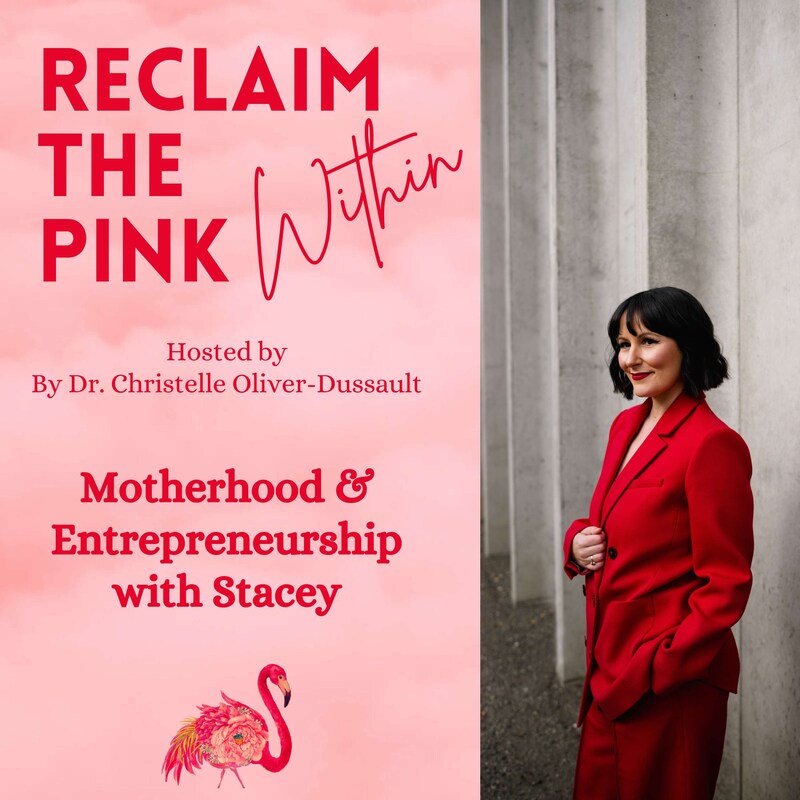
In this episode of the Reclaim The Pink Within, I sit down with Stacey Owen, an entrepreneur and mother, to explore her journey through motherhood and the challenges of balancing it alongside a demanding career. We talk openly about her transition into motherhood, the identity shifts that came with it, and how self-discovery became a critical part of her healing and growth.
Stacey shares powerful insights on the importance of setting boundaries, recognizing early signs of burnout, and giving herself permission to redefine success during different seasons of life. Together, we highlight the unique pressures faced by mothers—especially those who are also entrepreneurs and offer honest, practical reflections for new and expecting mothers navigating similar paths.
Key Takeaways
- Motherhood can be unexpected and deeply challenging.
- The transition into motherhood often reshapes identity.
- Balancing entrepreneurship and motherhood is an ongoing, evolving journey.
- Setting boundaries is essential to prevent burnout and protect mental health.
About the Guest:
Stacey Owen is a certified business and money mindset coach, writer, and speaker who has spent nearly 12 years as an entrepreneur building four businesses, now leading Hey Silly Rebel to help ambitious women create lives and businesses that actually feel like theirs—clear, profitable, and full of joy. She is also a devoted mom and partner.
She describes her current season as one where her business fits around her life, not the other way around. She works in short, focused bursts, then is back to mom mode.
About The Host:
Dr. Christelle Oliver-Dussault is a family physician with a clinical focus on aesthetic medicine, women’s health, and psycho-education. Her work is grounded in a holistic, whole-person approach that integrates medical science with a deep appreciation of the mind–body connection. Alongside her clinical practice, she is deeply committed to medical education and mentors the next generation of family physicians through her work with the Department of Family Medicine at the University of British Columbia.
She is the founder of Reclaim The Pink Within, a community created to support women through life’s most profound transitions. This project was born from personal experience. After becoming a mother, Dr. Oliver-Dussault became aware of a quiet but profound shift in her sense of self, one she had long observed in her patients, yet only fully understood once she lived it herself. What had once been a clinical observation became a deeply personal insight, shaping the lens through which she now supports and guides other women.
You can connect with her on Instagram at @drchristellemd and @reclaimthepinkwithin
Website: www.getyourpinkbackproject.com
Email: [email protected]
Medical Disclaimer
The Reclaim The Pink Within podcast is intended for educational and informational purposes only. The content shared in this podcast reflects the personal views and professional experiences of the host and guests and is not intended to replace medical advice, diagnosis, or treatment.
While Dr. Christelle Oliver-Dussault is a licensed physician, this podcast does not constitute a doctor–patient relationship. Always seek the advice of your own qualified healthcare provider regarding any medical or mental health concerns, diagnoses, or treatment decisions. Never disregard or delay seeking professional medical advice because of something you have heard on this podcast.
Thank You for Listening
Thank you for spending your time with us and for being part of the Reclaim The Pink Within community. This space exists because of women who are willing to listen, reflect, and engage in conversations that are often kept private. Whether you are in the midst of transition, questioning who you are becoming, or simply seeking connection, your presence here matters.
Your willingness to show up—for yourself and for others—is what makes this project possible.
Subscribe to the Podcast
If these conversations resonate with you, be sure to subscribe to the Reclaim The Pink Within podcast wherever you listen to your podcasts. Subscribing ensures you never miss an episode and helps support the continued creation of thoughtful, meaningful content for women navigating identity, change, and reconnection.
New episodes are released regularly, each offering insight, reflection, and shared experience.
Leave Us a Review
If you found value in today’s episode, we would be grateful if you took a moment to leave a review. Your feedback helps this podcast reach more women who may be quietly navigating similar experiences and wondering if they are alone.
Reviews not only support the growth of the podcast, but they also help normalize these conversations and bring them out of the shadows—where they belong.
Transcripts
I get told all the time that my partner is like a great father, but
Speaker:I think I've been told maybe like total, maybe in almost four
Speaker:years. Four times. Oh, that hurts. Isn't that interesting though?
Speaker:Because I think as a career driven woman, it's hard
Speaker:to navigate both. But because I'm not a dedicated
Speaker:mother. You'Re not the typical, you know, mom at home
Speaker:baking the muffins during the lunches, walking the kid to school, but you mother in
Speaker:a different way. Yes. And it doesn't mean that it's wrong. Exactly. So if this
Speaker:is you, maybe I wish someone had prepared me that this could be the
Speaker:scenario and the lack that that can feel. So you need to decide what
Speaker:makes you a good mother for you. Like, what is your definition of that and
Speaker:the agreement you have with your partner or your spouse. Yeah. It's
Speaker:very unique to each family and it's a very hard space to navigate.
Speaker:Welcome back to the get yout Pink Back project podcast. Today I'll be
Speaker:interviewing Stacy Owen, and I'd like to tell you a little
Speaker:bit about how we met. So this year I've started to go
Speaker:to a few local events, but that support women in business.
Speaker:And she was a speaker at one of these events. And I was an absolute
Speaker:awe of her when I met her. She has this energy
Speaker:that's contagious and I really wanted to get to know this woman.
Speaker:So she's someone who has set up multiple businesses.
Speaker:She's an entrepreneur. She's also a mom to a beautiful little girl.
Speaker:And I've asked her to speak with me today so that she can tell me
Speaker:about her journey through motherhood. So welcome.
Speaker:Thanks for having me. I mean, how do I. How do I start talking after
Speaker:that wonderful intro? I'm so shy right now.
Speaker:Sorry. We've met a few times and have had some ice cream together. And it's
Speaker:just been so wonderful to get to know you. And I think a lot of
Speaker:people would benefit from hearing about your journey because everyone has a unique
Speaker:perspective on motherhood. So why don't we start by you telling me a
Speaker:little bit more about who you were before you were a mom. It's so
Speaker:interesting. So who I was before Mom. I mean, when I was younger, I
Speaker:always thought by the time I was 25, I'd have the white picket fence and
Speaker:I'd be married and maybe pregnant with my first child. And 25 came and
Speaker:went and it was nowhere even close to that. I just assumed that's
Speaker:what life would look like. So before now I Thought
Speaker:that's what it would look like. And then when it didn't happen and the
Speaker:relationship that I was in was actually a very unhealthy, abusive relationship,
Speaker:I thought that motherhood was actually not in the cards for me, that it wasn't
Speaker:going to happen and that I was just going to be a solo individual.
Speaker:Yeah. Isn't that crazy? It is. That must have been something
Speaker:very hard to navigate if you always thought motherhood was going to be in your
Speaker:cards. Yeah, but then I was okay. I always thought it was.
Speaker:And then I processed through the grief,
Speaker:which was really, really hard. Yeah. And
Speaker:then I came to a place where I knew my life could be fulfilling without
Speaker:being a mother, even though I had grieved. But then when I met the partner
Speaker:that I have now, I mean, I couldn't believe that
Speaker:it was back, back on the table. Yeah, I'm very grateful
Speaker:for that. But, yeah, life is wild and crazy, but mostly
Speaker:amazing. Do you feel that in that first grieving process
Speaker:you learned a lot about yourself in a way that helped you
Speaker:navigate the transition to motherhood? That's such a great question.
Speaker:I really dug into who I was, what I wanted to do,
Speaker:and what my time was worth.
Speaker:Definitely had a bit of a me first era in there.
Speaker:Yeah. And I think that's really important. A lot of moms don't get the chance
Speaker:to do that work and it hits them right in the throes of motherhood.
Speaker:How did you navigate those first few months? Because it's quite a drastic
Speaker:change. You can try to prepare as much as you want, but nothing prepares you
Speaker:for the reality of it until you're in it. You know,
Speaker:I. Because I had done so much work as an individual and I felt
Speaker:so strong in who I was and I had done a lot of self development.
Speaker:I thought I was going to be the same person, but
Speaker:also a mother. I thought it would be me plus this other new being in
Speaker:my life and me plus being this new role. That's not how
Speaker:it went. That's not how it goes.
Speaker:And, and you know, other women told, like other women had told me,
Speaker:basically you become a whole new person. And I thought, well, that's not going to
Speaker:happen to me because I am older, I know who I am,
Speaker:I know what I like, I know how I want to spend my life. That's
Speaker:not going to be the case for me. That was a lie to myself.
Speaker:So what did your daughter teach you in the process?
Speaker:Oh, so many things. To be more present. What
Speaker:is really important in life. I Know, that sounds cliche. We all hear it.
Speaker:But once you actually experience it, the weight of the words, they're just
Speaker:different. And. Yeah.
Speaker:What truly is important? And when I'm 80
Speaker:and I'm looking back at my life, what am I going to be
Speaker:remembering? Like, what. What are the memories in the moments and what is actually
Speaker:not going to matter? And who's going to remember me and who's not going to
Speaker:care? Yeah. How did you navigate through entrepreneurship
Speaker:and motherhood? Because entrepreneurship is the type of
Speaker:field where you never really, you know, put the stop button on
Speaker:or turn off. It's kind of always there in your mind, and you're kind of
Speaker:always juggling these different balls. How did you navigate that
Speaker:shift? Not well. Okay. Not well.
Speaker:I had not figured it out. And I'm. I'm still, you know, in progress.
Speaker:It happened during COVID So I was an older mother. I was
Speaker:37. 30. I just turned 37 when I
Speaker:had her. Right. Is that right? 373 8, 3 9. Yeah. Yes.
Speaker:Wow. Crazy. It's just a number. It's just a number.
Speaker:And so I was a little bit older. My body didn't handle it very well.
Speaker:I really struggled. I was on semi bedrest for six. Months and then
Speaker:fully for almost two months. Okay. That's a whole journey with that.
Speaker:Then I was running my company, my marketing agency. It was
Speaker:Covid. We were running a big online virtual photography
Speaker:conference that had, you know, only happened once before in the entire
Speaker:industry, the history of the industry, which was like a week before it launched. So
Speaker:we were doing all these big things. I ended up having
Speaker:my final team meeting while in labor at the hospital. Like, also
Speaker:a cliche was me. Feel like you're in an episode of Friends saying that.
Speaker:Yes, but. And genuinely, that is actually what happened.
Speaker:And then I took a week and a half off after I had her,
Speaker:and I was back to work already one day a week because I felt like
Speaker:I actually could not take a maternity leave. But my partner,
Speaker:luckily, he took almost 11
Speaker:months. Okay. So he was home the whole time and
Speaker:supported us. And, you know, he's the good parent.
Speaker:So you had that emotional and physical presence for him that allowed you to not
Speaker:be that. I think anybody who sees
Speaker:a woman who looks like she's doing it all, there's usually a team behind that.
Speaker:It's impossible to really do it all on your own. Yes.
Speaker:When you were navigating that shift and from like the bed rest to the
Speaker:pandemic, did you feel like you lost a bit of you in the process,
Speaker:when you were focusing on all those moving parts. Yes.
Speaker:I mean, there's no question. Absolutely. And I'm sure anyone listening would be
Speaker:like, well, we can see that a mile away. There
Speaker:was nothing left for me as a person. I went from being fiercely
Speaker:independent, knowing myself, my time, my energy. And I was just so passionate in the
Speaker:work that I was doing. You know, I have great relationships with the people important
Speaker:to me to becoming a mother and just, you know,
Speaker:hormones and the physical aspect of being pregnant, that was really challenging.
Speaker:And then a challenging delivery to not fully resting on the other
Speaker:end and to also keep delivering for work and still try and
Speaker:be a good partner. I didn't. I wanted to stay strong. Like
Speaker:postpartum depression, like, you're not going to find me. This is a non option. This
Speaker:is a postpartum is a non option for me. So it's all good. We're going
Speaker:to keep going. And actually wasn't too bad, but I
Speaker:absolutely lost track of. Yeah. What was important because
Speaker:that had changed. Because what was important before wasn't any longer. And
Speaker:that time to realize what the new most important things
Speaker:were. It did. It took some time.
Speaker:Were there any signs that your body gave you or that
Speaker:people said to you that made you realize something needs to
Speaker:shift? Oh, I was sick all the time. If someone just said the
Speaker:word flu or virus, I would catch it. I was sick all the time.
Speaker:I went through clinical burnout. Clinical burnout. What
Speaker:did that look like for you? Exhausted, no gas in the tank, but still
Speaker:going. I don't want to say depression, so
Speaker:I wouldn't identify with being depressed, but
Speaker:mental wellness was low. Yeah. Yeah. And
Speaker:how did you navigate that? Not well.
Speaker:It gets better. You got out of it. I should get out of it.
Speaker:You can laugh about it. So that's a good sign. It gets better. I
Speaker:swear, it gets better. But at the time, in those
Speaker:times. Where you were feeling completely, like running on empty,
Speaker:what kept you going day to day or what lifted you out? So
Speaker:what kept me going day to day was needing to show up for
Speaker:other people. So show up for my partner, my new child, my team.
Speaker:So I had a responsibility and I deeply cared about all of those
Speaker:parts and all of those roles. And so I would keep showing up because I
Speaker:genuinely wanted to and it was genuinely important to me. And then I
Speaker:just couldn't anymore. And it literally. My body literally had to take
Speaker:me out and say, no, you don't get to intellectualize this and power
Speaker:through. That's not an option anymore. It Actually took that for me to
Speaker:stop and say, okay, what do I need to do to take care of myself?
Speaker:I'm not showing up the way I should be at work, even though I'm giving
Speaker:it everything I can. I'm not being the most present mother. I'm not being the
Speaker:best partner. I'm recognizing this even though I'm giving everything I can
Speaker:is because I was born from an empty cup. Yeah. So I really had to
Speaker:take a look at how I was living my life. So what changes
Speaker:did you make? I restructured my
Speaker:company. I actually took sacred money archetypes. Okay. Yeah. And
Speaker:that was that explained to me in
Speaker:black and white a lot of the reasons why I was acting the way I
Speaker:was acting and making decisions the way that I was. And when it
Speaker:was shown to me in black and white that these traits, even though they're neither
Speaker:good nor bad, but I was operating from an unhealthy place. And what that
Speaker:looked like exactly was the life that I was living. A lot of great things
Speaker:still, but some really unsustainable patterns. Yes. Absolutely.
Speaker:It was just not helping me. It was. It was tripping me up. And then
Speaker:what a healthy version would look like, even honoring those
Speaker:same values and those same characteristics. What would a healthy version of that
Speaker:look like? And so I started making structural changes in my business.
Speaker:I started delegating more. I really stepped back from
Speaker:the operations and just managed more of the strategy and my two
Speaker:main leads for the company. And
Speaker:that allowed me to breathe. I stopped working weekends.
Speaker:I stopped working evenings. And if I couldn't get something done, it
Speaker:meant that I had too much on my plate. So you started setting healthy boundaries
Speaker:with yourself within yourself. Yes, because I. I loved
Speaker:what I did. I still love what I do. I love my work. I'm very
Speaker:passionate about it. I will follow the momentum, follow the lead. And I
Speaker:just said yes to too many things. It's so hard to say no.
Speaker:Yes. Especially when you're a passionate person like you are. It's really hard to put
Speaker:up those bumpers. Yes. Does your body now give
Speaker:you signs when it's time to
Speaker:slow down or put up a new boundary, or do you have a
Speaker:few things that you've noticed that help you make that decision now when you need
Speaker:to say no? I still will
Speaker:sometimes struggle with wanting to say yes and knowing
Speaker:that's my cycle and my habit. I now have something in
Speaker:interrupt where I say, send me an email.
Speaker:Let me take a look. Let me take a look at it. I'll get back
Speaker:to you instead of just the immediate yes. And then I'll sit back and ask
Speaker:myself, do I really have the capacity for this? Is this moving me
Speaker:towards the goals that I have in my life or for my work or for
Speaker:my lifestyle? I have a little twitch that just started right here.
Speaker:I can barely notice it. It's okay. The camera's on this page.
Speaker:This way, this way. But that. That pattern interrupt
Speaker:allowed me to. Okay, wait a minute. Is it because I can see
Speaker:the possibilities and the opportunities in this thing or. And
Speaker:I can. But is it for me? Do I have to say yes? I don't
Speaker:even have to, but do I need to? This is really what I want to
Speaker:be doing with my time. If I only have limited time. I have a sticky
Speaker:note on my desk that says, success equals simplicity. I like
Speaker:that. And I look at it every time I try and make a decision. I
Speaker:try and look at it every time I make a decision. I just wrote a
Speaker:new business plan for times, and I put it through the
Speaker:filter of that four different times. Okay. Some
Speaker:intentional planning for how I spend. My time
Speaker:and the intention with how you spend up your time, because obviously time is
Speaker:finite, your energy is finite. How do you divide that
Speaker:up? Hmm. Hard question. Might not be
Speaker:able to answer it. That's okay. But, you know, it's so interesting. So I can
Speaker:tell you how I divide it up now, But I have to say, if you're
Speaker:a new entrepreneur and you're listening to this, it's going to look different. Yeah. And
Speaker:there's seasons, and there are seasons for hustle and working evenings and
Speaker:weekends. That can happen. But that's just. That
Speaker:should be short time only. That shouldn't be the standard. So now
Speaker:I don't work weekends. I don't work evenings. When my
Speaker:body tells me I'm tired, I am actually done for the day, and I
Speaker:will come back to it tomorrow. And if for some reason I didn't get it
Speaker:done, it means that I was over capacity. That's
Speaker:very wise. Pretty basic. No, but it's. Do you know what's
Speaker:funny? Is that a lot of people don't realize that until they burn out. And
Speaker:you've already been through that, and you have become comfortable, what your
Speaker:capacity is, and you're not showing any guilt with being
Speaker:saying, I need to stop and slow down. Because I think it's really hard to
Speaker:do in our culture of productivity
Speaker:to say, no, I need to stop for a second.
Speaker:And you've done that, and I think that's brilliant. Thank you. But what's also
Speaker:great, especially if you're an entrepreneur. Is that if I feel
Speaker:like I have 10 hours of energy to complete something,
Speaker:I will allow myself to work the 10 hours. If I
Speaker:will get up extra early or everyone's gone to bed and I'm wide awake and
Speaker:I want to work on something. Yes. Like I'm allowed to do that
Speaker:time to time and follow that energy you have, that freedom. Yes.
Speaker:Yeah. When you are off, what do you do to fill your cup of tea?
Speaker:Oh, I love gardening. My daughter loves weeding with me,
Speaker:so that's pretty fantastic. Today is handy. This is great.
Speaker:It is great. Yeah. Spending time with friends and family.
Speaker:I was gonna say cooking, but that would be a lie because my partner cooks
Speaker:more than me. The one day a week I cook, I do enjoy. Yeah.
Speaker:I think there's a difference between cooking for necessity and cooking out of
Speaker:pleasure as well, too. I know. I don't know if that's something that shifted for
Speaker:you, but I used to love cooking before I had K. And then when it
Speaker:became that necessity of the meals and the snacks and the lunches, it just sucked
Speaker:all the joy out of it. And it was such a different way of
Speaker:operating in the kitchen. Yes. I just didn't enjoy as much anymore.
Speaker:Yeah. It's funny how are there things that you enjoyed
Speaker:before motherhood that you're finding just are no longer your go
Speaker:to. I used to crochet. Okay. And knit. That
Speaker:surprises me. Yes. I wouldn't have pictured you as someone who crocheted. Yeah. I mean,
Speaker:I did live in a garage with no running water for five years. Okay. In
Speaker:a past life. Okay. Which is wild. And it was that era. That's a whole
Speaker:other story. With my. My ex husband. I. I used to
Speaker:love sewing. I still like the idea of it. And I. If I had extra
Speaker:capacity, I would. Love to do that. I love fashion. I have gotten back
Speaker:into gardening. I love just intellectual
Speaker:conversations with my friends. And I love spending time with my family. Like it's.
Speaker:And travel, but it's really so simple. I love reading my
Speaker:books. I love talking about my books. It's
Speaker:nothing too crazy. It's not, but it's what resonates with you. It's
Speaker:human connection, interacting with others and then some
Speaker:introspection. Like gardening can be quite introspective. Reading is quite introspective. So
Speaker:it's, you know, a yin and a yang. You can't always be in that open
Speaker:space connecting with everyone. You need to pull back sometimes. And it sounds like
Speaker:you've Navigated a really nice balance for the current season of your life.
Speaker:And that's a lot. I know you say it sounds simple, but
Speaker:it's a lot easier said than done. And it takes a lot of internal work
Speaker:to get to to that space and a support network which you've
Speaker:touched on already, which is super. Do you have any
Speaker:words of wisdom to give to mothers who are either expecting
Speaker:shortly or are in the throes of it and
Speaker:you know, going between nappies and snacks and
Speaker:bottle or breastfeeding and laundry and the list goes on.
Speaker:Because I feel like I probably say a couple different things.
Speaker:Release expectation of yourself and
Speaker:what you think it's going to look like and just allow to be whatever it
Speaker:is going to be and to be kind to yourself. Don't
Speaker:penalize yourself. You know, self compassion can go in a really
Speaker:long way. Yes. Also sounds easy. Also really hard
Speaker:to do. Yeah. This is maybe like a bit odd to say but
Speaker:if you're an entrepreneur and are like career driven
Speaker:and becoming a mother or a new mother,
Speaker:I don't know if you've experienced this but I,
Speaker:I get told all the time that my partner is like a great father. But
Speaker:I think I've been told maybe like total, maybe in almost
Speaker:four years. Four times. Oh, that
Speaker:hurts. Isn't that interesting though? Because I think as a
Speaker:career driven woman. It'S hard to
Speaker:navigate both. It's hard to navigate both. But because I'm not a
Speaker:dedicated mother. You're not the typical,
Speaker:you know, mom at home baking the muffins during the
Speaker:lunches, walking the kid to school, but you mother in a different way. Yes. And
Speaker:it doesn't mean that it's wrong. Exactly. So if, if this is you,
Speaker:maybe I wish someone had prepared me that, that this could be the scenario.
Speaker:Yeah. And the lack that that can feel. So you would need to decide what
Speaker:makes you a good mother for you. Like what is your definition of that and
Speaker:the agreement you have with your partner, your spouse. Yeah.
Speaker:It's very unique to each family and it's a very hard space to navigate.
Speaker:I think myself, I went, I worked too much and then had
Speaker:very little left in the tank. Similarly to yourself. And
Speaker:then was working too little and felt like I'd
Speaker:lost that identity and the role that I played in the community. So it's. The
Speaker:needle is always moving and you need to continually reflect is this.
Speaker:Am I happy with how the day to day is going and
Speaker:there is no right fit and everyone needs to figure that out for
Speaker:themselves and learn from other people's tools and see how that
Speaker:applies in their lives. I think just be curious. You're allowed
Speaker:to set your own definition of what a good mother is or a good parent.
Speaker:What your life looks like, what your balance looks like. Your balance is gonna
Speaker:look different than my balance. And that's okay. Yeah. Thank you.
Speaker:I'm going to finish on a quote because I've asked everyone to send me a
Speaker:quote or mantra that is fitting for the current season of your life. And
Speaker:here is spaces I'm in the right place at the right time,
Speaker:having a human experience I am supposed to experience. That's
Speaker:beautiful. Thank you for sharing that. And thank you for joining us today. Thanks for
Speaker:having me.




