Shownotes
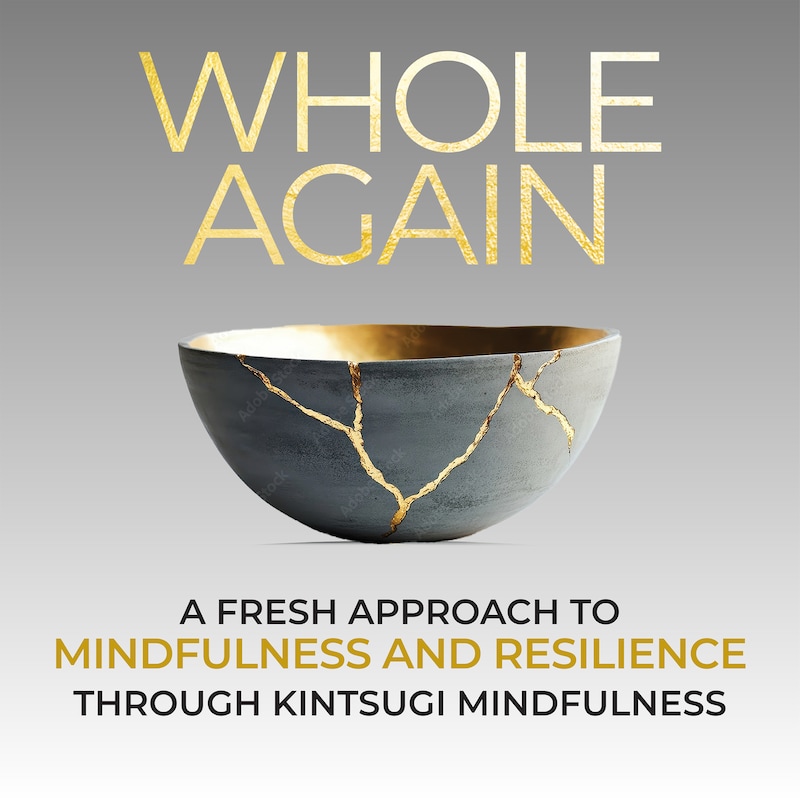
The Whole Again Podcast: Mindfulness and Resilience through Kinstugi Wisdom airs every Monday, Wednesday and Friday with Pause Breathe Reflect Microdose Meditations, Growth Mindset and Mindfulness Tips, to help us transform our scars into healing and resilience.
And between May and October, I'm sharing a new series I'm calling: A Perfectly Imperfect Union. It's about connecting with every day folks as they reflect on America at 250. Conversations will air every Tuesday, Thursday and Saturday.
-------
What if the real danger isn’t dying… but never truly living?
Most of us avoid thinking about mortality, pushing it aside as uncomfortable or distant. But in doing so, we often fall into routines that leave us disconnected, unfulfilled, or simply going through the motions. This episode challenges that mindset by reframing death not as something to fear—but as the very perspective shift needed to start living with intention, presence, and purpose.
- Learn how embracing your mortality can unlock a deeper appreciation for everyday life
- Discover a simple mindset shift that helps you break out of autopilot and live more intentionally
- Gain practical reflection tools to create more meaningful moments and stronger connections
Press play now to transform how you see life—and start living each day like it truly matters.
You can now download my Pause Breathe Reflect App with Microdose EQ for FREE on Apple’s App Store or Google Play. Discover how to spend less time on your phone and more time on things that bring you joy. Also, find the support you need to navigate today’s uncertainty with more calm and grace.
Receive a FREE copy of my book: “My Last Bad Day Shift.”
We can also connect on LinkedIn.
Subscribe to be sure you don’t miss any of the micro-meditations, wellness tips, and guidance that I publish every Monday, Wednesday, and Friday at 7:11 am.
Transcripts
Hey there, it's Michael. Welcome to Whole again, the show that is here in support of the person you're becoming, and I have some news to share with you. I don't think there's any easy way of doing it, so I'm just gonna get right into it. You're gonna die. Yeah, I know. Not necessarily the, thank God it's Friday kind of message you were expecting.
It's not fryer. But the reality is you are going to die. So am I. But I don't want you to be frightened. In fact, I want you to be more afraid of not living than dying. Let me share more. All this year, every Friday I'm sharing a tip I've discovered along the way since my last bad day, AKA, my near death cycling accident that sparked.
My interest in Kintsugi, my rehab and my recovery and the ripple effect I'm trying to put out into the world. I used to be terrified of dying. I didn't wanna talk about it. I didn't like flying when there was turbulence because I actually thought I was going to die. Now, to be fair, I'm not really psyched when there's turbulence anymore, but I have a better relationship with it, and I know it's not in my hands, so I'm not gonna burn extra calories worrying about it.
And when I rode my bike across the country, so many people were really. Actually more than nervous, they were filled with anxiety about my safety as I rode my bike across the us. But I told them I wanna be more afraid of not living than dying. This is one of the great lessons I've learned over the last 25 years.
It's a huge shift in perspective for me. And this week I wanna share it with you now, like all the tips. I'm gonna share 52 Over the course of the year, some will hit the mark and some, as they say in major leagues will be just a bit outside. So my encouragement to you is take what works for you because we all have a particular recipe or formula and leave the others behind.
And this one is number 17. There's a workbook I've distributed over the years, my Better Life Workbook, and in it there are a bunch of exercises to take a look at One's life. It's more of an awareness exercise, and there's one question that comes up that really speaks to this topic. I value each day as a gift or opportunity back before my accident.
I took life for granted. I also took my health for granted. Now I see every day when my feet hit the ground for the first time as I get outta bed. It's a gift. It's a moment for gratitude. It's an opportunity to put another ripple into the world. And the thing is, that question can be a real throwaway.
'cause we've seen questions like that on social media all the time, and we scroll past them. Yeah, yeah, I get it. But I got stuff to do. I have places to be. I have places to go. But one of the nurses that was in the trauma room with me, she came to visit me as I came out of the ICU, and I don't remember the conversation, but she shared it with me via text as I rode my bike across the country.
What she shared is that, Hey Michael, you're not promised tomorrow. Make sure the people around you know how much you love them. She shared more, but that was the heart of her message. In stoicism, there's a concept called Memento moori, and if I ever got a tattoo, I don't have any tattoos because I have some pretty cool looking scars, and those are my tattoos.
At least that's how I see it. Well, if I had a tattoo, I would have mori tattooed on my body somewhere. It means, remember, you must die, and it sounds pretty heavy, but it's actually quite liberating because when you remember that there's an ending, when you actually get real with the fact that we're all mortal and we get real with our mortality, then.
We can start really leaning into life, leaning into our experiences, you start to do the small, brave things that make life meaningful. I've also learned along the way, and there's a really great book written by Bronny Ware, the Five Regrets of the Dying. And what I've learned talking to other people who have gone through something like I've gone through is that most people.
Aren't afraid of death or dying intellectually, we know we all do it. We just have this emotional block that prevents us from actually talking about it in a way that can be liberating, that can provide some freedom, what they actually fear most. And in Bro's book, it comes up. It's regret, it's the worry, or perhaps the realization that they played it safe.
They played it safe for so long that they actually missed their life. They skipped over their life because they were so worried about what's inevitable. And looking back, they're like, ah, I had the time. I just didn't use it. I don't know about you, but that feels like a gut punch. That one hurts Now. What I'm suggesting is not blowing up your life.
Now, you could do that and believe me, I spent months, if not years, thinking about what should I do? I almost died. Should I really go back to my corporate career? Maybe I should do something like move to Bora Bora or start a nonprofit. I had a whole bunch of different ideas, so I'm not suggesting that. I am suggesting that we can all wake up to life.
We can bring our intention and our energy to all the different moments that we have, to our relationships, to our wellness, our physical and emotional and mental to our careers. You name it, we can bring that energy to all the different aspects of our lives. Accept the fact that yes, indeed, we will all die.
We're gonna die. Momentum, worry, and we can choose to be more afraid of not living than dying and really live into it. Do something that you've always talked about doing, or when you have an experience like going to a concert, you're fully into the concert. You're not trying to record it. You're simply there to live it, to experience it, or maybe it's reaching out to someone that you haven't spoken to in say forever.
Make that connection and then at the end of the day, you can ask yourself this question of reflection as you get ready for bed. Did I live today or did I just manage to get through it? Now, some days we all just manage to get through. Really sit with that question, how did I live today? Not as a way to judge ourselves.
'cause we do far too much of that already. It's just simply noticing, it's bringing awareness to how we approach life and we connect a few days like that together where we really notice how we're living. Then it becomes a way of living and it makes it much easier to really embrace life. Really step into it.
It's how we create a ripple effect that not only benefits us, but benefits all the people that we ripple into. So tip number 17 is, yep, you're gonna die, but be more afraid of not living than dying and let the people around you know how much you love them because none of us are promised tomorrow.
And as always, thank you for being here. Thank you for listening. And if you're around on Monday, I hope you'll tune in and listen to the microdose meditation I have for you each Monday. I love sharing a short meditation to help you get the week off on the right foot. And until then, and the next time we connect.
Let's remember to celebrate our scars as golden symbols of our strength and resilience. And don't forget to have fun Storm in the castle.
And if you wish to learn more about creating beautiful ripples and how to prevent a bad moment from turning into a bad day, please visit my website, Michael O'Brien schiff.com. And sign up for my newsletter called The Ripple Effect, and join us each Monday, Wednesday, and Friday here at Whole Again, and discover how you can heal, grow, and become more resilient and celebrate our scars as golden symbols of strength and resilience.
Until then, remember, you can always come back to your breath. You've got this. And. We've got you.