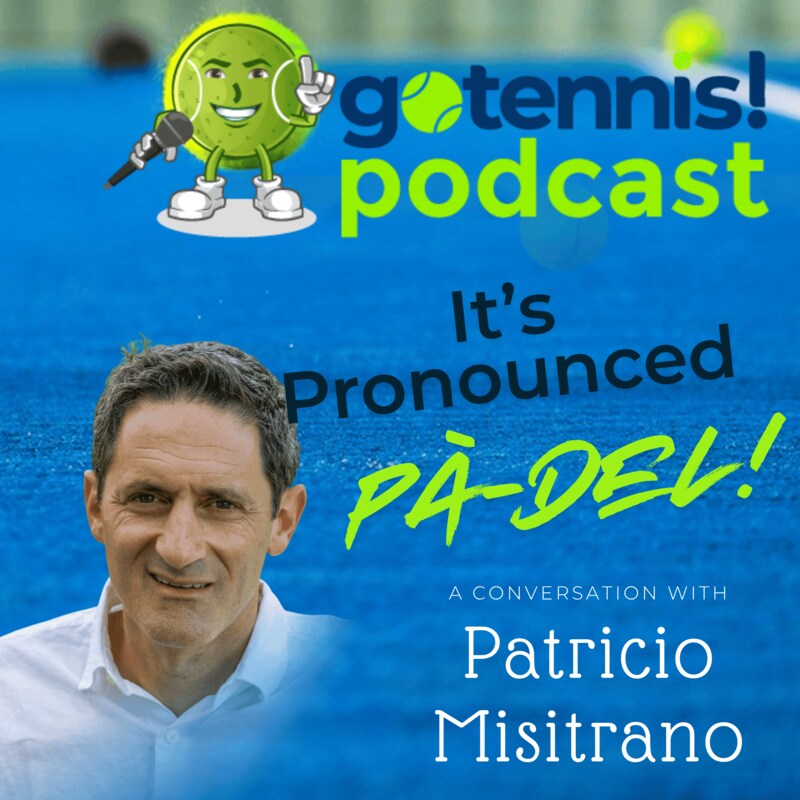
Shownotes
Season 25, Episode 100 - Shaun Boyce, Bobby Schindler
Summary
In this episode, Shaun Boyce and Bobby interview Patricio Misitrano, a veteran in the racket sports industry with nearly 40 years of experience. They discuss Patricio's journey from playing tennis in Argentina to being the CEO of Racket Social Club in the U.S. The conversation delves into the rapid growth of Padel, its appeal to new players, and the importance of research in understanding the market. Patricio shares insights on the affiliate program offered by Racket Central, the demographics of Padel players, and his vision for the future of the sport, including the potential for expansion and investment in Padel courts.
Keywords
Padel, Racket Sports, Patricio Misitrano, Racket Social Club, Padel Growth, Tennis, Pickleball, Affiliate Marketing, Sports Research, Padel Courts
Takeaways
Patricio Misitrano has been involved in racket sports for nearly 40 years.
He is now leading Racket Social Club's expansion.
Padel is growing rapidly in the U.S., with courts now in over 30 states.
Research on Padel courts is crucial for market validation and growth.
Racket Central offers an affiliate program for tennis and Padel pros through the American Racket Sports Association
The typical Padel player is often new to racket sports, making it accessible.
Padel is popular in countries like Spain, Argentina, and Italy.
The sport's appeal lies in its ease of play compared to tennis.
Patricio advocates for the golden point rule in Padel to speed up games.
Investment in Padel courts can be significant, but the potential for growth is high.
Full YouTube Video: https://youtu.be/NYBOJ2A4RVM
King of Tennis Answer: https://youtu.be/E_YMnpodBXU
Contact Our Hosts
- Shaun Boyce, RSPA: [email protected] | https://americanracketsportsassociation.com/
- Bobby Schindler, RSPA: [email protected] | https://letsgotennis.com/windermere
- Geovanna Boyce: [email protected] | https://regeovinate.com/
- GoTennis Website: https://letsgotennis.com/
More about Patricio
https://www.linkedin.com/in/patriciomisitrano/
Check out Misitrano Consulting
https://www.misitranoconsulting.com/
Join Our Community
Check out the GoTennis! Atlanta Facebook page for deals, updates, events, podcasts, news, stories, coach profiles, club information, and more.
Support the Show
- Donate Directly: https://gotennispodcast.captivate.fm/support
- Crypto Donations: Get into crypto with https://coinbase.com/join/PEWRLWK?src=referral-link
Start Your Own Podcast
Considering your own podcast? We recommend Captivate: This podcast is hosted by Captivate, try it yourself for free.
Transcripts
Hey, hey, this is Shaun with the GoTennis! Podcast, powered by Signature Tennis.
Speaker:Check us out at LetsGoTennis.com, and while you're there, be sure to register for the
Speaker:2025 Fall Festival, presented by T2 and RMC.
Speaker:Tennis drills, pickleball clinics, the best coaches, vendors, sponsors, food, and more.
Speaker:You don't want to miss it.
Speaker:And now let's get into our recent conversation with Patricio Misitrano.
Speaker:Patricio serves as the CEO of Racket Social Club, which has a location in the Lake Windward
Speaker:subdivision for those of you who are local.
Speaker:And most importantly, Patricio confirms the correct pronunciation of "paddle".
Speaker:Have a listen and let us know what you think.
Speaker:Who are you?
Speaker:And why do we care?
Speaker:My name is Patricio Misitrano.
Speaker:Thank you guys for having me on the podcast.
Speaker:Who am I?
Speaker:That's a lowered question.
Speaker:I'm going to answer more in the lines of what we're discussing here, which is tennis and
Speaker:Racket in general.
Speaker:So I've been involved with tennis for close to 40 years now when I started playing.
Speaker:I moved to the US about 20 years ago, 25 years ago, I got into a little bit of a platform
Speaker:tennis, then pickleball, and then most recently came back to battle, which I grew up playing
Speaker:in the '90s in Argentina.
Speaker:And from teaching to directing close to running tournaments, I've been involved in the
Speaker:Racket industry for the good part of the last two decades.
Speaker:So not just Patricio from the standpoint of this is what I've been doing my whole life.
Speaker:You evolved into...
Speaker:Yeah, and funny enough when I was a teenager in Argentina, I started playing paddle.
Speaker:And then for about 20 years, pretty much I didn't play at all because in the US, there were
Speaker:very few places where you could play.
Speaker:And most recently, when I say most recently in the last three to four years, I started
Speaker:playing a little bit first.
Speaker:And then I co-founded a club, then I started playing some tournaments.
Speaker:And I got involved with the US PM in one of the national team committee.
Speaker:And last December, I participated in the Panam Games, representing the US.
Speaker:And I played an entire three points because I got injured in my very first match.
Speaker:But yeah, so I've been involved with the sport now for a few years in the US.
Speaker:But I've been involved with it since I grew up playing back in the early 90s.
Speaker:Okay.
Speaker:And so now, recently, you took a new role.
Speaker:You've been working with Racket Central, which is how you and I first met.
Speaker:But now you've taken a new role with Racket Social Club.
Speaker:Tell us about that.
Speaker:Yeah.
Speaker:And Racket Central, Racket Social Club, Racket X and the National PanLiga are all under
Speaker:the umbrella of Racket 316.
Speaker:It's a company that owns all four companies.
Speaker:And since the beginning of the year, pretty much, and I've been helping Racket Central to
Speaker:grow the B2B side and helping clubs and with their retail needs.
Speaker:And most recently, and I took the lead as the person in charge of all the clubs, the
Speaker:Racket Social Clubs.
Speaker:And we have one in Atlanta, that's where we met a couple of weeks ago.
Speaker:We have one in Denver.
Speaker:We're about to open two in Houston, in two different parts of Houston, one in Willow
Speaker:Brook, an outdoor paddle and pickable club, and an indoor brand new facility in Katie.
Speaker:And it's going to be a five core facility.
Speaker:And we're also looking for other locations across the US.
Speaker:And so now I'm fully focused on Racket Social Club.
Speaker:And in that case, you say we've got one facility of Racket Social Club in Atlanta.
Speaker:Is that Alfa Reda, Bobby?
Speaker:Yes.
Speaker:Where Lake Windward technically.
Speaker:Yes.
Speaker:Okay.
Speaker:So Bobby says, Lake Windward is in Alfa Reda, which is a big place.
Speaker:I mean, you can drive across it.
Speaker:It's north of Atlanta for those that aren't familiar with this area.
Speaker:And in this case, you've got four courts there in Lake Windward.
Speaker:And it's a private facility within a neighborhood.
Speaker:We seem to do this a lot.
Speaker:We have this jammed in kind of really cool idea that we just kind of smash it into a neighborhood.
Speaker:And it's not necessarily part of a fancy country club.
Speaker:How does that work?
Speaker:How does that feel from your perspective?
Speaker:Yeah.
Speaker:And that was, I've been to Atlanta many times.
Speaker:That was my first time in that part of Atlanta.
Speaker:I remember going and playing college national.
Speaker:They played any IA tennis.
Speaker:And I played in pitch 3 CD, which was so hot in May on some hard courts.
Speaker:But that was my first time in Alfa Reda, which I really, really liked.
Speaker:I was impressed with that entire area.
Speaker:It's beautiful.
Speaker:And there's, you know, there's a lake right next to us.
Speaker:There's a club, a tennis club with the lake.
Speaker:And then we are inside of that club and rocket social club is inside of a private club.
Speaker:But it's open to the public.
Speaker:So it's not like you have to become a member to go and play.
Speaker:It's open to the public, the paddle and facility.
Speaker:And we are inside of that club.
Speaker:Now in Alfa Reda, I think there's, I don't know, 2500 houses.
Speaker:So there's a lot of people in that area.
Speaker:It's, I think the location and the amount of people that are in that area is excellent for
Speaker:whoever likes to play tennis.
Speaker:Or in this case, paddle because there's no other paddle facilities within, I don't know,
Speaker:15 or 20 minute drive.
Speaker:There are some other areas, but a little further away.
Speaker:Yeah.
Speaker:And sorry, you said 2500 homes.
Speaker:I think in that lake, when we're specific neighborhood, because I think there's close to
Speaker:60,000 homes in Alfa Reda.
Speaker:It's self, which is a serious hotbed for tennis, pickle ball, and now paddle coming in.
Speaker:So you did, I want to let Bobby talk to you about kind of how the business works within
Speaker:neighborhoods and how tough that can be in managing those relationships, which is different
Speaker:from a club.
Speaker:But quickly, I'm curious.
Speaker:You know what?
Speaker:No, never mind, Bobby.
Speaker:Do me a favor.
Speaker:But I think this before I say, hey, put a pin in that, we'll come back to it.
Speaker:Bobby, talk to him about the business there, because you're in a facility and what would
Speaker:that response be if they just try to jam in some paddle points?
Speaker:Well, I, yeah, and this could be, I might miss, be misunderstanding because that win word
Speaker:was done better than anybody else.
Speaker:Back in the day, the guys that were running it, for my understanding, purchased that part
Speaker:of the club, for whatever reason, win word was acceptable to the offer that they made.
Speaker:So they owned it and were able to operate it separately.
Speaker:I mean, there's confidence that they got to abide by, but it is one of the more unique
Speaker:places in Alfreda.
Speaker:So it doesn't run like your typical subdivision.
Speaker:And I think it's also tied to the dock leases, the boat leases are it used to be.
Speaker:So it was a very positive deal for the club.
Speaker:It was extra work and you would think, why is it tennis club dealing with the boats that
Speaker:are on with me of late, but it was profit, but it made it worth one.
Speaker:I think they're also different on the pool back in the day.
Speaker:So is that the same as it is today that they run all those aspects?
Speaker:As far as I know, yes.
Speaker:So the club is separate from the HOA.
Speaker:Yes.
Speaker:And it's a separate entity and the club is in charge of the pool, which is beautiful.
Speaker:It looks like a resort kind of means it's not just a regular pool.
Speaker:And then they have the marina and then the tennis and there's blood from tennis to
Speaker:course to blood from tennis courts, pickleball courts and now paddling.
Speaker:Yeah.
Speaker:I mean, Greg was the gentleman who made this all happen was a Stanford grad, very intelligent
Speaker:person, set a bar very high and then nobody would replicate it.
Speaker:No other neighborhood would do it, but it was a great move that they made back in the
Speaker:day.
Speaker:And that allows them to a lot more flexibility to add the paddala courts to make those
Speaker:kind of changes because it's theirs.
Speaker:They don't have to go to the community and say, is this something that sounds good to
Speaker:you?
Speaker:So we all get to, and that's great because that's the big problem with paddala or growing
Speaker:the new sport.
Speaker:Nobody's going to invest until there's some proof.
Speaker:We switched over to tennis courts into pickleball, but it was four years into it, type thing,
Speaker:where if you have it inkling now, be the first one on the block and you're always going
Speaker:to have a strategic advantage.
Speaker:And Patricia, you've done, speaking of the paddala court specifically, you've done a
Speaker:whole set of research and put out a paper recently about paddala in the United States.
Speaker:And I was just looking it up, and it appears there are about 14 paddala courts in Georgia
Speaker:specifically.
Speaker:And that's not a lot when you think of comparing it to tennis and comparing, I mean, TPC shirt
Speaker:of love has 14 tennis courts at one facility and Bobby's got 12 and he's just a neighborhood,
Speaker:say just a neighborhood, Bobby doesn't take offense.
Speaker:So how do you take that when you look at the growth of paddala in general?
Speaker:And you're one of those guys that has done this actual research and say, okay, paddala's
Speaker:grown 100% in the last year and they went from seven courts to 14.
Speaker:Is that, are we keeping up with the fastest growing sport in the world as my question?
Speaker:And this is just the beginning, you know, keeping up, you know, you have to start somewhere.
Speaker:Like I said, for about 20 years, I couldn't even play anywhere.
Speaker:Now there are courts in over 30 states.
Speaker:I think, you know, as of today, I think it might be 32 or 33.
Speaker:I forget I have to check.
Speaker:But before it was only in Houston, in some parts of Miami and, you know, you, you wasn't
Speaker:that common to find paddala courts.
Speaker:Now more than half of the states have paddala courts are open to the public.
Speaker:Now I did the research because number one, I wanted to know.
Speaker:I wanted to know because I kept hearing others 200, there's 400, there's 500, there's, and
Speaker:I wanted to know and they were so few, if you think about it, that actually I did count
Speaker:all of them.
Speaker:And the research that I did, you know, I had to stop counting at some point and then write
Speaker:the report.
Speaker:So that was until June 15th.
Speaker:Now since then, you know, there's more and more courts that are opening up, you know, in
Speaker:other areas.
Speaker:But the report has information until June 15th of this year.
Speaker:If we try to do that with tennis or with pickle, it's almost impossible because there's so
Speaker:many.
Speaker:But with paddala, we can and my goal is to continue keeping track because it's going to help
Speaker:not me because I wanted to know, but it's going to help everyone, especially companies.
Speaker:It could be, you know, an HOA that they want to validate that there's a need to install
Speaker:courts or is someone that wants to open a new club or is, you know, a retail company
Speaker:wanting to know if they should sell paddala products or it's a big, you know, rackets company
Speaker:wanting to know if they should, you know, hire or pay for one of those players or start
Speaker:investing in new equipment.
Speaker:And so there's so many unknowns that I'm like, okay, this is going to count how many players.
Speaker:Well, the players actually, I do keep come up with a number, but I couldn't count the exact
Speaker:number.
Speaker:And that's always, you know, a very difficult number to come up with.
Speaker:But I did count how many courts, how many facilities, whether they are indoors, outdoors, how much
Speaker:they charge for prime time and an off-pick time as well.
Speaker:So I did a lot of, you know, a lot of different things like that.
Speaker:And then I came up with some projections and I used the prior 18 months of growth in terms
Speaker:of number of courts.
Speaker:And then I used those numbers to project the future.
Speaker:It's not going to be exactly like that, but at least I'm using some data to estimate the
Speaker:growth instead of just coming up with a number that I think sounds cool like 30,000 courts.
Speaker:And predicting the future is hard.
Speaker:We have to do it for us every day.
Speaker:Patrice, you all understand you're in great company doing this?
Speaker:I don't know if you're familiar with the tennis channels.
Speaker:It was founded by Steve Bellamy, who on top of everything he'd be musician, husband to
Speaker:Beth, her former top 20 tennis player in the world.
Speaker:He used to run a facility in California called Pacific Palisades Tennis Center.
Speaker:He started the tennis channel and literally he would drive around and kept a journal of
Speaker:all the houses in the palisades and in the Brentwood area that had tennis courts because to
Speaker:do the same thing that when he was selling his concept, he said, look at all these people
Speaker:in this small geographic area that have tennis courts.
Speaker:This is something very sellable.
Speaker:So information is golden.
Speaker:So you're on a good path there.
Speaker:The more you know, thank you.
Speaker:Thank you.
Speaker:And so you know probably as well as anybody, give me a favor, tell everybody where they
Speaker:can find that report, is that your website?
Speaker:Yeah, my website is missitronoconsulting.com and then there is a tab at the top on
Speaker:the top right on the top navigation that says, US panel report and it's free.
Speaker:All they have to do is you know, submit their name and email and then they get an email
Speaker:within a few seconds that they can download the report and it's going to continue being
Speaker:free forever.
Speaker:It's always going to be there on the site.
Speaker:And my goal is to continue doing it every year.
Speaker:I think it helps everyone to know what the market looks like.
Speaker:There are some things that I would like to add to the report in the near future.
Speaker:I was not able to get enough information to feel comfortable adding, for example, the
Speaker:total number of other brackets, you know, there were sold on many walls and I think that's
Speaker:important as well or you know, travel and numbers as well.
Speaker:So I did what I good with the information that I had, but I think it just helps the industry
Speaker:to know what we've done.
Speaker:We agree.
Speaker:Now do you couple of questions?
Speaker:Do you think having done a report like this?
Speaker:I'm going to, I'm going to put you in a place to either compliment or pick on the USTA as
Speaker:we often do.
Speaker:Do you think the USTA is numbers of players and all those things?
Speaker:So do you think it's actually possible for them to be close in their predictions of what
Speaker:has happened and what's happening?
Speaker:So I'm no expert in coming up with how many players they are in the US and I attempted to do
Speaker:it with battle and I used two different ways to calculate the number of players and both
Speaker:almost gave me the same identical number.
Speaker:So in terms of tennis and I know they use a completely different system.
Speaker:They actually, if I'm not mistaken, they hire a third company like an outsource to a company
Speaker:that and they actually ask questions and they said how many people in your family play
Speaker:and what not.
Speaker:I think it's something like that.
Speaker:And I don't know, it sounds like a lot and I think that there's definitely, you know,
Speaker:if the number is big, it helps everybody or it helps a lot of people.
Speaker:So then they can, like a tennis channel guy, you know.
Speaker:And so when the numbers are big, then it helps everyone and that's funny because when I was
Speaker:writing my report, I had, that's a matter of who because it really doesn't matter but I
Speaker:had some folks who came to me and said, I would like you to say this and that in your report.
Speaker:And some wanted me to show like really big numbers and some wanted me to show really
Speaker:low numbers and my answer to them was always, I'm not going to say whatever you need me to
Speaker:say, I'm going to say whatever I think I should be saying based on the information that I
Speaker:collected.
Speaker:And if this helps you great, if it doesn't, then, you know, that's not my intention.
Speaker:But my goal with the report was to make it as objective as I could.
Speaker:And it's impossible to make anything objective because even by selecting specific data, your
Speaker:being subjective.
Speaker:But I tried to use the data and try to analyze the data as objectively as I could.
Speaker:And then if I didn't, then I didn't, you know.
Speaker:No, and that's got to be a tedious thing to go through.
Speaker:And I'm glad there are people like you out there because that is not, tedious is not in
Speaker:my skill set, unfortunately.
Speaker:Yes.
Speaker:Obviously, it's known for many years.
Speaker:So, Patricia, we have signed a contract, we being the American Racketsports Association.
Speaker:And you were talking about being able to sell rackets and that out equipment and things like
Speaker:that.
Speaker:And when we were talking with, from an ARA perspective, we were looking at a lot of members
Speaker:who are, they're already tennis people, we're already connected in.
Speaker:Bobby is an example.
Speaker:He's ad staff with Wilson.
Speaker:We have our R-S-P-A ability to connect with tennis warehouse and those types.
Speaker:So we can get tennis stuff and pretty much we can get fickle ball stuff.
Speaker:But Panele is not always on those lists and you and I have gotten together and found
Speaker:a way to help the American Racketsports Association members be able to offer more through
Speaker:racket central.
Speaker:Can you give me a quick little, here's what racket central does and why it's great because
Speaker:all of our people now have an ability to make a little bit of extra money too in each individual
Speaker:can have an affiliate, which I don't think many other organizations are doing, where a member
Speaker:can go and say, "I use my code by Panele Racket from Racket Central and that person makes
Speaker:their 10%."
Speaker:And I think that's a really great offer, honestly, as a member benefit.
Speaker:So I'd love for you to look at it from the racket central point of view.
Speaker:Yeah, so racket central actually it's a very forward thinking organization because we are
Speaker:coming up with ideas like this where we give the ability to tennis pros, pickable pros,
Speaker:paddle pros now to have their own affiliate code that they can share with all their clients
Speaker:and students.
Speaker:And all they have to do is really share a code.
Speaker:And it's super easy to actually create a code and it's like one of the benefits of being
Speaker:a member.
Speaker:But that is as simple as that is they sign up with racket central via the affiliate
Speaker:program.
Speaker:And then we give them a code.
Speaker:They share that code that they can either copy and paste or even share their specific link
Speaker:that we provide.
Speaker:And then they do nothing else other than continually know their students because racket central
Speaker:will handle 100% of the, you know, the sale, the shipping, the handling and they don't have
Speaker:to do anything else.
Speaker:So that's one of the things that we do.
Speaker:And the other one is if they want equipment for their own, you know, used, they can also
Speaker:access to a specific discount and then be able to in one place access to all the top
Speaker:brands and for their own use.
Speaker:And it's fantastic because it isn't just us being able to get a discount because in the
Speaker:industry, we don't have to pay full retail really for anything.
Speaker:And sometimes we get some free stuff, which is nice, but that doesn't always give us a
Speaker:great opportunity to monetize it and make an extra, everybody's got our side gig, everybody's
Speaker:selling sunscreen on the side or trying to fill up the 401k at the end of the year.
Speaker:And I think this is really a great way to do it.
Speaker:We've got a similar, we use the same code in the ARA for the affiliate, meaning if I talk
Speaker:Bobby into joining and becoming a member and he uses my code, he gets a discount on his
Speaker:first ARA membership payment and I make some money as well as a referral.
Speaker:So the organization itself should grow, there's some incentive there to grow in that affiliate
Speaker:kind of way.
Speaker:But now also Bobby can tell those people, hey, yeah, I've always been able to get you 10
Speaker:of stuff and pickleball stuff.
Speaker:But now I can get you all this other stuff as well, which I think is fantastic.
Speaker:Yeah, absolutely.
Speaker:It's a great way to, with no investment whatsoever, being able to offer a service to all their
Speaker:client and students.
Speaker:And one of the things that is really cool about Rocket Central is that they're over 70
Speaker:brands on the site.
Speaker:And it's not only paddles, brackets or pickleball paddles, his balls, his accessories, his shoes, his
Speaker:clothing.
Speaker:And we're doing more and more.
Speaker:You can go into, I'm not going to say the Amazon of Rocket, but I think we're becoming something
Speaker:like that because of all the brands that are on the site.
Speaker:So I see it more than, I can make a little extra money.
Speaker:I see also as a service to my students, if I were to share that code with, you know, my
Speaker:all my students is like, hey, I'm helping you out.
Speaker:You are making a little money.
Speaker:And it means that I have to spend absolutely zero money.
Speaker:There's no buying any equipment and it's accessible, you know, 24/7.
Speaker:Bobby, I can see the wheels turning.
Speaker:Yeah, well, I don't know.
Speaker:Dr. Davon, I know who I'm selling to.
Speaker:Just here, who would you say is the, you know, somebody said, what is a pedal player look
Speaker:like?
Speaker:What is their demographic from your numbers?
Speaker:And I, you know, the perfect pedal player is someone who wants to be active and then play
Speaker:a sport.
Speaker:That is the pedal player.
Speaker:You know, if you think about someone, you know, who is the tennis player, you have beginners,
Speaker:you have intermediaries, you have advanced.
Speaker:Same with paddles.
Speaker:Same thing about paddles and this is maybe a little bit unfair to, you know, tennis or
Speaker:platform tennis, but if on a scale from how easy it is to play a racket for so pickleball,
Speaker:I say the barrier for entries really low.
Speaker:No one really needs to have much skill you can still play.
Speaker:And so I don't know if you can see my hand.
Speaker:So this pickleball, I say pedal right here.
Speaker:I said tennis right here and maybe out of the screen, you know, we have platform tennis
Speaker:is really hard, I think to play platform tennis.
Speaker:And so who is my typical pedal player, pretty much anyone who plays pickleball or anyone who
Speaker:can anyone who wants to participate and, you know, give it a try.
Speaker:You do not need that any racket skills whatsoever.
Speaker:And in fact, in Argentina, for example, which is the second most popular country in the
Speaker:world in terms of players, the majority of the players have zero tennis or any other
Speaker:racket background.
Speaker:The majority of players, they just play paddle first and then they may play tennis.
Speaker:But you don't have to come from tennis or from squash to play paddle.
Speaker:Similar to pickleball in that sense that the majority of pickleball players never play
Speaker:tennis before.
Speaker:Yeah, I've got to put the pickleball even a little below the stream.
Speaker:Sure.
Speaker:Yeah.
Speaker:Look, you know, that's not a bad thing.
Speaker:I'm just not a bit too serious.
Speaker:I'm sorry, but yeah.
Speaker:Yeah.
Speaker:I don't think that's a bad thing at all.
Speaker:I think that's a good thing that, you know, anyone without that much experience can actually
Speaker:go and play a sport.
Speaker:And now, you know, there's preferences.
Speaker:If you like to play pickleball, great, but it's so easy to play.
Speaker:And that's one of the main reasons why people, so many people play it.
Speaker:You know, if we make it really difficult to play, then less and less people will actually
Speaker:try it and the one who tried it.
Speaker:I'm going to say this is too hard.
Speaker:So I'm not going to do it again.
Speaker:Yeah, very true.
Speaker:And you said Argentina might have the second most pedo players in the world.
Speaker:Do you know the top three countries or do you have no?
Speaker:And Spain is number one.
Speaker:And most likely, I don't remember, I should know this, but most likely Italy and Argentina
Speaker:are second and third.
Speaker:Yeah, because in our world, it has come from Europe.
Speaker:But hearing that South America has more of the countries with the second most doesn't
Speaker:necessarily mean it's only coming in one direction.
Speaker:Yeah, absolutely.
Speaker:Sorry.
Speaker:Excuse me.
Speaker:Yeah, in Argentina actually was one of the first countries for pedal became popular in
Speaker:the 90s.
Speaker:And then Spain.
Speaker:And in Spain, it absolutely, you know, took over pretty much, you know, every work.
Speaker:And in Argentina, it's very popular as well.
Speaker:You have other countries in Mexico is very popular in a lot of, you know, in the Scandinavian
Speaker:countries as well in Western Europe, not everywhere, but Italy, Belgium, the Netherlands
Speaker:and France is catching up.
Speaker:There's a big put in France.
Speaker:They just had a huge tournament at the, you know, Roland the Rose.
Speaker:I think there were 25,000 people watching, you know, I balled much.
Speaker:I may be wrong on the exact number, but I saw the stadium.
Speaker:That was packed with fans watching from here, tournament last week.
Speaker:And that's fun to watch because if you're tennis, if you're a tennis player, even big of
Speaker:a ball player, if you haven't watched it, I would suggest and I don't typically send
Speaker:people to YouTube for things, but some of the, some of the points and the things that
Speaker:happen in the pedal court are just amazing.
Speaker:And the people running outside of the court to go get the ball and some of those points
Speaker:are really phenomenal.
Speaker:Yeah, I have to say something about those points because they're fun to watch and it's amazing
Speaker:what those guys do and, you know, going out of the court and, you know, making the shot
Speaker:without falling down or it's actually fun to do.
Speaker:Every once in a while I managed to, you know, to get one of those shots, but it's really
Speaker:difficult to do.
Speaker:And that I think prevents people from trying because they think, oh, there's no way
Speaker:I can do that.
Speaker:So this sport is not for me.
Speaker:And that's the pros on TV.
Speaker:You know, it's like, you know, watching Formula One and thinking that that's what you need
Speaker:to do and to get your driver, you know, license, you know, to pass the test.
Speaker:You can drive at 200 miles an hour.
Speaker:So those are pros and that's not what the majority of players would be doing on the court.
Speaker:And it's so much easier and even, you know, dealing with the class is at the beginning,
Speaker:most players don't have to deal with the class because their opponents are not good enough
Speaker:to get the ball to the class.
Speaker:So it's a lot of like mini tennis kind of and when the ball goes by them, it's sort of
Speaker:like in tennis.
Speaker:The ball goes by you, the point is over.
Speaker:So here is a little bit of that plus you have a chance to maybe make the shot.
Speaker:And buddy, it's very easy to play if you think about, you know, tennis like ball and then
Speaker:ball, a ball that is much smaller and is thick and is very easy to connect with.
Speaker:But yeah, the YouTube points are amazing and it's fun to watch.
Speaker:But let's just know thing that we can all do that.
Speaker:No, definitely don't try this at home.
Speaker:I was just going to say, Bobby and I, we're going to sneak over to Lake Windward and go to
Speaker:Racket Social Club and we want to make sure that no one else is there.
Speaker:So we'd like to play for a few minutes and make sure that no one can watch.
Speaker:We want exactly zero people.
Speaker:Yeah, cameras.
Speaker:It's very interesting.
Speaker:I truly expected for G-Sho to you to say that Padal was higher on the, because like you
Speaker:said, I had the experience.
Speaker:I went to an ITA did an exhibition with pros and you're, they're hitting it.
Speaker:I'm like, I'm too old for this.
Speaker:This is incredible.
Speaker:But it's, and it's interesting from Atlanta's perspective where as a tennis coach, I spent
Speaker:half the time now.
Speaker:Don't watch what center did.
Speaker:That's not, you know, out to reality.
Speaker:This is a different game that they're paying on television.
Speaker:But because of the way, you know, they've been playing tennis, that's achievable.
Speaker:Where it's interesting to look at it from the other perspective.
Speaker:I've never done this.
Speaker:I'm looking at the pro.
Speaker:Oh, I can't do that because, but that's a great way to introduce it and make them realize.
Speaker:Look, you know, the goal is to get there.
Speaker:It might not happen, but anybody can play this.
Speaker:Yeah, absolutely.
Speaker:Look, I'm going to tell you two examples.
Speaker:So one is I was teaching this guy who was, I don't know, I don't know how old he was, but he
Speaker:was in his seventies and he said, yeah, I'm having a really tough time with all my friends
Speaker:because they watch online when I said, hey, let's go play paddling.
Speaker:They look it up on YouTube and they're like, it's no way I can do that.
Speaker:So that's a little bit of a problem when, you know, right away people say, this is not
Speaker:for me because I cannot execute this and I'm not able to do it.
Speaker:But in reality is so much easier and I wish more and more clubs or social media accounts
Speaker:which show like the typical 3035 layers, those videos instead of, you know, the pros, you
Speaker:know, running at the corner because that's what it looks like pretty much, you know, in
Speaker:the majority of clubs.
Speaker:So we just figured it out, Bobby.
Speaker:We are going to video you and me.
Speaker:They'll have a nice 30 level view of.
Speaker:It's so true though, but you think about Pickleball.
Speaker:Who did they show?
Speaker:It was the old timers, the dinks and the doings and you know, that's the way the pros started,
Speaker:but now Jack Sox out there hitting the ball 100 miles an hour.
Speaker:You know, that name has changed already.
Speaker:Don't go look at Jack Sox playing Pickleball because you're not going to see dinks and doings.
Speaker:You're going to see somebody getting hit with something.
Speaker:So it is funny, but you know, that's, you got to be careful.
Speaker:That gets introduced and maybe to Pickleball's credit coming in as the bowling of racket sports
Speaker:was good product placement.
Speaker:So you know, they thought about it.
Speaker:This is a game for the masses.
Speaker:So we're like, I just looked at pedales like this is cool as can be, but I'm old.
Speaker:I don't, I don't think I can do that.
Speaker:Now, let me ask you this, but you should also for a club that's interested.
Speaker:How much space?
Speaker:I mean, I know I can put it.
Speaker:It's picked up all courts on two tennis courts.
Speaker:How much space would you need to put in two pedale courts and then the other one?
Speaker:How much would that run you?
Speaker:How much is that going to cost?
Speaker:Okay.
Speaker:And so the battle court and is roughly 33 by 66 feet.
Speaker:It's a little bit less than that, but you know, you can use those numbers.
Speaker:So if you think about, you know, a 180, sorry, a 60 by 120.
Speaker:So in one court, you could potentially put two courts, you know, and you need a little
Speaker:bit less, I'm sorry, a little bit more, you know, with.
Speaker:And so you could do that with space in between now.
Speaker:Could you fit three side by side by side?
Speaker:Maybe it's a little tight.
Speaker:So I say that a good rule of thumb is, you know, in one tennis court, you could potentially
Speaker:do two, adding a little bit more space.
Speaker:That's a good rule of thumb.
Speaker:And the other one is that you also have to think about the orientation of the courts.
Speaker:So depending on the specific layout of, you know, a bank of two courts, how you're going
Speaker:to lay lay out the courts.
Speaker:That's also something important, but you can use one tennis court to paddle courts.
Speaker:Last a little bit more now in terms of how much.
Speaker:And if you have hard courts, then it's much easier.
Speaker:If you're going to use hard courts, if you're going to use an area where there's no tennis
Speaker:courts, then you have to do sidewalk.
Speaker:The sidewalk is the unknown.
Speaker:Right.
Speaker:And then depending on the type of courts and the number of courts that you installed, you
Speaker:can think about a number between 40 to 50,000 dollars per court.
Speaker:You know, you're going to be somewhere in there.
Speaker:Of course, you know, if you installed four, you might get a little bit cheaper.
Speaker:So depending, you know, multiples of two, how because usually the transportation to courts
Speaker:fit into one container, some, some courts can fit in three courts into one container.
Speaker:So if you're installing three courts, then you have some savings there in terms of shipping.
Speaker:And but more or less it's going to be between 40 to 50 K and per court.
Speaker:All things inclusive.
Speaker:That's what sidewalk will always be separate.
Speaker:So yeah, Bobbi, when you see it, it's pretty cool.
Speaker:Basically, they put four petal courts on two tennis courts.
Speaker:It's a little bit more than that, but they basically pulled that off.
Speaker:Yeah.
Speaker:You're doing me.
Speaker:We don't worry about with tennis.
Speaker:We'll put it in the line of the sun.
Speaker:So, you know, we don't worry about any of that stuff.
Speaker:We'll put it in a place to see it.
Speaker:It's practically practical as long as we're putting it.
Speaker:But this is the thing.
Speaker:So when you play paddles, there's a lot of lobs.
Speaker:So if you think about that, then you're going to be looking up every time that there's a
Speaker:lobe.
Speaker:So you don't want to be looking into the sun.
Speaker:And that's why the orientation of the court is really important.
Speaker:You know, with platform tennis is the same.
Speaker:And even though you have, you know, a net and then, you know, players on each side of the
Speaker:net, in tennis, the only time that really the sun bothers you is when you toss a ball up
Speaker:for a serve.
Speaker:But then most of the time you're looking forward, even though you can see the sun, if you
Speaker:any, if it's in front of you.
Speaker:When you play paddle or platform tennis, you're looking up constantly because there are
Speaker:lobs and all the time in game.
Speaker:Not a sense.
Speaker:I hadn't thought about it that way because in tennis, a lobe is kind of the shot that's
Speaker:maybe the least common besides a drop shot and in pick up ball, you never know.
Speaker:So those really matters significantly less, but you're right.
Speaker:And in the in the, in the engaged, the cage sports, there's a lot more lobe in your
Speaker:game.
Speaker:And then we just say to both of you, it's obviously a bit of loss that you've been coaching.
Speaker:If you don't think there's a lot of lobe going on in tennis.
Speaker:So I've been, I would give you my mind when I just, I didn't identify who's lobeing.
Speaker:I just, I'm going to leave it out.
Speaker:So like, how about this?
Speaker:So there are more lobs as the level goes down and there's less lobs as the level goes up.
Speaker:Maybe.
Speaker:Yes, exactly.
Speaker:And even more drops, more drop shots as you get older.
Speaker:Yes, yes.
Speaker:I'm just, I'm just trying to be good.
Speaker:I'll stop there.
Speaker:Yeah, I appreciate that.
Speaker:That's good.
Speaker:It's a good reminder.
Speaker:You're right.
Speaker:And so three more things.
Speaker:Patricio, do you have something specific you want to talk about?
Speaker:Today, I want to bring up or mention or anything exciting coming up for you.
Speaker:Well, the report was actually very fun to do.
Speaker:It was a lot of work.
Speaker:And it's, and now at the end of the day, you know, I tried to do the best I could.
Speaker:And I was expecting a lot more pushback.
Speaker:Maybe there's pushback that I haven't heard about.
Speaker:Some people did send me some feedback.
Speaker:You know, I think it was mostly positive.
Speaker:And so that was fun.
Speaker:And I'm super excited about my position now with Rocket Social Club.
Speaker:I think, and you know, we are, I'm not going to say that we are the leaders or anything like
Speaker:that, but we are the only, the only facility or club in the, as far as I know, in the world
Speaker:that has indoor pickleball, outdoor pickleball, indoor paddle, outdoor paddle for right now.
Speaker:So I like doing, you know, being in that position and, you know, with, with our idea is to be expanding
Speaker:into more areas and then, you know, helping the, especially on the paddle side because
Speaker:pickable, it's everywhere.
Speaker:But on the paddle side to continue growing the sport because I think it's a sport that
Speaker:is super fun.
Speaker:And all my friends back in Argentina, they play in my brothers, you know, family and even
Speaker:here in the US, he sort of reminded me of what I felt when I started playing platform tennis.
Speaker:And how the, now, now he grew, but platform, but he now is, is platform.
Speaker:I think part of the reason is because of, you know, how much it costs to build the platform
Speaker:tennis court.
Speaker:Yes.
Speaker:150K, which I think is a problem.
Speaker:But, no, and the fact that I'm, you know, working with Rocket Social Club and we're going
Speaker:to new areas, I just come from Houston and people are so excited that, you know, we're opening
Speaker:up courts there and I can't wait for, you know, the next town or city to go to and do it
Speaker:all over again.
Speaker:Well, when did you get a Rocket X and Atlanta?
Speaker:You know, and Rocket X is actually going from city to city and doing a mini day, not like
Speaker:in the three day, you know, that's once a year.
Speaker:And, but I know they're going to be in a couple of days in Austin and Atlanta should be next.
Speaker:Yeah.
Speaker:I don't, I think it was on the list of cities that they wanted to go to.
Speaker:But look, I'm going to talk to you.
Speaker:You guys need to come here.
Speaker:I know, I know.
Speaker:I'm going to talk to Robin, she's the one who's in charge of Rocket X.
Speaker:And I, she lives near, near you guys.
Speaker:She lives in the outskirts of Atlanta.
Speaker:Yeah, she lives about an hour south and, yeah, and I've been, reach out, we've exchanged a
Speaker:couple of texts because I really love the Rocket X idea and it's always tempting to go to Miami.
Speaker:But it's, you know, I was like, okay, let's do it here.
Speaker:Just make it easy for the first one.
Speaker:But because again, love to talk about that because it's always the hard part of you're going
Speaker:to get industry people, but I think something at the size and scale of that, you do want the
Speaker:end user as well to come in.
Speaker:Absolutely, absolutely agree.
Speaker:So yeah, how do you entice it to get the people to come in to see, I mean, we're doing the,
Speaker:you know, our fall festival.
Speaker:We'd love to be able to do our fall festival at a facility that has pedal chords because
Speaker:it's not like we can put, you know, the old days where they literally taped lines.
Speaker:Okay, well, we can play pick-a-ball.
Speaker:You can't do that with pedal.
Speaker:So, you know, we could just talk about a show of video, but it's not, now one last thing
Speaker:I would let before I let Sean take it, wouldn't you expand?
Speaker:I would love for you guys to consider adding like a tennis wall.
Speaker:Not, I know tennis chords too big.
Speaker:It eats up too much space, but I, there's some really cool tennis wall products out there.
Speaker:Almost like video games that I think would monetize and you would get people in the door.
Speaker:And again, if you get people in the door to come here and then they see everything else
Speaker:you have going on, it'd be a good way to get, you know, some people in the door.
Speaker:So that's my two cents.
Speaker:Yeah, that's a great idea.
Speaker:I did talk to a couple of those folks when I was, you know, working with the sports house,
Speaker:which is the club that I co-founded in their pedal, Pickleball and called Simulators,
Speaker:and which is didn't have the space at the time, but I know I'm very familiar with those
Speaker:products and they are great.
Speaker:Yeah.
Speaker:Yeah.
Speaker:All right, well, to confirm and answer your question, Bobby, racket is coming to Atlanta
Speaker:November.
Speaker:November 9th at Ansely.
Speaker:We actually have Matt Grayson coming up on the podcast soon as well who runs Ansely.
Speaker:And I have actually thankfully Patricia hooked me up with the group and I'm going to moderate
Speaker:one of their panels at the racket X event at Ansely in November after our fall festival.
Speaker:So we're already in a little bit to be able to help.
Speaker:So obviously, go tennis and the American Rackets Board Association will help promote it
Speaker:because like Bobby said, you don't just want the coach types there, you want the players,
Speaker:want the end users, you want the people who are going to mostly use these facilities to
Speaker:pay attention to these conversations that racket X and racket 360 are promoting so well.
Speaker:Yeah.
Speaker:So one of the things that we did last year, racket X and Bobby is along the lines of, you know,
Speaker:bringing the end consumerist.
Speaker:We held a paddle and a Pickleball tournament during the convention.
Speaker:So those were, you know, players that go and participate in, you know, in the tournament
Speaker:that were there just for the tournament.
Speaker:So they were not for us.
Speaker:I mean, maybe some of them were, but that was someone who maybe said a player at your club
Speaker:and then you, you know, you bring over a team, a pickable team.
Speaker:So that's the end consumer that went actually to see, to participate and then had a chance
Speaker:to participate in the event.
Speaker:Great.
Speaker:Yeah, we're, we're excited about that.
Speaker:When I think Bobby said to me, Patricia, the other day, it's like, wait a minute, racket
Speaker:X is, I heard, I think they're coming in.
Speaker:Why haven't they called us yet?
Speaker:I don't know.
Speaker:But we'll go find out.
Speaker:I think I think we've missed the people to talk to and hopefully, maybe go to Atlanta.
Speaker:I won't anything on the north side.
Speaker:Come to the center.
Speaker:Bobby was everything outside of the city.
Speaker:Like, come on, come where the tennis players are.
Speaker:Right.
Speaker:400 for her.
Speaker:Come off.
Speaker:We pushed that.
Speaker:So Bobby, we're good.
Speaker:I can hit him with King of tennis.
Speaker:King of the dog.
Speaker:Well, okay.
Speaker:So we've got to do that.
Speaker:Right.
Speaker:We will make that adjustment for Patricia, which might be the first time we've done this.
Speaker:We typically, Patricia, ask if you were King of tennis.
Speaker:Is there anything you would do or change?
Speaker:But in this case, I would like to change that because currently your world revolves inside
Speaker:these little glass boxes.
Speaker:And I would love to know and will adjust this specific question to you.
Speaker:But if you were King of Pettel, whether it's the world, just the United States, just Argentina,
Speaker:socially, professionally, I know it's a little less common, a lot less common than tennis.
Speaker:But is there anything you would do or change as King of Pettel?
Speaker:So I'm going to answer, it's going to be a two-part answer.
Speaker:So one is specific to the US.
Speaker:So I would make everyone say Pettel and not Pettel.
Speaker:And you can pronounce it Pettel sort of like P-A-D-D-L-E, which is fine.
Speaker:I just don't like it when people say Pettel.
Speaker:I know why some people do it, but I just think it's time for the US to come over to the other
Speaker:side and then pronounce it exactly as everybody else in the rest of the world.
Speaker:We already say soccer instead of football, but that's okay.
Speaker:It's too late now.
Speaker:So that would be one.
Speaker:And the other one, and I would keep the golden point forever.
Speaker:I think the golden point is when you get to 40 all, you play a golden point, which means
Speaker:suddenly the tennis people say it.
Speaker:But the receiver's choice and the whoever wins that point keeps wins a game.
Speaker:So I think it's such a great way to play because it speeds up the game.
Speaker:And you can easily play a 6-4 set, even at a pretty high level in 30 minutes.
Speaker:And so in terms of managing the time on court, rotating players, making it fun, making
Speaker:it things quick, then it's such a great way.
Speaker:And when you go and do an advantage, I think that the golden point is such a great format.
Speaker:They recently changed it for the pros, but I would keep that forever, at least in the
Speaker:US, in all the tournaments everywhere.
Speaker:Okay, so Bobby, there's a problem because Patricia understands why we say "pattel" because
Speaker:we need to differentiate from "pattel", which makes us think as Americans of a ping pong
Speaker:battle, which is why I rolled our eyes when we invented "pickleball".
Speaker:But for us, Patricia, I use it as a sign of respect and differentiation because when
Speaker:you say the word "pattel", to us, it almost sounds like "pattel".
Speaker:And I can't make that sound that you can make.
Speaker:And I'm pretty good at that.
Speaker:Like I'm one of the better ones.
Speaker:I think you say it pretty good.
Speaker:And look, I come from "platform tennis".
Speaker:So "platform tennis" is the name of the sport.
Speaker:And I know it's super confusing because Bob tennis ended up changing their name.
Speaker:He used to be called "pattel tennis".
Speaker:And in "platform tennis", some old-timers call it "pattel tennis".
Speaker:And even "pattel", some people still call it "pattel tennis".
Speaker:So it's all confusing.
Speaker:But it's all confusing.
Speaker:But if you say "pattel" with the emphasis on the "a" instead of the "e", and the context
Speaker:helps, I think it's the way to pronounce it.
Speaker:I was at an event last year and Baby Avusta, former number one player in the world, actually
Speaker:made a point of saying "Hey guys, this is at the early stages.
Speaker:Let's make sure that we pronounce the name of the sport correctly".
Speaker:So Baby Avusta said "pattel" then I'm going to say "pattel".
Speaker:Okay, so because the English invented tennis, that's why we don't say tennis around the
Speaker:world.
Speaker:And we're thinking of tennis.
Speaker:You forgot you were here.
Speaker:And he was a French.
Speaker:It was a French.
Speaker:You forgot your certification.
Speaker:And I was sitting right next to you when we were going to give you the French.
Speaker:What are you doing?
Speaker:About the branding.
Speaker:We just had a competition with Fernandos to go talking about the branding and the name of
Speaker:tennis.
Speaker:So I apologize.
Speaker:Inventing from codified the system.
Speaker:How's that?
Speaker:Codified the system by the...
Speaker:Sean, you asked me if I was the king of paddles.
Speaker:So today I'm the king of paddles.
Speaker:So I want to say "pattel".
Speaker:Understood.
Speaker:How do it is?
Speaker:It's supposed to be the smart one.
Speaker:I'm supposed to be the wise guy.
Speaker:You know, and this is just...
Speaker:All right, well, then we disagree.
Speaker:You got to call me out like you did.
Speaker:That's the point.
Speaker:I'll leave it on Wallene because he's so far to solve Tronik who was the leader.
Speaker:I mean, their whole background in the core reservation system was with...it's a Spanish company.
Speaker:So they were big in Europe with the paddle.
Speaker:So...
Speaker:That's who I'm blaming it on.
Speaker:I think to differentiate, he would always say the same thing.
Speaker:So...
Speaker:So now I know.
Speaker:I'm good with it.
Speaker:I got it.
Speaker:All right.
Speaker:We'll tell everybody, starting the changes now, Patrichio.
Speaker:All today.
Speaker:It starts today.
Speaker:All right.
Speaker:Patrichio, I appreciate it.
Speaker:Bobby is always...we will follow up and be in touch.
Speaker:I'm sure.
Speaker:Because we're doing it again.
Speaker:What are we going to do in event to introduce everybody?
Speaker:We're going to do a paddle event.
Speaker:I think we're doing...we've got something tentatively scheduled in the...
Speaker:Spring with the American Racketsports Association and Rackets Social Club.
Speaker:So we will see...maybe we get go tennis directly involved.
Speaker:And we'll see if we can make that even bigger.
Speaker:Fantastic.
Speaker:There we go.
Speaker:Excellent.
Speaker:We have time.
Speaker:As always.
Speaker:Exactly.
Speaker:We'll get Patrichio down here from...
Speaker:Where are you?
Speaker:Connecticut, is that right?
Speaker:I mean Connecticut, yeah.
Speaker:Okay.
Speaker:I remember...
Speaker:Oh.
Speaker:That's a whole other story.
Speaker:Why didn't we investigate where it was from?
Speaker:I know.
Speaker:Come on.
Speaker:Yeah.
Speaker:But that's...
Speaker:Yeah.
Speaker:It knows about the other sports.
Speaker:He knows about platform tennis.
Speaker:Because we don't know about that here in Jordan.
Speaker:Yeah.
Speaker:Well, you actually have a little bit of platform tennis going on.
Speaker:I've been there a couple of times teaching platform tennis at...
Speaker:And Bitsi Gran.
Speaker:And I went over to Cherokee to run a certification in a platform tennis certification.
Speaker:So there is actually a pretty active platform tennis crew.
Speaker:Not a lot of orders.
Speaker:But gentlemen, who runs it?
Speaker:Peter...
Speaker:Yeah.
Speaker:Hello.
Speaker:Is it Peter Howell?
Speaker:Or am I getting...
Speaker:Who's Peter?
Speaker:There's a thing for actually platform...
Speaker:Oh, Peter.
Speaker:I'm sorry, Peter.
Speaker:I forgot his laptop.
Speaker:I know, but...
Speaker:Peter...
Speaker:Yes, Peter.
Speaker:Louder, yes.
Speaker:I mean, because Steve Derellick literally has a court in his backyard.
Speaker:So I've watched those guys go out in his backyard.
Speaker:It's incredible to watch them play.
Speaker:Yeah, you have actually very active platform tennis crew.
Speaker:It's not as big as tennis, but they like their platform tennis down there.
Speaker:Yeah.
Speaker:All right.
Speaker:We'll have to learn more, I guess.
Speaker:It's just how it works.
Speaker:But...
Speaker:All right.
Speaker:I'm good.
Speaker:Bobby, you're good.
Speaker:I think we won't push anymore, like said, we usually try not to go to an hour if we can help it and get everybody back to what they do.
Speaker:I appreciate your likes, that.
Speaker:Thank you so much.
Speaker:I appreciate the time being touched.
Speaker:Thank you, Bobby, as always.
Speaker:Well, thank you guys.
Speaker:It wasn't a pleasure.
Speaker:Well, there you have it.
Speaker:We want to thank reGeovinate.com for use of the studio and Signature Tennis for their support.
Speaker:And be sure to hit that follow button.
Speaker:For more Racket Sports content, you can go to LetsGoTennis.com.
Speaker:And while you're there, check out our calendar of events, great deals on Racket Sports products, apparel, and more.
Speaker:If you're a coach, director of any Racket Sports, or just someone who wants to utilize our online shop,
Speaker:contact us about setting up your own shop collection to offer your branded merchandise to the Racket Sports World.
Speaker:And with that, we're out.
Speaker:See you next time.
Speaker:[Music]






