Shownotes
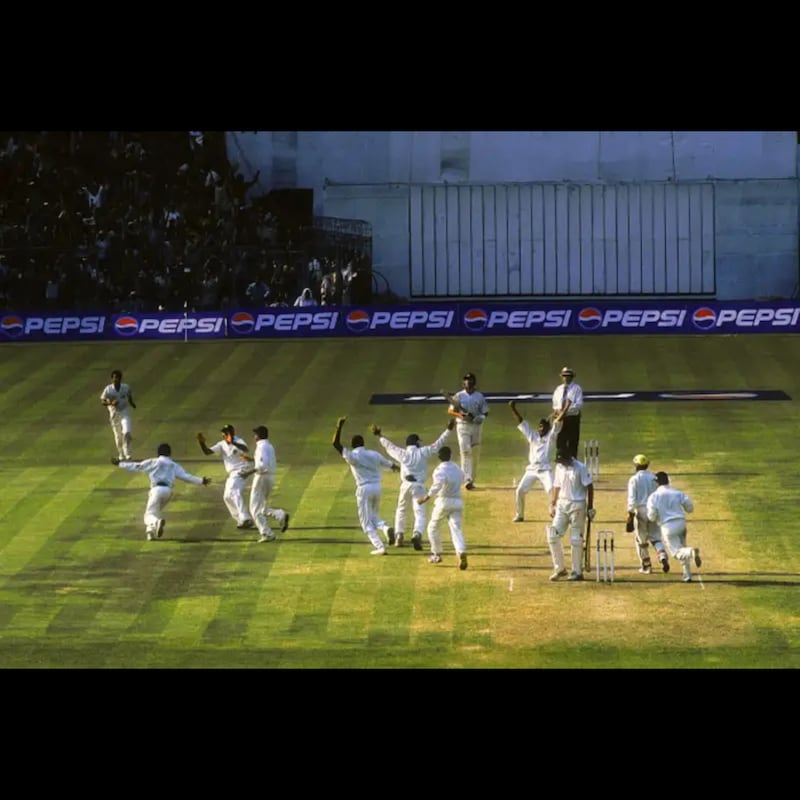
The 25th anniversary of the iconic 2001 Kolkata Test match, where India triumphed over Australia, serves as the focal point of our discussion. In this special episode, we are joined by esteemed guest Karthik Krishnaswamy, assistant editor at ESPNcricinfo, who provides invaluable insights into the match often heralded as a pivotal moment in Indian cricket history. Our conversation delves into the dramatic narrative of the Test, characterized by India's remarkable comeback and Harbhajan Singh's extraordinary performances, including a historic hat-trick. We explore the implications of this victory on the trajectory of Indian cricket and the enduring rivalry with Australia. Join us as we reminisce about this legendary encounter that captivated fans and significantly altered the landscape of cricket in India.
Transcripts
Hello and welcome to the Last Wicket.
Speaker A:I'm your host, Benny.
Speaker A:Thank you for joining us, folks.
Speaker A:This is a very special episode.
Speaker A:You may have already noticed this episode's runtime and I can tell you that this is the longest episode we've ever created and it is for good reason.
Speaker A:This episode features a conversation with Karthik Krishnaswamy, who you may be familiar with based off his bylines on espn.
Speaker A:Crick info.
Speaker A: ia vs Australia, Eden Gardens: Speaker A:A match where an Australian juggernaut was topped in its tracks and in my humble opinion, changed the face of Indian cricket forever.
Speaker A:This conversation is as comprehensive as can be for a game that took place 25 years ago.
Speaker A:But we have the best in the business with Mike and Karthik discussing everything relating to this game and the series, the players.
Speaker A:So please do keep listening for a trip down memory lane.
Speaker B:Karthik, thank you so much for joining us at the last wicket.
Speaker B:Before we jump into the topic of the day, wanted to get your thoughts on the recently completed T20 World Cup.
Speaker B:What were.
Speaker B:How did you enjoy it and was there was a result?
Speaker B:I guess the result was not a surprise to most people but.
Speaker B:But yeah, just looking for thoughts.
Speaker C:I mean, I think I lost your audio a little bit.
Speaker C:You said.
Speaker C:Did you say the result was sort of, you know, the expected one and like what we all.
Speaker C:Yeah, and for that, for that reason I think it was like, you know, and especially like amazing performance by India that we can sit here and say, you know, after a team has scored like 250 plus in the semis and the final back to back and you know, then we look at it like, yeah, this is what we expect from this team.
Speaker C:That kind of tells you like how good they are.
Speaker C:So from an on field point of view, we got both ends of the sort of spectrum where we got a much more robust performance than expected in the first stage from the associate teams where, you know, in the end of it you're like, wait, there weren't that many upsets but like, you know, they push so many big teams close like from USA against India to Nepal against Nepal against England.
Speaker C:Yeah.
Speaker C:So, you know, yeah, there are so many like great performances there.
Speaker C:So, you know, we got both ends of the spectrum.
Speaker C:By the end of it.
Speaker C:You had all the big teams there, bar Australia and you had some really good competitive, maybe not competitive from, you know, again Typically you don't get that many really close games in a tournament like this.
Speaker C:So that semi was an all time classic.
Speaker C:So to get that, yeah, was pretty amazing as well.
Speaker C:And, and in the end, like the best team really like showed, you know, how good it was.
Speaker C:So from all of those points of view, it was a great World cup.
Speaker C:But from, obviously from like way before it began, it had been a bit of a say, sorted kind of event in terms of like, you know, like Bangladesh should have been there honestly, and they were not.
Speaker C:And the whole like drama around the India Pakistan thing and just the ugly politics of South Asian cricket now, like, you know, this is how it's looking and you know, I, I don't know how and what it will take for it to get back to some semblance of normalcy where, you know, you can just look forward to a game of cricket.
Speaker C:And you know, of course like, it's never going to completely go away, but to the extent that it was even 10 years ago.
Speaker C:Right, sure.
Speaker C:Anyway, yeah, so, yeah, I think, I
Speaker B:think what's interesting about cricket these days is sort of the on field stuff.
Speaker B:You know, a good quality on field cricket has to start sometimes to subside all the drama.
Speaker B:It feels like that's been a recurring theme in the last few World Cups and last few big tournaments, that, that there's just too much politics and drama going on even before a tournament starts.
Speaker B:And then once it starts, starts, the cricket takes over and everything is, everything is good and jolly and, and the quality of the sport is, is the quality of.
Speaker B:As you said, the Associates also was showing through the.
Speaker C:It happened in a, happened at a 20 team World Cup.
Speaker C:So, you know.
Speaker C:Yeah, which is, you know, which is quite something.
Speaker C:So.
Speaker B:Yeah, absolutely, yeah, yeah, it was absolutely great to see even Italy, you know, doing really well against England.
Speaker B:They had their chances and, and yeah, performing well.
Speaker B:I think the thing that, as I look back though is we always think about T20 as this really variable format.
Speaker B:High variance is possible.
Speaker B:Just the format is based in such a way.
Speaker B:And yet I look back at the last four World Cups and I think at least in three of them the best T20 team has won.
Speaker B:Like maybe Australia winning in Dubai might be considered an exception.
Speaker B:So.
Speaker B:So otherwise England winning and then twice India.
Speaker B:Would you agree that despite the, despite all these, you know, variations that the game has and despite the fight that the Associates are showing, the, the results have been more or less along the lines, you know, of expected, not just in this World cup, but I would say in the last three, four World Cups, I think 20, 21, I don't think, you know, anybody would be surprised at the start if said England would win.
Speaker C:Yeah, yeah.
Speaker C:22, 22.
Speaker C:Yeah, yeah, yeah, yeah, yeah.
Speaker C:The thing is we do tend to kind of at the end of these things slightly rewrite narratives as well.
Speaker C: tournament right through the: Speaker C:But yeah, when conditions have offered a fairly level playing field, I think the best teams have tended to kind of pull through again.
Speaker C:You can't really say it across the board in these last three editions either but by and large, right, so in England definitely like especially that semi final performance once, once that happened, even though Pakistan during that tournament had put together a really good run, had a really good bowling attack, you knew that like was like a level above that team, that England team then.
Speaker C:So yeah, it has just so happened.
Speaker C:It's also, I think typically there's like one team kind of leading the way and like slightly ahead of the curve and I have a feeling it's going to get a little narrower in terms of other teams catching up.
Speaker C:Maybe like India just in terms of reserves of talent are still like kind of way ahead.
Speaker C:But you know, like if you take out Bumrah from, you know, some of those matches that we had, right, take out Bumrah and it narrows the field a lot more I feel.
Speaker C:And you got Hardik Pandya and that changes things again like in a big way.
Speaker C:Right.
Speaker C:And these are two generational guys who've been there in different ways but they've been there like for a decade now and they are in their 30s, early to mid-30s.
Speaker C:And so like once they go, even though India are producing some incredible batting talent, especially in shorter formats, I feel this will kind of narrow the thing because it's.
Speaker C:How often do you get players like that?
Speaker C:I don't know, like once in ever I guess.
Speaker C:And somebody like an all rounder as good as Hartik Pandya once in, if you're lucky, if you get him once in a generation.
Speaker C:Right.
Speaker C:So yeah, yeah.
Speaker B:And I think to add to that, there's been players like Akshar Patel who've been, you know, getting better and better.
Speaker B:Like he was always a valuable cricketer but he's taken his batting to another level in the last three to four years.
Speaker B:So yeah, just that whole mix makes it really, really challenging to, to push India.
Speaker B:But to your point, I think as some of these cricketers come to the second half, the latter half of their careers, they're definitely going to start to phase out and, you know, go away from their peak.
Speaker B:So that's where probably the competition will start getting narrower.
Speaker C:Yeah,
Speaker B:yeah.
Speaker B:Let's dive into our main topic.
Speaker B: of the famous Kolkata Test of: Speaker B:Before we talk about the series itself and the match, it's important to set context for people who were maybe too young to remember or for anybody who's forgotten.
Speaker B:Karthik, do you want to paint a picture of where you think Indian cricket was going into that series and yeah, just your, just your thoughts on how they were facing, looking in terms of facing the mighty Australians.
Speaker C:Yeah, I think India was just coming off one of the worst years they had as a, especially a Test team.
Speaker C: f the match fixing scandal of: Speaker C:But in terms of the Test team itself, it was just one player who was anyway kind of approaching the end of his career.
Speaker C:Mohammed Azaruddin who was, you know, kind of like was out of the picture because of that.
Speaker C:So in terms of personnel itself, it wasn't as big a change.
Speaker C:That was more say the one day team where Ajay Jadeja also, you know, the other people who were banned were Ajay Sharma who hadn't been playing for India for many years, Manoj Travakar who had been retired for many years from international cricket.
Speaker C:So I think the cricketing on field impact of that is sometimes kind of gets overblown in kind of media narratives.
Speaker C:I mean, of course it had an impact on like, you know, you're just coming out of this thing where like you're getting players banned and like there's a, an atmosphere of kind of almost distrust around the team and all of that.
Speaker C:On field, the bigger issues were a, they were, they'd been struggling like they went To Australia, lost 3 nil, came back, lost 2 nil to South Africa at home and then, and those two were, you know, the series where more or less India had their best sort of bowlers around, right.
Speaker C:And then they lose Anil Kumble.
Speaker C:That's the biggest thing in the preceding year to a sort of long term shoulder injury.
Speaker C:Right.
Speaker C:And I feel now like, you know, looking back, that's the thing that I almost don't understand is that how India, how did anyone give India a chance at all against Australia?
Speaker C:Because they lost Kumble to, you know, and he basically, in Indian conditions, losing Kumble is like, it's the worst blue imaginable now if you think about it.
Speaker B:Right, yeah.
Speaker C:And it wasn't like we had, you know, Srinath was there, of course, but.
Speaker C: e start of the season in late: Speaker C:And like the second test in Delhi was the second test on a really flat pitch.
Speaker C:They just struggled to like get wickets and Andy Flyer made a double 100 and you know, they saved that test match.
Speaker C:They just piled up the runs and India spinners look super ineffective.
Speaker C:They had Mur, they had Shandeep Singh, they had Sunil Joshi, they tried all these guys and they like, some of them were like fairly experienced at international level, some of them were new, but it was still like you would bank on them, you know, bowling out New Zealand, sorry, Zimbabwe at least.
Speaker C:Right.
Speaker C:But that didn't happen.
Speaker C:So even on field results were like terrible in test cricket in that year leading up to this series.
Speaker C:And India, you know, are going into the series knowing they're not going to have Kumble.
Speaker C:And they had had all these results and this is an Australia team that had won 60, 15 Test matches in a row coming into the series.
Speaker B:Right.
Speaker C:Starting with that, you know, that chase in Hobart where they were five down for nothing.
Speaker C:And I, I'm not sure that was the first of the run, but that included that run where in Adam Gilchrist's debut series, a five down for not much at all, chasing 300 odd.
Speaker C:And then Gil Christian Langer win it for Australia against Pakistan, that famous chase.
Speaker C:So that was part of that whole run and the whitewash West Indies, I forget like who else they played in that, in that run, but like 15 in a row, Come on.
Speaker C: won in India, of course since: Speaker C:And Steve was always a man with the sort of eye for history and stuff and he's like, this is the final frontier.
Speaker C: as calling it that already in: Speaker C:Right, right.
Speaker C:So, you know, they were.
Speaker C:We have a tendency to look back and think, oh, you know, Australia, India wasn't that big before this series in terms of prestige, in terms of sort of global kind of recognition of kind of.
Speaker C:Which is true.
Speaker C:But Australia were already taking this super seriously because, you know, if they're calling it the final, final frontier, it's like we want to tick off every box.
Speaker C:We're not taking any tour.
Speaker C:You know, it's not like you can kind of look back and think it's like Ashes and the other things don't really matter.
Speaker C:It wasn't quite the case either.
Speaker C:Right.
Speaker C:So all of that was the context leading up to the series.
Speaker C:And just before the series began, Don Bladman died as well.
Speaker B:All right, I did not remember that.
Speaker C:Yeah.
Speaker C:So just before the Bombay Test, in fact, I think day.
Speaker C:I'm not sure if he died on day one or the day before or somewhere in the week leading up to that.
Speaker C:I'm.
Speaker C:My memory isn't very clear.
Speaker C:I do remember like, you know, teams lining up with black arm bands and like all of that.
Speaker C:And.
Speaker C:Yeah, so, you know, for Australia it's like, you know.
Speaker C:Yeah.
Speaker C:Losing your greatest ever sports person probably.
Speaker B:And.
Speaker C:Yeah, so that lent something to the proceedings as well.
Speaker C:I mean, some sort of indefinable kind of, you know, ingredient and.
Speaker C:Yeah, so that was the thing just in the immediate lead up to the first test.
Speaker B:Yeah.
Speaker C:And then of course, like.
Speaker C:Yeah, yeah, go on both side.
Speaker B:Sorry, I was just saying what I also remember, and this is again, me as a test 10, 11 year old boy remembering the Australia at that time is I remember anytime they came on tour to India or went to Sri Lanka, you know, when they expected hot conditions, their preparation was just another level.
Speaker B:They would like, everybody would like have really short hair and they would like have physios and they would have, you know, all sorts of things which, I mean.
Speaker C:Ice vests.
Speaker C:Ice vests, yes.
Speaker C:Which I think they, for the first time they were using during this series.
Speaker C:And so it became a bit of a point of media interest as well.
Speaker C:So I remember, you know, we used to get the Hindu back home and like I remember like stories about that in the paper.
Speaker C:And then there was a Kelvinator ad which also kind of like riffed off this thing and.
Speaker C:Starring the Australian cricketers.
Speaker C:Yeah.
Speaker C:So this was like essentially like it felt, I mean like it just, it was everywhere, the series.
Speaker C:Right.
Speaker C:In a really big way.
Speaker C:Like even before it began it felt massive, which of course India, Australia you expected.
Speaker C:But there was, there was something extra about it even before it began.
Speaker C:And you know.
Speaker B:Yeah, I think, I think the fact that it felt big Today doesn't surprise anybody.
Speaker B: t absolutely hammered back in: Speaker B:And yeah, still the series felt so important, particularly from the Australian side, the captain himself calling it the final frontier.
Speaker B:All of that lend definitely a lot of hype to the series, and rightly so.
Speaker B:And what's amazing is just the way the personnel were laid out.
Speaker B:It should have been a one.
Speaker B:One way, you know, it should have been one way traffic, but it was anything but that.
Speaker B:And, yeah, turned out to be one of the most memorable Test series of definitely of this century, but maybe ever.
Speaker B:I also want to, like, talk about just how India was batting, because if you look at India's batting or just the 11 that they had, you talked about how bowlers in particular, which are critical to win test matches, were missing.
Speaker B:But from a batting standpoint, they did have some of the bigger names that we know today, but many of them were not as established at that point.
Speaker B:Rahul Dravid, for example, was still fighting for a spot.
Speaker B:Lakshman was batting like a dream.
Speaker B:And he was.
Speaker B:He replaced Dravid in one of these innings.
Speaker B:Tendulkar was, of course, Tendulkar, you know, was an established batter.
Speaker B: same level as he was, say, in: Speaker B:So what do you think?
Speaker B:That.
Speaker B:And of course, the openers were not as credible as, you know, let's say, the Gambirs and Sahwags of the generation that followed.
Speaker B:So what are your thoughts on the batting talent and depth that India had?
Speaker B:Because literally the first three innings of the series, India did not even post 225.
Speaker C:Yeah, so, yeah, there were a lot of question marks there.
Speaker C:One was, I mean, Dravid was established and he'd even scored like a double 100 in that series against Zimbabwe.
Speaker C:And he'd gone through a bit of a rough patch in Australia and even in the South Africa series, I don't think he scored too many runs from memory.
Speaker C:But yeah, in the Zimbabwe series, him and Sachin were scoring big, big runs and Lakshman was back in the.
Speaker C:It was very weird because Lakshman, he scores 167 in Sydney and, you know, it's like he's finally arrived after a very slow start to his career.
Speaker C:Everybody backed him because of the talent he had, but also he was opening right.
Speaker C:Because that was the only slot for him, more or less.
Speaker C:And then he comes back to India and he basically tells Them, look, I don't want to open, you know, a middle order batter.
Speaker C:And then they're like, okay, fine.
Speaker C:That means you'll have to sit out because they brought back for that South Africa series, right?
Speaker C:And he, he scores 100 in his final Test as well.
Speaker C:99th Test in Bangalore.
Speaker C:And anyway, so But Lakshman, there's no.
Speaker C:Lakshman doesn't play that series.
Speaker C:Right.
Speaker C:After scoring the 167.
Speaker C:And so he comes back in the Zimbabwe series, barely gets to bat because everybody above him is scoring so many runs.
Speaker C:I remember like some really pretty one or two really pretty, like 20s and 30s and stuff, but that's about it.
Speaker C:The openers had just made his debut that year that we spoke about also included Bangladesh inaugural test in Dhaka.
Speaker C:I'd forgotten that before the Zimbabwe series.
Speaker C:That was sort of Ganguly's first test as captain as well.
Speaker C:And you know we speak about India's bowlers struggling without kumble, right?
Speaker C:They had Srinath, they had, you know, they had a, on paper a reasonable attack.
Speaker C:But in Bangladesh very first innings in test cricket, they scored 400 plus Amino Islam scores a century score, 70 odd.
Speaker C:And you know, so that was again like more cause for alarm bell.
Speaker C:India eventually won that test pretty comfortably, but not comfortably in the sense that even when they batted first innings, I think the top order didn't do much and I think Gangoli scored runs.
Speaker C:And then Sunil Joshi scored.
Speaker C:Was it 90 or was it a century?
Speaker C:I'm blanking out on that.
Speaker C:But Sunil Joshi like made a big batting contribution to kind of rescue India in the first innings.
Speaker C:There any.
Speaker C:In any case.
Speaker C:So like it adds to the whole like thinking of the struggle over the preceding years right on the batting coming back to that.
Speaker C:Yeah.
Speaker C:So made his debut in that test match.
Speaker C: g for just a year, like since: Speaker C:And so yeah, lots of doubts.
Speaker C:Ramesh was like a incredible timer of the ball, but like, you know, technically kind of like, you know, people looked at his game with a bit of suspicion because they move his feet much and very hands kind of player right at the top of the order against the new ball.
Speaker C:How's he gonna do against Australia's, you know, this Australia attack and super inexperienced.
Speaker C:It scored 100 against Zimbabwe.
Speaker C:But you know, what does that say about any player?
Speaker C:Lakshman of course was, you know, he was back in the team and finally it felt like, okay, he's found that spot.
Speaker C:Like Azar not being around anymore meant there is a spot at number six and probably for the foreseeable future, this is the guy for it.
Speaker C:And yeah, I mean, Ganguly is kind of like, there have always been kind of like, you know, suspicion around his, the technical side of his game even right since his like the 96 test debut.
Speaker C:From that period on, he'd been scoring runs.
Speaker C:But, you know,
Speaker B:I think the short ball, short ball, for example.
Speaker C:Short ball also.
Speaker C:Yeah, various things.
Speaker C:Like early on his leg side game was, you know, a lot under question.
Speaker C:And.
Speaker C:And yeah, his handling of the short ball as well and the offside game while it was, you know, he scored a lot of runs there, some amazing shots and stuff.
Speaker C:There's always this feeling that he has a tendency to kind of play away similar to Ramesh in a way, like play away from his body and a strength becoming a weakness kind of thing.
Speaker C:And against a really good bowling attack.
Speaker C:How does, how does that, you know, translate?
Speaker C:Yeah, and you know, Dravid sport runs in Australia, so there was something there for them.
Speaker C:So it was even more a case now than we would think of.
Speaker C:Like, you know, this feeling of Sachin carrying this batting.
Speaker C:Right.
Speaker C:They were all really good players, there's no doubt about that.
Speaker C:But there's still a sense that in terms of who would you really rely on in like any kind of situation, it felt like, you know, it's Sachin or like there's a bunch of question marks here.
Speaker C:Yeah, a bunch of promise and question marks, let's put it that way.
Speaker C:So, yeah, that was broadly the picture going into the series.
Speaker B:Let's.
Speaker B:Let's talk about the first Test now.
Speaker B:India played the first Test in Mumbai.
Speaker B:They lost that within three days.
Speaker B:The wicket taker from India's perspective in that was young Harbhajan Singh who, if I remember, and I don't remember if this was from an interview or where I remember it from, but VVS Lakshman mentioned that once he was captaining or playing for India A and he's.
Speaker B:He just saw Harbhajan get a lot of bounce and, and that troubled batters standing at slip.
Speaker B:He noticed that and that's one of the feedback that was given to the Indian team.
Speaker B:The Anil Kumar injury that you talked about, obviously that paved the path for Harbhajan to come in and he took four wickets.
Speaker B:So obviously he started off the Test series pretty well.
Speaker B:But nonetheless, the Indians were of no competition for the Australians.
Speaker B:Matthew Hayden in particular had a good first test, if I remember.
Speaker B:And yeah, it was, it was done in three days.
Speaker B:So it was sort of like, you know, Sydney all over again.
Speaker C:Not quite.
Speaker C:Actually it was way more competitive than the result indicates because, you know, 10 wicket win for Australia.
Speaker C:It wasn't.
Speaker C:It wasn't just that, like sometimes these quick finishes and by the end one team pulls away, you tend to think they dominated the test right from start to finish.
Speaker C:It wasn't quite like that.
Speaker C:Yes, a few interesting things happened, which is a.
Speaker C:The Harvard Singh selection wasn't just down to the India.
Speaker C:India.
Speaker C:I think the board presidents.
Speaker C:11 if I'm not wrong.
Speaker C:Yeah, it was just before the series.
Speaker C:I mean, he'd been in and around like he played.
Speaker C:He toured New Zealand in 98, 99.
Speaker C:He played at home against Australia, I think in 98, if I'm not wrong.
Speaker C:That's where he made his debut in that Bangalore Test which India lost.
Speaker C:So he'd been around, he played a few tests, everybody.
Speaker C:And he was already teenager when he started.
Speaker C:So clearly like, you know, Indian Cricket News is like a special talent.
Speaker C:And so they picked him very young and he'd shown enough promise of, you know, a, that this is a guy who can bowl the Dusra, which is like, you know, it was just.
Speaker C: s, very early: Speaker C:Like, apart from Saklan, it felt like this is the second guy who could do it.
Speaker C:Yes, there were doubts around his action even then and all of that.
Speaker C:And yet to slightly remodel it briefly as well, all of that happened and like there was some sort of, you know, like during his NCAA batch there were some disciplinary issues and stuff or this is what we read in the papers and things.
Speaker C:Right.
Speaker C:We never really know the ins and outs of these things, but there was a narrative around this cricketer of being super gifted, but a bit of a kind of troubled kind of individual and a feisty kind of guy.
Speaker C:Yeah.
Speaker C:So I think that Zimbabwe series kind of prompted India to go in the direction of.
Speaker C:Okay, no, we need somebody who.
Speaker C:Like a wicket taker.
Speaker B:Right.
Speaker C:And so there was a big camp before the series where they were a probables kind of camp and Harbhajan was one of them.
Speaker C:Kumble was part of the camp as a kind of mentor.
Speaker C:Right.
Speaker C:He couldn't play the series, he couldn't bowl or anything, but he was there over seeing the Spinners and all of that.
Speaker C:And John Wright was the coach, of course, and he had also taken over in after that series loss.
Speaker C:To South Africa.
Speaker C: Trophy and lost the final in: Speaker C:And yeah, so right after that was kind of caretaker coach who had taken over from Kapil Dev.
Speaker C:So, so after that was I think the Bangladesh Test.
Speaker C:So that was another new development which is that India had their first foreign head coach in John.
Speaker C:Right, right.
Speaker C:Yeah.
Speaker C:So, yeah, so then there was a camp before this series and Harbach was bowling really well in that camp and that was the primary reason for India to select him.
Speaker C:And then they said, we'll play him in this board president game as well.
Speaker C:And I think, yeah, they were like a bunch of young spinners there and Harbajan as well.
Speaker C:And yeah, I think the final feedback was that Lakshman was captaining the team.
Speaker C:And you know, he also kind of like, I think Ganguly had made up his mind.
Speaker C:He made the.
Speaker C:He's not the selector of course, but he pushed quite strongly for Harbhajan's inclusion based on everything he saw and all of that.
Speaker C:So yeah, that was how he got into the team.
Speaker C:So coming to the Bombay Test, it was a, you know, very interesting game in the sense, like from the toss, which is that Australia win the toss and they bowled first.
Speaker C:It's a, an incredibly rare event in test matches in India for a team to win the toss and bowl.
Speaker C:Australia did that and on a sort of bouncy and on day one kind of seeming pitch.
Speaker C:They have India in a lot of trouble.
Speaker C:India, other than Sachin, he scores two incredible half centuries in that game.
Speaker C:Some of his street driving from that test is the, I think the best of his career, honestly.
Speaker C:So India again after like, I don't think they make 200 right in the.
Speaker C:In either.
Speaker B:I think they made 200 only in one of the two innings there.
Speaker C:Yeah, yeah, yeah.
Speaker C:But then Australia, they come in and they are 90 out of 4.
Speaker C:Harbajan is on a roll.
Speaker C:Like, you know, he's on a hat trick in this test itself, right?
Speaker C:He gets, I think Langer and he gets Marco and he's getting this amazing bounce and this, the way the ball dips and bounces and Australia are already, you know, finding themselves in a lot of trouble against him and yeah, he's on a hat trick and then 94 for four.
Speaker C:94.
Speaker C:I think something like that.
Speaker B:It's five for 99.
Speaker B:I was just checking.
Speaker B:It's five for 99.
Speaker C:Yeah, yeah, yeah, that's right.
Speaker C:So it again like you know, replying to 180 odd.
Speaker C:If I'm.
Speaker B:So they were replying to 176.
Speaker B:You're right, 176.
Speaker C:All right.
Speaker C:Yeah.
Speaker C:So it, it was that, you know, 99 for 5 and you know, Hayden and Gilchrist were batting and not much to follow.
Speaker C:Right.
Speaker C:One and the bowlers.
Speaker B:Right, yeah.
Speaker C:And then, you know, they proceed to have an incredible partnership and Gilchrist goes 149, which I think, you know, is rated as one of his greatest knocks.
Speaker C:Hayden scores a century as well.
Speaker C:Gilchrist is just, he's playing outrageous shots.
Speaker C:Like Harbhajan is getting all his bounce and all that and he's bowling good balls and like, he's like slob sweeping against the turn, good length.
Speaker C:It's, it's like, you know, this is the kind of guy with that eye and with that just confidence to take on those kinds of shots.
Speaker C:And it's one of probably the all time great innings by a visiting batter in India and appears to more or less just take the game away from India.
Speaker C:They.
Speaker C:300 odd.
Speaker C:They score right.
Speaker C:350 odd.
Speaker B:349.
Speaker C:349, yeah.
Speaker C:So you think it's done, but again, it isn't quite like India, two down for not much and then Dravid and Tendulkar have a really, like, really good partnership again.
Speaker C:This is a, there's a feisty moment where there's a disputed low catch with Michael Slater involved and he starts arguing with Venkatraghavan, the umpire and Dravid as well.
Speaker C:And you know, so all of that's happening and it's, it's really riveting cricket.
Speaker C:Right.
Speaker C:If this partnership goes on for a while, you could hope for India getting to say two down and close to kind of erasing the deficit.
Speaker C:Right.
Speaker C:Or two or three down and, and then there's this moment where Sachin plays a pull shot, Rikochi is off Justin Langer at short leg and Ricky Ponting super alert at short mid wicket, runs to his right, dives and takes an incredible catch.
Speaker C:Right.
Speaker C:It's one of those really sliding doors moments of this series and from then on India just pretty much collapsed.
Speaker C:And yeah, from then basically it becomes like, you know, the result is like a 10 wicket win for Australia.
Speaker C:And yeah, pretty competitive test for, you know, test that swings either way for quite a distance, ends in three days and ends with a big margin of Australian victory.
Speaker C:But yeah, once they win, there's a deflating feeling, right.
Speaker C:Like, yeah, you're going to come back from 16th on the successive win for them.
Speaker B:Yep.
Speaker C:Yeah.
Speaker C:So it wasn't quite as one sided as it might look in on a scorecard but by the end of it it did feel like that.
Speaker C:So yeah, some of the, Yeah, I,
Speaker B:I think what I do, I do remember that Dravid and Tendulkar partnership and, and the whole Slater related catch as well.
Speaker B:But what I do, you know, remember from the first innings that Australia batted was.
Speaker B:Yeah, just the dominance as you said.
Speaker B:Like I, I don't remember as much of Gilchrist in that as you were talking about.
Speaker B:Just great hand eye coordination which, you know, for anybody who's watched Gilchrist doesn't surprise anybody.
Speaker B:But, but I do remember Hayden because Hayden was just such a dominating figure in that whole series and everything apart from, you know, not just his stroke play, just the way he was batting and also just his figure, like he was just a imposing figure.
Speaker B:So it just kind of played, you know, just built a visual on, on the, as a viewer that was, you know, hard to forget.
Speaker B:So I do remember that and, and for some reason I was thinking it was more one sided but as I checked the scorecard, you're right, it was, it was 5 for 99.
Speaker B:So India definitely had their chances.
Speaker B:What's interesting about this lineup is, you know, the four bowlers here are Srinath
Speaker C:Rahul Sanghvi making his debut.
Speaker C:Yeah.
Speaker B:Yes.
Speaker B:So Raul sang, we obviously making his debut.
Speaker B:Agarkar, who didn't actually go on to play that many test matches himself.
Speaker B:So.
Speaker B:So yeah, I mean on paper it looks like a pretty decent lineup.
Speaker B:But yeah, Agarka didn't have a long test career either.
Speaker B:So that way it was a fairly inexperienced Indian bowling lineup.
Speaker B:Yeah.
Speaker C:Yeah.
Speaker C:And right after that Srinath and Agarkar get ruled out because of injury.
Speaker C:Injury and illness.
Speaker C:In one case, I think if I, I think Agarkar may not have been in, I forget.
Speaker C:But both of them get ruled out for Kolkata and Sangvi is dropped.
Speaker C:Right.
Speaker C:So the series is very interesting in that sense also because Sanghvi, I mean you make your debut, he started off pretty, you know, looking pretty good, getting turn and bounce on that pitch and you know, look, yeah, you're really talented bowler from Delhi and you know, makes his debut, starts off well and then runs into Gilchrist in that kind of mood.
Speaker C:Right.
Speaker C:You're a left arm spinner as well and you know, I think goes for more than six and over by the end of it.
Speaker C:So yeah, like it's one of those debuts where if you just like if you are Lucky to play this pre proceeding series against Zimbabwe.
Speaker C:You might have eased your way in or whatever.
Speaker B:Right.
Speaker C:This is the fortune you have of you know, you run into this Australian team and you know that, that sort of all timer performance from Gilchrist and Aiden as well used like he, he attended a camp in Chennai like I think a couple of years before this when he was not.
Speaker C:It was kind of in and out of the Australian test lineup.
Speaker B:Right.
Speaker C:And so there had been some, some sort of camp for Australian players in Chennai and he played a lot of spinners and like really worked on his sweep.
Speaker C:He got a lot of advice on playing sweeps from Alan Border, from Bishan Bedi, on how to play spin and you know, so he done a level of, an amazing level of preparation not just going into the series but over years going into this series.
Speaker C:Right.
Speaker C:And so the kind of numbers he put up to that series were a testament to that preparation and of course just what a great player he was especially in Indian conditions against spin using the sweep, being able to pace his innings, you know like this was a bit of a rebirth for him because he'd been out of the team for a while.
Speaker C:He'd famously like gone to west indies in the 90s and had a really poor series against Curtly Ambrose and you know, been dropped for quite a while and all of that.
Speaker C:There were question marks there as well, you know, on that side.
Speaker C:Right.
Speaker C:For him coming into this series.
Speaker C:So yeah, well that's on Hayden and yeah so coming into Kolkata, India lose out of an already like if he attacked they lose Srinath them most experience and a really, really you know, great bowler in Indian conditions especially some of his best spells have always been in India.
Speaker C:We lost him, they lost Agar Karl.
Speaker C:So Venkatesh Prasad comes back for this test match and Zahir Khan comes back into the team for this test match and you know he's super inexperienced.
Speaker C:He played maybe two tests before this, if not three.
Speaker C:So.
Speaker C:Yeah and Venkatapatiraju comes back after quite a while.
Speaker C:He's not played for India for quite a long time as well.
Speaker C:So yeah, apart from having lost my 10 wickets in three days, you also lost two of your senior bowlers.
Speaker C:So.
Speaker B:Right, yeah the, the situation kept getting tougher for the Indians in that series and and as you mentioned like the bowling attack kept changing.
Speaker B:It's, it's definitely not easy for a new bowler or Venkat Pathiraju for example coming back to find that rhythm, find you know his lens and, and follow.
Speaker B:What's interesting is you know, the.
Speaker B:The series, the Kolkata Test, starts, and India are looking down at a, you know, a big total from Australia.
Speaker B:So if I look at the Kolkata Test, that starts with Australia scoring 445, their captain, in this case scoring 110.
Speaker B:Uh, Matthew Hayden actually missed out on another 100.
Speaker B:He was out for 97.
Speaker B:Harbhajan Singh was really the.
Speaker B:The bowler who had all the wickets in his.
Speaker B:In his bucket, he had 7 for 123 over 38 overs.
Speaker B:So he wore 38 of them, including
Speaker C:the hat trick on day one.
Speaker B:Yeah, that's correct.
Speaker B:Including the hat trick, which included.
Speaker B:Do I remember right, that there was also a handling of the ball?
Speaker B:I don't see that.
Speaker C:No, no.
Speaker C:So that.
Speaker C:No, no, that was.
Speaker C:That was in the next Test match.
Speaker B:That's the next Test.
Speaker B:That's right.
Speaker B:That's right.
Speaker B:Yep.
Speaker B:I was trying to remember if it was Kolkata or not.
Speaker B:Yeah, the scorecard does say LBW to Harvard Singh, but.
Speaker B:But, yeah, so they've scored a big total.
Speaker B:India come out and they scored 171.
Speaker B:As I mentioned, this is the end of the third batting innings for India in the series, and not once have they gone past 225.
Speaker B:And so this was definitely an uphill task.
Speaker B:And, yeah, just walk us through what happened next.
Speaker B:What are your memories of that, of that second innings that India played?
Speaker C:Yeah, I mean, we'll start from day one itself, right, where I think they'll.
Speaker C:Australia lose later in the first session, if I'm not wrong.
Speaker C:And then Langer and Hayden have a big partnership.
Speaker C:They are 190 odd for one, I think.
Speaker B:Yeah.
Speaker B:193 for two is when Hayden.
Speaker C:Yeah, yeah, yeah, yeah, correct.
Speaker C:So I think he's steps out and chips one to kind of deep midwicket or something like that.
Speaker C:And, yeah, so then a little bit after that is when Harbhajan gets his hat trick.
Speaker C:Right.
Speaker C:And so this is the first of many sessions in that series where India pick up seven wickets in a session.
Speaker C:It keeps happening as a kind of recurring theme of that series.
Speaker C:And so at T, they are, you know, cruising Australia.
Speaker C:By the end of the day, they are seven down, I think with already Steve War and Gillespie batting 7, 8 down.
Speaker B:I think it was correct.
Speaker C:Yeah.
Speaker C:Already with Steve War and Gillespie at the crease.
Speaker C:Right.
Speaker C:So, yeah, Harbhajan had already, like, shown in Mumbai that, you know, wow, okay, he's bowling really well.
Speaker C:We'd all always known that this is a supremely talented cricketer, but, you know, he was showing this sort of consistency of length and the way he was just constantly making batters like you know, hitting like you know that a spinner is bowling well if batters are defending him and it's hitting the sticker of the bat, like getting that kind of bounce right and you're always keeping your short leg and your slip.
Speaker C:All these guys interested that you know something could happen.
Speaker C:So this was the way I was bowling right through the Mumbai Test and in Calcutta it all clicked in that post tea session where suddenly is it's like any ball could get a wicket.
Speaker C: s before the redevelopment in: Speaker C:So now there's only I think this capacity 65 watt thousand.
Speaker C:Back then it was 90 plus and people used to say no 1 lakh would cram their way in and stuff but it was a 90,000 capacity.
Speaker C:And I don't know if it was filled to capacity but it was pretty close like on I think all five days.
Speaker C:So it was like one of those roaring crowds and you know, feelers surrounding the bat.
Speaker C:So from one end all of this was happening right through that series.
Speaker C:From the other you had no idea what you could get because there was this rotating cast of bowlers who were largely like, you know, if at best they were keeping things quiet, at worst, you know, there was no pressure coming from that end and wickets were very rare from that other end.
Speaker C:But you had this one guy who's still just 20 years old, still like playing I his 6th, 7th, 8th test match, something like that.
Speaker C:And you know, suddenly every time he's bowling this incredible Australia team are like looking fallible, right?
Speaker C:And he gets Ricky Ponting with a really good ball and already Ponting hasn't had a great first test.
Speaker C:I mean he's only played one innings in the series so it's very early rose yet.
Speaker C:Then he comes in here and Harbhajan gets him LPW with one of those superb like quicker ones which just traps him on the crease and like playing across the line and slump.
Speaker C:And then Gilchrist gets one of the roughest decisions you can get from an umpire where you know, ball like this is an era where offspin is still largely bowl over the wicket to left handers, right?
Speaker C:And so getting LBWs from there is very hard and he got an LBW from there with the ball that definitely pitched outside next term.
Speaker C:Plus there's a kind of suspicion of an inside edge as well and really rough decision from S.K.
Speaker C:bansal and and then Shane Mohan comes in and he gets out to the most chaotic of dismissals.
Speaker C:You can imagine where he's caught by diving Sag and Ramesh at short leg.
Speaker B:Short leg, yep.
Speaker C:Right.
Speaker C:I think there's an almost collision with the batter or I, I forget like exactly how it's.
Speaker C:It's all right off the face of his bat and there's a bit of.
Speaker C:They check with the third umpire for, you know, whether it's a bump ball and all of that.
Speaker C:And he looks really, you know, like, like angry at the decision and stuff.
Speaker C:But I think it was a fairly, like, clean catch and all of that.
Speaker B:Yeah.
Speaker C:But that added to that kind of sense of, you know, like that Australia kind of projected this sense of like we are being hard done by the umpiring as well.
Speaker C:They were right in one case of Gilchrist.
Speaker C:But yeah, so gets this hat trick.
Speaker C:First hat trick in Test cricket by an Indian bowler.
Speaker C:So suddenly this is the point where it seems like, okay, series is turning now.
Speaker C:Australia 230 odd for like, I think at that point, seven.
Speaker B:Yeah.
Speaker B:They end the day at 291 for eight.
Speaker B:And.
Speaker C:Yeah.
Speaker B:And they lost Shane Wan at 252 for seven.
Speaker B:Yep.
Speaker C:Yeah.
Speaker B:Right.
Speaker C:Yeah.
Speaker C:After that, I think Astro Wix gets out as well.
Speaker B:Correct.
Speaker C:Yeah, yeah.
Speaker C:So, yeah.
Speaker C:So then India end that day thinking, okay, finally we're on top and like everything.
Speaker B:There's a chance.
Speaker C:Yeah.
Speaker C:If I'm not wrong, this is a Friday because I remember watching the entire day sitting at home.
Speaker B:This is actually a Sunday, which is the other thing I was.
Speaker B:A Sunday.
Speaker C:Yeah, yeah.
Speaker C:Okay.
Speaker C:So that's.
Speaker C:Yeah.
Speaker C:It's very weird for a test match to start on the Sunday.
Speaker B:Right.
Speaker B:That.
Speaker B:That's exactly what I was thinking as I was looking at the scorecard.
Speaker C:Yeah, it could.
Speaker C:It couldn't have been a Friday.
Speaker C:It's a Sunday.
Speaker C:Right.
Speaker C:So I'm.
Speaker C:We've.
Speaker C:We've all watched the entire day sitting at home and then the next day you're back at school.
Speaker C:So all our updates are coming from somebody.
Speaker C:We had this thing called the audio visual room in my school where there's a.
Speaker C:Basically a tv, Right.
Speaker C:And it's the only TV in the entire premises.
Speaker C:So, like every now and then we beg the teacher and she'd every now and then give us permission for one person to move, just check the score and come running back and report what's happened.
Speaker C:And through the whole day it's just rejection because, like, they just can't get War and Gillespie out.
Speaker C:Right.
Speaker C:Right.
Speaker C:And they have a big, big partnership.
Speaker C:Gillespie makes 45, just bats forever.
Speaker C:And Steve was scores 100 and so I'm not to this day watched any of that.
Speaker C:I just maybe the highlights I've caught.
Speaker C:But you know all of this narrative is just of dejection, the second hand rejection of like hearing this course from like a classmate sent out to the AV room and back.
Speaker C:And that's how a lot of this test match gets consumed from this point.
Speaker C:Right.
Speaker C:And then I go back home.
Speaker C:Australia made 445 if I'm not wrong.
Speaker B:Correct.
Speaker C:Yeah.
Speaker C:Some numbers just get seared, some don't.
Speaker C:But this is how memory works.
Speaker C:And 445, you come back home and India already collapsing.
Speaker C:Dutchman is batting and I think by the time I get back I think Dravid is just getting out or think it's bold by one stepping out and trying to work him.
Speaker B:Yep.
Speaker C:And missing and getting bold if I'm not wrong.
Speaker C:And you know there's a, I think there are doubts from at least the press from what I remember of like can drive it, play one type thing that's also happening here.
Speaker C:Anyway, so they're already like, you know, in the doldrums and like at one end Lakshman is playing his shots.
Speaker C:He's looking amazing.
Speaker C:Right.
Speaker C:He'd already, I think he had one innings in Mumbai where doesn't score much, 20 odd I think.
Speaker C:But there's one sequence where he hits one for three fours in a row.
Speaker C: m and he's been in, he scored: Speaker C:Like this is one of the great runs of domestic form in Indian cricket.
Speaker C:Right.
Speaker C:So people know that like Lakshman is, you know, it almost looked like he's just waiting for that.
Speaker C:I mean yes, he'd already had the Sydney innings so everyone knew, okay, this is a guy for the future.
Speaker C:But he was still averaging something like 26, 27 in Test cricket like because of that slow start and I think but people were like neither one breakthrough series that you know, where we like okay, finally he's arrived like properly.
Speaker C:Right.
Speaker C:And it was, there were already signs here that you know, he's playing his shots while India collapsing at the other end.
Speaker C:I think the next morning he goes on to like complete a half century and gets out.
Speaker C:He's the last man out.
Speaker C:India, he's the last man out.
Speaker C:It's a bit of a dubious decision if I'm not wrong.
Speaker C:Sort of gloved pull down the leg side or something and maybe there's no glove on it, something like that.
Speaker C:Anyway, so he's out for 59 and yeah, India have to follow on, right?
Speaker C:There's a lot of revisionism about this now that no captain, you know, makes the opposition follow on anymore.
Speaker C:And it's all because of what happened next year, right?
Speaker C:Which is kind of not true because Steve Walk kept enforcing the follow on as for as long as he was captain.
Speaker C:I think I don't know the numbers but like more often than not he was enforcing the follow on.
Speaker C:But once Ponting took over as captain, he became less keen on enforcing the follow on.
Speaker C:And by and large I think the accepted wisdom became maybe partly through this Test match you tend to kind of typically not have enough time, only if you don't have enough time left in a test match to bat.
Speaker C:And without actually knowing like you know, that there is a certain target where you have to bat with a declaration in your mind.
Speaker C:So unless you don't have time, you know, to do that, you don't enforce the follow on.
Speaker C:If there is enough time, do not enforce the follow on.
Speaker C:Give your bowlers a rest more than anything else and you know, bat for a couple of sessions, score runs quickly and then, you know, put the team in again to bat last.
Speaker C:Right.
Speaker C:Which is always the hardest thing.
Speaker C:So that became more or less the accepted wisdom around cricket.
Speaker C:And you, when you see an exception to that, it's very rare nowadays.
Speaker C:Like last year against West Indies where India, you know, in Delhi on a pitch that didn't break up at all, right, they enforced the follow on and suddenly their bowlers are tiring and a West Indies batting lineup that has struggled through the series, suddenly you're struggling to take a wicket against them, right.
Speaker C:And you know, Shea Hope and John Campbell have like a big partnership and anyway, so that's the sort of flip side that can happen when you enforce a follow on because your bowlers have already bowled, they've just bowled, they take a 10 minute break for a change of innings and they bowling again with the team suddenly needing to take 10 wickets again.
Speaker C:Right.
Speaker C:It's such a physical task of endurance and skill and like, you know, persistence to take 10 wickets in a Test match and yes, you've done it quickly in the first innings, but you didn't do it again is like, you know, asking a lot of a bowling attack.
Speaker C:Especially if, you know, and especially in that era it was typically four man attacks.
Speaker B:Yeah.
Speaker C:Now I think you tend to have more all rounders now playing and more five man attacks or at least four plus like at least a batting or no.
Speaker C:Does a lot of bowling.
Speaker C:Right?
Speaker B:Yeah.
Speaker B:Flatter pitches, I think during that era as well.
Speaker C:Right.
Speaker C:And yeah.
Speaker C:So, you know, Australia enforced the follow on.
Speaker C:And looking back, if you just go back in time to that moment, you.
Speaker C:It's hard to like, you know, fight with that decision.
Speaker C:You've won 16 Tests in a row.
Speaker C:It's still like early on day three, right.
Speaker B:They bowled only 12 hours or 13th over is when they.
Speaker B:When India got bowled.
Speaker B:Yeah.
Speaker C:So you had an overnight rest as well, right?
Speaker B:Yes.
Speaker C:And you've not bowled that much in the morning and you think, okay, maybe we finish this game.
Speaker C:There's a chance it even gets over that day itself.
Speaker C:Right.
Speaker C:The next day you finish it, you get an extra day's rest.
Speaker C:You know, test match with very, very short breaks between games.
Speaker C:Right.
Speaker C:So I can empathize with like Steve of.
Speaker C:Not just him, the entire team, they must have sat down and discussed this.
Speaker C:Right.
Speaker C:For deciding, okay, let's stick them back in.
Speaker C:Right.
Speaker C:And then they do that and it starts with a fairly, you know, I think, I don't know how much they put on Ramesh.
Speaker C:80 odd.
Speaker B:52.
Speaker B:52.
Speaker C:Oh, 52.
Speaker C:Okay.
Speaker C:Yeah.
Speaker C:Both of them score to the 30 or I think Grammy, that's off pretty fluently for the quick 30 odd gets out and then Lakshman walks in at number three.
Speaker C:Right?
Speaker C:Yeah, yeah.
Speaker C:I think the team had just watched how fluently he was batting, how comfortable he was looking against all those Australian bowlers.
Speaker C:And they like, look.
Speaker C:And I think in domestic cricket he tended to bat a little bit up the order three, four and you know, make those really big hundreds.
Speaker C:That was what he was known for for Hyderabad, for really piling it on.
Speaker C:Right.
Speaker C:So then I think India take that decision.
Speaker C:Okay, look, let's put the guy in form.
Speaker C:Let's just, you know, bank on him.
Speaker C:Give him maybe the chance to like, who are really big runs here.
Speaker B:Yeah, right.
Speaker C:And he goes in and I don't know.
Speaker C:So very recently somebody had put up one of those amazing like ball by ball compilations of his innings.
Speaker C:Right.
Speaker C:And what really struck me is that right through that innings, this is a guy who is not defending the ball.
Speaker B:Yeah.
Speaker C:He's not like, he's.
Speaker C:Everything is like a drive or like a punch or like this.
Speaker C:There's a sense of like, I want a score of this ball, of every ball.
Speaker C:And sometimes he just happens to hit it to fielders.
Speaker C:Right.
Speaker C:If you watch the highlights, you think he's finding the gaps like a magician, which he was to be fair.
Speaker C:But even the dot balls were just like, you know, authoritative shots which you know are being hit to fielders and the guy was wheeling everything spin like one bowling over the wicket, round the wicket.
Speaker C:He's not defending one like he's stepping out constantly to him or going right back.
Speaker C:He's trying to like, you know, the bits you don't watch in the highlights are like, you know, the good lens that he's still trying to force, you know, in some way by.
Speaker C:He's trying to put pressure on all of those balls by like, you know, he's trying to put one off that length as much as he can by like, you know, stepping out or going back and he's like re.
Speaker C:Watching that ball by ball compilation gave me like a whole new level of respect for that.
Speaker C:I mean of course it's one of the all time great innings, there's no doubt about that.
Speaker B:Yeah.
Speaker C:Right.
Speaker C:Then you watch it again.
Speaker C:You're like this is, this is a special innings just in terms of like it's not just a level of comfort against the bowling, it's a level of dominating a world class attack.
Speaker C:You have Megara, you have Gillespie, you have Castro Weeks who at that stage, right, like revisionism again.
Speaker C:We tend to look back at that era and think the four man attack was typically mega.
Speaker C:Gillespie, Vaughn and Bentley.
Speaker C:Right?
Speaker C:Yeah.
Speaker C:But here Brett Lee was injured so Castro and Casper came in for this test.
Speaker C: hen they come to India and in: Speaker C:Right, Right.
Speaker C:So.
Speaker C:And a lot of the Asian successes it's Castrovix who's the third seamer and not Bentley.
Speaker C:So it's not as, you know, like clear cut as this was the four man attack that always played in that dominant era anyway.
Speaker C:So against this attack a warn, of course.
Speaker C:Right.
Speaker C:Against this attack, Lakshman is just looking to impose himself from the time he walks into the crease.
Speaker C:It's not a case of like he soaks in the pressure or.
Speaker C:No, he's just I'm batting.
Speaker B:Yeah.
Speaker C:There is this situation in front of me where we were 171 all out replying to 445 and we're 52 for one.
Speaker C:Like you said, none of that seems to have any kind of bearing on how he's batting here.
Speaker C:He's in.
Speaker C:This is how I'm batting at this point in time and this is how I'm going to bat here.
Speaker C:He's looking to impose himself on this attack in this situation.
Speaker B:Yeah, I was gonna say what one thing related to that is some did a Cricket Monthly interview with Lakshman and Ravid and when they were, he asked about this innings and he actually asked this specific question that we didn't see you defending too much in that particular innings despite, you know, the situation of the match, despite the dominance of the Australians.
Speaker B:And his reply was, yeah, I was just playing my natural game.
Speaker B:And that is just mind blowing, you know, considering how like today it doesn't feel as mind blowing because we have a lot of, you know, stroke makers in Indian cricket and we've had them for almost a decade, probably starting with Sehwag, where it was accepted wisdom to let people play their game.
Speaker B: But in that era, in: Speaker B: I think in: Speaker B:Like that was always the narrative that was built.
Speaker C:Yeah, I think it's, it tends to get a bit oversimplified though, I will say, because there were lots of innings where like Sachin or Azeruddin, I mean, these are great players who always had the, you know, ability to adapt to situations and think that, okay, this is the best possible response here and back that response.
Speaker C:Right.
Speaker C:And it comes off or it doesn't.
Speaker C:But there have been people who've tried to counter attack in various situations.
Speaker C:Like that Cape Town partnership between Sachin and other 97.
Speaker C:Yeah, it's through the history of like cricket this has been there.
Speaker C:So it's not like, you know, a new concept that came in because of a player or like, you know, Gilchrist or Seva.
Speaker C:Those players have always existed.
Speaker C:They've been rare, but they've always existed.
Speaker C:And even like the typical normal high class test batter has always had these gears and the sense of like, okay, there might be a situation where I just need to like play my shots.
Speaker C:Right, right.
Speaker C:Because defending or whatever may not be my best response at that particular point.
Speaker C:So it's always been there, whether in Indian cricket, whether like Australia in this very series had Michael Slater, who typically played that way right through his career.
Speaker C:And yeah, like that.
Speaker B:I think the way I disagree with you at all, I do think there were always those players.
Speaker B:The 97 partnership that you mentioned between Azhar Sachin is a really good example as well.
Speaker B:But I think what I mean by that is sitting at home listening as a young kid, that was never the thought that was discussed.
Speaker B:It was always like, oh, and I need to be careful here.
Speaker B:Of course the team was smarter on field to realize that, hey, we need to get rid of the new ball as soon as possible, make it, you know, rough and old.
Speaker B:And maybe that's part of the reason why they were attacking.
Speaker B:I mean, I'm making it up, not saying that was the reason, but, but my point being the teams are obviously smart, the top players are smart to understand those dynamics.
Speaker C:Spoken about in that way.
Speaker C:Yeah, yeah, I think you're right.
Speaker C:You're right.
Speaker C:Whereas I, I think commentary has become a little more like kind of.
Speaker C:I think we had exceptions back then as well.
Speaker C:Like I Remember for example, 81 all out test match in Barbados and on the final morning where India were like, they may already begun their chase or whatever or they were about to play or just in the change of innings when they asked Sunil Gavaskar, okay, you know what do you think?
Speaker C:120 is the target.
Speaker C:Like, you know, India should win this.
Speaker C:Right.
Speaker C:And he was already like, I think, I don't think on this, on this pitch you need somebody like a Jayasuria in your lineup to be able to win this.
Speaker C:Right.
Speaker C:So we've always had these kinds of things.
Speaker C:I think we were younger too, right.
Speaker C:Listening to discourse around cricket and stuff.
Speaker C:And we pick up certain things, maybe we pick up like a dominant theme and miss out these finer details when they do come.
Speaker B:Absolutely.
Speaker C:So I would not like, not give credit to people talking about the game.
Speaker C:And I would say that in the written press, I think the written press version of how cricket is reported has become more nuanced than it was then because of, you know, say media outlets which are their cricket, they're there to cover cricket before they are there to cover Indian cricket or like Australian cricket or whatever.
Speaker C:Like even now in newspapers you get a very planted view of things by, you know, that's just the nature of the game.
Speaker C:Right.
Speaker C:I'm not saying that's wrong.
Speaker C:It's just you're writing for an Indian audience.
Speaker C:You will write from an Indian point of view and which is absolutely fine.
Speaker C:Right.
Speaker C:But you have like various websites, including us, like Crickinfo or Crickbuzz or like other outlets on the media where you're covering cricket, right?
Speaker B:Yeah.
Speaker C:You're there for an audience which is there to learn about cricket or know about.
Speaker C:Okay.
Speaker C:This was the day's play, how did it unfold or whatever.
Speaker C:Right.
Speaker C:And so you can.
Speaker C:You have the room to talk about it like that.
Speaker C:And you know.
Speaker C:Right.
Speaker C:So that has changed in terms of TV coverage of it.
Speaker C:I think these things are already being spoken about.
Speaker C:In this particular case, I don't think it was so much a decision that, look, I'm gonna.
Speaker C:I think it was just bad.
Speaker B:Yeah.
Speaker C:Just have to bat.
Speaker C:Right.
Speaker C:And each of them kind of finding their own individual way to do it.
Speaker C:It's almost like when you're.
Speaker C:When the situation is so like, it's almost like it's too distant to think about, like, oh, we have to score.
Speaker C:I don't know what the deficit was like the maths and struggling with the math.
Speaker C:Close to 300.
Speaker C:Right?
Speaker B:Yeah.
Speaker C:When that's the kind of deficit, you can't think about those things.
Speaker C:You just have to bat.
Speaker B:Yeah.
Speaker C:And then, you know, the runs will come and then the maths will work itself out while you bat.
Speaker C:Right.
Speaker C:So that's the kind of situation.
Speaker C:So where it kind of simplifies things for you.
Speaker C:You don't have to think, you have to bat.
Speaker C:And I think that suited Lakshman especially.
Speaker C:Plus A, the Austrian attack had already bowled and innings.
Speaker C:These guys, these two openers had already kind of seen off the new ball in India.
Speaker C:Like, you know, you're not going to.
Speaker C:And that was a beautiful like pitch to bat on.
Speaker C:I think the one major danger was like reverse swing, which there were windows of it.
Speaker C:Like you watch, go back and watch highlights or watch through these ball by ball type compilations.
Speaker C:You see that there are these windows where Australia actually look very threatening.
Speaker C:Especially mega Gillespie coming back and bowling reverse swing.
Speaker C:Those are the times when there's a little bit of vulnerability that you can see where, you know, they go past the bat a few times or there's a few edges that go wide of the slips and things like that.
Speaker C:Right.
Speaker C:Otherwise it's lovely conditions.
Speaker C:Ball is coming onto the bat.
Speaker C:It's the greatest outfield in the world probably where you just, just time it, put it in a gap and then you know, you have this constant spectacle of fielders like chasing but the ball not losing any.
Speaker B:Yeah.
Speaker C:It's not a boundary where the fielder stops chasing.
Speaker C:Right?
Speaker B:Yeah.
Speaker C:And like it's the defend.
Speaker C:It's one of the defining features of Lakshman's innings that he keeps scoring these boundaries where there's a guy always running behind the like running full tilt, but to no avail.
Speaker C:So beautiful out, outfield, ball coming onto the Bat.
Speaker C:Just these little bits of windows where, you know, there's reversing and stuff that you need to see out.
Speaker C:Otherwise you just have to bat.
Speaker B:Yeah.
Speaker C:And this is a guy who's an expert at doing that at domestic level.
Speaker C:Spiled on these big double hundreds and a triple hundred as well.
Speaker C:And he's coming off this incredible ranji season.
Speaker C:He's waiting for this moment, this one opportunity to bat in Test cricket like he's done all his life, just not at test levels.
Speaker C:Right, right.
Speaker C:And he gets it and he just bats.
Speaker C:And it's.
Speaker C:It's just beautiful.
Speaker C:It's just, like, glorious.
Speaker C:And, you know, I think he has a reasonable partnership with Shiv Sundar does until he gets out, hit wicket.
Speaker C:He goes back to kind of tuck it away to find leg, and he steps onto the stumps and then Sachin comes in and he gets out for 10.
Speaker C:Struggling to think of how he gets out.
Speaker C:I think caught in the slips if
Speaker B:I'm not caught behind.
Speaker B:Keeper.
Speaker C:Yeah, yeah, yeah, yeah, caught behind.
Speaker C:And then there's a bit of a partnership towards the end of day three.
Speaker C:A pretty good partnership with Sourav Ganguly.
Speaker C:Both of them playing their shots.
Speaker C:Makes, I think, 45, 48.
Speaker C:Yep, 48.
Speaker C:Yeah.
Speaker C:And right towards the end of the day, Meghra gets him out with a really good ball like that extra bounce.
Speaker C:And then that thing we constantly feared from Dangoli where he's just, you know, letting his hands, like, just chase the ball outside off stump.
Speaker C:And was it Marco?
Speaker C:Reverse cups it at second slip.
Speaker C:Is it caught Marco?
Speaker B:The.
Speaker B:I lost the scorecard for a second.
Speaker B:Yeah.
Speaker B:Called Gilchrist, actually.
Speaker C:Oh, okay.
Speaker C:Okay.
Speaker C:Sorry.
Speaker C:Anyway, yeah, Mind playing tricks?
Speaker C:I see how Ganguly, like, plays that.
Speaker C:Yeah, it's caught behind.
Speaker C:Yeah.
Speaker C:And, you know, four down now, end of days play.
Speaker C:And Rahul Ravid has just come in.
Speaker C:There's this.
Speaker C:All this, like, you know, right after that, pretty promising partnership.
Speaker C:Ganguly is also out.
Speaker C:Lakshman has just brought up his 100.
Speaker C:I think he's 109 not out at the end of the day's play.
Speaker B:That's correct.
Speaker C:And Dravid has just kind of come and come to the crease.
Speaker C:Right.
Speaker C:And India is still, like, quite a bit.
Speaker C:I don't know what the deficit is at this point, but, yeah, probably 254
Speaker B:for 4 was the score.
Speaker B: So probably still: Speaker C:Yeah, yeah.
Speaker C:Still in deficit.
Speaker C:Yeah.
Speaker B:And.
Speaker B:And what's amazing, I'll.
Speaker B:I'll let you talk about Dravid, of course.
Speaker B:Who.
Speaker B:Who's Gonna come lot more into the picture on that next days.
Speaker B:But kind of similar to your memory of following this test match is I was also in school and we had one person who had a radio and our trip was not to that TV room like yours was to that person to get an update on the radio.
Speaker B:And interestingly, we were so demoralized, especially after day two, Day three, of course Lakshman was still scoring a few runs, but that that teacher turned off the radio after day two because he was like, there is no point to this.
Speaker B:So we actually didn't get updates on day three.
Speaker B:And I remember coming back.
Speaker B:I'll talk about what I saw when I came back from day four after coming back from school.
Speaker B:But anyways, just wanted to share a fan's perspective on that as well.
Speaker B:But yeah, go on.
Speaker B:Let's talk about day four, which is probably the most.
Speaker B:Which is actually exactly 25 years ago because that was the 14th of March.
Speaker C:That was the 14th.
Speaker C:Yeah, that's right.
Speaker C:Yeah.
Speaker C: Day five dawns and it's: Speaker C:But yeah, so we are in the kind of middle of the first.
Speaker C:Not middle, yeah, approaching the middle of the first session now.
Speaker C:Yeah.
Speaker C:And again, we're all in school and the updates were just like, they're still batting, like it's still Lakshan and Rahavit and then there'd be some number attached to that update.
Speaker C:But basically it's just the whole day, which is just.
Speaker C:I mean, I been watching cricket for a few years by then and like, you know, but nothing like this had ever, you know, happened in all my lifetime until that point.
Speaker C:And, you know, it's just an unreal feeling that what is happening here.
Speaker C:I remember like one other similar occasion, but very different in just the sense of like, you know, a partnership building.
Speaker C:You're not watching, but this update thing happening of 97 in India, India playing South Africa, Calcutta again, weirdly.
Speaker C:And again India lose that test match.
Speaker C:But there's this one partnership where Azar makes 100 and Anil Kumble makes 88, which had for a long time was his highest test score.
Speaker C:And yeah, like somebody going to the, you know, AV room, coming back and being like, Azar, Ted Kumble are still batting.
Speaker C:Right.
Speaker C:But for a much, much, much shorter span of time.
Speaker C:Right.
Speaker C:Anyway, yeah, so this is day four and then later, you know, you catch the highlights and stuff, you watch other videos and things and you just see not just what has happened, but how it has happened and the kind of quality of stroke play coming from both ends and like, you know, Lakshman just driving on the up against the fast bowlers, punching off the back foot, cutting and against one like you know, stepping out guys bowling into, trying to bowl into the rough and you know, getting whipped against the turn or like driven inside out from outside leg stump like these are the kind of shots they're playing like Dravid, maybe not as extravagant, not but he's still, he's doing some of the same things like stepping out to one and hitting him through, you know, between mid wicket and mid on and that's how he brings up his century as well.
Speaker C:Right.
Speaker C:And there's this angry celebration very uncharacteristic for Dravid like you know, just pointing his bat at the press box.
Speaker C:Right, specifically at the press box because there had been like, you know, I don't remember if it was earth specific thing or just general kind of chatter in the news papers and things about like he can't play Shane Wall or some, you know, there were quite a few questions.
Speaker C:Yeah, specifically, yeah his form is generally.
Speaker C:And like specifically against one and he gets to his hundred and you know, there's this big outpouring of you know, like what do you think now?
Speaker C:What do you have to say now?
Speaker C:Right.
Speaker C:It's quite similar to like the Natwest final in a sense.
Speaker B:Yeah.
Speaker C:Where if you remember Nasir Hussein used to have number three on his jersey.
Speaker B:Yeah.
Speaker B:He tapped his helmet on the.
Speaker C:Yeah, right.
Speaker C:Where the questions were being asked like should Rasar Hussein be batting number three?
Speaker C:And if, yeah, if that innings did anything it was to show that he probably shouldn't because it's the scratchiest hundred in the history of ODI cricket.
Speaker C:But anyway that's a big sort of tangent but yeah, he has that celebration and then now you're beginning to see the flip side of enforcing the follow on in full swing because yes, there had been the morning session, you know, there's still a bit of new ball movement and stuff and then they get through that and you know, once they get through that it's like Australia are just, they're just bowling and waiting and hoping.
Speaker C:Right.
Speaker C:Because the fast bowlers are tiring.
Speaker C:Shane1, I think he's had a shoulder injury not too long before this series.
Speaker C:Right.
Speaker C: e they play in West Indies in: Speaker C:Right.
Speaker C:Wasn't that far before this series where you know, they were doubts over one where he gets dropped in One test as well.
Speaker C: , not: Speaker C:But yeah, already been like, you know, like he had had a major injury in I think around 98 and then come back 99 World Cup.
Speaker C:They were already doubters then.
Speaker C:He was almost thinking of retiring.
Speaker C:Imagine that, like a full eight years, I think before he eventually retired.
Speaker C:Like he was already thinking of retiring during that World cup and then he pushed through and had those, you know, match winning moments, the final and you know, he decides, no, I am carrying on and stuff.
Speaker C:Right.
Speaker C:But he'd been, he'd had injuries, he'd had some questions around, he'd had one tour of India already but again he was coming back from an injury and he gets smashed in that tour as well, not just by India's players but in the game before that against Bombay where not just Sachin scoring a double 100 but Amit Pness, you know, calmly, like, you know, he's not had a great time in India.
Speaker B:Yeah.
Speaker C:And he, he actually had a really good test in Bombay in the first Test.
Speaker C:I think.
Speaker C:I think he had a really good test as well in Australia winning that one.
Speaker C:But then again those doubts come back of like, can he bowl in India?
Speaker C:Why?
Speaker C:Why does he not have the same impact in India as he does or around the rest of the world?
Speaker C:And I think looking back, part of it is just timing of like him coming back on two big tours after, I think, injury breaks and things.
Speaker B:Yeah.
Speaker C:You know, and it's not that you're playing every year like, and you get to like, you know, that sort of big sample size to kind of prove your quality over.
Speaker C:So sometimes luck just comes into the picture.
Speaker C: a slightly changed bowler in: Speaker C:I think he's beginning to realize by now that he's bowling a little too slowly for, you know, Indian pitches, especially against batters who use their feet so well.
Speaker C:Right, right.
Speaker C:And it's beginning to show in this innings where, you know, if you bowl for that length of time, some errors will beginning to begin to creep in where you see a few full tosses and things like that.
Speaker C:Like that's, this is.
Speaker C:It's almost the kind of innings you have to see to marvel at how for most of his career for 90% of his career.
Speaker C:This is a guy giving the ball such a rip like nobody has turned.
Speaker C:Very few.
Speaker C:Like maybe Stuart McGill turned his leg break as much as one did.
Speaker C:But very few in history have turned.
Speaker C:They like turned the ball as much as wanted.
Speaker C:Bowling leg spin, it's an art that is famously like hard to, you know, bowl with any control.
Speaker B:Yeah.
Speaker C:And then you watch this innings and you see full tosses and the occasional long hop that gets pulled and all that.
Speaker C:You're like, wow, we're seeing all this from Shane Vaughan.
Speaker C:But this is what it's taken for a guy to be bowling second innings on the trot in a follow on situation deep into like, you know, how many overs is he bowled?
Speaker C:40 odd in this.
Speaker B:34 for Warren, 39 for McGrath, 35 for Casper, which so, yeah, 31 for Gillespie.
Speaker B:So all four goal.
Speaker B:A lot of which.
Speaker C:Which kind of shows that one isn't at his best.
Speaker C:Right.
Speaker C:That you would typically expect him to.
Speaker C:The fast bowlers to not be taking so much of the workload and maybe war and say mar or someone bowling a lot more overs and fast bowlers being preserved a little more.
Speaker C:So I think it kind of tells you that, you know, they almost kind of like some of his control goals.
Speaker C:Not, not to the extent where he become unbollable or something.
Speaker C:But he's not bowling like Shane one because.
Speaker C:And also because the batters are handling him so brilliantly, like you know, being able to like hit him both sides of the wicket, he is not able to like even keep the runs down and stuff.
Speaker C:So the path bowlers having to do extra bits of work and eventually by the time the, by the time we, you and I come back home, we're watching the likes of Matthew Hayden and Ricky Ponting Bolt I think gets like a bit of reverse swing as well.
Speaker C:We're watching like the part timers bowl in that final session of the day and like wanting to be anywhere but like at Eaten Gardens.
Speaker C:Yeah, right.
Speaker C:And the records are beginning to just tumble now.
Speaker C:Like, like it to now it must seem like what the hell.
Speaker C:India have had so many great batters over the years.
Speaker C:And then 236 no doubt was the highest test score by an India batter.
Speaker C:Like forget scoring at triple hundred.
Speaker C:Nobody had scored 250 for India until that point.
Speaker C:And goes past Gavaskar 236.
Speaker C:He goes past 250.
Speaker C:The partnership records also keep tumbling.
Speaker B:And
Speaker C:the other thing that needs to be mentioned is like through all this sapping heat, through all the physical, you know, feet that is, you know, playing an innings of this magnitude.
Speaker C:This is a guy with like a stiff back.
Speaker C:He's had a stiff back right through this test match.
Speaker C:Previous Lakshman.
Speaker B:Yeah.
Speaker C:Andrew Lepus was a physiotherapist, I think and like, you know, basically like Lakshman gives, he's like a lot of credit just to be able, for him, for him to have been able to get onto the field, to be able to bat during, you know, this test match and this innings, watching it, you wouldn't think that, right?
Speaker C:Because just the effortlessness of his, the fluency of it.
Speaker C:The fluency not just of his stroke play but like, you know, in later, in later years, even against pin, he wasn't quite as mobile around the crease and stuff in this, his footwork, his feet are just moving like magic here.
Speaker C:Right, right where he is not just like in stepping out but in being able to like rock back, to pull when it's not that short and stuff.
Speaker C:Right.
Speaker C:He's playing all the shots you would want to see against one of the great spinners of all time.
Speaker C:And like, you know, he's doing all this with a back that's in really bad shape.
Speaker C:It's in terrible shape.
Speaker C:And I think Dravid also, I think he loses like a ton of weight through that, just through that day's play.
Speaker C:I don't know the numbers, but I do know that like by the end of it, I think they are both put on a drip or something.
Speaker B:That's correct.
Speaker C:Yeah, yeah.
Speaker C:And then they have these neck kerchiefs and yeah, that's the kind of iconic photograph of them having, walking.
Speaker C:Having batted through the day and walking back and they have their netkerchief.
Speaker C:It looks really stylish as well.
Speaker C:But they must be like exhausted and like absolutely drained and stuff.
Speaker C:Yeah.
Speaker B:So I think the, the one other piece that I'll highlight to, to your.
Speaker B:Shane, one point, you're, you're absolutely right that he was somehow never.
Speaker B:You know, it's just one of those things that happened where he was never at his close to his peak.
Speaker B:When he visited India in this innings, for example, he had the worst economy.
Speaker B:And again, I don't want to take everything from a scorecard.
Speaker B:Obviously once Lakshman got past 100, particularly 150 actually he was really enjoying batting against one, he was batting well throughout, but against after 100, he was really taking the attack to him.
Speaker B:So his economy was 4.47, which none of the part time was conceded at that rate as well.
Speaker B:So definitely not, you know, a great outing for Shane Wan.
Speaker B:Not too many maidens.
Speaker B:Three maidens in 34 compared to McGrath who bowled 12 maidens and 39.
Speaker B:So.
Speaker B:So, yeah, definitely not the best outing.
Speaker B: nt, but it reminded ME of the: Speaker B:Even though it was just two test matches, if I remember right, it was a great to watch series because Tendulkar was at or near his peak.
Speaker B:Even though he was, you know, 37 or 36, something like that, he was near his peak.
Speaker B:Still batting beautifully.
Speaker B:Gambir, during that short peak of his career was also pretty good.
Speaker B:He was, I think, ranked in the top five test batters at that.
Speaker C:Number one briefly.
Speaker B:Yeah, yeah, yeah, number one briefly.
Speaker B:And I think during that series might have been two or three if I.
Speaker B:If I remember right.
Speaker B:And they were going against, you know, Dale Stain, who was.
Speaker B:And.
Speaker B:And Monty Markle, who were absolutely in top form.
Speaker B:And so that was a great series to watch because, you know, just the competition, the contest was so good.
Speaker B:Like, you could see exceptional bowling and then they would beat the bat and then next ball would be pretty good too, but would get beautifully driven to the boundary.
Speaker B:So I felt like with one.
Speaker B:Despite of everything I've read about him, all the charm, all the beautiful action, the revolutions, I just never saw that, especially against India.
Speaker B:And maybe it's a bit of, you know, my age, my generation, like maybe the generation before saw more than I did.
Speaker B:But yeah, I just never saw that same charm.
Speaker B:Like, you know, the way Dale Stain captures my mind somehow Shane Warren doesn't.
Speaker B:And it was just an accidental thing where he just came to India at a time when he wasn't 100% or there were other things going on, you know, just team politics, whatever it might be, all of that contributed to, you know, just off peak one, I guess.
Speaker C:Yeah, I mean, it's just, I think like he had a couple of pretty serious injuries in his career, which he had to come out of, and I think they happen to coincide, especially the first one for sure.
Speaker C:I think he had surgery as well.
Speaker C:And then he comes back in 98 and this tour also, if I'm not wrong, I could be very wrong in like.
Speaker C:But I think he had a shoulder issue not long before this series, so he wasn't quite at his best.
Speaker C:And yeah, like, you know, almost takes watching a spell like this where you do see like a full toss here and there or like a draw long off here and there to put all the rest of his career in context.
Speaker C:Where he never did those things.
Speaker B:Yeah.
Speaker C:And like he was, he was an all time great bowler, an all time great cricketer.
Speaker C:People put him in like, you know, if you want to pick like Mount Rushmore of cricket, people often put him in there because why wouldn't you?
Speaker C:Like, you know, he is in the running to be, you know, of course there's like a lot of arguments you can make about a lot of other players, but you can make good arguments for him being maybe the greatest bowler of all time.
Speaker C:Right?
Speaker B:Yeah.
Speaker C:And yeah.
Speaker C:So even, even, you know, even at a time where he's struggling, he's going for four and a bit and over which, yeah, you know, he's not falling to pieces.
Speaker C:It's not like Rahul sang we going for six and over against, you know, kill Chris or whatever.
Speaker C:Right.
Speaker C:In any case, like, and I think part of the thing with like one it's, I think it's a concerted thing by especially Lakshman as well to, you know, I think maybe India did recognize that, you know, the way to like ensure that, you know, in this situation Australia don't get back on top is like to not keep letting one bowl uninterrupted spells where you're just defending him, defending and you know, bow long spells and like, you know, really tie you down and you know, that changes the whole complexion of like the dynamics of how the other guy at the other end operates as well and everything.
Speaker C:Right.
Speaker C:Whereas if you're able to kind of make the captain think, okay, maybe I should pull one out of the attack that makes your fast bowler bowl that one or two extra overs in their spell and that all adds up.
Speaker C:And that all did add up.
Speaker C:If Megara is bowling more overs than one in a long innings like that, it says something.
Speaker C:It says something about probably India's game plan there.
Speaker C:And what you said about the part timers being more economical is almost like, yeah, we'll keep them on.
Speaker C:We don't mind just batting against them.
Speaker C:We're not gonna take prices or anything.
Speaker C:And they would have bowled to defensive fees and we did watch a lot of it where they just picking up singles to deep fielders.
Speaker C:Just milking the bowling.
Speaker C:Right?
Speaker C:Yeah.
Speaker C:So by that time Australia were in full damage control mode and India was just happy to just bat milk the runs and like get to the end of the day's play, which they did without having lost the wicket there.
Speaker B:Yeah.
Speaker B:So they end the day at 589 for four.
Speaker B:Lakshman walking off at 275, not out.
Speaker B:Rahul Ravid at 155, not out.
Speaker B:For anybody who didn't know, they batted the whole day, which is quite insane.
Speaker B:Full 90 over day, not even, you know, one of those days that sometimes we have these days where there's rain interruptions or slow over rate and we get 80 overs, there were full 540 balls and nothing could dismiss them.
Speaker B:And truly at this point, obviously this is an insane achievement.
Speaker B:They both talk about it and have talked about it in interviews since, that they weren't obviously thinking too much about the result.
Speaker B:They were just trying to play over by over, session by session and so on and so forth.
Speaker B:But even at the end of that fourth day, while it was incredible to come home and just see the score and be like, wow, that's a great fightback.
Speaker B:I don't know if we were all thinking about an Indian win at that point.
Speaker B:I don't know what you remember, but I, I certainly wasn't.
Speaker C:Yeah.
Speaker C:At that, See, at that age, I mean, I was 14 then and you know, at that age I'm just thinking, india gonna win this?
Speaker C:Because, like, you know, you're just carried away by the momentum of it and all of that.
Speaker C:Now I'm thinking back now I'm like, you know, there's nine, just a day's play to go and they haven't declared or anything yet.
Speaker C:And if India haven't lost a wicket in a whole day's play, even given granted, okay, tiring attack, follow on all of that.
Speaker C:Granted.
Speaker C:How are India going to get 10 wickets in a decent.
Speaker C:If you know they are.
Speaker C:Australia haven't picked up a single wicket in 90 overs.
Speaker C:Right now thinking back, it feels even more miraculous then there was a sense of at that age, watching at that age.
Speaker C:I'm sure like more seasoned watchers, more informed watchers at that point would have felt like that sense of the unexpected thing.
Speaker C:For me it was a sense of like this just unstoppable wave of, you know, Indian momentum that is happening at that point or whatever.
Speaker C:Right.
Speaker C:That's how you.
Speaker B:Yeah.
Speaker C:Consume things at that point in narrative terms.
Speaker C:Not so much in cricketing terms, in sort of storytelling terms, rather.
Speaker C:Right, right.
Speaker C:This sort of like big box set series is going on and, you know, this is where the tight turns and the good guys win or whatever.
Speaker C:Right.
Speaker C:That's the sort of way we consume cricket then.
Speaker C:So from that sense, I, you know, I was thinking India winning this.
Speaker B:Interesting.
Speaker C:There's no part of me that was thinking Australia winning this or like a draw, like, you know, draw almost doesn't enter your head as a result.
Speaker C:Like, you know, of course there are a lot of draws in test cricket, you know that.
Speaker C:But you're not thinking about it.
Speaker C:Like, it's just not entering your mind.
Speaker B:It's interesting you say that seasoned watchers probably had a different view because I remember, like, my dad has always been my.
Speaker B:The person I discussed cricket with.
Speaker B:And the moment he walked home after that day four, I, I told him the score and obviously he was probably listening in or watching or something like that.
Speaker B:And his reaction was, but something like that.
Speaker B:So, you know, his, his thought process was, yeah, but they, they can bat out a day.
Speaker B:It's not a big deal.
Speaker B:But so I think maybe that is probably the reason why I remember not thinking about a win.
Speaker B:But yeah, you're right.
Speaker B:At that age it is very easy to get carried away.
Speaker C:Yeah.
Speaker C:Yeah.
Speaker C:So that was me at the end of day four and again, like day five, India just keep batting and everybody is like, what's happening here?
Speaker C:Why aren't they declaring?
Speaker C:They bat almost till lunch.
Speaker C:If I'm not wrong, they, I think Australia do bat a little bit in that first session.
Speaker B:They bat 13 overs.
Speaker C:Yeah.
Speaker B:They probably bat an hour and then give it over.
Speaker C:Yeah.
Speaker C:So like two.
Speaker C:Two thirds of the.
Speaker C:Almost not 2/3, but more than half of the first session, India are batting.
Speaker C:Right.
Speaker C:Even after, like Lakshman gets out early in the day.
Speaker B:Yeah.
Speaker C:The Rabbit continues to bat and Mungya is there with him for a while.
Speaker C:Then Zaire, Khan, Arbajan, all these guys come in the bat.
Speaker C:What's happening here?
Speaker C:Like, you know, driver gets run out, whatever, 657 for.
Speaker C:What was it, seven?
Speaker C:Yep.
Speaker B:Yeah, yeah.
Speaker C:So it takes until like, you know, just probably less than an hour to go for lunch for Swarav Ganguly to declare.
Speaker C:And at that time, you know, it must have felt like again, I was in school, I wasn't watching all this.
Speaker C:And even if I did hear, okay, they're declaring now or whatever, I don't think I was making too much sense of it at that point.
Speaker C:But yeah, looking back now and from like a more informed point of view, and I think what you heard later on, you know, is that people were like, why, why, why are they taking so long?
Speaker C:Is a, like, you know, you're playing against this team that has won 16 in a row and you don't want to give them a chance.
Speaker C:Right.
Speaker C:On a pitch where batting is still looking like, you know, pretty straightforward, you don't want to give them a chance to win.
Speaker B:Yeah.
Speaker C:And Then you know, and now having watched and covered a lot of test wickets, you I'm very comfortable now on days four when in typically like in at home during that dominant 12 year run.
Speaker C:Right.
Speaker C:Very often this thing would happen where India would be playing the third innings, they'd be batting, people be like why aren't they declaring?
Speaker C:What's happening here?
Speaker C:You know, this defensive captaincy, you should be declaring.
Speaker C:And I've gotten used to this thing of like every time it's like they're learning afresh that you know, teams don't panic like that teams don't like, you know, they know the conditions, they know their own bowling attack.
Speaker C:And the, you've come to realize certain things about that.
Speaker C:A, you don't want to give the other team, you want to take one result out of.
Speaker B:Yeah.
Speaker C:Out of the table.
Speaker C:Right.
Speaker C:The fourth innings winning chase.
Speaker C:If you give them a chance then you know, you can't set attacking fields right through.
Speaker C:You'll have to kind of like, you know, like have fielders protecting runs as well and like, you know, your bowlers also it tends to affect how your bowlers bowl as well and stuff.
Speaker B:Yeah, Fewer slips.
Speaker B:Yeah.
Speaker B:Fewer catching positions.
Speaker C:Yeah, all of those kinds of things.
Speaker C:Right.
Speaker C:Whereas if you, if the other team is just batting to draw then you can, you know, fully attack them with the ball and on the field like you know, both at the same time and really like, you know, go for the kill there.
Speaker C:And there are various factors that come into it, but primarily this that you want to take one result out of the reckoning and that's what India were doing here.
Speaker C:But yeah, they were cutting it kind of close.
Speaker C:They're cutting it very close by declaring like so close to lunch and which is what they did.
Speaker C:And for the longest time it looked like, you know, Australia were not just going to, you know, save this game but they were going to have a outside chance of winning it.
Speaker C:Where you know, the early on there's I think is it Aiden who gets Prasad drops him at bid off.
Speaker B:I do not remember the drop catch.
Speaker B:What I do remember is a good opening stand.
Speaker B:Yeah, yeah.
Speaker C:So Hayden and Slater, they bat for a while and it's like, okay, it's gonna be a draw or it's, you know, probably going to be, I mean probably going to be a draw.
Speaker C:And they were at one stage even fearing, okay, what if Australia could, you know, and when the final session begins it's how much to get like 180ish.
Speaker B:So the target is actually 384.
Speaker B:So yes, correct.
Speaker B:So fairly out of the picture, but yeah, so they are at T. They were 161 for 343.
Speaker C:Yeah.
Speaker C:So, yeah, so they're probably not winning this.
Speaker C:But they're only three down.
Speaker B:Yes.
Speaker C:Right.
Speaker C:They're only three down.
Speaker C:And the bowling is looking other than Harbajan, of course, the bowling is looking, like, fairly ineffectual.
Speaker C:Right.
Speaker C:And then after T, when you know it's Layden and is it.
Speaker C:Yep.
Speaker C:I think Marco has just been dismissed.
Speaker C:I think Raju has gotten him out.
Speaker B:Yes.
Speaker B:Yeah.
Speaker C:Yeah.
Speaker C:So Hayden and Steve are batting at the start of the final session.
Speaker C:You're like, how is, you know, anything gonna happen here?
Speaker C:And then, you know, they turn to Sachin Tendulkar.
Speaker C:Okay, look, you know, you're.
Speaker C:You've got a bit of a golden arm.
Speaker C:You can really turn those leg breaks.
Speaker C:Let's see, you know what you can do here.
Speaker C:And like, interesting thing is, like, at that stage he typically bowled leg spin to like right handers and offspring to left handers.
Speaker C:Right.
Speaker C:And in that Mumbai Test the previous year against South Africa, it got a three for pulling mostly offspin because, like, there were a lot of left handers in.
Speaker C:I mean, I think two out of three were left handers or whatever.
Speaker C:Correct me if I'm wrong, but he was primarily bowling offspin in that spell here.
Speaker C:He's bowling like spin to everyone, which was rare and interesting for that time.
Speaker C:But I think the recognition was that this is my most threatening mode of bowling, like where I turn the ball biggest and all of that.
Speaker C:And, you know, he gets both of them, Hayden and Gilchrist, both of them out lbw playing the sweep to really full balls.
Speaker C:And that's the breakthrough India needed.
Speaker C:Right.
Speaker C:And in between, Steve walk, it's out as well.
Speaker C:Caught, I think leg slip.
Speaker C:And.
Speaker C:Yeah.
Speaker C:And then suddenly, like, you know, India are all over Australia and like be like this.
Speaker C:The stands are full and they like roaring and like, I think they're already lighting those paper torches that were a kind of feature of like Eden Gardens, like from like Hero Cup Final.
Speaker C:We've been seeing that, you know, that spectacle at Eden Gardens.
Speaker C:And like, I spoke to like, I did a feature on Harbhajan Singh through this series a couple of 20, 20, 21, I think when it was 20 years after the series, right.
Speaker C:Not 25 as you know, 20 years.
Speaker C:And I'd done a feature on him and I'd spoken to John Wright and he's like, for a moment I thought the stands were on fire.
Speaker C:It was just these Paper torches and stuff.
Speaker C:I think that was already beginning to happen.
Speaker C:And like, you know, Harbhajan was on a roll.
Speaker C:I think after Tendulkar got hidden, Ganguly was about to pull him out of the attack, but he's like, no, no, give me one more over and stuff.
Speaker C:And then he gets Gilchrist out.
Speaker C:First ball, like, I think it's a. I think he.
Speaker C:It's a die.
Speaker C:It's a sort of king.
Speaker C:It's a king pair for him in that test match.
Speaker C:He's out.
Speaker C:First ball in both innings, he's out, like sweeping lbw.
Speaker C:And then Shane Mohan comes in and Sachin gets him for a duck as well.
Speaker C:Lbw.
Speaker C:He fails to pick a googly.
Speaker C:It's like.
Speaker C:Like one of the defining balls of Sachin's career as a bowler is just like one of those magic moments, right?
Speaker C:Like you're getting the greatest leg spinner out in the world to a wrong and that he doesn't pick, right?
Speaker C:He tries to pull and he's just, no, nowhere in position.
Speaker C:And he is lbw.
Speaker C:And yeah, it's still like the clock is still, like ticking down.
Speaker C:There's still not much time left.
Speaker C:And I think Gillespie is out.
Speaker C:Caught short leg.
Speaker C:SS Das like a low catch, really good catch.
Speaker C:And then I think mega and Castroville is it.
Speaker C:Who are the last pair?
Speaker C:Yeah, and they.
Speaker C:They bat for a while.
Speaker C:I think they bat for like six or seven overs.
Speaker B:Yeah, they're together for seven overs.
Speaker B:Yes.
Speaker B:And then Harajan gets Magra deserves.
Speaker C:Yeah.
Speaker C:So it's Harbhajan bowling from one end and I think they try a few guys from the others.
Speaker C:It's like they bring back Sachin.
Speaker C:Then there's Raju.
Speaker C:I don't know if the fast bowlers are tried in that period, but there's a little bit of desperation because the clock is ticking down and stuff.
Speaker C:Yeah.
Speaker C:And by this time, I think when I come back home, I think is just around the time that they're showing the, like, you know, they're showing replays of like the Sachin wickets.
Speaker C:And then Gillespie gets out and all of that.
Speaker C:And then you're watching this and you're like, what's happening?
Speaker C:Are they not going to get this final?
Speaker C:Are they going to still, like, escape for the draw here?
Speaker C:Right?
Speaker C:And then, you know, Meghra pads up to Harbhajan and like, you know, off, break.
Speaker C:That gets him on the pad and, you know, S.K.
Speaker C:bansal's finger shoots up and, you know, some faces in the crowd are like etched in the memory of that celebration, there's a security guard or a policeman in the front of the crowd who goes up and his face is just like.
Speaker C:I, you know, if I see that person on the street tomorrow, I mean, that person will be 25 years older and probably wouldn't be able to recognize him.
Speaker C:But magically, you think that those phases are frozen in time, right?
Speaker C:Yeah, yeah.
Speaker C:Right.
Speaker C:But, yeah, you see, like, this entire crowd, like, go up in, like the spontaneous kind of celebration.
Speaker C:And it's just one of those moments that just stays with you for your life.
Speaker C:I'm guessing, you know, you must have come back home at around a similar time, right?
Speaker B:Yep, absolutely.
Speaker B:I. I don't remember specifically on.
Speaker B:On day five when exactly I got home, but.
Speaker B:But I do remember, like, watching, you know, those Tendulkar wickets.
Speaker B:That was.
Speaker B:It just is amazing how.
Speaker B:And it's.
Speaker B:It's Tendulkar's leg spin.
Speaker B:Like, he bowled less and less as his career went on.
Speaker B:But I feel like.
Speaker C:But this was the.
Speaker C:Yeah.
Speaker B:Moments where it just.
Speaker B:It just worked.
Speaker B:Like, there was also this moment against Pakistan with Moin Khan.
Speaker B:Wicket.
Speaker B:Yes.
Speaker C:Between his legs.
Speaker B:Yeah, exactly.
Speaker B:He plays all over it.
Speaker B:And, yeah, there are some just moments like this where, you know, you're like, man, this guy can do whatever he wants.
Speaker B:Like, he's just magic.
Speaker B:And that's sort of the feeling you get with Tendulkar.
Speaker B:And what's interesting is obviously we are really, you know, amazed and you're enjoying that win.
Speaker B:But I don't think anybody has really.
Speaker B:Or maybe at least I didn't register at that point.
Speaker B:This is the first win with a follow on, you know, after.
Speaker C:No, it was the third.
Speaker C:It was the third time in history.
Speaker B:Okay, okay.
Speaker C: s, of course, like Headingley: Speaker C:95.
Speaker B:Okay.
Speaker B: So actually,: Speaker B:Yeah, but.
Speaker B:But yeah, it's.
Speaker B:It's.
Speaker B:I don't think.
Speaker C:Yeah, the concept.
Speaker C:The concept was new to us for sure.
Speaker B:Yeah.
Speaker C:Right.
Speaker C:Yeah.
Speaker C:Because we'd never seen it happen and we were still very young and didn't know about, like, Botham's Ashes and all those kinds of things.
Speaker C:Right.
Speaker C:Yeah.
Speaker C:So, yeah, it was like.
Speaker C:Like you're learning about the game through all these moments.
Speaker C:Right.
Speaker C:And then because of this, you learn about the previous instances and stuff like that.
Speaker C:That's how you learn.
Speaker C:And.
Speaker C:Yeah.
Speaker C:And you spoke about Sachin, you know, the magic of his bowling and stuff.
Speaker C:Right?
Speaker C:Yeah, he did bowl a lot less towards the end of his career.
Speaker C:But like, this was the period where he's bowling a lot.
Speaker C:Because I think partly in this series because of the fact.
Speaker C:Yeah, yeah.
Speaker C:I think of all the series in his career, this is the second highest workload or the highest workload, I'm not sure which.
Speaker C:Definitely one of the two.
Speaker C: ther one being West Indies in: Speaker C:Oh, yeah, jaw goes back home.
Speaker C:Right.
Speaker C:In Antigua.
Speaker C:And India's part timers, including Sachin, just bowl and bowl and bowl.
Speaker C:Because, I mean, that Test match is the flattest pitch in history and all of that.
Speaker B:Right?
Speaker A:Yeah.
Speaker C:And Thunder, Paul and Ridley, Jacob, they just keep batting and whatever.
Speaker C:Yeah.
Speaker C:So that series is the other one in the top two for bowling workload for Sachin.
Speaker C:Yeah, so.
Speaker C:And yeah, he was bowling consistently a lot in this time frame.
Speaker C:In this.
Speaker C: At: Speaker C:He bowled a lot before the tennis elbow issue was when he was like used most regularly as a bowler as well.
Speaker C:And you spoke about the magic, right.
Speaker C: Like in that: Speaker C:In that Antigua Test when Barbados, where India lose by 10 wickets, where West Indies just need to chase five runs or something like that, he takes the new ball because, I mean, they're gonna lose anyway.
Speaker C:So he takes the new ball.
Speaker C:And remember that for one over that he bowls, he swings it both ways.
Speaker B:Right, Right.
Speaker C:Yeah.
Speaker C:So this is a guy who could do a lot.
Speaker C:Like, he.
Speaker C:A lot of things just came naturally to him or he just worked a lot of.
Speaker C:In the nets and stuff.
Speaker C:He knows he's never going to take the new ball in a test match except in that kind of situation.
Speaker C:But he just.
Speaker C:Out of a kind of childlike love for the game.
Speaker C:Right.
Speaker C:He just works on these skills as well.
Speaker C:Because I later, you know, when I covered the end of his career and like, you know, I covered a few test matches then and I'd watch the nets and stuff, he'd still be bowling a lot in the nets wearing his pants for some reason.
Speaker C:Like, this is the thing he do a lot.
Speaker C:And typically in the nets, he bowled medium pace, not so much as like spin.
Speaker C:Yeah.
Speaker B:I think the other aspect that I didn't realize until maybe like three years ago was he was the second highest wicket taker for India in the series.
Speaker C:In the series, yeah.
Speaker C:Just these three wickets.
Speaker B:Yeah, yeah.
Speaker B:He ended with five actually in total.
Speaker B:Three.
Speaker C:I think it was three.
Speaker C:Yeah.
Speaker C:Jointly second with, I think Zahir Khan also picked up Three.
Speaker B:I see.
Speaker B:And the incredible difference is obviously this is a series where India have picked up what, 50 wickets and our second highest wicket taker even jointly is still at three.
Speaker B:And the first one ended with 32 if I remember right.
Speaker C:32, yeah.
Speaker B:So just the, I guess when I look back at it, all the wisdom that we have today about, hey, how do we look at teams when they're going on a big test series?
Speaker B:You're like looking at their first class wickets, you're looking at their experience, you're looking at all these things.
Speaker B:This was not a match at all.
Speaker B:Like this should have been one way traffic, but it was anything but.
Speaker B:And that is also obviously the way India came back.
Speaker B:All of that matters.
Speaker B:But just that also makes this win by India such an incredible feat that they essentially won with one consistent bowler and then a couple of support staff, you know, around, around Harbhajan, which is, which is quite incredible considering the lineup they went against.
Speaker C:Yeah.
Speaker C:So yeah, two things there.
Speaker C:One is that, I mean I think Harbhajan's performance is both the greatest single series performance by anyone at least like say, I don't know, Post World War II, let's say.
Speaker C: performance by a cricketer in: Speaker C:Right.
Speaker C:And it's the greatest and the most underappreciated performance that in my lifetime for sure.
Speaker C:Because when it was happening right after it has happened, this is a guy who's taken 32 wickets in his first real like full series with no bowling support.
Speaker C:He's.
Speaker C:He's still not played 10 Test matches yet, right.
Speaker C:He gets his 50th wicket in the Chennai Test.
Speaker C:I think towards the end of it, I think Shane Mohan in Chennai, right?
Speaker C:He's so young.
Speaker C:He's 20.
Speaker C:He's the youngest member of that entire squad.
Speaker C:I think of all the squads that played the three, India rotated through a lot of Personas.
Speaker C:He's the youngest member of that team.
Speaker C:He takes 32 wickets when nobody else is like, you're like, who else is ever going to get a wicket here?
Speaker C:Yeah.
Speaker C:And at the time, at the time people were like, oh, this is not, this is not classical offspring.
Speaker C:This guy bowls too fast.
Speaker C:Why is he not getting batters bowled through the gate?
Speaker C:These were literally like, people like Erapalli Persona were saying these things right after he's done this.
Speaker C:I don't think he's, you know, like a classical.
Speaker C:Why are we talking about classical offspin and stuff?
Speaker C:When a guy is one newest yeah, one of the all time great teams and this is what they were talking about then.
Speaker C:Really like, you know, is he really that good?
Speaker B:It's, it's interesting because when, when we started this podcast 4ish years ago, one of our first guests was Arun Lal and obviously he had a really good conversation, shared really nice perspectives and I think at one point we talked about in Washington Sundar and he brushed that away saying Washington Sundar is not a spinner.
Speaker B:And you know, it is this conventional thinking that unfortunately still persists in cricket today.
Speaker B:It like as much as it surprises me that you, you know, somebody like Arupalli Prasanna said that it's not uncommon in cricket even today.
Speaker C:Yeah, yeah.
Speaker C:And so, but the other thing is how the needle moves, right?
Speaker C:So at that time Harbhajan was considered like an unusually quick finger spinner, right.
Speaker C:He used to bowl for whatever like you know, times he would have speed guns and stuff.
Speaker C:It bowl kind of late 80s KPH and that was unusually quick for that time.
Speaker C:Like people were still like late 70s, early 80s maybe finger spinners.
Speaker C:And he was bowling much quicker than most finger spinners and Murali was pretty quick as well, it has to be said.
Speaker C:But Halbert was like quick and he was reliant a lot on like bounce and kind of getting guys out.
Speaker C:Caught short leg, leg gully, slip, right?
Speaker C:Batpad, like batpad was his major mode of dismissal and stuff.
Speaker C:But the needle moves in such a way that like now nowadays when people are like comparing, say like when people would compare Nathan Lyon and R. Ashwin, like why doesn't Ashwin bowl more like lion bowl into those footmarks like you know, lion is the classical spinner and you know, he gets more bat pad wickets and stuff like that.
Speaker C:If there's a spinner in today's game who's like Harbhajan, it's Nathan Lyon of course, like doesn't bowl the dusra and stuff.
Speaker C:And Harbhajan also didn't bowl a dusra all that.
Speaker C:He did bowl it but he now bowled it like say Saeed Ajmal would in terms of like that being like Bhajan had one stock ball and you know variants of that and the dusra every now and then maybe once in like even at his like peak of, you say using it right, he maybe bowled once in 3, 4 overs, not more often than that.
Speaker C:It wasn't like the batters were playing a guessing game.
Speaker C:Every ball.
Speaker C:Which is not a mystery spinner in the same way that was a mystery spinner, right?
Speaker B:In T20s today.
Speaker C:Yeah, yeah.
Speaker C:So you're not constantly like worrying, which way is this ball going to turn?
Speaker C:That wasn't mode of bowling in test cricket, especially even in white ball cricket, but especially in test cricket where he's an offspinner who's trying to get you out in like, you know, with his length, his bounds, with a little bit of natural variation, of course, and, you know, all those typical tools of a finger spinner.
Speaker B:Yeah.
Speaker C:Right angles and like, you know, dip, dip.
Speaker C:Like one of the.
Speaker C:That is when he was really at his physical peak.
Speaker C:Like, I think for Harbhajan, the thing was he's a very physical bowler.
Speaker C:Like, his action, you know, was all about the kind of like.
Speaker C:Like he had a few injuries and things, but before that, like, you know, the guy with like this sort of rubbery kind of like, you know, like this physicality of like at the crease and like, you know, the way he go through his action and stuff.
Speaker C:Right.
Speaker C:And that, the kind of revolutions he'd put on the ball because of that and the way it would come down and like with a kind of snap and like, it just like.
Speaker C:Yeah, dip and bounce.
Speaker C:Right.
Speaker C:I think in the latter half of his career, that's what he probably lost.
Speaker C:And people say he began like firing it in bowling flat.
Speaker C:I don't think he did it out of a change in style.
Speaker C:I think.
Speaker C:I think it was a case of like, when he did try to bowl in that old way, it wasn't quite coming out the same way.
Speaker B:Yeah, right.
Speaker C:Something changed in his action, in his like, alignment at the trees or whatever.
Speaker C:I don't know.
Speaker C:I'm not.
Speaker C:I don't know about the technicalities.
Speaker C:I've not spoken about it with any experts or any.
Speaker C:Or him or anybody.
Speaker C:I don't know that like, physically, I think all those injuries took a bit of toll on him.
Speaker C:And when he did try to bowl in that same way, right, with that big overspin and like that bounce and stuff, it just wasn't quite happening in the same way.
Speaker C: But this was: Speaker C: To even see around: Speaker C:Like his hands really going hard at the ball.
Speaker C:It's because of the way the ball would dip on him.
Speaker C:Right.
Speaker C:You don't know where it is gonna land and stuff.
Speaker C:You've, you know, kind of getting onto the front foot thinking, okay, I'm going to like get close enough to the pitch of this to defend it safely.
Speaker C:And then suddenly it's landing way shorter than you think and it's bouncing at you and like, you know, you don't know where it's gonna hit the sort of shoulder of your bat and pop up here or there.
Speaker B:Yeah.
Speaker C:And he had these really good changes of pace as well.
Speaker C:Especially that quicker ball where you know it comes out a little flatter and you kind of hang back but it's much fuller than you think and it would trap you on the crease.
Speaker C:Right.
Speaker C:He.
Speaker C:So like this was a performance where people weren't like looking at, okay, these are things he's doing, these are the amazing things he's doing with the ball.
Speaker C:These are the gifts he's got as a bowler.
Speaker C:Right.
Speaker C:You know, and the incredible talent you have in your midst at a time when you were like we don't have Anil Kumble, what the hell do we do?
Speaker C:And then you found this other world class talent and people are worrying about what he is not rather than what he is.
Speaker C:Yeah, this was the reception that Harbhajan had, you know, in his breakthrough series where you know, people still talk about Lakshman Al and they should because he had an incredible series as well, played one of the all time great innings and played three, four other really great innings as well through that series.
Speaker C:Like shorter but like still like just the purity of stroke play and like, you know, the impact of those innings as well In Chennai, the 250s he scored there and stuff.
Speaker C:People spoke so fondly about her Lakshman through that series as they should have speak so fondly about it still, which they should.
Speaker C:But Harvard just doesn't get that same level of, you know, recognition for what was just a once in a lifetime performance.
Speaker C:You like, like even if he had done nothing else that would still be like he got more than 400 Test wickets and you know, yeah, all of that and he had a really good career.
Speaker C:Like maybe it didn't reach the heights that you, given his level of ability.
Speaker C:I, you know, just raw ability for an off spinner.
Speaker C:There aren't, there haven't been that many in history who could do the kinds of things he did, who posed that wicked threat that he did.
Speaker C:Right.
Speaker C:Yeah, finger spinners, like you know, they don't have very high strike rates typically.
Speaker C:The Ashwin does like a remarkable strike rate for a finger spinner But Harbhajan at his peak also did like, you know, he really take.
Speaker C:And if he got on a roll he was running through teams.
Speaker C:Right.
Speaker C:And then not just on like really square turning pitches or something, just pitches with a little bit of help.
Speaker C:Like these ones where teams were scoring 400 plus in the first innings.
Speaker B:That's right, yeah.
Speaker C:He was still running through teams on those kinds of pitches.
Speaker C:Not many finger spinners have been able to do that.
Speaker C:So I don't think he gets their respect.
Speaker C:He deserves.
Speaker C:There's either like this kind of shadow, a shade thrown on him for like oh, you know, his action wasn't, I mean for the times, you know that he wasn't like reported like for having a suspect action pretty much through the second, like in 98 when he first came in, I think he was kind of reported a couple of times and he changed his action a bit.
Speaker C:He got a little more like front on and stuff and he worked.
Speaker C:I think he got a little more front on and did a bit of work on his action and you know like after that he was never reported by an umpire and stuff.
Speaker C:Sure.
Speaker C:Like, you know, you're always going to like hear whispers about somebody who bowls in full sleeves and stuff and all of that.
Speaker C:So there was always like some, you know, whispers around his action but also a general tendency for Indian fans and even the media to underestimate Indian players doing great things on Indian in India.
Speaker C:Right.
Speaker C:The level of like effort, physical effort involved to you know, get those wickets, effort of skill involved to get those wickets.
Speaker C:32, you know, in three Test matches, it's just unheard of.
Speaker C:And you know, so I, you know that's the biggest thing for me of that series of one of.
Speaker C:I mean like, like I said, it is the greatest series performance by an individual ever or at least definitely in my watching time and probably post World War II.
Speaker C:And it's hugely underappreciated.
Speaker B:So yeah, yeah, I think I was, I would agree with that.
Speaker B:I think, you know, whenever I talk about this series with any casual fans for that matter, everybody remembers that Lakshman and Ravid partnership.
Speaker B:That's the first thing everybody thinks about and somehow this is sort of in the background.
Speaker B:I mean they don't, it's not like they don't remember Harbhajan.
Speaker B:But yeah, to you, to your point, like just doesn't get the same kind of talk, just the same kind of hype which it deserves and considering he literally carried the whole team across the series.
Speaker C:Yeah, one, one small point which is Which I was trying to make earlier.
Speaker C:Then I got diverted by myself, which is Nathan Lyon.
Speaker C:Right.
Speaker C:You can't find a more similar bowler to Harbhajan in modern day cricket.
Speaker C:And people talk about him like he's the classical offspinner.
Speaker C:Right?
Speaker C: n the same way pretty much in: Speaker C:People were like, this is not an offspin or this is not, you know.
Speaker B:Yeah, yeah, yeah, no, absolutely.
Speaker B:And, and I also remember Ricky Ponting in a recent interview, I mean, when I say recent in the last five years, talking about, you know, him struggling against Harbhajan so much that he actually went and started asking former cricketers for advice on how to play spin.
Speaker B:And he was almost, he said he was very disappointed to hear people just say random things such as.
Speaker B:Or more sort of general things, saying just be brave and all that kind of stuff.
Speaker B:So it showed that not only was somebody like Ricky Ponting such a master of batsman himself, struggling to pick Harbhajan in that series and maybe even, you know, subsequently, that he was seeking for help, but also that there were not as many people who had answers, you know, that.
Speaker B:That whole playbook of, hey, let's, you know, play all the way back, all the way front, all of that has obviously been talked about a lot more in the last 10ish years, I think.
Speaker B:At least.
Speaker B:At least for my generation, I'll say that.
Speaker B:But, yeah, it was just not as well covered.
Speaker B:It was more about, you know, braving it out there and being mentally tough and those things, which are not concrete things a batter can work to.
Speaker C:Yeah, yeah.
Speaker C:I think after that series, I think the.
Speaker C:He spoke to Azeruddin and he was like, after hearing all this stuff, finally, like, you know, Azar was the guy who actually gave me some constructive advice that I could implement on, like, you know, I think what he told him was just as far as possible, play him off the back foot, unless you can step out, which is the way, like, even Lakshman, you know, says the same thing about Harbhajan, that whenever he'd play him in the nets and stuff or in domestic cricket, this is the thing, like, because he bowls at that early, that for this time, really quick pace, you stepping out to him was kind of hard.
Speaker B:Yeah.
Speaker C:So you generally tended to stay back.
Speaker C:But there was times when you, if you saw the ball like slightly above your eye line, then you're like, okay, I can step out here.
Speaker C:And you be very decisive about it.
Speaker C: And in: Speaker C:Who bowled one of the greatest.
Speaker C:Who.
Speaker C: est performances came in that: Speaker C:Unfortunately, the fifth day got washed out, so that became.
Speaker C:That was a draw in a really, like, kind of delicious situation where India were chasing 220, and they were 19 for no loss.
Speaker C:I think could have gone either way.
Speaker C:Australia still think they should.
Speaker C:They would have won that game.
Speaker C:India still think they would have won that game.
Speaker C:They're one of those tests.
Speaker C:Kumble took 7:48.
Speaker C:So Kumble was back and he was bowling really well, and Arbajan was also there and bowling really well, and Australia won 2:1.
Speaker C:So that's.
Speaker C:That was, you know, a remarkable achievement.
Speaker C:And one of the things they did with the bat, especially Damian Martin, which you could see, was how much they played off the back foot against both these spinners, where they look to, like, let it come right under their eyes, kind of around the corner and stuff, and, you know, not get into that trap of, you know, where you're, like, looking to the front foot and then you're a.
Speaker C:Then you're a sitting duck when the ball dips and bounces.
Speaker C:Right.
Speaker B:Yeah.
Speaker C:So they were not getting into those positions as often where, you know, they could get out like that.
Speaker C:And Martin especially had a.
Speaker C:An incredible series.
Speaker C:Darren Lehman had a great series.
Speaker C:Michael Clark made his debut, scored 100 in Bangalore, and, you know, so also
Speaker B:took 6 for 9.
Speaker B:Yeah, yeah.
Speaker C:Also took 649 in Bombay.
Speaker C:Yeah.
Speaker C:So they learned a lot of lessons from this series and went back and worked on their game against spin and stuff.
Speaker C:And Ponting only came back.
Speaker C:He missed the first three tests, only came back for that final test in Bombay, which they lost.
Speaker C:So even at the end of that series, they were still like, oh, they, you know, it was Gilchrist's series as captain.
Speaker C:And also Ponting didn't do anything with the bat and, like, you know.
Speaker B:Right, so on a particular Bombay pitch.
Speaker C:Yeah.
Speaker C:What could he have done there?
Speaker C: in: Speaker C:But, yeah, it's.
Speaker C:It's again, like what we said about Shane Mohan, sometimes, you know, you only get two or three chances in a long career.
Speaker C:And, you know, these are Australian players who played a lot in India.
Speaker C:Like, imagine, say, a Sri Lankan Player who has like say two bad tours of Australia but they are just two, two tests each.
Speaker B:Yeah.
Speaker C:And that's it.
Speaker C:They never go to Australia again.
Speaker C:And you get kind of branded for life.
Speaker C:Right.
Speaker C:Like oh, he can't play in Australia so it's tough, man.
Speaker B:Yeah, yeah, absolutely.
Speaker B:No, I actually to that, to that point.
Speaker B: le obviously had that amazing: Speaker B:And there are a few innings.
Speaker C:Yeah, but not like that.
Speaker B:Yeah, yeah, not to the same extent.
Speaker B:So they were, you know, there were people who were talking about bad as well.
Speaker B:That.
Speaker B:Oh, was that a flukey innings?
Speaker B:And and so there's always people out there who are double guessing and triple guessing these players and, and yeah, they do not have an easy job at all.
Speaker B:Karthik, I've taken a lot of time and we've gone into a lot of detail about the series which is obviously well deserved, such an amazing series.
Speaker B:But I also wanted to think from just where it stands in terms of, you know, what it did for Indian cricket.
Speaker B: e men's cricket, I should say: Speaker B:That is of course from you know, just the things how like IPL in particular things how changed, how they changed financially from a one day perspective.
Speaker B: of people talk about NatWest: Speaker B:They also chased a 300 plus in Ahmedabad a few months after.
Speaker C:Months later.
Speaker B:Yeah, yeah, yeah, yeah.
Speaker B: know, reaching the finals in: Speaker B: Where do you think Kolkata: Speaker C:Yeah, yeah.
Speaker C:I'll come to legacy and impact later.
Speaker C: ke winning in, at the GABA in: Speaker C:Yeah, with I would say the two kind of like most fairy tale kind of wins in Indian Test history probably.
Speaker C: And that series win in: Speaker C:Just in terms of like you're playing against the greatest team of its time.
Speaker C: Not so much: Speaker C:Australia though, they were like, they were a very good team as well.
Speaker C: a already won in Australia in: Speaker C:But here, there it was more a case of like India, the personnel India had by the time Gaba came around and especially that bowling attack, the level of inexperience there and winning, right?
Speaker C: ience with India's bowling in: Speaker C:And similar level of like fairy taleness about like how it happened.
Speaker C:And there was a great finish in Chennai as well.
Speaker C:Like it's one, one of the, you know, great dramatic finishes of Indian cricket for sure.
Speaker C:And for a series of this intensity and of this like these swings to end, you know, in Chennai, like It did with two wicket win in a chase of 155, like, you know, so like that really was the perfect finish to this series where with Harbhajan scoring the winning runs again and all of that.
Speaker C:So, you know, just in term, I think watching that for me at least, like me and my friends, like my immediate friend circle, I think we just got booked to test cricket.
Speaker C:We became like such fans of cricket.
Speaker C:We were already huge fans of cricket, there's no doubt about that.
Speaker C:We were already fans of test cricket as well.
Speaker C:But I think this put in me and my friend group, like this kind of test cricket is the ultimate thing.
Speaker C:Like it can reach heights that nothing else can reach in sport, right?
Speaker C:It can reach those guys, it can put you in, you know, through those kind of emotional roller coasters that nothing else can, right?
Speaker C:And so I'm sure like around India, a lot of kids growing up were like, damn, test cricket is the thing, right?
Speaker C:So I think that's one legacy of it.
Speaker C:Certainly in my life.
Speaker C:It played a huge part.
Speaker C:And for a long time, you know, there wouldn't be a day that went by without me thinking at least once about like that series, man.
Speaker C:Like, you know, now like, of course, like, you know, once you're like covering cricket, you know, just your work as well and a certain sense of jadedness comes into it where there are days when you're happy to not think about cricket at all.
Speaker C:Forget like, you know, whatever.
Speaker C:But even until like the early years of my working career, I was still.
Speaker C: y where I just daydream about: Speaker C:Like me going to like this particular tuition class where the guy who taught us was also a cricket fan.
Speaker C:So even those things became like, you know, we used to have conversations about cricket more than like whatever else we were trying to study there.
Speaker C:Yeah, right.
Speaker C:Me and the other friend of mine.
Speaker C:Even those things you look back with with so much more fondness because this was happening, because this was the defining thing.
Speaker C:School.
Speaker C:When you think about school in those months, you only think about this and you think about anything into like it's.
Speaker C:That period just becomes so much more vivid.
Speaker C:I don't know what I was doing in like, I don't know, trying to think of a non cricketing month in that year.
Speaker C: like January, let's say April: Speaker C:I don't know what I was doing in April.
Speaker C:I probably had summer holidays and I was maybe playing a lot of cricket with my friend, but I can't pinpoint specific days and things.
Speaker C:Right.
Speaker C: February, March,: Speaker C:Then go, right, so.
Speaker C:And like I said, like, it just made us like fanatics for like Test cricket.
Speaker B:Yeah, right.
Speaker B:I will echo it in, in a similar manner.
Speaker B:Like maybe not this Test in particular, but I think the next time India toured Australia.
Speaker B:Of course, Australia had a depleted bowling lineup in that series, so talking about, you know, just competition was not the same.
Speaker C:But still, like when they won in Adelaide or unheard, you wouldn't think that India could, could win in Australia.
Speaker B:Exactly.
Speaker C:Right, yeah.
Speaker C:It's been so long.
Speaker C:1981, right?
Speaker B:Exactly.
Speaker B:Yeah.
Speaker B:It was like the first win in 20 plus years.
Speaker B:And, and that Test also because, you know, cricket in Australia happens around the December time frame.
Speaker B:You as a kid you have holidays.
Speaker B:So I remember watching every ball of that Test and to me that is where I felt some of the emotions you're experiencing expressing here of, wow, this was amazing.
Speaker B:Like the fact, you know, they scored a big total and, and Ponting, I think was the top scorer in that Test from Australia standpoint.
Speaker B:And still we fought back.
Speaker B:And then that magic Agarkar spell to seal the victory.
Speaker B:So that, you know, was the fondest test in at least growing up for me.
Speaker B:And it really did make me want to watch all Test cricket.
Speaker B:It was not just Indian Test cricket.
Speaker B:Like it just hooked me on.
Speaker B: And I remember in whatever,: Speaker C:But back then Kenya never played Test cricket.
Speaker B:Like, I mean, I'm just making an example up.
Speaker B:But my point, the point being like two, you know, not as strong teams would be playing, nothing to do with India, but you would be hooked and you would Be watching every ball of it just because you got hooked onto test cricket.
Speaker B:And I think similar to that is the whole, you know, the transition that happened.
Speaker B:Limited O was ODI at that point wasn't any T20s but was how NatWest and all of that shaped our, you know, that generation's memory of one day cricket and just what we thought of Indian cricket in general.
Speaker B:Like there was so much more hope even though they were such really strong teams out there.
Speaker B:You know, Australia, South Africa were exceptional team.
Speaker B:Pakistan was an amazing team back in the day and yet there was so much hope because of wins like these that yes, India can, can do this.
Speaker B:Even though, you know, numbers wise they didn't actually pull it off as frequently as you would have liked.
Speaker B:But it just built a lot of hope.
Speaker C:Yeah.
Speaker C:And I think it came at the time where you know, like India had just lost two nil to South Africa.
Speaker C:It, you know, lost three nil in Australia.
Speaker C:There was of course the match fixing thing which I mean, personally speaking, it didn't affect my watching of cricket in the sense that I wasn't like, oh, you know, and also like I was a huge Ajay Jadeja fan growing up, like massive.
Speaker C:He was my favorite player in the 90s.
Speaker C:Right.
Speaker C:And then him getting banned and stuff.
Speaker C:I just, I guess I just recovered very quickly because I was a cricket fan and I'm like, okay, fine, we'll watch whoever is there or whatever.
Speaker C:Right.
Speaker C:But yeah, all of that was like that really low period in, you know, of losing in Australia, losing against South Africa at home.
Speaker C:And India hadn't lost the Test series at home for a long time.
Speaker C:They hadn't lost a test.
Speaker C:I mean unless you count like 99 where they drew one man in the Test series.
Speaker C:And then Asian Test Championship first match they lost to Pakistan in Kolkata.
Speaker C:Right.
Speaker C:You could kind of count that as a 21 win for Pakistan in our Test season.
Speaker C: But India had lost since: Speaker C:A Test series in India.
Speaker C:India had been dominant through most of the 90s at home.
Speaker C: t, beat them two one again in: Speaker C:And you know, but then you know, to lose to South Africa was a fairly like, you know, it was, it just felt like this, this is a really bad team now.
Speaker C:Right?
Speaker C:Yeah.
Speaker C:So, you know, in that climate to win like that, I think that just because it didn't immediately like turn India into like a world beating team.
Speaker C:Absolutely not.
Speaker C:They went to Zimbabwe right after this, the immediate next series they drew 1:1 in Zimbabwe.
Speaker C:They lost a test match in Harare in the second test after winning in Boulevard.
Speaker C:Right.
Speaker C:So this was still a team where you know, like you like now you can't imagine India going to Zimbabwe and losing.
Speaker B:Yeah.
Speaker B:Results were, were still not consistent immediately or you know, even in the next five years.
Speaker C:Yeah, yeah, yeah, exactly.
Speaker C:So but you kind of knew the ceiling of this Indian team because of this.
Speaker C:You.
Speaker C:So when they did lose you were like, what is happening?
Speaker C:They shouldn't be losing rather than being like, you know, this is the level they're at and you know, so I know that like, you know, I think when they went to South Africa in 96, 97 for example and the 66 all out series when they lost in Durban and in Cape Town and then came close to winning in Johannesburg but you know, bad light and rain and all that came in.
Speaker C:But anyway, so that series when they lost like they did, I don't think think there was an expectation of better.
Speaker C:There was maybe like a kind of we wish or we hope that you know, it could be better but there was an expectation of things being better.
Speaker C:Whereas after that even when they went away from home there was an expectation that you know, we should be winning at least a test match here for the series.
Speaker C:And I wouldn't say this is the only reason for it but this was one of the big reasons for it.
Speaker C:The series having won it the way they did and you know, having in like Harbhajan and Lakshman found two more players to add to like, you know, two more like kind of ever present players in their lineups.
Speaker B:Right.
Speaker C:Of course when you're going away from home you're picking between Kumble and Harbhajan very often which is a hard thing to do for quite a while.
Speaker C:But then you know, you were like the batting was like pretty much set in stone like at least the middle order.
Speaker C:Right.
Speaker C:And once Eva came in you had five, you know, top players.
Speaker C:And so the expectation was always like, you know, they should be doing better even when they were not.
Speaker C:And you know, in like hindsight when you look back you can, you know, pick a lot of holes and the way we thought then.
Speaker B:Yeah, right.
Speaker C:For example.
Speaker C:Yeah, you could say that, you know, still didn't have the fast bowling.
Speaker B:Right.
Speaker C:To win, you know, the fastball in depth to win you test matches away from home consistently or whatever.
Speaker C:You still didn't have, you know, various things.
Speaker C:You can look back at Saivag record and say that, you know, like in conditions where the ball moved around he, yeah, could be quite an iffy player and stuff, but when it was happening, I think there was a much more of a sense of expectation than trepidation that you were watching cricket with at least like, yeah, from how I remember it.
Speaker C:And yeah, and this went quite a way towards that.
Speaker C:It didn't immediately change the team or anything.
Speaker C:It didn't make them into like a world beating unit or far from it.
Speaker C:But it showed what they could do and it made this rivalry, it like, you know, like ignited this rivalry in a really big way.
Speaker C:I think this and India going to Australia and winning in Adelaide and drawing that series, they probably couldn't, you know, some people, they should have won in Sydney as well,
Speaker B:right?
Speaker C:So these two series and then Australia coming and then winning in, then it was like very clear that this was the big rivalry, right.
Speaker C:Australia was still like way ahead, India was still inconsistent.
Speaker C:India, it wasn't like India were beating everyone else and, you know, you know, number two in the world, clearly behind Australia.
Speaker C:It wasn't like that.
Speaker C:But whenever this series would happen, you would get really good cricket.
Speaker C: ,: Speaker C:And you wouldn't have thought, this is how it's going to shape up over the next.
Speaker C: nil in: Speaker C: a came and lost pony again in: Speaker C:But like, by and large, it has been super competitive both in both directions.
Speaker C:So.
Speaker C:Yeah, and that kind of began.
Speaker B:Yeah, absolutely.
Speaker B:Yeah.
Speaker B:Now in Australia, certainly the, you know, even last year, for that matter.
Speaker B: Wait, was it last year,: Speaker B:And it's also like where Indian cricket is right now, just they win so often, they win so frequently that that's almost their default expectation.
Speaker B: ertainly not the case back in: Speaker B:And this, this amazing series laid probably the base to, you know, added a lot to the, to that incredible rivalry.
Speaker C:Yeah.
Speaker B:Karthik, I've taken a lot of your time.
Speaker B:Thank you so much for staying with me and walking us through all the amazing memories and also, you know, fact checking us because sometimes we do get carried away in all the old narratives.
Speaker B:So thank you so much again.
Speaker B:For your time.
Speaker B:Really appreciate it.
Speaker B:It was an absolute honor remembering all that amazing test with you.
Speaker B:And, yeah, we hope you'll come back for another fun conversation.
Speaker C:Yeah.
Speaker C:Thanks, Mike.
Speaker C:I really enjoyed going through those memories again.




