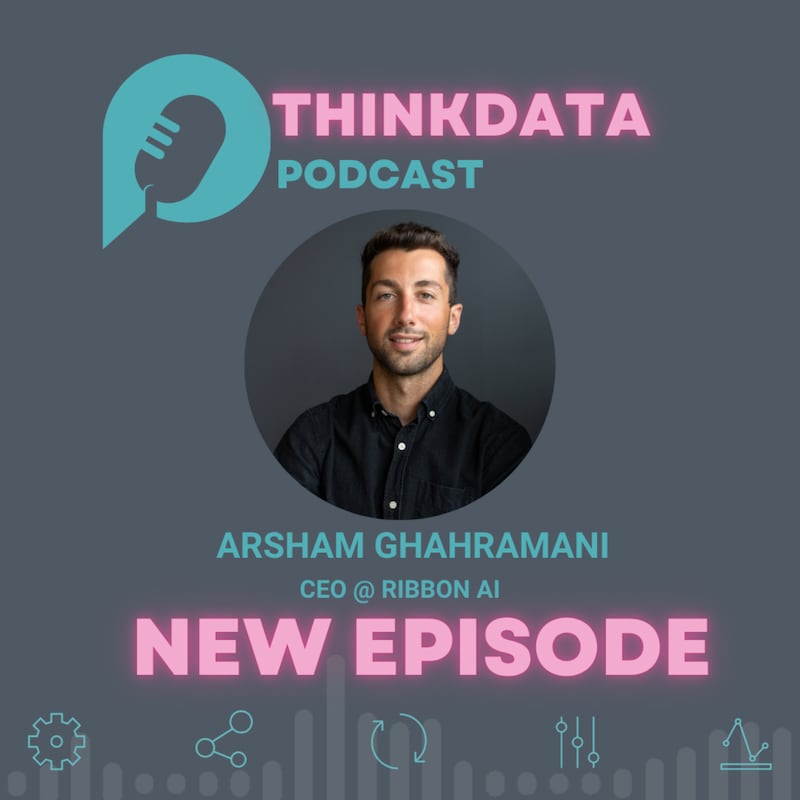
Shownotes
AI is transforming every industry, but few are changing as quickly as recruitment.
This week, I'm joined by Arsham Ghahramani, Co-Founder and CEO of Ribbon, an AI-powered hiring platform helping companies interview every applicant through conversational AI.
Before founding Ribbon, Arsham led machine learning teams at Amazon and completed a PhD focused on AI bias and model stress-testing. Since launching Ribbon, the company has grown to more than 500 customers, raised $8 million in funding, and was recently named Fast Company's #1 AI recruiting platform.
In this episode, we discuss:
- Building AI that recruiters and candidates can trust
- Why AI should improve—not replace—the hiring process
- The biggest misconceptions around AI recruitment
- Why bias remains one of the hardest problems to solve
- Product-market fit and scaling an AI startup
- What hiring could look like in five years' time
Whether you're a founder, recruiter, hiring manager, or simply interested in where AI is taking the future of work, this is a conversation you won't want to miss.
Transcripts
Welcome to the Think Data podcast brought to you in partnership with Mydataworks. If you want to stay up to date with the latest breakthroughs and trends in the world of data and artificial intelligence, and if you're curious about some of the strategies that companies and founders use to launch data and AI products, then you're in the right place. Our aim is to bring together a diverse lineup of fantastic guests from the founders, through to accomplished leaders and product owners at some of the most fascinating data and AI companies worldwide. They will each offer you their own unique insight into what it takes to launch and scale a great data business. Thanks for tuning in and I hope you enjoy the episode. Welcome to the Think Data podcast and this week I'm joined by Arsham. Here's the the co-founder and CEO of Ribbon. Arsham is on a mission really to transform the way the companies hire and they are using conversational AI to make recruitment and hiring faster, fairer and far more accessible for candidates. Before founding Ribbon, he led machine learning teams at the likes of Amazon and completed a PhD focused on AI bias and model stress testing. Since launching Ribbon, The company has grown to more than 500 customers. They raised just over 8 million in funding and recently named Fast Company's number one AI recruiting platform on its most innovative companies 2026 list. It's a really interesting space. So I'm really looking forward to digging into what it takes to build AI that employers and candidates can really trust. Why bias and hiring is still such a difficult problem to solve. The technical challenges of deploying conversational AI at scale. and what Arsham and the team are seeing as more organizations embrace AI throughout the hiring process. Well, as someone who's been in recruitment and hiring for 20, 25 years now, I am always fascinated, sometimes in a good way and sometimes in a not so good way about some of the new tools that are coming into the market here to really make this space easier for both candidates and also recruiters but I I think with Ribbon and what stood out and certainly what I alluded to in the intro was this whole kind of seamless candidate experience, but also how you're helping talent teams as well as recruiters. And personally speaking, it's kind of a win-win for everyone. But I'm going to really kind of first take us back to Arsham, kind of the engineer, because I know you've got a probably non-quintessential kind of recruitment background, but obviously the domain you're tackling is very much in talent acquisition and people. so For people who haven't heard of you or Ribbon, what is your background and when was that kind of light bulb moment to launch Ribbon?
Arsham:Yeah, thanks for having me on, Alex, by the way. As you kind of alluded to, I did take a pretty weird route into this space. I think not a lot of people start off, I guess, where I did. So I started off as an AI researcher, actually did a PhD, went through that whole kind of process, was a researcher, like an academic, right? And I think Very few people go from that into recruitment. led a couple of teams along the way, really before I came into this space, led one of the AI recommendation teams at Amazon, and then was head of AI at a company called Ezra. And that was where I started getting the recruitment bug or the interest in this space for a couple of reasons. But one of them, because I've actually, it was there when I was hiring out my team, I met the head of people on talent at Ezra, who's called Dave Wu, who's now my co-founder. And we were hiring like crazy, lots of different types of roles. from really hard roles like machine learning engineer, where everyone is super highly in demand, they're demanding a lot of money, we had to move super fast on candidates. And then we were also hiring a lot of AI data labeling roles, which is much closer to like a high volume type of role, right? It's hiring a lot of people who are low retention, like they're only going to work for you for maybe a month or two months. The screening is pretty fast. You have to onboard them really fast as well. And it was there that I sort of got exposed to these two types of hiring. And they seemed like two completely different worlds. Like high volume, had to move so fast, unique kind of challenges, lots of follow-up, lots of reminders. And then these ML engineers who we had to like handle with white gloves. And the core thing that actually got us sort of obsessed with this space was that one, I felt like. a lot of recruiters are actually underestimated. Like a lot of people look at recruitment as an extension of sales or a thing that a lot of people fall into, right? And I looked at this space and thought, well, one, why is there not a lot of sophisticated? tooling for these people who are for for almost every company like hiring is the most important thing that you can do right like especially for a company like us as ribbon early stage like all we are is a collection of people so if we if we hire the wrong people kind of screw the whole company up right and so i felt like it's it's that important to every company but why are there not real real platforms that help you hire faster across like this whole spectrum of roles that that combined with the fact that when i was at amazon i got exposed to some early voice ai tech actually stuff that amazon never ended up shipping like they they sort of sat on that which is interesting like now if you look back on that history like they had this cool tech and they never did anything with it but i was lucky because i got exposed to that tech and had a hunch that you could use that voice ai tech to interview people and so sort of where we started it was with this hunch of... It seems like resumes are becoming less and less valuable. This was early chat GPT days. And we started seeing a bunch of chat GPT generated resumes, which is now its whole own kind of world. And so we saw like the state of the world then and thought, well, let's use this voice AI tech that I got exposed to and interview people with it and see how far we can run with that. And so that was a couple of years back. And then just to give some sense of like where we're at now. We work with some of the largest enterprises in the US, S&P 500 companies from the largest self-storage company in the US to also the largest automotive manufacturer, their electric vehicle manufacturer that you probably know. And we help them hire around 40% of their roles right now. So we work with large companies and High Level Ribbon helps you interview those people.
Alex Hutchings:Interesting. I know you went from kind of... zero to one pretty quickly in terms of that kind of customer adoption on your point you've got some pretty some flagship brands on your on your roster but you know it's kind of a lot of companies you know pouring into this kind of rec tech space and you know everyone's got the seems to have the silver bullet to a problem but when when was the real moment and the realization that you had product market fit and you could actually start charging customers here and you know actually we're on to something because obviously there's so many that there's so many video platforms out there just generic ones you can you could use some kind of ai note taker or something to take those notes but what what made ribbon different and kind of what was that differentiated to the point that product market fit was hit good
Arsham:question for for me the first time that we worked with a large company large enterprise they had around 25 000 employees they hired a lot of frontline workers high volume and so they they felt like they were always hiring There was never a day when there wasn't a hiring headache because they were hiring very low, low, low retention roles in manufacturing. And we asked them to do a pilot. Like we had no, no, no brand back then. We just had a bit of technology, like super early days. And we just asked them, are you willing to pilot our AI interviewer against your existing recruitment team who are spending a lot of time on screening right now? They'll do these screening interviews. But one third of them are no-shows. There's a bunch of them are people who are not qualified at all. And so our pitch was those same recruiters should be spending their time on the later stage candidates. But they're actually just showing up to a bunch of interviews, but the candidate doesn't show up. That's a waste of their time. So we, honestly, it was so early, we almost had to beg them, right? Like they were skeptical of a lot of this. They ran this basically almost like a study with... Us versus their existing screening. And what was interesting was not only could we obviously do things faster, right? Like you can scale an AI interviewer as much as you want. So there was obviously like a speed aspect to it and a scalability aspect that we brought. But that was kind of a given. What was more interesting was that they ended up tracking people who were hired using Ribbon and then using their old process. And they found that the 180 day mark. If they hired using Ribbon, there was higher retention. And so they were initially just intrigued by that. And they started looking at it deeper. And basically, the conclusion they came to was that using our AI interviewer, using our scoring, they could find higher quality candidates who were a better fit, who were more likely to stay in that job because they enjoyed it more. They had the skills. They were just a better match overall. So, like, I think that opened up their eyes and my eyes. Because... traditionally in this space you would either do things faster or higher quality right and it's usually like a trade-off like you will trade off one or the other and we had something or and the signs of an early i guess platform that could do both like we could not only hire faster. So we were typically cutting off around 12 days at that time of their end-to-end hiring process. Now we can do much more, but that was the early product. So it was 12 days faster and also 20% higher quality in terms of the retention rate at the 180-day mark. And that was sort of a shock to them. It was a shock to us as well. We were experimenting still. And that was the first time where I thought we have product market fit here. Like there's something that we should scale. There's a lot to build. And honestly, like we're still building a lot.
Alex Hutchings:Yeah.
Arsham:But that was like, that was the early sign for us.
Alex Hutchings:Interesting. So in simplest terms, how does it work? You know, how we're an enterprise on that, on that manufacturing example, we're looking to hire a lot of frontline workers. We have a talent team that is, as you say, and I can practice what they preach to a certain degree because I'm on that frontline, not for high volume, but you get a lot of drop offs. You get a lot of invested time. People don't turn up or. Your diary is continuously booked out with back-to-back interviews. So what problem does Ribbon solve?
Arsham:Yeah, so I'll give you like an example. Maybe you're like an automotive manufacturer. You're manufacturing electric vehicles. One of the roles that you have is someone who works on the manufacturing line who is assembling the batteries that go into the car. The average person only stays in that role for around six months.
Alex Hutchings:Okay.
Arsham:They're always hiring. It's a really tough, tough hiring problem. Once you implement ribbon, within this manufacturer, the way that your hiring works is that you'll, let's say you get a thousand applications. In the past, you would choose to interview maybe a hundred of those people. Now with Ribbon, you can interview all of them if you want. And what we see is typically companies will now interview around 900 out of those 1000. And the way that works is you send them a Ribbon link, they jump on something that's like a Zoom call, but they're actually speaking with an AI on the other end. It's a voice AI and it... has researched the candidate beforehand. So it has looked at your resume, it's looked at anything that's online. It understands the role really deeply because our AI knows everything there has ever been written about battery manufacturing, for example, right? So it's not going into the interview blind. Like we have a lot of the technical knowledge as well there. And so as a result of that, we can run a really highly targeted interview, right? And so... You wouldn't, you would never see the ribbon AI interviewer starting off the interview by saying, Hey, just tell me more about yourself. Like we, we have done the research. It's as if we've read kind of 10 hours of stuff about the candidate already. And so typically the interview starts with looked at your resume. It, you mentioned that, you know, you worked, you worked at Rivian in the past and you were on the battery assembly line there. Can you tell me a bit more about your experience there? Were you managing anyone? Right.
Alex Hutchings:So like really,
Arsham:really targeted questions. That's the candidate side of things. So they'll they'll they'll receive this link, the interview. After that, we will analyze and score that that interview as well. And all that's presented to the recruitment team. So the end kind of result for on the recruitment team side is you receive almost a thousand candidates. They've all been scored. They've been ranked. And you can see who are the candidates who I should speak with now in in in the next stage. within 24 hours because they're that good. They score that highly. If I don't speak to them now, they'll be off the market soon. And I think what's interesting about the difference with that process where like, whereas what it used to be is that if you used to receive a thousand applicants and you only interview a hundred of them, like you can't really be sure that you have the best applicants there. You've left 900 people on the cutting room floor because you don't have the capacity to actually interview everyone. And so now if you use Ribbon, like you can be much, much closer to sure that you're actually getting the best applicant out of that pool. Yeah. And getting to them faster as well.
Alex Hutchings:Yeah, it's fascinating. I completely get it. And I... you know an organization trying to cast a broader net you know let's be honest there's so many different sources different sources for receiving resumes now right you got linkedin you got general careers pages so are you aggregating all of those feeds into a the normal talent funnel there is the talent team vetting suitability or is there just is there those kind of preset filters that ribbons making the decision on who to discuss or is there still that human in the loop at the review stage and the reason i ask the question is There's so much talk at the moment about AI ruling people out on fairly biases. And actually people listening to this will be like, well, it's just another AI saying I'm not suitable. So how does it work? Is human in the loop at the beginning and then at the end? Or where does that end?
Arsham:That's a great question. So human in the loop is really important to us because I think ultimately an AI shouldn't be making. the complete decision. It should be surfacing the right people, right? And I think that a big part of why we set out to build this is because 90% of people don't even get a chance, right? Like they'll just be filtered out at the resume stage and they'll never get to even talk about their experience or present experience that they haven't written down, right? And so there's a human and a loop in two key places. One of them is the human will set like the high level topics that should be discussed in the interview. Right. So you have a human recruiter saying, here are the rough kind of questions that should be covered. You can add kind of guidance on how the conversation should go, how long it should take. What's the style? Should the AI recruiter actually try to sell as well? Right. Like that's a really important part of the role, too. Actually, like arguably the most important part on a recruiter side is you also want to sell the company and sell the benefit. say like why why should you as a candidate work that right and then the other Even more important part is that a human is always reviewing the candidate, right? So we will do things like scoring, we'll analyze, we'll summarize. We highlight questions that were not answered either by the human or the AI, right? So you can see a scenario where maybe the candidate asks, what are the benefits? And maybe the AI recruiter doesn't have all the info. And that's a question that we flag so that the human recruitment team can look at that and say, we should follow up with this candidate and tell them. Here's the actual benefits package. Like here's a, or something like that. So that human review part is really important because we're really just surfacing the right info about like, here's the key parts of the interview that were most interesting. Here's the parts that we think should be surfaced. But the human recruiter can always watch the full interview if they want. They're ultimately making the decision. They're the one that actually decides whether the candidate will go to the next stage or not.
Alex Hutchings:That makes sense. I also like what you said earlier about the later the stage has progressed, and obviously the more in the loop the human becomes anyway. So obviously navigating those more tricky conversations, but I think for the frontline workers or the more mass hiring, this is just, you know, if I'm a candidate, I'd like to think I've been given a chance and had a conversation. How have you approached the education piece? Because obviously people will go onto LinkedIn or Reddit, God forbid, and you read a lot of people talking about you AI, I'm not going to speak to an AI as my first interview, and I want to speak to a human, how are you beginning to educate and get that message out that actually, we're here to add value, we're not here to kind of take away from your experience?
Arsham:I think the education piece is important. But we've never been we've never been the type of company where we say like, we want to go out and educate people. I think that's almost like a pontificating, right? Like,
Alex Hutchings:of course,
Arsham:I think The way that we've approached it more is that if we deploy this technology in the right way, it will benefit people. And I'll just give you an example of like one that we see a lot in the manufacturing space of what I kind of call like self-educating in a way. In the manufacturing space, a lot of people are working on a factory floor from, let's say, nine to five. And you can't really interview during that time. It's really hard to interview in a factory. It's really noisy. It's hard to sneak off for an interview. It's hard to do it at lunch because you're typically like having lunch with other people around. And a lot of those people are parents, so they'll leave their shift. They go home in the evening. They have to take care of their kids, right? And so the only free time they have is like after 9 p.m. maybe. And with the old system, it's really hard to interview for a new job if from 9 a.m. to 9 p.m. you're effectively occupied. And even if you could get a recruiter to interview you at like 6 to 9 p.m., which is very, very rare, right? Like that's typically not the case for most companies, but they'll have a recruitment team kind of interview in those times. One of the things that Ribbon opens up is that you can interview basically any time of day, right? And so what we've seen is that around 25% of our interviews happen between 11 p.m. and 2 a.m. local time.
Alex Hutchings:Wow. Okay.
Arsham:Which is like, you're just never getting a recruiter on the phone during those hours, right?
Alex Hutchings:Yeah, completely.
Arsham:And so from what initially seems like a technology where you're sort of removing the human out of the aspect, seems like maybe there would be like a disadvantage for the candidate, actually kind of flips the other way. Because now you have candidates who could never have interviewed before, because they're working on a factory floor and they want to spend time with their kids in the evening. Now they can interview 11.30 p.m. That's a... first time in the day when they're actually switched on, like they have some free time, they can do a quick 20 minute interview that'll get them to the next round. That's a, that's a huge accessibility piece actually. Right. And, and so I think the way that we've always chosen to educate is just let's. Let's do the maximum good and help candidates actually get a job, right? Rather than us kind of pontificating on that.
Alex Hutchings:Completely. And look, in a nice way, recruiters also work to certain prescribed hours. And if they're trying to, you know, it's like you can either talk to your tweet on your point nine and five or nine and six, or you've missed your chance. And actually, it's still creating this environment, which isn't open to everyone. So at least you're putting the... I suppose, the power back into the candidates. And well, actually, you can have this conversation anytime. God forbid having an interview at 11 to 2 in the morning. But I guess there's a whole different host of issues. But for recruiters listening to this, and obviously as an agency recruiter, I'm not on the mass frontline hiring, but there are recruiters out there that have made big careers of doing a lot of volume and heavy lifting for said clients. Where does this fit into their workflows? Is this a transferable tool that some of those agency partners can still... use ribbon or is this kind of wholly owned and wholly used by talent teams internally?
Arsham:We've seen amazing success with agencies actually like some of our happiest teams or agencies. Well one example that was interesting for us is that with one of our automotive customers they had typically always performed worse than their agencies right so they had these agencies that helped them and they have this hard data over the last five years they um The reason why they're working with those agencies was because the agencies were better. Then they implemented Ribbon. Overnight, they started out competing the agencies. And that on the surface seems like a bad thing for the agencies. But actually, that was the impetus for these agencies to come to us and say, well, it looks like Ribbon is actually really meaningfully helping this company internally. We'd love to adopt this and help them on our side as well. And so we've seen a lot of that where we'll... we will initially be adopted by the internal team. And then their agencies also adopt us because they get exposure to the same tech. And it also works the other way around as well, right? So there's a lot of cross-pollination. One of the, there are two interesting ways that we help agencies a lot. One is that for agencies, often the time to hire is like the most important thing. And so if you use Ribbon, you can have a system where as soon as the requisition comes in, you can be sending interview links. out to a thousand candidates within minutes. And then within an hour, you can have a hundred candidates interviewed, right? Like that's something that just wasn't possible before unless you have people like waiting to dial the phone immediately. The other is like, as an agency, once you have a lot of people interviewed within Ribbon, we can also analyze that and suggest roles that you could cross submit for. And we automatically do that at scale. So one of our customers right now has... around 20 million candidates within their database.
Alex Hutchings:Wow.
Arsham:A lot of them are interviewed using Ribbon and we analyze all those and suggest candidates that are a good fit for new roles that come in all the time. So they're much less than what they used to before. They kind of don't have to go back to the well as often. They have this candidate database already. It's really rich. They're like half an hour interviews that we've analyzed. we've looked at what the candidates are saying they're a deep experience like who else they've worked with we can analyze all that and then say this candidate that you interviewed two years ago is actually a really good fit for this new requisition that just came in and we do that all automatic and actually on the i know it's an incline but for an agency that'd
Alex Hutchings:be great for us we speak to so many profiles and great people but actually trying to remember that great matter yes you can go into ats and put an old school boolean but actually if we had a requisition loaded onto ats and you'd automatically in fact we're actually six people you spoke to in 2022 actually they for that role they could be a match and this is why then that's obviously going to improve our hit rates and reputation anyway in candidate experience it ties back into your point right at the beginning about that ultimate candidate experience that's it right i think the most frustrating thing for candidates who are to being in 2026 is...
Arsham:they get asked the same questions over and over again. And then working with an agency, maybe they're answering the same questions that they answered even just six months ago, right? Like they're just like re-updating there. And that has always bothered me, right? Because there's just a lot of wasted time. And you see a lot of companies that say like, we care about the candidate experience. Well, you know what candidates actually care about? Like the thing they care about is getting a job quicker. Yeah. All other things just throw out the window. Like they just want a job and they want it tomorrow. And the way to do that is to reuse the info you already have on them. Don't ask them the same thing again.
Alex Hutchings:Completely. And I know you're very close to this hiring ecosystem, both on agency side and internal for some big corporates. S&P 500s. What's your prediction on what this hiring landscape looks like over the coming, I think two years is too far out, but next 12, 18 months? Because I know right at the beginning, you touched on obviously, you know, kind of AI powered interviewing is helping get more people into a funnel. But actually, the beginning of that, there still is that human and that what we've seen on our side is the volume of applicants right now is at an unprecedented scale. And actually to get through those is still taking time. What do you think happens in the next 12, 18 months, a couple of years with regards to the entire hiring process?
Arsham:It's always hard to look into the future. But I think what I can share is what our most forward thinking talent teams are doing today. And I think those are things that I think everyone will be doing in a matter of a couple of years. And what we're seeing is the most forward thinking talent teams will interview basically everyone now. And so you're essentially giving everyone a chance. Everyone interviews with Brevin's AI interviewer. And then all of the other stages are sort of compressed now. And so you have this one AI interview. And the most forward-thinking teams are basically, after interviewing everyone, they will select the top candidates and go straight to an onsite or an in-person interview. And so what used to be a phone screen, and then an assessment, and then another interview, and then a hiring manager interview. is sort of now condensed into AI interview and then onsite. And so the effect of that is you had a kind of like end-to-end hiring process that would maybe take around 100 days. We're seeing teams that compress that like all the way down to like 20 days now.
Alex Hutchings:Yeah. Wow.
Arsham:And you can only do that if you have a lot of this, like if you use an AI recruiter there, right, who can speed up a lot of that. And I think the other interesting, I guess, pattern that we've seen is that We've seen human recruitment teams actually spend more time with candidates in the later stages. So we have this one client that is really clinical about the way that they measure kind of contact time. And what they found is that at the negotiation stage, they were spending 25 minutes extra with each candidate at that stage than what they could before. They could only do that because they had cut time elsewhere using Ribbon. And so they're spending more time at that kind of really critical phase, right? Of like, when you actually want to spend a lot of time with the candidate, understand if they're happy with everything that they've seen. Is it a good fit? What's the comp? Things like that. And so you can only do that if you cut out a lot of the lower signal stuff at the top of the funnel.
Alex Hutchings:Yeah, exactly. I'm actually a believer that. AI currently in terms of recruitment or sales hiring or is just freeing recruiters up to do the stuff they actually enjoy most. It's not that I don't enjoy speaking to candidates because I do, but actually what I want to be doing is those, the closing conversations, the, you know, getting really into the weeds around motivations and having that kind of more in-depth follow-up rather than the mass having 50 calls to convert one to a CV send. I think that's kind of where I sit on this. And I can't ask that question because I'm part of a group called the Fraud squad then we're looking at ai fraud in the hiring process what kind of guardrails have you guys put into combat ai assisted interviews because that's huge at the moment in terms of you effectively got ribbon ai speaking to ai how do you guys detect if
Arsham:there's ai at the other end of this kind of video there's an area we spend a lot of time not only thinking about also engineering wise yeah there's a couple of aspects to fraud that we we actually catch one is that we're We analyze the audio and the video and we look for a couple of things there. One is, is there any kind of AI generated signature there? And so we have a state of the art model there. And so with around 99% specificity and sensitivity, we can catch if there's AI generated audio or any kind of video or any other type of deep fake. So we see that as sort of a solved problem. Like it's actually very easy to catch using our model and not. really an issue anymore for us. The other side is other types of cheating though as well. And that's kind of where it sort of becomes a blurry line. So one of the types of cheating is if you're reading off a script or if you're reading from ChatGPT. Now it's sort of debatable like how much of that is cheating, right? If you're reading word for word from a script, I think everyone would agree that that's cheating. But if you have bullet points that are generated by ChatGPT just to help you frame your thinking. I think most people would say that's not cheating, right? And so there's this kind of blurred line somewhere, somewhere between those two points, there is cheating. And we're not sure kind of like where that line is. We help flag all of that though. And so. One of the pieces of analysis that we do on an interview is, did it look like the candidate was just reading off a script? And we have an AI model that also analyzes the interviews and looks for that. Again, we don't really flag that as like cheating or not. We just flag that we saw that and then it's up to the human to decide, is this something I care about? Was it bad enough to care about? But we just flag it. The other final one that is top of mind for a lot of the people that we work with is. We also analyze the location of the candidate. And so we've seen this a lot in technology roles where you have someone who is applying for a role. They say they're in the US. They say they're in like a different part of the US. And then we will actually look at the location signature. It turns out they're in North Korea, right? And so this is a widespread problem, actually happens a lot. And so we have technology there that also looks for the location of the candidate and see if it matches the job description, matches where they're saying they are. And we'll flag that if we see anything kind of odd there as well.
Alex Hutchings:Yeah, I think I'm so glad you said it because it is a massive issue. And I think technology hiring is where we're seeing the biggest spike in this problem. And companies are trying to not discriminate and rule people out necessarily, but equally have that kind of line where, you know, they feel they are overusing AI or who's saying they are isn't necessarily who they are. Yeah, I think it's a big, big issue, but I'm glad you guys are combating that. And final point for you guys and Ribbon, what can people expect to see from you over the next 12 or so months? What's in the wings?
Arsham:We are truly building an AI recruiter, end to end. And so we started with what I think is like the most important and hardest things to tackle, which is the interview. But we're still moving end to end. So every part of the hiring process that you can think of. And I would... share the mental model as every time, every time a recruiter is doing an aspect of their role that they don't enjoy, we will help them on that. And so my aim over the next two years is to basically turn a recruiter's life into like the most enjoyed, the most enjoyable job that they've ever had, because all of the annoying kind of grunt work has been taken away, right? So, so if it's scheduling, we will help you there. If it's answering emails about benefits. we'll help you there. We already do that. If it's, if it's reminders for interviews over SMS, we already do that. And so there's other areas that you can think of as well that we're expanding into all the way to how do you assess whether a candidate is actually good on the job? Well, sort of what we call work stimulation. It's like, is there a way that you can expose an environment to a candidate that lets them effectively do the role for an hour and then see how they perform?
Alex Hutchings:on that to every aspect of communication we will we will help recruit us on all that why should you keep me in the loop i've been after 20 odd years in this game with anything to make my job not so much more fun but i think there i think what we've seen in light of ai the volume of irrelevant outreach and administrative pain that we're seeing is is exponentially higher than ever has been but actually there's parts that which i totally love there's also parts now you think oh my I'd love to simplify this. So yeah, I'll be sure to tag this for my recruiter friends watching this because they, you know, both in-house and also on the agency side because I think they'll be really interested by Riven. But Arsham, thanks for coming on this morning. Yeah, like really interesting. I feel we could kind of get really into the rabbit hole with this, but no, you've been really, really insightful. And yeah, thanks so much for coming on.
Arsham:Thank you so much, Alex. Thanks for having me on.
Alex Hutchings:Cheers, Arsham.
Arsham:Thank you.



