Shownotes
What happens when a marketing agency starts a podcast with no rigid script, just authentic conversations and a willingness to connect? It becomes much more than content. It becomes a business development strategy.
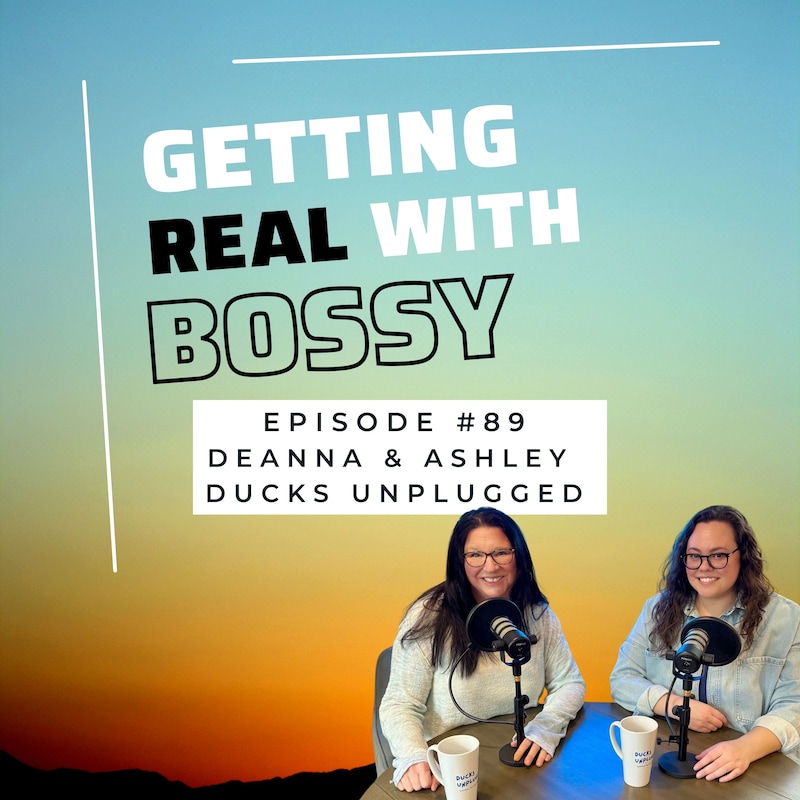
In this episode of Getting Real with BOSSY, hosts Kelly Bush and Kelly Metras welcome Deanna Dolecki and Ashley Ruggeri, co-hosts of the Ducks Unplugged podcast and leaders at Blue Duck Agency, to discuss how podcasting has become one of the most effective tools in their marketing strategy.
Deanna and Ashley share the story behind launching Ducks Unplugged and how it evolved beyond promoting their agency. Through genuine conversations, the podcast has helped build stronger relationships, expand their professional network, increased brand awareness, and created opportunities that traditional marketing alone couldn't achieve.
The conversation explores why authenticity matters more than perfection, how long-form content builds trust, and why businesses of all sizes should consider podcasting as part of their overall marketing strategy. Whether you're looking to grow your audience, strengthen client relationships, or position yourself as a thought leader, this episode offers practical insights into turning conversations into meaningful business growth.
In This Episode
- How Ducks Unplugged grew from a marketing idea into a valuable business asset
- Why podcasting builds credibility and trust faster than traditional advertising
- The role authentic conversations play in relationship marketing
- How podcast guests often become clients, referral partners, and long-term collaborators
- Tips for businesses considering launching their own podcast
- Why consistency and genuine curiosity matter more than having the "perfect" show
Key Takeaways
- Podcasting is more than content creation. It's a relationship-building strategy.
- Authentic conversations create stronger connections than polished sales pitches.
- Long-form content helps establish expertise, credibility, and trust with your audience.
- A podcast can become a powerful networking tool that opens doors to new partnerships and business opportunities.
- The best marketing often starts with meaningful conversations, not advertisements.
Resources Mentioned
- Blue Duck Agency
- Ducks Unplugged Podcast
- BOSSY
Transcripts
Welcome back to another episode of Getting Real Abasi, the podcast that talks to you about what it's actually like to be a business owner.
Speaker A:We are your hosts, Kelly Bush and Kelly Metras.
Speaker A:How you doing today?
Speaker B:I'm decent.
Speaker B:I cannot complain.
Speaker B:I have been very, very, very, very, very, very, very, very, very, very overwhelmed and stressed.
Speaker A:That's a lot of Aries.
Speaker B:It's not.
Speaker B:I don't think it was enough Aries, but I think that today is a good day.
Speaker B:Now when this airs, who knows?
Speaker B:I'll probably be right back where I was.
Speaker B:But for the purpose of this conversation, today of real life, I am feeling okay.
Speaker B:How are you?
Speaker A:I'm great.
Speaker A:I'm incredibly behind because of a very huge issue I had with QuickBooks that is setting me back about a year in part of the work that I need to get done for my accountants.
Speaker A:But I had the wonderful opportunity to head out of town with my family to go to a family wedding for my cousin.
Speaker A:Now my cousin is in a hardcore punk band.
Speaker A:So the wedding just was amazing.
Speaker A:The wedding was at Babeville in Buffalo, which is where the church that Ani DiFranco bought and where her student.
Speaker B:Huh.
Speaker A:So it was very cool.
Speaker A:A lot of cool musical history in that building.
Speaker B:Awesome.
Speaker A:It was.
Speaker A:It was so cool and just full of their friends, you know, listening to good Charlotte and Blink 182.
Speaker A:I'm like, kind of.
Speaker C:How do they even.
Speaker B:I don't know.
Speaker A:It was very cool.
Speaker A:Yes.
Speaker B:Did you get to do the We Are Family and the YMCA and the plethora of the Cha cha slide and the electric slide?
Speaker A:There was ymca.
Speaker A:The music did not stop.
Speaker A:It was just a constant.
Speaker A:I actually made a screen record because I have an app on my phone that just will just show what's playing or it just kind of records what's playing.
Speaker A:And I was like, this is the best playlist in the world.
Speaker A:And there was like a couple of those songs, but it was mostly just.
Speaker A:It was just.
Speaker A:I don't know, it was just fantastic.
Speaker A:It was awesome.
Speaker A:And I got to, like, my one cousin who I never see, but I was closest to growing up, was there, and her four siblings weren't there.
Speaker A:So it was just a wonderful opportunity.
Speaker A:Like, Friday night, she and I got to talk the whole night.
Speaker A:Brainstormed ideas for her new business.
Speaker A:She's going to be somebody I'm going to pitch to you to come on the podcast at some point.
Speaker A:It was just.
Speaker A:It was wonderful.
Speaker A:I just had such a.
Speaker A:Such a good time.
Speaker B:I love it.
Speaker B:Yeah.
Speaker A:And then I came home and I.
Speaker B:Saw the freshness in your face.
Speaker A:I felt so good.
Speaker A:I went home.
Speaker A:We got home and I went.
Speaker A:I was like, I'm just tired.
Speaker A:Don's like, go to bed.
Speaker B:So I laid in bed all day.
Speaker B:I went to sleep at like 8:30.
Speaker A:I don't know.
Speaker A:I've got so much.
Speaker A:I'm clearly in the library again today.
Speaker A:I've got so much shit to do, but I don't know I'm ready for it.
Speaker B:I know.
Speaker B:You look amazing.
Speaker B:I know the last time we were in person, you were going through your, your bookkeeping nightmare and you, you looked a little tired and stressed.
Speaker A:I was fucking angry.
Speaker B:And even though you're still going through it, you look great.
Speaker B:That is a testament to how important it is to get the hell out of Dodge for a few days and just relax.
Speaker A:Exactly.
Speaker A:I mean, it's in Buffalo is an hour and a half from here.
Speaker A:I was gone for less than 48 hours.
Speaker A:But sometimes just getting away, seeing some family, spend time with somebody you haven't spent time with, like all of those.
Speaker A:I think if just, even if one of those little things, one of those big things had happened, I would have felt the way I feel right now.
Speaker A:So just even if, even if the world is falling down around you and you have to get your taxes done because the date is impending but you still have no QuickBooks for the last 16 years, do it and get away and get some time and take that break because you need it.
Speaker B:I love it.
Speaker B:And today we are going to interview a pair of women that podcast together.
Speaker B:So it'll be fun and different.
Speaker B:I don't think we've done anything like this before.
Speaker B:They work at a marketing agency and decided to do a podcast as a growth strategy for marketing the agency.
Speaker B:And I can't wait to hear about their journey and what they've learned along the way.
Speaker A:Me too.
Speaker A:I'm very excited.
Speaker A:I really enjoyed our pre meet with them and I can't wait to hear hear all about them.
Speaker A:So stay tuned for Ducks Unplugged.
Speaker A:Welcome back to another episode of Getting Real with Bossy, the podcast that talks to you about what it's actually like to be business owners and business business people.
Speaker A:We're talking about people today and we are excited to welcome Deanna Dalecki and Ashley Ruggieri from Blue Deck Agency and the Ducks Unplugged podcast.
Speaker A:Deanna and Ashley bring an especially interesting perspective.
Speaker A:Deanna is a Gen X agency president.
Speaker A:College age kids with more than 25 years of experience building brands and leading teams Ashley is a millennial marketing executive, wife, mom, and self proclaimed hockey and formula one fanatic.
Speaker A:Together, they've created Ducks Unplugged, a podcast where generational perspectives collide in honest, unscripted conversations about work, life, relationships, parenting, pop culture, and everything in between.
Speaker A:We're going to talk about Ducks Unplugged, how Ducks Unplugged grew from the culture of Blue Duck Agency, how podcasts has become an extension of their brand, and what happens when a boss and employee step behind the microphone as co hosts.
Speaker A:Because as Kelly and I have learned, running a podcast can be its own business.
Speaker A:I take that back.
Speaker A:It is its own business.
Speaker A:It changes relationships, creates new opportunities, and forces you to learn how to collaborate in entirely new ways.
Speaker A:So whether you're a business owner, a marketer, a podcaster, or someone navigating changing roles and relationships, we think you're going to love this conversation.
Speaker A:So let's get real with Deanna and Ashley from Blue Duck Agency and Ducks Unplugged.
Speaker A:Welcome to the show, ladies.
Speaker C:Thank you.
Speaker C:Great intro.
Speaker C:We're thrilled to be here.
Speaker A:We are excited.
Speaker B:Just from your intro, like, I was excited already, but, like, I'm like, ooh, I want to listen.
Speaker A:Well, you should listen, because I'm so disappointed that I didn't just sneak the record button on earlier because you've already missed, like, podcasting gold from the conversations we had already just trying to set this stinking thing up.
Speaker A:So we're so good to have you all here today.
Speaker C:We're so glad.
Speaker B:All right, so let's start with the beginning.
Speaker B:So let's talk about Bluedeck Agency.
Speaker B:Do you want to tell us how you got involved, Deanna?
Speaker C:Yeah, sure.
Speaker C:So I've been here for probably over 11 years at this point, and I joined at kind of a really interesting and fun time for the company.
Speaker C:So our owner is basically retired now.
Speaker C:She pops in and out for management meetings here and there, but she's onto the next chapter.
Speaker C:But when she started the company over 20 years ago, she was at a point where she's like, you know what?
Speaker D:I'm done.
Speaker C:I don't want to work for the man, if you will.
Speaker C:Right.
Speaker C:Like, she was at a point where she's like, I don't want corporate anymore.
Speaker C:I want to be my own boss.
Speaker C:I'm just going to take this account and I'm going to.
Speaker C:I'm going to try to do it myself, and if it lasts for two years, great.
Speaker C:If it doesn't, I tried.
Speaker C:Right.
Speaker C:And that at that point, she said, I'm going to do something unique and different.
Speaker C:And I'm going to have a virtual company.
Speaker C:And so from day one, this agency has been fully remote.
Speaker C:And so that's part of the reason, I think why it's worked so well is because it was built from ground zero, right.
Speaker C:As being fully functioning, remote with all the different systems and processes.
Speaker C:Fast forward to when I joined.
Speaker C:The agency was at a point where it was either.
Speaker C:They grew so fast that they were either like, okay, we either need to hire somebody to come in and make this more of a quote, real company is what she'll say, you know, establish more processes, get, get more benefits, like all the things that we need to do.
Speaker C:So we could scale the company or I gotta scale back and I just gotta keep this a nice small nugget that it is now and not on more.
Speaker C:So she obviously went in the direction of grow.
Speaker C:So that's when I joined the agency.
Speaker C:And it was fun for me at the time because I hadn't, I hadn't been in that type of a role yet where I had to come in and assess sort of what's working, what's not working, how to scale, how to grow.
Speaker C:But that's when I started.
Speaker C:And it's been a pretty exciting journey since then.
Speaker C:You know, been bumps along the way, as many companies have, but we're in a great place and doing quite well.
Speaker C:And then Ashley joined.
Speaker C:You probably joined like three or fours after three or four years after me, right?
Speaker D:Yep, yeah, yep.
Speaker C:And she was one of my best hires.
Speaker C:I actually didn't.
Speaker C:Almost didn't hire her, believe it or not.
Speaker C:I.
Speaker C:She likes to use the word boring, which is fair, but I was concerned she was a little too boring.
Speaker C:And here we are.
Speaker C:She's my podcast.
Speaker D:Yeah, I proved her wrong.
Speaker D:I really did.
Speaker B:She did Ashley.
Speaker C:She did very wrong.
Speaker C:Very, very wrong.
Speaker D:So.
Speaker C:So, yeah, so.
Speaker C:So that's how the agency started.
Speaker C:We actually more of a direct mail company for those that remember direct mail back in the day.
Speaker C:And our company had a different crazy.
Speaker C:It exists and it actually performs really well because most people don't do it, believe it or not.
Speaker C:And one of the biggest myths is the younger generation doesn't want mail.
Speaker C:They actually do.
Speaker B:It's exciting when you have something to open, it is.
Speaker C:And the mailbox is fairly empty.
Speaker C:But the postal service isn't helping themselves because they keep changing the postage rate.
Speaker C:So our company was very different back in the day.
Speaker C:Day it was actually called something different.
Speaker C:And we rebranded about a year and a half ish ago to Blue Duck Agency.
Speaker C:So to be a little bit more digital, a little more current with our branding and our name.
Speaker B:I love it.
Speaker B:That's really exciting.
Speaker B:So have you guys been working together since Ashley came on?
Speaker D:Yeah.
Speaker D:Yes, we have.
Speaker D:So when I was.
Speaker D:I was at a former company, a large internal agency, and I was looking for something new.
Speaker D:I'd never been agency side.
Speaker D:It was always kind of client side.
Speaker D:And I got this opportunity.
Speaker D:I interviewed with Diana.
Speaker D:I didn't know at the time that she thought I was boring, but I ended up getting a job.
Speaker D:And the role that I was hired for was really like, explore all the areas of gray.
Speaker D:How do you develop new business for the company?
Speaker D:What are we not doing yet?
Speaker D:What have we not tested or tried?
Speaker D:How do we bring in new clients?
Speaker D:How do we retain existing clients?
Speaker D:So, like, you name it, my job is to try it and do it.
Speaker D:So that's been what we've been doing for the past seven years, really.
Speaker D:You know, figuring out what kind of new products we need to introduce so that we can support our.
Speaker D:Our clients, support new, figure out what doesn't work and take those kind of things off the shelf, too.
Speaker D:I mean, you know, as business owners, things change so fast.
Speaker D:So as an agency, we have to pivot to keep up with the needs of what's happening out there in the market.
Speaker D:So it's been seven years of that, and then most recently this past year, when we were trying to figure out, all right, well, how do we continue to get awareness out about the agency?
Speaker D:How do we continue to get ourselves out there?
Speaker D:We're like, what if we started a podcast?
Speaker D:And that's really when the different dynamics of us working together started to happen.
Speaker C:Yeah, that was a big shift, for sure.
Speaker A:Well, I think it's a couple of things that you guys have talked about that seem to make Blue Ducks so unique.
Speaker A:One that it was completely virtual from the beginning, which I think is genius.
Speaker A:You know, Kelly and I talk about if we were ever to open a restaurant now, post pandemic, which I never will ever open another restaurant again, but how many things we would do differently, knowing what we know now, how things are run different, how everybody's spending money differently now.
Speaker A:But one that you were virtual from the beginning, which kind of, I think gave you a leg up there, but that you're so in tune with how things are changing as from the role of being.
Speaker A:Running the business, but also you're in marketing, and I don't know anything that changes more than marketing.
Speaker A:That's just a constant changing thing anyway.
Speaker A:So you guys seem to just really be up on top of things.
Speaker A:And that probably is also what's leading to your success as well.
Speaker B:Well, I think back to, you know, just the olden days.
Speaker B:Let's show my age before times.
Speaker B:Not even like the before, before, before,.
Speaker A:Before, like oh, like the olden days.
Speaker B:So I'm Gen X, so I have that pre tech life and post tech life, right?
Speaker B:Like my first email address with my freshman year in college and it had the little end like it was the green screen with the blinking letter that you had to.
Speaker B:And I didn't know how to.
Speaker B:I, I actually got scolded by my 10 year old for not putting my hands on the keyboard correctly when she was watching me type.
Speaker B:And I was like, okay, first of all, back up.
Speaker B:I was like, nobody taught me how to type and I am not changing how I do it now.
Speaker B:Like this is how I get done.
Speaker C:And I'm doing okay, right?
Speaker C:Like you're doing all right.
Speaker C:It gets tight.
Speaker B:Like shut it.
Speaker B:So I think back to like how the word was spread and how products were released and how we learned about things.
Speaker B:And I always joke about how we learn.
Speaker B:I mean I like to use Marilyn Manson's missing rib for a great example of something that the entire world found out about.
Speaker B:Without there being social media, without there being, you know, computers, email, like all of this stuff, like words got spread and marketing agencies had a general handle on how that happened.
Speaker B:And then through the technology boom, things started changing.
Speaker B:Right?
Speaker B:But I feel like, because everything got shoved in the pandemic, technology just flipped on itself and it has just been non stop changing differences.
Speaker B:And now you look at AI and now there's, you know, which AI program is the trusting one.
Speaker B:And you know, it's the constant, constant change has just snowballed.
Speaker B:So now it's like so fast.
Speaker B:So how as a marketing agency, how do you keep up in, in the quickness of the changes today?
Speaker C:Yeah, it's, I mean it's, it's hard.
Speaker C:It's hard.
Speaker C:And there's sort of two, there's two pieces to that.
Speaker C:There's also, that's what you asked.
Speaker C:But there's also like misinformation is sort of the second bucket because AI falls into that very squarely, right?
Speaker C:Like people don't fully understand what it can do, what it more importantly can't do.
Speaker C:And I think that's one thing we're seeing right now where people are putting a little bit more, especially for agencies, a heavy, heavy reliance on AI, thinking it can and do more than it can and do.
Speaker C:Right.
Speaker C:And you still need the human element behind with the strategy.
Speaker C:AI is great.
Speaker C:It can help things be more efficient.
Speaker C:You know, it can help give ideas.
Speaker C:But it can't replace yet.
Speaker C:Least.
Speaker D:Right.
Speaker C:Like what we're doing.
Speaker C:I don't think it ever will, but it can't replace fully what we're doing.
Speaker C:Um, so it has been, I mean, had, you know, I think one of the biggest things, and I'll let Ashley answer too, because she probably will have a different perspective.
Speaker C:But I think you have to know what you do well and you also have to know what you don't do.
Speaker C:Right.
Speaker C:Uh, and so one of, like, I'll give an example.
Speaker C:When we first started, we were pretty, an early, pretty early adopter of what we specialized in, which is acquisition email.
Speaker C:So it's basically prospect email, which is very different than in house email because your access to the data, what you can do, how you can track it, it's very, very different if you have the data in house versus not.
Speaker C:And so we knew at the time we were going to be double down and be experts in that space.
Speaker C:SEO SEM.
Speaker C:I always get it wrong, but whatever.
Speaker C:That was a huge piece and it was taking off and that wasn't something that we did and knew about.
Speaker C:And so it's like, you know, let the people who are experts in that focus on that.
Speaker C:We'll stay in our lane and we're going to just own our lane and we're going really, really good at it.
Speaker C:Right.
Speaker C:And so if we had somebody who wanted both, it's like, well, we can partner with an agency that specializes in search.
Speaker C:We don't.
Speaker C:And that's okay because we have focused and spent our time specializing in this.
Speaker C:Right.
Speaker C:So that's been something that mindset as, you know, digital and social and all the new technologies.
Speaker C:And it's changing constantly.
Speaker C:It's part of what Ashley said, which is what products and services fit with what we do and our expertise and why, what doesn't.
Speaker C:And the ones that do we double down on.
Speaker C:We, you know, ingrain ourselves in and we offer solutions that, that make sense.
Speaker C:Would you add anything to that?
Speaker D:I. I think the only other thing is you always have to be curious.
Speaker D:As a marketer, you don't go into marketing to not have some kind of curiosity and learning and seeing what's next.
Speaker D:So we do something here that is really interesting.
Speaker D:It's called no meeting Wednesdays.
Speaker D:So every Wednesday you're not supposed to have meetings on the calendar.
Speaker D:Every once in a while, a Client will request.
Speaker D:And of course, we say yes, but no meetings.
Speaker D:And that day is for thinking.
Speaker D:You have to block out a portion of the day that isn't just checking off your to do list.
Speaker D:It's reading up on a new technology, trying something, testing something, like really just getting yourself curious.
Speaker D:And that has led to a lot of really interesting things that we put into practice here.
Speaker D:Definitely how we started the podcast, getting really curious about that, how we introduce new products, how we bring things to our clients.
Speaker D:So that's been a really, really good day because, you know, it's so easy to get caught in the to do list.
Speaker D:And that really forces us to just say think big, think crazy, and then go from there and think outside your.
Speaker C:And think outside your everyday role too.
Speaker C:Like, I want people playing with AI.
Speaker C:I want people going in and testing different software.
Speaker C:Like, I play around in something called Runway.
Speaker C:It's like, I have no business playing in Runway with my role.
Speaker C:Right.
Speaker C:But.
Speaker C:But if you can't, you're not going to come up with those new ideas or make connections on how that might fit to something we are doing if you're not out there just trying it.
Speaker C:So that does give space for people, and it really has translated into some pretty interesting ideas.
Speaker C:Are you from the worst.
Speaker A:I was just thinking, like, you two seem so close, but you don't.
Speaker A:You're not in the same office.
Speaker A:The whole idea of remote work is just so fascinating to me.
Speaker A:Is everybody from different areas?
Speaker A:Are you.
Speaker A:Do you guys get together every once in a while or.
Speaker D:Yeah, we're all primarily greater Boston area right now, but we have had different team members and people that we work with in the past that have been in California cross country.
Speaker D:So that's been the beauty of remote work.
Speaker D:As Diana says, it lets her hire the right person, not necessarily the right location, which is really, really great.
Speaker D:And we have very, very experienced, seasoned staff here.
Speaker D:So that also meets that kind of thing that we demand of the people that work at Blue Duck Agency, because that gives people the autonomy to get the work done in an excellent way.
Speaker D:But since the company was structured as virtual from day one, there's definitely, like, things in place.
Speaker D:Like, Diana will do all company Zoom sp and make us play crazy games on Zoom.
Speaker D:We get together in person a couple of times a year.
Speaker D:And I feel like generally on the day to day, everyone's just more intentional about checking in.
Speaker D:Hey, quick hello.
Speaker D:We send like memes and gifs back and forth and we just like take a couple minutes to laugh.
Speaker D:So it's so Intentional and being a remote work agency that it makes the culture almost better in my opinion than when I was in office.
Speaker A:Right.
Speaker A:That's what I was thinking.
Speaker A:It's such a healthy culture you've created.
Speaker A:Cause you have to.
Speaker A:And you have to be intentional about it.
Speaker C:And I think a couple of things that actually like, you know, higher season.
Speaker C:I don't know if it would be the necessarily best first job for somebody being fully remote.
Speaker C:Do you know what I mean?
Speaker C:As you're learning and training and you get that exposure to all the other people in the office, but you have to still create some of the things.
Speaker C:So it was funny.
Speaker C:Kelly, at the beginning you said the virtual piece.
Speaker C:That was actually a negative for us.
Speaker C:I would say pre Covid, we didn't necessarily sort of offer that up right out the gate because we got a lot of pushback on.
Speaker C:Well, are you a real.
Speaker C:I mean, are you a real company?
Speaker C:Like really are you?
Speaker C:Right?
Speaker C:You don't have an office, you're not a real company.
Speaker C:There was that bias.
Speaker C:I still think there's a slight bias with that.
Speaker C:But it's changed so much since COVID But you have to.
Speaker C:It's where that bias comes from is how are you collaborating?
Speaker C:How are you doing the water cooler conversations, right.
Speaker C:That you just naturally brainstorm and ideate when you're both filling up your mugs at, you know, the Keurig.
Speaker C:Right.
Speaker C:So how do you create those moments.
Speaker C:Moments in a virtual world.
Speaker C:And you have to work really hard to do that.
Speaker C:But like Ashley said, we, we use, we're like most people use things like what is it?
Speaker C:Stack, Slack Stack.
Speaker C:Oh my God.
Speaker C:See?
Speaker C:Hello, loser.
Speaker C:You know, so we use Google Chat, just happens to be what we use.
Speaker C:And so that's really the yelling over the cube.
Speaker C:It's the, you know, and so you have to create those opportunities for collaboration and for those sort of coffee talks in a virtual environment, which we've done pretty successfully.
Speaker B:So those things are important is because you have that camaraderie.
Speaker B:Like you, you need to trust somebody and understand how somebody works before you can collaborate with them.
Speaker B:So to throw somebody from across the country and be like, hey, work with this person.
Speaker B:Like you're never gonna do that in a successful manner, I don't think without those things built in.
Speaker B:So I think that's fantastic that you guys acknowledged the humanity.
Speaker B:I wanna pivot back because we didn't really talk about this when we first met.
Speaker A:Met.
Speaker B:But I didn't the.
Speaker B:The focus on email marketing and the cold emails.
Speaker B:So I immediately Thought of my inbox.
Speaker B:I hate my inbox.
Speaker B:Hate it, hate it, hate it, hate it, hate it.
Speaker B:So I can tell you all the things not to do to get my attention on an email.
Speaker B:Hey team is one of them.
Speaker B:There's no one I talk to that knows me that would use hey team.
Speaker B:Right.
Speaker B:So I'm just like not even opening it.
Speaker B:Like you need this service.
Speaker B:Nope, I don't.
Speaker B:Not even opening it.
Speaker B:Like if I needed it, I'd be shopping for it.
Speaker B:Like.
Speaker B:So do you have any tips and tricks on sending an email to get someone to open it?
Speaker D:Yeah, definitely.
Speaker D:I mean the biggest part is about intent.
Speaker D:I could talk about the data for forever and ever.
Speaker D:I love that stuff.
Speaker D:So acquisition email is different because you haven't opted in specifically to receive a message, but throughout your Internet, you know, usage you've opted into other things that then allow us to message you.
Speaker D:Um, but the thing that we do is it's always model data or there's always some kind of data point that shows us, yes, you actually will be interested in this.
Speaker D:We know who you are and whenever we can we personalize.
Speaker D:So we're using your name, we're using something we know about you.
Speaker D:So I think if there's going to be one takeaway, it's really try to get to the who you're emailing and then make sure you know something about them so the email is relevant.
Speaker C:Yep.
Speaker C:And we always use opted in data.
Speaker C:So.
Speaker C:So you also.
Speaker C:We're going to people who have, have expressed interest in receiving marketing emails for.
Speaker C:Think about it when you're like buying something online and you check that box or you forget to uncheck the box.
Speaker A:Right.
Speaker C:To receive future market.
Speaker C:So like everybody is opted in.
Speaker C:So theoretically it's a sort of a step forward in, in their interest level.
Speaker C:And then think about if you love, you know, you have elephants, the elephant picture behind you.
Speaker C:If you love animals.
Speaker C:Right.
Speaker C:Which I'm guessing you do right from seeing your background.
Speaker C:And if it's something animal related, you know, like you're already going to be predisposed to be interested in opening something from a service that is, you know, marketing something for elephants or penguins or whatever it is.
Speaker C:Right.
Speaker C:Because we know that about you.
Speaker C:So that will by default, if you have a strong subject line as well, will help stand out in that cloud cluttered inbox because it's an interest of you.
Speaker C:Yours.
Speaker B:I mean it's legit and I'm on small scale.
Speaker B:I have 50 emails I delete every day without just to get to the emails that I want to open, and I unsubscribe like crazy.
Speaker B:And then my husband will be like, you unsubscribe more?
Speaker B:And I'm like, I can do that all day.
Speaker B:But they just keep getting through.
Speaker B:Like, everything has, like, multiple different layers.
Speaker B:So now I just delete, delete, delete, delete, delete.
Speaker B:So, yeah, to you for finding ways to get through that.
Speaker A:That personal piece is so important, but I feel like it's gone so over the top.
Speaker A:Like the other day, and I sent this around to so many friends.
Speaker A:I don't know if I sent it to our group message.
Speaker A:We have a group message with the four of us with our husbands, but within seconds of each other, I got, hi, I'm sitting outside 81 Marshall street and looking and blah, blah, blah, blah, blah.
Speaker A:It was a marketing email.
Speaker A: get, hi, I'm sitting outside: Speaker A:It's the same thing.
Speaker A:I'm like, you are not.
Speaker D:This is impossible.
Speaker A:I'm like, oh, just hate those ones.
Speaker C:I'm like, yeah, yeah, yeah, yeah.
Speaker A:I know that I have similar businesses, but, like, change up.
Speaker A:At least have four different ones that maybe you send out.
Speaker C:And also, like, that's creepy.
Speaker C:Like, don't talk about my.
Speaker C:Yeah, like, there's a line where, like, that's.
Speaker C:Even if you have the data doesn't mean you should use the data.
Speaker C:So you got to be really, like,.
Speaker A:Why put in my address?
Speaker A:At least to put in a business that.
Speaker A:Yeah, like, that very ugly.
Speaker A:I did not like it.
Speaker C:Yeah, like, now I think you're stalking me.
Speaker A:Right?
Speaker A:Yeah, right, right, right.
Speaker A:Not opening this, Pam forever.
Speaker A:Delete.
Speaker D:The other thing that I think people forget sometimes is when was the last time you received one piece of marketing?
Speaker D:And then you were like, that's it.
Speaker D:I'm acting.
Speaker D:It's it happening right now.
Speaker D:No, it takes a lot of different things.
Speaker D:So you might see or even delete an email, but that name is in your mind.
Speaker D:And then we'll find you with a retargeting ad, and then you'll see us on social, and then you'll like all the things.
Speaker D:And then eventually you'll be like, all right, if we've done the job to actually say you're the right person for this product or service, you'll get there and you'll make a purchase or you'll do the action.
Speaker D:But I think right now it's just everyone expects, like, okay, we've done one thing, and then the person is going to do what we want them To.
Speaker D:And that is not how real life works.
Speaker C:Nobody does it that anymore.
Speaker B:With the, the sentiment I used, I think used to be you had to see somebody's logo seven times for it to stick.
Speaker B:I assume that is way more now because our attention spans have.
Speaker B:So I feel like I need to see somebody's logo like 87 times before.
Speaker C:Yes, well, and what's tricky is it's like, you know, when you're digital and social get, you know, it's the shiny penny syndrome too.
Speaker C:Right.
Speaker C:But there's.
Speaker C:It's such limited.
Speaker C:It's like the smallest amount of time that you have to get somebody's attention and the smallest amount of real estate as well.
Speaker C:And so that's where things like email or even direct mail.
Speaker C:Right.
Speaker C:Like other video is huge.
Speaker C:Right.
Speaker C:So you want to have other formats that can give you more space to be marketing what you're marketing.
Speaker C:Right.
Speaker C:And then the quick hits of digital, social, whatever is, is additive to, to the more sort of content aspect of.
Speaker C:Of what you're marketing.
Speaker B:There's a local pizza joint and literally like three seconds long and they just kind of like yell out their name, but it sticks because they've been doing this for years.
Speaker B:Like, well, before our limited attention spans.
Speaker B:We always laugh when we hear it, my husband and I, and I'm like, but it works like on pizza now.
Speaker B:Like, you heard the name and now you like, it's there often because you can pay less for the short ads.
Speaker B:Like.
Speaker C:Yeah, right, right.
Speaker B:It's true.
Speaker B:All right, so let's, let's go to what we actually wanted to talk about 23 minutes in.
Speaker B:So you guys decided to try a podcast for growth and marketing.
Speaker B:So what did that conversation look like?
Speaker C:Oh, it was a great conversation.
Speaker D:So, I mean, as.
Speaker D:As a leader on our team for new business and developing new business, it gets hard because a lot of agencies say the same things or have similar types of products that they can assist with.
Speaker D:So what's the differentiator?
Speaker D:And for us, we've always really been told it's the people, it's who you work with here, it's the expertise we bring.
Speaker D:Like, as soon as you get on the phone with someone, that's when the spark and the connection really happens.
Speaker D:But it's very hard to get that person on the phone.
Speaker D:So at the beginning of last year, we started to do.
Speaker D:And actually we did an in person brainstorm for this.
Speaker D:A lot of the time we'll do a virtual brainstorm, but we're like, let's get in the room together.
Speaker D:And let's see what happens.
Speaker D:And this idea of a podcast popped up and getting our personalities and getting who we are out in front of people sooner, so that when it was time to say, hey, let's just get on the phone for 15 minutes, they already feel like they know us, and they're maybe a little bit invested.
Speaker D:And at first we were like, diana, it's going to be your podcast.
Speaker D:Like, from the president.
Speaker D:It's going to be Diana.
Speaker D:And she was like, I'll think about it, but there will be no video.
Speaker D:And we were like, oh, oh, okay, that's not gonna work.
Speaker D:We need to have video.
Speaker D:So we just kept, like, brainstorming it.
Speaker D:And Deanna and I have always had a really good dynamic and a banter back and forth.
Speaker D:And we do have a lot of.
Speaker D:We're not afraid to, like, push at each other because we've built this relationship over the years.
Speaker D:So I think that's what makes it work.
Speaker D:And she was like, I think you should be on this podcast, too, and let's do it together and really have it be representative of who we are and our culture and what you.
Speaker D:What you see is what you get.
Speaker D:And then it kind of started from there.
Speaker C:What do you want to.
Speaker C:Well, well, it's funny because at the time when we were having this conversation, because I really did say, I'm not going to be on video.
Speaker C:And at the time, I'm the president of the agency, and Ashley is an account director.
Speaker C:And so you have the different.
Speaker C:I don't know what you want to call it.
Speaker C:The different level dynamic.
Speaker A:Right.
Speaker C:I don't want to use the word power because it's just not how I manage and run.
Speaker C:But Ashley had to be like, yeah, it's not going to work if you're not on video.
Speaker C:And so you have have to be on video.
Speaker C:So that was a hard conversation to have.
Speaker C:But she was right.
Speaker C:I mean, she was right.
Speaker C:And so.
Speaker C:But she's like, I'll do it with you.
Speaker C:Right, fine, we'll do it together.
Speaker C:And our banter is just.
Speaker C:I mean, we'll say anything, we'll debate anything.
Speaker C:And so it's been great.
Speaker C:But I was very uncomfortable with the concept to start and was not pretty good.
Speaker C:Was not very good at it at the beginning.
Speaker C:And so I didn't know it at the time, but I think we've really sort of found our own.
Speaker C:And we've been a year in, and it's much, much stronger today, but we had a lot of growth in that year, a lot of learning Failing, testing, changing.
Speaker C:You know, you don't know what you.
Speaker D:Don't know until you're in it.
Speaker C:Right.
Speaker B:And I love that you're taking it from a different perspective.
Speaker B:You're not just talking marketing.
Speaker B:Correct.
Speaker B:It's a marketing agency podcast.
Speaker B:But you're talking about, like, cultural.
Speaker B:You're talking about your kids, you're talking about society.
Speaker B:You're just talking about what's important to you, whatever it is, that.
Speaker B:That day.
Speaker B:Because I do.
Speaker B:I do agree that knowing who a person is makes me want to buy from them more.
Speaker C:Yes, yes.
Speaker C:Because when it comes down to it, I mean, we say it all the time, and I.
Speaker C:Certain people, like, roll their eyes when you say it, but it's true.
Speaker C:You want to work with people you like, and you want to work with people you trust.
Speaker C:And so the only way to find out if you like somebody or if you trust somebody is to build a relationship with them.
Speaker C:And that's what we're trying to do, is to show sort of who we are and sort of who we are at the foundation.
Speaker C:Because that all bleeds into to how we work, the people that we're hiring at the agency, all of it.
Speaker C:Right.
Speaker C:How we handle problems and issues.
Speaker C:You know, Ashley loves to say, like, you know, picking an agency, you want to pick an agency that will say no to you, which is a really.
Speaker C:Kind of a counterintuitive thing, but it's true.
Speaker C:Right.
Speaker C:You want a partner that will say, that's not going to work, or, I can't do that for that price, or you're not going to get that result, or whatever.
Speaker C:And so we want to show our character, if you will, in through this podcast.
Speaker C:And, boy, do we do that well.
Speaker A:It's so important.
Speaker A:That was another, you know, horrible Covid gift nobody asked for was that people actually started caring about small businesses.
Speaker A:And we also started learning about who was running some of these things and made us realize there were some that we were supporting that we no longer wanted to support.
Speaker B:Correct.
Speaker C:So very true.
Speaker A:Yeah.
Speaker A:So I think this is just such a wonderful, wonderful next step for you guys.
Speaker A:How has it changed your.
Speaker A:Your dynamic as co workers now, like, you're in.
Speaker A:Do you feel like it's easier for you guys to work together?
Speaker A:Has that changed at all?
Speaker D:I mean, it's always been good to work together.
Speaker D:I. I'll tell a quick story.
Speaker D:So we have.
Speaker D:We're pretty direct with our feedback here because it's just how we all communicate, and it's quicker to get things done when you can say, hey, for Better or for worse, this is what's working.
Speaker D:This is what is not working.
Speaker D:My previous company, that was not the case.
Speaker D:It was like, you're gonn mild feedback, maybe from 25 people, and you're never actually going to get what the problem is.
Speaker D:So the first time that I submitted something out for Diana to review, it came back with so much red on it that I was like, I'm not long for this agency.
Speaker D:That's it.
Speaker B:Like, it was fun.
Speaker C:She thinks I'm an idiot.
Speaker C:Yeah, right, right.
Speaker D:But then I just, like, quickly learned that's going to be our dynamic.
Speaker D:I'm asking for the feedback.
Speaker D:I asked her for the feedback, she gave me the feedback, and I got exactly what I needed.
Speaker D:So we built that kind of relationship from the start, and that is transitioned the podcast.
Speaker D:We can have any kind of conversation and then even into just agency and working life, we can have any kind of conversation, good or bad, because it's built on respect, and it's built on me knowing that I owe it to her to give her my feedback.
Speaker D:And as the president of the company, she does not have to take it if she does not want to, but she has it, and that's my job.
Speaker D:Um, so, I mean, I think the podcast, if anything, has made us just a little bit funnier when we deliver that kind of the podcast.
Speaker D:I.
Speaker C:So I.
Speaker C:So I try to have a different hat on.
Speaker C:I probably don't always nail it.
Speaker C:Right.
Speaker C:But I try to have a different hat on when we're talking podcast versus when we're talking agency, if you will.
Speaker C:Because in the podcast, I really.
Speaker C:I really do look at it as it's ours.
Speaker C:Right.
Speaker C:Not that it's.
Speaker C:Not that the agency is not all ours, but.
Speaker C:But if things go wrong, it rolls up.
Speaker C:Right.
Speaker C:And so.
Speaker C:But with the podcast, we really try to collaborate and make decisions.
Speaker C:Somebody feels like we'll use the phrase, I really feel strongly about this one.
Speaker C:Right.
Speaker C:It's kind of like one of the things that we say.
Speaker C:So it's like, okay, she really.
Speaker C:Okay, got it.
Speaker C:Like, you know, like, let's.
Speaker C:You take that one.
Speaker C:We'll do that because you feel really strongly about it.
Speaker C:And so we try to have that balance.
Speaker C:And we have had a couple of tough conversations over, I would say, the last, you know, six months, as it's really starting to get into gear and we're starting to really sort of understand sort of how this works and how we want it to look and all that.
Speaker C:And so I try to have a different hat on from a manager standpoint between podcast and agency.
Speaker C:And I, I think that helps.
Speaker D:Yeah, I mean, I think it's just unlocked.
Speaker D:You unlock different levels of your relationship as you continue working together.
Speaker D:So, like, we hadn't had the chance to have this much fun together.
Speaker B:Yeah.
Speaker D:Before because it was, you know, like marketing strategy and all the things to run a day to day company for our clients.
Speaker D:So it's just been a whole different level of communication, which I, I think just continues to make relationships stronger.
Speaker C:Definitely.
Speaker C:And I feel like I'm part of your family.
Speaker C:I feel like I'm part of your family because we film at Ashley's house is where the studio is.
Speaker C:And so like I, you know, I see her son come home from school every time we film and I got a little relationship.
Speaker C:He's made a little buddy, you know, like, so you do get different parts of each other.
Speaker C:And as we start sort of expanding our content, we started as marketing only and we expand it to leadership life, parenting.
Speaker C:And the millenn millennial vs. Gen X thing is legit.
Speaker C:Like, we definitely have very different perspectives and takes on things.
Speaker C:And so that's just been very interesting to sort of get to know somebody on a different level that you wouldn't necessarily just from day to day work.
Speaker A:Yeah, I want to talk about that a little bit, but I want to scoot back to your.
Speaker A:The comment you made about communication.
Speaker A:And I think, you know, having wearing those different hats does teach you so much more about communication.
Speaker A:I know Kelly and I have talked about this several times.
Speaker A:Owning businesses with our husbands is so wonderful.
Speaker C:If you're listening, Aaron, I love you so much.
Speaker A:We love you so much.
Speaker A:It's also tricky.
Speaker A:And with my husband, there got to be a point where I would, I had to say, listen, am I your wife or am I your business partner?
Speaker A:Because the way this conversation is going to go is different because I'm not clearly not reacting the way you want me to.
Speaker A:Right.
Speaker A:Right now.
Speaker A:So I'm not wearing the right hat.
Speaker A:And as soon as we were able to figure that out, it just a.
Speaker A:It helped our communication for our own personal relationship, but it also helped us kind of compartmentalize situations at work.
Speaker A:Like, okay, how am I going to have to.
Speaker A:Because sometimes you have to do that.
Speaker A:You have to take on different roles.
Speaker A:Even as the business owner, I sometimes need to be just maybe I'm just the manager.
Speaker A:You know what?
Speaker A:Now I'm just, I need to just be your coworker.
Speaker A:Clearly I need to be somebody, somebody in a different role.
Speaker A:And when you take on those different dynamics, and there's.
Speaker A:I'm gonna say you all.
Speaker A:But if there is that little bit of a power shift, sometimes it does open up this new thing inside of you that lets you learn how to communicate in different ways.
Speaker A:And I think that's a beautiful, wonderful thing that not enough people really get the opportunity to experience.
Speaker A:And it only makes you a better manager, executive, whatever it is in your job.
Speaker A:It only helps when you start to be able to communicate on different levels.
Speaker A:And.
Speaker A:And I think that's something worth mentioning.
Speaker B:I literally sent a message to my husband last week that said, as your coworker, I need this.
Speaker B:As your partner, business partner, I need this.
Speaker B:And as your wife, I need this.
Speaker B:I was like, there's three different answers here.
Speaker C:Three different things.
Speaker B:So which one do you want to talk about?
Speaker B:Like, this is where we're at, and I need to.
Speaker B:I need to know where we're approaching it from.
Speaker B:Like, I need to know which hat I'm putting on.
Speaker B:On so we can talk about what I need and what I think the business needs.
Speaker B:Yeah.
Speaker B:And I say that with my staff.
Speaker B:Like, first sitting down, I'm like, as your employer, this, this, and this.
Speaker B:As someone who cares about you, think about this.
Speaker B:Like, if you thought about xyz, like, as your boss, I don't care.
Speaker B:You make your choice.
Speaker B:Like, I'm just forward, but, like, I'm going to change that because obviously not looking at this from a full 360.
Speaker C:Yep, yep.
Speaker C:It's so true.
Speaker C:We've had a couple of those conversations.
Speaker C:Yeah.
Speaker C:I need.
Speaker C:Put your friend hat on.
Speaker C:You know, like, I just need a friend hat right now.
Speaker C:So Ashley is incredibly good at that.
Speaker D:Yeah.
Speaker D:It's like, I feel like that's what makes a lot of our communication so successful, because we know who we have to be in different parts, and it's not always perfect.
Speaker D:Some days we are, like, communicating so far from each other and be like, I don't think you're getting it.
Speaker D:And I'm like, I. I'm not getting it.
Speaker D:Like, I'm waving the white flag.
Speaker D:Let's get on a zoom.
Speaker D:Because what I'm trying to say to you, what you're trying to say to me, not connecting.
Speaker D:I just got out of a legal contract, so I haven't taken that hat.
Speaker D:Like, so we just.
Speaker D:We make sure, though, that we acknowledge those things, too.
Speaker C:Yeah.
Speaker D:Because that's part of continuing to build good communication and relationships.
Speaker C:I would say you're better at that than I am.
Speaker C:You're good at that.
Speaker C:You're very Good at that.
Speaker D:I try.
Speaker D:Thank you.
Speaker B:Yeah, yeah.
Speaker A:You only need one when you got co hosts.
Speaker C:Right.
Speaker A:It's the best part.
Speaker A:You know, kind of wear those different hats and we all acknowledge where your strengths are.
Speaker C:Yeah, that.
Speaker C:So I think that's what, you know, we've.
Speaker C:We talk about leadership and management a lot too.
Speaker C:And I think that's one of the biggest mistakes people make is they don't hire people or bring people in that have skills that they lack.
Speaker C:So, you know, it took me a lot of years to learn that, but I'm better off.
Speaker C:Like.
Speaker C:Like I just acknowledged it on this podcast.
Speaker C:Like, Ashley's better at that than I am.
Speaker C:That's okay.
Speaker C:I don't have to be good at everything.
Speaker C:Right.
Speaker C:She's good at a lot things I'm good at.
Speaker C:We do it with the podcast too.
Speaker C:I have my lane.
Speaker C:I mean, we help each other out, obviously, but I have my lane.
Speaker C:I work on a lot of the pre show stuff, a lot of the content prep with her input, obviously, but she does a lot of the post show promotion stuff.
Speaker C:And so.
Speaker C:But we help each other out, but she's better at it.
Speaker C:That's okay, right?
Speaker D:Content development.
Speaker D:I try and it's like, this would be the most boring podcast episode in the world if we actually did one on.
Speaker C:But I think, I think that's a weakness that a lot of managers have is they feel like they have to be good at everything.
Speaker C:Nobody's good at everything.
Speaker C:You have to be good at everything.
Speaker C:And you, you get nervous about bringing people on your team that might be better at something than you are and how that might affect you.
Speaker C:And that's actually.
Speaker C:Yeah, that's.
Speaker C:That's actually not the right strategy.
Speaker A:Yeah, Kelly and I just presented a.
Speaker A:A whole.
Speaker A:Did a whole presentation on this at Google just last month or earlier this month.
Speaker A:It's kind of.
Speaker A:What is it?
Speaker A:What is your brain makeup and how do you hire for what you're, like, lacking?
Speaker C:Yeah.
Speaker B:So important.
Speaker B:And the same with your team.
Speaker B:Like, these are the kind of people I have and these are the kind of people I'm missing.
Speaker B:So if I'm hiring, like, I don't want to have another one of those because I already have somebody that's really strong there.
Speaker B:I know somebody who's really strong over here, so.
Speaker C:Yeah, exactly.
Speaker C:Exactly.
Speaker B:So as somebody using a podcast as a marketing growth tool, do you have any tips and tricks to share with our audience that you've learned in the past year?
Speaker D:I think my biggest one is it doesn't have to be Perfect to go out.
Speaker D:Because at the beginning, we were spending a little too much time, like getting to a perfect end goal.
Speaker D:And then one day we realized that's not gonna happen.
Speaker D:And it's also not representative of who we are.
Speaker D:Like, as people.
Speaker D:We are not perfect.
Speaker D:There's gonna be little things out there.
Speaker D:So we've been able to get content as like, that hit out quicker.
Speaker D:Different kinds of content.
Speaker D:The things that I make Deanna film to go on our social media pages.
Speaker C:I can't.
Speaker B:Yeah, you're great at it now.
Speaker D:But at the beginning, she was like, you want me to do what?
Speaker D:And I'm like, it's gonna be great, but you just have to out there and start trying and seeing what's resonating.
Speaker D:And that's really kind of how we sor.
Speaker D:Started to flip more away from just the traditional marketing because we do little segments like duck debates, where we'd bring.
Speaker D:Bring crazy things and we would debate them back and forth, like, should you make your bed in the morning or should you let the sheets breathe and air it out?
Speaker D:And we got feedback from people that was like, that.
Speaker C:That's.
Speaker D:We need your answer.
Speaker D:So do you make it morning or.
Speaker D:Or do you let the sheets breathe?
Speaker B:Like the.
Speaker B:Letting your sheets breathe.
Speaker B:I've never had that perspective before.
Speaker B:It was always like, you have your shit together or you're a hot, hot mess is how it was.
Speaker C:100% Right.
Speaker A:Right.
Speaker C:Ashley's a sheet breather.
Speaker D:I'm a sheet bre.
Speaker C:That was a big debate.
Speaker C:I'm getting a lot of grief about bar soap.
Speaker C:We had.
Speaker C:It's so stupid, but we had this, like, bar soap or liquid soap debate the other.
Speaker C:I mean, we do talk about deeper things, for the record, but I can't even tell you how much grief I'm.
Speaker B:Getting online,.
Speaker C:And I'm losing that very, very clearly.
Speaker C:Yeah, that's funny.
Speaker C:So.
Speaker C:And I.
Speaker C:So I think it's that it doesn't have to be perfect.
Speaker C:And, you know, I think over this last year in general, this is true for the podcast as well as the agency, you know, prospecting, getting new clients.
Speaker C:It's getting harder and harder and harder.
Speaker C:It's just tough out there right now, and I'm seeing it everywhere.
Speaker C:It's.
Speaker C:I don't think it's just us, but trying new things, and some things are going to fail, and that's okay.
Speaker C:Like, it's.
Speaker C:I mean, it's not ideal.
Speaker C:You don't want it to fail.
Speaker C:Right, Right.
Speaker C:But that's part of it.
Speaker C:And so that's Part of what we learned, too, throughout the podcast is we're gonna try some things, and some segments don't work.
Speaker C:Some episodes, frankly, haven't been good enough to publish.
Speaker C:And that's okay.
Speaker C:We're learning as we go, when we're optimizing and making it better and stronger.
Speaker C:But I feel some companies, some people just like.
Speaker C:It's a black mark you can't get past.
Speaker C:And I think we need those failures in order to get better at what we're doing.
Speaker A:Yeah.
Speaker A:Statistically, you can't win all.
Speaker A:All the time.
Speaker B:That's be nice, though.
Speaker A:It would be.
Speaker C:I mean, it would be great.
Speaker C:But would you appreciate it as much if you didn't ever fail?
Speaker C:I don't think you would.
Speaker B:At this point in my life,.
Speaker A:I.
Speaker B:Would like to say that I have done.
Speaker B:I have hit the mark on all my failures.
Speaker A:New day.
Speaker D:You failed enough.
Speaker C:Yeah.
Speaker C:Yeah.
Speaker B:I could just skirt the rest of it.
Speaker B:Like, that would be really awesome.
Speaker B:All right, so I'm making a deal with the.
Speaker B:With the energy that's out there.
Speaker C:I'm with you on that one.
Speaker C:That's fair.
Speaker C:That's fair.
Speaker C:We're at an age where we failed enough.
Speaker C:It's good.
Speaker A:Yeah.
Speaker B:So where can people listen to you?
Speaker D:People can find us Ducks Unplugged on all major streaming services.
Speaker D:We also have a YouTube channel.
Speaker D:The handles are at Ducks Unplugged.
Speaker D:We're on Instagram, TikTok.
Speaker D:That's where you'll see me have Diana do some of the crazy reels and things.
Speaker D:They're always very exciting.
Speaker C:She had me wear Star wars costumes and do a lightsaber fight for May the fourth be with you.
Speaker C:Like, that was a new low.
Speaker C:It was a new low.
Speaker C:Yeah.
Speaker C:It was a new low.
Speaker A:Look at all the things you're trying and learning.
Speaker A:Proud of you.
Speaker C:How would I have gotten through life without knowing how to lightsaber fight?
Speaker C:It's true.
Speaker C:It's true.
Speaker C:We're trying something new lately, too, and it just started last week.
Speaker C:And this week is we have full episodes that go out and we.
Speaker C:We do video and audio.
Speaker C:But we're also trying something which we've coined podlets.
Speaker C:And so, you know, we found that there's.
Speaker C:There's a lot of space, a lot of people on the short form content.
Speaker C:Call it less than three minute, and then just, you know, more standard long form episode content.
Speaker C:But there's this sort of middle ground of 10 minute, maybe 10 to 15 minute, one topic podlets that we are focusing on for people who maybe have a Quick car ride or they're making dinner or you know that they just want to be in and out, but they want to be entertained for 10 to 15 minutes.
Speaker C:And so we're trying that and hoping to have some success in that space.
Speaker C:But again, it's new and different and we're trying.
Speaker C:So it's a good way to get in.
Speaker B:You never know what people are going to put in.
Speaker A:Right.
Speaker C:Exactly.
Speaker C:Exactly.
Speaker B:Where can we find your marketing agency if we wanted to hire you?
Speaker D:Yep, absolutely.
Speaker D:So you can find [email protected] and I'll throw my email out there too, for anybody who's interested or has any questions.
Speaker D:It's asking Ashley Blue Duck agency dot com.
Speaker D:We keep it very simple, so feel free to send me a note, email, question, whatever you got.
Speaker C:Tell her she's wrong about her sheets and bar soap.
Speaker C:That works.
Speaker C:I'll die on those.
Speaker A:Y. I'm not surprised.
Speaker B:Plug for bar shampoo over here.
Speaker B:Just so you know.
Speaker D:No way.
Speaker D:I haven't tried that yet.
Speaker D:Interesting.
Speaker B:Okay.
Speaker D:That might be the next one.
Speaker A:I don't even feel like I know you anymore.
Speaker B:Anyway.
Speaker A:Anyways.
Speaker A:Is it gallery salon approved?
Speaker B:No.
Speaker A:Okay.
Speaker B:I don't think so.
Speaker B:We go the same person and I don't think she loves my bar soap, my bar shampoo, but I do.
Speaker B:My hair is.
Speaker D:Your hair looks.
Speaker C:You have very nice hair.
Speaker C:Yeah.
Speaker C:I mean, yeah.
Speaker B:Well, thank you guys for joining us.
Speaker C:Thank you for having us.
Speaker A:We appreciate it.
Speaker B:Don't worry you.
Speaker A:I didn't want to stop that conversation.
Speaker B:All right.
Speaker B:For the listeners out there, we did not stop the conversation and talked a lot about bar soap and toothpaste tablets.
Speaker B:Toothpaste tablets.
Speaker B:So many things we talked about.
Speaker B:Maybe we'll have to go on their podcast and see how many things.
Speaker B:Other things you think I'm crazy about.
Speaker C:About.
Speaker A:I don't think you're crazy.
Speaker A:I think you are specific and wonderful and I get lots of cool things because of your specificness.
Speaker A:No, I think that.
Speaker C:Yeah.
Speaker A:I think I'm.
Speaker A:I'm so glad they went on this journey together.
Speaker A:I think it's only brought them.
Speaker A:I think it's going to make their.
Speaker A:That business so much.
Speaker A:I don't know what I'm trying to say.
Speaker A:It was overwhelmingly great.
Speaker B:Yes.
Speaker A:Just.
Speaker A:God, can we.
Speaker B:You can't tell that they have the dynamic of, like boss and employee.
Speaker C:No.
Speaker B:Talking to them.
Speaker B:Like, they have a very even way of distributing the content in the conversation.
Speaker B:And they seem very respectful of each other.
Speaker B:And I love it.
Speaker A:It's a nice give and take.
Speaker A:And like I said, it's that communication is so important and learning how to wear different hats is essential.
Speaker A:I don't think people realize how important that is.
Speaker B:Yeah, I mean, we walk out in the world, I'm gonna, you know, talk to the cashier at the grocery store different than I'm gonna talk to my kid or my husband.
Speaker B:You know, we do it.
Speaker B:We just don't acknowledge we're doing it right.
Speaker B:So knowing how we do it well and how to do it better I think is really important for everyone.
Speaker B:And being able to have a healthy debate, you know, thinking that your person is disgusting cause they use bar soap and still having a relationship with them afterwards.
Speaker A:Right.
Speaker A:You should be able to disagree and have that conversation.
Speaker A:Nobody, nobody wants somebody who agrees with them all the time.
Speaker A:You think you do, but you don't want that.
Speaker B:Nope.
Speaker B:Nope.
Speaker B:All right, well, keep the debate going.
Speaker B:Keep the conversation going.
Speaker B:You can follow us and engage with us at Bossy Rochester.
Speaker B:And you can reach out to us at Bossy Rock at.
Speaker B:Sorry, a bird just flew out my window.
Speaker B:You can reach out to us bossyrocket gmail.com and go to our website.
Speaker B:It's bossyco.com b o s s y c o dot com and stay in the loop.
Speaker B:Make sure you subscribe to keep up on all of the tips and tricks and know that you're not alone on this journey.
Speaker B:Never be bold, be brave, be the boss.
