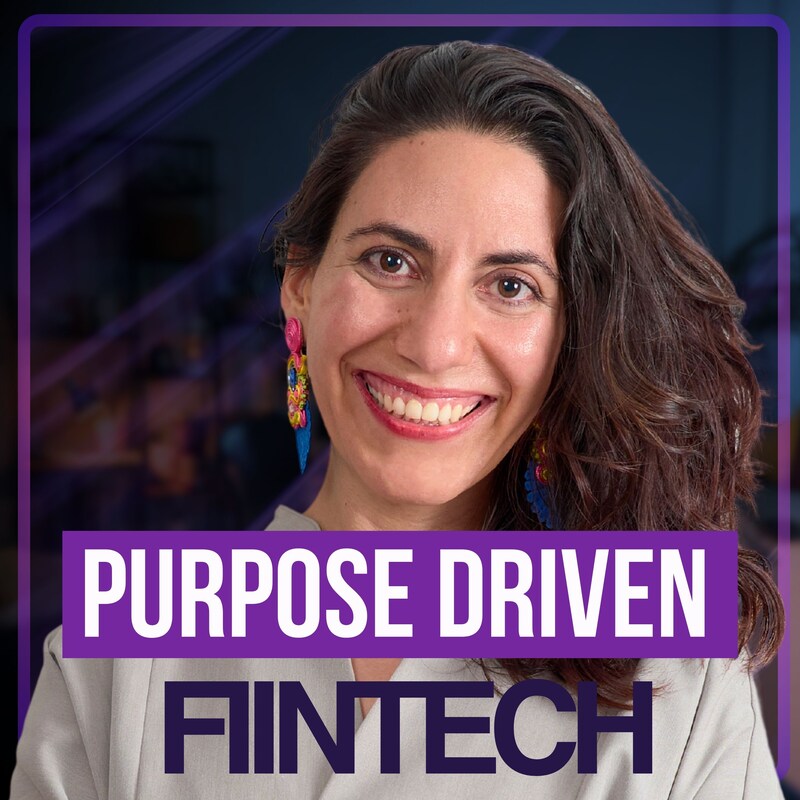
Shownotes
Shameer, host of “The FinTech Marketers and Leaders Podcast”, goes extensively through my career journey, my trajectory within BigPay, my thoughts and advice on Product leadership and growth, improving communication between marketing and product teams, diversity of thought, inclusion and mentorship, and much more.
We cover:
👉Product leadership and growth in FinTech
👉Managing growth and product development
👉Diversity and inclusion in FinTech leadership
👉Diversity and mentorship in the workplace
👉Career development, mentorship, and self-promotion
If you enjoy this Purpose Driven FinTech episode it would mean the world if you subscribe and give it a follow so that we can have more impact. Remember to connect in YouTube or LinkedIn to keep the conversation going.
Let’s dive into it!
👉 You can find The FinTech Marketers and Leaders Podcast here:
https://www.thefmlpodcast.com/
👉 And you can find Monica here:
- LinkedIn: https://www.linkedin.com/in/monicamillares/
- YouTube: https://www.youtube.com/@moni_millares
- TikTok: https://www.tiktok.com/@moni_millares
- Website: https://moni-millares.mystrikingly.com/
If you enjoy this pod, please follow and leave a 5 star rating on Spotify and a review on Apple podcasts
Questions:
- How to improve marketing and product team collaboration?
- What is diversity of thought in FinTech?
- How to create psychological safety in workplace?
- What is the role of mentorship in FinTech?
- How to track achievements for performance reviews?
- What is a brag book for career development?
- How to build purpose-driven FinTech products?
- What are challenges of multi-product multi-territory growth?
- How to communicate between marketing and product teams?
- What is the importance of self-promotion?
- How to be a woman in FinTech leadership?
- What is the future of diversity in financial services?
- How to create sense of belonging in teams?
- What are role models for working women?
- How to transition from corporate to startup?
- What is principal product leader role?
- How to build culture in growing companies?
- What are best practices for product interviews?
- How to mentor women in FinTech?
- What is the evolution from startup to scale-up?
—
For inquiries about coaching, collabs, sponsoring the podcast or creating or editing your podcast email [email protected]
Disclaimer: This episode does not constitute professional nor financial advice and does not represent the opinion nor views of my current, past or future employers. The guest has agreed to record and release our conversation for the use of this podcast and promotion in social media.
This episode was first released in November 2023 at the FinTech Marketers and Leaders Podcast here - https://open.spotify.com/episode/4xjPos33iQxwM7eyjUa6Mz
Transcripts
The Fintech Marketers and Leaders Podcast, with Shameer Sachdev. FML Monica Millares
===
The Future of Diversity in Fintech
---
[:Stop focusing a lot on just women in fintech and focusing on how do we have diversity of thought. But as we build a team, it is about how do we create an environment where people feel a sense of belonging, where people trust each other, and then it doesn't matter, like the color of your skin, the religion, the gender, it's like.
We could all look different and have different backgrounds and you've put us all in this melting pot, but if we don't have that environment where people have psychological safety, where people feel that they trust each other, where they can genuinely be themselves and say, quote, unquote, stupid idea without any fear of someone is going to look at me weird.
ch environment you have them [:Welcome to the FML Podcast
---
welcome to the FML podcast, the podcast on a mission to uncover actionable insights, explore the latest trends, and to catalyze your FinTechs growth. Join Growth Guerrilla's founder and managing director, Shamir Sachdev, as some of FinTechs hardest hitting marketers and leaders.
Shameer Sachdev: Welcome, everyone.
Meet Monica Milara: A Journey in Fintech
---
Shameer Sachdev: To today's episode of the FML podcast today, we're joined by Monica Milara's principal product at big pay. Monica, thanks for joining
us today.
Monica Millares: Hi, Shamir. The pleasure is mine. Thank you. Looking forward to our chat.
more about yourself and your [:so far?
Monica Millares: I don't like starting with, I work on this and I do that. So I'll start with, I am a very energetic person, which kind of, it's very characteristic of me. So I'm very energetic. I'm very curious. And that has led me to build a very exciting career as such. So I started my career in financial services since the very beginning in Mexico.
fintech. This is back then in:We were all starting at the same time. So
the
hey didn't even have a name. [:So I worked a few years in tandem, and then I basically was approached with this amazing opportunity to go and build. Neobank in Southeast Asia. So I moved to Malaysia and I've been here for the past six years building BigPay since the very, very beginning.
Building BigPay: From the Ground Up
---
Shameer Sachdev: Tell us
a little bit about BigPay who are they?
What do they do?
Monica Millares: We are now a Southeast Asian neobank. We currently are in Malaysia and Singapore, opening very soon in Thailand. And we're here to help people develop their lives, their financial life, in general their lives, but financial lives one transaction at a time. So we help people with money management, payment solutions, sending money abroad, the whole suite lending, have the whole suite of products that you would expect from a neobank.
Challenges and Rewards in Fintech
---
dev: You started off in the, [:Monica Millares: What drew me was this sense of this is a once in a lifetime opportunity and I cannot miss it out.
There's a little bit of FOMO. So when I met Ricky and the team. This was a once in a lifetime opportunity. There were no new banks. So back then, it was like, oh, we're building a bank from scratch. And at the time, the Bank of England had only given one banking license in the past 100 years. So it was something that was like, it had never been done before.
very beginning, the idea was [:Stress. Financial stress is one of the top stresses for people in the UK and these supplies across the world. And therefore we were in a mission to build a good bank, not a new bank, but a good bank that did good for people. And I think that's what drove us to be so passionate and aggressive as such.
That's what kind of brought me in fintech as such. The why I've stayed in fintech, that's a different, that's a different story altogether, similar but different. It is challenging. It's quite challenging. Like whomever has worked in a fintech knows that there is a lot of pressure just to survive.
o go and deliver that thing. [:So that process of building something as big as a new bank. Or a credit card product or whatever it is with just a few people compared to hundreds of people. I guess it's the story of going through the challenge from zero to we've launched and we've grown it. I find that fascinating. So that's one. So I just like the challenge of doing that.
And then number two, when I moved to tandem. I moved because I believed in this idea of money stress, financial stress is a big thing in people's lives because it has been in my life. So since the very beginning, I believed in that idea. And then I also realized like very early that we could do something about it.
fintech industry, I acquired [:services industry across the world, because it is a pain point for the great majority of people across the world. So it's important. It's an important pain point for me. And I've got the skills, so I don't throw it away. I leverage.
nTech was first starting like: tional financial services. I [:They have to adopt tech in order to compete with the FinTech brands that are out there even HSBC has had to massively step up their game in their usability in the UX and further out, for example, and they're still not competing in my view with Starling Bank and Monzo.
It's shocking.
The Role of a Principal Product Leader
---
Shameer Sachdev: So come on, talk a little bit about your role as principal of product. What is the principle of product?
Monica Millares: It is a leadership role, basically product leadership role. So just for background, like I moved to Malaysia to help set up BigPay from scratch. So I've been in the product team since the very beginning.
then grew the team. There's [:Of course, people have come and gone within the past six years. So the team that we have now, it's let's say the latest team. It's also New team to product, new team to fintech as such, so a big part of my role. Is working hands on with the team, ensuring that we're doing product. E. g. from the rigor of discovery and things like, , risk assessments, compliance, legal, all the elements of product well done across all the squads across all the PM.
e same time it's a role that [:But then at the same time I'm super hands on with the rest of the team. For me I find it very interesting because it amplifies my impact. Before it was more of a Oh, I'm driving and creating all these, but now I'm like driving and creating all these through the team rather than through me only.
So I find it fun.
Shameer Sachdev: Yeah, I was gonna say, how did you find that transition making that move from being hands on to taking more for a role where you're directing your team? I
Monica Millares: like that question a lot and I've asked this to other people as well because I'll talk about what people don't talk about.
ving and all of a sudden you [:It's the inner game of saying am I still adding value? Yes, you are adding a lot of value, just in a different way. And now you're helping others, empowering others and training and teaching others so that then they can be the drivers and high performers as such. So it does take a shift in mindset.
Especially, I guess it's the inner conversation of oh, what's my role if I'm not, if it's not visible, if it is not tangible, before it's very tangible what you're doing. And now it's not tangible what you're doing, because you're not doing it, the others are doing it, but then the results speak of the.
you just need to acknowledge [:Growth and Expansion Strategies
---
Shameer Sachdev: Just thinking about Big Pay's growth over the last six years like you've said you started off as a team of one, you now have a team that sits under you you're directing them and leading them.
It'd be great to understand what that, what did that journey look like and the contribution of product to growth? And I suppose some of the challenges that you encountered along the way.
Monica Millares: I've been so fortunate to be able to see this growth, right? Because six years is a long time in a company, especially these days.
nd to a new business line as [:So back then my mandate from the CEO was like, Oh, we need to launch remittances by this date. And I was like, what? But that's back then transfer wise, I'm like, that's the whole business for transfer wise. We cannot do this, but it was very aggressive. So we went from payments, card payments.
To then expanding into two business lines, that it was payments and then remittances. And then it was from one geography to two geographies, we opened to Singapore. Then once we had multi geography, multi product, then we started growing the product lines as such. And then, as we started growing, of course, it comes the growth pains of the team is bigger, you are not, you go from a start, like a core startup to becoming a little bit of a scale of a such.
veryone in the team is doing [:So it's an ongoing. That's why it never gets boring because it's ongoing, it's an ongoing challenge to improve.
Shameer Sachdev: So you mentioned obviously becoming multi product and then becoming multi territory. We speak to a lot of marketers on this podcast and we talk a lot about the challenges around managing that from a marketing perspective, which is mostly around communications and then channel mix.
the two big considerations. [:And what are the marketers perhaps that listen to this podcast not aware of, and what could you communicate to them about your challenges and your team's challenges that would perhaps help marketing and help that sort of communication between marketing and product.
The Importance of Culture in Fintech
---
Monica Millares: I think the biggest challenge is that we think growth and then we think product as two different teams for two different things when in reality that's the biggest challenge to work inside those.
ave this goal. Therefore, we [:Okay. All that is important when it comes to growth. And I think the Underlying challenge is that, generally speaking, marketing and product tend to be very creative people, and we're like, Oh, yeah, we're going to do this, right? And we are aggressive. But then there's Two sides of the coin that it's like one is tech.
Is it technically feasible? You can come up with all, you go to talk to customers or you ideate, you come up with all these ideas, but then you're like, we cannot do it this way, or it could mean a lot of technical debt, or we have this limitation for partners. So that tech consideration is very important and super, super important is legal regulatory compliance.
e and every single geography [:That's when you start seeing more high performance. It's not perfect, but it's a journey.
Shameer Sachdev: We see it here in in our agency. I think one of the, one of the key hires that we brought in was an ops manager, head of ops to effectively stitch together all of the teams, all the departments, and then create standard standard operating procedures.
nce, staff, happiness client [:Even more so if anything.
Monica Millares: Exactly. Because it is at the end of the day, what frameworks out there for growth and a lot of frameworks for product. But then in reality, the biggest key contributor to success and high performance is culture. It's not a framework, it's culture. And the how you create culture is by the how you work on a day to day basis.
Like you say, from processes to leadership style and communication style. And it's the sum of those intangible things that then you have a plan and then they lead to the result. It's not a, it's not a mathematical formula. Maybe someone has got it as a mathematical formula, but I think it's not.
Shameer Sachdev: Oh, yeah.
omebody has done that. But I [:So everybody floated around. We got stuff done, but we all floated around somewhat. What we're doing here at Growth Guerrilla, by being really clear is these are the numbers, this is what we want to achieve. These are the sorts of companies we want to be speaking to.
These are the sorts of projects we want to work on. And being really clear about it you immediately get people's buy in straight away. Switching streams a tad, because we're still talking about leadership and building culture and all of those sorts of things.
Diversity and Inclusion in Fintech
---
Shameer Sachdev: With fintech has also come about more recognition around, I think, diversity and inclusion.
rclays Wealth and the senior [:And I think a lot of that is underpinned by the diversity that they do have. What's your sort of take around being a woman in FinTech. And then more specifically, a woman in a senior leadership position within fintech, what's your take on that? And where do you think I suppose diversity is heading in that sort of sense.
Not the best
ning of my career, I studied [:Monica Millares: Yeah. That's been the norm since I went to uni and then over my, the like the beginning of my career, especially in the UK, exactly what's in our place. I, at some point I was very aware. That I was the only woman, because this is like a little story. I remember being in Canary Wharf, taking the lift in the morning, and I was like, oh my god, there's only there's only suited men around me in the lift, like all the time.
growing up in my career, the [:So I think some people genuinely started valuing the diversity of thought. It's not because I'm a woman because of my gender, but it's. Because diversity of thought people started seeing value in that. For example, Reconox is a perfect example. When we set ourselves to go and build tandem. It was not, let's go and bring a bunch of bankers to go and build another bank because we'll go and build the same thing that we already know.
It was like, let's build from creative people from different industries. Yes, and some bankers at the end, because they need to know the industry, right? So I think there's an acknowledgement of diversity of thoughts. Then you have another stream of thinking that diversity has just become like a quota. It generates a feeling, right?
to do. So I think it's about [:Rethinking Diversity in Fintech
---
Monica Millares: But I don't know, over the months lately, I've been thinking more hey, it's not women in fintech. It is men in fintech. Women in fintech. Young people in fintech.
Old people in fintech. People from very good junis and private junis. People from not so very good junis. People from a non financial services background coming into a fintech people from a non product background coming into the product team. So that's what I'm trying to do. It's more of a stop focusing a lot on just women in fintech and focusing on how do we have diversity of thought.
Creating an Inclusive Environment
---
create an environment where [:But if we don't have that environment where people have psychological safety, where people feel that they trust each other, where they can genuinely be themselves and say, quote unquote, stupid ideas, without any fear of somebody's going to look at me weird, I think then diversity is just So it's not just diversity in terms of who you have in the room, but it's like in which environment that you have them in the room.
g, where it's like you said, [:But the key is unlocking. Those ideas from people by creating the right environment. I went around circles, but I think it's about that.
Psychological Safety in the Workplace
---
Shameer Sachdev: I think your point around that sort of psychological safety is key. Cause what while you're talking, I was thinking around. If I go back 10, 15 years, when I just started, I started in the seat about 20 years ago it's funny how you said you were very conscious when you were in the elevator.
n was just filled with white [:At that time I was I was a broker, so I was on the early train at seven in the morning. And when you get onto the trading floor, it was it was very much one type of person.
Monica Millares: Yeah.
Shameer Sachdev: Nearly everyone was from Essex and I was this sort of this Indian lad from Harrow. And that point around psychological safety was that I always felt like I had to be very guarded and very measured in what I said said, in the way I behaved and I almost didn't want my own personal culture to leak out too much because I didn't want to draw attention to myself.
And remind them that actually I'm not one of them.
Monica Millares: That you're
different.
Shameer Sachdev: Exactly that. And that you're
not one
Monica Millares: of them. I felt that before in throughout my career that it's yeah, I'm not. That's why it's so important to foster that sense of belonging.
e taken conscious efforts to [:But I think that there's always going to be a degree of I think there's two things here. I think there's always, it's going to be a degree of you can only create a certain amount of guidelines before you end up censoring people. And then you end up over indexing on. Diversity, which then leads to people who are not considered to be part of the diverse group.
Minority,
Monica Millares: yeah.
Shameer Sachdev: Then end up being silenced for their opinion, right? So there's that as well. And I always think it's a difficult line to tread.
Mentoring in Fintech
---
Shameer Sachdev: You do a fair amount of mentoring to women in the FinTech space or. Is there a particular group of women that you tend to mentor or is it anyone that wants your help or anyone who asks?
ck a niche. And that's why I [:But because of my gender, and I think because people identify with you as a leader because of how you look, then I tend to attract more women. And that's another thing, it's I do believe as I've been, I don't know, the past 10 years of my career, I noticed that, for example, my mom and my friend's moms They never had an executive job, like in a bank, like nowhere.
rld and starting a new bank. [:Role Models and Representation
---
Monica Millares: And that was not what my mom did. And what I have this hypothesis that if you are a working woman under 50, 50 and under, your mom did not work as a executive professional as we know it today, therefore, we do not have that role model.
To go and say, Hey, mom, how did you deal with that? Or like we don't, or it's not even the how did you deal with that? We didn't see them as executive working moms and still having a fulfilling life. So part of, I think, I do believe that A, you become the, some of the five people that you hang out with.
teams, but also to showcase [:To the women that are, and young people that are coming up and just starting their career, that's important to me on a personal level, either Mexico, my home country, like when I was very young, it comes with its own struggles, but at the same time, people helped me along the line, like I'm not here because.
Because I did everything on my own. No, I'm here because I, since very young, I was very curious. And I always ask questions, always ask so many questions. But there were these very kind people where I was working, that they took the time to answer all my questions, and they took the time to guide me. And when I was lost, they would be like, Oh no, why don't you do this?
d me be where I am today. So [:Taking Ownership of Your Career
---
Shameer Sachdev: I do agree with what you're saying myself as well there's definitely people who have helped me along the way in my career, but I think there's also a degree of taking ownership over your own sort of destiny and your own decisions as well.
And I think there's going to be a level of discipline that's part of that as well, which there's a handful of people I can think of that I think have really done that they've gone, okay I don't fit it. I don't fit the traditional mold, but this is what I want to do. So what are the questions that I need to ask in order to collect the information that I need that will help me move forward and get to where I want to be?
If you're not willing to ask the questions and then take that ownership, I think you'd have the best mentors in the world, but you're not going to move forward, right?
can't have the best advice. [:You don't take action. But what I've noticed is. People tend to help you slash give advice. It's not help, it's just like sharing their time with you. When they see that you are that you're like hardworking, highly motivated, have a good vibe, all of that stuff, people are more likely to be like, Ah, yeah, share.
Shameer Sachdev: But I think equally as well, you can't sit there waiting to be discovered as well, right? Whenever I talk about the thing about my, my, my wife, because so she's done about 15 years at HSBC and she's now a consultant at EY. The EY culture is from what I've seen, they're really big now on, on pushing diversity.
r. There's been a few people [:a year and a bit now, and they've pulled to the side and said, Hey, look you're doing great stuff here, but you need to talk about it. You need to talk about the great stuff that you're achieving. You need to talk about your story. And you need to communicate that to people and she's taken that on board and that's really helped us.
I think if I compare like where she was at HSBC, but it didn't quite foster that foster that sort of environment, but there were some people that kind of caught on to that and then done quite well there. So I think. Yes, you've got to do all of those things of you've got to turn up to work.
You've got to put the hours in, you've got to do the hard work, ask those right questions. And, but then at the same time it's talking about what your achievements are and then seeking out those mentors that can help you. That's my opinion
anyway.
Monica Millares: Yes. That's a very good point. And this reminds me of a manager I had many years ago that he, and I don't do this anymore, but maybe I should.
e throughout the year, write [:They don't do that.
The Importance of Self-Promotion
---
Monica Millares: But it's that same point about You can be the best, and this is coming back to marketing, right? You can have the best product, but if no one knows about it, then no one knows about it, and then no one will buy. So same, you can be the smartest, best, work ethic, most knowledgeable about one thing, but if people don't know about you, then it's going to be more challenging for you to find opportunities.
tick it in a folder. But now [:And then yeah, have that for your reviews or whatever it is, or job interviews. I always get impressed by the best interviewees, I think are the ones that come in. Two things really, they're prepared to take notes. And then second of all, they can, they've brought evidence and they're demonstrating their achievements.
And they go, and they'll go you ask them a question and they'll go. They give you the answer and then they'll go Oh yeah. And here's this email for, from such and such that said how happy I, how happy they are with the work that I done. And you think if someone comes to me and interviews like that, of course I'm going to hire them because they're just prepared.
And it's such a simple. Simple way to set yourself apart, in my view anyway. You've got your own podcast. Do you tend to talk about a lot of the diversity pieces within your podcast, or is it a bit more focused on product, or is it a bit of both?
Podcasting and Purpose-Driven Fintech
---
Shameer Sachdev: Tell us a bit about your podcast.
onica Millares: Yeah, it's a [:I like the human side, right? So usually I start with some mindset questions so that then I get to know the person in front of me that it's a, Hey, how did you deal with tough times? Hey, your career advice, what's the best or the worst lesson that you've had, it tells you a little bit more about the person behind, behind the microphone.
And then my podcast is it's again, it's very purpose driven. How do we build purpose driven fintechs? And I believe one way to do that is be a product. But then for us to do product, it's not just UI, UX, and beautiful flows. Product is the amalgamation of many disciplines and the end result. It's it looks like a journey, but it's not a journey.
I'm very keen to understand [:It's hard to build a FinTech. So it's like, why did they go into this journey? And I think, what's the purpose behind the company? So that's number one, understanding the purpose. And then we start going deeper into the, their customers. It's what are the customer pain points that you have? Then based on that, we start going a little bit more detail on, Oh, if this is a pain point, how are you solving the pain point in a different way?
d how do they keep me people [:So I don't like scripting it a hundred percent. So sometimes I'm like, Oh yeah, I'll talk about diversity. And I don't because. Cause we've run out of time, but yeah, I do talking about all the elements of what can make Fintech better.
Shameer Sachdev: Brilliant. Before, before I let you go, I think that's a nice place to end.
I'll take you through our quick fire round.
Quick Fire Round: Personal Insights
---
Shameer Sachdev: So other than obviously the FML podcast and your purpose driven Fintech podcast what other podcasts are you listening to at the moment?
Monica Millares: Oh, the diary of the CEO, that's the number one podcast. I know everybody listens to that, but yeah, that one all the time.
Shameer Sachdev: I've got mixed feelings about Stephen Bartlett, but we don't have enough time to
cover that. I
o Oh, and then I, that's it, [:Shameer Sachdev: Yeah. Yeah. I'm not saying. I'm not saying I'm Parkinson, but he's not the best interviewer I've come across.
It's just a little bit dry at times. But anyway, I've got opinions on that. And then other than big pay who what's your favorite FinTech app or favorite FinTech brand?
Monica Millares: Yes. I love discovering FinTechs. I love finding out like, Oh, one of my favorite ones is these ladies in Nepal.
So they started not with an app because The people that they were serving didn't really have access to internet as such. So they went back to SMS, but then this is a blockchain enabled fintech. So what I love, it's like finding all those little stories. Oh, those guys are doing something very interesting.
I don't have a favorite. I have a, I like identifying new ones. Big Oh,
Shameer Sachdev: So [:No, absolutely. What books are you currently reading or would recommend to our listeners?
Monica Millares: I'm not reading a book. I've been more like googling lately. I went to a meetup the other day and this lady she said that she was reading a thought about goddesses across all the religions. And then I was like, oh, that's so interesting.
And she was like, oh, yeah like buddha Usually you have like male buddha, but then it's like there's all these female buddha and I'm like what? So I've been starting to read about goddesses across all the religions out of curiosity. That's my latest, other than fintech and
product [:work stuff, that's been my latest fascination of the month.
And I'll change soon, probably.
Shameer Sachdev: And what's one thing that I haven't asked you that I perhaps should have asked
you?
Upcoming Adventures and Final Thoughts
---
Monica Millares: What's my next adventure? Yeah.
Shameer Sachdev: What is your next adventure? Do you know yet?
Monica Millares: Yeah. I love hiking. I think I'm starting to gear towards a proper hike. Like I, because in Malaysia we have the jungle, so I love hiking.
Like the weekend, it's a one hour hike nearby or three hour hike. But I'm like, Oh, how about a proper hike? I think that's going to be my next
adventure.
Shameer Sachdev: In my younger days, I did a three month, was it? Yeah. Three week trek in Malaysia across the Kroka range on the island of Borneo.
Yeah, that was hard going.
Monica Millares: Yes. I can imagine.
ev: Yeah. It was hard going. [:no, you have not felt fear until you've got a rhino beetle with a wingspan about that big flying in your head. It was scary, but brilliant.
Monica Millares: Yeah. I love it. I like, I love getting into the jungle. This weekend I got beaten by something and I'm like, Ah,
that's it. It's part of the adventure. Leeching from one side of the line. Yes, exactly. Yes, exactly. I was like, I was screaming.
Those
Shameer Sachdev: leeches. Brilliant.
Okay. It's been an absolute pleasure having you on today. Thank you for your time.
Monica Millares: Likewise. Thank you. It's been an absolute pleasure. The
Presenter: FML podcast is brought to you by growth gorilla to find out how our marketing growth experts can boost your fintechs growth, head to growth gorilla.
[:
